1
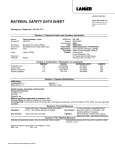
Lanier Worldwide, Inc.
2300 Parklake Dr., N. E.
Atlanta, GA 30345-2979
Emergency Telephone: (800)526-4371
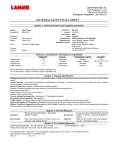
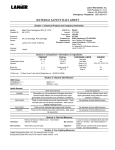
MATERIAL SAFETY DATA SHEET
Section 1: Chemical Product and Company Information
Identity:
Product ID:
Toner for 9060 POD
117-0237
MSDS No.
Issued:
Supersedes:
Date:
Synonyms
& Common
Names:
Toner, Black Tonerer for Lanier
9060 POD
Uses:
9060 POD
Chemical
Formula:
Mixture
Prepared by:
European
Contact:
CP-312
01/05/98
none
01/26/98
Lanier QA/EH&S Department
Lanier Worldwide, WSM Europe,
Walter Fricke,
Im Taubental D-41468 Neuss,
Germany +49-2131-387-177
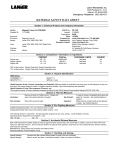
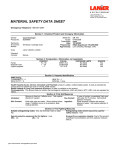
Section 2: Composition / Information on Ingredients
PERCENT
CAS No.
EXPOSURE LIMITS
Carbon black
Polyester resin
Polyester resin
6-8
1333-86-4
75214-60-7
TSCA Confidential
<94
Wax
Pigment
9003-07-0
31714-55-3
3
3
3.5mg/m
3
3.5mg/m
not listed
Trade Secret No.
80100252-5001-P
not listed
not listed
SOURCE
OSHA PEL
ACGIH TLV
n/a
n/a
n/a
n/a
3
*PEL as the product: 15mg/m (total dust), 5mg/m (respirable dust)
3
3
*TLV as the product: 10mg/m (total dust), 5mg/m (respirable dust)
Section 3: Hazards Identification
Hazard Rating:
FIRE = 1
REACTIVITY = 0
HEALTH = 1
SPECIAL = none
Health Hazards (Acute, Chronic, Immediate and Potential): Minimum irritation to respiratory tract may occur as with exposure to any
non-toxic dust. May cause gasping if inhaled. Inhalation should be avoided. May cause temporary eye discomfort.
Health Hazards of Long Term exposure (Chronic): A manufacturer sponsored chronic inhalation study in rats using a special test
3
toner revealed there were no lung changes at all in the lowest exposure level (1mg/m ), the most relevant level to potential human
exposures. A very slight degree of fibrosis was noted in 25% of the animals at the middle exposure level (4mg/m3), while a slight
degree of fibrosis was observed at the highest exposure level (16mg/m3) in all animals. These findings are attributed to “Lung
Overloading”, a generic response to excessive amount of any dust retained in the lungs for a prolonged interval. The special test
toner was ten times more respirable than commercially available toner to comply with EPA testing protocol and would not function
properly in Xerographic equipment.
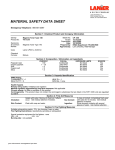
Section 4: First Aid Measures
Inhalation:
Skin Contact:
Remove to fresh air if effects occur. Consult
local medical personnel
Eye Contact: In case of contact, immediately flush eyes with
water for 5 minutes.
Wash with soap and water.
Ingestion: Dilute stomach contents with water. Call a
physician
Section 5: Fire Fighting Measures
Suitable extinguishing media: CO2, dry chemical, foam or water.
Extinguishing media which may not be used for safety reasons: none
1
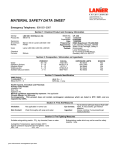
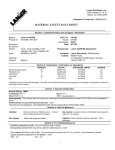
MATERIAL SAFETY DATA SHEET
Page 2
of
CP-312
Flash point : > 150°C (O.C.)
This material will burn in case of fire. The decomposition products are CO and other decomposition products in case of
incomplete combustion.. Avoid inhalation of smoke.
Special protective equipment for fire fighters: wear self-contained breathing apparatus
UEL: n/a
LEL: 34.5/m3
Section 6: Accidental Release Measures
Sweep up or clean up with an approved toner vacuum.
Special Handling:
Special Storage:
Section 7: Handling and Storage
Cleanse skin after contact before breaks or meals, and end of work day. Avoid inhalation.
Keep out of reach of children. Store in a cool dry place.
Section 8: Exposure Control and Personal Protection Information:
Respiratory Protection: none required under normal use.
Hand Protection: none required under normal use.
Eye Protection: none required under normal use.
Skin Protection: none required under normal use.
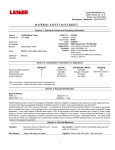
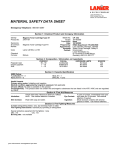
Section 9: Physical and Chemical Properties
CHARACTERISTICS:
Appearance:
Black
Form:
Fine powder
Odor:
Practically odorless
Solubility in Water: Insoluble
Specific gravity:
1.2
Melting point:
Vapor pressure:
Vapor density:
Evaporation rate:
Boiling point:
n/a
n/a
n/a
n/a
n/a
Section 10: Stability and Reactivity
Conditions to avoid: Strong acid or alkaline
Materials to avoid: none
Hazardous decomposition products: CO, phenol derivative at high temps.
Stability: Stable
Section 11: Toxicological Information:
Acute oral toxicity (rat) LDLO: 5.0 g/kg
Ames Test result: Negative
Carcinogenicity: In 1996, the IARC reevaluated carbon black as a GROUP 2B carcinogen (possible human carcinogen). This evaluation is given to carbon
black for which there is inadequate human evidence, but sufficient animal evidence. The latter is based upon the development of lung tumors in rats receiving
chronic inhalation exposures to free carbon black at a level that induce particle overload of the lungs. Studies performed in mice have not demonstrated an
association between carbon black and lung tumors. Moreover, a two-year cancer bioassay using a typical toner preparation containing carbon black
demonstrated no association between toner and tumor development in rats.
Section 12: Environmental / Ecological Information
None
Section 13: Disposal Consideration
Waste material should be disposed of in accordance with all federal, state and local environmental regulations. Do not incinerate.
Section 14: Transportation Information
None
Section 15: Regulatory Information
None
Section 16: Miscellaneous Information
On the basis of the data available to us, this toner is not a dangerous substance. One should, however , observe the usual precautionary measures for dealing
with chemicals.
Notice: Judgments as to the suitability of information contained herein for purchaser’s purposes are the purchaser’s responsibility. Therefore, although
reasonable care has been taken in the preparation of such information, Lanier Worldwide, Inc. extends no warranties, makes no representations, and assumes
no responsibility as to the accuracy or suitability of such information for application to purchaser’s intended purposes or for consequences of its use.
Information on this data sheet represents our current data and best opinion as to the proper use in handling of this product under normal conditions.