1
STILL CAPTURE TECHNOLOGY
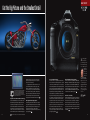
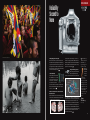
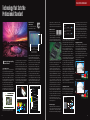
Auto Lighting Optimizer
One of Canon’s newest technologies, the Auto
Lighting Optimizer automatically corrects
image exposure to help ensure accurate
brightness and contrast. It can actually brighten areas of the composition while maintaining
highlight details and accurate exposure in others, or darken areas of composition while
AF Focusing Principle
Prime lens
Focusing plane
(Image plane)
AF point display sample for 19-point automatic selection AF and AI Servo AF (EOS 7D)
CMOS area sensor
Subject
Secondary
image-forming lens
Off
Low
Standard
Strong
maintaining brightness and shadow details in
others. This remarkable feature is available as
both an automatic feature in Full Auto and
Creative Auto shooting modes, and can be
used and fine-tuned in other modes. The
Canon Auto Lighting Optimizer ensures beautifully exposed images that require little to no
post-production work.
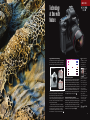
Lens Peripheral Illumination
Correction
A number of Canon’s newer EOS digital cameras
feature Canon’s Lens Peripheral Illumination
Correction. Taking into account the lens in
On
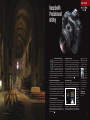
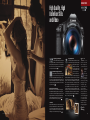
High-Speed Shooting
EOS SLR cameras have always been associated
with speedy operation. And today’s cameras do
not disappoint, with the fastest EOS cameras
employing dual DIGIC 4 Processors and offering
10 frames-per-second continuous shooting, up
to 28 RAW files or 121 full-resolution JPEGs. The
EOS-1D Mark IV has a minimum lag time of 40
msec, an 80 msec viewfinder blackout time (at
speeds of 1/60th and above), shutter speeds
up to 1/8000 sec., and a flash sync as fast as
1/300 sec. when used with Canon Speedlites.
Dedicated, quiet low-speed modes and selftimers add further to speed.
Off
use, this feature automatically brightens the
light level at the four corners of the composition where light falloff may have occurred.
Peripheral illumination characteristics and
correction data are detected automatically on
a number of Canon lenses and can be entered
manually through Canon’s EOS Utility software. This function can be applied when
shooting to JPEG images, and in post-processing with RAW images.
78
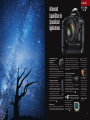
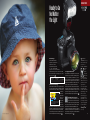
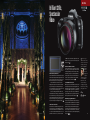
Exceptional, Dependable
Precision Performance
EOS-1D Mark IV features an improved AI Servo
AF focus tracking and 10.0 fps high-speed
continuous shooting, for sharp, detailed photographs in every shot.
AF Technology
The best autofocus systems combine accuracy,
speed and reliability. And for that combination,
there’s nothing like the cutting edge AF systems
user. Select EOS cameras feature up to 39
cross-type AF points that provide both vertical
and horizontal sensitivity, guaranteeing the
same optimal performance no matter the camera’s orientation. Focusing modes include single point AF, Spot AF (which
narrows the area used by
the AF line sensor, helping
Nomal AF Spot AF
to reduce detection errors
that occur from near and far objects when aiming at small subjects), and AF point expansion,
where AF points surrounding the one chosen
can assist when the subject moves or
becomes unfocused.
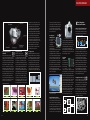
To maintain focus, advanced Canon focustracking technology helps maintain the accuraAutofocus Technology (EOS-1D Mark IV)
• NUMBER OF AF POINTS (C.Fn III-10)
45-point
found in EOS SLRs. The EOS-1 series even
features its own dedicated CPU to handle AF
processing. Selected EOS SLR cameras use an
extraordinary 45-point high-density Area AF
system that provides a large AF coverage area,
Manual Selection
but also the
greatest range of
control over
focusing point
selection. The
focusing point
can be chosen
Automatic Selection
automatically by
the camera
(based on highspeed microcomputer analysis of
image content) or : Cross-type sensor
: AF point
: f/2.8-sensitive sensor (f/4-sensitive at center AF point)
: f/5.6-sensitive sensor (f/8-sensitive at center AF point)
manually by the
19-point
Inner 9-point
11-point
Outer 9-point
• EXAMPLE OF AF EXPANSION
With single AF
point selected
With two AF
With right AF
points selected point selected
63-Zone TTL Metering
C.Fn III-8-1
C.Fn III-8-2
With
C.Fn III-8-3
AI Servo AF
AF point manually selected
cy of the initial AF setting, no matter the light
source or how fast the subject is moving. EOS
cameras feature a number of dedicated autofocus modes designed to enhance reliability in
a variety of dynamic shooting situations. ONESHOT AF mode is ideal for static subjects —
the camera rapidly selects the optimum focusing point, and the subject is instantly brought
into focus even if it is off-center. AI SERVO AF/
AI SERVO II AF mode is excellent for moving
subjects. Aided by a highly intelligent predictive focusing algorithm, it precisely tracks subject movement across the wide AF coverage
area, automatically shifting the active focusing
point vertically and horizontally as required. AI
FOCUS AF mode, in which the camera automatically decides between ONE-SHOT and AI
SERVO AF modes based on subject movement,
is ideal for shooting unpredictable subjects. AI
SERVO II AF mode, a new feature found on the
EOS-1D Mark IV and EOS 7D, uses new algorithms for sophisticated predictive focus tracking performance, even when shooting subjects
with erratic movement. Even difficult, highmagnification subjects, such as a flower in a
breeze are captured accurately with a Canon
Macro lens using these new tracking algorithms.
Points for AF expansion
• AF POINT AT THE HORIZONTAL/VERTICAL ORIENTATION
(C.Fn III-16-1)
Canon EOS DSLRs incorporate
advanced exposure control systems, offering
photographers exceptionally precise AE (auto
exposure) with a wide range of metering
options. Full-frame Evaluative metering incorporates the camera’s multi-zone sensor readEvaluative/Center-Weighted
average metering
Partial metering
Spot metering
* C.Fn I -7-1 enables AF point-linked Spot metering.
Automatic AF point switching to registered AF
point when camera’s orientation is changed.
ing with specific focusing point data. The
onboard microcomputer compares input from
all zones and calculates optimum exposure.
While Evaluative metering helps to assure
excellent results in even the most challenging
lighting situations, advanced photographers
can choose from among several other metering
options more appropriate for the particulars of
the shot. Center-weighted metering is available for those who prefer a more traditional
pattern. Partial metering limits readings to
sensor zones in the center of the image area,
giving the photographer more area-specific
control. Spot readings can be taken at the center of the frame area or, with some models,
linked to an AF point. With certain EOS cameras, up to eight separate Spot meter readings
can be recorded and averaged.
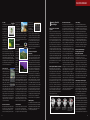
iFCL Metering
Canon’s iFCL (intelligent
Focus Color Luminance)
63-zone Dual-layer meterAE sensor unit (EOS 7D)
ing system incorporates
the color wavelength surrounding the chosen
focus point to help ensure more natural color
rendition. By taking into account the color and
luminosity surrounding chosen AF point(s),
iFCL metering delivers a higher level of metering accuracy with an ideal balance of foreground and background information and natural color rendition no matter the composition.
Canon’s Evaluative metering mode, using an
all-new metering algorithm, utilizes information from the
63-zone Dual-layer Metering Sensor
cameras AF
R wavelengths
G wavelengths
system for
B wavelengths
more precise
First Layer
(receiving light)
and consistent
Second Layer
results.
(receiving light)
79