1
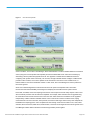
Figure 2.
Cisco UCS Components
Cisco innovations, such as Cisco UCS Manager, allows administrators to create a software definition for a desired
server (using Cisco service profiles and templates) and then instantiate that server and its I/O connectivity by
associating a service profile with physical resources. This approach contrasts with the traditional method of
configuring each system resource manually, one at a time, through individual element managers. Unlike with the
products of other vendors, Cisco service profiles can be moved from rack server to rack or blade server, or
between blade or rack servers in different chassis. In other words, Cisco UCS Manager and service profiles are
form-factor agnostic.
Other Cisco UCS building blocks include enhanced server I/O options and expanded Cisco UCS fabric
interconnects that extend scalability and management simplicity for both blade and rack systems across
bare-metal, virtualized, and cloud-computing environments. Cisco helps ensure that nearly all parts of Cisco UCS
offer investment protection and are backward compatible. For example, fabric extenders can be upgraded using
the same fabric interconnects and same Cisco UCS VIC 1225. Fabric interconnect hardware can be upgraded
independently of fabric extenders and blade chassis. Cisco continues to innovate in all these areas, helping
ensure that both now and in the future, more powerful, rack servers with larger, faster memory have adequate I/O
bandwidth and computing power. Cisco completes this vision through continuous innovation in VIC, ASIC, fabric
extender, fabric interconnect, blade server, blade chassis, rack server technologies and form-factor-agnostic Cisco
UCS Manager software that ties all these ever-advancing hardware pieces together.
© 2013 Cisco and/or its affiliates. All rights reserved. This document is Cisco Public Information.
Page 3 of 7