1
Tested for you in our cooking studio
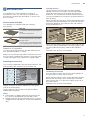
Proving dough
You can prove yeast dough in your appliance more
quickly than at room temperature. Use the top/bottom
heating type. Only start operation when the cooking
compartment has fully cooled down.
Always allow yeast dough to prove twice. Observe the
specifications in the settings tables for the 1st and 2nd
proving processes (dough fermentation and final
fermentation).
Dough fermentation
Use the settings indicated in the table and heat up the
appliance. Position the dough bowl on the wire rack.
Do not open the appliance door during the proving
process, as moisture will escape. Cover the dough.
en
Final fermentation
Place your baked item into the oven at the shelf position
indicated in the table.
If you want to preheat the oven, the final fermentation
takes place outside the appliance in a warm place.
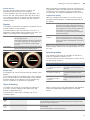
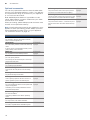
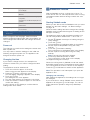
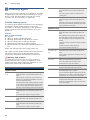
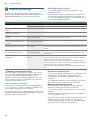
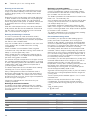
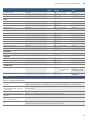
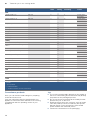
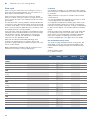
Recommended setting values
The temperature and proving time are dependent on
the type and quantity of the ingredients. The values in
the table are therefore only meant to be average values.
Type of heating used:
■
% Top/bottom heating
Dish
Accessories/cookware
Shelf posi- Type of
tion
heating
Step
Temperature in °C
Yeast dough, light
Bowl
2
%
35-40
Baking tray
2
%
35-40
10-20
Bowl
2
%
35-40
20-40
Baking tray
2
%
Dough fermentation
Final fermentation
Dough fermentation
Final fermentation
Cooking
time in
mins.
25-30
35-40
15-25
Yeast dough, heavy and rich
Defrosting
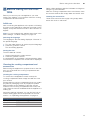
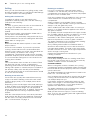
The defrost heating type is suitable for defrosting frozen
fruit, vegetables and baked items. Poultry, meat and fish
should ideally be defrosted in the refrigerator.
Use the following shelf positions when defrosting:
■
1 wire rack: Level 2
■
2 wire racks: Level 3+1
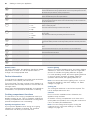
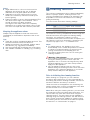
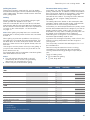
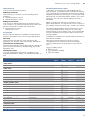
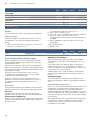
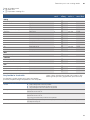
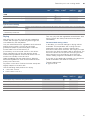
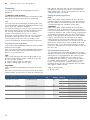
Recommended setting values
The times in the table are average values. They are
dependent on the quality, freezing temperature (-18 °C)
and composition of the food. Time ranges are indicated.
Set the shortest time first and then extend the time if
necessary.
Tip: Items which were frozen flat or portioned defrost
faster than those frozen in a block.
Remove frozen food from the packaging and place it in
suitable cookware onto the wire rack.
Stir the food or turn it once or twice in between. Large
pieces of food should be turned several times.
Occasionally split the food or remove items which have
already defrosted from the cooking compartment.
Leave the defrosted food to rest for another 10 to 30
minutes in the appliance whilst it is switched off, so that
the temperature balances out.
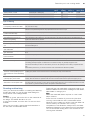
Type of heating used:
■
B Defrosting
Dish
Accessories
Shelf posi- Type of
tion
heating
Temperature in °C
Cooking time
in mins.
Bread, bread rolls
Bread & bread rolls general
Baking tray
2
B
50
40-70
Cake
Cake, moist
Cake, dry
Baking tray
Baking tray
2
2
B
B
50
60
70-90
60-75
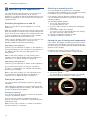
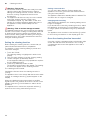
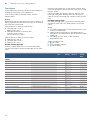
Keeping warm
You can keep cooked dishes warm using the "Keeping
warm" heating type. This will avoid condensation
developing, and means you will not have to wipe out the
cooking compartment.
Do not keep cooked dishes warm for longer than two
hours. Be aware that some dishes may continue
cooking whilst being kept warm. Cover the dishes if
necessary.
43