1
GLOSSARY TO TELEVISION TERMS
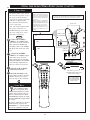
On Screen Displays (OSD) • Refers to the wording or messages generated by the television (or VCR) to help the user with
specific feature controls (color adjustment, programming, etc.).
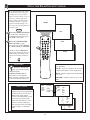
Alternate Channel • Use the A/CH button on the remote control
to toggle between the last two channels viewed.
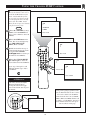
Auto Programming • When activated, this feature automatically
scans for all available channels from regular antenna or cable
signals and stores only active broadcast stations into the TV’s
memory.
Programming • The procedure of adding or deleting channel
numbers into the Television’s memory circuits. In this way, the
Television “remembers’’ only the locally available or desired
channel numbers and skips over any unwanted channel numbers.
Channel Edit • Add or delete channels from the sequential tuning cycle to develop a customized list of channels you want to
watch. Editing makes it easy to limit the number of channels
when using the Channel +/- buttons or to expand the number of
channels available to suit your preference.
Remote Sensor Window • A window or opening found on the
Television control panel through which infrared remote control
command signals are received.
Closed Caption • Broadcast standard which allows you to read
the voice content of television programs on the TV screen.
Designed to help the hearing impaired, this feature uses onscreen "text boxes" to show dialogue and conversations while the
TV program is in progress.
Second Audio Program (SAP) • Another or additional audio
channel provided for in the Multichannel Television Sound
(MTS) broadcast standard. The most frequently proposed use
for SAP is the simultaneous bilingual broadcast of TV program
material.
Coaxial Cable • A single solid antenna wire normally matched
with a metal plug (F-type) end connector that screws (or pushes)
directly onto a 75 Ohm input found on the Television or VCR.
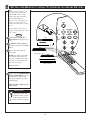
Status/Exit • Allows the user to quickly confirm what channel
number is currently being viewed. Status can also be used to
clear the Television of on screen displays or information (rather
than waiting for the displays to “time out” or automatically disappear from the screen).
Direct Audio/Video Inputs • Located on the rear of the TV,
these connectors (RCA phono type plug) are used for the input
of audio and video signals. Designed for use with VCRs (or other
accessories) in order to receive higher picture resolution and
offer sound connection options.
Twin Lead Wire • The more commonly used name for the two
strand 300 Ohm antenna wire used with many indoor and outdoor antenna systems. In many cases this type of antenna wire
requires an additional adapter (or balun) in order to connect to
the 75 Ohm Input terminals designed into the more recent
Televisions and VCRs.
Identify • Method by which a remote control searches and finds
an operating code for another product (such as a VCR or Cable
Converter). Once the code has been "identified," the TV remote
can operate and send commands to the other product.
SmartLock • Allows you to block or censor channels or programming that you may find objectionable. Program advisory
content data (i.e., movie ratings, TV ratings) is supplied by
broadcasters during the broadcasting of programs. The TV can
detect the data and block the programs if desired.
Incredible Stereo (or Surround) • Pseudo-acoustic management
of the audio signal produces a dramatic expansion of the wall of
sound engulfing the listener and heightens overall viewing pleasure.
SmartClock • An accurate digital clock. By monitoring the vertical blanking interval of PBS broadcasts, TVs equipped with
SmartClock can automatically set the right time of day and
maintain it through brown-outs, power failures, and even
Daylight Savings Time adjustments.
Menu • An on-screen listing of feature controls that are available
for user adjustments.
Multichannel Television Sound (MTS) • The broadcast standard that allows for stereo sound to be transmitted with the TV
picture.
43