1
SAFETY INSTRUCTIONS
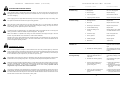
TROUBLESHOOTING GUIDE
(continued)
PROBLEM
POSSIBLE CAUSE
POSSIBLE REMEDY
Material discharges from
cutter unevenly; bunches
of material along swath.
(Continued)
2. Grass wet.
Allow grass to dry before mowing.
Slow ground speed of tractor but
keep engine running at full PTO
rpm. Cutting lower will help.
3. Rear of cutter too low, trapping
material under cutter.
Adjust cutter height and attitude.
(See instructions.)
1. Low on lubricant.
Fill to proper level.
2. Improper type lubricant.
Replace with proper lubricant.
3. Excessive trash build-up around gearbox.
Remove trash.
1. Cutter too low.
Raise cutter - reset tailwheel and
3-pt. control stop.
2. Field is ridged.
Cut field at a different angle.
3. Field is too wet.
Stop and wait until it is drier.
1. Shear bolt sheared.
Install new shear bolt.
2. Tractor PTO not engaged.
Engage PTO.
3. Tractor PTO clutch slipping.
Rebuild / replace clutch.
Cutter moves from side
to side when cutting.
Loose tractor sway chains or bars,
or sway blocks improperly installed.
Adjust sway chains, bars, or
sway blocks.
PTO contacts cutter front
frame when raised.
Raising cutter too high or incorrect
adjustment of tractor top link.
Adjust top link or tractor lift stops.
(See attachment instructions.)
Blade bolts come
loose.
1. Bolts not tightened.
Tighten bolts to 350 ft./lb.
2. Bolt hole elongated or oversized.
Replace blade carrier.
3. Blade bolt threads are worn or
damaged.
Replace blade bolt, lockwasher,
and nut.
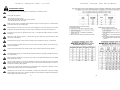
OPERATIONAL SAFETY (continued)
Stop cutter and tractor immediately upon striking an obstruction. Turn engine off, remove key, inspect and
repair any damage before resuming operation.
The chain guards, bands, flaps, driveline shields, and gearbox shields should be used and maintained in good
working condition. They should be inspected carefully, at least daily, for missing or broken cable, chain links,
shields, or guards. Missing broken, or worn items must be replaced at once to reduce the possibility of injury
from thrown objects or entanglement.
Stay alert for holes, rocks and roots in the terrain and other hidden hazards. Keep away from drop-offs.
Gearbox overheating.
Use extreme care and maintain minimum ground speed when transporting on hillside, over rough ground and
when operating close to ditches or fences. Be careful when turning sharp corners.
Reduce speed on slopes and sharp turns to minimize tipping or loss of control. Be careful when changing
directions on slopes. Do not start or stop suddenly on slopes. Avoid operation on steep slopes.
When using a unit, a minimum 20% of tractor and equipment weight must be on tractor front wheels. Without
this weight, tractor could tip over, causing personal injury or death. The weight may be attained with a front
end loader, front wheel weights, ballast in tires of front tractor weights. When attaining a minimum 20% of
tractor and equipment weight on the front wheels, you must not exceed the ROPS weight certification. Weigh
the tractor and equipment. Do not guess or estimate!
Blade is scalping ground.
Cutter will not cut.
(Shear bolt drive only)
Inspect the entire machine periodically as indicated in the Maintenance Section of this manual. Look for loose
fasteners, worn or broken parts, pinched hydraulic hoses, and leaky or loose fittings. Make sure all pins have
cotter pins and washers. Serious injury may occur from not maintaining this machine in good working order.
Be careful when operating tractor and cutter on uneven ground to avoid upsetting.
In extremely uneven terrain, real wheel weights, front tractor weight, and/or tire ballast should be used to
improve stability.
Pass diagonally through sharp dips and avoid sharp drops to prevent “hanging up” tractor and cutter. Practice
will improve your skills in maneuvering rough terrain.
Avoid sudden starts and stops while traveling up or downhill.
Always cut down slopes; never across the face. Avoid operation on steep slopes. Slow down on sharp turns
and slopes to prevent tipping and/or loss of control.
11
28