1
AirOS 5.3 - Ubiquiti Wiki
http://www.ubnt.com/wiki/AirOS_5.3
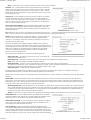
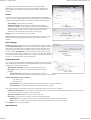
IP Address: enter the IP address of the device while Static Bridge IP Address mode is selected. This IP will be used for the AirOS device
management purposes.
IP Address and Netmask settings should consist with the address space of the
network segment where AirOS v5.3 device resides. If the device IP settings and
administrator PC (which is connected to the device in wired or wireless way) IP
settings will use different address space, the AirOS device will become
unreachable.
Netmask: This is a value that when expanded into binary provides a mapping to
define which portions of IP address groups can be classified as host devices and
network devices. Netmask defines the address space of the network segment
where AirOS device resides. 255.255.255.0 (or /24) Netmask is commonly used
among many C Class IP networks.
Gateway IP: Typically, this is the IP address of the host router which provides
the point of connection to the internet. This can be a DSL modem, Cable modem,
or a WISP gateway router. AirOS v5.3 device will direct the packets of data to
the gateway if the destination host is not within the local network.
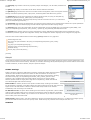
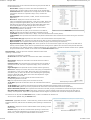
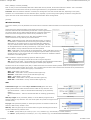
Bridge IP Address assigned manually (Static)
Gateway IP address should be from the same address space (on the same
network segment) as the AirOS device.
Primary/Secondary DNS IP: The Domain Name System (DNS) is an internet
"phone book", which translates domain names to IP addresses. These fields
identify the server IP addresses of where the AirOS device looks for the
translation source.
Primary DNS server IP address should be specified for the device
management purposes.
Secondary DNS server IP address is optional. It is used as the fail-over in
case the primary DNS server will become unresponsive.
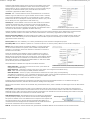
IP Aliases
MTU: defines the size (in bytes) of the largest protocol data unit the layer can
pass on. When using slow links, large packets can cause some delays thereby
increasing lag and latency
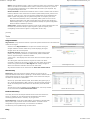
DHCP Fallback IP: In case the Bridge is placed in Dynamic IP Address mode
(DHCP) and is unable to obtain an IP address from a valid DHCP server, it will
fall back to the static IP address listed here.
In case the IP settings of the AirOS v5.3 powered device are unknown, they can
be retrieved with the help of the [UBNT_Discovery_Utility Ubiquiti Discovery
Utility]. Multi-platform Utility should be started on the administrator PC which
resides on the same network segment as the AirOS device.
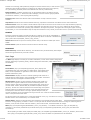
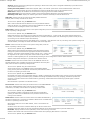
Bridge IP Address assigned automatically DHCP with IP fallback
AirOS v5.3 system will return to the default IP configuration
(192.168.1.20/255.255.255.0) If the Reset to defaults routine is initiated.
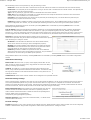
DHCP Fallback Netmask: In case the Bridge is placed in Dynamic IP Address mode (DHCP) and unable to obtain an IP address from a
valid DHCP server, it will fall back to the static Netmask listed here.
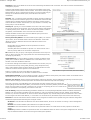
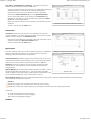
Spanning Tree Protocol: Multiple interconnected bridges create larger networks using the IEEE 802.1d Spanning Tree Protocol (STP),
which is used for finding the shortest path within the network and to eliminate loops from the topology.
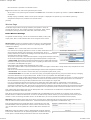
If the STP is turned on, the AirOS Bridge will communicate with other network devices by sending and
receiving Bridge Protocol Data Units (BPDU). STP should be turned off (selected by default) when the AirOS
device is the only bridge on the LAN or when there are no loops in the topology as there is no sense for the
bridge to participate in the Spanning Tree Protocol in this case.
Spanning Tree Protocol enabled
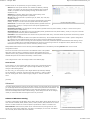
Auto IP Aliasing configures automatically generated IP Address for the corresponding WLAN/LAN interface if enabled. Generated IP
address is the unique Class B IP address from the 169.254.X.Y (http://en.wikipedia.org/wiki/Link-local_address) range (Netmask
255.255.0.0) which are intended for use within the same network segment only. Auto IP always starts with 169.254.X.Y while X and Y
are last 2 digits from device MAC address (i.e. if the MAC is 00:15:6D:A3:04:FB, Generated unique Auto IP will be 169.254.4.251).
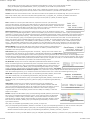
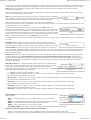
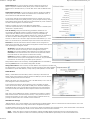
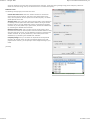
IP Aliases for internal and external network interface can be configured. IP Aliases can be specified using the IP Aliases configuration
window that is opened while activating the "Configure" button.
16 van 34
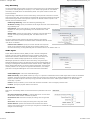
IP Address is the alternative IP address for the LAN or WLAN interface, which can be used for the routing or device management
purposes;
Netmask is the network address space identifier for the particular IP Alias;
Comments is the informal field for the comment of the particular IP Alias. Few words about the alias purpose are saved there
usually;
Enabled flag enables or disables the particular IP Alias. All the added IP Aliases are saved in the system configuration file. However,
only the enabled IP Aliases will be active during the AirOS system operation.
14-4-2011 21:46