1
OPERATION
3.4
THREE STEP CHARGE ALGORITHM
BATTERY VOLTAGE
BULK
ABSORPTION
FLOAT
As the Chargemaster is equipped with a three-step Plus
charge system, the batteries can also remain connected to
the Chargemaster in winter. One hour every 12 days the
charger automatically switches to absorption to keep the
battery running properly and prolong its life span. The
three-step Plus charge system is also safe for all the
connected equipment.
See
also
section
8.3
for
detailed
characteristics of the three step Plus charge
system.
CHARGE CURRENT
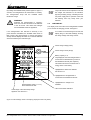
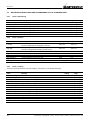
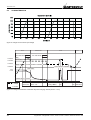
Figure 4: Three step Plus charge system
See figure 4. Battery charging is accomplished in three
automatic stages: BULK, ABSORPTION and FLOAT.
The first step of the three step Plus charge system is the
BULK phase, in which the output current of the charger is
100%, and the greater part of the capacity of the battery is
rapidly charged. The current charges the batteries and
gradually the voltage rises to the absorption voltage of
14.4V (12V models) or 28.8V (24V models) at 25°C / 77°F.
The duration of this phase depends on the ratio of battery
to charger capacity, and also on the degree to which the
batteries were discharged to begin with.
The bulk phase is followed by the ABSORPTION phase.
Absorption charging starts when the voltage on the
batteries has reached 14.4V (12V models) / 28.8V (24V
models) at 25°C / 77°F, and ends when the battery is
completely full. Battery voltage remains constant at 14.25V
(12V models) / 28.5V (24V models) at 25°C / 77°F
throughout this stage, and the charge current depends on
the degree to which the battery was initially discharged,
the battery type, the ambient temperature, and so on. With
a wet cell battery this stage lasts some four hours, with gel
and AGM around three. Once the battery is 100% full, the
Chargemaster automatically switches over to the float
phase.
During the FLOAT phase the Chargemaster switches to
13.25V (12V models) or 26.5V (24V models) at 25°C /
77°F and stabilises this voltage to maintain the batteries in
an optimum condition. Connected DC-loads are powered
directly by the charger. If the load is higher than charger
capacity, the required additional power comes from the
battery, which will be progressively discharged until the
charger automatically switches back to the bulk phase.
Once consumption decreases, the charger goes back to
normal operation of the three-step charge system.
10
3.4.1
Temperature compensated charging
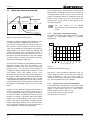
By installing the battery temperature sensor the charge
voltages are automatically adapted for deviating
temperatures.
24V
12V
charge voltage (V)
TIME
battery temperature (°C)
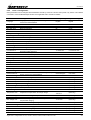
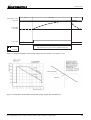
Figure 5:
Temperature compensated charging
See figure 5. When the battery temperature is low, the
charge voltage increases. On the other hand, when the
battery temperature is high, the charge voltage is
decreased. Over charge and gassing are prevented this
way. This will extend the life of your batteries.
3.4.2
Connection of a second and third battery
The Chargemaster is equipped with a second and a third
charge output which can be used to give a maintenance
charge to small battery sets like a starter battery.
Maximum output current: 10 Amps (± 10%).
Output voltage: same as the main charger.
See section 4.6 for connection.
August 2007 / Chargemaster 12/70-3, 12/100-3, 24/40-3, 24/60-3, 24/80-3 & 24/100-3 / EN