1
Royal 720 PLUS ECO
Royal 900
INSTRUCTIONS MANUAL
Solid fuel cooker - Royal 720 PLUS ECO/
Royal 900 PLUS
GBR
DEAR CUSTOMER,
We appreciate your trust dedicated to us and your determination to buy our product.
You made a good choice, since this oven has technical characteristics which place it into top
class, and you will be assured of it during exploitation.
Please, carefully read this manual before you start to use his oven, since you will find tips and
tricks for proper handling.
We believe that you will be one of the millions of satisfied customers of our products.
A.D. „Milan Blagojević“Smederevo
CONTENTS
Warning before use...............................................................................................3
Description............................….............................................................................4
Installation.............................................................................................................6
Managing operation of the cooker.........................................................................9
Operating mode....................................................................................................10
Cleaning and maintenance...................................................................................10
General notes.......................................................................................................13
Advices for environmental protection....... ............................................................13
WARNING BEFORE USE
To obtain proper operation of your cooker, it is important to read this manual and strictly
observe directions for use and handling.
For combustion, use solid fuels like woods, briquettes and low-caloric coal. It is forbidden to put
explosive devices and materials into the firebox or on the plate. It is forbidden to keep
combustible materials in direct vicinity of the oven.
For proper combustion, in normal operating mode, air flow in the chimney should be 10-12 Pa.
In case if air flow is higher then 15Pa, flap should be installed into the chimney.
It is necessary on regular basis to ventilate room in which oven is located due to inflow of fresh
air necessary for combustion.
Cooker parts get heated to high temperatures during operation and appropriate attention is
necessary during handling. Do no allow children to handle and play in vicinity of the cooker.
Only spare parts approved by the manufacturer may be installed on the cooker. Do not make
any changes to the cooker.
At the first firing up, slight smoking may occur, especially from the surface of the plate. It is
common appearance which originates due to combustion of deposits on the plate surface (anticorrosive protection, color, dust....). Room in which cooker is located should be ventilated during
first firing up.
Do not allow part of the cooker to become incandescent.
On the same chimney, do not install any device which uses gas as fuel.
During firing up, use protective gloves since door handles and vessels are heated.
Customer must observe national and local regulations for oven installation.
In case of non-observance of this manual, manufacturer shall not accept any
responsibility for damages on the cooker.
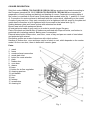
COOKER DESCRIPTION
Solid fuel cooker ROYAL 720 PLUS ECO / ROYAL 900 are produced and tested according to
the European standard EN 12815. ROYAL 720 PLUS ECO / ROYAL 900 are intended for
preparation of food (cooking and baking) and heating of rooms. Constructive working table of
the cooker is consisted of nickel frame, steel plates and rounded inlets (fig. 1, position 2, 6 and
4). Connection for smoke exhaust is delivered with the cooker which, depending on the model,
is made of gray cast iron. Gray cast connection is to be tightened with the screw to the plate and
metal sheet connection is to be tightened with four screws to the lateral side (fig. 2).
Sealing between plate and frame is done with asbestos-free braid.
Burner area is built with waterproof bricks.
All cast parts are made of gray cast iron in order to provide longer life span.
Parts of the back and lateral side of firebox are protected with fireproof bricks, and bottom is
protected with insulating material. Baking oven is enameled.
External lateral sides, firebox door, oven door, cover of tray and pan are made of steel sheet
and protected with enamel.
Decorative profiles are made of aluminum with nickel surface.
Handles of firebox door, oven and trays may be of steel or cast, which depends on the cooker
model. On the oven door, there is decorative ceramic glass.
Parts:
1. mask
2. frame
3. smoke exhaust connection
4. round plate inlet
5. button for mode selection
6. plate
7. firebox door
8. oven door
9. drawer
10. base
11. button for air flow regulation
12. cleaning aperture
13. grid handle
14. oven
15. pan
16. ashtray
17. accessories
18. cleaning kit
Fig. 1
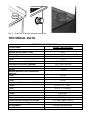
Fig. 2 – Positions of smoke exhaust connection
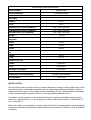
TECHNICAL DATA
Technical characteristics
Product name
Product purpose
Nominal power (wood / coal)
Efficiency
- wood
- coal
Dimensions of cooker (HxWxD)
Dimensions of firebox (HxWxD)
Dimensions of oven (HxWxD)
Weight
Minimal distance from combustible
materials
- back
- side
- front
Emission of CO (reduced to 13% O2)
ROYAL 720 PLUS ECO
Solid fuel cooker
8 kW
73%
71%
850 x 720 x 600 mm
175 x 250 x 400 mm
270 x 350 x 470 mm
108 kg
50 cm
50 cm
80 cm
- wood
0,13 % ≙ 1,7 g/m³
- coal
Emission of dust
- wood
- coal
Chimney connection
Position of the chimney connection
Temperature of smoke gases
Air regulation
Draft
0,05 % ≙ 0,69 g/m³
0,058 g/m³
0,056 g/m³
Ø120 mm
left / right / back / central
131°C
primary and secondary
10-12 Pa
Technical characteristics
Product name
Product purpose
Nominal power (wood / coal)
ROYAL 900
Solud fuel cooker
9 kW
Efficiency
- wood
60 %
- coal
62 %
Dimensions of cooker (HxWxD)
850 x 900 x 600 mm
Dimensions of firebox (HxWxD)
175 x 250 x 400 mm
Dimensions of oven (HxWxD)
270 x 500 x 470 mm
Weight
Minimal distance from combustible
materials
121 kg
- back
50 cm
- side
50 cm
- front
Emission of CO (reduced to 13%
O2 )
80 cm
- wood
0,35 %
- coal
0,37 %
Emission of dust
- wood
0,058 g/m³
- coal
0,056 g/m³
Chimney connection
Position of the chimney connection
Temperature of smoke gases
Air regulation
Ø120 mm
left / right / back / central
Primary and secondary
10-12 Pa
INSTALLATION
Do not put the cooker in direct vicinity of wooden elements, cooling devices, plastic parts of the
furniture and other combustible materials, since it creates high working temperature which is
distributed at the exterior of the cooker (at the combustion of fuel). The least distance between
cooker and surrounding elements is 50 cm, and combustible materials 80 cm.
If surface on which cooker is to be positioned is made of easily combustible material (wood,
warm floor, laminated floor...) it is necessary to install metal sheet protection - lateral width 10
cm, in front 50 cm.
Due to its weight, it is necessary to install cooker on the floor with appropriate carrying capacity.
If latter does not fulfill requirements, please take proper measures to achieve it (e.g. distribution
of weight).
Cooker is to be connected with chimney through shuttles and via connection on the back side of
cooker, in order to provide adequate sealing and smoke flow from cooker to the chimney.
Shuttle may not be installed too deeply into the chimney to avoid reduction of cross-section of
the surface thus impairing air flow in chimney. Do not use reducers which would reduce crosssection of the smoke exhaust pipe (shuttle).
Cooker requires intake of fresh air into the room in which it is installed, whereat surface of the
opening for intake of fresh air may not be smaller then 0,4 dm². Device for intake of fresh air is
to be mounted outside collective room for ventilation which must be secured with doors and
grid.
Ventilators which work in the same room in which cooker is mounted may create disturbances
with the cooker operation. Also, all devices or air conditioning which make sub-pressure in the
room in which oven is installed must be adjusted not to make decompression which disables
normal operation of the cooker.
Prior to installation of the cooker, check air flow in the chimney since it is one of the key factors
of proper operation. Air flow depends on accuracy of the chimney and meteorological
conditions. One of the simplest aspects for checking of the air flow in the chimney is using
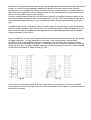
candle flame, as illustrated in the figure 2. Candle flame is to be offered to connection opening
of the chimney and, if it sways towards opening, air flow is satisfactory (fig. 2b). Weak swaying
of the flame is indicator of weak air flow (fig. 2a).
Fig. 2a
Fig. 2b
If air flow in the chimney is weak (Fig. 2a), check accuracy of chimney. Chimney should be
located within interior of an object, and if it’s on external walls of an object, it is recommended to
insulate the chimney.
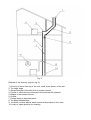
Fig. 3
Defaults of the chimney may be (fig. 3):
1. Chimney is lower then top of the roof, small cross section of the exit
2. Too large slope
3. Abrupt alteration of the direction of smoke channel,
4. Cooker or other device connected to the same smoke channel,
5. Bulges in the smoke channel,
6. Cranks,
7. Foreign body or deposited smut,
8. Too deep installed pipe,
9. Ventilator or other device which creates sub-pressure in the room
10. Leaky or open aperture for cleaning
MANAGING OPERATION OF THE COOKER
Start firing up with moderate fire in terms of avoiding thermal shocks.
Following quantity of woods is to be inserted only when previous quantity gets burned.
Do not allow clogging of the grid with ashes and unburned fuel. Clean the grid.
Open the door slowly and carefully, not abruptly, enabling equalization of pressures in the
burner and room, otherwise, it may cause occurrence of smoke in the room.
Cooker is designed and provided for operation with constantly closed firebox door, except
during filling with fuel. Do not open door unnecessarily.
Wood must be with maximal 20% humidity for maximal burning performance. Otherwise, tar and
gases occurs which create creosote with water vapor. If creosote occurs in larger quantity, fire
may occur in the chimney.
Fire in the chimney will be easily recognized as follows: characteristic sound which comes from
the chimney like loud hoot, visible flame which comes from chimney, high temperature of
surrounding walls and characteristic smell of flare.
If fire occurs, take following steps:
• Immediately call fire department
• Suppress oxygen inflow into the chimney and turn off the cooker
• Do not put anything in chimney and look after fire not to extend to the wooden
construction or some other inflammable material in vicinity.
• NEVER extinguish the chimney with water or to pour water in the cooker
• Fire in the chimney may be extinguished only with the device with dry powder
• Water may be used only for surrounding materials
Do not cool surrounding walls with water
Comment:
If fire in the cooker in any reason becomes dangerously strong, do as follows: close air
flaps which provide air for combustion. If necessary, put some specially prepared sand
into the firebox or special fireproof extinguishing blanket. It would be good to have fireextinguishing device.
Prior to second filling, clean the grid with auxiliary tools to avoid clogging of fresh air intake.
Regularly clean ashtray taking care to maintain it always clean.
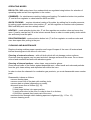
Button for operating mode selection
(fig. 9), has two positions:
• „O“- for firing up and and cooking
• „Z“- for cooking, baking and heating
Fig. 9
OPERATING MODES
ROYAL 720 / 900 cooker have four modes which are regulated using buttons for selection of
operating mode and air flow regulation in the cooker.
COMBINED – for simultaneous cooking, baking and heating. Put selection button into position
„Z“ and air flow regulator to value between MAX and MIN
QUICK COOKING - requires intensive heating of the plate, by adding fuel in smaller amounts,
by setting mode seletion button into position „O“, air flow regulator on medium value (between
MAX and MIN) and oven door always closed.
HEATING – mode selection button into „Z“,air flow regulator on medium value and oven door
open. If coal is used as fuel, fill in the burner several times in order to create quality cinder which
can sufficiently heat the plate.
ROASTING/BAKING - mode selection button into „Z“,air flow regulator on medium value and
oven door open after putting in the pan.
CLEANING AND MAINTENANCE
Regular cleaning enables proper operation and longer life span of the oven. All external and
internal cleanings are to be done on cold oven.
Cleaning of external surfaces – with soft cloth which will not damage cooker surfaces.
Chemical cleaning agents may be used and don’t damage surfaces of the oven. Do not clean
colored and enameled surfaces with abrasive agents.
Cleaning of internal surfaces –when clean, use protective gloves.
Clean internal walls of the firebox against deposited smut, collect small and unburned particles
from the grid, clean ashtray and deposited ash within the oven.
In order to clean the channels for combustion gas products, you must disassemble some cooker
parts.
Disassembly is done as follows:
• remove smoke pipes,
• remove round inlet of the plate with auxiliary tools,
• remove plate or plates (depending on model),
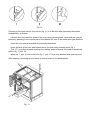
• dismount oven door as follows (fig. 10):
1. open door
2. both hinge limiters into upper position,
3. gently push door to the oven, in order to lean it on limiters,
4. pulll door upwards then lower part of the oven.
• unscrew button through which cleaning aperture is tightened (fig. 1. Pos. 12)
• remove cleaning cover.
Fig. 10
Cleaning of the oven interior from the tar (fig. 11) is to be done after previously described
disassemble, as follows:
• remove tar from protective sheet of the oven using cleaning tools, clean and put it on the
bottom by pressing in the vertical part of the channel for flow of the combustion gas products.
• clean tar from vertical channels as previously described
• lower surface of the oven and bottom are to be clean using cleaning tools (fig. 1,
Pos. 17), by pulling towards opening for cleaning which is already removed as described
before (fig. 1, pos. 12)
• plate (fig. 1, pos. 6) and round inlet (fig. 1, pos. 17) are to be cleaned with cleaning tools
After cleaning, assembly is to be done in reverse order of the disassembly.
Fig. 11
Cleaning of glass surfaces – firebox glass gets dirty during operation. For cleaning, use soft
detergents. Do not use abrasive agents since glass surface may get damaged. Clean glass
when it’s cold.
Cleaning and maintenance of the chimney- cleaning and control of the chimney is
recommended at least once a year as well as after longer inactivity. Regular maintenance and
control of the chimney will prevent origination of fire and weak operation.
IRREGULARITIES IN OPERATION AND TROUBLESHOOTING
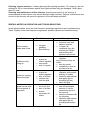
In the following table, there are most frequent operating irregularities and troubleshooting.
Table: Display of the most frequent irregularities, possible causes and troubleshooting.
Problem
Possible cause
Remedy
•
Stove weakly
heats and cooks
•
•
•
Problems with
firing up
•
•
•
Smoke is coming
below the plate
•
•
Firebox door
glass has tar after
a short period of
operation
•
•
•
•
Irregular
handling
Bad chimney
closed air
intake regulator
wet woods
lack of oxygen
closed air
intake regulator
lack of air flow
unclean ash
from the grid
wet woods
too much fuel
lack of air flow
closed
secondary air
intake
Carefully read and
observe manual
• In case if all
conditions from the
manual are fulfilled
and problem still
persists, call service
• open air intake
regulator
and provide primary air
intake
• use dry woods
• ventilate the room to
provide fresh air
• open air intake
regulator and provide
primary air intake
• carefully read manual
and apply tips for
providing air flow
• clean the grid
• use dry woods
• see recommended
amount of fuel for
combustion given in
the manual
• check connection with
the chimney
• carefully read manual
and apply tips for
providing secondary
air
GENERAL NOTES
If all installation recommendations, operating and cleaning regulation given in this manual are
met, stove represents proven and safe household device.
Prior to installation, remove the package. Take care of possible injuries since wooden battens
on packaging have nails. Dispose of plastic bag in the proper place according to the local
regulations. Old stove which will not be used in the future should be disposed of according to
the local regulations.
All claims, evaluated as defects or weak functioning of the stove should be reported to
manufacturer or authorized service via phone or in written form with fiscal bill attached. All
contact information is given at the end of this manual.
All defects on the stove are to be repaired exclusively by the manufacturer.
If unauthorized personnel make any servicing or repairs or changes, owner of the stove will lose
the right to service guaranteed by the manufacturer.
Procurement of spare parts is to be done exclusively through manufacturer, based on positions
and figures or their names in this manual.
Manufacturer shall not bear any liability if purchaser does not observe instructions and
installation manual.
ADVICES FOR ENVIRONMENTAL PROTECTION
Packaging
- Packaging material may be 100 % recycled.
- At disposing of the waste, observe local regulations.
- Packaging material (plastic bags, parts of polystyrene-styropor etc.) should be
kept out of reach of children, since it is potential source of danger.
- Pay attention to safety during removal and disposing of wooden battens since they are
nailed.
Product
- Device is made of materials which may be recycled. At the disposal of waste,
Observe local environmental laws.
- Use only recommended fuels.
- It is forbidden to burn inorganic and organic waste (plastic, cardboard, textile, oiled wood
etc.), since within combustion it discharges cancerous and other harmful materials.
A.D. “Milan Blagojević” Smederevo
Đure Strugara 20
11300 Smederevo
tel: 026 633 600
026 633 601
Fax: 026 226 926
E-mail: [email protected]
www.mbs.rs