1
http://www.epsolarpv.com
BEIJING EPSOLAR TECHNOLOGY CO.,LTD
4 Operation
4.1 MPPT Technology
The TRACER utilizes Maximum Power Point Tracking technology to extract
maximum power from the solar module (s). The tracking algorithm is fully automatic
and does not require user adjustment, TRACER technology will track the array
maximum power point voltage (Vmp) as it varies with weather conditions, ensuring
that maximum power is harvested from the array through the course of the day.
·Current Boost
In many cases, TRACER MPPT technology will ―boost‖ the solar charge current. For
example, a system may have 8 Amps of solar current flowing into the TRACER and
10 Amps of charge current flowing out to the battery. The TRACER does not create
current! Rest assured that the power into the TRACER is the same as the power out of
the TRACER. Since power is the product of voltage and current (Volts×Amps), the
following is true*:
(1)
Power Into the TRACER=Power Out of the TRACER
(2)
Volts In×Amps In=Volts Out×Amps Out
* Assuming 100% efficiency. Actually, the losses in wiring and conversion exist.
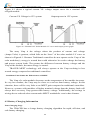
If the solar module’s Vmp is greater than the battery voltage, it follows that the
battery current must be proportionally greater than the solar input current so that input
and output power are balanced. The greater the difference between the maximum
power voltage and battery voltage, the greater the current boost. Current boost can be
substantial in systems where the solar array is of a higher nominal voltage than the
battery.
·An Advantage Over Traditional Controllers
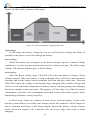
Traditional controllers connect the solar module directly to the battery when
recharging. This requires that the solar module operate in a voltage range that is below
the module’s Vmp. In a 12V system for example, the battery voltage may range from
11-15Vdc but the module’s Vmp is typically around 16 or 17V.
10