1
Managing Hardware Devices
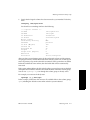
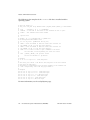
Hardware paths are in the H/W Path column.
2.
Set the component into blink mode. To do this, enter
ftsmaint blinkstart hw_path
hw_path is the hardware path determined in step 1. This causes the
component’s status lights to begin blinking, which verifies that the status
lights are operational. For example, the following commands blink the status
lights in suitcase 0, slot 0 in card-cage 3, and all occupied slots in card-cage 3,
respectively.
ftsmaint blinkstart 0/0
ftsmaint blinkstart 0/3/0
ftsmaint blinkstart 0/3
3.
Reset the status lights into normal mode. To do this, enter
ftsmaint blinkstop hw_path
4.
Repeat steps 2 and 3, as necessary, for all components in question.
Error Detection and Handling
Hardware errors are detected by the hardware itself and then evaluated by the
maintenance and diagnostics software. After a hardware error, the affected device
is directed to test itself. If it fails the test, the error is called hard and the device is
taken out of service. If it passes the test, the error is called soft.
The system takes the device out of service and places the device in the ERROR state
under the following circumstances:
■
The error is a hard error.
■
The error is a soft error, the soft error count equals the soft_wt variable, and
the mean time between errors is less than the MTBF threshold set for the
device.
If the error is a hard error, and the mean time between failures is greater than the
predefined MTBF threshold, the system attempts to enable the device and return
it to the CLAIMED state.
For more information about soft error weights, MTBF thresholds, and how MTBF
is calculated, see “Managing MTBF Statistics.”
HP-UX version 11.00.03
Administering Fault Tolerant Hardware
5-27