Transcript
SMOKE ALARM MANUAL
Ionization Type Models
INTRODUCTION
IMPORTANT: Please read this entire owner’s manual and follow all
directions as written.
This symbol alerts you to important operating instructions or to
potentially hazardous situations. Please read these items carefully.
Models
• SA308–Basic
• SA310–Basic
• SA318–General Purpose
• SA320–General Purpose
–Alarm–Pause® feature silences nuisance alarms
–Recommended for kitchen area, suitable for all rooms
• SA358–for Stairs and Hallways
–Emergency light illuminates escape route (if the unit is in alarm)
–Ideal for stairs and hallways suitable for all rooms
• SA500–Multi-location
• SA900–Multi-location with Long Life Lithium Battery
IMPORTANT INFORMATION ABOUT YOUR SMOKE ALARM
• Install alarms outside of every bedroom area and on every floor of
your home. Please refer to Section 3 “Where to Locate Smoke
Alarms” for details.
• Install the alarm as close as possible to the center of the ceiling.
• Your Smoke Alarm is packaged with battery/batteries
disconnected. Connect them before mounting the unit. Ensure
proper polarity of batteries. Alarm may be damaged if batteries
are reversed.
• Replace batteries if the smoke alarm beeps approximately once
every 45 seconds (low battery warning).
• Test the alarm weekly by pressing and holding the cover/test
button for up to 20 seconds until the alarm sounds.
• Models described in this manual are designed for single family
residences, including homes and apartments, rather than
commercial or industrial use.
Smoke Alarm Safety Features
• Alarm Signal – 3 beeps every 4 seconds.
• Operating Light (LED) – Light flashes approximately every 45
seconds to let you know that the unit is powered.
• Low Battery Warning Beep – Approximately every 45 seconds
for up to 30 days to alert you when the battery needs replacing.
• Battery Removal Indicator – Cover resists closing if battery is
removed.
• Dual-Ionization Chambers – Advanced design responds to
visible or invisible particles of combustion (smoke) to sense fires
in their earliest stages. Compensates for changes in humidity and
temperature to virtually eliminate “nuisance” alarms caused by
normal atmospheric changes in the home.
CONTENTS OF THIS MANUAL
1. CAPABILITIES AND LIMITATIONS OF SMOKE ALARMS
2. SAFETY TIPS
3. WHERE TO LOCATE SMOKE ALARMS
4. NFPA RECOMMENDATIONS
5. LOCATIONS TO AVOID
6. INSTALLATION AND TESTING
7. BATTERY REPLACEMENT
8. MAINTENANCE AND TROUBLESHOOTING
9. LIMITED WARRANTY
10. OTHER AMERICAN SENSORS PRODUCTS
1. CAPABILITIES AND LIMITATIONS OF SMOKE ALARMS
American Sensors smoke alarms are designed to provide early
warning of fire and smoke at reasonable cost. Early warning can
mean the difference between a safe escape and no escape at all.
While smoke alarms can provide invaluable protection for you and
your family, they do have limitations.
• Smoke alarms cannot work without power. Battery operated
alarms will not work without proper batteries, with dead batteries
or if batteries are not properly installed. AC powered alarms will
not work if their AC power supply is cut off by an electrical fire,
an open fuse, a circuit breaker or any other reason.
If you are concerned about the reliability of either batteries or
your AC power supply for any of the above reasons, you should
install in your home both AC and battery powered smoke alarms
for added security. American Sensors also offers the SA379 model
which is AC powered with battery back-up.
• Smoke alarms are incapable of sounding the alarm until smoke
reaches the sensing chamber. Anything preventing smoke from
reaching the alarm may delay or prevent an alarm. A smoke
alarm cannot detect fire in the walls, chimney or roof unless and
until a significant amount of smoke reaches the alarm. A closed
door may prevent smoke from reaching an alarm on the other
side of the door. A smoke alarm may not sense a fire on another
floor of a home. For example, a basement smoke alarm may not
detect a fire which started on the first or second floor.
• Smoke alarms may not be heard. The loudness of the horn in
your alarm meets current standards. However, the sound may be
blocked by distance, closed doors, or ambient noise such as traffic
or a stereo. Smoke alarms may not be heard by persons who are
hard of hearing.
For these reasons, a smoke alarm should be installed in every
room or at least on every level of your home. American Sensors
recommends that hardwire AC powered smoke alarms be
interconnected, so that one alarm will trigger all other alarms to
sound their alarms.
• Smoke alarms are not fool-proof. Smoke alarms may not always
sense every kind of fire. They cannot be expected to sense fires
caused by carelessness or by safety hazards. They may not give
early warning of fast growing fires caused by smoking in bed,
violent explosions, escaping gas, improper storage of flammable
materials, overloaded electrical circuits, natural causes such as
lightning, children playing with matches, or arson.
•
Ionization Technology vs.
Photoelectronic Technology
Smoke Alarms
There are two different types of smoke alarm technology currently in
general use: ionization and photoelectronic. While both types of technology are suitable for general residential use, an ionization alarm will
normally respond faster to fast flaming fires, while a photoelectronic
alarm may be more sensitive to detecting slow smoldering fires. Because
home fires develop in different ways and are often unpredictable in their
growth, it is impossible to predict which type of alarm will provide the
earliest warning. For best home protection install at least one photoelectronic and one ionization smoke alarm on each level of your home.
Models SA308, SA310, SA318, SA320, SA358, SA500 and SA900
are ionization type smoke alarms.
A photoelectronic smoke alarm senses smoke using an electronic
photo receptor to sense the scattering of light by smoke particles.
• Smoke alarms are not substitutes for property, disability, life or
other insurance of any kind. Home owners and renters should
continue to insure their lives and property. Consult your
insurance agent.
• Smoke alarms have limited lives. One or more of the many
components could fail at any time. Therefore, test your smoke
alarm weekly. Clean and take care of it as described in this manual.
Repair or replace the smoke alarm when it fails to test properly.
Your smoke alarm should be replaced if it is ten years old.
2. SAFETY TIPS
Properly installed and maintained smoke alarms are an essential part
of a good home fire safety program. Your fire safety program should
also include a review of fire hazards and the elimination of
dangerous conditions whenever possible. Consider the following tips:
• Use smoking materials properly. Never smoke in bed.
• Keep matches and cigarette lighters away from children.
• Store flammable materials in proper containers. Never use them
near an open flame or sparks.
• Keep electrical appliances in good condition. Do not overload
electrical circuits.
• Keep stoves, fireplaces, chimneys, and barbecue grills grease free.
Make sure they are properly installed and away from any
combustible materials.
• Keep portable heaters and open flames such as candles away from
combustible material.
• Do not allow rubbish to accumulate.
• Keep a supply of extra batteries on hand for your battery powered
smoke alarms.
• Do not stand too close to the alarm when the unit is in alarm as
the loud horn could damage your hearing.
▲
! WARNING: Never disconnect the battery or the AC power
on any type of smoke alarm to silence a nuisance alarm.
Clear the area of smoke by opening doors or windows or fanning
the smoke away. Press the cover/test button on models SA318,
SA320, SA500 and SA900 to activate the Alarm-Pause® feature.
Most important, when fire strikes, a prepared and practiced
escape plan can make the difference between life and death.
Develop an escape plan and practice it with the entire family,
including small children.
• Ensure all family members are familiarized with the alarm signal.
• Prepare an escape plan. Draw a Floor Plan of Your Home and
determine two exits from each room. There should be a way to
get out of each bedroom without opening the door.
• Have Fire Drills Often. Practice your Escape and BE PREPARED.
• Decide on a meeting place at a safe distance from your home.
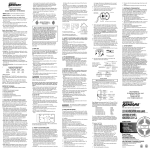
ESCAPE PLAN IN CASE OF FIRE
• Don’t waste time collecting possessions after a fire starts.
• Arouse all occupants and leave the building. Your most valuable
possession is your life.
• Doors can mean escape or death. Never open doors without first
checking for heat. Test them with your hands, if they feel warm,
fire may be walled up behind them – leave closed and find
another escape route.
• Call the fire department from OUTSIDE the building.
• If trapped inside, stay close to the floor, cover mouth with cloth,
conserve breath as you crawl to safety.
• Keep all doors and windows closed except for escape purposes.
• NEVER re-enter a burning building.
• Keep your family in a pre-arranged meeting place after your
escape.
Bath
Room
Bedroom
1
Bedroom
2
Living
Room
Kitchen
Dining
Room
Meeting
Place
Your local fire department may be able to offer you additional ideas
for safety and escape plans in the home.
Arrow
Dining
Kitchen
Dining
Bedroom Bedroom
Kitchen
Base of Clips
TV Room
Living Room
Living Room
Bedroom
Bedroom
Bedroom
Bedroom
Smoke alarms for limited protection
Additional smoke alarms for better coverage
Hall
Bedroom
Figure 2
Figure 1
Living
Room
Figure 3
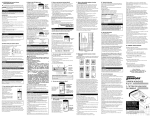
These diagrams show smoke alarm locations
as recommended above in 3a.
Basement
READ “CAPABILITIES AND LIMITATIONS OF SMOKE
ALARMS” in Section 1 of this manual.
Your local fire department or insurance company may be able to
give you further advice on the best smoke alarm locations in your
home. Call them and ask.
Smoke
Alarm
Hall Kitchen
Furnace
3b. WHERE TO LOCATE SMOKE ALARMS IN MOBILE HOMES
In mobile homes built after 1978 locate the smoke alarm as
described above.
Older mobile homes may have little or no insulation compared to
the ones built post 1978. These uninsulated exteriors can disrupt
airflow around the smoke alarm in hotter or colder weather. Locate
the alarm only on interior walls 4” to 6” (10 to 15 cm) from
ceiling 1. If you own an older mobile home, 2. If you notice the
exterior walls and/or ceiling are noticeably cold or warm 3. If you
are uncertain about the quality of insulation.
Regardless of the age of the mobile home, locate alarms throughout
to ensure maximum protection. Follow the location instructions in
this manual.
4. NFPA RECOMMENDATIONS
For your information, the National Fire Protection Association’s
Standard 72 reads as follows:
2-2.1.1.1 Smoke alarms shall be installed outside of each separate
sleeping area in the immediate vicinity of the bedrooms
and on each additional story of the family living unit,
including basements and excluding crawl spaces and
unfinished attics. In new construction a smoke alarm also
shall be installed in each sleeping room.
A-2.5.2.1 Smoke Detection – Are More Smoke Alarms Desirable? The
required number of smoke alarms might not provide reliable early
warning protection for those areas separated by a door from the
areas protected by the required smoke alarms. For this reason, it is
recommended that the householder consider the use of additional
smoke alarms for those areas for increased protection. The
additional areas include the basement, bedrooms, dining room,
furnace room, utility room, and hallways not protected by the
required smoke alarms. The installation of smoke alarms in
kitchens, attics (finished or unfinished), or garages is not normally
recommended, as these locations occasionally experience
conditions that can result in improper operation.
5. LOCATIONS TO AVOID
Avoid locations where smoke may not reach the alarm in time to
provide early warning, or where the alarm may not be effective.
DO NOT PLACE SMOKE ALARMS:
• In turbulent air from fans, doors, windows, etc. The rapid air
movement may prevent combustion particles from entering the
alarm.
• In dead air spaces such as at the peak of an “A” frame ceiling.
“Dead air” at the top may prevent smoke from reaching the alarm
in time to provide early warning. In rooms with simple sloped,
peaked or gabled ceilings, install smoke alarms on the ceiling 3
feet (90 cm) from the highest point of the ceiling.
Note: For complex ceiling structures, consult a safety expert for
the number of alarms required and the best locations.
• In very hot or cold areas where the temperature exceeds 1000F
(37.80C) or falls below 400F (4.40C).
• Less than 6 inches (15 cm) from the wall when mounted on the
ceiling.
Nuisance alarms could result when smoke alarms are located where
interference may occur with the sensing chamber. To avoid
nuisance alarms, DO NOT place smoke alarms:
• In high humidity areas such as bathrooms and attics. Place
smoke alarms at least 10 feet (3 meters) away from bathrooms.
• In insect-infested areas.
• In poorly ventilated kitchens or garages.
• In very dusty and dirty areas.
• Near fluorescent lights. Place smoke alarms at least 5 feet (1.5
meters) from fluorescent lights.
WARNING: Do not connect this smoke alarm to any other
alarm or auxiliary device. Connecting the alarm to any other device
may be detrimental to its proper operation.
3a. WHERE TO LOCATE SMOKE ALARMS
As a minimum, smoke alarms should be located between sleeping
areas and potential sources of fire such as a kitchen, heated garage
or basement. In single story homes with one sleeping area, an alarm
should be installed in the hallway outside the bedrooms (see Figure
1). In single story homes with two separate sleeping areas, a
minimum of two alarms are required, one outside each sleeping area
(see Figure 2). In multi-level or split-level homes, as a minimum, an
alarm should be installed outside each sleeping area, in the
basement and at every level of the home (see Figure 3).
• In every room of your home (except the bathroom): Research
indicates that substantial increases in warning time can be
obtained with each properly installed, additional alarm.
• In bedrooms: In anticipation of fires originating within these
rooms, caused by faulty wiring, lamps, appliances, smoking or
other hazards.
• In hallways: At a distance no greater than 13 feet (4 meters) from
the farthest wall and no greater than 26 feet (8 meters) from the
next alarm.
• In the center of a room or hallway: As it is impossible to predict
the source of a fire. If it is necessary to place the alarm on a wall,
always locate the top of the smoke alarm 4–6 inches (10–15 cm)
from the ceiling.
• As needed: To compensate for closed doors and other obstacles
that may interfere with the path of smoke to an alarm. They may
also prevent occupants on one side of a closed door from hearing
an alarm on the other side of the door.
• Do not install it directly over a stove, toaster or dishwasher.
• Models SA308/SA310–Basic Models–can be located in any area
of the home.
• Models SA318/SA320/SA500/SA900–General Purpose Models
–can be located in any area of the home. Its Alarm-Pause® feature
makes it ideal in the kitchen area to silence nuisance alarms.
• Model SA358–Emergency Light Model-can be located in any
area of the home. The emergency light helps to illuminate escape
routes in case of power failure during a fire. This alarm is
therefore ideal for stairs and hallways and is very suitable for
children’s rooms.
Cover
Bedroom
6. INSTALLATION AND TESTING
A. Testing Before Installation
• Connect battery/batteries. Storage in low humidity, and certain
transportation conditions, may cause electrostatic charges to
build-up in the alarm system housing. Although harmless, these
charges may increase the length of time during which the horn
sounds upon battery insertion or test button operation. The
condition may be cleared by gently wiping the outside of the
plastic cover with a clean, damp cloth.
• Check the operating light. It should flash approximately every 45
seconds.
• MODELS SA308/SA310:Press and hold the cover/test button
until alarm sounds. Note: It may be necessary to press the cover
for up to 20 seconds for alarm to sound. An alarm is indicated by
a loud continuous pattern sound. Alarm may continue to sound
for up to 10 seconds after cover is released.
• MODEL SA358, EMERGENCY LIGHT: Press and hold test
button until alarm sounds and emergency light illuminates.
• MODELS SA318/SA320/SA500/SA900, Alarm-Pause®
Models: Press the cover for a minimum of 5 seconds, until the
horn sounds, then release. The horn will stop sounding. The
alarm will be in Alarm-Pause® mode. In this mode, the alarm
should be silenced for approx. 10 minutes unless there is a very
heavy build-up approaching 4% per foot obscuration. In AlarmPause® mode, the LED will flash once every 10 seconds to
indicate that the Alarm-Pause® feature is on. After approx. 10
minutes, the alarm will beep twice to indicate the alarm
sensitivity has returned to normal.
IF THERE IS ANY QUESTION AS TO THE CAUSE OF AN
ALARM, ALWAYS ASSUME THAT IT IS DUE TO AN
ACTUAL FIRE AND FOLLOW YOUR FIRE EMERGENCY
PLANS. Do not assume it is a nuisance or false alarm. Valuable
time for escape could be lost.
Installation
• Obtain a screwdriver and a drill with 3/16” (5 mm) bit.
• Find the arrow along the side of the cover. Located under are 2
clips. To open the smoke alarm, press down on the base of clips
while lifting the cover at the same time. Handle the unit with
care to avoid damage.
• IF MOUNTING SMOKE ALARM ON WALL – Place alarm on
wall so that the hinge for the cover faces the floor, and the arrow
indicating where to open, faces the ceiling. This mounting
position ensures that the cover hangs open as a visual reminder
that the battery is missing. This position also provides good
visibility of screw holes for easy installation.
• Mark holes through the alarm base, then remove the alarm. Drill
two 3/16” (5 mm) holes to line up with mounting holes in the
alarm base. Keep smoke alarm out of reach from plaster dust
while drilling.
• Insert the plastic anchors. Screw alarm base onto ceiling support.
• Properly install batteries.
• Close cover and test as recommended in this section.
• MODEL SA358, EMERGENCY LIGHT: Remove batteries to
locate mounting screw slots.
Note: This equipment should be installed in accordance with the
National Fire Protection Association’s Standard 72. (National
Fire Protection Association, Batterymarch Park, Quincy, MA
02269).
normal residential use and does not cover the battery, nor does this
warranty cover damage resulting from negligent handling, misuse, or
lack of reasonable care. This warranty is in lieu of any other warranty
either expressed or implied.
DICON GLOBAL INC. SHALL HAVE NO
LIABILITY FOR ANY PERSONAL INJURY OR PROPERTY
DAMAGE, OR ANY SPECIAL INCIDENTAL, CONTINGENT
OR CONSEQUENTIAL DAMAGE OF ANY KIND RESULTING
FROM A FIRE. THE EXCLUSIVE REMEDY FOR BREACH OF
THE LIMITED WARRANTY CONTAINED HEREIN IS THE
REPAIR OR REPLACEMENT OF THE DEFECTIVE PRODUCT
AT DICON GLOBAL INC.’S OPTION. IN NO
CASE SHALL DICON GLOBAL INC.’S
LIABILITY UNDER ANY OTHER REMEDY PRESCRIBED BY
LAW EXCEED THE PURCHASE PRICE. YOUR SMOKE
ALARM IS NOT A SUBSTITUTE FOR PROPERTY, DISABILITY, LIFE OR OTHER INSURANCE OF ANY KIND.
APPROPRIATE COVERAGE IS YOUR RESPONSIBILITY.
CONSULT YOUR INSURANCE AGENT.
This warranty gives you specific legal rights and you may also have
other rights which may vary from State to State.
Units may be returned to point of purchase according to
retailers exchange / return policy. Or call 1-800-387-4219, for
shipping instructions and a returned goods authorization number
“RGA” number, to return to Dicon Global Inc.
Returned goods must be shipped prepaid. A cheque for $5.00 is
also required for return postage. Please mark the “RGA” number
on the exterior of your package. Date code located on back of smoke
alarm.
B. Testing After Installation
• Press the cover/test button for a minimum of 5 seconds, until the
horn sounds, then release. The horn will stop sounding.
• MODELS SA318/SA320/SA500 – Alarm-Pause®: Perform as
above. The alarm should be silenced as described in Part A of
Section 6. REMEMBER – RELEASING THE COVER
AUTOMATICALLY ACTIVATES THE ALARM-PAUSE®
FEATURE FOR APPROXIMATELY 10 MINUTES.
• MODEL SA358: Press the test button until the alarm sounds and
the escape light illuminates. Change the light circuit battery
whenever the light intensity appears to be dim. Should one
battery or the other require replacement, it is recommended that
both batteries be changed for convenience and added safety.
Refer to the following section for further information regarding
batteries.
• At least once a week, press the test button/cover until the alarm
sounds, then release.
7. BATTERY REPLACEMENT
MODELS SA308/SA310/SA318/SA320: The Eveready 216,
522, 1222, Duracell MN1604 and Gold Peak1604P are the only
acceptable batteries for use in this smoke alarm. The battery will
power the smoke alarm for at least one year under normal use.
When the battery reaches the end of its normal life, a low battery
warning (intermittent beeping) will indicate the need for battery
replacement for up to 30 days.
MODEL SA358, EMERGENCY LIGHT: Your smoke alarm uses
one 9 Volt carbon zinc battery and one 9 Volt alkaline battery as
per battery types mentioned above. Note: Two alkaline batteries
may also be used.
MODEL SA500: Your smoke alarm uses one 9 Volt battery. The
Duracell MN1604 or Eveready 522 are the only acceptable batteries
for use in this smoke alarm.
MODEL SA900: Your smoke alarm uses one 9 Volt battery. The
Ultralife U9VL-J powercell is the only acceptable battery for use in
this smoke detector when the battery needs to be replaced.
Replacement batteries are available at most retail outlets.
WARNING: Use of non-recommended batteries may be
detrimental to the proper functioning of the alarm.
Dicon Global Inc.
20 Steelcase Road West, Unit 3
Markham, Ontario,
Canada L3R 1B2
email: [email protected]
10. AMERICAN SENSORS PRODUCTS
AMERICAN SENSORS SMOKE ALARMS
American Sensors offers a complete line of smoke alarms. Select
from this group of quality products to ensure your home is fully
protected in case of fire.
Model
Description
Power Source
Smoke Alarm
Technology
SA308
Basic Model
9V Battery
Ionization
SA310
Basic Model
9V Battery
Ionization
SA318
General Purpose Model
with Alarm-Pause® Feature
9V Battery
Ionization
SA320
General Purpose Model
with Alarm-Pause® Feature
9V Battery
Ionization
2-9V Batteries
Ionization
SA358
SA500
SA900
SA360
SA379
Long Life MultiLocation with
Alarm-Pause® Model
Professional Hardwire
Multi-Location Model
Professional Hardwire
with Battery Back-Up
&
Alarm-Pause® Model
Extended Life
Battery with
3 Year Warranty
Long Life Lithium
battery with 10
year warranty
Ionization
Ionization
120 Volt AC
Ionization
120 Volt AC with
9 Volt Back-Up
Battery
Ionization
AMERICAN SENSORS
CARBON MONOXIDE ALARMS
8. MAINTENANCE & TROUBLESHOOTING
VACUUM EVERY SIX MONTHS
Your Smoke Alarm should be cleaned every six months to help
keep it working efficiently. Open cover and gently vacuum interior
of alarm. Keep vacuum nozzle from touching unit.
Do not paint the unit.
TEST WEEKLY BY PRESSING TEST BUTTON
PROBLEMS MAY BE INDICATED BY THE FOLLOWING:
• The alarm does not sound upon pressing the test button/cover.
• The operating light remains steadily on or off (i.e. does not flash
once every 45 seconds, when the unit is not in alarm).
• The alarm “beeps” once every 45 seconds (Low Battery
Warning).
• MODEL SA358: The escape light does not illuminate upon
pressing the test button.
TRY THE FOLLOWING:
• Inspect for obvious damage.
• Gently vacuum as recommended above.
• Check that unit contains recommended battery type.
• Check that batteries are properly connected.
• Replace battery.
• MODEL SA358: Replace bulb. Use GE605 or equivalent (6V,
0.5A 3.5 candlepower), available at most retail outlets.
If these procedures do not correct the problem, do NOT attempt
repairs. If the smoke alarm is within warranty period and terms,
indicate the nature of the problem and return the unit with proof of
purchase to the point of purchase, distributor or manufacturer. See
below for instructions. Units beyond warranty cannot be
economically repaired.
Hall and Stairways Model
with Emergency Light
Extended Life
Multi-Location
with
Alarm-Pause® Model
American Sensors also offers a complete line of Carbon Monoxide
Alarms including :
CO800 -
Plug-In Carbon Monoxide Alarm
CO810 -
120 Volt AC Hardwire Carbon Monoxide Alarm
CO900 -
Plug-In Carbon Monoxide Alarm with Battery
Back-Up
CO910 -
Plug-In Carbon Monoxide Alarm with Digital LED
Display
CO920 -
Plug-In Carbon Monoxide Alarm with Digital LED
and Back-Up Power Source
IONIZATION SMOKE ALARMS
FALSE ALARMS:
Abnormal air conditions may cause the highly sensitive smoke
alarm to give a “false” alarm. If no fire is apparent, ventilate the
room and/or blow fresh air into the unit until the alarm stops. Once
cleared, the smoke alarm will automatically reset.
DO NOT DISCONNECT THE BATTERY.
Dust can lead to excess sensitivity. Vacuum as recommended above.
Models SA318, SA320, SA500 and SA900: Press the cover to
activate Alarm-Pause® feature.
9. 10 YEAR LIMITED WARRANTY
Your American Sensors SA308, SA310, SA318, SA320, SA358,
SA500 Smoke Alarms, excluding the battery, and the SA900
including the powercell U9VL-J, are warranted for ten years from
date of purchase against defects in material and workmanship. Units
returned to Dicon Global Inc. with proof of purchase
date during this period as a result of such defects will be repaired, or
replaced at Dicon Global Inc.’s option.
This warranty only covers defects in material or workmanship in
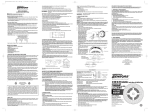
Model SA310 Shown
Illustration : Modelos SA310
MODELS SA308, SA310,
SA318, SA320, SA358,
SA500, SA900 Long Life
PLEASE READ CAREFULLY
AND KEEP IN A SAFE PLACE.
This manual contains important information.
A copy of this manual must be left with the end user.
2502-2517