1
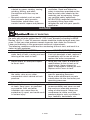
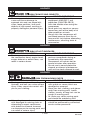
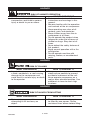
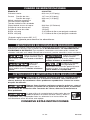
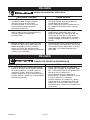
HAZARD risk from noise What can happen How to prevent it • Under some conditions and duration • Always wear certified safety of use, noise from this product may equipment: ANSI S12.6 (S3.19) contribute to hearing loss. hearing protection. SAVE THESE INSTRUCTIONS FOR FUTURE USE GLOSSARY Become familiar with these terms before operating the unit. CFM: Cubic feet per minute. SCFM: Standard cubic feet per minute; a unit of measure of air delivery. PSIG: Pounds per square inch gauge; a unit of measure of pressure. Code Certification: Products that bear one or more of the following marks: UL, CUL, ETL, CETL, have been evaluated by OSHA certified independent safety laboratories and meet the applicable Underwriters Laboratories Standards for Safety. Cut-In Pressure: While the motor is off, air tank pressure drops as you continue to use your accessory. When the tank pressure drops to a certain low level the motor will restart automatically. The low pressure at which the motor automatically restarts is called "cut-in" pressure. Cut-Out Pressure: When an air compressor is turned on and begins to run, air pressure in the air tank begins to build. It builds to a certain high pressure before the motor automatically shuts off - protecting your air tank from pressure higher than its capacity. The high pressure at which the motor shuts off is called "cut-out" pressure. Branch Circuit: Circuit carrying electricity from electrical panel to outlet. DUTY CYCLE This air compressor pump is capable of running continuously. However, to prolong the life of your air compressor, it is recommended that a 50%-75% average duty cycle be maintained; that is, the air compressor pump should not run more than 30-45 minutes in any given hour. 9- ENG N015838