1
Connecting Digital Inputs
Connecting Audio
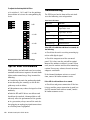
This section explains how to make analog and
digital audio connections to DSM3 speakers.
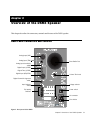
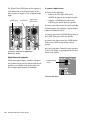
S/PDIF Input
Connecting Analog Inputs
S/PDIF Thru
AES/EBU Input
Analog Input (XLR)
Digital input section
Analog Input (TRS)
Input Sensitivity
switch
Analog input section
To connect an analog source:
1 Do any of the following:
• Connect a balanced XLR cable to the
XLR In connector on the back panel of the
speaker.
• Connect a balanced 1/4-inch balanced TRS
cable to the TRS In connector on the back
panel of the speaker.
If you need to connect an unbalanced analog source, see “Analog Inputs” on page 4.
DSM3 speakers accept digital input at the
AES/EBU Digital Input (XLR connector) and the
S/PDIF Digital Input.
Only one digital input connector (AES/EBU In
or S/PDIF In) may be active at a time. If the
speaker receives digital input from more than
one digital connector, digital lock may not be
achieved and noise or distortion may result.
Connecting Digital Sources
AES/EBU and S/PDIF digital protocols carry two
channels of audio (left and right). If you are using a digital source, you can connect it to either
the AES Digital In or the S/PDIF In of one of the
DSM3 speakers. (It does not matter which
speaker is connected to the source.)
2 Connect the other end of the cable to the an-
alog audio source (for example, an analog output from your monitoring system).
Chapter 3: Setup and Operation
11