1
directory.
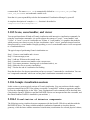
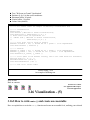
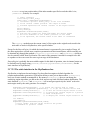
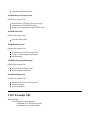
quarks/di-quarks
For example, all 6 quarks.
gluons
baryon excited states with very short life
For example, spin 3/2 baryons and anti-baryons
meson excited states with very short life
For example, spin 1 vector bosons
particles
1.
2.
3.
4.
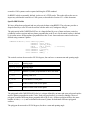
3.9.2.2 Implementation of particles
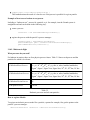
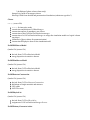
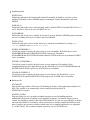
Singleton:
Categories a, b-1
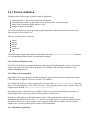
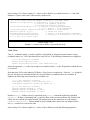
These particles are frequently used for tracking in Geant4. An individual class is defined for each
particle in these categories. The object in each class is unique and defined as a static object (so-called
singleton). The user can get pointers to these objects by using static methods in their own classes.
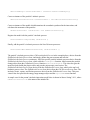
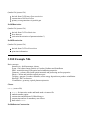
On-the-fly creation:
Category b-2
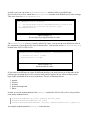
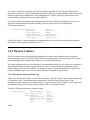
Ions will travel in a detector geometry and should be tracked, however, the number of ions which may
be used for hadronic processes is so huge that ions are dynamic rather than static. Each ion
corresponds to one object of the G4Ions class, and it will be created on the fly in the
G4ParticleTable::GetIon() method.
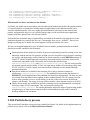
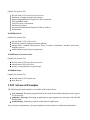
Dynamic creation by processes:
Category c
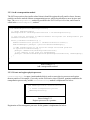
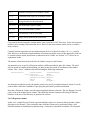
Particle types in this category are are not created by default, but will only be created by request from
processes or directly by users. Each shortlived particle corresponds to one object of a class derived
from G4VshortLivedParticle, and it will be created dynamically during the ‘‘initialization phase’’.
3.9.2.3 G4ParticleDefinition
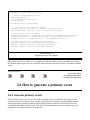
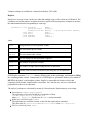
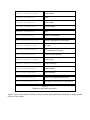
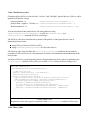
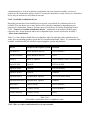
The G4ParticleDefinition class has ‘‘read-only’’ properties to characterize individual particles, such as
name, mass, charge, spin, and so on. These properties are set during initialization of each particle.
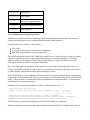
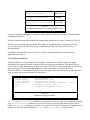
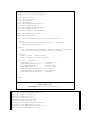
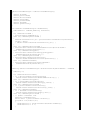
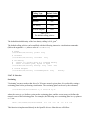
Methods to get these properties are listed in Table 3.1.