1
3.7.2
Conditional
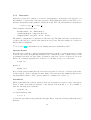
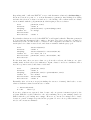
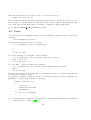
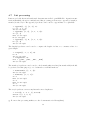
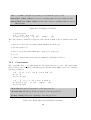
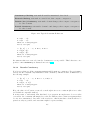
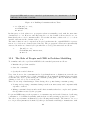
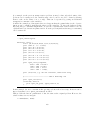
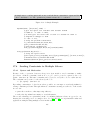
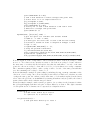
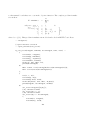
Conditionals can be specified using the ->/2 operator. In combination with ;/2, a conditional
similar to ‘if-then-else’ constructs of conventional language can be constructed: X->Y;Z, where
X, Y and Z can be one or more goals, means that if X is true, then Y will be executed, otherwise
Z. Only the first solution of X is explored, so that on backtracking, no new solutions for X will
be tried. In addition, if X succeeds, then the ‘else’ part, Z will never be tried. If X fails, then the
‘then’ part, Y, will never be tried. An example of ‘if-then-else’ is:
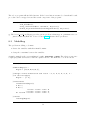
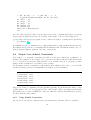
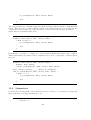
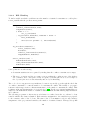
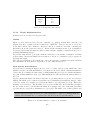
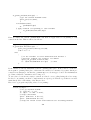
max(X,Y, Max) :number(X), number(Y),
(X > Y -> Max = X ; Max = Y).
where Max is the bigger of the numbers X or Y. Note the use of the brackets to make the scope
of the if-then-else clear and correct.
3.7.3
Call
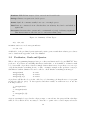
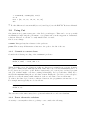
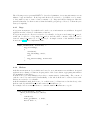
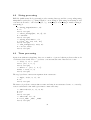
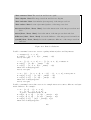
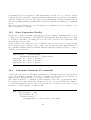
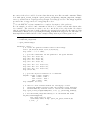
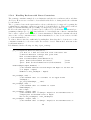
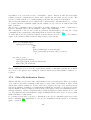
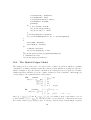
One feature of Prolog is the equivalence of programs and data – both are represented as terms.
The predicate call allows program terms (i.e. data) to be treated as goals: call(X) will cause
X to be treated as a goal and executed. Although at the time when the predicate is executed,
X has to be instantiated, it does not need to be instantiated (or even known) at compile time.
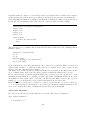
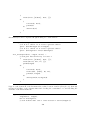
For example, it would in principle be possible to define disjunction (;) as follows:
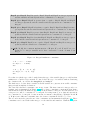
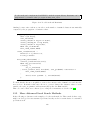
X ; Y :- call(X).
X ; Y :- call(Y).
3.7.4
All Solutions
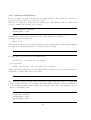
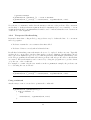
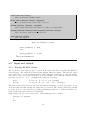
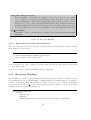
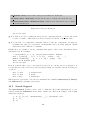
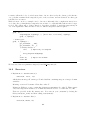
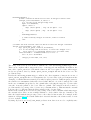
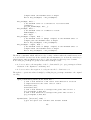
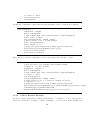
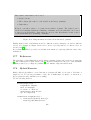
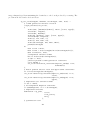
In the pure computational model of Prolog, alternative solutions are computed one-by-one on
backtracking. Only one solution is available at any time, while previous solutions disappear on
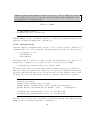
backtracking:
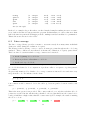
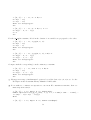
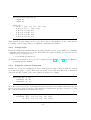
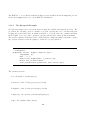
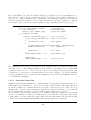
?- weekday(X).
X = mo
More
X = tu
More
X = we
More
...
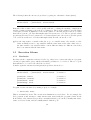
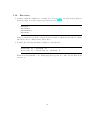
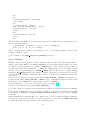
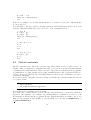
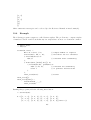
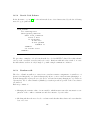
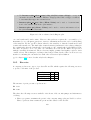
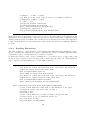
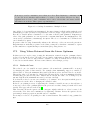
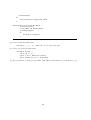
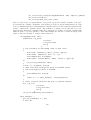
Sometimes it is useful to have all solution together in a list. This can be achieved by using one
of the all-solutions predicates findall/3, setof/3 or bagof/3:
23