1
156
Part III: Network Hacking
vector (IV) is implemented in the protocol. This weakness is due to the fact
that the IV is only 24 bits long, which causes it to be repeated every 16.7 million packets — even sooner in many cases, based on the amount of wireless
clients entering and leaving the network.
Most WEP implementations initialize WLAN hardware with an IV of 0 and
increment it by one for each packet sent. This can lead to the IV’s being
reinitialized — started over at 0 — approximately every five hours. Given
this, WLANs that have a small number of clients transmitting a relatively
small rate of wireless packets are normally more secure than large WLANs
that transmit a lot of wireless data.
Using various UNIX-based tools such as WEPCrack (wepcrack.
sourceforge.net), AirSnort (airsnort.shmoo.com), and WepAttack
(wepattack.sourceforge.net), hackers need to collect only a few hours’
up to a few days’ (depending on how much wireless traffic is on the network)
worth of packets to be able to break the WEP key.
A longer key length, such as 128 bit or 192 bit, doesn’t make WEP exponentially
more difficult to crack. This is because WEP’s static key scheduling algorithm
requires only that about 20,000 or so additional packets be captured to crack
a key for every extra bit in the key length.
Although WEP is crackable, it’s still much better than no encryption at all.
Similar to the effect that home-security-system signs have on would-be home
intruders, a wireless LAN running WEP is not nearly as attractive to a hacker
as one without it. The hacker is likely to just move on to easier targets.
You can carry out this attack against your network, but it probably won’t
prove anything other than WEP is vulnerable. After you implement the WEP
countermeasures mentioned in the next section, you can always run some of
the WEP cracking tools to ensure that the countermeasures are working.
If you need to use your WLAN analyzer to view traffic as part of your security
assessment, you won’t be able to see any traffic if WEP is enabled unless you
know your WEP key. You can enter your key into your analyzer, but just
remember that hackers can do the same thing if they’re able to crack your
WEP key using one of the tools I mention earlier!
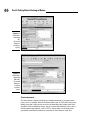
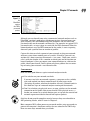
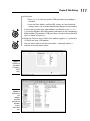
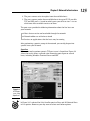
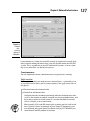
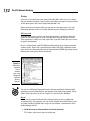
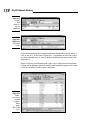
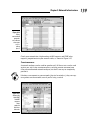
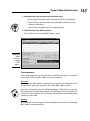
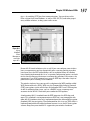
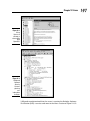
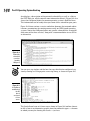
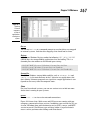
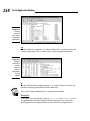
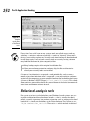
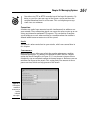
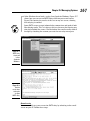
Figure 10-6 shows an example of how you can view protocols on your WLAN
by entering your WEP key into AiroPeek via the 802.11 tab in the Capture
Options window before you start your packet capture.
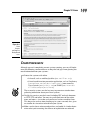
Countermeasures
The simplest solution to the WEP problem is to use a VPN for all wireless communications. You can easily implement this in a Windows environment — for