1
Certification reference
"Heat Pump" NF mark
NF 414 Rev 8 – Appendix BB
Ground – ground HP tests
3/3
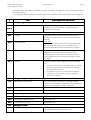
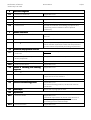
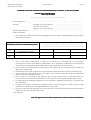
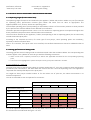
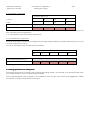
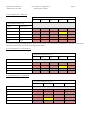
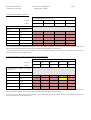
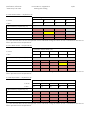
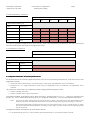
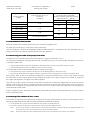
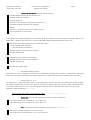
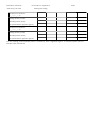
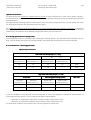
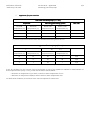
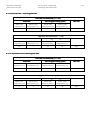
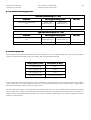
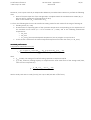
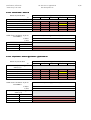
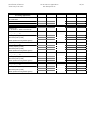
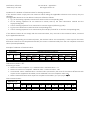
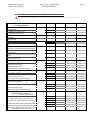
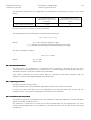
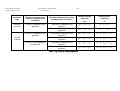
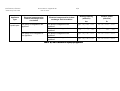
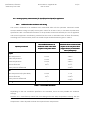
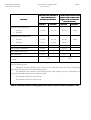
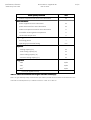
The tolerances admitted on the evaporation and condensation temperatures are given in the table
below:
Admissible deviation on the
arithmetic mean from the setpoint value
Admissible deviation on the
individual values from the set-point
value
± 0.2 K
(*)
Liquid refrigerant temperature
(*) : the test method has a significant influence on the machine operating stability during testing. This value is thus
inherent to the machine. Therefore, it cannot be quantified.
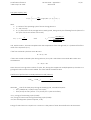
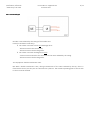
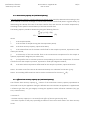
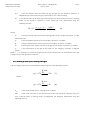
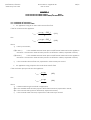
The heating capacity of the condenser is calculated with the formula:
Pf cond = qm ff * (h ref – h liq)
Where:
qm ff = flow of liquid refrigerant in kg/s
h ref = enthalpy corresponding to the discharge pressure in kJ/kg
h liq = enthalpy corresponding to the liquid temperature in kJ/kg
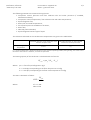
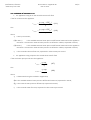
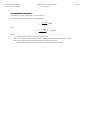
The COP is calculated as follows:
COP = Pf Cond / Pelec
Where:
Pf Cond in kW
Pelec in kW
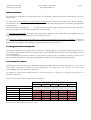
BB.3. SOUND PERFORMANCE
The sound tests are conducted in a reverberant room according to standard NF EN ISO 3741:
"Determination of sound power levels of noise sources – Precision methods for broad-band sources in
reverberation rooms." under the nominal thermal conditions.
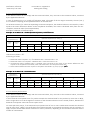
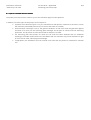
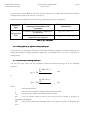
They involve measuring the sound power levels by one-third octave bands between 100 and
10,000 Hz as well as the A weighted global sound power level.
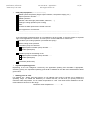
BB.3.1 Operating
Operating conditions
The tests only cover the HP module.
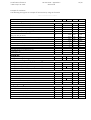
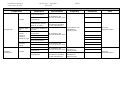
The test conditions are those described in appendices A and B of this reference standard.
In the case of tests according to the two applications for the ground-water heat pumps, the test
conditions of the “fan-convector” application are selected for the sound test.
BB.3.2 Installation and test methods
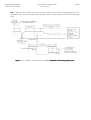
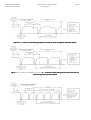
The module is placed in a reverberant room. The evaporator crowns are replaced by a water exchanger
placed in a second reverberant room.
The condenser is connected to a water circuit with controlled flow rate and temperature. The same
suction pressure/temperature as that obtained at the thermal point is set, as well as the same liquid
temperature.