1
1
Introduction
In this report we want to solve problems of the type
min θ(u),
u ∈ U,
(1)
where θ : Rm → R is a convex and finite everywhere (nondifferentiable) function
and U is a nonempty convex subset of Rm . One of the most important classes of
these problems is Lagrangian duals, there θ is given implicitly by a maximization
problem where u is a parameter (called Lagrangian multiplier ). We will assume
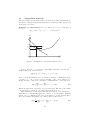
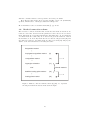
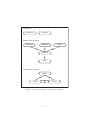
in this report that we have an oracle, which returns θ(u) and one subgradient
g(u) of θ at u, for any given u ∈ U , see Figure 1. Because of the strong
connection with Lagrangian duals, algorithms solving (1) are often referred to
as dual algorithms.
In bundle methods one stores information θ(ui ), g(ui ) about previous iterations in a set β, the bundle, to be able to choose a good descent direction
d along which the next points are generated. Having access to this ”memory”
makes it possible to construct a better search direction than so called subgradient
methods that only utilize the information from the present point.
In Chapter 2, we will describe Lagrangian relaxation, and see how it gives
rise to problems of the type (1). In Chapter 3, we describe different types of dual
algorithms, including bundle methods, that solve (1). Chapter 4 will be devoted
to a more detailed study of the bundle algorithm. Chapter 5 will contain the
manual for our bundle implementation.
θ()
“real” function
g(u 2 )
θ(u 2 )
1
1
θ(u 1 )
g(u 1 ) (negative)
g(u 3 )
θ(u 3 )
1
u1
u3
u2
u
Figure 1: The function θ(u) is defined as the maximization of a
set of linear functions. These linear functions underestimate the
”real” function but are tight in the three points, u1 , u2 and u3 . Each
linear function is given by the oracle as a function value θ(u) and a
subgradient g(u) for any u ∈ U .
3