1
US 8,671,241 B2
11
12
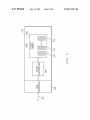
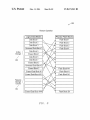
above in relation to FIG. 6. As shown in FIG. 9, the same
logical functions in the information handling system. The
logical memory blocks used for saving a copy of Working
state volatile memory information 804 during the loW poWer
executable instructions may comprise a plurality of code seg
ments operable to instruct the information handling system to
perform the methodology disclosed herein. It Will also be
state of FIG. 8 are immediately erased and reassigned as
reserved (data garbage collection) storage space 904 imme
diately after they are read from the reserved (data garbage
understood that one or more steps of the present methodolo
collection) memory space of the solid state nonvolatile
computer program. For example, a code segment executed by
memory for transfer and Writing back to repoWered system
volatile memory upon system restoration to the higher poWer
Working state of FIG. 9. The remainder of the logical memory
blocks that Were quiescent storage 802 during loW poWer state
the information handling system may include one or more
gies may be employed in one or more code segments of the
steps of the disclosed methodologies.
While the invention may be adaptable to various modi?
cations and alternative forms, speci?c embodiments have
been shoWn by Way of example and described herein. HoW
are noW assigned as shoWn to active available storage space
902 that is allocated for saved data and mapped to physical
ever, it should be understood that the invention is not intended
to be limited to the particular forms disclosed. Rather, the
invention is to cover all modi?cations, equivalents, and alter
natives falling Within the spirit and scope of the invention as
memory blocks that contain saved data or that are ready to
contain saved data.
It Will be understood that the methodologies of FIGS. 3, 4,
5 and 6 are exemplary only, and that each of these method
de?ned by the appended claims. Moreover, the different
ologies may be implemented using any combination of feWer,
additional and/or alternative steps that is suitable forperform
ing solid state nonvolatile memory operation management,
hibernation storage and Working state restoration operations,
20
respectively. Moreover, it Will be understood that one or more
of the memory controller tasks disclosed herein may be
What is claimed is:
1. A method of storing information on solid state nonvola
implanted in one exemplary embodiment by user-de?ned
commands using nonvolatile memory E PCle ?ash memory
standard.
For purposes of this disclosure, an information handling
system may include any instrumentality or aggregate of
25
solid state nonvolatile memory, and
30
manifest, detect, record, reproduce, handle, or utiliZe any
form of information, intelligence, or data for business, scien
ti?c, control, entertainment, or other purposes. For example,
memory While the information handling system is in the
?rst higher poWer state With poWer provided to the vola
a PDA, a consumer electronic device, a netWork storage 35
device, or any other suitable device and may vary in siZe,
shape, performance, functionality, and price. The information
handling system may include memory, one or more process
ing resources such as a central processing unit (CPU) or
40
the information handling system may include one or more
storage devices, one or more communications ports for com
45
one or more buses operable to transmit communications
betWeen the various hardWare components.
It Will be understood that one or more of the tasks, func
tions, or methodologies described herein (e.g., including
those performed by processor 155 and nonvolatile memory
controller 206) may be implemented by a computer program
depoWering the volatile memory during a second loWer
poWer state of the information handling system With no
poWer provided to the volatile memory; and
Writing a last system Working state information from the
poWered volatile memory to the reserved second space
of the solid state nonvolatile memory for storage prior to
loWer poWer state of the information handling system in
Which no poWer is provided to the volatile memory.
2. The method of claim 1, further comprising repoWering
Ware code or softWare code) embodied in a non-transitory
tangible computer readable medium (e.g., optical disk, mag
55
When executed (e.g., executed on a processing device of an
information handling system such as CPU, controller, micro
controller, processor, microprocessor, FPGA, ASIC, or other
suitable processing device) to perform one or more steps of
garbage collection during the ?rst higher poWer state of
the information handling system, the ?rst space of the
solid state nonvolatile memory being different than the
depoWering the volatile memory during the second
50
of instructions (e.g., computer readable code such as ?rm
netic disk, non-volatile memory device, etc.), in Which the
computer program comprising instructions are con?gured
tile memory;
allocating a ?rst space of the solid state nonvolatile
memory for storage of saved data and reserving a second
space of the solid state nonvolatile memory for data
second space of the solid state nonvolatile memory;
municating With external devices as Well as various input and
output (I/O) devices, such as a keyboard, a mouse, and a video
display. The information handling system may also include
volatile memory con?gured to only store data When
poWer is provided to the volatile memory;
providing poWer to the volatile memory during a ?rst
higher poWer state of the information handling system;
storing system Working state information in the volatile
an information handling system may be a personal computer,
hardWare or softWare control logic.Additional components of
tile memory, the method comprising:
providing an information handling system comprising:
instrumentalities operable to compute, classify, process,
transmit, receive, retrieve, originate, sWitch, store, display,
aspects of the disclosed systems and methods may be utiliZed
in various combinations and/or independently. Thus the
invention is not limited to only those combinations shoWn
herein, but rather may include other combinations.
60
the volatile memory to restore the information handling sys
tem to the ?rst higher poWer state; and reading the stored
system Working state information from the reserved second
space of the solid state nonvolatile memory and Writing the
read system Working state information back to the volatile
memory after repoWering the volatile memory to restore the
last system Working state information of the information han
dling system.
3. The method of claim 2, further comprising erasing the
stored system Working state information from the reserved
the methodologies disclosed herein. A computer program of
instructions may be stored in or on the non-transitory com
puter-readable medium residing on or accessible by an infor
second space of the solid state nonvolatile memory immedi
mation handling system for instructing the information han
ately after reading the stored system Working state informa
dling system to execute the computer program of instructions.
65
tion from the reserved second space of the solid state non
The computer program of instructions may include an
volatile memory for Writing back to the repoWered volatile
ordered listing of executable instructions for implementing
memory.