1
TLM: IP WRITE 1b y86_tlm/y86.cpp:237
RTL: IP WRITE 19 y86_rtl/y86_cpu.cc:246
The TLM model wrote the value 1b to the IP variable, while
the RTL model wrote 19. The file and location indicate
where the variable access was reported. After examining
the function to process a jump in both models (the returned
line number is within the respective code of the function) the
error was located in the computation of the target address in
the RTL model: When the RTL model computed the target
address after a jump, it did not add the length of the jump
instruction (2 bytes) to the address, whereas the TLM model
(and the ISA model) added the length. This target address
is stored in the IP. The above example clearly shows that
the RTL model did not increase the IP by 2 (the length of
the jump instruction). After fixing this bug the equivalence
report showed no unmatched variable accesses and the RTL
model terminated correctly for all test programs.
In summary, using the proposed equivalence checking framework also the bug and its location was found very fast. In
particular the verbose mode supported the localization.
In the following the efficiency of the approach is considered.
3.4 Performance Analysis
The equivalence checking server uses multiple threads and
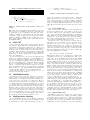
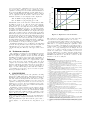
can handle millions of variable accesses. In Figure 6 the runtime of a complete equivalence check between the Y86 TLM
and RTL model is shown. We performed the experiments on
a Core 2 Duo 2.8 GHz computer with 4 GB of main memory.
The more variables are chosen to be compared in the equivalence check, the longer is the run-time. Since the check
compares two models and hence we implemented separate
threads to handle the incoming data, the speed-up using a
dual-core CPU is within a factor of two in comparison to a
single core CPU. When using a CPU with more than two
cores a further speed-up can be expected because a separate
thread per variable is invoked.
4.
CONCLUSIONS
In this paper we have presented an equivalence checking
framework for ESL design flows. The framework has been
implemented as a library following a client-server architecture. The clients are the SystemC models checked for equivalence. They communicate with the server via sockets. For
equivalence checking read and write accesses of user selected
variables are reported to the server using the developed library. If all reported accesses can be matched, the SystemC
models have the same behavior.
In summary, our approach improves the design productivity since less effort is needed for setting up and performing
equivalence checking. We have also shown that the multithreaded architecture results in scalable equivalence verification. Moreover, in case of non-equivalent behavior the
4
This register points to the address of the next instruction.
Please note that the length of an instruction is between 1 to
3 bytes.
5
The jump-instruction jnz dist adds the given offset –
termed distance – to the IP if the zero flag has not been
set.
800
Single-Core
Run-time (seconds)
report revealed a lot of unmatched accesses to the Instruction Pointer (IP)4 . Using the verbose output mode of the
equivalence checking server we identified the first unmatched
IP access in the RTL and TLM model just during the processing of a jump-instruction5 . This was possible because in
verbose output mode the file and line of the location of the
unmatched variable access is displayed. The output was:
Dual-Core
600
400
200
0
012 4
8
16
Variables
32
Figure 6: Equivalence check run-time
time required for debugging is reduced because bugs can be
detected and located quickly with the verbose mode.
Several directions are left for future work. We plan to develop methods supporting the process of selecting variables
which have to be compared during the equivalence check.
Moreover, we want to investigate how our methods can be
combined with coverage techniques including functional as
well as code coverage techniques. As an example, the testcases need to be improved if based on the performed model
extension a certain (read or write) variable access is never
reported. Furthermore, we plan to integrate an interactive
debugging mode which uses a rollback mechanism for the
simulation such that more data in the context of an unmatched access can be analyzed.
References
[1] Standard template library programmer’s guide. http://www.sgi.com/tech/stl/.
[2] B. Bailey, G. Martin, and A. Piziali. ESL Design and Verification: A Prescription for Electronic
System Level Methodology. Morgan Kaufmann/Elsevier, 2007.
[3] L. Benini, D. Bertozzi, D. Bruni, N. Drago, F. Fummi, and M. Poncino. SystemC cosimulation
and emulation of multiprocessor SoC designs. Computer, 36(4):53–59, 2003.
[4] A. Biere, D. Kroening, G. Weissenbacher, and C. Wintersteiger. Digitaltechnik - eine praxisnahe Einführung. Springer, 2008.
[5] N. Bombieri, F. Fummi, G. Pravadelli, and J. Marques-Silva. Towards equivalence checking
between TLM and RTL models. In MEMOCODE, pages 113–122, 2007.
[6] L. Cai and D. Gajski. Transaction level modeling: an overview. In CODES+ISSS, pages 19–24,
2003.
[7] P. Chauhan, D. Goyal, G. Hasteer, A. Mathur, and N. Sharma. Non-cycle-accurate sequential
equivalence checking. In DAC, pages 460–465, 2009.
[8] M. Fujita. Equivalence checking between behavioral and RTL descriptions with virtual controllers and datapaths. ACM Trans. Design Autom. Electr. Syst., 10(4):610–626, 2005.
[9] F. Fummi, M. Loghi, G. Perbellini, and M. Poncino. SystemC co-simulation for core-based
embedded systems. Design Automation for Embedded Systems, 11(2):141–166, 2007.
[10] P. Georgelin and V. Krishnaswamy. Towards a C++-based design methodology facilitating
sequential equivalence checking. In DAC, pages 93–96, 2006.
[11] F. Ghenassia. Transaction-Level Modeling with SystemC: TLM Concepts and Applications for
Embedded Systems. Springer, 2006.
[12] E. I. Goldberg, M. R. Prasad, and R. K. Brayton. Using SAT for combinational equivalence
checking. In DATE, pages 114–121, 2001.
[13] D. Große and R. Drechsler. Quality-Driven SystemC Design. Springer, 2010.
[14] T. Grötker, S. Liao, G. Martin, and S. Swan. System Design with SystemC. Kluwer Academic
Publishers, 2002.
[15] IEEE Std. 1666. IEEE Standard SystemC Language Reference Manual, 2005.
[16] Intel Corporation. IA-32 Architecture Software Developer’s Manual, 2003.
[17] A. Koelbl, J. R. Burch, and C. Pixley. Memory modeling in ESL-RTL equivalence checking.
In DAC, pages 205–209, 2007.
[18] D. Kroening, E. Clarke, and K. Yorav. Behavioral consistency of C and Verilog programs
using bounded model checking. In DAC, pages 368–371, 2003.
[19] M. N. Mneimneh and K. A. Sakallah. Principles of sequential-equivalence verification. IEEE
Design & Test of Comp., 22(3):248–257, 2005.
[20] Open SystemC Initiative (OSCI). www.systemc.org.
[21] Open SystemC Initiative (OSCI). OSCI TLM-2.0 User Manual, 2008.
[22] J. Park, B. Lee, K. Lim, J. Kim, S. Kim, and K.-H. Baek. Co-simulation of SystemC TLM
with RTL HDL for surveillance camera system verification. In IEEE International Conference
on Electronics, Circuits and Systems, pages 474 –477, 2008.
[23] S. Vasudevan, J. A. Abraham, V. Viswanath, and J. Tu. Automatic decomposition for sequential
equivalence checking of system level and RTL descriptions. In MEMOCODE, pages 71–80,
2006.