1
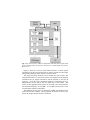
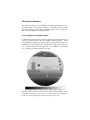
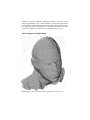
Figure 10 shows a three-dimensional mesh plot reconstructed from range
image data. This capture was taken over 10 seconds with fM = 80 MHz,
fS = 29 and N = 29 Hz. The combination of large integration time, the high
number of frames per beat and averaging over 10 beat cycles results in a
range image with a standard deviation of less than 1 mm.
5.3 Summary
This article has described the construction of a heterodyne range imaging
system with video-rate depth image output. The system has the following
parameters:
• x-y resolution of 128 × 128 pixels
• variable output frame rate with real-time display up to 60 Hz
• variable frames per beat, N
• variable modulation frequency, fM, up to 80 MHz
• data capture using a common ethernet interface
• system parameters adjustable through a command line interface
With these easily adjustable system parameters it is possible to configure the system to meet the needs of a wide variety of applications from 3D
modeling to mobile robotics.
References
[1]
[2]
[3]
[4]
[5]
[6]
[7]
Christie, S., et al.: Design and development of a multi-detecting twodimensional ranging sensor. Measurement Science and Technology 6,
1301–1308 (1995)
Kawahito, S., et al.: A CMOS Time-of-Flight range image sensor with
Gates-on-Field-Oxide structure. IEEE Sensors 7, 1578–1586 (2007)
Lange, R., Seitz, P.: Seeing distances – a fast time-of-flight 3D camera.
Sensor Review 20, 212–217 (2000)
Gulden, P., et al.: Novel opportunities for optical level gauging and 3-D
imaging with the Photoelectronic Mixing Device. IEEE Transactions on Instrumentation and Measurement 51, 679–684 (2002)
Buttgen, B., et al.: High-speed and high-sensitive demodulation pixel for
3D-imaging. In: Proc. SPIE – Three-dimensional image capture and applications, vol. 7 (2006)
Blais, F.: Review of 20 years of range sensor development. Journal of Electronic Imaging 13, 231–243 (2004)
Besl, P.J.: Active, Optical range imaging sensors. Machine Vision and Applications 1, 127–152 (1988)