1
5,867,164
1
2
One dif?culty With prior document abstract mechanisms,
INTERACTIVE DOCUMENT
SUMMARIZATION
even When overcoming many of the natural language
A portion of the disclosure of this patent document
contains material Which is subject to copyright protection.
barriers, is that the system or mechanism can never knoW for
certain Whether the user is receiving as much or as little of
an abstract as they Would like. In other Words, no matter hoW
The copyright oWner has no objection to the facsimile
reproduction by anyone of the patent document or the patent
disclosure, as it appears in the Patent and Trademark Of?ce
patent ?le or records, but otherWise reserves all copyright
rights.
10
interests of the same user. As such, What is needed is not
necessarily a better abstracting algorithm as much as a
REFERENCE TO RELATED APPLICATIONS
mechanism Which alloWs the user to interactively specify
Whether the present abstract is sufficient or, instead, Whether
The present application is related to co-pending US.
patent application having attorney docket number P1809,
?led on the same day as the present application, assigned to
the same assignee and having the same inventive entity.
Well the mechanism can determine Which portions of the
document to include in the summary or abstract, the mecha
nism can never automatically include just the right amount
of abstract to alWays please the user. This can be due to
different users’ interest levels, different user’s reasons for
revieWing the document, and even time or situation varying
15
more or less of the original document should be included in
the abstract or summary.
The present invention utiliZes an interactive control Which
FIELD OF THE INVENTION
alloWs the user to specify Whether more or less of the
The present invention relates to the ?eld of document
summariZation Which is otherWise knoWn as automatic
original document should be included in the document
summary. AlloWing the user to interactively control hoW
much of the original document gets included in the summary
facilitates rapid revieW of documents in Which the user has
abstracting Wherein an extract of a document (i.e., a selec
tion of sentences from the document) can serve as an
abstract.
25
BACKGROUND OF THE INVENTION
The advent of the personal computer and modern tele
communications has resulted in millions of computer users
little interest as Well as revieW of up to the entire document
in the case of great user interest. Furthermore, such inter
active control alloWs the user to expand and contract sum
mariZed documents at Will, thus freeing the user to focus on
the content of the summariZed document rather than on
trying to determine What amount or percentage is suf?cient
or hoW the underlying abstracting mechanism operates.
communicating With each other around the globe. One of the
primary uses of such computers by such users is accessing
the vast store of digital information Which has been created
over the last several decades. Further, additional digital
information is created daily due to both the conversion of
BRIEF DESCRIPTION OF THE DRAWINGS
The present invention is illustrated by Way of example
and not limitation in the ?gures of the accompanying
draWings, in Which like references indicate similar elements,
information previously unavailable digitally and the large
computer user population.
and in Which:
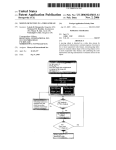
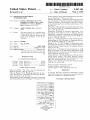
FIG. 1 is a diagram of a typical computer system as might
One concern With this vast, ever increasing amount of
digital information is the time it takes to read even a small
be used With the present invention;
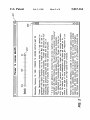
FIG. 2 is a sample summary document WindoW according
amount of neW information created by an ever increasing
to one implementation of the present invention Wherein
portion of it. Whether one is revieWing a previously
“All” of the original document to be summariZed is display
arranged set of documents, as in the case of reading an
on-line neWspaper or magaZine, revieWing the results of an
electronic search, or scanning documents stored on a large
hard disk drive of a personal computer, it can still take
considerable time to read more than a minimal amount.
able;
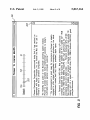
FIG. 3 is a sample summary document WindoW according
to one implementation of the present invention Wherein
one-eighth of the original document to be summariZed is
45
What is needed, therefore, is a facility Which provides a
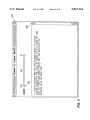
FIG. 4 is a sample summary document WindoW according
to one implementation of the present invention Wherein
“One” most representative sentence of the original docu
ment to be summariZed is displayable;
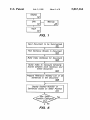
FIG. 5 is a ?oWchart of the document summariZation
summary or abstract of each document. Having a summary
of each document alloWs the reader to determine Whether
that document is of interest, and hence, reading more of the
document might be desirable. Conversely, reading the sum
mary of a document could suf?ce to sufficiently inform the
reader about the document, or instead, could indicate to the
reader that the particular document is not of interest. No
matter the result, a good document abstract mechanism
could be quite valuable in the modern digital World.
displayable;
methodology according to one implementation of the
present invention;
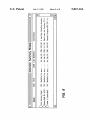
FIG. 6 is a sample user interface display shoWing some or
55
HoWever, a good document abstract mechanism means
more than merely providing an automatic summary of a
document. Prior approaches to document summariZation or
“Automatic Sentence Extraction”, as discussed on pages
87—89 of the “Introduction to Modern Information
Retrieval” by Salton and McGill, Copyright 1983, incorpo
all of the “top sentence” of each document in a display line
or listing of documents in a computer system user interface;
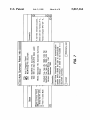
FIG. 7 is a sample user interface display shoWing the “top
sentence” of a document in a comments ?eld of an infor
mational WindoW of the document in a computer system user
interface;
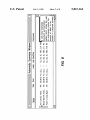
FIG. 8 is a sample user interface display shoWing the “top
rated herein by reference in its entirety, have yet to yield
sentence” of a document in a pop-up area of a display line
abstracts “in a readable natural language context” Which
or listing of documents in a computer system user interface;
“obey normal stylistic constraints.” Salton and McGill fur
and,
ther state that “[r]eadable extracts are obtainable Without 65
excessive dif?culties, but perfection cannot be expected
Within the foreseeable future.”
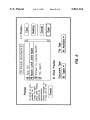
FIG. 9 is a sample user interface display shoWing the “top
sentence” of a document in an open dialog box in a computer
system user interface.