1
goal
goal
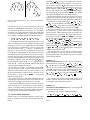
Figure 1: Model Elimination (left side) vs. Restart Model Elimination (right side).
is described in [Letz et al., 1992] as the base for the prover
SETHEO. In [Baumgartner and Furbach, 1993] this calculus is discussed in detail by presenting it in a consolution
style [Eder, 1991] and compared to various other calculi. ME
(in this sense) manipulates trees by extension and reduction
steps. In order to recall the calculus consider the clause set
A model elimination refutation is depicted in Figure 1 (left
side). It is obtained by successive fanning with clauses from
the input set (extension steps). Additionally, it is required that
every inner node is complementary to one of its sons. Such
sons are decorated with a “ ” in Figure 1. A dashed arrow
indicates a reduction step, i.e. the closing of a branch due
to a path literal complementary to the leaf literal. Extension
and reduction steps are allowed at any leaf of the tree and for
extension steps any literal from an input clause can be used
to form a complementary pair of literals. For example,
in the
right subtree of Figure 1 (left side)
the
clause
was
used toextend the positive leaf , i.e.
we
used
the
program
clause
via the body literal and hence did dissent
with a procedural reading of the clause.
In the right part of Figure 1 a refutation with the modified version, the restart ME calculus, is displayed. The only
difference is that extension steps at positive literals are not
allowed; instead either a reduction step is carried out, or else
the root literal — which is always — is copied, and
then an extension follows.
In a variant called strict restart model elimination not even
reduction steps are allowed at positive leaves. Hence the calculus is forced to apply restart steps wherever possible.
These simple modifications obviously allow only extension
steps with a positive, i.e. a head literal of a clause, and hence
support a procedural reading of program clauses. In the following subsection we give a formal presentation of the calculus along the lines of [Baumgartner and Furbach, 1993].
1.2
Restart Model Elimination
Instead of trees we now manipulate multisets of paths, where
paths are sequences of literals. We will state some basic definitions.
A clause is a multiset of literals, usually written as the disjunction . A program is a consistent set of clauses
(thus possibly including negative
clauses). A connection is a
pair of literals, written as , which can be made complementary by an application of a substitution.
A path is a se
quence of literals, written as . is called
the leaf of , which is also denoted by ; similarly,
the first element is also denoted by . The symbol
“ ” denotes the append function for literal sequences.
In the sequel both path sets and sets of literals are always
understood as multisets, and usual set notation will be used.
Multisets of paths are written with caligraphic capital letters.
From now on we use the notation as a representation of the clause . Such clauses are called program clauses
with head literals (if present) and body literals .
We assume our clause sets to be in goal normal form, i.e.
there exists only one goal clause (a clause containing only
negative literals), which furthermore does not contain variables. Without loss of generality this can be achieved by introducing a new clause where is a new predicate symbol, and by modifying every
purely negative clause
to .
thenits
If is a clause
path set is ! .
The dot product "# of a path and a path set # is defined
as $ $ ! # . It can be interpreted
as a branching of a
path into the new paths from
The inference rule extension from the restart ME calculus,will be defined in such a way that one is free in selecting
any head literal as part of a connection. For this, we introduce
a head selection function.
Definition 1.1
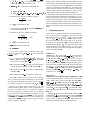
(Head selection Function) A head selection function is a
function that maps a clause with % & ' to an atom ! . is called
the selected literal of that clause by . The head selection
function is required to be stable under lifting which means
that if selects ( in the instance of the clause ( (for some substitution ( ) then selects in .
Note that this head selection function has nothing to do
with the selection function from SLD-resolution which selects subgoals. This will be discussed later.
Definition 1.2
(Strict Restart Model Elimination) Given a set of clauses )
and a head selection function.
The inference rule extension is defined as follows:
* where
+