1
• a comma separated list of classifier expressions
• a learning classifier expression
• an inference invocation expression
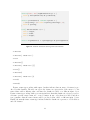
We have already explored examples of almost all of these. More precise definitions of each follow.
4.1.2.1
Classifier Names
The name of a classifier defined either externally or in the same source file may appear wherever
a classifier expression is expected. If the named classifier’s declaration is found in the same
source file, it may occur anywhere in that source file (in other words, a classifier need not be
defined before it is used). If the named classifier has an external declaration it must either be
fully qualified (e.g., myPackage.myClassifier) or it must be imported by an import declaration
at the top of the source file. The class file or Java source file containing the implementation
of an imported classifier must exist prior to running the LBJ compiler on the source file that
imports it.
4.1.2.2
Method Bodies
A method body is a list of Java statements enclosed in curly braces explicitly implementing a
classifier. When the classifier implemented by the method body returns a single feature, the
return statement is used to provide that feature’s value. If the feature return type is real,
then the return statement’s expression must evaluate to a double. Otherwise, it can evaluate to
anything - even an object - and the resulting value will be converted to a String. Each method
body takes its argument and feature return type from the header of the classifier declaration it
is contained in (except when in the presence of a classifier cast expression, discussed in Section
4.1.2.3). For more information on method bodies in LBJ, see Section 4.1.3.
4.1.2.3
Classifier Cast Expressions
When the programmer wishes for a classifier sub-expression on the right hand side of a classifier
declaration to be implemented with a feature return type differing from that defined in the
header, a classifier cast expression is the solution. For example, the following classifier declaration
exhibits a learning classifier (see Section 4.1.2.6) with a real valued feature return type. One of
the classifiers it uses as a feature extractor is hard-coded on the fly, but it returns a discrete
feature. A classifier cast expression is employed to achieve the desired affect.
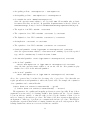
real dummyClassifier(InputObject o) <learn labeler
using c1, c2, (discrete) { return o.value == 4; }
end
Of course, we can see that the hard-coded classifier defined on the fly in this example returns
a discrete (boolean) value. Without the cast in front of this method body, the LBJ compiler
would have assumed it to have a real valued feature return type, and an error would have been
25