1
4,216,461
1
CODE CONTROLLED MICROCONTROLLER
READOUT FROM COIN OPERATED MACHINE
BACKGROUND OF THE INVENTION
This invention relates to a new and improved system
for coin counting, totalling and reading-out information
arising from coin transactions in vending machines and
the like. More speci?cally, this invention concerns the
use of single chip microelectronic circuits for'counting
the net coin intake of a vending machine, storing the
count and reading it out to a microprocessor controlled
portable collection unit (PCU). The coin counter may
be wired, permanently attached or integrated with the
vending machine and is considerably less costly than
the vending machine itself. The PCU is used to calcu
late a money total from the coin count and, if desired,
2
edge in itself represents a deterrent to interfering with
normal operations of the vending machine. In any
event, if a shortage exists, use of a counter which is
accurate and tamper resistant permits the owner to
5 establish the extent of his losses which serve as a legiti
mate basis for a tax loss claim.
THE INVENTION
According to the invention, a tamper resistant system
for coin counting and totalling net intake of vending
machines is provided comprising a sensing and counting
device employing a microelectronic circuit chip having
a plurality of memory registers. The counting device is
attached or incorporated with the vending machine and
is adapted to sense and count net coin intake (after coin
changing) and store the net count and other related
operations in a plurality of memory registers in the
display or output certain other operations associated
with the vending machine. The PCU is employed to
service a large number of vending machines, and al
though considerably more expensive than the counter,
power interruptions, vending load times, tampering,
‘since its use is spread over a large number of vending
etc.
microelectronic circuits. These related operations may
include an access code which is unique to the machine
(and hence the owner), coin collection dates and times,
‘machines, its unit cost is relatively low.
A PCU is provided having an input keyboard to
Vending machines in the broad sense provide a ?xed
access the memories upon input of a valid access code.
service for a speci?c price and include such varied 25 The output from the memories of the coin counter is
devices as games, laundromat equipment, food dispens~
added in the PCU to obtain a money value which may
ers, music players, cigarette vending machines, photo
graphic equipment, television sets and other coin oper
ated devices.
‘
The vending machines must be serviced for coin
collections, change replenishment, service replenish
them such as food, soap, photographic ?lm, etc. Also, in
the case of vending machines such as games, music
players, etc., the owner would like to have information
be read out from the PCU on a display such as an LED,
LCD, incandescent, etc., or onto a printer, casette,
punched card, teletype, etc; the other related operations
are similarly read out. The PCU also may be adapted to
store the read-outs and display them only upon receipt
of a second access code. This permits the owner, lessee,
etc., to enjoy total secrecy from the person (akin to the
on whether the income from the vending machine is
meter reader) who actually obtains the information
jammed. Even assuming the accuracy of a coin counter,
an access key to a vending machine can be duplicated
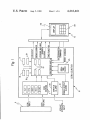
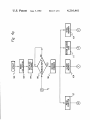
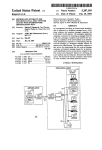
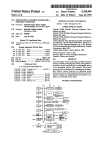
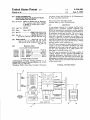
FIG. 1 is a block diagram showing the overall view
of the counter and PCU arrangement of this invention;
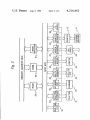
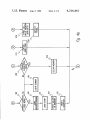
FIG. 2 shows a block diagram of the PCU; and,
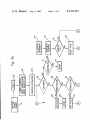
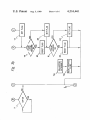
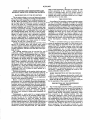
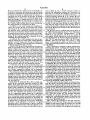
FIGS. 3A, 38, 4A, 4B show two programs employed
for the operation of the counter and PCU.
from the coin counter. This arrangement ensures a dou
adequate for its location and also optimum servicing
ble check on the secrecy of the contents in the coin
times. When a machine is serviced, access must be ob
counter, if desired, since a ?rst access code is required
tained to the interior of the machine and this involves
to read-out the information from the coin counter and a
the honesty of the coin collector, part owner, lessee,
proprietor, etc., where the vending machine is located. 40 second access code is needed to read-out the informa
tion from the PCU. The coin counter should contain the
If these people are dishonest, even a small amount of
fewest number of operating functions on a cost basis,
“skimming” can, over a period of time, amount to a
and hence, a register for validating the codes is con
substantial income loss.
tained preferably within the PCU.
Devices are presently on the market which total coin
counts and obtain a dollar value therefrom; however, 45
BRIEF DESCRIPTION OF THE DRAWINGS
they are not tamper resistant and can be physically
and this poses additional problems.
Hence, acheck on income, servicing requirements,
performance, etc., is desireable from many standpoints.
Furthermore, as between competitive devices and their
locations, secrecy is important since the most suitable
DESCRIPTION OF THE PREFERRED
EMBODIMENT
machine in an optimum location can spell the difference
The overall system is shown in FIG. 1 and includes a
between a successful or a defunct business. Also, cus 55
vending machine 9 and a coin counter 10 including the
tomer preference _for game ‘machines can change
usual coin sensing circuits 11. A portable PCU 12 is
quickly and this may necessitate a machine being re
provided to interrogate the counter 10 and obtain infor
moved to a new location or being taken completely off
mation stored therein concerning transactions which
the market.
,
.
have occurred in the vending machine. The coin
Consequently, a need exists for a tamper-resistant
counter 10 is adapted to sense various coin denomina
counting device which can be accessed without open;
ing the coin box of the vending machine and which
provides information on total coin intake, servicing
tions which generally range from St through $1.00 in
any combination; coins returned from the machine are
also sensed. Signals from the coin sensing step are then
outages, tamper attempts, etc. Monitoring of these items 65 converted to digit pulses and entered into a processor
unit 14 in the counter to arrive at a coin input for a
not only can provide a coin count, but also can pinpoint
given transaction. The coin inputis stored as a coin
the presence of particular employees when the vending
count in a plurality of microelectronic circuit registers
machine is serviced, tampered with, etc. This know]?
requirements, prior service history, useage times, power