1
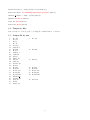
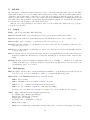
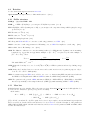
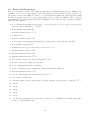
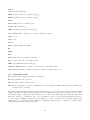
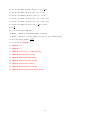
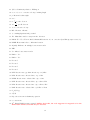
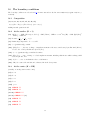
Line 4:
cM: Companion Mass [M ]
RLF1: Relative Roche-lobe radius [log R/Rrlof ]
RLF2: Relative Roche-lobe radius [log R/Rrlof ]
DLT:
Lnu: Luminosity due to neutrino losses
RA/R: Alfvén radius [R∗ ]
MH: Total hydrogen mass in the star [M ]
conv. bdries: Mass coordinates of convective boundaries (3 pairs)
logR: Log R
logL: log L
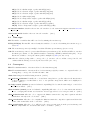
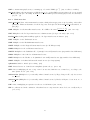
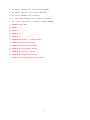
Line 5:
Horb: Orbital angular momentum
F1:
DF21:
BE:
Lth: Luminosity from contraction/expansion
Bp: Poloidal component of the magnetic field
MHe: Total helium mass in the star [M ]
semiconv. bdries: Mass coordinates of semiconvective boundaries (3 pairs)
k**2: Dimensionless axis of gyration, if moment of inertia is calculated in the code.
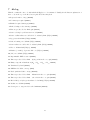
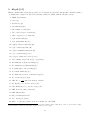
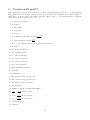
8.2
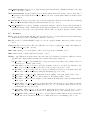
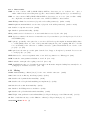
Convergence info
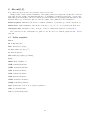
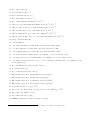
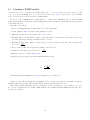
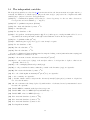
Iter The first integer displays the number of iterations,
Err The logarithm of the total error,
Ferr The residue in the current iteration,
Fac The factor by which corrections are multiplied before being applied. Normally 1.00, but may be smaller if the
code has trouble converging.
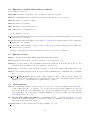
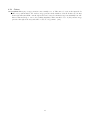
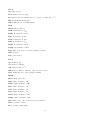
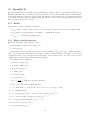
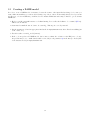
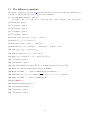
Then a list of numbers follows, in pairs of an integer and a float (e.g. 79−9.2). There is one pair for each independent
variable. The integer indicates the mesh point in the star (1 indicates the surface) where the largest error for this
independent variable occurs and the float indicates the log of the error in that mesh point. In practice this means
that (199 − 9.9) is a good thing since 10−9.9 is a very small error, (98 − 3.1) is worrying and when the floats get
to −2.0 or larger something is really wrong. It is usually a good idea to scroll up and look whether earlier blocks
exist and, if so, to see whether the same variables are causing the problems there — sometimes one variable starts
causing problems and then drags along others.
26