1
Gunson Fault Code Reader
9.TEST PROCEDURE NOTES (TPN)
1. VANE AIR FLOW METER
This is positioned in the airstream and is opened by the flow
of the air intake. The greater the airflow, the more the flap/plate opens. The
flap/plate is connected
to a potentiometer that will produce a voltage reading proportional to the
position of the flap/plate.
To test a Vane Air Flow Meter, probe the airflow meter connector with a
voltage meter until the sensor
output is identified.The output will be a voltage of 0.5v to 4.5v, or 4.5v to 9v.
The reading changes as
the air flow is varied. The airflow can be varied by varying the engine speed.
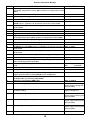
Test the output of the airflow meter with the ignition on, at idle, at 1500 RPM,
at 3000 RPM, and during a rapid acceleration, and compare to typical values
given below:
Ignition on
0.25v-0.5v
3.5v
Idle
0.5v-1.5v
4.5v-5.0v
1500 RPM
0.7v-2v
5.0v-5.5v
3000 RPM
1.1v-3v
6-7v
Rapid Acceleration
3v-4.5v
>8v
Typical Air Flow sensor output
Most systems give an increase in voltage with air flow rate, but some systems
give a fall in voltage.
Gradually increase engine speed from idle to 3000 RPM, observing the voltage
change. If the voltage becomes 0v or 5v at any point, repeat the test. If the
same result is obtained, the resistive track of the airflow meter is damaged. If
the voltage stays at a value as the engine speed changes it indicates a sticking
flap/plate.
A sensor simulator that can simulate a varying voltage, can be used to provide
a voltage to the ECU to simulate the output of the airflow sensor and positively diagnose a faulty airflow meter.
2. COOLANT TEMPERATURE SENSOR:
This should be tested by an ohms meter when the engine is cold, and also
when warm (with any connections to the sensor disconnected). The results
22