
1
The Java™ Web
Services Tutorial
Eric Armstrong
Stephanie Bodoff
Debbie Carson
Maydene Fisher
Scott Fordin
Dale Green
Kim Haase
Eric Jendrock
February 20, 2003
Copyright © 2003 Sun Microsystems, Inc., 4150 Network Circle, Santa Clara, California 95054, U.S.A.
All rights reserved.U.S. Government Rights - Commercial software. Government users are subject to the
Sun Microsystems, Inc. standard license agreement and applicable provisions of the FAR and its supplements.
This distribution may include materials developed by third parties.
Sun, Sun Microsystems, the Sun logo, Java, J2EE, JavaServer Pages, Java Naming and Directory Interface, JSP, J2EE, J2SE and the Java Coffee Cup logo are trademarks or registered trademarks of Sun
Microsystems, Inc. in the U.S. and other countries.
Unless otherwise licensed, software code in all technical materials herein (including articles, Fads, samples) is provided under this License.
Products covered by and information contained in this service manual are controlled by U.S. Export Control laws and may be subject to the export or import laws in other countries. Nuclear, missile, chemical
biological weapons or nuclear maritime end uses or end users, whether direct or indirect, are strictly prohibited. Export or reexport to countries subject to U.S. embargo or to entities identified on U.S. export
exclusion lists, including, but not limited to, the denied persons and specially designated nationals lists is
strictly prohibited.
DOCUMENTATION IS PROVIDED "AS IS" AND ALL EXPRESS OR IMPLIED CONDITIONS,
REPRESENTATIONS AND WARRANTIES, INCLUDING ANY IMPLIED WARRANTY OF MERCHANTABILITY, FITNESS FOR A PARTICULAR PURPOSE OR NON-INFRINGEMENT, ARE
DISCLAIMED, EXCEPT TO THE EXTENT THAT SUCH DISCLAIMERS ARE HELD TO BE
LEGALLY INVALID.
Copyright © 2003 Sun Microsystems, Inc., 4150 Network Circle, Santa Clara, California 95054, ÉtatsUnis. Tous droits réservés. Droits du gouvernement américain, utlisateurs gouvernmentaux - logiciel
commercial. Les utilisateurs gouvernmentaux sont soumis au contrat de licence standard de Sun Microsystems, Inc., ainsi qu aux dispositions en vigueur de la FAR [ (Federal Acquisition Regulations) et des
suppléments à celles-ci.
Cette distribution peut comprendre des composants développés pardes tierces parties.
Sun, Sun Microsystems, le logo Sun, Java, JavaServer Pages, Java Naming and Directory Interface, JSP,
J2EE, J2SE et le logo Java Coffee Cup sont des marques de fabrique ou des marques déposées de Sun
Microsystems, Inc. aux États-Unis et dans d’autres pays.
A moins qu’autrement autorisé, le code de logiciel en tous les matériaux techniques dans le présent (articles y compris, FAQs, échantillons) est fourni sous ce permis.
Les produits qui font l’objet de ce manuel d’entretien et les informations qu’il contient sont régis par la
législation américaine en matière de contrôle des exportations et peuvent être soumis au droit d’autres
pays dans le domaine des exportations et importations. Les utilisations finales, ou utilisateurs finaux, pour
des armes nucléaires, des missiles, des armes biologiques et chimiques ou du nucléaire maritime, directement ou indirectement, sont strictement interdites. Les exportations ou réexportations vers des pays sous
embargo des États-Unis, ou vers des entités figurant sur les listes d’exclusion d’exportation américaines,
y compris, mais de manière non exclusive, la liste de personnes qui font objet d’un ordre de ne pas participer, d’une façon directe ou indirecte, aux exportations des produits ou des services qui sont régi par la
législation américaine en matière de contrôle des exportations ("U .S. Commerce Department’s Table of
Denial Orders "et la liste de ressortissants spécifiquement désignés ("U.S. Treasury Department of Specially Designated Nationals and Blocked Persons "),, sont rigoureusement interdites.
LA DOCUMENTATION EST FOURNIE "EN L’ÉTAT" ET TOUTES AUTRES CONDITIONS, DECLARATIONS ET GARANTIES EXPRESSES OU TACITES SONT FORMELLEMENT EXCLUES,
DANS LA MESURE AUTORISEE PAR LA LOI APPLICABLE, Y COMPRIS NOTAMMENT TOUTE
GARANTIE IMPLICITE RELATIVE A LA QUALITE MARCHANDE, A L’APTITUDE A UNE
UTILISATION PARTICULIERE OU A L’ABSENCE DE CONTREFAÇON.
Contents
About This Tutorial. . . . . . . . . . . . . . . . . . . . . . . . . . . .xi
Who Should Use This Tutorial
How to Read This Tutorial
About the Examples
How to Print This Tutorial
Typographical Conventions
Chapter 1:
Introduction to Web Services . . . . . . . . . . . . . . . . . . 1
The Role of XML and the Java™ Platform
What Is XML?
Overview of the Java APIs for XML
JAXP
JAXB
JAX-RPC
JAXM
JAXR
Sample Scenario
Chapter 2:
2
3
6
7
15
20
27
34
37
Understanding XML . . . . . . . . . . . . . . . . . . . . . . . . . 41
Introduction to XML
XML and Related Specs: Digesting the Alphabet Soup
Designing an XML Data Structure
Chapter 3:
xi
xi
xiii
xiv
xv
41
51
63
Getting Started With Tomcat . . . . . . . . . . . . . . . . . . 69
Setting Up
Quick Overview
Creating the Getting Started Application
Building the Getting Started Application Using Ant
69
72
73
77
iii
iv
CONTENTS
Deploying the Application
Running the Getting Started Application
Using admintool
Modifying the Application
Common Problems and Their Solutions
Further Information
Chapter 4:
Web Applications . . . . . . . . . . . . . . . . . . . . . . . . . . .93
Web Application Life Cycle
Web Application Archives
Configuring Web Applications
Installing Web Applications
Deploying Web Applications
Listing Installed and Deployed Web Applications
Running Web Applications
Updating Web Applications
Removing Web Applications
Undeploying Web Applications
Internationalizing and Localizing Web Applications
Accessing Databases from Web Applications
Further Information
Chapter 5:
94
96
98
102
103
104
105
105
107
107
108
109
113
Java API for XML Processing . . . . . . . . . . . . . . . . .115
The JAXP APIs
An Overview of the Packages
The Simple API for XML (SAX) APIs
The Document Object Model (DOM) APIs
The XML Stylesheet Language for Transformation (XSLT) APIs
Compiling and Running the Programs
Where Do You Go from Here?
Chapter 6:
80
82
83
85
87
91
115
116
117
120
122
123
123
Simple API for XML . . . . . . . . . . . . . . . . . . . . . . . . .125
When to Use SAX
Writing a Simple XML File
Echoing an XML File with the SAX Parser
Adding Additional Event Handlers
Handling Errors with the Nonvalidating Parser
Substituting and Inserting Text
Creating a Document Type Definition (DTD)
126
127
132
151
155
163
168
v
CONTENTS
DTD’s Effect on the Nonvalidating Parser
Defining Attributes and Entities in the DTD
Referencing Binary Entities
Choosing your Parser Implementation
Using the Validating Parser
Defining Parameter Entities and Conditional Sections
Parsing the Parameterized DTD
Handling Lexical Events
Using the DTDHandler and EntityResolver
Further Information
Chapter 7:
Document Object Model . . . . . . . . . . . . . . . . . . . 211
When to Use DOM
Reading XML Data into a DOM
Displaying a DOM Hierarchy
Examining the Structure of a DOM
Constructing a User-Friendly JTree from a DOM
Creating and Manipulating a DOM
Using Namespaces
Validating with XML Schema
Further Information
Chapter 8:
212
218
225
241
252
268
277
280
286
XML Stylesheet Language for Transformations . . 289
Introducing XSLT and XPath
Choosing the Transformation Engine
How XPath Works
Writing Out a DOM as an XML File
Generating XML from an Arbitrary Data Structure
Transforming XML Data with XSLT
Transforming from the Command Line
Concatenating Transformations with a Filter Chain
Further Information
Chapter 9:
173
177
184
186
187
193
197
200
207
209
290
291
294
305
312
327
351
354
361
Binding XML Schema to Java Classes with JAXB 363
JAXB Architecture
XML Schemas
Representing XML Content
Binding XML Schemas
Customizing JAXB Bindings
364
376
380
381
384
vi
CONTENTS
What is Not Supported
JAXB APIs and Tools
386
386
Chapter 10: Using JAXB . . . . . . . . . . . . . . . . . . . . . . . . . . . . . . . .387
General Usage Instructions
Basic Sample Applications
Customizing JAXB Bindings
388
409
422
Chapter 11: Building Web Services With JAX-RPC . . . . . . . . . .455
A Simple Example: HelloWorld
Types Supported By JAX-RPC
A Dynamic Proxy Client Example
A Dynamic Invocation Interface (DII) Client Example
The wscompile Tool
The wsdeploy Tool
Advanced Topics for wscompile and wsdeploy
Further Information
456
467
470
471
474
477
480
481
Chapter 12: Web Services Messaging with JAXM . . . . . . . . . .483
The Structure of the JAXM API
Overview of JAXM
Running the Samples
Tutorial
Code Examples
Further Information
484
485
495
499
521
535
Chapter 13: Publishing and Discovering Web Services with JAXR
537
Overview of JAXR
Implementing a JAXR Client
Running the Client Examples
Further Information
538
541
562
570
Chapter 14: Java Servlet Technology . . . . . . . . . . . . . . . . . . . .571
What is a Servlet?
The Example Servlets
Servlet Life Cycle
571
572
574
vii
CONTENTS
Sharing Information
Initializing a Servlet
Writing Service Methods
Filtering Requests and Responses
Invoking Other Web Resources
Accessing the Web Context
Maintaining Client State
Finalizing a Servlet
Further Information
577
581
582
587
594
598
599
602
605
Chapter 15: JavaServer Pages Technology . . . . . . . . . . . . . . . 607
What Is a JSP Page?
The Example JSP Pages
The Life Cycle of a JSP Page
Initializing and Finalizing a JSP Page
Creating Static Content
Creating Dynamic Content
Including Content in a JSP Page
Transferring Control to Another Web Component
Including an Applet
JavaBeans Components in JSP Pages
Extending the JSP Language
Further Information
607
610
612
615
615
616
622
624
624
627
635
636
Chapter 16: Custom Tags in JSP Pages . . . . . . . . . . . . . . . . . . . 637
What Is a Custom Tag?
The Example JSP Pages
Using Tags
Defining Tags
Examples
638
638
641
645
661
Chapter 17: JavaServer Pages Standard Tag Library . . . . . . . 673
The Example JSP Pages
Using JSTL
Expression Language Support
Core Tags
XML Tags
Internationalization Tags
SQL Tags
674
674
677
683
689
693
696
viii
CONTENTS
Further Information
700
Chapter 18: Security . . . . . . . . . . . . . . . . . . . . . . . . . . . . . . . . . .701
Overview
Users, Groups, and Roles
Web-Tier Security
Installing and Configuring SSL Support
Security for JAX-RPC
EIS-Tier Security
701
702
712
721
734
744
Chapter 19: The Coffee Break Application . . . . . . . . . . . . . . . .747
Coffee Break Overview
JAX-RPC Distributor Service
JAXM Distributor Service
Coffee Break Server
Building, Installing, and Running the Application
747
749
758
773
777
Appendix A: Tomcat Administration Tool . . . . . . . . . . . . . . . . . .785
Running admintool
Configuring Tomcat
Configuring Services
Configuring Resources
Administering Roles, Groups, and Users
Further Information
785
788
789
816
823
824
Appendix B: Tomcat Web Application Manager . . . . . . . . . . .825
Running the Web Application Manager
Running Manager Commands Using Ant Tasks
825
826
Appendix C: The Java WSDP Registry Server . . . . . . . . . . . . . . .829
Starting the Registry Server
830
Using JAXR to Access the Registry Server
830
Using the Command Line Client Script to Access the Registry Server
831
Further Information
838
ix
CONTENTS
Appendix D: Registry Browser . . . . . . . . . . . . . . . . . . . . . . . . . . . 839
Starting the Browser
Querying a Registry
Managing Registry Data
Deleting an Organization
Stopping the Browser
839
841
842
845
845
Appendix E: Provider Administration Tool . . . . . . . . . . . . . . . . . 847
Appendix F: HTTP Overview . . . . . . . . . . . . . . . . . . . . . . . . . . . . 849
HTTP Requests
HTTP Responses
850
850
Appendix G: Java Encoding Schemes. . . . . . . . . . . . . . . . . . . . 851
Further Information
852
Glossary. . . . . . . . . . . . . . . . . . . . . . . . . . . . . . . . . . 853
About the Authors . . . . . . . . . . . . . . . . . . . . . . . . . 883
Index . . . . . . . . . . . . . . . . . . . . . . . . . . . . . . . . . . . . 887
x
CONTENTS
About This Tutorial
THIS tutorial is a beginner’s guide to developing Web services and Web applications using the Java™ Web Services Developer Pack (Java WSDP). The Java
WSDP is an all-in-one download containing key technologies to simplify building of Web services using the Java 2 Platform. This tutorial requires a full installation (Typical, not Custom) of the Java WSDP.
Who Should Use This Tutorial
This tutorial is intended for programmers interested in developing and deploying
Web services and Web applications on the Java WSDP.
How to Read This Tutorial
This tutorial is organized into five parts:
• Introduction
The first five chapters introduce basic concepts and technologies and we
suggest that you read these first in their entirety. In particular, many of the
Java WSDP examples run on the Tomcat Java servlet and JSP container
and the Getting Started with Tomcat chapter tells you how to start, stop,
and manage Tomcat.
• Java XML Technology
These chapters cover all the Java XML APIs.
• The Java API for XML Processing (JAXP)
• The Java Architecture for XML Binding (JAXB)
xi
xii
• The Java API for XML Messaging (JAXM) and Soap with Attachments
API for Java (SAAJ)
• The Java API for XML-based RPC (JAX-RPC)
• The Java API for XML Registries (JAXR) and the Registry Server, a
UDDI-compliant registry accessible via JAXR
• Web Technology
These chapters cover the technologies used in developing presentationoriented Web applications.
• Java Servlets
• JavaServer™ Pages (JSP)
• Custom tags and the JSP Standard Tag Library (JSTL)
• Case Study
The Coffee Break Application chapter in this part describes an application
that ties together most of the APIs discussed in this tutorial.
• Appendixes
The appendixes cover the tools shipped with the Java WSDP.
•
•
•
•
Tomcat Server Administration Tool
Tomcat Web Application Manager
JAXM Provider Admin
Registry Browser
This part also includes appendixes on HTTP and Java encoding schemes.
xiii
About the Examples
Prerequisites for the Examples
To understand the examples you will need a good knowledge of the Java programming language, SQL, and relational database concepts. The topics in the
The Java Tutorial that are particularly relevant are listed in Table P–1:
Table P–1 Relevant Topics in The Java™ Tutorial
Topic
Web Page
JDBC™
technology
http://java.sun.com/docs/books/tutorial/jdbc
Threads
http://java.sun.com/docs/books/tutorial/essential/threads
JavaBeans™
architecture
http://java.sun.com/docs/books/tutorial/javabeans
Security
http://java.sun.com/docs/books/tutorial/security1.2
Running the Examples
This section tells you everything you need to know to obtain, build, install, and
run the examples.
Required Software
If you are viewing this online, you need to download The Java Web Services
Tutorial from:
http://java.sun.com/webservices/downloads/webservicestutorial.html
Once you have installed the tutorial bundle using a Typical installation (installed
all of the components), the example source code is in the
<JWSDP_HOME>/docs/tutorial/examples directory, with subdirectories for
each of the technologies included in the pack.
xiv
This tutorial documents the Java WSDP 1.1. To build, deploy, and run the
examples you need a copy of the Java WSDP and the Java 2 Software Development Kit, Standard Edition (J2SE™ SDK) 1.3.1_07, 1.4.0_03, or 1.4.1_01. You
download the Java WSDP from:
http://java.sun.com/webservices/downloads/webservicespack.html
the J2SE 1.3.1 SDK from
http://java.sun.com/j2se/1.3/
or the J2SE 1.4 SDK from
http://java.sun.com/j2se/1.4/
Add the bin directories of the Java WSDP and J2SE SDK installations to the
front of your PATH environment variable so that the Java WSDP startup scripts
for Tomcat overrides other installations.
Building the Examples
Most of the examples are distributed with a build file for Ant 1.5.1, a portable
build tool contained in the Java WSDP. Directions for building the examples are
provided in each chapter.
The version of Ant shipped with the Java WSDP sets the jwsdp.home environment variable, which is required by the example build files. To ensure that you
use this version of Ant, you must add <JWSDP_HOME>/jakarta-ant-1.5.1/bin
to the front of your PATH.
Managing the Examples
Many of the Java WSDP examples run on the Tomcat Java servlet and JSP container. You use the manager tool to install, list, reload, and remove Web applications. See Appendix B for information on this tool.
How to Print This Tutorial
To print this tutorial, follow these steps:
1. Ensure that Adobe Acrobat Reader is installed on your system.
xv
2. Open the PDF version of this book.
3. Click the printer icon in Adobe Acrobat Reader.
Typographical Conventions
Table P–2 lists the typographical conventions used in this tutorial.
Table P–2 Typographical Conventions
Font Style
Uses
italic
Emphasis, titles, first occurrence of terms
monospace
URLs, code examples, file names, command
names, programming language keywords
italic monospace
Variable file names
Menu selections indicated with the right-arrow character →, for example,
First→Second, should be interpreted as: select the First menu, then choose Second from the First submenu.
xvi
1
Introduction to Web
Services
Maydene Fisher and Eric Jendrock
WEB services, in the general meaning of the term, are services offered via the
Web. In a typical Web services scenario, a business application sends a request to
a service at a given URL using the SOAP protocol over HTTP. The service
receives the request, processes it, and returns a response. An often-cited example
of a Web service is that of a stock quote service, in which the request asks for the
current price of a specified stock, and the response gives the stock price. This is
one of the simplest forms of a Web service in that the request is filled almost
immediately, with the request and response being parts of the same method call.
Another example could be a service that maps out an efficient route for the delivery of goods. In this case, a business sends a request containing the delivery destinations, which the service processes to determine the most cost-effective
delivery route. The time it takes to return the response depends on the complexity of the routing, so the response will probably be sent as an operation that is
separate from the request.
Web services and consumers of Web services are typically businesses, making
Web services predominantly business-to-business (B-to-B) transactions. An
enterprise can be the provider of Web services and also the consumer of other
Web services. For example, a wholesale distributor of spices could be in the consumer role when it uses a Web service to check on the availability of vanilla
beans and in the provider role when it supplies prospective customers with different vendors’ prices for vanilla beans.
1
2
INTRODUCTION TO WEB SERVICES
The Role of XML and the Java™
Platform
Web services depend on the ability of parties to communicate with each other
even if they are using different information systems. XML (Extensible Markup
Language), a markup language that makes data portable, is a key technology in
addressing this need. Enterprises have discovered the benefits of using XML for
the integration of data both internally for sharing legacy data among departments
and externally for sharing data with other enterprises. As a result, XML is
increasingly being used for enterprise integration applications, both in tightly
coupled and loosely coupled systems. Because of this data integration ability,
XML has become the underpinning for Web-related computing.
Web services also depend on the ability of enterprises using different computing
platforms to communicate with each other. This requirement makes the Java
platform, which makes code portable, the natural choice for developing Web services. This choice is even more attractive as the new Java APIs for XML become
available, making it easier and easier to use XML from the Java programming
language. These APIs are summarized later in this introduction and explained in
detail in the tutorials for each API.
In addition to data portability and code portability, Web services need to be scalable, secure, and efficient, especially as they grow. The Java 2 Platform, Enterprise Edition (J2EE™), is specifically designed to fill just such needs. It
facilitates the really hard part of developing Web services, which is programming the infrastructure, or “plumbing.” This infrastructure includes features such
as security, distributed transaction management, and connection pool management, all of which are essential for industrial strength Web services. And
because components are reusable, development time is substantially reduced.
Because XML and the Java platform work so well together, they have come to
play a central role in Web services. In fact, the advantages offered by the Java
APIs for XML and the J2EE platform make them the ideal combination for
deploying Web services.
The APIs described in this tutorial complement and layer on top of the J2EE
APIs. These APIs enable the Java community, developers, and tool and container
vendors to start developing Web services applications and products using standard Java APIs that maintain the fundamental Write Once, Run Anywhere™
proposition of Java technology. The Java Web Services Developer Pack (Java
WSDP) makes all these APIs available in a single bundle. The Java WSDP
includes JAR files implementing these APIs as well as documentation and
WHAT IS XML?
examples. The examples in the Java WSDP will run in the Tomcat container
(included in the Java WSDP to help with ease of use), as well as in a Web container in a J2EE server once the Java WSDP JAR files are installed in the J2EE
server, such as the Sun™ ONE Application Server (S1AS). Instructions on how
to install the JAR files on the S1AS7 server are available in the Java WSDP documentation at <JWSDP_HOME>/docs/jwsdpons1as7.html.
The remainder of this introduction first gives a quick look at XML and how it
makes data portable. Then it gives an overview of the Java APIs for XML,
explaining what they do and how they make writing Web applications easier. It
describes each of the APIs individually and then presents a scenario that illustrates how they can work together.
The tutorials that follow give more detailed explanations and walk you through
how to use the Java APIs for XML to build applications for Web services. They
also provide sample applications that you can run.
What Is XML?
The goal of this section is to give you a quick introduction to XML and how it
makes data portable so that you have some background for reading the summaries of the Java APIs for XML that follow. Chapter 1 includes a more thorough
and detailed explanation of XML and how to process it.
XML is an industry-standard, system-independent way of representing data.
Like HTML (HyperText Markup Language), XML encloses data in tags, but
there are significant differences between the two markup languages. First, XML
tags relate to the meaning of the enclosed text, whereas HTML tags specify how
to display the enclosed text. The following XML example shows a price list with
the name and price of two coffees.
<priceList>
<coffee>
<name>Mocha Java</name>
<price>11.95</price>
</coffee>
<coffee>
<name>Sumatra</name>
<price>12.50</price>
</coffee>
</priceList>
3
4
INTRODUCTION TO WEB SERVICES
The <coffee> and </coffee> tags tell a parser that the information between them
is about a coffee. The two other tags inside the <coffee> tags specify that the
enclosed information is the coffee’s name and its price per pound. Because XML
tags indicate the content and structure of the data they enclose, they make it possible to do things like archiving and searching.
A second major difference between XML and HTML is that XML is extensible.
With XML, you can write your own tags to describe the content in a particular
type of document. With HTML, you are limited to using only those tags that
have been predefined in the HTML specification. Another aspect of XML’s
extensibility is that you can create a file, called a schema, to describe the structure of a particular type of XML document. For example, you can write a schema
for a price list that specifies which tags can be used and where they can occur.
Any XML document that follows the constraints established in a schema is said
to conform to that schema.
Probably the most-widely used schema language is still the Document Type Definition (DTD) schema language because it is an integral part of the XML 1.0
specification. A schema written in this language is commonly referred to as a
DTD. The DTD that follows defines the tags used in the price list XML document. It specifies four tags (elements) and further specifies which tags may occur
(or are required to occur) in other tags. The DTD also defines the hierarchical
structure of an XML document, including the order in which the tags must occur.
<!ELEMENT
<!ELEMENT
<!ELEMENT
<!ELEMENT
priceList (coffee)+>
coffee (name, price) >
name (#PCDATA) >
price (#PCDATA) >
The first line in the example gives the highest level element, priceList, which
means that all the other tags in the document will come between the
<priceList> and </priceList> tags. The first line also says that the priceList
element must contain one or more coffee elements (indicated by the plus sign).
The second line specifies that each coffee element must contain both a name element and a price element, in that order. The third and fourth lines specify that
the data between the tags <name> and </name> and between <price> and
</price> is character data that should be parsed. The name and price of each
coffee are the actual text that makes up the price list.
Another popular schema language is XML Schema, which is being developed by
the World Wide Web (W3C) consortium. XML Schema is a significantly more
powerful language than DTD, and with its passage into a W3C Recommendation
in May of 2001, its use and implementations have increased. The community of
WHAT MAKES XML PORTABLE?
developers using the Java platform has recognized this, and the expert group for
the Java API for XML Processing (JAXP) has been working on adding support
for XML Schema to the JAXP 1.2 specification. This release of the Java Web
Services Developer Pack includes support for XML Schema.
What Makes XML Portable?
A schema gives XML data its portability. The priceList DTD, discussed previously, is a simple example of a schema. If an application is sent a priceList document in XML format and has the priceList DTD, it can process the document
according to the rules specified in the DTD. For example, given the priceList
DTD, a parser will know the structure and type of content for any XML document based on that DTD. If the parser is a validating parser, it will know that the
document is not valid if it contains an element not included in the DTD, such as
the element <tea>, or if the elements are not in the prescribed order, such as having the price element precede the name element.
Other features also contribute to the popularity of XML as a method for data
interchange. For one thing, it is written in a text format, which is readable by
both human beings and text-editing software. Applications can parse and process
XML documents, and human beings can also read them in case there is an error
in processing. Another feature is that because an XML document does not
include formatting instructions, it can be displayed in various ways. Keeping
data separate from formatting instructions means that the same data can be published to different media.
XML enables document portability, but it cannot do the job in a vacuum; that is,
parties who use XML must agree to certain conditions. For example, in addition
to agreeing to use XML for communicating, two applications must agree on the
set of elements they will use and what those elements mean. For them to use
Web services, they must also agree on which Web services methods they will
use, what those methods do, and the order in which they are invoked when more
than one method is needed.
Enterprises have several technologies available to help satisfy these requirements. They can use DTDs and XML schemas to describe the valid terms and
XML documents they will use in communicating with each other. Registries provide a means for describing Web services and their methods. For higher level
concepts, enterprises can use partner agreements and workflow charts and choreographies. There will be more about schemas and registries later in this document.
5
6
INTRODUCTION TO WEB SERVICES
Overview of the Java APIs for XML
The Java APIs for XML let you write your Web applications entirely in the Java
programming language. They fall into two broad categories: those that deal
directly with processing XML documents and those that deal with procedures.
• Document-oriented
• Java API for XML Processing (JAXP) — processes XML documents
using various parsers
• Java Architecture for XML Binding (JAXB) — processes XML documents using schema-derived JavaBeans™ component classes
• Procedure-oriented
• Java API for XML-based RPC (JAX-RPC) — sends SOAP method calls
to remote parties over the Internet and receives the results
• Java API for XML Messaging (JAXM) — sends SOAP messages over
the Internet in a standard way
• Java API for XML Registries (JAXR) — provides a standard way to
access business registries and share information
Perhaps the most important feature of the Java APIs for XML is that they all support industry standards, thus ensuring interoperability. Various network interoperability standards groups, such as the World Wide Web Consortium (W3C) and
the Organization for the Advancement of Structured Information Standards
(OASIS), have been defining standard ways of doing things so that businesses
who follow these standards can make their data and applications work together.
Another feature of the Java APIs for XML is that they allow a great deal of flexibility. Users have flexibility in how they use the APIs. For example, JAXP code
can use various tools for processing an XML document, and JAXM code can use
various messaging protocols on top of SOAP. Implementers have flexibility as
well. The Java APIs for XML define strict compatibility requirements to ensure
that all implementations deliver the standard functionality, but they also give
developers a great deal of freedom to provide implementations tailored to specific uses.
The following sections discuss each of these APIs, giving an overview and a feel
for how to use them.
JAXP
JAXP
The Java API for XML Processing (page 115) (JAXP) makes it easy to process
XML data using applications written in the Java programming language. JAXP
leverages the parser standards SAX (Simple API for XML Parsing) and DOM
(Document Object Model) so that you can choose to parse your data as a stream
of events or to build a tree-structured representation of it. The latest versions of
JAXP also support the XSLT (XML Stylesheet Language Transformations) standard, giving you control over the presentation of the data and enabling you to
convert the data to other XML documents or to other formats, such as HTML.
JAXP also provides namespace support, allowing you to work with schemas that
might otherwise have naming conflicts.
Designed to be flexible, JAXP allows you to use any XML-compliant parser
from within your application. It does this with what is called a pluggability layer,
which allows you to plug in an implementation of the SAX or DOM APIs. The
pluggability layer also allows you to plug in an XSL processor, which lets you
transform your XML data in a variety of ways, including the way it is displayed.
JAXP 1.2.2, which includes support for XML Schema, is in the Java WSDP.
The SAX API
The Simple API for XML (page 125) (SAX) defines an API for an event-based
parser. Being event-based means that the parser reads an XML document from
beginning to end, and each time it recognizes a syntax construction, it notifies
the application that is running it. The SAX parser notifies the application by calling methods from the ContentHandler interface. For example, when the parser
comes to a less than symbol (“<”), it calls the startElement method; when it
comes to character data, it calls the characters method; when it comes to the
less than symbol followed by a slash (“</”), it calls the endElement method, and
so on. To illustrate, let’s look at part of the example XML document from the
first section and walk through what the parser does for each line. (For simplicity,
calls to the method ignorableWhiteSpace are not included.)
<priceList>
[parser calls startElement]
<coffee>
[parser calls startElement]
<name>Mocha Java</name>
[parser calls startElement,
characters, and endElement]
<price>11.95</price>
[parser calls startElement,
characters, and endElement]
</coffee>
[parser calls endElement]
7
8
INTRODUCTION TO WEB SERVICES
The default implementations of the methods that the parser calls do nothing, so
you need to write a subclass implementing the appropriate methods to get the
functionality you want. For example, suppose you want to get the price per
pound for Mocha Java. You would write a class extending DefaultHandler (the
default implementation of ContentHandler) in which you write your own implementations of the methods startElement and characters.
You first need to create a SAXParser object from a SAXParserFactory object. You
would call the method parse on it, passing it the price list and an instance of
your new handler class (with its new implementations of the methods startElement and characters). In this example, the price list is a file, but the parse
method can also take a variety of other input sources, including an InputStream
object, a URL, and an InputSource object.
SAXParserFactory factory = SAXParserFactory.newInstance();
SAXParser saxParser = factory.newSAXParser();
saxParser.parse("priceList.xml", handler);
The result of calling the method parse depends, of course, on how the methods
in handler were implemented. The SAX parser will go through the file
priceList.xml line by line, calling the appropriate methods. In addition to the
methods already mentioned, the parser will call other methods such as startDocument, endDocument, ignorableWhiteSpace, and processingInstructions,
but these methods still have their default implementations and thus do nothing.
The following method definitions show one way to implement the methods
and startElement so that they find the price for Mocha Java and
print it out. Because of the way the SAX parser works, these two methods work
together to look for the name element, the characters “Mocha Java”, and the
price element immediately following Mocha Java. These methods use three
flags to keep track of which conditions have been met. Note that the SAX parser
will have to invoke both methods more than once before the conditions for printing the price are met.
characters
public void startElement(..., String elementName, ...){
if(elementName.equals("name")){
inName = true;
} else if(elementName.equals("price") && inMochaJava ){
THE SAX API
inPrice = true;
inName = false;
}
}
public void characters(char [] buf, int offset, int len) {
String s = new String(buf, offset, len);
if (inName && s.equals("Mocha Java")) {
inMochaJava = true;
inName = false;
} else if (inPrice) {
System.out.println("The price of Mocha Java is: " + s);
inMochaJava = false;
inPrice = false;
}
}
}
Once the parser has come to the Mocha Java coffee element, here is the relevant
state after the following method calls:
next invocation of startElement -- inName is true
next invocation of characters -- inMochaJava is true
next invocation of startElement -- inPrice is true
next invocation of characters -- prints price
The SAX parser can perform validation while it is parsing XML data, which
means that it checks that the data follows the rules specified in the XML document’s schema. A SAX parser will be validating if it is created by a SAXParserFactory object that has had validation turned on. This is done for the
SAXParserFactory object factory in the following line of code.
factory.setValidating(true);
So that the parser knows which schema to use for validation, the XML document
must refer to the schema in its DOCTYPE declaration. The schema for the price list
is priceList.DTD, so the DOCTYPE declaration should be similar to this:
<!DOCTYPE PriceList SYSTEM "priceList.DTD">
9
10
INTRODUCTION TO WEB SERVICES
The DOM API
The Document Object Model (page 211) (DOM), defined by the W3C DOM
Working Group, is a set of interfaces for building an object representation, in the
form of a tree, of a parsed XML document. Once you build the DOM, you can
manipulate it with DOM methods such as insert and remove, just as you would
manipulate any other tree data structure. Thus, unlike a SAX parser, a DOM
parser allows random access to particular pieces of data in an XML document.
Another difference is that with a SAX parser, you can only read an XML document, but with a DOM parser, you can build an object representation of the document and manipulate it in memory, adding a new element or deleting an
existing one.
In the previous example, we used a SAX parser to look for just one piece of data
in a document. Using a DOM parser would have required having the whole document object model in memory, which is generally less efficient for searches
involving just a few items, especially if the document is large. In the next example, we add a new coffee to the price list using a DOM parser. We cannot use a
SAX parser for modifying the price list because it only reads data.
Let’s suppose that you want to add Kona coffee to the price list. You would read
the XML price list file into a DOM and then insert the new coffee element, with
its name and price. The following code fragment creates a DocumentBuilderFactory object, which is then used to create the DocumentBuilder object builder.
The code then calls the parse method on builder, passing it the file
priceList.xml.
DocumentBuilderFactory factory =
DocumentBuilderFactory.newInstance();
DocumentBuilder builder = factory.newDocumentBuilder();
Document document = builder.parse("priceList.xml");
At this point, document is a DOM representation of the price list sitting in memory. The following code fragment adds a new coffee (with the name “Kona” and
a price of “13.50”) to the price list document. Because we want to add the new
coffee right before the coffee whose name is “Mocha Java”, the first step is to get
a list of the coffee elements and iterate through the list to find “Mocha Java”.
Using the Node interface included in the org.w3c.dom package, the code then creates a Node object for the new coffee element and also new nodes for the name
and price elements. The name and price elements contain character data, so the
THE DOM API
code creates a Text object for each of them and appends the text nodes to the
nodes representing the name and price elements.
Node rootNode = document.getDocumentElement();
NodeList list = document.getElementsByTagName("coffee");
// Loop through the list.
for (int i=0; i < list.getLength(); i++) {
thisCoffeeNode = list.item(i);
Node thisNameNode = thisCoffeeNode.getFirstChild();
if (thisNameNode == null) continue;
if (thisNameNode.getFirstChild() == null) continue;
if (! thisNameNode.getFirstChild() instanceof
org.w3c.dom.Text) continue;
String data = thisNameNode.getFirstChild().getNodeValue();
if (! data.equals("Mocha Java")) continue;
//We’re at the Mocha Java node. Create and insert the new
//element.
Node newCoffeeNode = document.createElement("coffee");
Node newNameNode = document.createElement("name");
Text tnNode = document.createTextNode("Kona");
newNameNode.appendChild(tnNode);
Node newPriceNode = document.createElement("price");
Text tpNode = document.createTextNode("13.50");
newPriceNode.appendChild(tpNode);
newCoffeeNode.appendChild(newNameNode);
newCoffeeNode.appendChild(newPriceNode);
rootNode.insertBefore(newCoffeeNode, thisCoffeeNode);
break;
}
Note that this code fragment is a simplification in that it assumes that none of the
nodes it accesses will be a comment, an attribute, or ignorable white space. For
information on using DOM to parse more robustly, see Increasing the
Complexity (page 215).
You get a DOM parser that is validating the same way you get a SAX parser that
is validating: You call setValidating(true) on a DOM parser factory before
using it to create your DOM parser, and you make sure that the XML document
being parsed refers to its schema in the DOCTYPE declaration.
11
12
INTRODUCTION TO WEB SERVICES
XML Namespaces
All the names in a schema, which includes those in a DTD, are unique, thus
avoiding ambiguity. However, if a particular XML document references multiple
schemas, there is a possibility that two or more of them contain the same name.
Therefore, the document needs to specify a namespace for each schema so that
the parser knows which definition to use when it is parsing an instance of a particular schema.
There is a standard notation for declaring an XML Namespace, which is usually
done in the root element of an XML document. In the following namespace declaration, the notation xmlns identifies nsName as a namespace, and nsName is set
to the URL of the actual namespace:
<priceList xmlns:nsName="myDTD.dtd"
xmlns:otherNsName="myOtherDTD.dtd">
...
</priceList>
Within the document, you can specify which namespace an element belongs to
as follows:
<nsName:price> ...
To make your SAX or DOM parser able to recognize namespaces, you call the
method setNamespaceAware(true) on your ParserFactory instance. After this
method call, any parser that the parser factory creates will be namespace aware.
The XSLT API
XML Stylesheet Language for Transformations (page 289) (XSLT), defined by
the W3C XSL Working Group, describes a language for transforming XML documents into other XML documents or into other formats. To perform the transformation, you usually need to supply a style sheet, which is written in the XML
Stylesheet Language (XSL). The XSL style sheet specifies how the XML data
will be displayed, and XSLT uses the formatting instructions in the style sheet to
perform the transformation.
JAXP supports XSLT with the javax.xml.transform package, which allows you
to plug in an XSLT transformer to perform transformations. The subpackages
have SAX-, DOM-, and stream-specific APIs that allow you to perform transformations directly from DOM trees and SAX events. The following two examples
THE XSLT API
illustrate how to create an XML document from a DOM tree and how to transform the resulting XML document into HTML using an XSL style sheet.
Transforming a DOM Tree to an XML
Document
To transform the DOM tree created in the previous section to an XML document,
the following code fragment first creates a Transformer object that will perform
the transformation.
TransformerFactory transFactory =
TransformerFactory.newInstance();
Transformer transformer = transFactory.newTransformer();
Using the DOM tree root node, the following line of code constructs a DOMobject as the source of the transformation.
Source
DOMSource source = new DOMSource(document);
The following code fragment creates a StreamResult object to take the results
of the transformation and transforms the tree into an XML file.
File newXML = new File("newXML.xml");
FileOutputStream os = new FileOutputStream(newXML);
StreamResult result = new StreamResult(os);
transformer.transform(source, result);
Transforming an XML Document to an HTML
Document
You can also use XSLT to convert the new XML document, newXML.xml, to
HTML using a style sheet. When writing a style sheet, you use XML
Namespaces to reference the XSL constructs. For example, each style sheet has a
root element identifying the style sheet language, as shown in the following line
of code.
<xsl:stylesheet version="1.0" xmlns:xsl=
"http://www.w3.org/1999/XSL/Transform">
When referring to a particular construct in the style sheet language, you use the
namespace prefix followed by a colon and the particular construct to apply. For
13
14
INTRODUCTION TO WEB SERVICES
example, the following piece of style sheet indicates that the name data must be
inserted into a row of an HTML table.
<xsl:template match="name">
<tr><td>
<xsl:apply-templates/>
</td></tr>
</xsl:template>
The following style sheet specifies that the XML data is converted to HTML and
that the coffee entries are inserted into a row in a table.
<xsl:stylesheet version="1.0"
xmlns:xsl="http://www.w3.org/1999/XSL/Transform">
<xsl:template match="priceList">
<html><head>Coffee Prices</head>
<body>
<table>
<xsl:apply-templates />
</table>
</body>
</html>
</xsl:template>
<xsl:template match="name">
<tr><td>
<xsl:apply-templates />
</td></tr>
</xsl:template>
<xsl:template match="price">
<tr><td>
<xsl:apply-templates />
</td></tr>
</xsl:template>
</xsl:stylesheet>
To perform the transformation, you need to obtain an XSLT transformer and use
it to apply the style sheet to the XML data. The following code fragment obtains
a transformer by instantiating a TransformerFactory object, reading in the
style sheet and XML files, creating a file for the HTML output, and then finally
obtaining the Transformer object transformer from the TransformerFactory
object tFactory.
TransformerFactory tFactory =
TransformerFactory.newInstance();
String stylesheet = "prices.xsl";
String sourceId = "newXML.xml";
JAXB
File pricesHTML = new File("pricesHTML.html");
FileOutputStream os = new FileOutputStream(pricesHTML);
Transformer transformer =
tFactory.newTransformer(new StreamSource(stylesheet));
The transformation is accomplished by invoking the transform method, passing
it the data and the output stream.
transformer.transform(
new StreamSource(sourceId), new StreamResult(os));
JAXB
The Java Architecture for XML Binding (JAXB) is a Java technology that
enables you to generate Java classes from XML schemas. As part of this process,
the JAXB technology also provides methods for unmarshalling an XML
instance document into a content tree of Java objects, and then marshalling the
content tree back into an XML document. JAXB provides a fast and convenient
way to bind an XML schemas to a representation in Java code, making it easy for
Java developers to incorporate XML data and processing functions in Java applications without having to know much about XML itself.
One benefit of the JAXB technology is that it hides the details and gets rid of the
extraneous relationships in SAX and DOM—generated JAXB classes describe
only the relationships actually defined in the source schemas. The result is highly
portable XML data joined with highly portable Java code that can be used to create flexible, lightweight applications and Web services.
See Chapter 9 for a description of the JAXB architecture, functions, and core
concepts and then see Chapter 10, which provides sample code and step-by-step
procedures for using the JAXB technology.
15
16
INTRODUCTION TO WEB SERVICES
JAXB Binding Process
Figure 1–1 shows the JAXB data binding process.
compile
Derived
Classes
Schema
validate
follows
Instances of
unmarshal
Objects
XML
Document
marshal
Figure 1–1 Data Binding Process
The JAXB data binding process involves the following steps:
1. Generate classes from a source XML schema, and then compile the generated classes.
2. Unmarshal XML documents conforming to the schema. Unmarshalling
generates a content tree of data objects instantiated from the schemaderived JAXB classes; this content tree represents the structure and content
of the source XML documents.
3. Unmarshalling optionally involves validation of the source XML documents before generating the content tree. If your application modifies the
content tree, you can also use the validate operation to validate the changes
before marshalling the content back to an XML document.
4. The client application can modify the XML data represented by a content
tree by means of interfaces generated by the binding compiler.
5. The processed content tree is marshalled out to one or more XML output
documents.
VALIDATION
Validation
There are two types of validation that a JAXB client can perform:
• Unmarshal-Time – Enables a client application to receive information
about validation errors and warnings detected while unmarshalling XML
data into a content tree, and is completely orthogonal to the other types of
validation.
• On-Demand – Enables a client application to receive information about
validation errors and warnings detected in the content tree. At any point,
client applications can call the Validator.validate method on the content tree (or any sub-tree of it).
Representing XML Content
Representing XML content as Java objects involves two kinds of mappings:
binding XML names to Java identifiers, and representing XML schemas as sets
of Java classes.
XML schema languages use XML names to label schema components, however
this set of strings is much larger than the set of valid Java class, method, and constant identifiers. To resolve this discrepancy, the JAXB technology uses several
name-mapping algorithms. Specifically, the name-mapping algorithm maps
XML names to Java identifiers in a way that adheres to standard Java API design
guidelines, generates identifiers that retain obvious connections to the corresponding schema, and is unlikely to result in many collisions.
Customizing JAXB Bindings
The default JAXB bindings can be overridden at a global scope or on a case-bycase basis as needed by using custom binding declarations. JAXB uses default
binding rules that can be customized by means of binding declarations that can
either be inlined or external to an XML Schema. Custom JAXB binding declarations also allow you to customize your generated JAXB classes beyond the
XML-specific constraints in an XML schema to include Java specific refinements such as class and package name mappings.
17
18
INTRODUCTION TO WEB SERVICES
Example
The following table illustrates some default XML Schema-to-JAXB bindings.
Table 1–1 Schema to JAXB Bindings
XML Schema
Java Class Files
<xsd:schema
xmlns:xsd="http://www.w3.org/2001/XMLSchema">
<xsd:element
name="purchaseOrder"
type="PurchaseOrderType"/>
PurchaseOrder.java
<xsd:element name="comment" type="xsd:string"/>
Comment.java
<xsd:complexType name="PurchaseOrderType">
<xsd:sequence>
<xsd:element name="shipTo" type="USAddress"/>
<xsd:element name="billTo" type="USAddress"/>
<xsd:element ref="comment" minOccurs="0"/>
</xsd:sequence>
<xsd:attribute name="orderDate"
type="xsd:date"/>
</xsd:complexType>
PurchaseOrderType.java
<xsd:complexType name="USAddress">
<xsd:sequence>
<xsd:element name="name" type="xsd:string"/>
<xsd:element name="street"
type="xsd:string"/>
<xsd:element name="city" type="xsd:string"/>
<xsd:element name="state"
type="xsd:string"/>
<xsd:element name="zip" type="xsd:decimal"/>
</xsd:sequence>
<xsd:attribute
name="country"
type="xsd:NMTOKEN" fixed="US"/>
</xsd:complexType>
USAddress.java
</xsd:schema>
EXAMPLE
Schema-derived Class for USAddress.java
Only a portion of the schema-derived code is shown, for brevity. The following
code shows the schema-derived class for the schema’s complex type USAddress.
public interface USAddress {
String getName();
void setName(String);
String getStreet();
void setStreet(String);
String getCity();
void setCity(String);
String getState();
void setState(String);
int
getZip();
void setZip(int);
static final String COUNTRY=”USA”;
};
Unmarshalling XML Content
To unmarshal XML content into a content tree of data objects, you first create a
JAXBContext instance for handling schema-derived classes, then create an
Unmarshaller instance, and then finally unmarshal the XML content. For example, if the generated classes are in a package named primer.po and the XML
content is in a file named po.xml:
JAXBContext jc = JAXBContext.newInstance( "primer.po" );
Unmarshaller u = jc.createUnmarshaller();
PurchaseOrder po =
(PurchaseOrder)u.unmarshal( new FileInputStream( "po.xml"
) );
To enable unmarshal-time validation, you create the Unmarshaller instance normally, as shown above, and then enable the ValidationEventHandler:
u.setValidating( true );
The default configuration causes the unmarshal operation to fail upon encountering the first validation error. The default validation event handler processes a validation error, generates output to system.out, and then throws an exception:
} catch( UnmarshalException ue ) {
System.out.println( "Caught UnmarshalException" );
} catch( JAXBException je ) {
je.printStackTrace();
} catch( IOException ioe ) {
ioe.printStackTrace();
19
20
INTRODUCTION TO WEB SERVICES
Modifying the Content Tree
Use the schema-derived JavaBeans component set and get methods to manipulate the data in the content tree.
USAddress address = po.getBillTo();
address.setName( "John Bob" );
address.setStreet( "242 Main Street" );
address.setCity( "Beverly Hills" );
address.setState( "CA" );
address.setZip( 90210 );
Validating the Content Tree
After the application modifies the content tree, it can verify that the content tree
is still valid by calling the Validator.validate method on the content tree (or
any subtree of it). This operation is called on-demand validation.
try{
Validator v = jc.createValidator();
boolean valid = v.validateRoot( po );
...
} catch( ValidationException ue ) {
System.out.println( "Caught ValidationException" );
...
}
Marshalling XML Content
Finally, to marshal a content tree to XML format, create a Marshaller instance,
and then marshal the XML content:
Marshaller m = jc.createMarshaller();
m.setProperty(Marshaller.JAXB_FORMATTED_OUTPUT,Boolean.TRUE);
m.marshal( po, System.out );
JAX-RPC
The Java API for XML-based RPC (JAX-RPC) is the Java API for developing
and using Web services. See Chapter 11 for more information about JAX-RPC
and learn how to build a simple Web service and client.
OVERVIEW OF JAX-RPC
Overview of JAX-RPC
An RPC-based Web service is a collection of procedures that can be called by a
remote client over the Internet. For example, a typical RPC-based Web service is
a stock quote service that takes a SOAP (Simple Object Access Protocol) request
for the price of a specified stock and returns the price via SOAP.
Note: The SOAP 1.1 specification, available from http://www.w3.org/, defines
a framework for the exchange of XML documents. It specifies, among other things,
what is required and optional in a SOAP message and how data can be encoded and
transmitted. JAX-RPC and JAXM are both based on SOAP.
A Web service, a server application that implements the procedures that are
available for clients to call, is deployed on a server-side container. The container
can be a servlet container such as Tomcat or a Web container in a Java 2 Platform, Enterprise Edition (J2EE) server.
A Web service can make itself available to potential clients by describing itself
in a Web Services Description Language (WSDL) document. A WSDL description is an XML document that gives all the pertinent information about a Web
service, including its name, the operations that can be called on it, the parameters
for those operations, and the location of where to send requests. A consumer
(Web client) can use the WSDL document to discover what the service offers
and how to access it. How a developer can use a WSDL document in the creation
of a Web service is discussed later.
Interoperability
Perhaps the most important requirement for a Web service is that it be interoperable across clients and servers. With JAX-RPC, a client written in a language
other than the Java programming language can access a Web service developed
and deployed on the Java platform. Conversely, a client written in the Java programming language can communicate with a service that was developed and
deployed using some other platform.
What makes this interoperability possible is JAX-RPC’s support for SOAP and
WSDL. SOAP defines standards for XML messaging and the mapping of data
types so that applications adhering to these standards can communicate with
each other. JAX-RPC adheres to SOAP standards, and is, in fact, based on SOAP
messaging. That is, a JAX-RPC remote procedure call is implemented as a
request-response SOAP message.
21
22
INTRODUCTION TO WEB SERVICES
The other key to interoperability is JAX-RPC’s support for WSDL. A WSDL
description, being an XML document that describes a Web service in a standard
way, makes the description portable. WSDL documents and their uses will be
discussed more later.
Ease of Use
Given the fact that JAX-RPC is based on a remote procedure call (RPC) mechanism, it is remarkably developer friendly. RPC involves a lot of complicated
infrastructure, or “plumbing,” but JAX-RPC mercifully makes the underlying
implementation details invisible to both the client and service developer. For
example, a Web services client simply makes Java method calls, and all the internal marshalling, unmarshalling, and transmission details are taken care of automatically. On the server side, the Web service simply implements the services it
offers and, like the client, does not need to bother with the underlying implementation mechanisms.
Largely because of its ease of use, JAX-RPC is the main Web services API for
both client and server applications. JAX-RPC focuses on point-to-point SOAP
messaging, the basic mechanism that most clients of Web services use. Although
it can provide asynchronous messaging and can be extended to provide higher
quality support, JAX-RPC concentrates on being easy to use for the most common tasks. Thus, JAX-RPC is a good choice for applications that wish to avoid
the more complex aspects of SOAP messaging and for those that find communication using the RPC model a good fit. The more heavy-duty alternative for
SOAP messaging, the Java API for XML Messaging (JAXM), is discussed later
in this introduction.
Advanced Features
Although JAX-RPC is based on the RPC model, it offers features that go beyond
basic RPC. For one thing, it is possible to send complete documents and also
document fragments. In addition, JAX-RPC supports SOAP message handlers,
which make it possible to send a wide variety of messages. And JAX-RPC can
be extended to do one-way messaging in addition to the request-response style of
messaging normally done with RPC. Another advanced feature is extensible type
mapping, which gives JAX-RPC still more flexibility in what can be sent.
USING JAX-RPC
Using JAX-RPC
In a typical scenario, a business might want to order parts or merchandise. It is
free to locate potential sources however it wants, but a convenient way is through
a business registry and repository service such as a Universal Description, Discovery and Integration (UDDI) registry. Note that the Java API for XML Registries (JAXR), which is discussed later in this introduction, offers an easy way to
search for Web services in a business registry and repository. Web services generally register themselves with a business registry and store relevant documents,
including their WSDL descriptions, in its repository.
After searching a business registry for potential sources, the business might get
several WSDL documents, one for each of the Web services that meets its search
criteria. The business client can use these WSDL documents to see what the services offer and how to contact them.
Another important use for a WSDL document is as a basis for creating stubs, the
low-level classes that are needed by a client to communicate with a remote service. In the JAX-RPC implementation, the tool that uses a WSDL document to
generate stubs is called wscompile.
The JAX-RPC implementation has another tool, called wsdeploy, that creates
ties, the low-level classes that the server needs to communicate with a remote
client. Stubs and ties, then, perform analogous functions, stubs on the client side
and ties on the server side. And in addition to generating ties, wsdeploy can be
used to create WSDL documents.
A JAX-RPC runtime system, such as the one included in the JAX-RPC implementation, uses the stubs and ties created by wscompile and wsdeploy behind
the scenes. It first converts the client’s remote method call into a SOAP message
and sends it to the service as an HTTP request. On the server side, the JAX-RPC
runtime system receives the request, translates the SOAP message into a method
call, and invokes it. After the Web service has processed the request, the runtime
system goes through a similar set of steps to return the result to the client. The
point to remember is that as complex as the implementation details of communication between the client and server may be, they are invisible to both Web services and their clients.
Creating a Web Service
Developing a Web service using JAX-RPC is surprisingly easy. The service itself
is basically two files, an interface that declares the service’s remote procedures
23
24
INTRODUCTION TO WEB SERVICES
and a class that implements those procedures. There is a little more to it, in that
the service needs to be configured and deployed, but first, let’s take a look at the
two main components of a Web service, the interface definition and its implementation class.
The following interface definition is a simple example showing the methods a
wholesale coffee distributor might want to make available to its prospective customers. Note that a service definition interface extends java.rmi.Remote and its
methods throw a java.rmi.RemoteException object.
package coffees;
import java.rmi.Remote;
import java.rmi.RemoteException;
public interface CoffeeOrderIF extends Remote {
public Coffee [] getPriceList()
throws RemoteException;
public String orderCoffee(String coffeeName, int quantity)
throws RemoteException;
}
The method getPriceList returns an array of Coffee objects, each of which
contains a name field and a price field. There is one Coffee object for each of
the coffees the distributor currently has for sale. The method orderCoffee
returns a String that might confirm the order or state that it is on back order.
The following example shows what the implementation might look like (with
implementation details omitted). Presumably, the method getPriceList will
query the company’s database to get the current information and return the result
as an array of Coffee objects. The second method, orderCoffee, will also need
to query the database to see if the particular coffee specified is available in the
quantity ordered. If so, the implementation will set the internal order process in
motion and send a reply informing the customer that the order will be filled. If
the quantity ordered is not available, the implementation might place its own
CREATING A WEB SERVICE
order to replenish its supply and notify the customer that the coffee is backordered.
package coffees;
public class CoffeeOrderImpl implements CoffeeOrderIF {
public Coffee [] getPriceList() throws RemoteException; {
. . .
}
public String orderCoffee(String coffeeName, int quantity)
throws RemoteException; {
. . .
}
}
After writing the service’s interface and implementation class, the developer’s
next step is to run the mapping tool. The tool can use the interface and its implementation as a basis for generating the stub and tie classes plus other classes as
necessary. And, as noted before, the developer can also use the tool to create the
WSDL description for the service.
The final steps in creating a Web service are packaging and deployment. Packaging a Web service definition is done via a Web application archive (WAR). A WAR
file is a JAR file for Web applications, that is, a file that contains all the files
needed for the Web application in compressed form. For example, the CoffeeOrder service could be packaged in the file jaxrpc-coffees.war, which makes it
easy to distribute and install.
One file that must be in every WAR file is an XML file called a deployment
descriptor. This file, by convention named web.xml, contains information
needed for deploying a service definition. For example, if it is being deployed on
a servlet engine such as Tomcat, the deployment descriptor will include the servlet name and description, the servlet class, initialization parameters, and other
startup information. One of the files referenced in a web.xml file is a configuration file that is automatically generated by the mapping tool. In our example, this
file would be called CoffeeOrder_Config.properties.
Deploying our CoffeeOrder Web service example in a Tomcat container can be
accomplished by simply copying the jaxrpc-coffees.war file to Tomcat’s
webapps directory. Deployment in a J2EE server is facilitated by using the
deployment tools supplied by application server vendors.
25
26
INTRODUCTION TO WEB SERVICES
Coding a Client
Writing the client application for a Web service entails simply writing code that
invokes the desired method. Of course, much more is required to build the
remote method call and transmit it to the Web service, but that is all done behind
the scenes and is invisible to the client.
The following class definition is an example of a Web services client. It creates
an instance of CoffeeOrderIF and uses it to call the method getPriceList.
Then it accesses the price and name fields of each Coffee object in the array
returned by the method getPriceList in order to print them out.
The class CoffeeOrderServiceImpl is one of the classes generated by the mapping tool. It is a stub factory whose only method is getCoffeeOrderIF; in other
words, its whole purpose is to create instances of CoffeeOrderIF. The instances
of CoffeeOrderIF that are created by CoffeeOrderServiceImpl are client side
stubs that can be used to invoke methods defined in the interface CoffeeOrderIF. Thus, the variable coffeeOrder represents a client stub that can be used
to call getPriceList, one of the methods defined in CoffeeOrderIF.
The method getPriceList will block until it has received a response and
returned it. Because a WSDL document is being used, the JAX-RPC runtime
will get the service endpoint from it. Thus, in this case, the client class does not
need to specify the destination for the remote procedure call. When the service
endpoint does need to be given, it can be supplied as an argument on the command line. Here is what a client class might look like:
package coffees;
public class CoffeeClient {
public static void main(String[] args) {
try {
CoffeeOrderIF coffeeOrder = new
CoffeeOrderServiceImpl().getCoffeeOrderIF();
Coffee [] priceList =
coffeeOrder.getPriceList():
for (int i = 0; i < priceList.length; i++) {
System.out.print(priceList[i].getName() + " ");
System.out.println(priceList[i].getPrice());
}
} catch (Exception ex) {
ex.printStackTrace();
}
}
}
27
INVOKING A REMOTE METHOD
Invoking a Remote Method
Once a client has discovered a Web service, it can invoke one of the service’s
methods. The following example makes the remote method call getPriceList,
which takes no arguments. As noted previously, the JAX-RPC runtime can determine the endpoint for the CoffeeOrder service (which is its URI) from its WSDL
description. If a WSDL document had not been used, you would need to supply
the service’s URI as a command line argument. After you have compiled the file
CoffeeClient.java, here is all you need to type at the command line to invoke
its getPriceList method.
java coffees.CoffeeClient
The remote procedure call made by the previous line of code is a static method
call. In other words, the RPC was determined at compile time. It should be noted
that with JAX-RPC, it is also possible to call a remote method dynamically at
run time. This can be done using either the Dynamic Invocation Interface (DII)
or a dynamic proxy.
JAXM
The Java API for XML Messaging (JAXM) provides a standard way to send
XML documents over the Internet from the Java platform. It is based on the
SOAP 1.1 and SOAP with Attachments specifications, which define a basic
framework for exchanging XML messages. JAXM can be extended to work with
higher level messaging protocols, such as the one defined in the ebXML (electronic business XML) Message Service Specification, by adding the protocol’s
functionality on top of SOAP.
Note:
The
ebXML
Message
Service
Specification
is
available from
Among other
things, it provides a more secure means of sending business messages over the
Internet than the SOAP specifications do.
http://www.oasis-open.org/committees/ebxml-msg/.
See Chapter 12 to see how to use the JAXM API, then run the sample JAXM
applications that are included with the Java WSDP.
Typically, a business uses a messaging provider service, which does the behindthe-scenes work required to transport and route messages. When a messaging
provider is used, all JAXM messages go through it, so when a business sends a
28
INTRODUCTION TO WEB SERVICES
message, the message first goes to the sender’s messaging provider, then to the
recipient’s messaging provider, and finally to the intended recipient. It is also
possible to route a message to go to intermediate recipients before it goes to the
ultimate destination.
Because messages go through it, a messaging provider can take care of housekeeping details like assigning message identifiers, storing messages, and keeping
track of whether a message has been delivered before. A messaging provider can
also try resending a message that did not reach its destination on the first attempt
at delivery. The beauty of a messaging provider is that the client using JAXM
technology (“JAXM client”) is totally unaware of what the provider is doing in
the background. The JAXM client simply makes Java method calls, and the messaging provider in conjunction with the messaging infrastructure makes everything happen behind the scenes.
Though in the typical scenario a business uses a messaging provider, it is also
possible to do JAXM messaging without using a messaging provider. In this
case, the JAXM client (called a standalone client) is limited to sending point-topoint messages directly to a Web service that is implemented for requestresponse messaging. Request-response messaging is synchronous, meaning that
a request is sent and its response is received in the same operation. A requestresponse message is sent over a SOAPConnection object via the method SOAPConnection.call, which sends the message and blocks until it receives a
response. A standalone client can operate only in a client role, that is, it can only
send requests and receive their responses. In contrast, a JAXM client that uses a
messaging provider may act in either the client or server (service) role. In the client role, it can send requests; in the server role, it can receive requests, process
them, and send responses.
Though it is not required, JAXM messaging usually takes place within a container, such as a servlet container. A Web service that uses a messaging provider
and is deployed in a container has the capability of doing one-way messaging,
meaning that it can receive a request as a one-way message and can return a
response some time later as another one-way message.
Because of the features that a messaging provider can supply, JAXM can sometimes be a better choice for SOAP messaging than JAX-RPC. The following list
includes features that JAXM can provide and that RPC, including JAX-RPC,
does not generally provide:
• One-way (asynchronous) messaging
• Routing of a message to more than one party
• Reliable messaging with features such as guaranteed delivery
GETTING A CONNECTION
A SOAPMessage object represents an XML document that is a SOAP message. A
SOAPMessage object always has a required SOAP part, and it may also have one
or more attachment parts. The SOAP part must always have a SOAPEnvelope
object, which must in turn always contain a SOAPBody object. The SOAPEnvelope object may also contain a SOAPHeader object, to which one or more headers can be added.
The SOAPBody object can hold XML fragments as the content of the message
being sent. If you want to send content that is not in XML format or that is an
entire XML document, your message will need to contain an attachment part in
addition to the SOAP part. There is no limitation on the content in the attachment part, so it can include images or any other kind of content, including XML
fragments and documents.
Getting a Connection
The first thing a JAXM client needs to do is get a connection, either a SOAPConobject or a ProviderConnection object.
nection
Getting a Point-to-Point Connection
A standalone client is limited to using a SOAPConnection object, which is a
point-to-point connection that goes directly from the sender to the recipient. All
JAXM connections are created by a connection factory. In the case of a SOAPConnection object, the factory is a SOAPConnectionFactory object. A client
obtains the default implementation for SOAPConnectionFactory by calling the
following line of code.
SOAPConnectionFactory factory =
SOAPConnectionFactory.newInstance();
The client can use factory to create a SOAPConnection object.
SOAPConnection con = factory.createConnection();
Getting a Connection to the Messaging
Provider
In order to use a messaging provider, an application must obtain a ProviderConnection object, which is a connection to the messaging provider rather than to a
29
30
INTRODUCTION TO WEB SERVICES
specified recipient. There are two ways to get a ProviderConnection object, the
first being similar to the way a standalone client gets a SOAPConnection object.
This way involves obtaining an instance of the default implementation for ProviderConnectionFactory, which is then used to create the connection.
ProviderConnectionFactory pcFactory =
ProviderConnectionFactory.newInstance();
ProviderConnection pcCon = pcFactory.createConnection();
The variable pcCon represents a connection to the default implementation of a
JAXM messaging provider.
The second way to create a ProviderConnection object is to retrieve a ProviderConnectionFactory object that is implemented to create connections to a
specific messaging provider. The following code demonstrates getting such a
ProviderConnectionFactory object and using it to create a connection. The first
two lines use the Java Naming and Directory Interface™ (JNDI) API to retrieve
the appropriate ProviderConnectionFactory object from the naming service
where it has been registered with the name “CoffeeBreakProvider”. When this
logical name is passed as an argument, the method lookup returns the ProviderConnectionFactory object to which the logical name was bound. The value
returned is a Java Object, which must be narrowed to a ProviderConnectionFactory object so that it can be used to create a connection. The third line uses a
JAXM method to actually get the connection.
Context ctx = getInitialContext();
ProviderConnectionFactory pcFactory =
(ProviderConnectionFactory)ctx.lookup("CoffeeBreakProvider");
ProviderConnection con = pcFactory.createConnection();
The ProviderConnection instance con represents a connection to The Coffee
Break’s messaging provider.
Creating a Message
As is true with connections, messages are created by a factory. And similar to the
case with connection factories, MessageFactory objects can be obtained in two
ways. The first way is to get an instance of the default implementation for the
POPULATING A MESSAGE
MessageFactory
sage
class. This instance can then be used to create a basic SOAPMes-
object.
MessageFactory messageFactory = MessageFactory.newInstance();
SOAPMessage m = messageFactory.createMessage();
All of the SOAPMessage objects that messageFactory creates, including m in the
previous line of code, will be basic SOAP messages. This means that they will
have no pre-defined headers.
Part of the flexibility of the JAXM API is that it allows a specific usage of a
SOAP header. For example, protocols such as ebXML can be built on top of
SOAP messaging to provide the implementation of additional headers, thus
enabling additional functionality. This usage of SOAP by a given standards
group or industry is called a profile. (See the JAXM tutorial section
Profiles, page 492 for more information on profiles.)
In the second way to create a MessageFactory object, you use the ProviderConnection method createMessageFactory and give it a profile. The SOAPMessage objects produced by the resulting MessageFactory object will support
the specified profile. For example, in the following code fragment, in which
schemaURI is the URI of the schema for the desired profile, m2 will support the
messaging profile that is supplied to createMessageFactory.
MessageFactory messageFactory2 =
con.createMessageFactory(<schemaURI>);
SOAPMessage m2 = messageFactory2.createMessage();
Each of the new SOAPMessage objects m and m2 automatically contains the
required elements SOAPPart, SOAPEnvelope, and SOAPBody, plus the optional
element SOAPHeader (which is included for convenience). The SOAPHeader and
SOAPBody objects are initially empty, and the following sections will illustrate
some of the typical ways to add content.
Populating a Message
Content can be added to the SOAPPart object, to one or more AttachmentPart
objects, or to both parts of a message.
31
32
INTRODUCTION TO WEB SERVICES
Populating the SOAP Part of a Message
As stated earlier, all messages have a SOAPPart object, which has a SOAPEnveobject containing a SOAPHeader object and a SOAPBody object. One way to
add content to the SOAP part of a message is to create a SOAPHeaderElement
object or a SOAPBodyElement object and add an XML fragment that you build
with the method SOAPElement.addTextNode. The first three lines of the following code fragment access the SOAPBody object body, which is used to create a
new SOAPBodyElement object and add it to body. The argument passed to the
createName method is a Name object identifying the SOAPBodyElement being
added. The last line adds the XML string passed to the method addTextNode.
lope
SOAPPart sp = m.getSOAPPart();
SOAPEnvelope envelope = sp.getSOAPEnvelope();
SOAPBody body = envelope.getSOAPBody();
SOAPBodyElement bodyElement = body.addBodyElement(
envelope.createName("text", "hotitems",
"http://hotitems.com/products/gizmo");
bodyElement.addTextNode("some-xml-text");
Another way is to add content to the SOAPPart object by passing it a
javax.xml.transform.Source object, which may be a SAXSource, DOMSource,
or StreamSource object. The Source object contains content for the SOAP part
of the message and also the information needed for it to act as source input. A
StreamSource object will contain the content as an XML document; the SAXSource or DOMSource object will contain content and instructions for transforming it into an XML document.
The following code fragments illustrates adding content as a DOMSource object.
The first step is to get the SOAPPart object from the SOAPMessage object. Next
the code uses methods from the JAXP API to build the XML document to be
added. It uses a DocumentBuilderFactory object to get a DocumentBuilder
object. Then it parses the given file to produce the document that will be used to
POPULATING A MESSAGE
initialize a new DOMSource object. Finally, the code passes the DOMSource object
domSource to the method SOAPPart.setContent.
SOAPPart soapPart = message.getSOAPPart();
DocumentBuilderFactory dbf=
DocumentBuilderFactory.newInstance();
DocumentBuilder db = dbf.newDocumentBuilder();
Document doc = db.parse("file:///foo.bar/soap.xml");
DOMSource domSource = new DOMSource(doc);
soapPart.setContent(domSource);
Populating the Attachment Part of a Message
A Message object may have no attachment parts, but if it is to contain anything
that is not in XML format, that content must be contained in an attachment part.
There may be any number of attachment parts, and they may contain anything
from plain text to image files. In the following code fragment, the content is an
image in a JPEG file, whose URL is used to initialize the javax.activation.DataHandler object dh. The Message object m creates the AttachmentPart object attachPart, which is initialized with the data handler containing
the URL for the image. Finally, the message adds attachPart to itself.
URL url = new URL("http://foo.bar/img.jpg");
DataHandler dh = new DataHandler(url);
AttachmentPart attachPart = m.createAttachmentPart(dh);
m.addAttachmentPart(attachPart);
A SOAPMessage object can also give content to an AttachmentPart object by
passing an Object and its content type to the method createAttachmentPart.
AttachmentPart attachPart =
m.createAttachmentPart("content-string", "text/plain");
m.addAttachmentPart(attachPart);
A third alternative is to create an empty AttachmentPart object and then to pass
the AttachmentPart.setContent method an Object and its content type. In
33
34
INTRODUCTION TO WEB SERVICES
this code fragment, the Object is a ByteArrayInputStream initialized with a
jpeg image.
AttachmentPart ap = m.createAttachmentPart();
byte[] jpegData = ...;
ap.setContent(new ByteArrayInputStream(jpegData),
"image/jpeg");
m.addAttachmentPart(ap);
Sending a Message
Once you have populated a SOAPMessage object, you are ready to send it. A standalone client uses the SOAPConnection method call to send a message. This
method sends the message and then blocks until it gets back a response. The
arguments to the method call are the message being sent and a URL object that
contains the URL specifying the endpoint of the receiver. .
SOAPMessage response =
soapConnection.call(message, endpoint);
An application that is using a messaging provider uses the ProviderConnection
method send to send a message. This method sends the message asynchronously,
meaning that it sends the message and returns immediately. The response, if any,
will be sent as a separate operation at a later time. Note that this method takes
only one parameter, the message being sent. The messaging provider will use
header information to determine the destination.
providerConnection.send(message);
JAXR
The Java API for XML Registries (JAXR) provides a convenient way to access
standard business registries over the Internet. Business registries are often
described as electronic yellow pages because they contain listings of businesses
and the products or services the businesses offer. JAXR gives developers writing
applications in the Java programming language a uniform way to use business
registries that are based on open standards (such as ebXML) or industry consortium-led specifications (such as UDDI).
Businesses can register themselves with a registry or discover other businesses
with which they might want to do business. In addition, they can submit material
USING JAXR
to be shared and search for material that others have submitted. Standards groups
have developed schemas for particular kinds of XML documents, and two businesses might, for example, agree to use the schema for their industry’s standard
purchase order form. Because the schema is stored in a standard business registry, both parties can use JAXR to access it.
Registries are becoming an increasingly important component of Web services
because they allow businesses to collaborate with each other dynamically in a
loosely coupled way. Accordingly, the need for JAXR, which enables enterprises
to access standard business registries from the Java programming language, is
also growing.
See Chapter 13 for additional information about the JAXR technology, including
instructions for implementing a JAXR client to publish an organization and its
web services to a registry and to query a registry to find organizations and services. The chapter also explains how to run the examples that are provided with
this tutorial.
Using JAXR
The following sections give examples of two of the typical ways a business registry is used. They are meant to give you an idea of how to use JAXR rather than
to be complete or exhaustive.
Registering a Business
An organization that uses the Java platform for its electronic business would use
JAXR to register itself in a standard registry. It would supply its name, a description of itself, and some classification concepts to facilitate searching for it. This
is shown in the following code fragment, which first creates the RegistryService object rs and then uses it to create the BusinessLifeCycleManager object
lcm and the BusinessQueryManager object bqm. The business, a chain of coffee
houses called The Coffee Break, is represented by the Organization object org,
to which The Coffee Break adds its name, a description of itself, and its classification within the North American Industry Classification System (NAICS).
Then org, which now contains the properties and classifications for The Coffee
35
36
INTRODUCTION TO WEB SERVICES
Break, is added to the Collection object orgs. Finally, orgs is saved by lcm,
which will manage the life cycle of the Organization objects contained in orgs.
RegistryService rs = connection.getRegistryService();
BusinessLifeCycleManager lcm =
rs.getBusinessLifeCycleManager();
BusinessQueryManager bqm =
rs.getBusinessQueryManager();
Organization org = lcm.createOrganization("The Coffee Break");
org.setDescription(
"Purveyor of only the finest coffees. Established 1895");
ClassificationScheme cScheme =
bqm.findClassificationSchemeByName("ntis-gov:naics");
Classification classification =
(Classification)lcm.createClassification(cScheme,
"Snack and Nonalcoholic Beverage Bars", "722213");
Collection classifications = new ArrayList();
classifications.add(classification);
org.addClassifications(classifications);
Collection orgs = new ArrayList();
orgs.add(org);
lcm.saveOrganizations(orgs);
Searching a Registry
A business can also use JAXR to search a registry for other businesses. The following code fragment uses the BusinessQueryManager object bqm to search for
The Coffee Break. Before bqm can invoke the method findOrganizations, the
code needs to define the search criteria to be used. In this case, three of the possible six search parameters are supplied to findOrganizations; because null is
supplied for the third, fifth, and sixth parameters, those criteria are not used to
limit the search. The first, second, and fourth arguments are all Collection
objects, with findQualifiers and namePatterns being defined here. The only
element in findQualifiers is a String specifying that no organization be
returned unless its name is a case-sensitive match to one of the names in the
namePatterns parameter. This parameter, which is also a Collection object
with only one element, says that businesses with “Coffee” in their names are a
match. The other Collection object is classifications, which was defined
SAMPLE SCENARIO
when The Coffee Break registered itself. The previous code fragment, in which
the industry for The Coffee Break was provided, is an example of defining classifications.
BusinessQueryManager bqm = rs.getBusinessQueryManager();
//Define find qualifiers
Collection findQualifiers = new ArrayList();
findQualifiers.add(FindQualifier.CASE_SENSITIVE_MATCH);
Collection namePatterns = new ArrayList();
namePatterns.add("%Coffee%"); // Find orgs with name containing
//’Coffee’
//Find using only the name and the classifications
BulkResponse response = bqm.findOrganizations(findQualifiers,
namePatterns, null, classifications, null, null);
Collection orgs = response.getCollection();
JAXR also supports using an SQL query to search a registry. This is done using a
DeclarativeQueryManager object, as the following code fragment demonstrates.
DeclarativeQueryManager dqm = rs.getDeclarativeQueryManager();
Query query = dqm.createQuery(Query.QUERY_TYPE_SQL,
"SELECT id FROM RegistryEntry WHERE name LIKE %Coffee% " +
"AND majorVersion >= 1 AND " +
"(majorVersion >= 2 OR minorVersion >= 3)");
BulkResponse response2 = dqm.executeQuery(query);
The BulkResponse object response2 will contain a value for id (a uuid) for
each entry in RegistryEntry that has “Coffee” in its name and that also has a
version number of 1.3 or greater.
To ensure interoperable communication between a JAXR client and a registry
implementation, the messaging is done using JAXM. This is done completely
behind the scenes, so as a user of JAXR, you are not even aware of it.
Sample Scenario
The following scenario is an example of how the Java APIs for XML might be
used and how they work together. Part of the richness of the Java APIs for XML
is that in many cases they offer alternate ways of doing something and thus let
you tailor your code to meet individual needs. This section will point out some
37
38
INTRODUCTION TO WEB SERVICES
instances in which an alternate API could have been used and will also give the
reasons why one API or the other might be a better choice.
Scenario
Suppose that the owner of a chain of coffee houses, called The Coffee Break,
wants to expand by selling coffee online. He instructs his business manager to
find some new coffee suppliers, get their wholesale prices, and then arrange for
orders to be placed as the need arises. The Coffee Break can analyze the prices
and decide which new coffees it wants to carry and which companies it wants to
buy them from.
Discovering New Distributors
The business manager assigns the task of finding potential new sources of coffee
to the company’s software engineer. She decides that the best way to locate new
coffee suppliers is to search a Universal Description, Discovery, and Integration
(UDDI) registry, where The Coffee Break has already registered itself.
The engineer uses JAXR to send a query searching for wholesale coffee suppliers. The JAXR implementation uses JAXM behind the scenes to send the query
to the registry, but this is totally transparent to the engineer.
The UDDI registry will receive the query and apply the search criteria transmitted in the JAXR code to the information it has about the organizations registered
with it. When the search is completed, the registry will send back information on
how to contact the wholesale coffee distributors that met the specified criteria.
Although the registry uses JAXM behind the scenes to transmit the information,
the response the engineer gets back is JAXR code.
Requesting Price Lists
The engineer’s next step is to request price lists from each of the coffee distributors. She has obtained a WSDL description for each one, which tells her the procedure to call to get prices and also the URI where the request is to be sent. Her
code makes the appropriate remote procedure calls using JAX-RPC API and gets
back the responses from the distributors. The Coffee Break has been doing business with one distributor for a long time and has made arrangements with it to
exchange JAXM messages using agreed-upon XML schemas. Therefore, for this
CONCLUSION
distributor, the engineer’s code uses JAXM API to request current prices, and the
distributor returns the price list in a JAXM message.
Comparing Prices and Ordering Coffees
Upon receiving the response to her request for prices, the engineer processes the
price lists using SAX. She uses SAX rather than DOM because for simply comparing prices, it is more efficient. (To modify the price list, she would have
needed to use DOM.) After her application gets the prices quoted by the different vendors, it compares them and displays the results.
When the owner and business manager decide which suppliers to do business
with, based on the engineer’s price comparisons, they are ready to send orders to
the suppliers. The orders to new distributors are sent via JAX-RPC; orders to the
established distributor are sent via JAXM. Each supplier, whether using JAXRPC or JAXM, will respond by sending a confirmation with the order number
and shipping date.
Selling Coffees on the Internet
Meanwhile, The Coffee Break has been preparing for its expanded coffee line. It
will need to publish a price list/order form in HTML for its Web site. But before
that can be done, the company needs to determine what prices it will charge. The
engineer writes an application that will multiply each wholesale price by 135%
to arrive at the price that The Coffee Break will charge. With a few modifications, the list of retail prices will become the online order form.
The engineer uses JavaServer Pages™ (JSP™) technology to create an HTML
order form that customers can use to order coffee online. From the JSP page, she
gets the name and price of each coffee, and then she inserts them into an HTML
table on the JSP page. The customer enters the quantity of each coffee desired
and clicks the “Submit” button to send the order.
Conclusion
Although this scenario is simplified for the sake of brevity, it illustrates how
XML technologies can be used in the world of Web services. With the availability of the Java APIs for XML and the J2EE platform, creating Web services and
writing applications that use them have both gotten easier.
Chapter 19 demonstrates a simple implementation of this scenario.
39
40
INTRODUCTION TO WEB SERVICES
2
Understanding XML
Eric Armstrong
THIS chapter describes the Extensible Markup Language (XML) and its
related specifications.
Introduction to XML
This section covers the basics of XML. The goal is to give you just enough information to get started, so you understand what XML is all about. (You’ll learn
about XML in later sections of the tutorial.) We then outline the major features
that make XML great for information storage and interchange, and give you a
general idea of how XML can be used.
What Is XML?
XML is a text-based markup language that is fast becoming the standard for data
interchange on the Web. As with HTML, you identify data using tags (identifiers
enclosed in angle brackets, like this: <...>). Collectively, the tags are known as
“markup”.
But unlike HTML, XML tags identify the data, rather than specifying how to display it. Where an HTML tag says something like “display this data in bold font”
(<b>...</b>), an XML tag acts like a field name in your program. It puts a label
on a piece of data that identifies it (for example: <message>...</message>).
41
42
UNDERSTANDING XML
Note: Since identifying the data gives you some sense of what means (how to interpret it, what you should do with it), XML is sometimes described as a mechanism
for specifying the semantics (meaning) of the data.
In the same way that you define the field names for a data structure, you are free
to use any XML tags that make sense for a given application. Naturally, though,
for multiple applications to use the same XML data, they have to agree on the tag
names they intend to use.
Here is an example of some XML data you might use for a messaging application:
<message>
<to>[email protected]</to>
<from>[email protected]</from>
<subject>XML Is Really Cool</subject>
<text>
How many ways is XML cool? Let me count the ways...
</text>
</message>
Note: Throughout this tutorial, we use boldface text to highlight things we want to
bring to your attention. XML does not require anything to be in bold!
The tags in this example identify the message as a whole, the destination and
sender addresses, the subject, and the text of the message. As in HTML, the <to>
tag has a matching end tag: </to>. The data between the tag and its matching
end tag defines an element of the XML data. Note, too, that the content of the
<to> tag is entirely contained within the scope of the <message>..</message>
tag. It is this ability for one tag to contain others that gives XML its ability to
represent hierarchical data structures.
Once again, as with HTML, whitespace is essentially irrelevant, so you can format the data for readability and yet still process it easily with a program. Unlike
HTML, however, in XML you could easily search a data set for messages containing “cool” in the subject, because the XML tags identify the content of the
data, rather than specifying its representation.
WHAT IS XML?
Tags and Attributes
Tags can also contain attributes—additional information included as part of the
tag itself, within the tag’s angle brackets. The following example shows an email
message structure that uses attributes for the "to", "from", and "subject"
fields:
<message to="[email protected]" from="[email protected]"
subject="XML Is Really Cool">
<text>
How many ways is XML cool? Let me count the ways...
</text>
</message>
As in HTML, the attribute name is followed by an equal sign and the attribute
value, and multiple attributes are separated by spaces. Unlike HTML, however,
in XML commas between attributes are not ignored—if present, they generate
an error.
Since you could design a data structure like <message> equally well using either
attributes or tags, it can take a considerable amount of thought to figure out
which design is best for your purposes. Designing an XML Data
Structure (page 63), includes ideas to help you decide when to use attributes and
when to use tags.
Empty Tags
One really big difference between XML and HTML is that an XML document is
always constrained to be well formed. There are several rules that determine
when a document is well-formed, but one of the most important is that every tag
has a closing tag. So, in XML, the </to> tag is not optional. The <to> element is
never terminated by any tag other than </to>.
Note: Another important aspect of a well-formed document is that all tags are completely nested. So you can have <message>..<to>..</to>..</message>, but never
<message>..<to>..</message>..</to>. A complete list of requirements is contained in the list of XML Frequently Asked Questions (FAQ) at
http://www.ucc.ie/xml/#FAQ-VALIDWF. (This FAQ is on the w3c “Recommended
Reading” list at http://www.w3.org/XML/.)
43
44
UNDERSTANDING XML
Sometimes, though, it makes sense to have a tag that stands by itself. For example, you might want to add a "flag" tag that marks message as important. A tag
like that doesn’t enclose any content, so it’s known as an “empty tag”. You can
create an empty tag by ending it with /> instead of >. For example, the following
message contains such a tag:
<message to="[email protected]" from="[email protected]"
subject="XML Is Really Cool">
<flag/>
<text>
How many ways is XML cool? Let me count the ways...
</text>
</message>
Note: The empty tag saves you from having to code <flag></flag> in order to have
a well-formed document. You can control which tags are allowed to be empty by
creating a Document Type Definition, or DTD. We’ll talk about that in a few
moments. If there is no DTD, then the document can contain any kinds of tags you
want, as long as the document is well-formed.
Comments in XML Files
XML comments look just like HTML comments:
<message to="[email protected]" from="[email protected]"
subject="XML Is Really Cool">
<!-- This is a comment -->
<text>
How many ways is XML cool? Let me count the ways...
</text>
</message>
The XML Prolog
To complete this journeyman’s introduction to XML, note that an XML file
always starts with a prolog. The minimal prolog contains a declaration that identifies the document as an XML document, like this:
<?xml version="1.0"?>
WHAT IS XML?
The declaration may also contain additional information, like this:
<?xml version="1.0" encoding="ISO-8859-1" standalone="yes"?>
The XML declaration is essentially the same as the HTML header, <html>,
except that it uses <?..?> and it may contain the following attributes:
version
Identifies the version of the XML markup language used in the data. This
attribute is not optional.
encoding
Identifies the character set used to encode the data. “ISO-8859-1” is “Latin1” the Western European and English language character set. (The default is
compressed Unicode: UTF-8.)
standalone
Tells whether or not this document references an external entity or an external data type specification (see below). If there are no external references,
then “yes” is appropriate
The prolog can also contain definitions of entities (items that are inserted when
you reference them from within the document) and specifications that tell which
tags are valid in the document, both declared in a Document Type Definition
(DTD) that can be defined directly within the prolog, as well as with pointers to
external specification files. But those are the subject of later tutorials. For more
information on these and many other aspects of XML, see the Recommended
Reading list of the w3c XML page at http://www.w3.org/XML/.
Note: The declaration is actually optional. But it’s a good idea to include it whenever you create an XML file. The declaration should have the version number, at a
minimum, and ideally the encoding as well. That standard simplifies things if the
XML standard is extended in the future, and if the data ever needs to be localized
for different geographical regions.
Everything that comes after the XML prolog constitutes the document’s content.
45
46
UNDERSTANDING XML
Processing Instructions
An XML file can also contain processing instructions that give commands or
information to an application that is processing the XML data. Processing
instructions have the following format:
<?target instructions?>
where the target is the name of the application that is expected to do the processing, and instructions is a string of characters that embodies the information or
commands for the application to process.
Since the instructions are application specific, an XML file could have multiple
processing instructions that tell different applications to do similar things,
though in different ways. The XML file for a slideshow, for example, could have
processing instructions that let the speaker specify a technical or executive-level
version of the presentation. If multiple presentation programs were used, the program might need multiple versions of the processing instructions (although it
would be nicer if such applications recognized standard instructions).
Note: The target name “xml” (in any combination of upper or lowercase letters) is
reserved for XML standards. In one sense, the declaration is a processing instruction that fits that standard. (However, when you’re working with the parser later,
you’ll see that the method for handling processing instructions never sees the declaration.)
Why Is XML Important?
There are a number of reasons for XML’s surging acceptance. This section lists a
few of the most prominent.
Plain Text
Since XML is not a binary format, you can create and edit files with anything
from a standard text editor to a visual development environment. That makes it
easy to debug your programs, and makes it useful for storing small amounts of
data. At the other end of the spectrum, an XML front end to a database makes it
possible to efficiently store large amounts of XML data as well. So XML provides scalability for anything from small configuration files to a company-wide
data repository.
WHY IS XML IMPORTANT?
Data Identification
XML tells you what kind of data you have, not how to display it. Because the
markup tags identify the information and break up the data into parts, an email
program can process it, a search program can look for messages sent to particular people, and an address book can extract the address information from the rest
of the message. In short, because the different parts of the information have been
identified, they can be used in different ways by different applications.
Stylability
When display is important, the stylesheet standard, XSL (page 55), lets you dictate how to portray the data. For example, the stylesheet for:
<to>[email protected]</to>
can say:
1. Start a new line.
2. Display “To:” in bold, followed by a space
3. Display the destination data.
Which produces:
To: you@yourAddress
Of course, you could have done the same thing in HTML, but you wouldn’t be
able to process the data with search programs and address-extraction programs
and the like. More importantly, since XML is inherently style-free, you can use a
completely different stylesheet to produce output in postscript, TEX, PDF, or
some new format that hasn’t even been invented yet. That flexibility amounts to
what one author described as “future-proofing” your information. The XML
documents you author today can be used in future document-delivery systems
that haven’t even been imagined yet.
Inline Reusability
One of the nicer aspects of XML documents is that they can be composed from
separate entities. You can do that with HTML, but only by linking to other documents. Unlike HTML, XML entities can be included “in line” in a document.
The included sections look like a normal part of the document—you can search
47
48
UNDERSTANDING XML
the whole document at one time or download it in one piece. That lets you modularize your documents without resorting to links. You can single-source a section so that an edit to it is reflected everywhere the section is used, and yet a
document composed from such pieces looks for all the world like a one-piece
document.
Linkability
Thanks to HTML, the ability to define links between documents is now regarded
as a necessity. The next section of this tutorial, XML and Related Specs: Digesting the Alphabet Soup (page 51), discusses the link-specification initiative. This
initiative lets you define two-way links, multiple-target links, “expanding” links
(where clicking a link causes the targeted information to appear inline), and links
between two existing documents that are defined in a third.
Easily Processed
As mentioned earlier, regular and consistent notation makes it easier to build a
program to process XML data. For example, in HTML a <dt> tag can be delimited by </dt>, another <dt>, <dd>, or </dl>. That makes for some difficult programming. But in XML, the <dt> tag must always have a </dt> terminator, or
else it will be defined as a <dt/> tag. That restriction is a critical part of the constraints that make an XML document well-formed. (Otherwise, the XML parser
won’t be able to read the data.) And since XML is a vendor-neutral standard, you
can choose among several XML parsers, any one of which takes the work out of
processing XML data.
Hierarchical
Finally, XML documents benefit from their hierarchical structure. Hierarchical
document structures are, in general, faster to access because you can drill down
to the part you need, like stepping through a table of contents. They are also easier to rearrange, because each piece is delimited. In a document, for example,
you could move a heading to a new location and drag everything under it along
with the heading, instead of having to page down to make a selection, cut, and
then paste the selection into a new location.
HOW CAN YOU USE XML?
How Can You Use XML?
There are several basic ways to make use of XML:
• Traditional data processing, where XML encodes the data for a program to
process
• Document-driven programming, where XML documents are containers
that build interfaces and applications from existing components
• Archiving—the foundation for document-driven programming, where the
customized version of a component is saved (archived) so it can be used
later
• Binding, where the DTD or schema that defines an XML data structure is
used to automatically generate a significant portion of the application that
will eventually process that data
Traditional Data Processing
XML is fast becoming the data representation of choice for the Web. It’s terrific
when used in conjunction with network-centric programs written in the Java™
programming language that send and retrieve information. So a client/server
application, for example, could transmit XML-encoded data back and forth
between the client and the server.
In the future, XML is potentially the answer for data interchange in all sorts of
transactions, as long as both sides agree on the markup to use. (For example,
should an e-mail program expect to see tags named <FIRST> and <LAST>, or
<FIRSTNAME> and <LASTNAME>) The need for common standards will generate a
lot of industry-specific standardization efforts in the years ahead. In the meantime, mechanisms that let you “translate” the tags in an XML document will be
important. Such mechanisms include projects like the RDF (page 60) initiative,
which defines “meat tags”, and the XSL (page 55) specification, which lets you
translate XML tags into other XML tags.
Document-Driven Programming (DDP)
The newest approach to using XML is to construct a document that describes
how an application page should look. The document, rather than simply being
displayed, consists of references to user interface components and business-logic
components that are “hooked together” to create an application on the fly.
49
50
UNDERSTANDING XML
Of course, it makes sense to utilize the Java platform for such components. Both
JavaBeans™ components for interfaces and Enterprise JavaBeans™ components
for business logic can be used to construct such applications. Although none of
the efforts undertaken so far are ready for commercial use, much preliminary
work has already been done.
Note: The Java programming language is also excellent for writing XML-processing tools that are as portable as XML. Several Visual XML editors have been written for the Java platform. For a listing of editors, processing tools, and other XML
resources, see the “Software” section of Robin Cover’s SGML/XML Web Page at
http://www.oasis-open.org/cover/.
Binding
Once you have defined the structure of XML data using either a DTD or the one
of the schema standards, a large part of the processing you need to do has
already been defined. For example, if the schema says that the text data in a
<date> element must follow one of the recognized date formats, then one aspect
of the validation criteria for the data has been defined—it only remains to write
the code. Although a DTD specification cannot go the same level of detail, a
DTD (like a schema) provides a grammar that tells which data structures can
occur, in what sequences. That specification tells you how to write the high-level
code that processes the data elements.
But when the data structure (and possibly format) is fully specified, the code you
need to process it can just as easily be generated automatically. That process is
known as binding—creating classes that recognize and process different data
elements by processing the specification that defines those elements. As time
goes on, you should find that you are using the data specification to generate significant chunks of code, so you can focus on the programming that is unique to
your application.
Archiving
The Holy Grail of programming is the construction of reusable, modular components. Ideally, you’d like to take them off the shelf, customize them, and plug
them together to construct an application, with a bare minimum of additional
coding and additional compilation.
XML AND RELATED SPECS: DIGESTING THE ALPHABET SOUP
The basic mechanism for saving information is called archiving. You archive a
component by writing it to an output stream in a form that you can reuse later.
You can then read it in and instantiate it using its saved parameters. (For example, if you saved a table component, its parameters might be the number of rows
and columns to display.) Archived components can also be shuffled around the
Web and used in a variety of ways.
When components are archived in binary form, however, there are some limitations on the kinds of changes you can make to the underlying classes if you want
to retain compatibility with previously saved versions. If you could modify the
archived version to reflect the change, that would solve the problem. But that’s
hard to do with a binary object. Such considerations have prompted a number of
investigations into using XML for archiving. But if an object’s state were
archived in text form using XML, then anything and everything in it could be
changed as easily as you can say, “search and replace”.
XML’s text-based format could also make it easier to transfer objects between
applications written in different languages. For all of these reasons, XML-based
archiving is likely to become an important force in the not-too-distant future.
Summary
XML is pretty simple, and very flexible. It has many uses yet to be discovered—
we are just beginning to scratch the surface of its potential. It is the foundation
for a great many standards yet to come, providing a common language that different computer systems can use to exchange data with one another. As each
industry-group comes up with standards for what they want to say, computers
will begin to link to each other in ways previously unimaginable.
For more information on the background and motivation of XML, see this great
article in Scientific American at
http://www.sciam.com/1999/0599issue/0599bosak.html.
XML and Related Specs: Digesting the
Alphabet Soup
Now that you have a basic understanding of XML, it makes sense to get a highlevel overview of the various XML-related acronyms and what they mean. There
is a lot of work going on around XML, so there is a lot to learn.
51
52
UNDERSTANDING XML
The current APIs for accessing XML documents either serially or in random
access mode are, respectively, SAX (page 53) and DOM (page 53). The specifications for ensuring the validity of XML documents are DTD (page 54) (the
original mechanism, defined as part of the XML specification) and various
Schema Standards (page 56) proposals (newer mechanisms that use XML syntax
to do the job of describing validation criteria).
Other future standards that are nearing completion include the XSL (page 55)
standard—a mechanism for setting up translations of XML documents (for
example to HTML or other XML) and for dictating how the document is rendered. The transformation part of that standard, XSLT (+XPATH) (page 55), is
completed and covered in this tutorial. Another effort nearing completion is the
XML Link Language specification (XML Linking, page 58), which enables
links between XML documents.
Those are the major initiatives you will want to be familiar with. This section
also surveys a number of other interesting proposals, including the HTMLlookalike standard, XHTML (page 59), and the meta-standard for describing the
information an XML document contains, RDF (page 60). There are also standards efforts that extend XML’s capabilities, such as XLink and XPointer.
Finally, there are a number of interesting standards and standards-proposals that
build on XML, including Synchronized Multimedia Integration Language
(SMIL, page 61), Mathematical Markup Language (MathML, page 61), Scalable Vector Graphics (SVG, page 62), and DrawML (page 62), as well as a number of eCommerce standards.
The remainder of this section gives you a more detailed description of these initiatives. To help keep things straight, it’s divided into:
•
•
•
•
•
Basic Standards (page 53)
Schema Standards (page 56)
Linking and Presentation Standards (page 58)
Knowledge Standards (page 60)
Standards That Build on XML (page 61)
Skim the terms once, so you know what’s here, and keep a copy of this document
handy so you can refer to it whenever you see one of these terms in something
you’re reading. Pretty soon, you’ll have them all committed to memory, and
you’ll be at least “conversant” with XML!
BASIC STANDARDS
Basic Standards
These are the basic standards you need to be familiar with. They come up in
pretty much any discussion of XML.
SAX
Simple API for XML
This API was actually a product of collaboration on the XML-DEV mailing list,
rather than a product of the W3C. It’s included here because it has the same
“final” characteristics as a W3C recommendation.
You can also think of this standard as the “serial access” protocol for XML. This
is the fast-to-execute mechanism you would use to read and write XML data in a
server, for example. This is also called an event-driven protocol, because the
technique is to register your handler with a SAX parser, after which the parser
invokes your callback methods whenever it sees a new XML tag (or encounters
an error, or wants to tell you anything else).
For more information on the SAX protocol, see Simple API for
XML (page 125).
DOM
Document Object Model
The Document Object Model protocol converts an XML document into a collection of objects in your program. You can then manipulate the object model in any
way that makes sense. This mechanism is also known as the “random access”
protocol, because you can visit any part of the data at any time. You can then
modify the data, remove it, or insert new data. For more information on the
DOM specification, see Document Object Model (page 211).
JDOM and dom4j
While the Document Object Model (DOM) provides a lot of power for document-oriented processing, it doesn’t provide much in the way of object-oriented
simplification. Java developers who are processing more data-oriented structures
— rather than books, articles, and other full-fledged documents — frequently
find that object-oriented APIs like JDOM and dom4j are easier to use and more
suited to their needs.
53
54
UNDERSTANDING XML
Here are the important differences to understand when choosing between the
two:
• JDOM is somewhat cleaner, smaller API. Where “coding style” is an
important consideration, JDOM is a good choice.
• JDOM is a Java Community ProcessSM (JCPSM) initiative. When completed, it will be an endorsed standard.
• dom4j is a smaller, faster implementation that has been in wide use for a
number of years.
• dom4j is a factory-based implementation. That makes it easier to modify
for complex, special-purpose applications. At the time of this writing,
JDOM does not yet use a factory to instantiate an instance of the parser
(although the standard appears to be headed in that direction). So, with
JDOM, you always get the original parser. (That’s fine for the majority of
applications, but may not be appropriate if your application has special
needs.)
For more information on JDOM, see http://www.jdom.org/.
For more information on dom4j, see http://dom4j.org/.
DTD
Document Type Definition
The DTD specification is actually part of the XML specification, rather than a
separate entity. On the other hand, it is optional—you can write an XML document without it. And there are a number of Schema Standards (page 56) proposals that offer more flexible alternatives. So it is treated here as though it were a
separate specification.
A DTD specifies the kinds of tags that can be included in your XML document,
and the valid arrangements of those tags. You can use the DTD to make sure you
don’t create an invalid XML structure. You can also use it to make sure that the
XML structure you are reading (or that got sent over the net) is indeed valid.
Unfortunately, it is difficult to specify a DTD for a complex document in such a
way that it prevents all invalid combinations and allows all the valid ones. So
constructing a DTD is something of an art. The DTD can exist at the front of the
document, as part of the prolog. It can also exist as a separate entity, or it can be
split between the document prolog and one or more additional entities.
55
BASIC STANDARDS
However, while the DTD mechanism was the first method defined for specifying
valid document structure, it was not the last. Several newer schema specifications have been devised. You’ll learn about those momentarily.
For more information,
(DTD) (page 168).
see
Creating
a
Document
Type
Definition
Namespaces
The namespace standard lets you write an XML document that uses two or more
sets of XML tags in modular fashion. Suppose for example that you created an
XML-based parts list that uses XML descriptions of parts supplied by other
manufacturers (online!). The “price” data supplied by the subcomponents would
be amounts you want to total up, while the “price” data for the structure as a
whole would be something you want to display. The namespace specification
defines mechanisms for qualifying the names so as to eliminate ambiguity. That
lets you write programs that use information from other sources and do the right
things with it.
The
latest
information
on
namespaces
can
be
found
at
http://www.w3.org/TR/REC-xml-names.
XSL
Extensible Stylesheet Language
The XML standard specifies how to identify data, not how to display it. HTML,
on the other hand, told how things should be displayed without identifying what
they were. The XSL standard has two parts, XSLT (the transformation standard,
described next) and XSL-FO (the part that covers formatting objects, also known
as flow objects). XSL-FO gives you the ability to define multiple areas on a page
and then link them together. When a text stream is directed at the collection, it
fills the first area and then “flows” into the second when the first area is filled.
Such objects are used by newsletters, catalogs, and periodical publications.
The latest W3C work on XSL is at http://www.w3.org/TR/WD-xsl.
XSLT (+XPATH)
Extensible Stylesheet Language for Transformations
56
UNDERSTANDING XML
The XSLT transformation standard is essentially a translation mechanism that
lets you specify what to convert an XML tag into so that it can be displayed—for
example, in HTML. Different XSL formats can then be used to display the same
data in different ways, for different uses. (The XPATH standard is an addressing
mechanism that you use when constructing transformation instructions, in order
to specify the parts of the XML structure you want to transform.)
For
more
information,
Transformations (page 289).
see
XML
Stylesheet
Language
for
Schema Standards
A DTD makes it possible to validate the structure of relatively simple XML documents, but that’s as far as it goes.
A DTD can’t restrict the content of elements, and it can’t specify complex relationships. For example, it is impossible to specify with a DTD that a <heading>
for a <book> must have both a <title> and an <author>, while a <heading> for a
<chapter> only needs a <title>. In a DTD, once you only get to specify the structure of the <heading> element one time. There is no context-sensitivity.
This issue stems from the fact that a DTD specification is not hierarchical. For a
mailing address that contained several “parsed character data” (PCDATA) elements, for example, the DTD might look something like this:
<!ELEMENT
<!ELEMENT
<!ELEMENT
<!ELEMENT
mailAddress (name, address, zipcode)>
name (#PCDATA)>
address (#PCDATA)>
zipcode (#PCDATA)>
As you can see, the specifications are linear. That fact forces you to come up
with new names for similar elements in different settings. So if you wanted to
add another “name” element to the DTD that contained the <firstname>, <middleInitial>, and <lastName>, then you would have to come up with another identifier. You could not simply call it “name” without conflicting with the <name>
element defined for use in a <mailAddress>.
Another problem with the non hierarchical nature of DTD specifications is that it
is not clear what comments are meant to explain. A comment at the top like <!- Address used for mailing via the postal system --> would apply to
all of the elements that constitute a mailing address. But a comment like <!-Addressee --> would apply to the name element only. On the other hand, a
comment like <!-- A 5-digit string --> would apply specifically to the
SCHEMA STANDARDS
#PCDATA part of the zipcode element, to describe the valid formats. Finally,
DTDs do not allow you to formally specify field-validation criteria, such as the
5-digit (or 5 and 4) limitation for the zipcode field.
Finally, a DTD uses syntax which substantially different from XML, so it can’t
be processed with a standard XML parser. That means you can’t read a DTD into
a DOM, for example, modify it, and then write it back out again.
To remedy these shortcomings, a number of proposals have been made for a
more database-like, hierarchical “schema” that specifies validation criteria. The
major proposals are shown below.
XML Schema
A large, complex standard that has two parts. One part specifies structure relationships. (This is the largest and most complex part.) The other part specifies
mechanisms for validating the content of XML elements by specifying a (potentially very sophisticated) datatype for each element. The good news is that XML
Schema for Structures lets you specify any kind of relationship you can conceive
of. The bad news is that it takes a lot of work to implement, and it takes a bit of
learning to use. Most of the alternatives provide for simpler structure definitions,
while incorporating the XML Schema datatype standard.
For more information on the XML Schema, see the W3C specs XML Schema
(Structures) and XML Schema (Datatypes), as well as other information accessible at http://www.w3c.org/XML/Schema.
RELAX NG
Regular Language description for XML
Simpler than XML Structure Schema, is an emerging standard under the auspices of OASIS (Organization for the Advancement of Structured Information
Systems). RELAX NG use regular expression patterns to express constraints on
structure relationships, and it is designed to work with the XML Schema
datatyping mechanism to express content constraints. This standard also uses
XML syntax, and it includes a DTD to RELAX converter. (“NG” stands for
“Next Generation”. It’s a newer version of the RELAX schema mechanism that
integrates TREX.)
For more information on RELAX NG, see http://www.oasis-open.org/committees/relax-ng/.
57
58
UNDERSTANDING XML
TREX
Tree Regular Expressions for XML
A means of expressing validation criteria by describing a pattern for the structure and content of an XML document. Now part of the RELAX NG specification.
For more information on TREX, see http://www.thaiopensource.com/trex/.
SOX
Schema for Object-oriented XML
SOX is a schema proposal that includes extensible data types, namespaces, and
embedded documentation.
For more information on SOX, see http://www.w3.org/TR/NOTE-SOX.
Schematron
Schema for Object-oriented XML
An assertion-based schema mechanism that allows for sophisticated validation.
For more information on the Schematron validation mechanism, see
http://www.ascc.net/xml/resource/schematron/schematron.html.
Linking and Presentation Standards
Arguably the two greatest benefits provided by HTML were the ability to link
between documents, and the ability to create simple formatted documents (and,
eventually, very complex formatted documents). The following standards aim at
preserving the benefits of HTML in the XML arena, and to adding additional
functionality, as well.
XML Linking
These specifications provide a variety of powerful linking mechanisms, and are
sure to have a big impact on how XML documents are used.
LINKING AND PRESENTATION STANDARDS
XLink
The XLink protocol is a specification for handling links between XML documents. This specification allows for some pretty sophisticated linking,
including two-way links, links to multiple documents, “expanding” links
that insert the linked information into your document rather than replacing
your document with a new page, links between two documents that are created in a third, independent document, and indirect links (so you can point to
an “address book” rather than directly to the target document—updating the
address book then automatically changes any links that use it).
XML Base
This standard defines an attribute for XML documents that defines a “base”
address, that is used when evaluating a relative address specified in the document. (So, for example, a simple file name would be found in the baseaddress directory.)
XPointer
In general, the XLink specification targets a document or document-segment
using its ID. The XPointer specification defines mechanisms for “addressing
into the internal structures of XML documents”, without requiring the
author of the document to have defined an ID for that segment. To quote the
spec, it provides for “reference to elements, character strings, and other parts
of XML documents, whether or not they bear an explicit ID attribute”.
For more information on the XML Linking standards, see
http://www.w3.org/XML/Linking.
XHTML
The XHTML specification is a way of making XML documents that look and act
like HTML documents. Since an XML document can contain any tags you care
to define, why not define a set of tags that look like HTML? That’s the thinking
behind the XHTML specification, at any rate. The result of this specification is a
document that can be displayed in browsers and also treated as XML data. The
data may not be quite as identifiable as “pure” XML, but it will be a heck of a lot
easier to manipulate than standard HTML, because XML specifies a good deal
more regularity and consistency.
For example, every tag in a well-formed XML document must either have an
end-tag associated with it or it must end in />. So you might see <p>...</p>, or
you might see <p/>, but you will never see <p> standing by itself. The upshot of
that requirement is that you never have to program for the weird kinds of cases
59
60
UNDERSTANDING XML
you see in HTML where, for example, a <dt> tag might be terminated by </DT>,
by another <DT>, by <dd>, or by </dl>. That makes it a lot easier to write code!
The XHTML specification is a reformulation of HTML 4.0 into XML. The latest
information is at http://www.w3.org/TR/xhtml1.
Knowledge Standards
When you start looking down the road five or six years, and visualize how the
information on the Web will begin to turn into one huge knowledge base (the
“semantic Web”). For the latest on the semantic Web, visit
http://www.w3.org/2001/sw/.
In the meantime, here are the fundamental standards you’ll want to know about:
RDF
Resource Description Framework
RDF is a standard for defining meta data -- information that describes what a
particular data item is, and specifies how it can be used. Used in conjunction
with the XHTML specification, for example, or with HTML pages, RDF could
be used to describe the content of the pages. For example, if your browser stored
your ID information as FIRSTNAME, LASTNAME, and EMAIL, an RDF description
could make it possible to transfer data to an application that wanted NAME and
EMAILADDRESS. Just think: One day you may not need to type your name and
address at every Web site you visit!
For the latest information on RDF, see http://www.w3.org/TR/REC-rdf-syntax.
RDF Schema
RDF Schema allows the specification of consistency rules and additional information that describe how the statements in a Resource Description Framework
(RDF) should be interpreted.
For
more
information
on
the
http://www.w3.org/TR/rdf-schema.
RDF
Schema
recommendation,
see
STANDARDS THAT BUILD ON XML
XTM
XML Topic Maps
In many ways a simpler, more readily usable knowledge-representation than
RDF, the topic maps standard is one worth watching. So far, RDF is the W3C
standard for knowledge representation, but topic maps could possibly become
the “developer’s choice” among knowledge representation standards.
For
more
information
on
maps.org/xtm/index.html. For
http://www.topicmaps.org/.
XML Topic Maps, http://www.topicinformation on topic maps and the Web, see
Standards That Build on XML
The following standards and proposals build on XML. Since XML is basically a
language-definition tool, these specifications use it to define standardized languages for specialized purposes.
Extended Document Standards
These standards define mechanisms for producing extremely complex documents—books, journals, magazines, and the like—using XML.
SMIL
Synchronized Multimedia Integration Language
SMIL is a W3C recommendation that covers audio, video, and animations. It
also addresses the difficult issue of synchronizing the playback of such elements.
For more information on SMIL, see http://www.w3.org/TR/REC-smil.
MathML
Mathematical Markup Language
MathML is a W3C recommendation that deals with the representation of mathematical formulas.
For more information on MathML, see http://www.w3.org/TR/REC-MathML.
61
62
UNDERSTANDING XML
SVG
Scalable Vector Graphics
SVG is a W3C working draft that covers the representation of vector graphic
images. (Vector graphic images that are built from commands that say things like
“draw a line (square, circle) from point xi to point m,n” rather than encoding the
image as a series of bits. Such images are more easily scalable, although they
typically require more processing time to render.)
For more information on SVG, see http://www.w3.org/TR/WD-SVG.
DrawML
Drawing Meta Language
DrawML is a W3C note that covers 2D images for technical illustrations. It also
addresses the problem of updating and refining such images.
For more information on DrawML, see http://www.w3.org/TR/NOTE-drawml.
eCommerce Standards
These standards are aimed at using XML in the world of business-to-business
(B2B) and business-to-consumer (B2C) commerce.
ICE
Information and Content Exchange
ICE is a protocol for use by content syndicators and their subscribers. It focuses
on “automating content exchange and reuse, both in traditional publishing contexts and in business-to-business relationships”.
For more information on ICE, see http://www.w3.org/TR/NOTE-ice.
ebXML
Electronic Business with XML
This standard aims at creating a modular electronic business framework using
XML. It is the product of a joint initiative by the United Nations (UN/CEFACT)
and the Organization for the Advancement of Structured Information Systems
(OASIS).
For more information on ebXML, see http://www.ebxml.org/.
SUMMARY
cxml
Commerce XML
cxml is a RosettaNet (www.rosettanet.org) standard for setting up interactive
online catalogs for different buyers, where the pricing and product offerings are
company specific. Includes mechanisms to handle purchase orders, change
orders, status updates, and shipping notifications.
For more information on cxml, see http://www.cxml.org/.
CBL
Common Business Library
CBL is a library of element and attribute definitions maintained by CommerceNet (www.commerce.net).
For more information on CBL and a variety of other initiatives that work
together to enable eCommerce applications, see http://www.commerce.net/projects/currentprojects/eco/wg/eCo_Framework_Specifications.html.
UBL
Universal Business Library
An OASIS initiative aimed at compiling a standard library of XML business
documents (purchase orders, invoices, etc.) that are defined with XML Schema
definitions.
For more information on UBL, see http://www.oasis-open.org/committees/ubl.
Summary
XML is becoming a widely-adopted standard that is being used in a dizzying
variety of application areas.
Designing an XML Data Structure
This section covers some heuristics you can use when making XML design decisions.
63
64
UNDERSTANDING XML
Saving Yourself Some Work
Whenever possible, use an existing schema definition. It’s usually a lot easier to
ignore the things you don’t need than to design your own from scratch. In addition, using a standard DTD makes data interchange possible, and may make it
possible to use data-aware tools developed by others.
So, if an industry standard exists, consider referencing that DTD with an external
parameter entity. One place to look for industry-standard DTDs is at the repository created by the Organization for the Advancement of Structured Information
Standards (OASIS) at http://www.XML.org. Another place to check is CommerceOne’s XML Exchange at http://www.xmlx.com, which is described as “a
repository for creating and sharing document type definitions”.
Note: Many more good thoughts on the design of XML structures are at the OASIS
page, http://www.oasis-open.org/cover/elementsAndAttrs.html.
Attributes and Elements
One of the issues you will encounter frequently when designing an XML structure is whether to model a given data item as a subelement or as an attribute of an
existing element. For example, you could model the title of a slide either as:
<slide>
<title>This is the title</title>
</slide>
or as:
<slide title="This is the title">...</slide>
In some cases, the different characteristics of attributes and elements make it
easy to choose. Let’s consider those cases first, and then move on to the cases
where the choice is more ambiguous.
Forced Choices
Sometimes, the choice between an attribute and an element is forced on you by
the nature of attributes and elements. Let’s look at a few of those considerations:
ATTRIBUTES AND ELEMENTS
The data contains substructures
In this case, the data item must be modeled as an element. It can’t be modeled as an attribute, because attributes take only simple strings. So if the title
can contain emphasized text like this: The <em>Best</em> Choice, then the
title must be an element.
The data contains multiple lines
Here, it also makes sense to use an element. Attributes need to be simple,
short strings or else they become unreadable, if not unusable.
Multiple occurrences are possible
Whenever an item can occur multiple times, like paragraphs in an article, it
must be modeled as an element. The element that contains it can only have
one attribute of a particular kind, but it can have many subelements of the
same type.
The data changes frequently
When the data will be frequently modified with an editor, it may make sense
to model it as an element. Many XML-aware editors make it easy modify
element data, while attributes can be somewhat harder to get to.
The data is a small, simple string that rarely if ever changes
This is data that can be modeled as an attribute. However, just because you
can does not mean that you should. Check the “Stylistic Choices” section
next, to be sure.
Using DTDs when the data is confined to a small number of fixed choices
Here is one time when it really makes sense to use an attribute. A DTD can
prevent an attribute from taking on any value that is not in the preapproved
list, but it cannot similarly restrict an element. (With a schema on the other
hand, both attributes and elements can be restricted.)
Stylistic Choices
As often as not, the choices are not as cut and dried as those shown above. When
the choice is not forced, you need a sense of “style” to guide your thinking. The
question to answer, then, is what makes good XML style, and why.
Defining a sense of style for XML is, unfortunately, as nebulous a business as
defining “style” when it comes to art or music. There are a few ways to approach
it, however. The goal of this section is to give you some useful thoughts on the
subject of “XML style”.
65
66
UNDERSTANDING XML
Visibility
One heuristic for thinking about XML elements and attributes uses the concept of visibility. If the data is intended to be shown—to be displayed to
some end user—then it should be modeled as an element. On the other hand,
if the information guides XML processing but is never seen by a user, then it
may be better to model it as an attribute. For example, in order-entry data for
shoes, shoe size would definitely be an element. On the other hand, a manufacturer’s code number would be reasonably modeled as an attribute.
Consumer / Provider
Another way of thinking about the visibility heuristic is to ask who is the
consumer and/or provider of the information. The shoe size is entered by a
human sales clerk, so it’s an element. The manufacturer’s code number for a
given shoe model, on the other hand, may be wired into the application or
stored in a database, so that would be an attribute. (If it were entered by the
clerk, though, it should perhaps be an element.)
Container vs. Contents
Perhaps the best way of thinking about elements and attributes is to think of
an element as a container. To reason by analogy, the contents of the container (water or milk) correspond to XML data modeled as elements. Such
data is essentially variable. On the other hand, characteristics of the container (blue or white pitcher) can be modeled as attributes. That kind of
information tends to be more immutable. Good XML style will, in some
consistent way, separate each container’s contents from its characteristics.
To show these heuristics at work: In a slideshow the type of the slide (executive
or technical) is best modeled as an attribute. It is a characteristic of the slide that
lets it be selected or rejected for a particular audience. The title of the slide, on
the other hand, is part of its contents. The visibility heuristic is also satisfied
here. When the slide is displayed, the title is shown but the type of the slide isn’t.
Finally, in this example, the consumer of the title information is the presentation
audience, while the consumer of the type information is the presentation program.
Normalizing Data
The section Designing an XML Data Structure (page 63) shows how to create an
external entity that you can reference in an XML document. Such an entity has
all the advantages of a modularized routine—changing that one copy affects
every document that references it. The process of eliminating redundancies is
NORMALIZING DATA
known as normalizing, so defining entities is one good way to normalize your
data.
In an HTML file, the only way to achieve that kind of modularity is with HTML
links—but of course the document is then fragmented, rather than whole. XML
entities, on the other hand, suffer no such fragmentation. The entity reference
acts like a macro—the entity’s contents are expanded in place, producing a
whole document, rather than a fragmented one. And when the entity is defined in
an external file, multiple documents can reference it.
The considerations for defining an entity reference, then, are pretty much the
same as those you would apply to modularized program code:
• Whenever you find yourself writing the same thing more than once, think
entity. That lets you write it one place and reference it multiple places.
• If the information is likely to change, especially if it is used in more than
one place, definitely think in terms of defining an entity. An example is
defining productName as an entity so that you can easily change the documents when the product name changes.
• If the entity will never be referenced anywhere except in the current file,
define it in the local_subset of the document’s DTD, much as you would
define a method or inner class in a program.
• If the entity will be referenced from multiple documents, define it as an
external entity, the same way that would define any generally usable class
as an external class.
External entities produce modular XML that is smaller, easier to update and
maintain. They can also make the resulting document somewhat more difficult to
visualize, much as a good OO design can be easy to change, once you understand it, but harder to wrap your head around at first.
You can also go overboard with entities. At an extreme, you could make an
entity reference for the word “the”—it wouldn’t buy you much, but you could do
it.
Note: The larger an entity is, the less likely it is that changing it will have unintended effects. When you define an external entity that covers a whole section on
installation instructions, for example, making changes to the section is unlikely to
make any of the documents that depend on it come out wrong. Small inline substitutions can be more problematic, though. For example, if productName is defined
as an entity, the name change can be to a different part of speech, and that can produce! Suppose the product name is something like “HtmlEdit”. That’s a verb. So
you write a sentence that becomes, “You can HtmlEdit your file...” after the entity-
67
68
UNDERSTANDING XML
substitution occurs. That sentence reads fine, because the verb fits well in that context. But if the name is eventually changed to “HtmlEditor”, the sentence becomes
“You can HtmlEditor your file...”, which clearly doesn’t work. Still, even if such
simple substitutions can sometimes get you in trouble, they can potentially save a
lot of time. (One alternative would be to set up entities named productNoun, productVerb, productAdj, and productAdverb!)
Normalizing DTDs
Just as you can normalize your XML document, you can also normalize your
DTD declarations by factoring out common pieces and referencing them with a
parameter entity. This process is described in the SAX tutorial in Defining
Parameter Entities and Conditional Sections (page 193). Factoring out the DTDs
(also known as modularizing or normalizing) gives the same advantages and disadvantages as normalized XML—easier to change, somewhat more difficult to
follow.
You can also set up conditionalized DTDs, as described in the SAX tutorial section Conditional Sections (page 196). If the number and size of the conditional
sections is small relative to the size of the DTD as a whole, that can let you “single source” a DTD that you can use for multiple purposes. If the number of conditional sections gets large, though, the result can be a complex document that is
difficult to edit.
3
Getting Started With
Tomcat
Debbie Carson
THIS chapter shows you how to develop, deploy, and run a simple Web application that consists of a currency conversion JavaBeans™ component and a Web
page client created with JavaServer Pages™ (JSP™) technology. This application will be deployed to, and run on, Tomcat, the Java™ Servlet and JSP container developed by The Apache Software Foundation (www.apache.org), and
included with the Java Web Services Developer Pack (Java WSDP). This chapter
is intended as an introduction to using Tomcat to deploy Web services and Web
applications. The material in this chapter provides a basis for other chapters in
this tutorial.
Setting Up
Note: Before you start developing the example applications, follow the instructions
in About This Tutorial (page xi), then continue with this section.
Getting the Example Code
The
source
code
for
the
example
is
in
<JWSDP_HOME>/docs/tutorial/examples/gs/, a directory that is created
69
70
GETTING STARTED WITH TOMCAT
when you unzip the tutorial bundle. If you are viewing this tutorial online, you
can download the tutorial bundle from:
http://java.sun.com/webservices/downloads/webservicestutorial.html
Layout of the Example Code
In this example application, the source code directories are organized according
to the “best practices approach to Web services programming”, which is
described in more detail in the file <JWSDP_HOME>/docs/tomcat/appdev/deployment.html. Basically, the document explains that it is useful to examine the runtime organization of a Web application when creating the
application. A Web application is defined as a hierarchy of directories and files
in a standard layout. Such a hierarchy can be accessed in its unpacked form,
where each directory and file exists in the file system separately, or in a packed
form known as a Web Application Archive, or WAR file. The former format is
more useful during development, while the latter is used when you distribute
your application to be installed.
To facilitate creation of a WAR file in the required format, it is convenient to
arrange the files that Tomcat uses when executing your application in the same
organization as required by the WAR format itself. In the example application,
<JWSDP_HOME>/docs/tutorial/examples/gs/ is the root directory for the
source code for this application. The application consists of the following files
that are either in the /gs directory or a subdirectory of /gs.
• /src/converterApp/ConverterBean.java - The JavaBeans component
that contains the get and set methods for the yenAmount and euroAmount
properties used to convert U.S. dollars to Yen and convert Yen to Euros.
• /web/index.jsp - The Web client, which is a JavaServer Pages page that
accepts the value to be converted, the buttons to submit the value, and the
result of the conversion.
• /web/WEB-INF/web.xml - the deployment descriptor for this application.
In this simple example, it contains a description of the example application.
• build.xml - The build file that uses the Ant tool to build and deploy the
Web application.
More information about WAR files can be found in Web Application
Archives (page 96).
SETTING THE PATH VARIABLE
A key recommendation of the Tomcat Application Developer’s Manual is to separate the directory hierarchy containing the source code from the directory hierarchy containing the deployable application. Maintaining this separation has the
following advantages:
• The contents of the source directories can be more easily administered,
moved, and backed up if the executable version of the application is not
intermixed.
• Source code control is easier to manage on directories that contain only
source files.
• The files that make up an installable distribution of your application are
much easier to select when the deployment hierarchy is separate.
As discussed in Creating the Build and Deploy File for Ant (page 78), the Ant
development tool makes the creation and processing of this type of directory
hierarchies relatively simple.
The rest of this document shows how this example application is created, built,
deployed, and run. If you would like to skip the information on creating the
example application, you can go directly to Quick Overview (page 72).
Setting the PATH Variable
It is very important that you add the bin directories of the Java WSDP, Java 2
Software Development Kit, Standard Edition (J2SE™ SDK), and Ant installations to the front of your PATH environment variable so that the Java WSDP startup scripts for Tomcat override other installations.
In addition, most of the examples are distributed with a configuration file for version 1.5.1 of Ant, a portable build tool contained in the Java WSDP. The version
of Ant shipped with the Java WSDP sets the jwsdp.home environment variable,
which is required by the example build files. To ensure that you use this version
of Ant, you must add <JWSDP_HOME>/jakarta-ant-1.5.1/bin to the front of
your PATH.
Creating the Build Properties File
In order to invoke many of the Ant tasks, you need to put a file named
build.properties in your home directory. On the Solaris operating system,
your home directory is generally of the format /home/your_login_name. In the
71
72
GETTING STARTED WITH TOMCAT
Windows operating environment (for example on Windows 2000), your home
directory is generally C:\Documents and Settings\yourProfile.
The build.properties file contains a user name and password in plain text format that match the user name and password set up during installation. The user
name and password that you entered during installation of the Java WSDP are
stored in <JWSDP_HOME>/conf/tomcat-users.xml.
For security purposes, the Tomcat Manager application verifies that you (as
defined in the build.properties file) are a user who is authorized to install and
reload applications (as defined in tomcat-users.xml) before granting you
access to the server.
If you have not already created a build.properties file in your home directory,
do so now. The file will look like this:
username=your_username
password=your_password
Note: For security purposes, make the build.properties file unreadable to anyone
but yourself.
The tomcat-users.xml file, which is created by the installer, looks like this:
<?xml version=’1.0’?>
<tomcat-users>
<role rolename="admin"/>
<role rolename="manager"/>
<role rolename="provider"/>
<user username="your_username" password="your_password"
roles="admin,manager,provider"/>
</tomcat-users>
Quick Overview
Now that you’ve downloaded the application and gotten your environment set up
for running the example application, this section will show you a quick overview
of the steps needed to run the application. Each step is discussed in more detail
on the page referenced.
1. Follow the steps in Setting Up (page 69).
CREATING THE GETTING STARTED APPLICATION
2. Change
to
the
directory
for
this
application,
(<JWSDP_HOME>/docs/tutorial/examples/gs (see Creating the Getting
Started Application (page 73)).
3. Compile the source files by typing the following at the terminal prompt
(see Building the Getting Started Application Using Ant, page 77):
ant build
Compile errors are listed in Compilation Errors (page 88).
4. Start Tomcat by typing the following at the terminal prompt (see Starting
Tomcat, page 80):
<JWSDP_HOME>/bin/startup.sh
(Unix platform)
<JWSDP_HOME>\bin\startup
(Microsoft Windows)
5. Deploy the Web application using Ant by typing the following at the terminal prompt (see Installing the Application using Ant, page 81).
ant install
Deployment errors are discussed in Deployment Errors (page 89).
6. Start a Web browser. Enter the following URL to run the example application (see Running the Getting Started Application, page 82):
http://localhost:8080/GSApp
7. Shutdown Tomcat by typing the following at the terminal prompt (see
Shutting Down Tomcat, page 83):
<JWSDP_HOME>/bin/shutdown.sh
(Unix platform)
<JWSDP_HOME>\bin\shutdown
(Microsoft Windows)
Creating the Getting Started
Application
The example application contains a ConverterBean class, a Web component, a
file to build and run the application, and a deployment descriptor. For this example, we will create a top-level project source directory named gs/. All of the files
in this example application are created from this root directory.
73
74
GETTING STARTED WITH TOMCAT
The ConverterBean Component
The ConverterBean component used in the example application is used in conjunction with a JSP page. The resulting application is a form that enables you to
convert American dollars to Yen, and convert Yen to Euros. The source code for
the
ConverterBean
component
is
in
the
<JWSDP_HOME>/docs/tutorial/examples/gs/src/converterApp/ directory.
Coding the ConverterBean Component
The ConverterBean component for this example contains two properties, yenAmount and euroAmount, and the set and get methods for these properties. The
source code for ConverterBean follows.
//ConverterBean.java
package converterApp;
import java.math.*;
public class ConverterBean{
private
private
private
private
BigDecimal
BigDecimal
BigDecimal
BigDecimal
yenRate;
euroRate;
yenAmount;
euroAmount;
/** Creates new ConverterBean */
public ConverterBean() {
yenRate = new BigDecimal ("138.78");
euroRate = new BigDecimal (".0084");
yenAmount = new BigDecimal("0.0");
euroAmount = new BigDecimal("0.0");
}
public BigDecimal getYenAmount () {
return yenAmount;
}
public void setYenAmount(BigDecimal amount) {
yenAmount = amount.multiply(yenRate);
yenAmount = yenAmount.setScale(2,BigDecimal.ROUND_UP);
}
public BigDecimal getEuroAmount () {
return euroAmount;
}
public void setEuroAmount (BigDecimal amount) {
euroAmount = amount.multiply(euroRate);
THE WEB CLIENT
euroAmount =
euroAmount.setScale(2,BigDecimal.ROUND_UP);
}
}
The Web Client
The
Web
client
is
contained
in
the
JSP
page
<JWSDP_HOME>/docs/tutorial/examples/gs/web/index.jsp. A JSP page is
a text-based document that contains both static and dynamic content. The static
content is the template data that can be expressed in any text-based format, such
as HTML, WML, or XML. JSP elements construct the dynamic content.
Coding the Web Client
The JSP page, index.jsp, is used to create the form that will appear in the Web
browser when the application client is running. This JSP page is a typical mixture of static HTML markup and JSP elements. If you have developed Web
pages, you are probably familiar with the HTML document structure statements
(<head>, <body>, and so on) and the HTML statements that create a form
<form> and a menu <select>. The highlighted lines in the example contain the
following types of JSP constructs:
• Directives (<%@page ... %>) import classes in the ConverterBean class,
and set the content type returned by the page.
• The jsp:useBean element declares that the page will use a bean that is
stored within and accessible from the specified scope. The default scope is
page, so we do not explicitly set it in this example.
• The jsp:setProperty element is used to set JavaBeans component properties in a JSP page.
• The jsp:getProperty element is used to retrieve JavaBeans component
properties in a JSP page.
• Scriptlets (<% ... %>) retrieve the value of the amount request parameter,
convert it to a BigDecimal, and convert the value to Yen or Euro.
• Expressions (<%= ... %>) insert the value of the amount into the response.
75
76
GETTING STARTED WITH TOMCAT
The source code for index.jsp follows.
<%-- index.jsp --%>
<%@ page import="converterApp.ConverterBean,java.math.*" %>
<%@ page contentType="text/html; charset=ISO-8859-5" %>
<html>
<head>
<title>Currency Conversion Application</title>
</head>
<body bgcolor="white">
“<jsp:useBean id="converter"
class="converterApp.ConverterBean"/>
<h1><FONT FACE="ARIAL" SIZE=12>Currency Conversion Application
</FONT></h1>
<hr>
<p><FONT FACE="ARIAL" SIZE=10>Enter an amount to convert:</p>
</FONT>
<form method="get">
<input type="text" name="amount" size="25">
<br>
<p>
<input type="submit" value="Submit">
<input type="reset" value="Reset">
</form>
<%
String amount = request.getParameter("amount");
if ( amount != null && amount.length() > 0 ) {
%>
<p><FONT FACE="ARIAL" SIZE=10><%= amount %> dollars are
<jsp:setProperty name="converter" property="yenAmount"
value="<%= new BigDecimal(amount)%>" />
<jsp:getProperty name="converter" property="yenAmount" /> Yen.
<p><%= amount %> Yen are
<jsp:setProperty name="converter" property="euroAmount"
value="<%= new BigDecimal(amount)%>" />
<jsp:getProperty name="converter" property="euroAmount"
Euro. </FONT>
<%
}
/>
BUILDING THE GETTING STARTED APPLICATION USING ANT
%>
</body>
</html>
Building the Getting Started
Application Using Ant
Now the example Web application is ready to build.
This release of the Java Web Services Developer Pack includes Ant, a make tool
that is portable across platforms, and which is developed by the Apache Software Foundation (http://www.apache.org). Documentation for the Ant tool
can be found in the file index.html from the <JWSDP_HOME>/jakarta-ant1.5.1/docs/ directory of your Java WSDP installation.
The version of Ant shipped with the Java WSDP sets the jwsdp.home environment variable, which is required by the example build files. To ensure that you
use this version of Ant, rather than other installations, you must add
<JWSDP_HOME>/jakarta-ant-1.5.1/bin to the front of your PATH.
This example uses the Ant tool to manage the compilation of our Java source
code files and creation of the deployment hierarchy. Ant operates under the control of a build file, normally called build.xml, that defines the processing steps
required. This file is stored in the top-level directory of your source code hierarchy.
Like a Makefile, the build.xml file provides several targets that support
optional development activities (such as erasing the deployment home directory
so you can build your project from scratch). This build file includes targets for
compiling the application, installing the application on a running server, reloading the modified application onto the running server, and removing old copies of
the application to regenerate their content.
When we use the build.xml file in this example application to compile the
source files, a temporary /build directory is created beneath the root. This
directory contains an exact image of the binary distribution for your Web application. This directory is deleted and recreated as needed during development, so
don’t edit the files in this directory.
77
78
GETTING STARTED WITH TOMCAT
Creating the Build and Deploy File for
Ant
This example discusses how to use Ant to build and deploy this example. The
first step is to create the file build.xml in the gs/ directory. The code for this file
follows:>
<!-- Setting up the Getting Started example to prepare to
build and deploy -->
<project name="gs-example" default="build" basedir=".">
<target name="init">
<tstamp/>
</target>
<!-- Configure the context PATH for this application -->
<property name="example" value="GSApp" />
<property name="path" value="/${example}"/>
<property name="build"
value="${jwsdp.home}/docs/tutorial/examples/${example}/build"
/>
<!-- Configure properties to access the Manager application -> <property name="url" value="http://localhost:8080/manager"/>
<property file="build.properties"/>
<property file="${user.home}/build.properties"/>
<!-- Configure custom Ant tasks for the Manager application -->
<path id="classpath">
<fileset dir="${jwsdp.home}/common/lib">
<include name="*.jar"/>
</fileset>
</path>
<taskdef name="install"
classname="org.apache.catalina.ant.InstallTask" />
<taskdef name="reload"
classname="org.apache.catalina.ant.ReloadTask" />
<taskdef name="remove"
classname="org.apache.catalina.ant.RemoveTask"/>
<target name="prepare" depends="init" description="Create
build directories.">
<mkdir dir="${build}" />
<mkdir dir="${build}/WEB-INF" />
<mkdir dir="${build}/WEB-INF/classes" />
</target>
CREATING THE BUILD AND DEPLOY FILE FOR ANT
<!-- Executable Targets -->
<target name="install" description="Install Web application"
depends="build">
<install url="${url}" username="${username}"
password="${password}" path="${path}"
war="file:${build}"/>
</target>
<target name="reload" description="Reload Web application"
depends="build">
<reload url="${url}" username="${username}"
password="${password}" path="${path}"/>
</target>
<target name="remove" description="Remove Web application">
<remove url="${url}" username="${username}"
password="${password}" path="${path}"/>
</target>
<target name="build" depends="prepare" description="Compile
app Java files and copy HTML and JSP pages" >
<javac srcdir="src" destdir="${build}/WEB-INF/classes">
<include name="**/*.java" />
<classpath refid="classpath"/>
</javac>
<copy todir="${build}/WEB-INF">
<fileset dir="web/WEB-INF" >
<include name="web.xml" />
</fileset>
</copy>
<copy todir="${build}">
<fileset dir="web">
<include name="*.html"/>
<include name="*.jsp" />
<include name="*.gif" />
</fileset>
</copy>
</target>
</project>
79
80
GETTING STARTED WITH TOMCAT
Compiling the Source Files
To compile the JavaBeans component (ConverterBean.java), we will use the
Ant tool and run the build target in the build.xml file. The steps for doing this
follow.
1. In a terminal window, go to the gs/ directory if you are creating the application
on
your
own,
or
go
to
the
<JWSDP_HOME>/docs/tutorial/examples/gs/ directory if you are compiling the example files downloaded with the tutorial.
2. Type the following command to build the Java files:
ant build
This command compiles the source files for the ConverterBean. It places
the resulting class files in the <JWSDP_HOME>/docs/tutorial/examples/GSApp/build/WEB-INF/classes/converterApp directory as specified in the build target in build.xml. It also places the
index.jsp file in the GSApp/build directory and places the web.xml file
in the GSApp/build/WEB-INF directory. Tomcat allows you to deploy an
application in an unpacked directory like this. Deploying the application
is discussed in Deploying the Application (page 80).
Deploying the Application
In this release of the Java WSDP, applications are deployed using the Ant tool.
You must start Tomcat before you can install this application using the Ant tool.
For further information on deploying Web applications, please read Deploying
Web Applications (page 103).
Starting Tomcat
To start Tomcat, type the following command in a terminal window.
<JWSDP_HOME>/bin/startup.sh
<JWSDP_HOME>\bin\startup
(Unix platform)
(Microsoft Windows)
81
INSTALLING THE APPLICATION USING ANT
The startup script starts the task in the background and then returns the user to
the command line prompt immediately. The startup script does not completely
start Tomcat for several minutes.
Note: The startup script for Tomcat can take several minutes to complete. To verify
that Tomcat is running, point your browser to http://localhost:8080. When the
Tomcat splash screen displays, you may continue. If the splash screen does not load
immediately, wait up to several minutes and then retry. If, after several minutes, the
Tomcat splash screen does not display, refer to the troubleshooting tips in “Unable
to Locate the Server localhost:8080” Error (page 87).
Documentation
for
Tomcat
can
<JWSDP_HOME>/docs/tomcat/index.html.
be
found
at
Installing the Application using Ant
A Web application is defined as a hierarchy of directories and files in a standard
layout. In this example, the hierarchy is accessed in an unpacked form, where
each directory and file exists in the file system separately. This section discusses
deploying your application using the Ant tool defined in Creating the Build and
Deploy File for Ant (page 78).
A context is a name that gets mapped to the document root of a Web application.
The context of the Getting Started application is /GSApp. The request URL
http://localhost:8080/GSApp/index.html retrieves the file index.html
from the document root. To install an application to Tomcat, you notify Tomcat
that a new context is available.
You notify Tomcat of a new context with the Ant install task from the
build.xml file. The Ant install task does not require Tomcat to be restarted,
but an installed application is also not remembered after Tomcat is restarted. To
permanently deploy an application, see Deploying Web Applications (page 103).
The Ant install task tells a Tomcat manager application to install an application
at the context specified by the path attribute and the location containing the Web
application files. Read Installing Web Applications (page 102) for more information on this procedure. The steps for deploying this Web application follow.
1. In a terminal window, go to the gs/ directory.
2. Type the following command to deploy the Web application files:
ant install
82
GETTING STARTED WITH TOMCAT
Running the Getting Started
Application
To run the application, you need to make sure that Tomcat is running, then run
the JSP page from a Web browser.
Running the Web Client
To run the Web client, point your browser at the URL:
http://localhost:8080/GSApp
In this release of the Java WSDP, Tomcat requires that the host be localhost,
which is the machine on which Tomcat is running. In this example, the context
for this application is “GSApp”, which was defined in the build.xml file.
To test the application,
1. Enter 100 in the “Enter an amount to convert” field.
2. Click Submit.
Figure 3–1 shows the running application.
Figure 3–1 ConverterBean Web Client
SHUTTING DOWN TOMCAT
Shutting Down Tomcat
When you are finished testing and developing your application, you should shut
down Tomcat.
<JWSDP_HOME>/bin/shutdown.sh
(Unix platform)
<JWSDP_HOME>\bin\shutdown
(Microsoft Windows)
Using admintool
The Java Web Services Developer Pack includes the Tomcat Web Server Administration Tool, referred to hereafter as admintool for ease of reference. The
admintool Web application can be used to manipulate Tomcat while it is running. For example, you can add and/or configure contexts, hosts, realms, and
connectors, or set up users and roles for container-managed security.
To start admintool, follow these steps.
1. Start Tomcat as described in Starting Tomcat (page 80).
2. Start a Web browser.
3. In the Web browser, point to the following URL:
http://localhost:8080/admin
This command invokes the admin Web application. Before you can use
this application you must add your user name/password combination and
associate the role name admin with it. The initial user name and password
necessary to access this tool are set up during Java WSDP installation. If
you’ve forgotten the user name and password, you can view
<JWSDP_HOME>/conf/tomcat-users.xml with any text editor. This file
contains an element <user> for each individual user, which might look
something like this:
<user name="adeveloper" password="secret"
roles="admin, manager" />
4. Log in to admintool using a user name and password combination that has
been assigned the role of admin. This user name and password must match
the user name and password in the build.properties file.
5. When you have finished, log out of admintool by selecting Logout from
the upper pane.
83
84
GETTING STARTED WITH TOMCAT
This section discussing setting up roles, groups, and users using admintool. See
Appendix A, Tomcat Administration Tool, for information on using admintool
to create, delete, and/or configure:
• The Tomcat Server.
• Services that run on the Tomcat Server, plus the elements that are nested
within the Services, such as Hosts, Contexts, Realms, Connectors, Loggers, and Valves.
• Resources such as Data Sources, Environment Entries, and User Database.
Understanding Roles, Groups, and Users
The Tomcat server authentication service includes the following components:
• Role - an abstract name for the permission to access a particular set of
resources. A role can be compared to a key that can open a lock. Many people might have a copy of the key, and the lock doesn’t care who you are,
just that you have the right key.
• User - an individual (or application program) identity that has been authenticated (authentication was discussed in the previous section). A user can
have a set of roles associated with that identity, which entitles them to
access all resources protected by those roles.
• Group - a set of authenticated users classified by common traits such as job
title or customer profile. Groups are also associated with a set of roles, and
every user that is a member of a group inherits all of the roles assigned to
that group.
• Realm - a complete database of roles, users, and groups that identify valid
users of a Web application (or a set of Web applications).
These concepts are addressed in more detail in Managing Roles and
Users (page 704). More information on admintool is available in Appendix A,
Tomcat Administration Tool.
ADDING ROLES USING ADMINTOOL
Adding Roles Using admintool
To set up new roles for container-managed security, follow these instructions.
Additions, deletions, and changes made in admintool are written to the tomcatusers.xml file.
1. Scroll down the left pane of admintool to the User and Group Administration node.
2. Select Role Administration.
3. From the Roles List, select Create New Role.
4. Enter a Role Name and Description, for example Customer or User.
5. Select Save.
Adding Users Using admintool
To set up new users for container-managed security, follow these instructions.
Additions, deletions, and changes made in admintool are written to the tomcatusers.xml file.
1. Scroll down the left pane of admintool to the User and Group Administration node.
2. Select User Administration.
3. From the Users List, select Create New User.
4. Enter a User Name, Password, and select a Role for the new user. If you
select the admin role for the new user, the user will be able to access
admintool.
5. Select Save.
Modifying the Application
Since the Java Web Services Developer Pack is intended for experimentation, it
supports iterative development. Whenever you make a change to an application,
you must redeploy and reload the application. The tasks we defined in the
build.xml file make it simple to deploy changes to both the ConverterBean and
the JSP page.
In the build.xml file, we set up a target to install the application on the running
Tomcat server and a target to reload the application onto the running Tomcat
85
86
GETTING STARTED WITH TOMCAT
server. These tasks are accomplished using the Tomcat Server Manager Tool,
which is the manager Web application. You may use the user name/password
combination that you set up during Java WSDP installation because it will have
the role name of manager associated with it. If you’ve forgotten the user
name/password combination that you set up during installation, you can look it
up in <JWSDP_HOME>/conf/tomcat-users.xml, which can be viewed with any
text editor.
The Tomcat reference documentation distributed with the Java WSDP contains
information about the manager application.
Modifying a Class File
To modify a class file in a Java component, you change the source code, recompile it, and redeploy the application. When using the Tomcat manager Web
application, you do not need to stop and restart Tomcat in order to redeploy the
changed application. For example, suppose that you want to change the
exchange rate in the yenRate property of the ConverterBean component:
1.
2.
3.
4.
Edit ConverterBean.java in the source directory.
Recompile ConverterBean.java by typing ant build.
Redeploy ConverterBean.java by typing ant reload.
Reload the JSP page in the Web browser.
Modifying the Web Client
To modify a JSP page, you change the source code and redeploy the application.When using the Tomcat manager Web application, you do not need to stop
and restart Tomcat in order to redeploy the changed Web client. For example,
suppose you wanted to modify a font or add additional descriptive text to the JSP
page. To modify the Web client:
1. Edit index.jsp in the source directory.
2. Reload the Web application by typing ant reload.
3. Reload the JSP page in the Web browser.
COMMON PROBLEMS AND THEIR SOLUTIONS
Common Problems and Their Solutions
Use the following guidelines for troubleshooting any problems you have creating, compiling, installing, deploying, and running the example application.
Errors Starting Tomcat
“Out of Environment Space” Error
Symptom: An “out of environment space” error when running the startup and
shutdown batch files in Microsoft Windows 9X/ME-based operating systems.
Solution: In the Microsoft Windows Explorer, right-click on the startup.bat
and shutdown.bat files. Select Properties, then select the Memory tab. Increase
the Initial Environment field to something like 4096. Select Apply.
After you select Apply, shortcuts will be created in the directory you use to start
and stop the container.
“Unable to Locate the Server localhost:8080” Error
Symptom: an “unable to locate server” error when trying to load a Web application in a browser.
Solution: Tomcat can take quite some time before fully loading, so first of all,
make sure you’ve allowed at least 5 minutes for Tomcat to load before continuing troubleshooting. To verify that Tomcat is running, point your browser to
http://localhost:8080. When the Tomcat index screen displays, you may
continue. If the index screen does not load immediately, wait up to several minutes and then retry. If Tomcat still has not loaded, check the log files, as
explained below, for further troubleshooting information.
When Tomcat starts up, it initializes itself and then loads all the Web applications in <JWSDP_HOME>/webapps. When you run Tomcat by calling startup.sh,
the server messages are logged to <JWSDP_HOME>/logs/launcher.server.log.
The progress of loading Web applications can be viewed in the file
<JWSDP_HOME>/logs/jwsdp_log.<date>.txt.
87
88
GETTING STARTED WITH TOMCAT
Compilation Errors
Ant Cannot Locate the Build File
Symptom: When you type ant build, these messages appear:
Buildfile: build.xml does not exist!
Build failed.
Solution: Start Ant from the <JWSDP_HOME>/docs/tutorial/examples/gs/
directory, or from the directory where you created the application. If you want to
run Ant from your current directory, then you must specify the build file on the
command line. For example, you would type this command on a single line:
ant -buildfile
<JWSDP_HOME>/docs/tutorial/examples/gs/build.xml
build
The Compiler Cannot Resolve Symbols
Symptom: When you type ant build, the compiler reports many errors, including these:
cannot resolve symbol
. . .
BUILD FAILED
. . .
Compile failed, messages should have been provided
Solution: Make sure you are using the version of Ant that ships with this version
of the Java WSDP. The best way to ensure that you are using this version is to
use the full PATH to the Ant files to build the application,
<JWSDP_HOME>/jakarta-ant-1.5.1/bin/ant build. Other versions may not
include all of the functionality expected by the example application build files.
“Connection refused” Error
Symptom: When you type ant install at the terminal prompt, you get the following message:
<JWSDP_HOME>/docs/tutorial/examples/gs/build.xml:82:
java.net.ConnectException: Connection refused
DEPLOYMENT ERRORS
Solution: Tomcat has not fully started. Wait a few minutes, and then attempt to
install the application again. For more information on troubleshooting Tomcat
startup, see “Unable to Locate the Server localhost:8080” Error (page 87).
When attempting to run the install task, the system
appears to hang.
Symptom: When you type ant install, the system appears to hang.
Solution: The Tomcat startup script starts Tomcat in the background and then
returns the user to the command line prompt immediately. Even though you are
returned to the command line, the startup script may not have completely started
Tomcat. If the install task does not run immediately, wait up to several minutes
and then retry the install task. To verify that Tomcat is running, point your
browser to http://localhost:8080. When the Tomcat index screen displays,
you may continue. If the splash screen does not load immediately, wait up to several minutes and then retry. If Tomcat still has not loaded, check the log files, as
explained below, for further troubleshooting information.
When Tomcat starts up, it initializes itself and then loads all the Web applications in <JWSDP_HOME>/webapps. When you run Tomcat by calling startup.sh,
the server messages are logged to <JWSDP_HOME>/logs/launcher.server.log.
The progress of loading Web applications can be viewed in the file
<JWSDP_HOME>/logs/jwsdp_log.<date>.txt.
Deployment Errors
Server returned HTTP response code: 401 for URL ...
Symptom: When you type ant install, these message appear:
BUILD FAILED
/home/you/gs/build.xml:44:
java.io.IOException: Server returned HTTP response code: 401
for URL: http://localhost:8080/manager/install?path= ...
Solution: Make sure that the user name and password in your build.properties file match a user name and password with the role of manager in the tomcat-users.xml file. For more information on setting up this information, see
Creating the Build Properties File (page 71).
89
90
GETTING STARTED WITH TOMCAT
Failure to run client application
Symptom: The browser reports that the page cannot be found (HTTP 404).
Solution: The startup script starts the task in the background and then returns the
user to the command line prompt immediately. Even though you are returned to
the command line, the startup script may not have completely started Tomcat. If
the Web Client does not run immediately, wait up to a minute and then retry to
load the Web client. For more information on troubleshooting the startup of
Tomcat, see “Unable to Locate the Server localhost:8080” Error (page 87).
The localhost Machine Is Not Found
Symptom: The browser reports that the page cannot be found (HTTP 404).
Solution: Sometimes when you are behind a proxy and the firewall will not let
you access the localhost machine. To fix this, change the proxy setting so that
it does not use the proxy to access localhost.
To do this in the Netscape Navigator™ browser, select Edit -> Preferences ->
Advanced -> Proxies and select No Proxy for: localhost. In Internet
Explorer, select Tools -> Internet Options -> Connections -> LAN Settings.
The Application Has Not Been Deployed
Symptom: The browser reports that the page cannot be found (HTTP 404).
Solution: Deploy the application. For more detail, see Deploying the
Application (page 80).
“Build Failed: Application Already Exists at Path”
Error
Symptom: When you enter ant install at a terminal prompt, you get this message:
[install] FAIL - Application already exists at path /GSApp
BUILD FAILED
<JWSDP_HOME>/docs/tutorial/examples/gs/build.xml:82: FAIL Application already exists at path /GSApp
This application has already been installed. If you’ve made changes to the application since it was installed, use ant reload to update the application in Tomcat.
FURTHER INFORMATION
HTTP 500: No Context Error
Symptom: Get a No Context Error when attempting to run a deployed application.
Solution: This error means that Tomcat is loaded, but it doesn’t know about your
application. If you have not deployed the application by running ant remove,
ant build, ant install, ant reload, do so now.
Solution: If Tomcat is loading, but has not yet loaded all of the existing contexts,
you will get this error. Continue to select the Reload or Refresh button on your
browser until either the application loads or you get a different error message.
Further Information
• Tomcat Administration Tool. Read Tomcat Administration
Tool (page 785) for further information about using admintool to configure the behavior of Tomcat without having to stop and restart it.
• Tomcat Configuration Reference. For further information on the elements
that can be used to configure the behavior of Tomcat, read the Tomcat Configuration
Reference,
which
can
be
found
at
<JWSDP_HOME>/docs/tomcat/config/index.html.
• Class Loader How-To. This document discusses decisions that application
developers and deployers must make about where to place class and
resource files to make them available to Web applications. This document
can be found at <JWSDP_HOME>/docs/tomcat/class-loaderhowto.html.
• JNDI Resources How-To. This document discusses configuring JNDI
Resources, Tomcat Standard Resource Factories, JDBC Data Sources, and
Custom Resource Factories. This document can be found at
<JWSDP_HOME>/docs/tomcat/jndi-resources-howto.html.
• Manager Application How-To. This document describes using the Manager Application to deploy a new Web application, undeploy an existing
application, or reload an existing application without having to shut down
and restart Tomcat. This document can be found at
<JWSDP_HOME>/docs/tomcat/manager-howto.html.
• Proxy Support How-To. This document discusses running behind a proxy
server (or a web server that is configured to behave like a proxy server). In
particular, this document discusses how to manage the values returned by
the calls from Web applications that ask for the server name and port num-
91
92
GETTING STARTED WITH TOMCAT
ber to which the request was directed for processing. This document can
be found at <JWSDP_HOME>/docs/tomcat/proxy-howto.html.
• Realm Configuration How-To. This document discusses how to configure
Tomcat to support container-managed security by connecting to an existing database of user names, passwords, and user roles. This document can
be found at <JWSDP_HOME>/docs/tomcat/realm-howto.html.
• Security Manager How-To. This document discusses the use of a SecurityManager while running Tomcat to protect your server from unauthorized
servlets, JSPs, JSP beans, and tag libraries. This document can be found at
<JWSDP_HOME>/docs/tomcat/security-manager-howto.html.
• SSL Configuration How-To. This document discusses how to install and
configure SSL support on Tomcat. Configuring SSL support on Tomcat
using Java WSDP is discussed in Installing and Configuring SSL
Support (page 721).
The
Tomcat
documentation
at
<JWSDP_HOME>/docs/tomcat/ssl-howto.html also discusses this topic,
however, the information in this tutorial is more up-to-date for the version
of Tomcat shipped with the Java WSDP.
4
Web Applications
Stephanie Bodoff
A
Web application is a dynamic extension of a Web server. There are two
types of Web applications:
• Presentation-oriented. A presentation-oriented Web application generates
dynamic Web pages containing various types of markup language (HTML,
XML, and so on) in response to requests.
• Service-oriented. A service-oriented Web application implements the endpoint of a fine-grained Web service. Service-oriented Web applications are
often invoked by presentation-oriented applications.
In the Java 2 Platform, Web components provide the dynamic extension capabilities for a Web server. Web components are either Java Servlets or JSP pages.
Servlets are Java programming language classes that dynamically process
requests and construct responses. JSP pages are text-based documents that execute as servlets but allow a more natural approach to creating static content.
Although servlets and JSP pages can be used interchangeably, each has its own
strengths. Servlets are best suited to service-oriented Web applications and managing the control functions of a presentation-oriented application, such as dispatching requests and handling nontextual data. JSP pages are more appropriate
for generating text-based markup such as HTML, SVG, WML, and XML.
Web components are supported by the services of a runtime platform called a
Web container. In the Java Web Services Developer Pack (Java WSDP) Web
components run in the Tomcat Web container. The Web container provides services such as request dispatching, security, concurrency, and life cycle management. It also gives Web components access to APIs such as naming, transactions,
and e-mail.
93
94
WEB APPLICATIONS
This chapter describes the organization, configuration, and installation and
deployment procedures for Web applications. Chapters 12 and 11 cover how to
develop Web components for service-oriented Web applications. Chapters 14
and 15 cover how to develop the Web components for presentation-oriented Web
applications. Many features of JSP technology are determined by Java Servlet
technology, so you should familiarize yourself with that material even if you do
not intend to write servlets.
Most Web applications use the HTTP protocol, and support for HTTP is a major
aspect of Web components. For a brief summary of HTTP protocol features see
HTTP Overview (page 849).
Web Application Life Cycle
A Web application consists of Web components, static resource files such as
images, and helper classes and libraries. The Java WSDP provides many supporting services that enhance the capabilities of Web components and make
them easier to develop. However, because it must take these services into
account, the process for creating and running a Web application is different from
that of traditional stand-alone Java classes.
Certain aspects of Web application behavior can be configured when the application is deployed. The configuration information is maintained in a text file in
XML format called a Web application deployment descriptor. A deployment
descriptor must conform to the schema described in the Java Servlet specification.
The process for creating, deploying, and executing a Web application can be
summarized as follows:
1. Develop the Web component code (including possibly a deployment
descriptor).
2. Build the Web application components along with any static resources (for
example, images) and helper classes referenced by the component.
3. Install or deploy the application into a Web container.
4. Access a URL that references the Web application.
Developing Web component code is covered in the later chapters. Steps 2
through 4 are expanded on in the following sections and illustrated with a Hello,
World style presentation-oriented application. This application allows a user to
WEB APPLICATION LIFE CYCLE
enter a name into an HTML form (Figure 4–1) and then displays a greeting after
the name is submitted (Figure 4–2):
Figure 4–1 Greeting Form
Figure 4–2 Response
The Hello application contains two Web components that generate the greeting
and the response. This tutorial has two versions of the application: a servlet version called Hello1, in which the components are implemented by two servlet
classes, GreetingServlet.java and ResponseServlet.java, and a JSP version called Hello2, in which the components are implemented by two JSP pages,
greeting.jsp and response.jsp. The two versions are used to illustrate the
tasks involved in packaging, deploying, and running an application that contains
Web components. If you are viewing this tutorial online, you must download the
tutorial bundle to get the source code for this example. See Running the
Examples (page xiii).
95
96
WEB APPLICATIONS
Web Application Archives
If you want to distribute a Web application, you package it in a Web application
archive (WAR), which is a JAR similar to the package used for Java class libraries. In addition to Web components, a Web application archive can contain other
files including the following:
• Server-side utility classes (database beans, shopping carts, and so on).
Often these classes conform to the JavaBeans component architecture.
• Static Web presentation content (HTML, image, and sound files, and so
on)
• Client-side classes (applets and utility classes)
Web components and static Web content files are called Web resources.
A Web application can run from a WAR file or from an unpacked directory laid
out in the same format as a WAR.
WAR Directory Structure
The top-level directory of a WAR is the document root of the application. The
document root is where JSP pages, client-side classes and archives, and static
Web resources are stored.
The document root contains a subdirectory called WEB-INF, which contains the
following files and directories:
• web.xml - The Web application deployment descriptor
• Tag library descriptor files (see Tag Library Descriptors, page 647)
• classes - A directory that contains server-side classes: servlets, utility
classes, and JavaBeans components
• lib - A directory that contains JAR archives of libraries (tag libraries and
any utility libraries called by server-side classes)
You can also create application-specific subdirectories (that is, package directories) in either the document root or the WEB-INF/classes directory.
TUTORIAL EXAMPLE DIRECTORY STRUCTURE
Tutorial Example Directory Structure
To facilitate iterative development and keep Web application source separate
from compiled files, the source code for the tutorial examples is stored in the following structure under each application directory mywebapp:
•
•
•
•
- Ant build file
context.xml - Optional application configuration file
src - Java source of servlets and JavaBeans components
web - JSP pages and HTML pages, images
build.xml
The Ant build files (build.xml) distributed with the examples contain targets to
create an unpacked WAR structure in the build subdirectory of mywebapp, copy
and compile files into that directory, and invoke the manager (see Tomcat Web
Application Manager, page 825) commands via special Ant tasks to install,
reload, remove, deploy, and undeploy applications. The tutorial example Ant targets are:
• prepare - Creates build directory and WAR subdirectories.
• build - Compiles and copies the mywebapp Web application files into the
build directory.
• install - Notifies Tomcat to install an application (see Installing Web
Applications, page 102) using the Ant install task.
• reload - Notifies Tomcat to reload the application (see Updating Web
Applications, page 105) using the Ant reload task.
• deploy - Notifies Tomcat to deploy the application (see Deploying Web
Applications, page 103) using the Ant deploy task.
• undeploy - Notifies Tomcat to undeploy the application (see Undeploying
Web Applications, page 107) using the Ant undeploy task.
• remove - Notifies Tomcat to remove the application (see Removing Web
Applications, page 107) using the Ant remove task.
Creating a WAR
You can manually create a WAR file in two ways:
• With the JAR tool distributed with the J2SE SDK. You simply execute the
following command in the build directory of a tutorial example:
jar cvf mywebapp.war .
97
98
WEB APPLICATIONS
• With the Ant war task
Both of these methods require you to have created a Web application deployment
descriptor.
Configuring Web Applications
Web applications are configured via elements contained in Web application
deployment descriptors. You can manually create descriptors using a text editor.
The following sections give a brief introduction to the Web application features
you will usually want to configure. A number of security parameters can be
specified; these are covered in Chapter 18. For a complete listing and description
of the features, see the Java Servlet specification.
In the following sections, some examples demonstrate procedures for configuring the Hello, World application. If Hello,World does not use a specific configuration feature, the section gives uses other examples for illustrating the
deployment descriptor element and describes generic procedures for specifying
the feature.
Note: Descriptor elements must appear in the deployment descriptor in the following order: icon, display-name, description, distributable, context-param,
filter, filter-mapping, listener, servlet, servlet-mapping, session-config, mime-mapping, welcome-file-list, error-page, taglib, resource-envref, resource-ref, security-constraint, login-config, security-role, enventry.
Prolog
Since the deployment descriptor is an XML document, it requires a prolog. The
prolog of the Web application deployment descriptor is as follows:
<?xml version="1.0" encoding="ISO-8859-1"?>
<!DOCTYPE web-app PUBLIC "-//Sun Microsystems, Inc.//DTD Web
Application 2.3//EN" "http://java.sun.com/dtd/webapp_2_3.dtd">
ALIAS PATHS
Alias Paths
When a request is received by Tomcat it must determine which Web component
should handle the request. It does so by mapping the URL path contained in the
request to a Web component. A URL path contains the context root (described in
Installing Web Applications, page 102) and an alias path
http://<host>:8080/context_root/alias_path
Before a servlet can be accessed, the Web container must have least one alias
path for the component. The alias path must start with a / and end with a string
or a wildcard expression with an extension (*.jsp, for example). Since Web
containers automatically map an alias path that ends with *.jsp, you do not have
to specify an alias path for a JSP page unless you wish to refer to the page by a
name other than its file name. In the example discussed in Updating Web
Applications (page 105), the greeting page has an alias but response.jsp is referenced by its file name.
To set up the mappings servlet version of the Hello application in the Web
deployment descriptor, you must add the following servlet and servlet-mapping elements to the Web application deployment descriptor. To define an alias
for a JSP page, you must replace the servlet-class subelement with a jspfile subelement in the servlet element.
<servlet>
<servlet-name>greeting</servlet-name>
<display-name>greeting</display-name>
<description>no description</description>
<servlet-class>GreetingServlet</servlet-class>
</servlet>
<servlet>
<servlet-name>response</servlet-name>
<display-name>response</display-name>
<description>no description</description>
<servlet-class>ResponseServlet</servlet-class>
</servlet>
<servlet-mapping>
<servlet-name>greeting</servlet-name>
<url-pattern>/greeting</url-pattern>
</servlet-mapping>
<servlet-mapping>
<servlet-name>response</servlet-name>
<url-pattern>/response</url-pattern>
</servlet-mapping>
99
100
WEB APPLICATIONS
Context and Initialization Parameters
The Web components in a WAR share an object that represents their application
context (see Accessing the Web Context, page 598). You can pass parameters to
the context or Web component. To do so you must add a context-param or
init-param element to the Web application deployment descriptor. contextparam is a subelement of the top-level web-app element. init-param is a subelement of the servlet element. Here is the element used to declare a context
parameter that sets the resource bundle used in the example discussed in
Chapter 17:
<web-app>
<context-param>
<param-name>
javax.servlet.jsp.jstl.fmt.localizationContext
</param-name>
<param-value>messages.BookstoreMessages</param-value>
</context-param>
...
</web-app>
Event Listeners
To add an event listener class (described in Handling Servlet Life Cycle
Events, page 575), you must add a listener element to the Web application
deployment descriptor. Here is the element that declares the listener class used in
chapters 14 and 17:
<listener>
<listener-class>listeners.ContextListener</listener-class>
</listener>
Filter Mappings
A Web container uses filter mapping declarations to decide which filters to apply
to a request, and in what order (see Specifying Filter Mappings, page 592). The
container matches the request URI to a servlet as described in Alias
Paths (page 99). To determine which filters to apply, it matches filter mapping
declarations by servlet name or URL pattern. The order in which filters are
invoked is the order in which filter mapping declarations that match a request
URI for a servlet appear in the filter mapping list.
ERROR MAPPINGS
To specify a filter mapping, you must add an filter and filter-mapping elements to the Web application deployment descriptor. Here is the element used to
declare the order filter and map it to the ReceiptServlet discussed in
Chapter 14:
<filter>
<filter-name>OrderFilter<filter-name>
<filter-class>filters.OrderFilter<filter-class>
</filter>
<filter-mapping>
<filter-name>OrderFilter</filter-name>
<url-pattern>/receipt</url-pattern>
</filter-mapping>
Error Mappings
You can specify a mapping between the status code returned in an HTTP
response or a Java programming language exception returned by any Web component and a Web resource (see Handling Errors, page 577). To set up the mapping, you must add an <error-page> element to the deployment descriptor.
Here is the element use to map OrderException to the page errorpage.html
used in Chapter 14:
<error-page>
<exception-type>exception.OrderException</exception-type>
<location>/errorpage.html</location>
</error-page>
Note: You can also define error pages for a JSP page contained in a WAR. If error
pages are defined for both the WAR and a JSP page, the JSP page’s error page takes
precedence.
References to Environment Entries,
Resource Environment Entries, or
Resources
If your Web components reference environment entries, resource environment
entries, or resources such as databases, you must declare the references with
<env-entry>, <resource-env-ref>, or <resource-ref> elements in the Web
101
102
WEB APPLICATIONS
application deployment descriptor. Here is the element used to declare a reference to the data source used in the Web technology chapters in this tutorial:
<resource-ref>
<res-ref-name>jdbc/BookDB</res-ref-name>
<res-type>javax.sql.DataSource</res-type>
<res-auth>Container</res-auth>
</resource-ref>
Installing Web Applications
A context is a name that gets mapped to a Web application. For example, the
context of the Hello1 application is /hello1. To install an application to Tomcat,
you notify Tomcat that a new context is available.
You notify Tomcat of a new context with the Ant install task. Note that an
installed application is not available after Tomcat is restarted. To permanently
deploy an application, see Deploying Web Applications (page 103).
The Ant install task tells the manager running at the location specified by the
attribute to install an application at the context specified by the path
attribute and the location containing the Web application files specified with the
war attribute. The value of the war attribute can be a WAR file
jar:file:/path/to/bar.war!/
or
an
unpacked
directory
file:/path/to/foo.
url
<install url="url" path="mywebapp" war="file:build"
username="username" password="password" />
The username and password attributes are discussed in Tomcat Web Application
Manager (page 825).
Instead of providing a war attribute, you can specify configuration information
with the config attribute:
<install url="url"
path="mywebapp" config="file:build/context.xml"
username="username" password="password"/>
DEPLOYING WEB APPLICATIONS
The config attribute points to a configuration file that contains a context entry of
the form:
<Context path="/bookstore1"
docBase="../docs/tutorial/examples/web/bookstore1/build"
debug="0">
Note that the context entry implicitly specifies the location of the Web application files through its docBase attribute.
The tutorial example build files contain an Ant install target that invokes the
Ant install task:
<target name="install"
description="Install web application" depends="build">
<install url="${url}" path="${mywebapp}"
config="file:build/context.xml"
username="${username}" password="${password}"/>
</target>
The Ant install task requires that a Web application deployment descriptor
(web.xml) be available. All of the tutorial example applications are distributed
with a deployment descriptor.
To install the Hello1 application described in Web Application Life
Cycle (page 94):
1. In
a
terminal
window,
go
to
<JWSDP_HOME>/docs/tuto-
rial/examples/web/hello1.
2. Make sure Tomcat is started.
3. Execute ant install. The install target notifies Tomcat that the new
context is available.
Deploying Web Applications
You can use the Ant deploy task to permanently deploy a context to Tomcat
while Tomcat is running:
<deploy url="url" path="mywebapp"
war="file:/path/to/mywebapp.war"
username="username" password="password" />
103
104
WEB APPLICATIONS
Unlike the install task, which can reference an unpacked directory, the deploy
task requires a WAR. The task uploads the WAR to Tomcat and starts the application. You can deploy to a remote server with this task.
The following other deployment methods are also available, but they require you
to restart Tomcat:
• Copy a Web application directory or WAR to <JWSDP_HOME>/webapps.
• Copy a configuration file named mywebapp.xml containing a context entry
to <JWSDP_HOME>/webapps. The format of a context entry is described in
the
Server
Configuration
Reference
at
<JWSDP_HOME>/docs/tomcat/config/context.html. Note that the context entry implicitly specifies the location of the Web application files
through its docBase attribute. For example, here is the context entry for the
application discussed in Chapter 14:
<Context path="/bookstore1"
docBase="../docs/tutorial/examples/web/
bookstore1/build" debug="0">
Some of the example build files contain an Ant deploy target that invokes the
Ant deploy task.
Listing Installed and Deployed Web
Applications
If you want to list all Web applications currently available on Tomcat you use the
Ant list task:
<list url="url" username="username" password="password" />
The tutorial example build files contain an Ant list target that invokes the Ant
list task.
You can also see list applications by running the Manager Application:
http://<host>:8080/manager/list
105
RUNNING WEB APPLICATIONS
Running Web Applications
A Web application is executed when a Web browser references a URL that is
mapped to component. Once you have installed or deployed the Hello1 application, you can run the Web application by pointing a browser at
http://<host>:8080/hello1/greeting
Replace <host> with the name of the host running Tomcat. If your browser is
running on the same host as Tomcat, you may replace <host> with localhost.
Updating Web Applications
During development, you will often need to make changes to Web applications.
After you modify a servlet, you must
1. Recompile the servlet class.
2. Update the application in the server.
3. Reload the URL in the client.
When you update a JSP page, you do not need to recompile or reload the application, because Tomcat does this automatically.
To try this feature, modify the servlet version of the Hello application. For example, you could change the greeting returned by GreetingServlet to be:
<h2>Hi, my name is Duke. What’s yours?</h2>
To update the file:
1. Edit
GreetingServlet.java
in
the
source
<JWSDP_HOME>/docs/tutorial/examples/web/hello1/src.
directory
2. Run ant build. This task recompiles the servlet into the build directory.
The procedure for updating the application in the server depends on whether you
installed it using the Ant install task or deployed it using the Ant deploy task.
106
WEB APPLICATIONS
Reloading Web Applications
If you have installed an application using the Ant install command, you update
the application in the server using the Ant reload task:
<reload url="url" path="mywebapp"
username="username" password="password" />
The example build files contain an Ant remove target that invokes the Ant
remove task. Thus to update the Hello1 application in the server, execute ant
reload. To view the updated application, reload the Hello1 URL in the client.
Note that the reload task only picks up changes to Java classes, not changes to
the web.xml file. To reload web.xml, remove the application (see Removing Web
Applications, page 107) and install it again.
You should see the screen in Figure 4–3 in the browser:
Figure 4–3 New Greeting
To try this on the JSP version of the example, first build and deploy the JSP version of the Hello application:
1. In
a
terminal
window,
go
to
<JWSDP_HOME>/docs/tuto-
rial/examples/web/hello2.
2. Run ant build. The build target will spawn any necessary compilations
and
copy
files
to
the
<JWSDP_HOME>/docs/tutorial/examples/web/hello2/build directory.
REDEPLOYING WEB APPLICATIONS
3. Run ant install. The install target copies the build directory to
<JWSDP_HOME>/webapps and notifies Tomcat that the new application is
available.
Modify one of the JSP files. Then run ant build to copy the modified file into
docs/tutorial/examples/web/hello2/build. Remember, you don’t have to
reload the application in the server, because Tomcat automatically detects when
a JSP page has been modified. To view the modified application, reload the
Hello2 URL in the client.
Redeploying Web Applications
If you have deployed the application using the Ant deploy task you update the
application by using the Ant undeploy task (see Undeploying Web
Applications, page 107) and then using the Ant deploy task.
Removing Web Applications
If you want to take an installed Web application out of service, you invoke the
Ant remove task:
<remove url="url" path="mywebapp"
username="username" password="password" />
The example build files contain an Ant remove target that invokes the Ant
task.
remove
Undeploying Web Applications
If you want to remove a deployed Web application, you use the Ant undeploy
task:
<undeploy url="url" path="mywebapp"
username="username" password="password" />
Some of the example build files contain an Ant undeploy target that invokes the
Ant undeploy task.
107
108
WEB APPLICATIONS
Internationalizing and Localizing Web
Applications
Internationalization is the process of preparing an application to support various
languages and data formats. Localization is the process of adapting an internationalized application to support a specific language or locale. Although all client user interfaces should be internationalized and localized, it is particularly
important for Web applications because of the far-reaching nature of the Web.
For a good overview of internationalization and localization, see
http://java.sun.com/docs/books/tutorial/i18n/index.html
There are two approaches to internationalizing a Web application:
• Provide a version of the JSP page in each of the target locales and have a
controller servlet dispatch the request to the appropriate page (depending
on the requested locale). This approach is useful if large amounts of data
on a page or an entire Web application need to be internationalized.
• Isolate any locale-sensitive data on a page (such as error messages, string
literals, or button labels) into resource bundles, and access the data so that
the corresponding translated message is fetched automatically and inserted
into the page. Thus, instead of creating strings directly in your code, you
create a resource bundle that contains translations and read the translations
from that bundle using the corresponding key. A resource bundle can be
backed by a text file (properties resource bundle) or a class (list resource
bundle) containing the mappings.
In the following chapters on Web technology, the Duke’s Bookstore example is
internationalized and localized into English and Spanish. The key and value
pairs
are
contained
in
list
resource
bundles
named
messages.BookMessage_*.class. To give you an idea of what the key and string
pairs in a resource bundle look like, here are a few lines from the file messages.BookMessages.java.
{"TitleCashier", "Cashier"},
{"TitleBookDescription", "Book Description"},
{"Visitor", "You are visitor number "},
{"What", "What We”re Reading"},
{"Talk", " talks about how Web components can transform the way
you develop applications for the Web. This is a must read for
any self respecting Web developer!"},
{"Start", "Start Shopping"},
ACCESSING DATABASES FROM WEB APPLICATIONS
To get the correct strings for a given user, a Web component retrieves the locale
(set by a browser language preference) from the request, opens the resource bundle for that locale, and then saves the bundle as a session attribute (see Associating Attributes with a Session, page 599):
ResourceBundle messages = (ResourceBundle)session.
getAttribute("messages");
if (messages == null) {
Locale locale=request.getLocale();
messages = ResourceBundle.getBundle("WebMessages",
locale);
session.setAttribute("messages", messages);
}
A Web component retrieves the resource bundle from the session:
ResourceBundle messages =
(ResourceBundle)session.getAttribute("messages");
and looks up the string associated with the key TitleCashier as follows:
messages.getString(“TitleCashier”);
This has been a very brief introduction to internationalizing Web applications.
For more information on this subject see the Java BluePrints:
http://java.sun.com/blueprints
Accessing Databases from Web
Applications
Data that is shared between Web components and persistent between invocations
of a Web application is usually maintained by a database. Web applications use
the JDBC 2.0 API to access relational databases. For information on this API,
see
http://java.sun.com/docs/books/tutorial/jdbc
109
110
WEB APPLICATIONS
The Examples
The examples discussed in the chapters 14, 15, 16, and 17 require a database. For
this release we have tested the examples with the PointBase 4.5 database and we
provide an Ant build file to create the database tables and populate the database.
The remainder of this section describes how to
•
•
•
•
•
Install and start the PointBase database server
Populate the example tables
Configure the Web application to reference a data source
Define a data source in Tomcat
Configure Tomcat to map the reference to the data source
Installing and Starting the Database
Server
You can download an evaluation copy of the PointBase 4.5 database from:
http://www.pointbase.com
Make sure to choose a platform-specific (UNIX or Windows) installation package. Install the client and server components. After you have downloaded and
installed the PointBase database, do the following:
1. Add a pb.home property to your build.properties file (discussed in
Managing the Examples, page xiv) that points to your PointBase install
directory. On Windows the syntax of the entry must be
pb.home=drive:\\<PB_HOME>
2. Copy <PB_HOME>/lib/pbclient45.jar to <JWSDP_HOME>/common/lib
to make the PointBase client library available to the example applications.
If Tomcat is running, restart it so that it loads the client library.
3. In a terminal window, go to <PB_HOME>/tools/server.
4. Start the PointBase server by typing start_server on UNIX or startserver on Windows.
POPULATING THE DATABASE
Populating the Database
1. In
a
terminal
window,
go
to
<JWSDP_HOME>/docs/tuto-
rial/examples/web.
2. Execute ant. The default Ant task, create-book-db, uses the PointBase
console tool to execute the SQL statements in books.sql. At the end of
the processing, you should see the following output:
[java]
[java]
[java]
[java]
[java]
[java]
[java]
[java]
[java]
[java]
[java]
[java]
[java]
[java]
[java]
[java]
ID
---------201
202
203
204
205
206
207
7 Rows Selected.
SQL>
COMMIT;
OK
Configuring the Web Application to
Reference a Data Source
In order to access a database from a Web application, you must declare resource
reference in the application’s Web application deployment descriptor (see References to Environment Entries, Resource Environment Entries, or
Resources, page 101). The resource reference declares a JNDI name, the type of
the data resource, and the kind of authentication used when the resource is
accessed:
<resource-ref>
<res-ref-name>jdbc/BookDB</res-ref-name>
<res-type>javax.sql.DataSource</res-type>
<res-auth>Container</res-auth>
</resource-ref>
111
112
WEB APPLICATIONS
The JNDI name is used to create a data source object in the database helper class
database.BookDB used by the tutorial examples. The res-auth element specifies that the container will manage logging on to the database.
Defining a Data Source in Tomcat
In order to use a database you must create a data source in Tomcat. The data
source contains information about the driver class and URL used to connect to
the database and database login parameters. To define a data source in Tomcat,
you use admintool (see Configuring Data Sources, page 817) as follows:
1. Start admintool by opening a browser at:
http://localhost:8080/admin/index.jsp
2. Log in using the user name and password you specified when you installed
the Java WSDP.
3. Select the Data Sources entry under Resources.
4. Select Available Actions→Create New Data Source.
5. Enter pointbase in the JNDI Name field.
6. Enter jdbc:pointbase:server://localhost/sample in the Data
Source URL field.
7. Enter com.pointbase.jdbc.jdbcUniversalDriver in the JDBC Driver
Class field.
8. Enter public in the User Name and Password fields.
9. Click the Save button.
10.Click the Commit button.
Configuring Tomcat to Map the JNDI
Name to a Data Source
Since the resource reference declared in the Web application deployment
descriptor uses a JNDI name to refer to the data source, you must connect the
name to a data source by providing a resource link entry in Tomcat’s configura-
FURTHER INFORMATION
tion. Here is the entry used by the application discussed in all the Web technology chapters:
<Context path="/bookstore1"
docBase="../docs/tutorial/examples/web/bookstore1/build"
debug="0">
<ResourceLink name="jdbc/BookDB" global="pointbase"/>
</Context>
Since the resource link is a subentry of the context entry described in Installing
Web Applications (page 102) and Deploying Web Applications (page 103), you
add this entry to Tomcat’s configuration in the same ways that you add the context entry: by passing the name of a configuration file containing the entry to the
config attribute of the Ant install task or by copying the configuration file
named
mywebapp.xml
that
contains
the
context
entry
to
<JWSDP_HOME>/webapps.
If you are deploying the application using the Ant deploy task, you must package a configuration file named context.xml containing the context entry in the
META-INF directory of the WAR.
The examples discussed in chapters 14, 15, 16, and 17 show how to deploy
applications using the Ant deploy task mechanism.
Further Information
For further information on Web applications and Tomcat see:
• The Java Servlet 2.3 Specification, for details on configuring Web applications.
• The reference documentation on Tomcat distributed with the Java WSDP
at <JWSDP_HOME>/docs/tomcat/index.html.
113
114
WEB APPLICATIONS
5
Java API for XML
Processing
Eric Armstrong
THE Java API for XML Processing (JAXP) is for processing XML data using
applications written in the Java programming language. JAXP leverages the
parser standards SAX (Simple API for XML Parsing) and DOM (Document
Object Model) so that you can choose to parse your data as a stream of events or
to build an object representation of it. JAXP also supports the XSLT (XML
Stylesheet Language Transformations) standard, giving you control over the presentation of the data and enabling you to convert the data to other XML documents or to other formats, such as HTML. JAXP also provides namespace
support, allowing you to work with DTDs that might otherwise have naming
conflicts.
Designed to be flexible, JAXP allows you to use any XML-compliant parser
from within your application. It does this with what is called a pluggability layer,
which allows you to plug in an implementation of the SAX or DOM APIs. The
pluggability layer also allows you to plug in an XSL processor, letting you control how your XML data is displayed.
The JAXP APIs
The main JAXP APIs are defined in the javax.xml.parsers package. That
package contains two vendor-neutral factory classes: SAXParserFactory and
115
116
JAVA API FOR XML PROCESSING
DocumentBuilderFactory that give you a SAXParser and a DocumentBuilder,
respectively. The DocumentBuilder, in turn, creates DOM-compliant Document
object.
The factory APIs give you the ability to plug in an XML implementation offered
by another vendor without changing your source code. The implementation you
get depends on the setting of the javax.xml.parsers.SAXParserFactory and
javax.xml.parsers.DocumentBuilderFactory system properties. The default
values (unless overridden at runtime) point to the JWSDP implementation.
The remainder of this section shows how the different JAXP APIs work when
you write an application.
An Overview of the Packages
The SAX and DOM APIs are defined by XML-DEV group and by the W3C,
respectively. The libraries that define those APIs are:
javax.xml.parsers
The JAXP APIs, which provide a common interface for different vendors’
SAX and DOM parsers.
org.w3c.dom
Defines the Document class (a DOM), as well as classes for all of the components of a DOM.
org.xml.sax
Defines the basic SAX APIs.
javax.xml.transform
Defines the XSLT APIs that let you transform XML into other forms.
The “Simple API” for XML (SAX) is the event-driven, serial-access mechanism
that does element-by-element processing. The API for this level reads and writes
XML to a data repository or the Web. For server-side and high-performance
apps, you will want to fully understand this level. But for many applications, a
minimal understanding will suffice.
The DOM API is generally an easier API to use. It provides a relatively familiar
tree structure of objects. You can use the DOM API to manipulate the hierarchy
of application objects it encapsulates. The DOM API is ideal for interactive
applications because the entire object model is present in memory, where it can
be accessed and manipulated by the user.
On the other hand, constructing the DOM requires reading the entire XML structure and holding the object tree in memory, so it is much more CPU and memory
THE SIMPLE API FOR XML (SAX) APIS
intensive. For that reason, the SAX API will tend to be preferred for server-side
applications and data filters that do not require an in-memory representation of
the data.
Finally, the XSLT APIs defined in javax.xml.transform let you write XML
data to a file or convert it into other forms. And, as you’ll see in the XSLT section, of this tutorial, you can even use it in conjunction with the SAX APIs to
convert legacy data to XML.
The Simple API for XML (SAX) APIs
The basic outline of the SAX parsing APIs are shown at right. To start the process, an instance of the SAXParserFactory class is used to generate an instance
of the parser.
Figure 5–1 SAX APIs
The parser wraps a SAXReader object. When the parser’s parse() method is
invoked, the reader invokes one of several callback methods implemented in the
application. Those methods are defined by the interfaces ContentHandler,
ErrorHandler, DTDHandler, and EntityResolver.
Here is a summary of the key SAX APIs:
117
118
JAVA API FOR XML PROCESSING
SAXParserFactory
A SAXParserFactory object creates an instance of the parser determined
the system property, javax.xml.parsers.SAXParserFactory.
by
SAXParser
The SAXParser
interface defines several kinds of parse() methods. In general, you pass an XML data source and a DefaultHandler object to the
parser, which processes the XML and invokes the appropriate methods in the
handler object.
SAXReader
The SAXParser wraps a SAXReader. Typically, you don’t care about that, but
every once in a while you need to get hold of it using SAXParser’s getXMLReader(), so you can configure it. It is the SAXReader which carries on the
conversation with the SAX event handlers you define.
DefaultHandler
Not shown in the diagram, a DefaultHandler implements
tentHandler, ErrorHandler, DTDHandler, and EntityResolver
the Coninterfaces
(with null methods), so you can override only the ones you’re interested in.
ContentHandler
Methods like startDocument, endDocument, startElement, and endElement are invoked when an XML tag is recognized. This interface also
defines methods characters and processingInstruction, which are
invoked when the parser encounters the text in an XML element or an inline
processing instruction, respectively.
ErrorHandler
Methods error, fatalError,
and warning are invoked in response to various parsing errors. The default error handler throws an exception for fatal
errors and ignores other errors (including validation errors). That’s one reason you need to know something about the SAX parser, even if you are using
the DOM. Sometimes, the application may be able to recover from a validation error. Other times, it may need to generate an exception. To ensure the
correct handling, you’ll need to supply your own error handler to the parser.
DTDHandler
Defines methods you will generally never be called upon to use. Used when
processing a DTD to recognize and act on declarations for an unparsed
entity.
EntityResolver
The resolveEntity
method is invoked when the parser must identify data
identified by a URI. In most cases, a URI is simply a URL, which specifies
the location of a document, but in some cases the document may be identified by a URN—a public identifier, or name, that is unique in the Web space.
THE SAX PACKAGES
The public identifier may be specified in addition to the URL. The Entitycan then use the public identifier instead of the URL to find the
document, for example to access a local copy of the document if one exists.
A typical application implements most of the ContentHandler methods, at a
minimum. Since the default implementations of the interfaces ignore all inputs
except for fatal errors, a robust implementation may want to implement the
ErrorHandler methods, as well.
Resolver
The SAX Packages
The SAX parser is defined in the following packages listed in Table 5–1.
Table 5–1 SAX Packagess
Package
Description
org.xml.sax
Defines the SAX interfaces. The name org.xml is the package prefix that was settled on by the group that defined the
SAX API.
org.xml.sax.ext
Defines SAX extensions that are used when doing more
sophisticated SAX processing, for example, to process a document type definitions (DTD) or to see the detailed syntax for
a file.
org.xml.sax.helpers
Contains helper classes that make it easier to use SAX—for
example, by defining a default handler that has null-methods
for all of the interfaces, so you only need to override the ones
you actually want to implement.
javax.xml.parsers
Defines the SAXParserFactory class which returns the
SAXParser. Also defines exception classes for reporting
errors.
119
120
JAVA API FOR XML PROCESSING
The Document Object Model (DOM)
APIs
Figure 5–2 shows the JAXP APIs in action:
Figure 5–2 DOM APIs
You use the javax.xml.parsers.DocumentBuilderFactory class to get a DocumentBuilder instance, and use that to produce a Document (a DOM) that conforms to the DOM specification. The builder you get, in fact, is determined by
the System property, javax.xml.parsers.DocumentBuilderFactory, which
selects the factory implementation that is used to produce the builder. (The platform’s default value can be overridden from the command line.)
You can also use the DocumentBuilder newDocument() method to create an
empty Document that implements the org.w3c.dom.Document interface. Alternatively, you can use one of the builder’s parse methods to create a Document
from existing XML data. The result is a DOM tree like that shown in the diagram.
Note: Although they are called objects, the entries in the DOM tree are actually
fairly low-level data structures. For example, under every element node (which corresponds to an XML element) there is a text node which contains the name of the
element tag! This issue will be explored at length in the DOM section of the tutorial,
but users who are expecting objects are usually surprised to find that invoking the
THE DOM PACKAGES
method on an element object returns nothing! For a truly object-oriented
tree, see the JDOM API at http://www.jdom.org.
text()
The DOM Packages
The Document Object Model implementation is defined in the packages listed in
Table 5–2.:
Table 5–2 DOM Packages
Package
Description
org.w3c.dom
Defines the DOM programming interfaces for XML (and, optionally, HTML) documents, as specified by the W3C.
javax.xml.parsers
Defines the DocumentBuilderFactory class and the DocumentBuilder class, which returns an object that implements the
W3C Document interface. The factory that is used to create the
builder is determined by the javax.xml.parsers system property, which can be set from the command line or overridden when
invoking the new Instance method. This package also defines
the ParserConfigurationException class for reporting
errors.
121
122
JAVA API FOR XML PROCESSING
The XML Stylesheet Language for
Transformation (XSLT) APIs
Figure 5–3 shows the XSLT APIs in action.
Figure 5–3 XSLT APIs
A TransformerFactory object is instantiated, and used to create a Transformer. The source object is the input to the transformation process. A source
object can be created from SAX reader, from a DOM, or from an input stream.
Similarly, the result object is the result of the transformation process. That object
can be a SAX event handler, a DOM, or an output stream.
When the transformer is created, it may be created from a set of transformation
instructions, in which case the specified transformations are carried out. If it is
created without any specific instructions, then the transformer object simply copies the source to the result.
THE XSLT PACKAGES
The XSLT Packages
The XSLT APIs are defined in the following packages:
Table 5–3 XSLT Packages
Package
Description
javax.xml.transform
Defines the TransformerFactory and
Transformer classes, which you use to get a
object capable of doing transformations. After
creating a transformer object, you invoke its
transform() method, providing it with an
input (source) and output (result).
javax.xml.transform.dom
Classes to create input (source) and output
(result) objects from a DOM.
javax.xml.transform.sax
Classes to create input (source) from a SAX
parser and output (result) objects from a SAX
event handler.
javax.xml.transform.stream
Classes to create input (source) and output
(result) objects from an I/O stream.
Compiling and Running the Programs
In the Java WSDP, the JAXP libraries are distributed in the directory
<JWSDP_HOME>/common/lib. To compile and run the sample programs, you'll
first need to install the JAXP libraries in the appropriate location. (The location
depends on which version of the JVM you are using.) See the JAXP release
notes at <JWSDP_HOME>/docs/jaxp/ReleaseNotes.html for details.
Where Do You Go from Here?
At this point, you have enough information to begin picking your own way
through the JAXP libraries. Your next step from here depends on what you want
to accomplish. You might want to go to:
123
124
JAVA API FOR XML PROCESSING
The XML Thread
If you want to learn more about XML, spending as little time as possible on
the Java APIs. You will see all of the XML sections in the normal course of
the tutorial. Follow this thread if you want to bypass the API programming
steps:
• Understanding XML (page 41)
• Writing a Simple XML File (page 127)
• Substituting and Inserting Text (page 163)
• Creating a Document Type Definition (DTD) (page 168)
• Defining Attributes and Entities in the DTD (page 177)
• Referencing Binary Entities (page 184)
• Defining Parameter Entities and Conditional Sections (page 193)
Designing an XML Data Structure (page 63)
If you are creating XML data structures for an application and want some
tips on how to proceed.
Simple API for XML (page 125)
If the data structures have already been determined, and you are writing a
server application or an XML filter that needs to do the fastest possible processing. This section also takes you step by step through the process of constructing an XML document.
Document Object Model (page 211)
If you need to build an object tree from XML data so you can manipulate it
in an application, or convert an in-memory tree of objects to XML. This part
of the tutorial ends with a section on namespaces.
XML Stylesheet Language for Transformations (page 289)
If you need to transform XML tags into some other form, if you want to generate XML output, or if you want to convert legacy data structures to XML.
6
Simple API for XML
Eric Armstrong
I
N this chapter we focus on the Simple API for XML (SAX), an event-driven,
serial-access mechanism for accessing XML documents. This is the protocol that
most servlets and network-oriented programs will want to use to transmit and
receive XML documents, because it’s the fastest and least memory-intensive
mechanism that is currently available for dealing with XML documents.
The SAX protocol requires a lot more programming than the Document Object
Model (DOM). It’s an event-driven model (you provide the callback methods,
and the parser invokes them as it reads the XML data), which makes it harder to
visualize. Finally, you can’t “back up” to an earlier part of the document, or rearrange it, any more than you can back up a serial data stream or rearrange characters you have read from that stream.
For those reasons, developers who are writing a user-oriented application that
displays an XML document and possibly modifies it will want to use the DOM
mechanism described in the next part of the tutorial, Document Object
Model (page 211).
However, even if you plan to build with DOM apps exclusively, there are several
important reasons for familiarizing yourself with the SAX model:
• Same Error Handling
When parsing a document for a DOM, the same kinds of exceptions are
generated, so the error handling for JAXP SAX and DOM applications
are identical.
• Handling Validation Errors
125
126
SIMPLE API FOR XML
By default, the specifications require that validation errors (which you’ll
be learning more about in this part of the tutorial) are ignored. If you want
to throw an exception in the event of a validation error (and you probably
do) then you need to understand how the SAX error handling works.
• Converting Existing Data
As you’ll see in the DOM section of the tutorial, there is a mechanism you
can use to convert an existing data set to XML—however, taking advantage of that mechanism requires an understanding of the SAX model.
Note: The examples in this chapter can be found in
rial/examples/jaxp/sax/samples.
<JWSDP_HOME>/docs/tuto-
When to Use SAX
When it comes to fast, efficient reading of XML data, SAX is hard to beat. It
requires little memory, because it does not construct an internal representation
(tree structure) of the XML data. Instead, it simply sends data to the application
as it is read — your application can then do whatever it wants to do with the data
it sees.
In effect, the SAX API acts like a serial I/O stream. You see the data as it streams
in, but you can’t go back to an earlier position or leap ahead to a different position. In general, it works well when you simply want to read data and have the
application act on it.
It is also helpful to understand the SAX event model when you want to convert
existing data to XML. As you’ll see in Generating XML from an Arbitrary Data
Structure (page 312), the key to the conversion process is modifying an existing
application to deliver the appropriate SAX events as it reads the data.
But when you need to modify an XML structure — especially when you need to
modify it interactively, an in-memory structure like the Document Object Model
(DOM) may make more sense.
However, while DOM provides many powerful capabilities for large-scale documents (like books and articles), it also requires a lot of complex coding. (The
details of that process are highlighted in When to Use DOM (page 212).)
For simpler applications, that complexity may well be unnecessary. For faster
development and simpler applications, one of the object-oriented XML-pro-
WRITING A SIMPLE XML FILE
gramming standards may make the most sense, as described in JDOM and
dom4j (page 53).
Writing a Simple XML File
Let’s start out by writing up a simple version of the kind of XML data you could
use for a slide presentation. In this exercise, you’ll use your text editor to create
the data in order to become comfortable with the basic format of an XML file.
You’ll be using this file and extending it in later exercises.
Creating the File
Using a standard text editor, create a file called slideSample.xml.
Note: Here is a version of it that already exists: slideSample01.xml. (The browsable version is slideSample01-xml.html.) You can use this version to compare
your work, or just review it as you read this guide.
Writing the Declaration
Next, write the declaration, which identifies the file as an XML document. The
declaration starts with the characters “<?”, which is the standard XML identifier
for a processing instruction. (You’ll see other processing instructions later on in
this tutorial.)
<?xml version='1.0' encoding='utf-8'?>
This line identifies the document as an XML document that conforms to version
1.0 of the XML specification, and says that it uses the 8-bit Unicode characterencoding scheme. (For information on encoding schemes, see Java Encoding
Schemes (page 851).)
Since the document has not been specified as “standalone”, the parser assumes
that it may contain references to other documents. To see how to specify a document as “standalone”, see The XML Prolog (page 44).
127
128
SIMPLE API FOR XML
Adding a Comment
Comments are ignored by XML parsers. You never see them in fact, unless you
activate special settings in the parser. You’ll see how to do that later on in the
tutorial, when we discuss Handling Lexical Events (page 200). For now, add the
text highlighted below to put a comment into the file.
<?xml version='1.0' encoding='utf-8'?>
<!-- A SAMPLE set of slides -->
Defining the Root Element
After the declaration, every XML file defines exactly one element, known as the
root element. Any other elements in the file are contained within that element.
Enter the text highlighted below to define the root element for this file, slideshow:
<?xml version='1.0' encoding='utf-8'?>
<!-- A SAMPLE set of slides -->
<slideshow>
</slideshow>
Note: XML element names are case-sensitive. The end-tag must exactly match the
start-tag.
ADDING ATTRIBUTES TO AN ELEMENT
Adding Attributes to an Element
A slide presentation has a number of associated data items, none of which
require any structure. So it is natural to define them as attributes of the slideshow element. Add the text highlighted below to set up some attributes:
...
<slideshow
title="Sample Slide Show"
date="Date of publication"
author="Yours Truly"
>
</slideshow>
When you create a name for a tag or an attribute, you can use hyphens (“-”),
underscores (“_”), colons (“:”), and periods (“.”) in addition to characters and
numbers. Unlike HTML, values for XML attributes are always in quotation
marks, and multiple attributes are never separated by commas.
Note: Colons should be used with care or avoided altogether, because they are used
when defining the namespace for an XML document.
Adding Nested Elements
XML allows for hierarchically structured data, which means that an element can
contain other elements. Add the text highlighted below to define a slide element
and a title element contained within it:
<slideshow
...
>
<!-- TITLE SLIDE -->
<slide type="all">
<title>Wake up to WonderWidgets!</title>
</slide>
</slideshow>
Here you have also added a type attribute to the slide. The idea of this attribute
is that slides could be earmarked for a mostly technical or mostly executive audi-
129
130
SIMPLE API FOR XML
ence with type="tech" or type="exec", or identified as suitable for both with
type="all".
More importantly, though, this example illustrates the difference between things
that are more usefully defined as elements (the title element) and things that
are more suitable as attributes (the type attribute). The visibility heuristic is primarily at work here. The title is something the audience will see. So it is an element. The type, on the other hand, is something that never gets presented, so it is
an attribute. Another way to think about that distinction is that an element is a
container, like a bottle. The type is a characteristic of the container (is it tall or
short, wide or narrow). The title is a characteristic of the contents (water, milk, or
tea). These are not hard and fast rules, of course, but they can help when you
design your own XML structures.
Adding HTML-Style Text
Since XML lets you define any tags you want, it makes sense to define a set of
tags that look like HTML. The XHTML standard does exactly that, in fact.
You’ll see more about that towards the end of the SAX tutorial. For now, type the
text highlighted below to define a slide with a couple of list item entries that use
an HTML-style <em> tag for emphasis (usually rendered as italicized text):
...
<!-- TITLE SLIDE -->
<slide type="all">
<title>Wake up to WonderWidgets!</title>
</slide>
<!-- OVERVIEW -->
<slide type="all">
<title>Overview</title>
<item>Why <em>WonderWidgets</em> are great</item>
<item>Who <em>buys</em> WonderWidgets</item>
</slide>
</slideshow>
We’ll see later that defining a title element conflicts with the XHTML element
that uses the same name. We’ll discuss the mechanism that produces the conflict
(the DTD) and several possible solutions when we cover Parsing the Parameterized DTD (page 197).
ADDING AN EMPTY ELEMENT
Adding an Empty Element
One major difference between HTML and XML, though, is that all XML must
be well-formed — which means that every tag must have an ending tag or be an
empty tag. You’re getting pretty comfortable with ending tags, by now. Add the
text highlighted below to define an empty list item element with no contents:
...
<!-- OVERVIEW -->
<slide type="all">
<title>Overview</title>
<item>Why <em>WonderWidgets</em> are great</item>
<item/>
<item>Who <em>buys</em> WonderWidgets</item>
</slide>
</slideshow>
Note that any element can be empty element. All it takes is ending the tag with
"/>" instead of ">". You could do the same thing by entering <item></item>,
which is equivalent.
Note: Another factor that makes an XML file well-formed is proper nesting. So
<b><i>some_text</i></b> is well-formed, because the <i>...</i> sequence is
completely nested within the <b>..</b> tag. This sequence, on the other hand, is
not well-formed: <b><i>some_text</b></i>.
The Finished Product
Here is the completed version of the XML file:
<?xml version='1.0' encoding='utf-8'?>
<!--
A SAMPLE set of slides
<slideshow
title="Sample Slide Show"
date="Date of publication"
author="Yours Truly"
>
<!-- TITLE SLIDE -->
-->
131
132
SIMPLE API FOR XML
<slide type="all">
<title>Wake up to WonderWidgets!</title>
</slide>
<!-- OVERVIEW -->
<slide type="all">
<title>Overview</title>
<item>Why <em>WonderWidgets</em> are great</item>
<item/>
<item>Who <em>buys</em> WonderWidgets</item>
</slide
</slideshow>
Now that you’ve created a file to work with, you’re ready to write a program to
echo it using the SAX parser. You’ll do that in the next section.
Echoing an XML File with the SAX
Parser
In real life, you are going to have little need to echo an XML file with a SAX
parser. Usually, you’ll want to process the data in some way in order to do something useful with it. (If you want to echo it, it’s easier to build a DOM tree and
use that for output.) But echoing an XML structure is a great way to see the SAX
parser in action, and it can be useful for debugging.
In this exercise, you’ll echo SAX parser events to System.out. Consider it the
“Hello World” version of an XML-processing program. It shows you how to use
the SAX parser to get at the data, and then echoes it to show you what you’ve
got.
Note: The code discussed in this section is in Echo01.java. The file it operates on
is slideSample01.xml. (The browsable version is slideSample01-xml.html.)
CREATING THE SKELETON
Creating the Skeleton
Start by creating a file named Echo.java and enter the skeleton for the application:
public class Echo
{
public static void main(String argv[])
{
}
}
Since we’re going to run it standalone, we need a main method. And we need
command-line arguments so we can tell the application which file to echo.
Importing Classes
Next, add the import statements for the classes the application will use:
import
import
import
import
import
import
java.io.*;
org.xml.sax.*;
org.xml.sax.helpers.DefaultHandler;
javax.xml.parsers.SAXParserFactory;
javax.xml.parsers.ParserConfigurationException;
javax.xml.parsers.SAXParser;
public class Echo
{
...
The classes in java.io, of course, are needed to do output. The org.xml.sax
package defines all the interfaces we use for the SAX parser. The SAXParserFactory class creates the instance we use. It throws a ParserConfigurationException if it is unable to produce a parser that matches the specified
configuration of options. (You’ll see more about the configuration options later.)
The SAXParser is what the factory returns for parsing, and the DefaultHandler
defines the class that will handle the SAX events that the parser generates.
133
134
SIMPLE API FOR XML
Setting up for I/O
The first order of business is to process the command line argument, get the
name of the file to echo, and set up the output stream. Add the text highlighted
below to take care of those tasks and do a bit of additional housekeeping:
public static void main(String argv[])
{
if (argv.length != 1) {
System.err.println("Usage: cmd filename");
System.exit(1);
}
try {
// Set up output stream
out = new OutputStreamWriter(System.out, "UTF8");
}
catch (Throwable t) {
t.printStackTrace();
}
System.exit(0);
}
static private Writer out;
When we create the output stream writer, we are selecting the UTF-8 character
encoding. We could also have chosen US-ASCII, or UTF-16, which the Java
platform also supports. For more information on these character sets, see Java
Encoding Schemes (page 851).
Implementing the ContentHandler
Interface
The most important interface for our current purposes is the ContentHandler
interface. That interface requires a number of methods that the SAX parser
invokes in response to different parsing events. The major event handling methods are: startDocument, endDocument, startElement, endElement, and characters.
The easiest way to implement that interface is to extend the DefaultHandler
class, defined in the org.xml.sax.helpers package. That class provides do-
IMPLEMENTING THE CONTENTHANDLER INTERFACE
nothing methods for all of the ContentHandler events. Enter the code highlighted below to extend that class:
public class Echo extends DefaultHandler
{
...
}
Note: DefaultHandler also defines do-nothing methods for the other major events,
defined in the DTDHandler, EntityResolver, and ErrorHandler interfaces. You’ll
learn more about those methods as we go along.
Each of these methods is required by the interface to throw a SAXException. An
exception thrown here is sent back to the parser, which sends it on to the code
that invoked the parser. In the current program, that means it winds up back at
the Throwable exception handler at the bottom of the main method.
When a start tag or end tag is encountered, the name of the tag is passed as a
String to the startElement or endElement method, as appropriate. When a
start tag is encountered, any attributes it defines are also passed in an
Attributes list. Characters found within the element are passed as an array of
characters, along with the number of characters (length) and an offset into the
array that points to the first character.
135
136
SIMPLE API FOR XML
Setting up the Parser
Now (at last) you’re ready to set up the parser. Add the text highlighted below to
set it up and get it started:
public static void main(String argv[])
{
if (argv.length != 1) {
System.err.println("Usage: cmd filename");
System.exit(1);
}
// Use an instance of ourselves as the SAX event handler
DefaultHandler handler = new Echo();
// Use the default (non-validating) parser
SAXParserFactory factory = SAXParserFactory.newInstance();
try {
// Set up output stream
out = new OutputStreamWriter(System.out, "UTF8");
// Parse the input
SAXParser saxParser = factory.newSAXParser();
saxParser.parse( new File(argv[0]), handler );
} catch (Throwable t) {
t.printStackTrace();
}
System.exit(0);
}
With these lines of code, you created a SAXParserFactory instance, as determined by the setting of the javax.xml.parsers.SAXParserFactory system
property. You then got a parser from the factory and gave the parser an instance
of this class to handle the parsing events, telling it which input file to process.
Note: The javax.xml.parsers.SAXParser class is a wrapper that defines a number
of convenience methods. It wraps the (somewhat-less friendly)
org.xml.sax.Parser object. If needed, you can obtain that parser using the SAXParser’s getParser() method.
For now, you are simply catching any exception that the parser might throw.
You’ll learn more about error processing in a later section of the tutorial, Handling Errors with the Nonvalidating Parser (page 155).
WRITING THE OUTPUT
Writing the Output
The ContentHandler methods throw SAXExceptions but not IOExceptions,
which can occur while writing. The SAXException can wrap another exception,
though, so it makes sense to do the output in a method that takes care of the
exception-handling details. Add the code highlighted below to define an emit
method that does that:
static private Writer out;
private void emit(String s)
throws SAXException
{
try {
out.write(s);
out.flush();
} catch (IOException e) {
throw new SAXException("I/O error", e);
}
}
...
When emit is called, any I/O error is wrapped in SAXException along with a
message that identifies it. That exception is then thrown back to the SAX parser.
You’ll learn more about SAX exceptions later on. For now, keep in mind that
emit is a small method that handles the string output. (You’ll see it called a lot in
the code ahead.)
Spacing the Output
Here is another bit of infrastructure we need before doing some real processing.
Add the code highlighted below to define a nl() method that writes the kind of
line-ending character used by the current system:
private void emit(String s)
...
}
private void nl()
throws SAXException
{
String lineEnd = System.getProperty("line.separator");
try {
137
138
SIMPLE API FOR XML
out.write(lineEnd);
} catch (IOException e) {
throw new SAXException("I/O error", e);
}
}
Note: Although it seems like a bit of a nuisance, you will be invoking nl() many
times in the code ahead. Defining it now will simplify the code later on. It also provides a place to indent the output when we get to that section of the tutorial.
Handling Content Events
Finally, let’s write some code that actually processes the ContentHandler
events.
Document Events
Add the code highlighted below to handle the start-document and end-document
events:
static private Writer out;
public void startDocument()
throws SAXException
{
emit("<?xml version='1.0' encoding='UTF-8'?>");
nl();
}
public void endDocument()
throws SAXException
{
try {
nl();
out.flush();
} catch (IOException e) {
throw new SAXException("I/O error", e);
}
}
private void echoText()
...
HANDLING CONTENT EVENTS
Here, you are echoing an XML declaration when the parser encounters the start
of the document. Since you set up the OutputStreamWriter using the UTF-8
encoding, you include that specification as part of the declaration.
Note: However, the IO classes don’t understand the hyphenated encoding names,
so you specified “UTF8” rather than “UTF-8”.
At the end of the document, you simply put out a final newline and flush the output stream. Not much going on there.
Element Events
Now for the interesting stuff. Add the code highlighted below to process the
start-element and end-element events:
public void startElement(String namespaceURI,
String sName, // simple name
String qName, // qualified name
Attributes attrs)
throws SAXException
{
String eName = sName; // element name
if ("".equals(eName)) eName = qName; // not namespaceAware
emit("<"+eName);
if (attrs != null) {
for (int i = 0; i < attrs.getLength(); i++) {
String aName = attrs.getLocalName(i); // Attr name
if ("".equals(aName)) aName = attrs.getQName(i);
emit(" ");
emit(aName+"=\""+attrs.getValue(i)+"\"");
}
}
emit(“>”);
}
public void endElement(String namespaceURI,
String sName, // simple name
String qName // qualified name
)
throws SAXException
{
139
140
SIMPLE API FOR XML
String eName = sName; // element name
if ("".equals(eName)) eName = qName; // not namespaceAware
emit("<"+eName+">");
}
private void emit(String s)
...
With this code, you echoed the element tags, including any attributes defined in
the start tag. Note that when the startElement() method is invoked, the simple
name (“local name”) for elements and attributes could turn out to be the empty
string, if namespace processing was not enabled. The code handles that case by
using the qualified name whenever the simple name is the empty string.
Character Events
To finish handling the content events, you need to handle the characters that the
parser delivers to your application.
Parsers are not required to return any particular number of characters at one
time. A parser can return anything from a single character at a time up to several
thousand, and still be standard-conforming implementation. So, if your application needs to process the characters it sees, it is wise to accumulate the characters
in a buffer, and operate on them only when you are sure they have all been found.
Add the line highlighted below to define the text buffer:
public class Echo01 extends DefaultHandler
{
StringBuffer textBuffer;
public static void main(String argv[])
{
...
HANDLING CONTENT EVENTS
Then add the code highlighted below to accumulate the characters the parser
delivers in the buffer:
public void endElement(...)
throws SAXException
{
...
}
public void characters(char buf[], int offset, int len)
throws SAXException
{
String s = new String(buf, offset, len);
if (textBuffer == null) {
textBuffer = new StringBuffer(s);
} else {
textBuffer.append(s);
}
}
private void emit(String s)
...
Next, add this method highlighted below to send the contents of the buffer to the
output stream.
public void characters(char buf[], int offset, int len)
throws SAXException
{
...
}
private void echoText()
throws SAXException
{
if (textBuffer == null) return;
String s = ""+textBuffer
emit(s);
textBuffer = null;
}
private void emit(String s)
...
141
142
SIMPLE API FOR XML
When this method is called twice in a row (which will happens at times, as we’ll
see next), the buffer will be null. So in that case, the method simply returns.
When the buffer is non-null, however, it’s contents are sent to the output stream.
Finally, add the code highlighted below to echo the contents of the buffer whenever an element starts or ends:
public void startElement(...)
throws SAXException
{
echoText();
String eName = sName; // element name
...
}
public void endElement(...)
throws SAXException
{
echoText();
String eName = sName; // element name
...
}
You’re done accumulating text when an element ends, of course. So you echo it
at that point, which clears the buffer before the next element starts.
But you also want to echo the accumulated text when an element starts! That’s
necessary for document-style data, which can contain XML elements that are
intermixed with text. For example, in this document fragment:
<para>This paragraph contains <bold>important</bold>
ideas.</para>
The initial text, “This paragraph contains” is terminated by the start of the
<bold> element. The text, “important” is terminated by the end tag, </bold>,
and the final text, “ideas.”, is terminated by the end tag, </para>.
Note: Most of the time, though, the accumulated text will be echoed when an
endElement() event occurs. When a startElement() event occurs after that, the
buffer will be empty. The first line in the echoText() method checks for that case,
and simply returns.
Congratulations! At this point you have written a complete SAX parser application. The next step is to compile and run it.
COMPILING AND RUNNING THE PROGRAM
Note: To be strictly accurate, the character handler should scan the buffer for
ampersand characters ('&');and left-angle bracket characters ('<') and replace them
with the strings “&” or “<”, as appropriate. You’ll find out more about that
kind of processing when we discuss entity references in Substituting and Inserting
Text (page 163).
Compiling and Running the Program
In the Java WSDP, the JAXP libraries are distributed in the directory
<JWSDP_HOME>/common/lib. To compile the program you created, you'll first
need to install the JAXP JAR files in the appropriate location. (The names of the
JAR files depend on which version of JAXP you are using, and their location
depends of which version of the Java platform you are using. See the Java XML
release notes at <JWSDP_HOME>/docs/jaxp/ReleaseNotes.html for the latest
details.)
Note: Since JAXP 1.1 is built into version 1.4 of the Java 2 platform, you can also
execute the majority of the JAXP tutorial (SAX, DOM, and XSLT) sections, without doing any special installation of the JAR files. However, to make use of the
added features in JAXP — XML Schema and the XSLTC compiling translator —
you will need to install JAXP 1.2, as described in the release notes.
For versions 1.2 and 1.3 of the Java 2 platform, you can execute the following
commands to compile and run the program:
javac -classpath jaxp-jar-files Echo.java
java -cp jaxp-jar-files Echo slideSample.xml
Alternatively, you could place the JAR files in the platform extensions directory
and use the simpler commands:
javac Echo.java
java Echo slideSample.xml
For version 1.4 of the Java 2 platform, you must identify the JAR files as newer
versions of the “endorsed standards” that are built into the Java 2 platform. To do
that, put the JAR files in the endorsed standards directory, jre/lib/endorsed.
(You copy all of the JAR files, except for jaxp-api.jar. You ignore that one
because the JAXP APIs are already built into the 1.4 platform.)
143
144
SIMPLE API FOR XML
You can then compile and run the program with these commands:
javac Echo.java
java Echo slideSample.xml
Note: You could also elect to set the java.endorsed.dirs system property on
the command line so that it points to a directory containing the necessary JAR files,
using an command-line option like this: -D”java.endorsed.dirs=somePath”.
Checking the Output
Here is part of the program’s output, showing some of its weird spacing:
...
<slideshow title="Sample Slide Show" date="Date of publication"
author="Yours Truly">
<slide type="all">
<title>Wake up to WonderWidgets!</title>
</slide>
...
Note: The program’s output is contained in
sion is Echo01-01.html.)
Echo01-01.txt.
(The browsable ver-
Looking at this output, a number of questions arise. Namely, where is the excess
vertical whitespace coming from? And why is it that the elements are indented
properly, when the code isn’t doing it? We’ll answer those questions in a
moment. First, though, there are a few points to note about the output:
• The comment defined at the top of the file
<!-- A SAMPLE set of slides -->
does not appear in the listing. Comments are ignored, unless you implement
a LexicalHandler. You’ll see more about that later on in this tutorial.
• Element attributes are listed all together on a single line. If your window
isn’t really wide, you won’t see them all.
IDENTIFYING THE EVENTS
• The single-tag empty element you defined (<item/>) is treated exactly the
same as a two-tag empty element (<item></item>). It is, for all intents and
purposes, identical. (It’s just easier to type and consumes less space.)
Identifying the Events
This version of the echo program might be useful for displaying an XML file,
but it’s not telling you much about what’s going on in the parser. The next step is
to modify the program so that you see where the spaces and vertical lines are
coming from.
Note: The code discussed in this section is in Echo02.java. The output it produces
is shown in Echo02-01.txt. (The browsable version is Echo02-01.html)
Make the changes highlighted below to identify the events as they occur:
public void startDocument()
throws SAXException
{
nl();
nl();
emit("START DOCUMENT");
nl();
emit("<?xml version='1.0' encoding='UTF-8'?>");
nl();
}
public void endDocument()
throws SAXException
{
nl();
emit("END DOCUMENT");
try {
...
}
public void startElement(...)
throws SAXException
{
echoText();
nl();
emit("ELEMENT: ");
String eName = sName; // element name
145
146
SIMPLE API FOR XML
if ("".equals(eName)) eName = qName; // not namespaceAware
emit("<"+eName);
if (attrs != null) {
for (int i = 0; i < attrs.getLength(); i++) {
String aName = attrs.getLocalName(i); // Attr name
if ("".equals(aName)) aName = attrs.getQName(i);
emit(" ");
emit(aName+"=\""+attrs.getValue(i)+"\"");
nl();
emit("
ATTR: ");
emit(aName);
emit("\t\"");
emit(attrs.getValue(i));
emit("\"");
}
}
if (attrs.getLength() > 0) nl();
emit(">");
}
public void endElement(...)
throws SAXException
{
echoText();
nl();
emit("END_ELM: ");
String eName = sName; // element name
if ("".equals(eName)) eName = qName; // not namespaceAware
emit("<"+eName+">");
}
...
private void echoText()
throws SAXException
{
if (textBuffer == null) return;
nl();
emit("CHARS: |");
String s = ""+textBuffer
emit(s);
emit("|");
textBuffer = null;
}
COMPRESSING THE OUTPUT
Compile and run this version of the program to produce a more informative output listing. The attributes are now shown one per line, which is nice. But, more
importantly, output lines like this one:
CHARS: |
|
show that both the indentation space and the newlines that separate the attributes
come from the data that the parser passes to the characters() method.
Note: The XML specification requires all input line separators to be normalized to
a single newline. The newline character is specified as in Java, C, and UNIX systems, but goes by the alias “linefeed” in Windows systems.
Compressing the Output
To make the output more readable, modify the program so that it only outputs
characters containing something other than whitespace.
Note: The code discussed in this section is in Echo03.java.
Make the changes shown below to suppress output of characters that are all
whitespace:
public void echoText()
throws SAXException
{
nl();
emit("CHARS: |");
emit("CHARS:
");
String s = ""+textBuffer;
if (!s.trim().equals("")) emit(s);
emit("|");
}
147
148
SIMPLE API FOR XML
Next, add the code highlighted below to echo each set of characters delivered by
the parser:
public void characters(char buf[], int offset, int len)
throws SAXException
{
if (textBuffer != null) {
echoText();
textBuffer = null;
}
String s = new String(buf, offset, len);
...
}
If you run the program now, you will see that you have eliminated the indentation as well, because the indent space is part of the whitespace that precedes the
start of an element. Add the code highlighted below to manage the indentation:
static private Writer out;
private String indentString = "
private int indentLevel = 0;
...
public void startElement(...)
throws SAXException
{
indentLevel++;
nl();
emit("ELEMENT: ");
...
}
public void endElement(...)
throws SAXException
{
nl();
emit("END_ELM: ");
emit("</"+sName+">");
indentLevel--;
}
...
private void nl()
throws SAXException
{
...
"; // Amount to indent
INSPECTING THE OUTPUT
try {
out.write(lineEnd);
for (int i=0; i < indentLevel; i++)
out.write(indentString);
} catch (IOException e) {
...
}
This code sets up an indent string, keeps track of the current indent level, and
outputs the indent string whenever the nl method is called. If you set the indent
string to "", the output will be un-indented (Try it. You’ll see why it’s worth the
work to add the indentation.)
You’ll be happy to know that you have reached the end of the “mechanical” code
you have to add to the Echo program. From here on, you’ll be doing things that
give you more insight into how the parser works. The steps you’ve taken so far,
though, have given you a lot of insight into how the parser sees the XML data it
processes. It’s also given you a helpful debugging tool you can use to see what
the parser sees.
Inspecting the Output
There is part of the output from this version of the program:
ELEMENT: <slideshow
...
>
CHARS:
CHARS:
ELEMENT: <slide
...
END_ELM: </slide>
CHARS:
CHARS:
Note: The complete output is
Echo03-01.txt.
(The browsable version is
Echo03-01.html)
Note that the characters method was invoked twice in a row. Inspecting the
source file slideSample01.xml shows that there is a comment before the first
slide. The first call to characters comes before that comment. The second call
149
150
SIMPLE API FOR XML
comes after. (Later on, you’ll see how to be notified when the parser encounters a
comment, although in most cases you won’t need such notifications.)
Note, too, that the characters method is invoked after the first slide element, as
well as before. When you are thinking in terms of hierarchically structured data,
that seems odd. After all, you intended for the slideshow element to contain
slide elements, not text. Later on, you’ll see how to restrict the slideshow element using a DTD. When you do that, the characters method will no longer be
invoked.
In the absence of a DTD, though, the parser must assume that any element it sees
contains text like that in the first item element of the overview slide:
<item>Why <em>WonderWidgets</em> are great</item>
Here, the hierarchical structure looks like this:
ELEMENT: <item>
CHARS:
Why
ELEMENT: <em>
CHARS:
WonderWidgets
END_ELM: </em>
CHARS:
are great
END_ELM: </item>
Documents and Data
In this example, it’s clear that there are characters intermixed with the hierarchical structure of the elements. The fact that text can surround elements (or be prevented from doing so with a DTD or schema) helps to explain why you
sometimes hear talk about “XML data” and other times hear about “XML documents”. XML comfortably handles both structured data and text documents that
include markup. The only difference between the two is whether or not text is
allowed between the elements.
Note: In an upcoming section of this tutorial, you will work with the ignorablemethod in the ContentHandler interface. This method can only be
invoked when a DTD is present. If a DTD specifies that slideshow does not contain
text, then all of the whitespace surrounding the slide elements is by definition
ignorable. On the other hand, if slideshow can contain text (which must be
assumed to be true in the absence of a DTD), then the parser must assume that
Whitespace
ADDING ADDITIONAL EVENT HANDLERS
spaces and lines it sees between the slide elements are significant parts of the document.
Adding Additional Event Handlers
Besides ignorableWhitespace, there are two other ContentHandler methods
that can find uses in even simple applications: setDocumentLocator and processingInstruction. In this section of the tutorial, you’ll implement those two
event handlers.
Identifying the Document’s Location
A locator is an object that contains the information necessary to find the document. The Locator class encapsulates a system ID (URL) or a public identifier
(URN), or both. You would need that information if you wanted to find something relative to the current document—in the same way, for example, that an
HTML browser processes an href="anotherFile" attribute in an anchor tag—
the browser uses the location of the current document to find anotherFile.
You could also use the locator to print out good diagnostic messages. In addition
to the document’s location and public identifier, the locator contains methods
that give the column and line number of the most recently-processed event. The
setDocumentLocator method is called only once at the beginning of the parse,
though. To get the current line or column number, you would save the locator
when setDocumentLocator is invoked and then use it in the other event-handling methods.
Note: The code discussed in this section is in Echo04.java. Its output is in Echo0401.txt. (The browsable version is Echo04-01.html.)
Start by removing the extra character-echoing code you added for the last example:
public void characters(char buf[], int offset, int len)
throws SAXException
{
if (textBuffer != null) {
echoText();
textBuffer = null;
151
152
SIMPLE API FOR XML
}
String s = new String(buf, offset, len);
...
}
Next. add the method highlighted below to the Echo program to get the document locator and use it to echo the document’s system ID.
...
private String indentString = "
private int indentLevel = 0;
"; // Amount to indent
public void setDocumentLocator(Locator l)
{
try {
out.write("LOCATOR");
out.write("SYS ID: " + l.getSystemId() );
out.flush();
} catch (IOException e) {
// Ignore errors
}
}
public void startDocument()
...
Notes:
• This method, in contrast to every other ContentHandler method, does not
return a SAXException. So, rather than using emit for output, this code
writes directly to System.out. (This method is generally expected to simply save the Locator for later use, rather than do the kind of processing
that generates an exception, as here.)
• The spelling of these methods is “Id”, not “ID”. So you have getSystemId
and getPublicId.
When you compile and run the program on slideSample01.xml, here is the significant part of the output:
LOCATOR
SYS ID: file:<path>/../samples/slideSample01.xml
START DOCUMENT
<?xml version='1.0' encoding='UTF-8'?>
...
HANDLING PROCESSING INSTRUCTIONS
Here, it is apparent that setDocumentLocator is called before startDocument.
That can make a difference if you do any initialization in the event handling
code.
Handling Processing Instructions
It sometimes makes sense to code application-specific processing instructions in
the XML data. In this exercise, you’ll add a processing instruction to your
slideSample.xml file and then modify the Echo program to display it.
Note: The code discussed in this section is in Echo05.java. The file it operates on
is slideSample02.xml. The output is in Echo05-02.txt. (The browsable versions
are slideSample02-xml.html and Echo05-02.html.)
As you saw in Understanding XML (page 41), the format for a processing
instruction is <?target data?>, where “target” is the target application that is
expected to do the processing, and “data” is the instruction or information for it
to process. Add the text highlighted below to add a processing instruction for a
mythical slide presentation program that will query the user to find out which
slides to display (technical, executive-level, or all):
<slideshow
...
>
<!-- PROCESSING INSTRUCTION -->
<?my.presentation.Program QUERY="exec, tech, all"?>
<!-- TITLE SLIDE -->
Notes:
• The “data” portion of the processing instruction can contain spaces, or may
even be null. But there cannot be any space between the initial <? and the
target identifier.
• The data begins after the first space.
• Fully qualifying the target with the complete Web-unique package prefix
makes sense, so as to preclude any conflict with other programs that might
process the same data.
153
154
SIMPLE API FOR XML
• For readability, it seems like a good idea to include a colon (:) after the
name of the application, like this:
<?my.presentation.Program: QUERY="..."?>
The colon makes the target name into a kind of “label” that identifies the
intended recipient of the instruction. However, while the w3c spec allows “:”
in a target name, some versions of IE5 consider it an error. For this tutorial,
then, we avoid using a colon in the target name.
Now that you have a processing instruction to work with, add the code highlighted below to the Echo app:
public void characters(char buf[], int offset, int len)
...
}
public void processingInstruction(String target, String data)
throws SAXException
{
nl();
emit("PROCESS: ");
emit("<?"+target+" "+data+"?>");
}
private void echoText()
...
When your edits are complete, compile and run the program. The relevant part of
the output should look like this:
ELEMENT: <slideshow
...
>
PROCESS: <?my.presentation.Program QUERY="exec, tech, all"?>
CHARS:
...
Summary
With the minor exception of ignorableWhitespace, you have used most of the
ContentHandler methods that you need to handle the most commonly useful
SAX events. You’ll see ignorableWhitespace a little later on. Next, though,
you’ll get deeper insight into how you handle errors in the SAX parsing process.
HANDLING ERRORS WITH THE NONVALIDATING PARSER
Handling Errors with the Nonvalidating
Parser
This version of the Echo program uses the nonvalidating parser. So it can’t tell if
the XML document contains the right tags, or if those tags are in the right
sequence. In other words, it can’t tell you if the document is valid. It can, however, tell whether or not the document is well-formed.
In this section of the tutorial, you’ll modify the slideshow file to generate different kinds of errors and see how the parser handles them. You’ll also find out
which error conditions are ignored, by default, and see how to handle them.
Introducing an Error
The parser can generate one of three kinds of errors: fatal error, error, and warning. In this exercise, you’ll make a simple modification to the XML file to introduce a fatal error. Then you’ll see how it’s handled in the Echo app.
Note: The XML structure you’ll create in this exercise is in slideSampleBad1.xml.
The output is in Echo05-Bad1.txt. (The browsable versions are slideSampleBad1xml.html and Echo05-Bad1.html.)
One easy way to introduce a fatal error is to remove the final “/” from the empty
item element to create a tag that does not have a corresponding end tag. That
constitutes a fatal error, because all XML documents must, by definition, be well
formed. Do the following:
1. Copy slideSample.xml to badSample.xml.
2. Edit badSample.xml and remove the character shown below:
...
<!-- OVERVIEW -->
<slide type="all">
<title>Overview</title>
<item>Why <em>WonderWidgets</em> are great</item>
<item/>
<item>Who <em>buys</em> WonderWidgets</item>
</slide>
...
155
156
SIMPLE API FOR XML
to produce:
...
<item>Why <em>WonderWidgets</em> are great</item>
<item>
<item>Who <em>buys</em> WonderWidgets</item>
...
3. Run the Echo program on the new file.
The output now gives you an error message that looks like this (after formatting
for readability):
org.xml.sax.SAXParseException:
The element type "item" must be terminated by the
matching end-tag “</item>”.
...
at org.apache.xerces.parsers.AbstractSAXParser...
...
at Echo.main(...)
Note: The message above was generated by the JAXP 1.2 libraries. If you are using
a different parser, the error message is likely to be somewhat different.
When a fatal error occurs, the parser is unable to continue. So, if the application
does not generate an exception (which you’ll see how to do a moment), then the
default error-event handler generates one. The stack trace is generated by the
Throwable exception handler in your main method:
...
} catch (Throwable t) {
t.printStackTrace();
}
That stack trace is not too useful, though. Next, you’ll see how to generate better
diagnostics when an error occurs.
Handling a SAXParseException
When the error was encountered, the parser generated a SAXParseException—a
subclass of SAXException that identifies the file and location where the error
occurred.
HANDLING ERRORS WITH THE NONVALIDATING PARSER
Note: The code you’ll create in this exercise is in Echo06.java. The output is in
Echo06-Bad1.txt. (The browsable version is Echo06-Bad1.html.)
Add the code highlighted below to generate a better diagnostic message when
the exception occurs:
...
} catch (SAXParseException spe) {
// Error generated by the parser
System.out.println("\n** Parsing error"
+ ", line " + spe.getLineNumber()
+ ", uri " + spe.getSystemId());
System.out.println("
" + spe.getMessage() );
} catch (Throwable t) {
t.printStackTrace();
}
Running the program now generates an error message which is a bit more helpful, like this:
** Parsing error, line 22, uri file:<path>/slideSampleBad1.xml
The element type "item" must be ...
Note: The text of the error message depends on the parser used. This message was
generated using JAXP 1.2.
Note: Catching all throwables like this is not generally a great idea for production
applications. We’re doing it now so we can build up to full error handling gradually.
In addition, it acts as a catch-all for null pointer exceptions that can be thrown when
the parser is passed a null value.
Handling a SAXException
A more general SAXException instance may sometimes be generated by the
parser, but it more frequently occurs when an error originates in one of application’s event handling methods. For example, the signature of the startDocument
157
158
SIMPLE API FOR XML
method in the ContentHandler interface is defined as returning a SAXException:
public void startDocument() throws SAXException
All of the ContentHandler methods (except for setDocumentLocator) have
that signature declaration.
A SAXException can be constructed using a message, another exception, or
both. So, for example, when Echo.startDocument outputs a string using the
emit method, any I/O exception that occurs is wrapped in a SAXException and
sent back to the parser:
private void emit(String s)
throws SAXException
{
try {
out.write(s);
out.flush();
} catch (IOException e) {
throw new SAXException("I/O error", e);
}
}
Note: If you saved the Locator object when setDocumentLocator was invoked,
you could use it to generate a SAXParseException, identifying the document and
location, instead of generating a SAXException.
When the parser delivers the exception back to the code that invoked the parser,
it makes sense to use the original exception to generate the stack trace. Add the
code highlighted below to do that:
...
} catch (SAXParseException err) {
System.out.println("\n** Parsing error"
+ ", line " + err.getLineNumber()
+ ", uri " + err.getSystemId());
System.out.println("
" + err.getMessage());
} catch (SAXException sxe) {
// Error generated by this application
// (or a parser-initialization error)
Exception x = sxe;
if (sxe.getException() != null)
HANDLING ERRORS WITH THE NONVALIDATING PARSER
x = sxe.getException();
x.printStackTrace();
} catch (Throwable t) {
t.printStackTrace();
}
This code tests to see if the SAXException is wrapping another exception. If so,
it generates a stack trace originating from where that exception occurred to make
it easier to pinpoint the code responsible for the error. If the exception contains
only a message, the code prints the stack trace starting from the location where
the exception was generated.
Improving the SAXParseException Handler
Since the SAXParseException can also wrap another exception, add the code
highlighted below to use the contained exception for the stack trace:
...
} catch (SAXParseException err) {
System.out.println("\n** Parsing error"
+ ", line " + err.getLineNumber()
+ ", uri " + err.getSystemId());
System.out.println("
" + err.getMessage());
// Use the contained exception, if any
Exception x = spe;
if (spe.getException() != null)
x = spe.getException();
x.printStackTrace();
} catch (SAXException sxe) {
// Error generated by this application
// (or a parser-initialization error)
Exceptionx = sxe;
if (sxe.getException() != null)
x = sxe.getException();
x.printStackTrace();
} catch (Throwable t) {
t.printStackTrace();
}
The program is now ready to handle any SAX parsing exceptions it sees. You’ve
seen that the parser generates exceptions for fatal errors. But for nonfatal errors
159
160
SIMPLE API FOR XML
and warnings, exceptions are never generated by the default error handler, and
no messages are displayed. In a moment, you’ll learn more about errors and
warnings and find out how to supply an error handler to process them.
Handling a ParserConfigurationException
Finally, recall that the SAXParserFactory class could throw an exception if it
were for unable to create a parser. Such an error might occur if the factory could
not find the class needed to create the parser (class not found error), was not permitted to access it (illegal access exception), or could not instantiate it (instantiation error).
Add the code highlighted below to handle such errors:
} catch (SAXException sxe) {
Exceptionx = sxe;
if (sxe.getException() != null)
x = sxe.getException();
x.printStackTrace();
} catch (ParserConfigurationException pce) {
// Parser with specified options can't be built
pce.printStackTrace();
} catch (Throwable t) {
t.printStackTrace();
Admittedly, there are quite a few error handlers here. But at least now you know
the kinds of exceptions that can occur.
Note: A javax.xml.parsers.FactoryConfigurationError could also be thrown
if the factory class specified by the system property cannot be found or instantiated.
That is a non-trappable error, since the program is not expected to be able to recover
from it.
HANDLING ERRORS WITH THE NONVALIDATING PARSER
Handling an IOException
Finally, while we’re at it, let’s add a handler for IOExceptions:
} catch (ParserConfigurationException pce) {
// Parser with specified options can't be built
pce.printStackTrace();
} catch (IOException ioe) {
// I/O error
ioe.printStackTrace();
}
} catch (Throwable t) {
...
We’ll leave the handler for Throwables to catch null pointer errors, but note that
at this point it is doing the same thing as the IOException handler. Here, we’re
merely illustrating the kinds of exceptions that can occur, in case there are some
that your application could recover from.
Handling NonFatal Errors
A nonfatal error occurs when an XML document fails a validity constraint. If the
parser finds that the document is not valid, then an error event is generated. Such
errors are generated by a validating parser, given a DTD or schema, when a document has an invalid tag, or a tag is found where it is not allowed, or (in the case
of a schema) if the element contains invalid data.
You won’t actually dealing with validation issues until later in this tutorial. But
since we’re on the subject of error handling, you’ll write the error-handling code
now.
The most important principle to understand about non-fatal errors is that they are
ignored, by default.
But if a validation error occurs in a document, you probably don’t want to continue processing it. You probably want to treat such errors as fatal. In the code
you write next, you’ll set up the error handler to do just that.
Note: The code for the program you’ll create in this exercise is in Echo07.java.
161
162
SIMPLE API FOR XML
To take over error handling, you override the DefaultHandler methods that
handle fatal errors, nonfatal errors, and warnings as part of the ErrorHandler
interface. The SAX parser delivers a SAXParseException to each of these methods, so generating an exception when an error occurs is as simple as throwing it
back.
Add the code highlighted below to override the handler for errors:
public void processingInstruction(String target, String data)
throws SAXException
{
...
}
// treat validation errors as fatal
public void error(SAXParseException e)
throws SAXParseException
{
throw e;
}
Note: It can be instructive to examine the error-handling methods defined in
org.xml.sax.helpers.DefaultHandler. You’ll see that the error() and warning() methods do nothing, while fatalError() throws an exception. Of course,
you could always override the fatalError() method to throw a different exception.
But if your code doesn’t throw an exception when a fatal error occurs, then the SAX
parser will — the XML specification requires it.
Handling Warnings
Warnings, too, are ignored by default. Warnings are informative, and require a
DTD. For example, if an element is defined twice in a DTD, a warning is generated—it’s not illegal, and it doesn’t cause problems, but it’s something you
might like to know about since it might not have been intentional.
SUBSTITUTING AND INSERTING TEXT
Add the code highlighted below to generate a message when a warning occurs:
// treat validation errors as fatal
public void error(SAXParseException e)
throws SAXParseException
{
throw e;
}
// dump warnings too
public void warning(SAXParseException err)
throws SAXParseException
{
System.out.println("** Warning"
+ ", line " + err.getLineNumber()
+ ", uri " + err.getSystemId());
System.out.println("
" + err.getMessage());
}
Since there is no good way to generate a warning without a DTD or schema, you
won’t be seeing any just yet. But when one does occur, you’re ready!
Substituting and Inserting Text
The next thing we want to do with the parser is to customize it a bit, so you can
see how to get information it usually ignores. But before we can do that, you’re
going to need to learn a few more important XML concepts. In this section,
you’ll learn about:
• Handling Special Characters ("<", "&", and so on)
• Handling Text with XML-style syntax
Handling Special Characters
In XML, an entity is an XML structure (or plain text) that has a name. Referencing the entity by name causes it to be inserted into the document in place of the
entity reference. To create an entity reference, the entity name is surrounded by
an ampersand and a semicolon, like this:
&entityName;
163
164
SIMPLE API FOR XML
Later, when you learn how to write a DTD, you’ll see that you can define your
own entities, so that &yourEntityName; expands to all the text you defined for
that entity. For now, though, we’ll focus on the predefined entities and character
references that don’t require any special definitions.
Predefined Entities
An entity reference like & contains a name (in this case, “amp”) between the
start and end delimiters. The text it refers to (&) is substituted for the name, like
a macro in a C or C++ program. Table 6–1 shows the predefined entities for special characters.
Table 6–1 Predefined Entities
Character
Reference
&
&
<
<
>
>
"
"
'
'
Character References
A character reference like “ contains a hash mark (#) followed by a number. The number is the Unicode value for a single character, such as 65 for the
letter “A”, 147 for the left-curly quote, or 148 for the right-curly quote. In this
case, the “name” of the entity is the hash mark followed by the digits that identify the character.
Note: XML expects values to be specified in decimal. However, the Unicode charts
at http://www.unicode.org/charts/ specify values in hexadecimal! So you’ll need to
do a conversion to get the right value to insert into your XML data set.
USING AN ENTITY REFERENCE IN AN XML DOCUMENT
Using an Entity Reference in an XML
Document
Suppose you wanted to insert a line like this in your XML document:
Market Size < predicted
The problem with putting that line into an XML file directly is that when the
parser sees the left-angle bracket (<), it starts looking for a tag name, which
throws off the parse. To get around that problem, you put < in the file, instead
of “<”.
Note: The results of the modifications below are contained in slideSample03.xml.
The results of processing it are shown in Echo07-03.txt. (The browsable versions
are slideSample03-xml.html and Echo07-03.html.)
If you are following the programming tutorial, add the text highlighted below to
your slideSample.xml file:
<!-- OVERVIEW -->
<slide type="all">
<title>Overview</title>
...
</slide>
<slide type="exec">
<title>Financial Forecast</title>
<item>Market Size < predicted</item>
<item>Anticipated Penetration</item>
<item>Expected Revenues</item>
<item>Profit Margin </item>
</slide>
</slideshow>
When you run the Echo program on your XML file, you see the following output:
ELEMENT:
CHARS:
END_ELM:
<item>
Market Size < predicted
</item>
165
166
SIMPLE API FOR XML
The parser converted the reference into the entity it represents, and passed the
entity to the application.
Handling Text with XML-Style Syntax
When you are handling large blocks of XML or HTML that include many of the
special characters, it would be inconvenient to replace each of them with the
appropriate entity reference. For those situations, you can use a CDATA section.
Note: The results of the modifications below are contained in slideSample04.xml.
The results of processing it are shown in Echo07-04.txt. (The browsable versions
are slideSample04-xml.html and Echo07-04.html.)
A CDATA section works like <pre>...</pre> in HTML, only more so—all
whitespace in a CDATA section is significant, and characters in it are not interpreted as XML. A CDATA section starts with <![CDATA[ and ends with ]]>. Add
the text highlighted below to your slideSample.xml file to define a CDATA section for a fictitious technical slide:
...
<slide type="tech">
<title>How it Works</title>
<item>First we fozzle the frobmorten</item>
<item>Then we framboze the staten</item>
<item>Finally, we frenzle the fuznaten</item>
<item><![CDATA[Diagram:
frobmorten <--------------- fuznaten
|
<3>^
| <1> | <1> = fozzle
V
| <2> = framboze
Staten--------------------+<3> = frenzle
<2>
]]></item>
</slide>
</slideshow>
When you run the Echo program on the new file, you see the following output:
ELEMENT: <item>
CHARS:
Diagram:
frobmorten <--------------fuznaten
|
<3>
^
HANDLING CDATA AND OTHER CHARACTERS
| <1>
|
<1> = fozzle
V
|
<2> = framboze
staten----------------------+
<3> = frenzle
<2>
END_ELM: </item>
You can see here that the text in the CDATA section arrived as it was written. Since
the parser didn’t treat the angle brackets as XML, they didn’t generate the fatal
errors they would otherwise cause. (Because, if the angle brackets weren’t in a
CDATA section, the document would not be well-formed.)
Handling CDATA and Other Characters
The existence of CDATA makes the proper echoing of XML a bit tricky. If the
text to be output is not in a CDATA section, then any angle brackets, ampersands, and other special characters in the text should be replaced with the appropriate entity reference. (Replacing left angle brackets and ampersands is most
important, other characters will be interpreted properly without misleading the
parser.)
But if the output text is in a CDATA section, then the substitutions should not
occur, to produce text like that in the example above. In a simple program like
our Echo application, it’s not a big deal. But many XML-filtering applications
will want to keep track of whether the text appears in a CDATA section, in order
to treat special characters properly.
One other area to watch for is attributes. The text of an attribute value could also
contain angle brackets and semicolons that need to be replaced by entity references. (Attribute text can never be in a CDATA section, though, so there is never
any question about doing that substitution.)
Later in this tutorial, you will see how to use a LexicalHandler to find out
whether or not you are processing a CDATA section. Next, though, you will see
how to define a DTD.
167
168
SIMPLE API FOR XML
Creating a Document Type Definition
(DTD)
After the XML declaration, the document prolog can include a DTD, which lets
you specify the kinds of tags that can be included in your XML document. In
addition to telling a validating parser which tags are valid, and in what arrangements, a DTD tells both validating and nonvalidating parsers where text is
expected, which lets the parser determine whether the whitespace it sees is significant or ignorable.
Basic DTD Definitions
When you were parsing the slide show, for example, you saw that the characters method was invoked multiple times before and after comments and slide
elements. In those cases, the whitespace consisted of the line endings and indentation surrounding the markup. The goal was to make the XML document readable—the whitespace was not in any way part of the document contents. To
begin learning about DTD definitions, let’s start by telling the parser where
whitespace is ignorable.
Note: The DTD defined in this section is contained in
browsable version is slideshow1a-dtd.html.)
slideshow1a.dtd.
(The
Start by creating a file named slideshow.dtd. Enter an XML declaration and a
comment to identify the file, as shown below:
<?xml version='1.0' encoding='utf-8'?>
<!-DTD for a simple "slide show".
-->
Next, add the text highlighted below to specify that a slideshow element contains slide elements and nothing else:
<!-- DTD for a simple "slide show". -->
<!ELEMENT slideshow (slide+)>
DEFINING TEXT AND NESTED ELEMENTS
As you can see, the DTD tag starts with <! followed by the tag name (ELEMENT).
After the tag name comes the name of the element that is being defined (slideshow) and, in parentheses, one or more items that indicate the valid contents for
that element. In this case, the notation says that a slideshow consists of one or
more slide elements.
Without the plus sign, the definition would be saying that a slideshow consists
of a single slide element. The qualifiers you can add to an element definition
are listed in Table 6–2.
Table 6–2 DTD Element Qualifiers
Qualifier
?
*
+
Name
Meaning
Question Mark
Optional (zero or one)
Asterisk
Zero or more
Plus Sign
One or more
You can include multiple elements inside the parentheses in a comma separated
list, and use a qualifier on each element to indicate how many instances of that
element may occur. The comma-separated list tells which elements are valid and
the order they can occur in.
You can also nest parentheses to group multiple items. For an example, after
defining an image element (coming up shortly), you could declare that every
image element must be paired with a title element in a slide by specifying
((image, title)+). Here, the plus sign applies to the image/title pair to
indicate that one or more pairs of the specified items can occur.
Defining Text and Nested Elements
Now that you have told the parser something about where not to expect text, let’s
see how to tell it where text can occur. Add the text highlighted below to define
the slide, title, item, and list elements:
<!ELEMENT
<!ELEMENT
<!ELEMENT
<!ELEMENT
slideshow (slide+)>
slide (title, item*)>
title (#PCDATA)>
item (#PCDATA | item)* >
169
170
SIMPLE API FOR XML
The first line you added says that a slide consists of a title followed by zero or
more item elements. Nothing new there. The next line says that a title consists
entirely of parsed character data (PCDATA). That’s known as “text” in most parts
of the country, but in XML-speak it’s called “parsed character data”. (That distinguishes it from CDATA sections, which contain character data that is not
parsed.) The "#" that precedes PCDATA indicates that what follows is a special
word, rather than an element name.
The last line introduces the vertical bar (|), which indicates an or condition. In
this case, either PCDATA or an item can occur. The asterisk at the end says that
either one can occur zero or more times in succession. The result of this specification is known as a mixed-content model, because any number of item elements
can be interspersed with the text. Such models must always be defined with
#PCDATA specified first, some number of alternate items divided by vertical bars
(|), and an asterisk (*) at the end.
Limitations of DTDs
It would be nice if we could specify that an item contains either text, or text followed by one or more list items. But that kind of specification turns out to be
hard to achieve in a DTD. For example, you might be tempted to define an item
like this:
<!ELEMENT item (#PCDATA | (#PCDATA, item+)) >
That would certainly be accurate, but as soon as the parser sees #PCDATA and
the vertical bar, it requires the remaining definition to conform to the mixed-content model. This specification doesn’t, so you get can error that says: Illegal
mixed content model for 'item'. Found ( ..., where the hex character 28 is the angle bracket the ends the definition.
Trying to double-define the item element doesn’t work, either. A specification
like this:
<!ELEMENT item (#PCDATA) >
<!ELEMENT item (#PCDATA, item+) >
produces a “duplicate definition” warning when the validating parser runs. The
second definition is, in fact, ignored. So it seems that defining a mixed content
model (which allows item elements to be interspersed in text) is about as good
as we can do.
SPECIAL ELEMENT VALUES IN THE DTD
In addition to the limitations of the mixed content model mentioned above, there
is no way to further qualify the kind of text that can occur where PCDATA has
been specified. Should it contain only numbers? Should be in a date format, or
possibly a monetary format? There is no way to say in the context of a DTD.
Finally, note that the DTD offers no sense of hierarchy. The definition for the
title element applies equally to a slide title and to an item title. When we
expand the DTD to allow HTML-style markup in addition to plain text, it would
make sense to restrict the size of an item title compared to a slide title, for
example. But the only way to do that would be to give one of them a different
name, such as “item-title”. The bottom line is that the lack of hierarchy in the
DTD forces you to introduce a “hyphenation hierarchy” (or its equivalent) in
your namespace. All of these limitations are fundamental motivations behind the
development of schema-specification standards.
Special Element Values in the DTD
Rather than specifying a parenthesized list of elements, the element definition
could use one of two special values: ANY or EMPTY. The ANY specification says
that the element may contain any other defined element, or PCDATA. Such a specification is usually used for the root element of a general-purpose XML document such as you might create with a word processor. Textual elements could
occur in any order in such a document, so specifying ANY makes sense.
The EMPTY specification says that the element contains no contents. So the DTD
for e-mail messages that let you “flag” the message with <flag/> might have a
line like this in the DTD:
<!ELEMENT flag EMPTY>
Referencing the DTD
In this case, the DTD definition is in a separate file from the XML document.
That means you have to reference it from the XML document, which makes the
DTD file part of the external subset of the full Document Type Definition (DTD)
for the XML file. As you’ll see later on, you can also include parts of the DTD
within the document. Such definitions constitute the local subset of the DTD.
171
172
SIMPLE API FOR XML
Note: The XML written in this section is contained in
browsable version is slideSample05-xml.html.)
slideSample05.xml.
(The
To reference the DTD file you just created, add the line highlighted below to
your slideSample.xml file:
<!--
A SAMPLE set of slides
-->
<!DOCTYPE slideshow SYSTEM "slideshow.dtd">
<slideshow
Again, the DTD tag starts with "<!". In this case, the tag name, DOCTYPE, says
that the document is a slideshow, which means that the document consists of
the slideshow element and everything within it:
<slideshow>
...
</slideshow>
This tag defines the slideshow element as the root element for the document.
An XML document must have exactly one root element. This is where that element is specified. In other words, this tag identifies the document content as a
slideshow.
The DOCTYPE tag occurs after the XML declaration and before the root element.
The SYSTEM identifier specifies the location of the DTD file. Since it does not
start with a prefix like http:/ or file:/, the path is relative to the location of
the XML document. Remember the setDocumentLocator method? The parser
is using that information to find the DTD file, just as your application would to
find a file relative to the XML document. A PUBLIC identifier could also be used
to specify the DTD file using a unique name—but the parser would have to be
able to resolve it
The DOCTYPE specification could also contain DTD definitions within the XML
document, rather than referring to an external DTD file. Such definitions would
be contained in square brackets, like this:
<!DOCTYPE slideshow SYSTEM "slideshow1.dtd" [
...local subset definitions here...
]>
DTD’S EFFECT ON THE NONVALIDATING PARSER
You’ll take advantage of that facility later on to define some entities that can be
used in the document.
DTD’s Effect on the Nonvalidating
Parser
In the last section, you defined a rudimentary document type and used it in your
XML file. In this section, you’ll use the Echo program to see how the data
appears to the SAX parser when the DTD is included.
Note: The output shown in this section is contained in Echo07-05.txt. (The browsable version is Echo07-05.html.)
Running the Echo program on your latest version of slideSample.xml shows
that many of the superfluous calls to the characters method have now disappeared.
Where before you saw:
...
>
PROCESS: ...
CHARS:
ELEMENT: <slide
ATTR: ...
>
ELEMENT: <title>
CHARS:
Wake up to ...
END_ELM: </title>
END_ELM: </slide>
CHARS:
ELEMENT: <slide
ATTR: ...
>
...
Now you see:
...
>
PROCESS: ...
ELEMENT: <slide
173
174
SIMPLE API FOR XML
ATTR: ...
>
ELEMENT: <title>
CHARS:
Wake up to ...
END_ELM: </title>
END_ELM: </slide>
ELEMENT: <slide
ATTR: ...
>
...
It is evident here that the whitespace characters which were formerly being echoed around the slide elements are no longer being delivered by the parser,
because the DTD declares that slideshow consists solely of slide elements:
<!ELEMENT slideshow (slide+)>
Tracking Ignorable Whitespace
Now that the DTD is present, the parser is no longer calling the characters
method with whitespace that it knows to be irrelevant. From the standpoint of an
application that is only interested in processing the XML data, that is great. The
application is never bothered with whitespace that exists purely to make the
XML file readable.
On the other hand, if you were writing an application that was filtering an XML
data file, and you wanted to output an equally readable version of the file, then
that whitespace would no longer be irrelevant—it would be essential. To get
those characters, you need to add the ignorableWhitespace method to your
application. You’ll do that next.
Note: The code written in this section is contained in Echo08.java. The output is
in Echo08-05.txt. (The browsable version is Echo08-05.html.)
TRACKING IGNORABLE WHITESPACE
To process the (generally) ignorable whitespace that the parser is seeing, add the
code highlighted below to implement the ignorableWhitespace event handler
in your version of the Echo program:
public void characters (char buf[], int offset, int len)
...
}
public void ignorableWhitespace char buf[], int offset, int Len)
throws SAXException
{
nl();
emit("IGNORABLE");
}
public void processingInstruction(String target, String data)
...
This code simply generates a message to let you know that ignorable whitespace
was seen.
Note: Again, not all parsers are created equal. The SAX specification does not
require this method to be invoked. The Java XML implementation does so whenever the DTD makes it possible.
When you run the Echo application now, your output looks like this:
ELEMENT: <slideshow
ATTR: ...
>
IGNORABLE
IGNORABLE
PROCESS: ...
IGNORABLE
IGNORABLE
ELEMENT: <slide
ATTR: ...
>
IGNORABLE
ELEMENT: <title>
CHARS:
Wake up to ...
END_ELM: </title>
IGNORABLE
END_ELM: </slide>
IGNORABLE
175
176
SIMPLE API FOR XML
IGNORABLE
ELEMENT: <slide
ATTR: ...
>
...
Here, it is apparent that the ignorableWhitespace is being invoked before and
after comments and slide elements, where characters was being invoked before
there was a DTD.
Cleanup
Now that you have seen ignorable whitespace echoed, remove that code from
your version of the Echo program—you won’t be needing it any more in the
exercises ahead.
Note: That change has been made in Echo09.java.
Documents and Data
Earlier, you learned that one reason you hear about XML documents, on the one
hand, and XML data, on the other, is that XML handles both comfortably,
depending on whether text is or is not allowed between elements in the structure.
In the sample file you have been working with, the slideshow element is an
example of a data element—it contains only subelements with no intervening
text. The item element, on the other hand, might be termed a document element,
because it is defined to include both text and subelements.
As you work through this tutorial, you will see how to expand the definition of
the title element to include HTML-style markup, which will turn it into a document element as well.
177
EMPTY ELEMENTS, REVISITED
Empty Elements, Revisited
Now that you understand how certain instances of whitespace can be ignorable,
it is time revise the definition of an “empty” element. That definition can now be
expanded to include
<foo>
</foo>
where there is whitespace between the tags and the DTD defines that whitespace
as ignorable.
Defining Attributes and Entities in the
DTD
The DTD you’ve defined so far is fine for use with the nonvalidating parser. It
tells where text is expected and where it isn’t, which is all the nonvalidating
parser is going to pay attention to. But for use with the validating parser, the
DTD needs to specify the valid attributes for the different elements. You’ll do
that in this section, after which you’ll define one internal entity and one external
entity that you can reference in your XML file.
Defining Attributes in the DTD
Let’s start by defining the attributes for the elements in the slide presentation.
Note: The XML written in this section is contained in
browsable version is slideshow1b-dtd.html.)
slideshow1b.dtd.
(The
Add the text highlighted below to define the attributes for the slideshow element:
<!ELEMENT slideshow (slide+)>
<!ATTLIST slideshow
title
CDATA
#REQUIRED
date
CDATA
#IMPLIED
author
CDATA
"unknown"
>
<!ELEMENT slide (title, item*)>
178
SIMPLE API FOR XML
The DTD tag ATTLIST begins the series of attribute definitions. The name that
follows ATTLIST specifies the element for which the attributes are being defined.
In this case, the element is the slideshow element. (Note once again the lack of
hierarchy in DTD specifications.)
Each attribute is defined by a series of three space-separated values. Commas
and other separators are not allowed, so formatting the definitions as shown
above is helpful for readability. The first element in each line is the name of the
attribute: title, date, or author, in this case. The second element indicates the
type of the data: CDATA is character data—unparsed data, once again, in which a
left-angle bracket (<) will never be construed as part of an XML tag. Table 6–3
presents the valid choices for the attribute type.
Table 6–3 Attribute Types
Attribute Type
Specifies...
(value1 | value2 | ...)
A list of values separated by vertical bars. (Example below)
CDATA
“Unparsed character data”. (For normal people, a text string.)
ID
A name that no other ID attribute shares.
IDREF
A reference to an ID defined elsewhere in the document.
IDREFS
A space-separated list containing one or more ID references.
ENTITY
The name of an entity defined in the DTD.
ENTITIES
A space-separated list of entities.
NMTOKEN
A valid XML name composed of letters, numbers, hyphens,
underscores, and colons.
NMTOKENS
A space-separated list of names.
NOTATION
The name of a DTD-specified notation, which describes a
non-XML data format, such as those used for image files.*
*This is a rapidly obsolescing specification which will be discussed in greater
length towards the end of this section.
DEFINING ENTITIES IN THE DTD
When the attribute type consists of a parenthesized list of choices separated by
vertical bars, the attribute must use one of the specified values. For an example,
add the text highlighted below to the DTD:
<!ELEMENT
<!ATTLIST
type
>
<!ELEMENT
<!ELEMENT
slide (title, item*)>
slide
(tech | exec | all) #IMPLIED
title (#PCDATA)>
item (#PCDATA | item)* >
This specification says that the slide element’s type attribute must be given as
type="tech", type="exec", or type="all". No other values are acceptable.
(DTD-aware XML editors can use such specifications to present a pop-up list of
choices.)
The last entry in the attribute specification determines the attributes default
value, if any, and tells whether or not the attribute is required. Table 6–4 shows
the possible choices.
Table 6–4 Attribute-Specification Parameters
Specification
Specifies...
#REQUIRED
The attribute value must be specified in the document.
#IMPLIED
The value need not be specified in the document. If it isn’t, the
application will have a default value it uses.
“defaultValue”
The default value to use, if a value is not specified in the document.
#FIXED “fixedValue”
The value to use. If the document specifies any value at all, it
must be the same.
Defining Entities in the DTD
So far, you’ve seen predefined entities like & and you’ve seen that an
attribute can reference an entity. It’s time now for you to learn how to define entities of your own.
179
180
SIMPLE API FOR XML
Note: The XML defined here is contained in slideSample06.xml. The output is
shown in Echo09-06.txt. (The browsable versions are slideSample06-xml.html
and Echo09-06.html.)
Add the text highlighted below to the DOCTYPE tag in your XML file:
<!DOCTYPE slideshow SYSTEM "slideshow.dtd" [
<!ENTITY product "WonderWidget">
<!ENTITY products "WonderWidgets">
]>
The ENTITY tag name says that you are defining an entity. Next comes the name
of the entity and its definition. In this case, you are defining an entity named
“product” that will take the place of the product name. Later when the product
name changes (as it most certainly will), you will only have to change the name
one place, and all your slides will reflect the new value.
The last part is the substitution string that replaces the entity name whenever it is
referenced in the XML document. The substitution string is defined in quotes,
which are not included when the text is inserted into the document.
Just for good measure, we defined two versions, one singular and one plural, so
that when the marketing mavens come up with “Wally” for a product name, you
will be prepared to enter the plural as “Wallies” and have it substituted correctly.
Note: Truth be told, this is the kind of thing that really belongs in an external DTD.
That way, all your documents can reference the new name when it changes. But,
hey, this is an example...
ECHOING THE ENTITY REFERENCES
Now that you have the entities defined, the next step is to reference them in the
slide show. Make the changes highlighted below to do that:
<slideshow
title="WonderWidget&product; Slide Show"
...
<!-- TITLE SLIDE -->
<slide type="all">
<title>Wake up to WonderWidgets&products;!</title>
</slide>
<!-- OVERVIEW -->
<slide type="all">
<title>Overview</title>
<item>Why <em>WonderWidgets&products;</em> are
great</item>
<item/>
<item>Who <em>buys</em> WonderWidgets&products;</item>
</slide>
The points to notice here are that entities you define are referenced with the same
syntax (&entityName;) that you use for predefined entities, and that the entity
can be referenced in an attribute value as well as in an element’s contents.
Echoing the Entity References
When you run the Echo program on this version of the file, here is the kind of
thing you see:
ELEMENT:
CHARS:
END_ELM:
<title>
Wake up to WonderWidgets!
</title>
Note that the product name has been substituted for the entity reference.
181
182
SIMPLE API FOR XML
Additional Useful Entities
Here are several other examples for entity definitions that you might find useful
when you write an XML document:
<!ENTITY
<!ENTITY
<!ENTITY
<!ENTITY
<!ENTITY
ldquo
rdquo
trade
rtrade
copyr
"“">
"”">
"™">
"®">
"©">
<!-<!-<!-<!-<!--
Left Double Quote -->
Right Double Quote -->
Trademark Symbol (TM) -->
Registered Trademark (R) -->
Copyright Symbol -->
Referencing External Entities
You can also use the SYSTEM or PUBLIC identifier to name an entity that is defined
in an external file. You’ll do that now.
Note: The XML defined here is contained in slideSample07.xml and in copyright.xml. The output is shown in Echo09-07.txt. (The browsable versions are
slideSample07-xml.html, copyright-xml.html and Echo09-07.html.)
To reference an external entity, add the text highlighted below to the DOCTYPE
statement in your XML file:
<!DOCTYPE slideshow SYSTEM "slideshow.dtd" [
<!ENTITY product "WonderWidget">
<!ENTITY products "WonderWidgets">
<!ENTITY copyright SYSTEM "copyright.xml">
]>
This definition references a copyright message contained in a file named copyright.xml. Create that file and put some interesting text in it, perhaps something
like this:
<!--
A SAMPLE copyright
-->
This is the standard copyright message that our lawyers
make us put everywhere so we don't have to shell out a
million bucks every time someone spills hot coffee in their
lap...
ECHOING THE EXTERNAL ENTITY
Finally, add the text highlighted below to your slideSample.xml file to reference the external entity:
<!-- TITLE SLIDE -->
...
</slide>
<!-- COPYRIGHT SLIDE -->
<slide type="all">
<item>©right;</item>
</slide>
You could also use an external entity declaration to access a servlet that produces
the current date using a definition something like this:
<!ENTITY currentDate SYSTEM
"http://www.example.com/servlet/CurrentDate?fmt=dd-MMMyyyy">
You would then reference that entity the same as any other entity:
Today's date is ¤tDate;.
Echoing the External Entity
When you run the Echo program on your latest version of the slide presentation,
here is what you see:
...
END_ELM: </slide>
ELEMENT: <slide
ATTR: type "all"
>
ELEMENT: <item>
CHARS:
This is the standard copyright message that our lawyers
make us put everywhere so we don't have to shell out a
million bucks every time someone spills hot coffee in their
lap...
END_ELM: </item>
END_ELM: </slide>
...
183
184
SIMPLE API FOR XML
Note that the newline which follows the comment in the file is echoed as a character, but that the comment itself is ignored. That is the reason that the copyright
message appears to start on the next line after the CHARS: label, instead of immediately after the label—the first character echoed is actually the newline that follows the comment.
Summarizing Entities
An entity that is referenced in the document content, whether internal or external, is termed a general entity. An entity that contains DTD specifications that
are referenced from within the DTD is termed a parameter entity. (More on that
later.)
An entity which contains XML (text and markup), and which is therefore parsed,
is known as a parsed entity. An entity which contains binary data (like images) is
known as an unparsed entity. (By its very nature, it must be external.) We’ll be
discussing references to unparsed entities in the next section of this tutorial.
Referencing Binary Entities
This section contains no programming exercises. Instead, it discusses the options
for referencing binary files like image files and multimedia data files.
Using a MIME Data Type
There are two ways to go about referencing an unparsed entity like a binary
image file. One is to use the DTD’s NOTATION-specification mechanism. However, that mechanism is a complex, non-intuitive holdover that mostly exists for
compatibility with SGML documents. We will have occasion to discuss it in a bit
more depth when we look at the DTDHandler API, but suffice it for now to say
that the combination of the recently defined XML namespaces standard, in conjunction with the MIME data types defined for electronic messaging attachments, together provide a much more useful, understandable, and extensible
mechanism for referencing unparsed external entities.
Note: The XML described here is in slideshow1b.dtd. We won’t actually be echoing any images. That’s beyond the scope of this tutorial’s Echo program. This section is simply for understanding how such references can be made. It assumes that
USING A MIME DATA TYPE
the application which will be processing the XML data knows how to handle such
references.
To set up the slideshow to use image files, add the text highlighted below to your
slideshow.dtd file:
<!ELEMENT
<!ATTLIST
type
>
<!ELEMENT
<!ELEMENT
<!ELEMENT
<!ATTLIST
alt
src
type
>
slide (image?, title, item*)>
slide
(tech | exec | all) #IMPLIED
title (#PCDATA)>
item (#PCDATA | item)* >
image EMPTY>
image
CDATA
#IMPLIED
CDATA
#REQUIRED
CDATA
"image/gif"
These modifications declare image as an optional element in a slide, define it as
empty element, and define the attributes it requires. The image tag is patterned
after the HTML 4.0 tag, img, with the addition of an image-type specifier, type.
(The img tag is defined in the HTML 4.0 Specification.)
The image tag’s attributes are defined by the ATTLIST entry. The alt attribute,
which defines alternate text to display in case the image can’t be found, accepts
character data (CDATA). It has an “implied” value, which means that it is optional,
and that the program processing the data knows enough to substitute something
like “Image not found”. On the other hand, the src attribute, which names the
image to display, is required.
The type attribute is intended for the specification of a MIME data type, as
defined at ftp://ftp.isi.edu/in-notes/iana/assignments/media-types/.
It has a default value: image/gif.
Note: It is understood here that the character data (CDATA) used for the type attribute
will be one of the MIME data types. The two most common formats are:
image/gif, and image/jpeg. Given that fact, it might be nice to specify an attribute
list here, using something like:
type ("image/gif", "image/jpeg")
That won’t work, however, because attribute lists are restricted to name tokens. The
forward slash isn’t part of the valid set of name-token characters, so this declaration
185
186
SIMPLE API FOR XML
fails. Besides that, creating an attribute list in the DTD would limit the valid MIME
types to those defined today. Leaving it as CDATA leaves things more open ended,
so that the declaration will continue to be valid as additional types are defined.
In the document, a reference to an image named “intro-pic” might look something like this:
<image src="image/intro-pic.gif", alt="Intro Pic",
type="image/gif" />
The Alternative: Using Entity References
Using a MIME data type as an attribute of an element is a mechanism that is
flexible and expandable. To create an external ENTITY reference using the notation mechanism, you need DTD NOTATION elements for jpeg and gif data. Those
can of course be obtained from some central repository. But then you need to
define a different ENTITY element for each image you intend to reference! In
other words, adding a new image to your document always requires both a new
entity definition in the DTD and a reference to it in the document. Given the
anticipated ubiquity of the HTML 4.0 specification, the newer standard is to use
the MIME data types and a declaration like image, which assumes the application knows how to process such elements.
Choosing your Parser Implementation
If no other factory class is specified, the default SAXParserFactory class is
used. To use a different manufacturer’s parser, you can change the value of the
environment variable that points to it. You can do that from the command line,
like this:
java -Djavax.xml.parsers.SAXParserFactory=yourFactoryHere ...
The factory name you specify must be a fully qualified class name (all package
prefixes included). For more information, see the documentation in the newInstance() method of the SAXParserFactory class.
USING THE VALIDATING PARSER
Using the Validating Parser
By now, you have done a lot of experimenting with the nonvalidating parser. It’s
time to have a look at the validating parser and find out what happens when you
use it to parse the sample presentation.
Two things to understand about the validating parser at the outset are:
• A schema or Document Type Definition (DTD) is required.
• Since the schema/DTD is present, the ignorableWhitespace method is
invoked whenever possible.
Configuring the Factory
The first step is modify the Echo program so that it uses the validating parser
instead of the nonvalidating parser.
Note: The code in this section is contained in
Echo10.java.
To use the validating parser, make the changes highlighted below:
public static void main(String argv[])
{
if (argv.length != 1) {
...
}
// Use the default (non-validating) parser
// Use the validating parser
SAXParserFactory factory = SAXParserFactory.newInstance();
factory.setValidating(true);
try {
...
Here, you configured the factory so that it will produce a validating parser when
newSAXParser is invoked. You can also configure it to return a namespace-aware
parser using setNamespaceAware(true). The JWSDP implementation supports
any combination of configuration options. (If a combination is not supported by
any particular implementation, it is required to generate a factory configuration
error.)
187
188
SIMPLE API FOR XML
Validating with XML Schema
Although a full treatment of XML Schema is beyond the scope of this tutorial,
this section will show you the steps you need to take to validate an XML document using an existing schema written in the XML Schema language. (To learn
more about XML Schema, you can review the online tutorial, XML Schema Part
0: Primer, at http://www.w3.org/TR/xmlschema-0/. You can also examine the
sample programs that are part of the JAXP download. They use a simple XML Schema
definition to validate personnel data stored in an XML file.)
Note: There are multiple schema-definition languages, including RELAX NG,
Schematron, and the W3C “XML Schema” standard. (Even a DTD qualifies as a
“schema”, although it is the only one that does not use XML syntax to describe
schema constraints.) However, “XML Schema” presents us with a terminology
challenge. While the phrase “XML Schema schema” would be precise, we’ll use the
phrase “XML Schema definition” to avoid the appearance of redundancy.
To be notified of validation errors in an XML document, the parser factory must
be configured to create a validating parser, as shown in the previous section. In
addition,
1. The appropriate properties must be set on the SAX parser.
2. The appropriate error handler must be set.
3. The document must be associated with a schema.
Setting the SAX Parser Properties
It’s helpful to start by defining the constants you’ll use when setting the properties:
static final String JAXP_SCHEMA_LANGUAGE =
"http://java.sun.com/xml/jaxp/properties/schemaLanguage";
static final String W3C_XML_SCHEMA =
"http://www.w3.org/2001/XMLSchema";
VALIDATING WITH XML SCHEMA
Next, you need to configure the parser factory to generate a parser that is
namespace-aware parser, as well as validating:
...
SAXParserFactory factory = SAXParserFactory.newInstance();
factory.setNamespaceAware(true);
factory.setValidating(true);
You’ll learn more about namespaces in Using Namespaces (page 277). For now,
understand that schema validation is a namespace-oriented process. Since JAXPcompliant parsers are not namespace-aware by default, it is necessary to set the
property for schema validation to work.
The last step is to configure the parser to tell it which schema language to use.
Here, you will use the constants you defined earlier to specify the W3C’s XML
Schema language:
saxParser.setProperty(JAXP_SCHEMA_LANGUAGE, W3C_XML_SCHEMA);
In the process, however, there is an extra error to handle. You’ll take a look at
that error next.
Setting up the Appropriate Error Handling
In addition to the error handling you’ve already learned about, there is one error
that can occur when you are configuring the parser for schema-based validation.
If the parser is not 1.2 compliant, and therefore does not support XML Schema,
it could throw a SAXNotRecognizedException.
To handle that case, you wrap the setProperty() statement in a try/catch
block, as shown in the code highlighted below.
...
SAXParser saxParser = factory.newSAXParser();
try {
saxParser.setProperty(JAXP_SCHEMA_LANGUAGE, W3C_XML_SCHEMA);
}
catch (SAXNotRecognizedException x) {
// Happens if the parser does not support JAXP 1.2
...
}
...
189
190
SIMPLE API FOR XML
Associating a Document with A Schema
Now that the program is ready to validate the data using an XML Schema definition, it is only necessary to ensure that the XML document is associated with
one. There are two ways to do that:
• With a schema declaration in the XML document.
• By specifying the schema to use in the application.
Note: When the application specifies the schema to use, it overrides any schema
declaration in the document.
To specify the schema definition in the document, you would create XML like
this:
<documentRoot
xmlns:xsi="http://www.w3.org/2001/XMLSchema-instance"
xsi:noNamespaceSchemaLocation='YourSchemaDefinition.xsd'
>
...
The first attribute defines the XML NameSpace (xmlns) prefix, “xsi”, where
“xsi” stands for “XML Schema Instance”. The second line specifies the schema
to use for elements in the document that do not have a namespace prefix — that
is, for the elements you typically define in any simple, uncomplicated XML document.
Note: You’ll be learning about namespaces in Using Namespaces (page 277). For
now, think of these attributes as the “magic incantation” you use to validate a simple
XML file that doesn’t use them. Once you’ve learned more about namespaces,
you’ll see how to use XML Schema to validate complex documents that use them.
Those ideas are discussed in Validating with Multiple Namespaces (page 283).
You can also specify the schema file in the application, using code like this:
static final String JAXP_SCHEMA_SOURCE =
"http://java.sun.com/xml/jaxp/properties/schemaSource";
...
EXPERIMENTING WITH VALIDATION ERRORS
SAXParser saxParser = spf.newSAXParser();
...
saxParser.setProperty(JAXP_SCHEMA_SOURCE,
new File(schemaSource));
Now that you know how to make use of an XML Schema definition, we’ll turn
our attention to the kinds of errors you can see when the application is validating
its incoming data. To that, you’ll use a Document Type Definition (DTD) as you
experiment with validation.
Experimenting with Validation Errors
To see what happens when the XML document does not specify a DTD, remove
the DOCTYPE statement from the XML file and run the Echo program on it.
Note: The output shown here is contained in Echo10-01.txt. (The browsable version is Echo10-01.html.)
The result you see looks like this:
<?xml version='1.0' encoding='UTF-8'?>
** Parsing error, line 9, uri .../slideSample01.xml
Document root element "slideshow", must match DOCTYPE root
"null"
Note: The message above was generated by the JAXP 1.2 libraries. If you are using
a different parser, the error message is likely to be somewhat different.
This message says that the root element of the document must match the element
specified in the DOCTYPE declaration. That declaration specifies the document’s
DTD. Since you don’t have one yet, it’s value is “null”. In other words, the message is saying that you are trying to validate the document, but no DTD has been
declared, because no DOCTYPE declaration is present.
So now you know that a DTD is a requirement for a valid document. That makes
sense. What happens when you run the parser on your current version of the
slide presentation, with the DTD specified?
191
192
SIMPLE API FOR XML
Note: The output shown here, produced from slideSample07.xml is contained in
Echo10-07.txt. (The browsable version is Echo10-07.html.)
This time, the parser gives a different error message:
** Parsing error, line 29, uri file:...
The content of element type "slide" must match
"(image?,title,item*)
Note: The message above was generated by the JAXP 1.2 libraries. If you are using
a different parser, the error message is likely to be somewhat different.
This message says that the element found at line 29 (<item>) does not match the
definition of the <slide> element in the DTD. The error occurs because the definition says that the slide element requires a title. That element is not
optional, and the copyright slide does not have one. To fix the problem, add the
question mark highlighted below to make title an optional element:
<!ELEMENT slide (image?, title?, item*)>
Now what happens when you run the program?
Note: You could also remove the copyright slide, which produces the same result
shown below, as reflected in Echo10-06.txt. (The browsable version is Echo1006.html.)
The answer is that everything runs fine until the parser runs into the <em> tag
contained in the overview slide. Since that tag was not defined in the DTD, the
attempt to validate the document fails. The output looks like this:
...
ELEMENT: <title>
CHARS:
Overview
END_ELM: </title>
ELEMENT: <item>
CHARS:
Why ** Parsing error, line 28, uri: ...
Element "em" must be declared.
org.xml.sax.SAXParseException: ...
...
ERROR HANDLING IN THE VALIDATING PARSER
Note: The message above was generated by the JAXP 1.2 libraries. If you are using
a different parser, the error message is likely to be somewhat different.
The error message identifies the part of the DTD that caused validation to fail. In
this case it is the line that defines an item element as (#PCDATA | item).
Exercise: Make a copy of the file and remove all occurrences of <em> from
it. Can the file be validated now? (In the next section, you’ll learn how to
define parameter entries so that we can use XHTML in the elements we are
defining as part of the slide presentation.)
Error Handling in the Validating Parser
It is important to recognize that the only reason an exception is thrown when the
file fails validation is as a result of the error-handling code you entered in the
early stages of this tutorial. That code is reproduced below:
public void error(SAXParseException e)
throws SAXParseException
{
throw e;
}
If that exception is not thrown, the validation errors are simply ignored.
Exercise: Try commenting out the line that throws the exception. What happens when you run the parser now?
In general, a SAX parsing error is a validation error, although we have seen that
it can also be generated if the file specifies a version of XML that the parser is
not prepared to handle. The thing to remember is that your application will not
generate a validation exception unless you supply an error handler like the one
above.
Defining Parameter Entities and
Conditional Sections
Just as a general entity lets you reuse XML data in multiple places, a parameter
entity lets you reuse parts of a DTD in multiple places. In this section of the tuto-
193
194
SIMPLE API FOR XML
rial, you’ll see how to define and use parameter entities. You’ll also see how to
use parameter entities with conditional sections in a DTD.
Creating and Referencing a Parameter
Entity
Recall that the existing version of the slide presentation could not be validated
because the document used <em> tags, and those are not part of the DTD. In general, we’d like to use a whole variety of HTML-style tags in the text of a slide,
not just one or two, so it makes more sense to use an existing DTD for XHTML
than it does to define all the tags we might ever need. A parameter entity is
intended for exactly that kind of purpose.
Note: The DTD specifications shown here are contained in slideshow2.dtd. The
XML file that references it is slideSample08.xml. (The browsable versions are
slideshow2-dtd.html and slideSample08-xml.html.)
Open your DTD file for the slide presentation and add the text highlighted below
to define a parameter entity that references an external DTD file:
<!ELEMENT slide (image?, title?, item*)>
<!ATTLIST slide
...
>
<!ENTITY % xhtml SYSTEM "xhtml.dtd">
%xhtml;
<!ELEMENT title ...
Here, you used an <!ENTITY> tag to define a parameter entity, just as for a general entity, but using a somewhat different syntax. You included a percent sign
(%) before the entity name when you defined the entity, and you used the percent
sign instead of an ampersand when you referenced it.
Also, note that there are always two steps for using a parameter entity. The first
is to define the entity name. The second is to reference the entity name, which
actually does the work of including the external definitions in the current DTD.
Since the URI for an external entity could contain slashes (/) or other characters
that are not valid in an XML name, the definition step allows a valid XML name
CREATING AND REFERENCING A PARAMETER ENTITY
to be associated with an actual document. (This same technique is used in the
definition of namespaces, and anywhere else that XML constructs need to reference external documents.)
Notes:
• The DTD file referenced by this definition is xhtml.dtd. You can either
copy that file to your system or modify the SYSTEM identifier in the
<!ENTITY> tag to point to the correct URL.
• This file is a small subset of the XHTML specification, loosely modeled
after the Modularized XHTML draft, which aims at breaking up the DTD
for XHTML into bite-sized chunks, which can then be combined to create
different XHTML subsets for different purposes. When work on the modularized XHTML draft has been completed, this version of the DTD
should be replaced with something better. For now, this version will suffice
for our purposes.
The whole point of using an XHTML-based DTD was to gain access to an entity
it defines that covers HTML-style tags like <em> and <b>. Looking through
xhtml.dtd reveals the following entity, which does exactly what we want:
<!ENTITY % inline "#PCDATA|em|b|a|img|br">
This entity is a simpler version of those defined in the Modularized XHTML
draft. It defines the HTML-style tags we are most likely to want to use -- emphasis, bold, and break, plus a couple of others for images and anchors that we may
or may not use in a slide presentation. To use the inline entity, make the
changes highlighted below in your DTD file:
<!ELEMENT title (#PCDATA %inline;)*>
<!ELEMENT item (#PCDATA %inline; | item)* >
These changes replaced the simple #PCDATA item with the inline entity. It is
important to notice that #PCDATA is first in the inline entity, and that inline is
first wherever we use it. That is required by XML’s definition of a mixed-content
model. To be in accord with that model, you also had to add an asterisk at the
end of the title definition. (In the next two sections, you’ll see that our definition of the title element actually conflicts with a version defined in xhtml.dtd,
and see different ways to resolve the problem.)
Note: The Modularized XHTML DTD defines both inline and Inline entities,
and does so somewhat differently. Rather than specifying #PCDATA|em|b|a|img|Br,
195
196
SIMPLE API FOR XML
their definitions are more like (#PCDATA|em|b|a|img|Br)*. Using one of those definitions, therefore, looks more like this:
<!ELEMENT title %Inline; >
Conditional Sections
Before we proceed with the next programming exercise, it is worth mentioning
the use of parameter entities to control conditional sections. Although you cannot conditionalize the content of an XML document, you can define conditional
sections in a DTD that become part of the DTD only if you specify include. If
you specify ignore, on the other hand, then the conditional section is not
included.
Suppose, for example, that you wanted to use slightly different versions of a
DTD, depending on whether you were treating the document as an XML document or as a SGML document. You could do that with DTD definitions like the
following:
someExternal.dtd:
<![ INCLUDE [
... XML-only definitions
]]>
<![ IGNORE [
... SGML-only definitions
]]>
... common definitions
The conditional sections are introduced by "<![", followed by the INCLUDE or
IGNORE keyword and another "[". After that comes the contents of the conditional section, followed by the terminator: "]]>". In this case, the XML definitions are included, and the SGML definitions are excluded. That’s fine for XML
documents, but you can’t use the DTD for SGML documents. You could change
the keywords, of course, but that only reverses the problem.
The solution is to use references to parameter entities in place of the INCLUDE
and IGNORE keywords:
someExternal.dtd:
<![ %XML; [
... XML-only definitions
]]>
197
PARSING THE PARAMETERIZED DTD
<![ %SGML; [
... SGML-only definitions
]]>
... common definitions
Then each document that uses the DTD can set up the appropriate entity definitions:
<!DOCTYPE foo SYSTEM "someExternal.dtd" [
<!ENTITY % XML "INCLUDE" >
<!ENTITY % SGML "IGNORE" >
]>
<foo>
...
</foo>
This procedure puts each document in control of the DTD. It also replaces the
INCLUDE and IGNORE keywords with variable names that more accurately reflect
the purpose of the conditional section, producing a more readable, self-documenting version of the DTD.
Parsing the Parameterized DTD
This section uses the Echo program to see what happens when you reference
xhtml.dtd in slideshow.dtd. It also covers the kinds of warnings that are generated by the SAX parser when a DTD is present.
Note: The output described in this section is contained in
browsable version is Echo10-08.html.)
Echo10-08.txt.
(The
When you try to echo the slide presentation, you find that it now contains a new
error. The relevant part of the output is shown here (formatted for readability):
<?xml version='1.0' encoding='UTF-8'?>
** Parsing error, line 22, uri: .../slideshow.dtd
Element type "title" must not be declared more than once.
Note: The message above was generated by the JAXP 1.2 libraries. If you are using
a different parser, the error message is likely to be somewhat different.
198
SIMPLE API FOR XML
It seems that xhtml.dtd defines a title element which is entirely different from
the title element defined in the slideshow DTD. Because there is no hierarchy
in the DTD, these two definitions conflict.
Note: The Modularized XHTML DTD also defines a title element that is intended
to be the document title, so we can’t avoid the conflict by changing xhtml.dtd—
the problem would only come back to haunt us later.
You could also use XML namespaces to resolve the conflict, or use one of the
more hierarchical schema proposals described in Schema Standards (page 56).
For now, though, let’s simply rename the title element in slideshow.dtd.
Note:
The XML shown here is contained in slideshow3.dtd and
slideSample09.xml, which references copyright.xml and xhtml.dtd. The results
of processing are shown in Echo10-09.txt. (The browsable versions are
slideshow3-dtd.html, slideSample09-xml.html, copyright-xml.html, xhtmldtd.html, and Echo10-09.html.)
To keep the two title elements separate, we’ll resort to a “hyphenation hierarchy”. Make the changes highlighted below to change the name of the title element in slideshow.dtd to slide-title:
<!ELEMENT slide (image?, slide-title?, item*)>
<!ATTLIST slide
type
(tech | exec | all) #IMPLIED
>
<!-- Defines the %inline; declaration -->
<!ENTITY % xhtml SYSTEM "xhtml.dtd">
%xhtml;
<!ELEMENT slide-title (%inline;)*>
DTD WARNINGS
The next step is to modify the XML file to use the new element name. To do that,
make the changes highlighted below:
...
<slide type="all">
<slide-title>Wake up to ... </slide-title>
</slide>
...
<!-- OVERVIEW -->
<slide type="all">
<slide-title>Overview</slide-title>
<item>...
Now run the Echo program on this version of the slide presentation. It should run
to completion and display output like that shown in Echo10-09.
Congratulations! You have now read a fully validated XML document. The
changes you made had the effect of putting your DTD’s title element into a
slideshow “namespace” that you artificially constructed by hyphenating the
name. Now the title element in the “slideshow namespace” (slide-title,
really) no longer conflicts with the title element in xhtml.dtd. In the next section of the tutorial, you’ll see how to do that without renaming the definition. To
finish off this section, we’ll take a look at the kinds of warnings that the validating parser can produce when processing the DTD.
DTD Warnings
As mentioned earlier in this tutorial, warnings are generated only when the SAX
parser is processing a DTD. Some warnings are generated only by the validating
parser. The nonvalidating parser’s main goal is operate as rapidly as possible, but
it too generates some warnings. (The explanations that follow tell which does
what.)
The XML specification suggests that warnings should be generated as result of:
• Providing additional declarations for entities, attributes, or notations.
(Such declarations are ignored. Only the first is used. Also, note that
duplicate definitions of elements always produce a fatal error when validating, as you saw earlier.)
• Referencing an undeclared element type.
199
200
SIMPLE API FOR XML
(A validity error occurs only if the undeclared type is actually used in the
XML document. A warning results when the undeclared element is referenced in the DTD.)
• Declaring attributes for undeclared element types.
The Java XML SAX parser also emits warnings in other cases, such as:
• No <!DOCTYPE ...> when validating.
• Referencing an undefined parameter entity when not validating.
(When validating, an error results. Although nonvalidating parsers are not
required to read parameter entities, the Java XML parser does so. Since it
is not a requirement, the Java XML parser generates a warning, rather
than an error.)
• Certain cases where the character-encoding declaration does not look
right.
At this point, you have digested many XML concepts, including DTDs, external
entities. You have also learned your way around the SAX parser. The remainder
of the SAX tutorial covers advanced topics that you will only need to understand
if you are writing SAX-based applications. If your primary goal is to write
DOM-based applications, you can skip ahead to Document Object
Model (page 211).
Handling Lexical Events
You saw earlier that if you are writing text out as XML, you need to know if you
are in a CDATA section. If you are, then angle brackets (<) and ampersands (&)
should be output unchanged. But if you’re not in a CDATA section, they should be
replaced by the predefined entities < and &. But how do you know if
you’re processing a CDATA section?
Then again, if you are filtering XML in some way, you would want to pass comments along. Normally the parser ignores comments. How can you get comments so that you can echo them?
Finally, there are the parsed entity definitions. If an XML-filtering app sees
it needs to echo the same string—not the text that is inserted in its
place. How do you go about doing that?
&myEntity;
HOW THE LEXICALHANDLER WORKS
This section of the tutorial answers those questions. It shows you how to use
org.xml.sax.ext.LexicalHandler to identify comments, CDATA sections, and references to parsed entities.
Comments, CDATA tags, and references to parsed entities constitute lexical information—that is, information that concerns the text of the XML itself, rather than
the XML’s information content. Most applications, of course, are concerned only
with the content of an XML document. Such apps will not use the LexicalEventListener API. But apps that output XML text will find it invaluable.
Note: Lexical event handling is a optional parser feature. Parser implementations
are not required to support it. (The JWSDP implementation does so.) This discussion assumes that the parser you are using does so, as well.
How the LexicalHandler Works
To be informed when the SAX parser sees lexical information, you configure the
XmlReader that underlies the parser with a LexicalHandler. The LexicalHandler interface defines these even-handling methods:
comment(String comment)
Passes comments to the application.
startCDATA(), endCDATA()
Tells when a CDATA section
is starting and ending, which tells your application what kind of characters to expect the next time characters() is called.
startEntity(String name), endEntity(String name)
Gives the name of a parsed entity.
startDTD(String name, String publicId, String systemId), endDTD()
Tells when a DTD is being processed, and identifies it.
Working with a LexicalHandler
In the remainder of this section, you’ll convert the Echo app into a lexical handler and play with its features.
Note: The code shown in this section is in Echo11.java. The output is shown in
Echo11-09.txt. (The browsable version is Echo11-09.html.)
201
202
SIMPLE API FOR XML
To start, add the code highlighted below to implement the LexicalHandler
interface and add the appropriate methods.
import org.xml.sax.*;
import org.xml.sax.helpers.DefaultHandler;
import org.xml.sax.ext.LexicalHandler;
...
public class Echo extends HandlerBase
implements LexicalHandler
{
public static void main(String argv[])
{
...
// Use an instance of ourselves as the SAX event handler
DefaultHandler handler = new Echo();
Echo handler = new Echo();
...
At this point, the Echo class extends one class and implements an additional
interface. You changed the class of the handler variable accordingly, so you can
use the same instance as either a DefaultHandler or a LexicalHandler, as
appropriate.
Next, add the code highlighted below to get the XMLReader that the parser delegates to, and configure it to send lexical events to your lexical handler:
public static void main(String argv[])
{
...
try {
...
// Parse the input
SAXParser saxParser = factory.newSAXParser();
XMLReader xmlReader = saxParser.getXMLReader();
xmlReader.setProperty(
"http://xml.org/sax/properties/lexical-handler",
handler
);
saxParser.parse( new File(argv[0]), handler);
} catch (SAXParseException spe) {
...
Here, you configured the XMLReader using the setProperty() method defined
in the XMLReader class. The property name, defined as part of the SAX standard,
is the URL, http://xml.org/sax/properties/lexical-handler.
WORKING WITH A LEXICALHANDLER
Finally, add the code highlighted below to define the appropriate methods that
implement the interface.
public void warning(SAXParseException err)
...
}
public void comment(char[] ch, int start, int length)throws SAXException
{
}
public void startCDATA()
throws SAXException
{
}
pubic void endCDATA()
throws SAXException
{
}
public void startEntity(String name)
throws SAXException
{
}
public void endEntity(String name)
throws SAXException
{
}
public void startDTD(
String name, String publicId, String systemId)
throws SAXException
{
}
public void endDTD()
throws SAXException
{
}
private void echoText()
...
203
204
SIMPLE API FOR XML
You have now turned the Echo class into a lexical handler. In the next section,
you’ll start experimenting with lexical events.
Echoing Comments
The next step is to do something with one of the new methods. Add the code
highlighted below to echo comments in the XML file:
public void comment(char[] ch, int start, int length)
throws SAXException
{
String text = new String(ch, start, length);
nl();
emit("COMMENT: "+text);
}
When you compile the Echo program and run it on your XML file, the result
looks something like this:
COMMENT:
A SAMPLE set of slides
COMMENT: FOR WALLY / WALLIES
COMMENT:
DTD for a simple "slide show".
COMMENT:
COMMENT:
Defines the %inline; declaration
...
The line endings in the comments are passed as part of the comment string, once
again normalized to newlines. You can also see that comments in the DTD are
echoed along with comments from the file. (That can pose problems when you
want to echo only comments that are in the data file. To get around that problem,
you can use the startDTD and endDTD methods.)
Echoing Other Lexical Information
To finish up this section, you’ll exercise the remaining LexicalHandler methods.
Note: The code shown in this section is in Echo12.java. The file it operates on is
slideSample10.xml. (The browsable version is slideSample10-xml.html.) The
results of processing are in Echo12-10.
WORKING WITH A LEXICALHANDLER
Make the changes highlighted below to remove the comment echo (you don’t
need that any more) and echo the other events, along with any characters that
have been accumulated when an event occurs:
public void comment(char[] ch, int start, int length)
throws SAXException
{
String text = new String(ch, start, length);
nl();
emit("COMMENT: "+text);
}
public void startCDATA()
throws SAXException
{
echoText();
nl();
emit("START CDATA SECTION");
}
public void endCDATA()
throws SAXException
{
echoText();
nl();
emit("END CDATA SECTION");
}
public void startEntity(String name)
throws SAXException
{
echoText();
nl();
emit("START ENTITY: "+name);
}
public void endEntity(String name)
throws SAXException
{
echoText();
nl();
emit("END ENTITY: "+name);
}
public void startDTD(String name, String publicId, String
systemId)
throws SAXException
205
206
SIMPLE API FOR XML
{
nl();
emit("START DTD: "+name
+"
publicId=" + publicId
+"
systemId=" + systemId);
}
public void endDTD()
throws SAXException
{
nl();
emit("END DTD");
}
Here is what you see when the DTD is processed:
START DTD: slideshow
publicId=null
systemId=file:/..../samples/slideshow3.dtd
START ENTITY: ...
...
END DTD
Note: To see events that occur while the
org.xml.sax.ext.DeclHandler.
DTD
is being processed, use
Here is some of the additional output you see when the internally defined products entity is processed with the latest version of the program:
START ENTITY: products
CHARS:
WonderWidgets
END ENTITY: products
And here is the additional output you see as a result of processing the external
copyright entity:
START ENTITY: copyright
CHARS:
This is the standard copyright message that our lawyers
make us put everywhere so we don't have to shell out a
million bucks every time someone spills hot coffee in their
lap...
END ENTITY: copyright
USING THE DTDHANDLER AND ENTITYRESOLVER
Finally, you get output that shows when the CDATA section was processed:
START CDATA SECTION
CHARS:
Diagram:
frobmorten <--------------fuznaten
|
<3>
^
| <1>
|
<1> = fozzle
V
|
<2> = framboze
staten----------------------+
<3> = frenzle
<2>
END CDATA SECTION
In summary, the LexicalHandler gives you the event-notifications you need to
produce an accurate reflection of the original XML text.
Note: To accurately echo the input, you would modify the characters() method to
echo the text it sees in the appropriate fashion, depending on whether or not the program was in CDATA mode.
Using the DTDHandler and
EntityResolver
In this section of the tutorial, we’ll carry on a short discussion of the two remaining SAX event handlers: DTDHandler and EntityResolver. The DTDHandler is
invoked when the DTD encounters an unparsed entity or a notation declaration.
The EntityResolver comes into play when a URN (public ID) must be
resolved to a URL (system ID).
The DTDHandler API
In the section Referencing Binary Entities (page 184) you saw a method for referencing a file that contains binary data, like an image file, using MIME data
types. That is the simplest, most extensible mechanism to use. For compatibility
with older SGML-style data, though, it is also possible to define an unparsed
entity.
207
208
SIMPLE API FOR XML
The NDATA keyword defines an unparsed entity, like this:
<!ENTITY myEntity SYSTEM "..URL.." NDATA gif>
The NDATA keyword says that the data in this entity is not parsable XML data, but
is instead data that uses some other notation. In this case, the notation is named
“gif”. The DTD must then include a declaration for that notation, which would
look something like this:
<!NOTATION gif SYSTEM "..URL..">
When the parser sees an unparsed entity or a notation declaration, it does nothing
with the information except to pass it along to the application using the DTDHandler interface. That interface defines two methods:
notationDecl(String name, String publicId, String systemId)
unparsedEntityDecl(String name, String publicId,
String systemId, String notationName)
The notationDecl method is passed the name of the notation and either the
public or system identifier, or both, depending on which is declared in the DTD.
The unparsedEntityDecl method is passed the name of the entity, the appropriate identifiers, and the name of the notation it uses.
Note: The DTDHandler interface is implemented by the DefaultHandler class.
Notations can also be used in attribute declarations. For example, the following
declaration requires notations for the GIF and PNG image-file formats:
<!ENTITY image EMPTY>
<!ATTLIST image
...
type NOTATION (gif | png) "gif"
>
Here, the type is declared as being either gif, or png. The default, if neither is
specified, is gif.
Whether the notation reference is used to describe an unparsed entity or an
attribute, it is up to the application to do the appropriate processing. The parser
knows nothing at all about the semantics of the notations. It only passes on the
declarations.
209
THE ENTITYRESOLVER API
The EntityResolver API
The EntityResolver API lets you convert a public ID (URN) into a system ID
(URL). Your application may need to do that, for example, to convert something
like href="urn:/someName" into “http://someURL”.
The EntityResolver interface defines a single method:
resolveEntity(String publicId, String systemId)
This method returns an InputSource object, which can be used to access the
entity’s contents. Converting an URL into an InputSource is easy enough. But
the URL that is passed as the system ID will be the location of the original document which is, as likely as not, somewhere out on the Web. To access a local
copy, if there is one, you must maintain a catalog somewhere on the system that
maps names (public IDs) into local URLs.
Further Information
For further information on the Simple API for XML processing (SAX) standard,
see:
• The SAX standard page: http://www.saxproject.org/
For more information on schema-based validation mechanisms, see:
• The
W3C
standard
validation
mechanism,
XML Schema:
http://www.w3c.org/XML/Schema
• RELAX NG’s
regular-expression
based
validation
mechanism:
http://www.oasis-open.org/committees/relax-ng/
• Schematron’s
assertion-based
validation
mechansim:
http://www.ascc.net/xml/resource/schematron/schematron.html
210
SIMPLE API FOR XML
7
Document Object
Model
Eric Armstrong
IN the SAX chapter, you wrote an XML file that contains slides for a presentation. You then used the SAX API to echo the XML to your display.
In this chapter, you’ll use the Document Object Model (DOM) to build a small
SlideShow application. You’ll start by constructing a DOM and inspecting it,
then see how to write a DOM as an XML structure, display it in a GUI, and
manipulate the tree structure.
A Document Object Model is a garden-variety tree structure, where each node
contains one of the components from an XML structure. The two most common
types of nodes are element nodes and text nodes. Using DOM functions lets you
create nodes, remove nodes, change their contents, and traverse the node hierarchy.
In this chapter, you’ll parse an existing XML file to construct a DOM, display
and inspect the DOM hierarchy, convert the DOM into a display-friendly JTree,
and explore the syntax of namespaces. You’ll also create a DOM from scratch,
and see how to use some of the implementation-specific features in Sun’s JAXP
implementation to convert an existing data set to XML.
First though, we’ll make sure that DOM is the most appropriate choice for your
application. We’ll do that in the next section, When to Use DOM.
Note: The examples in this chapter can be found in
rial/examples/jaxp/dom/samples.
<JWSDP_HOME>/docs/tuto-
211
212
DOCUMENT OBJECT MODEL
When to Use DOM
The Document Object Model (DOM) is a standard that is, above all, designed for
documents (for example, articles and books). In addition, the JAXP 1.2 implementation supports XML Schema, which may be an important consideration for
any given application.
On the other hand, if you are dealing with simple data structures, and if XML
Schema isn’t a big part of your plans, then you may find that one of the more
object-oriented standards like JDOM and dom4j (page 53) is better suited for
your purpose.
From the start, DOM was intended to be language neutral. Because it was
designed for use with languages like C or Perl, DOM does not take advantage of
Java's object-oriented features. That fact, in addition to the document/data distinction, also helps to account for the ways in which processing a DOM differs
from processing a JDOM or dom4j structure.
In this section, we'll examine the differences between the models underlying
those standards to give help you choose the one that is most appropriate for your
application.
Documents vs. Data
The major point of departure between the document model used in DOM and the
data model used in JDOM or dom4j lies in:
• The kind of node that exists in the hierarchy.
• The capacity for “mixed-content”.
It is the difference in what constitutes a “node” in the data hierarchy that primarily accounts for the differences in programming with these two models. However, it is the capacity for mixed-content which, more than anything else,
accounts for the difference in how the standards define a “node”. So we'll start
by examining DOM's “mixed-content model”.
Mixed Content Model
Recall from the discussion of Document-Driven Programming (DDP) (page 49)
that text and elements can be freely intermixed in a DOM hierarchy. That kind of
structure is dubbed “mixed content” in the DOM model.
MIXED CONTENT MODEL
Mixed content occurs frequently in documents. For example, to represent this
structure:
<sentence>This is an <bold>important</bold> idea.</sentence>
The hierarchy of DOM nodes would look something like this, where each line
represents one node:
ELEMENT: sentence
+ TEXT: This is an
+ ELEMENT: bold
+ TEXT: important
+ TEXT: idea.
Note that the sentence element contains text, followed by a subelement, followed
by additional text. It is that intermixing of text and elements that defines the
“mixed-content model”.
Kinds of Nodes
In order to provide the capacity for mixed content, DOM nodes are inherently
very simple. In the example above, for instance, the “content” of the first element
(it’s value) simply identifies the kind of node it is.
First time users of a DOM are usually thrown by this fact. After navigating to the
<sentence> node, they ask for the node's “content”, and expect to get something
useful. Instead, all they get is the name of the element, “sentence”.
Note: The DOM Node API defines nodeValue(), node.nodeType(), and nodeName() methods. For the first element node, nodeName() returns “sentence”, while
nodeValue() returns null. For the first text node, nodeName() returns “#text”, and
nodeValue() returns “This is an “. The important point is that the value of an element is not the same as its content.
Instead, obtaining the content you care about when processing a DOM means
inspecting the list of subelements the node contains, ignoring those you aren't
interested in, and processing the ones you do care about.
213
214
DOCUMENT OBJECT MODEL
For example, in the example above, what does it mean if you ask for the “text” of
the sentence? Any of the following could be reasonable, depending on your
application:
•
•
•
•
This is an
This is an idea.
This is an important idea.
This is an <bold>important</bold> idea.
A Simpler Model
With DOM, you are free to create the semantics you need. However, you are also
required to do the processing necessary to implement those semantics. Standards
like JDOM and dom4j, on the other hand, make it a lot easier to do simple
things, because each node in the hierarchy is an object.
Although JDOM and dom4j make allowances for elements with mixed content,
they are not primarily designed for such situations. Instead, they are targeted for
applications where the XML structure contains data.
As described in Traditional Data Processing (page 49), the elements in a data
structure typically contain either text or other elements, but not both. For example, here is some XML that represents a simple address book:
<addressbook>
<entry>
<name>Fred</name>
<email>fred@home</email>
</entry>
...
</addressbook>
Note: For very simple XML data structures like this one, you could also use the regular expression package (java.util.regex) built into version 1.4 of the Java platform.
In JDOM and dom4j, once you navigate to an element that contains text, you
invoke a method like text() to get it's content. When processing a DOM,
though, you would have to inspect the list of subelements to “put together” the
text of the node, as you saw earlier -- even if that list only contained one item (a
TEXT node).
INCREASING THE COMPLEXITY
So for simple data structures like the address book above, you could save yourself a bit of work by using JDOM or dom4j. It may make sense to use one of
those models even when the data is technically “mixed”, but when there is
always one (and only one) segment of text for a given node.
Here is an example of that kind of structure, which would also be easily processed in JDOM or dom4j:
<addressbook>
<entry>Fred
<email>fred@home</email>
</entry>
...
</addressbook>
Here, each entry has a bit of identifying text, followed by other elements. With
this structure, the program could navigate to an entry, invoke text() to find out
who it belongs to, and process the <email> sub element if it is at the correct
node.
Increasing the Complexity
But to get a full understanding of the kind of processing you need to do when
searching or manipulating a DOM, it is important to know the kinds of nodes
that a DOM can conceivably contain.
Here is an example that tries to bring the point home. It is a representation of this
data:
<sentence>
The &projectName; <![CDATA[<i>project</i>]]> is
<?editor: red><bold>important</bold><?editor: normal>.
</sentence>
This sentence contains an entity reference — a pointer to an “entity” which is
defined elsewhere. In this case, the entity contains the name of the project. The
example also contains a CDATA section (uninterpreted data, like <pre> data in
HTML), as well as processing instructions (<?...?>) that in this case tell the
editor to which color to use when rendering the text.
215
216
DOCUMENT OBJECT MODEL
Here is the DOM structure for that data. It’s fairly representative of the kind of
structure that a robust application should be prepared to handle:
+ ELEMENT: sentence
+ TEXT: The
+ ENTITY REF: projectName
+ COMMENT: The latest name we're using
+ TEXT: Eagle
+ CDATA: <i>project</i>
+ TEXT: is
+ PI: editor: red
+ ELEMENT: bold
+ TEXT: important
+ PI: editor: normal
This example depicts the kinds of nodes that may occur in a DOM. Although
your application may be able to ignore most of them most of the time, a truly
robust implementation needs to recognize and deal with each of them.
Similarly, the process of navigating to a node involves processing subelements,
ignoring the ones you don't care about and inspecting the ones you do care
about, until you find the node you are interested in.
Often, in such cases, you are interested in finding a node that contains specific
text. For example, in The DOM API (page 10) you saw an example where you
wanted to find a <coffee> node whose <name> element contains the text,
“Mocha Java”. To carry out that search, the program needed to work through the
list of <coffee> elements and, for each one: a) get the <name> element under it
and, b) examine the TEXT node under that element.
That example made some simplifying assumptions, however. It assumed that
processing instructions, comments, CDATA nodes, and entity references would
not exist in the data structure. Many simple applications can get away with such
assumptions. Truly robust applications, on the other hand, need to be prepared to
deal with the all kinds of valid XML data.
(A “simple” application will work only so long as the input data contains the
simplified XML structures it expects. But there are no validation mechanisms to
ensure that more complex structures will not exist. After all, XML was specifically designed to allow them.)
CHOOSING YOUR MODEL
To be more robust, the sample code described in The DOM API (page 10),
would have to do these things:
1. When searching for the <name> element:
a. Ignore comments, attributes, and processing instructions.
b. Allow for the possibility that the <coffee> subelements do not occur in
the expected order.
c. Skip over TEXT nodes that contain ignorable whitespace, if not validating.
2. When extracting text for a node:
a. Extract text from CDATA nodes as well as text nodes.
b. Ignore comments, attributes, and processing instructions when gathering the text.
c. If an entity reference node or another element node is encountered,
recurse. (That is, apply the text-extraction procedure to all subnodes.)
Note: The JAXP 1.2 parser does not insert entity reference nodes into the
DOM. Instead, it inserts a TEXT node containing the contents of the reference. The JAXP 1.1 parser which is built into the 1.4 platform, on the other
hand, does insert entity reference nodes. So a robust implementation which
is parser-independent needs to be prepared to handle entity reference nodes.
Many applications, of course, won’t have to worry about such things, because
the kind of data they see will be strictly controlled. But if the data can come from
a variety of external sources, then the application will probably need to take
these possibilities into account.
The code you need to carry out these functions is given near the end of the DOM
tutorial in Searching for Nodes (page 274) and Obtaining Node
Content (page 275). Right now, the goal is simply to determine whether DOM is
suitable for your application.
Choosing Your Model
As you can see, when you are using DOM, even a simple operation like getting
the text from a node can take a bit of programming. So if your programs will be
handling simple data structures, JDOM, dom4j, or even the 1.4 regular expression package (java.util.regex) may be more appropriate for your needs.
217
218
DOCUMENT OBJECT MODEL
For full-fledged documents and complex applications, on the other hand, DOM
gives you a lot of flexibility. And if you need to use XML Schema, then once
again DOM is the way to go for now, at least.
If you will be processing both documents and data in the applications you
develop, then DOM may still be your best choice. After all, once you have written the code to examine and process a DOM structure, it is fairly easy to customize it for a specific purpose. So choosing to do everything in DOM means you'll
only have to deal with one set of APIs, rather than two.
Plus, the DOM standard is a standard. It is robust and complete, and it has many
implementations. That is a significant decision-making factor for many large
installations — particularly for production applications, to prevent doing large
rewrites in the event of an API change.
Finally, even though the text in an address book may not permit bold, italics, colors, and font sizes today, someday you may want to handle things. Since DOM
will handle virtually anything you throw at it, choosing DOM makes it easier to
“future-proof” your application.
Reading XML Data into a DOM
In this section of the tutorial, you’ll construct a Document Object Model (DOM)
by reading in an existing XML file. In the following sections, you’ll see how to
display the XML in a Swing tree component and practice manipulating the
DOM.
Note: In the next part of the tutorial, XML Stylesheet Language for
Transformations (page 289), you’ll see how to write out a DOM as an XML file.
(You’ll also see how to convert an existing data file into XML with relative ease.)
Creating the Program
The Document Object Model (DOM) provides APIs that let you create nodes,
modify them, delete and rearrange them. So it is relatively easy to create a DOM,
as you’ll see in later in section 5 of this tutorial, Creating and Manipulating a
DOM (page 268).
CREATING THE PROGRAM
Before you try to create a DOM, however, it is helpful to understand how a
DOM is structured. This series of exercises will make DOM internals visible by
displaying them in a Swing JTree.
Create the Skeleton
Now that you’ve had a quick overview of how to create a DOM, let’s build a simple program to read an XML document into a DOM then write it back out again.
Note: The code discussed in this section is in DomEcho01.java. The file it operates
on is slideSample01.xml. (The browsable version is slideSample01-xml.html.)
Start with a normal basic logic for an app, and check to make sure that an argument has been supplied on the command line:
public class DomEcho {
public static void main(String argv[])
{
if (argv.length != 1) {
System.err.println(
"Usage: java DomEcho filename");
System.exit(1);
}
}// main
}// DomEcho
Import the Required Classes
In this section, you’re going to see all the classes individually named. That’s so
you can see where each class comes from when you want to reference the API
documentation. In your own apps, you may well want to replace import statements like those below with the shorter form: javax.xml.parsers.*.
Add these lines to import the JAXP APIs you’ll be using:
import
import
import
import
javax.xml.parsers.DocumentBuilder;
javax.xml.parsers.DocumentBuilderFactory;
javax.xml.parsers.FactoryConfigurationError;
javax.xml.parsers.ParserConfigurationException;
219
220
DOCUMENT OBJECT MODEL
Add these lines for the exceptions that can be thrown when the XML document
is parsed:
import org.xml.sax.SAXException;
import org.xml.sax.SAXParseException;
Add these lines to read the sample XML file and identify errors:
import java.io.File;
import java.io.IOException;
Finally, import the W3C definition for a DOM and DOM exceptions:
import org.w3c.dom.Document;
import org.w3c.dom.DOMException;
Note: A DOMException is only thrown when traversing or manipulating a DOM.
Errors that occur during parsing are reporting using a different mechanism that is
covered below.
Declare the DOM
The org.w3c.dom.Document class is the W3C name for a Document Object
Model (DOM). Whether you parse an XML document or create one, a Document instance will result. We’ll want to reference that object from another
method later on in the tutorial, so define it as a global object here:
public class DomEcho
{
static Document document;
public static void main(String argv[])
{
It needs to be static, because you’re going to generate its contents from the
main method in a few minutes.
Handle Errors
Next, put in the error handling logic. This logic is basically the same as the code
you saw in Handling Errors with the Nonvalidating Parser (page 155) in the
CREATING THE PROGRAM
SAX tutorial, so we won’t go into it in detail here. The major point worth noting
is that a JAXP-conformant document builder is required to report SAX exceptions when it has trouble parsing the XML document. The DOM parser does not
have to actually use a SAX parser internally, but since the SAX standard was
already there, it seemed to make sense to use it for reporting errors. As a result,
the error-handling code for DOM and SAX applications are very similar:
public static void main(String argv[])
{
if (argv.length != 1) {
...
}
try {
} catch (SAXParseException spe) {
// Error generated by the parser
System.out.println("\n** Parsing error"
+ ", line " + spe.getLineNumber()
+ ", uri " + spe.getSystemId());
System.out.println("
" + spe.getMessage() );
// Use the contained exception, if any
Exception x = spe;
if (spe.getException() != null)
x = spe.getException();
x.printStackTrace();
} catch (SAXException sxe) {
// Error generated during parsing
Exception x = sxe;
if (sxe.getException() != null)
x = sxe.getException();
x.printStackTrace();
} catch (ParserConfigurationException pce) {
// Parser with specified options can't be built
pce.printStackTrace();
} catch (IOException ioe) {
// I/O error
ioe.printStackTrace();
}
}// main
221
222
DOCUMENT OBJECT MODEL
Instantiate the Factory
Next, add the code highlighted below to obtain an instance of a factory that can
give us a document builder:
public static void main(String argv[])
{
if (argv.length != 1) {
...
}
DocumentBuilderFactory factory =
DocumentBuilderFactory.newInstance();
try {
Get a Parser and Parse the File
Now, add the code highlighted below to get a instance of a builder, and use it to
parse the specified file:
try {
DocumentBuilder builder = factory.newDocumentBuilder();
document = builder.parse( new File(argv[0]) );
} catch (SAXParseException spe) {
Save This File!
By now, you should be getting the idea that every JAXP application starts
pretty much the same way. You’re right! Save this version of the file as a
template. You’ll use it later on as the basis for an XSLT transformation
application.
Run the Program
Throughout most of the DOM tutorial, you’ll be using the sample slideshows
you saw in the SAX section. In particular, you’ll use slideSample01.xml, a
simple XML file with nothing much in it, and slideSample10.xml, a more complex example that includes a DTD, processing instructions, entity references,
and a CDATA section.
For instructions on how to compile and run your program, see Compiling and
Running the Program from the SAX tutorial. Substitute “DomEcho” for “Echo”
as the name of the program, and you’re ready to roll.
ADDITIONAL INFORMATION
For now, just run the program on slideSample01.xml. If it ran without error,
you have successfully parsed an XML document and constructed a DOM. Congratulations!
Note: You’ll have to take my word for it, for the moment, because at this point you
don’t have any way to display the results. But that feature is coming shortly...
Additional Information
Now that you have successfully read in a DOM, there are one or two more things
you need to know in order to use DocumentBuilder effectively. Namely, you
need to know about:
• Configuring the Factory
• Handling Validation Errors
Configuring the Factory
By default, the factory returns a nonvalidating parser that knows nothing about
namespaces. To get a validating parser, and/or one that understands namespaces,
you configure the factory to set either or both of those options using the command(s) highlighted below:
public static void main(String argv[])
{
if (argv.length != 1) {
...
}
DocumentBuilderFactory factory =
DocumentBuilderFactory.newInstance();
factory.setValidating(true);
factory.setNamespaceAware(true);
try {
...
Note: JAXP-conformant parsers are not required to support all combinations of
those options, even though the reference parser does. If you specify an invalid combination of options, the factory generates a ParserConfigurationException when
you attempt to obtain a parser instance.
223
224
DOCUMENT OBJECT MODEL
You’ll be learning more about how to use namespaces in the last section of the
DOM tutorial, Using Namespaces (page 277). To complete this section, though,
you’ll want to learn something about...
Handling Validation Errors
Remember when you were wading through the SAX tutorial, and all you really
wanted to do was construct a DOM? Well, here’s when that information begins
to pay off.
Recall that the default response to a validation error, as dictated by the SAX
standard, is to do nothing. The JAXP standard requires throwing SAX exceptions, so you use exactly the same error handling mechanisms as you used for a
SAX application. In particular, you need to use the DocumentBuilder’s setErrorHandler method to supply it with an object that implements the SAX
ErrorHandler interface.
Note: DocumentBuilder also has a setEntityResolver method you can use
The code below uses an anonymous inner class to define that ErrorHandler.
The highlighted code is the part that makes sure validation errors generate an
exception.
builder.setErrorHandler(
new org.xml.sax.ErrorHandler() {
// ignore fatal errors (an exception is guaranteed)
public void fatalError(SAXParseException exception)
throws SAXException {
}
// treat validation errors as fatal
public void error(SAXParseException e)
throws SAXParseException
{
throw e;
}
// dump warnings too
public void warning(SAXParseException err)
throws SAXParseException
{
System.out.println("** Warning"
+ ", line " + err.getLineNumber()
+ ", uri " + err.getSystemId());
LOOKING AHEAD
System.out.println("
" + err.getMessage());
}
);
This code uses an anonymous inner class to generate an instance of an object
that implements the ErrorHandler interface. Since it has no class name, it’s
“anonymous”. You can think of it as an “ErrorHandler” instance, although technically it’s a no-name instance that implements the specified interface. The code
is substantially the same as that described in Handling Errors with the Nonvalidating Parser (page 155). For a more complete background on validation issues,
refer to Using the Validating Parser (page 187).
Looking Ahead
In the next section, you’ll display the DOM structure in a JTree and begin to
explore its structure. For example, you’ll see how entity references and CDATA
sections appear in the DOM. And perhaps most importantly, you’ll see how text
nodes (which contain the actual data) reside under element nodes in a DOM.
Displaying a DOM Hierarchy
To create a Document Object Hierarchy (DOM) or manipulate one, it helps to
have a clear idea of how the nodes in a DOM are structured. In this section of the
tutorial, you’ll expose the internal structure of a DOM.
Echoing Tree Nodes
What you need at this point is a way to expose the nodes in a DOM so you can
see what it contains. To do that, you’ll convert a DOM into a JTreeModel and
display the full DOM in a JTree. It’s going to take a bit of work, but the end
result will be a diagnostic tool you can use in the future, as well as something
you can use to learn about DOM structure now.
Convert DomEcho to a GUI App
Since the DOM is a tree, and the Swing JTree component is all about displaying
trees, it makes sense to stuff the DOM into a JTree, so you can look at it. The
225
226
DOCUMENT OBJECT MODEL
first step in that process is to hack up the DomEcho program so it becomes a GUI
application.
Note: The code discussed in this section is in DomEcho02.java.
Add Import Statements
Start by importing the GUI components you’re going to need to set up the application and display a JTree:
// GUI
import
import
import
import
components and layouts
javax.swing.JFrame;
javax.swing.JPanel;
javax.swing.JScrollPane;
javax.swing.JTree;
Later on in the DOM tutorial, we’ll tailor the DOM display to generate a userfriendly version of the JTree display. When the user selects an element in that
tree, you’ll be displaying subelements in an adjacent editor pane. So, while we’re
doing the setup work here, import the components you need to set up a divided
view (JSplitPane) and to display the text of the subelements (JEditorPane):
import javax.swing.JSplitPane;
import javax.swing.JEditorPane;
Add a few support classes you’re going to need to get this thing off the ground:
// GUI
import
import
import
import
import
support classes
java.awt.BorderLayout;
java.awt.Dimension;
java.awt.Toolkit;
java.awt.event.WindowEvent;
java.awt.event.WindowAdapter;
Finally, import some classes to make a fancy border:
// For
import
import
import
creating borders
javax.swing.border.EmptyBorder;
javax.swing.border.BevelBorder;
javax.swing.border.CompoundBorder;
CONVERT DOMECHO TO A GUI APP
(These are optional. You can skip them and the code that depends on them if you
want to simplify things.)
Create the GUI Framework
The next step is to convert the application into a GUI application. To do that, the
static main method will create an instance of the main class, which will have
become a GUI pane.
Start by converting the class into a GUI pane by extending the Swing JPanel
class:
public class DomEcho02 extends JPanel
{
// Global value so it can be ref'd by the tree-adapter
static Document document;
...
While you’re there, define a few constants you’ll use to control window sizes:
public class DomEcho02 extends JPanel
{
// Global value so it can be ref'd by the tree-adapter
static Document document;
static
static
static
static
final
final
final
final
int
int
int
int
windowHeight = 460;
leftWidth = 300;
rightWidth = 340;
windowWidth = leftWidth + rightWidth;
Now, in the main method, invoke a method that will create the outer frame that
the GUI pane will sit in:
public static void main(String argv[])
{
...
DocumentBuilderFactory factory ...
try {
DocumentBuilder builder = factory.newDocumentBuilder();
document = builder.parse( new File(argv[0]) );
makeFrame();
} catch (SAXParseException spe) {
...
227
228
DOCUMENT OBJECT MODEL
Next, you’ll need to define the makeFrame method itself. It contains the standard
code to create a frame, handle the exit condition gracefully, give it an instance of
the main panel, size it, locate it on the screen, and make it visible:
...
} // main
public static void makeFrame()
{
// Set up a GUI framework
JFrame frame = new JFrame("DOM Echo");
frame.addWindowListener(new WindowAdapter() {
public void windowClosing(WindowEvent e)
{System.exit(0);}
});
// Set up the tree, the views, and display it all
final DomEcho02 echoPanel = new DomEcho02();
frame.getContentPane().add("Center", echoPanel );
frame.pack();
Dimension screenSize =
Toolkit.getDefaultToolkit().getScreenSize();
int w = windowWidth + 10;
int h = windowHeight + 10;
frame.setLocation(screenSize.width/3 - w/2,
screenSize.height/2 - h/2);
frame.setSize(w, h);
frame.setVisible(true)
} // makeFrame
Add the Display Components
The only thing left in the effort to convert the program to a GUI application is to
create the class constructor and make it create the panel’s contents. Here is the
constructor:
public class DomEcho02 extends JPanel
{
...
static final int windowWidth = leftWidth + rightWidth;
public DomEcho02()
{
} // Constructor
CONVERT DOMECHO TO A GUI APP
Here, you make use of the border classes you imported earlier to make a regal
border (optional):
public DomEcho02()
{
// Make a nice border
EmptyBorder eb = new EmptyBorder(5,5,5,5);
BevelBorder bb = new BevelBorder(BevelBorder.LOWERED);
CompoundBorder cb = new CompoundBorder(eb,bb);
this.setBorder(new CompoundBorder(cb,eb));
} // Constructor
Next, create an empty tree and put it a JScrollPane so users can see its contents
as it gets large:
public DomEcho02(
{
...
// Set up the tree
JTree tree = new JTree();
// Build left-side view
JScrollPane treeView = new JScrollPane(tree);
treeView.setPreferredSize(
new Dimension( leftWidth, windowHeight ));
} // Constructor
Now create a non-editable JEditPane that will eventually hold the contents
pointed to by selected JTree nodes:
public DomEcho02(
{
....
// Build right-side view
JEditorPane htmlPane = new JEditorPane("text/html","");
htmlPane.setEditable(false);
JScrollPane htmlView = new JScrollPane(htmlPane);
htmlView.setPreferredSize(
new Dimension( rightWidth, windowHeight ));
}
// Constructor
229
230
DOCUMENT OBJECT MODEL
With the left-side JTree and the right-side JEditorPane constructed, create a
JSplitPane to hold them:
public DomEcho02()
{
....
// Build split-pane view
JSplitPane splitPane =
new JSplitPane(JSplitPane.HORIZONTAL_SPLIT,
treeView, htmlView );
splitPane.setContinuousLayout( true );
splitPane.setDividerLocation( leftWidth );
splitPane.setPreferredSize(
new Dimension( windowWidth + 10, windowHeight+10 ));
}
// Constructor
With this code, you set up the JSplitPane with a vertical divider. That produces
a “horizontal split” between the tree and the editor pane. (More of a horizontal
layout, really.) You also set the location of the divider so that the tree got the
width it prefers, with the remainder of the window width allocated to the editor
pane.
Finally, specify the layout for the panel and add the split pane:
public DomEcho02()
{
...
// Add GUI components
this.setLayout(new BorderLayout());
this.add("Center", splitPane );
} // Constructor
Congratulations! The program is now a GUI application. You can run it now to
see what the general layout will look like on screen. For reference, here is the
completed constructor:
public DomEcho02()
{
// Make a nice border
EmptyBorder eb = new EmptyBorder(5,5,5,5);
BevelBorder bb = new BevelBorder(BevelBorder.LOWERED);
CompoundBorder CB = new CompoundBorder(eb,bb);
CREATE ADAPTERS TO DISPLAY THE DOM IN A JTREE
this.setBorder(new CompoundBorder(CB,eb));
// Set up the tree
JTree tree = new JTree();
// Build left-side view
JScrollPane treeView = new JScrollPane(tree);
treeView.setPreferredSize(
new Dimension( leftWidth, windowHeight ));
// Build right-side view
JEditorPane htmlPane = new JEditorPane("text/html","");
htmlPane.setEditable(false);
JScrollPane htmlView = new JScrollPane(htmlPane);
htmlView.setPreferredSize(
new Dimension( rightWidth, windowHeight ));
// Build split-pane view
JSplitPane splitPane =
new JSplitPane(JSplitPane.HORIZONTAL_SPLIT,
treeView, htmlView )
splitPane.setContinuousLayout( true );
splitPane.setDividerLocation( leftWidth );
splitPane.setPreferredSize(
new Dimension( windowWidth + 10, windowHeight+10 ));
// Add GUI components
this.setLayout(new BorderLayout());
this.add("Center", splitPane );
} // Constructor
Create Adapters to Display the DOM in
a JTree
Now that you have a GUI framework to display a JTree in, the next step is get
the JTree to display the DOM. But a JTree wants to display a TreeModel. A
DOM is a tree, but it’s not a TreeModel. So you’ll need to create an adapter class
that makes the DOM look like a TreeModel to a JTree.
Now, when the TreeModel passes nodes to the JTree, JTree uses the toString
function of those nodes to get the text to display in the tree. The standard
toString function isn’t going to be very pretty, so you’ll need to wrap the DOM
nodes in an AdapterNode that returns the text we want. What the TreeModel
231
232
DOCUMENT OBJECT MODEL
gives to the JTree, then, will in fact be AdapterNode objects that wrap DOM
nodes.
Note: The classes that follow are defined as inner classes. If you are coding for the
1.1 platform, you will need to define these class as external classes.
Define the AdapterNode Class
Start by importing the tree, event, and utility classes you’re going to need to
make this work:
// For
import
import
import
creating a TreeModel
javax.swing.tree.*;
javax.swing.event.*;
java.util.*;
public class DomEcho extends JPanel
{
Moving back down to the end of the program, define a set of strings for the node
element types:
...
} // makeFrame
// An array of names for DOM node-types
// (Array indexes = nodeType() values.)
static final String[] typeName = {
"none",
"Element",
"Attr",
"Text",
"CDATA",
"EntityRef",
"Entity",
"ProcInstr",
"Comment",
"Document",
"DocType",
"DocFragment",
"Notation",
};
} // DomEcho
CREATE ADAPTERS TO DISPLAY THE DOM IN A JTREE
These are the strings that will be displayed in the JTree. The specification of
these nodes types can be found in the Document Object Model (DOM) Level 2
Core Specification at http://www.w3.org/TR/2000/REC-DOM/Level-2-Core20001113, under the specification for Node. That table is reproduced below, with
the headings modified for clarity, and with the nodeType() column added:
Table 7–1 Node Types
Node
nodeName()
nodeValue()
attributes
nodeType()
Attr
name of
attribute
value of
attribute
null
2
CDATASection
#cdata-section
content of
the CDATA
section
null
4
Comment
#comment
content of the
comment
null
8
Document
#document
null
null
9
DocumentFragment
#documentfragment
null
null
11
DocumentType
document
type name
null
null
10
Element
tag name
null
NamedNodeMap
1
Entity
entity name
null
null
6
EntityReference
name of entity
referenced
null
null
5
Notation
notation name
null
null
12
ProcessingInstruction
target
entire content
excluding the
target
null
7
Text
#text
content of the
text node
null
3
233
234
DOCUMENT OBJECT MODEL
Suggestion:
Print this table and keep it handy. You need it when working with the DOM,
because all of these types are intermixed in a DOM tree. So your code is forever asking, “Is this the kind of node I’m interested in?”.
Next, define the AdapterNode wrapper for DOM nodes as an inner class:
static final String[] typeName = {
...
};
public class AdapterNode
{
org.w3c.dom.Node domNode;
// Construct an Adapter node from a DOM node
public AdapterNode(org.w3c.dom.Node node) {
domNode = node;
}
// Return a string that identifies this node
//
in the tree
public String toString() {
String s = typeName[domNode.getNodeType()];
String nodeName = domNode.getNodeName();
if (! nodeName.startsWith("#")) {
s += ": " + nodeName;
}
if (domNode.getNodeValue() != null) {
if (s.startsWith("ProcInstr"))
s += ", ";
else
s += ": ";
// Trim the value to get rid of NL's
//
at the front
String t = domNode.getNodeValue().trim();
int x = t.indexOf(");
if (x >= 0) t = t.substring(0, x);
s += t;
}
return s;
}
} // AdapterNode
} // DomEcho
CREATE ADAPTERS TO DISPLAY THE DOM IN A JTREE
This class declares a variable to hold the DOM node, and requires it to be specified as a constructor argument. It then defines the toString operation, which
returns the node type from the String array, and then adds to that additional
information from the node, to further identify it.
As you can see in the table of node types in org.w3c.dom.Node, every node has
a type, and name, and a value, which may or may not be empty. In those cases
where the node name starts with “#”, that field duplicates the node type, so there
is in point in including it. That explains the lines that read:
if (! nodeName.startsWith("#")) {
s += ": " + nodeName;
}
The remainder of the toString method deserves a couple of notes, as well. For
instance, these lines:
if (s.startsWith("ProcInstr"))
s += ", ";
else
s += ": ";
Merely provide a little “syntactic sugar”. The type field for a Processing Instructions end with a colon (:) anyway, so those codes keep from doubling the colon.
The other interesting lines are:
String t = domNode.getNodeValue().trim();
int x = t.indexOf(");
if (x >= 0) t = t.substring(0, x);
s += t;
Those lines trim the value field down to the first newline (linefeed) character in
the field. If you leave those lines out, you will see some funny characters (square
boxes, typically) in the JTree.
Note: Recall that XML stipulates that all line endings are normalized to newlines,
regardless of the system the data comes from. That makes programming quite a bit
simpler.
Wrapping a DomNode and returning the desired string are the AdapterNode’s
major functions. But since the TreeModel adapter will need to answer questions
like “How many children does this node have?” and satisfy commands like
235
236
DOCUMENT OBJECT MODEL
“Give me this node’s Nth child”, it will be helpful to define a few additional utility methods. (The adapter could always access the DOM node and get that information for itself, but this way things are more encapsulated.)
Next, add the code highlighted below to return the index of a specified child, the
child that corresponds to a given index, and the count of child nodes:
public class AdapterNode
{
...
public String toString() {
...
}
public int index(AdapterNode child) {
//System.err.println("Looking for index of " + child);
int count = childCount();
for (int i=0; i<count; i++) {
AdapterNode n = this.child(i);
if (child == n) return i;
}
return -1; // Should never get here.
}
public AdapterNode child(int searchIndex) {
//Note: JTree index is zero-based.
org.w3c.dom.Node node =
domNode.getChildNodes().item(searchIndex);
return new AdapterNode(node);
}
public int childCount() {
return domNode.getChildNodes().getLength();
}
} // AdapterNode
} // DomEcho
Note: During development, it was only after I started writing the TreeModel adapter
that I realized these were needed, and went back to add them. In just a moment,
you’ll see why.
CREATE ADAPTERS TO DISPLAY THE DOM IN A JTREE
Define the TreeModel Adapter
Now, at last, you are ready to write the TreeModel adapter. One of the really nice
things about the JTree model is the relative ease with which you convert an
existing tree for display. One of the reasons for that is the clear separation
between the displayable view, which JTree uses, and the modifiable view, which
the application uses. For more on that separation, see Understanding the TreeModel
at
http://java.sun.com/products/jfc/tsc/articles/jtree/index.html. For now, the important point is that to satisfy the
TreeModel interface we only need to (a) provide methods to access and report on
children and (b) register the appropriate JTree listener, so it knows to update its
view when the underlying model changes.
Add the code highlighted below to create the TreeModel adapter and specify the
child-processing methods:
...
} // AdapterNode
// This adapter converts the current Document (a DOM) into
// a JTree model.
public class DomToTreeModelAdapter implements
javax.swing.tree.TreeModel
{
// Basic TreeModel operations
public Object getRoot() {
//System.err.println("Returning root: " +document);
return new AdapterNode(document);
}
public boolean isLeaf(Object aNode) {
// Determines whether the icon shows up to the left.
// Return true for any node with no children
AdapterNode node = (AdapterNode) aNode;
if (node.childCount() > 0) return false;
return true;
}
public int
getChildCount(Object parent)
AdapterNode node = (AdapterNode) parent;
return node.childCount();
}
public Object getChild(Object parent, int index) {
AdapterNode node = (AdapterNode) parent;
return node.child(index);
237
238
DOCUMENT OBJECT MODEL
}
public int
getIndexOfChild(Object parent, Object child) {
AdapterNode node = (AdapterNode) parent;
return node.index((AdapterNode) child);
}
public void valueForPathChanged(
TreePath path, Object newValue)
{
// Null. We won't be making changes in the GUI
// If we did, we would ensure the new value was
// really new and then fire a TreeNodesChanged event.
}
} // DomToTreeModelAdapter
} // DomEcho
In this code, the getRoot method returns the root node of the DOM, wrapped as
an AdapterNode object. From here on, all nodes returned by the adapter will be
AdapterNodes that wrap DOM nodes. By the same token, whenever the JTree
asks for the child of a given parent, the number of children that parent has, etc.,
the JTree will be passing us an AdapterNode. We know that, because we control
every node the JTree sees, starting with the root node.
JTree uses the isLeaf method to determine whether or not to display a clickable
expand/contract icon to the left of the node, so that method returns true only if
the node has children. In this method, we see the cast from the generic object
JTree sends us to the AdapterNode object we know it has to be. We know it is
sending us an adapter object, but the interface, to be general, defines objects, so
we have to do the casts.
The next three methods return the number of children for a given node, the child
that lives at a given index, and the index of a given child, respectively. That’s all
pretty straightforward.
The last method is invoked when the user changes a value stored in the JTree. In
this app, we won’t support that. But if we did, the application would have to
make the change to the underlying model and then inform any listeners that a
change had occurred. (The JTree might not be the only listener. In many an
application it isn’t, in fact.)
CREATE ADAPTERS TO DISPLAY THE DOM IN A JTREE
To inform listeners that a change occurred, you’ll need the ability to register
them. That brings us to the last two methods required to implement the TreeModel interface. Add the code highlighted below to define them:
public class DomToTreeModelAdapter ...
{
...
public void valueForPathChanged(
TreePath path, Object newValue)
{
...
}
private Vector listenerList = new Vector();
public void addTreeModelListener(
TreeModelListener listener ) {
if ( listener != null
&& ! listenerList.contains(listener) ) {
listenerList.addElement( listener );
}
}
public void removeTreeModelListener(
TreeModelListener listener )
{
if ( listener != null ) {
listenerList.removeElement( listener );
}
}
} // DomToTreeModelAdapter
Since this application won’t be making changes to the tree, these methods will
go unused, for now. However, they’ll be there in the future, when you need them.
Note: This example uses Vector so it will work with 1.1 apps. If coding for 1.2 or
later, though, I’d use the excellent collections framework instead:
private LinkedList listenerList = new LinkedList();
239
240
DOCUMENT OBJECT MODEL
The operations on the List are then add and remove. To iterate over the list, as in
the operations below, you would use:
Iterator it = listenerList.iterator();
while ( it.hasNext() ) {
TreeModelListener listener = (TreeModelListener) it.next();
...
}
Here, too, are some optional methods you won’t be using in this application. At
this point, though, you have constructed a reasonable template for a TreeModel
adapter. In the interests of completeness, you might want to add the code highlighted below. You can then invoke them whenever you need to notify JTree listeners of a change:
public void removeTreeModelListener(
TreeModelListener listener)
{
...
}
public void fireTreeNodesChanged( TreeModelEvent e ) {
Enumeration listeners = listenerList.elements();
while ( listeners.hasMoreElements() ) {
TreeModelListener listener =
(TreeModelListener) listeners.nextElement();
listener.treeNodesChanged( e );
}
}
public void fireTreeNodesInserted( TreeModelEvent e ) {
Enumeration listeners = listenerList.elements();
while ( listeners.hasMoreElements() ) {
TreeModelListener listener =
(TreeModelListener) listeners.nextElement();
listener.treeNodesInserted( e );
}
}
public void fireTreeNodesRemoved( TreeModelEvent e ) {
Enumeration listeners = listenerList.elements();
while ( listeners.hasMoreElements() ) {
TreeModelListener listener =
(TreeModelListener) listeners.nextElement();
listener.treeNodesRemoved( e );
}
}
FINISHING UP
public void fireTreeStructureChanged( TreeModelEvent e ) {
Enumeration listeners = listenerList.elements();
while ( listeners.hasMoreElements() ) {
TreeModelListener listener =
(TreeModelListener) listeners.nextElement();
listener.treeStructureChanged( e );
}
}
} // DomToTreeModelAdapter
Note: These methods are taken from the TreeModelSupport class described in
Understanding the TreeModel. That architecture was produced by Tom Santos and
Steve Wilson, and is a lot more elegant than the quick hack going on here. It seemed
worthwhile to put them here, though, so they would be immediately at hand when
and if they’re needed.
Finishing Up
At this point, you are basically done. All you need to do is jump back to the constructor and add the code to construct an adapter and deliver it to the JTree as
the TreeModel:
// Set up the tree
JTree tree = new JTree(new DomToTreeModelAdapter());
You can now compile and run the code on an XML file. In the next section, you
will do that, and explore the DOM structures that result.
Examining the Structure of a DOM
In this section, you’ll use the GUI-fied DomEcho application you created in the
last section to visually examine a DOM. You’ll see what nodes make up the
DOM, and how they are arranged. With the understanding you acquire, you’ll be
well prepared to construct and modify Document Object Model structures in the
future.
241
242
DOCUMENT OBJECT MODEL
Displaying A Simple Tree
We’ll start out by displaying a simple file, so you get an idea of basic DOM
structure. Then we’ll look at the structure that results when you include some of
the more advanced XML elements.
Note: The code used to create the figures in this section is in DomEcho02.java. The
file displayed is slideSample01.xml. (The browsable version is slideSample01xml.html.)
Figure 7–1 shows the tree you see when you run the DomEcho program on the
first XML file you created in the DOM tutorial.
Figure 7–1 Document, Comment, and Element Nodes Displayed
Recall that the first bit of text displayed for each node is the element type. After
that comes the element name, if any, and then the element value. This view
shows three element types: Document, Comment, and Element. There is only
Document type for the whole tree—that is the root node. The Comment node displays the value attribute, while the Element node displays the element name,
“slideshow”.
Compare Figure 7–1 with the code in the AdapterNode’s toString method to
see whether the name or value is being displayed for a particular node. If you
need to make it more clear, modify the program to indicate which property is
being displayed (for example, with N: name, V: value).
DISPLAYING A SIMPLE TREE
Expanding the slideshow element brings up the display shown in Figure 7–2.
Figure 7–2 Element Node Expanded, No Attribute Nodes Showing
Here, you can see the Text nodes and Comment nodes that are interspersed
between Slide elements. The empty Text nodes exist because there is no DTD to
tell the parser that no text exists. (Generally, the vast majority of nodes in a
DOM tree will be Element and Text nodes.)
Important!
Text nodes exist under element nodes in a DOM, and data is always stored in
text nodes. Perhaps the most common error in DOM processing is to navigate to
an element node and expect it to contain the data that is stored in that element.
Not so! Even the simplest element node has a text node under it. For example,
given <size>12</size>, there is an element node (size), and a text node under
it which contains the actual data (12).
Notably absent from this picture are the Attribute nodes. An inspection of the
table in org.w3c.dom.Node shows that there is indeed an Attribute node type.
But they are not included as children in the DOM hierarchy. They are instead
obtained via the Node interface getAttributes method.
243
244
DOCUMENT OBJECT MODEL
Note: The display of the text nodes is the reason for including the lines below in the
AdapterNode’s toString method. If your remove them, you’ll see the funny characters (typically square blocks) that are generated by the newline characters that are
in the text.
String t = domNode.getNodeValue().trim();
int x = t.indexOf(");
if (x >= 0) t = t.substring(0, x);
s += t;
Displaying a More Complex Tree
Here, you’ll display the example XML file you created at the end of the SAX
tutorial, to see how entity references, processing instructions, and CDATA sections appear in the DOM.
Note: The file displayed in this section is slideSample10.xml. The
slideSample10.xml file references slideshow3.dtd which, in turn, references
copyright.xml and a (very simplistic) xhtml.dtd. (The browsable versions are
slideSample10-xml.html, slideshow3-dtd.html, copyright-xml.html, and
xhtml-dtd.html.)
DISPLAYING A MORE COMPLEX TREE
Figure 7–3 shows the result of running the DomEcho application on
slideSample10.xml, which includes a DOCTYPE entry that identifies the document’s DTD.
Figure 7–3 DocType Node Displayed
The DocType interface is actually an extension of w3c.org.dom.Node. It defines
a getEntities method that you would use to obtain Entity nodes—the nodes
that define entities like the product entity, which has the value “WonderWidgets”. Like Attribute nodes, Entity nodes do not appear as children of DOM
nodes.
245
246
DOCUMENT OBJECT MODEL
When you expand the slideshow node, you get the display shown in Figure 7–4.
Figure 7–4 Processing Instruction Node Displayed
Here, the processing instruction node is highlighted, showing that those nodes do
appear in the tree. The name property contains the target-specification, which
identifies the application that the instruction is directed to. The value property
contains the text of the instruction.
Note that empty text nodes are also shown here, even though the DTD specifies
that a slideshow can contain slide elements only, never text. Logically, then,
you might think that these nodes would not appear. (When this file was run
through the SAX parser, those elements generated ignorableWhitespace
events, rather than character events.)
DISPLAYING A MORE COMPLEX TREE
Moving down to the second slide element and opening the item element under
it brings up the display shown in Figure 7–5.
Figure 7–5 JAXP 1.2 DOM — Item Text Returned from an Entity Reference
247
248
DOCUMENT OBJECT MODEL
Here, you can see that a text node containing the copyright text was inserted into
the DOM, rather than the entity reference which pointed to it.
For most applications, the insertion of the text is exactly what you want. That
way, when you’re looking for the text under a node, you don’t have to worry
about an entity references it might contain.
For other applications, though, you may need the ability to reconstruct the original XML. For example, an editor application would need to save the result of
user modifications without throwing away entity references in the process.
Various DocumentBuilderFactory APIs give you control over the kind of DOM
structure that is created. For example, add the highlighted line below to produce
the DOM structure shown in Figure 7–6.
public static void main(String argv[])
{
...
DocumentBuilderFactory factory =
DocumentBuilderFactory.newInstance();
factory.setExpandEntityReferences(true);
...
DISPLAYING A MORE COMPLEX TREE
Figure 7–6 JAXP 1.1 in 1.4 Platform — Entity Reference Node Displayed
Here, the Entity Reference node is highlighted. Note that the entity reference
contains multiple nodes under it. This example shows only comment and a text
nodes, but the entity could conceivably contain other element nodes, as well.
249
250
DOCUMENT OBJECT MODEL
Finally, moving down to the last item element under the last slide brings up the
display shown in Figure 7–7.
Figure 7–7 CDATA Node Displayed
Here, the CDATA node is highlighted. Note that there are no nodes under it. Since
a CDATA section is entirely uninterpreted, all of its contents are contained in the
node’s value property.
Summary of Lexical Controls
Lexical information is the information you need to reconstruct the original syntax of an XML document. As we discussed earlier, preserving lexical information is important for editing applications, where you want to save a document
that is an accurate reflection of the original -- complete with comments, entity
references, and any CDATA sections it may have included at the outset.
A majority of applications, however, are only concerned with the content of the
XML structures. They can afford to ignore comments, and they don’t care
whether data was coded in a CDATA section, as plain text, or whether it included
an entity reference. For such applications, a minimum of lexical information is
251
FINISHING UP
desirable, because it simplifies the number and kind of DOM nodes that the
application has to be prepared to examine.
The following DocumentBuilderFactory methods give you control over the
lexical information you see in the DOM:
• setCoalescing()
To convert CDATA nodes to Text node and append to an adjacent Text
node (if any).
• setExpandEntityReferences()
To expand entity reference nodes.
• setIgnoringComments()
To ignore comments.
• setIgnoringElementContentWhitespace()
To ignore ignorable whitespace in element content.
The default values for all of these properties is false. Table 7–2 shows the settings you need to preserve all the lexical information necessary to reconstruct the
original document, in its original form. It also shows the settings that construct
the simplest possible DOM, so the application can focus on the data’s semantic
content, without having to worry about lexical syntax details.
Table 7–2 Configuring DocumentBuilderFactory
API
Preserve Lexical
Info
Focus on
Content
setCoalescing()
false
true
setExpandEntityReferences()
true
false
setIgnoringComments()
false
true
setIgnoringElement
ContentWhitespace()
false
true
Finishing Up
At this point, you have seen most of the nodes you will ever encounter in a DOM
tree. There are one or two more that we’ll mention in the next section, but you
252
DOCUMENT OBJECT MODEL
now know what you need to know to create or modify a DOM structure. In the
next section, you’ll see how to convert a DOM into a JTree that is suitable for an
interactive GUI. Or, if you prefer, you can skip ahead to the 5th section of the
DOM tutorial, Creating and Manipulating a DOM (page 268), where you’ll learn
how to create a DOM from scratch.
Constructing a User-Friendly JTree from
a DOM
Now that you know what a DOM looks like internally, you’ll be better prepared
to modify a DOM or construct one from scratch. Before going on to that, though,
this section presents some modifications to the JTreeModel that let you produce
a more user-friendly version of the JTree suitable for use in a GUI.
Compressing the Tree View
Displaying the DOM in tree form is all very well for experimenting and to learn
how a DOM works. But it’s not the kind of “friendly” display that most users
want to see in a JTree. However, it turns out that very few modifications are
needed to turn the TreeModel adapter into something that will present a userfriendly display. In this section, you’ll make those modifications.
Note: The code discussed in this section is in DomEcho03.java. The file it operates
on is slideSample01.xml. (The browsable version is slideSample01-xml.html.)
Make the Operation Selectable
When you modify the adapter, you’re going to compress the view of the DOM,
eliminating all but the nodes you really want to display. Start by defining a boolean variable that controls whether you want the compressed or uncompressed
view of the DOM:
public class DomEcho extends JPanel
{
static Document document;
boolean compress = true;
static final int windowHeight = 460;
...
COMPRESSING THE TREE VIEW
Identify Tree Nodes
The next step is to identify the nodes you want to show up in the tree. To do that,
add the code highlighted below:
...
import org.w3c.dom.Document;
import org.w3c.dom.DOMException;
import org.w3c.dom.Node;
public class DomEcho extends JPanel
{
...
public static void makeFrame() {
...
}
// An array of names for DOM node-type
static final String[] typeName = {
...
};
static final int ELEMENT_TYPE = Node.ELEMENT_NODE;
// The list of elements to display in the tree
static String[] treeElementNames = {
"slideshow",
"slide",
"title",
// For slideshow #1
"slide-title",
// For slideshow #10
"item",
};
boolean treeElement(String elementName) {
for (int i=0; i<treeElementNames.length; i++) {
if ( elementName.equals(treeElementNames[i]) )
return true;
}
return false;
}
With this code, you set up a constant you can use to identify the ELEMENT node
type, declared the names of the elements you want in the tree, and created a
method tells whether or not a given element name is a “tree element”. Since
slideSample01.xml has title elements and slideSample10.xml has slide-
253
254
DOCUMENT OBJECT MODEL
title elements, you set up the contents of this arrays so it would work with
either data file.
Note: The mechanism you are creating here depends on the fact that structure nodes
like slideshow and slide never contain text, while text usually does appear in content nodes like item. Although those “content” nodes may contain subelements in
slideShow10.xml, the DTD constrains those subelements to be XHTML nodes.
Because they are XHTML nodes (an XML version of HTML that is constrained to
be well-formed), the entire substructure under an item node can be combined into
a single string and displayed in the htmlPane that makes up the other half of the
application window. In the second part of this section, you’ll do that concatenation,
displaying the text and XHTML as content in the htmlPane.
Although you could simply reference the node types defined in the class,
org.w3c.dom.Node, defining the ELEMENT_TYPE constant keeps the code a little
more readable. Each node in the DOM has a name, a type, and (potentially) a list
of subnodes. The functions that return these values are getNodeName(), getNodeType, and getChildNodes(). Defining our own constants will let us write
code like this:
Node node = nodeList.item(i);
int type = node.getNodeType();
if (type == ELEMENT_TYPE) {
....
As a stylistic choice, the extra constants help us keep the reader (and ourselves!)
clear about what we’re doing. Here, it is fairly clear when we are dealing with a
node object, and when we are dealing with a type constant. Otherwise, it would
be fairly tempting to code something like, if (node == ELEMENT_NODE), which
of course would not work at all.
Control Node Visibility
The next step is to modify the AdapterNode’s childCount function so that it
only counts “tree element” nodes—nodes which are designated as displayable in
the JTree. Make the modifications highlighted below to do that:
public class DomEcho extends JPanel
{
...
public class AdapterNode
{
COMPRESSING THE TREE VIEW
...
public AdapterNode child(int searchIndex) {
...
}
public int childCount() {
if (!compress) {
// Indent this
return domNode.getChildNodes().getLength();
}
int count = 0;
for (int i=0;
i<domNode.getChildNodes().getLength(); i++)
{
org.w3c.dom.Node node =
domNode.getChildNodes().item(i);
if (node.getNodeType() == ELEMENT_TYPE
&& treeElement( node.getNodeName() ))
{
++count;
}
}
return count;
}
} // AdapterNode
The only tricky part about this code is checking to make sure the node is an element node before comparing the node. The DocType node makes that necessary,
because it has the same name, “slideshow”, as the slideshow element.
Control Child Access
Finally, you need to modify the AdapterNode’s child function to return the Nth
item from the list of displayable nodes, rather than the Nth item from all nodes in
the list. Add the code highlighted below to do that:
public class DomEcho extends JPanel
{
...
public class AdapterNode
{
...
public int index(AdapterNode child) {
...
}
public AdapterNode child(int searchIndex) {
//Note: JTree index is zero-based.
255
256
DOCUMENT OBJECT MODEL
org.w3c.dom.Node node =
domNode.getChildNodes()Item(searchIndex);
if (compress) {
// Return Nth displayable node
int elementNodeIndex = 0;
for (int i=0;
i<domNode.getChildNodes().getLength(); i++)
{
node = domNode.getChildNodes()Item(i);
if (node.getNodeType() == ELEMENT_TYPE
&& treeElement( node.getNodeName() )
&& elementNodeIndex++ == searchIndex) {
break;
}
}
}
return new AdapterNode(node);
} // child
} // AdapterNode
There’s nothing special going on here. It’s a slightly modified version the same
logic you used when returning the child count.
Check the Results
When
you
compile and run this version of the application on
and then expand the nodes in the tree, you see the results
shown in Figure 7–8. The only nodes remaining in the tree are the high-level
“structure” nodes.
slideSample01.xml,
COMPRESSING THE TREE VIEW
Figure 7–8 Tree View with a Collapsed Hierarchy
Extra Credit
The way the application stands now, the information that tells the application
how to compress the tree for display is “hard-coded”. Here are some ways you
could consider extending the app:
Use a Command-Line Argument
Whether you compress or don’t compress the tree could be determined by a
command line argument, rather than being a hard-coded boolean variable.
On the other hand, the list the list of elements that goes into the tree is still
hard coded, so maybe that option doesn’t make much sense, unless...
Read the treeElement list from a file
If you read the list of elements to include in the tree from an external file,
that would make the whole application command driven. That would be
good. But wouldn’t it be really nice to derive that information from the DTD
or schema, instead? So you might want to consider...
Automatically Build the List
Watch out, though! As things stand right now, there are no standard DTD
parsers! If you use a DTD, then, you’ll need to write your parser to make
sense out of its somewhat arcane syntax. You’ll probably have better luck if
you use a schema, instead of a DTD. The nice thing about schemas is that
257
258
DOCUMENT OBJECT MODEL
use XML syntax, so you can use an XML parser to read the schema the same
way you use any other file.
As you analyze the schema, note that the JTree-displayable structure nodes
are those that have no text, while the content nodes may contain text and,
optionally, XHTML subnodes. That distinction works for this example, and
will likely work for a large body of real-world applications. It’s pretty easy
to construct cases that will create a problem, though, so you’ll have to be on
the lookout for schema/DTD specifications that embed non-XHTML elements in text-capable nodes, and take the appropriate action.
Acting on Tree Selections
Now that the tree is being displayed properly, the next step is to concatenate the
subtrees under selected nodes to display them in the htmlPane. While you’re at
it, you’ll use the concatenated text to put node-identifying information back in
the JTree.
Note: The code discussed in this section is in DomEcho04.java.
Identify Node Types
When you concatenate the subnodes under an element, the processing you do is
going to depend on the type of node. So the first thing to is to define constants
for the remaining node types. Add the code highlighted below to do that:
public class DomEcho extends JPanel
{
...
// An array of names for DOM node-types
static final String[] typeName = {
...
};
static final int ELEMENT_TYPE =
1;
static final int ATTR_TYPE =Node.ATTRIBUTE_NODE;
static final int TEXT_TYPE =Node.TEXT_NODE;
static final int CDATA_TYPE = Node.CDATA_SECTION_NODE;
static final int ENTITYREF_TYPE =
Node.ENTITY_REFERENCE_NODE;
static final int ENTITY_TYPE =Node.ENTITY_NODE;
static final int PROCINSTR_TYPE =
Node.PROCESSING_INSTRUCTION_NODE;
ACTING ON TREE SELECTIONS
static
static
static
static
static
final
final
final
final
final
int
int
int
int
int
COMMENT_TYPE = Node.COMMENT_NODE;
DOCUMENT_TYPE =Node.DOCUMENT_NODE;
DOCTYPE_TYPE =Node.DOCUMENT_TYPE_NODE;
DOCFRAG_TYPE =Node.DOCUMENT_FRAGMENT_NODE;
NOTATION_TYPE =Node.NOTATION_NODE;
Concatenate Subnodes to Define Element
Content
Next, you need to define add the method that concatenates the text and subnodes
for an element and returns it as the element’s “content”. To define the content
method, you’ll need to add the big chunk of code highlighted below, but this is
the last big chunk of code in the DOM tutorial!.
public class DomEcho extends JPanel
{
...
public class AdapterNode
{
...
public String toString() {
...
}
public String content() {
String s = "";
org.w3c.dom.NodeList nodeList =
domNode.getChildNodes();
for (int i=0; i<nodeList.getLength(); i++) {
org.w3c.dom.Node node = nodeList.item(i);
int type = node.getNodeType();
AdapterNode adpNode = new AdapterNode(node);
if (type == ELEMENT_TYPE) {
if ( treeElement(node.getNodeName()) )
continue;
s += "<" + node.getNodeName() + ">";
s += adpNode.content();
s += "</" + node.getNodeName() + ">";
} else if (type == TEXT_TYPE) {
s += node.getNodeValue();
} else if (type == ENTITYREF_TYPE) {
// The content is in the TEXT node under it
s += adpNode.content();
} else if (type == CDATA_TYPE) {
StringBuffer sb = new StringBuffer(
node.getNodeValue() );
for (int j=0; j<sb.length(); j++) {
259
260
DOCUMENT OBJECT MODEL
if (sb.charAt(j) == '<') {
sb.setCharAt(j, '&');
sb.insert(j+1, "lt;");
j += 3;
} else if (sb.charAt(j) == '&') {
sb.setCharAt(j, '&');
sb.insert(j+1, "amp;");
j += 4;
}
}
s += "<pre>" + sb + "</pre>";
}
}
return s;
}
...
} // AdapterNode
Note: This code collapses EntityRef nodes, as inserted by the JAXP 1.1 parser that
ins included in the 1.4 Java platform. With JAXP 1.2, that portion of the code is not
necessary because entity references are converted to text nodes by the parser. Other
parsers may well insert such nodes, however, so including this code “future proofs”
your application, should you use a different parser in the future.
Although this code is not the most efficient that anyone ever wrote, it works and
it will do fine for our purposes. In this code, you are recognizing and dealing
with the following data types:
Element
For elements with names like the XHTML “em” node, you return the node’s
content sandwiched between the appropriate <em> and </em> tags. However,
when processing the content for the slideshow element, for example, you
don’t include tags for the slide elements it contains so, when returning a
node’s content, you skip any subelements that are themselves displayed in
the tree.
Text
No surprise here. For a text node, you simply return the node’s value.
Entity Reference
Unlike CDATA nodes, Entity References can contain multiple subelements.
So the strategy here is to return the concatenation of those subelements.
ACTING ON TREE SELECTIONS
CDATA
Like a text node, you return the node’s value. However, since the text in this
case may contain angle brackets and ampersands, you need to convert them
to a form that displays properly in an HTML pane. Unlike the XML CDATA
tag, the HTML <pre> tag does not prevent the parsing of character-format
tags, break tags and the like. So you have to convert left-angle brackets (<)
and ampersands (&) to get them to display properly.
On the other hand, there are quite a few node types you are not processing with
the code above. It’s worth a moment to examine them and understand why:
Attribute
These nodes do not appear in the DOM, but are obtained by invoking
getAttributes on element nodes.
Entity
These nodes also do not appear in the DOM. They are obtained by invoking
getEntities on DocType nodes.
Processing Instruction
These nodes don’t contain displayable data.
Comment
Ditto. Nothing you want to display here.
Document
This is the root node for the DOM. There’s no data to display for that.
DocType
The DocType node contains the DTD specification, with or without external
pointers. It only appears under the root node, and has no data to display in
the tree.
Document Fragment
This node is equivalent to a document node. It’s a root node that the DOM
specification intends for holding intermediate results during cut/paste operations, for example. Like a document node, there’s no data to display.
Notation
We’re just flat out ignoring this one. These nodes are used to include binary
data in the DOM. As discussed earlier in Referencing Binary Entities and
Using the DTDHandler and EntityResolver (page 207), the MIME types (in
conjunction with namespaces) make a better mechanism for that.
261
262
DOCUMENT OBJECT MODEL
Display the Content in the JTree
With the content-concatenation out of the way, only a few small programming
steps remain. The first is to modify toString so that it uses the node’s content
for identifying information. Add the code highlighted below to do that:
public class DomEcho extends JPanel
{
...
public class AdapterNode
{
...
public String toString() {
...
if (! nodeName.startsWith("#")) {
s += ": " + nodeName;
}
if (compress) {
String t = content().trim();
int x = t.indexOf(");
if (x >= 0) t = t.substring(0, x);
s += " " + t;
return s;
}
if (domNode.getNodeValue() != null) {
...
}
return s;
}
Wire the JTree to the JEditorPane
Returning now to the app’s constructor, create a tree selection listener and use to
wire the JTree to the JEditorPane:
public class DomEcho extends JPanel
{
...
public DomEcho()
{
...
// Build right-side view
JEditorPane htmlPane = new JEditorPane("text/html","");
htmlPane.setEditable(false);
JScrollPane htmlView = new JScrollPane(htmlPane);
htmlView.setPreferredSize(
ACTING ON TREE SELECTIONS
new Dimension( rightWidth, windowHeight ));
tree.addTreeSelectionListener(
new TreeSelectionListener() {
public void valueChanged(TreeSelectionEvent e)
{
TreePath p = e.getNewLeadSelectionPath();
if (p != null) {
AdapterNode adpNode =
(AdapterNode)
p.getLastPathComponent();
htmlPane.setText(adpNode.content());
}
}
}
);
Now, when a JTree node is selected, it’s contents are delivered to the htmlPane.
Note: The TreeSelectionListener in this example is created using an anonymous
inner-class adapter. If you are programming for the 1.1 version of the platform,
you’ll need to define an external class for this purpose.
If you compile this version of the app, you’ll discover immediately that the htmneeds to be specified as final to be referenced in an inner class, so add
the keyword highlighted below:
lPane
public DomEcho04()
{
...
// Build right-side view
final JEditorPane htmlPane = new
JEditorPane("text/html","");
htmlPane.setEditable(false);
JScrollPane htmlView = new JScrollPane(htmlPane);
htmlView.setPreferredSize(
new Dimension( rightWidth, windowHeight ));
Run the App
When you compile the application and run it on slideSample10.xml (the
browsable version is slideSample10-xml.html), you get a display like that
263
264
DOCUMENT OBJECT MODEL
shown in Figure 7–9. Expanding the hierarchy shows that the JTree now
includes identifying text for a node whenever possible.
Figure 7–9 Collapsed Hierarchy Showing Text in Nodes
ACTING ON TREE SELECTIONS
Selecting an item that includes XHTML subelements produces a display like
that shown in Figure 7–10:
Figure 7–10 Node with <em> Tag Selected
265
266
DOCUMENT OBJECT MODEL
Selecting a node that contains an entity reference causes the entity text to be
included, as shown in Figure 7–11:
Figure 7–11 Node with Entity Reference Selected
ACTING ON TREE SELECTIONS
Finally, selecting a node that includes a CDATA section produces results like those
shown in Figure 7–12:
Figure 7–12 Node with CDATA Component Selected
Extra Credit
Now that you have the application working, here are some ways you might think
about extending it in the future:
Use Title Text to Identify Slides
Special case the slide element so that the contents of the title node is
used as the identifying text. When selected, convert the title node’s contents
to a centered H1 tag, and ignore the title element when constructing the
tree.
Convert Item Elements to Lists
Remove item elements from the JTree and convert them to HTML lists
using <ul>, <li>, </ul> tags, including them in the slide’s content when the
slide is selected.
267
268
DOCUMENT OBJECT MODEL
Handling Modifications
A full discussion of the mechanisms for modifying the JTree’s underlying data
model is beyond the scope of this tutorial. However, a few words on the subject
are in order.
Most importantly, note that if you allow the user to modifying the structure by
manipulating the JTree, you have take the compression into account when you
figure out where to apply the change. For example, if you are displaying text in
the tree and the user modifies that, the changes would have to be applied to text
subelements, and perhaps require a rearrangement of the XHTML subtree.
When you make those changes, you’ll need to understand more about the interactions between a JTree, it’s TreeModel, and an underlying data model. That
subject is covered in depth in the Swing Connection article, Understanding the
TreeModel
at
http://java.sun.com/products/jfc/tsc/articles/jtree/index.html.
Finishing Up
You now understand pretty much what there is know about the structure of a
DOM, and you know how to adapt a DOM to create a user-friendly display in a
JTree. It has taken quite a bit of coding, but in return you have obtained valuable
tools for exposing a DOM’s structure and a template for GUI apps. In the next
section, you’ll make a couple of minor modifications to the code that turn the
application into a vehicle for experimentation, and then experiment with building and manipulating a DOM.
Creating and Manipulating a DOM
By now, you understand the structure of the nodes that make up a DOM. A DOM
is actually very easy to create. This section of the DOM tutorial is going to take
much less work than anything you’ve see up to now. All the foregoing work,
however, generated the basic understanding that will make this section a piece of
cake.
OBTAINING A DOM FROM THE FACTORY
Obtaining a DOM from the Factory
In this version of the application, you’re still going to create a document builder
factory, but this time you’re going to tell it create a new DOM instead of parsing
an existing XML document. You’ll keep all the existing functionality intact,
however, and add the new functionality in such a way that you can “flick a
switch” to get back the parsing behavior.
Note: The code discussed in this section is in DomEcho05.java.
Modify the Code
Start by turning off the compression feature. As you work with the DOM in this
section, you’re going to want to see all the nodes:
public class DomEcho05 extends JPanel
{
...
boolean compress = true;
boolean compress = false;
Next, you need to create a buildDom method that creates the document object.
The easiest way to do that is to create the method and then copy the DOM-construction section from the main method to create the buildDom. The modifications shown below show you the changes you need to make to make that code
suitable for the buildDom method.
public class DomEcho05 extends JPanel
{
...
public static void makeFrame() {
...
}
public static void buildDom()
{
DocumentBuilderFactory factory =
DocumentBuilderFactory.newInstance();
try {
DocumentBuilder builder =
factory.newDocumentBuilder();
document = builder.parse( new File(argv[0]) );
document = builder.newDocument();
} catch (SAXException sxe) {
269
270
DOCUMENT OBJECT MODEL
...
} catch (ParserConfigurationException pce) {
// Parser with specified options can't be built
pce.printStackTrace();
} catch (IOException ioe) {
...
}
}
In this code, you replaced the line that does the parsing with one that creates a
DOM. Then, since the code is no longer parsing an existing file, you removed
exceptions which are no longer thrown: SAXException and IOException.
And since you are going to be working with Element objects, add the statement
to import that class at the top of the program:
import org.w3c.dom.Document;
import org.w3c.dom.DOMException;
import org.w3c.dom.Element;
Create Element and Text Nodes
Now, for your first experiment, add the Document operations to create a root
node and several children:
public class DomEcho05 extends JPanel
{
...
public static void buildDom()
{
DocumentBuilderFactory factory =
DocumentBuilderFactory.newInstance();
try {
DocumentBuilder builder =
factory.newDocumentBuilder();
document = builder.newDocument();
// Create from whole cloth
Element root =
(Element)
document.createElement("rootElement");
document.appendChild(root);
root.appendChild(
document.createTextNode("Some") );
root.appendChild(
document.createTextNode(" ")
);
root.appendChild(
OBTAINING A DOM FROM THE FACTORY
document.createTextNode("text") );
} catch (ParserConfigurationException pce) {
// Parser with specified options can't be built
pce.printStackTrace();
}
}
Finally, modify the argument-list checking code at the top of the main method so
you invoke buildDom and makeFrame instead of generating an error, as shown
below:
public class DomEcho05 extends JPanel
{
...
public static void main(String argv[])
{
if (argv.length != 1) {
System.err.println("...");
System.exit(1);
buildDom();
makeFrame();
return;
}
That’s all there is to it! Now, if you supply an argument the specified file is
parsed and, if you don’t, the experimental code that builds a DOM is executed.
Run the App
Compile and run the program with no arguments produces the result shown in
Figure 7–13:
271
272
DOCUMENT OBJECT MODEL
Figure 7–13 Element Node and Text Nodes Created
Normalizing the DOM
In this experiment, you’ll manipulate the DOM you created by normalizing it
after it has been constructed.
Note: The code discussed in this section is in DomEcho06.java.
Add the code highlighted below to normalize the DOM:.
public static void buildDom()
{
DocumentBuilderFactory factory =
DocumentBuilderFactory.newInstance();
try {
...
root.appendChild( document.createTextNode("Some") );
root.appendChild( document.createTextNode(" ")
);
root.appendChild( document.createTextNode("text") );
document.getDocumentElement().normalize();
} catch (ParserConfigurationException pce) {
...
NORMALIZING THE DOM
In this code, getDocumentElement returns the document’s root node, and the
normalize operation manipulates the tree under it.
When you compile and run the application now, the result looks like Figure 7–
14:
Figure 7–14 Text Nodes Merged After Normalization
Here, you can see that the adjacent text nodes have been combined into a single
node. The normalize operation is one that you will typically want to use after
making modifications to a DOM, to ensure that the resulting DOM is as compact
as possible.
Note: Now that you have this program to experiment with, see what happens to
other combinations of CDATA, entity references, and text nodes when you normalize
the tree.
273
274
DOCUMENT OBJECT MODEL
Other Operations
To complete this section, we’ll take a quick look at some of the other operations
you might want to apply to a DOM, including:
•
•
•
•
•
Traversing nodes
Searching for nodes
Obtaining node content
Creating attributes
Removing and changing nodes
• Inserting nodes
Traversing Nodes
The org.w3c.dom.Node interface defines a number of methods you can use to
traverse nodes, including getFirstChild, getLastChild, getNextSibling,
getPreviousSibling, and getParentNode. Those operations are sufficient to
get from anywhere in the tree to any other location in the tree.
Searching for Nodes
However, when you are searching for a node with a particular name, there is a bit
more to take into account. Although it is tempting to get the first child and
inspect it to see if it is the right one, the search has to account for the fact that the
first child in the sublist could be a comment or a processing instruction. If the
XML data wasn’t validated, it could even be a text node containing ignorable
whitespace.
In essence, you need to look through the list of child nodes, ignoring the ones
that are of no concern, and examining the ones you care about. Here is an example of the kind of routine you need to write when searching for nodes in a DOM
hierarchy. It is presented here in its entirety (complete with comments) so you
can use it for a template in your applications.
/**
* Find the named subnode in a node's sublist.
* <li>Ignores comments and processing instructions.
* <li>Ignores TEXT nodes (likely to exist and contain
ignorable whitespace,
*
if not validating.
* <li>Ignores CDATA nodes and EntityRef nodes.
OTHER OPERATIONS
* <li>Examines element nodes to find one with the specified
name.
* </ul>
* @param name the tag name for the element to find
* @param node the element node to start searching from
* @return the Node found
*/
public Node findSubNode(String name, Node node) {
if (node.getNodeType() != Node.ELEMENT_NODE) {
System.err.println("Error: Search node not of element
type");
System.exit(22);
}
if (! node.hasChildNodes()) return null;
NodeList list = node.getChildNodes();
for (int i=0; i < list.getLength(); i++) {
Node subnode = list.item(i);
if (subnode.getNodeType() == Node.ELEMENT_NODE) {
if (subnode.getNodeName() == name) return subnode;
}
}
return null;
}
For a deeper explanation of this code, see Increasing the Complexity (page 215)
in When to Use DOM.
Note, too, that you can use APIs described in Summary of Lexical
Controls (page 250) to modify the kind of DOM the parser constructs. The nice
thing about this code, though, is that will work for most any DOM.
Obtaining Node Content
When you want to get the text that a node contains, you once again need to look
through the list of child nodes, ignoring entries that are of no concern, and accumulating the text you find in TEXT nodes, CDATA nodes, and EntityRef nodes.
Here is an example of the kind of routine you need to use for that process:
/**
* Return the text that a node contains. This routine:<ul>
* <li>Ignores comments and processing instructions.
* <li>Concatenates TEXT nodes, CDATA nodes, and the results of
*
recursively processing EntityRef nodes.
275
276
DOCUMENT OBJECT MODEL
* <li>Ignores any element nodes in the sublist.
*
(Other possible options are to recurse into element
sublists
*
or throw an exception.)
* </ul>
* @param
node a DOM node
* @return
a String representing its contents
*/
public String getText(Node node) {
StringBuffer result = new StringBuffer();
if (! node.hasChildNodes()) return "";
NodeList list = node.getChildNodes();
for (int i=0; i < list.getLength(); i++) {
Node subnode = list.item(i);
if (subnode.getNodeType() == Node.TEXT_NODE) {
result.append(subnode.getNodeValue());
}
else if (subnode.getNodeType() ==
Node.CDATA_SECTION_NODE)
{
result.append(subnode.getNodeValue());
}
else if (subnode.getNodeType() ==
Node.ENTITY_REFERENCE_NODE)
{
// Recurse into the subtree for text
// (and ignore comments)
result.append(getText(subnode));
}
}
return result.toString();
}
For a deeper explanation of this code, see Increasing the Complexity (page 215)
in When to Use DOM.
Again, you can simplify this code by using the APIs described in Summary of
Lexical Controls (page 250) to modify the kind of DOM the parser constructs.
But the nice thing about this code, once again, is that will work for most any
DOM.
Creating Attributes
The org.w3c.dom.Element interface, which extends Node, defines a setAttribute operation, which adds an attribute to that node. (A better name from the
FINISHING UP
Java platform standpoint would have been addAttribute, since the attribute is
not a property of the class, and since a new object is created.)
You can also use the Document’s createAttribute operation to create an
instance of Attribute, and use an overloaded version of setAttribute to add
that.
Removing and Changing Nodes
To remove a node, you use its parent Node’s removeChild method. To change it,
you can either use the parent node’s replaceChild operation or the node’s setNodeValue operation.
Inserting Nodes
The important thing to remember when creating new nodes is that when you create an element node, the only data you specify is a name. In effect, that node
gives you a hook to hang things on. You “hang an item on the hook” by adding to
its list of child nodes. For example, you might add a text node, a CDATA node,
or an attribute node. As you build, keep in mind the structure you examined in
the exercises you’ve seen in this tutorial. Remember: Each node in the hierarchy
is extremely simple, containing only one data element.
Finishing Up
Congratulations! You’ve learned how a DOM is structured and how to manipulate it. And you now have a DomEcho application that you can use to display a
DOM’s structure, condense it down to GUI-compatible dimensions, and experiment with to see how various operations affect the structure. Have fun with it!
Using Namespaces
As you saw previously, one way or another it is necessary to resolve the conflict
between the title element defined in slideshow.dtd and the one defined in
xhtml.dtd when the same name is used for different purposes. In the previous
exercise, you hyphenated the name in order to put it into a different
“namespace”. In this section, you’ll see how to use the XML namespace standard to do the same thing without renaming the element.
277
278
DOCUMENT OBJECT MODEL
The primary goal of the namespace specification is to let the document author
tell the parser which DTD or schema to use when parsing a given element. The
parser can then consult the appropriate DTD or schema for an element definition.
Of course, it is also important to keep the parser from aborting when a “duplicate” definition is found, and yet still generate an error if the document references an element like title without qualifying it (identifying the DTD or
schema to use for the definition).
Note: Namespaces apply to attributes as well as to elements. In this section, we consider only elements. For more information on attributes, consult the namespace
specification at http://www.w3.org/TR/REC-xml-names/.
Defining a Namespace in a DTD
In a DTD, you define a namespace that an element belongs to by adding an
attribute to the element’s definition, where the attribute name is xmlns (“xml
namespace”). For example, you could do that in slideshow.dtd by adding an
entry like the following in the title element’s attribute-list definition:
<!ELEMENT title (%inline;)*>
<!ATTLIST title
xmlns CDATA #FIXED "http://www.example.com/slideshow"
>
Declaring the attribute as FIXED has several important features:
• It prevents the document from specifying any non-matching value for the
xmlns attribute (as described in Defining Attributes in the DTD).
• The element defined in this DTD is made unique (because the parser
understands the xmlns attribute), so it does not conflict with an element
that has the same name in another DTD. That allows multiple DTDs to use
the same element name without generating a parser error.
• When a document specifies the xmlns attribute for a tag, the document
selects the element definition with a matching attribute.
To be thorough, every element name in your DTD would get the exact same
attribute, with the same value. (Here, though, we’re only concerned about the
title element.) Note, too, that you are using a CDATA string to supply the URI.
In this case, we’ve specified an URL. But you could also specify a URN, possibly by specifying a prefix like urn: instead of http:. (URNs are currently being
REFERENCING A NAMESPACE
researched. They’re not seeing a lot of action at the moment, but that could
change in the future.)
Referencing a Namespace
When a document uses an element name that exists in only one of the.DTDs or
schemas it references, the name does not need to be qualified. But when an element name that has multiple definitions is used, some sort of qualification is a
necessity.
Note: In point of fact, an element name is always qualified by it’s default
namespace, as defined by name of the DTD file it resides in. As long as there as is
only one definition for the name, the qualification is implicit.
You qualify a reference to an element name by specifying the xmlns attribute, as
shown here:
<title xmlns="http://www.example.com/slideshow">
Overview
</title>
The specified namespace applies to that element, and to any elements contained
within it.
Defining a Namespace Prefix
When you only need one namespace reference, it’s not such a big deal. But when
you need to make the same reference several times, adding xmlns attributes
becomes unwieldy. It also makes it harder to change the name of the namespace
at a later date.
The alternative is to define a namespace prefix, which as simple as specifying
xmlns, a colon (:) and the prefix name before the attribute value, as shown here:
<SL:slideshow xmlns:SL='http:/www.example.com/slideshow'
...>
...
</SL:slideshow>
279
280
DOCUMENT OBJECT MODEL
This definition sets up SL as a prefix that can be used to qualify the current element name and any element within it. Since the prefix can be used on any of the
contained elements, it makes the most sense to define it on the XML document’s
root element, as shown here.
Note: The namespace URI can contain characters which are not valid in an XML
name, so it cannot be used as a prefix directly. The prefix definition associates an
XML name with the URI, which allows the prefix name to be used instead. It also
makes it easier to change references to the URI in the future.
When the prefix is used to qualify an element name, the end-tag also includes the
prefix, as highlighted here:
<SL:slideshow xmlns:SL='http:/www.example.com/slideshow'
...>
...
<slide>
<SL:title>Overview</SL:title>
</slide>
...
</SL:slideshow>
Finally, note that multiple prefixes can be defined in the same element, as shown
here:
<SL:slideshow xmlns:SL='http:/www.example.com/slideshow'
xmlns:xhtml='urn:...'>
...
</SL:slideshow>
With this kind of arrangement, all of the prefix definitions are together in one
place, and you can use them anywhere they are needed in the document. This
example also suggests the use of URN to define the xhtml prefix, instead of an
URL. That definition would conceivably allow the application to reference a
local copy of the XHTML DTD or some mirrored version, with a potentially
beneficial impact on performance.
Validating with XML Schema
Now that you understand more about namespaces, you’re ready to take a deeper
look at the process of XML Schema validation. Although a full treatment of
OVERVIEW OF THE VALIDATION PROCESS
XML Schema is beyond the scope of this tutorial, this section will show you the
steps you need to take to validate an XML document using an XML Schema definition. (To learn more about XML Schema, you can review the online tutorial,
XML Schema Part 0: Primer, at http://www.w3.org/TR/xmlschema-0/. You can
also examine the sample programs that are part of the JAXP download. They use a simple XML Schema definition to validate personnel data stored in an XML file.)
Note: There are multiple schema-definition languages, including RELAX NG,
Schematron, and the W3C “XML Schema” standard. (Even a DTD qualifies as a
“schema”, although it is the only one that does not use XML syntax to describe
schema constraints.) However, “XML Schema” presents us with a terminology
challenge. While the phrase “XML Schema schema” would be precise, we’ll use the
phrase “XML Schema definition” to avoid the appearance of redundancy.
At the end of this section, you’ll also learn how to use an XML Schema definition to validate a document that contains elements from multiple namespaces.
Overview of the Validation Process
To be notified of validation errors in an XML document,
1. The factory must configured, and the appropriate error handler set.
2. The document must be associated with at least one schema, and possibly
more.
Configuring the DocumentBuilder
Factory
It’s helpful to start by defining the constants you’ll use when configuring the factory. (These are same constants you define when using XML Schema for SAX
parsing.)
static final String JAXP_SCHEMA_LANGUAGE =
"http://java.sun.com/xml/jaxp/properties/schemaLanguage";
static final String W3C_XML_SCHEMA =
"http://www.w3.org/2001/XMLSchema";
281
282
DOCUMENT OBJECT MODEL
Next, you need to configure DocumentBuilderFactory to generate a
namespace-aware, validating parser that uses XML Schema:
...
DocumentBuilderFactory factory =
DocumentBuilderFactory.newInstance()
factory.setNamespaceAware(true);
factory.setValidating(true);
try {
factory.setAttribute(JAXP_SCHEMA_LANGUAGE, W3C_XML_SCHEMA);
}
catch (IllegalArgumentException x) {
// Happens if the parser does not support JAXP 1.2
...
}
Since JAXP-compliant parsers are not namespace-aware by default, it is necessary to set the property for schema validation to work. You also set a factory
attribute specify the parser language to use. (For SAX parsing, on the other hand,
you set a property on the parser generated by the factory.)
Associating a Document with a Schema
Now that the program is ready to validate with an XML Schema definition, it is
only necessary to ensure that the XML document is associated with (at least)
one. There are two ways to do that:
1. With a schema declaration in the XML document.
2. By specifying the schema(s) to use in the application.
Note: When the application specifies the schema(s) to use, it overrides any schema
declarations in the document.
To specify the schema definition in the document, you would create XML like
this:
<documentRoot
xmlns:xsi="http://www.w3.org/2001/XMLSchema-instance"
xsi:noNamespaceSchemaLocation='YourSchemaDefinition.xsd'
>
...
VALIDATING WITH MULTIPLE NAMESPACES
The first attribute defines the XML NameSpace (xmlns) prefix, “xsi”, where
“xsi” stands for “XML Schema Instance”. The second line specifies the schema
to use for elements in the document that do not have a namespace prefix — that
is, for the elements you typically define in any simple, uncomplicated XML document. (You’ll see how to deal with multiple namespaces in the next section.)
To can also specify the schema file in the application, like this:
static final String schemaSource = "YourSchemaDefinition.xsd";
static final String JAXP_SCHEMA_SOURCE =
"http://java.sun.com/xml/jaxp/properties/schemaSource";
...
DocumentBuilderFactory factory =
DocumentBuilderFactory.newInstance()
...
factory.setAttribute(JAXP_SCHEMA_SOURCE,
new File(schemaSource));
Here, too, there are mechanisms at your disposal that will let you specify multiple schemas. We’ll take a look at those next.
Validating with Multiple Namespaces
Namespaces let you combine elements that serve different purposes in the same
document, without having to worry about overlapping names.
Note: The material discussed in this section also applies to validating when using
the SAX parser. You’re seeing it here, because at this point you’ve learned enough
about namespaces for the discussion to make sense.
To contrive an example, consider an XML data set that keeps track of personnel
data. The data set may include information from the w2 tax form, as well as
information from the employee’s hiring form, with both elements named <form>
in their respective schemas.
If a prefix is defined for the “tax” namespace, and another prefix defined for the
“hiring” namespace, then the personnel data could include segments like this:
<employee id=”...”>
<name>....</name>
<tax:form>
...w2 tax form data...
283
284
DOCUMENT OBJECT MODEL
</tax:form>
<hiring:form>
...employment history, etc....
</hiring:form>
</employee>
The contents of the tax:form element would obviously be different from the
contents of the hiring:form, and would have to be validated differently.
Note, too, that there is a “default” namespace in this example, that the unqualified element names employee and name belong to. For the document to be properly validated, the schema for that namespace must be declared, as well as the
schemas for the tax and hiring namespaces.
Note: The “default” namespace is actually a specific namespace. It is defined as the
“namespace that has no name”. So you can’t simply use one namespace as your
default this week, and another namespace as the default later on. This “unnamed
namespace” or “null namespace” is like the number zero. It doesn’t have any value,
to speak of (no name), but it is still precisely defined. So a namespace that does have
a name can never be used as the “default” namespace.
When parsed, each element in the data set will be validated against the appropriate schema, as long as those schemas have been declared. Again, the schemas
can either be declared as part of the XML data set, or in the program. (It is also
possible to mix the declarations. In general, though, it is a good idea to keep all
of the declarations together in one place.)
Declaring the Schemas in the XML Data Set
To declare the schemas to use for the example above in the data set, the XML
code would look something like this:
<documentRoot
xmlns:xsi="http://www.w3.org/2001/XMLSchema-instance"
xsi:noNamespaceSchemaLocation="employeeDatabase.xsd"
xsi:schemaLocation=
”http://www.irs.gov/ fullpath/w2TaxForm.xsd
http://www.ourcompany.com/ relpath/hiringForm.xsd“
xmlns:tax="http://www.irs.gov/"
xmlns:hiring="http://www.ourcompany.com/"
>
...
VALIDATING WITH MULTIPLE NAMESPACES
The noNamespaceSchemaLocation declaration is something you’ve seen before,
as are the last two entries, which define the namespace prefixes tax and hiring.
What’s new is the entry in the middle, which defines the locations of the schemas
to use for each namespace referenced in the document.
The xsi:schemaLocation declaration consists of entry pairs, where the first
entry in each pair is a fully qualified URI that specifies the namespace, and the
second entry contains a full path or a relative path to the schema definition. (In
general, fully qualified paths are recommended. That way, only one copy of the
schema will tend to exist.)
Of particular note is the fact that the namespace prefixes cannot be used when
defining the schema locations. The xsi:schemaLocation declaration only
understands namespace names, not prefixes.
Declaring the Schemas in the Application
To declare the equivalent schemas in the application, the code would look something like this:
static final String employeeSchema = "employeeDatabase.xsd";
static final String taxSchema = "w2TaxForm.xsd";
static final String hiringSchema = "hiringForm.xsd";
static final String[] schemas = {
employeeSchema,
taxSchema,
hiringSchema,
};
static final String JAXP_SCHEMA_SOURCE =
"http://java.sun.com/xml/jaxp/properties/schemaSource";
...
DocumentBuilderFactory factory =
DocumentBuilderFactory.newInstance()
...
factory.setAttribute(JAXP_SCHEMA_SOURCE, schemas);
Here, the array of strings that points to the schema definitions (.xsd files) is
passed as the argument to factory.setAttribute method. Note the differences from
when you were declaring the schemas to use as part of the XML data set:
• There is no special declaration for the “default” (unnamed) schema.
285
286
DOCUMENT OBJECT MODEL
• You don’t specify the namespace name. Instead, you only give pointers to
the .xsd files.
To make the namespace assignments, the parser reads the .xsd files, and finds in
them the name of the target namespace they apply to. Since the files are specified with URIs, the parser can use an EntityResolver (if one has been defined) to
find a local copy of the schema.
If the schema definition does not define a target namespace, then it applies to the
“default” (unnamed, or null) namespace. So, in the example above, you would
expect to see these target namespace declarations in the schemas:
• employeeDatabase.xsd — none
• w2TaxForm.xsd — http://www.irs.gov/
• hiringForm.xsd — http://www.ourcompany.com
At this point, you have seen two possible values for the schema source property
when invoking the factory.setAttribute() method, a File object in factory.setAttribute(JAXP_SCHEMA_SOURCE, new File(schemaSource)). and
an array of strings in factory.setAttribute(JAXP_SCHEMA_SOURCE, schemas). Here is a complete list of the possible values for that argument:
•
•
•
•
•
String that points to the URI of the schema
InputStream with the contents of the schema
SAX InputSource
File
an array of Objects, each of which is one of the types defined above.
Note: An array of Objects can be used only when the schema language (like
http://java.sun.com/xml/jaxp/properties/schemaLanguage) has the ability to
assemble a schema at runtime. Also: When an array of Objects is passed it is illegal
to have two schemas that share the same namespace.
Further Information
For further information on the TreeModel, see:
• Understanding
the
TreeModel:
http://java.sun.com/products/jfc/tsc/articles/jtree/index.html
287
FURTHER INFORMATION
For further information on the W3C Document Object Model (DOM), see:
• The DOM standard page: http://www.w3.org/DOM/
For more information on schema-based validation mechanisms, see:
• The
W3C
standard
validation
mechanism,
XML Schema:
http://www.w3.org/XML/Schema
• RELAX NG’s
regular-expression
based
validation
mechanism:
http://www.oasis-open.org/committees/relax-ng/
• Schematron’s
assertion-based
validation
mechansim:
http://www.ascc.net/xml/resource/schematron/schematron.html
288
DOCUMENT OBJECT MODEL
8
XML Stylesheet
Language for
Transformations
Eric Armstrong
T
HE XML Stylesheet Language for Transformations (XSLT) defines mechanisms for addressing XML data (XPath) and for specifying transformations on
the data, in order to convert it into other forms. JAXP includes two implementations of XSLT, an interpreting version (Xalan) and a compiling version (XSLTC)
that lets you save pre-compiled versions of desired transformations as translets,
for the most efficient runtime processing later on.
In this chapter, you’ll learn how to use both Xalan and XSLTC. You’ll write out
a Document Object Model (DOM) as an XML file, and you’ll see how to generate a DOM from an arbitrary data file in order to convert it to XML. Finally,
you’ll convert XML data into a different form, unlocking the mysteries of the
XPath addressing mechanism along the way.
Note: The examples in this chapter can be found in
rial/examples/jaxp/xslt/samples.
<JWSDP_HOME>/docs/tuto-
289
290
XML STYLESHEET LANGUAGE FOR TRANSFORMATIONS
Introducing XSLT and XPath
The XML Stylesheet Language (XSL) has three major subcomponents:
XSL-FO
The “flow object” standard. By far the largest subcomponent, this standard
gives mechanisms for describing font sizes, page layouts, and how information “flows” from one page to another. This subcomponent is not covered by
JAXP, nor is it included in this tutorial.
XSLT
This is the transformation language, which lets you define a transformation
from XML into some other format. For example, you might use XSLT to
produce HTML, or a different XML structure. You could even use it to produce plain text or to put the information in some other document format.
(And as you’ll see in Generating XML from an Arbitrary Data
Structure (page 312), a clever application can press it into service to manipulate non-XML data, as well.)
XPath
At bottom, XSLT is a language that lets you specify what sorts of things to
do when a particular element is encountered. But to write a program for different parts of an XML data structure, you need to be able to specify the part
of the structure you are talking about at any given time. XPath is that specification language. It is an addressing mechanism that lets you specify a path to
an element so that, for example, <article><title> can be distinguished
from <person><title>. That way, you can describe different kinds of translations for the different <title> elements.
The remainder of this section describes the packages that make up the JAXP
Transformation APIs. It then discusses the factory configuration parameters you
use to select the Xalan or XSLTC transformation engine.
The JAXP Transformation Packages
Here is a description of the packages that make up the JAXP Transformation
APIs:
javax.xml.transform
This package defines the factory class you use to get a Transformer object.
You then configure the transformer with input (Source) and output (Result)
objects, and invoke its transform() method to make the transformation
CHOOSING THE TRANSFORMATION ENGINE
happen. The source and result objects are created using classes from one of
the other three packages.
(Whether you get the Xalan interpreting transformer or the XSLTC compiling transformer is determined by factory configuration settings, which will
be discussed momentarily.)
javax.xml.transform.dom
Defines the DOMSource and DOMResult
classes that let you use a DOM as an
input to or output from a transformation.
javax.xml.transform.sax
Defines the SAXSource and SAXResult
classes that let you use a SAX event
generator as input to a transformation, or deliver SAX events as output to a
SAX event processor.
javax.xml.transform.stream
Defines the StreamSource and StreamResult classes that let you use an I/O
stream as an input to or output from a transformation.
Choosing the Transformation Engine
This section provides the information you need to help you choose between the
interpreting transformer (Xalan) and the compiling transformer (XSLTC).
Performance Considerations
For a single-pass translation, the interpreting transformer (Xalan) tends to be
slightly faster than the compiling transformer (XSLTC), because it isn’t generating and saving the byte-codes in the small Java classes that are run as translets.
But when a transformation will be used multiple times, it makes sense to use the
XSLTC transformation engine because, in such settings, XSLTC is the clear winner when it comes to memory requirements and performance.
An XSLTC translet tends to be small, because it implements only those translations that the stylesheet actually performs. And it tends to be fast, both because it
is smaller and because the lexical handling necessary to interpret the stylesheet
has already been performed. Finally, translets tends to load faster and generally
be more sparing of system resources, due to their small size.
For example, a servlet that will be running for long periods of time tends to benefit by using XSLTC. Similarly, a transformation that is run from the command
291
292
XML STYLESHEET LANGUAGE FOR TRANSFORMATIONS
line tends to run faster when XSLTC is used. You’ll see more about that process
in Transforming from the Command Line (page 351).
In addition to making it possible to cache translets, XSLTC provides a number of
other options to help you maximize performance:
• Control of inlining
By default, XSLTC “inlines” transformation code, which means that the
code responsible for translating an element contains the transformation
code for all possible subelements of that element.
For small and medium-size stylesheets, that implementation produces the
fastest possible code. However, complex stylesheets tend to produce
translets that are extremely large.
To solve that problem, XSLTC lets you disable inlining. To do that, you
use the -n option when compiling XSLTC translets from the command
line. When generating an XSLTC transformer using a JAXP factory class,
you use the factory’s setAttribute() method to set the “disableinlining” feature with code like this:
TransformerFactory tf = new TransformerFactory();
tf.setAttribute("disable-inlining", Boolean.TRUE);
• Document-model caching
When XSLTC operates on XML data, it creates it’s own internal Document Object Model (something like the W3C DOM you’ve already seen,
only simpler). Since the construction of the document model takes time,
XSLTC provides a way to cache the model, to help speed up subsequent
transformations.
That feature can come in handy in a servlet that serves up XML documents, for example. If a transform converts them to HTML when they are
accessed on the Web, then caching the in-memory representation of the
document can have a potentially large impact on performance. Here is a
sample of the code you would use:
final SAXParser parser = factory.newSAXParser();
final XMLReader reader = parser.getXMLReader();
XSLTCSource source = new XSLTCSource();
source.build(reader, xmlfile);
FUNCTIONALITY CONSIDERATIONS
The source object can then be reused in multiple transformations, without having to re-read the file.
• Caching of compiled stylesheets
XSLTC also lets you save compiled versions of stylesheets, so you can
use them to create multiple Transformer objects more rapidly. For example, that kind of capability can improve the startup time of a multithreaded servlet. If the servlet generates a hundred threads to service input
requests, it can compile the stylesheet once and then use the compiled
version to generate a transformer for each thread.
Precompiled stylesheets are stored in Templates objects. When you create a Transformer object directly (without using a Templates object),
you use code like this:
TransformerFactory factory =
TransformerFactory.newInstance();
Transformer xformer = factory.newTransformer(myStyleSheet);
xformer.transform(myXmlInput,
new StreamResult(System.out));
But you can also create an intermediate Templates object that you can
save and reuse, like this:
TransformerFactory factory =
TransformerFactory.newInstance();
Templates templates = factory.newTemplates(myStyleSheet);
Transformer xformer = templates.newTransformer();
xformer.transform(myXmlInput,
new StreamResult(System.out));
Note: There are also rules for things to do and things to avoid when designing your
stylesheets, in order to get maximum performance with XSLT. For more informahttp://xml.apache.org/xalantion
on
that
subject,
see
j/xsltc/xsltc_performance.html.
Functionality Considerations
While XSLTC tends to be a higher performance choice for many applications,
Xalan has some advantages in functionality. Among those advantages are the
support for the standard query language, SQL.
293
294
XML STYLESHEET LANGUAGE FOR TRANSFORMATIONS
Making Your Choice
Whether you get the Xalan or XSLTC transformation engine is determined by
factory configuration settings. By default, the JAXP factory creates a Xalan
transformer. To get an XSLTC transformer, the preferred method is to set the
TransformationFactory system property like this:
javax.xml.transform.TransformerFactory=
org.apache.xalan.xsltc.trax.TransformerFactoryImpl
At times, though, it is not possible to set a system property — for example,
because the application is a servlet, and changing the system property would
affect other servlets running in the same container. In that case, you can instantiate the XSLTC transformation engine directly, with a command like this:
new org.apache.xalan.xsltc.trax.TransformerFactoryImpl(..)
You could also pass the factory value to the application, and use the ClassLoader
to create an instance of it at runtime.
Note: To explicitly specify the Xalan transformer, you would use the value
org.apache.xalan.processor.TransformerFactoryImpl,
instead
of
org.apache.xalan.xsltc.trax.TransformerFactoryImpl.
There is also a “smart transformer” that uses the Xalan transform engine when
you generate Transformer objects, and the XSLTC transform engine when you
generate intermediate Templates objects. To get an instance of the smart transformer, use the value org.apache.xalan.xsltc.trax.SmartTransformerImpl
either to set the transformer factory system property or use that class to instantiate a parser directly.
How XPath Works
The XPath specification is the foundation for a variety of specifications, including XSLT and linking/addressing specifications like XPointer. So an understanding of XPath is fundamental to a lot of advanced XML usage. This section
provides a thorough introduction to XPATH in the context of XSLT, so you can
refer to it as needed later on.
XPATH EXPRESSIONS
Note: In this tutorial, you won’t actually use XPath until you get to the end of this
section, Transforming XML Data with XSLT (page 327). So, if you like, you can
skip this section and go on ahead to the next section, Writing Out a DOM as an
XML File (page 305). (When you get to the end of that section, there will be a note
that refers you back here, so you don’t forget!)
XPATH Expressions
In general, an XPath expression specifies a pattern that selects a set of XML
nodes. XSLT templates then use those patterns when applying transformations.
(XPointer, on the other hand, adds mechanisms for defining a point or a range,
so that XPath expressions can be used for addressing.)
The nodes in an XPath expression refer to more than just elements. They also
refer to text and attributes, among other things. In fact, the XPath specification
defines an abstract document model that defines seven different kinds of nodes:
•
•
•
•
•
•
•
root
element
text
attribute
comment
processing instruction
namespace
Note: The root element of the XML data is modeled by an element node. The XPath
root node contains the document’s root element, as well as other information relating to the document.
The XSLT/XPath Data Model
Like the DOM, the XSLT/XPath data model consists of a tree containing a variety of nodes. Under any given element node, there are text nodes, attribute
nodes, element nodes, comment nodes, and processing instruction nodes.
In this abstract model, syntactic distinctions disappear, and you are left with a
normalized view of the data. In a text node, for example, it makes no difference
295
296
XML STYLESHEET LANGUAGE FOR TRANSFORMATIONS
whether the text was defined in a CDATA section, or if it included entity references. The text node will consist of normalized data, as it exists after all parsing
is complete. So the text will contain a < character, regardless of whether an entity
reference like < or a CDATA section was used to include it. (Similarly, the
text will contain an & character, regardless of whether it was delivered using
& or it was in a CDATA section.)
In this section of the tutorial, we’ll deal mostly with element nodes and text
nodes. For the other addressing mechanisms, see the XPath Specification.
Templates and Contexts
An XSLT template is a set of formatting instructions that apply to the nodes
selected by an XPATH expression. In an stylesheet, a XSLT template would look
something like this:
<xsl:template match="//LIST">
...
</xsl:template>
The expression //LIST selects the set of LIST nodes from the input stream.
Additional instructions within the template tell the system what to do with them.
The set of nodes selected by such an expression defines the context in which
other expressions in the template are evaluated. That context can be considered
as the whole set — for example, when determining the number of the nodes it
contains.
The context can also be considered as a single member of the set, as each member is processed one by one. For example, inside of the LIST-processing template, the expression @type refers to the type attribute of the current LIST node.
(Similarly, the expression @* refers to all of attributes for the current LIST element.)
Basic XPath Addressing
An XML document is a tree-structured (hierarchical) collection of nodes. As
with a hierarchical directory structure, it is useful to specify a path that points a
BASIC XPATH ADDRESSING
particular node in the hierarchy. (Hence the name of the specification: XPath.) In
fact, much of the notation of directory paths is carried over intact:
•
•
•
•
•
The forward slash / is used as a path separator.
An absolute path from the root of the document starts with a /.
A relative path from a given location starts with anything else.
A double period .. indicates the parent of the current node.
A single period . indicates the current node.
For example, In an XHTML document (an XML document that looks like
HTML, but which is well-formed according to XML rules) the path /h1/h2/
would indicate an h2 element under an h1. (Recall that in XML, element names
are case sensitive, so this kind of specification works much better in XHTML
than it would in plain HTML, because HTML is case-insensitive.)
In a pattern-matching specification like XSLT, the specification /h1/h2 selects
all h2 elements that lie under an h1 element. To select a specific h2 element,
square brackets [] are used for indexing (like those used for arrays). The path
/h1[4]/h2[5] would therefore select the fifth h2 element under the fourth h1
element.
Note: In XHTML, all element names are in lowercase. That is a fairly common convention for XML documents. However, uppercase names are easier to read in a tutorial like this one. So, for the remainder of the XSLT tutorial, all XML element
names will be in uppercase. (Attribute names, on the other hand, will remain in lowercase.)
A name specified in an XPath expression refers to an element. For example, “h1”
in /h1/h2 refers to an h1 element. To refer to an attribute, you prefix the attribute
name with an @ sign. For example, @type refers to the type attribute of an element. Assuming you have an XML document with LIST elements, for example,
the expression LIST/@type selects the type attribute of the LIST element.
Note: Since the expression does not begin with /, the reference specifies a list
node relative to the current context—whatever position in the document that happens to be.
297
298
XML STYLESHEET LANGUAGE FOR TRANSFORMATIONS
Basic XPath Expressions
The full range of XPath expressions takes advantage of the wildcards, operators,
and functions that XPath defines. You’ll be learning more about those shortly.
Here, we’ll take a look at a couple of the most common XPath expressions, simply to introduce them.
The expression @type="unordered" specifies an attribute named type whose
value is “unordered”. And you already know that an expression like
LIST/@type specifies the type attribute of a LIST element.
You can combine those two notations to get something interesting! In XPath, the
square-bracket notation ([]) normally associated with indexing is extended to
specify selection criteria. So the expression LIST[@type="unordered"] selects
all LIST elements whose type value is “unordered”.
Similar expressions exist for elements, where each element has an associated
string-value. (You’ll see how the string-value is determined for a complicated
element in a little while. For now, we’ll stick with simple elements that have a
single text string.)
Suppose you model what’s going on in your organization with an XML structure
that consists of PROJECT elements and ACTIVITY elements that have a text string
with the project name, multiple PERSON elements to list the people involved and,
optionally, a STATUS element that records the project status. Here are some more
examples that use the extended square-bracket notation:
• /PROJECT[.="MyProject"]—selects a PROJECT named "MyProject".
• /PROJECT[STATUS]—selects all projects that have a STATUS child element.
• /PROJECT[STATUS="Critical"]—selects all projects that have a STATUS
child element with the string-value “Critical”.
Combining Index Addresses
The XPath specification defines quite a few addressing mechanisms, and they
can be combined in many different ways. As a result, XPath delivers a lot of
expressive power for a relatively simple specification. This section illustrates
two more interesting combinations:
• LIST[@type="ordered"][3]—selects all LIST elements of type
“ordered”, and returns the third.
WILDCARDS
• LIST[3][@type="ordered"]—selects the third LIST element, but only if
it is of type “ordered”.
Note: Many more combinations of address operators are listed in section 2.5 of the
XPath Specification. This is arguably the most useful section of the spec for defining an XSLT transform.
Wildcards
By definition, an unqualified XPath expression selects a set of XML nodes that
matches that specified pattern. For example, /HEAD matches all top-level HEAD
entries, while /HEAD[1] matches only the first. Table 8–1 lists the wildcards that
can be used in XPath expressions to broaden the scope of the pattern matching.
Table 8–1 XPath Wildcard
Wildcard
Meaning
*
Matches any element node (not attributes or text).
node()
Matches any node of any kind: element node, text node, attribute node,
processing instruction node, namespace node, or comment node.
@*
Matches any attribute node.
In the project database example, for instance, /*/PERSON[.="Fred"] matches
any PROJECT or ACTIVITY element that includes Fred.
Extended-Path Addressing
So far, all of the patterns we’ve seen have specified an exact number of levels in
the hierarchy. For example, /HEAD specifies any HEAD element at the first level in
the hierarchy, while /*/* specifies any element at the second level in the hierarchy. To specify an indeterminate level in the hierarchy, use a double forward
slash (//). For example, the XPath expression //PARA selects all paragraph elements in a document, wherever they may be found.
299
300
XML STYLESHEET LANGUAGE FOR TRANSFORMATIONS
The // pattern can also be used within a path. So the expression
/HEAD/LIST//PARA indicates all paragraph elements in a subtree that begins
from /HEAD/LIST.
XPath Data Types and Operators
XPath expressions yield either a set of nodes, a string, a boolean (true/false
value), or a number. Table 8–2 lists the operators that can be used in an Xpath
expression
Table 8–2 XPath Operators
Operator
Meaning
|
Alternative. For example, PARA|LIST selects all PARA and LIST
elements.
or, and
Returns the or/and of two boolean values.
=, !=
Equal or not equal, for booleans, strings, and numbers.
<, >, <=, >=
Less than, greater than, less than or equal to, greater than or equal
to—for numbers.
+, -, *, div, mod
Add, subtract, multiply, floating-point divide, and modulus
(remainder) operations (e.g. 6 mod 4 = 2)
Finally, expressions can be grouped in parentheses, so you don’t have to worry
about operator precedence.
Note: “Operator precedence” is a term that answers the question, “If you specify a
+ b * c, does that mean (a+b) * c or a + (b*c)?”. (The operator precedence is
roughly the same as that shown in the table.)
String-Value of an Element
Before continuing, it’s worthwhile to understand how the string-value of a more
complex element is determined. We’ll do that now.
XPATH FUNCTIONS
The string-value of an element is the concatenation of all descendent text nodes,
no matter how deep. So, for a “mixed-model” XML data element like this:
<PARA>This paragraph contains a <B>bold</B> word</PARA>
The string-value of <PARA> is “This paragraph contains a bold word”. In particular, note that <B> is a child of <PARA> and that the text contained in all children is
concatenated to form the string-value.
Also, it is worth understanding that the text in the abstract data model defined by
XPath is fully normalized. So whether the XML structure contains the entity reference < or “<” in a CDATA section, the element’s string-value will contain
the “<” character. Therefore, when generating HTML or XML with an XSLT
stylesheet, occurrences of “<” will have to be converted to < or enclosed in a
CDATA section. Similarly, occurrences of “&” will need to be converted to
&.
XPath Functions
This section ends with an overview of the XPath functions. You can use XPath
functions to select a collection of nodes in the same way that you would use an
an element specification like those you have already seen. Other functions return
a string, a number, or a boolean value. For example, the expression
/PROJECT/text() gets the string-value of PROJECT nodes.
Many functions depend on the current context. In the example above, the context
for each invocation of the text() function is the PROJECT node that is currently
selected.
There are many XPath functions—too many to describe in detail here. This section provides a quick listing that shows the available XPath functions, along with
a summary of what they do.
Note: Skim the list of functions to get an idea of what’s there. For more information,
see Section 4 of the XPath Specification.
301
302
XML STYLESHEET LANGUAGE FOR TRANSFORMATIONS
Node-set functions
Many XPath expressions select a set of nodes. In essence, they return a node-set.
One function does that, too.
• id(...)—returns the node with the specified id.
(Elements only have an ID when the document has a DTD, which specifies
which attribute has the ID type.)
Positional functions
These functions return positionally-based numeric values.
• last()—returns the index of the last element.
For example: /HEAD[last()] selects the last HEAD element.
• position()—returns the index position.
For example: /HEAD[position() <= 5] selects the first five HEAD elements
• count(...)—returns the count of elements.
For example: /HEAD[count(HEAD)=0] selects all HEAD elements that have
no subheads.
XPATH FUNCTIONS
String functions
These functions operate on or return strings.
• concat(string, string, ...)—concatenates the string values
• starts-with(string1, string2)—returns true if string1 starts with
string2
• contains(string1,
string2)—returns
true if string1 contains
string2
• substring-before(string1, string2)—returns the start of string1
before string2 occurs in it
• substring-after(string1,
string2)—returns the remainder of
string1 after string2 occurs in it
• substring(string, idx)—returns the substring from the index position
to the end, where the index of the first char = 1
• substring(string, idx, len)—returns the substring from the index
position, of the specified length
• string-length()—returns the size of the context-node’s string-value
The context node is the currently selected node — the node that was
selected by an XPath expression in which a function like stringlength() is applied.
• string-length(string)—returns the size of the specified string
• normalize-space()—returns the normalized string-value of the current
node (no leading or trailing whitespace, and sequences of whitespace characters converted to a single space)
• normalize-space(string)—returns the normalized string-value of the
specified string
• translate(string1, string2, string3)—converts string1, replacing occurrences of characters in string2 with the corresponding character
from string3
Note: XPath defines 3 ways to get the text of an element: text(), string(object),
and the string-value implied by an element name in an expression like this:
/PROJECT[PERSON="Fred"].
303
304
XML STYLESHEET LANGUAGE FOR TRANSFORMATIONS
Boolean functions
These functions operate on or return boolean values:
•
•
•
•
not(...)—negates
the specified boolean value
true()—returns true
false()—returns false
lang(string)—returns true if the language of the context node (specified
by xml:Lang attributes) is the same as (or a sublanguage of) the specified
language.
For
example:
Lang("en")
is
true
for
<PARA_xml:Lang="en">...</PARA>
Numeric functions
These functions operate on or return numeric values.
• sum(...)—returns the sum of the numeric value of each node in the specified node-set
• floor(N)—returns the largest integer that is not greater than N
• ceiling(N)—returns the smallest integer that is greater than N
• round(N)—returns the integer that is closest to N
Conversion functions
These functions convert one data type to another.
• string(...)—returns the string value of a number, boolean, or node-set
• boolean(...)—returns a boolean value for a number, string, or node-set
(a non-zero number, a non-empty node-set, and a non-empty string are all
true)
• number(...)—returns the numeric value of a boolean, string, or node-set
(true is 1, false is 0, a string containing a number becomes that number, the
string-value of a node-set is converted to a number)
SUMMARY
Namespace functions
These functions let you determine the namespace characteristics of a node.
• local-name()—returns the name of the current node, minus the
namespace prefix
• local-name(...)—returns the name of the first node in the specified
node set, minus the namespace prefix
• namespace-uri()—returns the namespace URI from the current node
• namespace-uri(...)—returns the namespace URI from the first node in
the specified node set
• name()—returns the expanded name (URI plus local name) of the current
node
• name(...)—returns the expanded name (URI plus local name) of the first
node in the specified node set
Summary
XPath operators, functions, wildcards, and node-addressing mechanisms can be
combined in wide variety of ways. The introduction you’ve had so far should
give you a good head start at specifying the pattern you need for any particular
purpose.
Writing Out a DOM as an XML File
Once you have constructed a DOM, either by parsing an XML file or building it
programmatically, you frequently want to save it as XML. This section shows
you how to do that using the Xalan transform package.
Using that package, you’ll create a transformer object to wire a DomSource to a
StreamResult. You’ll then invoke the transformer’s transform() method to
write out the DOM as XML data.
Reading the XML
The first step is to create a DOM in memory by parsing an XML file. By now,
you should be getting pretty comfortable with the process.
305
306
XML STYLESHEET LANGUAGE FOR TRANSFORMATIONS
Note: The code discussed in this section is in TransformationApp01.java.
The code below provides a basic template to start from. (It should be familiar.
It’s basically the same code you wrote at the start of the DOM tutorial. If you
saved it then, that version should be pretty much the equivalent of what you see
below.)
import
import
import
import
javax.xml.parsers.DocumentBuilder;
javax.xml.parsers.DocumentBuilderFactory;
javax.xml.parsers.FactoryConfigurationError;
javax.xml.parsers.ParserConfigurationException;
import org.xml.sax.SAXException;
import org.xml.sax.SAXParseException;
import org.w3c.dom.Document;
import org.w3c.dom.DOMException;
import java.io.*;
public class TransformationApp
{
static Document document;
public static void main(String argv[])
{
if (argv.length != 1) {
System.err.println (
"Usage: java TransformationApp filename");
System.exit (1);
}
DocumentBuilderFactory factory =
DocumentBuilderFactory.newInstance();
//factory.setNamespaceAware(true);
//factory.setValidating(true);
try {
File f = new File(argv[0]);
DocumentBuilder builder =
factory.newDocumentBuilder();
document = builder.parse(f);
} catch (SAXParseException spe) {
// Error generated by the parser
System.out.println("\n** Parsing error"
CREATING A TRANSFORMER
+ ", line " + spe.getLineNumber()
+ ", uri " + spe.getSystemId());
System.out.println(" " + spe.getMessage() );
// Use the contained exception, if any
Exception x = spe;
if (spe.getException() != null)
x = spe.getException();
x.printStackTrace();
} catch (SAXException sxe) {
// Error generated by this application
// (or a parser-initialization error)
Exception x = sxe;
if (sxe.getException() != null)
x = sxe.getException();
x.printStackTrace();
} catch (ParserConfigurationException pce) {
// Parser with specified options can't be built
pce.printStackTrace();
} catch (IOException ioe) {
// I/O error
ioe.printStackTrace();
}
} // main
}
Creating a Transformer
The next step is to create a transformer you can use to transmit the XML to System.out.
Note: The code discussed in this section is in TransformationApp02.java. The file
it runs on is slideSample01.xml. The output is in TransformationLog02.txt.
(The
browsable
versions
are
slideSample01-xml.html
and
TransformationLog02.html.)
307
308
XML STYLESHEET LANGUAGE FOR TRANSFORMATIONS
Start by adding the import statements highlighted below:
import
import
import
import
javax.xml.transform.Transformer;
javax.xml.transform.TransformerFactory;
javax.xml.transform.TransformerException;
javax.xml.transform.TransformerConfigurationException;
import javax.xml.transform.dom.DOMSource;
import javax.xml.transform.stream.StreamResult;
import java.io.*;
Here, you’ve added a series of classes which should now be forming a standard
pattern: an entity (Transformer), the factory to create it (TransformerFactory), and the exceptions that can be generated by each. Since a transformation
always has a source and a result, you then imported the classes necessary to use
a DOM as a source (DomSource), and an output stream for the result (StreamResult).
Next, add the code to carry out the transformation:
try {
File f = new File(argv[0]);
DocumentBuilder builder = factory.newDocumentBuilder();
document = builder.parse(f);
// Use a Transformer for output
TransformerFactory tFactory =
TransformerFactory.newInstance();
Transformer transformer = tFactory.newTransformer();
DOMSource source = new DOMSource(document);
StreamResult result = new StreamResult(System.out);
transformer.transform(source, result);
Here, you created a transformer object, used the DOM to construct a source
object, and used System.out to construct a result object. You then told the transformer to operate on the source object and output to the result object.
Note: In this case, the “transformer” isn’t actually changing anything. In XSLT terminology, you are using the identity transform, which means that the “transformation” generates a copy of the source, unchanged.
CREATING A TRANSFORMER
Finally, add the code highlighted below to catch the new errors that can be generated:
} catch (TransformerConfigurationException tce) {
// Error generated by the parser
System.out.println ("* Transformer Factory error");
System.out.println(" " + tce.getMessage() );
// Use the contained exception, if any
Throwable x = tce;
if (tce.getException() != null)
x = tce.getException();
x.printStackTrace();
} catch (TransformerException te) {
// Error generated by the parser
System.out.println ("* Transformation error");
System.out.println(" " + te.getMessage() );
// Use the contained exception, if any
Throwable x = te;
if (te.getException() != null)
x = te.getException();
x.printStackTrace();
} catch (SAXParseException spe) {
...
Notes:
• TransformerExceptions are thrown by the transformer object.
• TransformerConfigurationExceptions are thrown by the factory.
• To preserve the XML document’s DOCTYPE setting, it is also necessary to add the
following code:
import javax.xml.transform.OutputKeys;
...
if (document.getDoctype() != null){
String systemValue = (new
File(document.getDoctype().getSystemId())).getName();
transformer.setOutputProperty(
OutputKeys.DOCTYPE_SYSTEM, systemValue
);
}
309
310
XML STYLESHEET LANGUAGE FOR TRANSFORMATIONS
Writing the XML
For instructions on how to compile and run the program, see Compiling and
Running the Program (page 143) from the SAX tutorial. (If you’re working
along, substitute “TransformationApp” for “Echo” as the name of the program.
If you are compiling the sample code, use “TransformationApp02”.) When you
run the program on slideSample01.xml, this is the output you see:
<?xml version="1.0" encoding="UTF-8"?>
<!-- A SAMPLE set of slides -->
<slideshow author="Yours Truly" date="Date of publication"
title="Sample Slide Show">
<!-- TITLE SLIDE -->
<slide type="all">
<title>Wake up to WonderWidgets!</title>
</slide>
<!-- OVERVIEW -->
<slide type="all">
<title>Overview</title>
<item>Why <em>WonderWidgets</em> are great</item>
<item/>
<item>Who <em>buys</em> WonderWidgets</item>
</slide>
</slideshow>
Note: The order of the attributes may vary, depending on which parser you are
using.
To find out more about configuring the factory and handling validation errors, see Reading XML Data into a DOM, Additional Information (page 223).
Writing Out a Subtree of the DOM
It is also possible to operate on a subtree of a DOM. In this section of the tutorial, you’ll experiment with that option.
311
WRITING OUT A SUBTREE OF THE DOM
Note: The code discussed in this section is in
output is in TransformationLog03.txt.
TransformationLog03.html.)
TransformationApp03.java.
(The
browsable
version
The
is
The only difference in the process is that now you will create a DOMSource using
a node in the DOM, rather than the entire DOM. The first step will be to import
the classes you need to get the node you want. Add the code highlighted below
to do that:
import
import
import
import
org.w3c.dom.Document;
org.w3c.dom.DOMException;
org.w3c.dom.Node;
org.w3c.dom.NodeList;
The next step is to find a good node for the experiment. Add the code highlighted
below to select the first <slide> element:
try {
File f = new File(argv[0]);
DocumentBuilder builder = factory.newDocumentBuilder();
document = builder.parse(f);
// Get the first <slide> element in the DOM
NodeList list = document.getElementsByTagName("slide");
Node node = list.item(0);
Finally, make the changes shown below to construct a source object that consists
of the subtree rooted at that node:
DOMSource source = new DOMSource(document);
DOMSource source = new DOMSource(node);
StreamResult result = new StreamResult(System.out);
transformer.transform(source, result);
Now run the app. Your output should look like this:
<?xml version="1.0" encoding="UTF-8"?>
<slide type="all">
<title>Wake up to WonderWidgets!</title>
</slide>
312
XML STYLESHEET LANGUAGE FOR TRANSFORMATIONS
Clean Up
Because it will be easiest to do now, make the changes shown below to back out
the additions you made in this section. (TransformationApp04.java contains
these changes.)
Import org.w3c.dom.DOMException;
import org.w3c.dom.Node;
import org.w3c.dom.NodeList;
...
try {
...
// Get the first <slide> element in the DOM
NodeList list = document.getElementsByTagName("slide");
Node node = list.item(0);
...
DOMSource source = new DOMSource(node);
StreamResult result = new StreamResult(System.out);
transformer.transform(source, result);
Summary
At this point, you’ve seen how to use a transformer to write out a DOM, and how
to use a subtree of a DOM as the source object in a transformation. In the next
section, you’ll see how to use a transformer to create XML from any data structure you are capable of parsing.
Generating XML from an Arbitrary Data
Structure
In this section, you’ll use XSLT to convert an arbitrary data structure to XML.
In general outline, then:
1. You’ll modify an existing program that reads the data, in order to make it
generate SAX events. (Whether that program is a real parser or simply a
data filter of some kind is irrelevant for the moment.)
2. You’ll then use the SAX “parser” to construct a SAXSource for the transformation.
CREATING A SIMPLE FILE
3. You’ll use the same StreamResult object you created in the last exercise,
so you can see the results. (But note that you could just as easily create a
DOMResult object to create a DOM in memory.)
4. You’ll wire the source to the result, using the transformer object to make
the conversion.
For starters, you need a data set you want to convert and a program capable of
reading the data. In the next two sections, you’ll create a simple data file and a
program that reads it.
Creating a Simple File
We’ll start by creating a data set for an address book. You can duplicate the process, if you like, or simply make use of the data stored in PersonalAddressBook.ldif.
The file shown below was produced by creating a new address book in Netscape
Messenger, giving it some dummy data (one address card) and then exporting it
in LDIF format.
Note: LDIF stands for LDAP Data Interchange Format. LDAP, turn, stands for
Lightweight Directory Access Protocol. I prefer to think of LDIF as the “Line
Delimited Interchange Format”, since that is pretty much what it is.
Figure 8–1 shows the address book entry that was created.
313
314
XML STYLESHEET LANGUAGE FOR TRANSFORMATIONS
Figure 8–1 Address Book Entry
Exporting the address book produces a file like the one shown below. The parts
of the file that we care about are shown in bold.
dn: cn=Fred Flintstone,[email protected]
modifytimestamp: 20010409210816Z
cn: Fred Flintstone
xmozillanickname: Fred
mail: [email protected]
xmozillausehtmlmail: TRUE
givenname: Fred
sn: Flintstone
telephonenumber: 999-Quarry
homephone: 999-BedrockLane
facsimiletelephonenumber: 888-Squawk
pagerphone: 777-pager
315
CREATING A SIMPLE PARSER
cellphone: 555-cell
xmozillaanyphone: 999-Quarry
objectclass: top
objectclass: person
Note that each line of the file contains a variable name, a colon, and a space followed by a value for the variable. The sn variable contains the person’s surname
(last name) and the variable cn contains the DisplayName field from the address
book entry.
Creating a Simple Parser
The next step is to create a program that parses the data.
Note: The code discussed in this section is in
output is in AddressBookReaderLog01.txt.
AddressBookReader01.java.
The
The text for the program is shown below. It’s an absurdly simple program that
doesn’t even loop for multiple entries because, after all, it’s just a demo!
import java.io.*;
public class AddressBookReader
{
public static void main(String argv[])
{
// Check the arguments
if (argv.length != 1) {
System.err.println (
"Usage: java AddressBookReader filename");
System.exit (1);
}
String filename = argv[0];
File f = new File(filename);
AddressBookReader01 reader = new AddressBookReader01();
reader.parse(f);
}
/** Parse the input */
public void parse(File f)
{
try {
316
XML STYLESHEET LANGUAGE FOR TRANSFORMATIONS
// Get an efficient reader for the file
FileReader r = new FileReader(f);
BufferedReader br = new BufferedReader(r);
// Read the file and display it's contents.
String line = br.readLine();
while (null != (line = br.readLine())) {
if (line.startsWith("xmozillanickname: "))
break;
}
output("nickname", "xmozillanickname", line);
line = br.readLine();
output("email",
"mail",
line);
line = br.readLine();
output("html",
"xmozillausehtmlmail", line);
line = br.readLine();
output("firstname","givenname",
line);
line = br.readLine();
output("lastname", "sn",
line);
line = br.readLine();
output("work",
"telephonenumber", line);
line = br.readLine();
output("home",
"homephone",
line);
line = br.readLine();
output("fax",
"facsimiletelephonenumber",
line);
line = br.readLine();
output("pager",
"pagerphone",
line);
line = br.readLine();
output("cell",
"cellphone",
line);
}
catch (Exception e) {
e.printStackTrace();
}
}
void output(String name, String prefix, String line)
{
int startIndex = prefix.length() + 2;
// 2=length of ": "
String text = line.substring(startIndex);
System.out.println(name + ": " + text);
}
}
This program contains three methods:
MODIFYING THE PARSER TO GENERATE SAX EVENTS
main
The main method gets the name of the file from the command line, creates
an instance of the parser, and sets it to work parsing the file. This method
will be going away when we convert the program into a SAX parser. (That’s
one reason for putting the parsing code into a separate method.)
parse
This method operates on the File object sent to it by the main routine. As
you can see, it’s about as simple as it can get. The only nod to efficiency is
the use of a BufferedReader, which can become important when you start
operating on large files.
output
The output method contains the logic for the structure of a line. Starting
from the right It takes three arguments. The first argument gives the method
a name to display, so we can output “html” as a variable name, instead of
“xmozillausehtmlmail”. The second argument gives the variable name
stored in the file (xmozillausehtmlmail). The third argument gives the line
containing the data. The routine then strips off the variable name from the
start of the line and outputs the desired name, plus the data.
Running this program on PersonalAddressBook.ldif produces this output:
nickname: Fred
email: [email protected]
html: TRUE
firstname: Fred
lastname: Flintstone
work: 999-Quarry
home: 999-BedrockLane
fax: 888-Squawk
pager: 777-pager
cell: 555-cell
I think we can all agree that’s a bit more readable.
Modifying the Parser to Generate SAX
Events
The next step is to modify the parser to generate SAX events, so you can use it as
the basis for a SAXSource object in an XSLT transform.
317
318
XML STYLESHEET LANGUAGE FOR TRANSFORMATIONS
Note: The code discussed in this section is in AddressBookReader02.java.
Start by importing the additional classes you’re going to need:
import java.io.*;
import org.xml.sax.*;
import org.xml.sax.helpers.AttributesImpl;
Next, modify the application so that it extends XmlReader. That change converts
the application into a parser that generates the appropriate SAX events.
public class AddressBookReader
implements XMLReader
{
Now, remove the main method. You won’t be needing that any more.
public static void main(String argv[])
{
// Check the arguments
if (argv.length != 1) {
System.err.println ("Usage: Java AddressBookReader
filename");
System.exit (1);
}
String filename = argv[0];
File f = new File(filename);
AddressBookReader02 reader = new AddressBookReader02();
reader.parse(f);
}
Add some global variables that will come in handy in a few minutes:
public class AddressBookReader
implements XMLReader
{
ContentHandler handler;
// We're not doing namespaces, and we have no
// attributes on our elements.
String nsu = ""; // NamespaceURI
MODIFYING THE PARSER TO GENERATE SAX EVENTS
Attributes atts = new AttributesImpl();
String rootElement = "addressbook";
String indent = "\n
"; // for readability!
The SAX ContentHandler is the object that is going to get the SAX events the
parser generates. To make the application into an XmlReader, you’ll be defining
a setContentHandler method. The handler variable will hold a reference to
the object that is sent when setContentHandler is invoked.
And, when the parser generates SAX element events, it will need to supply
namespace and attribute information. Since this is a simple application, you’re
defining null values for both of those.
You’re also defining a root element for the data structure (addressbook), and
setting up an indent string to improve the readability of the output.
Next, modify the parse method so that it takes an InputSource as an argument,
rather than a File, and account for the exceptions it can generate:
public void parse(File f)InputSource input)
throws IOException, SAXException
Now make the changes shown below to get the reader encapsulated by the
InputSource object:
try {
// Get an efficient reader for the file
FileReader r = new FileReader(f);
java.io.Reader r = input.getCharacterStream();
BufferedReader Br = new BufferedReader(r);
Note: In the next section, you’ll create the input source object and what you put in
it will, in fact, be a buffered reader. But the AddressBookReader could be used
by someone else, somewhere down the line. This step makes sure that the processing will be efficient, regardless of the reader you are given.
319
320
XML STYLESHEET LANGUAGE FOR TRANSFORMATIONS
The next step is to modify the parse method to generate SAX events for the start
of the document and the root element. Add the code highlighted below to do
that:
/** Parse the input */
public void parse(InputSource input)
...
{
try {
...
// Read the file and display its contents.
String line = br.readLine();
while (null != (line = br.readLine())) {
if (line.startsWith("xmozillanickname: ")) break;
}
if (handler==null) {
throw new SAXException("No content handler");
}
handler.startDocument();
handler.startElement(nsu, rootElement,
rootElement, atts);
output("nickname", "xmozillanickname", line);
...
output("cell",
"cellphone",
line);
handler.ignorableWhitespace("\n".toCharArray(),
0, // start index
1 // length
);
handler.endElement(nsu, rootElement, rootElement);
handler.endDocument();
}
catch (Exception e) {
...
Here, you first checked to make sure that the parser was properly configured
with a ContentHandler. (For this app, we don’t care about anything else.) You
then generated the events for the start of the document and the root element, and
finished by sending the end-event for the root element and the end-event for the
document.
MODIFYING THE PARSER TO GENERATE SAX EVENTS
A couple of items are noteworthy, at this point:
• We haven’t bothered to send the setDocumentLocator event, since that is
optional. Were it important, that event would be sent immediately before
the startDocument event.
• We’ve generated an ignorableWhitespace event before the end of the
root element. This, too, is optional, but it drastically improves the readability of the output, as you’ll see in a few moments. (In this case, the
whitespace consists of a single newline, which is sent the same way that
characters are sent to the characters method: as a character array, a starting index, and a length.)
Now that SAX events are being generated for the document and the root element, the next step is to modify the output method to generate the appropriate
element events for each data item. Make the changes shown below to do that:
void output(String name, String prefix, String line)
throws SAXException
{
int startIndex = prefix.length() + 2; // 2=length of ": "
String text = line.substring(startIndex);
System.out.println(name + ": " + text);
int textLength = line.length() - startIndex;
handler.ignorableWhitespace(indent.toCharArray(),
0, // start index
indent.length()
);
handler.startElement(nsu, name, name /*"qName"*/, atts);
handler.characters(line.toCharArray(),
startIndex,
textLength);
handler.endElement(nsu, name, name);
}
Since the ContentHandler methods can send SAXExceptions back to the parser,
the parser has to be prepared to deal with them. In this case, we don’t expect any,
so we’ll simply allow the application to fail if any occur.
You then calculate the length of the data, and once again generate some ignorable whitespace for readability. In this case, there is only one level of data, so we
can use a fixed-indent string. (If the data were more structured, we would have to
calculate how much space to indent, depending on the nesting of the data.)
321
322
XML STYLESHEET LANGUAGE FOR TRANSFORMATIONS
Note: The indent string makes no difference to the data, but will make the output a
lot easier to read. Once everything is working, try generating the result without that
string! All of the elements will wind up concatenated end to end, like this:
<addressbook><nickname>Fred</nickname><email>...
Next, add the method that configures the parser with the ContentHandler that is
to receive the events it generates:
void output(String name, String prefix, String line)
throws SAXException
{
...
}
/** Allow an application to register a content event handler. */
public void setContentHandler(ContentHandler handler) {
this.handler = handler;
}
/** Return the current content handler. */
public ContentHandler getContentHandler() {
return this.handler;
}
There are several more methods that must be implemented in order to satisfy the
XmlReader interface. For the purpose of this exercise, we’ll generate null methods for all of them. For a production application, though, you may want to consider implementing the error handler methods to produce a more robust app. For
now, though, add the code highlighted below to generate null methods for them:
/** Allow an application to register an error event handler. */
public void setErrorHandler(ErrorHandler handler)
{ }
/** Return the current error handler. */
public ErrorHandler getErrorHandler()
{ return null; }
MODIFYING THE PARSER TO GENERATE SAX EVENTS
Finally, add the code highlighted below to generate null methods for the remainder of the XmlReader interface. (Most of them are of value to a real SAX parser,
but have little bearing on a data-conversion application like this one.)
/** Parse an XML document from a system identifier (URI). */
public void parse(String systemId)
throws IOException, SAXException
{ }
/** Return the current DTD handler. */
public DTDHandler getDTDHandler()
{ return null; }
/** Return the current entity resolver. */
public EntityResolver getEntityResolver()
{ return null; }
/** Allow an application to register an entity resolver. */
public void setEntityResolver(EntityResolver resolver)
{ }
/** Allow an application to register a DTD event handler. */
public void setDTDHandler(DTDHandler handler)
{ }
/** Look up the value of a property. */
public Object getProperty(String name)
{ return null; }
/** Set the value of a property. */
public void setProperty(String name, Object value)
{ }
/** Set the state of a feature. */
public void setFeature(String name, boolean value)
{ }
/** Look up the value of a feature. */
public boolean getFeature(String name)
{ return false; }
Congratulations! You now have a parser you can use to generate SAX events. In
the next section, you’ll use it to construct a SAX source object that will let you
transform the data into XML.
323
324
XML STYLESHEET LANGUAGE FOR TRANSFORMATIONS
Using the Parser as a SAXSource
Given a SAX parser to use as an event source, you can (easily!) construct a transformer to produce a result. In this section, you’ll modify the TransformerApp
you’ve been working with to produce a stream output result, although you could
just as easily produce a DOM result.
Note: The code discussed in this section is in TransformationApp04.java. The
results of running it are in TransformationLog04.txt.
Important!
Make sure you put the AddressBookReader aside and open up the TransformationApp. The work you do in this section affects the TransformationApp! (The
look pretty similar, so it’s easy to start working on the wrong one.)
Start by making the changes shown below to import the classes you’ll need to
construct a SAXSource object. (You won’t be needing the DOM classes at this
point, so they are discarded here, although leaving them in doesn’t do any harm.)
import
import
import
import
import
import
...
import
import
import
org.xml.sax.SAXException;
org.xml.sax.SAXParseException;
org.xml.sax.ContentHandler;
org.xml.sax.InputSource;
org.w3c.dom.Document;
org.w3c.dom.DOMException;
javax.xml.transform.dom.DOMSource;
javax.xml.transform.sax.SAXSource;
javax.xml.transform.stream.StreamResult;
Next, remove a few other holdovers from our DOM-processing days, and add the
code to create an instance of the AddressBookReader:
public class TransformationApp
{
// Global value so it can be ref'd by the tree-adapter
static Document document;
public static void main(String argv[])
{
...
DocumentBuilderFactory factory =
DocumentBuilderFactory.newInstance();
USING THE PARSER AS A SAXSOURCE
//factory.setNamespaceAware(true);
//factory.setValidating(true);
// Create the sax "parser".
AddressBookReader saxReader = new AddressBookReader();
try {
File f = new File(argv[0]);
DocumentBuilder builder =
factory.newDocumentBuilder();
document = builder.parse(f);
Guess what! You’re almost done. Just a couple of steps to go. Add the code highlighted below to construct a SAXSource object:
// Use a Transformer for output
...
Transformer transformer = tFactory.newTransformer();
// Use the parser as a SAX source for input
FileReader fr = new FileReader(f);
BufferedReader br = new BufferedReader(fr);
InputSource inputSource = new InputSource(br);
SAXSource source = new SAXSource(saxReader, inputSource);
StreamResult result = new StreamResult(System.out);
transformer.transform(source, result);
Here, you constructed a buffered reader (as mentioned earlier) and encapsulated
it in an input source object. You then created a SAXSource object, passing it the
reader and the InputSource object, and passed that to the transformer.
When the application runs, the transformer will configure itself as the ContentHandler for the SAX parser (the AddressBookReader) and tell the parser to
operate on the inputSource object. Events generated by the parser will then go
to the transformer, which will do the appropriate thing and pass the data on to the
result object.
Finally, remove the exceptions you no longer need to worry about, since the
TransformationApp no longer generates them:
catch (SAXParseException spe) {
// Error generated by the parser
System.out.println("\n** Parsing error"
+ ", line " + spe.getLineNumber()
+ ", uri " + spe.getSystemId());
System.out.println("
" + spe.getMessage() );
325
326
XML STYLESHEET LANGUAGE FOR TRANSFORMATIONS
// Use the contained exception, if any
Exception x = spe;
if (spe.getException() != null)
x = spe.getException();
x.printStackTrace();
} catch (SAXException sxe) {
// Error generated by this application
// (or a parser-initialization error)
Exception x = sxe;
if (sxe.getException() != null)
x = sxe.getException();
x.printStackTrace();
} catch (ParserConfigurationException pce) {
// Parser with specified options can't be built
pce.printStackTrace();
} catch (IOException ioe) {
...
You’re done! You have now created a transformer which will use a SAXSource as
input, and produce a StreamResult as output.
Doing the Conversion
Now run the application on the address book file. Your output should look like
this:
<?xml version="1.0" encoding="UTF-8"?>
<addressbook>
<nickname>Fred</nickname>
<email>[email protected]</email>
<html>TRUE</html>
<firstname>Fred</firstname>
<lastname>Flintstone</lastname>
<work>999-Quarry</work>
<home>999-BedrockLane</home>
<fax>888-Squawk</fax>
<pager>777-pager</pager>
<cell>555-cell</cell>
</addressbook>
TRANSFORMING XML DATA WITH XSLT
You have now successfully converted an existing data structure to XML. And it
wasn’t even that hard. Congratulations!
Transforming XML Data with XSLT
The XML Stylesheet Language for Transformations (XSLT) can be used for
many purposes. For example, with a sufficiently intelligent stylesheet, you could
generate PDF or PostScript output from the XML data. But generally, XSLT is
used to generate formatted HTML output, or to create an alternative XML representation of the data.
In this section of the tutorial, you’ll use an XSLT transform to translate XML
input data to HTML output.
Note: The XSLT specification is large and complex. So this tutorial can only scratch
the surface. It will give you enough of a background to get started, so you can undertake simple XSLT processing tasks. It should also give you a head start when you
investigate XSLT further. For a more thorough grounding, consult a good reference
manual, such as Michael Kay's XSLT Programmer's Reference.
Defining a Simple <article> Document
Type
We’ll start by defining a very simple document type that could be used for writing articles. Our <article> documents will contain these structure tags:
•
•
•
•
•
•
— The title of the article
<SECT> — A section, consisting of a heading and a body
<PARA> — A paragraph
<LIST> — A list.
<ITEM> — An entry in a list
<NOTE> — An aside, which will be offset from the main text
<TITLE>
The slightly unusual aspect of this structure is that we won’t create a separate
element tag for a section heading. Such elements are commonly created to distinguish the heading text (and any tags it contains) from the body of the section
(that is, any structure elements underneath the heading).
327
328
XML STYLESHEET LANGUAGE FOR TRANSFORMATIONS
Instead, we’ll allow the heading to merge seamlessly into the body of a section.
That arrangement adds some complexity to the stylesheet, but that will give us a
chance to explore XSLT’s template-selection mechanisms. It also matches our
intuitive expectations about document structure, where the text of a heading is
directly followed by structure elements, which can simplify outline-oriented
editing.
Note: However, that structure is not easily validated, because XML’s mixed-content
model allows text anywhere in a section, whereas we want to confine text and inline
elements so that they only appear before the first structure element in the body of
the section. The assertion-based validator (Schematron (page 58)) can do it, but
most other schema mechanisms can’t. So we’ll dispense with defining a DTD for
the document type.
In this structure, sections can be nested. The depth of the nesting will determine
what kind of HTML formatting to use for the section heading (for example, h1
or h2). Using a plain SECT tag (instead of numbered sections) is also useful with
outline-oriented editing, because it lets you move sections around at will without
having to worry about changing the numbering for that section or for any of the
other sections that might be affected by the move.
For lists, we’ll use a type attribute to specify whether the list entries are unordered (bulleted), alpha (enumerated with lower case letters), ALPHA (enumerated with uppercase letters), or numbered.
We’ll also allow for some inline tags that change the appearance of the text:
•
•
•
•
•
— bold
<I> — italics
<U> — underline
<DEF> — definition
<LINK> — link to a URL
<B>
Note: An inline tag does not generate a line break, so a style change caused by an
inline tag does not affect the flow of text on the page (although it will affect the
appearance of that text). A structure tag, on the other hand, demarcates a new segment of text, so at a minimum it always generates a line break, in addition to other
format changes.
CREATING A TEST DOCUMENT
The <DEF> tag will be used for terms that are defined in the text. Such terms will
be displayed in italics, the way they ordinarily are in a document. But using a
special tag in the XML will allow an index program to find such definitions and
add them to an index, along with keywords in headings. In the Note above, for
example, the definitions of inline tags and structure tags could have been marked
with <DEF> tags, for future indexing.
Finally, the LINK tag serves two purposes. First, it will let us create a link to a
URL without having to put the URL in twice — so we can code
<link>http//...</link> instead of <a href="http//...">http//...</a>.
Of course, we’ll also want to allow a form that looks like <link target="...">...name...</link>. That leads to the second reason for the
<link> tag—it will give us an opportunity to play with conditional expressions
in XSLT.
Note: Although the article structure is exceedingly simple (consisting of only 11
tags), it raises enough interesting problems to get a good view of XSLT’s basic
capabilities. But we’ll still leave large areas of the specification untouched. The last
part of this tutorial will point out the major features we skipped.
Creating a Test Document
Here, you’ll create a simple test document using nested <SECT> elements, a few
<PARA> elements, a <NOTE> element, a <LINK>, and a <LIST type="unordered">. The idea is to create a document with one of everything, so we can
explore the more interesting translation mechanisms.
Note: The sample data described here is contained in article1.xml. (The browsable version is article1-xml.html.)
To make the test document, create a file called article.xml and enter the XML
data shown below.
<?xml version="1.0"?>
<ARTICLE>
<TITLE>A Sample Article</TITLE>
<SECT>The First Major Section
<PARA>This section will introduce a subsection.</PARA>
<SECT>The Subsection Heading
<PARA>This is the text of the subsection.
329
330
XML STYLESHEET LANGUAGE FOR TRANSFORMATIONS
</PARA>
</SECT>
</SECT>
</ARTICLE>
Note that in the XML file, the subsection is totally contained within the major
section. (In HTML, on the other hand, headings do not contain the body of a section.) The result is an outline structure that is harder to edit in plain-text form,
like this, but is much easier to edit with an outline-oriented editor.
Someday, given an tree-oriented XML editor that understands inline tags like
<B> and <I>, it should be possible to edit an article of this kind in outline form,
without requiring a complicated stylesheet. (Such an editor would allow the
writer to focus on the structure of the article, leaving layout until much later in
the process.) In such an editor, the article-fragment above would look something
like this:
<ARTICLE>
<TITLE>A Sample Article
<SECT>The First Major Section
<PARA>This section will introduce a subsection.
<SECT>The Subheading
<PARA>This is the text of the subsection. Note that ...
Note: At the moment, tree-structured editors exist, but they treat inline tags like <B>
and <I> the same way that they treat other structure tags, which can make the “outline” a bit difficult to read.
Writing an XSLT Transform
In this part of the tutorial, you’ll begin writing an XSLT transform that will convert the XML article and render it in HTML.
Note: The transform described in this section is contained in article1a.xsl. (The
browsable version is article1a-xsl.html.)
Start by creating a normal XML document:
<?xml version="1.0" encoding="ISO-8859-1"?>
PROCESSING THE BASIC STRUCTURE ELEMENTS
Then add the lines highlighted below to create an XSL stylesheet:
<?xml version="1.0" encoding="ISO-8859-1"?>
<xsl:stylesheet
xmlns:xsl="http://www.w3.org/1999/XSL/Transform"
version="1.0"
>
</xsl:stylesheet>
Now, set it up to produce HTML-compatible output:
<xsl:stylesheet
...
>
<xsl:output method="html"/>
...
</xsl:stylesheet>
We’ll get into the detailed reasons for that entry later on in this section. But for
now, note that if you want to output anything besides well-formed XML, then
you’ll need an <xsl:output> tag like the one shown, specifying either “text”
or “html”. (The default value is “xml”.)
Note: When you specify XML output, you can add the indent attribute to produce
nicely indented XML output. The specification looks like this:
<xsl:output method="xml" indent="yes"/>.
Processing the Basic Structure Elements
You’ll start filling in the stylesheet by processing the elements that go into creating a table of contents — the root element, the title element, and headings. You’ll
also process the PARA element defined in the test document.
Note: If on first reading you skipped the section of this tutorial that discusses the
XPAth addressing mechanisms, How XPath Works (page 294), now is a good time
to go back and review that section.
331
332
XML STYLESHEET LANGUAGE FOR TRANSFORMATIONS
Begin by adding the main instruction that processes the root element:
<xsl:template match="/">
<html><body>
<xsl:apply-templates/>
</body></html>
</xsl:template>
</xsl:stylesheet>
The new XSL commands are shown in bold. (Note that they are defined in the
“xsl” namespace.) The instruction <xsl:apply-templates> processes the children of the current node. In this case, the current node is the root node.
Despite its simplicity, this example illustrates a number of important ideas, so
it’s worth understanding thoroughly. The first concept is that a stylesheet contains a number of templates, defined with the <xsl:template> tag. Each template contains a match attribute, which selects the elements that the template will
be applied to, using the XPath addressing mechanisms described in How XPath
Works (page 294).
Within the template, tags that do not start with the xsl: namespace prefix are
simply copied. The newlines and whitespace that follow them are also copied,
which helps to make the resulting output readable.
Note: When a newline is not present, whitespace is generally ignored. To include
whitespace in the output in such cases, or to include other text, you can use the
<xsl:text> tag. Basically, an XSLT stylesheet expects to process tags. So everything it sees needs to be either an <xsl:..> tag, some other tag, or whitespace.
In this case, the non-XSL tags are HTML tags. So when the root tag is matched,
XSLT outputs the HTML start-tags, processes any templates that apply to children of the root, and then outputs the HTML end-tags.
Process the <TITLE> Element
Next, add a template to process the article title:
<xsl:template match="/ARTICLE/TITLE">
<h1 align="center"> <xsl:apply-templates/> </h1>
</xsl:template>
</xsl:stylesheet>
PROCESSING THE BASIC STRUCTURE ELEMENTS
In this case, you specified a complete path to the TITLE element, and output
some HTML to make the text of the title into a large, centered heading. In this
case, the apply-templates tag ensures that if the title contains any inline tags
like italics, links, or underlining, they will be processed as well.
More importantly, the apply-templates instruction causes the text of the title to
be processed. Like the DOM data model, the XSLT data model is based on the
concept of text nodes contained in element nodes (which, in turn, can be contained in other element nodes, and so on). That hierarchical structure constitutes
the source tree. There is also a result tree, which contains the output.
XSLT works by transforming the source tree into the result tree. To visualize the
result of XSLT operations, it is helpful to understand the structure of those trees,
and their contents. (For more on this subject, see The XSLT/XPath Data
Model (page 295).)
Process Headings
To continue processing the basic structure elements, add a template to process
the top-level headings:
<xsl:template match="/ARTICLE/SECT">
<h2> <xsl:apply-templates
select="text()|B|I|U|DEF|LINK"/> </h2>
<xsl:apply-templates select="SECT|PARA|LIST|NOTE"/>
</xsl:template>
</xsl:stylesheet>
Here, you’ve specified the path to the topmost SECT elements. But this time,
you’ve applied templates in two stages, using the select attribute. For the first
stage, you selected text nodes using the XPath text() function, as well as inline
tags like bold and italics. (The vertical pipe (|) is used to match multiple items —
text, or a bold tag, or an italics tag, etc.) In the second stage, you selected the
other structure elements contained in the file, for sections, paragraphs, lists, and
notes.
Using the select attribute let you put the text and inline elements between the
<h2>...</h2> tags, while making sure that all of the structure tags in the section
are processed afterwards. In other words, you made sure that the nesting of the
headings in the XML document is not reflected in the HTML formatting, which
is important for HTML output.
333
334
XML STYLESHEET LANGUAGE FOR TRANSFORMATIONS
In general, using the select clause lets you apply all templates to a subset of the
information available in the current context. As another example, this template
selects all attributes of the current node:
<xsl:apply-templates select="@*"/></attributes>
Next, add the virtually identical template to process subheadings that are nested
one level deeper:
<xsl:template match="/ARTICLE/SECT/SECT">
<h3> <xsl:apply-templates
select="text()|B|I|U|DEF|LINK"/> </h3>
<xsl:apply-templates select="SECT|PARA|LIST|NOTE"/>
</xsl:template>
</xsl:stylesheet>
Generate a Runtime Message
You could add templates for deeper headings, too, but at some point you have to
stop, if only because HTML only goes down to five levels. But for this example,
you’ll stop at two levels of section headings. But if the XML input happens to
contain a third level, you’ll want to deliver an error message to the user. This section shows you how to do that.
Note: We could continue processing SECT elements that are further down, by
selecting them with the expression /SECT/SECT//SECT. The // selects any SECT
elements, at any depth, as defined by the XPath addressing mechanism. But we’ll
take the opportunity to play with messaging, instead.
Add the following template to generate an error when a section is encountered
that is nested too deep:
<xsl:template match="/ARTICLE/SECT/SECT/SECT">
<xsl:message terminate="yes">
Error: Sections can only be nested 2 deep.
</xsl:message>
</xsl:template>
</xsl:stylesheet>
WRITING THE BASIC PROGRAM
The terminate="yes" clause causes the transformation process to stop after the
message is generated. Without it, processing could still go on with everything in
that section being ignored.
As an additional exercise, you could expand the stylesheet to handle sections
nested up to four sections deep, generating <h2>...<h5> tags. Generate an error
on any section nested five levels deep.
Finally, finish up the stylesheet by adding a template to process the PARA tag:
<xsl:template match="PARA">
<p><xsl:apply-templates/></p>
</xsl:template>
</xsl:stylesheet>
Writing the Basic Program
In this part of the tutorial, you’ll modify the program that used XSLT to echo an
XML file unchanged, changing it so it uses your stylesheet.
Note: The code shown in this section is contained in Stylizer.java. The result is
stylizer1a.html. (The browser-displayable version of the HTML source is
stylizer1a-src.html.)
Start by copying TransformationApp02, which parses an XML file and writes
to System.out. Save it as Stylizer.java.
Next, modify occurrences of the class name and the usage section of the program:
public class TransformationAppStylizer
{
if (argv.length != 1 2) {
System.err.println (
"Usage: java TransformationApp filename");
"Usage: java Stylizer stylesheet xmlfile");
System.exit (1);
}
...
335
336
XML STYLESHEET LANGUAGE FOR TRANSFORMATIONS
Then modify the program to use the stylesheet when creating the Transformer
object.
...
import javax.xml.transform.dom.DOMSource;
import javax.xml.transform.stream.StreamSource;
import javax.xml.transform.stream.StreamResult;
...
public class Stylizer
{
...
public static void main (String argv[])
{
...
try {
File f = new File(argv[0]);
File stylesheet = new File(argv[0]);
File datafile = new File(argv[1]);
DocumentBuilder builder =
factory.newDocumentBuilder();
document = builder.parse(f datafile);
...
StreamSource stylesource =
new StreamSource(stylesheet);
Transformer transformer =
Factory.newTransformer(stylesource);
...
This code uses the file to create a StreamSource object, and then passes the
source object to the factory class to get the transformer.
Note: You can simplify the code somewhat by eliminating the DOMSource class
entirely. Instead of creating a DOMSource object for the XML file, create a StreamSource object for it, as well as for the stylesheet.
Now compile and run the program using article1a.xsl on article1.xml. The
results should look like this:
<html>
<body>
<h1 align="center">A Sample Article</h1>
TRIMMING THE WHITESPACE
<h2>The First Major Section
</h2>
<p>This section will introduce a subsection.</p>
<h3>The Subsection Heading
</h3>
<p>This is the text of the subsection.
</p>
</body>
</html>
At this point, there is quite a bit of excess whitespace in the output. You’ll see
how to eliminate most of it in the next section.
Trimming the Whitespace
If you recall, when you took a look at the structure of a DOM, there were many
text nodes that contained nothing but ignorable whitespace. Most of the excess
whitespace in the output came from these nodes. Fortunately, XSL gives you a
way to eliminate them. (For more about the node structure, see The XSLT/XPath
Data Model (page 295).)
Note: The stylesheet described here is article1b.xsl. The result is
stylizer1b.html. (The browser-displayable versions are article1b-xsl.html
and stylizer1b-src.html.)
To remove some of the excess whitespace, add the line highlighted below to the
stylesheet.
<xsl:stylesheet ...
>
<xsl:output method="html"/>
<xsl:strip-space elements="SECT"/>
...
337
338
XML STYLESHEET LANGUAGE FOR TRANSFORMATIONS
This instruction tells XSL to remove any text nodes under SECT elements that
contain nothing but whitespace. Nodes that contain text other than whitespace
will not be affected, and other kinds of nodes are not affected.
Now, when you run the program, the result looks like this:
<html>
<body>
<h1 align="center">A Sample Article</h1>
<h2>The First Major Section
</h2>
<p>This section will introduce a subsection.</p>
<h3>The Subsection Heading
</h3>
<p>This is the text of the subsection.
</p>
</body>
</html>
That’s quite an improvement. There are still newline characters and white space
after the headings, but those come from the way the XML is written:
<SECT>The First Major Section
____<PARA>This section will introduce a subsection.</PARA>
^^^^
Here, you can see that the section heading ends with a newline and indentation
space, before the PARA entry starts. That’s not a big worry, because the browsers
that will process the HTML routinely compress and ignore the excess space. But
there is still one more formatting tool at our disposal.
Note: The stylesheet described here is article1c.xsl. The result is
stylizer1c.html. (The browser-displayable versions are article1c-xsl.html
and stylizer1c-src.html.)
TRIMMING THE WHITESPACE
To get rid of that last little bit of whitespace, add this template to the stylesheet:
<xsl:template match="text()">
<xsl:value-of select="normalize-space()"/>
</xsl:template>
</xsl:stylesheet>
The output now looks like this:
<html>
<body>
<h1 align="center">A Sample Article</h1>
<h2>The First Major Section</h2>
<p>This section will introduce a subsection.</p>
<h3>The Subsection Heading</h3>
<p>This is the text of the subsection.</p>
</body>
</html>
That is quite a bit better. Of course, it would be nicer if it were indented, but that
turns out to be somewhat harder than expected! Here are some possible avenues
of attack, along with the difficulties:
Indent option
Unfortunately, the indent="yes" option that can be applied to XML output
is not available for HTML output. Even if that option were available, it
wouldn’t help, because HTML elements are rarely nested! Although HTML
source is frequently indented to show the implied structure, the HTML tags
themselves are not nested in a way that creates a real structure.
Indent variables
The <xsl:text> function lets you add any text you want, including
whitespace. So, it could conceivably be used to output indentation space.
The problem is to vary the amount of indentation space. XSLT variables
seem like a good idea, but they don’t work here. The reason is that when you
assign a value to a variable in a template, the value is only known within that
template (statically, at compile time value). Even if the variable is defined
globally, the assigned value is not stored in a way that lets it be dynamically
known by other templates at runtime. Once <apply-templates/> invokes
other templates, they are unaware of any variable settings made in other templates.
339
340
XML STYLESHEET LANGUAGE FOR TRANSFORMATIONS
Parameterized templates
Using a “parameterized template” is another way to modify a template’s
behavior. But determining the amount of indentation space to pass as the
parameter remains the crux of the problem!
At the moment, then, there does not appear to be any good way to control the
indentation of HTML-formatted output. That would be inconvenient if you
needed to display or edit the HTML as plain text. But it’s not a problem if you do
your editing on the XML form, only use the HTML version for display in a
browser. (When you view stylizer1c.html, for example, you see the results you
expect.)
Processing the Remaining Structure
Elements
In this section, you’ll process the LIST and NOTE elements that add additional
structure to an article.
Note: The sample document described in this section is article2.xml, and the
stylesheet used to manipulate it is article2.xsl. The result is stylizer2.html.
(The browser-displayable versions are article2-xml.html, article2-xsl.html,
and stylizer2-src.html.)
Start by adding some test data to the sample document:
<?xml version="1.0"?>
<ARTICLE>
<TITLE>A Sample Article</TITLE>
<SECT>The First Major Section
...
</SECT>
<SECT>The Second Major Section
<PARA>This section adds a LIST and a NOTE.
<PARA>Here is the LIST:
<LIST type="ordered">
<ITEM>Pears</ITEM>
<ITEM>Grapes</ITEM>
</LIST>
</PARA>
<PARA>And here is the NOTE:
<NOTE>Don't forget to go to the hardware store
on your way to the grocery!
PROCESSING THE REMAINING STRUCTURE ELEMENTS
</NOTE>
</PARA>
</SECT>
</ARTICLE>
Note: Although the list and note in the XML file are contained in their respective
paragraphs, it really makes no difference whether they are contained or not—the
generated HTML will be the same, either way. But having them contained will
make them easier to deal with in an outline-oriented editor.
Modify <PARA> handling
Next, modify the PARA template to account for the fact that we are now allowing
some of the structure elements to be embedded with a paragraph:
<xsl:template match="PARA">
<p><xsl:apply-templates/></p>
<p> <xsl:apply-templates select="text()|B|I|U|DEF|LINK"/>
</p>
<xsl:apply-templates select="PARA|LIST|NOTE"/>
</xsl:template>
This modification uses the same technique you used for section headings. The
only difference is that SECT elements are not expected within a paragraph. (However, a paragraph could easily exist inside another paragraph, as quoted material,
for example.)
Process <LIST> and <ITEM> elements
Now you’re ready to add a template to process LIST elements:
<xsl:template match="LIST">
<xsl:if test="@type='ordered'">
<ol>
<xsl:apply-templates/>
</ol>
</xsl:if>
<xsl:if test="@type='unordered'">
<ul>
<xsl:apply-templates/>
</ul>
341
342
XML STYLESHEET LANGUAGE FOR TRANSFORMATIONS
</xsl:if>
</xsl:template>
</xsl:stylesheet>
The <xsl:if> tag uses the test="" attribute to specify a boolean condition. In
this case, the value of the type attribute is tested, and the list that is generated
changes depending on whether the value is ordered or unordered.
The two important things to note for this example are:
• There is no else clause, nor is there a return or exit statement, so it takes
two <xsl:if> tags to cover the two options. (Or the <xsl:choose> tag
could have been used, which provides case-statement functionality.)
• Single quotes are required around the attribute values. Otherwise, the
XSLT processor attempts to interpret the word ordered as an XPath function, instead of as a string.
Now finish up LIST processing by handling ITEM elements:
<xsl:template match="ITEM">
<li><xsl:apply-templates/>
</li>
</xsl:template>
</xsl:stylesheet>
Ordering Templates in a Stylesheet
By now, you should have the idea that templates are independent of one another,
so it doesn’t generally matter where they occur in a file. So from here on, we’ll
just show the template you need to add. (For the sake of comparison, they’re
always added at the end of the example stylesheet.)
Order does make a difference when two templates can apply to the same node. In
that case, the one that is defined last is the one that is found and processed. For
example, to change the ordering of an indented list to use lowercase alphabetics,
you could specify a template pattern that looks like this: //LIST//LIST. In that
template, you would use the HTML option to generate an alphabetic enumeration, instead of a numeric one.
But such an element could also be identified by the pattern //LIST. To make sure
the proper processing is done, the template that specifies //LIST would have to
appear before the template the specifies //LIST//LIST.
PROCESSING THE REMAINING STRUCTURE ELEMENTS
Process <NOTE> Elements
The last remaining structure element is the NOTE element. Add the template
shown below to handle that.
<xsl:template match="NOTE">
<blockquote><b>Note:</b><br/>
<xsl:apply-templates/>
</p></blockquote>
</xsl:template>
</xsl:stylesheet>
This code brings up an interesting issue that results from the inclusion of the
<br/> tag. To be well-formed XML, the tag must be specified in the stylesheet as
<br/>, but that tag is not recognized by many browsers. And while most browsers recognize the sequence <br></br>, they all treat it like a paragraph break,
instead of a single line break.
In other words, the transformation must generate a <br> tag, but the stylesheet
must specify <br/>. That brings us to the major reason for that special output tag
we added early in the stylesheet:
<xsl:stylesheet ... >
<xsl:output method="html"/>
...
</xsl:stylesheet>
That output specification converts empty tags like <br/> to their HTML form,
<br>, on output. That conversion is important, because most browsers do not
recognize the empty tags. Here is a list of the affected tags:
area
base
basefont
br
col
frame
hr
img
input
isindex
link
meta
param
To summarize, by default XSLT produces well-formed XML on output. And
since an XSL stylesheet is well-formed XML to start with, you cannot easily put
a tag like <br> in the middle of it. The “<xsl:output method="html"/>”
solves the problem, so you can code <br/> in the stylesheet, but get <br> in the
output.
343
344
XML STYLESHEET LANGUAGE FOR TRANSFORMATIONS
The other major reason for specifying <xsl:output method="html"/> is that,
as with the specification <xsl:output method="text"/>, generated text is not
escaped. For example, if the stylesheet includes the < entity reference, it will
appear as the < character in the generated text. When XML is generated, on the
other hand, the < entity reference in the stylesheet would be unchanged, so it
would appear as < in the generated text.
Note: If you actually want < to be generated as part of the HTML output, you’ll
need to encode it as &lt;—that sequence becomes < on output, because
only the & is converted to an & character.
Run the Program
Here is the HTML that is generated for the second section when you run the program now:
...
<h2>The Second Major Section</h2>
<p>This section adds a LIST and a NOTE.</p>
<p>Here is the LIST:</p>
<ol>
<li>Pears</li>
<li>Grapes</li>
</ol>
<p>And here is the NOTE:</p>
<blockquote>
<b>Note:</b>
<br>Don't forget to go to the hardware store on your way to the
grocery!
</blockquote>
Process Inline (Content) Elements
The only remaining tags in the ARTICLE type are the inline tags — the ones that
don’t create a line break in the output, but which instead are integrated into the
stream of text they are part of.
Inline elements are different from structure elements, in that they are part of the
content of a tag. If you think of an element as a node in a document tree, then
each node has both content and structure. The content is composed of the text
PROCESS INLINE (CONTENT) ELEMENTS
and inline tags it contains. The structure consists of the other elements (structure
elements) under the tag.
Note: The sample document described in this section is article3.xml, and the
stylesheet used to manipulate it is article3.xsl. The result is stylizer3.html.
(The browser-displayable versions are article3-xml.html, article3-xsl.html,
and stylizer3-src.html.)
Start by adding one more bit of test data to the sample document:
<?xml version="1.0"?>
<ARTICLE>
<TITLE>A Sample Article</TITLE>
<SECT>The First Major Section
...
</SECT>
<SECT>The Second Major Section
...
</SECT>
<SECT>The <I>Third</I> Major Section
<PARA>In addition to the inline tag in the heading,
this section defines the term <DEF>inline</DEF>,
which literally means "no line break". It also
adds a simple link to the main page for the Java
platform (<LINK>http://java.sun.com</LINK>),
as well as a link to the
<LINK target="http://java.sun.com/xml">XML</LINK>
page.
</PARA>
</SECT>
</ARTICLE>
Now, process the inline <DEF> elements in paragraphs, renaming them to HTML
italics tags:
<xsl:template match="DEF">
<i> <xsl:apply-templates/> </i>
</xsl:template>
345
346
XML STYLESHEET LANGUAGE FOR TRANSFORMATIONS
Next, comment out the text-node normalization. It has served its purpose, and
now you’re to the point that you need to preserve important spaces:
<!-<xsl:template match="text()">
<xsl:value-of select="normalize-space()"/>
</xsl:template>
-->
This modification keeps us from losing spaces before tags like <I> and <DEF>.
(Try the program without this modification to see the result.)
Now, process basic inline HTML elements like <B>, <I>, <U> for bold, italics,
and underlining.
<xsl:template match="B|I|U">
<xsl:element name="{name()}">
<xsl:apply-templates/>
</xsl:element>
</xsl:template>
The <xsl:element> tag lets you compute the element you want to generate.
Here, you generate the appropriate inline tag using the name of the current element. In particular, note the use of curly braces ({}) in the name=".." expression. Those curly braces cause the text inside the quotes to be processed as an
XPath expression, instead of being interpreted as a literal string. Here, they cause
the XPath name() function to return the name of the current node.
Curly braces are recognized anywhere that an attribute value template can occur.
(Attribute value templates are defined in section 7.6.2 of the XSLT specification,
and they appear several places in the template definitions.). In such expressions,
curly braces can also be used to refer to the value of an attribute, {@foo}, or to
the content of an element {foo}.
Note: You can also generate attributes using <xsl:attribute>. For more information, see Section 7.1.3 of the XSLT Specification.
PROCESS INLINE (CONTENT) ELEMENTS
The last remaining element is the LINK tag. The easiest way to process that tag
will be to set up a named template that we can drive with a parameter:
<xsl:template name="htmLink">
<xsl:param name="dest" select="UNDEFINED"/>
<xsl:element name="a">
<xsl:attribute name="href">
<xsl:value-of select="$dest"/>
</xsl:attribute>
<xsl:apply-templates/>
</xsl:element>
</xsl:template>
The major difference in this template is that, instead of specifying a match
clause, you gave the template a name with the name="" clause. So this template
only gets executed when you invoke it.
Within the template, you also specified a parameter named dest, using the
<xsl:param> tag. For a bit of error checking, you used the select clause to give
that parameter a default value of UNDEFINED. To reference the variable in the
<xsl:value-of> tag, you specified “$dest”.
Note: Recall that an entry in quotes is interpreted as an expression, unless it is further enclosed in single quotes. That’s why the single quotes were needed earlier, in
"@type='ordered'"—to make sure that ordered was interpreted as a string.
The <xsl:element> tag generates an element. Previously, we have been able to
simply specify the element we want by coding something like <html>. But here
you are dynamically generating the content of the HTML anchor (<a>) in the
body of the <xsl:element> tag. And you are dynamically generating the href
attribute of the anchor using the <xsl:attribute> tag.
The last important part of the template is the <apply-templates> tag, which
inserts the text from the text node under the LINK element. Without it, there
would be no text in the generated HTML link.
Next, add the template for the LINK tag, and call the named template from within
it:
<xsl:template match="LINK">
<xsl:if test="@target">
<!--Target attribute specified.-->
<xsl:call-template name="htmLink">
<xsl:with-param name="dest" select="@target"/>
347
348
XML STYLESHEET LANGUAGE FOR TRANSFORMATIONS
</xsl:call-template>
</xsl:if>
</xsl:template>
<xsl:template name="htmLink">
...
The test="@target" clause returns true if the target attribute exists in the
LINK tag. So this <xsl-if> tag generates HTML links when the text of the link
and the target defined for it are different.
The <xsl:call-template> tag invokes the named template, while <xsl:withparam> specifies a parameter using the name clause, and its value using the
select clause.
As the very last step in the stylesheet construction process, add the <xsl-if> tag
shown below to process LINK tags that do not have a target attribute.
<xsl:template match="LINK">
<xsl:if test="@target">
...
</xsl:if>
<xsl:if test="not(@target)">
<xsl:call-template name="htmLink">
<xsl:with-param name="dest">
<xsl:apply-templates/>
</xsl:with-param>
</xsl:call-template>
</xsl:if>
</xsl:template>
The not(...) clause inverts the previous test (remember, there is no else
clause). So this part of the template is interpreted when the target attribute is
not specified. This time, the parameter value comes not from a select clause,
but from the contents of the <xsl:with-param> element.
Note: Just to make it explicit: Parameters and variables (which are discussed in a
few moments in Appendix 8, What Else Can XSLT Do?What Else Can XSLT
Do? (page 349) can have their value specified either by a select clause, which lets
you use XPath expressions, or by the content of the element, which lets you use
XSLT tags.
PRINTING THE HTML
The content of the parameter, in this case, is generated by the <xsl:apply-templates/> tag, which inserts the contents of the text node under the LINK element.
Run the Program
When you run the program now, the results should look something like this:
...
<h2>The <I>Third</I> Major Section
</h2>
<p>In addition to the inline tag in the heading, this section
defines the term <i>inline</i>, which literally means
"no line break". It also adds a simple link to the
main page for the Java platform (<a
href="http://java.sun.com">http://java.sun.com</a>),
as well as a link to the
<a href="http://java.sun.com/xml">XML</a> page.
</p>
Good work! You have now converted a rather complex XML file to HTML. (As
seemingly simple as it appear at first, it certainly provided a lot of opportunity
for exploration.)
Printing the HTML
You have now converted an XML file to HTML. One day, someone will produce
an HTML-aware printing engine that you’ll be able to find and use through the
Java Printing Service API. At that point, you’ll have ability to print an arbitrary
XML file by generating HTML—all you’ll have to do is set up a stylesheet and
use your browser.
What Else Can XSLT Do?
As lengthy as this section of the tutorial has been, it has still only scratched the
surface of XSLT’s capabilities. Many additional possibilities await you in the
XSLT Specification. Here are a few of the things to look for:
import (Section 2.6.2) and include (Section 2.6.1)
Use these statements to modularize and combine XSLT stylesheets. The
include statement simply inserts any definitions from the included file. The
349
350
XML STYLESHEET LANGUAGE FOR TRANSFORMATIONS
statement lets you override definitions in the imported file with definitions in your own stylesheet.
for-each loops (Section 8)
Loop over a collection of items and process each one, in turn.
choose (case statement) for conditional processing (Section 9.2)
Branch to one of multiple processing paths depending on an input value.
generating numbers (Section 7.7)
Dynamically generate numbered sections, numbered elements, and numeric
literals. XSLT provides three numbering modes:
• single: Numbers items under a single heading, like an ordered list in
HTML.
• multiple: Produces multi-level numbering like “A.1.3”.
• any: Consecutively numbers items wherever they appear, as with footnotes in a chapter.
formatting numbers (Section 12.3)
Control enumeration formatting, so you get numerics (format="1"), uppercase alphabetics (format="A"), lowercase alphabetics (format="a"), or
compound numbers, like “A.1”, as well as numbers and currency amounts
suited for a specific international locale.
sorting output (Section 10)
Produce output in some desired sorting order.
mode-based templates (Section 5.7)
Process an element multiple times, each time in a different “mode”. You add
a mode attribute to templates, and then specify <apply-templates
mode="..."> to apply only the templates with a matching mode. Combine
with the <apply-templates select="..."> attribute to apply mode-based
processing to a subset of the input data.
variables (Section 11)
Variables, like parameters, let you control a template’s behavior. But they are
not as valuable as you might think. The value of a variable is only known
within the scope of the current template or <xsl:if> tag (for example) in
which it is defined. You can’t pass a value from one template to another, or
even from an enclosed part of a template to another part of the same template.
These statements are true even for a “global” variable. You can change its
value in a template, but the change only applies to that template. And when
the expression used to define the global variable is evaluated, that evaluation
takes place in the context of the structure’s root node. In other words, global
import
TRANSFORMING FROM THE COMMAND LINE
variables are essentially runtime constants. Those constants can be useful for
changing the behavior of a template, especially when coupled with include
and import statements. But variables are not a general-purpose data-management mechanism.
The Trouble with Variables
It is tempting to create a single template and set a variable for the destination of
the link, rather than go to the trouble of setting up a parameterized template and
calling it two different ways. The idea would be to set the variable to a default
value (say, the text of the LINK tag) and then, if target attribute exists, set the
destination variable to the value of the target attribute.
That would be a good idea—if it worked. But once again, the issue is that variables are only known in the scope within which they are defined. So when you
code an <xsl:if> tag to change the value of the variable, the value is only
known within the context of the <xsl:if> tag. Once </xsl:if> is encountered,
any change to the variable’s setting is lost.
A
similarly
tempting
idea is the possibility of replacing the
specification with a variable ($inline). But since the
value of the variable is determined by where it is defined, the value of a global
inline variable consists of text nodes, <B> nodes, and so on, that happen to exist
at the root level. In other words, the value of such a variable, in this case, is null.
text()|B|I|U|DEF|LINK
Transforming from the Command Line
When you are running a transformation from the command line, it makes a lot of
sense to use XSLTC. Although the Xalan interpreting transformer contains a
command-line mechanism as well, it doesn’t save the pre-compiled byte-codes
as translets for later use, as XSLTC does.
There are two steps to running XSLTC from the command line:
1. Compile the translet.
2. Run the compiled translet on the data.
Note: For detailed information on this subject, you can also consult the excellent
usage guide at http://xml.apache.org/xalan-j/xsltc_usage.html.
351
352
XML STYLESHEET LANGUAGE FOR TRANSFORMATIONS
Compiling the Translet
To compile the article3.xsl stylesheet into a translet, execute this command:
java org.apache.xalan.xsltc.cmdline.Compile article3.xsl
Note: For version 1.3 of the Java platform, you’ll need to include the appropriate
classpath settings, as described in Compiling and Running the Program (page 143).
The result is a class file (the translet) named article3.class.
Here are the arguments that can be specified when compiling a translet:
java org.apache.xalan.xsltc.cmdline.Compile
-o transletName -d directory -j jarFile
-p packageName {-u stylesheetURI | stylesheetFile }
where:
• -o transletName
Specifies the name of the generated translet class (the output class).
The .class suffix is optional. If not present, it is automatically added to
the name specified by the stylesheet argument.
• -d directory
Specifies the destination directory.
(Default is the current working directory.)
• -j jarFile
Outputs the generated translet class files into a JAR file named jarFile.jar.
When this option is used, only the JAR file is created.
• -p packageName
Specifies a package name for the generated translet classes.
• -u stylesheetURI
Specifies the stylesheet with a URI such as http://myserver/stylesheet1.xsl.
• stylesheetFile
(No flag) The pathname of the stylesheet file.
RUNNING THE TRANSLET
Running the Translet
To run the compiled translet on the sample file article3.xml, execute this command:
java org.apache.xalan.xsltc.cmdline.Transform
article3.xml article3
Note: Again set the classpath, as described in Compiling and Running the
Program (page 143), if you are running on version 1.3 of the Java platform.
This command adds the current directory to the classpath, so the translet can be
found. The output goes to System.out.
Here are the possible arguments that can be specified when running a translet:
java org.apache.xalan.xsltc.cmdline.Transform
{-u documentURI | documentFilename}
className [name=value...]
where:
• -u documentURI
Specifies the XML input document with a URI.
• documentFilename
Specifies the filename for an XML input document.
• className
The translet that performs the transformation. (Here, you can’t specify the
.class suffix, the same way you omit it when running a java application.)
• name=value ...
Optional set of one or more stylesheet parameters specified as name-value
pairs.
353
354
XML STYLESHEET LANGUAGE FOR TRANSFORMATIONS
Concatenating Transformations with a
Filter Chain
It is sometimes useful to create a filter chain — a concatenation of XSLT transformations in which the output of one transformation becomes the input of the
next. This section of the tutorial shows you how to do that.
Writing the Program
Start by writing a program to do the filtering. This example will show the full
source code, but you can use one of the programs you’ve been working on as a
basis, to make things easier.
Note: The code described here is contained in FilterChain.java.
The sample program includes the import statements that identify the package
locations for each class:
import
import
import
import
javax.xml.parsers.FactoryConfigurationError;
javax.xml.parsers.ParserConfigurationException;
javax.xml.parsers.SAXParser;
javax.xml.parsers.SAXParserFactory;
import
import
import
import
import
org.xml.sax.SAXException;
org.xml.sax.SAXParseException;
org.xml.sax.InputSource;
org.xml.sax.XMLReader;
org.xml.sax.XMLFilter;
import
import
import
import
javax.xml.transform.Transformer;
javax.xml.transform.TransformerException;
javax.xml.transform.TransformerFactory;
javax.xml.transform.TransformerConfigurationException;
import javax.xml.transform.sax.SAXTransformerFactory;
import javax.xml.transform.sax.SAXSource;
import javax.xml.transform.sax.SAXResult;
import javax.xml.transform.stream.StreamSource;
import javax.xml.transform.stream.StreamResult;
import java.io.*;
WRITING THE PROGRAM
The program also includes the standard error handlers you’re used to. They’re
listed here, just so they are all gathered together in one place:
}
catch (TransformerConfigurationException tce) {
// Error generated by the parser
System.out.println ("* Transformer Factory error");
System.out.println("
" + tce.getMessage() );
// Use the contained exception, if any
Throwable x = tce;
if (tce.getException() != null)
x = tce.getException();
x.printStackTrace();
}
catch (TransformerException te) {
// Error generated by the parser
System.out.println ("* Transformation error");
System.out.println("
" + te.getMessage() );
// Use the contained exception, if any
Throwable x = te;
if (te.getException() != null)
x = te.getException();
x.printStackTrace();
}
catch (SAXException sxe) {
// Error generated by this application
// (or a parser-initialization error)
Exception x = sxe;
if (sxe.getException() != null)
x = sxe.getException();
x.printStackTrace();
}
catch (ParserConfigurationException pce) {
// Parser with specified options can't be built
pce.printStackTrace();
}
catch (IOException ioe) {
// I/O error
ioe.printStackTrace();
}
355
356
XML STYLESHEET LANGUAGE FOR TRANSFORMATIONS
In between the import statements and the error handling, the core of the program
consists of the code shown below.
public static void main (String argv[])
{
if (argv.length != 3) {
System.err.println (
"Usage: java FilterChain style1 style2 xmlfile");
System.exit (1);
}
try {
// Read the arguments
File stylesheet1 = new File(argv[0]);
File stylesheet2 = new File(argv[1]);
File datafile = new File(argv[2]);
// Set up the input stream
BufferedInputStream bis = new
BufferedInputStream(newFileInputStream(datafile));
InputSource input = new InputSource(bis);
// Set up to read the input file (see Note #1)
SAXParserFactory spf = SAXParserFactory.newInstance();
spf.setNamespaceAware(true);
SAXParser parser = spf.newSAXParser();
XMLReader reader = parser.getXMLReader();
// Create the filters (see Note #2)
SAXTransformerFactory stf =
(SAXTransformerFactory)
TransformerFactory.newInstance();
XMLFilter filter1 = stf.newXMLFilter(
new StreamSource(stylesheet1));
XMLFilter filter2 = stf.newXMLFilter(
new StreamSource(stylesheet2));
// Wire the output of the reader to filter1 (see Note #3)
// and the output of filter1 to filter2
filter1.setParent(reader);
filter2.setParent(filter1);
// Set up the output stream
StreamResult result = new StreamResult(System.out);
// Set up the transformer to process the SAX events generated
// by the last filter in the chain
Transformer transformer = stf.newTransformer();
UNDERSTANDING HOW THE FILTER CHAIN WORKS
SAXSource transformSource = new SAXSource(
filter2, input);
transformer.transform(transformSource, result);
} catch (...) {
...
Notes:
1. The Xalan transformation engine currently requires a namespace-aware
SAX parser. XSLTC does not make that requirement.
2. This weird bit of code is explained by the fact that SAXTransformerFactory extends TransformerFactory, adding methods to obtain filter
objects. The newInstance() method is a static method defined in TransformerFactory, which (naturally enough) returns a TransformerFactory
object. In reality, though, it returns a SAXTransformerFactory. So, to get
at the extra methods defined by SAXTransformerFactory, the return value
must be cast to the actual type.
3. An XMLFilter object is both a SAX reader and a SAX content handler. As
a SAX reader, it generates SAX events to whatever object has registered to
receive them. As a content handler, it consumes SAX events generated by
its “parent” object — which is, of necessity, a SAX reader, as well. (Calling the event generator a “parent” must make sense when looking at the
internal architecture. From an external perspective, the name doesn’t
appear to be particularly fitting.) The fact that filters both generate and consume SAX events allows them to be chained together.
Understanding How the Filter Chain
Works
The code listed above shows you how to set up the transformation. Figure 8–2
should help you understand what’s happening when it executes.
357
358
XML STYLESHEET LANGUAGE FOR TRANSFORMATIONS
Figure 8–2 Operation of Chained Filters
When you create the transformer, you pass it at a SAXSource object, which
encapsulates a reader (in this case, filter2) and an input stream. You also pass
it a pointer to the result stream, where it directs its output. The diagram shows
what happens when you invoke transform() on the transformer. Here is an
explanation of the steps:
1. The transformer sets up an internal object as the content handler for
filter2, and tells it to parse the input source.
2. filter2, in turn, sets itself up as the content handler for filter1, and tells
it to parse the input source.
3. filter1, in turn, tells the parser object to parse the input source.
4. The parser does so, generating SAX events which it passes to filter1.
5. filter1, acting in its capacity as a content handler, processes the events
and does its transformations. Then, acting in its capacity as a SAX reader
(XMLReader), it sends SAX events to filter2.
6. filter2 does the same, sending its events to the transformer’s content
handler, which generates the output stream.
TESTING THE PROGRAM
Testing the Program
To try out the program, you’ll create an XML file based on a tiny fraction of the
XML DocBook format, and convert it to the ARTICLE format defined here. Then
you’ll apply the ARTICLE stylesheet to generate an HTML version.
Note: This example processes small-docbook-article.xml using docbookToArand article1c.xsl. The result is filterout.html (The browser-displayable versions are small-docbook-article-xml.html, docbookToArticlexsl.html, article1c-xsl.html, and filterout-src.html.) See the O’Reilly
Web pages for a good description of the DocBook article format.
ticle.xsl
Start by creating a small article that uses a minute subset of the XML DocBook
format:
<?xml version="1.0"?>
<Article>
<ArtHeader>
<Title>Title of my (Docbook) article</Title>
</ArtHeader>
<Sect1>
<Title>Title of Section 1.</Title>
<Para>This is a paragraph.</Para>
</Sect1>
</Article>
Next, create a stylesheet to convert it into the ARTICLE format:
<xsl:stylesheet
xmlns:xsl="http://www.w3.org/1999/XSL/Transform"
version="1.0"
>
<xsl:output method="xml"/> (see Note #1)
<xsl:template match="/">
<ARTICLE>
<xsl:apply-templates/>
</ARTICLE>
</xsl:template>
<!-- Lower level titles strip element tag --> (see Note #2)
<!-- Top-level title -->
<xsl:template match="/Article/ArtHeader/Title"> (Note #3)
359
360
XML STYLESHEET LANGUAGE FOR TRANSFORMATIONS
<TITLE> <xsl:apply-templates/> </TITLE>
</xsl:template>
<xsl:template match="//Sect1"> (see Note #4)
<SECT><xsl:apply-templates/></SECT>
</xsl:template>
<xsl:template match="Para">
<PARA><xsl:apply-templates/></PARA> (see Note #5)
</xsl:template>
</xsl:stylesheet>
Notes:
1. This time, the stylesheet is generating XML output.
2. The template that follows (for the top-level title element) matches only the
main title. For section titles, the TITLE tag gets stripped. (Since no template
conversion governs those title elements, they are ignored. The text nodes
they contain, however, are still echoed as a result of XSLT’s built in template rules— so only the tag is ignored, not the text. More on that below.)
3. The title from the DocBook article header becomes the ARTICLE title.
4. Numbered section tags are converted to plain SECT tags.
5. This template carries out a case conversion, so Para becomes PARA.
Although it hasn’t been mentioned explicitly, XSLT defines a number of built-in
(default) template rules. The complete set is listed in Section 5.8 of the specification. Mainly, they provide for the automatic copying of text and attribute nodes,
and for skipping comments and processing instructions. They also dictate that
inner elements are processed, even when their containing tags don’t have templates. That is the reason that the text node in the section title is processed, even
though the section title is not covered by any template.
Now, run the FilterChain program, passing it the stylesheet above (docbookToArticle.xsl), the ARTICLE stylesheet (article1c.xsl), and the small Doc-
361
CONCLUSION
Book file (small-docbook-article.xml), in that order. The result should like
this:
<html>
<body>
<h1 align="center">Title of my (Docbook) article</h1>
<h2>Title of Section 1.</h2>
<p>This is a paragraph.</p>
</body>
</html>
Note: This output was generated using JAXP 1.0. However, the first filter in the
chain is not currently translating any of the tags in the input file. Until that defect
is fixed, the output you see will consist of concatenated plain text in the HTML
output, like this: “Title of my (Docbook) article Title of Section 1. This
is a paragraph.”.
Conclusion
Congratulations! You have completed the XSLT tutorial. There is a lot you do
with XML and XSLT, and you are now prepared to explore the many exciting
possibilities that await.
Further Information
For more information on XSL stylesheets, XSLT, and transformation engines,
see:
• A great introduction to XSLT that starts with a simple HTML page and
uses XSLT to customize it, one step at a time:
http://www.xfront.com/rescuing-xslt.html
• Extensible
Stylesheet
Language
(XSL):
http://www.w3.org/Style/XSL/
•
•
•
•
The XML Path Language: http://www.w3.org/TR/xpath
The Xalan transformation engine: http://xml.apache.org/xalan-j/
The XSLTC transformation engine: http://xml.apache.org/xalan-j/
Tips
for
using
XSLTC:
http://xml.apache.org/xalanj/xsltc_usage.html
362
XML STYLESHEET LANGUAGE FOR TRANSFORMATIONS
• Designing
stylesheets
to
maximize
performance
with
XSLTC:
http://xml.apache.org/xalan-j/xsltc/xsltc_performance.html
9
Binding XML Schema
to Java Classes with
JAXB
Scott Fordin
T
HE Java™ Architecture for XML Binding (JAXB) is a Java technology that
enables you to generate Java classes from XML schemas. As part of this process,
JAXB also provides methods for unmarshalling XML instance documents into
Java content trees, and then marshalling Java content trees back into XML
instance documents. Put another way, JAXB provides a fast and convenient way
to bind XML schemas to Java representations, making it easy for Java developers to incorporate XML data and processing functions in Java applications.
What this all means is that you can leverage the flexibility of platform-neutral
XML data in Java applications without having to deal with or even know XML
programming techniques. Moreover, you can take advantage of XML strengths
without having to rely on heavyweight, complex XML processing models like
SAX or DOM. JAXB hides the details and gets rid of the extraneous relationships in SAX and DOM—generated JAXB classes describe only the relationships actually defined in the source schemas. The result is highly portable XML
data joined with highly portable Java code that can be used to create flexible,
lightweight applications and Web services.
363
364
BINDING XML SCHEMA TO JAVA CLASSES WITH JAXB
This chapter describes the JAXB architecture, functions, and core concepts. You
should read this chapter before proceeding to Chapter 10, which provides sample
code and step-by-step procedures for using JAXB.
JAXB Architecture
This section describes the components and interactions in the JAXB processing
model. After providing a general overview, this section goes into more detail
about core JAXB features. The topics in this section include:
•
•
•
•
•
•
•
Architectural Overview
The JAXB Binding Process
JAXB Binding Framework
More About javax.xml.bind
More About Unmarshalling
More About Marshalling
More About Validation
ARCHITECTURAL OVERVIEW
Architectural Overview
Figure 9–1 shows the components that make up a JAXB implementation.
Figure 9–1 JAXB Architectural Overview
365
366
BINDING XML SCHEMA TO JAVA CLASSES WITH JAXB
As shown in Figure 9–1, a JAXB implementation comprises the following eight
core components.
Table 9–1 Core Components in a JAXB Implementation
Component
Description
XML Schema
An XML schema uses XML syntax to describe the relationships among
elements, attributes and entities in an XML document. The purpose of an
XML schema is to define a class of XML documents that must adhere to
a particular set of structural rules and data constraints. For example, you
may want to define separate schemas for chapter-oriented books, for an
online purchase order system, or for a personnel database. In the context
of JAXB, an XML document containing data that is constrained by an
XML schema is referred to as a document instance, and the structure and
data within a document instance is referred to as a content tree.
Binding
Declarations
By default, the JAXB binding compiler binds Java classes and packages
to a source XML schema based on rules defined in Section 5, “Binding
XML Schema to Java Representations,” in the JAXB Specification. In
most cases, the default binding rules are sufficient to generate a robust
set of schema-derived classes from a wide range of schemas. There may
be times, however, when the default binding rules are not sufficient for
your needs. JAXB supports customizations and overrides to the default
binding rules by means of binding declarations made either inline as
annotations in a source schema, or as statements in an external binding
customization file that is passed to the JAXB binding compiler. Note that
custom JAXB binding declarations also allow you to customize your
generated JAXB classes beyond the XML-specific constraints in an
XML schema to include Java-specific refinements such as class and
package name mappings.
Binding
Compiler
The JAXB binding compiler is the core of the JAXB processing model.
Its function is to transform, or bind, a source XML schema to a set of
JAXB content classes in the Java programming language. Basically, you
run the JAXB binding compiler using an XML schema (optionally with
custom binding declarations) as input, and the binding compiler generates Java classes that map to constraints in the source XML schema.
Binding
Framework
Implementation
The JAXB binding framework implementation is a runtime API that provides interfaces for unmarshalling, marshalling, and validating XML
content in a Java application. The binding framework comprises interfaces in the javax.xml.bind package.
Schema-Derived
Classes
These are the schema-derived classes generated by the binding JAXB
compiler. The specific classes will vary depending on the input schema.
ARCHITECTURAL OVERVIEW
Table 9–1 Core Components in a JAXB Implementation (Continued)
Component
Description
Java
Application
In the context of JAXB, a Java application is a client application that uses
the JAXB binding framework to unmarshal XML data, validate and modify Java content objects, and marshal Java content back to XML data.
Typically, the JAXB binding framework is wrapped in a larger Java
application that may provide UI features, XML transformation functions,
data processing, or whatever else is desired.
XML Input
Documents
XML content that is unmarshalled as input to the JAXB binding framework -- that is, an XML instance document, from which a Java representation in the form of a content tree is generated. In practice, the term
“document” may not have the conventional meaning, as an XML
instance document does not have to be a completely formed, selfstanding
document file; it can instead take the form of streams of data passed
between applications, or of sets of database fields, or of XML infosets, in
which blocks of information contain just enough information to describe
where they fit in the schema structure.
In JAXB, the unmarshalling process supports validation of the XML
input document against the constraints defined in the source schema.
This validation process is optional, however, and there may be cases in
which you know by other means that an input document is valid and so
you may choose for performance reasons to skip validation during
unmarshalling. In any case, validation before (by means of a third-party
application) or during unmarshalling is important, because it assures that
an XML document generated during marshalling will also be valid with
respect to the source schema. Validation is discussed more later in this
chapter.
XML Output
Documents
XML content that is marshalled out to an XML document. In JAXB,
marshalling involves parsing an XML content object tree and writing out
an XML document that is an accurate representation of the original XML
document, and is valid with respect the source schema. JAXB can marshal XML data to XML documents, SAX content handlers, and DOM
nodes.
367
368
BINDING XML SCHEMA TO JAVA CLASSES WITH JAXB
The JAXB Binding Process
Figure 9–2 shows what occurs during the JAXB binding process.
Figure 9–2 Steps in the JAXB Binding Process
The general steps in the JAXB data binding process are:
1. Generate classes. An XML schema is used as input to the JAXB binding
compiler to generate JAXB classes based on that schema.
2. Compile classes. All of the generated classes, source files, and application
code must be compiled.
3. Unmarshal. XML documents written according to the constraints in the
source schema are unmarshalled by the JAXB binding framework. Note
that JAXB also supports unmarshalling XML data from sources other than
files/documents, such as DOM nodes, string buffers, SAX Sources, and so
forth.
4. Generate content tree. The unmarshalling process generates a content tree
of data objects instantiated from the generated JAXB classes; this content
tree represents the structure and content of the source XML documents.
5. Validate (optional). The unmarshalling process optionally involves validation of the source XML documents before generating the content tree.
Note that if you modify the content tree in Step 6, below, you can also use
the JAXB Validate operation to validate the changes before marshalling the
content back to an XML document.
JAXB BINDING FRAMEWORK
6. Process content. The client application can modify the XML data represented by the Java content tree by means of interfaces generated by the
binding compiler.
7. Marshal. The processed content tree is marshalled out to one or more XML
output documents. The content may be validated before marshalling.
To summarize, using JAXB involves two discrete sets of activities:
• Generate and compile JAXB classes from a source schema, and build an
application that implements these classes
• Run the application to unmarshal, process, validate, and marshal XML
content through the JAXB binding framework
These two steps are usually performed at separate times in two distinct phases.
Typically, for example, there is an application development phase in which
JAXB classes are generated and compiled, and a binding implementation is built,
followed by a deployment phase in which the generated JAXB classes are used
to process XML content in an ongoing “live” production setting.
Note: Unmarshalling is not the only means by which a content tree may be created.
Schema-derived content classes also support the programmatic construction of content trees by direct invocation of the appropriate factory methods. Once created, a
content tree may be revalidated, either in whole or in part, at any time. See Sample
Application 3 (page 414) for an example of using the ObjectFactory class to
directly add content to a content tree.
JAXB Binding Framework
The JAXB binding framework is implemented in three Java packages:
•
The javax.xml.bind package defines abstract classes and interfaces that
are used directly with content classes.
The javax.xml.bind package defines the Unmarshaller, Validator,
and Marshaller classes, which are auxiliary objects for providing their
respective operations.
The JAXBContext class is the entry point for a Java application into the
JAXB framework. A JAXBContext instance manages the binding relationship between XML element names to Java content interfaces for a JAXB
implementation to be used by the unmarshal, marshal and validation operations.
369
370
BINDING XML SCHEMA TO JAVA CLASSES WITH JAXB
The javax.xml.bind package also defines a rich hierarchy of validation
event and exception classes for use when marshalling or unmarshalling
errors occur, when constraints are violated, and when other types of errors
are detected.
• The javax.xml.bind.util package contains utility classes that may be
used by client applications to manage marshalling, unmarshalling, and validation events.
• The javax.xml.bind.helper package provides partial default implementations for some of the javax.xml.bind interfaces. Implementations of
JAXB can extend these classes and implement the abstract methods. These
APIs are not intended to be directly used by applications using JAXB
architecture.
The main package in the JAXB binding framework, javax.bind.xml, is
described in more detail below.
More About javax.xml.bind
The three core functions provided by the primary binding framework package,
javax.xml.bind, are marshalling, unmarshalling, and validation. The main client entry point into the binding framework is the JAXBContext class.
JAXBContext provides an abstraction for managing the XML/Java binding infor-
mation necessary to implement the unmarshal, marshal and validate operations.
A client application obtains new instances of this class by means of the newInstance(contextPath) method; for example:
JAXBContext jc = JAXBContext.newInstance(
"com.acme.foo:com.acme.bar" );
The contextPath parameter contains a list of Java package names that contain
schema-derived interfaces—specifically the interfaces generated by the JAXB
binding compiler. The value of this parameter initializes the JAXBContext object
to enable management of the schema-derived interfaces. To this end, the JAXB
provider implementation must supply an implementation class containing a
method with the following signature:
public static JAXBContext createContext( String contextPath,
ClassLoader classLoader )
throws JAXBException;
MORE ABOUT UNMARSHALLING
Note: The JAXB provider implementation must generate a jaxb.properties file
in each package containing schema-derived classes. This property file must contain
a property named javax.xml.bind.context.factory whose value is the name of
the class that implements the createContext API.
The class supplied by the provider does not have to be assignable to
javax.xml.bind.JAXBContext, it simply has to provide a class that implements the
createContext API. By allowing for multiple Java packages to be specified, the
JAXBContext instance allows for the management of multiple schemas at one time.
More About Unmarshalling
The Unmarshaller class in the javax.xml.bind package provides the client
application the ability to convert XML data into a tree of Java content objects.
The unmarshal method for a schema (within a namespace) allows for any global
XML element declared in the schema to be unmarshalled as the root of an
instance document. The JAXBContext object allows the merging of global elements across a set of schemas (listed in the contextPath). Since each schema in
the schema set can belong to distinct namespaces, the unification of schemas to
an unmarshalling context should be namespace-independent. This means that a
client application is able to unmarshal XML documents that are instances of any
of the schemas listed in the contextPath; for example:
JAXBContext jc = JAXBContext.newInstance(
"com.acme.foo:com.acme.bar" );
Unmarshaller u = jc.createUnmarshaller();
FooObject fooObj =
(FooObject)u.unmarshal( new File( "foo.xml" ) ); // ok
BarObject barObj =
(BarObject)u.unmarshal( new File( "bar.xml" ) ); // ok
BazObject bazObj =
(BazObject)u.unmarshal( new File( "baz.xml" ) );
// error, "com.acme.baz" not in contextPath
A client application may also generate Java content trees explicitly rather than
unmarshalling existing XML data. To do so, the application needs to have access
and knowledge about each of the schema-derived ObjectFactory classes that
exist in each of Java packages contained in the contextPath. For each schema-
371
372
BINDING XML SCHEMA TO JAVA CLASSES WITH JAXB
derived Java class, there will be a static factory method that produces objects of
that type. For example, assume that after compiling a schema, you have a package com.acme.foo that contains a schema-derived interface named PurchaseOrder. To create objects of that type, the client application would use the
following factory method:
ObjectFactory objFactory = new ObjectFactory();
com.acme.foo.PurchaseOrder po =
objFactory.createPurchaseOrder();
Note: Because multiple ObjectFactory classes are generated when there are multiple packages on the contextPath, if you have multiple packages on the contextPath, you should use the complete package name when referencing an
ObjectFactory class in one of those packages.
Once the client application has an instance of the schema-derived object, it can
use the mutator methods to set content on it.
Note: The JAXB provider implementation must generate a class in each package
that contains all of the necessary object factory methods for that package named
ObjectFactory as well as the newInstance( javaContentInterface ) method.
More About Marshalling
The Marshaller class in the javax.xml.bind package provides the client application the ability to convert a Java content tree back into XML data. There is no
difference between marshalling a content tree that is created manually using the
factory methods and marshalling a content tree that is the result an unmarshal
operation. Clients can marshal a Java content tree back to XML data to a
java.io.OutputStream or a java.io.Writer. The marshalling process can
alternatively produce SAX2 event streams to a registered ContentHandler or
produce a DOM Node object.
MORE ABOUT MARSHALLING
A simple example that unmarshals an XML document and then marshals it back
out is a follows:
JAXBContext jc = JAXBContext.newInstance( "com.acme.foo" );
// unmarshal from foo.xml
Unmarshaller u = jc.createUnmarshaller();
FooObject fooObj =
(FooObject)u.unmarshal( new File( "foo.xml" ) );
// marshal to System.out
Marshaller m = jc.createMarshaller();
m.marshal( fooObj, System.out );
By default, the Marshaller uses UTF-8 encoding when generating XML data to
a java.io.OutputStream or a java.io.Writer. Use the setProperty API to
change the output encoding used during these marshal operations. Client applications are expected to supply a valid character encoding name as defined in the
W3C XML 1.0 Recommendation (http://www.w3.org/TR/2000/REC-xml20001006#charencoding) and supported by your Java Platform.
Client applications are not required to validate the Java content tree prior to calling one of the marshal APIs. There is also no requirement that the Java content
tree be valid with respect to its original schema in order to marshal it back into
XML data. Different JAXB Providers can support marshalling invalid Java content trees at varying levels, however all JAXB providers must be able to marshal
a valid content tree back to XML data. A JAXB provider must throw a MarshalException when it is unable to complete the marshal operation due to invalid
content. Some JAXB providers will fully allow marshalling invalid content, others will fail on the first validation error.
Table 9–2 shows the properties that the Marshaller class supports.
Table 9–2 Marshaller Properties
Property
Description
jaxb.encoding
Value must be a java.lang.String; the output
encoding to use when marshalling the XML data.
The Marshaller will use “UTF-8” by default if
this property is not specified.
373
374
BINDING XML SCHEMA TO JAVA CLASSES WITH JAXB
Table 9–2 Marshaller Properties (Continued)
Property
Description
jaxb.formatted.output
Value must be a java.lang.Boolean; controls
whether or not the Marshaller will format the
resulting XML data with line breaks and indentation. A true value for this property indicates
human readable indented XML data, while a
false value indicates unformatted XML data. The
Marshaller defaults to false (unformatted) if
this property is not specified.
jaxb.schemaLocation
Value must be a java.lang.String; allows the
client application to specify an xsi:schemaLocation attribute in the generated XML data. The format of the schemaLocation attribute value is
discussed in an easy to understand, non-normative
form in Section 5.6 of the W3C XML Schema Part
0: Primer and specified in Section 2.6 of the W3C
XML Schema Part 1: Structures.
jaxb.noNamespaceSchemaLocation
Value must be a java.lang.String; allows the
client application to specify an xsi:noNamespaceSchemaLocation attribute in the generated
XML data.
More About Validation
The Validator class in the javax.xml.bind package is responsible for controlling the validation of content trees during runtime. When the unmarshalling process incorporates validation and it successfully completes without any validation
errors, both the input document and the resulting content tree are guaranteed to
be valid. By contrast, the marshalling process does not actually perform validation. If only validated content trees are marshalled, this guarantees that generated
XML documents are always valid with respect to the source schema.
Some XML parsers, like SAX and DOM, allow schema validation to be disabled, and there are cases in which you may want to disable schema validation to
improve processing speed and/or to process documents containing invalid or
incomplete content. JAXB supports these processing scenarios by means of the
exception handling you choose implement in your JAXB-enabled application. In
general, if a JAXB implementation cannot unambiguously complete unmarshalling or marshalling, it will terminate processing with an exception.
MORE ABOUT VALIDATION
Note: The Validator class is responsible for managing On-Demand Validation
(see below). The Unmarshaller class is responsible for managing Unmarshal-Time
Validation during the unmarshal operations. Although there is no formal method of
enabling validation during the marshal operations, the Marshaller may detect
errors, which will be reported to the ValidationEventHandler registered on it.
A JAXB client can perform two types of validation:
• Unmarshal-Time validation enables a client application to receive information about validation errors and warnings detected while unmarshalling
XML data into a Java content tree, and is completely orthogonal to the
other types of validation. To enable or disable it, use the Unmarshaller.setValidating method. All JAXB Providers are required to
support this operation.
• On-Demand validation enables a client application to receive information
about validation errors and warnings detected in the Java content tree. At
any point, client applications can call the Validator.validate method on
the Java content tree (or any sub-tree of it). All JAXB Providers are
required to support this operation.
If the client application does not set an event handler on its Validator, Unmarshaller, or Marshaller prior to calling the validate, unmarshal, or marshal
methods, then a default event handler will receive notification of any errors or
warnings encountered. The default event handler will cause the current operation
to halt after encountering the first error or fatal error (but will attempt to continue
after receiving warnings).
There are three ways to handle events encountered during the unmarshal, validate, and marshal operations:
• Use the default event handler.
The default event handler will be used if you do not specify one via the
setEventHandler APIs on Validator, Unmarshaller, or Marshaller.
• Implement and register a custom event handler.
Client applications that require sophisticated event processing can implement the ValidationEventHandler interface and register it with the
Unmarshaller and/or Validator.
• Use the ValidationEventCollector utility.
For convenience, a specialized event handler is provided that simply collects any ValidationEvent objects created during the unmarshal, vali-
375
376
BINDING XML SCHEMA TO JAVA CLASSES WITH JAXB
date, and marshal operations and returns them to the client application as
a java.util.Collection.
Validation events are handled differently, depending on how the client application is configured to process them. However, there are certain cases where a
JAXB Provider indicates that it is no longer able to reliably detect and report
errors. In these cases, the JAXB Provider will set the severity of the ValidationEvent to FATAL_ERROR to indicate that the unmarshal, validate, or marshal
operations should be terminated. The default event handler and ValidationEventCollector utility class must terminate processing after being notified of a
fatal error. Client applications that supply their own ValidationEventHandler
should also terminate processing after being notified of a fatal error. If not, unexpected behavior may occur.
XML Schemas
Because XML schemas are such an important component of the JAXB processing model—and because other data binding facilities like JAXP work with DTDs
instead of schemas—it is useful to review here some basics about what XML
schemas are and how they work.
XML Schemas are a powerful way to describe allowable elements, attributes,
entities, and relationships in an XML document. A more robust alternative to
DTDs, the purpose of an XML schema is to define classes of XML documents
that must adhere to a particular set of structural and data constraints—that is, you
may want to define separate schemas for chapter-oriented books, for an online
purchase order system, or for a personnel database. In the context of JAXB, an
XML document containing data that is constrained by an XML schema is
referred to as a document instance, and the structure and data within a document
instance is referred to as a content tree.
Note: In practice, the term “document” is not always accurate, as an XML instance
document does not have to be a completely formed, selfstanding document file; it
can instead take the form of streams of data passed between applications, or of sets
of database fields, or of XML infosets in which blocks of information contain just
enough information to describe where they fit in the schema structure.
XML SCHEMAS
The following sample code is taken from the W3C's Schema Part 0: Primer
(http://www.w3.org/TR/2001/REC-xmlschema-0-20010502/), and illustrates
an XML document, po.xml, for a simple purchase order.
<?xml version="1.0"?>
<purchaseOrder orderDate="1999-10-20">
<shipTo country="US">
<name>Alice Smith</name>
<street>123 Maple Street</street>
<city>Mill Valley</city>
<state>CA</state>
<zip>90952</zip>
</shipTo>
<billTo country="US">
<name>Robert Smith</name>
<street>8 Oak Avenue</street>
<city>Old Town</city>
<state>PA</state>
<zip>95819</zip>
</billTo>
<comment>Hurry, my lawn is going wild!</comment>
<items>
<item partNum="872-AA">
<productName>Lawnmower</productName>
<quantity>1</quantity>
<USPrice>148.95</USPrice>
<comment>Confirm this is electric</comment>
</item>
<item partNum="926-AA">
<productName>Baby Monitor</productName>
<quantity>1</quantity>
<USPrice>39.98</USPrice>
<shipDate>1999-05-21</shipDate>
</item>
</items>
</purchaseOrder>
The root element, purchaseOrder, contains the child elements shipTo, billTo,
comment, and items. All of these child elements except comment contain other
child elements. The leaves of the tree are the child elements like name, street,
city, and state, which do not contain any further child elements. Elements that
contain other child elements or can accept attributes are referred to as complex
types. Elements that contain only PCDATA and no child elements are referred to as
simple types.
377
378
BINDING XML SCHEMA TO JAVA CLASSES WITH JAXB
The complex types and some of the simple types in po.xml are defined in the
purchase order schema below. Again, this example schema, po.xsd, is derived
from the W3C's Schema Part 0: Primer (http://www.w3.org/TR/2001/RECxmlschema-0-20010502/).
<xsd:schema xmlns:xsd="http://www.w3.org/2001/XMLSchema">
<xsd:element name="purchaseOrder" type="PurchaseOrderType"/>
<xsd:element name="comment" type="xsd:string"/>
<xsd:complexType name="PurchaseOrderType">
<xsd:sequence>
<xsd:element name="shipTo" type="USAddress"/>
<xsd:element name="billTo" type="USAddress"/>
<xsd:element ref="comment" minOccurs="0"/>
<xsd:element name="items" type="Items"/>
</xsd:sequence>
<xsd:attribute name="orderDate" type="xsd:date"/>
</xsd:complexType>
<xsd:complexType name="USAddress">
<xsd:sequence>
<xsd:element name="name" type="xsd:string"/>
<xsd:element name="street" type="xsd:string"/>
<xsd:element name="city" type="xsd:string"/>
<xsd:element name="state" type="xsd:string"/>
<xsd:element name="zip" type="xsd:decimal"/>
</xsd:sequence>
<xsd:attribute name="country" type="xsd:NMTOKEN"
fixed="US"/>
</xsd:complexType>
<xsd:complexType name="Items">
<xsd:sequence>
<xsd:element name="item" minOccurs="1"
maxOccurs="unbounded">
<xsd:complexType>
<xsd:sequence>
<xsd:element name="productName"
type="xsd:string"/>
<xsd:element name="quantity">
<xsd:simpleType>
<xsd:restriction base="xsd:positiveInteger">
<xsd:maxExclusive value="100"/>
</xsd:restriction>
</xsd:simpleType>
</xsd:element>
<xsd:element name="USPrice" type="xsd:decimal"/>
<xsd:element ref="comment" minOccurs="0"/>
XML SCHEMAS
<xsd:element name="shipDate" type="xsd:date"
minOccurs="0"/>
</xsd:sequence>
<xsd:attribute name="partNum" type="SKU"
use="required"/>
</xsd:complexType>
</xsd:element>
</xsd:sequence>
</xsd:complexType>
<!-- Stock Keeping Unit, a code for identifying products -->
<xsd:simpleType name="SKU">
<xsd:restriction base="xsd:string">
<xsd:pattern value="\d{3}-[A-Z]{2}"/>
</xsd:restriction>
</xsd:simpleType>
</xsd:schema>
In this example, the schema comprises, similar to a DTD, a main or root schema
element and several child elements, element, complexType, and simpleType.
Unlike a DTD, this schema also specifies as attributes data types like decimal,
date, fixed, and string. The schema also specifies constraints like pattern
value, minOccurs, and positiveInteger, among others. In DTDs, you can
only specify data types for textual data (PCDATA and CDATA); XML schema supports more complex textual and numeric data types and constraints, all of which
have direct analogs in the Java language.
Note that every element in this schema has the prefix xsd:, which is associated
with the W3C XML Schema namespace. To this end, the namespace declaration,
xmlns:xsd="http://www.w3.org/2001/XMLSchema", is declared as an
attribute to the schema element.
Namespace support is another important feature of XML schemas because it
provides a means to differentiate between elements written against different
schemas or used for varying purposes, but which may happen to have the same
name as other elements in a document. For example, suppose you declared two
namespaces in your schema, one for foo and another for bar. Two XML documents are combined, one from a billing database and another from an shipping
database, each of which was written against a different schema. By specifying
namespaces in your schema, you can differentiate between, say, foo:address
and bar:address.
379
380
BINDING XML SCHEMA TO JAVA CLASSES WITH JAXB
Representing XML Content
This section describes how JAXB represents XML content as Java objects. Specifically, the topics in this section are as follows:
• Binding XML Names to Java Identifiers
• Java Representation of XML Schema
Binding XML Names to Java Identifiers
XML schema languages use XML names—strings that match the Name production defined in XML 1.0 (Second Edition) (http://www.w3.org/XML/) to label
schema components. This set of strings is much larger than the set of valid Java
class, method, and constant identifiers. To resolve this discrepancy, JAXB uses
several name-mapping algorithms.
The JAXB name-mapping algorithm maps XML names to Java identifiers in a
way that adheres to standard Java API design guidelines, generates identifiers
that retain obvious connections to the corresponding schema, and is unlikely to
result in many collisions.
Refer to Chapter 10 for information about changing default XML name mappings. See Appendix C in the JAXB Specification for complete details about the
JAXB naming algorithm.
Java Representation of XML Schema
JAXB supports the grouping of generated classes and interfaces in Java packages. A package comprises:
• A name, which is either derived directly from the XML namespace URI,
or specified by a binding customization of the XML namespace URI
• A set of Java content interfaces representing the content models declared
within the schema
• A Set of Java element interfaces representing element declarations occurring within the schema
• An ObjectFactory class containing:
BINDING XML SCHEMAS
• An instance factory method for each Java content interface and Java element interface within the package; for example, given a Java content
interface named Foo, the derived factory method would be:
public Foo createFoo() throws JAXBException;
• Dynamic instance factory allocator; creates an instance of the specified
Java content interface; for example:
public Object newInstance(Class javaContentInterface)
throws JAXBException;
• getProperty and setProperty APIs that allow the manipulation of
provider-specified properties
• Set of typesafe enum classes
• Package javadoc
Binding XML Schemas
This section describes the default XML-to-Java bindings used by JAXB. All of
these bindings can be overridden on global or case-by-case levels by means of a
custom binding declaration. The topics in this section are as follows:
• Simple Type Definitions
• Default Data Type Bindings
• Default Binding Rules Summary
See the JAXB Specification for complete information about the default JAXB
bindings.
Simple Type Definitions
A schema component using a simple type definition typically binds to a Java
property. Since there are different kinds of such schema components, the following Java property attributes (common to the schema components) include:
• Base type
• Collection type, if any
• Predicate
381
382
BINDING XML SCHEMA TO JAVA CLASSES WITH JAXB
The rest of the Java property attributes are specified in the schema component
using the simple type definition.
Default Data Type Bindings
The Java language provides a richer set of data type than XML schema. Table 9–
3 lists the mapping of XML data types to Java data types in JAXB.
Table 9–3 JAXB Mapping of XML Schema Built-in Data Types
XML Schema Type
Java Data Type
xsd:string
java.lang.String
xsd:integer
java.math.BigInteger
xsd:int
int
xsd.long
long
xsd:short
short
xsd:decimal
java.math.BigDecimal
xsd:float
float
xsd:double
double
xsd:boolean
boolean
xsd:byte
byte
xsd:QName
javax.xml.namespace.QName
xsd:dateTime
java.util.Calendar
xsd:base64Binary
byte[]
xsd:hexBinary
byte[]
xsd:unsignedInt
long
xsd:unsignedShort
int
xsd:unsignedByte
short
xsd:time
java.util.Calendar
DEFAULT BINDING RULES SUMMARY
Table 9–3 JAXB Mapping of XML Schema Built-in Data Types (Continued)
XML Schema Type
Java Data Type
xsd:date
java.util.Calendar
xsd:anySimpleType
java.lang.String
Default Binding Rules Summary
The JAXB binding model follows the default binding rules summarized below:
• Bind the following to Java package:
• XML Namespace URI
• Bind the following XML Schema components to Java content interface:
• Named complex type
• Anonymous inlined type definition of an element declaration
• Bind to typesafe enum class:
• A named simple type definition with a basetype that derives from
“xsd:NCName” and has enumeration facets.
• Bind the following XML Schema components to a Java Element interface:
• A global element declaration to a Element interface.
• Local element declaration that can be inserted into a general content list.
• Bind to Java property:
• Attribute use
• Particle with a term that is an element reference or local element declaration.
• Bind model group with a repeating occurrence and complex type definitions with mixed {content type} to:
• A general content property; a List content-property that holds Java
instances representing element information items and character data
items.
383
384
BINDING XML SCHEMA TO JAVA CLASSES WITH JAXB
Customizing JAXB Bindings
The default JAXB bindings can be overridden at a global scope or on a case-bycase basis as needed by using custom binding declarations. As described previously, JAXB uses default binding rules that can be customized by means of binding declarations made in either of two ways:
• As inline annotations in a source XML schema
• As declarations in an external binding customizations file that is passed to
the JAXB binding compiler
Custom JAXB binding declarations also allow you to customize your generated
JAXB classes beyond the XML-specific constraints in an XML schema to
include Java-specific refinements such as class and package name mappings.
You do not need to provide a binding instruction for every declaration in your
schema to generate Java classes. For example, the binding compiler uses a general name-mapping algorithm to bind XML names to names that are acceptable
in the Java programming language. However, if you want to use a different naming scheme for your classes, you can specify custom binding declarations to
make the binding compiler generate different names. There are many other customizations you can make with the binding declaration, including:
•
•
•
•
Name the package, derived classes, and methods
Assign types to the methods within the derived classes
Choose which elements to bind to classes
Decide how to bind each attribute and element declaration to a property in
the appropriate content class
• Choose the type of each attribute-value or content specification
Note: Relying on the default JAXB binding behavior rather than requiring a binding
declaration for each XML Schema component bound to a Java representation makes
it easier to keep pace with changes in the source schema. In most cases, the default
rules are robust enough that a usable binding can be produced with no custom binding declaration at all.
Code examples showing how to customize JAXB bindings are provided in Chapter 10.
SCOPE
Scope
When a customization value is defined in a binding declaration, it is associated
with a scope. A scope of a customization value is the set of schema elements to
which it applies. If a customization value applies to a schema element, then the
schema element is said to be covered by the scope of the customization value.
Table 9–4 lists the four scopes for custom bindings.
Table 9–4 Custom Binding Scopes
Scope
Description
Global
A customization value defined in <globalBindings> has global scope. A
global scope covers all the schema elements in the source schema and (recursively) any schemas that are included or imported by the source schema.
Schema
A customization value defined in <schemaBindings> has schema scope. A
schema scope covers all the schema elements in the target name space of a
schema.
Definition
A customization value in binding declarations of a type definition and global
declaration has definition scope. A definition scope covers all schema elements
that reference the type definition or the global declaration.
Component
A customization value in a binding declaration has component scope if the
customization value applies only to the schema element that was annotated
with the binding declaration.
Scope Inheritance
The different scopes form a taxonomy. The taxonomy defines both the inheritance and overriding semantics of customization values. A customization value
defined in one scope is inherited for use in a binding declaration covered by
another scope as shown by the following inheritance hierarchy:
• A schema element in schema scope inherits a customization value defined
in global scope.
• A schema element in definition scope inherits a customization value
defined in schema or global scope.
• A schema element in component scope inherits a customization value
defined in definition, schema or global scope.
385
386
BINDING XML SCHEMA TO JAVA CLASSES WITH JAXB
Similarly, a customization value defined in one scope can override a customization value inherited from another scope as shown below:
• Value in schema scope overrides a value inherited from global scope.
• Value in definition scope overrides a value inherited from schema scope or
global scope.
• Value in component scope overrides a value inherited from definition,
schema or global scope.
What is Not Supported
See Section E.2, “Not Required XML Schema Concepts,” in the JAXB Specification for the latest information about unsupported or non-required schema concepts.
JAXB APIs and Tools
The JAXB APIs and tools are shipped in the jaxb-1.0 subdirectory of the Java
WSDP. This directory contains a set of sample applications, javadoc API documentation, a JAXB binding compiler (xjc), implementations of the runtime
binding framework APIs contained in the javax.xml.bind package. For instructions on using the JAXB, see Chapter 10.
10
Using JAXB
Scott Fordin
THIS chapter provides hands-on instructions for using the Java Architecture
for XML Binding (JAXB). Specifically, this chapter provides nine sample Java
applications, each of which demonstrates and builds upon key JAXB features
and concepts. It is recommended that you follow these procedures in the order
presented.
After reading this chapter, you should feel comfortable enough with JAXB that
you can:
• Generate JAXB Java classes from an XML schema
• Use schema-derived JAXB classes to unmarshal and marshal XML content in a Java application
• Create a Java content tree from scratch using schema-derived JAXB
classes
• Validate XML content during unmarshalling and at runtime
• Customize JAXB schema-to-Java bindings
The primary goals of the basic sample applications are to highlight the core set
of JAXB functions using default settings and bindings. After familiarizing yourself with these core features and functions, you may wish to continue with Customizing JAXB Bindings (page 422) for instructions on using four additional
sample applications that demonstrate how to modify the default JAXB bindings.
387
388
USING JAXB
Note: The Purchase Order schema, po.xsd, and the Purchase Order XML file,
po.xml, used in these samples are derived from the W3C XML Schema Part 0:
Primer (http://www.w3.org/TR/xmlschema-0/), edited by David C. Fallside.
General Usage Instructions
This section provides general usage instructions for the sample applications used
in this chapter, including how to build and run the applications both manually
and using the Ant build tool, and provides details about the default schema-toJAXB bindings used in these examples. Specifically, the topics in this section are
as follows:
•
•
•
•
•
•
•
Description
System Requirements
Using the Sample Applications
Configuring and Running the Samples Manually
Configuring and Running the Samples With Ant
About the Schema-to-Java Bindings
Schema-Derived JAXB Classes
Description
There are nine sample applications in this chapter; the first five demonstrate
basic JAXB concepts like ummarshalling, marshalling, and validating XML content, while the last four demonstrate various ways you can customize the binding
of XML schemas to Java objects. Each of the sample applications in this chapter
is based on a Purchase Order scenario. With the exception of Sample Applica-
389
DESCRIPTION
tion 9, each uses an XML document, po.xml, written against an XML schema,
po.xsd.
Table 10–1 Sample JAXB Application Descriptions
Sample Application
Name
Description
Sample Application 1
Demonstrates how to unmarshal an XML document into a Java
content tree and access the data contained within it.
Sample Application 2
Demonstrates how to modify a Java content tree.
Sample Application 3
Demonstrates how to use the ObjectFactory class to create a
Java content tree from scratch and then marshal it to XML data.
Sample Application 4
Demonstrates how to enable validation during unmarshalling.
Sample Application 5
Demonstrates how to validate a Java content tree at runtime.
Sample Application 6
Demonstrates how to customize the default JAXB bindings by
means of inline annotations in an XML schema.
Sample Application 7
Similar to Sample Application 6, this sample illustrates alternate,
more terse bindings of XML simpleType definitions to Java
datatypes.
Sample Application 8
Illustrates how to use an external binding declarations file to pass
binding customizations for a read-only schema to the JAXB binding compiler.
Sample Application 9
Illustrates how to use customizations to resolve name conflicts
reported by the JAXB binding compiler. Additionally, this sample
illustrates how to bind a choice model group to a Java interface,
and how to manipulate a JAXB List property. It is recommended
that you first run ant fail in the application directory to see the
errors reported by the JAXB binding compiler, and then look at
binding.xjb to see how the errors were resolved. Running ant
alone uses the binding customizations to resolve the name conflicts while compiling the schema.
Note:
These
sample
applications
are
$JAXB_HOME/examples/users-guide directory.
all
located
in
the
390
USING JAXB
Each sample application directory contains several base files:
• po.xsd is the XML schema you will use as input to the JAXB binding
compiler, and from which schema-derived JAXB Java classes will be generated. For Sample Applications 6 and 7, this file contains inline binding
customizations. Note that Sample Application 9 uses example.xsd rather
than po.xsd.
• po.xml is the Purchase Order XML file containing sample XML content,
and is the file you will unmarshal into a Java content tree in each example.
This file is almost exactly the same in each sample application, with minor
content differences to highlight different JAXB concepts. Note that Sample Application 9 uses example.xml rather than po.xml.
• Main.java is the main Java class for each sample application.
• build.xml is an Ant project file provided for your convenience. As shown
later in this chapter, you can generate and compile schema-derived JAXB
classes manually using standard Java and JAXB commands, or you can use
Ant to generate, compile, and run the classes automatically. The
build.xml file varies across the sample applications.
• MyDatatypeConverter.java in Sample Application 6 is a Java class used
to provide custom datatype conversions.
• binding.xjb in Sample Applications 8 and 9 is an external binding declarations file that is passed to the JAXB binding compiler to customize the
default JAXB bindings.
• example.xsd in Sample Application 9 is a short schema file containing
deliberate naming conflicts, with the purpose of illustrating how to resolve
such conflicts with custom JAXB bindings.
System Requirements
The use the JAXB sample applications described here, you need Java SDK,
Standard Edition 1.3.1 or later software. Instructions are provided for using the
applications under the Solaris/Linux and Windows NT/2000/XP operating environments. Instructions are provided for running the applications manually or
automatically using Ant, which is shipped with the JWSDP (see Building the
Examples, page xiv).
USING THE SAMPLE APPLICATIONS
Using the Sample Applications
As with all applications that implement schema-derived JAXB classes, as
described above, there are two distinct phases in using JAXB:
1. Generating and compiling JAXB Java classes from an XML source
schema
2. Unmarshalling, validating, processing, and marshalling XML content
In the case of these sample applications, you have a choice of performing these
steps “by hand,” or by using Ant with the build.xml project file included in each
sample application directory.
Note: It is recommended that you familiarize yourself with the manual process for
at least Sample Application 1. The manual process is similar for each of the sample
applications.
Configuring and Running the Samples
Manually
This section describes how to configure and run Sample Application 1. The
instructions for the other sample applications are essentially the same; just
change the SampleApp1 directory to the directory for the application you want to
use.
Solaris/Linux
1. Set environment variables:
export
export
export
export
export
export
JAVA_HOME=<your J2SE installation directory>
JWSDP_HOME=<your JWSDP1.1 installation directory>
JAXB_HOME=$JWSDP_HOME/jaxb-1.0
JAXB_LIBS=$JAXB_HOME/lib
JAXP_LIBS=$JWSDP_HOME/jaxp-1.2.2/lib
JWSDP_LIBS=$JWSDP_HOME/jwsdp-shared/lib
2. Set your PATH:
export PATH=$JAXB_HOME/bin:$JWSDP_HOME/jwsdp-shared/bin:$PATH
391
392
USING JAXB
3. Update your CLASSPATH:
export CLASSPATH=$JAXB_LIBS/jaxb-api.jar: \
$JAXB_LIBS/jaxb-ri.jar: \
$JAXB_LIBS/jaxb-xjc.jar: \
$JAXB_LIBS/jaxb-libs.jar: \
$JAXP_LIBS/jaxp-api.jar: \
$JAXP_LIBS/endorsed/xercesImpl.jar:
$JAXP_LIBS/endorsed/xalan.jar: \
$JAXP_LIBS/endorsed/sax.jar: \
$JAXP_LIBS/endorsed/dom.jar: \
$JWSDP_LIBS/jax-qname.jar: \
$JWSDP_LIBS/namespace.jar:.
\
4. Change to the desired sample application directory.
For example, to run Sample Application 1:
cd $JAXB_HOME/examples/users-guide/SampleApp1
5. Use the xjc.sh command to generate JAXB Java classes from the source
XML schema.
$JAXB_HOME/bin/xjc.sh po.xsd -p primer.po
is the name of the source XML schema. The -p primer.po
switch tells the JAXB compiler to put the generated classes in a Java
package named primer.po. For the purposes of this example, the package
name must be primer.po. See JAXB Compiler Options (page 396) for a
complete list of JAXB binding compiler options.
po.xsd
6. Generate API documentation for the application using the Javadoc tool
(optional).
$JAVA_HOME/bin/javadoc -package primer.po -sourcepath .
-d docs/api -windowtitle "Generated Interfaces for po.xsd"
7. Compile the generated JAXB Java classes.
$JAVA_HOME/bin/javac Main.java primer/po/*.java primer/
po/impl/*.java
8. Run the Main class.
$JAVA_HOME/bin/java Main
The po.xml file is unmarshalled into a Java content tree, and the XML
data in the content tree is written to System.out.
CONFIGURING AND RUNNING THE SAMPLES MANUALLY
Windows NT/2000/XP
1. Set environment variables:
set
set
set
set
set
set
JAVA_HOME=<your J2SE installation directory>
JWSDP_HOME=<your JWSDP1.1 installation directory>
JAXB_HOME=%JWSDP_HOME%\jaxb-1.0
JAXB_LIBS=%JAXB_HOME%\lib
JAXP_LIBS=%JWSDP_HOME%\jaxp-1.2.2\lib
JWSDP_LIBS=%JWSDP_HOME%\jwsdp-shared\lib
2. Set your PATH:
set PATH=%JAXB_HOME%\bin;%JWSDP_HOME%\jwsdp-shared\bin;%PATH%
3. Update your CLASSPATH:
set CLASSPATH=%JAXB_LIBS%\jaxb-api.jar;
%JAXB_LIBS%\jaxb-ri.jar;
%JAXB_LIBS%\jaxb-xjc.jar;
%JAXB_LIBS%\jaxb-libs.jar;
%JAXP_LIBS%\jaxb-api.jar;
%JAXP_LIBS%\endorsed\xercesImpl.jar;
%JAXP_LIBS%\endorsed\xalan.jar;
%JAXP_LIBS%\endorsed\sax.jar;
%JAXP_LIBS%\endorsed\dom.jar;
%JWSDP_LIBS%\jax-qname.jar;
%JWSDP_LIBS%\namespace.jar;.
The line breaks shown above are for legibility only; be sure to enter your
CLASSPATH on a single line.
4. Change to the desired sample application directory.
For example, to run Sample Application 1:
cd %JAXB_HOME%\examples\users-guide\SampleApp1
5. Use the xjc.bat command to generate JAXB Java classes from the source
XML schema.
%JAXB_HOME%\bin\xjc.bat po.xsd -p primer.po
is the name of the source XML schema. The -p primer.po
switch tells the JAXB compiler to put the generated classes in a Java
package named primer.po. For the purposes of this example, the package
po.xsd
393
394
USING JAXB
name must be primer.po. See JAXB Compiler Options (page 396) for a
complete list of JAXB binding compiler options.
6. Generate API documentation for the application using the Javadoc tool
(optional).
%JAVA_HOME%\bin\javadoc -package primer.po -sourcepath .
-d docs\api -windowtitle "Generated Interfaces for po.xsd"
7. Compile the schema-derived JAXB Java classes.
%JAVA_HOME%\bin\javac Main.java primer\po\*.java
primer\po\impl\*.java
8. Run the Main class.
%JAVA_HOME%\bin\java Main
The po.xml file is unmarshalled into a Java content tree, and the XML
data in the content tree is written to System.out.
The schema-derived JAXB classes and how they are bound to the source schema
is described in About the Schema-to-Java Bindings (page 398). The methods
used for building and processing the Java content tree in each of the basic applications are analyzed in Basic Sample Applications (page 409).
Configuring and Running the Samples
With Ant
The build.xml file included in each sample application directory is an Ant
project file. The Apache Ant build tool is included with the Java Web Services
Developer Pack, and you can use this project to automatically perform all the
steps listed in Configuring and Running the Samples Manually (page 391). Specifically, using Ant with the included build.xml project files does the following:
1. Updates your CLASSPATH to include the necessary schema-derived JAXB
classes.
2. Runs the JAXB binding compiler to generate JAXB Java classes from the
XML source schema, po.xsd, and puts the classes in a package named
primer.po.
3. Generates API documentation from the schema-derived JAXB classes
using the Javadoc tool.
4. Compiles the schema-derived JAXB classes.
5. Runs the Main class for the sample application.
CONFIGURING AND RUNNING THE SAMPLES WITH ANT
As mentioned previously, it is recommended that you familiarize yourself with
the manual steps for performing these tasks for at least the first sample application.
Solaris/Linux
1. Set environment variables:
export
export
export
export
JAVA_HOME=<your J2SE installation directory>
JWSDP_HOME=<your JWSDP1.1 installation directory>
JAXB_HOME=$JWSDP_HOME/jaxb-1.0
ANT_HOME=$JWSDP_HOME/jakarta-ant-1.5.1
2. Set your PATH:
export PATH=$JAXB_HOME/bin:$JWSDP_HOME/jwsdp-shared/bin:$PATH
3. Change to the desired sample application directory.
For example, to run Sample Application 1:
cd $JAXB_HOME/examples/users-guide/SampleApp1
4. Run Ant:
$ANT_HOME/bin/ant -emacs
5. Repeat these steps for each sample application.
Windows NT/2000/XP
1. Set environment variables:
set
set
set
set
JAVA_HOME=<your J2SE installation directory>
JWSDP_HOME=<your JWSDP1.1 installation directory>
JAXB_HOME=%JWSDP_HOME%\jaxb-1.0
ANT_HOME=%JWSDP_HOME%\jakarta-ant-1.5.1
2. Set your PATH:
set PATH=%JAXB_HOME%\bin;%JWSDP_HOME%\jwsdp-shared\bin;%PATH%
3. Change to the desired sample application directory.
For example, to run Sample Application 1:
cd %JAXB_HOME%\examples\users-guide\SampleApp1
395
396
USING JAXB
4. Run Ant:
%ANT_HOME%\bin\ant -emacs
5. Repeat these steps for each sample application.
The schema-derived JAXB classes and how they are bound to the source schema
is described in About the Schema-to-Java Bindings (page 398). The methods
used for building and processing the Java content tree are described in Basic
Sample Applications (page 409).
JAXB Compiler Options
The JAXB schema binding compiler is located in the <JWSDP_HOME>/jaxbdirectory. There are two scripts in this directory: xjc.sh
(Solaris/Linux) and xjc.bat (Windows).
1.0/bin
Both xjc.sh and xjc.bat take the same command-line options. You can display
quick usage instructions by invoking the scripts without any options, or with the
-help switch. The syntax is as follows:
xjc [-options ...] <schema>
The xjc command-line options are listed in Table 10–2.
Table 10–2 xjc Command-Line Options
Option or
Argument
Description
<schema>
One or more schema files to compile.
-nv
Do not perform strict validation of the input schema(s). By default,
xjc performs strict validation of the source schema before processing. Note that this does not mean the binding compiler will not perform any validation; it simply means that it will perform less-strict
validation.
-extension
By default, xjc strictly enforces the rules outlined in the Compatibility chapter of the JAXB Specification. Specifically, Appendix E.2
defines a set of W3C XML Schema features that are not completely
supported by JAXB v1.0. In some cases, you may be able to use
these extensions with the -extension switch. In the default (strict)
mode, you are also limited to using only the binding customizations
defined in the specification. By using the -extension switch, you
can enable the JAXB Vendor Extensions.
JAXB COMPILER OPTIONS
Table 10–2 xjc Command-Line Options (Continued)
Option or
Argument
Description
Specify one or more external binding files to process (each binding
file must have it's own -b switch). The syntax of the external binding
files is extremely flexible. You may have a single binding file that
contains customizations for multiple schemas, or you can break the
customizations into multiple bindings files; for example:
-b <file>
xjc schema1.xsd schema2.xsd schema3.xsd -b
bindings123.xjb
xjc schema1.xsd schema2.xsd schema3.xsd -b
bindings1.xjb -b bindings2.xjb -b bindings3.xjb
Note that the ordering of schema files and binding files on the command line does not matter.
-d <dir>
By default, xjc will generate Java content classes in the current
directory. Use this option to specify an alternate output directory.
The directory must already exist; xjc will not create it for you.
-p <pkg>
Specifies the target package for schema-derived classes. This option
overrides any binding customization for package name as well as the
default package name algorithm defined in the JAXB Specification.
-host <proxyHost>
Set http.proxyHost to <proxyHost>.
-port <proxyPort>
Set http.proxyPort to <proxyPort>.
-classpath <arg>
Specify where to find client application class files used by the
<jxb:javaType> and <xjc:superClass> customizations.
-readOnly
Generated source files will be marked read-only. By default, xjc
does not write-protect the schema-derived source files it generates.
-help
Display this help message.
The command invoked by the xjc.sh and xjc.bat scripts is equivalent to the
Java command:
$JAVA_HOME/bin/java -jar $JAXB_HOME/lib/jaxb-xjc.jar
397
398
USING JAXB
About the Schema-to-Java Bindings
When you run the JAXB binding compiler against the po.xsd XML schema used in the
first five sample applications, the JAXB binding compiler generates a Java package
named primer.po containing eleven classes, making a total of twelve classes in each of
the first five sample applications:
Table 10–3 Schema-Derived JAXB Classes in Sample Applications 1 Through 5
Class
Description
primer/po/
Comment.java
Public interface extending javax.xml.bind.Element;
binds to the global schema element named comment. Note
that JAXB generates element interfaces for all global element
declarations.
primer/po/
Items.java
Public interface that binds to the schema complexType
named Items.
primer/po/
ObjectFactory.java
Public class extending com.sun.xml.bind.DefaultJAXBContextImpl; used to create instances of specified interfaces. For example, the ObjectFactory createComment()
method instantiates a Comment object.
primer/po/
PurchaseOrder.java
Public interface extending javax.xml.bind.Element, and
PurchaseOrderType; binds to the global schema element
named PurchaseOrder.
primer/po/
PurchaseOrderType.java
Public interface that binds to the schema complexType
named PurchaseOrderType.
primer/po/
USAddress.java
Public interface that binds to the schema complexType
named USAddress.
primer/po/impl/
CommentImpl.java
Implementation of Comment.java.
primer/po/impl/
ItemsImpl.java
Implementation of Items.java
primer/po/impl/
PurchaseOrderImpl.java
Implementation of PurchaseOrder.java
primer/po/impl/
PurchaseOrderTypeImpl.java
Implementation of PurchaseOrderType.java
399
ABOUT THE SCHEMA-TO-JAVA BINDINGS
Table 10–3 Schema-Derived JAXB Classes in Sample Applications 1 Through 5 (Continued)
Class
Description
primer/po/impl/
USAddressImpl.java
Implementation of USAddress.java
Note: You should never directly use the generated implementation classes—that is,
*Impl.java in the <packagename>/impl directory. These classes are not directly
referenceable because the class names in this directory are not standardized by the
JAXB specification. The ObjectFactory method is the only portable means to create an instance of a schema-derived interface. There is also an ObjectFactory.newInstance(Class JAXBinterface) method that enables you to create
instances of interfaces.
These classes and their specific bindings to the source XML schema for Sample
Applications 1 through 5 are described below.
Table 10–4 Schema-to-Java Bindings for Sample Applications 1 Through 5
XML Schema
JAXB
Binding
<xsd:schema xmlns:xsd="http://www.w3.org/2001/XMLSchema">
<xsd:element name="purchaseOrder" type="PurchaseOrderType"/>
PurchaseOrder.java
<xsd:element name="comment" type="xsd:string"/>
Comment.java
<xsd:complexType name="PurchaseOrderType">
<xsd:sequence>
<xsd:element name="shipTo" type="USAddress"/>
<xsd:element name="billTo" type="USAddress"/>
<xsd:element ref="comment" minOccurs="0"/>
<xsd:element name="items" type="Items"/>
</xsd:sequence>
<xsd:attribute name="orderDate" type="xsd:date"/>
</xsd:complexType>
PurchaseOrderType.java
400
USING JAXB
Table 10–4 Schema-to-Java Bindings for Sample Applications 1 Through 5
XML Schema
JAXB
Binding
<xsd:complexType name="USAddress">
<xsd:sequence>
<xsd:element name="name" type="xsd:string"/>
<xsd:element name="street" type="xsd:string"/>
<xsd:element name="city" type="xsd:string"/>
<xsd:element name="state" type="xsd:string"/>
<xsd:element name="zip" type="xsd:decimal"/>
</xsd:sequence>
<xsd:attribute name="country" type="xsd:NMTOKEN" fixed="US"/>
</xsd:complexType>
USAddress.java
<xsd:complexType name="Items">
<xsd:sequence>
<xsd:element name="item" minOccurs="1" maxOccurs="unbounded">
Items.java
<xsd:complexType>
<xsd:sequence>
<xsd:element name="productName" type="xsd:string"/>
<xsd:element name="quantity">
<xsd:simpleType>
<xsd:restriction base="xsd:positiveInteger">
<xsd:maxExclusive value="100"/>
</xsd:restriction>
</xsd:simpleType>
</xsd:element>
<xsd:element name="USPrice" type="xsd:decimal"/>
<xsd:element ref="comment" minOccurs="0"/>
<xsd:element name="shipDate" type="xsd:date" minOccurs="0"/>
</xsd:sequence>
<xsd:attribute name="partNum" type="SKU" use="required"/>
</xsd:complexType>
Items.ItemType
</xsd:element>
</xsd:sequence>
</xsd:complexType>
<!-- Stock Keeping Unit, a code for identifying products -->
401
SCHEMA-DERIVED JAXB CLASSES
Table 10–4 Schema-to-Java Bindings for Sample Applications 1 Through 5
XML Schema
JAXB
Binding
<xsd:simpleType name="SKU">
<xsd:restriction base="xsd:string">
<xsd:pattern value="\d{3}-[A-Z]{2}"/>
</xsd:restriction>
</xsd:simpleType>
</xsd:schema>
Schema-Derived JAXB Classes
The code for the individual classes generated by the JAXB binding compiler for
Sample Applications 1 through 5 is listed below, followed by brief explanations
of its functions. The classes listed here are:
•
•
•
•
•
•
Comment.java
Items.java
ObjectFactory.java
PurchaseOrder.java
PurchaseOrderType.java
USAddress.java
Comment.java
In Comment.java:
• The Comment.java class is part of the primer.po package.
• Comment is a public interface that extends javax.xml.bind.Element.
• Content in instantiations of this class bind to the XML schema element
named comment.
• The getValue() and setValue() methods are used to get and set strings
representing XML comment elements in the Java content tree.
402
USING JAXB
The Comment.java code looks like this:
package primer.po;
public interface Comment
extends javax.xml.bind.Element
{
String getValue();
void setValue(String value);
}
Items.java
In Items.java, below:
• The Items.java class is part of the primer.po package.
• The class provides public interfaces for Items and ItemType.
• Content in instantiations of this class bind to the XML ComplexTypes
Items and its child element ItemType.
• Item provides the getItem() method.
• ItemType provides methods for:
• getPartNum();
• setPartNum(String value);
• getComment();
• setComment(java.lang.String value);
• getUSPrice();
• setUSPrice(java.math.BigDecimal value);
• getProductName();
• setProductName(String value);
• getShipDate();
• setShipDate(java.util.Calendar value);
• getQuantity();
• setQuantity(java.math.BigInteger value);
SCHEMA-DERIVED JAXB CLASSES
The Items.java code looks like this:
package primer.po;
public interface Items {
java.util.List getItem();
public interface ItemType {
String getPartNum();
void setPartNum(String value);
java.lang.String getComment();
void setComment(java.lang.String value);
java.math.BigDecimal getUSPrice();
void setUSPrice(java.math.BigDecimal value);
String getProductName();
void setProductName(String value);
java.util.Calendar getShipDate();
void setShipDate(java.util.Calendar value);
java.math.BigInteger getQuantity();
void setQuantity(java.math.BigInteger value);
}
}
ObjectFactory.java
In ObjectFactory.java, below:
• The ObjectFactory class is part of the primer.po package.
• ObjectFactory provides factory methods for instantiating Java interfaces
representing XML content in the Java content tree.
• Method names are generated by concatenating:
• The string constant create
• If the Java content interface is nested within another interface, then the
concatenation of all outer Java class names
• The name of the Java content interface
• JAXB implementation-specific code was removed in this example to
make it easier to read.
For example, in this case, for the Java interface primer.po.Items.ItemType,
ObjectFactory creates the method createItemsItemType().
403
404
USING JAXB
The ObjectFactory.java code looks like this:
package primer.po;
public class ObjectFactory
extends com.sun.xml.bind.DefaultJAXBContextImpl {
/**
* Create a new ObjectFactory that can be used to create
* new instances of schema derived classes for package:
* primer.po
*/
public ObjectFactory() {
super(new primer.po.ObjectFactory.GrammarInfoImpl());
}
/**
* Create an instance of the specified Java content
* interface.
*/
public Object newInstance(Class javaContentInterface)
throws javax.xml.bind.JAXBException
{
return super.newInstance(javaContentInterface);
}
/**
* Get the specified property. This method can only be
* used to get provider specific properties.
* Attempting to get an undefined property will result
* in a PropertyException being thrown.
*/
public Object getProperty(String name)
throws javax.xml.bind.PropertyException
{
return super.getProperty(name);
}
/**
* Set the specified property. This method can only be
* used to set provider specific properties.
* Attempting to set an undefined property will result
* in a PropertyException being thrown.
*/
public void setProperty(String name, Object value)
throws javax.xml.bind.PropertyException
{
super.setProperty(name, value);
SCHEMA-DERIVED JAXB CLASSES
}
/**
* Create an instance of PurchaseOrder
*/
public primer.po.PurchaseOrder createPurchaseOrder()
throws javax.xml.bind.JAXBException
{
return ((primer.po.PurchaseOrder)
newInstance((primer.po.PurchaseOrder.class)));
}
/**
* Create an instance of ItemsItemType
*/
public primer.po.Items.ItemType createItemsItemType()
throws javax.xml.bind.JAXBException
{
return ((primer.po.Items.ItemType)
newInstance((primer.po.Items.ItemType.class)));
}
/**
* Create an instance of USAddress
*/
public primer.po.USAddress createUSAddress()
throws javax.xml.bind.JAXBException
{
return ((primer.po.USAddress)
newInstance((primer.po.USAddress.class)));
}
/**
* Create an instance of Comment
*/
public primer.po.Comment createComment()
throws javax.xml.bind.JAXBException
{
return ((primer.po.Comment)
newInstance((primer.po.Comment.class)));
}
/**
* Create an instance of Comment
*/
public primer.po.Comment createComment(String value)
throws javax.xml.bind.JAXBException
{
405
406
USING JAXB
return new primer.po.impl.CommentImpl(value);
}
/**
* Create an instance of Items
*/
public primer.po.Items createItems()
throws javax.xml.bind.JAXBException
{
return ((primer.po.Items)
newInstance((primer.po.Items.class)));
}
/**
* Create an instance of PurchaseOrderType
*/
public primer.po.PurchaseOrderType
createPurchaseOrderType()
throws javax.xml.bind.JAXBException
{
return ((primer.po.PurchaseOrderType)
newInstance((primer.po.PurchaseOrderType.class)));
}
}
PurchaseOrder.java
In PurchaseOrder.java, below:
• The PurchaseOrder class is part of the primer.po package.
• PurchaseOrder is a public interface that extends javax.xml.bind.Element and primer.po.PurchaseOrderType.
• Content in instantiations of this class bind to the XML schema element
named purchaseOrder.
The PurchaseOrder.java code looks like this:
package primer.po;
public interface PurchaseOrder
extends javax.xml.bind.Element, primer.po.PurchaseOrderType
{
}
SCHEMA-DERIVED JAXB CLASSES
PurchaseOrderType.java
In PurchaseOrderType.java, below:
• The PurchaseOrderType class is part of the primer.po package.
• Content in instantiations of this class bind to the XML schema child element named PurchaseOrderType.
• PurchaseOrderType is a public interface that provides the following
methods:
•
•
•
•
•
•
•
•
•
•
getItems();
setItems(primer.po.Items value);
getOrderDate();
setOrderDate(java.util.Calendar value);
getComment();
setComment(java.lang.String value);
getBillTo();
setBillTo(primer.po.USAddress value);
getShipTo();
setShipTo(primer.po.USAddress value);
The PurchaseOrderType.java code looks like this:
package primer.po;
public interface PurchaseOrderType {
primer.po.Items getItems();
void setItems(primer.po.Items value);
java.util.Calendar getOrderDate();
void setOrderDate(java.util.Calendar value);
java.lang.String getComment();
void setComment(java.lang.String value);
primer.po.USAddress getBillTo();
void setBillTo(primer.po.USAddress value);
primer.po.USAddress getShipTo();
void setShipTo(primer.po.USAddress value);
}
407
408
USING JAXB
USAddress.java
In USAddress.java, below:
• The USAddress class is part of the primer.po package.
• Content in instantiations of this class bind to the XML schema element
named USAddress.
• USAddress is a public interface that provides the following methods:
•
•
•
•
•
•
•
•
•
•
•
•
getState();
setState(String value);
getZip();
setZip(java.math.BigDecimal value);
getCountry();
setCountry(String value);
getCity();
setCity(String value);
getStreet();
setStreet(String value);
getName();
setName(String value);
The USAddress.java code looks like this:
package primer.po;
public interface USAddress {
String getState();
void setState(String value);
java.math.BigDecimal getZip();
void setZip(java.math.BigDecimal value);
String getCountry();
void setCountry(String value);
String getCity();
void setCity(String value);
String getStreet();
void setStreet(String value);
String getName();
void setName(String value);
}
BASIC SAMPLE APPLICATIONS
Basic Sample Applications
This section describes five basic sample applications that demonstrate how to:
• Unmarshal an XML document into a Java content tree and access the data
contained within it
• Modify a Java content tree
• Use the ObjectFactory class to create a Java content tree from scratch and
then marshal it to XML data
• Perform validation during unmarshalling
• Validate a Java content tree at runtime
Sample Application 1
The purpose of Sample Application 1 is to demonstrate how to unmarshal an
XML document into a Java content tree and access the data contained within it.
1. The
<JWSDP_HOME>/jaxb-1.0/examples/usersguide/SampleApp1/Main.java class declares imports for four standard
Java classes plus three JAXB binding framework classes and the
package:
primer.po
import
import
import
import
import
import
import
import
java.io.FileInputStream
java.io.IOException
java.util.Iterator
java.util.List
javax.xml.bind.JAXBContext
javax.xml.bind.JAXBException
javax.xml.bind.Unmarshaller
primer.po.*;
2. A JAXBContext instance is created for handling classes generated in
primer.po.
JAXBContext jc = JAXBContext.newInstance( "primer.po" );
3. An Unmarshaller instance is created.
Unmarshaller u = jc.createUnmarshaller();
409
410
USING JAXB
4. po.xml is unmarshalled into a Java content tree comprising objects generated by the JAXB binding compiler into the primer.po package.
PurchaseOrder po =
(PurchaseOrder)u.unmarshal(
new FileInputStream( "po.xml" ) );
5. A simple string is printed to system.out to provide a heading for the purchase order invoice.
System.out.println( "Ship the following items to: " );
6. get and display methods are used to parse XML content in preparation
for output.
USAddress address = po.getShipTo();
displayAddress( address );
Items items = po.getItems();
displayItems( items );
7. Basic error handling is implemented.
} catch( JAXBException je ) {
je.printStackTrace();
} catch( IOException ioe ) {
ioe.printStackTrace();
8. The USAddress branch of the Java tree is walked, and address information
is printed to system.out.
public static void displayAddress( USAddress address ) {
// display the address
System.out.println( "\t" + address.getName() );
System.out.println( "\t" + address.getStreet() );
System.out.println( "\t" + address.getCity() +
", " + address.getState() +
" " + address.getZip() );
System.out.println( "\t" + address.getCountry() +
"\n");
}
SAMPLE APPLICATION 2
9. The Items list branch is walked, and item information is printed to system.out.
public static void displayItems( Items items ) {
// the items object contains a List of
//primer.po.ItemType objects
List itemTypeList = items.getItem();
10.Walking of the Items branch is iterated until all items have been printed.
for( Iterator iter = itemTypeList.iterator(); iter.hasNext(); )
{
Items.ItemType item = (Items.ItemType)iter.next();
System.out.println( "\t" + item.getQuantity() +
" copies of \"" + item.getProductName() +
"\"" );
}
Sample Output
Running java Main for this sample application produces the following output:
Ship the following items to:
Alice Smith
123 Maple Street
Cambridge, MA 12345
US
5 copies of "Nosferatu - Special Edition (1929)"
3 copies of "The Mummy (1959)"
3 copies of "Godzilla and Mothra: Battle for Earth/Godzilla
vs. King Ghidora"
Sample Application 2
The purpose of Sample Application 2 is to demonstrate how to modify a Java
content tree.
1. The
<JWSDP_HOME>/jaxb-1.0/examples/usersguide/SampleApp2/Main.java class declares imports for three standard
411
412
USING JAXB
Java classes plus four JAXB binding framework classes and primer.po
package:
import
import
import
import
import
import
import
import
java.io.FileInputStream;
java.io.IOException;
java.math.BigDecimal;
javax.xml.bind.JAXBContext;
javax.xml.bind.JAXBException;
javax.xml.bind.Marshaller;
javax.xml.bind.Unmarshaller;
primer.po.*;
2. A JAXBContext instance is created for handling classes generated in
primer.po.
JAXBContext jc = JAXBContext.newInstance( "primer.po" );
3. An Unmarshaller instance is created, and po.xml is unmarshalled.
Unmarshaller u = jc.createUnmarshaller();
PurchaseOrder po =
(PurchaseOrder)u.unmarshal(
new FileInputStream( "po.xml" ) );
4. set methods are used to modify information in the address branch of the
content tree.
USAddress address = po.getBillTo();
address.setName( "John Bob" );
address.setStreet( "242 Main Street" );
address.setCity( "Beverly Hills" );
address.setState( "CA" );
address.setZip( new BigDecimal( "90210" ) );
5. A Marshaller instance is created, and the updated XML content is marshalled to system.out. The setProperty API is used to specify output
encoding; in this case formatted (human readable) XML format.
Marshaller m = jc.createMarshaller();
m.setProperty( Marshaller.JAXB_FORMATTED_OUTPUT, Boolean.TRUE
);
m.marshal( po, System.out );
SAMPLE APPLICATION 2
Sample Output
Running java Main for this sample application produces the following output:
<?xml version="1.0" encoding="UTF-8" standalone="yes"?>
<purchaseOrder orderDate="1999-10-20-05:00">
<shipTo country="US">
<name>Alice Smith</name>
<street>123 Maple Street</street>
<city>Cambridge</city>
<state>MA</state>
<zip>12345</zip>
</shipTo>
<billTo country="US">
<name>John Bob</name>
<street>242 Main Street</street>
<city>Beverly Hills</city>
<state>CA</state>
<zip>90210</zip>
</billTo>
<items>
<item partNum="242-NO">
<productName>Nosferatu - Special Edition (1929)</productName>
<quantity>5</quantity>
<USPrice>19.99</USPrice>
</item>
<item partNum="242-MU">
<productName>The Mummy (1959)</productName>
<quantity>3</quantity>
<USPrice>19.98</USPrice>
</item>
<item partNum="242-GZ">
<productName>Godzilla and Mothra: Battle for Earth/Godzilla vs.
King Ghidora</productName>
<quantity>3</quantity>
<USPrice>27.95</USPrice>
</item>
</items>
</purchaseOrder>
413
414
USING JAXB
Sample Application 3
The purpose of Sample Application 3 is to demonstrate how to use the
ObjectFactory class to create a Java content tree from scratch and then marshal
it to XML data.
1. The
<JWSDP_HOME>/jaxb-1.0/examples/usersguide/SampleApp3/Main.java class declares imports for four standard
Java classes plus three JAXB binding framework classes and the
primer.po package:
import
import
import
import
import
import
import
import
java.math.BigDecimal;
java.math.BigInteger;
java.util.Calendar;
java.util.List;
javax.xml.bind.JAXBContext;
javax.xml.bind.JAXBException;
javax.xml.bind.Marshaller;
primer.po.*;
2. A JAXBContext instance is created for handling classes generated in
primer.po.
JAXBContext jc = JAXBContext.newInstance( "primer.po" );
3. The ObjectFactory class is used to instantiate a new empty PurchaseOrder object.
// creating the ObjectFactory
ObjectFactory objFactory = new ObjectFactory();
// create an empty PurchaseOrder
PurchaseOrder po = objFactory.createPurchaseOrder();
4. Per the constraints in the po.xsd schema, the PurchaseOrder object
requires a value for the orderDate attribute. To satisfy this constraint, the
orderDate is set using the standard Calendar.getInstance() method
from java.util.Calendar.
po.setOrderDate( Calendar.getInstance() );
SAMPLE APPLICATION 3
5. The ObjectFactory is used to instantiate new empty USAddress objects,
and the required attributes are set.
USAddress shipTo = createUSAddress( "Alice Smith",
"123 Maple Street",
"Cambridge",
"MA",
"12345" );
po.setShipTo( shipTo );
USAddress billTo = createUSAddress( "Robert Smith",
"8 Oak Avenue",
"Cambridge",
"MA",
"12345" );
po.setBillTo( billTo );
6. The ObjectFactory class is used to instantiate a new empty Items object.
Items items = objFactory.createItems();
7. A get method is used to get a reference to the ItemType list.
List itemList = items.getItem();
8. ItemType objects are created and added to the Items list.
itemList.add( createItemType(
"Nosferatu - Special Edition (1929)",
new BigInteger( "5" ),
new BigDecimal( "19.99" ),
null,
null,
"242-NO" ) );
itemList.add( createItemType( "The Mummy (1959)",
new BigInteger( "3" ),
new BigDecimal( "19.98" ),
null,
null,
"242-MU" ) );
itemList.add( createItemType(
"Godzilla and Mothra: Battle for Earth/Godzilla vs. King
Ghidora",
new BigInteger( "3" ),
415
416
USING JAXB
new BigDecimal( "27.95" ),
null,
null,
"242-GZ" ) );
9. The items object now contains a list of ItemType objects and can be added
to the po object.
po.setItems( items );
10.A Marshaller instance is created, and the updated XML content is marshalled to system.out. The setProperty API is used to specify output
encoding; in this case formatted (human readable) XML format.
Marshaller m = jc.createMarshaller();
m.setProperty( Marshaller.JAXB_FORMATTED_OUTPUT,
Boolean.TRUE );
m.marshal( po, System.out );
11.An empty USAddress object is created and its properties set to comply
with the schema constraints.
public static USAddress createUSAddress(
ObjectFactory objFactory,
String name, String street,
String city,
String state,
String zip )
throws JAXBException {
// create an empty USAddress objects
USAddress address = objFactory.createUSAddress();
// set properties on it
address.setName( name );
address.setStreet( street );
address.setCity( city );
address.setState( state );
address.setZip( new BigDecimal( zip ) );
// return it
return address;
}
SAMPLE APPLICATION 3
12.Similar to the previous step, an empty ItemType object is created and its
properties set to comply with the schema constraints.
public static Items.ItemType createItemType( ObjectFactory
objFactory,
String productName,
BigInteger quantity,
BigDecimal price,
String comment,
Calendar shipDate,
String partNum )
throws JAXBException {
// create an empty ItemType object
Items.ItemType itemType =
objFactory.createItemsItemType();
// set properties on it
itemType.setProductName( productName );
itemType.setQuantity( quantity );
itemType.setUSPrice( price );
itemType.setComment( comment );
itemType.setShipDate( shipDate );
itemType.setPartNum( partNum );
// return it
return itemType;
}
Sample Output
Running java Main for this sample application produces the following output:
<?xml version="1.0" encoding="UTF-8" standalone="yes"?>
<purchaseOrder orderDate="2002-09-24-05:00">
<shipTo>
<name>Alice Smith</name>
<street>123 Maple Street</street>
<city>Cambridge</city>
<state>MA</state>
<zip>12345</zip>
</shipTo>
<billTo>
<name>Robert Smith</name>
<street>8 Oak Avenue</street>
<city>Cambridge</city>
<state>MA</state>
417
418
USING JAXB
<zip>12345</zip>
</billTo>
<items>
<item partNum="242-NO">
<productName>Nosferatu - Special Edition (1929)</productName>
<quantity>5</quantity
<USPrice>19.99</USPrice>
</item>
<item partNum="242-MU">
<productName>The Mummy (1959)</productName>
<quantity>3</quantity>
<USPrice>19.98</USPrice>
</item>
<item partNum="242-GZ">
<productName>Godzilla and Mothra: Battle for Earth/Godzilla vs.
King Ghidora</productName>
<quantity>3</quantity>
<USPrice>27.95</USPrice>
</item>
</items>
</purchaseOrder>
Sample Application 4
The purpose of Sample Application 4 is to demonstrate how to enable validation
during unmarshalling (Unmarshal-Time Validation). Note that JAXB provides
functions for validation during unmarshalling but not during marshalling. Validation is explained in more detail in More About Validation (page 374).
1. The
<JWSDP_HOME>/jaxb-1.0/examples/usersguide/SampleApp4/Main.java class declares imports for three standard
Java classes plus seven JAXB binding framework classes and the
primer.po package:
import
import
import
import
import
import
import
import
import
import
import
java.io.FileInputStream;
java.io.IOException;
java.math.BigDecimal;
javax.xml.bind.JAXBContext;
javax.xml.bind.JAXBException;
javax.xml.bind.Marshaller;
javax.xml.bind.UnmarshalException;
javax.xml.bind.Unmarshaller;
javax.xml.bind.ValidationEvent;
javax.xml.bind.util.ValidationEventCollector;
primer.po.*;
SAMPLE APPLICATION 4
2. A JAXBContext instance is created for handling classes generated in
primer.po.
JAXBContext jc = JAXBContext.newInstance( "primer.po" );
3. An Unmarshaller instance is created.
Unmarshaller u = jc.createUnmarshaller();
4. The default JAXB Unmarshaller ValidationEventHandler is enabled to
send to validation warnings and errors to system.out. The default configuration causes the unmarshal operation to fail upon encountering the first
validation error.
u.setValidating( true );
5. An attempt is made to unmarshal po.xml into a Java content tree. For the
purposes of this example, the po.xml contains a deliberate error.
PurchaseOrder po =
(PurchaseOrder)u.unmarshal( new FileInputStream( "po.xml"
) );
6. The default validation event handler processes a validation error, generates
output to system.out, and then an exception is thrown.
} catch( UnmarshalException ue ) {
System.out.println( "Caught UnmarshalException" );
} catch( JAXBException je ) {
je.printStackTrace();
} catch( IOException ioe ) {
ioe.printStackTrace();
Sample Output
Running java Main for this sample application produces the following output:
DefaultValidationEventHandler: [ERROR]: "-1" does not satisfy
the "positiveInteger" type
Caught UnmarshalException
419
420
USING JAXB
Sample Application 5
The purpose of Sample Application 5 is to demonstrate how to validate a Java
content tree at runtime (On-Demand Validation). At any point, client applications can call the Validator.validate method on the Java content tree (or any
subtree of it). All JAXB Providers are required to support this operation. Validation is explained in more detail in More About Validation (page 374).
1. The
<JWSDP_HOME>/jaxb-1.0/examples/usersguide/SampleApp5/Main.java class declares imports for five standard
Java classes plus nine JAXB Java classes and the primer.po package:
import
import
import
import
import
import
import
import
import
import
import
import
import
import
import
java.io.FileInputStream;
java.io.IOException;
java.math.BigDecimal;
java.math.BigInteger;
java.util.List;
javax.xml.bind.JAXBContext;
javax.xml.bind.JAXBException;
javax.xml.bind.Marshaller;
javax.xml.bind.UnmarshalException;
javax.xml.bind.Unmarshaller;
javax.xml.bind.ValidationEvent;
javax.xml.bind.ValidationException;
javax.xml.bind.Validator;
javax.xml.bind.util.ValidationEventCollector;
primer.po.*;
2. A JAXBContext instance is created for handling classes generated in
primer.po.
JAXBContext jc = JAXBContext.newInstance( "primer.po" );
3. An Unmarshaller instance is created, and a valid po.xml document is
unmarshalled into a Java content tree. Note that po.xml is valid at this
point; invalid data will be added later in this example.
Unmarshaller u = jc.createUnmarshaller();
PurchaseOrder po =
(PurchaseOrder)u.unmarshal( new FileInputStream( "po.xml" )
);
SAMPLE APPLICATION 5
4. A reference is obtained for the first item in the purchase order.
Items items = po.getItems();
List itemTypeList = items.getItem();
Items.ItemType item = (Items.ItemType)itemTypeList.get( 0 );
5. Next, the item quantity is set to an invalid number. When validation is
enabled later in this example, this invalid quantity will throw an exception.
item.setQuantity( new BigInteger( "-5" ) );
Note: If @enableFailFastCheck was "true" and the optional FailFast validation
method was supported by an implementation, a TypeConstraintException would
be thrown here. Note that the JAXB implementation does not support the FailFast
feature. Refer to the JAXB Specification for more information about FailFast validation.
6. A Validator instance is created, and the content tree is validated. Note
that the Validator class is responsible for managing On-Demand validation, whereas the Unmarshaller class is responsible for managing Unmarshal-Time validation during unmarshal operations.
Validator v = jc.createValidator();
boolean valid = v.validateRoot( po );
System.out.println( valid );
7. The default validation event handler processes a validation error, generates
output to system.out, and then an exception is thrown.
} catch( ValidationException ue ) {
System.out.println( "Caught ValidationException" );
} catch( JAXBException je ) {
je.printStackTrace();
} catch( IOException ioe ) {
ioe.printStackTrace();
}
421
422
USING JAXB
Sample Output
Running java Main for this sample application produces the following output:
DefaultValidationEventHandler: [ERROR]: "-5" does not satisfy
the "positiveInteger" type
Caught ValidationException
Customizing JAXB Bindings
The remainder of this chapter describes several sample applications that build on
the concepts demonstrated in Sample Applications 1, 2, 3, 4, and 5, above.
The goal of this section is to illustrate how to customize JAXB bindings by
means of custom binding declarations made in either of two ways:
• As annotations made inline in an XML schema
• As statements in an external file passed to the JAXB binding compiler
Unlike the examples in Basic Sample Applications (page 409), which focus on
the Java code in the respective Main.java class files, the sample applications
here focus on customizations made to the XML schema before generating the
schema-derived Java binding classes.
Note: Although JAXB binding customizations must currently be made by hand, it
is envisioned that a tool/wizard may eventually be written by Sun or a third party to
make this process more automatic and easier in general. One of the goals of the
JAXB technology is to standardize the format of binding declarations, thereby making it possible to create customization tools and to provide a standard interchange
format between JAXB implementations.
This section just begins to scratch the surface of customizations you can make to
JAXB bindings and validation methods. For more information, please refer to
the JAXB Specification (http://java.sun.com/xml/downloads/jaxb.html).
WHY CUSTOMIZE?
Why Customize?
In most cases, the default bindings generated by the JAXB binding compiler will
be sufficient to meet your needs. There are cases, however, in which you may
want to modify the default bindings. Some of these include:
• Creating API documentation for the schema-derived JAXB packages,
classes, methods and constants; by adding custom Javadoc tool annotations to your schemas, you can explain concepts, guidelines, and rules specific to your implementation.
• Providing semantically meaningful customized names for cases that the
default XML name-to-Java identifier mapping cannot handle automatically; for example:
• To resolve name collisions (as described in Appendix C.2.1 of the JAXB
Specification). Note that the JAXB binding compiler detects and reports
all name conflicts.
• To provide names for typesafe enumeration constants that are not legal
Java identifiers; for example, enumeration over integer values.
• To provide better names for the Java representation of unnamed model
groups when they are bound to a Java property or class.
• To provide more meaningful package names than can be derived by
default from the target namespace URI.
• Overriding default bindings; for example:
• Specify that a model group should be bound to a class rather than a list.
• Specify that a fixed attribute can be bound to a Java constant.
• Override the specified default binding of XML Schema built-in
datatypes to Java datatypes. In some cases, you might want to introduce
an alternative Java class that can represent additional characteristics of
the built-in XML Schema datatype.
Customization Overview
This section explains some core JAXB customization concepts:
•
•
•
•
Inline and External Customizations
Scope, Inheritance, and Precedence
Customization Syntax
Customization Namespace Prefix
423
424
USING JAXB
Inline and External Customizations
Customizations to the default JAXB bindings are made in the form of binding
declarations passed to the JAXB binding compiler. These binding declarations
can be made in either of two ways:
• As inline annotations in a source XML schema
• As declarations in an external binding customizations file
For some people, using inline customizations is easier because you can see your
customizations in the context of the schema to which they apply. Conversely,
using an external binding customization file enables you to customize JAXB
bindings without having to modify the source schema, and enables you to easily
apply customizations to several schema files at once.
Note: You can combine the two types of customizations—for example, you could
include a reference to an external binding customizations file in an inline annotation—but you cannot declare both an inline and external customization on the same
schema element.
Each of these types of customization is described in more detail below.
Inline Customizations
Customizations to JAXB bindings made by means of inline binding declarations
in an XML schema file take the form of <xsd:appinfo> elements embedded in
schema <xsd:annotation> elements (xsd: is the XML schema namespace prefix, as defined in W3C XML Schema Part 1: Structures). The general form for
inline customizations is shown below.
<xs:annotation>
<xs:appinfo>
.
.
binding declarations
.
.
</xs:appinfo>
</xs:annotation>
Customizations are applied at the location at which they are declared in the
schema. For example, a declaration at the level of a particular element would
apply to that element only. Note that the XMLSchema namespace prefix must be
CUSTOMIZATION OVERVIEW
used with the <annotation> and <appinfo> declaration tags. In the example
above, xs: is used as the namespace prefix, so the declarations are tagged
<xs:annotation> and <xs:appinfo>.
External Binding Customization Files
Customizations to JAXB bindings made by means of an external file containing
binding declarations take the general form shown below.
<jxb:bindings schemaLocation = "xs:anyURI">
<jxb:bindings node = "xs:string">*
<binding declaration>
<jxb:bindings>
</jxb:bindings>
• schemaLocation is a URI reference to the remote schema
• node is an XPath 1.0 expression that identifies the schema node within
schemaLocation to which the given binding declaration is associated.
For example, the first schemaLocation/node declaration in a JAXB binding declarations file specifies the schema name and the root schema node:
<jxb:bindings schemaLocation="po.xsd" node="/xs:schema">
A subsequent schemaLocation/node declaration, say for a simpleType element
named ZipCodeType in the above schema, would take the form:
<jxb:bindings node=”//xs:simpleType[@name=’ZipCodeType’]”>
Binding Customization File Format
Binding customization files should be straight ASCII text. The name or extension does not matter, although a typical extension, used in this chapter, is.xjb.
Passing Customization Files to the JAXB Binding
Compiler
Customization files containing binding declarations are passed to the JAXB
Binding compiler, xjc, using the following syntax:
xjc -b <file> <schema>
where <file> is the name of binding customization file, and <schema> is the
name of the schema(s) you want to pass to the binding compiler.
425
426
USING JAXB
You can have a single binding file that contains customizations for multiple schemas, or you can break the customizations into multiple bindings files; for example:
xjc schema1.xsd schema2.xsd schema3.xsd -b bindings123.xjb
xjc schema1.xsd schema2.xsd schema3.xsd -b bindings1.xjb -b
bindings2.xjb -b bindings3.xjb
Note that the ordering of schema files and binding files on the command line
does not matter, although each binding customization file must be preceded by
its own -b switch on the command line.
For more information about xjc compiler options in general, see JAXB Compiler Options (page 396).
Restrictions for External Binding Customizations
There are several rules that apply to binding declarations made in an external
binding customization file that do not apply to similar declarations made inline
in a source schema:
• The binding customization file must begin with the jxb:bindings
version attribute, plus attributes for the JAXB and XMLSchema
namespaces:
<jxb:bindings version="1.0"
xmlns:jxb="http://java.sun.com/xml/ns/jaxb"
xmlns:xs="http://www.w3.org/2001/XMLSchema">
• The remote schema to which the binding declaration applies must be identified explicitly in XPath notation by means of a jxb:bindings declaration
specifying schemaLocation and node attributes:
• schemaLocation – URI reference to the remote schema
• node – XPath 1.0 expression that identifies the schema node within
schemaLocation to which the given binding declaration is associated;
in the case of the initial jxb:bindings declaration in the binding customization file, this node is typically "/xs:schema"
CUSTOMIZATION OVERVIEW
For information about XPath syntax, see XML Path Language, James
Clark and Steve DeRose, eds., W3C, 16 November 1999. Available at
http://www.w3.org/TR/1999/REC-xpath-19991116.
• Similarly, individual nodes within the schema to which customizations are
to be applied must be specified using XPath notation; for example:
<jxb:bindings node="//xs:complexType[@name='USAddress']">
In such cases, the customization is applied to the node by the binding
compiler as if the declaration was embedded inline in the node’s
<xs:appinfo> element.
To summarize these rules, the external binding element <jxb:bindings> is only
recognized for processing by a JAXB binding compiler in three cases:
• When its parent is an <xs:appinfo> element
• When it is an ancestor of another <jxb:bindings> element
• When it is root element of a document—an XML document that has a
<jxb:bindings> element as its root is referred to as an external binding
declaration file
Scope, Inheritance, and Precedence
Default JAXB bindings can be customized or overridden at four different levels,
or scopes, as described in Table 9–4.
Figure 10–1 illustrates the inheritance and precedence of customization declarations. Specifically, declarations towards the top of the pyramid inherit and supersede declarations below them. For example, Component declarations inherit
from and supersede Definition declarations; Definition declarations inherit and
supersede Schema declarations; and Schema declarations inherit and supersede
Global declarations.
427
428
USING JAXB
Figure 10–1 Customization Scope Inheritance and Precedence
Customization Syntax
The syntax for the four types of JAXB binding declarations, as well as the syntax
for the XML-to-Java datatype binding declarations and the customization
namespace prefix are described below.
•
•
•
•
•
•
•
•
Global Binding Declarations
Schema Binding Declarations
Class Binding Declarations
Property Binding Declarations
<javaType> Binding Declarations
Typesafe Enumeration Binding Declarations
<javadoc> Binding Declarations
Customization Namespace Prefix
CUSTOMIZATION OVERVIEW
Global Binding Declarations
Global scope customizations are declared with <globalBindings>. The syntax
for global scope customizations is as follows:
<globalBindings>
[ collectionType = "collectionType" ]
[ fixedAttributeAsConstantProperty= "true" | "false" | "1" | "0" ]
[ generateIsSetMethod= "true" | "false" | "1" | "0" ]
[ enableFailFastCheck = "true" | "false" | "1" | "0" ]
[ choiceContentProperty = "true" | "false" | "1" | "0" ]
[ underscoreBinding = "asWordSeparator" | "asCharInWord" ]
[ typesafeEnumBase = "typesafeEnumBase" ]
[ typesafeEnumMemberName = "generateName" | "generateError" ]
[ enableJavaNamingConventions = "true" | "false" | "1" | "0" ]
[ bindingStyle = "elementBinding" | "modelGroupBinding" ]
[ <javaType> ... </javaType> ]*
</globalBindings>
• collectionType can be either indexed or any fully qualified class name
that implements java.util.List.
• fixedAttributeAsConstantProperty can be either true, false, 1, or 0.
The default value is false.
• generateIsSetMethod can be either true, false, 1, or 0. The default
value is false.
• enableFailFastCheck can be either true, false, 1, or 0. If enableFailFastCheck is true or 1 and the JAXB implementation supports this
optional checking, type constraint checking is performed when setting a
property. The default value is false. Please note that the JAXB implementation does not support failfast validation.
• choiceContentProperty can be either true, false, 1, or 0. The default
value is false. choiceContentProperty is not relevant when the bindingStyle is elementBinding. Therefore, if bindingStyle is specified as
elementBinding, then the choiceContentProperty must result in an
invalid customization.
• underscoreBinding can be either asWordSeparator or asCharInWord.
The default value is asWordSeparator.
• enableJavaNamingConventions can be either true, false, 1, or 0. The
default value is true.
• typesafeEnumBase can be a list of QNames, each of which must resolve
to a simple type definition. The default value is xs:NCName. See Typesafe
Enumeration Binding Declarations (page 434) for information about
429
430
USING JAXB
localized mapping of simpleType definitions to Java typesafe enum
classes.
• typesafeEnumMemberName can be either generateError or generateName. The default value is generateError.
• bindingStyle can be either elementBinding, or modelGroupBinding.
The default value is elementBinding.
• <javaType> can be zero or more javaType binding declarations. See <javaType> Binding Declarations (page 432) for more information.
<globalBindings> declarations are only valid in the annotation element of the
top-level schema element. There can only be a single instance of a <globalBindings> declaration in any given schema or binding declarations file. If one
source schema includes or imports a second source schema, the <globalBindings> declaration must be declared in the first source schema.
Schema Binding Declarations
Schema scope customizations are declared with <schemaBindings>. The syntax
for schema scope customizations is:
<schemaBindings>
[ <package> package </package> ]
[ <nameXmlTransform> ... </nameXmlTransform> ]*
</schemaBindings>
<package [ name = "packageName" ]
[ <javadoc> ... </javadoc> ]
</package>
<nameXmlTransform>
[ <typeName [ suffix="suffix" ]
[ prefix="prefix" ] /> ]
[ <elementName [ suffix="suffix" ]
[ prefix="prefix" ] /> ]
[ <modelGroupName [ suffix="suffix" ]
[ prefix="prefix" ] /> ]
[ <anonymousTypeName [ suffix="suffix" ]
[ prefix="prefix" ] /> ]
</nameXmlTransform>
As shown above, <schemaBinding> declarations include two subcomponents:
• <package>...</package> specifies the name of the package and, if
desired, the location of the API documentation for the schema-derived
classes.
CUSTOMIZATION OVERVIEW
• <nameXmlTransform>...</nameXmlTransform> specifies customizations to be applied.
Class Binding Declarations
The <class> binding declaration enables you to customize the binding of a
schema element to a Java content interface or a Java Element interface. <class>
declarations can be used to customize:
• A name for a schema-derived Java interface
• An implementation class for a schema-derived Java content interface.
The syntax for <class> customizations is:
<class [ name = "className"]
[ implClass= "implClass" ] >
[ <javadoc> ... </javadoc> ]
</class>
• name is the name of the derived Java interface. It must be a legal Java interface name and must not contain a package prefix. The package prefix is
inherited from the current value of package.
• implClass is the name of the implementation class for className and
must include the complete package name.
• The <javadoc> element specifies the Javadoc tool annotations for the
schema-derived Java interface. The string entered here must use CDATA or
< to escape embedded HTML tags.
Property Binding Declarations
The <property> binding declaration enables you to customize the binding of an
XML schema element to its Java representation as a property. The scope of customization can either be at the definition level or component level depending
upon where the <property> binding declaration is specified.
The syntax for <property> customizations is:
<property[ name = "propertyName"]
[ collectionType = "propertyCollectionType" ]
[ fixedAttributeAsConstantProperty= "true" | "false" | "1" | "0" ]
[ generateIsSetMethod= "true" | "false" | "1" | "0" ]
[ enableFailFastCheck="true" | "false" | "1" | "0" ]
[ <baseType> ... </baseType> ]
[ <javadoc> ... </javadoc> ]
</property>
431
432
USING JAXB
<baseType>
<javaType> ... </javaType>
</baseType>
• name defines the customization value propertyName; it must be a legal
Java identifier.
• collectionType defines the customization value propertyCollectionType, which is the collection type for the property. propertyCollectionType if specified, can be either indexed or any fully-qualified class name
that implements java.util.List.
• fixedAttributeAsConstantProperty defines the customization value
fixedAttributeAsConstantProperty. The value can be either true,
false, 1, or 0.
• generateIsSetMethod defines the customization value of generateIsSetMethod. The value can be either true, false, 1, or 0.
• enableFailFastCheck defines the customization value enableFailFastCheck. The value can be either true, false, 1, or 0. Please note that
the JAXB implementation does not support failfast validation.
• <javadoc> customizes the Javadoc tool annotations for the property’s getter method.
<javaType> Binding Declarations
The <javaType> declaration provides a way to customize the translation of
XML datatypes to and from Java datatypes. XML provides more datatypes than
Java, and so the <javaType> declaration lets you specify custom datatype bindings when the default JAXB binding cannot sufficiently represent your schema.
The target Java datatype can be a Java built-in datatype or an application-specific
Java datatype. If an application-specific datatype is used as the target, your
implementation must also provide parse and print methods for unmarshalling
and marshalling data. To this end, the JAXB specification supports a
parseMethod and printMethod:
• The parseMethod is called during unmarshalling to convert a string from
the input document into a value of the target Java datatype.
• The printMethod is called during marshalling to convert a value of the target type into a lexical representation.
CUSTOMIZATION OVERVIEW
If you prefer to define your own datatype conversions, JAXB defines a static
class, DatatypeConverter, to assist in the parsing and printing of valid lexical
representations of the XML Schema built-in datatypes.
The syntax for the <javaType> customization is:
<javaType name=" javaType"
[ xmlType=" xmlType" ]
[ hasNsContext = “true” | “false” ]
[ parseMethod=" parseMethod" ]
[ printMethod=" printMethod" ]>
• name is the Java datatype to which xmlType is to be bound.
• xmlType is the name of the XML Schema datatype to which javaType is
to bound; this attribute is required when the parent of the <javaType> declaration is <globalBindings>.
• parseMethod is the name of the parse method to be called during unmarshalling.
• printMethod is the name of the print method to be called during marshalling.
• hasNsContext allows a namespace context to be specified as a second
parameter to a print or a parse method; can be either true, false, 1, or 0.
By default, this attribute is false, and in most cases you will not need to
change it.
The <javaType> declaration can be used in:
• A <globalBindings> declaration
• An annotation element for simple type definitions, GlobalBindings, and
<basetype> declarations.
• A <property> declaration.
See MyDatatypeConverter Class (page 441) for an example of how <javaType>
declarations and the DatatypeConverterInterface interface are implemented
in a custom datatype converter class.
433
434
USING JAXB
Typesafe Enumeration Binding Declarations
The typesafe enumeration declarations provide a localized way to map XML
simpleType elements to Java typesafe enum classes. There are two types of
typesafe enumeration declarations you can make:
• <typesafeEnumClass> lets you map an entire simpleType class to typesafe enum classes.
• <typesafeEnumMember> lets you map just selected members of a simpleType class to typesafe enum classes.
In both cases, there are two primary limitations on this type of customization:
• Only simpleType definitions with enumeration facets can be customized
using this binding declaration.
• This customization only applies to a single simpleType definition at a
time. To map sets of similar simpleType definitions on a global level, use
the typesafeEnumBase attribute in a <globalBindings> declaration, as
described Global Binding Declarations (page 429).
The syntax for the <typesafeEnumClass> customization is:
<typesafeEnumClass[ name = "enumClassName" ]
[ <typesafeEnumMember> ... </typesafeEnumMember> ]*
[ <javadoc> enumClassJavadoc </javadoc> ]
</typesafeEnumClass>
• name must be a legal Java Identifier, and must not have a package prefix.
• <javadoc> customizes the Javadoc tool annotations for the enumeration
class.
• You can have zero or more <typesafeEnumMember> declarations embedded in a <typesafeEnumClass> declaration.
The syntax for the <typesafeEnumMember> customization is:
<typesafeEnumMember name = "enumMemberName">
[ value = "enumMemberValue" ]
[ <javadoc> enumMemberJavadoc </javadoc> ]
</typesafeEnumMember>
• name must always be specified and must be a legal Java identifier.
• value must be the enumeration value specified in the source schema.
• <javadoc> customizes the Javadoc tool annotations for the enumeration
constant.
CUSTOMIZATION OVERVIEW
For inline annotations, the <typesafeEnumClass> declaration must be specified
in the annotation element of the <simpleType> element. The <typesafeEnumMember> must be specified in the annotation element of the enumeration member. This allows the enumeration member to be customized independently from
the enumeration class.
For information about typesafe enum design patterns, see the sample chapter of
Joshua Bloch’s Effective Java Programming on the Java Developer Connection.
<javadoc> Binding Declarations
The <javadoc> declaration lets you add custom Javadoc tool annotations to
schema-derived JAXB packages, classes, interfaces, methods, and fields. Note
that <javadoc> declarations cannot be applied globally—that is, they are only
valid as a sub-elements of other binding customizations.
The syntax for the <javadoc> customization is:
<javadoc>
Contents in <b>Javadoc<\b> format.
</javadoc>
or
<javadoc>
<<![CDATA[
Contents in <b>Javadoc<\b> format
]]>
</javadoc>
Note that documentation strings in <javadoc> declarations applied at the package level must contain <body> open and close tags; for example:
<jxb:package name="primer.myPo">
<jxb:javadoc><![CDATA[<body>Package level documentation
for generated package primer.myPo.</body>]]>
</jxb:javadoc>
</jxb:package>
Customization Namespace Prefix
All standard JAXB binding declarations must be preceded by a namespace prefix
that maps to the JAXB namespace URI (http://java.sun.com/xml/ns/jaxb).
For example, in this sample, jxb: is used. To this end, any schema you want to
435
436
USING JAXB
customize with standard JAXB binding declarations must include the JAXB
namespace declaration and JAXB version number at the top of the schema file.
For example, in po.xsd for Sample Application 6, the namespace declaration is
as follows:
<xsd:schema xmlns:xsd="http://www.w3.org/2001/XMLSchema"
xmlns:jxb="http://java.sun.com/xml/ns/jaxb"
jxb:version="1.0">
A binding declaration with the jxb namespace prefix would then take the form:
<xsd:annotation>
<xsd:appinfo>
<jxb:globalBindings binding declarations />
<jxb:schemaBindings>
.
.
binding declarations
.
.
</jxb:schemaBindings>
</xsd:appinfo>
</xsd:annotation>
Note that in this example, the globalBindings and schemaBindings declarations are used to specify, respectively, global scope and schema scope customizations. These customization scopes are described in more detail in Scope,
Inheritance, and Precedence (page 427).
Sample Application 6
Sample Application 6 illustrates some basic customizations made by means of
inline annotations to an XML schema named po.xsd. In addition, this sample
implements a custom datatype converter class, MyDatatypeConverter.java,
which illustrates print and parse methods in the <javaType> customization for
handling custom datatype conversions.
To summarize this example:
1. po.xsd is an XML schema containing inline binding customizations.
2. MyDatatypeConverter.java is a Java class file that implements print and
parse methods specified by <javaType> customizations in po.xsd.
SAMPLE APPLICATION 6
3. Main.java is the primary class file in Sample Application 6, which uses
the schema-derived classes generated by the JAXB compiler.
Key customizations in this sample, and the custom MyDatatypeConverter.java
class, are described in more detail below.
•
•
•
•
•
•
•
Customized Schema
Global Binding Declarations
Global Binding Declarations
Schema Binding Declarations
Class Binding Declarations
Property Binding Declarations
MyDatatypeConverter Class
Customized Schema
The customized schema used in SampleApp6 is in the file <JWSDP_HOME>/jaxb1.0/examples/users-guide/SampleApp6/po.xsd. The customizations are in
the <xsd:annotation> tags.
Global Binding Declarations
The code below shows the globalBindings declarations in po.xsd:
<jxb:globalBindings
fixedAttributeAsConstantProperty="true"
collectionType="java.util.Vector"
typesafeEnumBase="xsd:NCName"
choiceContentProperty="false"
typesafeEnumMemberName="generateError"
bindingStyle="elementBinding"
enableFailFastCheck="false"
generateIsSetMethod="false"
underscoreBinding="asCharInWord"/>
In this example, all values are set to the defaults except for collectionType.
• Setting collectionType to java.util.Vector specifies that all lists in
the generated implementation classes should be represented internally as
vectors. Note that the class name you specify for collectionType must
implement java.util.List and be callable by newInstance.
437
438
USING JAXB
• Setting fixedAttributeAsConstantProperty to true indicates that all
fixed attributes should be bound to Java constants. By default, fixed
attributes are just mapped to either simple or collection property, which
ever is more appropriate.
• Please note that the JAXB implementation does not support the enableFailFastCheck attribute.
• If typesafeEnumBase to xsd:string it would be a global way to specify
that all simple type definitions deriving directly or indirectly from
xsd:string and having enumeration facets should be bound by default to
a typesafe enum. If typesafeEnumBase is set to an empty string, "", no
simple type definitions would ever be bound to a typesafe enum class by
default. The value of typesafeEnumBase can be any atomic simple type
definition except xsd:boolean and both binary types.
Note: Using typesafe enums enables you to map schema enumeration values to Java
constants, which in turn makes it possible to do compares on Java constants rather
than string values.
Schema Binding Declarations
The following code shows the schema binding declarations in po.xsd:
<jxb:schemaBindings>
<jxb:package name="primer.myPo">
<jxb:javadoc>
<![CDATA[<body> Package level documentation for generated
package primer.myPo.
</body>]]>
</jxb:javadoc>
</jxb:package>
<jxb:nameXmlTransform>
<jxb:elementName suffix="Element"/>
</jxb:nameXmlTransform>
</jxb:schemaBindings>
• <jxb:package name="primer.myPo"/> specifies the primer.myPo as the
package in which the schema-derived classes should be generated.
• <jxb:nameXmlTransform> specifies that all generated Java element interfaces should have Element appended to the generated names by default.
For example, when the JAXB compiler is run against this schema, the ele-
SAMPLE APPLICATION 6
ment interfaces CommentElement and PurchaseOrderElement will be
generated. By contrast, without this customization, the default binding
would instead generate Comment and PurchaseOrder.
This customization is useful if a schema uses the same name in different
symbol spaces; for example, in global element and type definitions. In
such cases, this customization enables you to resolve the collision with
one declaration rather than having to individually resolve each collision
with a separate binding declaration.
• <jxb:javadoc> specifies customized Javadoc tool annotations for the
primer.myPo package. Note that, unlike the <javadoc> declarations at the
class level, below, the opening and closing <body> tags must be included
when the <javadoc> declaration is made at the package level.
Class Binding Declarations
The following code shows the class binding declarations in po.xsd:
<xsd:complexType name="PurchaseOrderType">
<xsd:annotation>
<xsd:appinfo>
<jxb:class name="POType">
<jxb:javadoc>
A <b>Purchase Order</b> consists of addresses
and items.
</jxb:javadoc>
</jxb:class>
</xsd:appinfo>
</xsd:annotation>
.
.
.
</xsd:complexType>
The Javadoc tool annotations for the schema-derived POType class will contain
the description "A <b>Purchase Order</b> consists of addresses
and items." The < is used to escape the opening bracket on the <b> HTML
tags.
Note: When a <class> customization is specified in the appinfo element of a complexType definition, as it is here, the complexType definition is bound to a Java content interface.
439
440
USING JAXB
Later in po.xsd, another <javadoc> customization is declared at this class level,
but this time the HTML string is escaped with CDATA:
<xsd:annotation>
<xsd:appinfo>
<jxb:class>
<jxb:javadoc>
<![CDATA[ First line of documentation for a
<b>USAddress</b>.]]>
</jxb:javadoc>
</jxb:class>
</xsd:appinfo>
</xsd:annotation>
Note: If you want to include HTML markup tags in a <jaxb:javadoc> customization, you must enclose the data within a CDATA section or escape all left angle brackets using <. See XML 1.0 2nd Edition for more information
(http://www.w3.org/TR/2000/REC-xml-20001006#sec-cdata-sect).
Property Binding Declarations
Of particular interest here is the generateIsSetMethod customization, which
causes two additional property methods, isSetQuantity and unsetQuantity, to
be generated. These methods enable a client application to distinguish between
schema default values and values occurring explicitly within an instance document.
For example, in po.xsd:
<xsd:complexType name="Items">
<xsd:sequence>
<xsd:element name="item" minOccurs="1"
maxOccurs="unbounded">
<xsd:complexType>
<xsd:sequence>
<xsd:element name="productName" type="xsd:string"/>
<xsd:element name="quantity" default="10">
<xsd:annotation>
<xsd:appinfo>
<jxb:property generateIsSetMethod="true"/>
</xsd:appinfo>
</xsd:annotation>
.
.
SAMPLE APPLICATION 6
.
</xsd:complexType>
</xsd:element>
</xsd:sequence>
</xsd:complexType>
The @generateIsSetMethod applies to the quantity element, which is bound
to a property within the Items.ItemType interface. unsetQuantity and
isSetQuantity methods are generated in the Items.ItemType interface.
MyDatatypeConverter Class
The
purpose
of
the
<JWSDP_HOME>/jaxb-1.0/examples/usersguide/SampleApp6/MyDatatypeConverter class, shown below, is to provide a
way to customize the translation of XML datatypes to and from Java datatypes
by means of a <javaType> customization.
package primer;
import java.math.BigInteger;
import javax.xml.bind.DatatypeConverter;
public class MyDatatypeConverter {
public static short parseIntegerToShort(String value) {
BigInteger result = DatatypeConverter.parseInteger(value);
return (short)(result.intValue());
}
public static String printShortToInteger(short value) {
BigInteger result = BigInteger.valueOf(value);
return DatatypeConverter.printInteger(result);
}
public static int parseIntegerToInt(String value) {
BigInteger result = DatatypeConverter.parseInteger(value);
return result.intValue();
}
public static String printIntToInteger(int value) {
BigInteger result = BigInteger.valueOf(value);
return DatatypeConverter.printInteger(result);
}
};
441
442
USING JAXB
The following code shows how the MyDatatypeConverter class is referenced in
a <javaType> declaration in po.xsd:
<xsd:simpleType name="ZipCodeType">
<xsd:annotation>
<xsd:appinfo>
<jxb:javaType name="int"
parseMethod="primer.MyDatatypeConverter.parseIntegerToInt"
printMethod="primer.MyDatatypeConverter.printIntTo Integer" />
</xsd:appinfo>
</xsd:annotation>
<xsd:restriction base="xsd:integer">
<xsd:minInclusive value="10000"/>
<xsd:maxInclusive value="99999"/>
</xsd:restriction>
</xsd:simpleType>
In this example, the jxb:javaType binding declaration overrides the default
JAXB binding of this type to java.math.BigInteger. For the purposes of Sample Application 6, the restrictions on ZipCodeType—specifically that legal US
ZIP codes are limited to five digits—make it so all valid values can easily fit
within the Java primitive datatype int. Note also that, because <jxb:javaType
name="int"/> is declared within ZipCodeType, the customization applies to all
JAXB properties that reference this simpleType definition, including the getZip
and setZip methods.
Sample Application 7
Sample Application is very similar to Sample Application 6. As with Sample
Application 6, the customizations in Sample Application 7 are made by means
inline binding declarations in the XML schema for the application, po.xsd.
The global, schema, and package, and most of the class customizations for Sample Applications 6 and 7 are identical. Where Sample Application 7 differs from
Sample Application 6 is in the parseMethod and printMethod used for converting XML data to the Java int datatype.
443
SAMPLE APPLICATION 8
Specifically, rather than using methods in the custom MyDataTypeConverter
class to perform these datatype conversions, Sample Application 7 uses the builtin methods provided by javax.xml.bind.DatatypeConverter:
<xsd:simpleType name="ZipCodeType">
<xsd:annotation>
<xsd:appinfo>
<jxb:javaType name="int"
parseMethod="javax.xml.bind.DatatypeConverter.parseInt"
printMethod="javax.xml.bind.DatatypeConverter.printInt"/>
</xsd:appinfo>
</xsd:annotation>
<xsd:restriction base="xsd:integer">
<xsd:minInclusive value="10000"/>
<xsd:maxInclusive value="99999"/>
</xsd:restriction>
</xsd:simpleType>
Sample Application 8
Sample Application 8 is identical to Sample Application 7, except that the binding declarations in Sample Application 8 are made by means of an external binding declarations file rather than inline in the source XML schema.
The
binding
customization
file
used
in
Sample
Application
8
is
<JWSDP_HOME>/jaxb-1.0/examples/users-guide/SampleApp8/binding.xjb.
This section compares the customization declarations in bindings.xjb with the
analogous declarations used in the XML schema, po.xsd, in Sample Application
7. The two sets of declarations achieve precisely the same results.
• JAXB Version, Namespace, and Schema Attributes
• Global and Schema Binding Declarations
• Class Declarations
444
USING JAXB
JAXB Version, Namespace, and Schema
Attributes
All JAXB binding declarations files must begin with:
• JAXB version number
• Namespace declarations
• Schema name and node
The version, namespace, and schema declarations in bindings.xjb are as follows:
<jxb:bindings version="1.0"
xmlns:jxb="http://java.sun.com/xml/ns/jaxb"
xmlns:xs="http://www.w3.org/2001/XMLSchema">
<jxb:bindings schemaLocation="po.xsd" node="/xs:schema">
.
<binding_declarations>
.
</jxb:bindings>
<!-- schemaLocation="po.xsd" node="/xs:schema" -->
</jxb:bindings>
JAXB Version Number
An XML file with a root element of <jaxb:bindings> is considered an external
binding file. The root element must specify the JAXB version attribute with
which its binding declarations must comply; specifically the root <jxb:bindings> element must contain either a <jxb:version> declaration or a version
attribute. By contrast, when making binding declarations inline, the JAXB version number is made as attribute of the <xsd:schema> declaration:
<xsd:schema xmlns:xsd="http://www.w3.org/2001/XMLSchema"
xmlns:jxb="http://java.sun.com/xml/ns/jaxb"
jxb:version="1.0">
Namespace Declarations
As shown in JAXB Version, Namespace, and Schema Attributes (page 444), the
namespace declarations in the external binding declarations file include both the
JAXB namespace and the XMLSchema namespace. Note that the prefixes used
in this example could in fact be anything you want; the important thing is to consistently use whatever prefixes you define here in subsequent declarations in the
file.
SAMPLE APPLICATION 8
Schema Name and Schema Node
The fourth line of the code in JAXB Version, Namespace, and Schema
Attributes (page 444) specifies the name of the schema to which this binding
declarations file will apply, and the schema node at which the customizations
will first take effect. Subsequent binding declarations in this file will reference
specific nodes within the schema, but this first declaration should encompass the
schema as a whole; for example, in bindings.xjb:
<jxb:bindings schemaLocation="po.xsd" node="/xs:schema">
Global and Schema Binding Declarations
The global schema binding declarations in bindings.xjb are the same as those
in po.xsd for Sample Application 7. The only difference is that because the declarations in po.xsd are made inline, you need to embed them in <xs:appinfo>
elements, which are in turn embedded in <xs:annotation> elements. Embedding declarations in this way is unnecessary in the external bindings file.
<jxb:globalBindings
fixedAttributeAsConstantProperty="true"
collectionType="java.util.Vector"
typesafeEnumBase="xs:NCName"
choiceContentProperty="false"
typesafeEnumMemberName="generateError"
bindingStyle="elementBinding"
enableFailFastCheck="false"
generateIsSetMethod="false"
underscoreBinding="asCharInWord"/>
<jxb:schemaBindings>
<jxb:package name="primer.myPo">
<jxb:javadoc><![CDATA[<body>Package level documentation
for generated package primer.myPo.</body>]]>
</jxb:javadoc>
</jxb:package>
<jxb:nameXmlTransform>
<jxb:elementName suffix="Element"/>
</jxb:nameXmlTransform>
</jxb:schemaBindings>
445
446
USING JAXB
By comparison, the syntax used in po.xsd for Sample Application 7 is:
<xsd:annotation>
<xsd:appinfo>
<jxb:globalBindings
.
<binding_declarations>
.
<jxb:schemaBindings>
.
<binding_declarations>
.
</jxb:schemaBindings>
</xsd:appinfo>
</xsd:annotation>
Class Declarations
The class-level binding declarations in bindings.xjb differ from the analogous
declarations in po.xsd for Sample Application 7 in two ways:
• As with all other binding declarations in bindings.xjb, you do not need to
embed your customizations in schema <xsd:appinfo> elements.
• You must specify the schema node to which the customization will be
applied. The general syntax for this type of declaration is:
<jxb:bindings node="//<node_type>[@name='<node_name>']">
For example, the following code shows binding declarations for the complexType named USAddress.
<jxb:bindings node="//xs:complexType[@name='USAddress']">
<jxb:class>
<jxb:javadoc><![CDATA[First line of documentation for a
<b>USAddress</b>.]]></jxb:javadoc>
</jxb:class>
<jxb:bindings node=".//xs:element[@name='name']">
<jxb:property name="toName"/>
</jxb:bindings>
<jxb:bindings node=".//xs:element[@name='zip']">
<jxb:property name="zipCode"/>
</jxb:bindings>
</jxb:bindings>
<!-- node="//xs:complexType[@name='USAddress']" -->
SAMPLE APPLICATION 9
Note in this example that USAddress is the parent of the child elements name and
zip, and therefore a </jxb:bindings> tag encloses the bindings declarations
for the child elements as well as the class-level javadoc declaration.
Sample Application 9
Sample Application 9 illustrates how to resolve name conflicts—that is, places
in which a declaration in a source schema uses the same name as another declaration in that schema (namespace collisions), or places in which a declaration
uses a name that does translate by default to a legal Java name.
Note: Many name collisions can occur because XSD Part 1 introduces six unique
symbol spaces based on type, while Java only has only one. There is a symbols
space for type definitions, elements, attributes, and group definitions. As a result, a
valid XML schema can use the exact same name for both a type definition and a global element declaration.
For the purposes of this sample application, it is recommended that you run the
ant fail command in the Sample Application 9 directory to display the error
output generated by the xjc compiler. The XML schema for Sample Application
9, example.xsd, contains deliberate name conflicts.
In addition to illustrating name conflicts, Sample Application 9 shows how to:
• Bind a choice model group to its own interface
• Add elements to a List property using java.util.List.add
Like Sample Application 8, Sample Application 9 uses an external binding declarations file, binding.xjb, to define the JAXB binding customizations.
•
•
•
•
•
•
•
The example.xsd Schema
Looking at the Conflicts
Output From ant fail
The binding.xjb Declarations File
Resolving the Conflicts in example.xsd
Customizing a choice Model Group
Adding Elements to a List Property
447
448
USING JAXB
The example.xsd Schema
The
XML
schema,
<JWSDP_HOME>/jaxb-1.0/examples/usersguide/SampleApp9/example.xsd, used in Sample Application 9 illustrates
common name conflicts encountered when attempting to bind XML names to
unique Java identifiers in a Java package. The schema declarations that result in
name conflicts are highlighted in bold below.
<xs:schema xmlns:xs=”http://www.w3.org/2001/XMLSchema”
xmlns:jxb=”http://java.sun.com/xml/ns/jaxb”
jxb:version=”1.0”>
<xs:element name=”Class” type=”xs:int”/>
<xs:element name=”FooBar” type=”FooBar”/>
<xs:complexType name=”FooBar”>
<xs:sequence>
<xs:element name=”foo” type=”xs:int”/>
<xs:element ref=”Class”/>
<xs:choice>
<xs:element name=”phoneNumber” type=”xs:string”/>
<xs:element name=”speedDial” type=”xs:int”/>
</xs:choice>
<xs:element name=”listOfChoices” type=”ListOfChoices”/>
<xs:element name=”zip” type=”xs:integer”/>
</xs:sequence>
<xs:attribute name=”zip” type=”xs:string”/>
</xs:complexType>
<xs:complexType name=”ListOfChoices”>
<xs:choice maxOccurs=”unbounded”>
<xs:element name=”bool” type=”xs:boolean”/>
<xs:element name=”comment” type=”xs:string”/>
<xs:element name=”value” type=”xs:int”/>
</xs:choice>
</xs:complexType>
</xs:schema>
Looking at the Conflicts
The first conflict in example.xsd is the declaration of the element name Class:
<xs:element name=”Class” type=”xs:int”/>
SAMPLE APPLICATION 9
Class is a reserved word in Java, and while it is legal in the XML schema language, it cannot be used as a name for a schema-derived class generated by
JAXB.
When this schema is run against the JAXB binding compiler with the ant fail
command, the following error message is returned:
[xjc] [ERROR] Attempt to create a property having the same name
as the reserved word "Class". [xjc] line 6 of example.xsd
The second conflict is that there are an element and a complexType that both use
the name Foobar:
<xs:element name=”FooBar” type=”FooBar”/>
<xs:complexType name=”FooBar”>
In this case, the error messages returned are:
[xjc] [ERROR] A property with the same name "Zip" is generated
from more than one schema component. [xjc] line 22 of
example.xsd
[xjc] [ERROR] (Relevant to above error) another one is generated
from this schema component. [xjc] line 20 of example.xsd
The third conflict is that there are an element and an attribute both named
zip:
<xs:element name=”zip” type=”xs:integer”/>
<xs:attribute name=”zip” type=”xs:string”/>
The error messages returned here are:
[xjc] [ERROR] A property with the same name "Zip" is generated
from more than one schema component. [xjc] line 22 of
example.xsd
[xjc] [ERROR] (Relevant to above error) another one is generated
from this schema component. [xjc] line 20 of example.xsd
449
450
USING JAXB
Output From ant fail
Here is the complete output returned by running ant fail in the Sample Application 9 directory:
[echo] Compiling the schema w/o external binding file (name
collision errors expected)...
[xjc] Compiling file:/C:/Documents and Settings/mama/
jwsdp-1.1/jaxb-1.0/examples/users-guide/SampleApp9/example.xsd
[xjc] [ERROR] Attempt to create a property having the same name
as the reserved word "Class".
[xjc]
line 6 of example.xsd
[xjc] [ERROR] A property with the same name "Zip" is generated
from more than one schema component.
[xjc]
line 22 of example.xsd
[xjc] [ERROR] (Relevant to above error) another one is generated
from this schema component.
[xjc]
line 20 of example.xsd
[xjc] [ERROR] A class/interface with the same name
"generated.FooBar" is already in use.
[xjc]
line 9 of example.xsd
[xjc] [ERROR] (Relevant to above error) another one is generated
from here.
[xjc]
line 23 of example.xsd
The binding.xjb Declarations File
The
<JWSDP_HOME>/jaxb-1.0/examples/users-guide/SampleApp9/binding.xjb binding declarations file resolves the conflicts in examples.xsd by
means of several customizations.
Resolving the Conflicts in example.xsd
The first conflict in example.xsd, using the Java reserved name Class for an
element name, is resolved in binding.xjb with the <class> and <property>
declarations on the schema element node Class:
<jxb:bindings node="//xs:element[@name='Class']">
<jxb:class name="Clazz"/>
<jxb:property name="Clazz"/>
</jxb:bindings>
SAMPLE APPLICATION 9
The second conflict in example.xsd, the namespace collision between the element FooBar and the complexType FooBar, is resolved in binding.xjb by
using a <nameXmlTransform> declaration at the <schemaBindings> level to
append the suffix Element to all element definitions.
This customization handles the case where there are many name conflicts due to
systemic collisions between two symbol spaces, usually named type definitions
and global element declarations. By appending a suffix or prefix to every Java
identifier representing a specific XML symbol space, this single customization
resolves all name collisions:
<jxb:schemaBindings>
<jxb:package name="example"/>
<jxb:nameXmlTransform>
<jxb:elementName suffix="Element"/>
</jxb:nameXmlTransform>
</jxb:schemaBindings>
The third conflict in example.xsd, the namespace collision between the element zip and the attribute zip, is resolved in binding.xjb by mapping the
attribute zip to property named zipAttribute:
<jxb:bindings node=".//xs:attribute[@name='zip']">
<jxb:property name="zipAttribute"/>
</jxb:bindings>
Running ant in the SampleApp9 directory will pass the customizations in binding.xjb to the xjc binding compiler, which will then resolve the conflicts in
example.xsd in the schema-derived Java classes.
Customizing a choice Model Group
The binding.xjb binding declarations file also demonstrates a way to override
the default derived names for choice model groups in example.xsd by means of
<jxb:class> and <jxb:property> declarations:
<jxb:bindings node="./xs:sequence/xs:choice">
<jxb:class name="MyChoices"/>
<jxb:property name="choices"/>
</jxb:bindings>
<jxb:bindings
451
452
USING JAXB
node="//xs:complexType[@name='ListOfChoices']/xs:choice">
<jxb:class name="MultipleChoice"/>
<jxb:property name="ChoiceList"/>
</jxb:bindings>
This customization results in the choice model group being bound to its own
content interface. For example, given the following choice model group:
<xs:choice>
<xs:element name="bool" type="xs:boolean"/>
<xs:element name="comment" type="xs:string"/>
<xs:element name="value" type="xs:int’/>
</xs:choice>
the customization shown above causes JAXB to generate the following Java
class:
/**
* Java content class for model group.
*/
public interface MultipleChoice {
int getValue();
void setValue(int value);
java.lang.String getComment();
void setComment(java.lang.String value);
boolean isBool();
void setBool(boolean value);
Object getContent();
}
Calling getContent returns the current value of the Choice content. The setters
of this choice are just like radio buttons; setting one unsets the previously set
one. This class represents the data representing the choice.
SAMPLE APPLICATION 9
Adding Elements to a List Property
Sample Application 9 demonstrates how to use methods in java.util.List to
add elements to an XML schema choice list. This is a three-step model:
1. The choice list is defined in an XML schema; for example, in example.xsd, a complexType named ListOfChoices is defined:
<xs:complexType name="ListOfChoices">
<xs:choice maxOccurs="unbounded">
<xs:element name="bool" type="xs:boolean"/>
<xs:element name="comment" type="xs:string"/>
<xs:element name="value" type="xs:int"/>
</xs:choice>
</xs:complexType>
2. Next, binding declarations are used to customize the binding of the choice
list to a Java class and property; for example in binding.xjb:
<jxb:bindings
node="//xs:complexType[@name='ListOfChoices']/xs:choice">
<jxb:class name="MultipleChoice"/>
<jxb:property name="ChoiceList"/>
</jxb:bindings>
3. Finally, the schema-derived method for a JAXB list property results in the
getter being generated. Modifications to this list are made using the standard java.util.List API; in this example java.util.List.add method
is being called. For example, in Main.java, the main Java class file for
Sample Application 9:
ListOfChoices loc= fb.getListOfChoices();
List lst = loc.getChoiceList();
ObjectFactory of = new example.ObjectFactory();
ListOfChoices.MultipleChoice choice =
of.createListOfChoicesMultipleChoice();
choice.setComment("This is a program added comment");
lst.add(choice);
choice = of.createListOfChoicesMultipleChoice();
choice.setBool(true);
lst.add(choice);
453
454
USING JAXB
choice = of.createListOfChoicesMultipleChoice();
choice.setValue(100);
lst.add(choice);
11
Building Web Services
With JAX-RPC
Dale Green
JAX-RPC stands for Java API for XML-based RPC. It’s an API for building
Web services and clients that used remote procedure calls (RPC) and XML.
Often used in a distributed client/server model, an RPC mechanism enables clients to execute procedures on other systems.
In JAX-RPC, a remote procedure call is represented by an XML-based protocol
such as SOAP. The SOAP specification defines envelope structure, encoding
rules, and a convention for representing remote procedure calls and responses.
These calls and responses are transmitted as SOAP messages over HTTP. In this
release, JAX-RPC relies on SOAP 1.1 and HTTP 1.1.
Although JAX-RPC relies on complex protocols, the API hides this complexity
from the application developer. On the server side, the developer specifies the
remote procedures by defining methods in an interface written in the Java programming language. The developer also codes one or more classes that implement those methods. Client programs are also easy to code. A client creates a
proxy, a local object representing the service, and then simply invokes methods
on the proxy.
With JAX-RPC, clients and Web services have a big advantage—the platform
independence of the Java programming language. In addition, JAX-RPC is not
restrictive: a JAX-RPC client can access a Web service that is not running on the
Java platform and vice versa. This flexibility is possible because JAX-RPC uses
technologies defined by the World Wide Web Consortium (W3C): HTTP, SOAP,
455
456
BUILDING WEB SERVICES WITH JAX-RPC
and the Web Service Description Language (WSDL). WSDL specifies an XML
format for describing a service as a set of endpoints operating on messages.
If you’re new to the Java API for XML-based RPC (JAX-RPC), this chapter is
the place to start. After briefly describing JAX-RPC, the chapter shows you how
to build a simple Web service and client. For advanced users, the chapter continues to focus on examples by presenting code listings and step-by-step instructions for creating dynamic clients.
A Simple Example: HelloWorld
This example shows you how to use JAX-RPC to create a Web service named
HelloWorld. A remote client of the HelloWorld service can invoke the sayHello method, which accepts a string parameter and then returns a string.
HelloWorld at Runtime
Figure 11–1 shows a simplified view of the HelloWorld service after it’s been
deployed. Here’s a more detailed description of what happens at runtime:
1. To call a remote procedure, the HelloClient program invokes a method
on a stub, a local object that represents the remote service.
2. The stub invokes routines in the JAX-RPC runtime system.
3. The runtime system converts the remote method call into a SOAP message
and then transmits the message as an HTTP request.
4. When the server receives the HTTP request, the JAX-RPC runtime system
extracts the SOAP message from the request and translates it into a method
call.
5. The JAX-RPC runtime system invokes the method on the tie object.
6. The tie object invokes the method on the implementation of the HelloWorld service.
7. The runtime system on the server converts the method’s response into a
SOAP message and then transmits the message back to the client as an
HTTP response.
8. On the client, the JAX-RPC runtime system extracts the SOAP message
from the HTTP response and then translates it into a method response for
the HelloClient program.
HELLOWORLD AT RUNTIME
Figure 11–1 The HelloWorld Example at Runtime
The application developer only provides the top layers in the stacks depicted by
Figure 11–1. Table 11–1 shows where the layers originate.
Table 11–1 Who (or What) Provides the Layers
Layer
Source
HelloClient Program
HelloWorld Service (definition interface
Provided by the application developer
and implementation class)
Stubs
Generated by the wscompile tool, which is
run by the application developer
Ties
Generated by the wsdeploy tool, which is run
by the application developer
JAX-RPC Runtime
System
Included with the Java WSDP
457
458
BUILDING WEB SERVICES WITH JAX-RPC
HelloWorld Files
To create a service with JAX-RPC, an application developer needs to provide a
few files. For the HelloWorld example, these files are in the
<JWSDP_HOME>/docs/tutorial/examples/jaxrpc/hello directory:
• HelloIF.java - the service definition interface
• HelloImpl.java - the service definition implementation class, it implements the HelloIF interface
• HelloClient.java - the remote client that contacts the service and then
invokes the sayHello method
• config.xml - a configuration file read by the wscompile tool
• jaxrpc-ri.xml - a configuration file read by the wsdeploy tool
• web.xml - a deployment descriptor for the Web component (a servlet) that
dispatches to the service
Setting Up
First, you must set the PATH environment variable so that it includes these directories:
<JWSDP_HOME>/bin
<JWSDP_HOME>/jwsdp-shared/bin
<JWSDP_HOME>/jaxrpc-1.0.3/bin
<JWSDP_HOME>/jakarta-ant-1.5.1/bin
Next, if you haven’t already done so, follow these instructions in the chapter
Getting Started With Tomcat:
• Creating the Build Properties File (page 71)
• Starting Tomcat (page 80)
Building and Deploying the Service
The basic steps for developing a JAX-RPC Web service are as follows.
1. Code the service definition interface and implementation class.
2. Compile the service definition code of step 1.
3. Package the code in a WAR file.
BUILDING AND DEPLOYING THE SERVICE
4. Generate the ties and the WSDL file.
5. Deploy the service.
The sections that follow describe each of these steps in more detail.
Coding the Service Definition Interface and
Implementation Class
A service definition interface declares the methods that a remote client may
invoke on the service. The interface must conform to a few rules:
• It extends the java.rmi.Remote interface.
• It must not have constant declarations, such as public final static.
• The methods must throw the java.rmi.RemoteException or one of its
subclasses. (The methods may also throw service-specific exceptions.)
• Method parameters and return types must be supported JAX-RPC types.
See the section Types Supported By JAX-RPC (page 467).
In this example, the service definition interface is HelloIF.java:
package hello;
import java.rmi.Remote;
import java.rmi.RemoteException;
public interface HelloIF extends Remote {
public String sayHello(String s) throws RemoteException;
}
In addition to the interface, you’ll need to code the class that implements the
interface. In this example, the implementation class is called HelloImpl:
package hello;
public class HelloImpl implements HelloIF {
public String message =“Hello“;
public String sayHello(String s) {
return message + s;
}
}
459
460
BUILDING WEB SERVICES WITH JAX-RPC
Compiling the Service Definition Code
To
compile HelloIF.java and HelloImpl.java, go
<JWSDP_HOME>/docs/tutorial/examples/jaxrpc/hello directory
to the
and type
the following:
ant compile-server
This command places the resulting class files in the build/shared subdirectory.
Packaging the WAR File
To create the WAR file that contains the service code, type these commands:
ant setup-web-inf
ant package
The setup-web-inf target copies the class and XML files to the build/WEB-INF
subdirectory. The package target runs the jar command and bundles the files
into a WAR file named dist/hello-portable.war. This WAR file is not ready
for deployment because it does not contain the tie classes. You’ll learn how to
create a deployable WAR file in the next section. The hello-portable.war contains the following files:
WEB-INF/classes/hello/HelloIF.class
WEB-INF/classes/hello/HelloImpl.class
WEB-INF/jaxrpc-ri.xml
WEB-INF/web.xml
The class files were created by the compile-server target shown in the previous
section. The web.xml file is the deployment descriptor for the Web application
that implements the service. Unlike the web.xml file, the jaxrpc-ri.xml file is
not part of the specifications and is implementation-specific. The jaxrpcri.xml file for this example follows:
<?xml version=”1.0” encoding=”UTF-8”?>
<webServices
xmlns=”http://java.sun.com/xml/ns/jax-rpc/ri/dd”
version=”1.0”
targetNamespaceBase=”http://com.test/wsdl”
typeNamespaceBase=”http://com.test/types”
urlPatternBase=”/ws”>
BUILDING AND DEPLOYING THE SERVICE
<endpoint
name=”MyHello”
displayName=”HelloWorld Service”
description=”A simple web service”
interface=”hello.HelloIF”
implementation=”hello.HelloImpl”/>
<endpointMapping
endpointName=”MyHello”
urlPattern=”/hello”/>
</webServices>
Several of the webServices attributes, such as targetNamespaceBase, are used
in the WSDL file, which you’ll create in the next section. (WSDL files can be
complex and are not discussed in this tutorial. See Further
Information, page 481.) Note that the urlPattern value (/hello) is part of the
service’s URL, which is described in the section Verifying the
Deployment, page 462).
For more information about the the jaxrpc-ri.xml file, see the section, The
jaxrpc-ri.xml File (page 478). If you are an advanced user, you may want to
examine
the
XML
Schema
file:
<JWSDP_HOME>/docs/tutorial/examples/jaxrpc/common/jax-rpc-ri-dd.xsd.
Generating the Ties and the WSDL File
To generate the ties and the WSDL file, type the following:
ant process-war
This command runs the wsdeploy tool as follows:
wsdeploy -tmpdir build/wsdeploy-generated
-o dist/hello-deployable.war dist/hello-portable.war
This command runs the wsdeploy tool, which performs these tasks:
• Reads the dist/hello-portable.war file as input
• Gets information from the jaxrpc-ri.xml file that’s inside the helloportable.war file
• Generates the tie classes for the service
• Generates a WSDL file named MyHello.wsdl
461
462
BUILDING WEB SERVICES WITH JAX-RPC
• Packages the tie classes, the Hello.wsdl file, and the contents of helloportable.war file into a deployable WAR file named dist/hellojaxrpc.war
The -tmpdir option specifies the directory where wsdeploy stores the files that it
generates, including the WSDL file, tie classes, and intermediate source code
files. If you specify the -keep option, these files are not deleted.
There are several ways to access the WSDL file generated by wsdeploy:
• Run wsdeploy with the -keep option and locate the WSDL file in the directory specified by the -tmpdir option.
• Unpack (jar -x) the WAR file output by wsdeploy and locate the WSDL
file in the WEB-INF directory.
• Deploy and verify the service as described in the following sections. A link
to the WSDL file is on the HTML page of the URL shown in Verifying the
Deployment (page 462).
Note that the wsdeploy tool does not deploy the service; instead, it creates a
WAR file that is ready for deployment. In the next section, you will deploy the
service in the hello-jaxrpc.war file that was created by wsdeploy.
For more information about wsdeploy, see the section, The wsdeploy
Tool (page 477).
Deploying the Service
To deploy the service, type the following:
ant deploy
For subsequent deployments , run ant redeploy as described in the section Iterative Development (page 466).
Verifying the Deployment
To verify that the service has been successfully deployed, open a browser window and specify the service endpoint’s URL:
http://localhost:8080/hello-jaxrpc/hello
BUILDING AND RUNNING THE CLIENT
The browser should display a page titled Web Services, which lists the port name
MyHello with a status of ACTIVE. This page also has a URL to the service’s
WSDL file.
The hello-jaxrpc portion of the URL is the context path of the servlet that
implements the HelloWorld service. This portion corresponds to the prefix of
the hello-jaxrpc.war file. The /hello string of the URL matches the value of
the urlPattern attribute of the jaxrpc-ri.xml file. Note that the forward slash
in the /hello value of urlPattern is required. For a full listing of the jaxrpcri.xml file, see Packaging the WAR File (page 460).
Undeploying the Service
At this point in the tutorial, do not undeploy the service. When you are finished
with this example, you can undeploy the service by typing this command:
ant undeploy
Building and Running the Client
To develop a JAX-RPC client, you follow these steps:
1.
2.
3.
4.
5.
Generate the stubs.
Code the client.
Compile the client code.
Package the client classes into a JAR file.
Run the client.
The following sections describe each of these steps.
Generating the Stubs
Before generating the stubs, be sure to install the Hello.wsdl file according to
the instructions in Deploying the Service (page 462). To create the stubs, go to
the <JWSDP_HOME>/docs/tutorial/examples/jaxrpc/hello directory and
type the following:
ant generate-stubs
463
464
BUILDING WEB SERVICES WITH JAX-RPC
This command runs the wscompile tool as follows:
wscompile -gen:client -d build/client
-classpath build/shared config.xml
The -gen:client option instructs wscompile to generate client-side classes
such as stubs. The -d option specifies the destination directory of the generated
files. For more information, see the section, The wscompile Tool (page 474).
The wscompile tool generates files based on the information it reads from the
Hello.wsdl and config.xml files. The Hello.wsdl file was intalled on Tomcat
when the service was deployed. The location of Hello.wsdl is specified by the
<wsdl> element of the config.xml file, which follows:
<?xml version=”1.0” encoding=”UTF-8”?>
<configuration
xmlns=”http://java.sun.com/xml/ns/jax-rpc/ri/config”>
<wsdl location=
”http://localhost:8080/hello-jaxrpc/hello?WSDL”
packageName=”hello”/>
</configuration>
The tasks performed by the wscompile tool depend on the contents of the confile. For more information about the config.xml file, see the section,
Configuration File (page 476). Advanced users may want to examine the XML
Schema file: <JWSDP_HOME>/docs/tutorial/examples/jaxrpc/common/jax-
fig.xml
rpc-ri-config.xsd.
Coding the Client
HelloClient is a stand-alone program that calls the sayHello method of the
HelloWorld service. It makes this call through a stub, a local object which acts
as a proxy for the remote service. Because the stubs is created before runtime (by
wscompile), it is usually called a static stub.
To create the stub, HelloClient invokes a private method named createProxy.
Note that the code in this method is implementation-specific and might not be
portable because it relies on the MyHello_Impl object. (The MyHello_Impl class
was generated by wscompile in the preceding section.) After it creates the stub,
the client program casts the stub to the type HelloIF, the service definition interface.
BUILDING AND RUNNING THE CLIENT
The source code for HelloClient follows:
package hello;
import javax.xml.rpc.Stub;
public class HelloClient {
public static void main(String[] args) {
try {
Stub stub = createProxy();
HelloIF hello = (HelloIF)stub;
System.out.println(hello.sayHello(“Duke!”));
} catch (Exception ex) {
ex.printStackTrace();
}
}
private static Stub createProxy() {
// Note: MyHello_Impl is implementation-specific.
return (Stub)(new MyHello_Impl().getHelloIFPort());
}
}
Compiling the Client Code
Because the client code refers to the stub classes, be sure to follow the instructions in Generating the Stubs (page 463) before compiling the client. To compile
the client, go to the <JWSDP_HOME>/docs/tutorial/examples/jaxrpc/hello
directory and type the following:
ant compile-client
Packaging the Client
To package the client into a JAR file, type the following command:
ant jar-client
This command creates the dist/hello-client.jar file.
465
466
BUILDING WEB SERVICES WITH JAX-RPC
Running the Client
To run the HelloClient program, type the following:
ant run
The program should display this line:
Hello Duke!
The ant run target executes this command:
java -classpath <cpath> hello.HelloClient
The classpath includes the hello-client.jar file that you created in the preceding section, as well as several JAR files that belong to the Java WSDP. In
order to run the client remotely, all of these JAR files must reside on the remote
client’s computer.
Iterative Development
In order to show you each step of development, the previous sections instructed
you to type several ant commands. However, it would be inconvenient to type
all of those commands during iterative development. To save time, after you’ve
initially deployed the service, you can iterate through these steps:
1.
2.
3.
4.
5.
Test the application.
Edit the source files.
Execute ant build to create the deployable WAR file.
Execute ant redeploy to undeploy and deploy the service.
Execute ant build-static to create the JAR file for a client with static
stubs.
6. Execute ant run.
Implementation-Specific Features
To implement the JAX-RPC Specification, the Java WSDP requires some features that are not described in the specification. These features are specific to the
Java WSDP and might not be compatible with implementations from other ven-
TYPES SUPPORTED BY JAX-RPC
dors. For JAX-RPC, the implementation-specific features of the Java WSDP follow:
• config.xml - See Generating the Stubs (page 463) for an example.
• jaxrpc-ri.xml - See Packaging the WAR File (page 460) for an example.
• ties - In the preceding example, the ties are in the hello-jaxrpc.war file,
which is implementation-specific. (The hello-portable.war file, however, is not implementation-specific.)
• stubs - The stubs are in the hello-client.jar file. Note that the HelloClient program instantiates MyHelloImpl, a static stub class that is implementation-specific. Because they do not contain static stubs, dynamic
clients do not have this limitation. For more information about dynamic
clients, see the sections A Dynamic Proxy Client Example (page 470) and
A Dynamic Invocation Interface (DII) Client Example (page 471) .
• tools - wsdeploy and wscompile.
• support for collections - See Table 11–1.
Types Supported By JAX-RPC
Behind the scenes, JAX-RPC maps types of the Java programming language to
XML/WSDL definitions. For example, JAX-RPC maps the java.lang.String
class to the xsd:string XML data type. Application developers don’t need to
know the details of these mappings, but they should be aware that not every class
in the Java 2 Platform, Standard Edition (J2SE™ platform) can be used as a
method parameter or return type in JAX-RPC.
J2SE SDK Classes
JAX-RPC supports the following J2SE SDK classes:
java.lang.Boolean
java.lang.Byte
java.lang.Double
java.lang.Float
java.lang.Integer
java.lang.Long
java.lang.Short
java.lang.String
467
468
BUILDING WEB SERVICES WITH JAX-RPC
java.math.BigDecimal
java.math.BigInteger
java.util.Calendar
java.util.Date
This release of JAX-RPC also supports several implementation classes of the
java.util.Collection interface. See Table 11–2.
Table 11–2 Supported Classes of the Java Collections Framework
java.util.Collection
Subinterface
Implementation Classes
List
ArrayList
LinkedList
Stack
Vector
Map
HashMap
Hashtable
Properties
TreeMap
Set
HashSet
TreeSet
Primitives
JAX-RPC supports the following primitive types of the Java programming language:
boolean
byte
double
float
int
long
short
ARRAYS
Arrays
JAX-RPC also supports arrays with members of supported JAX-RPC types.
Examples of supported arrays are int[] and String[]. Multidimensional
arrays, such as BigDecimal[][], are also supported.
Application Classes
JAX-RPC also supports classes that you’ve written for your applications. In an
order processing application, for example, you might provide classes named
Order, LineItem, and Product. The JAX-RPC Specification refers to such
classes as value types, because their values (or states) may be passed between
clients and remote services as method parameters or return values.
To be supported by JAX-RPC, an application class must conform to the following rules:
• It must have a public default constructor.
• It must not implement (either directly or indirectly) the java.rmi.Remote
interface.
• Its fields must be supported JAX-RPC types.
The class may contain public, private, or protected fields. For its value to be
passed (or returned) during a remote call, a field must meet these requirements:
• A public field cannot be final or transient.
• A non-public field must have corresponding getter and setter methods.
JavaBeans Components
JAX-RPC also supports JavaBeans components, which must conform to the
same set of rules as application classes. In addition, a JavaBeans component
must have a getter and setter method for each bean property. The type of the
bean property must be a supported JAX-RPC type. For an example of a JavaBeans component, see the section JAX-RPC Distributor Service (page 749).
469
470
BUILDING WEB SERVICES WITH JAX-RPC
A Dynamic Proxy Client Example
The client in the section, A Simple Example: HelloWorld (page 456), used a
static stub for the proxy. In contrast, the client example in this section calls a
remote procedure through a dynamic proxy, a class that is created during runtime. Before creating the proxy class, the client gets information about the service by looking up its WSDL document.
Dynamic Proxy HelloClient Listing
Here
is the full listing for the HelloClient.java file
<JWSDP_HOME>/docs/tutorial/examples/jaxrpc/proxy directory.
of
the
package proxy;
import
import
import
import
import
java.net.URL;
javax.xml.rpc.Service;
javax.xml.rpc.JAXRPCException;
javax.xml.namespace.QName;
javax.xml.rpc.ServiceFactory;
public class HelloClient {
public static void main(String[] args) {
try {
String UrlString =
“http://localhost:8080/ProxyHelloWorld.wsdl”;
String nameSpaceUri = “http://proxy.org/wsdl”;
String serviceName = “HelloWorld”;
String portName = “HelloIFPort”;
URL helloWsdlUrl = new URL(UrlString);
ServiceFactory serviceFactory =
ServiceFactory.newInstance();
Service helloService =
serviceFactory.createService(helloWsdlUrl,
new QName(nameSpaceUri, serviceName));
HelloIF myProxy = (HelloIF) helloService.getPort(
new QName(nameSpaceUri, portName),
proxy.HelloIF.class);
BUILDING AND RUNNING THE DYNAMIC PROXY EXAMPLE
System.out.println(myProxy.sayHello(“Buzz”));
} catch (Exception ex) {
ex.printStackTrace();
}
}
}
Building and Running the Dynamic Proxy
Example
Perform the following steps:
1. If you haven’t already done so, follow the instructions in Setting
Up (page 458).
2. Go to the <JWSDP_HOME>/docs/tutorial/examples/jaxrpc/proxy
directory.
3. Type the following commands:
ant
ant
ant
ant
build
deploy
build-dynamic
run
The client should display the following line:
A dynamic proxy hello to Buzz!
A Dynamic Invocation Interface (DII)
Client Example
With the dynamic invocation interface (DII), a client can call a remote procedure
even if the signature of the remote procedure or the name of the service are
unknown until runtime.
Because of its flexibility, a DII client can be used in a service broker that dynamically discovers services, configures the remote calls, and executes the calls. For
example, an application for an online clothing store might access a service broker that specializes in shipping. This broker would use the Java API for XML
471
472
BUILDING WEB SERVICES WITH JAX-RPC
Registries (JAXR) to locate the services of the shipping companies that meet certain criteria, such as low cost or fast delivery time. At runtime, the broker uses
DII to call remote procedures on the Web services of the shipping companies. As
an intermediary between the clothing store and the shipping companies, the broker offers benefits to all parties. For the clothing store, it simplifies the shipping
process, and for the shipping companies, it finds customers.
DII HelloClient Listing
Here
is the full listing for the HelloClient.java file
<JWSDP_HOME>/docs/tutorial/examples/jaxrpc/dynamic directory.
of
the
package dynamic;
import
import
import
import
import
import
javax.xml.rpc.Call;
javax.xml.rpc.Service;
javax.xml.rpc.JAXRPCException;
javax.xml.namespace.QName;
javax.xml.rpc.ServiceFactory;
javax.xml.rpc.ParameterMode;
public class HelloClient {
private static String endpoint =
"http://localhost:8080/dynamic-jaxrpc/dynamic";
private static String qnameService = “Hello”;
private static String qnamePort = “HelloIF”;
private static String BODY_NAMESPACE_VALUE =
“http://dynamic.org/wsdl”;
private static String ENCODING_STYLE_PROPERTY =
“javax.xml.rpc.encodingstyle.namespace.uri”;
private static String NS_XSD =
“http://www.w3.org/2001/XMLSchema”;
private static String URI_ENCODING =
“http://schemas.xmlsoap.org/soap/encoding/”;
public static void main(String[] args) {
try {
ServiceFactory factory =
ServiceFactory.newInstance();
Service service =
factory.createService(new QName(qnameService));
BUILDING AND RUNNING THE DII EXAMPLE
QName port = new QName(qnamePort);
Call call = service.createCall(port);
call.setTargetEndpointAddress(endpoint);
call.setProperty(Call.SOAPACTION_USE_PROPERTY,
new Boolean(true));
call.setProperty(Call.SOAPACTION_URI_PROPERTY,““);
call.setProperty(ENCODING_STYLE_PROPERTY,
URI_ENCODING);
QName QNAME_TYPE_STRING =
new QName(NS_XSD, “string”);
call.setReturnType(QNAME_TYPE_STRING);
call.setOperationName(
new QName(BODY_NAMESPACE_VALUE “sayHello”));
call.addParameter(“String_1”, QNAME_TYPE_STRING,
ParameterMode.IN);
String[] params = { “Duke!” };
String result = (String)call.invoke(params);
System.out.println(result);
} catch (Exception ex) {
ex.printStackTrace();
}
}
}
Building and Running the DII Example
Perform the following steps:
1. If you haven’t already done so, follow the instructions in Setting
Up (page 458).
2. Go to the <JWSDP_HOME>/docs/tutorial/examples/jaxrpc/dynamic
directory.
3. Type the following commands:
ant
ant
ant
ant
build
deploy
build-dynamic
run
473
474
BUILDING WEB SERVICES WITH JAX-RPC
The client should display the following line:
A dynamic hello to Duke!
The wscompile Tool
The wscompile tool generates stubs, ties, serializers, and WSDL files used in
JAX-RPC clients and services. The tool reads as input a configuration file and
either a WSDL file or an RMI interface that defines the service.
Syntax
wscompile [options] <configuration-file>
By convention, the configuration file is named config.xml, but this is not a
requirement. The following table lists the wscompile options. Note that exactly
one of the -import, -define, or -gen options must be specified.
Table 11–3 wscompile Options
Option
-classpath <path>
Description
specify where to find input class files; on Windows, the
pathnames should be enclosed in quotes, for example:
-classpath “\test;\foo;\acct”
-cp <path>
same as -classpath <path>
-d <directory>
specify where to place generated output files
-define
read the service's RMI interface, define a service
-f:<features>
enable the given features (See the below below table for a
list of features. When specifying multiple features, separate
them with commas.)
-features:<features>
same as -f:<features>
-g
generate debugging info
-gen
same as -gen:client
SYNTAX
Table 11–3 wscompile Options
Option
Description
-gen:client
generate client artifacts (stubs, etc.)
-gen:server
generate server artifacts (ties, etc.) and the WSDL file (If
you are using wsdeploy you do not specify this option.)
-gen:both
generate both client and server artifacts
-httpproxy:<host>:<port>
specify a HTTP proxy server (port defaults to 8080)
-import
read a WSDL file, generate the service's RMI interface and
a template of the class that implements the interface
-keep
keep generated files
-model <file>
write the internal model to the given file
-nd <directory>
specify where to place non-class generated files
-O
optimize generated code
-s <directory>
specify where to place generated source files
-verbose
output messages about what the compiler is doing
-version
print version information
The following table lists the features (delimited by commas) that may follow the
-f option.
Table 11–4 wscompile -f Features
Feature
Description
datahandleronly
always map attachments to the DataHandler type
explicitcontext
turn on explicit service context mapping
infix=<name>
specify an infix to use for generated serializers
nodatabinding
turn off data binding for literal encoding
475
476
BUILDING WEB SERVICES WITH JAX-RPC
Table 11–4 wscompile -f Features
Feature
Description
noencodedtypes
turn off encoding type information
nomultirefs
turn off support for multiple references
novalidation
turn off full validation of imported WSDL documents
searchschema
search schema aggressively for subtypes
serializeinterfaces
turn on direct serialization of interface types
Configuration File
The wscompile tool reads the configuration file (config.xml), which contains
information that describes the web service. The basic structure of config.xml
follows:
<?xml version="1.0" encoding="UTF-8"?>
<configuration
xmlns="http://java.sun.com/xml/ns/jax-rpc/ri/config">
<service> or <wsdl> or <modelfile>
</configuration>
The <configuration> element may contain exactly one <service>, <wsdl>, or
<modelfile> element.
The <service> Element
If you specify this element, wscompile reads the RMI interface that describes
the service and generates a WSDL file. In the <interface> subelement, the name
attribute specifies the service’s RMI interface, and the servantName attribute
specifies the class that implements the interface. For example:
<service name=”CollectionIF_Service”
targetNamespace=”http://echoservice.org/wsdl”
typeNamespace=”http://echoservice.org/types”
THE WSDEPLOY TOOL
packageName=”stub_tie_generator_test”>
<interface name=”stub_tie_generator_test.CollectionIF”
servantName=”stub_tie_generator_test.CollectionImpl”/>
</service>
The <wsdl> Element
If you specify this element, wscompile reads the service’s WSDL file and generates the service’s RMI interface. The location attribute specifies the URL of the
WSDL file, and the packageName attribute specifies the package of the classes
generated by wscompile. For example:
<wsdl
location="http://tempuri.org/sample.wsdl"
packageName="org.tempuri.sample" />
The <modelfile> Element
This element is for advanced users.
If config.xml contains a <service> or <wsdl> element, wscompile generates a
model file that contains the internal data structures that describe the service. If
you’ve already generated a model file in this manner, then you can reuse it the
next time you run wscompile. For example:
<modelfile location=”mymodel.xml.gz”/>
The wsdeploy Tool
The wsdeploy tool reads a WAR file and the jaxrpc-ri.xml file and then generates another WAR file that is ready for deployment. Behind the scenes, wsdeploy
runs wscompile with the -gen:server option. The wscompile command generates classes and a WSDL file which wsdeploy includes in the generated WAR
file.
Syntax
The syntax for wsdeploy follows:
wsdeploy <options> <input-war-file>
477
478
BUILDING WEB SERVICES WITH JAX-RPC
The following table lists the tool’s options. Note that the -o option is required.
Table 11–5 wsdeploy Options
-classpath <path>
specify an optional classpath
-keep
keep temporary files
-o <output-warfile>
specify where to place the generated war file
-tmpdir <directory>
specify the temporary directory to use
-verbose
output messages about what the compiler is doing
-version
print version information
The Input WAR File
Typically, you create the input WAR file with a GUI development tool or with
the ant war task. Here are the contents of a simple input WAR file:
META-INF/MANIFEST.MF
WEB-INF/classes/hello/HelloIF.class
WEB-INF/classes/hello/HelloImpl.class
WEB-INF/jaxrpc-ri.xml
WEB-INF/web.xml
In this example, HelloIF is the service’s RMI interface and HelloImpl is the class
that implements the interface. The web.xml file is the deployment descriptor of
a web component. The jaxrpc-ri.xml file is described in the next section.
The jaxrpc-ri.xml File
The listing that follows shows a jaxrpc-ri.xml file for a simple HelloWorld
service.
The <webServices> element must contain one or more <endpoint> elements. In
this example, note that the interface and implementation attributes of <endpoint>
specify the service’s interface and implementation class. The <endpointMap-
SYNTAX
ping> element associates the service port with the part of the endpoint URL path
that follows the urlPatternBase.
<?xml version=”1.0” encoding=”UTF-8”?>
<webServices
xmlns=”http://java.sun.com/xml/ns/jax-rpc/ri/dd”
version=”1.0”
targetNamespaceBase=”http://com.test/wsdl”
typeNamespaceBase=”http://com.test/types”
urlPatternBase=”/ws”>
<endpoint
name=”MyHello”
displayName=”HelloWorld Service”
description=”A simple web service”
interface=”hello.HelloIF”
implementation="hello.HelloImpl"/>
<endpointMapping
endpointName="MyHello"
urlPattern="/hello"/>
</webServices>
If the service has multiple endpoints, you should specify the port and WSDL for
each endpoint. The following jaxrpc-ri.xml snippet has multiple endpoints:
<endpoint
name=”vendor”
displayName=”)”
description=”Vendor example endpoint”
interface=”com.buzzmurph.vendor.VendorPortType”
implementation=”com.buzzmurph.act.vendor.VendorPortTypeImpl”
port=”http://buzzmurph.com/preferred/Vendor.wsdl}VendorPort”
model=”/WEB-INF/vendor.xml.gz”
wsdl=”/WEB-INF/VendorImpl.wsdl”/>
<endpoint
name=”supplier”
displayName=”)”
description=”Supplier example endpoint”
interface=”com.buzzmurph.supplier.SupplierPortType”
implementation=”com.buzzmurph.supplier.SupplierPortTypeImpl”
port=”http://buzzmurph.com/ord/Supplier.wsdl}SupplierPort”
model=”/WEB-INF/supplier.xml.gz”
wsdl=”/WEB-INF/SupplierImpl.wsdl”/>
479
480
BUILDING WEB SERVICES WITH JAX-RPC
<endpointMapping
endpointName=”vendor”
urlPattern=”/act/vendor”/>
<endpointMapping
endpointName=”supplier”
urlPattern=”/ord/supplier”/>
Advanced Topics for wscompile and
wsdeploy
This section is for developers who are familiar with WSDL, SOAP, and the JAXRPC specifications.
Namespace Mappings
Here is a schema type name example:
schemaType="ns1:SampleType"
xmlns:ns1="http://echoservice.org/types"
When generating a Java type from a schema type, wscompile gets the class name
from the local part of the schema type name. To specify the package name of the
generated Java classes, you define a mapping between the schema type
namespace and the package name. You define this mapping by adding a
<namespaceMappingRegistry> element to the config.xml file. For example:
<service>
...
<namespaceMappingRegistry>
<namespaceMapping
namespace="http://echoservice.org/types"
packageName="echoservice.org.types"/>
</namespaceMappingRegistry>
...
</service>
HANDLERS
Handlers
A handler accesses a SOAP message that represents an RPC request or response.
A handler class must implement the javax.xml.rpc.handler interface. Because it
accesses a SOAP message, a handler can manipulate the message with the APIs
of the javax.xml.soap package.
•
•
•
•
•
Examples of handler tasks:
Encryption and decryption
Logging and auditing
Caching
Application-specific SOAP header processing
A handler chain is a list of handlers. You may specify one handler chain for the
client and one for the server. On the client, you include the <handlerChains>
element in the jaxrpc-ri.xml file. On the server, you include this element in the
config.xml file. Here is an example of the <handlerChains> element in config.xml:
<handlerChains>
<chain runAt="server"
roles=
"http://acme.org/auditing
http://acme.org/morphing"
xmlns:ns1="http://foo/foo-1">
<handler className="acme.MyHandler"
headers ="ns1:foo ns1:bar"/>
<property
name="property" value="xyz"/>
</handler>
</chain>
</handlerChains>
For more information on handlers, see the SOAP Message Handlers chapter of
the JAX-RPC specifications.
Further Information
For more information about JAX-RPC and related technologies, refer to the following:
• Java API for XML-based RPC 1.0 Specification
481
482
BUILDING WEB SERVICES WITH JAX-RPC
http://java.sun.com/xml/downloads/jaxrpc.html
• JAX-RPC Home
http://java.sun.com/xml/jaxrpc/index.html
• Simple Object Access Protocol (SOAP) 1.1 W3C Note
http://www.w3.org/TR/SOAP/
• Web Services Description Language (WSDL) 1.1 W3C Note
http://www.w3.org/TR/wsdl
12
Web Services
Messaging with JAXM
Maydene Fisher
THE Java API for XML Messaging (JAXM) makes it possible for developers
to do XML messaging using the Java platform. By simply making method calls
using the JAXM API, you can create and send XML messages over the Internet.
This chapter will help you learn how to use the JAXM API.
In addition to stepping you through how to use the JAXM API, this chapter gives
instructions for running the sample JAXM applications included with the Java
WSDP as a way to help you get started. You may prefer to go through both the
overview and tutorial before running the samples to make it easier to understand
what the sample applications are doing, or you may prefer to explore the samples
first. The overview gives some of the conceptual background behind the JAXM
API to help you understand why certain things are done the way they are. The
tutorial shows you how to use the basic JAXM API, giving examples and explanations of the more commonly used features. Finally, the code examples in the
last part of the tutorial show how to build an application.
483
484
WEB SERVICES MESSAGING WITH JAXM
The Structure of the JAXM API
The JAXM API conforms to the Simple Object Access Protocol (SOAP) 1.1
specification and the SOAP with Attachments specification. The complete
JAXM API is presented in two packages:
• javax.xml.soap — the package defined in the SOAP with Attachments
API for Java (SAAJ) 1.1 specification. This is the basic package for SOAP
messaging, which contains the API for creating and populating a SOAP
message. This package has all the API necessary for sending requestresponse messages. (Request-response messages are explained in
SOAPConnection, page 489.)
The current version is SAAJ 1.1.1.
• javax.xml.messaging — the package defined in the JAXM 1.1 specification. This package contains the API needed for using a messaging provider
and thus for being able to send one-way messages. (One-way messages are
explained in ProviderConnection, page 490.)
The current version is JAXM 1.1.1.
Originally, both packages were defined in the JAXM 1.0 specification. The
javax.xml.soap package was separated out and expanded into the SAAJ 1.1
specification so that now it has no dependencies on the javax.xml.messaging
package and thus can be used independently. The SAAJ API also makes it easier
to create XML fragments, which is especially helpful for developing JAX-RPC
implementations.
The javax.xml.messaging package, defined in the JAXM 1.1 specification,
maintains its dependency on the java.xml.soap package because the soap
package contains the API used for creating and manipulating SOAP messages.
In other words, a client sending request-response messages can use just the
javax.xml.soap API. A Web service or client that uses one-way messaging will
need to use API from both the javax.xml.soap and javax.xml.messaging
packages.
Note: In this document, "JAXM 1.1.1 API" refers to the API in the
javax.xml.messaging package; “SAAJ API” refers to the API in the
javax.xml.soap package. “JAXM API” is a more generic term, referring to all
of the API used for SOAP messaging, that is, the API in both packages.
OVERVIEW OF JAXM
Overview of JAXM
This overview presents a high-level view of how JAXM messaging works and
explains concepts in general terms. Its goal is to give you some terminology and
a framework for the explanations and code examples that are presented in the
tutorial section.
The overview looks at JAXM from three perspectives:
• Messages
• Connections
• Messaging providers
Messages
JAXM messages follow SOAP standards, which prescribe the format for messages and also specify some things that are required, optional, or not allowed.
With the JAXM API, you can create XML messages that conform to the SOAP
specifications simply by making Java API calls.
The Structure of an XML Document
Note: For more complete information on XML documents, see Understanding
XML (page 41) and Java API for XML Processing (page 115).
An XML document has a hierarchical structure with elements, subelements, subsubelements, and so on. You will notice that many of the SAAJ classes and interfaces represent XML elements in a SOAP message and have the word element or
SOAP or both in their names.
An element is also referred to as a node. Accordingly, the SAAJ API has the
interface Node, which is the base class for all the classes and interfaces that represent XML elements in a SOAP message. There are also methods such as
SOAPElement.addTextNode, Node.detachNode, and Node.getValue, which
you will see how to use in the tutorial section.
485
486
WEB SERVICES MESSAGING WITH JAXM
What Is in a Message?
The two main types of SOAP messages are those that have attachments and
those that do not.
Messages with No Attachments
The following outline shows the very high-level structure of a SOAP message
with no attachments. Except for the SOAP header, all the parts listed are
required.
I. SOAP message
A. SOAP part
1. SOAP envelope
a. SOAP header (optional)
b. SOAP body
The SAAJ API provides the SOAPMessage class to represent a SOAP message,
SOAPPart to represent the SOAP part, SOAPEnvelope to represent the SOAP
envelope, and so on.
When you create a new SOAPMessage object, it will automatically have the parts
that are required to be in a SOAP message. In other words, a new SOAPMessage
object has a SOAPPart object that contains a SOAPEnvelope object. The SOAPEnvelope object in turn automatically contains an empty SOAPHeader object followed by an empty SOAPBody object. If you do not need the SOAPHeader object,
which is optional, you can delete it. The rationale for having it automatically
included is that more often than not you will need it, so it is more convenient to
have it provided.
The SOAPHeader object may contain one or more headers with information about
the sending and receiving parties and about intermediate destinations for the
message. Headers may also do things such as correlate a message to previous
messages, specify a level of service, and contain routing and delivery information. The SOAPBody object, which always follows the SOAPHeader object if there
is one, provides a simple way to send mandatory information intended for the
ultimate recipient. If there is a SOAPFault object (see SOAP Faults, page 516), it
must be in the SOAPBody object.
MESSAGES
Figure 12–1 SOAPMessage Object with No Attachments
Messages with Attachments
A SOAP message may include one or more attachment parts in addition to the
SOAP part. The SOAP part may contain only XML content; as a result, if any of
the content of a message is not in XML format, it must occur in an attachment
part. So, if for example, you want your message to contain an image file or plain
text, your message must have an attachment part for it. Note than an attachment
part can contain any kind of content, so it can contain data in XML format as
well. Figure 12–2 shows the high-level structure of a SOAP message that has
two attachments.
487
488
WEB SERVICES MESSAGING WITH JAXM
Figure 12–2 SOAPMessage Object with Two AttachmentPart Objects
The SAAJ API provides the AttachmentPart class to represent the attachment
part of a SOAP message. A SOAPMessage object automatically has a SOAPPart
object and its required subelements, but because AttachmentPart objects are
optional, you have to create and add them yourself. The tutorial section will walk
you through creating and populating messages with and without attachment
parts.
A SOAPMessage object may have one or more attachments. Each AttachmentPart object has a MIME header to indicate the type of data it contains. It may
also have additional MIME headers to identify it or to give its location, which
CONNECTIONS
can be useful when there are multiple attachments. When a SOAPMessage object
has one or more AttachmentPart objects, its SOAPPart object may or may not
contain message content.
Another way to look at SOAP messaging is from the perspective of whether or
not a messaging provider is used, which is discussed at the end of the section
Messaging Providers (page 492).
Connections
All SOAP messages are sent and received over a connection. The connection can
go directly to a particular destination or to a messaging provider. (A messaging
provider is a service that handles the transmission and routing of messages and
provides features not available when you use a connection that goes directly to
its ultimate destination. Messaging providers are explained in more detail later.)
The JAXM API supplies the following class and interface to represent these two
kinds of connections:
1. javax.xml.soap.SOAPConnection — a connection from the sender
directly to the receiver (a point-to-point connection)
2. javax.xml.messaging.ProviderConnection — a connection to a messaging provider
SOAPConnection
A SOAPConnection object, which represents a point-to-point connection, is simple to create and use. One reason is that you do not have to do any configuration
to use a SOAPConnection object because it does not need to run in a servlet container (like Tomcat) or in a J2EE container. It is the only kind of connection
available to a client that does not use a messaging provider.
The following code fragment creates a SOAPConnection object and then, after
creating and populating the message, uses the connection to send the message.
489
490
WEB SERVICES MESSAGING WITH JAXM
The parameter request is the message being sent; endpoint represents where it is
being sent.
SOAPConnectionFactory factory =
SOAPConnectionFactory.newInstance();
SOAPConnection con = factory.createConnection();
. . .// create a request message and give it content
SOAPMessage response = con.call(request, endpoint);
When a SOAPConnection object is used, the only way to send a message is with
the method call, which transmits its message and then blocks until it receives a
reply. Because the method call requires that a response be returned to it, this
type of messaging is referred to as request-response messaging.
A Web service implemented for request-response messaging must return a
response to any message it receives. When the message is an update, the
response is an acknowledgement that the update was received. Such an acknowledgement implies that the update was successful. Some messages may not
require any response at all. The service that gets such a message is still required
to send back a response because one is needed to unblock the call method. In
this case, the response is not related to the content of the message; it is simply a
message to unblock the call method.
Because the signature for the javax.xml.soap.SOAPConnection.call method
changed in the SAAJ 1.1 specification, a JAXM implementation may elect not to
implement the call method. To allow for this, there is a new exception on the
SOAPConnectionFactory class stating that SOAPConnection is not implemented, which allows for a graceful failure.
Unlike a client with no messaging provider, which is limited to using only a
SOAPConnection object, a client that uses a messaging provider is free to use a
SOAPConnection object or a ProviderConnection object. It is expected that
ProviderConnection objects will be used most of the time.
ProviderConnection
A ProviderConnection object represents a connection to a messaging provider.
(The next section explains more about messaging providers.) When you send a
message via a ProviderConnection object, the message goes to the messaging
provider. The messaging provider forwards the message, following the mes-
CONNECTIONS
sage’s routing instructions, until the message gets to the ultimate recipient’s messaging provider, which in turn forwards the message to the ultimate recipient.
When an application is using a ProviderConnection object, it must use the
method ProviderConnection.send to send a message. This method transmits
the message one way and returns immediately, without having to block until it
gets a response. The messaging provider that receives the message will forward
it to the intended destination and return the response, if any, at a later time. The
interval between sending a request and getting the response may be very short,
or it may be measured in days. In this style of messaging, the original message is
sent as a one-way message, and any response is sent subsequently as a one-way
message. Not surprisingly, this style of messaging is referred to as one-way messaging.
Figure 12–3 Request-response and One-way Messaging
491
492
WEB SERVICES MESSAGING WITH JAXM
Messaging Providers
A messaging provider is a service that handles the transmission and routing of
messages. It works behind the scenes to keep track of messages and see that they
are sent to the proper destination or destinations.
Transparency
One of the great features of a messaging provider is that you are not even aware
of it. You just write your JAXM application, and the right things happen. For
example, when you are using a messaging provider and send a message by calling the ProviderConnection.send method, the messaging provider receives the
message and works with other parts of the communications infrastructure to perform various tasks, depending on what the message’s header contains and how
the messaging provider itself has been implemented. The message arrives at its
final destination without your even knowing about the details involved in accomplishing the delivery.
Profiles
JAXM offers the ability to plug in additional protocols that are built on top of
SOAP. A JAXM provider implementation is not required to implement features
beyond what the SOAP 1.1 and SOAP with Attachments specifications require,
but it is free to incorporate other standard protocols, called profiles, that are
implemented on top of SOAP. For example, the “ebXML Message Service Specification (available at http://www.oasis-open.org/committees/ebxml-msg/)
defines levels of service that are not included in the two SOAP specifications. A
messaging provider that is implemented to include ebXML capabilities on top of
SOAP capabilities is said to support an ebXML profile. A messaging provider
may support multiple profiles, but an application can use only one at a time and
must have a prior agreement with each of the parties to whom it sends messages
about what profile is being used.
Profiles affect a message’s headers. For example, depending on the profile, a new
SOAPMessage object will come with certain headers already set. Also a profile
implementation may provide API that makes it easier to create a header and set
its content. The JAXM implementation includes APIs for both the ebXML and
SOAP-RP profiles. The API documentation for these profiles is at
<JWSDP_HOME>/jaxm-1.1.1/docs/profiles/index.html. You will find links
MESSAGING PROVIDERS
to the API documentation for the JAXM API (the javax.xml.soap and
javax.xml.messaging packages) at <JWSDP_HOME>/docs/api/index.html.
Continuously Active
A messaging provider works continuously. A JAXM client may make a connection with its provider, send one or more messages, and then close the connection.
The provider will store the message and then send it. Depending on how the provider has been configured, it will resend a message that was not successfully
delivered until it is successfully delivered or until the limit for the number of
resends is reached. Also, the provider will stay in a waiting state, ready to
receive any messages that are intended for the client. The provider will store
incoming messages so that when the client connects with the provider again, the
provider will be able to forward the messages. In addition, the provider generates
error messages as needed and maintains a log where messages and their related
error messages are stored.
Intermediate Destinations
When a messaging provider is used, a message can be sent to one or more intermediate destinations before going to the final recipient. These intermediate destinations, called actors, are specified in the message’s SOAPHeader object. For
example, assume that a message is an incoming Purchase Order. The header
might route the message to the order input desk, the order confirmation desk, the
shipping desk, and the billing department. Each of these destinations is an actor
that will take the appropriate action, remove the header information relevant to
it, and send the message to the next actor. The default actor is the final destination, so if no actors are specified, the message is routed to the final recipient.
The attribute actor is used to specify an intermediate recipient. A related
attribute is mustUnderstand, which, when its value is true, means that an actor
must understand what it is supposed to do and carry it out successfully. A SOAPHeader object uses the method addAttribute to add these attributes, and the
SOAPHeaderElement interface provides methods for setting and getting the values of these attributes.
493
494
WEB SERVICES MESSAGING WITH JAXM
Figure 12–4 One-way Message with Intermediate Destinations
When to Use a Messaging Provider
A JAXM client may or may not use a messaging provider. Generally speaking, if
you just want to be a consumer of Web services, you do not need a messaging
provider. The following list shows some of the advantages of not using a messaging provider:
• The application can be written using the J2SE platform
• The application is not required to be deployed in a servlet container or a
J2EE container
• No configuration is required
The limitations of not using a messaging provider are the following:
• The client can send only request-response messages
• The client can act in the client role only
It follows that if you want to provide a Web service that is able to get and save
requests that are sent to you at any time, you must use a messaging provider. You
will also need to run in a container, which provides the messaging infrastructure
used by the provider. A messaging provider gives you the flexibility to assume
both the client and service roles, and it also lets you send one-way messages. In
addition, if your messaging provider supports a protocol such as ebXML or
RUNNING THE SAMPLES
SOAP-RP on top of SOAP, you can take advantage of the additional quality of
service features that it provides.
Messaging with and without a Provider
JAXM clients can be categorized according to whether or not they use a messaging provider. Those that do not use a messaging provider can be further divided
into those that run in a container and those that do not. A JAXM client that does
not use a messaging provider and also does not run in a container is called a
standalone client.
Running the Samples
The Java WSDP includes several JAXM sample applications. It also includes
various implementations that make it possible for you to run the sample applications. These implementations, which constitute the JAXM implementation, are
the following:
• An implementation of the JAXM API
• An implementation of a messaging provider
• Basic implementations of ebXML and SOAP-RP profiles, which run on
top of SOAP
All of the sample applications use the JAXM API, of course, and some use other
implementations as well. For example, the sample application Remote uses the
implementations of the messaging provider and the ebXML profile; the SOAPRP sample uses the implementations for the messaging provider and the SOAPRP profile. The next section (The Sample Programs, page 496) gives more information about the sample applications and what they do.
Most of the samples run in a container, so before running them, you need to start
Tomcat (see Starting Tomcat, page 80).
Once Tomcat is running, you can run the JAXM samples by following these
steps:
1. Open a browser window and set it to
http://localhost:8080/index.html
495
496
WEB SERVICES MESSAGING WITH JAXM
2. On the page that comes up, click on one of the sample programs listed.
Then follow the instructions in the new window that comes up.
The Sample Programs
The sample programs illustrate various kinds of applications you can write with
the JAXM API. Note that the Simple, Translator, and SAAJ Simple examples
log messages sent and received to the directory in your Java WSDP installation
where you started Tomcat. So if, for example, you start Tomcat from the
<JWSDP_HOME>/bin directory, that is where the messages will be logged. These
messages are the XML that is sent over the wire, which you might find easier to
understand after you have gone through the tutorial.
• Simple — A simple example of sending and receiving a message using the
local provider. Note that a local provider should not be confused with a
messaging provider. The local provider is simply a mechanism for returning the reply to a message that was sent using the method SOAPConnection.call. Note that a message sent by this method will always be a
request-response message. Running this example generates the files
sent.msg and reply.msg, which you will find in the directory where you
started Tomcat.
• SAAJ Simple — An application similar to the Simple example except that
it is written using only the SAAJ API. In SAAJ Simple, the call method
takes a Java Object rather than a URLEndpoint object to designate the
recipient, and thus uses only the javax.xml.soap package. Running this
example generates the files sent.msg and reply.msg, which you will find
in the directory where you started Tomcat.
• Translator — An application that uses a simple translation service to translate a given word into different languages. If you have given the correct
proxy host and proxy port, the word you supply will be translated into
French, German, and Italian. Running this example generates the files
request.msg and reply.msg in the directory where you started Tomcat.
Check reply.msg after getting the reply in the SOAP body and again after
THE SAMPLE PROGRAMS
getting the reply as an attachment to see the difference in what is sent as a
reply.
• JAXM Tags — An example that uses JavaServer Pages tags to generate
and consume a SOAP message
• Remote — An example of a round trip message that uses a JAXM messaging provider that supports the basic ebXML profile to send and receive a
message
• SOAP-RP — An example of a round trip message that uses a JAXM messaging provider that supports the basic SOAP-RP profile to send and
receive a message
There are two other sample programs, jaxm-uddiping and jaxm-standalone,
that do not run in Tomcat. To run them, go to the <JWSDP_HOME>/jaxm1.1.1/samples directory, where you will find the directories uddiping and
standalone. Each directory contains a README file that explains what to do.
In the Examples section of the JAXM tutorial (UddiPing.java and
MyUddiPing.java, page 523), you will find an application that modifies the code
in UddiPing.java and also explains in detail how to run it. You might find it
more convenient to wait until you have reached that section before trying to run
the jaxm-uddiping and jaxm-standalone samples.
The preceding list presented the sample applications according to what they do.
You can also look at the sample applications as examples of the three possible
types of JAXM client:
• Those that do not use a messaging provider and also do not run in a
container
These are called standalone applications. The samples jaxm-standalone
and jaxm-uddiping are examples of standalone clients.
• Those that do not use a messaging provider and run in a container
The samples Simple, SAAJ Simple, Translator, and JAXM Tags are
examples of this type.
• Those that use a messaging provider and run in a container
The samples Remote and SOAP-RP are examples of this type.
497
498
WEB SERVICES MESSAGING WITH JAXM
Source Code for the Samples
Source code for the sample applications is in the directory
<JWSDP_HOME>/docs/tutorial/examples/jaxm/samples/
You will find six directories, one for each of the samples that runs in Tomcat.
The jaxmtags directory contain a number of .jsp files. The other directories all
have two files, SendingServlet.java and ReceivingServlet.java. In addition to those two files, the translator directory contains the file TranslationService.java.
If you want to see all of the files that make up a Web application, you can go to
the directory <JWSDP_HOME>/jaxm-1.1.1/webapps and unpack the .war files.
For example, for the Simple sample, you would do the following:
cd <JWSDP_HOME>/jaxm-1.1.1/webapps
jar -xvf jaxm-simple.war
In addition to the source files and class files for the Simple sample, you will find
the files web.xml and build.xml. .
The web.xml file, referred to as a deployment descriptor, associates the endpoint
passed to the method SOAPConnection.call or ProviderConnection.send
with a particular servlet class. When the container encounters an endpoint,
which is generally a URI, it uses the web.xml file to determine the appropriate
servlet class and runs it. See the end of the section Sending the
Request (page 759) for an example and explanation.
The build.xml file is the Ant file to use to run the application.
TUTORIAL
Tutorial
This section will walk you through the basics of sending a SOAP message using
the JAXM API. At the end of this chapter, you will know how to do the following:
•
•
•
•
•
•
Get a connection
Create a message
Add content to a message
Send a message
Retrieve the content from a response message
Create and retrieve a SOAP fault element
First, we’ll walk through the steps in sending a request-response message for a
client that does not use a messaging provider. Then we’ll do a walkthrough of a
client that uses a messaging provider sending a one-way message. Both types of
client may add attachments to a message, so adding attachments is covered as a
separate topic. Finally, we’ll see what SOAP faults are and how they work.
The section Code Examples (page 521) puts the code fragments you will produce into runnable applications, which you can test yourself. The JAXM part of
the case study (JAXM Distributor Service, page 758) demonstrates how JAXM
code can be used in a Web service, showing both the client and server code.
Client without a Messaging Provider
An application that does not use a messaging provider is limited to operating in a
client role and can send only request-response messages. Though limited, it can
make use of Web services that are implemented to do request-response messaging.
Getting a SOAPConnection Object
The first thing any JAXM client needs to do is get a connection, either a SOAPConnection object or a ProviderConnection object. The overview section
(Connections, page 489) discusses these two types of connections and how they
are used.
A client that does not use a messaging provider has only one choice for creating
a connection, which is to create a SOAPConnection object. This kind of connec-
499
500
WEB SERVICES MESSAGING WITH JAXM
tion is a point-to-point connection, meaning that it goes directly from the sender
to the destination (usually a URL) that the sender specifies.
The first step is to obtain a SOAPConnectionFactory object that you can use to
create your connection. The SAAJ API makes this easy by providing the SOAPConnectionFactory class with a default implementation. You can get an
instance of this implementation with the following line of code.
SOAPConnectionFactory scFactory =
SOAPConnectionFactory.newInstance();
Notice that because newInstance is a static method, you will always use the
class name SOAPConnectionFactory when you invoke its newInstance
method.
Now you can use scFactory to create a SOAPConnection object.
SOAPConnection con = scFactory.createConnection();
You will use con later to send the message that is created in the next part.
Creating a Message
The next step is to create a message, which you do using a MessageFactory
object. If you are a standalone client, you can use the default implementation of
the MessageFactory class that the SAAJ API provides. The following code
fragment illustrates getting an instance of this default message factory and then
using it to create a message.
MessageFactory factory = MessageFactory.newInstance();
SOAPMessage message = factory.createMessage();
As is true of the newInstance method for SOAPConnectionFactory, the newInstance method for MessageFactory is static, so you invoke it by calling MessageFactory.newInstance. Note that it is possible to write your own
implementation of a message factory and plug it in via system properties, but the
default message factory is the one that will generally be used.
The other way to get a MessageFactory object is to retrieve it from a naming
service where it has been registered. This way is available only to applications
that use a messaging provider, and it will be covered later (in Creating a
Message, page 508).
CLIENT WITHOUT A MESSAGING PROVIDER
Parts of a Message
A SOAPMessage object is required to have certain elements, and the SAAJ API
simplifies things for you by returning a new SOAPMessage object that already
contains these elements. So message, which was created in the preceding line of
code, automatically has the following:
I. A SOAPPart object that contains
A. A SOAPEnvelope object that contains
1. An empty SOAPHeader object
2. An empty SOAPBody object
The SOAPHeader object, though optional, is included for convenience because
most messages will use it. The SOAPBody object can hold the content of the message and can also contain fault messages that contain status information or
details about a problem with the message. The section SOAP Faults (page 516)
walks you through how to use SOAPFault objects.
Accessing Elements of a Message
The next step in creating a message is to access its parts so that content can be
added. The SOAPMessage object message, created in the previous code fragment,
is where to start. It contains a SOAPPart object, so you use message to retrieve it.
SOAPPart soapPart = message.getSOAPPart();
Next you can use soapPart to retrieve the SOAPEnvelope object that it contains.
SOAPEnvelope envelope = soapPart.getEnvelope();
You can now use envelope to retrieve its empty SOAPHeader and SOAPBody
objects.
SOAPHeader header = envelope.getHeader();
SOAPBody body = envelope.getBody();
Our example of a standalone client does not use a SOAP header, so you can
delete it. Because all SOAPElement objects, including SOAPHeader objects, are
derived from the Node interface, you use the method Node.detachNode to delete
header.
header.detachNode();
501
502
WEB SERVICES MESSAGING WITH JAXM
Adding Content to the Body
To add content to the body, you need to create a SOAPBodyElement object to hold
the content. When you create any new element, you also need to create an associated Name object to identify it. One way to create Name objects is by using
SOAPEnvelope methods, so you can use envelope from the previous code fragment to create the Name object for your new element.
Note: The SAAJ API augments the javax.xml.soap package by adding the
SOAPFactory class, which lets you create Name objects without using a SOAPEnvelope object. This capability is useful for creating XML elements when you are
not creating an entire message. For example, JAX-RPC implementations find this
ability useful. When you are not working with a SOAPMessage object, you do not
have access to a SOAPEnvelope object and thus need an alternate means of creating Name objects. In addition to a method for creating Name objects, the SOAPFactory class provides methods for creating Detail objects and SOAP fragments.
You will find an explanation of Detail objects in the SOAP Fault sections
Overview (page 516) and Creating and Populating a SOAPFault Object (page 518).
objects associated with SOAPBody and SOAPHeader objects must be fully
qualified; that is, they must be created with a local name, a prefix for the
namespace being used, and a URI for the namespace. Specifying a namespace
for an element makes clear which one is meant if there is more than one element
with the same local name.
Name
The code fragment that follows retrieves the SOAPBody object body from
envelope, creates a Name object for the element to be added, and adds a new
SOAPBodyElement object to body.
SOAPBody body = envelope.getBody();
Name bodyName = envelope.createName("GetLastTradePrice”,
"m", "http://wombat.ztrade.com”);
SOAPBodyElement gltp = body.addBodyElement(bodyName);
At this point, body contains a SOAPBodyElement object identified by the Name
object bodyName, but there is still no content in gltp. Assuming that you want to
get a quote for the stock of Sun Microsystems, Inc., you need to create a child
element for the symbol using the method addChildElement. Then you need to
give it the stock symbol using the method addTextNode. The Name object for the
CLIENT WITHOUT A MESSAGING PROVIDER
new SOAPElement object symbol is initialized with only a local name, which is
allowed for child elements.
Name name = envelope.createName("symbol");
SOAPElement symbol = gltp.addChildElement(name);
symbol.addTextNode("SUNW");
You might recall that the headers and content in a SOAPPart object must be in
XML format. The JAXM API takes care of this for you, building the appropriate
XML constructs automatically when you call methods such as addBodyElement,
addChildElement, and addTextNode. Note that you can call the method
addTextNode only on an element such as bodyElement or any child elements
that are added to it. You cannot call addTextNode on a SOAPHeader or SOAPBody
object because they contain elements, not text.
The content that you have just added to your SOAPBody object will look like the
following when it is sent over the wire:
<SOAP-ENV:Envelope
xmlns:SOAP-ENV="http://schemas.xmlsoap.org/soap/envelope/"
<SOAP-ENV:Body>
<m:GetLastTradePrice xmlns:m=
"http://wombat.ztrade.com">
<symbol>SUNW</symbol>
</m:GetLastTradePrice>
</SOAP-ENV:Body>
</SOAP-ENV:Envelope>
Let’s examine this XML excerpt line by line to see how it relates to your JAXM
code. Note that an XML parser does not care about indentations, but they are
generally used to indicate element levels and thereby make it easier for a human
reader to understand.
JAXM code:
SOAPPart soapPart = message.getSOAPPart();
SOAPEnvelope envelope = soapPart.getEnvelope();
XML it produces:
<SOAP-ENV:Envelope
xmlns:SOAP-ENV="http://schemas.xmlsoap.org/soap/envelope/"
. . . . . . (intervening elements omitted)
</SOAP-ENV:Envelope>
503
504
WEB SERVICES MESSAGING WITH JAXM
The outermost element in this XML example is the SOAP envelope element,
indicated by SOAP-ENV:Envelope. Envelope is the name of the element, and
SOAP-ENV is the namespace prefix. The interface SOAPEnvelope represents a
SOAP envelope.
The first line signals the beginning of the SOAP envelope element, and the last
line signals the end of it; everything in between is part of the SOAP envelope.
The second line has an attribute for the SOAP envelope element. xmlns stands
for “XML namespace,” and its value is the URI of the namespace associated
with Envelope. This attribute is automatically included for you.
JAXM code:
SOAPBody body = envelope.getBody();
XML it produces:
<SOAP-ENV:Body>
. . . . . .
</SOAP-ENV:Body>
These two lines mark the beginning and end of the SOAP body, represented in
JAXM by a SOAPBody object.
JAXM code:
Name bodyName = envelope.createName("GetLastTradePrice",
"m", "http://wombat.ztrade.com");
SOAPBodyElement gltp = body.addBodyElement(bodyName);
XML it produces:
<m:GetLastTradePrice xmlns:m=
"http://wombat.ztrade.com">
. . . .
</m:GetLastTradePrice>
These lines are what the SOAPBodyElement gltp in your code represents. "GetLastTradePrice" is its local name, "m" is its namespace prefix, and
"http://wombat.ztrade.com" is its namespace URI.
CLIENT WITHOUT A MESSAGING PROVIDER
JAXM code:
Name name = envelope.createName("symbol");
SOAPElement symbol = gltp.addChildElement(name);
symbol.addTextNode("SUNW");
XML it produces:
<symbol>SUNW</symbol>
The String "SUNW" is the message content that your recipient, the stock quote
service, receives.
Sending a Message
A standalone client uses a SOAPConnection object and must therefore use the
SOAPConnection method call to send a message. This method takes two arguments, the message being sent and the destination to which the message should
go. This message is going to the stock quote service indicated by the URL object
endpoint.
java.net.URL endpoint = new URL(
"http://wombat.ztrade.com/quotes”;
SOAPMessage response = con.call(message, endpoint);
Your message sent the stock symbol SUNW; the SOAPMessage object response
should contain the last stock price for Sun Microsystems, which you will retrieve
in the next section.
A connection uses a fair amount of resources, so it is a good idea to close a connection as soon as you are through using it.
con.close();
Getting the Content of a Message
The initial steps for retrieving a message’s content are the same as those for giving content to a message: You first access the SOAPBody object, using the message to get the envelope and the envelope to get the body. Then you access its
SOAPBodyElement object because that is the element to which content was added
in the example. (In a later section you will see how to add content directly to the
505
506
WEB SERVICES MESSAGING WITH JAXM
SOAPBody object, in which case you would not need to access the SOAPBodyElement object for adding content or for retrieving it.) To get the content, which was
added with the method SOAPElement.addTextNode, you call the method
Node.getValue. Note that getValue returns the value of the immediate child of
the element that calls the method. Therefore, in the following code fragment, the
method getValue is called on bodyElement, the element on which the method
addTextNode was called.
In order to access bodyElement, you need to call the method getChildElement
on body. Passing bodyName to getChildElement returns a java.util.Iterator object that contains all of the child elements identified by the Name object
bodyName. You already know that there is only one, so just calling the method
next on it will return the SOAPBodyElement you want. Note that the method
Iterator.next returns a Java Object, so it is necessary to cast the Object it
returns to a SOAPBodyElement object before assigning it to the variable
bodyElement.
SOAPPart sp = response.getSOAPPart();
SOAPEnvelope env = sp.getEnvelope();
SOAPBody sb = env.getBody();
java.util.Iterator it = sb.getChildElements(bodyName);
SOAPBodyElement bodyElement = (SOAPBodyElement)it.next();
String lastPrice = bodyElement.getValue();
System.out.print("The last price for SUNW is ");
System.out.println(lastPrice);
If there were more than one element with the name bodyName, you would have
had to use a while loop using the method Iterator.hasNext to make sure that
you got all of them.
while (it.hasNext()) {
SOAPBodyElement bodyElement = (SOAPBodyElement)it.next();
String lastPrice = bodyElement.getValue();
System.out.print("The last price for SUNW is ");
System.out.println(lastPrice);
}
At this point, you have seen how to send a request-response message as a standalone client. You have also seen how to get the content from the response. The
next part shows you how to send a message using a messaging provider.
CLIENT WITH A MESSAGING PROVIDER
Client with a Messaging Provider
Using a messaging provider gives you more flexibility than a standalone client
has because it can take advantage of the additional functionality that a messaging
provider can offer.
Getting a ProviderConnection Object
Whereas a SOAPConnection object is a point-to-point connection directly to a
particular URL, a ProviderConnection object is a connection to a messaging
provider. With this kind of connection, all messages that you send or receive go
through the messaging provider.
As with getting a SOAPConnection object, the first step is to get a connection
factory, but in this case, it is a ProviderConnectionFactory object. You can
obtain a ProviderConnectionFactory object by retrieving it from a naming
service. This is possible when your application is using a messaging provider
and is deployed in a servlet or J2EE container. With a ProviderConnectionFactory object, you can create a connection to a particular messaging provider
and thus be able to use the capabilities of a profile that the messaging provider
supports.
To get a ProviderConnectionFactory object, you first supply the logical name
of your messaging provider to the container at deployment time. This is the
name associated with your messaging provider that has been registered with a
naming service based on the Java Naming and Directory Interface™ (JNDI)
API. You can then do a lookup using this name to obtain a ProviderConnectionFactory object that will create connections to your messaging provider. For
example, if the name registered for your messaging provider is “ProviderABC”,
you can do a lookup on “ProviderABC” to get a ProviderConnectionFactory
object and use it to create a connection to your messaging provider. This is what
is done in the following code fragment. The first two lines use methods from the
JNDI API to retrieve the ProviderConnectionFactory object, and the last line
uses a method from the JAXM API to create the connection to the messaging
provider. Note that because the JNDI method lookup returns a Java Object, you
507
508
WEB SERVICES MESSAGING WITH JAXM
must convert it to a ProviderConnectionFactory object before assigning it to
the variable pcFactory.
Context ctx = new InitialContext();
ProviderConnectionFactory pcFactory =
(ProviderConnectionFactory)ctx.lookup("ProviderABC");
ProviderConnection pcCon = pcFactory.createConnection();
You will use pcCon, which represents a connection to your messaging provider,
to get information about your messaging provider and to send the message you
will create in the next section.
Creating a Message
You create all JAXM messages by getting a MessageFactory object and using it
to create the SOAPMessage object. For the standalone client example, you simply
used the default MessageFactory object obtained via the method MessageFactory.newInstance. However, when you are using a messaging provider, you
obtain the MessageFactory object in a different way.
Getting a MessageFactory
If you are using a messaging provider, you create a MessageFactory object by
using the method ProviderConnection.createMessageFactory. In addition,
you pass it a String indicating the profile you want to use. To find out which
profiles your messaging provider supports, you need to get a ProviderMetaData
object with information about your provider. This is done by calling the method
getMetaData on the connection to your provider. Then you need to call the
method getSupportedProfiles to get an array of the profiles your messaging
provider supports. Supposing that you want to use the ebXML profile, you need
to see if any of the profiles in the array matches "ebxml". If there is a match, that
profile is assigned to the variable profile, which can then be passed to the
method createMessageFactory.
ProviderMetaData metaData = pcCon.getMetaData();
String[] supportedProfiles = metaData.getSupportedProfiles();
String profile = null;
for (int i=0; i < supportedProfiles.length; i++) {
if (supportedProfiles[i].equals("ebxml")) {
profile = supportedProfiles[i];
break;
CLIENT WITH A MESSAGING PROVIDER
}
}
MessageFactory factory = pcCon.createMessageFactory(profile);
You can now use factory to create a SOAPMessage object that conforms to the
ebXML profile. This example uses the minimal ebXML profile implementation
included in the Java WSDP. Note that the following line of code uses the class
EbXMLMessageImpl, which is defined in the ebXML profile implementation and
is not part of the JAXM API.
EbXMLMessageImpl message = (EbXMLMessageImpl)factory.
createMessage();
For this profile, instead of using Endpoint objects, you indicate Party objects
for the sender and the receiver. This information will appear in the message’s
header, and the messaging provider will use it to determine where to send the
message. The following lines of code use the methods setSender and setReceiver, which are defined in the EbXMLMessageImpl implementation. These
methods not only create a SOAPHeader object but also give it content. You can
use these methods because your SOAPMessage object is an EbXMLMessageImpl
object, giving you access to the methods defined in EbXMLMessageImpl.
message.setSender(new Party("http://grand.products.com"));
message.setReceiver(new Party("http://whiz.gizmos.com"));
You can view the API documentation for the ebXML and SOAP-RP profile
implementations provided in this Java WSDP at the following location:
<JWSDP_HOME>/jaxm-1.1.1/docs/profiles/index.html
If you are not using a profile or you want to set content for a header not covered
by your profile’s implementation, you need to follow the steps shown in the next
section.
Adding Content to the Header
To add content to the header, you need to create a SOAPHeaderElement object.
As with all new elements, it must have an associated Name object, which you create using the message’s SOAPEnvelope object.
509
510
WEB SERVICES MESSAGING WITH JAXM
The following code fragment retrieves the SOAPHeader object from envelope
and adds a new SOAPHeaderElement object to it.
SOAPHeader header = envelope.getHeader();
Name headerName = envelope.createName("Purchase Order",
"PO", "http://www.sonata.com/order");
SOAPHeaderElement headerElement =
header.addHeaderElement(headerName);
At this point, header contains the SOAPHeaderElement object headerElement
identified by the Name object headerName. Note that the addHeaderElement
method both creates headerElement and adds it to header.
Now that you have identified headerElement with headerName and added it to
header, the next step is to add content to headerElement, which the next line of
code does with the method addTextNode.
headerElement.addTextNode("order");
Now you have the SOAPHeader object header that contains a SOAPHeaderEleobject whose content is "order".
ment
Adding Content to the SOAP Body
The process for adding content to the SOAPBody object is the same for clients
using a messaging provider as it is for standalone clients. This is also the same as
the process for adding content to the SOAPHeader object. You access the SOAPBody object, add a SOAPBodyElement object to it, and add text to the SOAPBodyElement object. It is possible to add additional SOAPBodyElement objects,
and it is possible to add subelements to the SOAPBodyElement objects with the
method addChildElement. For each element or child element, you add content
with the method addTextNode.
The section on the standalone client demonstrated adding one SOAPBodyElement
object, adding a child element, and giving it some text. The following example
shows adding more than one SOAPBodyElement and adding text to each of them.
The code first creates the SOAPBodyElement object purchaseLineItems, which
has a fully-qualified namespace associated with it. That is, the Name object for it
has a local name, a namespace prefix, and a namespace URI. As you saw earlier,
CLIENT WITH A MESSAGING PROVIDER
a SOAPBodyElement object is required to have a fully-qualified namespace, but
child elements added to it may have Name objects with only the local name.
SOAPBody body = envelope.getBody();
Name bodyName = envelope.createName("PurchaseLineItems", "PO",
"http://sonata.fruitsgalore.com");
SOAPBodyElement purchaseLineItems =
body.addBodyElement(bodyName);
Name childName = envelope.createName("Order");
SOAPElement order =
purchaseLineItems.addChildElement(childName);
childName = envelope.createName("Product");
SOAPElement product = order.addChildElement(childName);
product.addTextNode("Apple");
childName = envelope.createName("Price");
SOAPElement price = order.addChildElement(childName);
price.addTextNode("1.56");
childName = envelope.createName("Order");
SOAPElement order2 =
purchaseLineItems.addChildElement(childName);
childName = envelope.createName("Product");
SOAPElement product2 = order2.addChildElement(childName);
product2.addTextNode("Peach");
childName = envelope.createName("Price");
SOAPElement price2 = order2.addChildElement(childName);
price2.addTextNode("1.48");
The JAXM code in the preceding example produces the following XML in the
SOAP body:
<PO:PurchaseLineItems
xmlns:PO="http://www.sonata.fruitsgalore/order">
<Order>
<Product>Apple</Product>
<Price>1.56</Price>
</Order>
<Order>
511
512
WEB SERVICES MESSAGING WITH JAXM
<Product>Peach</Product>
<Price>1.48</Price>
</Order>
</PO:PurchaseLineItems>
Adding Content to the SOAPPart Object
If the content you want to send is in a file, JAXM provides an easy way to add it
directly to the SOAPPart object. This means that you do not access the SOAPBody
object and build the XML content yourself, as you did in the previous section.
To add a file directly to the SOAPPart object, you use a javax.xml.transform.Source object from JAXP (the Java API for XML Processing). There are
three types of Source objects: SAXSource, DOMSource, and StreamSource. A
StreamSource object holds content as an XML document. SAXSource and DOMSource objects hold content along with the instructions for transforming the
content into an XML document.
The following code fragment uses JAXP API to build a DOMSource object that is
passed to the SOAPPart.setContent method. The first two lines of code get a
DocumentBuilderFactory object and use it to create the DocumentBuilder
object builder. Then builder parses the content file to produce a Document
object, which is used to initialize a new DOMSource object.
DocumentBuilderFactory dbFactory = DocumentBuilderFactory.
newInstance();
DocumentBuilder builder = dbFactory.newDocumentBuilder();
Document doc = builder.parse("file:///music/order/soap.xml");
DOMSource domSource = new DOMSource(doc);
The following two lines of code access the SOAPPart object (using the SOAPMesobject message) and set the new DOMSource object as its content. The
method SOAPPart.setContent not only sets content for the SOAPBody object but
also sets the appropriate header for the SOAPHeader object.
sage
SOAPPart soapPart = message.getSOAPPart();
soapPart.setContent(domSource);
You will see other ways to add content to a message in the section on AttachmentPart objects. One big difference to keep in mind is that a SOAPPart object
must contain only XML data, whereas an AttachmentPart object may contain
any type of content.
ADDING ATTACHMENTS
Sending the Message
When the connection is a ProviderConnection object, messages have to be sent
using the method ProviderConnection.send. This method sends the message
passed to it and returns immediately. Unlike the SOAPConnection method call,
it does not have to block until it receives a response, which leaves the application
free to do other things.
The send method takes only one argument, the message to be sent. It does not
need to be given the destination because the messaging provider can use information in the header to figure out where the message needs to go.
pcCon.send(message);
pcCon.close();
Adding Attachments
Adding AttachmentPart objects to a message is the same for all clients,
whether they use a messaging provider or not. As noted in earlier sections, you
can put any type of content, including XML, in an AttachmentPart object. And
because the SOAP part can contain only XML content, you must use an AttachmentPart object for any content that is not in XML format.
Creating an AttachmentPart Object and
Adding Content
The SOAPMessage object creates an AttachmentPart object, and the message
also has to add the attachment to itself after content has been added. The SOAPMessage class has three methods for creating an AttachmentPart object.
The first method creates an attachment with no content. In this case, an AttachmentPart method is used later to add content to the attachment.
AttachmentPart attachment = message.createAttachmentPart();
You add content to attachment with the AttachmentPart method setContent.
This method takes two parameters, a Java Object for the content, and a String
object that gives the content type. Content in the SOAPBody part of a message
automatically has a Content-Type header with the value "text/xml" because the
content has to be in XML. In contrast, the type of content in an AttachmentPart
object has to be specified because it can be any type.
513
514
WEB SERVICES MESSAGING WITH JAXM
Each AttachmentPart object has one or more headers associated with it. When
you specify a type to the method setContent, that type is used for the header
Content-Type. Content-Type is the only header that is required. You may set
other optional headers, such as Content-Id and Content-Location. For convenience, JAXM provides get and set methods for the headers Content-Type,
Content-Id, and Content-Location. These headers can be helpful in accessing
a particular attachment when a message has multiple attachments. For example,
to access the attachments that have particular headers, you call the SOAPMessage
method getAttachments and pass it the header or headers you are interested in.
The following code fragment shows one of the ways to use the method setContent. The Java Object being added is a String, which is plain text, so the second argument has to be “text/plain”. The code also sets a content identifier,
which can be used to identify this AttachmentPart object. After you have added
content to attachment, you need to add attachment to the SOAPMessage object,
which is done in the last line.
String stringContent = "Update address for Sunny Skies " +
"Inc., to 10 Upbeat Street, Pleasant Grove, CA 95439";
attachment.setContent(stringContent, "text/plain");
attachment.setContentId("update_address");
message.addAttachmentPart(attachment);
The variable attachment now represents an AttachmentPart object that contains the String stringContent and has a header that contains the String
“text/plain”. It also has a Content-Id header with “update_address” as its value.
And now attachment is part of message.
Let’s say you also want to attach a jpeg image showing how beautiful the new
location is. In this case, the second argument passed to setContent must be
“image/jpeg” to match the content being added. The code for adding an image
might look like the following. For the first attachment, the Object passed to the
method setContent was a String. In this case, it is a stream.
AttachmentPart attachment2 = message.createAttachmentPart();
byte[] jpegData = . . .;
ByteArrayInputStream stream = new ByteArrayInputStream(
jpegData);
ADDING ATTACHMENTS
attachment2.setContent(stream, "image/jpeg");
message.addAttachmentPart(attachment);
The other two SOAPMessage.createAttachment methods create an AttachmentPart object complete with content. One is very similar to the AttachmentPart.setContent method in that it takes the same parameters and does
essentially the same thing. It takes a Java Object containing the content and a
String giving the content type. As with AttachmentPart.setContent, the
Object may be a String, a stream, a javax.xml.transform.Source object, or
a javax.activation.DataHandler object. You have already seen an example
of using a Source object as content. The next example will show how to use a
DataHandler object for content.
The other method for creating an AttachmentPart object with content takes a
DataHandler object, which is part of the JavaBeans™ Activation Framework
(JAF). Using a DataHandler object is fairly straightforward. First you create a
java.net.URL object for the file you want to add as content. Then you create a
DataHandler object initialized with the URL object and pass it to the method
createAttachmentPart.
URL url = new URL("http://greatproducts.com/gizmos/img.jpg");
DataHandler dh = new DataHandler(url);
AttachmentPart attachment = message.createAttachmentPart(dh);
attachment.setContentId("gyro_image");
message.addAttachmentPart(attachment);
You might note two things about the previous code fragment. First, it sets a
header for Content-ID with the method setContentId. This method takes a
String that can be whatever you like to identify the attachment. Second, unlike
the other methods for setting content, this one does not take a String for Content-Type. This method takes care of setting the Content-Type header for you,
which is possible because one of the things a DataHandler object does is determine the data type of the file it contains.
Accessing an AttachmentPart Object
If you receive a message with attachments or want to change an attachment to a
message you are building, you will need to access the attachment. When it is
given no argument, the method SOAPMessage.getAttachments returns a
java.util.Iterator object over all the AttachmentPart objects in a message.
515
516
WEB SERVICES MESSAGING WITH JAXM
The following code prints out the content of each AttachmentPart object in the
SOAPMessage object message.
java.util.Iterator it = message.getAttachments();
while (it.hasNext()) {
AttachmentPart attachment = (AttachmentPart)it.next();
Object content = attachment.getContent();
String id = attachment.getContentId();
System.out.print("Attachment " + id + " contains: " +
content);
System.out.println("");
}
Summary
In this section, you have been introduced to the basic JAXM API. You have seen
how to create and send SOAP messages as a standalone client and as a client
using a messaging provider. You have walked through adding content to a SOAP
header and a SOAP body and also walked through creating attachments and giving them content. In addition, you have seen how to retrieve the content from the
SOAP part and from attachments. In other words, you have walked through
using the basic JAXM API.
SOAP Faults
This section expands on the basic JAXM API by showing you how to use the
API for creating and accessing a SOAP Fault element in an XML message.
Overview
If you send a message that was not successful for some reason, you may get back
a response containing a SOAP Fault element that gives you status information,
error information, or both. There can be only one SOAP Fault element in a message, and it must be an entry in the SOAP Body. The SOAP 1.1 specification
defines only one Body entry, which is the SOAP Fault element. Of course, the
SOAP Body may contain other Body entries, but the SOAP Fault element is the
only one that has been defined.
A SOAPFault object, the representation of a SOAP Fault element in the JAXM
API, is similar to an Exception object in that it conveys information about a
problem. However, a SOAPFault object is quite different in that it is an element
SOAP FAULTS
in a message’s SOAPBody object rather than part of the try/catch mechanism
used for Exception objects. Also, as part of the SOAPBody object, which provides a simple means for sending mandatory information intended for the ultimate recipient, a SOAPFault object only reports status or error information. It
does not halt the execution of an application the way an Exception object can.
Various parties may supply a SOAPFault object in a message. If you are a standalone client using the SAAJ API, and thus sending point-to-point messages, the
recipient of your message may add a SOAPFault object to the response to alert
you to a problem. For example, if you sent an order with an incomplete address
for where to send the order, the service receiving the order might put a SOAPFault object in the return message telling you that part of the address was missing.
In another scenario, if you use the JAXM 1.1.1 API in order to use a messaging
provider, the messaging provider may be the one to supply a SOAPFault object.
For example, if the provider has not been able to deliver a message because a
server is unavailable, the provider might send you a message with a SOAPFault
object containing that information. In this case, there was nothing wrong with
the message itself, so you can try sending it again later without any changes. In
the previous example, however, you would need to add the missing information
before sending the message again.
A SOAPFault object contains the following elements:
• a fault code — always required
The SOAP 1.1 specification defines a set of fault code values in section
4.4.1, which a developer may extend to cover other problems. The default
fault codes defined in the specification relate to the JAXM API as follows:
• VersionMismatch — the namespace for a SOAPEnvelope object was
invalid
• MustUnderstand — an immediate child element of a SOAPHeader
object had its mustUnderstand attribute set to "1", and the processing
party did not understand the element or did not obey it
• Client — the SOAPMessage object was not formed correctly or did not
contain the information needed to succeed
517
518
WEB SERVICES MESSAGING WITH JAXM
• Server — the SOAPMessage object could not be processed because of a
processing error, not because of a problem with the message itself
• a fault string — always required
a human readable explanation of the fault
• a fault actor — required if the SOAPHeader object contains one or more
actor attributes; optional if no actors are specified, meaning that the only
actor is the ultimate destination
The fault actor, which is specified as a URI, identifies who caused the fault.
For an explanation of what an actor is, see the section Intermediate
Destinations (page 493).
• a Detail object — required if the fault is an error related to the SOAPBody
object
If, for example, the fault code is "Client", indicating that the message could
not be processed because of a problem in the SOAPBody object, the SOAPFault object must contain a Detail object that gives details about the
problem. If a SOAPFault object does not contain a Detail object, it can be
assumed that the SOAPBody object was processed successfully.
Creating and Populating a SOAPFault Object
You have already seen how to add content to a SOAPBody object; this section will
walk you through adding a SOAPFault object to a SOAPBody object and then adding its constituent parts.
As with adding content, the first step is to access the SOAPBody object.
SOAPEnvelope envelope =
msg.getSOAPPart().getEnvelope();
SOAPBody body = envelope.getBody();
With the SOAPBody object body in hand, you can use it to create a SOAPFault
object with the following line of code.
SOAPFault fault = body.addFault();
The following code uses convenience methods to add elements and their values
to the SOAPFault object fault. For example, the method setFaultCode creates
an element, adds it to fault, and adds a Text node with the value "Server".
fault.setFaultCode("Server");
fault.setFaultActor("http://gizmos.com/orders");
fault.setFaultString("Server not responding");
SOAP FAULTS
The SOAPFault object fault created in the previous lines of code indicates that
the cause of the problem is an unavailable server and that the actor at
"http://gizmos.com/orders" is having the problem. If the message were
being routed only to its ultimate destination, there would have been no need for
setting a fault actor. Also note that fault does not have a Detail object because
it does not relate to the SOAPBody object.
The following code fragment creates a SOAPFault object that includes a Detail
object. Note that a SOAPFault object may have only one Detail object, which is
simply a container for DetailEntry objects, but the Detail object may have
multiple DetailEntry objects. The Detail object in the following lines of code
has two DetailEntry objects added to it.
SOAPFault fault = body.addFault();
fault.setFaultCode("Client");
fault.setFaultString("Message does not have necessary info");
Detail detail = fault.addDetail();
Name entryName = envelope.createName("order", "PO",
"http://gizmos.com/orders/");
DetailEntry entry = detail.addDetailEntry(entryName);
entry.addTextNode("quantity element does not have a value");
Name entryName2 = envelope.createName("confirmation", "PO",
"http://gizmos.com/confirm");
DetailEntry entry2 = detail.addDetailEntry(entryName2);
entry2.addTextNode("Incomplete address: no zip code");
Retrieving Fault Information
Just as the SOAPFault interface provides convenience methods for adding information, it also provides convenience methods for retrieving that information.
The following code fragment shows what you might write to retrieve fault information from a message you received. In the code fragment, newmsg is the SOAPMessage object that has been sent to you. Because a SOAPFault object must be
part of the SOAPBody object, the first step is to access the SOAPBody object. Then
the code tests to see if the SOAPBody object contains a SOAPFault object. If so,
the code retrieves the SOAPFault object and uses it to retrieve its contents. The
519
520
WEB SERVICES MESSAGING WITH JAXM
convenience methods getFaultCode, getFaultString, and getFaultActor
make retrieving the values very easy.
SOAPBody body =
newmsg.getSOAPPart().getEnvelope().getBody();
if ( body.hasFault() ) {
SOAPFault newFault = body.getFault();
String code = newFault.getFaultCode();
String string = newFault.getFaultString();
String actor = newFault.getFaultActor();
Next the code prints out the values it just retrieved. Not all messages are required
to have a fault actor, so the code tests to see if there is one. Testing whether the
variable actor is null works because the method getFaultActor returns null
if a fault actor has not been set.
System.out.println("SOAP fault contains: ");
System.out.println("
fault code = " + code);
System.out.println("
fault string = " + string);
if ( actor != null ) {
System.out.println("
}
fault actor = " + actor);
}
The final task is to retrieve the Detail object and get its DetailEntry objects.
The code uses the SOAPFault object newFault to retrieve the Detail object
newDetail, and then it uses newDetail to call the method getDetailEntries.
This method returns the java.util.Iterator object it, which contains all of
the DetailEntry objects in newDetail. Not all SOAPFault objects are required
to have a Detail object, so the code tests to see whether newDetail is null. If it
is not, the code prints out the values of the DetailEntry object(s) as long as
there are any.
Detail newDetail = newFault.getDetail();
if ( newDetail != null) {
Iterator it = newDetail.getDetailEntries();
while ( it.hasNext() ) {
DetailEntry entry = (DetailEntry)it.next();
String value = entry.getValue();
System.out.println("
Detail entry = " + value);
}
}
CODE EXAMPLES
In summary, you have seen how to add a SOAPFault object and its contents to a
message as well as how to retrieve the information in a SOAPFault object. A
SOAPFault object, which is optional, is added to the SOAPBody object to convey
status or error information. It must always have a fault code and a String explanation of the fault. A SOAPFault object must indicate the actor that is the source
of the fault only when there are multiple actors; otherwise, it is optional. Similarly, the SOAPFault object must contain a Detail object with one or more
DetailEntry objects only when the contents of the SOAPBody object could not
be processed successfully.
Code Examples
The first part of this tutorial used code fragments to walk you through the fundamentals of using the JAXM API. In this section, you will use some of those code
fragments to create applications. First, you will see the program Request.java.
Then you will see how to create and run the application MyUddiPing.java.
Finally, you will see how to create and run SOAPFaultTest.java.
Request.java
The class Request.java puts together the code fragments used in the section
Client without a Messaging Provider (page 499) and adds what is needed to
make it a complete example of a client sending a request-response message. In
addition to putting all the code together, it adds import statements, a main
method, and a try/catch block with exception handling. The file
Request.java, shown here in its entirety, is a standalone client application that
521
522
WEB SERVICES MESSAGING WITH JAXM
uses the SAAJ API (the javax.xml.soap package). It does not need to use the
javax.xml.messaging package because it does not use a messaging provider.
import javax.xml.soap.*;
import java.util.*;
import java.net.URL;
public class Request {
public static void main(String[] args){
try {
SOAPConnectionFactory scFactory =
SOAPConnectionFactory.newInstance();
SOAPConnection con = scFactory.createConnection();
MessageFactory factory =
MessageFactory.newInstance();
SOAPMessage message = factory.createMessage();
SOAPPart soapPart = message.getSOAPPart();
SOAPEnvelope envelope = soapPart.getEnvelope();
SOAPHeader header = envelope.getHeader();
SOAPBody body = envelope.getBody();
header.detachNode();
Name bodyName = envelope.createName(
"GetLastTradePrice", "m",
"http://wombats.ztrade.com");
SOAPBodyElement gltp =
body.addBodyElement(bodyName);
Name name = envelope.createName("symbol");
SOAPElement symbol = gltp.addChildElement(name);
symbol.addTextNode("SUNW");
URL endpoint = new URL
("http://wombat.ztrade.com/quotes";
SOAPMessage response = con.call(message, endpoint);
con.close();
SOAPPart sp = response.getSOAPPart();
SOAPEnvelope se = sp.getEnvelope();
SOAPBody sb = se.getBody();
Iterator it = sb.getChildElements(bodyName);
SOAPBodyElement bodyElement =
(SOAPBodyElement)it.next();
UDDIPING.JAVA AND MYUDDIPING.JAVA
String lastPrice = bodyElement.getValue();
System.out.print("The last price for SUNW is ");
System.out.println(lastPrice);
} catch (Exception ex) {
ex.printStackTrace();
}
}
}
In order for Request.java to be runnable, the second argument supplied to the
method call has to be a valid existing URI, which is not true in this case. See
the JAXM code in the case study for similar code that you can run (JAXM
Client, page 759). Also, the application in the next section is one that you can
run.
UddiPing.java and MyUddiPing.java
The sample program UddiPing.java is another example of a standalone application. A Universal Description, Discovery and Integration (UDDI) service is a
business registry and repository from which you can get information about businesses that have registered themselves with the registry service. For this example, the UddiPing application is not actually accessing a UDDI service registry
but rather a test (demo) version. Because of this, the number of businesses you
can get information about is limited. Nevertheless, UddiPing demonstrates a
request being sent and a response being received. The application prints out the
complete message that is returned, that is, the complete XML document as it
looks when it comes over the wire. Later in this section you will see how to
rewrite UddiPing.java so that in addition to printing out the entire XML document, it also prints out just the text content of the response, making it much easier to see the information you want.
In order to get a better idea of how to run the UddiPing example, take a look at
the directory <JWSDP_HOME>/jaxm-1.1.1/samples/uddiping. This directory
contains the subdirectory src and the files run.sh (or run.bat), uddi.properties, UddiPing.class, and README. The README file tells you what you need to
do to run the application, which is explained more fully here.
The README file directs you to modify the file uddi.properties, which contains
the URL of the destination (the UDDI test registry) and the proxy host and proxy
port of the sender. If you are in the uddiping directory when you call the run.sh
523
524
WEB SERVICES MESSAGING WITH JAXM
(or run.bat) script, the information in uddi.properties should be correct
already. If you are outside Sun Microsystem’s firewall, however, you need to
supply your proxy host and proxy port. If you are not sure what the values for
these are, you need to consult your system administrator or other person with
that information.
The main job of the run script is to execute UddiPing. Once the file uddi.properties has the correct proxy host and proxy port, you can call the appropriate
run script as shown here. Note that you must supply two arguments, uddi.properties and the name of the business you want to look up.
Unix:
cd <JWSDP_HOME>/jaxm-1.1.1/samples/uddiping
run.sh uddi.properties Microsoft
Windows:
cd <JWSDP_HOME>\jaxm-1.1.1\samples\uddiping
run.bat uddi.properties Microsoft
What appears on your screen will look something like this (but much longer):
Received reply from:
http://www3.ibm.com/services/uddi/inquiryapi<?xml
version="1.0" encoding="UTF-8" ?><Envelope
xmlns="http://schemas.xmlsoap.org/soap/envelope/"><Body><busin
essList generic="1.0" xmlns="urn:uddi-org:api"
operator="www.ibm.com/services/uddi"
truncated="false"><businessInfos><businessInfo
businessKey="D7475060-BF58-11D5-A4320004AC49CC1E"><name>Microsoft Corporation</name><description
xml:lang="en">Computer Software and Hardware
Manufacturer</description><serviceInfos></serviceInfos></busin
essInfo></businessInfos></businessList></Body></Envelope>
If the business name you specified is in the test registry, the output is an XML
document with the name and description of that business. However, these are
embedded in the XML document, which makes them difficult to see. The next
section adds code to UddiPing.java that extracts the content so that it is readily
visible.
UDDIPING.JAVA AND MYUDDIPING.JAVA
Creating MyUddiPing.java
To make the response to UddiPing.java easier to read, you will create a new file
called MyUddiPing.java, which extracts the content and prints it out. You will
see how to write the new file later in this section after setting up a new directory
with the necessary subdirectories and files.
Setting Up
Because the name of the new file is MyUddiPing.java, create the directory
myuddiping under the <JWSDP_HOME>/jaxm-1.1.1/samples directory.
cd <JWSDP_HOME>/jaxm-1.1.1/samples
mkdir myuddiping
This new myuddiping directory will be the base directory for all future commands relating to MyUddiPing.java.
In place of the run.sh or run.bat script used for running UddiPing, you will be
using an Ant file, build.xml, for setting up directories and files and for running
MyUddiPing. The advantage of using an Ant file is that it is cross-platform and
can thus be used for both Unix and Windows platforms. Accordingly, you need
to copy the build.xml file in the examples/jaxm directory of the tutorial to your
new myuddiping directory. (The command for copying should be all on one line.
Note that there is no space between "myuddiping/" "and "build", and there is a
"." at the end of the command line.)
Unix:
cd myuddiping
cp <JWSDP_HOME>/docs/tutorial/examples/jaxm/myuddiping/
build.xml .
Windows:
cd myuddiping
copy <JWSDP_HOME>\docs\tutorial\examples\jaxm\myuddiping\
build.xml .
Once you have the file build.xml in your myuddiping directory, you can call it
to do the rest of the setup and also to run MyUddiPing. An Ant build file is an
XML file that is sectioned into targets, with each target being an element that
contains attributes and one or more tasks. For example, the target element whose
name attribute is prepare creates the directories build and src and copies the
525
526
WEB SERVICES MESSAGING WITH JAXM
file
MyUddiPing.java
from
the
<JWSDP_HOME>/docs/tutorial/examples/jaxm/myuddiping/src directory to the new src directory.
Then it copies the file uddi.properties from the uddiping directory to the
myuddiping directory that you created.
To accomplish these tasks, you type the following at the command line:
ant prepare
The target named build compiles the source file MyUddiPing.java and puts the
resulting .class file in the build directory. So to do these tasks, you type the
following at the command line:
ant build
Now that you are set up for running MyUddiPing, let’s take a closer look at the
code.
Examining MyUddiPing
We will go through the file MyUddiPing.java a few lines at a time. Note that
most of the class MyUddiPing.java is based on UddiPing.java. We will be
adding a section at the end of MyUddiPing.java that accesses only the content
you want from the response that is returned by the method call.
The first four lines of code import the packages used in the application.
import
import
import
import
javax.xml.soap.*;
javax.xml.messaging.*;
java.util.*;
java.io.*;
The next few lines begin the definition of the class MyUddiPing, which starts
with the definition of its main method. The first thing it does is check to see if
two arguments were supplied. If not, it prints a usage message and exits.
public class MyUddiPing {
public static void main(String[] args) {
try {
if (args.length != 2) {
System.err.println("Usage: MyUddiPing " +
"properties-file business-name");
System.exit(1);
}
UDDIPING.JAVA AND MYUDDIPING.JAVA
The following lines create a java.util.Properties file that contains the system properties and the properties from the file uddi.properties that is in the
myuddiping directory.
Properties myprops = new Properties();
myprops.load(new FileInputStream(args[0]));
Properties props = System.getProperties();
Enumeration it = myprops.propertyNames();
while (it.hasMoreElements()) {
String s = (String) it.nextElement();
props.put(s, myprops.getProperty(s));
}
The next four lines create a SOAPMessage object. First, the code gets an instance
of SOAPConnectionFactory and uses it to create a connection. Then it gets an
instance of MessageFactory and uses it to create a message.
SOAPConnectionFactory scf =
SOAPConnectionFactory.newInstance();
SOAPConnection connection =
scf.createConnection();
MessageFactory msgFactory =
MessageFactory.newInstance();
SOAPMessage msg = msgFactory.createMessage();
The new SOAPMessage object msg automatically contains a SOAPPart object that
contains a SOAPEnvelope object. The SOAPEnvelope object contains a SOAPBody
object, which is the element you want to access in order to add content to it. The
next lines of code get the SOAPPart object, the SOAPEnvelope object, and the
SOAPBody object.
SOAPEnvelope envelope =
msg.getSOAPPart().getEnvelope();
SOAPBody body = envelope.getBody();
The following lines of code add an element with a fully-qualified name and then
add two attributes to the new element. The first attribute has the name
"generic" and the value "2.0". The second attribute has the name "maxRows"
and the value "100". Then the code adds a child element with the name name and
527
528
WEB SERVICES MESSAGING WITH JAXM
adds some text to it with the method addTextNode. The text added is the business name you will supply when you run the application.
SOAPBodyElement findBusiness =
body.addBodyElement(
envelope.createName("find_business",
"", "urn:uddi-org:api_v2"));
findBusiness.addAttribute(
envelope.createName("generic", "2.0");
findBusiness.addAttribute(
envelope.createName("maxRows", "100");
SOAPElement businessName =
findBusiness.addChildElement(
envelope.createName("name"));
businessName.addTextNode(args[1]);
The next line of code creates the Java Object that represents the destination for
this message. It gets the value of the property named "URL" from the system
property file.
Object endpoint =
System.getProperties().getProperty("URL");
The following line of code saves the changes that have been made to the message. This method will be called automatically when the message is sent, but it
does not hurt to call it explicitly.
msg.saveChanges();
Next the message msg is sent to the destination that endpoint represents, which
is the test UDDI registry. The method call will block until it gets a SOAPMessage object back, at which point it returns the reply.
SOAPMessage reply = connection.call(msg, endpoint);
In the next two lines, the first prints out a line giving the URL of the sender (the
test registry), and the second prints out the returned message as an XML document.
System.out.println("Received reply from: " +endpoint);
reply.writeTo(System.out);
The code thus far has been based on UddiPing.java. The next section adds code
to create MyUddiPing.java.
UDDIPING.JAVA AND MYUDDIPING.JAVA
Adding New Code
The code we are going to add to UddiPing will make the reply more userfriendly. It will get the content from certain elements rather than printing out the
whole XML document as it was sent over the wire. Because the content is in the
SOAPBody object, the first thing you need to do is access it, as shown in the following line of code. You can access each element in separate method calls, as
was done in earlier examples, or you can access the SOAPBody object using this
shorthand version.
SOAPBody replyBody =
reply.getSOAPPart().getEnvelope().getBody();
Next you might print out two blank lines to separate your results from the raw
XML message and a third line that describes the text that follows.
System.out.println("");
System.out.println("");
System.out.print(
"Content extracted from the reply message: ");
Now you can begin the process of getting all of the child elements from an element, getting the child elements from each of those, and so on, until you arrive at
a text element that you can print out. Unfortunately, the registry used for this
example code, being just a test registry, is not always consistent. The number of
subelements sometimes varies, making it difficult to know how many levels
down the code needs to go. And in some cases, there are multiple entries for the
same company name. Note that by contrast, the entries in a standard valid registry will be consistent.
The code you will be adding drills down through the subelements within the
SOAP body and retrieves the name and description of the business. The method
you use to retrieve child elements is the SOAPElement method getChildElements. When you give this method no arguments, it retrieves all of the child elements of the element on which it is called. If you know the Name object used to
name an element, you can supply that to getChildElements and retrieve only
the children with that name. In this example, however, you need to retrieve all
elements and keep drilling down until you get to the elements that contain text
content.
529
530
WEB SERVICES MESSAGING WITH JAXM
Here is the basic pattern that is repeated for drilling down:
Iterator iter1 = replyBody.getChildElements();
while (iter1.hasNext()) {
SOAPBodyElement bodyElement =
(SOAPBodyElement)iter1.next();
Iterator iter2 =
bodyElement.getChildElements();
while (iter2.hasNext()) {
The method getChildElements returns the elements in the form of a
java.util.Iterator object. You access the child elements by calling the
method next on the Iterator object. The method Iterator.hasNext can be
used in a while loop because it returns true as long as the next call to the
method next will return a child element. The loop ends when there are no more
child elements to retrieve.
An immediate child of a SOAPBody object is a SOAPBodyElement object, which is
why calling iter1.next returns a SOAPBodyElement object. Children of SOAPBodyElement objects and all child elements from there down are SOAPElement
objects. For example, the call iter2.next returns the SOAPElement object
child2. Note that the method Iterator.next returns an Object, which has to
be narrowed (cast) to the specific kind of object you are retrieving. Thus, the
result of calling iter1.next is cast to a SOAPBodyElement object, whereas the
results of calling iter2.next, iter3.next, and so on, are all cast to a
SOAPElement object.
Here is the code you add to access and print out the business name and description:
Iterator iter1 = replyBody.getChildElements();
while (iter1.hasNext()) {
SOAPBodyElement bodyElement =
(SOAPBodyElement)iter1.next();
Iterator iter2 =
bodyElement.getChildElements();
while (iter2.hasNext()) {
SOAPElement child2 =
(SOAPElement)iter2.next();
Iterator iter3 =
child2.getChildElements();
String content = child2.getValue();
System.out.println(content);
while (iter3.hasNext()) {
SOAPElement child3 =
(SOAPElement)iter3.next();
UDDIPING.JAVA AND MYUDDIPING.JAVA
Iterator iter4 =
child3.getChildElements();
content = child3.getValue();
System.out.println(content);
while (iter4.hasNext()) {
SOAPElement child4 =
(SOAPElement)iter4.next();
content = child4.getValue();
System.out.println(content);
}
}
}
}
connection.close();
} catch (Exception ex) {
ex.printStackTrace();
}
}
}
You have already compiled MyUddiPing.java by calling the following at the
command line:
ant build
With the code compiled, you are ready to run MyUddiPing. The following command will call java on the .class file for MyUddiPing, which takes two arguments. The first argument is the file uddi.properties, which is supplied by a
property set in build.xml. The second argument is the name of the business for
which you want to get a description, and you need to supply this argument on the
command line. Note that any property set on the command line overrides the
value set for that property in the build.xml file. The last argument supplied to
Ant is always the target, which in this case is run.
cd <JWSDP_HOME>/jaxm-1.1.1/samples/myuddiping
ant -Dbusiness-name=”Oracle” run
Here is the output that will appear after the full XML message. It is produced by
the code added in MyUddiPing.java.
Content extracted from the reply message:
Oracle Corporation
Oracle Corporation provides the software and services for ebusiness.
531
532
WEB SERVICES MESSAGING WITH JAXM
Oracle JDeveloper Web Services
Oracle9i JDeveloper provides end-to-end support for web
services and UDDI
Oracle Sample Web services
Business Account established to showcase Oracle’s Web services.
There may be some occurrences of “null” in the output.
SOAPFaultTest.java
The code SOAPFaultTest.java, based on the code fragments in a preceding
section (SOAP Faults, page 516) creates a message with a SOAPFault object. It
then retrieves the contents of the SOAPFault object and prints them out. You will
find the code for SOAPFaultTest in the following directory:
<JWSDP_HOME>/docs/tutorial/examples/jaxm/fault/src
Here is the file SOAPFaultTest.java.
import javax.xml.soap.*;
import java.util.*;
public class SOAPFaultTest {
public static void main(String[] args) {
try {
MessageFactory msgFactory =
MessageFactory.newInstance();
SOAPMessage msg = msgFactory.createMessage();
SOAPEnvelope envelope =
msg.getSOAPPart().getEnvelope();
SOAPBody body = envelope.getBody();
SOAPFault fault = body.addFault();
fault.setFaultCode("Client");
fault.setFaultString(
"Message does not have necessary info");
fault.setFaultActor("http://gizmos.com/order");
Detail detail = fault.addDetail();
Name entryName = envelope.createName("order", "PO",
"http://gizmos.com/orders/");
DetailEntry entry = detail.addDetailEntry(entryName);
533
SOAPFAULTTEST.JAVA
entry.addTextNode(
"quantity element does not have a value");
Name entryName2 = envelope.createName("confirmation",
"PO", "http://gizmos.com/confirm");
DetailEntry entry2 = detail.addDetailEntry(entryName2);
entry2.addTextNode("Incomplete address: no zip code");
msg.saveChanges();
// Now retrieve the SOAPFault object and its contents
//after checking to see that there is one
if ( body.hasFault() ) {
fault = body.getFault();
String code = fault.getFaultCode();
String string = fault.getFaultString();
String actor = fault.getFaultActor();
System.out.println("SOAP fault contains:
System.out.println("
fault code = " +
System.out.println("
fault string = "
if ( actor != null) {
System.out.println("
fault actor =
}
");
code);
+ string);
" + actor);
detail = fault.getDetail();
if ( detail != null) {
Iterator it = detail.getDetailEntries();
while ( it.hasNext() ) {
entry = (DetailEntry)it.next();
String value = entry.getValue();
System.out.println(
"
Detail entry = " + value);
}
}
}
} catch (Exception ex) {
ex.printStackTrace();
}
}
}
Running SOAPFaultTest
To run SOAPFaultTest, you use the Ant file build.xml that is in the directory
<JWSDP_HOME>/docs/tutorial/examples/jaxm/fault.
534
WEB SERVICES MESSAGING WITH JAXM
This Ant file does many things for you, including creating a build directory
where class files will go, creating the classpath needed to run SOAPFaultTest,
compiling SOAPFaulTest.java, putting the resulting .class file in the build
directory, and running SOAPFaultTest.
To run SOAPFaultTest, do the following:
1. Go to the directory where the appropriate build.xml file is located.
cd <JWSDP_HOME>/docs/tutorial/examples/jaxm/fault
2. At the command line, type the following:
ant prepare
This will create the build directory, the directory where class files will be
put.
3. At the command line, type
ant build
This will run javac on SOAPFaultTest.java using the classpath that has
been set up in the build.xml file. The resulting .class file will be put in
the build directory created by the prepare target.
4. At the command line, type
ant run
This will execute the command java SOAPFaultTest.
Note that as a shortcut, you can simply type ant run. The necessary targets will
be executed in the proper order because if a target indicates that it depends on
one or more other targets, those will be executed before the specified target is
executed. In this case, the run target depends on the build target, which in turn
depends on the prepare target, so the prepare, build, and run targets will be
executed in that order. As an even faster shortcut, you can type just ant. The
default target for this build.xml file is run, so it has the same effect as typing
ant run.
If you want to run SOAPFaultTest again, it is a good idea to start over by deleting the build directory and the .class file it contains. You can do this by typing
the following at the command line:
ant clean
CONCLUSION
After running SOAPFaultTest, you will see something like this:
Here is what the XML message looks like:
<?xml version="1.0" encoding="UTF-8"?>
<soap-env:Envelope xmlns:soap-env="http://schemas.xmlsoap.org/
soap/envelope/"><soap-env:Header/><soap-env:Body><soap-env:
Fault><soap-env:faultcode>Client</soap-env:faultcode><soapenv:faultstring>Message does not have necessary info</soapenv:faultstring><soap-env:faultactor>http://gizmos.com/order
</soap-env:faultactor><soap-env:Detail><PO:order xmlns:PO=
"http://gizmos.com/orders/">quantity element does not have a
value</PO:order><PO:confirmation xmlns:PO="http://gizmos.com/
confirm">Incomplete address: no zip code</PO:confirmation>
</soap-env:Detail></soap-env:Fault></soap-env:Body></soap-env:
Envelope>
Here is what the SOAP fault contains:
fault code = Client
fault string = Message does not have necessary info
fault actor = http://gizmos.com/order
Detail entry = quantity element does not have a value
Detail entry = Incomplete address: no zip code
Conclusion
JAXM provides a Java API that simplifies writing and sending XML messages.
You have seen how to use this API to write client code for JAXM requestresponse messages and one-way messages. You have also seen how to get the
content from a reply message. This knowledge was applied in writing and running the MyUddiPing and SOAPFaultTest examples. In addition, the case study
(The Coffee Break Application, page 747) provides detailed examples of JAXM
code for both the client and server.
You now have first-hand experience of how JAXM makes it easier to do XML
messaging.
Further Information
You can find additional information about JAXM from the following:
• Documents bundled with the JAXM implementation at
535
536
WEB SERVICES MESSAGING WITH JAXM
<JWSDP_HOME>/jaxm-1.1.1/docs
• SAAJ 1.1 specification, available from
http://java.sun.com/xml/downloads/saaj.html
• JAXM 1.1 specification, available from
http://java.sun.com/xml/downloads/jaxm.html
• JAXM website at
http://java.sun.com/xml/jaxm/
• JAXM sample applications (see Running the Samples, page 495)
13
Publishing and
Discovering Web
Services with JAXR
Kim Haase
T
HE Java API for XML Registries (JAXR) provides a uniform and standard
Java API for accessing different kinds of XML registries.
The implementation of JAXR that is part of the Java Web Services Developer
Pack (Java WSDP) includes several sample programs as well as a Registry
Browser tool that also illustrates how to write a JAXR client program. See Registry Browser (page 839) for information about this tool.
After providing a brief overview of JAXR, this chapter describes how to implement a JAXR client to publish an organization and its web services to a registry
and to query a registry to find organizations and services. Finally, it explains how
to run the examples provided with this tutorial and offers links to more information on JAXR.
537
538
PUBLISHING AND DISCOVERING WEB SERVICES WITH JAXR
Overview of JAXR
This section covers the following topics:
• What is a registry?
• What is JAXR?
• JAXR architecture
What Is a Registry?
An XML registry is an infrastructure that enables the building, deployment, and
discovery of Web services. It is a neutral third party that facilitates dynamic and
loosely coupled business-to-business (B2B) interactions. A registry is available
to organizations as a shared resource, often in the form of a Web-based service.
Currently there are a variety of specifications for XML registries. These include
• The ebXML Registry and Repository standard, which is sponsored by the
Organization for the Advancement of Structured Information Standards
(OASIS) and the United Nations Centre for the Facilitation of Procedures
and Practices in Administration, Commerce and Transport
(U.N./CEFACT)
• The Universal Description, Discovery, and Integration (UDDI) project,
which is being developed by a vendor consortium
A registry provider is an implementation of a business registry that conforms to a
specification for XML registries.
What Is JAXR?
JAXR enables Java software programmers to use a single, easy-to-use abstraction API to access a variety of XML registries. A unified JAXR information
model describes content and metadata within XML registries.
JAXR gives developers the ability to write registry client programs that are portable across different target registries. JAXR also enables value-added capabilities beyond those of the underlying registries.
The current version of the JAXR specification includes detailed bindings
between the JAXR information model and both the ebXML Registry and the
JAXR ARCHITECTURE
UDDI version 2 specifications. You can find the latest version of the specification at
http://java.sun.com/xml/downloads/jaxr.html
At this release of the Java WSDP, JAXR implements the level 0 capability profile
defined by the JAXR specification. This level allows access to both UDDI and
ebXML registries at a basic level. At this release, JAXR supports access only to
UDDI version 2 registries.
Currently several UDDI version 2 registries exist. The Java WSDP Registry
Server provides a UDDI version 2 registry that you can use to test your JAXR
applications in a private environment. See The Java WSDP Registry
Server (page 829) for details.
Several ebXML registries are under development, and one is available at the
Center for E-Commerce Infrastructure Development (CECID), Department of
Computer Science Information Systems, The University of Hong Kong (HKU).
For
information,
see
http://www.cecid.hku.hk/Release/PR09APR2002.html.
A JAXR provider for ebXML registries is available in open source at
http://ebxmlrr.sourceforge.net.
JAXR Architecture
The high-level architecture of JAXR consists of the following parts:
• A JAXR client: a client program that uses the JAXR API to access a business registry via a JAXR provider.
• A JAXR provider: an implementation of the JAXR API that provides
access to a specific registry provider or to a class of registry providers that
are based on a common specification.
A JAXR provider implements two main packages:
• javax.xml.registry, which consists of the API interfaces and classes
that define the registry access interface.
• javax.xml.registry.infomodel, which consists of interfaces that define
the information model for JAXR. These interfaces define the types of
objects that reside in a registry and how they relate to each other. The basic
interface in this package is the RegistryObject interface. Its subinterfaces include Organization, Service, and ServiceBinding.
539
540
PUBLISHING AND DISCOVERING WEB SERVICES WITH JAXR
The most basic interfaces in the javax.xml.registry package are
• Connection. The Connection interface represents a client session with a
registry provider. The client must create a connection with the JAXR provider in order to use a registry.
• RegistryService. The client obtains a RegistryService object from its
connection. The RegistryService object in turn enables the client to
obtain the interfaces it uses to access the registry.
The primary interfaces, also part of the javax.xml.registry package, are
• BusinessQueryManager, which allows the client to search a registry for
information in accordance with the javax.xml.registry.infomodel
interfaces. An optional interface, DeclarativeQueryManager, allows the
client to use SQL syntax for queries. (The implementation of JAXR in the
Java WSDP does not implement DeclarativeQueryManager.)
• BusinessLifeCycleManager, which allows the client to modify the information in a registry by either saving it (updating it) or deleting it.
When an error occurs, JAXR API methods throw a JAXRException or one of its
subclasses.
Many methods in the JAXR API use a Collection object as an argument or a
returned value. Using a Collection object allows operations on several registry
objects at a time.
Figure 13–1 illustrates the architecture of JAXR. In the Java WSDP, a JAXR client uses the capability level 0 interfaces of the JAXR API to access the JAXR
provider. The JAXR provider in turn accesses a registry. The Java WSDP supplies a JAXR provider for UDDI registries.
IMPLEMENTING A JAXR CLIENT
Figure 13–1 JAXR Architecture
Implementing a JAXR Client
This section describes the basic steps to follow in order to implement a JAXR
client that can perform queries and updates to a UDDI registry. A JAXR client is
a client program that can access registries using the JAXR API.
This tutorial does not describe how to implement a JAXR provider. A JAXR provider provides an implementation of the JAXR specification that allows access to
an existing registry provider, such as a UDDI or ebXML registry. The implementation of JAXR in the Java WSDP itself is an example of a JAXR provider.
This tutorial includes several client examples, which are described in Running
the Client Examples (page 562).
The JAXR release also includes several sample JAXR clients, the most complete
of which is a Registry Browser that includes a graphical user interface (GUI).
For details on using this browser, see Registry Browser (page 839).
541
542
PUBLISHING AND DISCOVERING WEB SERVICES WITH JAXR
Establishing a Connection
The first task a JAXR client must complete is to establish a connection to a registry.
Preliminaries: Getting Access to a Registry
Any user of a JAXR client may perform queries on a registry. In order to add
data to the registry or to update registry data, however, a user must obtain permission from the registry to access it. To register with one of the public UDDI
version 2 registries, go to one of the following Web sites and follow the instructions:
• http://uddi.microsoft.com/ (Microsoft)
• http://uddi.ibm.com/testregistry/registry.html (IBM)
• http://udditest.sap.com/ (SAP)
These UDDI version 2 registries are intended for testing purposes. When you
register, you will obtain a user name and password. You will specify this user
name and password for some of the JAXR client example programs.
Note: The JAXR API has been tested with the Microsoft and IBM registries, but not
with the SAP registry.
Creating or Looking Up a Connection Factory
A client creates a connection from a connection factory. A JAXR provider may
supply one or more preconfigured connection factories that clients can obtain by
looking them up using the Java Naming and Directory Interface™ (JNDI) API.
At this release of the Java WSDP, JAXR does not supply preconfigured connection factories. Instead, a client creates an instance of the abstract class ConnectionFactory:
import javax.xml.registry.*;
...
ConnectionFactory connFactory =
ConnectionFactory.newInstance();
ESTABLISHING A CONNECTION
Creating a Connection
To create a connection, a client first creates a set of properties that specify the
URL or URLs of the registry or registries being accessed. For example, the following code provides the URLs of the query service and publishing service for
the IBM test registry. (There should be no line break in the strings.)
Properties props = new Properties();
props.setProperty("javax.xml.registry.queryManagerURL",
"http://uddi.ibm.com/testregistry/inquiryapi");
props.setProperty("javax.xml.registry.lifeCycleManagerURL",
"https://uddi.ibm.com/testregistry/protect/publishapi");
With the Java WSDP implementation of JAXR, if the client is accessing a registry that is outside a firewall, it must also specify proxy host and port information
for the network on which it is running. For queries it may need to specify only
the HTTP proxy host and port; for updates it must specify the HTTPS proxy host
and port.
props.setProperty("com.sun.xml.registry.http.proxyHost",
"myhost.mydomain");
props.setProperty("com.sun.xml.registry.http.proxyPort",
"8080");
props.setProperty("com.sun.xml.registry.https.proxyHost",
"myhost.mydomain");
props.setProperty("com.sun.xml.registry.https.proxyPort",
"8080");
The client then sets the properties for the connection factory and creates the connection:
connFactory.setProperties(props);
Connection connection = connFactory.createConnection();
The makeConnection method in the sample programs shows the steps used to
create a JAXR connection.
Setting Connection Properties
The implementation of JAXR in the Java WSDP allows you to set a number of
properties on a JAXR connection. Some of these are standard properties defined
in the JAXR specification. Other properties are specific to the implementation of
543
544
PUBLISHING AND DISCOVERING WEB SERVICES WITH JAXR
JAXR in the Java WSDP. Table 13–1 and Table 13–2 list and describe these
properties.
Table 13–1 Standard JAXR Connection Properties
Property Name and Description
Data
Type
Default Value
String
None
String
Same as the specified queryManagerURL value
String
None
String
UDDI_GET_AUTHTOKEN is the only
javax.xml.registry.queryManagerURL
Specifies the URL of the query manager service within the target registry provider
javax.xml.registry.lifeCycleManagerURL
Specifies the URL of the life cycle manager service within the
target registry provider (for registry updates)
javax.xml.registry.semanticEquivalences
Specifies semantic equivalences of concepts as one or more
tuples of the ID values of two equivalent concepts separated
by a comma; the tuples are separated by vertical bars:
id1,id2|id3,id4
javax.xml.registry.security.authenticationMethod
None;
Provides a hint to the JAXR provider on the authentication
method to be used for authenticating with the registry provider
supported value
javax.xml.registry.uddi.maxRows
The maximum number of rows to be returned by find operations. Specific to UDDI providers
Integer
None
String
None
javax.xml.registry.postalAddressScheme
The ID of a ClassificationScheme to be used as the
default postal address scheme. See Specifying Postal
Addresses (page 560) for an example
545
ESTABLISHING A CONNECTION
Table 13–2 Implementation-Specific JAXR Connection Properties
Property Name and Description
Data
Type
Default Value
com.sun.xml.registry.http.proxyHost
Specifies the HTTP proxy host to be used for accessing external registries. If you specified a proxy host
and port when you installed the Java WSDP, the values you specified are in the file
<JWSDP_HOME>/conf/jwsdp.properties.
String
com.sun.xml.registry.http.proxyPort
Specifies the HTTP proxy port to be used for accessing external registries; usually 8080
String
Proxy host value specified in
<JWSDP_HOME>/conf/
jwsdp.properties
Proxy port value specified in
<JWSDP_HOME>/conf/
jwsdp.properties
com.sun.xml.registry.https.proxyHost
Specifies the HTTPS proxy host to be used for
accessing external registries
String
Same as HTTP proxy
host value
String
Same as HTTP proxy
port value
String
None
String
None
Boolean,
passed in
as String
True
com.sun.xml.registry.https.proxyPort
Specifies the HTTPS proxy port to be used for
accessing external registries; usually 8080
com.sun.xml.registry.http.proxyUserName
Specifies the user name for the proxy host for HTTP
proxy authentication, if one is required
com.sun.xml.registry.http.proxyPassword
Specifies the password for the proxy host for HTTP
proxy authentication, if one is required
com.sun.xml.registry.useCache
Tells the JAXR implementation to look for registry
objects in the cache first and then to look in the registry if not found
546
PUBLISHING AND DISCOVERING WEB SERVICES WITH JAXR
Table 13–2 Implementation-Specific JAXR Connection Properties
Property Name and Description
Data
Type
Default Value
com.sun.xml.registry.useSOAP
Tells the JAXR implementation to use Apache SOAP
rather than the Java API for XML Messaging; may
be useful for debugging
Boolean,
passed in
as String
False
You can set these properties as follows:
• Most of these properties must be set in a JAXR client program. For example:
Properties props = new Properties();
props.setProperty("javax.xml.registry.queryManagerURL",
"http://uddi.ibm.com/testregistry/inquiryapi");
props.setProperty("javax.xml.registry.lifeCycleManagerURL",
"https://uddi.ibm.com/testregistry/protect/publishapi");
ConnectionFactory factory = ConnectionFactory.newInstance();
factory.setProperties(props);
connection = factory.createConnection();
• The postalAddressScheme, useCache, and useSOAP properties may be
set in a <sysproperty> tag in a build.xml file for the Ant tool. For example:
<sysproperty key="useSOAP" value="true"/>
These properties may also be set with the -D option on the java command
line.
An additional system property specific to the implementation of JAXR in the
Java WSDP is com.sun.xml.registry.userTaxonomyFilenames. For details
on using this property, see Defining a Taxonomy (page 557).
QUERYING A REGISTRY
Obtaining and Using a RegistryService Object
After creating the connection, the client uses the connection to obtain a RegistryService object and then the interface or interfaces it will use:
RegistryService rs = connection.getRegistryService();
BusinessQueryManager bqm = rs.getBusinessQueryManager();
BusinessLifeCycleManager blcm =
rs.getBusinessLifeCycleManager();
Typically, a client obtains both a BusinessQueryManager object and a BusinessLifeCycleManager object from the RegistryService object. If it is using
the registry for simple queries only, it may need to obtain only a BusinessQueryManager object.
Querying a Registry
The simplest way for a client to use a registry is to query it for information about
the organizations that have submitted data to it. The BusinessQueryManager
interface supports a number of find methods that allow clients to search for data
using the JAXR information model. Many of these methods return a BulkResponse (a collection of objects) that meets a set of criteria specified in the
method arguments. The most useful of these methods are:
• findOrganizations, which returns a list of organizations that meet the
specified criteria—often a name pattern or a classification within a classification scheme
• findServices, which returns a set of services offered by a specified organization
• findServiceBindings, which returns the service bindings (information
about how to access the service) that are supported by a specified service
The JAXRQuery program illustrates how to query a registry by organization name
and display the data returned. The JAXRQueryByNAICSClassification and
JAXRQueryByWSDLClassification programs illustrate how to query a registry
using classifications. All JAXR providers support at least the following taxonomies for classifications:
• The North American Industry Classification System (NAICS). See
http://www.census.gov/epcd/www/naics.html for details.
• The Universal Standard Products and Services Classification (UNSPSC).
See http://www.eccma.org/unspsc/ for details.
547
548
PUBLISHING AND DISCOVERING WEB SERVICES WITH JAXR
• The ISO 3166 country codes classification system maintained by the International
Organization
for
Standardization
(ISO).
See
http://www.iso.org/iso/en/prods-services/iso3166ma/index.html for details.
The following sections describe how to perform some common queries.
Finding Organizations by Name
To search for organizations by name, you normally use a combination of find
qualifiers (which affect sorting and pattern matching) and name patterns (which
specify the strings to be searched). The findOrganizations method takes a collection of findQualifier objects as its first argument and a collection of namePattern objects as its second argument. The following fragment shows how to
find all the organizations in the registry whose names begin with a specified
string, qString, and to sort them in alphabetical order.
// Define find qualifiers and name patterns
Collection findQualifiers = new ArrayList();
findQualifiers.add(FindQualifier.SORT_BY_NAME_DESC);
Collection namePatterns = new ArrayList();
namePatterns.add(qString);
// Find using the name
BulkResponse response =
bqm.findOrganizations(findQualifiers,
namePatterns, null, null, null, null);
Collection orgs = response.getCollection();
A client can use percent signs (%) to specify that the query string can occur anywhere within the organization name. For example, the following code fragment
performs a case-sensitive search for organizations whose names contain
qString:
Collection findQualifiers = new ArrayList();
findQualifiers.add(FindQualifier.CASE_SENSITIVE_MATCH);
Collection namePatterns = new ArrayList();
namePatterns.add("%" + qString + "%");
// Find orgs with name containing qString
BulkResponse response =
bqm.findOrganizations(findQualifiers, namePatterns, null,
null, null, null);
Collection orgs = response.getCollection();
QUERYING A REGISTRY
Finding Organizations by Classification
To find organizations by classification, you need to establish the classification
within a particular classification scheme and then specify the classification as an
argument to the findOrganizations method.
The following code fragment finds all organizations that correspond to a particular classification within the NAICS taxonomy. (You can find the NAICS codes at
http://www.census.gov/epcd/naics/naicscod.txt and also in the file
<JWSDP_HOME>/docs/jaxr/taxonomies/naics.xml.)
ClassificationScheme cScheme =
bqm.findClassificationSchemeByName(null,
"ntis-gov:naics");
Classification classification =
blcm.createClassification(cScheme,
"Snack and Nonalcoholic Beverage Bars", "722213");
Collection classifications = new ArrayList();
classifications.add(classification);
// make JAXR request
BulkResponse response = bqm.findOrganizations(null,
null, classifications, null, null, null);
Collection orgs = response.getCollection();
You can also use classifications to find organizations that offer services based on
technical specifications that take the form of WSDL (Web Services Description
Language) documents. In JAXR, a concept is used as a proxy to hold the information about a specification. The steps are a little more complicated than in the
previous example, because the client must find the specification concepts first,
then the organizations that use those concepts.
The following code fragment finds all the WSDL specification instances used
within a given registry. You can see that the code is similar to the NAICS query
code except that it ends with a call to findConcepts instead of findOrganizations.
String schemeName = "uddi-org:types";
ClassificationScheme uddiOrgTypes =
bqm.findClassificationSchemeByName(null, schemeName);
/*
* Create a classification, specifying the scheme
* and the taxonomy name and value defined for WSDL
* documents by the UDDI specification.
*/
549
550
PUBLISHING AND DISCOVERING WEB SERVICES WITH JAXR
Classification wsdlSpecClassification =
blcm.createClassification(uddiOrgTypes,
"wsdlSpec", "wsdlSpec");
Collection classifications = new ArrayList();
classifications.add(wsdlSpecClassification);
// Find concepts
BulkResponse br = bqm.findConcepts(null, null,
classifications, null, null);
To narrow the search, you could use other arguments of the findConcepts
method (search qualifiers, names, external identifiers, or external links).
The next step is to go through the concepts, find the WSDL documents they correspond to, and display the organizations that use each document:
// Display information about the concepts found
Collection specConcepts = br.getCollection();
Iterator iter = specConcepts.iterator();
if (!iter.hasNext()) {
System.out.println("No WSDL specification concepts found");
} else {
while (iter.hasNext()) {
Concept concept = (Concept) iter.next();
String name = getName(concept);
Collection links = concept.getExternalLinks();
System.out.println("\nSpecification Concept:\n\tName: " +
name + "\n\tKey: " +
concept.getKey().getId() +
"\n\tDescription: " +
getDescription(concept));
if (links.size() > 0) {
ExternalLink link =
(ExternalLink) links.iterator().next();
System.out.println("\tURL of WSDL document: '" +
link.getExternalURI() + "'");
}
// Find organizations that use this concept
Collection specConcepts1 = new ArrayList();
specConcepts1.add(concept);
br = bqm.findOrganizations(null, null, null,
specConcepts1, null, null);
MANAGING REGISTRY DATA
// Display information about organizations
...
}
If you find an organization that offers a service you wish to use, you can invoke
the service using the JAX-RPC API.
Finding Services and ServiceBindings
After a client has located an organization, it can find that organization’s services
and the service bindings associated with those services.
Iterator orgIter = orgs.iterator();
while (orgIter.hasNext()) {
Organization org = (Organization) orgIter.next();
Collection services = org.getServices();
Iterator svcIter = services.iterator();
while (svcIter.hasNext()) {
Service svc = (Service) svcIter.next();
Collection serviceBindings =
svc.getServiceBindings();
Iterator sbIter = serviceBindings.iterator();
while (sbIter.hasNext()) {
ServiceBinding sb =
(ServiceBinding) sbIter.next();
}
}
}
Managing Registry Data
If a client has authorization to do so, it can submit data to a registry, modify it,
and remove it. It uses the BusinessLifeCycleManager interface to perform
these tasks.
Registries usually allow a client to modify or remove data only if the data is
being modified or removed by the same user who first submitted the data.
551
552
PUBLISHING AND DISCOVERING WEB SERVICES WITH JAXR
Getting Authorization from the Registry
Before it can submit data, the client must send its user name and password to the
registry in a set of credentials. The following code fragment shows how to do
this.
String username = "myUserName";
String password = "myPassword";
// Get authorization from the registry
PasswordAuthentication passwdAuth =
new PasswordAuthentication(username,
password.toCharArray());
Set creds = new HashSet();
creds.add(passwdAuth);
connection.setCredentials(creds);
Creating an Organization
The client creates the organization and populates it with data before saving it.
An Organization object is one of the more complex data items in the JAXR
API. It normally includes the following:
• A Name object
• A Description object
• A Key object, representing the ID by which the organization is known to
the registry. This key is created by the registry, not by the user, and is
returned after the organization is submitted to the registry.
• A PrimaryContact object, which is a User object that refers to an authorized user of the registry. A User object normally includes a PersonName
object and collections of TelephoneNumber, EmailAddress, and/or PostalAddress objects.
• A collection of Classification objects
• Service objects and their associated ServiceBinding objects
For example, the following code fragment creates an organization and specifies
its name, description, and primary contact. When a client creates an organization, it does not include a key; the registry returns the new key when it accepts
the newly created organization. The blcm object in this code fragment is the
BusinessLifeCycleManager object returned in Obtaining and Using a Registry-
MANAGING REGISTRY DATA
Service Object (page 547). An InternationalString object is used for string
values that may need to be localized.
// Create organization name and description
Organization org =
blcm.createOrganization("The Coffee Break");
InternationalString s =
blcm.createInternationalString("Purveyor of " +
"the finest coffees. Established 1895");
org.setDescription(s);
// Create primary contact, set name
User primaryContact = blcm.createUser();
PersonName pName = blcm.createPersonName("Jane Doe");
primaryContact.setPersonName(pName);
// Set primary contact phone number
TelephoneNumber tNum = blcm.createTelephoneNumber();
tNum.setNumber("(800) 555-1212");
Collection phoneNums = new ArrayList();
phoneNums.add(tNum);
primaryContact.setTelephoneNumbers(phoneNums);
// Set primary contact email address
EmailAddress emailAddress =
blcm.createEmailAddress("[email protected]");
Collection emailAddresses = new ArrayList();
emailAddresses.add(emailAddress);
primaryContact.setEmailAddresses(emailAddresses);
// Set primary contact for organization
org.setPrimaryContact(primaryContact);
Adding Classifications
Organizations commonly belong to one or more classifications based on one or
more classification schemes (taxonomies). To establish a classification for an
organization using a taxonomy, the client first locates the taxonomy it wants to
use. It uses the BusinessQueryManager to find the taxonomy. The
findClassificationSchemeByName method takes a set of FindQualifier
objects as its first argument, but this argument can be null.
// Set classification scheme to NAICS
ClassificationScheme cScheme =
bqm.findClassificationSchemeByName(null, "ntis-gov:naics");
553
554
PUBLISHING AND DISCOVERING WEB SERVICES WITH JAXR
The client then creates a classification using the classification scheme and a concept (a taxonomy element) within the classification scheme. For example, the
following code sets up a classification for the organization within the NAICS
taxonomy. The second and third arguments of the createClassification
method are the name and value of the concept.
// Create and add classification
Classification classification =
blcm.createClassification(cScheme,
"Snack and Nonalcoholic Beverage Bars", "722213");
Collection classifications = new ArrayList();
classifications.add(classification);
org.addClassifications(classifications);
Services also use classifications, so you can use similar code to add a classification to a Service object.
Adding Services and Service Bindings to an
Organization
Most organizations add themselves to a registry in order to offer services, so the
JAXR API has facilities to add services and service bindings to an organization.
Like an Organization object, a Service object has a name and a description.
Also like an Organization object, it has a unique key that is generated by the
registry when the service is registered. It may also have classifications associated
with it.
A service also commonly has service bindings, which provide information about
how to access the service. A ServiceBinding object normally has a description,
an access URI, and a specification link, which provides the linkage between a
service binding and a technical specification that describes how to use the service using the service binding.
The following code fragment shows how to create a collection of services, add
service bindings to a service, then add the services to the organization. It specifies an access URI but not a specification link. Because the access URI is not real
MANAGING REGISTRY DATA
and because JAXR by default checks for the validity of any published URI, the
binding sets its validateURI property to false.
// Create services and service
Collection services = new ArrayList();
Service service = blcm.createService("My Service Name");
InternationalString is =
blcm.createInternationalString("My Service Description");
service.setDescription(is);
// Create service bindings
Collection serviceBindings = new ArrayList();
ServiceBinding binding = blcm.createServiceBinding();
is = blcm.createInternationalString("My Service Binding " +
"Description");
binding.setDescription(is);
// allow us to publish a bogus URL without an error
binding.setValidateURI(false);
binding.setAccessURI("http://TheCoffeeBreak.com:8080/sb/");
serviceBindings.add(binding);
// Add service bindings to service
service.addServiceBindings(serviceBindings);
// Add service to services, then add services to organization
services.add(service);
org.addServices(services);
Saving an Organization
The primary method a client uses to add or modify organization data is the
saveOrganizations method, which creates one or more new organizations in a
registry if they did not exist previously. If one of the organizations exists but
some of the data have changed, the saveOrganizations method updates and
replaces the data.
After a client populates an organization with the information it wants to make
public, it saves the organization. The registry returns the key in its response, and
the client retrieves it.
// Add organization and submit to registry
// Retrieve key if successful
Collection orgs = new ArrayList();
orgs.add(org);
BulkResponse response = blcm.saveOrganizations(orgs);
Collection exceptions = response.getException();
555
556
PUBLISHING AND DISCOVERING WEB SERVICES WITH JAXR
if (exceptions == null) {
System.out.println("Organization saved");
Collection keys = response.getCollection();
Iterator keyIter = keys.iterator();
if (keyIter.hasNext()) {
javax.xml.registry.infomodel.Key orgKey =
(javax.xml.registry.infomodel.Key) keyIter.next();
String id = orgKey.getId();
System.out.println("Organization key is " + id);
org.setKey(orgKey);
}
}
Removing Data from the Registry
A registry allows you to remove from the registry any data that you have submitted to it. You use the key returned by the registry as an argument to one of the
BusinessLifeCycleManager delete methods: deleteOrganizations, deleteServices, deleteServiceBindings, and others.
The JAXRDelete sample program deletes the organization created by the JAXRPublish program. It deletes the organization that corresponds to a specified key
string and then displays the key again so that the user can confirm that it has
deleted the correct one.
String id = key.getId();
System.out.println("Deleting organization with id " + id);
Collection keys = new ArrayList();
keys.add(key);
BulkResponse response = blcm.deleteOrganizations(keys);
Collection exceptions = response.getException();
if (exceptions == null) {
System.out.println("Organization deleted");
Collection retKeys = response.getCollection();
Iterator keyIter = retKeys.iterator();
javax.xml.registry.infomodel.Key orgKey = null;
if (keyIter.hasNext()) {
orgKey =
(javax.xml.registry.infomodel.Key) keyIter.next();
id = orgKey.getId();
System.out.println("Organization key was " + id);
}
}
A client can use a similar mechanism to delete services and service bindings.
USING TAXONOMIES IN JAXR CLIENTS
Using Taxonomies in JAXR Clients
In the JAXR API, a taxonomy is represented by a ClassificationScheme
object.
This section describes how to use the implementation of JAXR in the Java
WSDP:
• To define your own taxonomies
• To specify postal addresses for an organization
Defining a Taxonomy
The JAXR specification requires a JAXR provider to be able to add user-defined
taxonomies for use by JAXR clients. The mechanisms clients use to add and
administer these taxonomies are implementation-specific.
The implementation of JAXR in the Java WSDP uses a simple file-based
approach to provide taxonomies to the JAXR client. These files are read at run
time, when the JAXR provider starts up.
The taxonomy structure for the Java WSDP is defined by the JAXR Predefined
Concepts DTD, which is declared both in the file jaxrconcepts.dtd and, in
XML schema form, in the file jaxrconcepts.xsd. The file jaxrconcepts.xml
contains the taxonomies for the implementation of JAXR in the Java WSDP. All
these files are contained in the <JWSDP_HOME>/common/lib/jaxr-ri.jar file,
but
you
can
find
copies
of
them
in
the
directory
<JWSDP_HOME>/docs/jaxr/taxonomies. This directory also contains copies of
the XML files that the implementation of JAXR in the Java WSDP uses to define
the well-known taxonomies that it uses: naics.xml, iso3166.xml, and
unspsc.xml. You may use all of these as examples of how to construct a taxonomy XML file.
The entries in the jaxrconcepts.xml file look like this:
<PredefinedConcepts>
<JAXRClassificationScheme id="schId" name="schName">
<JAXRConcept id="schId/conCode" name="conName"
parent="parentId" code="conCode"></JAXRConcept>
...
</JAXRClassificationScheme>
</PredefinedConcepts>
557
558
PUBLISHING AND DISCOVERING WEB SERVICES WITH JAXR
The taxonomy structure is a containment-based structure. The element PredefinedConcepts is the root of the structure and must be present. The JAXRClassificationScheme element is the parent of the structure, and the
JAXRConcept elements are children and grandchildren. A JAXRConcept element
may have children, but it is not required to do so.
In all element definitions, attribute order and case are significant.
To add a user-defined taxonomy, follow these steps.
1. Publish the JAXRClassificationScheme element for the taxonomy as a
ClassificationScheme object in the registry that you will be accessing.
For example, you can publish the ClassificationScheme object to the
Java WSDP Registry Server. In order to publish a ClassificationScheme
object, you must set its name. You also give the scheme a classification
within a known classification scheme such as uddi-org:types. In the following code fragment, the name is the first argument of the LifeCycleManager.createClassificationScheme method call.
ClassificationScheme cScheme =
blcm.createClassificationScheme("MyScheme",
"A Classification Scheme");
ClassificationScheme uddiOrgTypes =
bqm.findClassificationSchemeByName(null,
"uddi-org:types");
if (uddiOrgTypes != null) {
Classification classification =
blcm.createClassification(uddiOrgTypes,
"postalAddress", "categorization" );
postalScheme.addClassification(classification);
ExternalLink externalLink =
blcm.createExternalLink(
"http://www.mycom.com/myscheme.html",
"My Scheme");
postalScheme.addExternalLink(externalLink);
Collection schemes = new ArrayList();
schemes.add(cScheme);
BulkResponse br =
blcm.saveClassificationSchemes(schemes);
}
The BulkResponse object returned by the saveClassificationSchemes
method contains the key for the classification scheme, which you need to
retrieve:
USING TAXONOMIES IN JAXR CLIENTS
if (br.getStatus() == JAXRResponse.STATUS_SUCCESS) {
System.out.println("Saved ClassificationScheme");
Collection schemeKeys = br.getCollection();
Iterator keysIter = schemeKeys.iterator();
while (keysIter.hasNext()) {
javax.xml.registry.infomodel.Key key =
(javax.xml.registry.infomodel.Key)
keysIter.next();
System.out.println("The postalScheme key is " +
key.getId());
System.out.println("Use this key as the scheme“ +
“ uuid in the taxonomy file");
}
}
2. In an XML file, define a taxonomy structure that is compliant with the
JAXR Predefined Concepts DTD. Enter the ClassificationScheme element in your taxonomy XML file by specifying the returned key ID value
as the id attribute and the name as the name attribute. For the code fragment above, for example, the opening tag for the JAXRClassificationScheme element looks something like this (all on one line):
<JAXRClassificationScheme
id="uuid:nnnnnnnn-nnnn-nnnn-nnnn-nnnnnnnnnnnn"
name="MyScheme">
The ClassificationScheme id must be a UUID.
3. Enter each JAXRConcept element in your taxonomy XML file by specifying the following four attributes, in this order:
a. id is the JAXRClassificationScheme id value, followed by a / separator, followed by the code of the JAXRConcept element
b. name is the name of the JAXRConcept element
c. parent is the immediate parent id (either the ClassificationScheme
id or that of the parent JAXRConcept)
d. code is the JAXRConcept element code value
The first JAXRConcept element in the naics.xml file looks like this (all
on one line):
<JAXRConcept
id="uuid:C0B9FE13-179F-413D-8A5B-5004DB8E5BB2/11"
name="Agriculture, Forestry, Fishing and Hunting"
559
560
PUBLISHING AND DISCOVERING WEB SERVICES WITH JAXR
parent="uuid:C0B9FE13-179F-413D-8A5B-5004DB8E5BB2"
code="11"></JAXRConcept>
4. To add the user-defined taxonomy structure to the JAXR provider, specify
the system property com.sun.xml.registry.userTaxonomyFilenames
when you run your client program. The command line (all on one line)
would look like this. A vertical bar (|) is the file separator.
java myProgram -DuserTaxonomyFilenames=
c:\myfile\xxx.xml|c:\myfile\xxx2.xml
You can use a <sysproperty> tag to set this property in a build.xml file.
Or, in your program, you can set the property as follows:
System.setProperty
("com.sun.xml.registry.userTaxonomyFilenames",
"c:\myfile\xxx.xml|c:\myfile\xxx2.xml");
Specifying Postal Addresses
The JAXR specification defines a postal address as a structured interface with
attributes for street, city, country, and so on. The UDDI specification, on the
other hand, defines a postal address as a free-form collection of address lines,
each of which may also be assigned a meaning. To map the JAXR PostalAddress format to a known UDDI address format, you specify the UDDI format as
a ClassificationScheme object and then specify the semantic equivalences
between the concepts in the UDDI format classification scheme and the comments in the JAXR PostalAddress classification scheme. The JAXR PostalAddress classification scheme is provided by the implementation of JAXR in the
Java WSDP.
In the JAXR API, a PostalAddress object has the fields streetNumber, street,
city, state, postalCode and country. In the implementation of JAXR in the
Java WSDP, these are predefined concepts in the jaxrconcepts.xml file, within
the ClassificationScheme named PostalAddressAttributes.
To specify the mapping between the JAXR postal address format and another
format, you need to set two connection properties:
• The javax.xml.registry.postalAddressScheme property, which specifies a postal address classification scheme for the connection
• The javax.xml.registry.semanticEquivalences property, which
specifies the semantic equivalences between the JAXR format and the
other format
USING TAXONOMIES IN JAXR CLIENTS
For example, suppose you want to use a scheme that has been published to the
IBM registry with the known UUID uuid:6eaf4b50-4196-11d6-9e2b000629dc0a2b. This scheme already exists in the jaxrconcepts.xml file under
the name IBMDefaultPostalAddressAttributes.
<JAXRClassificationScheme
id="uuid:6EAF4B50-4196-11D6-9E2B-000629DC0A2B"
name="IBMDefaultPostalAddressAttributes">
First, you specify the postal address scheme using the id value from the JAXRClassificationScheme element (the UUID). Case does not matter:
props.setProperty("javax.xml.registry.postalAddressScheme",
"uuid:6eaf4b50-4196-11d6-9e2b-000629dc0a2b");
Next, you specify the mapping from the id of each JAXRConcept element in the
default JAXR postal address scheme to the id of its counterpart in the IBM
scheme:
props.setProperty("javax.xml.registry.semanticEquivalences",
"urn:uuid:PostalAddressAttributes/StreetNumber," +
"urn:uuid:6eaf4b50-4196-11d6-9e2b000629dc0a2b/StreetAddressNumber|" +
"urn:uuid:PostalAddressAttributes/Street," +
"urn:uuid:6eaf4b50-4196-11d6-9e2b000629dc0a2b/StreetAddress|" +
"urn:uuid:PostalAddressAttributes/City," +
"urn:uuid:6eaf4b50-4196-11d6-9e2b-000629dc0a2b/City|" +
"urn:uuid:PostalAddressAttributes/State," +
"urn:uuid:6eaf4b50-4196-11d6-9e2b-000629dc0a2b/State|" +
"urn:uuid:PostalAddressAttributes/PostalCode," +
"urn:uuid:6eaf4b50-4196-11d6-9e2b-000629dc0a2b/ZipCode|" +
"urn:uuid:PostalAddressAttributes/Country," +
"urn:uuid:6eaf4b50-4196-11d6-9e2b-000629dc0a2b/Country");
After you create the connection using these properties, you can create a postal
address and assign it to the primary contact of the organization before you publish the organization:
String
String
String
String
String
String
streetNumber = "99";
street = "Imaginary Ave. Suite 33";
city = "Imaginary City";
state = "NY";
country = "USA";
postalCode = "00000";
561
562
PUBLISHING AND DISCOVERING WEB SERVICES WITH JAXR
String type = "";
PostalAddress postAddr =
blcm.createPostalAddress(streetNumber, street, city, state,
country, postalCode, type);
Collection postalAddresses = new ArrayList();
postalAddresses.add(postAddr);
primaryContact.setPostalAddresses(postalAddresses);
A JAXR query can then retrieve the postal address using PostalAddress methods, if the postal address scheme and semantic equivalences for the query are the
same as those specified for the publication. To retrieve postal addresses when
you do not know what postal address scheme was used to publish them, you can
retrieve them as a collection of Slot objects. The JAXRQueryPostal.java sample program shows how to do this.
In general, you can create a user-defined postal address taxonomy for any postalAddress tModels that use the well-known categorization in the uddiorg:types taxonomy, which has the tModel UUID uuid:c1acf26d-96724404-9d70-39b756e62ab4 with a value of postalAddress. You can retrieve the
tModel overviewDoc, which points to the technical detail for the specification of
the scheme, where the taxonomy structure definition can be found. (The JAXR
equivalent of an overviewDoc is an ExternalLink.)
Running the Client Examples
The simple client programs provided with this tutorial can be run from the command line. You can modify them to suit your needs. They allow you to specify
the IBM registry, the Microsoft registry, or the Registry Server for queries and
updates; you can specify any other UDDI version 2 registry.
BEFORE YOU COMPILE THE EXAMPLES
The client examples, in the <JWSDP_HOME>/docs/tutorial/examples/jaxr
directory, are as follows:
• JAXRQuery.java shows how to search a registry for organizations
• JAXRQueryByNAICSClassification.java shows how to search a registry
using a common classification scheme
• JAXRQueryByWSDLClassification.java shows how to search a registry
for Web services that describe themselves by means of a WSDL document
• JAXRPublish.java shows how to publish an organization to a registry
• JAXRDelete.java shows how to remove an organization from a registry
• JAXRSaveClassificationScheme.java shows how to publish a classification scheme (specifically, a postal address scheme) to a registry
• JAXRPublishPostal.java shows how to publish an organization with a
postal address for its primary contact
• JAXRQueryPostal.java shows how to retrieve postal address data from an
organization
• JAXRDeleteScheme.java shows how to delete a classification scheme
from a registry
• JAXRGetMyObjects.java lists all the objects that you own in a registry
The <JWSDP_HOME>/docs/tutorial/examples/jaxr directory also contains:
• A build.xml file for the examples
• A JAXRExamples.properties file that supplies string values used by the
sample programs
• A file called postalconcepts.xml that you use with the postal address
examples
Before You Compile the Examples
Before you compile the examples, edit the file JAXRExamples.properties as
follows. (See Using JAXR to Access the Registry Server, page 830 for details
on editing this file to access the Registry Server.)
1. Edit the following lines in the JAXRExamples.properties file to specify
the registry you wish to access. For both the queryURL and the publishURL
assignments, comment out all but the registry you wish to access. The
default is the Registry Server, so if you will be using the Registry Server
you do not need to change this section.
563
564
PUBLISHING AND DISCOVERING WEB SERVICES WITH JAXR
## Uncomment one pair of query and publish URLs.
## IBM:
#query.url=http://uddi.ibm.com/testregistry/inquiryapi
#publish.url=https://uddi.ibm.com/testregistry/protect/
publishapi
## Microsoft:
#query.url=http://uddi.microsoft.com/inquire
#publish.url=https://uddi.microsoft.com/publish
## Registry Server:
query.url=http://localhost:8080/registry-server/
RegistryServerServlet
publish.url=http://localhost:8080/registry-server/
RegistryServerServlet
The IBM and Microsoft registries both have a considerable amount of
data in them that you can perform queries on. Moreover, you do not have
to register if you are only going to perform queries.
We have not included the URL of the SAP registry; feel free to add it.
If you want to publish to any of the public registries, the registration process for obtaining access to them is not difficult (see Preliminaries: Getting Access to a Registry, page 542). Each of them, however, allows you
to have only one organization registered at a time. If you publish an organization to one of them, you must delete it before you can publish another.
Since the organization that the JAXRPublish example publishes is fictitious, you will want to delete it immediately anyway. (It is particularly
important to delete such organizations promptly, because the public registries replicate each other’s data, and your fictitious organization may
appear in a registry that is not the one you published it to and from which
you therefore cannot delete it.)
The Registry Server gives you more freedom to experiment with JAXR.
You can publish as many organizations to it as you wish. However, this
registry comes with an empty database, so you must publish organizations
to it yourself before you can perform queries on the data.
2. Edit the following lines in the JAXRExamples.properties file to specify
the user name and password you obtained when you registered with the
registry. The default is the Registry Server default password.
## Specify username and password if needed
## testuser/testuser are defaults for Registry Server
COMPILING THE EXAMPLES
registry.username=testuser
registry.password=testuser
3. If you will be using a public registry, edit the following lines in the JAXRExamples.properties file, which contain empty strings for the proxy
hosts, to specify your own proxy settings. The proxy host is the system on
your network through which you access the Internet; you usually specify
it in your Internet browser settings. You can leave this value empty to use
the Registry Server.
## HTTP and HTTPS proxy host and port;
##
ignored by Registry Server
http.proxyHost=
http.proxyPort=8080
https.proxyHost=
https.proxyPort=8080
The proxy ports have the value 8080, which is the usual one; change this
string if your proxy uses a different port.
For a public registry, your entries usually follow this pattern:
http.proxyHost=proxyhost.mydomain
http.proxyPort=8080
https.proxyHost=proxyhost.mydomain
https.proxyPort=8080
4. Feel free to change any of the organization data in the remainder of the file.
This data is used by the publishing and postal address examples.
You can edit the JAXRExamples.properties file at any time. When you run the
client examples, they use the latest version of the file.
Compiling the Examples
To
compile
the
programs, go to the
<JWSDP_HOME>/docs/tutodirectory. A build.xml file allows you to use the com-
rial/examples/jaxr
mand
ant build
to compile all the examples. The Ant tool creates a subdirectory called build
and places the class files there.
565
566
PUBLISHING AND DISCOVERING WEB SERVICES WITH JAXR
You will notice that the classpath setting in the build.xml file includes the contents of several directories. All JAXR client examples require this classpath setting.
Running the Examples
Some of the build.xml targets for running the examples contain commented-out
<sysproperty> tags that set the JAXR logging level to debug and set other connection properties. These tags are provided to illustrate how to specify connection properties. Feel free to modify or delete these tags.
If you are running the examples with the Registry Server, start Tomcat. See
Starting the Registry Server (page 830) for details. You do not need to start Tomcat in order to run the examples against public registries.
Running the JAXRPublish Example
To run the JAXRPublish program, use the run-publish target with no command
line arguments:
ant run-publish
The program output displays the string value of the key of the new organization,
which is named “The Coffee Break.”
After you run the JAXRPublish program but before you run JAXRDelete, you
can run JAXRQuery to look up the organization you published. You can also use
the Registry Browser to search for it.
Running the JAXRQuery Example
To run the JAXRQuery example, use the Ant target run-query. Specify a querystring argument on the command line to search the registry for organizations
whose names contain that string. For example, the following command line
searches for organizations whose names contain the string “coff” (searching is
not case-sensitive):
ant run-query -Dquery-string=coff
RUNNING THE EXAMPLES
Running the JAXRQueryByNAICSClassification
Example
After you run the JAXRPublish program, you can also run the JAXRQueryByNAICSClassification example, which looks for organizations that use the “Snack
and Nonalcoholic Beverage Bars” classification, the same one used for the organization created by JAXRPublish. To do so, use the Ant target run-querynaics:
ant run-query-naics
Running the JAXRDelete Example
To run the JAXRDelete program, specify the key string returned by the JAXRPubprogram as input to the run-delete target:
lish
ant run-delete -Dkey-string=keyString
Running the JAXRQueryByWSDLClassification
Example
You can run the JAXRQueryByWSDLClassification example at any time. Use
the Ant target run-query-wsdl:
ant run-query-wsdl
This example returns many results from the public registries and is likely to run
for several minutes.
Publishing a Classification Scheme
In order to publish organizations with postal addresses to public registries, you
must publish a classification scheme for the postal address first.
To run the JAXRSaveClassificationScheme program, use the target run-savescheme:
ant run-save-scheme
The program returns a UUID string, which you will use in the next section.
567
568
PUBLISHING AND DISCOVERING WEB SERVICES WITH JAXR
You do not have to run this program if you are using the Registry Server, because
it does not validate these objects.
The public registries allow you to own more than one classification scheme at a
time (the limit is usually a total of about 10 classification schemes and concepts
put together).
Running the Postal Address Examples
Before you run the postal address examples, open the file postalconcepts.xml
in an editor. Wherever you see the string uuid-from-save, replace it with the
UUID string returned by the run-save-scheme target. For the registry server,
you may use any string that is formatted as a UUID.
For a given registry, you only need to save the classification scheme and edit
postalconcepts.xml once. After you perform those two steps, you can run the
JAXRPublishPostal and JAXRQueryPostal programs multiple times.
1. Run the JAXRPublishPostal program. Notice that in the build.xml file,
the run-publish-postal target contains a <sysproperty> tag that sets
the userTaxonomyFilenames property to the location of the postalconcepts.xml file in the current directory:
<sysproperty
key="com.sun.xml.registry.userTaxonomyFilenames"
value="postalconcepts.xml"/>
Specify the string you entered in the postalconcepts.xml file as input to
the run-publish-postal target:
ant run-publish-postal -Duuid-string=uuidstring
The program output displays the string value of the key of the new organization.
2. Run the JAXRQueryPostal program. The run-query-postal target contains the same <sysproperty> tag as the run-publish-postal target.
As input to the run-query-postal target, specify both a query-string
argument and a uuid-string argument on the command line to search
the registry for the organization published by the run-publish-postal
target:
ant run-query-postal -Dquery-string=coffee
-Duuid-string=uuidstring
RUNNING THE EXAMPLES
The postal address for the primary contact will appear correctly with the
JAXR PostalAddress methods. Any postal addresses found that use
other postal address schemes will appear as Slot lines.
3. If you are using a public registry, make sure to follow the instructions in
Running the JAXRDelete Example (page 567) to delete the organization
you published.
Deleting a Classification Scheme
To delete the classification scheme you published after you have finished using
it, run the JAXRDeleteScheme program using the run-delete-scheme target:
ant run-delete-scheme -Duuid-string=uuidstring
For a UDDI registry, deleting a classification scheme removes it from the registry logically but not physically. You can no longer use the classification scheme,
but it will still be visible if, for example, you call the method QueryManager.getRegisteredObjects. Since the public registries allow you to own up
to 10 of these objects, this is not likely to be a problem.
Getting a List of Your Registry Objects
To get a list of the objects you own in the registry, both organizations and classification schemes, run the JAXRGetMyObjects program by using the run-getobjects target:
ant run-get-objects
Other Targets
To remove the build directory and class files, use the command
ant clean
To obtain a syntax reminder for the targets, use the command
ant -projecthelp
569
570
PUBLISHING AND DISCOVERING WEB SERVICES WITH JAXR
Further Information
For more information about JAXR, registries, and Web services, see the following:
• Java Specification Request (JSR) 93: JAXR 1.0:
http://jcp.org/jsr/detail/093.jsp
• JAXR home page:
http://java.sun.com/xml/jaxr/index.html
• Universal Description, Discovery, and Integration (UDDI) project:
http://www.uddi.org/
• ebXML:
http://www.ebxml.org/
• Open Source JAXR Provider for ebXML Registries:
https://sourceforge.net/forum/forum.php?forum_id=197238
• Java Web Services Developer Pack (Java WSDP):
http://java.sun.com/webservices/webservicespack.html
• Java Technology and XML:
http://java.sun.com/xml/
• Java Technology & Web Services:
http://java.sun.com/webservices/index.html
14
Java Servlet
Technology
Stephanie Bodoff
AS soon as the Web began to be used for delivering services, service providers
recognized the need for dynamic content. Applets, one of the earliest attempts
toward this goal, focused on using the client platform to deliver dynamic user
experiences. At the same time, developers also investigated using the server platform for this purpose. Initially, Common Gateway Interface (CGI) scripts were
the main technology used to generate dynamic content. Though widely used,
CGI scripting technology has a number of shortcomings, including platform
dependence and lack of scalability. To address these limitations, Java Servlet
technology was created as a portable way to provide dynamic, user-oriented content.
What is a Servlet?
A servlet is a Java programming language class used to extend the capabilities of
servers that host applications accessed via a request-response programming
model. Although servlets can respond to any type of request, they are commonly
used to extend the applications hosted by Web servers. For such applications,
Java Servlet technology defines HTTP-specific servlet classes.
571
572
JAVA SERVLET TECHNOLOGY
The javax.servlet and javax.servlet.http packages provide interfaces and
classes for writing servlets. All servlets must implement the Servlet interface,
which defines life-cycle methods.
When implementing a generic service, you can use or extend the GenericServclass provided with the Java Servlet API. The HttpServlet class provides
methods, such as doGet and doPost, for handling HTTP-specific services.
let
This chapter focuses on writing servlets that generate responses to HTTP
requests. Some knowledge of the HTTP protocol is assumed; if you are unfamiliar with this protocol, you can get a brief introduction to HTTP in HTTP
Overview (page 849).
The Example Servlets
This chapter uses the Duke’s Bookstore application to illustrate the tasks
involved in programming servlets. Table 14–1 lists the servlets that handle each
bookstore function. Each programming task is illustrated by one or more servlets. For example, BookDetailsServlet illustrates how to handle HTTP GET
requests, BookDetailsServlet and CatalogServlet show how to construct
responses, and CatalogServlet illustrates how to track session information.
Table 14–1 Duke’s Bookstore Example Servlets
Function
Servlet
Enter the bookstore
BookStoreServlet
Create the bookstore banner
BannerServlet
Browse the bookstore catalog
CatalogServlet
Put a book in a shopping cart
CatalogServlet,
BookDetailsServlet
Get detailed information on a specific book
BookDetailsServlet
Display the shopping cart
ShowCartServlet
Remove one or more books from the shopping cart
ShowCartServlet
Buy the books in the shopping cart
CashierServlet
THE EXAMPLE SERVLETS
Table 14–1 Duke’s Bookstore Example Servlets (Continued)
Function
Servlet
Receive an acknowledgement for the purchase
ReceiptServlet
The data for the bookstore application is maintained in a database and accessed
through the helper class database.BookDB. The database package also contains
the class BookDetails, which represents a book. The shopping cart and shopping cart items are represented by the classes cart.ShoppingCart and
cart.ShoppingCartItem, respectively.
The source code for the bookstore application is located in the
directory created
when you unzip the tutorial bundle (see Running the Examples, page xiii).
<JWSDP_HOME>/docs/tutorial/examples/web/bookstore1
To build, install, and run the example:
1. In
a
terminal
window,
go
to
<JWSDP_HOME>/docs/tuto-
rial/examples/web/bookstore1.
2. Run build. The build target will spawn any necessary compilations and
copy
files
to
the
<JWSDP_HOME>/docs/tutorial/examples/web/bookstore1/build directory.
3. Make sure Tomcat is started.
4. Run ant install. The install target notifies Tomcat that the new context
is available.
5. Start the PointBase database server and populate the database if you have
not done so already (see Accessing Databases from Web
Applications, page 109).
6. To run the application, open the bookstore URL http://localhost:8080/bookstore1/enter.
To deploy the application:
1. Run ant package. The package task creates a WAR file containing the
application classes in WEB-INF/classes and the context.xml file in
META-INF.
2. Make sure Tomcat is started.
3. Run ant deploy. The deploy target copies the WAR to Tomcat and notifies Tomcat that the new context is available.
573
574
JAVA SERVLET TECHNOLOGY
Troubleshooting
Common Problems and Their Solutions (page 87) lists some reasons why a Web
client can fail. In addition, Duke’s Bookstore returns the following exceptions:
• BookNotFoundException—Returned if a book can’t be located in the
bookstore database. This will occur if you haven’t loaded the bookstore
database with data by running ant create-book-db or if the database
server hasn’t been started or it has crashed.
• BooksNotFoundException—Returned if the bookstore data can’t be
retrieved. This will occur if you haven’t loaded the bookstore database
with data by running ant create-book-db or if the database server hasn’t
been started or it has crashed.
• UnavailableException—Returned if a servlet can’t retrieve the Web
context attribute representing the bookstore. This will occur if you haven’t
copied the PointBase client library <PB_HOME>/lib/pbclient45.jar to
<JWSDP_HOME>/common/lib, if the PointBase server hasn’t been started,
or if you have not defined a data source in Tomcat that references the PointBase database (see Defining a Data Source in Tomcat, page 112).
Because we have specified an error page, you will see the message The application is unavailable. Please try later. If you don’t specify an error
page, the Web container generates a default page containing the message A
Servlet Exception Has Occurred and a stack trace that can help diagnose the
cause of the exception. If you use the errorpage.html, you will have to look in
the Web container’s log to determine the cause of the exception. Web log files
reside
in
the
directory
<JWSDP_HOME>/logs
and
are
named
jwsdp_log.<date>.txt.
Servlet Life Cycle
The life cycle of a servlet is controlled by the container in which the servlet has
been deployed. When a request is mapped to a servlet, the container performs
the following steps.
1. If an instance of the servlet does not exist, the Web container
a. Loads the servlet class.
b. Creates an instance of the servlet class.
c. Initializes the servlet instance by calling the init method. Initialization
is covered in Initializing a Servlet (page 581).
HANDLING SERVLET LIFE CYCLE EVENTS
2. Invokes the service method, passing a request and response object. Service methods are discussed in Writing Service Methods (page 582).
If the container needs to remove the servlet, it finalizes the servlet by calling the
servlet’s destroy method. Finalization is discussed in Finalizing a
Servlet (page 602).
Handling Servlet Life Cycle Events
You can monitor and react to events in a servlet’s life cycle by defining listener
objects whose methods get invoked when life cycle events occur. To use these
listener objects you must define the listener class and specify the listener class.
Defining The Listener Class
You define a listener class as an implementation of a listener interface. Servlet
Life Cycle Events (page 575) lists the events that can be monitored and the corresponding interface that must be implemented. When a listener method is
invoked, it is passed an event that contains information appropriate to the event.
For example, the methods in the HttpSessionListener interface are passed an
HttpSessionEvent, which contains an HttpSession.
Table 14–2 Servlet Life Cycle Events
Object
Web context
(See Accessing the
Web
Context, page 598)
Session
(See Maintaining Client State, page 599)
Event
Listener Interface and Event Class
Initialization
and destruction
javax.servlet.
ServletContextListener and
ServletContextEvent
Attribute added,
removed, or
replaced
javax.servlet.
ServletContextAttributeListener and
ServletContextAttributeEvent
Creation,
invalidation, and
timeout
javax.servlet.http.
HttpSessionListener and
HttpSessionEvent
Attribute added,
removed, or
replaced
javax.servlet.http.
HttpSessionAttributeListener and
HttpSessionBindingEvent
575
576
JAVA SERVLET TECHNOLOGY
The listeners.ContextListener class creates and removes the database
helper and counter objects used in the Duke’s Bookstore application. The methods retrieve the Web context object from ServletContextEvent and then store
(and remove) the objects as servlet context attributes.
import database.BookDB;
import javax.servlet.*;
import util.Counter;
public final class ContextListener
implements ServletContextListener {
private ServletContext context = null;
public void contextInitialized(ServletContextEvent event) {
context = event.getServletContext();
try {
BookDB bookDB = new BookDB();
context.setAttribute("bookDB", bookDB);
} catch (Exception ex) {
System.out.println(
"Couldn't create database: "
+ ex.getMessage());
}
Counter counter = new Counter();
context.setAttribute("hitCounter", counter);
context.log("Created hitCounter"
+ counter.getCounter());
counter = new Counter();
context.setAttribute("orderCounter", counter);
context.log("Created orderCounter"
+ counter.getCounter());
}
public void contextDestroyed(ServletContextEvent event) {
context = event.getServletContext();
BookDB bookDB = context.getAttribute(
"bookDB");
bookDB.remove();
context.removeAttribute("bookDB");
context.removeAttribute("hitCounter");
context.removeAttribute("orderCounter");
}
}
HANDLING ERRORS
Specifying Event Listener Classes
To specify an event listener class, you add a listener element to the Web application deployment descriptor. Here is the listener element for the Duke’s
Bookstore application:
<listener>
<listener-class>listeners.ContextListener</listener-class>
</listener>
Handling Errors
Any number of exceptions can occur when a servlet is executed. The Web container will generate a default page containing the message A Servlet Exception Has Occurred when an exception occurs, but you can also specify that the
container should return a specific error page for a given exception. To specify
such a page, you add an error-page element to the Web application deployment
descriptor. These elements map the exceptions returned by the Duke’s Bookstore
application to errorpage.html:
<error-page>
<exception-type>
exception.BookNotFoundException
</exception-type>
<location>/errorpage.html</location>
</error-page>
<error-page>
<exception-type>
exception.BooksNotFoundException
</exception-type>
<location>/errorpage.html</location>
</error-page>
<error-page>
<exception-type>exception.OrderException</exception-type>
<location>/errorpage.html</location>
</error-page>
Sharing Information
Web components, like most objects, usually work with other objects to accomplish their tasks. There are several ways they can do this. They can use private
helper objects (for example, JavaBeans components), they can share objects that
577
578
JAVA SERVLET TECHNOLOGY
are attributes of a public scope, they can use a database, and they can invoke
other Web resources. The Java Servlet technology mechanisms that allow a Web
component to invoke other Web resources are described in Invoking Other Web
Resources (page 594).
Using Scope Objects
Collaborating Web components share information via objects maintained as
attributes of four scope objects. These attributes are accessed with the
[get|set]Attribute methods of the class representing the scope. Table 14–3
lists the scope objects.
Table 14–3
Scope
Object
Scope Objects
Class
Accessible From
Web context
javax.servlet.
ServletContext
Web components within a Web context. See
Accessing the Web Context (page 598).
session
javax.servlet.
http.HttpSession
Web components handling a request that belongs to
the session. See Maintaining Client
State (page 599).
subtype of
request
page
javax.servlet.
ServletRequest
Web components handling the request.
javax.servlet.
jsp.PageContext
The JSP page that creates the object. See Implicit
Objects (page 616).
CONTROLLING CONCURRENT ACCESS TO SHARED RESOURCES
Figure 14–1 shows the scoped attributes maintained by the Duke’s Bookstore
application.
Figure 14–1 Duke’s Bookstore Scoped Attributes
Controlling Concurrent Access to
Shared Resources
In a multithreaded server, it is possible for shared resources to be accessed concurrently. Besides scope object attributes, shared resources include in-memory
data such as instance or class variables, and external objects such as files, database connections, and network connections. Concurrent access can arise in several situations:
• Multiple Web components accessing objects stored in the Web context
• Multiple Web components accessing objects stored in a session
• Multiple threads within a Web component accessing instance variables. A
Web container will typically create a thread to handle each request. If you
want to ensure that a servlet instance handles only one request at a time, a
servlet can implement the SingleThreadModel interface. If a servlet
implements this interface, you are guaranteed that no two threads will execute concurrently in the servlet’s service method. A Web container can
579
580
JAVA SERVLET TECHNOLOGY
implement this guarantee by synchronizing access to a single instance of
the servlet, or by maintaining a pool of Web component instances and dispatching each new request to a free instance. This interface does not prevent synchronization problems that result from Web components
accessing shared resources such as static class variables or external
objects.
When resources can be accessed concurrently, they can be used in an inconsistent fashion. To prevent this, you must control the access using the synchronization techniques described in the Threads lesson in The Java Tutorial.
In the previous section we showed five scoped attributes shared by more than
one servlet: bookDB, cart, currency, hitCounter, and orderCounter. The
bookDB attribute is discussed in the next section. The cart, currency, and counters
can be set and read by multiple multithreaded servlets. To prevent these objects
from being used inconsistently, access is controlled by synchronized methods.
For example, here is the util.Counter class:
public class Counter {
private int counter;
public Counter() {
counter = 0;
}
public synchronized int getCounter() {
return counter;
}
public synchronized int setCounter(int c) {
counter = c;
return counter;
}
public synchronized int incCounter() {
return(++counter);
}
}
Accessing Databases
Data that is shared between Web components and is persistent between invocations of a Web application is usually maintained by a database. Web components
use the JDBC 2.0 API to access relational databases. The data for the bookstore
application is maintained in a database and accessed through the helper class
database.BookDB. For example, ReceiptServlet invokes the BookDB.buyBooks method to update the book inventory when a user makes a purchase. The
INITIALIZING A SERVLET
buyBooks method invokes buyBook for each book contained in the shopping
cart. To ensure the order is processed in its entirety, the calls to buyBook are
wrapped in a single JDBC transaction. The use of the shared database connection is synchronized via the [get|release]Connection methods.
public void buyBooks(ShoppingCart cart) throws OrderException {
Collection items = cart.getItems();
Iterator i = items.iterator();
try {
getConnection();
con.setAutoCommit(false);
while (i.hasNext()) {
ShoppingCartItem sci = (ShoppingCartItem)i.next();
BookDetails bd = (BookDetails)sci.getItem();
String id = bd.getBookId();
int quantity = sci.getQuantity();
buyBook(id, quantity);
}
con.commit();
con.setAutoCommit(true);
releaseConnection();
} catch (Exception ex) {
try {
con.rollback();
releaseConnection();
throw new OrderException("Transaction failed: " +
ex.getMessage());
} catch (SQLException sqx) {
releaseConnection();
throw new OrderException("Rollback failed: " +
sqx.getMessage());
}
}
}
Initializing a Servlet
After the Web container loads and instantiates the servlet class and before it
delivers requests from clients, the Web container initializes the servlet. You can
customize this process to allow the servlet to read persistent configuration data,
initialize resources, and perform any other one-time activities by overriding the
init method of the Servlet interface. A servlet that cannot complete its initialization process should throw UnavailableException.
581
582
JAVA SERVLET TECHNOLOGY
All the servlets that access the bookstore database (BookStoreServlet, CatalogServlet, BookDetailsServlet, and ShowCartServlet) initialize a variable
in their init method that points to the database helper object created by the Web
context listener:
public class CatalogServlet extends HttpServlet {
private BookDB bookDB;
public void init() throws ServletException {
bookDB = (BookDB)getServletContext().
getAttribute("bookDB");
if (bookDB == null) throw new
UnavailableException("Couldn't get database.");
}
}
Writing Service Methods
The service provided by a servlet is implemented in the service method of a
GenericServlet, the doMethod methods (where Method can take the value Get,
Delete, Options, Post, Put, Trace) of an HttpServlet, or any other protocolspecific methods defined by a class that implements the Servlet interface. In the
rest of this chapter, the term service method will be used for any method in a
servlet class that provides a service to a client.
The general pattern for a service method is to extract information from the
request, access external resources, and then populate the response based on that
information.
For HTTP servlets, the correct procedure for populating the response is to first
fill in the response headers, then retrieve an output stream from the response, and
finally write any body content to the output stream. Response headers must
always be set before a PrintWriter or ServletOutputStream is retrieved
because the HTTP protocol expects to receive all headers before body content.
The next two sections describe how to get information from requests and generate responses.
GETTING INFORMATION FROM REQUESTS
Getting Information from Requests
A request contains data passed between a client and the servlet. All requests
implement the ServletRequest interface. This interface defines methods for
accessing the following information:
• Parameters, which are typically used to convey information between clients and servlets
• Object-valued attributes, which are typically used to pass information
between the servlet container and a servlet or between collaborating servlets
• Information about the protocol used to communicate the request and the
client and server involved in the request
• Information relevant to localization
For example, in CatalogServlet the identifier of the book that a customer
wishes to purchase is included as a parameter to the request. The following code
fragment illustrates how to use the getParameter method to extract the identifier:
String bookId = request.getParameter("Add");
if (bookId != null) {
BookDetails book = bookDB.getBookDetails(bookId);
You can also retrieve an input stream from the request and manually parse the
data. To read character data, use the BufferedReader object returned by the
request’s getReader method. To read binary data, use the ServletInputStream
returned by getInputStream.
HTTP servlets are passed an HTTP request object, HttpServletRequest, which
contains the request URL, HTTP headers, query string, and so on.
An HTTP request URL contains the following parts:
http://[host]:[port][request path]?[query string]
The request path is further composed of the following elements:
• Context path: A concatenation of a forward slash / with the context root
of the servlet’s Web application.
• Servlet path: The path section that corresponds to the component alias
that activated this request. This path starts with a forward slash /.
583
584
JAVA SERVLET TECHNOLOGY
• Path info: The part of the request path that is not part of the context path
or the servlet path.
If the context path is /catalog and for the aliases listed in Table 14–4, Table 14–
5 gives some examples of how the URL will be broken down.
Table 14–4 Aliases
Pattern
Servlet
/lawn/*
LawnServlet
/*.jsp
JSPServlet
Table 14–5 Request Path Elements
Request Path
Servlet Path
Path Info
/catalog/lawn/index.html
/lawn
/index.html
/catalog/help/feedback.jsp
/help/feedback.jsp
null
Query strings are composed of a set of parameters and values. Individual parameters are retrieved from a request with the getParameter method. There are two
ways to generate query strings:
• A query string can explicitly appear in a Web page. For example, an
HTML page generated by the CatalogServlet could contain the link <a
href="/bookstore1/catalog?Add=101">Add
To
Cart</a>. CatalogServlet extracts the parameter named Add as follows:
String bookId = request.getParameter("Add");
• A query string is appended to a URL when a form with a GET HTTP
method is submitted. In the Duke’s Bookstore application, CashierServlet generates a form, then a user name input to the form is appended to the
URL that maps to ReceiptServlet, and finally ReceiptServlet extracts
the user name using the getParameter method.
CONSTRUCTING RESPONSES
Constructing Responses
A response contains data passed between a server and the client. All responses
implement the ServletResponse interface. This interface defines methods that
allow you to do the following:
• Retrieve an output stream to use to send data to the client. To send character data, use the PrintWriter returned by the response’s getWriter
method. To send binary data in a MIME body response, use the ServletOutputStream returned by getOutputStream. To mix binary and text
data, for example, to create a multipart response, use a ServletOutputStream and manage the character sections manually.
• Indicate the content type (for example, text/html), being returned by the
response. A registry of content type names is kept by the Internet Assigned
Numbers Authority (IANA) at:
ftp://ftp.isi.edu/in-notes/iana/assignments/media-types
• Indicate whether to buffer output. By default, any content written to the
output stream is immediately sent to the client. Buffering allows content to
be written before anything is actually sent back to the client, thus providing
the servlet with more time to set appropriate status codes and headers or
forward to another Web resource.
• Set localization information.
HTTP response objects, HttpServletResponse, have fields representing HTTP
headers such as
• Status codes, which are used to indicate the reason a request is not satisfied.
• Cookies, which are used to store application-specific information at the client. Sometimes cookies are used to maintain an identifier for tracking a
user’s session (see Session Tracking (page 601)).
In Duke’s Bookstore, BookDetailsServlet generates an HTML page that displays information about a book that the servlet retrieves from a database. The
servlet first sets response headers: the content type of the response and the buffer
size. The servlet buffers the page content because the database access can generate an exception that would cause forwarding to an error page. By buffering the
response, the client will not see a concatenation of part of a Duke’s Bookstore
page with the error page should an error occur. The doGet method then retrieves
a PrintWriter from the response.
585
586
JAVA SERVLET TECHNOLOGY
For filling in the response, the servlet first dispatches the request to BannerServlet, which generates a common banner for all the servlets in the application.
This process is discussed in Including Other Resources in the
Response (page 595). Then the servlet retrieves the book identifier from a
request parameter and uses the identifier to retrieve information about the book
from the bookstore database. Finally, the servlet generates HTML markup that
describes the book information and commits the response to the client by calling
the close method on the PrintWriter.
public class BookDetailsServlet extends HttpServlet {
public void doGet (HttpServletRequest request,
HttpServletResponse response)
throws ServletException, IOException {
// set headers before accessing the Writer
response.setContentType("text/html");
response.setBufferSize(8192);
PrintWriter out = response.getWriter();
// then write the response
out.println("<html>" +
"<head><title>+
messages.getString("TitleBookDescription")
+</title></head>");
// Get the dispatcher; it gets the banner to the user
RequestDispatcher dispatcher =
getServletContext().
getRequestDispatcher("/banner");
if (dispatcher != null)
dispatcher.include(request, response);
//Get the identifier of the book to display
String bookId = request.getParameter("bookId");
if (bookId != null) {
// and the information about the book
try {
BookDetails bd =
bookDB.getBookDetails(bookId);
...
//Print out the information obtained
out.println("<h2>" + bd.getTitle() + "</h2>" +
...
} catch (BookNotFoundException ex) {
response.resetBuffer();
throw new ServletException(ex);
}
}
FILTERING REQUESTS AND RESPONSES
out.println("</body></html>");
out.close();
}
}
BookDetailsServlet
generates a page that looks like:
Figure 14–2 Book Details
Filtering Requests and Responses
A filter is an object that can transform the header and content (or both) of a
request or response. Filters differ from Web components in that they usually do
not themselves create a response. Instead, a filter provides functionality that can
be “attached” to any kind of Web resource. As a consequence, a filter should not
have any dependencies on a Web resource for which it is acting as a filter, so that
587
588
JAVA SERVLET TECHNOLOGY
it can be composable with more than one type of Web resource. The main tasks
that a filter can perform are as follows:
• Query the request and act accordingly.
• Block the request and response pair from passing any further.
• Modify the request headers and data. You do this by providing a customized version of the request.
• Modify the response headers and data. You do this by providing a customized version of the response.
• Interact with external resources.
Applications of filters include authentication, logging, image conversion, data
compression, encryption, tokenizing streams, and XML transformations, and so
on.
You can configure a Web resource to be filtered by a chain of zero, one, or more
filters in a specific order. This chain is specified when the Web application containing the component is deployed and is instantiated when a Web container
loads the component.
In summary, the tasks involved in using filters include
• Programming the filter
• Programming customized requests and responses
• Specifying the filter chain for each Web resource
Programming Filters
The filtering API is defined by the Filter, FilterChain, and FilterConfig
interfaces in the javax.servlet package. You define a filter by implementing
the Filter interface. The most important method in this interface is the doFilter method, which is passed request, response, and filter chain objects. This
method can perform the following actions:
• Examine the request headers.
• Customize the request object if it wishes to modify request headers or data.
• Customize the response object if it wishes to modify response headers or
data.
• Invoke the next entity in the filter chain. If the current filter is the last filter
in the chain that ends with the target Web component or static resource, the
next entity is the resource at the end of the chain; otherwise, it is the next
PROGRAMMING FILTERS
filter that was configured in the WAR. It invokes the next entity by calling
the doFilter method on the chain object (passing in the request and
response it was called with, or the wrapped versions it may have created).
Alternatively, it can choose to block the request by not making the call to
invoke the next entity. In the latter case, the filter is responsible for filling
out the response.
• Examine response headers after it has invoked the next filter in the chain
• Throw an exception to indicate an error in processing
In addition to doFilter, you must implement the init and destroy methods.
The init method is called by the container when the filter is instantiated. If you
wish to pass initialization parameters to the filter, you retrieve them from the
FilterConfig object passed to init.
The Duke’s Bookstore application uses the filters HitCounterFilter and
OrderFilter to increment and log the value of a counter when the entry and
receipt servlets are accessed.
In the doFilter method, both filters retrieve the servlet context from the filter
configuration object so that they can access the counters stored as context
attributes. After the filters have completed application-specific processing, they
invoke doFilter on the filter chain object passed into the original doFilter
method. The elided code is discussed in the next section.
public final class HitCounterFilter implements Filter {
private FilterConfig filterConfig = null;
public void init(FilterConfig filterConfig)
throws ServletException {
this.filterConfig = filterConfig;
}
public void destroy() {
this.filterConfig = null;
}
public void doFilter(ServletRequest request,
ServletResponse response, FilterChain chain)
throws IOException, ServletException {
if (filterConfig == null)
return;
StringWriter sw = new StringWriter();
PrintWriter writer = new PrintWriter(sw);
Counter counter = (Counter)filterConfig.
getServletContext().
getAttribute("hitCounter");
writer.println();
589
590
JAVA SERVLET TECHNOLOGY
writer.println("===============");
writer.println("The number of hits is: " +
counter.incCounter());
writer.println("===============");
// Log the resulting string
writer.flush();
filterConfig.getServletContext().
log(sw.getBuffer().toString());
...
chain.doFilter(request, wrapper);
...
}
}
Programming Customized Requests and
Responses
There are many ways for a filter to modify a request or response. For example, a
filter could add an attribute to the request or insert data in the response. In the
Duke’s Bookstore example, HitCounterFilter inserts the value of the counter
into the response.
A filter that modifies a response must usually capture the response before it is
returned to the client. The way to do this is to pass a stand-in stream to the
servlet that generates the response. The stand-in stream prevents the servlet from
closing the original response stream when it completes and allows the filter to
modify the servlet’s response.
To pass this stand-in stream to the servlet, the filter creates a response wrapper
that overrides the getWriter or getOutputStream method to return this stand-in
stream. The wrapper is passed to the doFilter method of the filter chain. Wrapper methods default to calling through to the wrapped request or response object.
This approach follows the well-known Wrapper or Decorator pattern described
in Design Patterns, Elements of Reusable Object-Oriented Software (AddisonWesley, 1995). The following sections describe how the hit counter filter
described earlier and other types of filters use wrappers.
To override request methods, you wrap the request in an object that extends
ServletRequestWrapper or HttpServletRequestWrapper. To override
response methods, you wrap the response in an object that extends ServletResponseWrapper or HttpServletResponseWrapper.
PROGRAMMING CUSTOMIZED REQUESTS AND RESPONSES
wraps the response in a CharResponseWrapper. The
wrapped response is passed to the next object in the filter chain, which is BookStoreServlet. BookStoreServlet writes its response into the stream created
by CharResponseWrapper. When chain.doFilter returns, HitCounterFilter
retrieves the servlet’s response from PrintWriter and writes it to a buffer. The
filter inserts the value of the counter into the buffer, resets the content length
header of the response, and finally writes the contents of the buffer to the
response stream.
HitCounterFilter
PrintWriter out = response.getWriter();
CharResponseWrapper wrapper = new CharResponseWrapper(
(HttpServletResponse)response);
chain.doFilter(request, wrapper);
CharArrayWriter caw = new CharArrayWriter();
caw.write(wrapper.toString().substring(0,
wrapper.toString().indexOf("</body>")-1));
caw.write("<p>\n<center>" +
messages.getString("Visitor") + "<font color='red'>" +
counter.getCounter() + "</font></center>");
caw.write("\n</body></html>");
response.setContentLength(caw.toString().length());
out.write(caw.toString());
out.close();
public class CharResponseWrapper extends
HttpServletResponseWrapper {
private CharArrayWriter output;
public String toString() {
return output.toString();
}
public CharResponseWrapper(HttpServletResponse response){
super(response);
output = new CharArrayWriter();
}
public PrintWriter getWriter(){
return new PrintWriter(output);
}
}
591
592
JAVA SERVLET TECHNOLOGY
Figure 14–3 shows the entry page for Duke’s Bookstore with the hit counter.
Figure 14–3 Duke’s Bookstore
Specifying Filter Mappings
A Web container uses filter mappings to decide how to apply filters to Web
resources. A filter mapping matches a filter to a Web component by name or to
Web resources by URL pattern. The filters are invoked in the order in which filter mappings appear in the filter mapping list of a WAR. You specify a filter
mapping list for a WAR by coding them directly in the Web application deployment descriptor:
• Declare the filter using the <filter> element. This element creates a name
for the filter and declares the filter’s implementation class and initialization
parameters.
• Map the filter to a Web resource by defining a <filter-mapping> element.
This element maps a filter name to a Web resource by name or by URL pattern.
SPECIFYING FILTER MAPPINGS
The following elements show how to specify the hit counter and order filters. To
define a filter you provide a name for the filter, the class that implements the
filter, and optionally some initialization parameters.
<filter>
<filter-name>OrderFilter</filter-name>
<filter-class>filters.OrderFilter</filter-class>
</filter>
<filter>
<filter-name>HitCounterFilter</filter-name>
<filter-class>filters.HitCounterFilter</filter-class>
</filter>
The filter-mapping element maps the order filter to the /receipt URL. The
mapping could also have specified the servlet ReceiptServlet. Note that the
filter, filter-mapping, servlet, and servlet-mapping elements must
appear in the Web application deployment descriptor in that order.
<filter-mapping>
<filter-name>OrderFilter</filter-name>
<url-pattern>/receipt</url-pattern>
</filter-mapping>
<filter-mapping>
<filter-name>HitCounterFilter</filter-name>
<url-pattern>/enter</url-pattern>
</filter-mapping>
If you want to log every request to a Web application, you would map the hit
counter filter to the URL pattern /*. Table 14–6 summarizes the filter mapping
list for the Duke’s Bookstore application. The filters are matched by URL pattern
and each filter chain contains only one filter.
Table 14–6 Duke’s Bookstore Filter Mapping List
URL
Filter
/enter
HitCounterFilter
/receipt
OrderFilter
You can map a filter to one or more Web resources and you can map more than
one filter to a Web resource. This is illustrated in Figure 14–4, where filter F1 is
593
594
JAVA SERVLET TECHNOLOGY
mapped to servlets S1, S2, and S3, filter F2 is mapped to servlet S2, and filter F3
is mapped to servlets S1 and S2.
Figure 14–4 Filter to Servlet Mapping
Recall that a filter chain is one of the objects passed to the doFilter method of a
filter. This chain is formed indirectly via filter mappings. The order of the filters
in the chain is the same as the order in which filter mappings appear in the Web
application deployment descriptor.
When a filter is mapped to servlet S1, the Web container invokes the doFilter
method of F1. The doFilter method of each filter in S1’s filter chain is invoked
by the preceding filter in the chain via the chain.doFilter method. Since S1’s
filter chain contains filters F1 and F3, F1’s call to chain.doFilter invokes the
doFilter method of filter F3. When F3’s doFilter method completes, control
returns to F1’s doFilter method.
Invoking Other Web Resources
Web components can invoke other Web resources in two ways: indirect and
direct. A Web component indirectly invokes another Web resource when it
embeds in content returned to a client a URL that points to another Web component. In the Duke’s Bookstore application, most Web components contain
embedded URLs that point to other Web components. For example, ShowCart-
INCLUDING OTHER RESOURCES IN THE RESPONSE
Servlet indirectly invokes
/bookstore1/catalog.
the CatalogServlet through the embedded URL
A Web component can also directly invoke another resource while it is executing. There are two possibilities: it can include the content of another resource, or
it can forward a request to another resource.
To invoke a resource available on the server that is running a Web component,
you must first obtain a RequestDispatcher object using the getRequestDispatcher("URL") method.
You can get a RequestDispatcher object from either a request or the Web context, however, the two methods have slightly different behavior. The method
takes the path to the requested resource as an argument. A request can take a relative path (that is, one that does not begin with a /), but the Web context requires
an absolute path. If the resource is not available, or if the server has not implemented a RequestDispatcher object for that type of resource, getRequestDispatcher will return null. Your servlet should be prepared to deal with this
condition.
Including Other Resources in the
Response
It is often useful to include another Web resource, for example, banner content or
copyright information, in the response returned from a Web component. To
include another resource, invoke the include method of a RequestDispatcher
object:
include(request, response);
If the resource is static, the include method enables programmatic server-side
includes. If the resource is a Web component, the effect of the method is to send
the request to the included Web component, execute the Web component, and
then include the result of the execution in the response from the containing servlet. An included Web component has access to the request object, but it is limited
in what it can do with the response object:
• It can write to the body of the response and commit a response.
• It cannot set headers or call any method (for example, setCookie) that
affects the headers of the response.
595
596
JAVA SERVLET TECHNOLOGY
The banner for the Duke’s Bookstore application is generated by BannerServlet. Note that both the doGet and doPost methods are implemented because
BannerServlet can be dispatched from either method in a calling servlet.
public class BannerServlet extends HttpServlet {
public void doGet (HttpServletRequest request,
HttpServletResponse response)
throws ServletException, IOException {
PrintWriter out = response.getWriter();
out.println("<body bgcolor=\"#ffffff\">" +
"<center>" + "<hr> <br> " + "<h1>" +
"<font size=\"+3\" color=\"#CC0066\">Duke's </font>" +
<img src=\"" + request.getContextPath() +
"/duke.books.gif\">" +
"<font size=\"+3\" color=\"black\">Bookstore</font>" +
"</h1>" + "</center>" + "<br> <hr> <br> ");
}
public void doPost (HttpServletRequest request,
HttpServletResponse response)
throws ServletException, IOException {
PrintWriter out = response.getWriter();
out.println("<body bgcolor=\"#ffffff\">" +
"<center>" + "<hr> <br> " + "<h1>" +
"<font size=\"+3\" color=\"#CC0066\">Duke's </font>" +
<img src=\"" + request.getContextPath() +
"/duke.books.gif\">" +
"<font size=\"+3\" color=\"black\">Bookstore</font>" +
"</h1>" + "</center>" + "<br> <hr> <br> ");
}
}
Each servlet in the Duke’s Bookstore application includes the result from Banwith the following code:
nerServlet
RequestDispatcher dispatcher =
getServletContext().getRequestDispatcher("/banner");
if (dispatcher != null)
dispatcher.include(request, response);
}
TRANSFERRING CONTROL TO ANOTHER WEB COMPONENT
Transferring Control to Another Web
Component
In some applications, you might want to have one Web component do preliminary processing of a request and have another component generate the response.
For example, you might want to partially process a request and then transfer to
another component depending on the nature of the request.
To transfer control to another Web component, you invoke the forward method
of a RequestDispatcher. When a request is forwarded, the request URL is set to
the path of the forwarded page. If the original URL is required for any processing, you can save it as a request attribute. The Dispatcher servlet, used by a version of the Duke’s Bookstore application described in The Example JSP
Pages (page 638), saves the path information from the original URL, retrieves a
RequestDispatcher from the request, and then forwards to the JSP page template.jsp.
public class Dispatcher extends HttpServlet {
public void doGet(HttpServletRequest request,
HttpServletResponse response) {
request.setAttribute("selectedScreen",
request.getServletPath());
RequestDispatcher dispatcher = request.
getRequestDispatcher("/template.jsp");
if (dispatcher != null)
dispatcher.forward(request, response);
}
public void doPost(HttpServletRequest request,
...
}
The forward method should be used to give another resource responsibility for
replying to the user. If you have already accessed a ServletOutputStream or
PrintWriter object within the servlet, you cannot use this method; it throws an
IllegalStateException.
597
598
JAVA SERVLET TECHNOLOGY
Accessing the Web Context
The context in which Web components execute is an object that implements the
ServletContext interface. You retrieve the Web context with the getServletContext method. The Web context provides methods for accessing:
•
•
•
•
Initialization parameters
Resources associated with the Web context
Object-valued attributes
Logging capabilities
The Web context is used by the Duke’s Bookstore filters filters.HitCounterand OrderFilter, which were discussed in Filtering Requests and
Responses (page 587). The filters store a counter as a context attribute. Recall
from Controlling Concurrent Access to Shared Resources (page 579) that the
counter’s access methods are synchronized to prevent incompatible operations
by servlets that are running concurrently. A filter retrieves the counter object
with the context’s getAttribute method. The incremented value of the counter
is recorded with the context’s log method.
Filter
public final class HitCounterFilter implements Filter {
private FilterConfig filterConfig = null;
public void doFilter(ServletRequest request,
ServletResponse response, FilterChain chain)
throws IOException, ServletException {
...
StringWriter sw = new StringWriter();
PrintWriter writer = new PrintWriter(sw);
ServletContext context = filterConfig.
getServletContext();
Counter counter = (Counter)context.
getAttribute("hitCounter");
...
writer.println("The number of hits is: " +
counter.incCounter());
...
context.log(sw.getBuffer().toString());
...
}
}
MAINTAINING CLIENT STATE
Maintaining Client State
Many applications require a series of requests from a client to be associated with
one another. For example, the Duke’s Bookstore application saves the state of a
user’s shopping cart across requests. Web-based applications are responsible for
maintaining such state, called a session, because the HTTP protocol is stateless.
To support applications that need to maintain state, Java Servlet technology provides an API for managing sessions and allows several mechanisms for implementing sessions.
Accessing a Session
Sessions are represented by an HttpSession object. You access a session by
calling the getSession method of a request object. This method returns the current session associated with this request, or, if the request does not have a session, it creates one. Since getSession may modify the response header (if
cookies are the session tracking mechanism), it needs to be called before you
retrieve a PrintWriter or ServletOutputStream.
Associating Attributes with a Session
You can associate object-valued attributes with a session by name. Such
attributes are accessible by any Web component that belongs to the same Web
context and is handling a request that is part of the same session.
The Duke’s Bookstore application stores a customer’s shopping cart as a session
attribute. This allows the shopping cart to be saved between requests and also
allows cooperating servlets to access the cart. CatalogServlet adds items to the
cart; ShowCartServlet displays, deletes items from, and clears the cart; and
CashierServlet retrieves the total cost of the books in the cart.
public class CashierServlet extends HttpServlet {
public void doGet (HttpServletRequest request,
HttpServletResponse response)
throws ServletException, IOException {
// Get the user's session and shopping cart
HttpSession session = request.getSession();
ShoppingCart cart =
(ShoppingCart)session.
599
600
JAVA SERVLET TECHNOLOGY
getAttribute("cart");
...
// Determine the total price of the user's books
double total = cart.getTotal();
Notifying Objects That Are Associated with a
Session
Recall that your application can notify Web context and session listener objects
of servlet life cycle events (Handling Servlet Life Cycle Events (page 575)). You
can also notify objects of certain events related to their association with a session
such as the following:
• When the object is added to or removed from a session. To receive this
notification, your object must implement the javax.http.HttpSessionBindingListener interface.
• When the session to which the object is attached will be passivated or activated. A session will be passivated or activated when it is moved between
virtual machines or saved to and restored from persistent storage. To
receive this notification, your object must implement the
javax.http.HttpSessionActivationListener interface.
Session Management
Since there is no way for an HTTP client to signal that it no longer needs a session, each session has an associated timeout so that its resources can be
reclaimed. The timeout period can be accessed with a session’s [get|set]MaxInactiveInterval methods. You can also set the time-out period in the deployment descriptor:
<web-app>
<display-name>Hello World Application</display-name>
<description>A web application</description>
<session-config>
<session-timeout>60</session-timeout>
</session-config>
</web-app>
To ensure that an active session is not timed out, you should periodically access
the session via service methods because this resets the session’s time-to-live
counter.
SESSION TRACKING
When a particular client interaction is finished, you use the session’s invalimethod to invalidate a session on the server side and remove any session
data.
date
The bookstore application’s ReceiptServlet is the last servlet to access a client’s session, so it has responsibility for invalidating the session:
public class ReceiptServlet extends HttpServlet {
public void doPost(HttpServletRequest request,
HttpServletResponse response)
throws ServletException, IOException {
// Get the user's session and shopping cart
HttpSession session = request.getSession();
// Payment received -- invalidate the session
session.invalidate();
...
Session Tracking
A Web container can use several methods to associate a session with a user, all of
which involve passing an identifier between the client and server. The identifier
can be maintained on the client as a cookie or the Web component can include
the identifier in every URL that is returned to the client.
If your application makes use of session objects, you must ensure that session
tracking is enabled by having the application rewrite URLs whenever the client
turns off cookies. You do this by calling the response’s encodeURL(URL) method
on all URLs returned by a servlet. This method includes the session ID in the
URL only if cookies are disabled; otherwise, it returns the URL unchanged.
The doGet method of ShowCartServlet encodes the three URLs at the bottom
of the shopping cart display page as follows:
out.println("<p> <p><strong><a href=\"" +
response.encodeURL(request.getContextPath() + "/catalog") +
"\">" + messages.getString("ContinueShopping") +
"</a> " +
"<a href=\"" +
response.encodeURL(request.getContextPath() + "/cashier") +
"\">" + messages.getString("Checkout") +
"</a> " +
"<a href=\"" +
601
602
JAVA SERVLET TECHNOLOGY
response.encodeURL(request.getContextPath() +
"/showcart?Clear=clear") +
"\">" + messages.getString("ClearCart") +
"</a></strong>");
If cookies are turned off, the session is encoded in the Check Out URL as follows:
http://localhost:8080/bookstore1/cashier;
jsessionid=c0o7fszeb1
If cookies are turned on, the URL is simply
http://localhost:8080/bookstore1/cashier
Finalizing a Servlet
When a servlet container determines that a servlet should be removed from service (for example, when a container wants to reclaim memory resources, or
when it is being shut down), it calls the destroy method of the Servlet interface. In this method, you release any resources the servlet is using and save any
persistent state. The following destroy method releases the database object created in the init method described in Initializing a Servlet (page 581):
public void destroy() {
bookDB = null;
}
All of a servlet’s service methods should be complete when a servlet is removed.
The server tries to ensure this by calling the destroy method only after all service requests have returned, or after a server-specific grace period, whichever
comes first. If your servlet has operations that take a long time to run (that is,
operations that may run longer than the server’s grace period), the operations
could still be running when destroy is called. You must make sure that any
threads still handling client requests complete; the remainder of this section
describes how to:
• Keep track of how many threads are currently running the service method
• Provide a clean shutdown by having the destroy method notify long-running threads of the shutdown and wait for them to complete
• Have the long-running methods poll periodically to check for shutdown
and, if necessary, stop working, clean up, and return
TRACKING SERVICE REQUESTS
Tracking Service Requests
To track service requests, include in your servlet class a field that counts the
number of service methods that are running. The field should have synchronized
access methods to increment, decrement, and return its value.
public class ShutdownExample extends HttpServlet {
private int serviceCounter = 0;
...
//Access methods for serviceCounter
protected synchronized void enteringServiceMethod() {
serviceCounter++;
}
protected synchronized void leavingServiceMethod() {
serviceCounter--;
}
protected synchronized int numServices() {
return serviceCounter;
}
}
The service method should increment the service counter each time the method
is entered and should decrement the counter each time the method returns. This
is one of the few times that your HttpServlet subclass should override the service method. The new method should call super.service to preserve all of the
original service method’s functionality:
protected void service(HttpServletRequest req,
HttpServletResponse resp)
throws ServletException,IOException {
enteringServiceMethod();
try {
super.service(req, resp);
} finally {
leavingServiceMethod();
}
}
Notifying Methods to Shut Down
To ensure a clean shutdown, your destroy method should not release any shared
resources until all of the service requests have completed. One part of doing this
is to check the service counter. Another part is to notify the long-running meth-
603
604
JAVA SERVLET TECHNOLOGY
ods that it is time to shut down. For this notification another field is required. The
field should have the usual access methods:
public class ShutdownExample extends HttpServlet {
private boolean shuttingDown;
...
//Access methods for shuttingDown
protected synchronized void setShuttingDown(boolean flag) {
shuttingDown = flag;
}
protected synchronized boolean isShuttingDown() {
return shuttingDown;
}
}
An example of the destroy method using these fields to provide a clean shutdown follows:
public void destroy() {
/* Check to see whether there are still service methods /*
/* running, and if there are, tell them to stop. */
if (numServices() > 0) {
setShuttingDown(true);
}
/* Wait for the service methods to stop. */
while(numServices() > 0) {
try {
Thread.sleep(interval);
} catch (InterruptedException e) {
}
}
}
Creating Polite Long-Running Methods
The final step in providing a clean shutdown is to make any long-running methods behave politely. Methods that might run for a long time should check the
value of the field that notifies them of shutdowns and should interrupt their work,
if necessary.
public void doPost(...) {
...
for(i = 0; ((i < lotsOfStuffToDo) &&
!isShuttingDown()); i++) {
FURTHER INFORMATION
try {
partOfLongRunningOperation(i);
} catch (InterruptedException e) {
...
}
}
}
Further Information
For further information on Java Servlet technology see:
• Resources listed on the Web site http://java.sun.com/products/servlet.
• The Java Servlet 2.3 Specification.
605
606
JAVA SERVLET TECHNOLOGY
15
JavaServer Pages
Technology
Stephanie Bodoff
J
AVASERVER Pages (JSP) technology allows you to easily create Web content
that has both static and dynamic components. JSP technology projects all the
dynamic capabilities of Java Servlet technology but provides a more natural
approach to creating static content. The main features of JSP technology are
• A language for developing JSP pages, which are text-based documents that
describe how to process a request and construct a response
• Constructs for accessing server-side objects
• Mechanisms for defining extensions to the JSP language
JSP technology also contains an API that is used by developers of Web containers, but this API is not covered in this chapter.
What Is a JSP Page?
A JSP page is a text-based document that contains two types of text: static template data, which can be expressed in any text-based format, such as HTML,
SVG, WML, and XML; and JSP elements, which construct dynamic content. A
syntax card and reference for the JSP elements are available at
http://java.sun.com/products/jsp/technical.html#syntax
607
608
JAVASERVER PAGES TECHNOLOGY
The Web page in Figure 15–1 is a form that allows you to select a locale and displays the date in a manner appropriate to the locale.
Figure 15–1 Localized Date Form
The source code for this example is in the docs/tutorial/examples/web/date
directory created when you unzip the tutorial bundle. The JSP page index.jsp
used to create the form appears below; it is a typical mixture of static HTML
markup and JSP elements. If you have developed Web pages, you are probably
familiar with the HTML document structure statements (<head>, <body>, and so
on) and the HTML statements that create a form <form> and a menu <select>.
The lines in bold in the example code contains the following types of JSP constructs:
• Directives (<%@page ... %>) import classes in the java.util package
and the MyLocales class, and set the content type returned by the page.
• The jsp:useBean element creates an object containing a collection of
locales and initializes a variable that points to that object.
• Scriptlets (<% ... %> ) retrieve the value of the locale request parameter,
iterate over a collection of locale names, and conditionally insert HTML
text into the output.
• Expressions (<%= ... %>) insert the value of the locale name into the
response.
WHAT IS A JSP PAGE?
• The jsp:include element sends a request to another page (date.jsp) and
includes the response in the response from the calling page.
<%@ page import="java.util.*,MyLocales" %>
<%@ page contentType="text/html; charset=ISO-8859-5" %>
<html>
<head><title>Localized Dates</title></head>
<body bgcolor="white">
<jsp:useBean id="locales" scope="application"
class="MyLocales"/>
<form name="localeForm" action="index.jsp" method="post">
<b>Locale:</b>
<select name=locale>
<%
String selectedLocale = request.getParameter("locale");
Iterator i = locales.getLocaleNames().iterator();
while (i.hasNext()) {
String locale = (String)i.next();
if (selectedLocale != null &&
selectedLocale.equals(locale)) {
%>
<option selected><%=locale%></option>
<%
} else {
%>
<option><%=locale%></option>
<%
}
}
%>
</select>
<input type="submit" name="Submit" value="Get Date">
</form>
<jsp:include page="date.jsp"/>
</body>
</html>
To build, deploy, and execute this JSP page:
1. In a terminal window, go to docs/tutorial/examples/web/date.
2. Run ant build. The build target will spawn any necessary compilations
and copy files to the docs/tutorial/examples/web/date/build directory.
3. Run ant install. The install target notifies Tomcat that the new context
is available.
4. Open the date URL http://localhost:8080/date.
609
610
JAVASERVER PAGES TECHNOLOGY
You will see a combo box whose entries are locales. Select a locale and click Get
Date. You will see the date expressed in a manner appropriate for that locale.
The Example JSP Pages
To illustrate JSP technology, this chapter rewrites each servlet in the Duke’s
Bookstore application introduced in Chapter 14 as a JSP page:
Table 15–1 Duke’s Bookstore Example JSP Pages
Function
JSP Pages
Enter the bookstore
bookstore.jsp
Create the bookstore banner
banner.jsp
Browse the books offered for sale
catalog.jsp
Put a book in a shopping cart
catalog.jsp and bookdetails.jsp
Get detailed information on a specific book
bookdetails.jsp
Display the shopping cart
showcart.jsp
Remove one or more books from the shopping cart
showcart.jsp
Buy the books in the shopping cart
cashier.jsp
Receive an acknowledgement for the purchase
receipt.jsp
The data for the bookstore application is still maintained in a database. However,
two changes are made to the database helper object database.BookDB:
• The database helper object is rewritten to conform to JavaBeans component design patterns as described in JavaBeans Component Design
Conventions (page 627). This change is made so that JSP pages can access
the helper object using JSP language elements specific to JavaBeans components.
• Instead of accessing the bookstore database directly, the helper object goes
through a data access object database.BookDAO.
611
THE EXAMPLE JSP PAGES
The implementation of the database helper object follows. The bean has two
instance variables: the current book and a reference to the database enterprise
bean.
public class BookDB {
private String bookId = "0";
private BookDBEJB database = null;
public BookDB () throws Exception {
}
public void setBookId(String bookId) {
this.bookId = bookId;
}
public void setDatabase(BookDBEJB database) {
this.database = database;
}
public BookDetails getBookDetails()
throws Exception {
try {
return (BookDetails)database.
getBookDetails(bookId);
} catch (BookNotFoundException ex) {
throw ex;
}
}
...
}
Finally, this version of the example contains an applet to generate a dynamic digital clock in the banner. See Including an Applet (page 624) for a description of
the JSP element that generates HTML for downloading the applet.
The source code for the application is located in the docs/tutorial/examples/web/bookstore2 directory created when you unzip the tutorial
bundle (see Running the Examples, page xiii). To build, deploy, and run the
example:
1. In
a
terminal
window,
go
to
docs/tuto-
rial/examples/web/bookstore2.
2. Run ant build. The build target will spawn any necessary compilations
and copy files to the docs/tutorial/examples/web/bookstore2/build
directory.
3. Make sure Tomcat is started.
4. Run ant install. The install target notifies Tomcat that the new context
is available.
612
JAVASERVER PAGES TECHNOLOGY
5. Start the PointBase database server and populate the database if you have
not done so already (see Accessing Databases from Web
Applications, page 109).
6. Open the bookstore URL http://localhost:8080/bookstore2/enter.
See
Common
Problems
and
Their
Solutions (page 87)
Troubleshooting (page 574) for help with diagnosing common problems.
and
The Life Cycle of a JSP Page
A JSP page services requests as a servlet. Thus, the life cycle and many of the
capabilities of JSP pages (in particular the dynamic aspects) are determined by
Java Servlet technology, and much of the discussion in this chapter refers to
functions described in Chapter 14.
When a request is mapped to a JSP page, it is handled by a special servlet that
first checks whether the JSP page’s servlet is older than the JSP page. If it is, it
translates the JSP page into a servlet class and compiles the class. During development, one of the advantages of JSP pages over servlets is that the build process
is performed automatically.
Translation and Compilation
During the translation phase each type of data in a JSP page is treated differently.
Template data is transformed into code that will emit the data into the stream that
returns data to the client. JSP elements are treated as follows:
• Directives are used to control how the Web container translates and executes the JSP page.
• Scripting elements are inserted into the JSP page’s servlet class. See JSP
Scripting Elements (page 619) for details.
• Elements of the form <jsp:XXX ... /> are converted into method calls to
JavaBeans components or invocations of the Java Servlet API.
For a JSP page named pageName, the source for a JSP page’s servlet is kept in
the file:
<JWSDP_HOME>/work/Standard Engine/
localhost/context_root/pageName$jsp.java
EXECUTION
For example, the source for the index page (named index.jsp) for the date
localization example discussed at the beginning of the chapter would be named:
<JWSDP_HOME>/work/Standard Engine/
localhost/date/index$jsp.java
Both the translation and compilation phases can yield errors that are only
observed when the page is requested for the first time. If an error occurs while
the page is being translated (for example, if the translator encounters a malformed JSP element), the server will return a ParseException, and the servlet
class source file will be empty or incomplete. The last incomplete line will give a
pointer to the incorrect JSP element.
If an error occurs while the JSP page is being compiled (for example, there is a
syntax error in a scriptlet), the server will return a JasperException and a message that includes the name of the JSP page’s servlet and the line where the error
occurred.
Once the page has been translated and compiled, the JSP page’s servlet for the
most part follows the servlet life cycle described in Servlet Life
Cycle (page 574):
1. If an instance of the JSP page’s servlet does not exist, the container
a. Loads the JSP page’s servlet class
b. Instantiates an instance of the servlet class
c. Initializes the servlet instance by calling the jspInit method
2. The container invokes the _jspService method, passing a request and
response object.
If the container needs to remove the JSP page’s servlet, it calls the jspDestroy
method.
Execution
You can control various JSP page execution parameters by using page directives.
The directives that pertain to buffering output and handling errors are discussed
here. Other directives are covered in the context of specific page authoring tasks
throughout the chapter.
613
614
JAVASERVER PAGES TECHNOLOGY
Buffering
When a JSP page is executed, output written to the response object is automatically buffered. You can set the size of the buffer with the following page directive:
<%@ page buffer="none|xxxkb" %>
A larger buffer allows more content to be written before anything is actually sent
back to the client, thus providing the JSP page with more time to set appropriate
status codes and headers or to forward to another Web resource. A smaller buffer
decreases server memory load and allows the client to start receiving data more
quickly.
Handling Errors
Any number of exceptions can arise when a JSP page is executed. To specify that
the Web container should forward control to an error page if an exception occurs,
include the following page directive at the beginning of your JSP page:
<%@ page errorPage="file_name" %>
The Duke’s Bookstore application page initdestroy.jsp contains the directive
<%@ page errorPage="errorpage.jsp"%>
The beginning of errorpage.jsp indicates that it is serving as an error page
with the following page directive:
<%@ page isErrorPage="true|false" %>
This directive makes the exception object (of type javax.servlet.jsp.JspExavailable to the error page, so that you can retrieve, interpret, and possibly display information about the cause of the exception in the error page.
ception)
Note: You can also define error pages for the WAR that contains a JSP page. If error
pages are defined for both the WAR and a JSP page, the JSP page’s error page takes
precedence.
INITIALIZING AND FINALIZING A JSP PAGE
Initializing and Finalizing a JSP Page
You can customize the initialization process to allow the JSP page to read persistent configuration data, initialize resources, and perform any other one-time
activities by overriding the jspInit method of the JspPage interface. You
release resources using the jspDestroy method. The methods are defined using
JSP declarations, discussed in Declarations (page 619).
The bookstore example page initdestroy.jsp defines the jspInit method to
retrieve the object database.BookDBAO that accesses the bookstore database and
stores a reference to the bean in bookDBAO.
private BookDBAO bookDBAO;
public void jspInit() {
bookDBAO =
(BookDBAO)getServletContext().getAttribute("bookDB");
if (bookDBAO == null)
System.out.println("Couldn’t get database.");
}
When the JSP page is removed from service, the jspDestroy method releases
the BookDBAO variable.
public void jspDestroy() {
bookDBAO = null;
}
Since the enterprise bean is shared between all the JSP pages, it should be initialized when the application is started, instead of in each JSP page. Java Servlet
technology provides application life-cycle events and listener classes for this
purpose. As an exercise, you can move the code that manages the creation of the
enterprise bean to a context listener class. See Handling Servlet Life Cycle
Events (page 575) for the context listener that initializes the Java Servlet version
of the bookstore application.
Creating Static Content
You create static content in a JSP page by simply writing it as if you were creating a page that consisted only of that content. Static content can be expressed in
any text-based format, such as HTML, WML, and XML. The default format is
HTML. If you want to use a format other than HTML, you include a page direc-
615
616
JAVASERVER PAGES TECHNOLOGY
tive with the contentType attribute set to the format type at the beginning of
your JSP page. For example, if you want a page to contain data expressed in the
wireless markup language (WML), you need to include the following directive:
<%@ page contentType="text/vnd.wap.wml"%>
A registry of content type names is kept by the IANA at:
ftp://ftp.isi.edu/in-notes/iana/assignments/media-types
Creating Dynamic Content
You create dynamic content by accessing Java programming language objects
from within scripting elements.
Using Objects within JSP Pages
You can access a variety of objects, including enterprise beans and JavaBeans
components, within a JSP page. JSP technology automatically makes some
objects available, and you can also create and access application-specific objects.
Implicit Objects
Implicit objects are created by the Web container and contain information related
to a particular request, page, or application. Many of the objects are defined by
the Java Servlet technology underlying JSP technology and are discussed at
length in Chapter 14. Table 15–2 summarizes the implicit objects.
Table 15–2 Implicit Objects
Variable
Class
Description
application
javax.servlet.
ServletContext
The context for the JSP page’s servlet and any Web
components contained in the same application. See
Accessing the Web Context (page 598).
config
javax.servlet.
ServletConfig
Initialization information for the JSP page’s servlet.
USING OBJECTS WITHIN JSP PAGES
Table 15–2 Implicit Objects (Continued)
Variable
Class
Description
exception
java.lang.
Throwable
Accessible only from an error page. See Handling
Errors (page 614).
out
javax.servlet.
jsp.JspWriter
The output stream.
page
java.lang.
Object
The instance of the JSP page’s servlet processing
the current request. Not typically used by JSP page
authors.
javax.servlet.
jsp.PageContext
The context for the JSP page. Provides a single API
to manage the various scoped attributes described
in Using Scope Objects (page 578).
This API is used extensively when implementing
tag handlers (see Tag Handlers, page 645).
pageContext
subtype of
request
javax.servlet.
ServletRequest
subtype of
response
session
javax.servlet.
ServletResponse
javax.servlet.
http.HttpSession
The request triggering the execution of the JSP
page. See Getting Information from
Requests (page 583).
The response to be returned to the client. Not typically used by JSP page authors.
The session object for the client. See Maintaining
Client State (page 599).
Application-Specific Objects
When possible, application behavior should be encapsulated in objects so that
page designers can focus on presentation issues. Objects can be created by developers who are proficient in the Java programming language and in accessing
617
618
JAVASERVER PAGES TECHNOLOGY
databases and other services. There are four ways to create and use objects
within a JSP page:
• Instance and class variables of the JSP page’s servlet class are created in
declarations and accessed in scriptlets and expressions.
• Local variables of the JSP page’s servlet class are created and used in
scriptlets and expressions.
• Attributes of scope objects (see Using Scope Objects, page 578) are created and used in scriptlets and expressions.
• JavaBeans components can be created and accessed using streamlined JSP
elements. These elements are discussed in JavaBeans Components in JSP
Pages (page 627). You can also create a JavaBeans component in a declaration or scriptlet and invoke the methods of a JavaBeans component in a
scriptlet or expression.
Declarations, scriptlets, and expressions are described in JSP Scripting
Elements (page 619).
Shared Objects
The conditions affecting concurrent access to shared objects described in Controlling Concurrent Access to Shared Resources (page 579) apply to objects
accessed from JSP pages that run as multithreaded servlets. You can indicate
how a Web container should dispatch multiple client requests with the following
page directive:
<%@ page isThreadSafe="true|false" %>
When isThreadSafe is set to true, the Web container may choose to dispatch
multiple concurrent client requests to the JSP page. This is the default setting. If
using true, you must ensure that you properly synchronize access to any shared
objects defined at the page level. This includes objects created within declarations, JavaBeans components with page scope, and attributes of the page scope
object.
If isThreadSafe is set to false, requests are dispatched one at a time, in the
order they were received, and access to page level objects does not have to be
controlled. However, you still must ensure that access to attributes of the application or session scope objects and to JavaBeans components with application
or session scope is properly synchronized.
JSP SCRIPTING ELEMENTS
JSP Scripting Elements
JSP scripting elements are used to create and access objects, define methods, and
manage the flow of control. Since one of the goals of JSP technology is to separate static template data from the code needed to dynamically generate content,
very sparing use of JSP scripting is recommended. Much of the work that
requires the use of scripts can be eliminated by using custom tags, described in
Custom Tags in JSP Pages (page 637).
JSP technology allows a container to support any scripting language that can call
Java objects. If you wish to use a scripting language other than the default, java,
you must specify it in a page directive at the beginning of a JSP page:
<%@ page language="scripting language" %>
Since scripting elements are converted to programming language statements in
the JSP page’s servlet class, you must import any classes and packages used by a
JSP page. If the page language is java, you import a class or package with the
page directive:
<%@ page import="packagename.*, fully_qualified_classname" %>
For example, the bookstore example page showcart.jsp imports the classes
needed to implement the shopping cart with the following directive:
<%@ page import="java.util.*, cart.*" %>
Declarations
A JSP declaration is used to declare variables and methods in a page’s scripting
language. The syntax for a declaration is as follows:
<%! scripting language declaration %>
When the scripting language is the Java programming language, variables and
methods in JSP declarations become declarations in the JSP page’s servlet class.
619
620
JAVASERVER PAGES TECHNOLOGY
The bookstore example page initdestroy.jsp defines an instance variable
named bookDBAO and the initialization and finalization methods jspInit and
jspDestroy discussed earlier in a declaration:
<%!
private BookDBAO bookDBAO;
public void jspInit() {
...
}
public void jspDestroy() {
...
}
%>
Scriptlets
A JSP scriptlet is used to contain any code fragment that is valid for the scripting
language used in a page. The syntax for a scriptlet is as follows:
<%
scripting language statements
%>
When the scripting language is set to java, a scriptlet is transformed into a Java
programming language statement fragment and is inserted into the service
method of the JSP page’s servlet. A programming language variable created
within a scriptlet is accessible from anywhere within the JSP page.
The JSP page showcart.jsp contains a scriptlet that retrieves an iterator from
the collection of items maintained by a shopping cart and sets up a construct to
loop through all the items in the cart. Inside the loop, the JSP page extracts properties of the book objects and formats them using HTML markup. Since the
while loop opens a block, the HTML markup is followed by a scriptlet that
closes the block.
<%
Iterator i = cart.getItems().iterator();
while (i.hasNext()) {
ShoppingCartItem item =
(ShoppingCartItem)i.next();
BookDetails bd = (BookDetails)item.getItem();
%>
<tr>
JSP SCRIPTING ELEMENTS
<td align="right" bgcolor="#ffffff">
<%=item.getQuantity()%>
</td>
<td bgcolor="#ffffaa">
<strong><a href="
<%=request.getContextPath()%>/bookdetails?bookId=
<%=bd.getBookId()%>"><%=bd.getTitle()%></a></strong>
</td>
...
<%
// End of while
}
%>
The output appears in Figure 15–2.
Figure 15–2 Duke’s Bookstore Shopping Cart
Expressions
A JSP expression is used to insert the value of a scripting language expression,
converted into a string, into the data stream returned to the client. When the
scripting language is the Java programming language, an expression is trans-
621
622
JAVASERVER PAGES TECHNOLOGY
formed into a statement that converts the value of the expression into a String
object and inserts it into the implicit out object.
The syntax for an expression is as follows:
<%= scripting language expression %>
Note that a semicolon is not allowed within a JSP expression, even if the same
expression has a semicolon when you use it within a scriptlet.
The following scriptlet retrieves the number of items in a shopping cart:
<%
// Print a summary of the shopping cart
int num = cart.getNumberOfItems();
if (num > 0) {
%>
Expressions are then used to insert the value of num into the output stream and
determine the appropriate string to include after the number:
<font size="+2">
<%=messages.getString("CartContents")%> <%=num%>
<%=(num==1 ? <%=messages.getString("CartItem")%> :
<%=messages.getString("CartItems"))%></font>
Including Content in a JSP Page
There are two mechanisms for including another Web resource in a JSP page: the
include directive and the jsp:include element.
The include directive is processed when the JSP page is translated into a servlet
class. The effect of the directive is to insert the text contained in another file—
either static content or another JSP page—in the including JSP page. You would
probably use the include directive to include banner content, copyright information, or any chunk of content that you might want to reuse in another page.
The syntax for the include directive is as follows:
<%@ include file="filename" %>
INCLUDING CONTENT IN A JSP PAGE
For example, all the bookstore application pages include the file banner.jsp
which contains the banner content, with the following directive:
<%@ include file="banner.jsp" %>
In addition, the pages bookstore.jsp, bookdetails.jsp, catalog.jsp, and
showcart.jsp include JSP elements that create and destroy a database bean
with the following directive:
<%@ include file="initdestroy.jsp" %>
Because you must statically put an include directive in each file that reuses the
resource referenced by the directive, this approach has its limitations. For a more
flexible approach to building pages out of content chunks, see A Template Tag
Library (page 665).
The jsp:include element is processed when a JSP page is executed. The
include action allows you to include either a static or dynamic resource in a JSP
file. The results of including static and dynamic resources are quite different. If
the resource is static, its content is inserted into the calling JSP file. If the
resource is dynamic, the request is sent to the included resource, the included
page is executed, and then the result is included in the response from the calling
JSP page. The syntax for the jsp:include element is:
<jsp:include page="includedPage" />
Note: Tomcat will not reload a statically included page that has been modified
unless the including page is also modified.
The date application introduced at the beginning of this chapter includes the
page that generates the display of the localized date with the following statement:
<jsp:include page="date.jsp"/>
623
624
JAVASERVER PAGES TECHNOLOGY
Transferring Control to Another Web
Component
The mechanism for transferring control to another Web component from a JSP
page uses the functionality provided by the Java Servlet API as described in
Transferring Control to Another Web Component (page 597). You access this
functionality from a JSP page with the jsp:forward element:
<jsp:forward page="/main.jsp" />
Note that if any data has already been returned to a client, the jsp:forward element will fail with an IllegalStateException.
jsp:param Element
When an include or forward element is invoked, the original request object is
provided to the target page. If you wish to provide additional data to that page,
you can append parameters to the request object with the jsp:param element:
<jsp:include page="..." >
<jsp:param name=”param1” value="value1"/>
</jsp:include>
Including an Applet
You can include an applet or JavaBeans component in a JSP page by using the
jsp:plugin element. This element generates HTML that contains the appropriate client-browser-dependent constructs (<object> or <embed>) that will result
in the download of the Java Plug-in software (if required) and client-side component and subsequent execution of any client-side component. The syntax for the
jsp:plugin element is as follows:
<jsp:plugin
type="bean|applet"
code="objectCode"
codebase="objectCodebase"
{ align="alignment" }
{ archive="archiveList" }
{ height="height" }
{ hspace="hspace" }
INCLUDING AN APPLET
{
{
{
{
{
{
{
jreversion="jreversion" }
name="componentName" }
vspace="vspace" }
width="width" }
nspluginurl="url" }
iepluginurl="url" } >
<jsp:params>
{ <jsp:param name="paramName" value= paramValue" /> }+
</jsp:params> }
{ <jsp:fallback> arbitrary_text </jsp:fallback> }
</jsp:plugin>
The jsp:plugin tag is replaced by either an <object> or <embed> tag as appropriate for the requesting client. The attributes of the jsp:plugin tag provide
configuration data for the presentation of the element as well as the version of
the plug-in required. The nspluginurl and iepluginurl attributes specify the
URL where the plug-in can be downloaded.
The jsp:param elements specify parameters to the applet or JavaBeans component. The jsp:fallback element indicates the content to be used by the client
browser if the plug-in cannot be started (either because <object> or <embed> is
not supported by the client or because of some other problem).
If the plug-in can start but the applet or JavaBeans component cannot be found
or started, a plug-in-specific message will be presented to the user, most likely a
pop-up window reporting a ClassNotFoundException.
625
626
JAVASERVER PAGES TECHNOLOGY
The Duke’s Bookstore page banner.jsp that creates the banner displays a
dynamic digital clock generated by DigitalClock:
Figure 15–3 Duke’s Bookstore with Applet
The jsp:plugin element used to download the applet follows:
<jsp:plugin
type="applet"
code="DigitalClock.class"
codebase="/bookstore2"
jreversion="1.3"
align="center" height="25" width="300"
nspluginurl="http://java.sun.com/products/plugin/1.3.0_01
/plugin-install.html"
iepluginurl="http://java.sun.com/products/plugin/1.3.0_01
/jinstall-130_01-win32.cab#Version=1,3,0,1" >
<jsp:params>
<jsp:param name="language"
JAVABEANS COMPONENTS IN JSP PAGES
value="<%=request.getLocale().getLanguage()%>" />
<jsp:param name="country"
value="<%=request.getLocale().getCountry()%>" />
<jsp:param name="bgcolor" value="FFFFFF" />
<jsp:param name="fgcolor" value="CC0066" />
</jsp:params>
<jsp:fallback>
<p>Unable to start plugin.</p>
</jsp:fallback>
</jsp:plugin>
JavaBeans Components in JSP Pages
JavaBeans components are Java classes that can be easily reused and composed
together into applications. Any Java class that follows certain design conventions
can be a JavaBeans component.
JavaServer Pages technology directly supports using JavaBeans components
with JSP language elements. You can easily create and initialize beans and get
and set the values of their properties. This chapter provides basic information
about JavaBeans components and the JSP language elements for accessing JavaBeans components in your JSP pages. For further information about the JavaBeans component model see http://java.sun.com/products/javabeans.
JavaBeans Component Design
Conventions
JavaBeans component design conventions govern the properties of the class and
govern the public methods that give access to the properties.
A JavaBeans component property can be
• Read/write, read-only, or write-only
• Simple, which means it contains a single value, or indexed, which means
it represents an array of values
627
628
JAVASERVER PAGES TECHNOLOGY
There is no requirement that a property be implemented by an instance variable;
the property must simply be accessible using public methods that conform to
certain conventions:
• For each readable property, the bean must have a method of the form
PropertyClass getProperty() { ... }
• For each writable property, the bean must have a method of the form
setProperty(PropertyClass pc) { ... }
In addition to the property methods, a JavaBeans component must define a constructor that takes no parameters.
The Duke’s Bookstore application JSP pages enter.jsp, bookdetails.jsp,
catalog.jsp, and showcart.jsp use the database.BookDB and database.BookDetails JavaBeans components. BookDB provides a JavaBeans component front end to the access object BookDBAO. Both beans are used extensively
by bean-oriented custom tags (see Custom Tags in JSP Pages, page 637). The
JSP pages showcart.jsp and cashier.jsp use cart.ShoppingCart to represent a user’s shopping cart.
The JSP pages catalog.jsp, showcart.jsp, and cashier.jsp use the
JavaBeans component to format currency in a locale-sensitive
manner. The bean has two writable properties, locale and amount, and one readable property, format. The format property does not correspond to any instance
variable, but returns a function of the locale and amount properties.
util.Currency
public class Currency {
private Locale locale;
private double amount;
public Currency() {
locale = null;
amount = 0.0;
}
public void setLocale(Locale l) {
locale = l;
}
public void setAmount(double a) {
amount = a;
}
public String getFormat() {
NumberFormat nf =
WHY USE A JAVABEANS COMPONENT?
NumberFormat.getCurrencyInstance(locale);
return nf.format(amount);
}
}
Why Use a JavaBeans Component?
A JSP page can create and use any type of Java programming language object
within a declaration or scriptlet. The following scriptlet creates the bookstore
shopping cart and stores it as a session attribute:
<%
ShoppingCart cart = (ShoppingCart)session.
getAttribute("cart");
// If the user has no cart, create a new one
if (cart == null) {
cart = new ShoppingCart();
session.setAttribute("cart", cart);
}
%>
If the shopping cart object conforms to JavaBeans conventions, JSP pages can
use JSP elements to create and access the object. For example, the Duke’s Bookstore pages bookdetails.jsp, catalog.jsp, and showcart.jsp replace the
scriptlet with the much more concise JSP useBean element:
<jsp:useBean id="cart" class="cart.ShoppingCart"
scope="session"/>
Creating and Using a JavaBeans
Component
You declare that your JSP page will use a JavaBeans component using either one
of the following formats:
<jsp:useBean id="beanName"
class="fully_qualified_classname" scope="scope"/>
629
630
JAVASERVER PAGES TECHNOLOGY
or
<jsp:useBean id="beanName"
class="fully_qualified_classname" scope="scope">
<jsp:setProperty .../>
</jsp:useBean>
The second format is used when you want to include jsp:setProperty statements, described in the next section, for initializing bean properties.
The jsp:useBean element declares that the page will use a bean that is stored
within and accessible from the specified scope, which can be application,
session, request, or page. If no such bean exists, the statement creates the
bean and stores it as an attribute of the scope object (see Using Scope
Objects, page 578). The value of the id attribute determines the name of the
bean in the scope and the identifier used to reference the bean in other JSP elements and scriptlets.
Note: In JSP Scripting Elements (page 619), we mentioned that you must import any
classes and packages used by a JSP page. This rule is slightly altered if the class is
only referenced by useBean elements. In these cases, you must only import the class
if the class is in the unnamed package. For example, in What Is a JSP Page? (page 607),
the page index.jsp imports the MyLocales class. However, in the Duke’s Bookstore example, all classes are contained in packages and thus are not explicitly
imported.
The following element creates an instance of Currency if none exists, stores it as
an attribute of the session object, and makes the bean available throughout the
session by the identifier currency:
<jsp:useBean id="currency" class="util.Currency"
scope="session"/>
Setting JavaBeans Component
Properties
There are two ways to set JavaBeans component properties in a JSP page: with
the jsp:setProperty element or with a scriptlet
<% beanName.setPropName(value); %>
SETTING JAVABEANS COMPONENT PROPERTIES
The syntax of the jsp:setProperty element depends on the source of the property value. Table 15–3 summarizes the various ways to set a property of a JavaBeans component using the jsp:setProperty element.
Table 15–3 Setting JavaBeans Component Properties
Value Source
Element Syntax
String constant
<jsp:setProperty name="beanName"
property="propName" value="string constant"/>
Request parameter
<jsp:setProperty name="beanName"
property="propName" param="paramName"/>
Request parameter name
matches bean property
Expression
<jsp:setProperty name="beanName"
property="propName"/>
<jsp:setProperty name="beanName"
property="*"/>
<jsp:setProperty name="beanName"
property="propName"
value="<%= expression %>"/>
1. beanName must be the same as that specified for the id
attribute in a useBean element.
2. There must be a setPropName method in the JavaBeans component.
3. paramName must be a request parameter name.
A property set from a constant string or request parameter must have a type
listed in Table 15–4. Since both a constant and request parameter are strings, the
Web container automatically converts the value to the property’s type; the conversion applied is shown in the table. String values can be used to assign values
to a property that has a PropertyEditor class. When that is the case, the setAsText(String) method is used. A conversion failure arises if the method throws
631
632
JAVASERVER PAGES TECHNOLOGY
an IllegalArgumentException. The value assigned to an indexed property
must be an array, and the rules just described apply to the elements.
Table 15–4 Valid Value Assignments
Property Type
Conversion on String Value
Bean Property
Uses setAsText(string-literal)
boolean or Boolean
As indicated in java.lang.Boolean.valueOf(String)
byte or Byte
As indicated in java.lang.Byte.valueOf(String)
char or Character
As indicated in java.lang.String.charAt(0)
double or Double
As indicated in java.lang.Double.valueOf(String)
int or Integer
As indicated in java.lang.Integer.valueOf(String)
float or Float
As indicated in java.lang.Float.valueOf(String)
long or Long
As indicated in java.lang.Long.valueOf(String)
short or Short
As indicated in java.lang.Short.valueOf(String)
Object
new String(string-literal)
You would use a runtime expression to set the value of a property whose type is
a compound Java programming language type. Recall from
Expressions (page 621) that a JSP expression is used to insert the value of a
scripting language expression, converted into a String, into the stream returned
to the client. When used within a setProperty element, an expression simply
returns its value; no automatic conversion is performed. As a consequence, the
type returned from an expression must match or be castable to the type of the
property.
The Duke’s Bookstore application demonstrates how to use the setProperty
element and a scriptlet to set the current book for the database helper bean. For
example, bookstore3/web/bookdetails.jsp uses the form:
<jsp:setProperty name="bookDB" property="bookId"/>
RETRIEVING JAVABEANS COMPONENT PROPERTIES
whereas bookstore2/web/bookdetails.jsp uses the form:
<% bookDB.setBookId(bookId); %>
The following fragments from the page bookstore3/web/showcart.jsp illustrate how to initialize a currency bean with a Locale object and amount determined by evaluating request-time expressions. Because the first initialization is
nested in a useBean element, it is only executed when the bean is created.
<jsp:useBean id="currency" class="util.Currency"
scope="session">
<jsp:setProperty name="currency" property="locale"
value="<%= request.getLocale() %>"/>
</jsp:useBean>
<jsp:setProperty name="currency" property="amount"
value="<%=cart.getTotal()%>"/>
Retrieving JavaBeans Component
Properties
There are several ways to retrieve JavaBeans component properties. Two of the
methods (the jsp:getProperty element and an expression) convert the value of
the property into a String and insert the value into the current implicit out
object:
• <jsp:getProperty name="beanName" property="propName"/>
• <%= beanName.getPropName() %>
For both methods, beanName must be the same as that specified for the id
attribute in a useBean element, and there must be a getPropName method in the
JavaBeans component.
If you need to retrieve the value of a property without converting it and inserting
it into the out object, you must use a scriptlet:
<% Object o = beanName.getPropName(); %>
Note the differences between the expression and the scriptlet; the expression has
an = after the opening % and does not terminate with a semicolon, as does the
scriptlet.
633
634
JAVASERVER PAGES TECHNOLOGY
The Duke’s Bookstore application demonstrates how to use both forms to
retrieve the formatted currency from the currency bean and insert it into the
page. For example, bookstore3/web/showcart.jsp uses the form
<jsp:getProperty name="currency" property="format"/>
whereas bookstore2/web/showcart.jsp uses the form:
<%= currency.getFormat() %>
The Duke’s Bookstore application page bookstore2/web/showcart.jsp uses
the following scriptlet to retrieve the number of books from the shopping cart
bean and open a conditional insertion of text into the output stream:
<%
// Print a summary of the shopping cart
int num = cart.getNumberOfItems();
if (num > 0) {
%>
Although scriptlets are very useful for dynamic processing, using custom tags
(see Custom Tags in JSP Pages, page 637) to access object properties and perform flow control is considered to be a better approach. For example,
bookstore3/web/showcart.jsp replaces the scriptlet with the following custom tags:
<bean:define id="num" name="cart" property="numberOfItems" />
<logic:greaterThan name="num" value="0" >
Figure 15–4 summarizes where various types of objects are stored and how those
objects can be accessed from a JSP page. Objects created by the jsp:useBean
tag are stored as attributes of the scope objects and can be accessed by
jsp:[get|set]Property tags and in scriptlets and expressions. Objects created
EXTENDING THE JSP LANGUAGE
in declarations and scriptlets are stored as variables of the JSP page’s servlet
class and can be accessed in scriptlets and expressions.
Figure 15–4 Accessing Objects From a JSP Page
Extending the JSP Language
You can perform a wide variety of dynamic processing tasks, including accessing databases, using enterprise services such as e-mail and directories, and flow
control, with JavaBeans components in conjunction with scriptlets. One of the
drawbacks of scriptlets, however, is that they tend to make JSP pages more difficult to maintain. Alternatively, JSP technology provides a mechanism, called
custom tags, that allows you to encapsulate dynamic functionality in objects that
are accessed through extensions to the JSP language. Custom tags bring the benefits of another level of componentization to JSP pages.
635
636
JAVASERVER PAGES TECHNOLOGY
For example, recall the scriptlet used to loop through and display the contents of
the Duke’s Bookstore shopping cart:
<%
Iterator i = cart.getItems().iterator();
while (i.hasNext()) {
ShoppingCartItem item =
(ShoppingCartItem)i.next();
...
%>
<tr>
<td align="right" bgcolor="#ffffff">
<%=item.getQuantity()%>
</td>
...
<%
}
%>
An iterate custom tag eliminates the code logic and manages the scripting
variable item that references elements in the shopping cart:
<logic:iterate id="item"
collection="<%=cart.getItems()%>">
<tr>
<td align="right" bgcolor="#ffffff">
<%=item.getQuantity()%>
</td>
...
</logic:iterate>
Custom tags are packaged and distributed in a unit called a tag library. The syntax of custom tags is the same as that used for the JSP elements, namely <prefix:tag>, for custom tags, however, prefix is defined by the user of the tag
library, and tag is defined by the tag developer. Custom Tags in JSP
Pages (page 637) explains how to use and develop custom tags.
Further Information
For further information on JavaServer Pages technology see:
• Resources listed on the Web site http://java.sun.com/products/jsp.
• The JavaServer Pages 1.2 Specification for a complete description of the
syntax and semantics of JSP technology.
16
Custom Tags in JSP
Pages
Stephanie Bodoff
THE standard JSP tags for invoking operations on JavaBeans components and
performing request dispatching simplify JSP page development and maintenance. JSP technology also provides a mechanism for encapsulating other types
of dynamic functionality in custom tags, which are extensions to the JSP language. Custom tags are usually distributed in the form of a tag library, which
defines a set of related custom tags and contains the objects that implement the
tags.
Some examples of tasks that can be performed by custom tags include operations
on implicit objects, processing forms, accessing databases and other enterprise
services such as e-mail and directories, and performing flow control. JSP tag
libraries are created by developers who are proficient at the Java programming
language and expert in accessing data and other services, and are used by Web
application designers who can focus on presentation issues rather than being
concerned with how to access enterprise services. As well as encouraging division of labor between library developers and library users, custom tags increase
productivity by encapsulating recurring tasks so that they can be reused across
more than one application.
637
638
CUSTOM TAGS IN JSP PAGES
Tag libraries are receiving a great deal of attention in the JSP technology community. For more information about tag libraries and for pointers to some freelyavailable libraries, see
http://java.sun.com/products/jsp/taglibraries.html
What Is a Custom Tag?
A custom tag is a user-defined JSP language element. When a JSP page containing a custom tag is translated into a servlet, the tag is converted to operations on
an object called a tag handler. The Web container then invokes those operations
when the JSP page’s servlet is executed.
Custom tags have a rich set of features. They can
•
•
•
•
Be customized via attributes passed from the calling page.
Access all the objects available to JSP pages.
Modify the response generated by the calling page.
Communicate with each other. You can create and initialize a JavaBeans
component, create a variable that refers to that bean in one tag, and then
use the bean in another tag.
• Be nested within one another, allowing for complex interactions within a
JSP page.
The Example JSP Pages
This chapter describes the tasks involved in using and defining tags. The chapter
illustrates the tasks with excerpts from the JSP version of the Duke’s Bookstore
application discussed in The Example JSP Pages (page 610) rewritten to take
advantage of two tag libraries: Struts and tutorial-template. The third section in
the chapter, Examples (page 661), describes two tags in detail: the iterate tag
from Struts and the set of tags in the tutorial-template tag library.
THE EXAMPLE JSP PAGES
The Struts tag library provides a framework for building internationalized Web
applications that implement the Model-View-Controller design pattern. Struts
includes a comprehensive set of utility custom tags for handling:
•
•
•
•
HTML forms
Templates
JavaBeans components
Logic processing
The Duke’s Bookstore application uses tags from the Struts bean and logic
sublibraries.
The tutorial-template tag library defines a set of tags for creating an application
template. The template is a JSP page with placeholders for the parts that need to
change with each screen. Each of these placeholders is referred to as a parameter
of the template. For example, a simple template could include a title parameter
for the top of the generated screen and a body parameter to refer to a JSP page
for the custom content of the screen. The template is created with a set of nested
tags—definition, screen, and parameter—that are used to build a table of
screen definitions for Duke’s Bookstore and with an insert tag to insert parameters from the table into the screen.
Figure 16–1 shows the flow of a request through the following Duke’s Bookstore
Web components:
• template.jsp, which determines the structure of each screen. It uses the
insert tag to compose a screen from subcomponents.
• screendefinitions.jsp, which defines the subcomponents used by each
screen. All screens have the same banner, but different title and body content (specified by the JSP Pages column in Table 15–1).
• Dispatcher, a servlet, which processes requests and forwards to template.jsp.
639
640
CUSTOM TAGS IN JSP PAGES
Figure 16–1 Request Flow Through Duke’s Bookstore Components
The source code for the Duke’s Bookstore application is located in the
docs/tutorial/examples/web/bookstore3 directory created when you unzip
the tutorial bundle (see Running the Examples, page xiii). To build, deploy, and
run the example:
1. Download Struts version 1.0.2 from
http://jakarta.apache.org/builds/jakarta-struts/
release/v1.0.2/
2. Unpack Struts and copy struts-bean.tld, struts-logic.tld, and
struts.jar
from
jakarta-struts-1.0/lib
to
<JWSDP_HOME>/docs/tutorial/examples/web/bookstore3.
3. In a terminal window, go to <JWSDP_HOME>/docs/tutorial/examples/bookstore3.
4. Run ant build. The build target will spawn any necessary compilations
and
copy
files
to
the
<JWSDP_HOME>/docs/tutorial/examples/web/bookstore3/build directory.
641
USING TAGS
5. Make sure Tomcat is started.
6. Run ant install. The install target notifies Tomcat that the new context
is available.
7. Start the PointBase database server and populate the database if you have
not done so already (see Accessing Databases from Web
Applications, page 109).
8. Open the bookstore URL http://localhost:8080/bookstore3/enter.
See
Common
Problems
and
Their
Solutions (page 87)
Troubleshooting (page 574) for help with diagnosing common problems.
and
Using Tags
This section describes how a JSP page uses tags and introduces the different
types of tags.
To use a tag, a page author must do two things:
• Declare the tag library containing the tag
• Make the tag library implementation available to the Web application
Declaring Tag Libraries
You declare that a JSP page will use tags defined in a tag library by including a
taglib directive in the page before any custom tag is used:
<%@ taglib uri="/WEB-INF/tutorial-template.tld" prefix="tt" %>
The uri attribute refers to a URI that uniquely identifies the tag library descriptor (TLD), described in Tag Library Descriptors (page 647). This URI can be
direct or indirect. The prefix attribute defines the prefix that distinguishes tags
defined by a given tag library from those provided by other tag libraries.
Tag library descriptor file names must have the extension .tld. TLD files are
stored in the WEB-INF directory of the WAR or in a subdirectory of WEB-INF. You
can reference a TLD directly and indirectly.
The following taglib directive directly references a TLD filename:
<%@ taglib uri="/WEB-INF/tutorial-template.tld" prefix="tt" %>
642
CUSTOM TAGS IN JSP PAGES
This taglib directive uses a short logical name to indirectly reference the TLD:
<%@ taglib uri="/tutorial-template" prefix="tt" %>
You map a logical name to an absolute location in the Web application deployment descriptor. To map the logical name /tutorial-template to the absolute
location /WEB-INF/tutorial-template.tld, you add a taglib element to
web.xml:
<taglib>
<taglib-uri>/tutorial-template</taglib-uri>
<taglib-location>
/WEB-INF/tutorial-template.tld
</taglib-location>
</taglib>
Making the Tag Library Implementation
Available
A tag library implementation can be made available to a Web application in two
basic ways. The classes implementing the tag handlers can be stored in an
unpacked form in the WEB-INF/classes subdirectory of the Web application.
Alternatively, if the library is distributed as a JAR, it is stored the WEB-INF/lib
directory of the Web application. A tag library shared between more than one
application is stored in the <JWSDP_HOME>/common/lib directory of the Java
WSDP.
Types of Tags
JSP custom tags are written using XML syntax. They have a start tag and end
tag, and possibly a body:
<tt:tag>
body
</tt:tag>
A custom tag with no body is expressed as follows:
<tt:tag />
TYPES OF TAGS
Simple Tags
A simple tag contains no body and no attributes:
<tt:simple />
Tags with Attributes
A custom tag can have attributes. Attributes are listed in the start tag and have
the syntax attr="value". Attribute values serve to customize the behavior of a
custom tag just as parameters are used to customize the behavior of a method.
You specify the types of a tag’s attributes in a tag library descriptor, (see Tags
with Attributes, page 650).
You can set an attribute value from a String constant or a runtime expression.
The conversion process between the constants and runtime expressions and
attribute types follows the rules described for JavaBeans component properties
in Setting JavaBeans Component Properties (page 630).
The attributes of the Struts logic:present tag determine whether the body of
the tag is evaluated. In the following example, an attribute specifies a request
parameter named Clear:
<logic:present parameter="Clear">
The Duke’s Bookstore application page catalog.jsp uses a runtime expression
to set the value of the attribute that determines the collection of books over
which the Struts logic:iterate tag iterates:
<logic:iterate collection="<%=bookDB.getBooks()%>"
id="book" type="database.BookDetails">
Tags with Bodies
A custom tag can contain custom and core tags, scripting elements, HTML text,
and tag-dependent body content between the start and end tag.
In the following example, the Duke’s Bookstore application page showcart.jsp
uses the Struts logic:present tag to clear the shopping cart and print a message
if the request contains a parameter named Clear:
643
644
CUSTOM TAGS IN JSP PAGES
<logic:present parameter="Clear">
<% cart.clear(); %>
<font color="#ff0000" size="+2"><strong>
You just cleared your shopping cart!
</strong><br> <br></font>
</logic:present>
Choosing between Passing Information as
Attributes or Body
As shown in the last two sections, it is possible to pass a given piece of data as an
attribute of the tag or as the tag’s body. Generally speaking, any data that is a
simple string or can be generated by evaluating a simple expression is best
passed as an attribute.
Tags That Define Scripting Variables
A custom tag can define a variable that can be used in scripts within a page. The
following example illustrates how to define and use a scripting variable that contains an object returned from a JNDI lookup. Examples of such objects include
enterprise beans, transactions, databases, environment entries, and so on:
<tt:lookup id="tx" type="UserTransaction"
name="java:comp/UserTransaction" />
<% tx.begin(); %>
In the Duke’s Bookstore application, several pages use bean-oriented tags from
Struts to define scripting variables. For example, bookdetails.jsp uses the
bean:parameter tag to create the bookId scripting variable and set it to the
value of the bookId request parameter. The jsp:setProperty statement also
sets the bookId property of the bookDB object to the value of the bookId request
parameter. The bean:define tag retrieves the value of the bookstore database
property bookDetails and defines the result as the scripting variable book:
<bean:parameter id="bookId" name="bookId" />
<jsp:setProperty name="bookDB" property="bookId"/>
<bean:define id="book" name="bookDB" property="bookDetails"
type="database.BookDetails"/>
<h2><jsp:getProperty name="book" property="title"></h2>
DEFINING TAGS
Cooperating Tags
Custom tags can cooperate with each other through shared objects.
In the following example, tag1 creates an object called obj1, which is then
reused by tag2.
<tt:tag1 attr1="obj1" value1="value" />
<tt:tag2 attr1="obj1" />
In the next example, an object created by the enclosing tag of a group of nested
tags is available to all inner tags. Since the object is not named, the potential for
naming conflicts is reduced. This example illustrates how a set of cooperating
nested tags would appear in a JSP page.
<tt:outerTag>
<tt:innerTag />
</tt:outerTag>
The Duke’s Bookstore page template.jsp uses a set of cooperating tags to
define the screens of the application. These tags are described in A Template Tag
Library (page 665).
Defining Tags
To define a tag, you need to:
• Develop a tag handler and helper classes for the tag
• Declare the tag in a tag library descriptor
This section describes the properties of tag handlers and TLDs and explains how
to develop tag handlers and library descriptor elements for each type of tag introduced in the previous section.
Tag Handlers
A tag handler is an object invoked by a Web container to evaluate a custom tag
during the execution of the JSP page that references the tag. Tag handlers must
implement either the Tag or BodyTag interface. Interfaces can be used to take an
existing Java object and make it a tag handler. For newly created handlers, you
can use the TagSupport and BodyTagSupport classes as base classes. These
645
646
CUSTOM TAGS IN JSP PAGES
classes and interfaces are contained in the javax.servlet.jsp.tagext package.
Tag handler methods defined by the Tag and BodyTag interfaces are called by the
JSP page’s servlet at various points during the evaluation of the tag. When the
start tag of a custom tag is encountered, the JSP page’s servlet calls methods to
initialize the appropriate handler and then invokes the handler’s doStartTag
method. When the end tag of a custom tag is encountered, the handler’s doEndTag method is invoked. Additional methods are invoked in between when a tag
handler needs to interact with the body of the tag. For further information, see
Tags with Bodies (page 653). In order to provide a tag handler implementation,
you must implement the methods, summarized in Table 16–1, that are invoked at
various stages of processing the tag.
Table 16–1 Tag Handler Methods
Tag Handler Type
Methods
Simple
doStartTag, doEndTag, release
Attributes
doStartTag, doEndTag, set/getAttribute1...N,
release
Body, Evaluation and
No Interaction
doStartTag, doEndTag, release
Body, Iterative Evaluation
doStartTag, doAfterBody, doEndTag, release
Body, Interaction
doStartTag, doEndTag, release, doInitBody,
doAfterBody, release
A tag handler has access to an API that allows it to communicate with the JSP
page. The entry point to the API is the page context object (javax.servlet.jsp.PageContext), through which a tag handler can retrieve all the other
implicit objects (request, session, and application) accessible from a JSP page.
Implicit objects can have named attributes associated with them. Such attributes
are accessed using [set|get]Attribute methods.
If the tag is nested, a tag handler also has access to the handler (called the parent) associated with the enclosing tag.
TAG LIBRARY DESCRIPTORS
A set of related tag handler classes (a tag library) is usually packaged and
deployed as a JAR archive.
Tag Library Descriptors
A tag library descriptor (TLD) is an XML document that describes a tag library.
A TLD contains information about a library as a whole and about each tag contained in the library. TLDs are used by a Web container to validate the tags and
by JSP page development tools.
TLD file names must have the extension .tld. TLD files are stored in the WEBINF directory of the WAR file or in a subdirectory of WEB-INF.
A TLD must begin with an XML document prolog that specifies the version of
XML and the document type definition (DTD):
<?xml version="1.0" encoding="ISO-8859-1" ?>
<!DOCTYPE taglib PUBLIC "-//Sun Microsystems, Inc.//DTD JSP Tag
Library 1.2//EN"
"http://java.sun.com/dtd/web-jsptaglibrary_1_2.dtd">
Tomcat supports version 1.1 and 1.2 DTDs. However, this chapter documents the
1.2 version because you should use the newer version in any tag libraries that
you develop. The template library TLD, tutorial-template.tld, conforms to
the 1.2 version. The Struts library TLDs conform to the 1.1 version of the DTD,
which has fewer elements and uses slightly different names for some of the elements.
The root of a TLD is the taglib element. The subelements of taglib are listed
in Table 16–2:
Table 16–2 taglib Subelements
Element
Description
tlib-version
The tag library’s version
jsp-version
The JSP specification version that the tag library requires
short-name
Optional name that could be used by a JSP page authoring tool to create
names with a mnemonic value
uri
A URI that uniquely identifies the tag library
647
648
CUSTOM TAGS IN JSP PAGES
Table 16–2 taglib Subelements (Continued)
Element
Description
display-name
Optional name intended to be displayed by tools
small-icon
Optional small-icon that can be used by tools
large-icon
Optional large-icon that can be used by tools
description
Optional tag-specific information
listener
See listener Element (page 648)
tag
See tag Element (page 648)
listener Element
A tag library can specify some classes that are event listeners (see Handling
Servlet Life Cycle Events, page 575). The listeners are listed in the TLD as listener elements, and the Web container will instantiate the listener classes and
register them in a way analogous to listeners defined at the WAR level. Unlike
WAR-level listeners, the order in which the tag library listeners are registered is
undefined. The only subelement of the listener element is the listenerclass element, which must contain the fully qualified name of the listener class.
tag Element
Each tag in the library is described by giving its name and the class of its tag
handler, information on the scripting variables created by the tag, and information on the tag’s attributes. Scripting variable information can be given directly
in the TLD or through a tag extra info class (see Tags That Define Scripting
Variables, page 644). Each attribute declaration contains an indication of
whether the attribute is required, whether its value can be determined by requesttime expressions, and the type of the attribute (see Attribute Element, page 651).
SIMPLE TAGS
A tag is specified in a TLD in a tag element. The subelements of tag are listed
in Table 16–3:
Table 16–3 tag Subelements
Element
Description
name
The unique tag name
tag-class
The fully-qualified name of the tag handler class
tei-class
Optional subclass of javax.servlet.jsp.tagext.TagExtraInfo.
See Providing Information about the Scripting Variable (page 656).
body-content
The body content type. See body-content Element (page 650) and bodycontent Element (page 655).
display-name
Optional name intended to be displayed by tools
small-icon
Optional small-icon that can be used by tools
large-icon
Optional large-icon that can be used by tools
description
Optional tag-specific information
variable
Optional scripting variable information. See Providing Information about
the Scripting Variable (page 656).
attribute
Tag attribute information. See Attribute Element (page 651).
The following sections describe the methods and TLD elements that you need to
develop for each type of tag introduced in Types of Tags (page 642).
Simple Tags
Tag Handlers
The handler for a simple tag must implement the doStartTag and doEndTag
methods of the Tag interface. The doStartTag method is invoked when the start
tag is encountered. This method returns SKIP_BODY because a simple tag has no
body. The doEndTag method is invoked when the end tag is encountered. The
649
650
CUSTOM TAGS IN JSP PAGES
method needs to return EVAL_PAGE if the rest of the page needs to be
evaluated; otherwise, it should return SKIP_PAGE.
doEndTag
The simple tag discussed in the first section,
<tt:simple />
would be implemented by the following tag handler:
public SimpleTag extends TagSupport {
public int doStartTag() throws JspException {
try {
pageContext.getOut().print("Hello.");
} catch (Exception ex) {
throw new JspTagException("SimpleTag: " +
ex.getMessage());
}
return SKIP_BODY;
}
public int doEndTag() {
return EVAL_PAGE;
}
}
body-content Element
Tags without bodies must declare that their body content is empty using the
body-content element:
<body-content>empty</body-content>
Tags with Attributes
Defining Attributes in a Tag Handler
For each tag attribute, you must define a property and get and set methods that
conform to the JavaBeans architecture conventions in the tag handler. For example, the tag handler for the Struts logic:present tag,
<logic:present parameter="Clear">
TAGS WITH ATTRIBUTES
contains the following declaration and methods:
protected String parameter = null;
public String getParameter() {
return (this.parameter);
}
public void setParameter(String parameter) {
this.parameter = parameter;
}
Note that if your attribute is named id and your tag handler inherits from the
TagSupport class, you do not need to define the property and set and get methods because these are already defined by TagSupport.
A tag attribute whose value is a String can name an attribute of one of the
implicit objects available to tag handlers. An implicit object attribute would be
accessed by passing the tag attribute value to the [set|get]Attribute method
of the implicit object. This is a good way to pass scripting variable names to a
tag handler where they are associated with objects stored in the page context
(See Implicit Objects, page 616).
Attribute Element
For each tag attribute, you must specify whether the attribute is required,
whether the value can be determined by an expression, and, optionally, the type
of the attribute in an attribute element. For static values the type is always
java.lang.String. If the rtexprvalue element is true or yes, then the type
element defines the return type expected from any expression specified as the
value of the attribute.
<attribute>
<name>attr1</name>
<required>true|false|yes|no</required>
<rtexprvalue>true|false|yes|no</rtexprvalue>
<type>fully_qualified_type</type>
</attribute>
If a tag attribute is not required, a tag handler should provide a default value.
The tag element for the logic:present tag declares that the parameter
attribute is not required (because the tag can also test for the presence of other
entities such as bean properties) and that its value can be set by a runtime expression.
651
652
CUSTOM TAGS IN JSP PAGES
<tag>
<name>present</name>
<tag-class>org.apache.struts.taglib.
logic.PresentTag</tag-class>
<body-content>JSP</body-content>
...
<attribute>
<name>parameter</name>
<required>false</required>
<rtexprvalue>true</rtexprvalue>
</attribute>
...
</tag>
Attribute Validation
The documentation for a tag library should describe valid values for tag
attributes. When a JSP page is translated, a Web container will enforce any constraints contained in the TLD element for each attribute.
The attributes passed to a tag can also be validated at translation time with the
isValid method of a class derived from TagExtraInfo. This class is also used
to provide information about scripting variables defined by the tag (see Providing Information about the Scripting Variable, page 656).
The isValid method is passed the attribute information in a TagData object,
which contains attribute-value tuples for each of the tag’s attributes. Since the
validation occurs at translation time, the value of an attribute that is computed at
request time will be set to TagData.REQUEST_TIME_VALUE.
The tag <tt:twa attr1="value1"/> has the following TLD attribute element:
<attribute>
<name>attr1</name>
<required>true</required>
<rtexprvalue>true</rtexprvalue>
</attribute>
This declaration indicates that the value of attr1 can be determined at runtime.
The following isValid method checks that the value of attr1 is a valid Boolean value. Note that since the value of attr1 can be computed at runtime,
isValid must check whether the tag user has chosen to provide a runtime value.
TAGS WITH BODIES
public class TwaTEI extends TagExtraInfo {
public boolean isValid(Tagdata data) {
Object o = data.getAttribute("attr1");
if (o != null && o != TagData.REQUEST_TIME_VALUE) {
if (((String)o).toLowerCase().equals("true") ||
((String)o).toLowerCase().equals("false") )
return true;
else
return false;
}
else
return true;
}
}
Tags with Bodies
Tag Handlers
A tag handler for a tag with a body is implemented differently depending on
whether the tag handler needs to interact with the body or not. By interact, we
mean that the tag handler reads or modifies the contents of the body.
Tag Handler Does Not Interact with the Body
If the tag handler does not need to interact with the body, the tag handler should
implement the Tag interface (or be derived from TagSupport). If the body of the
tag needs to be evaluated, the doStartTag method needs to return
EVAL_BODY_INCLUDE; otherwise it should return SKIP_BODY.
If a tag handler needs to iteratively evaluate the body, it should implement the
from TagSupport. It should return
and doAfterBody methods if it determines that the body needs to be evaluated again.
IterationTag interface or be derived
EVAL_BODY_AGAIN from the doStartTag
Tag Handler Interacts with the Body
If the tag handler needs to interact with the body, the tag handler must implement
BodyTag (or be derived from BodyTagSupport). Such handlers typically implement the doInitBody and the doAfterBody methods. These methods interact
with body content passed to the tag handler by the JSP page’s servlet.
653
654
CUSTOM TAGS IN JSP PAGES
Body content supports several methods to read and write its contents. A tag handler can use the body content’s getString or getReader methods to extract
information from the body, and the writeOut(out) method to write the body
contents to an out stream. The writer supplied to the writeOut method is
obtained using the tag handler’s getPreviousOut method. This method is used
to ensure that a tag handler’s results are available to an enclosing tag handler.
If the body of the tag needs to be evaluated, the doStartTag method needs to
return EVAL_BODY_BUFFERED; otherwise, it should return SKIP_BODY.
doInitBody
Method
The doInitBody method is called after the body content is set but before it is
evaluated. You generally use this method to perform any initialization that
depends on the body content.
doAfterBody
Method
The doAfterBody method is called after the body content is evaluated.
Like the doStartTag method, doAfterBody must return an indication of
whether to continue evaluating the body. Thus, if the body should be evaluated
again, as would be the case if you were implementing an iteration tag, doAfterBody should return EVAL_BODY_BUFFERED; otherwise, doAfterBody should
return SKIP_BODY.
release
Method
A tag handler should reset its state and release any private resources in the
release method.
The following example reads the content of the body (which contains a SQL
query) and passes it to an object that executes the query. Since the body does not
need to be reevaluated, doAfterBody returns SKIP_BODY.
public class QueryTag extends BodyTagSupport {
public int doAfterBody() throws JspTagException {
BodyContent bc = getBodyContent();
// get the bc as string
String query = bc.getString();
// clean up
bc.clearBody();
try {
Statement stmt = connection.createStatement();
result = stmt.executeQuery(query);
} catch (SQLException e) {
throw new JspTagException("QueryTag: " +
TAGS THAT DEFINE SCRIPTING VARIABLES
e.getMessage());
}
return SKIP_BODY;
}
}
body-content Element
For tags that have a body, you must specify the type of the body content using
the body-content element:
<body-content>JSP|tagdependent</body-content>
Body content containing custom and core tags, scripting elements, and HTML
text is categorized as JSP. This is the value declared for the Struts
logic:present tag. All other types of body content—for example—SQL statements passed to the query tag, would be labeled tagdependent.
Note that the value of the body-content element does not affect the interpretation of the body by the tag handler; the element is only intended to be used by an
authoring tool for rendering the body content.
Tags That Define Scripting Variables
Tag Handlers
A tag handler is responsible for creating and setting the object referred to by the
scripting variable into a context accessible from the page. It does this by using
the pageContext.setAttribute(name, value, scope) or pageContext.setAttribute(name, value) methods. Typically an attribute passed to
the custom tag specifies the name of the scripting variable object; this name can
be retrieved by invoking the attribute’s get method described in Using Scope
Objects (page 578).
If the value of the scripting variable is dependent on an object present in the tag
handler’s context, it can retrieve the object using the pageContext.getAttribute(name, scope) method.
The usual procedure is that the tag handler retrieves a scripting variable, performs some processing on the object, and then sets the scripting variable’s value
using the pageContext.setAttribute(name, object) method.
655
656
CUSTOM TAGS IN JSP PAGES
The scope that an object can have is summarized in Table 16–4. The scope constrains the accessibility and lifetime of the object.
Table 16–4 Scope of Objects
Name
Accessible From
Lifetime
page
Current page
Until the response has been sent back
to the user or the request is passed to
a new page
request
Current page and any included or
forwarded pages
Until the response has been sent back
to the user
session
Current request and any subsequent
request from the same browser
(subject to session lifetime)
The life of the user’s session
application
Current and any future request from
the same Web application
The life of the application
Providing Information about the Scripting
Variable
The example described in Tags That Define Scripting Variables (page 644)
defines a scripting variable book that is used for accessing book information:
<bean:define id="book" name="bookDB" property="bookDetails"
type="database.BookDetails"/>
<font color="red" size="+2">
<%=messages.getString("CartRemoved")%>
<strong><jsp:getProperty name="book"
property="title"/></strong>
<br> <br>
</font>
When the JSP page containing this tag is translated, the Web container generates
code to synchronize the scripting variable with the object referenced by the vari-
TAGS THAT DEFINE SCRIPTING VARIABLES
able. To generate the code, the Web container requires certain information about
the scripting variable:
•
•
•
•
Variable name
Variable class
Whether the variable refers to a new or existing object
The availability of the variable.
There are two ways to provide this information: by specifying the variable
TLD subelement or by defining a tag extra info class and including the teiclass element in the TLD. Using the variable element is simpler, but slightly
less flexible.
variable Element
The variable element has the following subelements:
• name-given—The variable name as a constant
• name-from-attribute—The name of an attribute whose translation-time
value will give the name of the variable
One of name-given or name-from-attribute is required. The following subelements are optional:
• variable-class—The fully qualified name of the class of the variable.
java.lang.String is the default.
• declare—Whether the variable refers to a new object. True is the default.
• scope—The scope of the scripting variable defined. NESTED is the default.
Table 16–5 describes the availability of the scripting variable and the methods where the value of the variable must be set or reset.
Table 16–5 Scripting Variable Availability
Value
Availability
Methods
NESTED
Between the start
tag and the end tag
In doInitBody and doAfterBody for a tag handler
implementing BodyTag; otherwise, in doStartTag
AT_BEGIN
From the start tag
until the end of the
page
In doInitBody, doAfterBody, and doEndTag for a
tag handler implementing BodyTag; otherwise, in
doStartTag and doEndTag
657
658
CUSTOM TAGS IN JSP PAGES
Table 16–5 Scripting Variable Availability (Continued)
Value
Availability
Methods
AT_END
After the end tag
until the end of the
page
In doEndTag
The implementation of the Struts bean:define tag conforms to the JSP specification version 1.1, which requires you to define a tag extra info class. The JSP
specification version 1.2 adds the variable element. You could define the following variable element for the bean:define tag:
<tag>
<variable>
<name-from-attribute>id</name-from-attribute>
<variable-class>database.BookDetails</variable-class>
<declare>true</declare>
<scope>AT_BEGIN</scope>
</variable>
</tag>
TagExtraInfo Class
You define a tag extra info class by extending the class javax.servlet.jsp.TagExtraInfo. A TagExtraInfo must implement the getVariableInfo method to return an array of VariableInfo objects containing the
following information:
•
•
•
•
Variable name
Variable class
Whether the variable refers to a new object
The availability of the variable
The Web container passes a parameter called data to the getVariableInfo
method that contains attribute-value tuples for each of the tag’s attributes. These
attributes can be used to provide the VariableInfo object with a scripting variable’s name and class.
The Struts tag library provides information about the scripting variable created
by the bean:define tag in the DefineTei tag extra info class. Since the name
(book) and class (database.BookDetails) of the scripting variable are passed
in as tag attributes, they can be retrieved with the data.getAttributeString
COOPERATING TAGS
method and used to fill in the VariableInfo constructor. To allow the scripting
variable book to be used in the rest of the page, the scope of book is set to be
AT_BEGIN.
public class DefineTei extends TagExtraInfo {
public VariableInfo[] getVariableInfo(TagData data) {
String type = data.getAttributeString("type");
if (type == null)
type = "java.lang.Object";
return new VariableInfo[] {
new VariableInfo(data.getAttributeString("id"),
type,
true,
VariableInfo.AT_BEGIN)
};
}
}
The fully qualified name of the tag extra info class defined for a scripting variable must be declared in the TLD in the tei-class subelement of the tag element. Thus, the tei-class element for DefineTei would be as follows:
<tei-class>
org.apache.struts.taglib.bean.DefineTagTei
</tei-class>
Cooperating Tags
Tags cooperate by sharing objects. JSP technology supports two styles of object
sharing.
The first style requires that a shared object be named and stored in the page context (one of the implicit objects accessible to both JSP pages and tag handlers).
To access objects created and named by another tag, a tag handler uses the pageContext.getAttribute(name, scope) method.
In the second style of object sharing, an object created by the enclosing tag handler of a group of nested tags is available to all inner tag handlers. This form of
object sharing has the advantage that it uses a private namespace for the objects,
thus reducing the potential for naming conflicts.
To access an object created by an enclosing tag, a tag handler must first obtain its
enclosing tag with the static method TagSupport.findAncestorWithClass(from, class) or the TagSupport.getParent method. The former
659
660
CUSTOM TAGS IN JSP PAGES
method should be used when a specific nesting of tag handlers cannot be guaranteed. Once the ancestor has been retrieved, a tag handler can access any statically
or dynamically created objects. Statically created objects are members of the
parent. Private objects can also be created dynamically. Such objects can be
stored in a tag handler with the setValue method and retrieved with the
getValue method.
The following example illustrates a tag handler that supports both the named and
private object approaches to sharing objects. In the example, the handler for a
query tag checks whether an attribute named connection has been set in the
doStartTag method. If the connection attribute has been set, the handler
retrieves the connection object from the page context. Otherwise, the tag handler
first retrieves the tag handler for the enclosing tag, and then retrieves the connection object from that handler.
public class QueryTag extends BodyTagSupport {
private String connectionId;
public int doStartTag() throws JspException {
String cid = getConnection();
if (cid != null) {
// there is a connection id, use it
connection =(Connection)pageContext.
getAttribute(cid);
} else {
ConnectionTag ancestorTag =
(ConnectionTag)findAncestorWithClass(this,
ConnectionTag.class);
if (ancestorTag == null) {
throw new JspTagException("A query without
a connection attribute must be nested
within a connection tag.");
}
connection = ancestorTag.getConnection();
}
}
}
The query tag implemented by this tag handler could be used in either of the following ways:
<tt:connection id="con01" ....> ... </tt:connection>
<tt:query id="balances" connection="con01">
SELECT account, balance FROM acct_table
where customer_number = <%= request.getCustno()%>
</tt:query>
EXAMPLES
<tt:connection ...>
<x:query id="balances">
SELECT account, balance FROM acct_table
where customer_number = <%= request.getCustno()%>
</x:query>
</tt:connection>
The TLD for the tag handler must indicate that the connection attribute is
optional with the following declaration:
<tag>
...
<attribute>
<name>connection</name>
<required>false</required>
</attribute>
</tag>
Examples
The custom tags described in this section demonstrate solutions to two recurring
problems in developing JSP applications: minimizing the amount of Java programming in JSP pages and ensuring a common look and feel across applications. In doing so, they illustrate many of the styles of tags discussed in the first
part of the chapter.
An Iteration Tag
Constructing page content that is dependent on dynamically generated data often
requires the use of flow control scripting statements. By moving the flow control
logic to tag handlers, flow control tags reduce the amount of scripting needed in
JSP pages.
The Struts logic:iterate tag retrieves objects from a collection stored in a
JavaBeans component and assigns them to a scripting variable. The body of the
tag retrieves information from the scripting variable. While elements remain in
the collection, the iterate tag causes the body to be reevaluated.
661
662
CUSTOM TAGS IN JSP PAGES
JSP Page
Two Duke’s Bookstore application pages, catalog.jsp and showcart.jsp, use
the logic:iterate tag to iterate over collections of objects. An excerpt from
catalog.jsp is shown below. The JSP page initializes the iterate tag with a
collection (named by the property attribute) of the bookDB bean. The iterate
tag sets the book scripting variable on each iteration over the collection. The
bookId property of the book variable is exposed as another scripting variable.
Properties of both variables are used to dynamically generate a table containing
links to other pages and book catalog information.
<logic:iterate name="bookDB" property="books"
id="book" type="database.BookDetails">
<bean:define id="bookId" name="book" property="bookId"
type="java.lang.String"/>
<tr>
<td bgcolor="#ffffaa">
<a href="<%=request.getContextPath()%>
/bookdetails?bookId=<%=bookId%>">
<strong><jsp:getProperty name="book"
property="title"/> </strong></a></td>
<td bgcolor="#ffffaa" rowspan=2>
<jsp:setProperty name="currency" property="amount"
value="<%=book.getPrice()%>"/>
<jsp:getProperty name="currency" property="format"/>
</td>
<td bgcolor="#ffffaa" rowspan=2>
<a href="<%=request.getContextPath()%>
/catalog?Add=<%=bookId%>">
<%=messages.getString("CartAdd")%>
</a></td></tr>
<tr>
<td bgcolor="#ffffff">
<%=messages.getString("By")%> <em>
<jsp:getProperty name="book"
property="firstName"/>
<jsp:getProperty name="book"
property="surname"/></em></td></tr>
</logic:iterate>
AN ITERATION TAG
Tag Handler
The implementation of the Struts logic:iterate tag conforms to the capabilities of the JSP version 1.1 specification, which requires you to extend the
BodyTagSupport class. The JSP version 1.2 specification adds features
(described in Tag Handler Does Not Interact with the Body, page 653) that simplify programming tags that iteratively evaluate their body. The following discussion is based on an implementation that uses these features.
The logic:iterate tag supports initializing the collection in several ways: from
a collection provided as a tag attribute or from a collection that is a bean or a
property of a bean. Our example uses the latter method. Most of the code in
doStartTag is concerned with constructing an iterator over the collection object.
The method first checks if the handler’s collection property is set and, if not, proceeds to checking the bean and property attributes. If the name and property
attributes are both set, doStartTag calls a utility method that uses JavaBeans
introspection methods to retrieve the collection. Once the collection object is
determined, the method constructs the iterator.
If the iterator contains more elements, doStartTag sets the value of the scripting
variable to the next element and then indicates that the body should be evaluated;
otherwise it ends the iteration by returning SKIP_BODY.
After the body has been evaluated, the doAfterBody method retrieves the body
content and writes it to the out stream. The body content object is then cleared in
preparation for another body evaluation. If the iterator contains more elements,
doAfterBody again sets the value of the scripting variable to the next element
and returns EVAL_BODY_AGAIN to indicate that the body should be evaluated
again. This causes the reexecution of doAfterBody. When there are no remaining elements, doAfterBody terminates the process by returning SKIP_BODY.
public class IterateTag extends TagSupport {
protected Iterator iterator = null;
protected Object collection = null;
protected String id = null;
protected String name = null;
protected String property = null;
protected String type = null;
public int doStartTag() throws JspException {
Object collection = this.collection;
if (collection == null) {
try {
Object bean = pageContext.findAttribute(name);
if (bean == null) {
... throw an exception
663
664
CUSTOM TAGS IN JSP PAGES
}
if (property == null)
collection = bean;
else
collection =
PropertyUtils.
getProperty(bean, property);
if (collection == null) {
... throw an exception
}
} catch
... catch exceptions thrown
by PropertyUtils.getProperty
}
}
// Construct an iterator for this collection
if (collection instanceof Collection)
iterator = ((Collection) collection).iterator();
else if (collection instanceof Iterator)
iterator = (Iterator) collection;
...
}
// Store the first value and evaluate,
// or skip the body if none
if (iterator.hasNext()) {
Object element = iterator.next();
pageContext.setAttribute(id, element);
return (EVAL_BODY_AGAIN);
} else
return (SKIP_BODY);
}
public int doAfterBody() throws JspException {
if (bodyContent != null) {
try {
JspWriter out = getPreviousOut();
out.print(bodyContent.getString());
bodyContent.clearBody();
} catch (IOException e) {
...
}
}
if (iterator.hasNext()) {
Object element = iterator.next();
pageContext.setAttribute(id, element);
return (EVAL_BODY_AGAIN);
} else
A TEMPLATE TAG LIBRARY
return (SKIP_BODY);
}
}
}
Tag Extra Info Class
Information about the scripting variable is provided in the IterateTei tag extra
info class. The name and class of the scripting variable are passed in as tag
attributes and used to fill in the VariableInfo constructor.
public class IterateTei extends TagExtraInfo {
public VariableInfo[] getVariableInfo(TagData data) {
String type = data.getAttributeString("type");
if (type == null)
type = "java.lang.Object";
return new VariableInfo[] {
new VariableInfo(data.getAttributeString("id"),
type,
true,
VariableInfo.AT_BEGIN)
};
}
}
A Template Tag Library
A template provides a way to separate the common elements that are part of each
screen from the elements that change with each screen of an application. Putting
all the common elements together into one file makes it easier to maintain and
enforce a consistent look and feel in all the screens. It also makes development
of individual screens easier because the designer can focus on portions of a
screen that are specific to that screen while the template takes care of the common portions.
The template is a JSP page with placeholders for the parts that need to change
with each screen. Each of these placeholders is referred to as a parameter of the
template. For example, a simple template could include a title parameter for the
top of the generated screen and a body parameter to refer to a JSP page for the
custom content of the screen.
665
666
CUSTOM TAGS IN JSP PAGES
The template uses a set of nested tags—definition, screen, and parameter—
to define a table of screen definitions and uses an insert tag to insert parameters
from a screen definition into a specific application screen.
JSP Page
The template for the Duke’s Bookstore example, template.jsp, is shown
below. This page includes a JSP page that creates the screen definition and then
uses the insert tag to insert parameters from the definition into the application
screen.
<%@ taglib uri="/tutorial-template.tld" prefix="tt" %>
<%@ page errorPage="errorpage.jsp" %>
<%@ include file="screendefinitions.jsp" %><html>
<head>
<title>
<tt:insert definition="bookstore"
parameter="title"/>
</title>
</head>
<tt:insert definition="bookstore"
parameter="banner"/>
<tt:insert definition="bookstore"
parameter="body"/>
</body>
</html>
screendefinitions.jsp
selectedScreen:
creates a screen definition based on a request attribute
<tt:definition name="bookstore"
screen="<%= (String)request.
getAttribute(\"selectedScreen\") %>">
<tt:screen id="/enter">
<tt:parameter name="title"
value="Duke’s Bookstore" direct="true"/>
<tt:parameter name="banner"
value="/banner.jsp" direct="false"/>
<tt:parameter name="body"
value="/bookstore.jsp" direct="false"/>
</tt:screen>
<tt:screen id="/catalog">
<tt:parameter name="title"
A TEMPLATE TAG LIBRARY
value="<%=messages.getString("TitleBookCatalog")%>"
direct="true"/>
...
</tt:definition>
The template is instantiated by the Dispatcher servlet. Dispatcher first gets the
requested screen and stores it as an attribute of the request. This is necessary
because when the request is forwarded to template.jsp, the request URL
doesn’t contain the original request (for example, /bookstore3/catalog) but
instead reflects the path (/bookstore3/template.jsp) of the forwarded page.
Finally, the servlet dispatches the request to template.jsp:
public class Dispatcher extends HttpServlet {
public void doGet(HttpServletRequest request,
HttpServletResponse response) {
request.setAttribute("selectedScreen",
request.getServletPath());
RequestDispatcher dispatcher =
request.getRequestDispatcher("/template.jsp");
if (dispatcher != null)
dispatcher.forward(request, response);
}
public void doPost(HttpServletRequest request,
HttpServletResponse response) {
request.setAttribute("selectedScreen",
request.getServletPath());
RequestDispatcher dispatcher =
request.getRequestDispatcher("/template.jsp");
if (dispatcher != null)
dispatcher.forward(request, response);
}
}
Tag Handlers
The template tag library contains four tag handlers—DefinitionTag,
ScreenTag, ParameterTag, and InsertTag—that demonstrate the use of cooperating tags. DefinitionTag, ScreenTag, and ParameterTag comprise a set of
nested tag handlers that share public and private objects. DefinitionTag creates
a public object named definition that is used by InsertTag.
In doStartTag, DefinitionTag creates a public object named screens that
contains a hash table of screen definitions. A screen definition consists of a
screen identifier and a set of parameters associated with the screen.
667
668
CUSTOM TAGS IN JSP PAGES
public int doStartTag() {
HashMap screens = null;
screens = (HashMap) pageContext.getAttribute("screens",
pageContext.APPLICATION_SCOPE);
if (screens == null)
pageContext.setAttribute("screens", new HashMap(),
pageContext.APPLICATION_SCOPE);
return EVAL_BODY_INCLUDE;
}
The table of screen definitions is filled in by ScreenTag and ParameterTag from
text provided as attributes to these tags. Table 16–6 shows the contents of the
screen definitions hash table for the Duke’s Bookstore application.
Table 16–6 Screen Definitions
Screen Id
Title
Banner
Body
/enter
Duke’s Bookstore
/banner.jsp
/bookstore.jsp
/catalog
Book Catalog
/banner.jsp
/catalog.jsp
/bookdetails
Book Description
/banner.jsp
/bookdetails.jsp
/showcart
Shopping Cart
/banner.jsp
/showcart.jsp
/cashier
Cashier
/banner.jsp
/cashier.jsp
/receipt
Receipt
/banner.jsp
/receipt.jsp
In doEndTag, DefinitionTag creates a public object of class Definition,
selects a screen definition from the screens object based on the URL passed in
the request, and uses it to initialize the Definition object.
public int doEndTag()throws JspTagException {
try {
Definition definition = new Definition();
HashMap screens = null;
ArrayList params = null;
TagSupport screen = null;
screens = (HashMap)
pageContext.getAttribute("screens",
pageContext.APPLICATION_SCOPE);
if (screens != null)
params = (ArrayList) screens.get(screenId);
A TEMPLATE TAG LIBRARY
else
...
if (params == null)
...
Iterator ir = null;
if (params != null)
ir = params.iterator();
while ((ir != null) && ir.hasNext())
definition.setParam((Parameter) ir.next());
// put the definition in the page context
pageContext.setAttribute(
definitionName, definition);
} catch (Exception ex) {
ex.printStackTrace();
}
return EVAL_PAGE;
}
If the URL passed in the request is /enter, the Definition contains the items
from the first row of Table 16–6:
Title
Banner
Body
Duke’s Bookstore
/banner.jsp
/bookstore.jsp
The definition for the URL /enter is shown in Table 16–7. The definition specifies that the value of the Title parameter, Duke’s Bookstore, should be inserted
directly into the output stream, but the values of Banner and Body should be
dynamically included.
Table 16–7 Screen Definition for the URL /enter
Parameter
Name
Parameter Value
isDirect
title
Duke’s Bookstore
true
banner
/banner.jsp
false
body
/bookstore.jsp
false
669
670
CUSTOM TAGS IN JSP PAGES
InsertTag uses Definition to insert parameters of the screen definition into the
response. In the doStartTag method, it retrieves the definition object from the
page context.
public int doStartTag() {
// get the definition from the page context
definition = (Definition) pageContext.
getAttribute(definitionName);
// get the parameter
if (parameterName != null && definition != null)
parameter = (Parameter)definition.
getParam(parameterName);
if (parameter != null)
directInclude = parameter.isDirect();
return SKIP_BODY;
}
The doEndTag method inserts the parameter value. If the parameter is direct, it is
directly inserted into the response; otherwise, the request is sent to the parameter, and the response is dynamically included into the overall response.
public int doEndTag()throws JspTagException {
try {
if (directInclude && parameter != null)
pageContext.getOut().print(parameter.getValue());
else {
if ((parameter != null) &&
(parameter.getValue() != null))
pageContext.include(parameter.getValue());
}
} catch (Exception ex) {
throw new JspTagException(ex.getMessage());
}
return EVAL_PAGE;
}
How Is a Tag Handler Invoked?
The Tag interface defines the basic protocol between a tag handler and a JSP
page’s servlet. It defines the life cycle and the methods to be invoked when the
start and end tags are encountered.
The JSP page’s servlet invokes the setPageContext, setParent, and attribute
setting methods before calling doStartTag. The JSP page’s servlet also guarantees that release will be invoked on the tag handler before the end of the page.
HOW IS A TAG HANDLER INVOKED?
Here is a typical tag handler method invocation sequence:
ATag t = new ATag();
t.setPageContext(...);
t.setParent(...);
t.setAttribute1(value1);
t.setAttribute2(value2);
t.doStartTag();
t.doEndTag();
t.release();
The BodyTag interface extends Tag by defining additional methods that let a tag
handler access its body. The interface provides three new methods:
• setBodyContent—Creates body content and adds to the tag handler
• doInitBody—Called before evaluation of the tag body
• doAfterBody—Called after evaluation of the tag body
A typical invocation sequence is:
t.doStartTag();
out = pageContext.pushBody();
t.setBodyContent(out);
// perform any initialization needed after body content is set
t.doInitBody();
t.doAfterBody();
// while doAfterBody returns EVAL_BODY_BUFFERED we
// iterate body evaluation
...
t.doAfterBody();
t.doEndTag();
t.pageContext.popBody();
t.release();
671
672
CUSTOM TAGS IN JSP PAGES
17
JavaServer Pages
Standard Tag Library
Stephanie Bodoff
THE JavaServer Pages Standard Tag Library (JSTL) encapsulates core functionality common to many JSP applications. For example, instead of iterating
over lists using a scriptlet or different iteration tags from numerous vendors,
JSTL defines a standard tag that works the same everywhere. This standardization lets you learn a single tag and use it on multiple JSP containers. Also, when
tags are standard, containers can optimize their implementation.
JSTL has support for common, structural tasks such as iteration and conditionals, tags for manipulating XML documents, internationalization tags, and tags
for accessing databases using SQL. It also introduces the concept of an expression language to simplify page development. JSTL also provides a framework
for integrating existing tag libraries with JSTL.
This chapter demonstrates the JSTL through excerpts from the JSP version of the
Duke’s Bookstore application discussed in previous chapters. It assumes that
you are familiar with the material in the Using Tags (page 641) section of Chapter 16.
673
674
JAVASERVER PAGES STANDARD TAG LIBRARY
The Example JSP Pages
This chapter illustrates JSTL with excerpts from the JSP version of the Duke’s
Bookstore application discussed in Chapter 16 rewritten as follows:
• The Struts logic tags were replaced with JSTL core tags.
• The scriptlets accessing a message store were replaced with message formatting tags.
• The JavaBeans component database helper object was replaced with direct
calls to the database via the JSTL SQL tags. For most applications, it is better to encapsulate calls to a database in a bean. JSTL includes SQL tags for
situations where a new application is being prototyped and the overhead of
creating a bean may not be warranted.
The source for the Duke’s Bookstore application is located in the
<JWSDP_HOME>/docs/tutorial/examples/web/bookstore4 directory created
when you unzip the tutorial bundle (see Running the Examples, page xiii).
To build, install, and run the example:
1. In
a
terminal
window,
go
to
<JWSDP_HOME>/docs/tuto-
rial/examples/web/bookstore4.
2. Run ant build. The build target will spawn any necessary compilations
and
copy
files
to
the
<JWSDP_HOME>/docs/tutorial/examples/web/bookstore4/build directory.
3. Make sure Tomcat is started.
4. Run ant install. The install target notifies Tomcat that the new context
is available.
5. Start the PointBase database server and populate the database if you have
not done so already (see Accessing Databases from Web
Applications, page 109).
6. Open the bookstore URL http://localhost:8080/bookstore4/enter.
See
Common
Problems
and
Their
Solutions (page 87)
Troubleshooting (page 574) for help with diagnosing common problems.
and
Using JSTL
JSTL includes a wide variety of tags that naturally fit into discrete functional
areas. Therefore, JSTL is exposed via multiple tag library descriptors (TLDs) to
675
USING JSTL
clearly show the functional areas it covers and give each area its own namespace.
Table 17–1 summarizes these functional areas along with the logical TLD names
and prefixes used in this chapter and Duke’s Bookstore application.
Table 17–1 JSTL Tags
Area
Function
Tags
Expression Language
Support
catch
out
remove
set
Flow Control
choose
when
otherwise
forEach
forTokens
if
Core
XML
URL Management
import
param
redirect
param
url
param
Core
out
parse
set
Flow Control
choose
when
otherwise
forEach
if
Transformation
transform
param
TLD
Prefix
/jstl-c
c
/jstl-x
x
676
JAVASERVER PAGES STANDARD TAG LIBRARY
Table 17–1 JSTL Tags (Continued)
Area
Function
Tags
Locale
setLocale
Message formatting
bundle
message
param
setBundle
Number and date
formatting
formatNumber
formatDate
parseDate
parseNumber
setTimeZone
timeZone
I18n
TLD
Prefix
/jstl-fmt
fmt
/jstl-sql
sql
setDataSource
Database
SQL
query
dateParam
param
transaction
update
dateParam
param
For example, to use the JSTL core tags in a JSP page, you declare the library
using a taglib directive that references the TLD:
<%@ taglib uri="/jstl-core" prefix="c" %>
The JSTL tag libraries comes in two versions (see Twin Libraries, page 678).
The TLDs for the JSTL-EL library are named prefix.tld. The TLDs for the
JSTL-RT library are named prefix-rt.tld. Since the examples discussed in
this chapter use logical TLD names, we map the logical names to actual TLD
locations with taglib elements in the Web application deployment descriptor.
Here is the entry that maps the core library logical TLD name /jstl-c to its
location /WEB-INF/c.tld:
<taglib>
<taglib-uri>/jstl-c</taglib-uri>
<taglib-location>/WEB-INF/c.tld</taglib-location>
</taglib>
EXPRESSION LANGUAGE SUPPORT
In the Java WSDP, the JSTL TLDs are stored in <JWSDP_HOME>/jstlWhen you build the Duke’s Bookstore application these TLDs are
automatically
copied
into
<JWSDP_HOME>/docs/tutorial/examples/web/bookstore4/build/WEB-INF.
1.0.3/tld.
You can also reference a TLD in a taglib directive with an absolute URI:
•
•
•
•
Core: http://java.sun.com/jstl/core
XML: http://java.sun.com/jstl/xml
Internationalization: http://java.sun.com/jstl/fmt
SQL: http://java.sun.com/jstl/sql
When you use an absolute URI, you do not have to add the taglib element to
web.xml; the JSP container automatically locates the TLD inside the JSTL
library implementation.
In addition to declaring the tag library, you also need to make the JSTL API and
implementation available to the Web application. These are distributed as the
archives jstl.jar in <JWSDP_HOME>/jstl-1.0.3 and standard.jar in
<JWSDP_HOME>/jstl-1.0.3/standard. When you build the Duke’s Bookstore
application
these
libraries
are
automatically
copied
into
<JWSDP_HOME>/docs/tutorial/examples/web/bookstore4/build/WEBINF/lib.
Expression Language Support
A primary feature of JSTL is its support for an expression language (EL). An
expression language, in concert with JSTL tags, makes it possible to easily
access application data and manipulate it in simple ways without having to use
scriptlets or request-time expressions. Currently, a page author has to use an
expression <%= aName %> to access the value of a system or user-defined JavaBeans component. For example:
<x:aTag att="<%= pageContext.getAttribute("aName") %>">
Referring to nested bean properties is even more complex:
<%= aName.getFoo().getBar() %>
This makes page authoring more complicated than it need be.
677
678
JAVASERVER PAGES STANDARD TAG LIBRARY
An expression language allows a page author to access an object using a simplified syntax such as
<x:atag att="${aName}">
for a simple variable or
<x:aTag att="${aName.foo.bar}">
for a nested property.
The JSTL expression language promotes JSP scoped attributes as the standard
way to communicate information from business logic to JSP pages. For example,
the test attribute of the this conditional tag is supplied with an expression that
compares the number of items in the session-scoped attribute named cart with
0:
<c:if test="${sessionScope.cart.numberOfItems > 0}">
...
</c:if>
The next version of the JSP specification will standardize on an expression language for all custom tag libraries. This release of JSTL includes a snapshot of
that expression language.
Twin Libraries
The JSTL tag libraries come in two versions which differ only in the way they
support the use of runtime expressions for attribute values.
In the JSTL-RT tag library, expressions are specified in the page’s scripting language. This is exactly how things currently work in current tag libraries.
In the JSTL-EL tag library, expressions are specified in the JSTL expression language. An expression is a String literal in the syntax of the EL.
When using the EL tag library you cannot pass a scripting language expression
for the value of an attribute. This rule makes it possible to validate the syntax of
an expression at translation time.
JSTL EXPRESSION LANGUAGE
JSTL Expression Language
The JSTL expression language is responsible for handling both expressions and
literals. Expressions are enclosed by the ${ } characters. For example:
<c:if test="${bean1.a < 3}" />
Any value that does not begin with ${ is treated as a literal that is parsed to the
expected type using the PropertyEditor for the expected type:
<c:if test="true" />
Literal values that contain the ${ characters must be escaped as follows:
<mytags:example attr1="an expression is ${'${'}true}" />
Attributes
Attributes are accessed by name, with an optional scope. Properties of attributes
are accessed using the . operator, and may be nested arbitrarily.
The EL unifies the treatment of the . and [ ] operators. Thus, expr-a.expr-b is
equivalent to expr-a[expr-b]. To evaluate expr-a[expr-b], evaluate expr-a
into value-a and evaluate expr-b into value-b.
• If value-a is a Map return value-a.get(value-b).
• If value-a is a List or array coerce value-b to int and return valuea.get(value-b) or Array.get(value-a, value-b), as appropriate.
• If value-a is a JavaBeans object, coerce value-b to String. If value-b
is a readable property of value-a the return result of getter call.
The EL evaluates an identifier by looking up its value as an attribute, according
to the behavior of PageContext.findAttribute(String). For example,
${product} will look for the attribute named product, searching the page,
request, session, and application scopes and will return its value. If the attribute
is not found, null is returned. Note that an identifier that matches one of the
implicit objects described in the next section will return that implicit object
instead of an attribute value.
679
680
JAVASERVER PAGES STANDARD TAG LIBRARY
Implicit Objects
The JSTL expression language defines a set of implicit objects:
• pageContext - the PageContext object
• pageScope - a Map that maps page-scoped attribute names to their values
• requestScope - a Map that maps request-scoped attribute names to their
values
• sessionScope - a Map that maps session-scoped attribute names to their
values
• applicationScope - a Map that maps application-scoped attribute names
to their values
• param - a Map that maps parameter names to a single String parameter
value (obtained by calling ServletRequest.getParameter(String))
• paramValues - a Map that maps parameter names to a String[ ] of all values for that parameter (obtained by calling ServletRequest.getParameterValues(String))
• header - a Map that maps header names to a single String header value
(obtained by calling ServletRequest.getheader(String))
• headerValues - a Map that maps header names to a String[ ] of all values
for that parameter (obtained by calling ServletRequest.getHeaders(String))
• cookie - a Map that maps cookie names to a single Cookie (obtained by
calling HttpServletRequest.getCookie(String))
• initParam - a Map that maps a parameter names to a single String parameter value (obtained by calling ServletRequest.getInitParameter(String))
When an expression references one of these objects by name, the appropriate
object is returned instead of the corresponding attribute. For example: ${pageContext} returns the PageContext object, even if there is an existing pageCon-
JSTL EXPRESSION LANGUAGE
text attribute containing some other value. Table 17–2 shows some examples of
using these implicit objects.
Table 17–2 Example JSTL Expressions
Expression
Result
${pageContext.request.contextPath}
The context path (obtained from HttpServletRequest)
${sessionScope.cart.numberOfItems}
The numberOfItems property of the session-scoped attribute named cart
${param["mycom.productId"]}
The String value of the mycom.productId
parameter
Literals
•
•
•
•
Boolean: true and false
Long: as in Java
Floating point: as in Java
String: with single and double quotes. " is escaped as \", ' is escaped as
\', and \ is escaped as \\.
• Null: null
Operators
The EL provides the following operators:
• Arithmetic: +, -, *, / and div, % and mod, • Logical: and, &&, or, ||, not, !
• Relational: ==, eq, !=, ne, <, lt, >, gt, <=, ge, >=, le. Comparisons may be
made against other values, or against boolean, string, integer, or floating
point literals.
• Empty: The empty operator is a prefix operation that can be used to determine if a value is null or empty.
Consult the JSTL 1.0 Specification for the precedence and effects of these operators.
681
682
JAVASERVER PAGES STANDARD TAG LIBRARY
Tag Collaboration
Tags usually collaborate with their environment in implicit and explicit ways.
Implicit collaboration is done via a well defined interface that allows nested tags
to work seamlessly with the ancestor tag exposing that interface. The JSTL iterator tags support this mode of collaboration.
Explicit collaboration happens when a tag exposes information to its environment. Traditionally, this has been done by exposing a scripting variable (with a
JSP scoped attribute providing the actual object). Because JSTL has an expression language, there is less need for scripting variables. So the JSTL tags (both
the EL and RT versions) expose information only as JSP scoped attributes; no
scripting variables are used. The convention JSTL follows is to use the name var
for any tag attribute that exports information about the tag. For example, the
forEach tag exposes the current item of the shopping cart it is iterating over in
the following way:
<c:forEach var="item" items="${sessionScope.cart.items}">
...
</c:forEach>
The name var was selected to highlight the fact that the scoped variable exposed
is not a scripting variable (which is normally the case for attributes named id).
In situations where a tag exposes more than one piece of information, the name
is used for the primary piece of information being exported, and an appropriate name is selected for any other secondary piece of information exposed.
For example, iteration status information is exported by the forEach tag via the
attribute status.
var
683
CORE TAGS
Core Tags
The core tags include those related to expressions, flow control, and a generic
way to access URL-based resources whose content can then be included or processed within the JSP page.
Table 17–3 Core Tags
Area
Function
Tags
Expression Language
Support
catch
out
remove
set
Flow Control
choose
when
otherwise
forEach
forTokens
if
Core
URL Management
TLD
Prefix
/jstl-c
c
import
param
redirect
param
url
param
Expression Tags
The out tag evaluates an expression and outputs the result of the evaluation to
the current JspWriter object. It is the equivalent of the JSP syntax <%=
expression %>. For example, showcart.jsp displays the number of items in a
shopping cart as follows:
<c:out value="${sessionScope.cart.numberOfItems}"/>
The set tag sets the value of an attribute in any of the JSP scopes (page, request,
session, application). If the attribute does not already exist, it is created.
684
JAVASERVER PAGES STANDARD TAG LIBRARY
The JSP scoped attribute can be set either from attribute value:
<c:set var="foo" scope="session" value="..."/>
or from the body of the tag:
<c:set var="foo">
...
</c:set>
For example, the following sets a page-scoped attribute named bookID with the
value of the request parameter named Remove:
<c:set var="bookId" value="${param.Remove}"/>
If you were using the RT version of the library, the statement would be:
<c_rt:set var="bookId"
value="<%= request.getParameter("Remove") %>" />
To remove a scoped attribute, you use the remove tag. When the bookstore JSP
page receipt.jsp is invoked, the shopping session is finished, so the cart session attribute is removed as follows:
<c:remove var="cart" scope="session"/>
The JSTL expression language reduces the need for scripting. However, page
authors will still have to deal with situations where some attributes of non-JSTL
tags must be specified as expressions in the page’s scripting language. The standard JSP element jsp:useBean is used to declare a scripting variable that can be
used in a scripting language expression or scriptlet. For example, showcart.jsp
removes a book from a shopping cart using a scriptlet. The ID of the book to be
removed is passed as a request parameter. The value of the request parameter is
first set as a page attribute (to be used later by the JSTL sql:query tag) and then
declared as scripting variable and passed to the cart.remove method:
<c:set var="bookId" value="${param.Remove}"/>
<jsp:useBean id="bookId" type="java.lang.String" />
<% cart.remove(bookId); %>
<sql:query var="books"
dataSource="${applicationScope.bookDS}">
select * from PUBLIC.books where id = ?
<sql:param value="${bookId}" />
</sql:query>
FLOW CONTROL TAGS
The catch tag provides a complement to the JSP error page mechanism. It
allows page authors to recover gracefully from error conditions that they can
control. Actions that are of central importance to a page should not be encapsulated in a catch, so their exceptions will propagate to an error page. Actions
with secondary importance to the page should be wrapped in a catch, so they
never cause the error page mechanism to be invoked.
The exception thrown is stored in the scoped variable identified by var, which
always has page scope. If no exception occurred, the scoped variable identified
by var is removed if it existed. If var is missing, the exception is simply caught
and not saved.
Flow Control Tags
To execute flow control logic, a page author must generally resort to using scriptlets. For example, the following scriptlet is used to iterate through a shopping
cart:
<%
Iterator i = cart.getItems().iterator();
while (i.hasNext()) {
ShoppingCartItem item =
(ShoppingCartItem)i.next();
...
%>
<tr>
<td align="right" bgcolor="#f

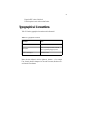

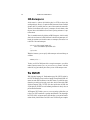
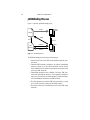
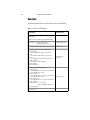
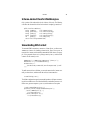
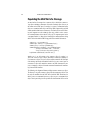

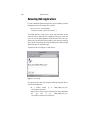

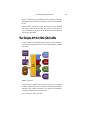
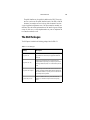
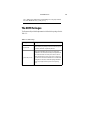
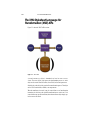

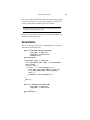
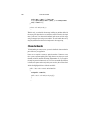
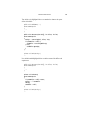
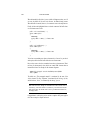
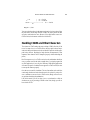
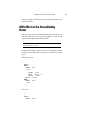
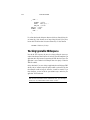
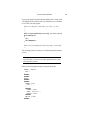
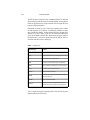
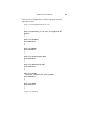
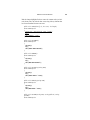
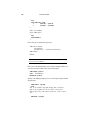

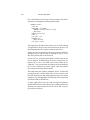
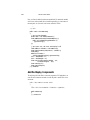
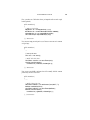
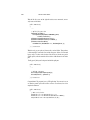
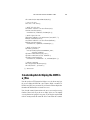
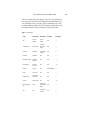
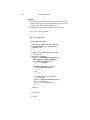
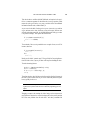
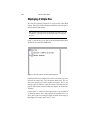
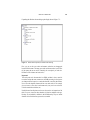

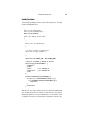
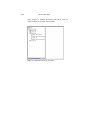
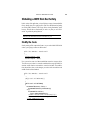
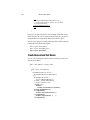
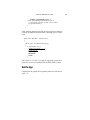
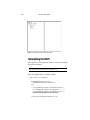


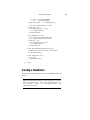
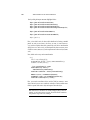
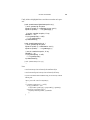
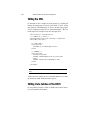
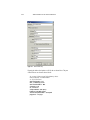


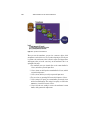

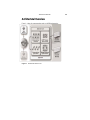
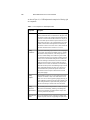
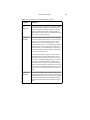
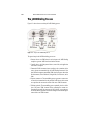
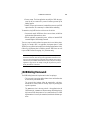
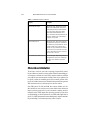
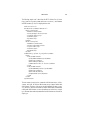
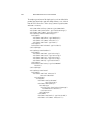
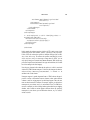
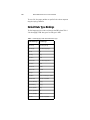
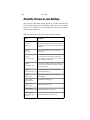
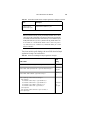
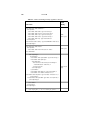
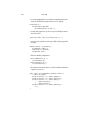
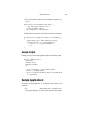
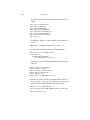
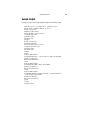
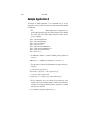
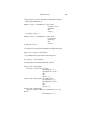
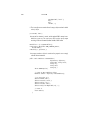
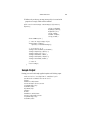
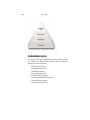

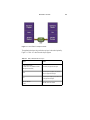
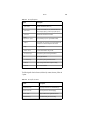
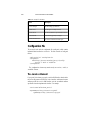
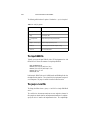

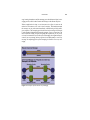
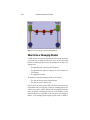
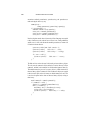
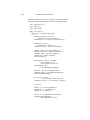
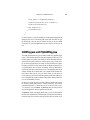
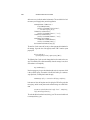

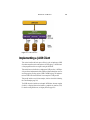
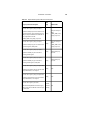
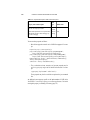
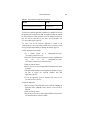
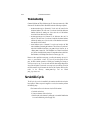
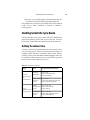
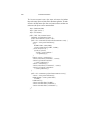
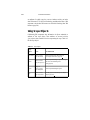
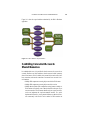
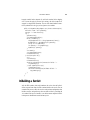
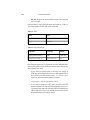
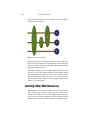


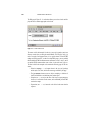
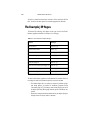
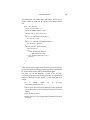
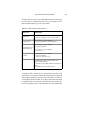
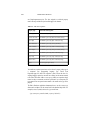
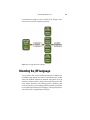
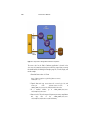
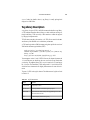
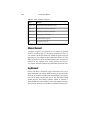
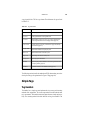
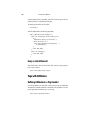
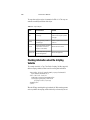
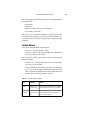
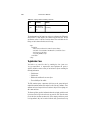
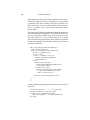
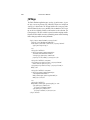

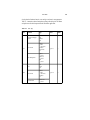
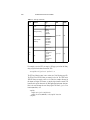
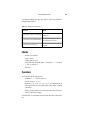
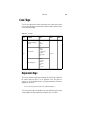
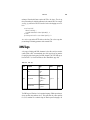
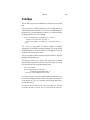
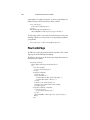
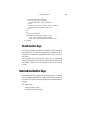
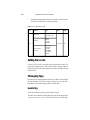
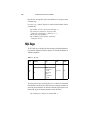
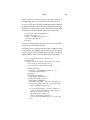
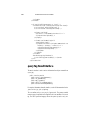
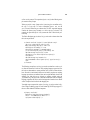
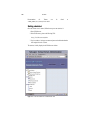

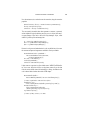
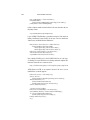
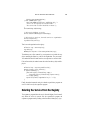
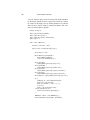
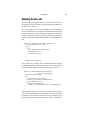

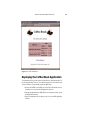

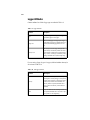
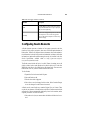
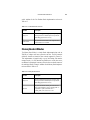
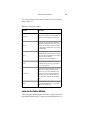
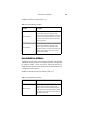
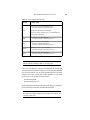













![[1 ] Oracle® Enterprise Manager](http://vs1.manualzilla.com/store/data/005669073_1-0396df232df5e560fdd03210f5126330-150x150.png)