1
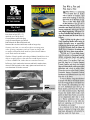
The Times of Road & Track
Automotive manufacturing and production was the main driver
of economic growth for over a half-century within the USA.
By the 1950’s it wasn’t unusual to hear repetitions of the statement
“what’s good for General Motors is good for America.”
That changed by the 1970’s, as per Hemming’s,
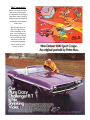
“the big-bore American muscle car was strangled by
emissions and fuel crises, forcing innumerable buyers
to look into smaller cars for driving pleasure.”
To revisit that context we’re summarizing concerns
reported by Road & Track in the peak 1968-1975 Opel era.
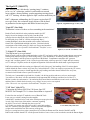
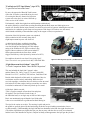
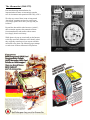
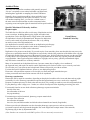
Urban Air Quality (1970)
Government Intervention
Numerous regulations were somewhat arbitrarily enforced in the
late 1960’s-early 1970’s, with mandates for engines that would run
on unleaded fuel, for exhaust emissions within tight limits, and for
improved safety features.
In the case of US-export Opels, GM engineers simply de-tuned
the motor output through alterations of the pistons for a lower
compression ratio and a re-curve of the distributor for less advanced
ignition timing (starting with 1971 models). Other additions included
emission-control hardware and some rather primitive and
confining seat belt configurations.
Cost Control
These came from different factors. Increasing damage frequency
and accident-payout amounts attributed to the “musclecar” sector
led to readjustments in insurance coverage and cost by 1970.
Import Costs/Exchange Rates
This was compounded by changes in the exchange rates between
a falling US dollar and a resurgent Deutschmark from 1970-1975,
which raised the costs of importing German-built sedans.
Other Issues
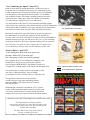
As a Newport Beach-based periodical whose interests didn’t end at the
US border, R&T was particularly well-situated to record trends and changes
motivating import car sales, during the 1968-1975 peak US Opel era.
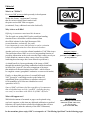
Imports as a sector of new US car sales grew from 11% in 1970 to
16% in 1971 (42% share of the Southern California market), and this trend
exploded when gasoline became more expensive (when you could find it).
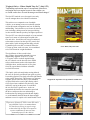
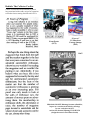
Fuel Crises (1973, 1979)
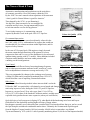
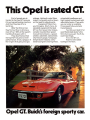
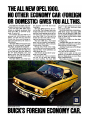
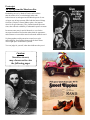
Opels did enjoy a brief resurgence in Spring 1974, when Buick shifted marketing in its favor and buyers
flocked back to the dealerships seeking higher-efficiency 20mpg sedans.
But shoppers reportedly were redirected when a smaller Buick was introduced later that year, and as a result
the Opel marquee surrendered considerable market share. Ultimately the German-made Opels dropped
from the Number 2 import brand in 1968 (at just under 100,000 sales) to somewhere way behind
Toyota and Datsun by 1975 (with U.S. sales reportedly numbering about 15,000 for its final imported model).