1
number of classes not yet observed. As this number is unknown this interpretation is, albeit of theoretical interest, of little practical importance for
applications [24, 26].
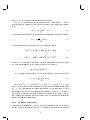
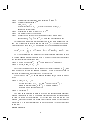
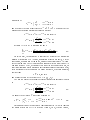
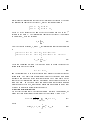
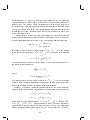
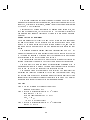
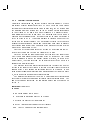
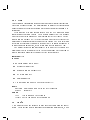
We identify new vectors using Bayesian predictive identication. By this
we mean that we identify a new vector z with the class Cj ; j = 1; 2; : : : ; k +1,
which maximizes
p(zjaj ; Cj )j :
(30)
If expression (30) assumes its maximum for j = k + 1, a new class is
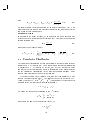
formed. The identication as dened above can be equivalently based on the
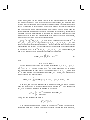
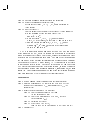
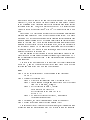
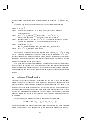
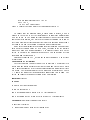
discriminant functions
lj (z) =
and
where
and
d
X
i=1
wij jzi ? aij j + bj + log(tj + 1); j = 1; : : : ; k;
lk+1(z) = log( ? d);
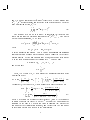
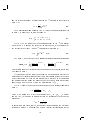
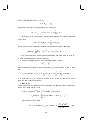
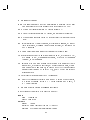
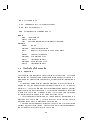
sij + 1
wij = log t ?
j sij + 1
(31)
(32)
!
(33)
!
t
j ? sij + 1
bj = log t + 2 :
(34)
j
i=1
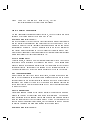
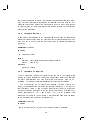
In this formulation the vector z is identied with the class Cj for which
lj assumes the greatest value. Observe that lk+1 is independent of both the
vector z to be identied and the classication obtained so far. It can therefore
be viewed as the rejection threshold : If lj (z) < lk+1 for all j = 1; 2; : : : ; k,
then we reject the identication of z within the present classication and
found a new class augmenting the classication [24, 26].
Another interpretation for the rejection threshold is that the vector z
does not belong to present knowledge C, and should be considered trash. We
can use both approaches depending on the application.
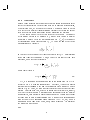
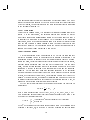
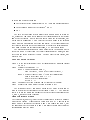
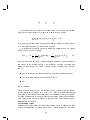
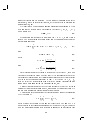
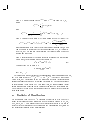
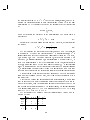
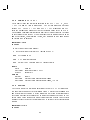
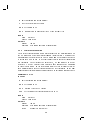
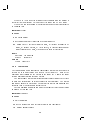
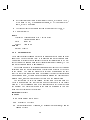
As a measure of the goodness of the classication we choose the predictive
t. It is dened by
k
d
k X
X
X
(35)
wij sij + tj bj ;
L=
d
X
j =1
j1 i1
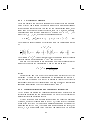
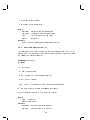
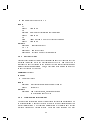
where wij and bj are dened by (33) and (34) respectively. The number ?L is
closely related to the stochastic complexity (SC) dened by (10), which is used
with the clustering algorithm as a measure of goodness. In our experiments
20