1
34
AUTOSTAR CCD PHOTOMETRY
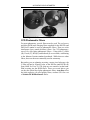
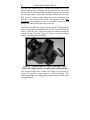
The Affordable Meade Deep Sky Imager (DSI)
While CCD cameras for astronomical use have been around for
more than a decade, it has only been recently that affordable and
easy-to-use CCD devices have been made available to the amateur
market. Some of the first of these were digital web cams. Some
folks figured them out and made modifications that produced
surprisingly high-quality results. But web cams work best on the
brighter objects such as the planets, the Moon, and solar imaging.
For deep-sky imaging, the web cams need to be modified, but
these modifications are beyond the capability of many amateurs.
When Meade introduced the color Deep Sky Imager (DSI), that
changed. Now one could do deep-sky imaging of faint objects
without needing to make complicated modifications to the camera.
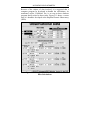
In addition, the AutoStar Suite software that comes with the DSI
series is excellent. It’s worth the price of the camera alone.
Learning the software requires some dedication, as the quality of
the software far exceeds the documentation (thus, this book!)
However, two technical issues prevent use of the color versions of
the DSI camera for effective astronomical filter photometry.
Because the Sony HAD EX-View® color CCD chip used in the
DSI color version has built-in microlens red-green-blue (RGB)
filters on the photosites, it would be hard or impossible to find
proper filters to match the camera to the standard photometric
system. The other issue, while mainly a problem only during the
warmer months, is that the DSI camera is electrically uncooled and
operates at ambient temperature.
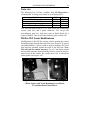
Monochrome Deep Sky Imager Pro (DSI Pro)
Shortly after the color DSI was released, Meade introduced a
monochrome version, the DSI Pro. The monochrome DSI Pro and
the newer DSI Pro-II cameras provide a good starting point for
serious CCD photometry at moderate expense. Because these
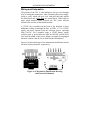
cameras use a monochrome version of the Sony CCD chips, a fourposition filter slide for RGB filters is included, for tri-color
imaging (plus a “clear” or IR blocking filter).