1
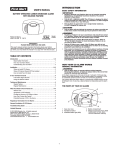
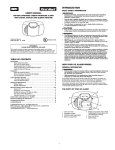
UNDERSTANDING YOUR CO ALARM
WHERE CO ALARMS SHOULD NOT BE
INSTALLED
WELCOME CHIRP
Horn chirps and light blinks once when batteries are first connected.
DO NOT LOCATE THIS CO ALARM:
•
ALARM RECEIVING BATTERY POWER
Light flashes every minute. Horn is silent.
•
In garages, kitchens, furnace rooms, or in any extremely dusty, dirty or
greasy areas.
Within 5 feet (1.5 meters) of any cooking appliance.
In extremely humid areas. This alarm should be at least 10 feet (3 meters)
from a bath or shower, sauna, humidifier, vaporizer, dishwasher, laundry
room, utility room or other source of high humidity.
In areas where temperature is colder than 40˚ F (4˚ C) or hotter than 100˚ F
(38˚ C). These areas include unconditioned crawl spaces, unfinished
attics, uninsulated or poorly insulated ceilings, porches, and garages.
In turbulent air, like near ceiling fans, heat vents, air conditioners,
fresh air returns, or open windows. Blowing air may prevent CO from
reaching the sensors.
Outside the Mobile Home.
•
In direct sunlight.
•
•
LOW BATTERY WARNING
The light continues to flash (RED) and the horn also “chirps” once every
minute. This warning should last for up to 30 days, but you should replace
the batteries as soon as possible.
•
DURING TESTING
Light flashes Red in sync with the horn pattern (4 beeps, pause, 4 beeps),
simulating a CO Alarm condition.
•
CO ALARM
Sensor has detected enough CO to trigger an alarm. Light flashes rapidly
and horn sounds loudly (repeating 4 beeps, pause). See “If Your CO Alarm
Sounds” for details. During an alarm, move everyone to a source of fresh
air. DO NOT move the CO Alarm!
• This CO Alarm is designed for use inside a single-family home or
apartment. It is not meant to be used in common lobbies, hallways,
or basements of multi-family buildings unless working CO Alarms
are also installed in each family living unit. CO Alarms in common
areas may not be heard from inside individual family living units.
CO ALARM REQUIRES SERVICE (MALFUNCTION SIGNAL)
The light flashes (RED) and the horn sounds 3 quick “chirps” every minute.
CO Alarm needs to be replaced.
• This CO Alarm alone is not a suitable substitute for complete
detection systems in places which house many people, like hotels
or dormitories, unless a CO Alarm is also placed in each unit.
• DO NOT use this CO Alarm in warehouses, industrial or commercial
buildings, special-purpose non-residential buildings, or airplanes.
This CO Alarm is specifically designed for residential use, and may
not provide adequate protection in non-residential applications.
INSTALLATION
WHERE TO INSTALL CO ALARMS
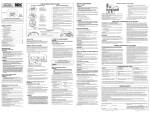
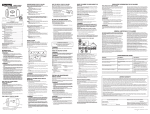
The National Fire Protection Association (NFPA) recommends that a CO Alarm
should be centrally located outside of each separate sleeping area in the
immediate vicinity of the bedrooms. For added protection, install additional
CO Alarms in each separate bedroom, and on every level of your home.
If your bedroom hallway is longer than 40 feet (12 meters), install a CO Alarm
at BOTH ends of the hallway.
BEDROOM
BEDROOM
KITCHEN
LIVING ROOM
HALL
BEDROOM
GARAGE
BASEMENT
REQUIRED TO MEET NFPA RECOMMENDATIONS
SUGGESTED AREAS FOR INSTALLING ADDITIONAL CO ALARMS
In a Single-level Home:
• Install at least one CO Alarm near or within each separate sleeping area.
• For added protection, install an additional CO Alarm at least 20 feet
(6 meters) away from the furnace or fuel burning heat source.
In a Multi-level Home:
• Install at least one CO Alarm near or within each separate sleeping area.
• For added protection, install at least one CO Alarm on each level of the
home.
• For added protection, install an additional CO Alarm at least 20 feet
(6 meters) away from the furnace or fuel burning heat source.
In Mobile Homes:
• Install CO Alarms on inside walls ONLY. Uninsulated outside walls and
roofs of mobile homes often transfer heat and cold from outdoors. The
Alarm should be located at least 152 mm (6 inches) from all exterior walls
and at least 305 mm (12 inches) from supply or return vents.
2