1
Erlang Interface
Copyright © 1998-2015 Ericsson AB. All Rights Reserved.
Erlang Interface 3.8.1
December 15, 2015
Copyright © 1998-2015 Ericsson AB. All Rights Reserved.
Licensed under the Apache License, Version 2.0 (the "License"); you may not use this file except in compliance
with the License. You may obtain a copy of the License at http://www.apache.org/licenses/LICENSE-2.0 Unless
required by applicable law or agreed to in writing, software distributed under the License is distributed on an
"AS IS" BASIS, WITHOUT WARRANTIES OR CONDITIONS OF ANY KIND, either express or implied. See
the License for the specific language governing permissions and limitations under the License. Ericsson AB. All
Rights Reserved..
December 15, 2015
Ericsson AB. All Rights Reserved.: Erlang Interface | 1
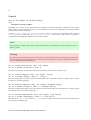
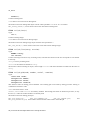
1.1 The El Library User's Guide
1 EI User's Guide
1.1 The El Library User's Guide
The Erl_Interface library contains functions. which help you integrate programs written in C and Erlang. The functions
in Erl_Interface support the following:
•
•
•
•
•
manipulation of data represented as Erlang data types
conversion of data between C and Erlang formats
encoding and decoding of Erlang data types for transmission or storage
communication between C nodes and Erlang processes
backup and restore of C node state to and from Mnesia
In the following sections, these topics are described:
•
•
•
•
•
•
•
•
•
•
•
compiling your code for use with Erl_Interface
initializing Erl_Interface
encoding, decoding, and sending Erlang terms
building terms and patterns
pattern matching
connecting to a distributed Erlang node
using EPMD
sending and receiving Erlang messages
remote procedure calls
global names
the registry
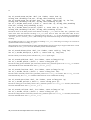
1.1.1 Compiling and Linking Your Code
In order to use any of the Erl_Interface functions, include the following lines in your code:
#include "erl_interface.h"
#include "ei.h"
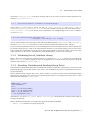
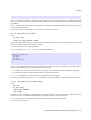
Determine where the top directory of your OTP installation is. You can find this out by starting Erlang and entering
the following command at the Eshell prompt:
Eshell V4.7.4 (abort with ^G)
1> code:root_dir().
/usr/local/otp
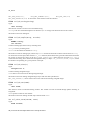
To compile your code, make sure that your C compiler knows where to find erl_interface.h by specifying an
appropriate -I argument on the command line, or by adding it to the CFLAGS definition in your Makefile. The
correct value for this path is $OTPROOT/lib/erl_interfaceVsn/include, where $OTPROOT is the path
2 | Ericsson AB. All Rights Reserved.: Erlang Interface
1.1 The El Library User's Guide
reported by code:root_dir/0 in the above example, and Vsn is the version of the Erl_interface application, for
example erl_interface-3.2.3
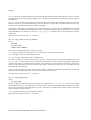
$ cc -c -I/usr/local/otp/lib/erl_interface-3.2.3/include myprog.c
When linking, you will need to specify the path to liberl_interface.a and libei.a with -L
$OTPROOT/lib/erl_interface-3.2.3/lib, and you will need to specify the name of the libraries with lerl_interface -lei. You can do this on the command line or by adding the flags to the LDFLAGS definition
in your Makefile.
$ ld -L/usr/local/otp/lib/erl_interface-3.2.3/
lib myprog.o -lerl_interface -lei -o myprog
Also, on some systems it may be necessary to link with some additional libraries (e.g. libnsl.a and libsocket.a
on Solaris, or wsock32.lib on Windows) in order to use the communication facilities of Erl_Interface.
If you are using Erl_Interface functions in a threaded application based on POSIX threads or Solaris threads, then
Erl_Interface needs access to some of the synchronization facilities in your threads package, and you will need to
specify additional compiler flags in order to indicate which of the packages you are using. Define _REENTRANT and
either STHREADS or PTHREADS. The default is to use POSIX threads if _REENTRANT is specified.
1.1.2 Initializing the erl_interface Library
Before calling any of the other Erl_Interface functions, you must call erl_init() exactly once to initialize the
library. erl_init() takes two arguments, however the arguments are no longer used by Erl_Interface, and should
therefore be specified as erl_init(NULL,0).
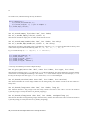
1.1.3 Encoding, Decoding and Sending Erlang Terms
Data sent between distributed Erlang nodes is encoded in the Erlang external format. Consequently, you have to encode
and decode Erlang terms into byte streams if you want to use the distribution protocol to communicate between a C
program and Erlang.
The Erl_Interface library supports this activity. It has a number of C functions which create and manipulate Erlang
data structures. The library also contains an encode and a decode function. The example below shows how to create
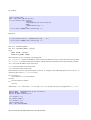
and encode an Erlang tuple {tobbe,3928}:
ETERM *arr[2], *tuple;
char buf[BUFSIZ];
int i;
arr[0] = erl_mk_atom("tobbe");
arr[1] = erl_mk_integer(3928);
tuple = erl_mk_tuple(arr, 2);
i = erl_encode(tuple, buf);
Alternatively, you can use erl_send() and erl_receive_msg, which handle the encoding and decoding of
messages transparently.
Refer to the Reference Manual for a complete description of the following modules:
•
the erl_eterm module for creating Erlang terms
Ericsson AB. All Rights Reserved.: Erlang Interface | 3
1.1 The El Library User's Guide
•
the erl_marshal module for encoding and decoding routines.
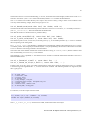
1.1.4 Building Terms and Patterns
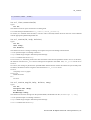
The previous example can be simplified by using erl_format() to create an Erlang term.
ETERM *ep;
ep = erl_format("{~a,~i}", "tobbe", 3928);
Refer to the Reference Manual, the erl_format module, for a full description of the different format directives.
The following example is more complex:
ETERM *ep;
ep = erl_format("[{name,~a},{age,~i},{data,~w}]",
"madonna",
21,
erl_format("[{adr,~s,~i}]", "E-street", 42));
erl_free_compound(ep);
As in previous examples, it is your responsibility to free the memory allocated for Erlang terms. In this example,
erl_free_compound() ensures that the complete term pointed to by ep is released. This is necessary, because
the pointer from the second call to erl_format() is lost.
The following example shows a slightly different solution:
ETERM *ep,*ep2;
ep2 = erl_format("[{adr,~s,~i}]","E-street",42);
ep = erl_format("[{name,~a},{age,~i},{data,~w}]",
"madonna", 21, ep2);
erl_free_term(ep);
erl_free_term(ep2);
In this case, you free the two terms independently. The order in which you free the terms ep and ep2 is not important,
because the Erl_Interface library uses reference counting to determine when it is safe to actually remove objects.
If you are not sure whether you have freed the terms properly, you can use the following function to see the status
of the fixed term allocator:
long allocated, freed;
erl_eterm_statistics(&allocated,&freed);
printf("currently allocated blocks: %ld\n",allocated);
printf("length of freelist: %ld\n",freed);
/* really free the freelist */
erl_eterm_release();
Refer to the Reference Manual, the erl_malloc module for more information.
4 | Ericsson AB. All Rights Reserved.: Erlang Interface
1.1 The El Library User's Guide
1.1.5 Pattern Matching
An Erlang pattern is a term that may contain unbound variables or "do not care" symbols. Such a pattern can
be matched against a term and, if the match is successful, any unbound variables in the pattern will be bound as a side
effect. The content of a bound variable can then be retrieved.
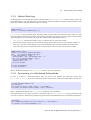
ETERM *pattern;
pattern = erl_format("{madonna,Age,_}");
erl_match() is used to perform pattern matching. It takes a pattern and a term and tries to match them. As a side
effect any unbound variables in the pattern will be bound. In the following example, we create a pattern with a variable
Age which appears at two positions in the tuple. The pattern match is performed as follows:
•
•
•
erl_match() will bind the contents of Age to 21 the first time it reaches the variable
the second occurrence of Age will cause a test for equality between the terms since Age is already bound to 21.
Since Age is bound to 21, the equality test will succeed and the match continues until the end of the pattern.
if the end of the pattern is reached, the match succeeds and you can retrieve the contents of the variable
ETERM *pattern,*term;
pattern = erl_format("{madonna,Age,Age}");
term
= erl_format("{madonna,21,21}");
if (erl_match(pattern, term)) {
fprintf(stderr, "Yes, they matched: Age = ");
ep = erl_var_content(pattern, "Age");
erl_print_term(stderr, ep);
fprintf(stderr,"\n");
erl_free_term(ep);
}
erl_free_term(pattern);
erl_free_term(term);
Refer to the Reference Manual, the erl_match() function for more information.
1.1.6 Connecting to a Distributed Erlang Node
In order to connect to a distributed Erlang node you need to first initialize the connection routine with
erl_connect_init(), which stores information such as the host name, node name, and IP address for later use:
int identification_number = 99;
int creation=1;
char *cookie="a secret cookie string"; /* An example */
erl_connect_init(identification_number, cookie, creation);
Refer to the Reference Manual, the erl_connect module for more information.
After initialization, you set up the connection to the Erlang node. Use erl_connect() to specify the Erlang node
you want to connect to. The following example sets up the connection and should result in a valid socket file descriptor:
int sockfd;
char *nodename="[email protected]"; /* An example */
if ((sockfd = erl_connect(nodename)) < 0)
Ericsson AB. All Rights Reserved.: Erlang Interface | 5
1.1 The El Library User's Guide
erl_err_quit("ERROR: erl_connect failed");
erl_err_quit() prints the specified string and terminates the program. Refer to the Reference Manual, the
erl_error() function for more information.
1.1.7 Using EPMD
Epmd is the Erlang Port Mapper Daemon. Distributed Erlang nodes register with epmd on the localhost to indicate to
other nodes that they exist and can accept connections. Epmd maintains a register of node and port number information,
and when a node wishes to connect to another node, it first contacts epmd in order to find out the correct port number
to connect to.
When you use erl_connect() to connect to an Erlang node, a connection is first made to epmd and, if the node
is known, a connection is then made to the Erlang node.
C nodes can also register themselves with epmd if they want other nodes in the system to be able to find and connect
to them.
Before registering with epmd, you need to first create a listen socket and bind it to a port. Then:
int pub;
pub = erl_publish(port);
pub is a file descriptor now connected to epmd. Epmd monitors the other end of the connection, and if it detects that
the connection has been closed, the node will be unregistered. So, if you explicitly close the descriptor or if your node
fails, it will be unregistered from epmd.
Be aware that on some systems (such as VxWorks), a failed node will not be detected by this mechanism since the
operating system does not automatically close descriptors that were left open when the node failed. If a node has failed
in this way, epmd will prevent you from registering a new node with the old name, since it thinks that the old name
is still in use. In this case, you must unregister the name explicitly:
erl_unpublish(node);
This will cause epmd to close the connection from the far end. Note that if the name was in fact still in use by a node,
the results of this operation are unpredictable. Also, doing this does not cause the local end of the connection to close,
so resources may be consumed.
1.1.8 Sending and Receiving Erlang Messages
Use one of the following two functions to send messages:
•
•
erl_send()
erl_reg_send()
As in Erlang, it is possible to send messages to a Pid or to a registered name. It is easier to send a message to a registered
name because it avoids the problem of finding a suitable Pid.
Use one of the following two functions to receive messages:
•
•
erl_receive()
erl_receive_msg()
6 | Ericsson AB. All Rights Reserved.: Erlang Interface
1.1 The El Library User's Guide
erl_receive() receives the message into a buffer, while erl_receive_msg() decodes the message into an
Erlang term.
Example of Sending Messages
In the following example, {Pid, hello_world} is sent to a registered process my_server. The message is
encoded by erl_send():
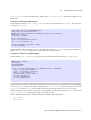
extern const char *erl_thisnodename(void);
extern short erl_thiscreation(void);
#define SELF(fd) erl_mk_pid(erl_thisnodename(),fd,0,erl_thiscreation())
ETERM *arr[2], *emsg;
int sockfd, creation=1;
arr[0] = SELF(sockfd);
arr[1] = erl_mk_atom("Hello world");
emsg
= erl_mk_tuple(arr, 2);
erl_reg_send(sockfd, "my_server", emsg);
erl_free_term(emsg);
The first element of the tuple that is sent is your own Pid. This enables my_server to reply. Refer to the Reference
Manual, the erl_connect module for more information about send primitives.
Example of Receiving Messages
In this example {Pid, Something} is received. The received Pid is then used to return {goodbye,Pid}
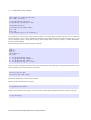
ETERM *arr[2], *answer;
int sockfd,rc;
char buf[BUFSIZE];
ErlMessage emsg;
if ((rc = erl_receive_msg(sockfd , buf, BUFSIZE, &emsg)) == ERL_MSG) {
arr[0] = erl_mk_atom("goodbye");
arr[1] = erl_element(1, emsg.msg);
answer = erl_mk_tuple(arr, 2);
erl_send(sockfd, arr[1], answer);
erl_free_term(answer);
erl_free_term(emsg.msg);
erl_free_term(emsg.to);
}
In order to provide robustness, a distributed Erlang node occasionally polls all its connected neighbours in an attempt to
detect failed nodes or communication links. A node which receives such a message is expected to respond immediately
with an ERL_TICK message. This is done automatically by erl_receive(), however when this has occurred
erl_receive returns ERL_TICK to the caller without storing a message into the ErlMessage structure.
When a message has been received, it is the caller's responsibility to free the received message emsg.msg as well as
emsg.to or emsg.from, depending on the type of message received.
Refer to the Reference Manual for additional information about the following modules:
•
•
erl_connect
erl_eterm.
Ericsson AB. All Rights Reserved.: Erlang Interface | 7
1.1 The El Library User's Guide
1.1.9 Remote Procedure Calls
An Erlang node acting as a client to another Erlang node typically sends a request and waits for a reply. Such a request
is included in a function call at a remote node and is called a remote procedure call. The following example shows
how the Erl_Interface library supports remote procedure calls:
char modname[]=THE_MODNAME;
ETERM *reply,*ep;
ep = erl_format("[~a,[]]", modname);
if (!(reply = erl_rpc(fd, "c", "c", ep)))
erl_err_msg("<ERROR> when compiling file: %s.erl !\n", modname);
erl_free_term(ep);
ep = erl_format("{ok,_}");
if (!erl_match(ep, reply))
erl_err_msg("<ERROR> compiler errors !\n");
erl_free_term(ep);
erl_free_term(reply);
c:c/1 is called to compile the specified module on the remote node. erl_match() checks that the compilation
was successful by testing for the expected ok.
Refer to the Reference Manual, the erl_connect module for more information about erl_rpc(), and its
companions erl_rpc_to() and erl_rpc_from().
1.1.10 Using Global Names
A C node has access to names registered through the Erlang Global module. Names can be looked up, allowing the
C node to send messages to named Erlang services. C nodes can also register global names, allowing them to provide
named services to Erlang processes or other C nodes.
Erl_Interface does not provide a native implementation of the global service. Instead it uses the global services provided
by a "nearby" Erlang node. In order to use the services described in this section, it is necessary to first open a connection
to an Erlang node.
To see what names there are:
char **names;
int count;
int i;
names = erl_global_names(fd,&count);
if (names)
for (i=0; i<count; i++)
printf("%s\n",names[i]);
free(names);
erl_global_names() allocates and returns a buffer containing all the names known to global. count will be
initialized to indicate how many names are in the array. The array of strings in names is terminated by a NULL pointer,
so it is not necessary to use count to determine when the last name is reached.
It is the caller's responsibility to free the array. erl_global_names() allocates the array and all of the strings
using a single call to malloc(), so free(names) is all that is necessary.
To look up one of the names:
8 | Ericsson AB. All Rights Reserved.: Erlang Interface
1.1 The El Library User's Guide
ETERM *pid;
char node[256];
pid = erl_global_whereis(fd,"schedule",node);
If "schedule" is known to global, an Erlang pid is returned that can be used to send messages to the schedule
service. Additionally, node will be initialized to contain the name of the node where the service is registered, so that
you can make a connection to it by simply passing the variable to erl_connect().
Before registering a name, you should already have registered your port number with epmd. This is not strictly
necessary, but if you neglect to do so, then other nodes wishing to communicate with your service will be unable to
find or connect to your process.
Create a pid that Erlang processes can use to communicate with your service:
ETERM *pid;
pid = erl_mk_pid(thisnode,14,0,0);
erl_global_register(fd,servicename,pid);
After registering the name, you should use erl_accept() to wait for incoming connections.
Do not forget to free pid later with erl_free_term()!
To unregister a name:
erl_global_unregister(fd,servicename);
1.1.11 The Registry
This section describes the use of the registry, a simple mechanism for storing key-value pairs in a C-node, as well
as backing them up or restoring them from a Mnesia table on an Erlang node. More detailed information about the
individual API functions can be found in the Reference Manual.
Keys are strings, i.e. 0-terminated arrays of characters, and values are arbitrary objects. Although integers and floating
point numbers are treated specially by the registry, you can store strings or binary objects of any type as pointers.
To start, you need to open a registry:
ei_reg *reg;
reg = ei_reg_open(45);
The number 45 in the example indicates the approximate number of objects that you expect to store in the registry.
Internally the registry uses hash tables with collision chaining, so there is no absolute upper limit on the number of
objects that the registry can contain, but if performance or memory usage are important, then you should choose a
number accordingly. The registry can be resized later.
You can open as many registries as you like (if memory permits).
Objects are stored and retrieved through set and get functions. In the following examples you see how to store integers,
floats, strings and arbitrary binary objects:
Ericsson AB. All Rights Reserved.: Erlang Interface | 9
1.1 The El Library User's Guide
struct bonk *b = malloc(sizeof(*b));
char *name = malloc(7);
ei_reg_setival(reg,"age",29);
ei_reg_setfval(reg,"height",1.85);
strcpy(name,"Martin");
ei_reg_setsval(reg,"name",name);
b->l = 42;
b->m = 12;
ei_reg_setpval(reg,"jox",b,sizeof(*b));
If you attempt to store an object in the registry and there is an existing object with the same key, the new value will
replace the old one. This is done regardless of whether the new object and the old one have the same type, so you
can, for example, replace a string with an integer. If the existing value is a string or binary, it will be freed before
the new value is assigned.
Stored values are retrieved from the registry as follows:
long i;
double f;
char *s;
struct bonk *b;
int size;
i
f
s
b
=
=
=
=
ei_reg_getival(reg,"age");
ei_reg_getfval(reg,"height");
ei_reg_getsval(reg,"name");
ei_reg_getpval(reg,"jox",&size);
In all of the above examples, the object must exist and it must be of the right type for the specified operation. If you
do not know the type of a given object, you can ask:
struct ei_reg_stat buf;
ei_reg_stat(reg,"name",&buf);
Buf will be initialized to contain object attributes.
Objects can be removed from the registry:
ei_reg_delete(reg,"name");
When you are finished with a registry, close it to remove all the objects and free the memory back to the system:
ei_reg_close(reg);
10 | Ericsson AB. All Rights Reserved.: Erlang Interface
1.1 The El Library User's Guide
Backing Up the Registry to Mnesia
The contents of a registry can be backed up to Mnesia on a "nearby" Erlang node. You need to provide an open
connection to the Erlang node (see erl_connect()). Also, Mnesia 3.0 or later must be running on the Erlang node
before the backup is initiated:
ei_reg_dump(fd, reg, "mtab", dumpflags);
The example above will backup the contents of the registry to the specified Mnesia table "mtab". Once a registry has
been backed up to Mnesia in this manner, additional backups will only affect objects that have been modified since the
most recent backup, i.e. objects that have been created, changed or deleted. The backup operation is done as a single
atomic transaction, so that the entire backup will be performed or none of it will.
In the same manner, a registry can be restored from a Mnesia table:
ei_reg_restore(fd, reg, "mtab");
This will read the entire contents of "mtab" into the specified registry. After the restore, all of the objects in the
registry will be marked as unmodified, so a subsequent backup will only affect objects that you have modified since
the restore.
Note that if you restore to a non-empty registry, objects in the table will overwrite objects in the registry with the same
keys. Also, the entire contents of the registry is marked as unmodified after the restore, including any modified objects
that were not overwritten by the restore operation. This may not be your intention.
Storing Strings and Binaries
When string or binary objects are stored in the registry it is important that a number of simple guidelines are followed.
Most importantly, the object must have been created with a single call to malloc() (or similar), so that it can later
be removed by a single call to free(). Objects will be freed by the registry when it is closed, or when you assign a
new value to an object that previously contained a string or binary.
You should also be aware that if you store binary objects that are context-dependent (e.g. containing pointers or open
file descriptors), they will lose their meaning if they are backed up to a Mnesia table and subsequently restored in
a different context.
When you retrieve a stored string or binary value from the registry, the registry maintains a pointer to the object and
you are passed a copy of that pointer. You should never free an object retrieved in this manner because when the
registry later attempts to free it, a runtime error will occur that will likely cause the C-node to crash.
You are free to modify the contents of an object retrieved this way. However when you do so, the registry will not be
aware of the changes you make, possibly causing it to be missed the next time you make a Mnesia backup of the registry
contents. This can be avoided if you mark the object as dirty after any such changes with ei_reg_markdirty(),
or pass appropriate flags to ei_reg_dump().
Ericsson AB. All Rights Reserved.: Erlang Interface | 11
1.1 The El Library User's Guide
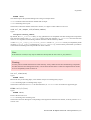
2 Reference Manual
The ei and erl_interface are C interface libraries for communication with Erlang.
Note:
By default, the ei and erl_interface libraries are only guaranteed to be compatible with other Erlang/OTP
components from the same release as the libraries themself. See the documentation of the ei_set_compat_rel()
and erl_set_compat_rel() functions on how to communicate with Erlang/OTP components from earlier releases.
12 | Ericsson AB. All Rights Reserved.: Erlang Interface
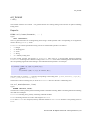
ei
ei
C Library
The library ei contains macros and functions to encode and decode the erlang binary term format.
With ei, you can convert atoms, lists, numbers and binaries to and from the binary format. This is useful when
writing port programs and drivers. ei uses a given buffer, and no dynamic memory (with the exception of
ei_decode_fun()), and is often quite fast.
It also handles C-nodes, C-programs that talks erlang distribution with erlang nodes (or other C-nodes) using the erlang
distribution format. The difference between ei and erl_interface is that ei uses the binary format directly when
sending and receiving terms. It is also thread safe, and using threads, one process can handle multiple C-nodes. The
erl_interface library is built on top of ei, but of legacy reasons, it doesn't allow for multiple C-nodes. In general,
ei is the preferred way of doing C-nodes.
The decode and encode functions use a buffer an index into the buffer, which points at the point where to encode and
decode. The index is updated to point right after the term encoded/decoded. No checking is done whether the term fits
in the buffer or not. If encoding goes outside the buffer, the program may crash.
All functions takes two parameter, buf is a pointer to the buffer where the binary data is / will be, index is a pointer
to an index into the buffer. This parameter will be incremented with the size of the term decoded / encoded. The data
is thus at buf[*index] when an ei function is called.
The encode functions all assumes that the buf and index parameters points to a buffer big enough for the data. To
get the size of an encoded term, without encoding it, pass NULL instead of a buffer pointer. The index parameter
will be incremented, but nothing will be encoded. This is the way in ei to "preflight" term encoding.
There are also encode-functions that uses a dynamic buffer. It is often more convenient to use these to encode data.
All encode functions comes in two versions: those starting with ei_x, uses a dynamic buffer.
All functions return 0 if successful, and -1 if not. (For instance, if a term is not of the expected type, or the data to
decode is not a valid erlang term.)
Some of the decode-functions needs a preallocated buffer. This buffer must be allocated big enough, and for non
compound types the ei_get_type() function returns the size required (note that for strings an extra byte is needed
for the 0 string terminator).
DATA TYPES
erlang_char_encoding
typedef enum {
ERLANG_ASCII = 1,
ERLANG_LATIN1 = 2,
ERLANG_UTF8 = 4
}erlang_char_encoding;
The character encodings used for atoms. ERLANG_ASCII represents 7-bit ASCII. Latin1 and UTF8 are different
extensions of 7-bit ASCII. All 7-bit ASCII characters are valid Latin1 and UTF8 characters. ASCII and Latin1
both represent each character by one byte. A UTF8 character can consist of one to four bytes. Note that these
constants are bit-flags and can be combined with bitwise-or.
Ericsson AB. All Rights Reserved.: Erlang Interface | 13
ei
Exports
void ei_set_compat_rel(release_number)
Types:
unsigned release_number;
By default, the ei library is only guaranteed to be compatible with other Erlang/OTP components from the same
release as the ei library itself. For example, ei from the OTP R10 release is not compatible with an Erlang emulator
from the OTP R9 release by default.
A call to ei_set_compat_rel(release_number) sets the ei library in compatibility mode of release
release_number. Valid range of release_number is [7, current release]. This makes it possible to
communicate with Erlang/OTP components from earlier releases.
Note:
If this function is called, it may only be called once and must be called before any other functions in the ei
library is called.
Warning:
You may run into trouble if this feature is used carelessly. Always make sure that all communicating components
are either from the same Erlang/OTP release, or from release X and release Y where all components from release
Y are in compatibility mode of release X.
int ei_encode_version(char *buf, int *index)
int ei_x_encode_version(ei_x_buff* x)
Encodes a version magic number for the binary format. Must be the first token in a binary term.
int ei_encode_long(char *buf, int *index, long p)
int ei_x_encode_long(ei_x_buff* x, long p)
Encodes a long integer in the binary format. Note that if the code is 64 bits the function ei_encode_long() is exactly
the same as ei_encode_longlong().
int ei_encode_ulong(char *buf, int *index, unsigned long p)
int ei_x_encode_ulong(ei_x_buff* x, unsigned long p)
Encodes an unsigned long integer in the binary format. Note that if the code is 64 bits the function ei_encode_ulong()
is exactly the same as ei_encode_ulonglong().
int ei_encode_longlong(char *buf, int *index, long long p)
int ei_x_encode_longlong(ei_x_buff* x, long long p)
Encodes a GCC long long or Visual C++ __int64 (64 bit) integer in the binary format. Note that this function
is missing in the VxWorks port.
14 | Ericsson AB. All Rights Reserved.: Erlang Interface
ei
int ei_encode_ulonglong(char *buf, int *index, unsigned long long p)
int ei_x_encode_ulonglong(ei_x_buff* x, unsigned long long p)
Encodes a GCC unsigned long long or Visual C++ unsigned __int64 (64 bit) integer in the binary format.
Note that this function is missing in the VxWorks port.
int ei_encode_bignum(char *buf, int *index, mpz_t obj)
int ei_x_encode_bignum(ei_x_buff *x, mpz_t obj)
Encodes a GMP mpz_t integer to binary format. To use this function the ei library needs to be configured and compiled
to use the GMP library.
int ei_encode_double(char *buf, int *index, double p)
int ei_x_encode_double(ei_x_buff* x, double p)
Encodes a double-precision (64 bit) floating point number in the binary format.
The function returns -1 if the floating point number is not finite.
int ei_encode_boolean(char *buf, int *index, int p)
int ei_x_encode_boolean(ei_x_buff* x, int p)
Encodes a boolean value, as the atom true if p is not zero or false if p is zero.
int ei_encode_char(char *buf, int *index, char p)
int ei_x_encode_char(ei_x_buff* x, char p)
Encodes a char (8-bit) as an integer between 0-255 in the binary format. Note that for historical reasons the integer
argument is of type char. Your C code should consider the given argument to be of type unsigned char even
if the C compilers and system may define char to be signed.
int
int
int
int
ei_encode_string(char *buf, int *index, const char *p)
ei_encode_string_len(char *buf, int *index, const char *p, int len)
ei_x_encode_string(ei_x_buff* x, const char *p)
ei_x_encode_string_len(ei_x_buff* x, const char* s, int len)
Encodes a string in the binary format. (A string in erlang is a list, but is encoded as a character array in the binary
format.) The string should be zero-terminated, except for the ei_x_encode_string_len() function.
int
int
int
int
ei_encode_atom(char *buf, int *index, const char *p)
ei_encode_atom_len(char *buf, int *index, const char *p, int len)
ei_x_encode_atom(ei_x_buff* x, const char *p)
ei_x_encode_atom_len(ei_x_buff* x, const char *p, int len)
Encodes an atom in the binary format. The p parameter is the name of the atom in latin1 encoding.
Only upto MAXATOMLEN-1 bytes are encoded. The name should be zero-terminated, except for the
ei_x_encode_atom_len() function.
Ericsson AB. All Rights Reserved.: Erlang Interface | 15
ei
int ei_encode_atom_as(char *buf, int *index, const char *p,
erlang_char_encoding from_enc, erlang_char_encoding to_enc)
int ei_encode_atom_len_as(char *buf, int *index, const char *p, int len,
erlang_char_encoding from_enc, erlang_char_encoding to_enc)
int ei_x_encode_atom_as(ei_x_buff* x, const char *p, erlang_char_encoding
from_enc, erlang_char_encoding to_enc)
int ei_x_encode_atom_len_as(ei_x_buff* x, const char *p, int len,
erlang_char_encoding from_enc, erlang_char_encoding to_enc)
Encodes an atom in the binary format with character encoding to_enc (latin1 or utf8). The p parameter is the
name of the atom with character encoding from_enc (ascii, latin1 or utf8). The name must either be zeroterminated or a function variant with a len parameter must be used. If to_enc is set to the bitwise-or'd combination
(ERLANG_LATIN1|ERLANG_UTF8), utf8 encoding is only used if the atom string can not be represented in latin1
encoding.
The encoding will fail if p is not a valid string in encoding from_enc, if the string is too long or if it can not be
represented with character encoding to_enc.
These functions were introduced in R16 release of Erlang/OTP as part of a first step to support UTF8 atoms. Atoms
encoded with ERLANG_UTF8 can not be decoded by earlier releases than R16.
int ei_encode_binary(char *buf, int *index, const void *p, long len)
int ei_x_encode_binary(ei_x_buff* x, const void *p, long len)
Encodes a binary in the binary format. The data is at p, of len bytes length.
int ei_encode_pid(char *buf, int *index, const erlang_pid *p)
int ei_x_encode_pid(ei_x_buff* x, const erlang_pid *p)
Encodes an erlang process identifier, pid, in the binary format. The p parameter points to an erlang_pid structure
(which should have been obtained earlier with ei_decode_pid()).
int ei_encode_fun(char *buf, int *index, const erlang_fun *p)
int ei_x_encode_fun(ei_x_buff* x, const erlang_fun* fun)
Encodes a fun in the binary format. The p parameter points to an erlang_fun structure. The erlang_fun is not
freed automatically, the free_fun should be called if the fun is not needed after encoding.
int ei_encode_port(char *buf, int *index, const erlang_port *p)
int ei_x_encode_port(ei_x_buff* x, const erlang_port *p)
Encodes an erlang port in the binary format. The p parameter points to a erlang_port structure (which should
have been obtained earlier with ei_decode_port().
int ei_encode_ref(char *buf, int *index, const erlang_ref *p)
int ei_x_encode_ref(ei_x_buff* x, const erlang_ref *p)
Encodes an erlang reference in the binary format. The p parameter points to a erlang_ref structure (which should
have been obtained earlier with ei_decode_ref().
16 | Ericsson AB. All Rights Reserved.: Erlang Interface
ei
int ei_encode_term(char *buf, int *index, void *t)
int ei_x_encode_term(ei_x_buff* x, void *t)
This function encodes an ETERM, as obtained from erl_interface. The t parameter is actually an ETERM pointer.
This function doesn't free the ETERM.
int ei_encode_trace(char *buf, int *index, const erlang_trace *p)
int ei_x_encode_trace(ei_x_buff* x, const erlang_trace *p)
This function encodes an erlang trace token in the binary format. The p parameter points to a erlang_trace
structure (which should have been obtained earlier with ei_decode_trace().
int ei_encode_tuple_header(char *buf, int *index, int arity)
int ei_x_encode_tuple_header(ei_x_buff* x, int arity)
This function encodes a tuple header, with a specified arity. The next arity terms encoded will be the elements of
the tuple. Tuples and lists are encoded recursively, so that a tuple may contain another tuple or list.
E.g. to encode the tuple {a, {b, {}}}:
ei_encode_tuple_header(buf, &i, 2);
ei_encode_atom(buf, &i, "a");
ei_encode_tuple_header(buf, &i, 2);
ei_encode_atom(buf, &i, "b");
ei_encode_tuple_header(buf, &i, 0);
int ei_encode_list_header(char *buf, int *index, int arity)
int ei_x_encode_list_header(ei_x_buff* x, int arity)
This function encodes a list header, with a specified arity. The next arity+1 terms are the elements (actually its
arity cons cells) and the tail of the list. Lists and tuples are encoded recursively, so that a list may contain another
list or tuple.
E.g. to encode the list [c, d, [e | f]]:
ei_encode_list_header(buf, &i, 3);
ei_encode_atom(buf, &i, "c");
ei_encode_atom(buf, &i, "d");
ei_encode_list_header(buf, &i, 1);
ei_encode_atom(buf, &i, "e");
ei_encode_atom(buf, &i, "f");
ei_encode_empty_list(buf, &i);
Note:
It may seem that there is no way to create a list without knowing the number of elements in advance. But indeed
there is a way. Note that the list [a, b, c] can be written as [a | [b | [c]]]. Using this, a list can
be written as conses.
Ericsson AB. All Rights Reserved.: Erlang Interface | 17
ei
To encode a list, without knowing the arity in advance:
while (something()) {
ei_x_encode_list_header(&x, 1);
ei_x_encode_ulong(&x, i); /* just an example */
}
ei_x_encode_empty_list(&x);
int ei_encode_empty_list(char* buf, int* index)
int ei_x_encode_empty_list(ei_x_buff* x)
This function encodes an empty list. It's often used at the tail of a list.
int ei_encode_map_header(char *buf, int *index, int arity)
int ei_x_encode_map_header(ei_x_buff* x, int arity)
This function encodes a map header, with a specified arity. The next arity*2 terms encoded will be the keys and
values of the map encoded in the following order: K1, V1, K2, V2, ..., Kn, Vn.
E.g. to encode the map #{a => "Apple", b => "Banana"}:
ei_x_encode_map_header(&x, 2);
ei_x_encode_atom(&x, "a");
ei_x_encode_string(&x, "Apple");
ei_x_encode_atom(&x, "b");
ei_x_encode_string(&x, "Banana");
A correctly encoded map can not have duplicate keys.
int ei_get_type(const char *buf, const int *index, int *type, int *size)
This function returns the type in type and size in size of the encoded term. For strings and atoms, size is the number
of characters not including the terminating 0. For binaries, size is the number of bytes. For lists and tuples, size is
the arity of the object. For other types, size is 0. In all cases, index is left unchanged.
int ei_decode_version(const char *buf, int *index, int *version)
This function decodes the version magic number for the erlang binary term format. It must be the first token in a
binary term.
int ei_decode_long(const char *buf, int *index, long *p)
This function decodes a long integer from the binary format. Note that if the code is 64 bits the function
ei_decode_long() is exactly the same as ei_decode_longlong().
int ei_decode_ulong(const char *buf, int *index, unsigned long *p)
This function decodes an unsigned long integer from the binary format. Note that if the code is 64 bits the function
ei_decode_ulong() is exactly the same as ei_decode_ulonglong().
18 | Ericsson AB. All Rights Reserved.: Erlang Interface
ei
int ei_decode_longlong(const char *buf, int *index, long long *p)
This function decodes a GCC long long or Visual C++ __int64 (64 bit) integer from the binary format. Note
that this function is missing in the VxWorks port.
int ei_decode_ulonglong(const char *buf, int *index, unsigned long long *p)
This function decodes a GCC unsigned long long or Visual C++ unsigned __int64 (64 bit) integer from
the binary format. Note that this function is missing in the VxWorks port.
int ei_decode_bignum(const char *buf, int *index, mpz_t obj)
This function decodes an integer in the binary format to a GMP mpz_t integer. To use this function the ei library
needs to be configured and compiled to use the GMP library.
int ei_decode_double(const char *buf, int *index, double *p)
This function decodes an double-precision (64 bit) floating point number from the binary format.
int ei_decode_boolean(const char *buf, int *index, int *p)
This function decodes a boolean value from the binary format. A boolean is actually an atom, true decodes 1 and
false decodes 0.
int ei_decode_char(const char *buf, int *index, char *p)
This function decodes a char (8-bit) integer between 0-255 from the binary format. Note that for historical reasons the
returned integer is of type char. Your C code should consider the returned value to be of type unsigned char
even if the C compilers and system may define char to be signed.
int ei_decode_string(const char *buf, int *index, char *p)
This function decodes a string from the binary format. A string in erlang is a list of integers between 0 and 255. Note
that since the string is just a list, sometimes lists are encoded as strings by term_to_binary/1, even if it was
not intended.
The string is copied to p, and enough space must be allocated. The returned string is null terminated so you need to
add an extra byte to the memory requirement.
int ei_decode_atom(const char *buf, int *index, char *p)
This function decodes an atom from the binary format. The null terminated name of the atom is placed at p. There
can be at most MAXATOMLEN bytes placed in the buffer.
int ei_decode_atom_as(const char *buf, int *index, char *p, int plen,
erlang_char_encoding want, erlang_char_encoding* was, erlang_char_encoding*
result)
This function decodes an atom from the binary format. The null terminated name of the atom is placed in buffer at
p of length plen bytes.
The wanted string encoding is specified by want. The original encoding used in the binary format (latin1 or utf8)
can be obtained from *was. The actual encoding of the resulting string (7-bit ascii, latin1 or utf8) can be obtained
from *result. Both was and result can be NULL. *result may differ from want if want is a bitwise-or'd
combination like ERLANG_LATIN1|ERLANG_UTF8 or if *result turn out to be pure 7-bit ascii (compatible with
both latin1 and utf8).
Ericsson AB. All Rights Reserved.: Erlang Interface | 19
ei
This function fails if the atom is too long for the buffer or if it can not be represented with encoding want.
This function was introduced in R16 release of Erlang/OTP as part of a first step to support UTF8 atoms.
int ei_decode_binary(const char *buf, int *index, void *p, long *len)
This function decodes a binary from the binary format. The len parameter is set to the actual size of the binary. Note
that ei_decode_binary() assumes that there are enough room for the binary. The size required can be fetched
by ei_get_type().
int ei_decode_fun(const char *buf, int *index, erlang_fun *p)
void free_fun(erlang_fun* f)
This function decodes a fun from the binary format. The p parameter should be NULL or point to an erlang_fun
structure. This is the only decode function that allocates memory; when the erlang_fun is no longer needed, it
should be freed with free_fun. (This has to do with the arbitrary size of the environment for a fun.)
int ei_decode_pid(const char *buf, int *index, erlang_pid *p)
Decodes a pid, process identifier, from the binary format.
int ei_decode_port(const char *buf, int *index, erlang_port *p)
This function decodes a port identifier from the binary format.
int ei_decode_ref(const char *buf, int *index, erlang_ref *p)
This function decodes a reference from the binary format.
int ei_decode_trace(const char *buf, int *index, erlang_trace *p)
Decodes an erlang trace token from the binary format.
int ei_decode_tuple_header(const char *buf, int *index, int *arity)
This function decodes a tuple header, the number of elements is returned in arity. The tuple elements follows in
order in the buffer.
int ei_decode_list_header(const char *buf, int *index, int *arity)
This function decodes a list header from the binary format. The number of elements is returned in arity. The arity
+1 elements follows (the last one is the tail of the list, normally an empty list.) If arity is 0, it's an empty list.
Note that lists are encoded as strings, if they consist entirely of integers in the range 0..255. This function will not
decode such strings, use ei_decode_string() instead.
int ei_decode_map_header(const char *buf, int *index, int *arity)
This function decodes a map header from the binary format. The number of key-value pairs is returned in *arity.
Keys and values follow in the following order: K1, V1, K2, V2, ..., Kn, Vn. This makes a total of arity*2
terms. If arity is zero, it's an empty map. A correctly encoded map does not have duplicate keys.
int ei_decode_ei_term(const char* buf, int* index, ei_term* term)
This function decodes any term, or at least tries to. If the term pointed at by *index in buf fits in the term union,
it is decoded, and the appropriate field in term->value is set, and *index is incremented by the term size.
20 | Ericsson AB. All Rights Reserved.: Erlang Interface
ei
The function returns 1 on successful decoding, -1 on error, and 0 if the term seems alright, but does not fit in the term
structure. If it returns 1, the index will be incremented, and the term contains the decoded term.
The term structure will contain the arity for a tuple or list, size for a binary, string or atom. It will contains a term
if it's any of the following: integer, float, atom, pid, port or ref.
int ei_decode_term(const char *buf, int *index, void *t)
This function decodes a term from the binary format. The term is return in t as a ETERM*, so t is actually an ETERM**
(see erl_interface(3). The term should later be deallocated.
Note that this function is located in the erl_interface library.
int ei_print_term(FILE* fp, const char* buf, int* index)
int ei_s_print_term(char** s, const char* buf, int* index)
This function prints a term, in clear text, to the file given by fp, or the buffer pointed to by s. It tries to resemble
the term printing in the erlang shell.
In ei_s_print_term(), the parameter s should point to a dynamically (malloc) allocated string of BUFSIZ bytes
or a NULL pointer. The string may be reallocated (and *s may be updated) by this function if the result is more than
BUFSIZ characters. The string returned is zero-terminated.
The return value is the number of characters written to the file or string, or -1 if buf[index] doesn't contain a valid
term. Unfortunately, I/O errors on fp is not checked.
The argument index is updated, i.e. this function can be viewed as en decode function that decodes a term into a
human readable format.
int ei_x_format(ei_x_buff* x, const char* fmt, ...)
int ei_x_format_wo_ver(ei_x_buff* x, const char *fmt, ... )
Format a term, given as a string, to a buffer. This functions works like a sprintf for erlang terms. The fmt contains
a format string, with arguments like ~d, to insert terms from variables. The following formats are supported (with
the C types given):
~a
~c
~s
~i
~l
~u
~f
~d
~p
-
an atom, char*
a character, char
a string, char*
an integer, int
a long integer, long int
a unsigned long integer, unsigned long int
a float, float
a double float, double float
an Erlang PID, erlang_pid*
For instance, to encode a tuple with some stuff:
ei_x_format("{~a,~i,~d}", "numbers", 12, 3.14159)
encodes the tuple {numbers,12,3.14159}
The ei_x_format_wo_ver() formats into a buffer, without the initial version byte.
Ericsson AB. All Rights Reserved.: Erlang Interface | 21
ei
int ei_x_new(ei_x_buff* x)
int ei_x_new_with_version(ei_x_buff* x)
This function allocates a new ei_x_buff buffer. The fields of the structure pointed to by x parameter is filled in,
and a default buffer is allocated. The ei_x_new_with_version() also puts an initial version byte, that is used
in the binary format. (So that ei_x_encode_version() won't be needed.)
int ei_x_free(ei_x_buff* x)
This function frees an ei_x_buff buffer. The memory used by the buffer is returned to the OS.
int ei_x_append(ei_x_buff* x, const ei_x_buff* x2)
int ei_x_append_buf(ei_x_buff* x, const char* buf, int len)
These functions appends data at the end of the buffer x.
int ei_skip_term(const char* buf, int* index)
This function skips a term in the given buffer, it recursively skips elements of lists and tuples, so that a full term is
skipped. This is a way to get the size of an erlang term.
buf is the buffer.
index is updated to point right after the term in the buffer.
Note:
This can be useful when you want to hold arbitrary terms: just skip them and copy the binary term data to some
buffer.
The function returns 0 on success and -1 on failure.
Debug Information
Some tips on what to check when the emulator doesn't seem to receive the terms that you send.
•
•
•
be careful with the version header, use ei_x_new_with_version() when appropriate
turn on distribution tracing on the erlang node
check the result codes from ei_decode_-calls
See Also
erl_interface(3)
22 | Ericsson AB. All Rights Reserved.: Erlang Interface
ei_connect
ei_connect
C Library
This module enables C programs to communicate with erlang nodes, using the erlang distribution over TCP/IP.
A C node appears to Erlang as a hidden node. That is, Erlang processes that know the name of the C node are able
to communicate with it in a normal manner, but the node name will not appear in the listing provided by the Erlang
function nodes/0.
The environment variable ERL_EPMD_PORT can be used to indicate which logical cluster a C node belongs to.
Timeout functions
Most functions appear in a version with the suffix _tmo appended to the function name. Those function take an
additional argument, a timeout in milliseconds. The semantics is this; for each communication primitive involved
in the operation, if the primitive does not complete within the time specified, the function will return an error and
erl_errno will be set to ETIMEDOUT. With communication primitive is meant an operation on the socket, like
connect, accept, recv or send.
Obviously the timeouts are for implementing fault tolerance, not to keep hard realtime promises. The _tmo functions
are for detecting non-responsive peers and to avoid blocking on socket operations.
A timeout value of 0 (zero), means that timeouts are disabled. Calling a _tmo-function with the last argument as 0 is
therefore exactly the same thing as calling the function without the _tmo suffix.
As with all other ei functions, you are not expected to put the socket in non blocking mode yourself in the program.
Every use of non blocking mode is embedded inside the timeout functions. The socket will always be back in blocking
mode after the operations are completed (regardless of the result). To avoid problems, leave the socket options alone.
Ei will handle any socket options that need modification.
In all other senses, the _tmo functions inherit all the return values and the semantics from the functions without the
_tmo suffix.
Exports
int ei_connect_init(ei_cnode* ec, const char* this_node_name, const char
*cookie, short creation)
int ei_connect_xinit(ei_cnode* ec, const char *thishostname, const char
*thisalivename, const char *thisnodename, Erl_IpAddr thisipaddr, const char
*cookie, short creation)
These function initializes the ec structure, to identify the node name and cookie of the server. One of them has to
be called before other functions that works on the type ei_cnode or a file descriptor associated with a connection
to another node are used.
ec is a structure containing information about the C-node. It is used in other ei functions for connecting and receiving
data.
this_node_name is the registered name of the process (the name before '@').
cookie is the cookie for the node.
creation identifies a specific instance of a C node. It can help prevent the node from receiving messages sent to
an earlier process with the same registered name.
thishostname is the name of the machine we're running on. If long names are to be used, it should be fully qualified
(i.e. durin.erix.ericsson.se instead of durin).
Ericsson AB. All Rights Reserved.: Erlang Interface | 23
ei_connect
thisalivename is the registered name of the process.
thisnodename is the full name of the node, i.e. einode@durin.
thispaddr if the IP address of the host.
A C node acting as a server will be assigned a creation number when it calls ei_publish().
A connection is closed by simply closing the socket. Refer to system documentation to close the socket gracefully
(when there are outgoing packets before close).
This function return a negative value indicating that an error occurred.
Example 1:
int n = 0;
struct in_addr addr;
ei_cnode ec;
addr.s_addr = inet_addr("150.236.14.75");
if (ei_connect_xinit(&ec,
"chivas",
"madonna",
"[email protected]",
&addr;
"cookie...",
n++) < 0) {
fprintf(stderr,"ERROR when initializing: %d",erl_errno);
exit(-1);
}
Example 2:
if (ei_connect_init(&ec, "madonna", "cookie...", n++) < 0) {
fprintf(stderr,"ERROR when initializing: %d",erl_errno);
exit(-1);
}
int ei_connect(ei_cnode* ec, char *nodename)
int ei_xconnect(ei_cnode* ec, Erl_IpAddr adr, char *alivename)
These functions set up a connection to an Erlang node.
ei_xconnect() requires the IP address of the remote host and the alive name of the remote node to be specified.
ei_connect() provides an alternative interface, and determines the information from the node name provided.
addr is the 32-bit IP address of the remote host.
alive is the alivename of the remote node.
node is the name of the remote node.
These functions return an open file descriptor on success, or a negative value indicating that an error occurred --- in
which case they will set erl_errno to one of:
EHOSTUNREACH
The remote host node is unreachable
ENOMEM
No more memory available.
24 | Ericsson AB. All Rights Reserved.: Erlang Interface
ei_connect
EIO
I/O error.
Additionally, errno values from socket(2) and connect(2) system calls may be propagated into erl_errno.
Example:
#define NODE
"[email protected]"
#define ALIVE "madonna"
#define IP_ADDR "150.236.14.75"
/*** Variant 1 ***/
int fd = ei_connect(&ec, NODE);
/*** Variant 2 ***/
struct in_addr addr;
addr.s_addr = inet_addr(IP_ADDR);
fd = ei_xconnect(&ec, &addr, ALIVE);
int ei_connect_tmo(ei_cnode* ec, char *nodename, unsigned timeout_ms)
int ei_xconnect_tmo(ei_cnode* ec, Erl_IpAddr adr, char *alivename, unsigned
timeout_ms)
ei_connect and ei_xconnect with an optional timeout argument, see the description at the beginning of this document.
int ei_receive(int fd, unsigned char* bufp, int bufsize)
This function receives a message consisting of a sequence of bytes in the Erlang external format.
fd is an open descriptor to an Erlang connection. It is obtained from a previous ei_connect or ei_accept.
bufp is a buffer large enough to hold the expected message.
bufsize indicates the size of bufp.
If a tick occurs, i.e., the Erlang node on the other end of the connection has polled this node to see if it is still alive,
the function will return ERL_TICK and no message will be placed in the buffer. Also, erl_errno will be set to
EAGAIN.
On success, the message is placed in the specified buffer and the function returns the number of bytes actually read.
On failure, the function returns ERL_ERROR and will set erl_errno to one of:
EAGAIN
Temporary error: Try again.
EMSGSIZE
Buffer too small.
EIO
I/O error.
int ei_receive_tmo(int fd, unsigned char* bufp, int bufsize, unsigned
timeout_ms)
ei_receive with an optional timeout argument, see the description at the beginning of this document.
Ericsson AB. All Rights Reserved.: Erlang Interface | 25
ei_connect
int ei_receive_msg(int fd, erlang_msg* msg, ei_x_buff* x)
int ei_xreceive_msg(int fd, erlang_msg* msg, ei_x_buff* x)
These functions receives a message to the buffer in x. ei_xreceive_msg allows the buffer in x to grow, but
ei_receive_msg fails if the message is bigger than the preallocated buffer in x.
fd is an open descriptor to an Erlang connection.
msg is a pointer to an erlang_msg structure and contains information on the message received.
x is buffer obtained from ei_x_new.
On success, the function returns ERL_MSG and the msg struct will be initialized. erlang_msg is defined as follows:
typedef struct {
long msgtype;
erlang_pid from;
erlang_pid to;
char toname[MAXATOMLEN+1];
char cookie[MAXATOMLEN+1];
erlang_trace token;
} erlang_msg;
msgtype identifies the type of message, and is one of ERL_SEND, ERL_REG_SEND, ERL_LINK, ERL_UNLINK
and ERL_EXIT.
If msgtype is ERL_SEND this indicates that an ordinary send operation has taken place, and msg->to contains the
Pid of the recipient (the C-node). If type is ERL_REG_SEND then a registered send operation took place, and msg>from contains the Pid of the sender.
If msgtype is ERL_LINK or ERL_UNLINK, then msg->to and msg->from contain the pids of the sender and
recipient of the link or unlink.
If msgtype is ERL_EXIT, then this indicates that a link has been broken. In this case, msg->to and msg->from
contain the pids of the linked processes.
The return value is the same as for ei_receive, see above.
int ei_receive_msg_tmo(int fd, erlang_msg* msg, ei_x_buff* x, unsigned
imeout_ms)
int ei_xreceive_msg_tmo(int fd, erlang_msg* msg, ei_x_buff* x, unsigned
timeout_ms)
ei_receive_msg and ei_xreceive_msg with an optional timeout argument, see the description at the beginning of this
document.
int ei_receive_encoded(int fd, char **mbufp, int *bufsz, erlang_msg *msg, int
*msglen)
This function is retained for compatibility with code generated by the interface compiler and with code following
examples in the same application.
In essence the function performs the same operation as ei_xreceive_msg, but instead of using an ei_x_buff, the
function expects a pointer to a character pointer (mbufp), where the character pointer should point to a memory area
allocated by malloc. The argument bufsz should be a pointer to an integer containing the exact size (in bytes) of
the memory area. The function may reallocate the memory area and will in such cases put the new size in *bufsz
and update *mbufp.
26 | Ericsson AB. All Rights Reserved.: Erlang Interface
ei_connect
Furthermore the function returns either ERL_TICK or the msgtype field of the erlang_msg *msg. The actual
length of the message is put in *msglen. On error it will return a value < 0.
It is recommended to use ei_xreceive_msg instead when possible, for the sake of readability. The function will however
be retained in the interface for compatibility and will not be removed not be removed in future releases without notice.
int ei_receive_encoded_tmo(int fd, char **mbufp, int *bufsz, erlang_msg *msg,
int *msglen, unsigned timeout_ms)
ei_receive_encoded with an optional timeout argument, see the description at the beginning of this document.
int ei_send(int fd, erlang_pid* to, char* buf, int len)
This function sends an Erlang term to a process.
fd is an open descriptor to an Erlang connection.
to is the Pid of the intended recipient of the message.
buf is the buffer containing the term in binary format.
len is the length of the message in bytes.
The function returns 0 if successful, otherwise -1, in the latter case it will set erl_errno to EIO.
int ei_send_tmo(int fd, erlang_pid* to, char* buf, int len, unsigned
timeout_ms)
ei_send with an optional timeout argument, see the description at the beginning of this document.
int ei_send_encoded(int fd, erlang_pid* to, char* buf, int len)
Works exactly as ei_send, the alternative name retained for backward compatibility. The function will not be removed
without notice.
int ei_send_encoded_tmo(int fd, erlang_pid* to, char* buf, int len, unsigned
timeout_ms)
ei_send_encoded with an optional timeout argument, see the description at the beginning of this document.
int ei_reg_send(ei_cnode* ec, int fd, char* server_name, char* buf, int len)
This function sends an Erlang term to a registered process.
This function sends an Erlang term to a process.
fd is an open descriptor to an Erlang connection.
server_name is the registered name of the intended recipient.
buf is the buffer containing the term in binary format.
len is the length of the message in bytes.
The function returns 0 if successful, otherwise -1, in the latter case it will set erl_errno to EIO.
Example, send the atom "ok" to the process "worker":
ei_x_buff x;
ei_x_new_with_version(&x);
ei_x_encode_atom(&x, "ok");
Ericsson AB. All Rights Reserved.: Erlang Interface | 27
ei_connect
if (ei_reg_send(&ec, fd, x.buff, x.index) < 0)
handle_error();
int ei_reg_send_tmo(ei_cnode* ec, int fd, char* server_name, char* buf, int
len, unsigned timeout_ms)
ei_reg_send with an optional timeout argument, see the description at the beginning of this document.
int ei_send_reg_encoded(int fd, const erlang_pid *from, const char *to, const
char *buf, int len)
This function is retained for compatibility with code generated by the interface compiler and with code following
examples in the same application.
The function works as ei_reg_send with one exception. Instead of taking the ei_cnode as a first argument, it
takes a second argument, an erlang_pid which should be the process identifier of the sending process (in the erlang
distribution protocol).
A suitable erlang_pid can be constructed from the ei_cnode structure by the following example code:
ei_cnode ec;
erlang_pid *self;
int fd; /* the connection fd */
...
self = ei_self(&ec);
self->num = fd;
int ei_send_reg_encoded_tmo(int fd, const erlang_pid *from, const char *to,
const char *buf, int len)
ei_send_reg_encoded with an optional timeout argument, see the description at the beginning of this document.
int
int
int
int
int
*x)
ei_rpc(ei_cnode *ec, int fd, char *mod, char *fun, const char *argbuf,
argbuflen, ei_x_buff *x)
ei_rpc_to(ei_cnode *ec, int fd, char *mod, char *fun, const char *argbuf,
argbuflen)
ei_rpc_from(ei_cnode *ec, int fd, int timeout, erlang_msg *msg, ei_x_buff
These functions support calling Erlang functions on remote nodes. ei_rpc_to() sends an rpc request to a remote
node and ei_rpc_from() receives the results of such a call. ei_rpc() combines the functionality of these two
functions by sending an rpc request and waiting for the results. See also rpc:call/4.
ec is the C-node structure previously initiated by a call to ei_connect_init() or ei_connect_xinit()
fd is an open descriptor to an Erlang connection.
timeout is the maximum time (in ms) to wait for results. Specify ERL_NO_TIMEOUT to wait forever. ei_rpc()
will wait infinitely for the answer, i.e. the call will never time out.
mod is the name of the module containing the function to be run on the remote node.
fun is the name of the function to run.
28 | Ericsson AB. All Rights Reserved.: Erlang Interface
ei_connect
argbuf is a pointer to a buffer with an encoded Erlang list, without a version magic number, containing the arguments
to be passed to the function.
argbuflen is the length of the buffer containing the encoded Erlang list.
msg structure of type erlang_msg and contains information on the message received. See ei_receive_msg()
for a description of the erlang_msg format.
x points to the dynamic buffer that receives the result. For for ei_rpc() this will be the result without the version
magic number. For ei_rpc_from() the result will return a version magic number and a 2-tuple {rex,Reply}.
ei_rpc() returns the number of bytes in the result on success and -1 on failure. ei_rpc_from() returns number
of bytes or one of ERL_TICK, ERL_TIMEOUT and ERL_ERROR otherwise. When failing, all three functions set
erl_errno to one of:
EIO
I/O error.
ETIMEDOUT
Timeout expired.
EAGAIN
Temporary error: Try again.
Example, check to see if an erlang process is alive:
int index = 0, is_alive;
ei_x_buff args, result;
ei_x_new(&result);
ei_x_new(&args);
ei_x_encode_list_header(&args, 1);
ei_x_encode_pid(&args, &check_pid);
ei_x_encode_empty_list(&args);
if (ei_rpc(&ec, fd, "erlang", "is_process_alive",
args.buff, args.index, &result) < 0)
handle_error();
if (ei_decode_version(result.buff, &index) < 0
|| ei_decode_bool(result.buff, &index, &is_alive) < 0)
handle_error();
int ei_publish(ei_cnode *ec, int port)
These functions are used by a server process to register with the local name server epmd, thereby allowing other
processes to send messages by using the registered name. Before calling either of these functions, the process should
have called bind() and listen() on an open socket.
ec is the C-node structure.
port is the local name to register, and should be the same as the port number that was previously bound to the socket.
addr is the 32-bit IP address of the local host.
To unregister with epmd, simply close the returned descriptor. Do not use ei_unpublish(), which is deprecated
anyway.
On success, the functions return a descriptor connecting the calling process to epmd. On failure, they return -1 and
set erl_errno to EIO.
Additionally, errno values from socket(2) and connect(2) system calls may be propagated into erl_errno.
Ericsson AB. All Rights Reserved.: Erlang Interface | 29
ei_connect
int ei_publish_tmo(ei_cnode *ec, int port, unsigned timeout_ms)
ei_publish with an optional timeout argument, see the description at the beginning of this document.
int ei_accept(ei_cnode *ec, int listensock, ErlConnect *conp)
This function is used by a server process to accept a connection from a client process.
ec is the C-node structure.
listensock is an open socket descriptor on which listen() has previously been called.
conp is a pointer to an ErlConnect struct, described as follows:
typedef struct {
char ipadr[4];
char nodename[MAXNODELEN];
} ErlConnect;
On success, conp is filled in with the address and node name of the connecting client and a file descriptor is returned.
On failure, ERL_ERROR is returned and erl_errno is set to EIO.
int ei_accept_tmo(ei_cnode *ec, int listensock, ErlConnect *conp, unsigned
timeout_ms)
ei_accept with an optional timeout argument, see the description at the beginning of this document.
int ei_unpublish(ei_cnode *ec)
This function can be called by a process to unregister a specified node from epmd on the localhost. This is however
usually not allowed, unless epmd was started with the -relaxed_command_check flag, which it normally isn't.
To unregister a node you have published, you should close the descriptor that was returned by ei_publish().
Warning:
This function is deprecated and will be removed in a future release.
ec is the node structure of the node to unregister.
If the node was successfully unregistered from epmd, the function returns 0. Otherwise, it returns -1 and sets
erl_errno is to EIO.
int ei_unpublish_tmo(ei_cnode *ec, unsigned timeout_ms)
ei_unpublish with an optional timeout argument, see the description at the beginning of this document.
const char *ei_thisnodename(ei_cnode *ec)
const char *ei_thishostname(ei_cnode *ec)
const char *ei_thisalivename(ei_cnode *ec)
These functions can be used to retrieve information about the C Node. These values are initially set with
ei_connect_init() or ei_connect_xinit().
30 | Ericsson AB. All Rights Reserved.: Erlang Interface
ei_connect
They simply fetches the appropriate field from the ec structure. Read the field directly will probably be safe for a
long time, so these functions are not really needed.
erlang_pid *ei_self(ei_cnode *ec)
This function retrieves the Pid of the C-node. Every C-node has a (pseudo) pid used in ei_send_reg, ei_rpc
and others. This is contained in a field in the ec structure. It will be safe for a long time to fetch this field directly
from the ei_cnode structure.
struct hostent *ei_gethostbyname(const char *name)
struct hostent *ei_gethostbyaddr(const char *addr, int len, int type)
struct hostent *ei_gethostbyname_r(const char *name, struct hostent *hostp,
char *buffer, int buflen, int *h_errnop)
struct hostent *ei_gethostbyaddr_r(const char *addr, int length, int type,
struct hostent *hostp, char *buffer, int buflen, int *h_errnop)
These are convenience functions for some common name lookup functions.
int ei_get_tracelevel(void)
void ei_set_tracelevel(int level)
These functions are used to set tracing on the distribution. The levels are different verbosity levels. A higher level
means more information. See also Debug Information and EI_TRACELEVEL below.
ei_set_tracelevel and ei_get_tracelevel are not thread safe.
Debug Information
If a connection attempt fails, the following can be checked:
•
•
•
•
•
erl_errno
that the right cookie was used
that epmd is running
the remote Erlang node on the other side is running the same version of Erlang as the ei library.
the environment variable ERL_EPMD_PORT is set correctly.
The connection attempt can be traced by setting a tracelevel by either using ei_set_tracelevel or by setting the
environment variable EI_TRACELEVEL. The different tracelevels has the following messages:
•
•
•
•
•
1: Verbose error messages
2: Above messages and verbose warning messages
3: Above messages and progress reports for connection handling
4: Above messages and progress reports for communication
5: Above messages and progress reports for data conversion
Ericsson AB. All Rights Reserved.: Erlang Interface | 31
registry
registry
C Library
This module provides support for storing key-value pairs in a table known as a registry, backing up registries to Mnesia
in an atomic manner, and later restoring the contents of a registry from Mnesia.
Exports
ei_reg *ei_reg_open(size)
Types:
int size;
Open (create) a registry. The registry will be initially empty. Use ei_reg_close() to close the registry later.
size is the approximate number of objects you intend to store in the registry. Since the registry uses a hash table
with collision chaining, there is no absolute upper limit on the number of objects that can be stored in it. However
for reasons of efficiency, it is a good idea to choose a number that is appropriate for your needs. It is possible to
use ei_reg_resize() to change the size later. Note that the number you provide will be increased to the nearest
larger prime number.
On success, an empty registry will be returned. On failure, NULL will be returned.
int ei_reg_resize(reg,newsize)
Types:
ei_reg *reg;
int newsize;
Change the size of a registry.
newsize is the new size to make the registry. The number will be increased to the nearest larger prime number.
On success, the registry will be resized, all contents rehashed, and the function will return 0. On failure, the registry
will be left unchanged and the function will return -1.
int ei_reg_close(reg)
Types:
ei_reg *reg;
A registry that has previously been created with ei_reg_open() is closed, and all the objects it contains are freed.
reg is the registry to close.
The function returns 0.
int ei_reg_setival(reg,key,i)
Types:
ei_reg *reg;
const char *key;
int i;
Create a key-value pair with the specified key and integer value i. If an object already existed with the same key,
the new value replaces the old one. If the previous value was a binary or string, it is freed with free().
32 | Ericsson AB. All Rights Reserved.: Erlang Interface
registry
reg is the registry where the object should be placed.
key is the name of the object.
i is the integer value to assign.
The function returns 0 on success, or -1 on failure.
int ei_reg_setfval(reg,key,f)
Types:
ei_reg *reg;
const char *key;
double f;
Create a key-value pair with the specified key and floating point value f. If an object already existed with the same
key, the new value replaces the old one. If the previous value was a binary or string, it is freed with free().
reg is the registry where the object should be placed.
key is the name of the object.
f is the floating point value to assign.
The function returns 0 on success, or -1 on failure.
int ei_reg_setsval(reg,key,s)
Types:
ei_reg *reg;
const char *key;
const char *s;
Create a key-value pair with the specified key whose "value" is the specified string s. If an object already existed with
the same key, the new value replaces the old one. If the previous value was a binary or string, it is freed with free().
reg is the registry where the object should be placed.
key is the name of the object.
s is the string to assign. The string itself must have been created through a single call to malloc() or similar function,
so that the registry can later delete it if necessary by calling free().
The function returns 0 on success, or -1 on failure.
int ei_reg_setpval(reg,key,p,size)
Types:
ei_reg *reg;
const char *key;
const void *p;
int size;
Create a key-value pair with the specified key whose "value" is the binary object pointed to by p. If an object already
existed with the same key, the new value replaces the old one. If the previous value was a binary or string, it is freed
with free().
reg is the registry where the object should be placed.
key is the name of the object.
Ericsson AB. All Rights Reserved.: Erlang Interface | 33
registry
p is a pointer to the binary object. The object itself must have been created through a single call to malloc() or
similar function, so that the registry can later delete it if necessary by calling free().
size is the length in bytes of the binary object.
The function returns 0 on success, or -1 on failure.
int ei_reg_setval(reg,key,flags,v,...)
Types:
ei_reg *reg;
const char *key;
int flags;
v (see below)
Create a key-value pair with the specified key whose value is specified by v. If an object already existed with the
same key, the new value replaces the old one. If the previous value was a binary or string, it is freed with free().
reg is the registry where the object should be placed.
key is the name of the object.
flags indicates the type of the object specified by v. Flags must be one of EI_INT, EI_FLT, EI_STR and EI_BIN,
indicating whether v is int, double, char* or void*. If flags is EI_BIN, then a fifth argument size is required,
indicating the size in bytes of the object pointed to by v.
If you wish to store an arbitrary pointer in the registry, specify a size of 0. In this case, the object itself will not be
transferred by an ei_reg_dump() operation, just the pointer value.
The function returns 0 on success, or -1 on failure.
int ei_reg_getival(reg,key)
Types:
ei_reg *reg;
const char *key;
Get the value associated with key in the registry. The value must be an integer.
reg is the registry where the object will be looked up.
key is the name of the object to look up.
On success, the function returns the value associated with key. If the object was not found or it was not an integer
object, -1 is returned. To avoid problems with in-band error reporting (i.e. if you cannot distinguish between -1 and a
valid result) use the more general function ei_reg_getval() instead.
double ei_reg_getfval(reg,key)
Types:
ei_reg *reg;
const char *key;
Get the value associated with key in the registry. The value must be a floating point type.
reg is the registry where the object will be looked up.
key is the name of the object to look up.
34 | Ericsson AB. All Rights Reserved.: Erlang Interface
registry
On success, the function returns the value associated with key. If the object was not found or it was not a floating
point object, -1.0 is returned. To avoid problems with in-band error reporting (i.e. if you cannot distinguish between
-1.0 and a valid result) use the more general function ei_reg_getval() instead.
const char *ei_reg_getsval(reg,key)
Types:
ei_reg *reg;
const char *key;
Get the value associated with key in the registry. The value must be a string.
reg is the registry where the object will be looked up.
key is the name of the object to look up.
On success, the function returns the value associated with key. If the object was not found or it was not a string,
NULL is returned. To avoid problems with in-band error reporting (i.e. if you cannot distinguish between NULL and
a valid result) use the more general function ei_reg_getval() instead.
const void *ei_reg_getpval(reg,key,size)
Types:
ei_reg *reg;
const char *key;
int size;
Get the value associated with key in the registry. The value must be a binary (pointer) type.
reg is the registry where the object will be looked up.
key is the name of the object to look up.
size will be initialized to contain the length in bytes of the object, if it is found.
On success, the function returns the value associated with key and indicates its length in size. If the object was not
found or it was not a binary object, NULL is returned. To avoid problems with in-band error reporting (i.e. if you
cannot distinguish between NULL and a valid result) use the more general function ei_reg_getval() instead.
int ei_reg_getval(reg,key,flags,v,...)
Types:
ei_reg *reg;
const char *key;
int flags;
void *v (see below)
This is a general function for retrieving any kind of object from the registry.
reg is the registry where the object will be looked up.
key is the name of the object to look up.
flags indicates the type of object that you are looking for. If flags is 0, then any kind of object will be returned.
If flags is one of EI_INT, EI_FLT, EI_STR or EI_BIN, then only values of that kind will be returned. The buffer
pointed to by v must be large enough to hold the return data, i.e. it must be a pointer to one of int, double, char*
or void*, respectively. Also, if flags is EI_BIN, then a fifth argument int *size is required, so that the size
of the object can be returned.
Ericsson AB. All Rights Reserved.: Erlang Interface | 35
registry
If the function succeeds, v (and size if the object is binary) will be initialized with the value associated with key,
and the function will return one of EI_INT, EI_FLT, EI_STR or EI_BIN, indicating the type of object. On failure the
function will return -1 and the arguments will not be updated.
int ei_reg_markdirty(reg,key)
Types:
ei_reg *reg;
const char *key;
Mark a registry object as dirty. This will ensure that it is included in the next backup to Mnesia. Normally this operation
will not be necessary since all of the normal registry 'set' functions do this automatically. However if you have retrieved
the value of a string or binary object from the registry and modified the contents, then the change will be invisible to
the registry and the object will be assumed to be unmodified. This function allows you to make such modifications
and then let the registry know about them.
reg is the registry containing the object.
key is the name of the object to mark.
The function returns 0 on success, or -1 on failure.
int ei_reg_delete(reg,key)
Types:
ei_reg *reg;
const char *key;
Delete an object from the registry. The object is not actually removed from the registry, it is only marked for later
removal so that on subsequent backups to Mnesia, the corresponding object can be removed from the Mnesia table as
well. If another object is later created with the same key, the object will be reused.
The object will be removed from the registry after a call to ei_reg_dump() or ei_reg_purge().
reg is the registry containing key.
key is the object to remove.
If the object was found, the function returns 0 indicating success. Otherwise the function returns -1.
int ei_reg_stat(reg,key,obuf)
Types:
ei_reg *reg;
const char *key;
struct ei_reg_stat *obuf;
Return information about an object.
reg is the registry containing the object.
key is the name of the object.
obuf is a pointer to an ei_reg_stat structure, defined below:
struct ei_reg_stat {
int attr;
int size;
};
36 | Ericsson AB. All Rights Reserved.: Erlang Interface
registry
In attr the object's attributes are stored as the logical OR of its type (one of EI_INT, EI_FLT, EI_BIN and EI_STR),
whether it is marked for deletion (EI_DELET) and whether it has been modified since the last backup to Mnesia
(EI_DIRTY).
The size field indicates the size in bytes required to store EI_STR (including the terminating 0) and EI_BIN objects,
or 0 for EI_INT and EI_FLT.
The function returns 0 and initializes obuf on success, or returns -1 on failure.
int ei_reg_tabstat(reg,obuf)
Types:
ei_reg *reg;
struct ei_reg_tabstat *obuf;
Return information about a registry. Using information returned by this function, you can see whether the size of the
registry is suitable for the amount of data it contains.
reg is the registry to return information about.
obuf is a pointer to an ei_reg_tabstat structure, defined below:
struct ei_reg_tabstat {
int size;
int nelem;
int npos;
int collisions;
};
The size field indicates the number of hash positions in the registry. This is the number you provided when you
created or last resized the registry, rounded up to the nearest prime.
nelem indicates the number of elements stored in the registry. It includes objects that are deleted but not purged.
npos indicates the number of unique positions that are occupied in the registry.
collisions indicates how many elements are sharing positions in the registry.
On success, the function returns 0 and obuf is initialized to contain table statistics. On failure, the function returns -1.
int ei_reg_dump(fd,reg,mntab,flags)
Types:
int fd;
ei_reg *reg;
const char *mntab;
int flags;
Dump the contents of a registry to a Mnesia table in an atomic manner, i.e. either all data will be updated, or none of
it will. If any errors are encountered while backing up the data, the entire operation is aborted.
fd is an open connection to Erlang. Mnesia 3.0 or later must be running on the Erlang node.
reg is the registry to back up.
Ericsson AB. All Rights Reserved.: Erlang Interface | 37
registry
mntab is the name of the Mnesia table where the backed up data should be placed. If the table does not exist, it will be
created automatically using configurable defaults. See your Mnesia documentation for information about configuring
this behaviour.
If flags is 0, the backup will include only those objects which have been created, modified or deleted since the last
backup or restore (i.e. an incremental backup). After the backup, any objects that were marked dirty are now clean,
and any objects that had been marked for deletion are deleted.
Alternatively, setting flags to EI_FORCE will cause a full backup to be done, and EI_NOPURGE will cause the
deleted objects to be left in the registry afterwards. These can be bitwise ORed together if both behaviours are desired.
If EI_NOPURGE was specified, you can use ei_reg_purge() to explicitly remove the deleted items from the
registry later.
The function returns 0 on success, or -1 on failure.
int ei_reg_restore(fd,reg,mntab)
Types:
int fd;
ei_reg *reg;
const char *mntab;
The contents of a Mnesia table are read into the registry.
fd is an open connection to Erlang. Mnesia 3.0 or later must be running on the Erlang node.
reg is the registry where the data should be placed.
mntab is the name of the Mnesia table to read data from.
Note that only tables of a certain format can be restored, i.e. those that have been created and backed up to with
ei_reg_dump(). If the registry was not empty before the operation, then the contents of the table are added to the
contents of the registry. If the table contains objects with the same keys as those already in the registry, the registry
objects will be overwritten with the new values. If the registry contains objects that were not in the table, they will
be unchanged by this operation.
After the restore operation, the entire contents of the registry is marked as unmodified. Note that this includes any
objects that were modified before the restore and not overwritten by the restore.
The function returns 0 on success, or -1 on failure.
int ei_reg_purge(reg)
Types:
ei_reg *reg;
Remove all objects marked for deletion. When objects are deleted with ei_reg_delete() they are not actually
removed from the registry, only marked for later removal. This is so that on a subsequent backup to Mnesia, the objects
can also be removed from the Mnesia table. If you are not backing up to Mnesia then you may wish to remove the
objects manually with this function.
reg is a registry containing objects marked for deletion.
The function returns 0 on success, or -1 on failure.
38 | Ericsson AB. All Rights Reserved.: Erlang Interface
erl_connect
erl_connect
C Library
This module provides support for communication between distributed Erlang nodes and C nodes, in a manner that is
transparent to Erlang processes.
A C node appears to Erlang as a hidden node. That is, Erlang processes that know the name of the C node are able
to communicate with it in a normal manner, but the node name will not appear in the listing provided by the Erlang
function nodes/0.
Exports
int erl_connect_init(number, cookie, creation)
int erl_connect_xinit(host, alive, node, addr, cookie, creation)
Types:
int number;
char *cookie;
short creation;
char *host,*alive,*node;
struct in_addr *addr;
These functions initialize the erl_connect module. In particular, they are used to identify the name of the C-node
from which they are called. One of these functions must be called before any of the other functions in the erl_connect
module are used.
erl_connect_xinit() stores for later use information about the node's host name host, alive name alive,
node name node, IP address addr, cookie cookie, and creation number creation. erl_connect_init()
provides an alternative interface which does not require as much information from the caller. Instead,
erl_connect_init() uses gethostbyname() to obtain default values.
If you use erl_connect_init() your node will have a short name, i.e., it will not be fully qualified. If you need
to use fully qualified (a.k.a. long) names, use erl_connect_xinit() instead.
host is the name of the host on which the node is running.
alive is the alivename of the node.
node is the name of the node. The nodename should be of the form alivename@hostname.
addr is the 32-bit IP address of host.
cookie is the authorization string required for access to the remote node. If NULL the user HOME directory is
searched for a cookie file .erlang.cookie. The path to the home directory is retrieved from the environment
variable HOME on Unix and from the HOMEDRIVE and HOMEPATH variables on Windows. Refer to the auth module
for more details.
creation helps identify a particular instance of a C node. In particular, it can help prevent us from receiving
messages sent to an earlier process with the same registered name.
A C node acting as a server will be assigned a creation number when it calls erl_publish().
number is used by erl_connect_init() to construct the actual node name. In the second example shown below,
"[email protected]" will be the resulting node name.
Example 1:
Ericsson AB. All Rights Reserved.: Erlang Interface | 39
erl_connect
struct in_addr addr;
addr = inet_addr("150.236.14.75");
if (!erl_connect_xinit("chivas",
"madonna",
"[email protected]",
&addr;
"samplecookiestring..."),
0)
erl_err_quit("<ERROR> when initializing !");
Example 2:
if (!erl_connect_init(17, "samplecookiestring...", 0))
erl_err_quit("<ERROR> when initializing !");
int erl_connect(node)
int erl_xconnect(addr, alive)
Types:
char *node, *alive;
struct in_addr *addr;
These functions set up a connection to an Erlang node.
erl_xconnect() requires the IP address of the remote host and the alive name of the remote node to be specified.
erl_connect() provides an alternative interface, and determines the information from the node name provided.
addr is the 32-bit IP address of the remote host.
alive is the alivename of the remote node.
node is the name of the remote node.
These functions return an open file descriptor on success, or a negative value indicating that an error occurred --- in
which case they will set erl_errno to one of:
EHOSTUNREACH
The remote host node is unreachable
ENOMEM
No more memory available.
EIO
I/O error.
Additionally, errno values from socket(2) and connect(2) system calls may be propagated into erl_errno.
#define NODE
"[email protected]"
#define ALIVE "madonna"
#define IP_ADDR "150.236.14.75"
/*** Variant 1 ***/
erl_connect( NODE );
/*** Variant 2 ***/
struct in_addr addr;
addr = inet_addr(IP_ADDR);
40 | Ericsson AB. All Rights Reserved.: Erlang Interface
erl_connect
erl_xconnect( &addr , ALIVE );
int erl_close_connection(fd)
Types:
int fd;
This function closes an open connection to an Erlang node.
Fd is a file descriptor obtained from erl_connect() or erl_xconnect().
On success, 0 is returned. If the call fails, a non-zero value is returned, and the reason for the error can be obtained
with the appropriate platform-dependent call.
int erl_receive(fd, bufp, bufsize)
Types:
int fd;
char *bufp;
int bufsize;
This function receives a message consisting of a sequence of bytes in the Erlang external format.
fd is an open descriptor to an Erlang connection.
bufp is a buffer large enough to hold the expected message.
bufsize indicates the size of bufp.
If a tick occurs, i.e., the Erlang node on the other end of the connection has polled this node to see if it is still alive,
the function will return ERL_TICK and no message will be placed in the buffer. Also, erl_errno will be set to
EAGAIN.
On success, the message is placed in the specified buffer and the function returns the number of bytes actually read.
On failure, the function returns a negative value and will set erl_errno to one of:
EAGAIN
Temporary error: Try again.
EMSGSIZE
Buffer too small.
EIO
I/O error.
int erl_receive_msg(fd, bufp, bufsize, emsg)
Types:
int fd;
unsigned char *bufp;
int bufsize;
ErlMessage *emsg;
This function receives the message into the specified buffer, and decodes into the (ErlMessage *) emsg.
fd is an open descriptor to an Erlang connection.
bufp is a buffer large enough to hold the expected message.
bufsize indicates the size of bufp.
Ericsson AB. All Rights Reserved.: Erlang Interface | 41
erl_connect
emsg is a pointer to an ErlMessage structure, into which the message will be decoded. ErlMessage is defined
as follows:
typedef struct {
int type;
ETERM *msg;
ETERM *to;
ETERM *from;
char to_name[MAXREGLEN];
} ErlMessage;
Note:
The definition of ErlMessage has changed since earlier versions of Erl_Interface.
type identifies the type of message, one of ERL_SEND, ERL_REG_SEND, ERL_LINK, ERL_UNLINK and
ERL_EXIT.
If type contains ERL_SEND this indicates that an ordinary send operation has taken place, and emsg->to contains
the Pid of the recipient. If type contains ERL_REG_SEND then a registered send operation took place, and emsg>from contains the Pid of the sender. In both cases, the actual message will be in emsg->msg.
If type contains one of ERL_LINK or ERL_UNLINK, then emsg->to and emsg->from contain the pids of the
sender and recipient of the link or unlink. emsg->msg is not used in these cases.
If type contains ERL_EXIT, then this indicates that a link has been broken. In this case, emsg->to and emsg>from contain the pids of the linked processes, and emsg->msg contains the reason for the exit.
Note:
It is the caller's responsibility to release the memory pointed to by emsg->msg, emsg->to and emsg->from.
If a tick occurs, i.e., the Erlang node on the other end of the connection has polled this node to see if it is still alive,
the function will return ERL_TICK indicating that the tick has been received and responded to, but no message will
be placed in the buffer. In this case you should call erl_receive_msg() again.
On success, the function returns ERL_MSG and the Emsg struct will be initialized as described above, or ERL_TICK,
in which case no message is returned. On failure, the function returns ERL_ERROR and will set erl_errno to one of:
EMSGSIZE
Buffer too small.
ENOMEM
No more memory available.
EIO
I/O error.
int erl_xreceive_msg(fd, bufpp, bufsizep, emsg)
Types:
int fd;
42 | Ericsson AB. All Rights Reserved.: Erlang Interface
erl_connect
unsigned char **bufpp;
int *bufsizep;
ErlMessage *emsg;
This function is similar to erl_receive_msg. The difference is that erl_xreceive_msg expects the buffer to
have been allocated by malloc, and reallocates it if the received message does not fit into the original buffer. For
that reason, both buffer and buffer length are given as pointers - their values may change by the call.
On success, the function returns ERL_MSG and the Emsg struct will be initialized as described above, or ERL_TICK,
in which case no message is returned. On failure, the function returns ERL_ERROR and will set erl_errno to one of:
EMSGSIZE
Buffer too small.
ENOMEM
No more memory available.
EIO
I/O error.
int erl_send(fd, to, msg)
Types:
int fd;
ETERM *to, *msg;
This function sends an Erlang term to a process.
fd is an open descriptor to an Erlang connection.
to is an Erlang term containing the Pid of the intended recipient of the message.
msg is the Erlang term to be sent.
The function returns 1 if successful, otherwise 0 --- in which case it will set erl_errno to one of:
EINVAL
Invalid argument: to is not a valid Erlang pid.
ENOMEM
No more memory available.
EIO
I/O error.
int erl_reg_send(fd, to, msg)
Types:
int fd;
char *to;
ETERM *msg;
This function sends an Erlang term to a registered process.
fd is an open descriptor to an Erlang connection.
to is a string containing the registered name of the intended recipient of the message.
msg is the Erlang term to be sent.
The function returns 1 if successful, otherwise 0 --- in which case it will set erl_errno to one of:
ENOMEM
No more memory available.
Ericsson AB. All Rights Reserved.: Erlang Interface | 43
erl_connect
EIO
I/O error.
ETERM *erl_rpc(fd, mod, fun, args)
int erl_rpc_to(fd, mod, fun, args)
int erl_rpc_from(fd, timeout, emsg)
Types:
int fd, timeout;
char *mod, *fun;
ETERM *args;
ErlMessage *emsg;
These functions support calling Erlang functions on remote nodes. erl_rpc_to() sends an rpc request to a remote
node and erl_rpc_from() receives the results of such a call. erl_rpc() combines the functionality of these
two functions by sending an rpc request and waiting for the results. See also rpc:call/4.
fd is an open descriptor to an Erlang connection.
timeout is the maximum time (in ms) to wait for results. Specify ERL_NO_TIMEOUT to wait forever. When
erl_rpc() calls erl_rpc_from(), the call will never timeout.
mod is the name of the module containing the function to be run on the remote node.
fun is the name of the function to run.
args is an Erlang list, containing the arguments to be passed to the function.
emsg is a message containing the result of the function call.
The actual message returned by the rpc server is a 2-tuple {rex,Reply}. If you are using erl_rpc_from() in
your code then this is the message you will need to parse. If you are using erl_rpc() then the tuple itself is parsed
for you, and the message returned to your program is the erlang term containing Reply only. Replies to rpc requests
are always ERL_SEND messages.
Note:
It is the caller's responsibility to free the returned ETERM structure as well as the memory pointed to by emsg>msg and emsg->to.
erl_rpc() returns the remote function's return value (or NULL if it failed). erl_rpc_to() returns 0 on success,
and a negative number on failure. erl_rcp_from() returns ERL_MSG when successful (with Emsg now containing
the reply tuple), and one of ERL_TICK, ERL_TIMEOUT and ERL_ERROR otherwise. When failing, all three functions
set erl_errno to one of:
ENOMEM
No more memory available.
EIO
I/O error.
ETIMEDOUT
Timeout expired.
EAGAIN
Temporary error: Try again.
44 | Ericsson AB. All Rights Reserved.: Erlang Interface
erl_connect
int erl_publish(port)
Types:
int port;
These functions are used by a server process to register with the local name server epmd, thereby allowing other
processes to send messages by using the registered name. Before calling either of these functions, the process should
have called bind() and listen() on an open socket.
port is the local name to register, and should be the same as the port number that was previously bound to the socket.
To unregister with epmd, simply close the returned descriptor.
On success, the functions return a descriptor connecting the calling process to epmd. On failure, they return -1 and
set erl_errno to:
EIO
I/O error
Additionally, errno values from socket(2) and connect(2) system calls may be propagated into erl_errno.
int erl_accept(listensock, conp)
Types:
int listensock;
ErlConnect *conp;
This function is used by a server process to accept a connection from a client process.
listensock is an open socket descriptor on which listen() has previously been called.
conp is a pointer to an ErlConnect struct, described as follows:
typedef struct {
char ipadr[4];
char nodename[MAXNODELEN];
} ErlConnect;
On success, conp is filled in with the address and node name of the connecting client and a file descriptor is returned.
On failure, ERL_ERROR is returned and erl_errno is set to EIO.
const
const
const
const
short
char *erl_thiscookie()
char *erl_thisnodename()
char *erl_thishostname()
char *erl_thisalivename()
erl_thiscreation()
These functions can be used to retrieve information about the C Node. These values are initially set with
erl_connect_init() or erl_connect_xinit().
int erl_unpublish(alive)
Types:
char *alive;
This function can be called by a process to unregister a specified node from epmd on the localhost. This is however
usually not allowed, unless epmd was started with the -relaxed_command_check flag, which it normally isn't.
Ericsson AB. All Rights Reserved.: Erlang Interface | 45
erl_connect
To unregister a node you have published, you should instead close the descriptor that was returned by
ei_publish().
Warning:
This function is deprecated and will be removed in a future release.
alive is the name of the node to unregister, i.e., the first component of the nodename, without the @hostname.
If the node was successfully unregistered from epmd, the function returns 0. Otherwise, it returns -1 and sets
erl_errno is to EIO.
struct hostent *erl_gethostbyname(name)
struct hostent *erl_gethostbyaddr(addr, length, type)
struct hostent *erl_gethostbyname_r(name, hostp, buffer, buflen, h_errnop)
struct hostent *erl_gethostbyaddr_r(addr, length, type, hostp, buffer,
buflen, h_errnop)
Types:
const char *name;
const char *addr;
int length;
int type;
struct hostent *hostp;
char *buffer;
int buflen;
int *h_errnop;
These are convenience functions for some common name lookup functions.
Debug Information
If a connection attempt fails, the following can be checked:
•
•
•
•
erl_errno
that the right cookie was used
that epmd is running
the remote Erlang node on the other side is running the same version of Erlang as the erl_interface
library.
46 | Ericsson AB. All Rights Reserved.: Erlang Interface
erl_error
erl_error
C Library
This module contains some error printing routines taken from Advanced Programming in the UNIX Environment by
W. Richard Stevens.
These functions are all called in the same manner as printf(), i.e. with a string containing format specifiers followed
by a list of corresponding arguments. All output from these functions is to stderr.
Exports
void erl_err_msg(FormatStr, ... )
Types:
const char *FormatStr;
The message provided by the caller is printed. This function is simply a wrapper for fprintf().
void erl_err_quit(FormatStr, ... )
Types:
const char *FormatStr;
Use this function when a fatal error has occurred that is not due to a system call. The message provided by the caller
is printed and the process terminates with an exit value of 1. The function does not return.
void erl_err_ret(FormatStr, ... )
Types:
const char *FormatStr;
Use this function after a failed system call. The message provided by the caller is printed followed by a string describing
the reason for failure.
void erl_err_sys(FormatStr, ... )
Types:
const char *FormatStr;
Use this function after a failed system call. The message provided by the caller is printed followed by a string describing
the reason for failure, and the process terminates with an exit value of 1. The function does not return.
Error Reporting
Most functions in erl_interface report failures to the caller by returning some otherwise meaningless value (typically
NULL or a negative number). As this only tells you that things did not go well, you will have to examine the error code
in erl_errno if you want to find out more about the failure.
Exports
volatile int erl_errno
erl_errno is initially (at program startup) zero and is then set by many erl_interface functions on failure to a nonzero error code to indicate what kind of error it encountered. A successful function call might change erl_errno
Ericsson AB. All Rights Reserved.: Erlang Interface | 47
erl_error
(by calling some other function that fails), but no function will ever set it to zero. This means that you cannot use
erl_errno to see if a function call failed. Instead, each function reports failure in its own way (usually by returning
a negative number or NULL), in which case you can examine erl_errno for details.
erl_errno uses the error codes defined in your system's <errno.h>.
Note:
Actually, erl_errno is a "modifiable lvalue" (just like ISO C defines errno to be) rather than a variable. This
means it might be implemented as a macro (expanding to, e.g., *_erl_errno()). For reasons of thread- (or
task-)safety, this is exactly what we do on most platforms.
48 | Ericsson AB. All Rights Reserved.: Erlang Interface
erl_eterm
erl_eterm
C Library
This module contains functions for creating and manipulating Erlang terms.
An Erlang term is represented by a C structure of type ETERM. Applications should not reference any fields in this
structure directly, because it may be changed in future releases to provide faster and more compact term storage.
Instead, applications should us the macros and functions provided.
The following macros each take a single ETERM pointer as an argument. They return a non-zero value if the test is
true, and 0 otherwise:
ERL_IS_INTEGER(t)
True if t is an integer.
ERL_IS_UNSIGNED_INTEGER(t)
True if t is an integer.
ERL_IS_FLOAT(t)
True if t is a floating point number.
ERL_IS_ATOM(t)
True if t is an atom.
ERL_IS_PID(t)
True if t is a Pid (process identifier).
ERL_IS_PORT(t)
True if t is a port.
ERL_IS_REF(t)
True if t is a reference.
ERL_IS_TUPLE(t)
True if t is a tuple.
ERL_IS_BINARY(t)
True if t is a binary.
ERL_IS_LIST(t)
True if t is a list with zero or more elements.
ERL_IS_EMPTY_LIST(t)
True if t is an empty list.
ERL_IS_CONS(t)
True if t is a list with at least one element.
The following macros can be used for retrieving parts of Erlang terms. None of these do any type checking; results are
undefined if you pass an ETERM* containing the wrong type. For example, passing a tuple to ERL_ATOM_PTR()
will likely result in garbage.
char *ERL_ATOM_PTR(t)
char *ERL_ATOM_PTR_UTF8(t)
A string representing atom t.
int ERL_ATOM_SIZE(t)
int ERL_ATOM_SIZE_UTF8(t)
The length (in bytes) of atom t.
void *ERL_BIN_PTR(t)
A pointer to the contents of t
int ERL_BIN_SIZE(t)
The length (in bytes) of binary object t.
int ERL_INT_VALUE(t)
The integer of t.
Ericsson AB. All Rights Reserved.: Erlang Interface | 49
erl_eterm
unsigned int ERL_INT_UVALUE(t)
The unsigned integer value of t.
double ERL_FLOAT_VALUE(t)
The floating point value of t.
ETERM *ERL_PID_NODE(t)
ETERM *ERL_PID_NODE_UTF8(t)
The Node in pid t.
int ERL_PID_NUMBER(t)
The sequence number in pid t.
int ERL_PID_SERIAL(t)
The serial number in pid t.
int ERL_PID_CREATION(t)
The creation number in pid t.
int ERL_PORT_NUMBER(t)
The sequence number in port t.
int ERL_PORT_CREATION(t)
The creation number in port t.
ETERM *ERL_PORT_NODE(t)
ETERM *ERL_PORT_NODE_UTF8(t)
The node in port t.
int ERL_REF_NUMBER(t)
The first part of the reference number in ref t. Use only for compatibility.
int ERL_REF_NUMBERS(t)
Pointer to the array of reference numbers in ref t.
int ERL_REF_LEN(t)
The number of used reference numbers in ref t.
int ERL_REF_CREATION(t)
The creation number in ref t.
int ERL_TUPLE_SIZE(t)
The number of elements in tuple t.
ETERM *ERL_CONS_HEAD(t)
The head element of list t.
ETERM *ERL_CONS_TAIL(t)
A List representing the tail elements of list t.
Exports
ETERM *erl_cons(head, tail)
Types:
ETERM *head;
ETERM *tail;
This function concatenates two Erlang terms, prepending head onto tail and thereby creating a cons cell. To make
a proper list, tail should always be a list or an empty list. Note that NULL is not a valid list.
head is the new term to be added.
tail is the existing list to which head will be concatenated.
The function returns a new list.
ERL_CONS_HEAD(list) and ERL_CONS_TAIL(list) can be used to retrieve the head and tail components
from the list. erl_hd(list) and erl_tl(list) will do the same thing, but check that the argument really is
a list.
50 | Ericsson AB. All Rights Reserved.: Erlang Interface
erl_eterm
For example:
ETERM *list,*anAtom,*anInt;
anAtom = erl_mk_atom("madonna");
anInt = erl_mk_int(21);
list
= erl_mk_empty_list();
list
= erl_cons(anAtom, list);
list
= erl_cons(anInt, list);
... /* do some work */
erl_free_compound(list);
ETERM *erl_copy_term(term)
Types:
ETERM *term;
This function creates and returns a copy of the Erlang term term.
ETERM *erl_element(position, tuple)
Types:
int position;
ETERM *tuple;
This function extracts a specified element from an Erlang tuple.
position specifies which element to retrieve from tuple. The elements are numbered starting from 1.
tuple is an Erlang term containing at least position elements.
The function returns a new Erlang term corresponding to the requested element, or NULL if position was greater
than the arity of tuple.
void erl_init(NULL, 0)
Types:
void *NULL;
int 0;
This function must be called before any of the others in the erl_interface library in order to initialize the library
functions. The arguments must be specified as erl_init(NULL,0).
ETERM *erl_hd(list)
Types:
ETERM *list;
Extracts the first element from a list.
list is an Erlang term containing a list.
The function returns an Erlang term corresponding to the head element in the list, or a NULL pointer if list was
not a list.
ETERM *erl_iolist_to_binary(term)
Types:
Ericsson AB. All Rights Reserved.: Erlang Interface | 51
erl_eterm
ETERM *list;
This function converts an IO list to a binary term.
list is an Erlang term containing a list.
This function an Erlang binary term, or NULL if list was not an IO list.
Informally, an IO list is a deep list of characters and binaries which can be sent to an Erlang port. In BNF, an IO list
is formally defined as follows:
iolist ::= []
|
Binary
|
[iohead | iolist]
;
iohead ::= Binary
|
Byte (integer in the range [0..255])
|
iolist
;
char *erl_iolist_to_string(list)
Types:
ETERM *list;
This function converts an IO list to a '\0' terminated C string.
list is an Erlang term containing an IO list. The IO list must not contain the integer 0, since C strings may not
contain this value except as a terminating marker.
This function returns a pointer to a dynamically allocated buffer containing a string. If list is not an IO list, or if list
contains the integer 0, NULL is returned. It is the caller's responsibility free the allocated buffer with erl_free().
Refer to erl_iolist_to_binary() for the definition of an IO list.
int erl_iolist_length(list)
Types:
ETERM *list;
Returns the length of an IO list.
list is an Erlang term containing an IO list.
The function returns the length of list, or -1 if list is not an IO list.
Refer to erl_iolist_to_binary() for the definition of an IO list.
int erl_length(list)
Types:
ETERM *list;
Determines the length of a proper list.
list is an Erlang term containing proper list. In a proper list, all tails except the last point to another list cell, and
the last tail points to an empty list.
Returns -1 if list is not a proper list.
52 | Ericsson AB. All Rights Reserved.: Erlang Interface
erl_eterm
ETERM *erl_mk_atom(string)
Types:
const char *string;
Creates an atom.
string is the sequence of characters that will be used to create the atom.
Returns an Erlang term containing an atom. Note that it is the callers responsibility to make sure that string contains
a valid name for an atom.
ERL_ATOM_PTR(atom) and ERL_ATOM_PTR_UTF8(atom) can be used to retrieve the atom name (as a null
terminated string). ERL_ATOM_SIZE(atom) and ERL_ATOM_SIZE_UTF8(atom) returns the length of the atom
name.
Note:
Note that the UTF8 variants were introduced in Erlang/OTP releases R16 and the string returned by
ERL_ATOM_PTR(atom) was not null terminated on older releases.
ETERM *erl_mk_binary(bptr, size)
Types:
char *bptr;
int size;
This function produces an Erlang binary object from a buffer containing a sequence of bytes.
bptr is a pointer to a buffer containing data to be converted.
size indicates the length of bptr.
The function returns an Erlang binary object.
ERL_BIN_PTR(bin) retrieves a pointer to the binary data. ERL_BIN_SIZE(bin) retrieves the size.
ETERM *erl_mk_empty_list()
This function creates and returns an empty Erlang list. Note that NULL is not used to represent an empty list; Use
this function instead.
ETERM *erl_mk_estring(string, len)
Types:
char *string;
int len;
This function creates a list from a sequence of bytes.
string is a buffer containing a sequence of bytes. The buffer does not need to be zero-terminated.
len is the length of string.
The function returns an Erlang list object corresponding to the character sequence in string.
ETERM *erl_mk_float(f)
Types:
Ericsson AB. All Rights Reserved.: Erlang Interface | 53
erl_eterm
double f;
Creates an Erlang float.
f is a value to be converted to an Erlang float.
The function returns an Erlang float object with the value specified in f or NULL if f is not finite.
ERL_FLOAT_VALUE(t) can be used to retrieve the value from an Erlang float.
ETERM *erl_mk_int(n)
Types:
int n;
Creates an Erlang integer.
n is a value to be converted to an Erlang integer.
The function returns an Erlang integer object with the value specified in n.
ERL_INT_VALUE(t) can be used to retrieve the value value from an Erlang integer.
ETERM *erl_mk_list(array, arrsize)
Types:
ETERM **array;
int arrsize;
Creates an Erlang list from an array of Erlang terms, such that each element in the list corresponds to one element
in the array.
array is an array of Erlang terms.
arrsize is the number of elements in array.
The function creates an Erlang list object, whose length arrsize and whose elements are taken from the terms in
array.
ETERM *erl_mk_pid(node, number, serial, creation)
Types:
const char *node;
unsigned int number;
unsigned int serial;
unsigned int creation;
This function creates an Erlang process identifier. The resulting pid can be used by Erlang processes wishing to
communicate with the C node.
node is the name of the C node.
number, serial and creation are arbitrary numbers. Note though, that these are limited in precision, so only
the low 15, 3 and 2 bits of these numbers are actually used.
The function returns an Erlang pid object.
ERL_PID_NODE(pid),
ERL_PID_NUMBER(pid),
ERL_PID_SERIAL(pid)
ERL_PID_CREATION(pid) can be used to retrieve the four values used to create the pid.
54 | Ericsson AB. All Rights Reserved.: Erlang Interface
and
erl_eterm
ETERM *erl_mk_port(node, number, creation)
Types:
const char *node;
unsigned int number;
unsigned int creation;
This function creates an Erlang port identifier.
node is the name of the C node.
number and creation are arbitrary numbers. Note though, that these are limited in precision, so only the low 18
and 2 bits of these numbers are actually used.
The function returns an Erlang port object.
ERL_PORT_NODE(port), ERL_PORT_NUMBER(port) and ERL_PORT_CREATION can be used to retrieve the
three values used to create the port.
ETERM *erl_mk_ref(node, number, creation)
Types:
const char *node;
unsigned int number;
unsigned int creation;
This function creates an old Erlang reference, with only 18 bits - use erl_mk_long_ref instead.
node is the name of the C node.
number should be chosen uniquely for each reference created for a given C node.
creation is an arbitrary number.
Note that number and creation are limited in precision, so only the low 18 and 2 bits of these numbers are actually
used.
The function returns an Erlang reference object.
ERL_REF_NODE(ref), ERL_REF_NUMBER(ref), and ERL_REF_CREATION(ref) to retrieve the three
values used to create the reference.
ETERM *erl_mk_long_ref(node, n1, n2, n3, creation)
Types:
const char *node;
unsigned int n1, n2, n3;
unsigned int creation;
This function creates an Erlang reference, with 82 bits.
node is the name of the C node.
n1, n2 and n3 can be seen as one big number n1*2^64+n2*2^32+n3 which should be chosen uniquely for each
reference created for a given C node.
creation is an arbitrary number.
Note that n3 and creation are limited in precision, so only the low 18 and 2 bits of these numbers are actually used.
The function returns an Erlang reference object.
Ericsson AB. All Rights Reserved.: Erlang Interface | 55
erl_eterm
ERL_REF_NODE(ref),
ERL_REF_NUMBERS(ref),
ERL_REF_LEN(ref)
ERL_REF_CREATION(ref) to retrieve the values used to create the reference.
and
ETERM *erl_mk_string(string)
Types:
char *string;
This function creates a list from a zero terminated string.
string is the zero-terminated sequence of characters (i.e. a C string) from which the list will be created.
The function returns an Erlang list.
ETERM *erl_mk_tuple(array, arrsize)
Types:
ETERM **array;
int arrsize;
Creates an Erlang tuple from an array of Erlang terms.
array is an array of Erlang terms.
arrsize is the number of elements in array.
The function creates an Erlang tuple, whose arity is size and whose elements are taken from the terms in array.
To retrieve the size of a tuple, either use the erl_size function (which checks the type of the checked term and works
for a binary as well as for a tuple), or the ERL_TUPLE_SIZE(tuple) returns the arity of a tuple. erl_size()
will do the same thing, but it checks that the argument really is a tuple. erl_element(index,tuple) returns
the element corresponding to a given position in the tuple.
ETERM *erl_mk_uint(n)
Types:
unsigned int n;
Creates an Erlang unsigned integer.
n is a value to be converted to an Erlang unsigned integer.
The function returns an Erlang unsigned integer object with the value specified in n.
ERL_INT_UVALUE(t) can be used to retrieve the value from an Erlang unsigned integer.
ETERM *erl_mk_var(name)
Types:
char *name;
This function creates an unbound Erlang variable. The variable can later be bound through pattern matching or
assignment.
name specifies a name for the variable.
The function returns an Erlang variable object with the name name.
int erl_print_term(stream, term)
Types:
FILE *stream;
56 | Ericsson AB. All Rights Reserved.: Erlang Interface
erl_eterm
ETERM *term;
This function prints the specified Erlang term to the given output stream.
stream indicates where the function should send its output.
term is the Erlang term to print.
The function returns the number of characters written, or a negative value if there was an error.
void erl_set_compat_rel(release_number)
Types:
unsigned release_number;
By default, the erl_interface library is only guaranteed to be compatible with other Erlang/OTP components
from the same release as the erl_interface library itself. For example, erl_interface from the OTP R10
release is not compatible with an Erlang emulator from the OTP R9 release by default.
A call to erl_set_compat_rel(release_number) sets the erl_interface library in compatibility mode
of release release_number. Valid range of release_number is [7, current release]. This makes it possible to
communicate with Erlang/OTP components from earlier releases.
Note:
If this function is called, it may only be called once directly after the call to the erl_init() function.
Warning:
You may run into trouble if this feature is used carelessly. Always make sure that all communicating components
are either from the same Erlang/OTP release, or from release X and release Y where all components from release
Y are in compatibility mode of release X.
int erl_size(term)
Types:
ETERM *term;
Returns the arity of an Erlang tuple, or the number of bytes in an Erlang binary object.
term is an Erlang tuple or an Erlang binary object.
The function returns the size of term as described above, or -1 if term is not one of the two supported types.
ETERM *erl_tl(list)
Types:
ETERM *list;
Extracts the tail from a list.
list is an Erlang term containing a list.
The function returns an Erlang list corresponding to the original list minus the first element, or NULL pointer if list
was not a list.
Ericsson AB. All Rights Reserved.: Erlang Interface | 57
erl_eterm
ETERM *erl_var_content(term, name)
Types:
ETERM *term;
char *name;
This function returns the contents of the specified variable in an Erlang term.
term is an Erlang term. In order for this function to succeed, term must be an Erlang variable with the specified
name, or it must be an Erlang list or tuple containing a variable with the specified name. Other Erlang types cannot
contain variables.
name is the name of an Erlang variable.
Returns the Erlang object corresponding to the value of name in term. If no variable with the name name was found
in term, or if term is not a valid Erlang term, NULL is returned.
58 | Ericsson AB. All Rights Reserved.: Erlang Interface
erl_format
erl_format
C Library
This module contains two routines - one general function for creating Erlang terms and one for pattern matching
Erlang terms.
Exports
ETERM *erl_format(FormatStr, ... )
Types:
char *FormatStr;
This is a general function for creating Erlang terms using a format specifier and a corresponding set of arguments,
much in the way printf() works.
FormatStr is a format specification string. The set of valid format specifiers is as follows:
•
•
•
•
•
~i - Integer
~f - Floating point
~a - Atom
~s - String
~w - Arbitrary Erlang term
For each format specifier that appears in FormatStr, there must be a corresponding argument following
FormatStr. An Erlang term is built according to the FormatStr with values and Erlang terms substituted from
the corresponding arguments and according to the individual format specifiers. For example:
erl_format("[{name,~a},{age,~i},{data,~w}]",
"madonna",
21,
erl_format("[{adr,~s,~i}]","E-street",42));
This will create an (ETERM *) structure corresponding to the Erlang term: [{name,madonna},{age,21},
{data,[{adr,"E-street",42}]}]
The function returns an Erlang term, or NULL if FormatStr does not describe a valid Erlang term.
int erl_match(Pattern, Term)
Types:
ETERM *Pattern,*Term;
This function is used to perform pattern matching similar to that done in Erlang. Refer to an Erlang manual for matching
rules and more examples.
Pattern is an Erlang term, possibly containing unbound variables.
Term is an Erlang term that we wish to match against Pattern.
Term and Pattern are compared, and any unbound variables in Pattern are bound to corresponding values in
Term.
Ericsson AB. All Rights Reserved.: Erlang Interface | 59
erl_format
If Term and Pattern can be matched, the function returns a non-zero value and binds any unbound variables in
Pattern. If Term Pattern do not match, the function returns 0. For example:
ETERM *term, *pattern, *pattern2;
term1
= erl_format("{14,21}");
term2
= erl_format("{19,19}");
pattern1 = erl_format("{A,B}");
pattern2 = erl_format("{F,F}");
if (erl_match(pattern1, term1)) {
/* match succeeds:
* A gets bound to 14,
* B gets bound to 21
*/
...
}
if (erl_match(pattern2, term1)) {
/* match fails because F cannot be
* bound to two separate values, 14 and 21
*/
...
}
if (erl_match(pattern2, term2)) {
/* match succeeds and F gets bound to 19 */
...
}
erl_var_content() can be used to retrieve the content of any variables bound as a result of a call to
erl_match().
60 | Ericsson AB. All Rights Reserved.: Erlang Interface
erl_global
erl_global
C Library
This module provides support for registering, looking up and unregistering names in the Erlang Global module. For
more information, see the description of Global in the reference manual.
Note that the functions below perform an RPC using an open file descriptor provided by the caller. This file descriptor
must not be used for other traffic during the global operation or the function may receive unexpected data and fail.
Exports
char **erl_global_names(fd,count)
Types:
int fd;
int *count;
Retrieve a list of all known global names.
fd is an open descriptor to an Erlang connection.
count is the address of an integer, or NULL. If count is not NULL, it will be set by the function to the number
of names found.
On success, the function returns an array of strings, each containing a single registered name, and sets count to the
number of names found. The array is terminated by a single NULL pointer. On failure, the function returns NULL
and count is not modified.
Note:
It is the caller's responsibility to free the array afterwards. It has been allocated by the function with a single call
to malloc(), so a single free() is all that is necessary.
int erl_global_register(fd,name,pid)
Types:
int fd;
const char *name;
ETERM *pid;
This function registers a name in Global.
fd is an open descriptor to an Erlang connection.
name is the name to register in Global.
pid is the pid that should be associated with name. This is the value that Global will return when processes request
the location of name.
The function returns 0 on success, or -1 on failure.
int erl_global_unregister(fd,name)
Types:
Ericsson AB. All Rights Reserved.: Erlang Interface | 61
erl_global
int fd;
const char *name;
This function unregisters a name from Global.
fd is an open descriptor to an Erlang connection.
name is the name to unregister from Global.
The function returns 0 on success, or -1 on failure.
ETERM *erl_global_whereis(fd,name,node)
Types:
int fd;
const char *name;
char *node;
fd is an open descriptor to an Erlang connection.
name is the name that is to be looked up in Global.
If node is not NULL, it is a pointer to a buffer where the function can fill in the name of the node where name is
found. node can be passed directly to erl_connect() if necessary.
On success, the function returns an Erlang Pid containing the address of the given name, and node will be initialized
to the nodename where name is found. On failure NULL will be returned and node will not be modified.
62 | Ericsson AB. All Rights Reserved.: Erlang Interface
erl_malloc
erl_malloc
C Library
This module provides functions for allocating and deallocating memory.
Exports
ETERM *erl_alloc_eterm(etype)
Types:
unsigned char etype;
This function allocates an (ETERM) structure. Specify etype as one of the following constants:
•
•
•
•
•
•
•
•
•
•
•
•
•
•
ERL_INTEGER
ERL_U_INTEGER /* unsigned integer */
ERL_ATOM
ERL_PID /* Erlang process identifier */
ERL_PORT
ERL_REF /* Erlang reference */
ERL_LIST
ERL_EMPTY_LIST
ERL_TUPLE
ERL_BINARY
ERL_FLOAT
ERL_VARIABLE
ERL_SMALL_BIG /* bignum */
ERL_U_SMALL_BIG /* bignum */
ERL_SMALL_BIG and ERL_U_SMALL_BIG are for creating Erlang bignums, which can contain integers of
arbitrary size. The size of an integer in Erlang is machine dependent, but in general any integer larger than 2^28
requires a bignum.
void erl_eterm_release(void)
Clears the freelist, where blocks are placed when they are released by erl_free_term() and
erl_free_compound().
void erl_eterm_statistics(allocated, freed)
Types:
long *allocated;
long *freed;
allocated and freed are initialized to contain information about the fix-allocator used to allocate ETERM
components. allocated is the number of blocks currently allocated to ETERM objects. freed is the length of the
freelist, where blocks are placed when they are released by erl_free_term() and erl_free_compound().
void erl_free_array(array, size)
Types:
Ericsson AB. All Rights Reserved.: Erlang Interface | 63
erl_malloc
ETERM **array;
int size;
This function frees an array of Erlang terms.
array is an array of ETERM* objects.
size is the number of terms in the array.
void erl_free_term(t)
Types:
ETERM *t;
Use this function to free an Erlang term.
void erl_free_compound(t)
Types:
ETERM *t;
Normally it is the programmer's responsibility to free each Erlang term that has been returned from any of the
erl_interface functions. However since many of the functions that build new Erlang terms in fact share objects
with other existing terms, it may be difficult for the programmer to maintain pointers to all such terms in order to
free them individually.
erl_free_compound() will recursively free all of the sub-terms associated with a given Erlang term, regardless
of whether we are still holding pointers to the sub-terms.
There is an example in the User Manual under "Building Terms and Patterns"
void erl_malloc(size)
Types:
long size;
This function calls the standard malloc() function.
void erl_free(ptr)
Types:
void *ptr;
This function calls the standard free() function.
64 | Ericsson AB. All Rights Reserved.: Erlang Interface
erl_marshal
erl_marshal
C Library
This module contains functions for encoding Erlang terms into a sequence of bytes, and for decoding Erlang terms
from a sequence of bytes.
Exports
int erl_compare_ext(bufp1, bufp2)
Types:
unsigned char *bufp1,*bufp2;
This function compares two encoded terms.
bufp1 is a buffer containing an encoded Erlang term term1.
bufp2 is a buffer containing an encoded Erlang term term2.
The function returns 0 if the terms are equal, -1 if term1 is less than term2, or 1 if term2 is less than term1.
ETERM *erl_decode(bufp)
ETERM *erl_decode_buf(bufpp)
Types:
unsigned char *bufp;
unsigned char **bufpp;
erl_decode() and erl_decode_buf() decode the contents of a buffer and return the corresponding
Erlang term. erl_decode_buf() provides a simple mechanism for dealing with several encoded terms stored
consecutively in the buffer.
bufp is a pointer to a buffer containing one or more encoded Erlang terms.
bufpp is the address of a buffer pointer. The buffer contains one or more consecutively encoded Erlang terms.
Following a successful call to erl_decode_buf(), bufpp will be updated so that it points to the next encoded
term.
erl_decode() returns an Erlang term corresponding to the contents of bufp on success, or NULL on failure.
erl_decode_buf() returns an Erlang term corresponding to the first of the consecutive terms in bufpp and
moves bufpp forward to point to the next term in the buffer. On failure, each of the functions returns NULL.
int erl_encode(term, bufp)
int erl_encode_buf(term, bufpp)
Types:
ETERM *term;
unsigned char *bufp;
unsigned char **bufpp;
erl_encode() and erl_encode_buf() encode Erlang terms into external format for storage or transmission.
erl_encode_buf() provides a simple mechanism for encoding several terms consecutively in the same buffer.
term is an Erlang term to be encoded.
bufp is a pointer to a buffer containing one or more encoded Erlang terms.
Ericsson AB. All Rights Reserved.: Erlang Interface | 65
erl_marshal
bufpp is a pointer to a pointer to a buffer containing one or more consecutively encoded Erlang terms. Following a
successful call to erl_encode_buf(), bufpp will be updated so that it points to the position for the next encoded
term.
These functions returns the number of bytes written to buffer if successful, otherwise returns 0.
Note that no bounds checking is done on the buffer. It is the caller's responsibility to make sure that the buffer is large
enough to hold the encoded terms. You can either use a static buffer that is large enough to hold the terms you expect
to need in your program, or use erl_term_len() to determine the exact requirements for a given term.
The following can help you estimate the buffer requirements for a term. Note that this information is implementation
specific, and may change in future versions. If you are unsure, use erl_term_len().
Erlang terms are encoded with a 1 byte tag that identifies the type of object, a 2- or 4-byte length field, and then the
data itself. Specifically:
Tuples
need 5 bytes, plus the space for each element.
Lists
need 5 bytes, plus the space for each element, and 1 additional byte for the empty list at the end.
Strings and atoms
need 3 bytes, plus 1 byte for each character (the terminating 0 is not encoded). Really long strings (more than
64k characters) are encoded as lists. Atoms cannot contain more than 256 characters.
Integers
need 5 bytes.
Characters
(integers < 256) need 2 bytes.
Floating point numbers
need 32 bytes.
Pids
need 10 bytes, plus the space for the node name, which is an atom.
Ports and Refs
need 6 bytes, plus the space for the node name, which is an atom.
The total space required will be the result calculated from the information above, plus 1 additional byte for a version
identifier.
int erl_ext_size(bufp)
Types:
unsigned char *bufp;
This function returns the number of elements in an encoded term.
unsigned char erl_ext_type(bufp)
Types:
unsigned char *bufp;
This function identifies and returns the type of Erlang term encoded in a buffer. It will skip a trailing magic identifier.
Returns 0 if the type can't be determined or one of
•
•
•
•
•
ERL_INTEGER
ERL_ATOM
ERL_PID /* Erlang process identifier */
ERL_PORT
ERL_REF /* Erlang reference */
66 | Ericsson AB. All Rights Reserved.: Erlang Interface
erl_marshal
•
•
•
•
•
•
ERL_EMPTY_LIST
ERL_LIST
ERL_TUPLE
ERL_FLOAT
ERL_BINARY
ERL_FUNCTION
unsigned char *erl_peek_ext(bufp, pos)
Types:
unsigned char *bufp;
int pos;
This function is used for stepping over one or more encoded terms in a buffer, in order to directly access a later term.
bufp is a pointer to a buffer containing one or more encoded Erlang terms.
pos indicates how many terms to step over in the buffer.
The function returns a pointer to a sub-term that can be used in a subsequent call to erl_decode() in order to
retrieve the term at that position. If there is no term, or pos would exceed the size of the terms in the buffer, NULL
is returned.
int erl_term_len(t)
Types:
ETERM *t;
This function determines the buffer space that would be needed by t if it were encoded into Erlang external format
by erl_encode().
The size in bytes is returned.
Ericsson AB. All Rights Reserved.: Erlang Interface | 67
erl_call
erl_call
Command
erl_call makes it possible to start and/or communicate with a distributed Erlang node. It is built upon the
erl_interface library as an example application. Its purpose is to use an Unix shell script to interact with a
distributed Erlang node. It performs all communication with the Erlang rex server, using the standard Erlang RPC
facility. It does not require any special software to be run at the Erlang target node.
The main use is to either start a distributed Erlang node or to make an ordinary function call. However, it is also
possible to pipe an Erlang module to erl_call and have it compiled, or to pipe a sequence of Erlang expressions
to be evaluated (similar to the Erlang shell).
Options, which cause stdin to be read, can be used with advantage as scripts from within (Unix) shell scripts. Another
nice use of erl_call could be from (http) CGI-bin scripts.
Exports
erl_call <options>
Each option flag is described below with its name, type and meaning.
-a [Mod [Fun [Args]]]]
(optional): Applies the specified function and returns the result. Mod must be specified, however start and
[] are assumed for unspecified Fun and Args, respectively. Args should be in the same format as for
erlang:apply/3. Note that this flag takes exactly one argument, so quoting may be necessary in order to
group Mod, Fun and Args, in a manner dependent on the behavior of your command shell.
-c Cookie
(optional): Use this option to specify a certain cookie. If no cookie is specified, the ~/.erlang.cookie file is
read and its content are used as cookie. The Erlang node we want to communicate with must have the same cookie.
-d
(optional): Debug mode. This causes all IO to be output to the file ~/.erl_call.out.Nodename, where
Nodename is the node name of the Erlang node in question.
-e
(optional): Reads a sequence of Erlang expressions, separated by ',' and ended with a '.', from stdin until EOF
(Control-D). Evaluates the expressions and returns the result from the last expression. Returns {ok,Result}
if successful.
-h HiddenName
(optional): Specifies the name of the hidden node that erl_call represents.
-m
(optional): Reads an Erlang module from stdin and compiles it.
-n Node
(one of -n, -name, -sname is required): Has the same meaning as -name and can still be used for backwards
compatibility reasons.
68 | Ericsson AB. All Rights Reserved.: Erlang Interface
erl_call
-name Node
(one of -n, -name, -sname is required): Node is the name of the node to be started or communicated with.
It is assumed that Node is started with erl -name, which means that fully qualified long node names are used.
If the -s option is given, an Erlang node will (if necessary) be started with erl -name.
-q
(optional): Halts the Erlang node specified with the -n switch. This switch overrides the -s switch.
-r
(optional): Generates a random name of the hidden node that erl_call represents.
-s
(optional): Starts a distributed Erlang node if necessary. This means that in a sequence of calls, where the '-s' and
'-n Node' are constant, only the first call will start the Erlang node. This makes the rest of the communication
very fast. This flag is currently only available on the Unix platform.
-sname Node
(one of -n, -name, -sname is required): Node is the name of the node to be started or communicated with.
It is assumed that Node is started with erl -sname which means that short node names are used. If -s option
is given, an Erlang node will be started (if necessary) with erl -sname.
-v
(optional): Prints a lot of verbose information. This is only useful for the developer and maintainer of
erl_call.
-x ErlScript
(optional): Specifies another name of the Erlang start-up script to be used. If not specified, the standard erl
start-up script is used.
Examples
Starts an Erlang node and calls erlang:time/0.
erl_call -s -a 'erlang time' -n madonna
{18,27,34}
Terminates an Erlang node by calling erlang:halt/0.
erl_call -s -a 'erlang halt' -n madonna
An apply with several arguments.
erl_call -s -a 'lists map [{math,sqrt},[1,4,9,16,25]]' -n madonna
Ericsson AB. All Rights Reserved.: Erlang Interface | 69
erl_call
Evaluates a couple of expressions. The input ends with EOF (Control-D).
erl_call -s -e -n madonna
statistics(runtime),
X=1,
Y=2,
{_,T}=statistics(runtime),
{X+Y,T}.
^D
{ok,{3,0}}
Compiles a module and runs it. Again, the input ends with EOF (Control-D). (In the example shown, the output
has been formatted afterwards).
erl_call -s -m -a lolita -n madonna
-module(lolita).
-compile(export_all).
start() ->
P = processes(),
F = fun(X) -> {X,process_info(X,registered_name)} end,
lists:map(F,[],P).
^D
[{<[email protected],0,0>,
{registered_name,init}},
{<[email protected],2,0>,
{registered_name,erl_prim_loader}},
{<[email protected],4,0>,
{registered_name,error_logger}},
{<[email protected],5,0>,
{registered_name,application_controller}},
{<[email protected],6,0>,
{registered_name,kernel}},
{<[email protected],7,0>,
[]},
{<[email protected],8,0>,
{registered_name,kernel_sup}},
{<[email protected],9,0>,
{registered_name,net_sup}},
{<[email protected],10,0>,
{registered_name,net_kernel}},
{<[email protected],11,0>,
[]},
{<[email protected],12,0>,
{registered_name,global_name_server}},
{<[email protected],13,0>,
{registered_name,auth}},
{<[email protected],14,0>,
{registered_name,rex}},
{<[email protected],15,0>,
[]},
{<[email protected],16,0>,
{registered_name,file_server}},
{<[email protected],17,0>,
{registered_name,code_server}},
{<[email protected],20,0>,
{registered_name,user}},
{<[email protected],38,0>,
[]}]
70 | Ericsson AB. All Rights Reserved.: Erlang Interface
erl_call
Ericsson AB. All Rights Reserved.: Erlang Interface | 71