1
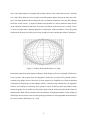
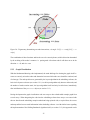
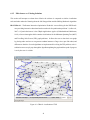
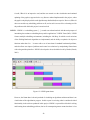
However, the visualisation is again simply the final output of the algorithm. There is a second
visualisation comprised of a simple histogram which maps the progress of the value of the objective function, but this does not illustrate how the algorithm works - the key aim of this project’s
visualisation.
Book learning - Books are an important learning tool in any subject. Scheduling: Theory, Algorithms
and Systems (Pinedo, 2001), was the main information source for the author when learning about
the Shifting Bottleneck algorithm. The book was also referenced in many of the OR32 slides and
lectures in which the author gained a fundamental understanding of scheduling and the Job Shop
problem. Pinedo has a detailed explanation of the Shifting Bottleneck algorithm (upon which the
guide in section 3.1.6 is based, in modified form), and a walkthrough of an example, with several
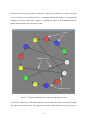
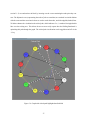
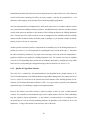
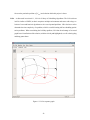
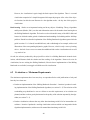
illustrations of the corresponding disjunctive graphs. However, a book is only a one way learning
device - the lack of user interaction means that additional aids such as visualisation tools are still
very much of use.
Overall, the software produced by this project fills a niche for a Shifting Bottleneck oriented visualisation, which illustrates both the solution and the working of the algorithm. Better tools exist for
visualisation, but are missing the Shifting Bottleneck; likewise better implementation of the Shifting
Bottleneck are available, but struggle to fulfil the need for visualisation.
6.2 Evaluation vs. Minimum Requirements
The minimum requirements have been met, they are reproduced below with justifications of why and
how they have been met:
• Produce an implementation of the ‘Shifting Bottleneck Procedure’ - Iteration 1 produced a working implementation of the Shifting Bottleneck algorithm (see section 5.1.5) The exclusion of the
rescheduling step should not be seen as a failure to meet this requirement, as its exclusion was
planned, and has not been greatly detrimental to the quality of the solution outputted by the algorithm (see section 7.1.2).
• Produce visualisation software that may allow data interchange with LiSA for intermediate calculations - Iteration 2 produced a working visualisation software which was integrated with the
algorithm implementation, with no need for manual data interchange with LiSA.
44