1
EzCapture
(Interactive measurement and
display of anaesthetic records)
Version 1.0
J.M. van Schalkwyk, D. Lowes
May 22, 2011
Contents
1
Introduction
1.1 A note on the directory structure . . . . . . . . . . . . . . . . . .
1.2 DOS execution . . . . . . . . . . . . . . . . . . . . . . . . . . .
2
ez-capture: Manual data capture
2.1 Introductory notes . . . . . . . . . . . . . . . . .
2.2 Algorithm (pseudocode) . . . . . . . . . . . . .
2.3 Perl code: raw data to CSV . . . . . . . . . . . .
2.3.1 Main routine . . . . . . . . . . . . . . .
2.3.2 Utilities . . . . . . . . . . . . . . . . . .
2.3.3 Tests of calibration . . . . . . . . . . . .
2.3.4 Main data processing . . . . . . . . . . .
2.3.5 FiO2 , EtCO2 . . . . . . . . . . . . . . .
2.3.6 Write data . . . . . . . . . . . . . . . . .
2.3.7 Error log . . . . . . . . . . . . . . . . .
2.4 A comprehensive GUI . . . . . . . . . . . . . .
2.4.1 Invoke Notepad . . . . . . . . . . . . . .
2.4.2 Queue entries for replay by SAFERsleep
2.4.3 Advanced Datum acquisition . . . . . . .
2.4.4 Keyboard input . . . . . . . . . . . . . .
2.4.5 Decrypt SAFERsleep IAR file to XML .
2.5 Obtain basic record information . . . . . . . . .
2.5.1 DOS invocation of ez-GUI . . . . . . . .
2.6 Perl keyboard input . . . . . . . . . . . . . . . .
1
.
.
.
.
.
.
.
.
.
.
.
.
.
.
.
.
.
.
.
.
.
.
.
.
.
.
.
.
.
.
.
.
.
.
.
.
.
.
.
.
.
.
.
.
.
.
.
.
.
.
.
.
.
.
.
.
.
.
.
.
.
.
.
.
.
.
.
.
.
.
.
.
.
.
.
.
.
.
.
.
.
.
.
.
.
.
.
.
.
.
.
.
.
.
.
.
.
.
.
.
.
.
.
.
.
.
.
.
.
.
.
.
.
.
.
.
.
.
.
.
.
.
.
.
.
.
.
.
.
.
.
.
.
.
.
.
.
.
.
.
.
.
.
.
.
.
.
.
.
.
.
.
.
.
.
.
.
.
.
.
.
.
.
.
.
.
.
.
.
.
.
5
6
8
9
9
14
20
20
24
25
27
29
31
37
39
52
54
56
58
59
61
69
70
CONTENTS
2
3
Retrieve files from SAFERsleep using Perl
78
3.1 The connection string . . . . . . . . . . . . . . . . . . . . . . . . 82
4
Format translation: ez-xlate
4.1 Translate from XML to CSV . . . . .
4.1.1 Perl code: translate to CSV . .
4.1.2 A DOS batch file: xml2csv . .
4.2 Translate from CSV to .DAT . . . . .
4.2.1 Interpolation . . . . . . . . .
4.2.2 Perl code to translate to .DAT
4.2.3 A DOS batch file: csv2dat . .
.
.
.
.
.
.
.
.
.
.
.
.
.
.
.
.
.
.
.
.
.
.
.
.
.
.
.
.
.
.
.
.
.
.
.
.
.
.
.
.
.
.
.
.
.
.
.
.
.
.
.
.
.
.
.
.
.
.
.
.
.
.
.
.
.
.
.
.
.
.
.
.
.
.
.
.
.
.
.
.
.
.
.
.
.
.
.
.
.
.
.
.
.
.
.
.
.
.
.
.
.
.
.
.
.
83
83
83
88
90
91
92
105
5
ez-replay: Replaying data via SAFERsleep
107
5.1 AutoIt code for monitor replay . . . . . . . . . . . . . . . . . . . 107
5.2 Invoke ez-replay from DOS . . . . . . . . . . . . . . . . . . . . . 115
6
Image transformation
115
6.1 Using ImageMagick . . . . . . . . . . . . . . . . . . . . . . . . . 115
6.2 AutoIt code: ez-mogrify.au3 . . . . . . . . . . . . . . . . . . . . 118
6.3 Trimmed final images . . . . . . . . . . . . . . . . . . . . . . . . 121
7
ez-shw: An interactive web-based application
7.1 HTML code . . . . . . . . . . . . . . . .
7.1.1 Thanks page . . . . . . . . . . .
7.1.2 Help page . . . . . . . . . . . . .
7.2 Javascript . . . . . . . . . . . . . . . . .
7.3 Cascading style sheet . . . . . . . . . . .
7.3.1 Process the demonstration page .
8
.
.
.
.
.
.
Database definition
8.1 PERSON . . . . . . . . . . . . . . . . . . .
8.2 PERSDATA, CURRENTSPECIALTY, CURRENTLOCATION
8.3 SUBJECT . . . . . . . . . . . . . . . . . .
8.4 ANRECORD . . . . . . . . . . . . . . . . .
8.5 ONESESSION . . . . . . . . . . . . . . . . .
8.6 RATING . . . . . . . . . . . . . . . . . . .
8.7 NEXTSESSIONS . . . . . . . . . . . . . . .
8.8 Frills: SALT . . . . . . . . . . . . . . . . . .
8.9 UIDS . . . . . . . . . . . . . . . . . . . . .
8.10 Database structure . . . . . . . . . . . . . .
8.11 Testing the database . . . . . . . . . . . . .
.
.
.
.
.
.
.
.
.
.
.
.
.
.
.
.
.
.
.
.
.
.
.
.
.
.
.
.
.
.
.
.
.
.
.
.
.
.
.
.
.
.
.
.
.
.
.
.
.
.
.
.
.
.
.
.
.
.
.
.
.
.
.
.
.
.
.
.
.
.
.
.
.
.
.
.
.
.
.
.
.
.
.
.
.
.
.
.
.
.
.
.
.
.
.
.
.
.
.
.
.
.
.
.
.
.
.
.
.
.
.
.
.
.
.
.
.
.
.
.
.
.
.
.
.
.
.
.
.
.
.
.
.
.
.
.
.
.
.
.
.
.
.
.
.
.
.
.
.
.
.
.
.
.
.
.
.
.
.
.
.
.
.
.
.
.
.
.
.
.
.
.
.
.
.
.
.
.
.
.
.
.
.
.
.
.
.
.
.
.
.
.
.
125
125
126
127
130
152
154
.
.
.
.
.
.
.
.
.
.
.
158
158
160
161
161
162
163
163
165
166
168
169
CONTENTS
3
8.12 PHP: Creating the SQL database . . . . . . . . . . . . . . . . . . 170
8.12.1 Database creation script . . . . . . . . . . . . . . . . . . 171
8.13 Upgrading the database . . . . . . . . . . . . . . . . . . . . . . . 174
9
PHP access coding
9.1 Logging in . . . . . . . . . . .
9.1.1 InitialLogon.php . . .
9.1.2 processLogon . . . . .
9.1.3 Javascript file: md5.js .
9.2 Validate user . . . . . . . . . .
9.3 Logging out: logout.php . . .
.
.
.
.
.
.
.
.
.
.
.
.
.
.
.
.
.
.
.
.
.
.
.
.
.
.
.
.
.
.
.
.
.
.
.
.
.
.
.
.
.
.
.
.
.
.
.
.
.
.
.
.
.
.
.
.
.
.
.
.
177
177
183
185
187
193
196
10 Working PHP code
10.1 The main page: mainpage.php . . . . . . . . . .
10.2 Assess an anaesthetic . . . . . . . . . . . . . . .
10.2.1 Demonstration page . . . . . . . . . . .
10.2.2 Actual assessments . . . . . . . . . . . .
10.3 Entering a person . . . . . . . . . . . . . . . . .
10.4 Editing log-on details . . . . . . . . . . . . . . .
10.5 Editing someone’s details . . . . . . . . . . . . .
10.6 Editing log-on details . . . . . . . . . . . . . . .
10.7 Backup . . . . . . . . . . . . . . . . . . . . . .
10.8 Viewing data . . . . . . . . . . . . . . . . . . .
10.8.1 eZ view.php . . . . . . . . . . . . . . .
10.8.2 View number of assessments . . . . . . .
10.8.3 An overview of session assessments . . .
10.8.4 View all ratings . . . . . . . . . . . . . .
10.8.5 Graphical view of a case . . . . . . . . .
10.8.6 Graphical view of assessments: test page
10.8.7 Javascript for analysis . . . . . . . . . .
10.8.8 PHP link page: write list of assessors! . .
10.8.9 PHP analysis page: one assessor . . . . .
10.8.10 PHP link page: write list of cases! . . . .
10.8.11 PHP analysis page: one case . . . . . . .
10.9 View artefacts . . . . . . . . . . . . . . . . . . .
.
.
.
.
.
.
.
.
.
.
.
.
.
.
.
.
.
.
.
.
.
.
.
.
.
.
.
.
.
.
.
.
.
.
.
.
.
.
.
.
.
.
.
.
.
.
.
.
.
.
.
.
.
.
.
.
.
.
.
.
.
.
.
.
.
.
.
.
.
.
.
.
.
.
.
.
.
.
.
.
.
.
.
.
.
.
.
.
.
.
.
.
.
.
.
.
.
.
.
.
.
.
.
.
.
.
.
.
.
.
.
.
.
.
.
.
.
.
.
.
.
.
.
.
.
.
.
.
.
.
.
.
.
.
.
.
.
.
.
.
.
.
.
.
.
.
.
.
.
.
.
.
.
.
.
.
.
.
.
.
.
.
.
.
.
.
.
.
.
.
.
.
.
.
.
.
.
.
.
.
.
.
.
.
.
.
.
.
.
.
.
.
.
.
.
.
.
.
197
197
199
199
200
201
212
220
228
230
237
237
238
239
241
242
242
244
247
249
252
253
257
.
.
.
.
.
.
.
.
.
.
.
.
.
.
.
.
.
.
.
.
.
.
.
.
.
.
.
.
.
.
.
.
.
.
.
.
.
.
.
.
.
.
.
.
.
.
.
.
.
.
.
.
.
.
11 Actual entry of data
262
11.1 Assessment of records . . . . . . . . . . . . . . . . . . . . . . . 262
11.2 Storing the data . . . . . . . . . . . . . . . . . . . . . . . . . . . 268
11.3 Entering anaesthetic/subject details . . . . . . . . . . . . . . . . . 293
CONTENTS
12 Ancillary code
12.1 General-purpose functions . .
12.1.1 A header function . . .
12.1.2 CheckCode . . . . . .
12.1.3 Sanitise . . . . . . . .
12.1.4 WhatYearIsIt . . . . .
12.2 Handling lists . . . . . . . . .
12.2.1 PrintPoplist . . . . . .
12.2.2 TextPoplistSelected . .
12.2.3 PrintActiveUserlist . .
12.3 Tables, arrays and sorting . . .
12.3.1 MyDoubleSort . . . .
12.3.2 ConcatenateArray . .
12.3.3 Flatten . . . . . . . .
12.3.4 PrintDetailTable . . .
12.4 User information . . . . . . .
12.4.1 PullOutUserInfo . . .
12.4.2 GetLinkedUserDetails
12.4.3 FetchSurname . . . .
12.4.4 FetchForename . . . .
12.5 CSV processing . . . . . . . .
12.6 SQL-related functions . . . . .
12.6.1 GetSQL . . . . . . . .
12.6.2 DoSQL . . . . . . . .
12.6.3 SQLManySQL . . . .
12.7 FetchKey . . . . . . . . . . .
12.7.1 The problem . . . . .
12.7.2 An initial solution . .
12.7.3 A refined solution . . .
12.7.4 Working code . . . . .
4
.
.
.
.
.
.
.
.
.
.
.
.
.
.
.
.
.
.
.
.
.
.
.
.
.
.
.
.
.
.
.
.
.
.
.
.
.
.
.
.
.
.
.
.
.
.
.
.
.
.
.
.
.
.
.
.
.
.
.
.
.
.
.
.
.
.
.
.
.
.
.
.
.
.
.
.
.
.
.
.
.
.
.
.
.
.
.
.
.
.
.
.
.
.
.
.
.
.
.
.
.
.
.
.
.
.
.
.
.
.
.
.
.
.
.
.
.
.
.
.
.
.
.
.
.
.
.
.
.
.
.
.
.
.
.
.
.
.
.
.
.
.
.
.
.
.
.
.
.
.
.
.
.
.
.
.
.
.
.
.
.
.
.
.
.
.
.
.
.
.
.
.
.
.
.
.
.
.
.
.
.
.
.
.
.
.
.
.
.
.
.
.
.
.
.
.
.
.
.
.
.
.
.
.
.
.
.
.
.
.
.
.
.
.
.
.
.
.
.
.
.
.
.
.
.
.
.
.
.
.
.
.
.
.
.
.
.
.
.
.
.
.
.
.
.
.
.
.
.
.
.
.
.
.
.
.
.
.
.
.
.
.
.
.
.
.
.
.
.
.
.
.
.
.
.
.
.
.
.
.
.
.
.
.
.
.
.
.
.
.
.
.
.
.
.
.
.
.
.
.
.
.
.
.
.
.
.
.
.
.
.
.
.
.
.
.
.
.
.
.
.
.
.
.
.
.
.
.
.
.
.
.
.
.
.
.
.
.
.
.
.
.
.
.
.
.
.
.
.
.
.
.
.
.
.
.
.
.
.
.
.
.
.
.
.
.
.
.
.
.
.
.
.
.
.
.
.
.
.
.
.
.
.
.
.
.
.
.
.
.
.
.
.
.
.
.
.
.
.
.
.
.
.
.
.
.
.
.
.
.
.
.
.
.
.
.
.
.
.
.
.
.
.
.
.
.
.
.
.
.
.
.
.
.
.
.
.
.
.
.
.
.
.
.
.
.
.
.
.
.
.
.
.
.
.
.
.
.
.
.
.
.
.
.
.
.
.
.
.
.
.
.
.
.
.
.
.
.
.
.
.
.
.
.
.
.
.
.
.
.
.
.
.
.
.
.
.
.
.
.
.
.
.
.
.
.
.
.
.
.
.
.
.
.
.
.
.
.
.
.
.
.
.
.
.
.
.
.
.
.
.
.
.
.
.
.
.
.
.
.
.
.
.
.
.
.
.
.
.
.
.
13 Licensing
14 Hardware, software, useful files & Change Log
14.1 Change Log . . . . . . . . . . . . . . . . .
14.2 Changes for v 0.54 – 0.59 . . . . . . . . . .
14.3 Changes for v 0.54 – 0.59 . . . . . . . . . .
14.4 Changes for v 0.60 . . . . . . . . . . . . .
15 Still to Do/Questions/Ideas
301
301
301
302
302
303
303
303
304
304
305
305
305
306
306
307
307
307
308
308
309
312
312
312
313
314
314
315
316
318
321
.
.
.
.
.
.
.
.
.
.
.
.
.
.
.
.
.
.
.
.
.
.
.
.
.
.
.
.
.
.
.
.
.
.
.
.
.
.
.
.
.
.
.
.
.
.
.
.
326
328
336
336
336
336
1
1
INTRODUCTION
5
Introduction
This is a suite of programs that accomplishes the following:
• Reliable measurement of hand-written anaesthetic records, combined with
recording of these measurements in the form of database (CSV) files that
can be read by most database and analysis software;
• Partial automation of the above measurement process, with relevant checks;
• Translation of CSV files into a data format (.DAT) readable by the SAFERsleep ‘IDAS’ program;
• Sequential display of IDAS .DAT files in a standard format familiar to
anaesthetists who use the program for everyday patient data recording and
display;
• Sequential (minute-by-minute) capture of display screens from IDAS, and
storing of captured screens as .PNG data files;
• Sequential presentation of .PNG images (in real-time or, if desired, faster)
by serving them up in a web-page. This application allows the anaesthetist
to annotate the anaesthetic as it progresses.
• Storage of annotations to an internet database for subsequent analysis. The
database is fully described, as is the PHP code that links the web-page (and
interacting anaesthetist) to the database.
The suite is thus divided into the following sections:
1. Programs to capture data from a pair of digital calipers (Section 2);
2. Translation utilities (Section 4) that translate from IAR to XML, XML to
CSV, and CSV to DAT formats;
3. Programs to replay data through IDAS, and screen-grab the resulting display
(Section 5);
4. Web display and database routines (Sections 7–9) including SQL code and
PHP code.
1
1.1
INTRODUCTION
6
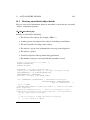
A note on the directory structure
This has become somewhat complex, so in Table 1 we show the relationships between noteworthy directories and sub-directories. In select subdirectories, we’ve
also listed important files, in parenthesis.
ez-.-|
|-|
|
|
|-|
|
|
|
|
|-|
|
|-|-|-|-|-|-|-\-
ez-captur--->(ez-captur.pl; ez-gui.au3)
ez-xlate---->(ez-xml2csv.pl;
ez-csv2dat.pl;
AnaestheticViewer.exe)
ez-shw---->sql (sql script)
\--->php -.->(php scripts)
|-- css ----->(cascading style sheet)
|-- images --> (images to display)
|-- demo -.-->images
\-->png
ez-replay-.->(ez-replay.au3)
\-capture -->(captured PNG images)
ez-info--->(basic case info)
rawdata--->(raw csv files exported from Excel)
iar------->(grab encrypted IAR files from IDAS)
xml------->(files exported from IAR to XML)
csv------->(CSV files translated form XML)
dat------->(DAT files translated from CSV)
log ------>(error logging)
images---->(images referred to by ez.TEX)
Table 1: Directory structure of EZ
The directories ez-captur, ez-xlate, ez-shw and ez-replay contain the relevant
Perl and/or AutoIt executables that perform capture and formatting of raw data
obtained from the digital calipers, translation between various formats, display
(as HTML pages) and replay of .DAT files through SAFERsleep.
1
INTRODUCTION
7
Creating the directory structure
Here’s a little DOS batch file (makedirectories.bat) to create this structure, if not
already made:
echo off
cls
md \ez
cd \ez
md ez-captur
md png
md ez-replay
md help
md rawdata
md iar
md xml
md csv
md log
md dat
md images
md ez-info
md ez-xlate
md ez-shw
md ez-shw\php
md ez-shw\php\images
md ez-shw\php\js
md ez-shw\php\css
md ez-shw\php\sql
md ez-shw\php\css
md ez-shw\php\png
md ez-shw\php\png\topimages
md ez-shw\php\png\sources
md ez-shw\php\demo
md ez-shw\php\demo\images
md ez-shw\php\demo\png
1
INTRODUCTION
1.2
8
DOS execution
We have created a comprehensive Graphical User Interface (GUI) that is described
in Section 2.4. However, we also have created a number of useful DOS batch files
used to run components of our program suite. The main advantages of this console
execution are simplicity and clarity, especially when it comes to debugging. The
batch files include:
Raw data capture and processing
• captur.bat : Capture data from digital calipers (Section ??) using an AutoIt
script;
Translation between formats
Conversion of IAR to XML format is now accomplished within the main GUI
program (written in AutoIt) — we simply invoke the IDAS viewer, and write the
resulting output to an XML file.1 Other translations are:
• xml2csv.bat : Invokes a Perl program to translate the source XML file
(first argument, in /ez/xml) to a CSV file stored in the csv subdirectory of
/ez. The batch file test-x2c.bat performs this transformation on a test file
(Section 4.1.2);
• csv2dat.bat : Invokes a Perl program to translate source file to a DAT file
stored in /ez/dat. [FIX ME] The batch file test-c2d.bat does this on a sample
file (Section 4.2.3).
The preceding files therefore mediate two pathways of data acquisition. The
first is manually via measurements obtained from digital calipers, stored as CSV
files in /ez/rawdata, and then translated to processed CSV files (stored in /ez/csv),
followed by translation to SAFERsleep DAT files for submission to IDAS. The
second is automatically, stored in SAFERsleep, retrieved from the server as IAR
files (stored in /ez/iar), decoded to XML (in /ez/xml), and then translated sequentially to CSV and DAT files.
Replay a data file through IDAS
• replay.bat : Replay a file through SAFERsleep (Section 5.2) using AutoIt,
and screen capture sequential images (every minute).
1
Once we’ve overcome the paranoid security features??
2
EZ-CAPTURE: MANUAL DATA CAPTURE
2
9
ez-capture: Manual data capture
It is tedious to repeatedly measure values on an anaesthetic record chart, but these
measurements are necessary when capturing data from manually recorded charts,
so that they can be compared with automated records. In this section we will introduce our approach to data capture, use ‘pseudocode’ to sketch the code we will
use to process data, and then construct a Perl program that does this processing.
2.1
Introductory notes
We initially thought that the process might work along the following lines:
1. Connect the Digital Calipers to the USB interface module, and insert the
USB interface module into the USB port of the PC (running Windows);2
2. Press the on button on the Calipers;
3. Run the driving software [DETAILS], ensuring that the COM port etc are
correctly set up;
4. Capture data acquired using the calipers;
5. Save the record to Excel (don’t try other methods, as this may crash the PC);
6. Save the Excel spreadsheet as a CSV file, with a unique, sequential number;
7. Invoke a Perl script to:
(a) Convert all digital caliper-recorded values to mmHg, rates;
(b) Request input for SpO2 and EtCO2;
(c) Write a unified, time-based record of all data as a CSV file.
8. Repeat record capture as required;
9. Exit, turn off calipers, shut down PC, and remove USB interface module
and calipers.
We have partially automated the above process. This automation involves acquiring and saving basic information about the record before initiating capture;
capturing separate caliper data for the systolic blood pressure, diastolic blood
pressure, and heart rate, and entering SpO2 and ETCO2 data from the keyboard
2
We used XP and cannot guarantee that this will work under Vista.
2
EZ-CAPTURE: MANUAL DATA CAPTURE
10
prior to invoking a Perl script to integrate the raw data into a final CSV file. Automation is achieved using the Windows program AutoIt, for which we’ve written
scripts described in Section 2.4.
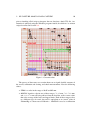
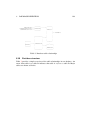
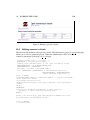
Figure 1: Constant values
The process of data entry uses certain short-cuts to signal detailed structure of
the record, calibration and zeroing, and check-measurements. Note the following
values:
• ZERO is a value in the range of -0.05 to 0.05 mm.
• MAXVAL signals a value in one of three ranges: 59–61 mm, 56.3–58.3 mm,
and 83.9–85.9 mm, all being offsets from the baseline, with a centre value
that is the average of the lower and upper limits. Each of these ranges refers
to a different type of record, but each is equivalent to an ‘actual’ value of
220 mmHg, or a heart rate of 220 min−1 . MAXVAL is used as a calibration
2
EZ-CAPTURE: MANUAL DATA CAPTURE
11
signal. We will refer to the three types of records corresponding to the three
ranges used above as type A, type B and type C records, respectively.
• MINVAL signals a measured value in the range of MAXVAL/10. MINVAL
corresponds to a measurement extending from the baseline (at 20 mmHg,
or a heart rate of 20 min−1 ) to the line signalling a value of 40 (mmHg or
min−1 ).
• The x-calibration value. This is a measurement of duration from the start
of the anaesthetic to the end of the anaesthetic, but with two caveats:
1. Measurement must start from a pre-printed vertical line on the chart
(not a user-defined mark), that is one of the vertical lines used to mark
the time. This is normally a 5-minute mark, unless the user has chosen
a different time-base. (Use the smallest printed interval). If the first
datum recorded is not on a pre-printed vertical line, then choose the
line before the first user mark, NOT afterwards. (When recording data
as described below, signal the first recording as a missing value, then
measure the offset, also described below).
2. Measurement of the x-axis calibration must likewise end at a vertical
pre-printed line, but if the last user marking is between two such lines,
only measure to the vertical pre-printed line just before this line. If the
last user marking coincides with a pre-printed vertical line, measure to
this line.
• The value α is the distance between two (minor) vertical time lines. Unfortunately, this too varies depending on the type of record. For Types A–C,
the values (in mm) are 2.15–2.35, 4.43/2–4.63/2 and 3.11–3.31. Note that
in the type B record, the value of 4.53 usually refers to a ten-minute interval,
but we always mandate a five-minute measuring interval! When we determine x-axis (time) offsets, we will use measured values to determine more
precise values for alpha for a particular record. To make things even more
complex, some anaesthetists choose to re-scale the x-axis, so we check for
this by asking the user to enter start and end times.
MAXVAL (red), MINVAL (blue), alpha and the x- and y-calibration measurements are shown in Fig. 1, together with the baseline (in black) from which
all y-measurements are made. In addition, this chart shows an initial delay (tlead )
between the point at which x-axis measurement started (a pre-printed vertical line)
and the first user mark. Next look at the end of the anaesthetic. Although it initially seems that the anaesthetic actually ends after a pre-printed vertical line, this
2
EZ-CAPTURE: MANUAL DATA CAPTURE
12
is only if you look at the charting of diastolic blood pressure. If anything, the
systolic mark is before the time line. Here we have chosen to use common sense
(making the interpretation that the anaesthetist signalled a recording on the time
line), so the tlag can be disregarded. However, note that even if we had accepted
this lag time, the x-axis calibration value would have extended to the same vertical
pre-printed line, as per our rules above.
We signal data capture as follows [SEE USER MANUAL FOR MORE DETAIL]:
1. An initial ZERO must always be present, indicating that the Calipers have
been zeroed (close the calipers so that they read zero, or very close to zero
(e.g. 0.01) but do not press the ZERO button!);
2. The initial ZERO is always followed by a measurement in the range of MAXVAL, indicating the initial Y-axis calibration value (20–200 mmHg)
3. Then we enter the X-axis (time) calibration measurement, measured as described above;
4. Here follow measurements of Systolic BP. Each value represents an offset in millimeters from the 20 {mmHg or min−1 } baseline, taken at 5 min
intervals. The value should never be below MINVAL. Special values are
discussed below.
5. After the last measurement, simply stop recording (Export to Excel) — our
AutoIt script will take you back to the main GUI.
6. For the diastolic BP series, zero and Y-calibrate once more, but do not perform the X-calibration at any time. Just terminate after the last DBP reading;
7. For the heart rate series, zero and Y-calibrate, and acquire readings as usual
but . . .
8. Finally, as part of the heart rate series, repeat the zero, the Y-calibration, and
as a last reading, repeat the X-axis calibration measurement (according to
the previously specified rules).
The following data values are special:
• As already mentioned, a value of ZERO followed by a large number signals
a zeroing—calibration pair.
2
EZ-CAPTURE: MANUAL DATA CAPTURE
13
• A double ZERO is entered for every missing 5-minute reading. The two
values must be identical.
• A ZERO followed by a value between ZERO and MINVAL is used to signal the special case where a recorded reading is under 40, for example a
diastolic BP under 40 or a heart rate under 40. This way we easily encode
interpolated time values, but still preserve the information (such as it is) for
the rare cases where extremely low values are recorded.
• A value greater than ZERO and less than the maximum value of α, signals
an added reading between 5-minute intervals. After these two values we
insert the Y offset of the point in question. Note than an offset of ZERO
should never occur, as this is on the line, and a conventionally recorded
datum.
• A value between alpha and MINVAL signals an error3
• A value of MAXVAL or greater signals that the measured value exceeds
the maximum range! Note that this value should not be interpreted as an
actual reading, but merely a signal that the range is exceeded, or ‘out of the
calibration range’.
We will soon explore some ‘pseudocode’ as an overview of our approach, and
follow this by actual Perl code. Finally, we will describe how to automate parts of
this process using AutoIt.
Rationale
The above approach might seem baroque, but has the following advantages:
1. We provide proof of the zero value and Y calibration values for the calipers
at the start of every set of measurements;
2. At the start and end we confirm the duration of the record, and also provide
a means of confirming the value of α, so that measurements taken between
‘normal’ time intervals (eg. at intervals of under five minutes) are reliably
indicated;
3. Measurement is intuitive and quick. The person doing the measuring can
simply measure offsets from baseline; where they encounter a measurement
between normal time intervals, they simply measure the offset and then
record the measurement as usual;
3
Although what probably happened was the user forgot to signal a low value under 40, and
simply measured the record. We will issue a warning here!
2
EZ-CAPTURE: MANUAL DATA CAPTURE
14
4. There is a system for recording unusually low values (under 40 mmHg or
under 40 min−1 ). This is robust in the sense that simply measuring this value
will signal an error, unless the value is exceptionally low, in the range of
alpha, where an ‘interpolated’ value will incorrectly be recorded, ultimately
resulting in an error in the apparent duration of the record.
5. Measurements above the calibration range will be recorded as ‘outside the
range’ rather than extrapolated values.
2.2
Algorithm (pseudocode)
We here develop some sketchy pseudocode that interprets data read in as a CSV
file. Even if you are very adept at Perl, you might still wish to glace through this
simple pseudocode before you move to the Perl code in the next section, as this
code is very simply written.
Each CSV file has an initial header line that can be ignored followed by any
number of lines until end of file. As this is DOS, each line ends in CR+LF (hexadecimal 0D, 0A). Each line is numbered sequentially followed by a comma and
a single numeric value.
Main routine
Let’s create a pseudocode representation of the process. The overall plan is to
initialise certain variables, check the basic calibration measurements, and then
process each data line in turn.
variables <- (’sbp’, ’dbp’, ’hr’, ’spo2’, ’etco2’)
idx <- 0
# index into variables
SetInitialValues()
datumA <- ReadLine
t <- 0
if not datumA in ZERO -> fail(Bad initial zeroing)
StoreZero(t, datumA)
datumB <- ReadLine
MAXVAL, ALPHA, MINVAL <- TestYCal(datumB)
datumC <- ReadLine
DURATION <- TesttCal(datumC)
linecount <- 0
until end-of-file:
ReadLine(datum);
t <- ProcessDatum(t, datum); # t is an integer
end until
datumC <- ReadLine
TesttCal(datumC)
# final check of data.
2
EZ-CAPTURE: MANUAL DATA CAPTURE
15
# Might also compare result to DURATION?)
ReadFiO2andEtCO2()
PostProcess() or fail(Bad post-processing)
WriteAllData() or fail(Data write failed)
Initialisation
Here’s the initialisation process. ALLDATA contains descriptions of data at any
time, indexed by time as an integer.
routine SetInitialValues():
clear ALLDATA
clear ZEROES # stack of zeroes
clear YCALS
# stack of Y calibration values
clear tCAL
# stack of time calibration values
# reference values:
CALA <- (59.0, 61.0)
CALB <- (56.3, 58.3)
CALC <- (83.8, 85.9)
ZERO-lo <- -0.05;
ZERO-hi <- +0.05;
NA
<- -1;
# signals ’NA’
UNCLEAR <- -2;
# signals illegible datum
ZERO
<-(ZERO-lo, ZERO-hi)
end routine SetInitialValues
Utilities
Here’s how we read a line:
routine ReadLine(datum; implicit:linecount):
read-line;
linecount ++;
# increment linecount
read line-number;
if (line-number != linecount) -> fail(Bad line number);
read datum from line;
return(datum)
end routine ReadLine
We require a Store routine:
2
EZ-CAPTURE: MANUAL DATA CAPTURE
16
routine Store (t,y):
x <- ALLDATA[t]
msg <- concatenate ("," variables[idx] "=")
ALLDATA[t] <- concatenate (x msg y) # append value
end routine Store
We concatenate in a value, to sort out the potential (if infrequent) problem
where two data values are stored against the same time. We might later test for
and warn about this anomaly!
Similar are StoreZero and StoreYCal, and a smaller stack to store the few
x-axis (time) calibrations we do:
routine StoreZero (x,y):
push(ZEROES, x)
push(ZEROES, y)
end routine StoreZero
routine StoreYCal (x,y):
push(YCALS, x)
push(YCALS, y)
end routine StoreYCal
routine StoretCal (x,y):
push(tCALS, x)
push(tCALS, y)
end routine StoretCal
Tests of calibration
We must be able to test Y calibration. At the same time, based on the Y calibration
value we determine the type of record, and hence set the alpha value! We also
return the MINVAL.
routine TestYCal (t, c):
StoreYCal(t,c)
tiny <- 1; # plusminus value for range
alphaAlo <- 2.15
alphaAhi <- 2.35
alphaBlo <- 4.43
alphaBhi <- 4.63
alphaClo <- 3.11
alphaChi <- 3.31
minlo <- -tiny + t/10;
minhi <- tiny + t/10;
2
EZ-CAPTURE: MANUAL DATA CAPTURE
17
case (c):
value in CALA -> return (c-tiny, c+tiny,
alphaAlo, alphaAhi,
minlo, minhi)
value in CALB -> return (c-tiny, c+tiny,
alphaBlo, alphaBhi,
minlo, minhi)
value in CALC -> return (c-tiny, c+tiny,
alphaClo, alphaBhi,
minlo, minhi)
default: fail(Bad calibration value)
end routine TestYCal
routine TesttCal (t, c):
StoretCal(t,c)
if (t < 5) or (t > 1000) -> fail(Bad time base) # arbitrary Nos.
end routine TesttCal
Main data processing
Here’s the main data-processing and storing routine:
routine ProcessDatum (t, y)
if y in ZERO ->
y2 <- ReadLine
if y2 in ZERO -> # 0,0 signals datum NA
Store(t, NA)
return (t+5)
if y2 in MAXVAL -> # 0, MAXVAL = end of run, recalibrate
Recalibrate()
idx <- idx +1 # global: signal new variable
return (0)
# back to start time!
if y2 > MAXVAL -> # meaningless
fail (Bad Y calibration value)
if y2 <= MINVAL -> # special signal to store LOW values:
Store(t, y2)
default -> fail (Bad special datum value)
if y in ALPHA ->
y2 <- ReadLine
ALPHAm <- (ALPHAh + ALPHAl)/2
toff <- round( (5*y2)/ALPHAm )
Store(t + toff, y2)
return(t) # do NOT advance
2
EZ-CAPTURE: MANUAL DATA CAPTURE
18
if y < MINVAL ->
fail (Bad data value)
if y >= MAXVAL ->
MAXVALm <- (MAXVALh + MAXVALl)/2
Store(t, MAXVALm)
return(t+5)
default ->
Store (t, y)
return (t+5);
FiO2 , EtCO2
After determining the number of values to acquire, which is simply the DURATION measurement divided by alpha [check me], and identical to the maximum
time value (noting that if the last time value is not on a 5-minute mark, the user
must enter a 0,0), we acquire first FiO2 and then EtCO2 values (if present), allowing the user to enter NA values where appropriate. (What about ‘oopses’?)
routine ReadFiO2andEtCO2()
# here determine maximum index of ALLDATA, validate vs DURATION
c <- int((DURATION+4)/5)
t <- 0
while (t <= c)
sp <- acquire # allow NA or integer 0--100
Store (t, sp)
t <- t+5
end while
t <- 0
while (t <= c)
et <- acquire # as above
Store (t, et)
t <- t+5
end while
end routine ReadFiO2andEtCO2
Write data
All data should now have been stored in the single-dimensional array ALLDATA,
indexed by time in minutes. (The first time is zero, signalling the start of data
recording). There may be missing data for a particular time, and there is the
possibility that two closely-recorded values are registered under the same time!
We will next simply write all time data in order, as a CSV file. The format of the
2
EZ-CAPTURE: MANUAL DATA CAPTURE
19
output file is shown in Table 2. In order to output numeric values (and what about
precision???) we need to make the appropriate conversions using the calibration
values.
Time
2008-12-14T10:23:00
2008-12-14T10:28:00
NBP-s
120
123
NBP-d
70
66
HR
72
72
SpO2
99
NA
ETCO2
NA
33
NBP-m
88
86
rawSBP
a
a
rawDBP
b
b
rawHR
c
c
Table 2: Output table format (also CSV)
Note that in Table 2 we have renamed the systolic blood pressure ‘NBP-s’ and
so forth. This is for subsequent compatibility (see code below).
routine WriteAllData()
caly <- GetYCalValue(YCALS)
for each value and time in ALLDATA
WarnAndExcludeDuplicates(value)
(rsbp, rdbp, rhr, spo2, etco2) <- ExtractData(value)
sbp = rsbp*caly
dbp = rdbp*caly
hr = rhr*caly
WriteCsvDatum(time, sbp, dbp, hr, spo2, etco2, rsbp, rdbp, rhr)
end for
end routine WriteAllData
2
EZ-CAPTURE: MANUAL DATA CAPTURE
2.3
20
Perl code: raw data to CSV
This code is somewhat more complex than the simple schema just outlined. In
Perl, it’s probably wise to declare ‘globals’ in the main routine, so we don’t have
a separate Initialisation section.
2.3.1
Main routine
We start with the usual Perl shebang, and a whole lot of nasty global variables,
not calculated to win friends.
Note that we do NOT at present create or check for the existence of the log,
rawdata and csv sub-directories. Creation MUST be done manually. We also
assume that the working directory is not the directory in which this program (ezcaptur.pl) is located, but the main ez directory, containing the destination csv subdirectory.4
#!/usr/local/bin/perl -w
use POSIX qw(floor); # for date calculations
my ($DEBUG) = 3;
# 0 to turn off debugging,
# 1=overview, 2=detail, 3=nitpicking
my ($STORECOUNT)=1; # also used for debugging
my ($LOGPRINT) = 1; # print to log
my ($WARNINGS) = 0; # see usage
my ($EZDIR) = ’/ez/’;
my $EXITCODE = 0;
# code on exiting Perl
# exit code reports defects: 0:ok, 1:sbp, 2:dbp, 4:hr, 8:spo2, 16:etco2
#
my $BASELINE = 20;
# (20mmHg or bpm)
my (@VARIABLES) = (’sbp’, ’dbp’, ’hr’, ’spo2’, ’etco2’);
# note the order
my $IDX = 0;
my $MAXIDX = 3;
my $TIME = 0;
my $LINECOUNT = 1;
# will skip first line
my $SERIESCOUNT = 1; # doubled for each new series!
my ($RAWFILENAME) = $ARGV[0]; #
#
my ($TIMESTAMP)= $ARGV[1];
#
my ($TRUEDURATN) = $ARGV[2]; #
my ($PARAMS) = $ARGV[3];
#
4
source filename from command line
NO suffix, NO path.
timestamp "DD/MM/YYYY HH:MM"
ADDED in v 0.37
eg "debug=3,logprint=0"
This is clumsy and a bit nasty. Consider submitting the path to the destination directory as an
extra command-line parameter to the Perl program!
2
EZ-CAPTURE: MANUAL DATA CAPTURE
21
if ($PARAMS =˜ /debug=(\d)/ ) # command-line control!
{ $DEBUG = $1;
};
if ($PARAMS =˜ /logprint=(\d)/ )
{ $LOGPRINT = $1;
};
&OpenLog($LOGPRINT, $EZDIR, $RAWFILENAME, $TIMESTAMP); # start writing to (error/d
&Print ("\n Opening file: <$RAWFILENAME> \
with timestamp $TIMESTAMP, duration $TRUEDURATN, arguments $PARAMS", 0);
# HERE we sequentially read in _three_ files:
# $RAWFILENAME-sbp.csv
# $RAWFILENAME-dbp.csv
# $RAWFILENAME-hr.csv
# ... we then append these:
# 1. sbp
open(FILE, $EZDIR . "rawdata/$RAWFILENAME-sbp.csv") or &Die("Unable to open sbp fi
my (@INDATA) = <FILE>;
close(FILE);
# print LOGFILE "\n\nDebugging A: <@INDATA>\n\n";
# 2. dbp
open(FILE2, $EZDIR . "rawdata/$RAWFILENAME-dbp.csv") or &Die("Unable to open dbp f
my ($hdr);
$hdr = <FILE2>; # discard first line
my (@IN2) = <FILE2>;
close(FILE2);
# print LOGFILE "\n\nDebugging B: <@IN2>\n\n";
# 3. hr
open(FILE3, $EZDIR . "rawdata/$RAWFILENAME-hr.csv") or &Die("Unable to open hr fil
$hdr = <FILE3>; # discard first line
my (@IN3) = <FILE3>;
close(FILE3);
# print LOGFILE "\n\nDebugging C: <@IN3>\n\n";
(@INDATA) = (@INDATA, @IN2, @IN3); # concatenate
my @ALLDATA = ();
my @ZEROES = ();
my @YCALS = ();
my @tCAL = ();
# reference values:
my $CALAlo = 59.0;
my $CALAhi = 61.0;
my $CALBlo = 56.3;
2
EZ-CAPTURE: MANUAL DATA CAPTURE
my
my
my
my
my
$CALBhi
$CALClo
$CALChi
$CALDlo
$CALDhi
my
my
my
my
my
my
my
my
$ZEROlo = -0.02; #
$ZEROhi = +0.02;
(@CALA) = ($CALAlo,
(@CALB) = ($CALBlo,
(@CALC) = ($CALClo,
(@CALD) = ($CALDlo,
(@ZERO) = ($ZEROlo,
($RECORDTYPE) = ’’;
=
=
=
=
=
58.3;
83.8;
85.9;
43.9;
45.9;
22
# added v0.53
20 microns!
$CALAhi);
$CALBhi);
$CALChi);
$CALDhi);
$ZEROhi);
my $NA = -1;
my $UNCLEAR = -2;
my ($datumA) = &ReadLine();
if (! &ISIN ($datumA, @ZERO))
{ &Die ("Bad initial zeroing, $datumA");
};
&StoreZero($TIME, $datumA);
my ($datumB) = &ReadLine();
&Print( "\n Debug: Y cal value is $datumB", 1 );
my ($MAXVALlo, $MAXVALhi,
$ALPHAlo, $ALPHAhi,
$MINVALlo, $MINVALhi, $RECORDTYPE) = &TestYCal($TIME, $datumB);
my (@MINVAL) =($MINVALlo,$MINVALhi);
my (@MAXVAL) =($MAXVALlo,$MAXVALhi);
my ($MAXVALm)=($MAXVALlo+$MAXVALhi)/2;
if ($RECORDTYPE eq ’D’)
{ $BASELINE = 0; # clumsy hack, v0.53:
};
# very different record measurements!
my ($datumC) = &ReadLine();
&Print( "\n Debug: X cal value is $datumC", 1 );
my ($DURATION) = &TesttCal($TIME, $datumC);
&Print ("\n Duration = $DURATION", 1);
my ($truealpha) = $datumC/int($DURATION/5);
my (@ALPHA) =($ZEROhi, $truealpha+0.10); # 0.10 is tolerance
my ($ALPHAm) =$truealpha;
&Print ("\n True alpha = $truealpha\n", 1);
# here check derived $DURATION vs $TRUEDURATN:
# as $TRUEDURATN is in minutes, and $truealpha corresponds to 5 min,
# ($datumC/$truealpha) should equal int ( ($TRUEDURATN+4)/5 )
2
EZ-CAPTURE: MANUAL DATA CAPTURE
23
# but we can simply say:
if ( $DURATION/5 != int( ($TRUEDURATN+4)/5 ) )
{ &Print("\n Minor WARNING: duration mismatch: $DURATION: $TRUEDURATN", 0);
$WARNINGS ++;
};
while ($IDX < $MAXIDX)
{ my ($d) = &ReadLine();
$TIME = &ProcessDatum($TIME, $d, $RECORDTYPE);
};
my ($datumC) = &ReadLine();
&TesttFinal($TIME, $datumC);
&ReadSpO2andETCO2($EZDIR, $RAWFILENAME, $DURATION);
&Print("\n END of data acquisition \n\n", 1);
&WriteAllData($TIMESTAMP);
if ($WARNINGS > 0)
{ &Print("\n ***NOTE*** There was/were $WARNINGS warning(s). \
Please consult the log.", 0);
$EXITCODE |= 32;
};
print("\n Finished!\n");
&CloseLog($LOGPRINT);
exit $EXITCODE;
A simple routine to check whether something (x) is within a range
sub ISIN
{ my ($x, @v);
($x, @v)=@_;
if ( ($x >= $v[0]) && ($x <= $v[1]) )
{ &Print( "\n Check: $x is between $v[0] and $v[1]", 3 );
return(1);
};
&Print( "\n
Check: $x is NOT between $v[0] and $v[1]", 3 );
return(0);
}
A debugging print routine:
sub Print
{ my ($p, $level); # level is debugging level.
# 0=none, 1=overview, 2=detail, 3=picky
($p, $level)=@_;
if ($DEBUG >= $level) # if level is 0, always print!
{ if ($LOGPRINT)
2
EZ-CAPTURE: MANUAL DATA CAPTURE
24
{ print LOGFILE $p;
return;
};
print $p; # console print
};
}
2.3.2
Utilities
A death routine for fatal errors:
sub Die
{ my ($e);
($e)=@_;
my ($l) = $LINECOUNT-1;
&Print ("\n\n DIED: Data line = $l, \
Index was $IDX \n Message: $e", 0);
$EXITCODE += 128;
# ’fatal’
&Print("\n\nExit code +128", 0);
exit $EXITCODE;
# caution. SEE: http://perldoc.perl.org/functions/exit.html
# die "\n Fatal";
}
Here’s how we read a line — we use the INDATA array previously shlurped
in.
sub ReadLine
{ $_ = $INDATA[$LINECOUNT];
$LINECOUNT ++;
chomp; # get rid of cr/lf
&Print( "\n
Check: L$LINECOUNT datum is <$_>", 2);
if (! /ˆ(\d+),(-?\d+\.?\d*)/ )
{ &Die ("\n Bad datum at line $LINECOUNT, value is <$_>");
};
my ($ln) = $1;
my ($d) = $2;
if ($ln != $LINECOUNT-1)
{ # &Print ("\n Bad line number $LINECOUNT, value is <$_>", 0);
# $WARNINGS ++;
# temporarily remmed out.
};
return($d)
}
We require a Store routine, where we append data to the relevant time within
ALLDATA.
2
EZ-CAPTURE: MANUAL DATA CAPTURE
25
sub Store
{ my ($t, $y);
($t, $y)=@_;
my ($a) = ’’;
if (length $ALLDATA[$t] > 0)
{ $a = $ALLDATA[$t];
} else
{ $a = "time=$t"; # start with time!
};
my ($v) = $VARIABLES[$IDX];
$ALLDATA[$t] = "$a,$v=$y";
&Print ( "\n >$STORECOUNT Store: $y at time $t, type is $v", 2 );
$STORECOUNT ++;
}
We concatenate in a value, to sort out the potential (if infrequent) problem
where two data values are stored against the same time. We might later test for
and warn about this anomaly!
Similar are StoreZero and StoreYCal, and a smaller stack to store the few
x-axis (time) calibrations we do:
sub StoreZero
{ my ($t, $z);
($t, $z)=@_;
&Print( "\n Debug: ZERO is $z" , 3);
$ZEROES[$t] = $z;
}
sub StoreYCal
{ my ($t, $y);
($t, $y)=@_;
&Print( "\n Debug: Y cal is $y" , 3);
# $YCALS[$t] = $y;
push (@YCALS, $y); # discard $t
}
sub StoretCal
{ my ($t, $x);
($t, $x)=@_;
&Print( "\n Debug: X cal is $x\n" , 3);
$tCAL[$t] = $x;
}
2.3.3
Tests of calibration
We must be able to test Y calibration. At the same time, based on the Y calibration value we determine the type of record, and hence set the alpha value! We
2
EZ-CAPTURE: MANUAL DATA CAPTURE
26
also return the MINVAL. TestYCal returns three pairs of values, corresponding to
low and high values for maximum, alpha, and minimum values for one of three
possible anaesthetic forms, and the record type (added in v0.53).
sub TestYCal
{ my ($t, $c);
($t, $c)=@_;
&StoreYCal($t,$c);
my ($tiny) = 1;
my ($alphaAlo) = 2.25-0.10;
my ($alphaAhi) = 2.25+0.10;
my ($alphaBlo) = 4.25/2;
# Not 10 min. Must have 5 min.
my ($alphaBhi) = 4.45/2;
# average was 4.352, allow +- 0.1. Amended 6/1/2009.
my ($alphaClo) = 3.11;
my ($alphaChi) = 3.31;
my ($alphaDlo) = 1.96-0.10; # added v0.53
my ($alphaDhi) = 1.96+0.10;
my ($minlo) = -$tiny + $t/10; # must justify this [check me???]
my ($minhi) = $tiny + $t/10;
if ( &ISIN ($c, @CALA) )
{ &Print( "\n Debug: record type is A", 1 );
return ( $c-$tiny, $c+$tiny,
$alphaAlo, $alphaAhi,
$minlo, $minhi, ’A’);
}
elsif ( &ISIN ($c, @CALB) )
{ &Print( "\n Debug: record type is B", 1 );
return ( $c-$tiny, $c+$tiny,
$alphaBlo, $alphaBhi,
$minlo, $minhi, ’B’);
}
elsif ( &ISIN ($c, @CALC) )
{ &Print( "\n Debug: record type is C", 1 );
return ( $c-$tiny, $c+$tiny,
$alphaClo, $alphaChi,
$minlo, $minhi, ’C’);
}
elsif ( &ISIN ($c, @CALD) )
{ &Print( "\n Debug: record type is D", 1 );
return ( $c-$tiny, $c+$tiny,
$alphaDlo, $alphaDhi,
$minlo, $minhi, ’D’);
}
else { &Die ("\n Bad Y calibration value $c");
};
}
2
EZ-CAPTURE: MANUAL DATA CAPTURE
27
Check the x (time) axis value:
sub TesttCal
{ my ($t, $x);
($t, $x)=@_;
&StoretCal($t,$x);
# (? sanity checks here, e.g. > 10 min and < (?) 8 hours)
# next, determine duration in minutes:
my ($avgalpha) = ($ALPHAhi+$ALPHAlo)/2; # avg nominal alpha range
my ($d) = 5 * int (($x + $avgalpha/5)/$avgalpha);
return ($d);
}
In determining the duration, we add a little bit to $x in order to prevent a
truncation error. We repeat a similar test at the end (the final datum):
sub TesttFinal
{ my ($t, $x);
($t, $x)=@_;
&StoretCal($t,$x);
# next, determine duration in minutes:
my ($avgalpha) = ($ALPHAhi+$ALPHAlo)/2; # avg nominal alpha range
my ($d) = 5 * int (($x + $avgalpha/5)/$avgalpha);
if ($d != $DURATION)
{ &Print ("\n WARNING: initial ($DURATION) and \
final duration ($d) don’t match", 0);
$WARNINGS ++;
$EXITCODE |= 32; # bad x-duration match
&Print("\n\nExit code +32", 0);
};
}
2.3.4
Main data processing
Here’s the main data-processing and storing routine:
sub ProcessDatum
{ my ($t, $y, $RECORDTYPE);
($t, $y, $RECORDTYPE)=@_;
my ($y2, $y3);
if (&ISIN ($y, @ZERO))
{ $y2 = &ReadLine();
if (&ISIN ($y2, @ZERO))
{ &Print ("\n Storing NA value..", 2);
2
EZ-CAPTURE: MANUAL DATA CAPTURE
28
&Store($t, $NA);
return ($t+5);
}
elsif (&ISIN ($y2, @MAXVAL))
{ &Print ("\n Moving to next series..", 2);
&NextSeries($t, $y, $y2);
$SERIESCOUNT *= 2; # double
return (0);
}
elsif ($y2 > $MAXVALhi)
{ &Die ("\n Bad calibration value $y2");
}
elsif ($y2 < $MINVALlo)
{ &Print ("\n Special low value..", 2);
&Store($t, $y2); # special low value
return ($t+5);
}
else { &Die ("\n Bad special datum value $y2");
};
}
elsif (&ISIN ($y, @ALPHA))
{ &Print ("\n Special offset: $y ...", 2);
my($toff) = int( (5*$y)/$ALPHAm ) ;
# FOR NOW, TRUNCATE. SHOULD PROBABLY ROUND [FIX ME]
$y2 = &ReadLine();
&Store($t+$toff-5, $y2);
# store offset value, -5 as is past PRIOR time!!
return($t); # do NOT advance
}
elsif ($y < $MINVALlo)
{ &Die ("\n Bad y data value $y");
}
elsif ($y > $MAXVALhi)
{ &Print ("\n Value above upper cal range..", 2);
if ($RECORDTYPE ne ’D’)
{ &Store($t, $MAXVALm); # signal above upper cal.
} else
{ # v0.53: special case of type D record (inconstant scale):
# range from 160 to 200 is $MAXVALm/8:
my ($over8) = $MAXVALm/8;
my ($delta) = $y - $MAXVALhi;
if ($delta > $over8) # if over 200mmHg,
{ &Store($t, $MAXVALm+2*$over8); # store as 200mmHg
} else
{ &Store($t, $MAXVALm+2*$delta); # scale by 2.
};
};
return($t+5);
2
EZ-CAPTURE: MANUAL DATA CAPTURE
29
}
else { &Store($t, $y);
return ($t+5);
};
}
The movement between data series (e.g. from SBP to DBP) is so important,
we define the function:
sub NextSeries
{ my ($t, $z, $y2);
($t, $z, $y2)=@_;
&Recalibrate($t, $z, $y2);
$IDX ++;
$STORECOUNT = 1; # for debugging
&Print( "\n\n\n DEBUG: transition($IDX) at line $LINECOUNT", 2 );
}
Here’s the subsidiary routine:
sub Recalibrate
{ my ($t, $z, $y2);
($t, $z, $y2)=@_;
&StoreZero($t, $z);
&StoreYCal($t,$y2);
if (! &ISIN ($z, @ZERO))
{ &Die ("Repeat zeroing failed: $z"); # can happen??
};
if (! &ISIN ($y2, @MAXVAL) )
{ &Die ("Repeat Y calibration failed: $y2"); # can happen??
};
my ($tcorr) = $t-5;
# +5 was added by default
if ($tcorr != $DURATION)
{ &Print ("\n WARNING: Durations don’t match. \
Baseline is $DURATION, this is $tcorr", 0);
$WARNINGS ++;
$EXITCODE |= $SERIESCOUNT;
&Print("\n\nExit code +$SERIESCOUNT", 0);
# durations don’t match for given epoch
}; # hmm.
}
2.3.5
FiO2 , EtCO2
After determining the number of values to acquire, which is simply the DURATION measurement divided by 5, we acquire first SpO2 and then EtCO2 values
(if present), allowing the user to enter NA values where appropriate.
2
EZ-CAPTURE: MANUAL DATA CAPTURE
30
sub ReadSpO2andETCO2
{ my ($EZDIR, $RAWFILENAME, $DURATION);
($EZDIR, $RAWFILENAME, $DURATION)=@_;
my ($numobs) = 1+int( ($DURATION+4)/5 );
&Print ("\n\n OBS COUNT = $numobs ($DURATION)", 1);
# 1. spo2:
$IDX = 3; # signal SpO2
open(FILE, $EZDIR . "rawdata/$RAWFILENAME-spo2.csv") or
&Die("Unable to open spo2 file rawdata/$RAWFILENAME");
my ($hdr);
$hdr = <FILE>;
my (@SPO2) = <FILE>; # first line will be skipped
close(FILE);
my ($sz) = 1+$#SPO2;
if ($sz != $numobs) # not +1 as $# balances header line!
{ $EXITCODE |= 8; # signal problem with spo2 data(count)
# or use $SERIESCOUNT ??
&Print("\n\nExit code +8, observations=$numobs ($sz)", 0);
};
&XferData(@SPO2);
# 2. etco2:
$IDX = 4; # signal ETCO2
open(FILE, $EZDIR . "rawdata/$RAWFILENAME-etco2.csv") or
&Die("Unable to open etco2 file rawdata/$RAWFILENAME");
$hdr = <FILE>;
my (@ETCO2) = <FILE>;
close(FILE);
my ($sz) = 1+$#SPO2;
if ($sz != $numobs)
{ $EXITCODE |= 16; # signal problem with etco2 data
# or use $SERIESCOUNT ??
&Print("\n\nExit code +16, observations=$numobs ($sz)", 0);
};
&XferData(@ETCO2);
}
sub XferData
{ my (@X);
(@X)=@_;
my ($d, $c, $t, $inp);
$c = 0;
foreach $d (@X)
{ chomp($d);
if (length $d > 1) # ignore blank lines
{ $t = 5*$c;
# time in minutes = 5* count
2
EZ-CAPTURE: MANUAL DATA CAPTURE
31
if ($d =˜ /,-1/)
{ &Store($t, -1); # signals ’NA’
}
elsif ($d !˜ /ˆ\w*(\d+),(\d+\.?\d*)\w*/ )
{ &Die ("Bad data: line $c value <$d>");
} else
{ $inp = $2;
if ($1 != $c)
{ # &Print( "\n Warning! time mismatch: $c ($1)", 0);
# $WARNINGS ++;
};
&Store($t, $inp); # store value
};
$c ++; # bump count
};
}
}
2.3.6
Write data
Note that in the following, we should perhaps round the output data to four significant digits, but at present we don’t adulterate them.
sub WriteAllData
{ my ($TIMESTAMP);
($TIMESTAMP)=@_;
my($d, $c);
# 0. for starters, simply print each datum to the log:
$c = 1;
if ($DEBUG)
{ &Print ("\n Debug: raw data", 1);
foreach $d (@ALLDATA)
{
if (length $d > 0)
{ &Print ("\n >$c: $d", 1);
$c ++;
};
};
};
# 1. get a solid Y calibration value
#
(what about subtracting avg(zeroes) ???)
my ($ycal) = &GetYCal($RECORDTYPE); # amended, v0.53
# 2. Pull out data values using tags:
# first, open file for writing:
# TEMP R
2
EZ-CAPTURE: MANUAL DATA CAPTURE
32
open (OUTFILE, ">csv/$RAWFILENAME-m.csv") or &Die (
"*CRASH* Could not open OUTPUT FILE: csv\out$RAWFILENAME :$!\n");
# -m suffix indicates it’s a manual file ( -s is SAFERsleep)
print OUTFILE
"Time,NBP-s,NBP-d,HR,SpO2,ETCO2,NBP-m,rawSBP,rawDBP,rawHR";
# names correspond to SAFERsleep .DAT names. NBP-m is calculated
# below
foreach $d (@ALLDATA)
{
if (length $d > 0)
{ &Print ("\n\n Extracting: <$d>", 3);
if ($d !˜ /,$/ ) # if no terminal comma
{ $d = "$d,"; # ensure terminal comma
};
&PullLine($d, $ycal, $TIMESTAMP);
};
};
close OUTFILE;
};
Here’s the routine to extract all data for one ALLDATA line, and write to
output. We first extract the data to an array, v. Because we also wish to record
the mean blood pressure (a value calculated from the systolic and diastolic), and
the raw values, we introduce the variable $NASTYOFFSET, which is the offset
in v of the mean pressure. Raw values are stored sequentially to the right of this
offset.5
sub PullLine
{ my ($d, $ycal, $TIMESTAMP);
($d, $ycal, $TIMESTAMP) = @_;
my ($time);
my ($NASTYOFFSET) = 5; # use to offset raw datum!
# at NASTYOFFSET we have NBP-m, followed by rawSBP,rawDBP,rawHR
if ($d !˜ /time=(\d+),(.*)/)
{ &Die ("\n Bad timestamp in line: <$d>");
};
$time = $1;
$d = $2;
my ($target);
my (@v);
my ($i) = 0;
5
We might even store the relative time offset, but don’t bother.
2
EZ-CAPTURE: MANUAL DATA CAPTURE
33
my ($val) = ’’;
my ($NIBs, $NIBd, $NIBm, $myHR) = (0,0,’NA’,0);
foreach $target (@VARIABLES)
{ ($val, $d) = &PullDatum ($target, $d);
&Print ("\n Datum: $val leaves<$d>,i=$i target=$target",3);
if ($i < 3)
# for the first three values:
{ $v[$i+$NASTYOFFSET+1] = $val; # keep raw copy
if ($val >= 0)
{ $val *= $ycal;
$val += $BASELINE; # usually add 20 (ex v0.53 type ’D’ record)!
};
#### here pull out values for later mean BP determination:
if ($target eq ’sbp’)
{ $NIBs = $val; # actual value in mmHg
}
elsif ($target eq ’dbp’)
{ $NIBd = $val; # likewise
}
elsif ($target eq ’hr’)
{ $myHR = $val; # actual BPM
};
# use HR in formula
#### end mean values.
};
if ($val < 0)
{ $val = ’NA’; # only option, for now.
};
$v[$i] = $val;
$i ++;
}; # end foreach.
# HERE OBTAIN THE MEAN BLOOD PRESSURE:
if ( ($NIBs > 10)
&&($NIBd > 10) # default $NIBm is ’NA’;
) # formula: DBP + coeff*(SBP-DBP)
#
coeff is 0.333 + HR*0.0012: [Razminia et al, 2004]
{ my ($coeff) = 0.333;
if ($myHR < 10)
# ugh
{ $coeff += $myHR*0.0012;
&Print("\n Coefficient for mean: $coeff (hr: $myHR)", 3);
}
$NIBm = $NIBd + $coeff*($NIBs - $NIBd);
};
$v[$NASTYOFFSET] = $NIBm; # store value in correct column
# END OBTAIN MEAN BP.
if ( length $d > 1) # 1 allows for final comma?? [HMM CHECK ME]
{ &Print ("\n Warning: extraneous data in line <$d>", 0);
$WARNINGS ++;
2
EZ-CAPTURE: MANUAL DATA CAPTURE
34
};
my ($p);
my ($modtime) = &KiwiAddMinutes ($TIMESTAMP, $time);
$modtime =˜ s/ /T/; # SAFERsleep format has T IPO " "
print OUTFILE "\n$modtime";
foreach $p (@v)
{ print OUTFILE ",$p";
};
};
Here’s a simple routine that pulls out a datum, given the name. It also returns
the original string, with the entire specification for that datum seamlessly excised!
Note that for the routine to work reliably, the string should end with a comma.
sub PullDatum
{
my ($t, $orig);
# $t is target ’string=etc,’ to search for
($t, $orig) =@_; # $orig = original string to search IN
my ($dat, $modif);
$dat = ’’;
$modif = ’’; # keep Perl happy
if ( $orig =˜ /(.*)$t=(.*?),(.*)/ )
{ $modif = "$1$3";
$dat = $2;
} else
{ $modif = $orig;
$dat = -1;
};
return ($dat, $modif);
};
To obtain the Y calibration value, we take all the values in YCALS, and simply
average them. The Y calibration value in mm represents 200 units, so to get a
conversion factor, divide 200 by the average value.
sub GetYCal
{
my ($$RECORDTYPE);
($RECORDTYPE)=@_;
my($d, $tot, $n);
$tot = 0.0;
$n = 0;
foreach $d (@YCALS)
# amended, v0.53
2
EZ-CAPTURE: MANUAL DATA CAPTURE
35
{ if (length $d > 0) # should always succeed.
{ $tot += $d;
$n ++;
};
};
if ($n < 1) # most strange
{ &Die ("Odd! No Y calibration values"); # can this occur??
};
&Print("\n Y calibration total=$tot, count=$n", 1);
if ($RECORDTYPE ne ’D’)
{ return ( 200.0/($tot/$n) );
};
return (160.0/($tot/$n) ); # for type D, restricted range!
};
We also need time-manipulation routines. Julian returns a Julian day (float)
given year, month, day etc. Gregorian does the reverse.
Note that IDAS doesn’t seem to address issues of daylight saving (i.e. the hour
that is lost, and the groundhog hour).
sub KiwiAddMinutes
# input format is DD/MM/YYYY HH:MM (aagh)
# output as international date
{ my ($ts, $min);
($ts, $min)=@_;
my ($yy, $mm, $dd, $hr, $mi, $ss);
if ( $ts !˜ /(\d{2})\/(\d{2})\/(\d{4}) (\d{2}):(\d{2})/ )
{
&Die( "Bad Date $ts (Kiwi format DD/MM/YYYY HH:MM)" );
};
($dd, $mm, $yy, $hr, $mi) = ($1, $2, $3, $4, $5);
my ($gooddate) = "$yy-$mm-$dd $hr:$mi:00";
&Print ("\n Input date <$gooddate>, adding $min min", 3);
$f = &Julian($yy, $mm, $dd, $hr, $mi, 0, 0);
$f += $min/(24*60); # minutes as a day fraction
&Print ("\n Julian: <$f>", 3);
($yy, $mm, $dd, $hr, $mi, $ss) = &Gregorian($f);
&Print ("\n Gregorian: $yy $mm $dd $hr $mi $ss",3 );
return ( "$yy-$mm-$dd $hr:$mi:00" );
}
sub Julian
{ my ($fy, $fm, $fd, $fh, $fmi, $fs, $ff);
($fy, $fm, $fd, $fh, $fmi, $fs, $ff)=@_;
my ($f);
$f= 367*$fy - int(7*($fy+int(($fm+9)/12))/4)
- int(3*(int(($fy+($fm-9)/7)/100)+1)/4)
2
EZ-CAPTURE: MANUAL DATA CAPTURE
+ int(275*$fm/9)+$fd+1721028.5
+ ($fh + ($fmi + ($fs+ "0.$ff")/60)/60)/24;
return $f;
}
sub Gregorian
{ my ($jd);
($jd)=@_;
my ($EPSILON) = 0.000001;
$jd += $EPSILON;
my ($Z, $R, $G, $A, $B, $C);
my ($year, $month, $day);
$Z = floor($jd - 1721118.5);
$R = $jd - 1721118.5 - $Z;
$G = $Z - 0.25;
$A = floor($G / 36524.25);
$B = $A - floor($A / 4);
$year = floor(($B+$G) / 365.25);
$C = $B + $Z - floor(365.25 * $year);
$month = int((5 * $C + 456) / 153);
$day = $C - int((153 * $month - 457) / 5) + $R;
if ($month > 12)
{ $year = $year + 1;
$month = $month - 12;
};
my ($gd) = 0.5 + $jd - int($jd);
if ($gd > 1)
# Julian starts at midday.
{ $gd -= 1;
};
my($gh, $gmi, $gs);
$gh = $gd; # clumsy
$gh *= 24;
$gmi = $gh;
$gh = int($gh);
$gmi -= $gh;
$gmi *= 60;
$gs = $gmi;
$gmi = int($gmi);
$gs -= $gmi;
$gs *= 60;
return ($year, &DoubleDigit($month),
&DoubleDigit(int($day)),
36
2
EZ-CAPTURE: MANUAL DATA CAPTURE
37
&DoubleDigit($gh),
&DoubleDigit($gmi),
&DoubleDigit(int($gs))
);
}
sub DoubleDigit
{
my ($i);
($i) = @_;
if (length $i > 1)
{ return $i;
};
return "0$i"; # concatenate.
}
2.3.7
Error log
We need the error log for ‘forensic’ purposes, and debugging. All debugging is
written here, unless logging is turned off, in which case it’s written to the console.
sub OpenLog
{ my ($islog, $EZDIR, $RAWFILENAME, $TIMESTAMP);
($islog, $EZDIR, $RAWFILENAME, $TIMESTAMP)=@_;
if (! $islog) { return; }; # if not logging.
my $TODAY = &GetLocalTime();
my $logfile= $EZDIR . "log/$RAWFILENAME-capt-$TODAY.LOG";
open (LOGFILE,
">$logfile") or die "*CRASH* Could not open LOG $logfile :$!\n";
print "\n Writing to log file: $logfile";
}
sub CloseLog
{ my ($islog);
($islog)=@_;
if ($islog)
{ close LOGFILE;
};
}
Here are the subsidiary routines:
sub GetLocalTime
{ my ($sec, $min, $hour,
$mday, $mon, $year,
$wday, $yday, $isdst);
2
EZ-CAPTURE: MANUAL DATA CAPTURE
($sec, $min, $hour,
$mday, $mon, $year,
$wday, $yday, $isdst) = CORE::localtime(time);
$year += 1900;
#fix y2k.
$sec = &DoubleDigit($sec );
$min = &DoubleDigit($min );
$hour = &DoubleDigit($hour);
$mday = &DoubleDigit($mday);
$mon = &DoubleDigit($mon );
$mon ++;
#january is zero!
return ("$year$mon$mday-$hour$min$sec");
}
sub DoubleDigit
{
my ($i);
($i) = @_;
if (length $i > 1)
{ return $i;
};
return "0$i"; # concatenate.
}
38
2
EZ-CAPTURE: MANUAL DATA CAPTURE
2.4
39
A comprehensive GUI
We here describe an AutoIt GUI that allows the user to perform all the necessary
capture and format translation, both from SAFERsleep automated records, and
from manual (caliper) data.
Here’s the initialisation code:
#include <GUIConstants.au3>
#include <WindowsConstants.au3>
$userdll = DllOpen("user32.dll") ; for frequent use of dll
;; FAKEDCMS suppresses activation of DCMS, gives time to
;; open Excel and paste data into Excel. [nasty]
$FAKEDCMS = 0; # use numeric (seconds) for Excel pause!!
;; $FAKEDCMS = 30; # use numeric (seconds) for Excel pause!!
;; ----------------useful constants:------------------- ;;
Const $ONTOP = 0x40000;
Const
Const
Const
Const
Const
Const
Const
Const
Const
$EZ_CASENUMBER = 1;
$EZ_CASEDATE = 2;
$EZ_CASETIME = 3;
$EZ_VALIDFLAGS = 4;
$EZ_ISLISTED = 5;
$EZ_CASEEND = 6;
$EZ_SURGERY = 7;
$EZ_DESCRIPTION = 8;
$EZ_DURATION = 9;
Const $EZ_MAXLINES = 9;
;; counts the above constants
; here, request patient ID:
$more = 1
While $more = 1
$nad = XGetFileAndTimestamp();
$FILENAME = $nad[$EZ_CASENUMBER];
$FILENAME = StringUpper($FILENAME);
$DATETIME = $nad[$EZ_CASEDATE] & " " & $nad[$EZ_CASETIME];
$VALIDITY = $nad[$EZ_VALIDFLAGS];
$ISLISTED = $nad[$EZ_ISLISTED];
$DURATION = $nad[$EZ_DURATION];
$more = MainInterface($userdll, $FILENAME, $DATETIME, _
$VALIDITY, $ISLISTED, $DURATION);
Wend
DllClose($userdll);
Exit;
;; tidy up
2
EZ-CAPTURE: MANUAL DATA CAPTURE
40
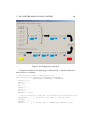
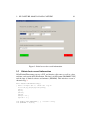
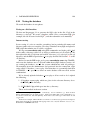
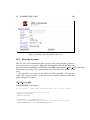
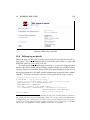
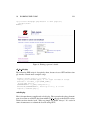
Figure 2: Ez Graphical user interface
A sample screenshot of the main page is shown in Fig. 2, and the AutoIt code
that creates it is as follows:
;; MainInterface: make a comprehensive GUI:
Func MainInterface($userdll, $FILENAME, $DATETIME, _
$GOODITEMS, $ISLISTED, $DURATION)
$hskip = 115;
$pitch = 60;
$h = 40;
$w = 70;
$bigw = 100;
$labw = 200;
$x = 30;
$EZPATH = "\ez\";
;; the following are flags that allow enabling of various buttons:
$FIVEITEMS = 0; ;; bits set = data ARE in! contrast with:
$mISCSV = 0;
$mISDAT = 0;
$mISSS = 0;
;; is manual name in SAFERsleep submission list
2
EZ-CAPTURE: MANUAL DATA CAPTURE
$sISIAR = 0;
$sISXML = 0;
$sISCSV = 0;
$sISDAT = 0;
$sISSS = 0;
41
;; does IAR exist?
;; is automatic name in SS submission list?
; make the GUI:
Dim $mygui = GuiCreate("EZ Data Manipulation: Case No " & _
$FILENAME & ’ (’ & $DATETIME & ’)’ , _
800, 600, 30, 10, $WS_CAPTION + $WS_SYSMENU + $WS_MINIMIZEBOX, $WS_EX_TOPMO
; FONT:
$font="Comic Sans MS"
;
GUISetFont (8, 400, 1, $font) ; Size 8 font
; labels:
GuiCtrlCreateLabel("MANUAL RECORD: Acquire using calipers + keyboard", _
10,12,2*$labw,$h);
GuiCtrlCreateLabel("SAFERSLEEP RECORD: Obtain from database", _
10,6.3*$pitch,2*$labw,$h);
GuiCtrlCreateLabel("Valid?", 2.6*$hskip,0.7*$pitch, $labw,$h);
; buttons:
Dim $bSBP =
Dim $bDBP =
Dim $bHR
=
Dim $bSpO2 =
Dim $bETCO2=
GuiCtrlCreateButton("SBP", $x,
GuiCtrlCreateButton("DBP", $x,
GuiCtrlCreateButton("HR",
$x,
GuiCtrlCreateButton("SpO2", $x,
GuiCtrlCreateButton("ETCO2",$x,
1*$pitch,
2*$pitch,
3*$pitch,
4*$pitch,
5*$pitch,
$w,
$w,
$w,
$w,
$w,
$h);
$h);
$h);
$h);
$h);
Dim $mCSV
Dim $mDAT
Dim $mSS
= GuiCtrlCreateButton("Parse to CSV",
1.6*$hskip, 3*$pitch, $bigw,$h)
= GuiCtrlCreateButton("CSV to DAT",
4*$hskip, 3*$pitch, $bigw, $h);
= GuiCtrlCreateButton("Add to SS list", 5*$hskip, 3*$pitch, $bigw, $h);
Dim
Dim
Dim
Dim
Dim
=
=
=
=
=
$sGET
$sXML
$sCSV
$sDAT
$sSS
Dim $REPL
GuiCtrlCreateButton("Get from SS",
GuiCtrlCreateButton("Convert to XML",
GuiCtrlCreateButton("XML to CSV",
GuiCtrlCreateButton("CSV to DAT",
GuiCtrlCreateButton("Add to SS list",
= GuiCtrlCreateButton("Replay via SS",
$x,
2*$hskip,
3*$hskip,
4*$hskip,
5*$hskip,
7*$pitch,
7*$pitch,
7*$pitch,
7*$pitch,
7*$pitch,
$bigw,
$bigw,
$bigw,
$bigw,
$bigw,
6*$hskip, 5*$pitch, $bigw, $h);
Dim $bQuit = GuiCtrlCreateButton("Quit", 6*$hskip, 8.5*$pitch, $w, $h);
GUICtrlSetBkColor ( $bQuit, 0xFF0000 ) ;; red button
Dim $bNew = GuiCtrlCreateButton("New case", $x, 8.5*$pitch, $w, $h);
GUICtrlSetBkColor ( $bNew, 0xFFFF00 ) ;; yellow button
;; mogrification buttons (using ImageMagick):
Dim $MOGm
= GuiCtrlCreateButton("Mogrify",
$h);
$h);
$h);
$h);
$h);
6*$hskip, 1*$pitch, $bigw, $h);
2
EZ-CAPTURE: MANUAL DATA CAPTURE
; tick-boxes:
Dim $xSBP = GUICtrlCreateCheckbox("",
Dim $xDBP = GUICtrlCreateCheckbox("",
Dim $xHR
= GUICtrlCreateCheckbox("",
Dim $xSpO2 = GUICtrlCreateCheckbox("",
Dim $xETCO2= GUICtrlCreateCheckbox("",
Dim $vSBP = GUICtrlCreateCheckbox("",
Dim $vDBP = GUICtrlCreateCheckbox("",
Dim $vHR
= GUICtrlCreateCheckbox("",
Dim $vSpO2 = GUICtrlCreateCheckbox("",
Dim $vETCO2= GUICtrlCreateCheckbox("",
# and set the Valid flags
SetGoodItems($GOODITEMS, $vSBP, $vDBP,
1*$hskip,
1*$hskip,
1*$hskip,
1*$hskip,
1*$hskip,
42
1*$pitch);
2*$pitch);
3*$pitch);
4*$pitch);
5*$pitch);
2.7*$hskip,
2.7*$hskip,
2.7*$hskip,
2.7*$hskip,
2.7*$hskip,
1*$pitch);
2*$pitch);
3*$pitch);
4*$pitch);
5*$pitch);
$vHR, $vSpO2, $vETCO2);
; graphics:
; arrow from parse/valid to CSV2DAT
GUICtrlCreatePic ("\ez\images\arrow.gif", 3.3*$hskip,
; arrow from get from SS to IAR2XML
GUICtrlCreatePic ("\ez\images\arrow.gif", 1.2*$hskip,
; down arrow from add to replay
GUICtrlCreatePic ("\ez\images\arrowdn.gif", 6*$hskip,
; up arrow from add to replay
GUICtrlCreatePic ("\ez\images\arrowup.gif", 6*$hskip,
3*$pitch, 80, 40);
7*$pitch, 80, 40);
3*$pitch, 90, 110);
5.8*$pitch, 90, 110);
; xml
Dim $vwXML = GUICtrlCreatePic ("\ez\images\seexml.gif", 2*$hskip, 7.8*$pitch, 60,
; csv
Dim $vwCSV = GUICtrlCreatePic ("\ez\images\seecsv.gif", 1.62*$hskip, 3.8*$pitch, 6
Dim $vwCSV2 = GUICtrlCreatePic ("\ez\images\seecsv.gif", 3*$hskip, 7.8*$pitch, 60,
; dat
Dim $vwDAT = GUICtrlCreatePic ("\ez\images\seedat.gif", 4*$hskip, 3.8*$pitch, 60,
Dim $vwDAT2 = GUICtrlCreatePic ("\ez\images\seedat.gif", 4*$hskip, 7.8*$pitch, 60,
; sslist.txt
Dim $vwSS = GUICtrlCreatePic ("\ez\images\sslist.gif", 5.4*$hskip, 5.1*$pitch, 60,
; right brace for SBP etc
GUICtrlCreatePic ("\ez\images\rbrace.gif", 1.2*$hskip, 1.3*$pitch, 40, 4*$pitch);
; right brace for valid
GUICtrlCreatePic ("\ez\images\rbrace.gif", 2.9*$hskip, 1.3*$pitch, 40, 4*$pitch);
; special graphics: view Log (clickable?!)
Dim $imCSV = GUICtrlCreatePic ("\ez\images\Ilog.gif", 2.2*$hskip, 3.8*$pitch, 30,
Dim $imDAT = GUICtrlCreatePic ("\ez\images\Ilog.gif", 4.58*$hskip, 3.8*$pitch, 30,
Dim $imADD = GUICtrlCreatePic ("\ez\images\Ilog.gif", 5.58*$hskip, 3.8*$pitch, 30,
2
Dim
Dim
Dim
Dim
Dim
EZ-CAPTURE: MANUAL DATA CAPTURE
$isGET
$isXML
$isCSV
$isDAT
$isADD
=
=
=
=
=
GUICtrlCreatePic
GUICtrlCreatePic
GUICtrlCreatePic
GUICtrlCreatePic
GUICtrlCreatePic
("\ez\images\Ilog.gif",
("\ez\images\Ilog.gif",
("\ez\images\Ilog.gif",
("\ez\images\Ilog.gif",
("\ez\images\Ilog.gif",
43
0.88*$hskip,
2.58*$hskip,
3.58*$hskip,
4.58*$hskip,
5.58*$hskip,
7.8*$pitch,
7.8*$pitch,
7.8*$pitch,
7.8*$pitch,
7.8*$pitch,
;; check for defects: (otherwise will behave VERY oddly)
If ($vwXML = 0) OR ($vwCSV = 0) OR ($vwDAT = 0) _
OR ($vwSS = 0) OR ($imCSV = 0) Then
MsgBox( $ONTOP, ’Error’, ’Missing images in \ez\images. Fix me (Bye)!’ );
Exit
EndIf
;; here set control states at start: (ugh)
;; first, tick-boxes are always greyed:
myDisable ($xSBP );
myDisable ($xDBP );
myDisable ($xHR
);
myDisable ($xSpO2 );
myDisable ($xETCO2);
; then check if raw data exist, if so, tick boxes:
$FIVEITEMS = CheckRaw($xSBP, $xDBP, $xHR, $xSpO2, $xETCO2, $FILENAME);
myDisable
myDisable
myDisable
myDisable
myDisable
($vSBP );
($vDBP );
($vHR
);
($vSpO2 );
($vETCO2);
;; secondly,
; Parse to CSV is only enabled when all 5 inputs are in!
If ($FIVEITEMS <> 31) Then ;; if bits 0--4 are not set
myDisable ($mCSV );
EndIf
; CSV to DAT is enabled when all processing was valid!
myDisable ($mDAT );
TestmDAT ($mDAT, $EZPATH, $FILENAME, ’-m’); ;; FIX THIS -> TestFile..
;; [NNNNNNNNNNNOOOOOOOOOO. Must check on status of Perl submission [FIX ME]]
; Add to SS list (manual) is valid when CSV to DAT succeeded
myDisable ($mSS );
TestFile($mSS, $EZPATH & ’dat/’, $FILENAME, ’-m.dat’);
;; Replay via SS is only valid when both ADD buttons succeeded (Hmm?)
myDisable ($REPL );
If $ISLISTED = 3 Then
;; if both flags set
30,
30,
30,
30,
30,
2
EZ-CAPTURE: MANUAL DATA CAPTURE
myEnable($REPL);
EndIf ;; or make this a rtn.
;; Convert to XML is only valid once get from sS succeeded
myDisable ($sXML );
TestFile($sXML, $EZPATH & ’iar/’, $FILENAME, ’.iar’);
; XML to cSV is valid once convert is ok
myDisable ($sCSV );
TestFile($sCSV, $EZPATH & ’xml/’, $FILENAME, ’.xml’);
; ss CSV to DAT is valid once CSV made
myDisable ($sDAT );
TestFile($sDAT, $EZPATH & ’csv/’, $FILENAME, ’-s.csv’);
; Add to sS list (ss) is valid once DAT made.
myDisable ($sSS );
TestFile($sSS, $EZPATH & ’dat/’, $FILENAME, ’-s.dat’);
;; test for dud buttons:
If $mCSV = 0 Then
MsgBox($ONTOP, ’Error’, ’Bad button: mCSV’);
EndIf
; GUI MESSAGE LOOP
GuiSetState() ; display the GUI
While 1
Dim $msg = GuiGetMsg();
If $FIVEITEMS = 31 Then ;; if all 5 acquired
myEnable ($mCSV ); ;; ugh.
EndIf
Select ;; START GIANT SELECT STATEMENT.
Case $msg = $bQuit
GUIDelete($mygui);
Return(0); ;; 0 = quit
Case $msg = $bNew
GUIDelete($mygui);
Return(1); ;; 1 = resume
Case $msg = $bSBP
$overw = 1;
If IsRawFile(’sbp’, $FILENAME) = 1 Then
$overw = MsgBox($ONTOP+1, "Warning", _
"Raw SBP data already captured! Overwrite?");
If $overw = 1 Then ;; (cancel=2) create single backup:
44
2
EZ-CAPTURE: MANUAL DATA CAPTURE
45
$fnm = $EZPATH & ’rawdata\’ & $FILENAME & ’-sbp.csv’;
FileCopy ($fnm, $fnm & ".BAK", 1); ;;overwrite if exists
EndIf
EndIf
If $overw = 1 Then
GuiSetState(@SW_MINIMIZE);
GetSequence (’sbp’, $FILENAME, $DATETIME, $FAKEDCMS)
myCheck($xSBP);
$FIVEITEMS = BitOR($FIVEITEMS, 1); #say ’data acquired’
GuiSetState(@SW_RESTORE);
EndIf
Case $msg = $bDBP
$overw = 1;
If IsRawFile(’dbp’, $FILENAME) = 1 Then
$overw = MsgBox($ONTOP+1, "Warning", _
"Raw DBP data already captured! Overwrite?");
If $overw = 1 Then ;; (cancel=2) create single backup:
$fnm = $EZPATH & ’rawdata\’ & $FILENAME & ’-dbp.csv’;
FileCopy ($fnm, $fnm & ".BAK", 1); ;;overwrite if exists
EndIf
EndIf
If $overw = 1 Then
GuiSetState(@SW_MINIMIZE);
GetSequence (’dbp’, $FILENAME, $DATETIME, $FAKEDCMS)
myCheck($xDBP);
$FIVEITEMS = BitOR($FIVEITEMS, 2);
GuiSetState(@SW_RESTORE);
EndIf
Case $msg = $bHR
$overw = 1;
If IsRawFile(’hr’, $FILENAME) = 1 Then
$overw = MsgBox($ONTOP+1, "Warning", _
"Raw HR data already captured! Overwrite?");
If $overw = 1 Then ;; (cancel=2) create single backup:
$fnm = $EZPATH & ’rawdata\’ & $FILENAME & ’-hr.csv’;
FileCopy ($fnm, $fnm & ".BAK", 1); ;;overwrite if exists
EndIf
EndIf
If $overw = 1 Then
GuiSetState(@SW_MINIMIZE);
GetSequence (’hr’, $FILENAME, $DATETIME, $FAKEDCMS)
myCheck($xHR);
$FIVEITEMS = BitOR($FIVEITEMS, 4);
GuiSetState(@SW_RESTORE);
EndIf
2
EZ-CAPTURE: MANUAL DATA CAPTURE
46
Case $msg = $bSpO2
$overw = 1;
If IsRawFile(’spo2’, $FILENAME) = 1 Then
$overw = MsgBox($ONTOP+1, "Warning", _
"Raw SpO2 data already captured! Overwrite?");
If $overw = 1 Then ;; (cancel=2) create single backup:
$fnm = $EZPATH & ’rawdata\’ & $FILENAME & ’-spo2.csv’;
FileCopy ($fnm, $fnm & ".BAK", 1); ;;overwrite if exists
EndIf
EndIf
If $overw = 1 Then
GuiSetState(@SW_MINIMIZE);
If GetKbSequence (’spo2’, $FILENAME, $DATETIME, $DURATION) = 1 Then
myCheck($xSpO2);
$FIVEITEMS = BitOR($FIVEITEMS, 8);
EndIf
GuiSetState(@SW_RESTORE);
EndIf
Case $msg = $bETCO2
$overw = 1;
If IsRawFile(’etco2’, $FILENAME) = 1 Then
$overw = MsgBox($ONTOP+1, "Warning", _
"Raw ETCO2 data already captured! Overwrite?");
If $overw = 1 Then ;; (cancel=2) create single backup:
$fnm = $EZPATH & ’rawdata\’ & $FILENAME & ’-etco2.csv’;
FileCopy ($fnm, $fnm & ".BAK", 1); ;;overwrite if exists
EndIf
EndIf
If $overw = 1 Then
GuiSetState(@SW_MINIMIZE);
If GetKbSequence (’etco2’, $FILENAME, $DATETIME, $DURATION) = 1 Then
myCheck($xETCO2);
$FIVEITEMS = BitOR($FIVEITEMS, 16);
EndIf
GuiSetState(@SW_RESTORE);
EndIf
Case $msg = $mCSV
$perlok = RunWait( @ComSpec & " /c perl " & _
$EZPATH & "ez-captur\ez-captur.pl " _
& $FILENAME & ’ "’ & $DATETIME & ’" ’ & $DURATION , $EZPATH);
If $perlok = 0 Then
MsgBox ($ONTOP, "Note", "Conversion was successful");
TestmDAT($mDAT, $EZPATH, $FILENAME, ’-m’); ;; check if can enable!
Else
MsgBox ($ONTOP, "Debug", "Return code was " & $perlok);
;; here might check that target csv file exists, and
2
EZ-CAPTURE: MANUAL DATA CAPTURE
47
;; if so, enable next step:
EndIf
$GOODITEMS = bitAND($perlok, 31); # last 5 bit flags
SetGoodItems($GOODITEMS, $vSBP, $vDBP, $vHR, $vSpO2, $vETCO2);
# bits that are set indicate errors:
StoreParam ($EZPATH, $FILENAME, $EZ_VALIDFLAGS, $GOODITEMS); ;; Store ’valid’
Case $msg = $mDAT
;; MsgBox ($ONTOP, "Debug: Arguments for ez-csv2dat.pl", $FILENAME & ’-m datru
$perlok = RunWait( @ComSpec & " /c perl " & _
$EZPATH & "ez-xlate\ez-csv2dat.pl " _
& $FILENAME & ’-m datrules.txt kPa=1’, $EZPATH);
;; kPa=1 flag forces conversion from mmHg to kPa!
If $perlok = 0 Then
MsgBox ($ONTOP, "Note", "Conversion was successful");
TestFile($mSS, $EZPATH & ’dat/’, $FILENAME, ’-m.dat’);
Else
MsgBox ($ONTOP, "Debug", "Return code was " & $perlok);
EndIf
Case $msg = $mSS
If AddToSSList($EZPATH, $FILENAME, ’-m’, $DURATION) > 0 Then
;; if success
$ISLISTED = BitOR ($ISLISTED, 1); ;; bit 0 set = manual
StoreParam ($EZPATH, $FILENAME, $EZ_ISLISTED, $ISLISTED); ;; Store ’listed’
MsgBox($ONTOP, "Success", "Added to play list: " & $FILENAME & ’-m.DAT’);
If $ISLISTED = 3 Then
;; if both flags set
myEnable($REPL);
EndIf ;; or make this a rtn.
Else
MsgBox($ONTOP, "Oops", "Failed to add " & $FILENAME & " to playlist!");
EndIf
Case $msg = $sGET
$perlok = RunWait( @ComSpec & " /c perl " & _
$EZPATH & "ez-xlate\getcrypt.pl " _
& $FILENAME & ’ connect-string.txt debug=3,logprint=1’, $EZPATH);
If $perlok = 0 Then
MsgBox ($ONTOP, "Note", "Retrieval was successful");
TestFile($sXML, $EZPATH & ’iar/’, $FILENAME, ’.iar’);
Else
MsgBox ($ONTOP, "Problem", "See log. Return code was " & $perlok);
EndIf
Case $msg = $sXML
GuiSetState(@SW_MINIMIZE);
If Iar2Xml ($EZPATH, $FILENAME) = 1 Then ;; failure
MsgBox ($ONTOP, "Oops", "There seems to have been a problem. See the LOG");
Else
2
EZ-CAPTURE: MANUAL DATA CAPTURE
48
MsgBox ($ONTOP, "Note", "Apparent success!");
TestFile($sCSV, $EZPATH & ’xml/’, $FILENAME, ’.xml’);
EndIf
GuiSetState(@SW_RESTORE);
Case $msg = $sCSV
;; MsgBox ($ONTOP, "Test", "XML to CSV");
$perlok = RunWait( @ComSpec & " /c perl " & _
$EZPATH & "ez-xlate\ez-xml2csv.pl " _
& $FILENAME & ’ debug=2,logprint=1’, $EZPATH);
If $perlok = 0 Then
MsgBox ($ONTOP, "Note", "Conversion was successful");
TestFile($sDAT, $EZPATH & ’csv/’, $FILENAME, ’-s.csv’); ;; -s is for safersl
Else
MsgBox ($ONTOP, "Problem", "See log. Return code was " & $perlok);
EndIf
Case $msg = $sDAT
$perlok = RunWait( @ComSpec & " /c perl " & _
$EZPATH & "ez-xlate\ez-csv2dat.pl " _
& $FILENAME & ’-s’ & ’ datrules.txt’, $EZPATH);
If $perlok = 0 Then
MsgBox ($ONTOP, "Note", "Conversion was successful");
TestFile($sSS, $EZPATH & ’dat/’, $FILENAME, ’-s.dat’);
Else
MsgBox ($ONTOP, "Problem", "See log. Return code was " & $perlok);
EndIf
Case $msg = $sSS
If AddToSSList($EZPATH, $FILENAME, ’-s’, $DURATION) > 0 Then
;; if success
$ISLISTED = BitOR ($ISLISTED, 2); ;; bit 1 set = ss file
StoreParam ($EZPATH, $FILENAME, $EZ_ISLISTED, $ISLISTED); ;; Store ’listed’
MsgBox($ONTOP, "Success", "Added to play list: " & $FILENAME & ’-s.DAT’);
If $ISLISTED = 3 Then
;; if both flags set
myEnable($REPL);
EndIf ;; or make this a rtn.
Else
MsgBox($ONTOP, "Oops", "Failed to add " & $FILENAME & "-s to playlist!");
EndIf
Case $msg = $REPL
$doit = MsgBox($ONTOP+1, "Confirm", "Do you want to replay the files?");
If $doit = 1 Then ;; OK button pressed (2=cancel)
GuiSetState(@SW_MINIMIZE);
$perlok = RunWait( @ComSpec & " /c " & _
$EZPATH & "ez-replay\ez-replay.au3" , $EZPATH);
GuiSetState(@SW_RESTORE);
2
EZ-CAPTURE: MANUAL DATA CAPTURE
49
Else
MsgBox($ONTOP, "Cancelled", "Nothing done!");
EndIf
;; -------------- PNG file ’mogrification’ ----------- ;;
Case $msg = $MOGm
$doit = MsgBox($ONTOP+1, "Confirm", "Mogrify? (In BACKGROUND, alerts for 5s once
If $doit = 1 Then ;; OK button pressed (2=cancel)
GuiSetState(@SW_MINIMIZE);
$perlok = RunWait( @ComSpec & " /c " & _
$EZPATH & "ez-mogrify.au3" , $EZPATH);
GuiSetState(@SW_RESTORE);
Else
MsgBox($ONTOP, "No!", "NOT mogrifying");
EndIf;
;; ----------- IMAGE CLICKS ---------------Case $msg = $imCSV
LogNotepad ($EZPATH, $FILENAME, ’-capt’)
Case $msg = $imDAT
LogNotepad ($EZPATH, $FILENAME, ’-m-c2d’)
Case $msg = $imADD
LogNotepad ($EZPATH, $FILENAME, ’-m-play’);
Case $msg = $isGET
LogNotepad ($EZPATH, $FILENAME, ’-iar-’)
Case $msg = $isXML
LogNotepad ($EZPATH, $FILENAME, ’-xml’)
Case $msg = $isCSV
LogNotepad ($EZPATH, $FILENAME, ’-x2c-’)
Case $msg = $isDAT
LogNotepad ($EZPATH, $FILENAME, ’-s-c2d-’)
Case $msg = $isADD
LogNotepad ($EZPATH, $FILENAME, ’-s-play’);
;; --- view actual resulting files in Notepad: (or even Excel)
Case $msg = $vwCSV
ViewNotepad ($EZPATH, ’csv/’, $FILENAME & ’-m’, ’.csv’)
Case $msg = $vwCSV2
ViewNotepad ($EZPATH, ’csv/’, $FILENAME & ’-s’, ’.csv’)
2
EZ-CAPTURE: MANUAL DATA CAPTURE
50
Case $msg = $vwXML
ViewNotepad ($EZPATH, ’xml/’, $FILENAME, ’.xml’)
Case $msg = $vwDAT
ViewNotepad ($EZPATH, ’dat/’, $FILENAME & ’-m’, ’.dat’)
Case $msg = $vwDAT2
ViewNotepad ($EZPATH, ’dat/’, $FILENAME & ’-s’, ’.dat’)
Case $msg = $vwSS
ViewNotepad ($EZPATH, ’ez-replay/’, ’SSLIST’, ’.txt’)
EndSelect
Wend;
EndFunc
Simple subsidiary routines
;; a simple enabling routine:
Func myEnable($ctl)
$st = bitAND (GUICtrlGetState ($ctl), $GUI_ENABLE);
If $st = 0 Then
;; prevent flicker
GUICtrlSetState ($ctl, $GUI_ENABLE );
EndIf
EndFunc
;; a simple control disabling routine:
Func myDisable($ctl)
GUICtrlSetState ($ctl, $GUI_DISABLE );
EndFunc
;; similar check/uncheck:
Func myCheck($ctl)
GUICtrlSetState ($ctl, $GUI_CHECKED );
EndFunc
Func myUncheck($ctl)
GUICtrlSetState ($ctl, $GUI_UNCHECKED );
EndFunc
;; A routine to check whether a particular raw datum file exists:
;; $seq might be one of ’sbp’, ’dbp’ etc.
Func IsRawFile ($seq, $FILENAME)
$EZPATH = "\ez\";
$PATHNAME = $EZPATH & "rawdata\";
2
EZ-CAPTURE: MANUAL DATA CAPTURE
51
$FILENAME = $FILENAME & ’-’ & $seq & ".csv";
$WHOLEFILE = $PATHNAME & $FILENAME;
If FileExists($WHOLEFILE) Then
return (1); ;; success
EndIf
return(0);
;; fail
EndFunc
;; a routine to determine whether to tick various acquisition boxes:
Func CheckRaw ($xSBP, $xDBP, $xHR, $xSpO2, $xETCO2, $FILENAME)
$my5 = 0;
If IsRawFile(’sbp’, $FILENAME) = 1 Then
myCheck($xSBP);
$my5 = BitOR($my5, 1);
EndIf
If IsRawFile(’dbp’, $FILENAME) = 1 Then
myCheck($xDBP);
$my5 = BitOR($my5, 2);
EndIf
If IsRawFile(’hr’, $FILENAME) = 1 Then
myCheck($xHR);
$my5 = BitOR($my5, 4);
EndIf
If IsRawFile(’spo2’, $FILENAME) = 1 Then
myCheck($xSpO2);
$my5 = BitOR($my5, 8);
EndIf
If IsRawFile(’etco2’, $FILENAME) = 1 Then
myCheck($xETCO2);
$my5 = BitOR($my5, 16);
EndIf
return($my5);
EndFunc
;; routine to tick ’Valid’ boxes (five) based on flags in $GOODITEMS
Func SetGoodItems ($GOODITEMS, $vSBP, $vDBP, $vHR, $vSpO2, $vETCO2)
myUncheck($vSBP);
If bitAND ($GOODITEMS, 1) = 0 Then
myCheck($vSBP);
EndIf
myUncheck($vDBP);
If bitAND ($GOODITEMS, 2) = 0 Then
myCheck($vDBP);
EndIf
myUncheck($vHR);
2
EZ-CAPTURE: MANUAL DATA CAPTURE
52
If bitAND ($GOODITEMS, 4) = 0 Then
myCheck($vHR);
EndIf
myUncheck($vSpO2);
If bitAND ($GOODITEMS, 8) = 0 Then
myCheck($vSpO2);
EndIf
myUncheck($vETCO2);
If bitAND ($GOODITEMS, 16) = 0 Then
myCheck($vETCO2);
EndIf
EndFunc
Func TestmDAT ($mDAT, $EZPATH, $FILENAME, $SUFFIX)
;; if .csv file has been made, enable DAT conversion..
;; [NO! rather test if successful return from Perl invocation [FIX ME]]
If FileExists ( $EZPATH & "csv\" & $FILENAME & $SUFFIX & ’.csv’) Then
myEnable($mDAT)
EndIf
EndFunc
;; test whether file exists, and if it does
;; enable the relevant button:
Func TestFile ($btn, $WHOLEPATH, $FILENAME, $SUFFIX)
If FileExists ($WHOLEPATH & $FILENAME & $SUFFIX) Then
myEnable($btn)
EndIf
EndFunc
;; store a parameter to the .INF file
Func StoreParam ($EZPATH, $FILENAME, $parmno, $value)
$fnam = $EZPATH & ’ez-info\’ & $FILENAME & ’.inf’;
If Not FileExists ($fnam) Then
MsgBox($ONTOP, "Error", "INF File doesn’t exist: " & $fnam);
return;
EndIf
$ARR = Slurp($fnam);
$ARR[$parmno] = $value;
Vomit($fnam, $ARR)
;; REWRITE
EndFunc
2.4.1
Invoke Notepad
Here we look for all relevant log files, and work through them until we get the last
file, which we display by opening up NotePad. We minimise the GUI until the log
2
EZ-CAPTURE: MANUAL DATA CAPTURE
53
file closes.
Func LogNotepad ($EZPATH, $FILENAME, $SUFFIX)
$fnam = $EZPATH & ’log\’ & $FILENAME & $SUFFIX & ’*.LOG’;
$h = FileFindFirstFile($fnam);
If $h = -1 Then
MsgBox($ONTOP, "Oops", "LOG File not found: " & $fnam);
Return
EndIf
$tot = 0;
DIM $FA[$tot+1];
;; just playing, for now. later ? select from list
$file = ’’;
While 1
$lastfile = $file;
$file = FileFindNextFile($h);
If @error Then ExitLoop;
$FA[$tot] = $file;
$tot = $tot + 1;
ReDim $FA[$tot+1];
WEnd
FileClose($h);
;; run notepad:
GuiSetState(@SW_MINIMIZE);
Run ("Notepad.exe " & $lastfile, $EZPATH & ’log\’ , @SW_MAXIMIZE);
Sleep(1000);
WinWaitClose($FILENAME & $SUFFIX);
GuiSetState(@SW_RESTORE);
EndFunc
Similar but filename specific is ViewNotepad:
Func ViewNotepad ($EZPATH, $EZDIR, $FNAME, $SUFFIX)
$fnam = $EZPATH & $EZDIR & $FNAME;
If Not FileExists($fnam & $SUFFIX) Then
MsgBox($ONTOP, "Oops", "File not found: " & $fnam & $SUFFIX);
Return
EndIf
GuiSetState(@SW_MINIMIZE);
$TARGET = $FNAME;
$isXL = 0;
If $SUFFIX = ’.csv’ Then
;; $XLpath = RegRead( "HKEY_CLASSES_ROOT\.mht\OpenWithList\Microsoft Office Ex
$XLpath = RegRead( "HKEY_CLASSES_ROOT\Applications\EXCEL.EXE\shell\edit\comma
2
EZ-CAPTURE: MANUAL DATA CAPTURE
54
if StringLen ($XLpath) > 5 Then
$isXL = 1;
$TARGET = "Microsoft Excel";
EndIf
EndIf
If $isXL = 1 Then
Run ($XLPATH & ’ ’ & $fnam & $SUFFIX, $EZPATH & $EZDIR , @SW_MAXIMIZE);
Else
Run ("Notepad.exe " & $fnam & $SUFFIX, $EZPATH & $EZDIR , @SW_MAXIMIZE);
EndIf
WinWaitActive($TARGET, ’’, 30);
WinWaitClose($TARGET);
GuiSetState(@SW_RESTORE);
EndFunc
2.4.2
Queue entries for replay by SAFERsleep
;; AddToSSList:
;;
open the file ’SSLIST.TXT’ and
;;
search for an entry $FILENAME$SUFFIX.DAT (suffix is -s or -m)
;;
if the entry exists, return the index of the entry
;;
if it doesn’t insert the entry and return MINUS the index
;;
on failure, return 0.
;;
Also create a log file: $FILENAME$SUFFIX-play.LOG
Func AddToSSList($EZPATH, $FILENAME, $SUFFIX, $DURATION)
$partname = $FILENAME & $SUFFIX ;
;; do NOT add .DAT here!
$fpath = $EZPATH & ’ez-replay\SSLIST.TXT’ ;
$logname = $EZPATH & ’log\’ & $FILENAME & $SUFFIX & ’-play.LOG’;
; might confirm $DURATION is numeric;
;; $epochs = 1 + Int( ($DURATION+4)/5 ); !NO we want minutes
If FileExists($fpath) = 0 Then
$fh = FileOpen ($fpath, 2); ;; Create new file!
If $fh = -1 Then
FileWriteLine ($logname, "Error 1: Bad file " & $fpath);
;; ** write to log
Return (0); ;; FAILED HORRIBLY.
EndIf
FileWriteLine ($fh, "% Header line");
FileWriteLine ($fh, $partname & ’,’ & $DURATION);
FileClose($fh); ;; might test for success?
FileWriteLine ($logname, "New entry at line 1");
Return (1);
;; written to line 1.
EndIf
2
EZ-CAPTURE: MANUAL DATA CAPTURE
55
$lineno = ScanFile($fpath, $partname, $logname, 3);
If $lineno = -1 Then
FileWriteLine ($logname, "Error 2: Bad file " & $fpath);
Return (0); ;; FAILED HORRIBLY.
EndIf
If $lineno > 0 Then
;; WAS found
FileWriteLine ($logname, "Entry found at line " & $lineno);
Return($lineno);
EndIf
; not found, so append to file
FileWriteLine ($fpath, $partname & ’,’ & $DURATION);
; clumsy beyond belief:
$lineno = ScanFile($fpath, $partname, $logname, 3);
If $lineno = -1 Then
FileWriteLine ($logname, "Error 4: Bad file " & $fpath);
Return (0); ;; FAILED HORRIBLY.
EndIf
If $lineno > 0 Then
;; FOUND
FileWriteLine ($logname, "Entry inserted at line " & $lineno);
Return($lineno);
EndIf
FileWriteLine ($logname, "Error 3: Bad file " & $fpath);
Return (0); ;; FAILED
EndFunc
Func ScanFile ($path,$what, $logname, $DEBUG)
$file = FileOpen($path, 0);
;; read only
If $file = -1 Then
If $DEBUG = 3 Then
FileWriteLine ($logname, "FILE NOT OPENED!?");
EndIf
Return (-1); ;; fail horribly
EndIf
If $DEBUG = 3 Then
FileWriteLine ($logname, " Searching for: " & $what);
EndIf
; Read in lines of text until the EOF is reached
$lcount = 1;
While 1
$line = FileReadLine($file);
If @error = -1 Then ExitLoop; ;; end of file
$ln = StringSplit($line, ’,’);
If $ln[1] = $what Then
2
EZ-CAPTURE: MANUAL DATA CAPTURE
56
If $DEBUG = 3 Then
FileWriteLine ($logname, "Found at line " & $lcount);
EndIf
FileClose($file);
Return ($lcount);
EndIf
If $DEBUG = 3 Then
FileWriteLine ($logname, " Comparing: " & $line);
EndIf
$lcount = $lcount + 1;
Wend
If $DEBUG = 3 Then
FileWriteLine ($logname, "Not found");
EndIf
FileClose($file);
Return(0);
;; not found
EndFunc
2.4.3
Advanced Datum acquisition
Similar to our basic schema, we here obtain just one data set for one of SBP,
DBP, or HR. We initialise data fetch, and wait for Excel. When invoked, after
a sufficient wait, we save the file in the format X0001-sbp.csv, where ‘X0001’
represents the case number, and the suffix is one of sbp, dbp or hr.
We start each set with a zero and Y calibration. Note that with the final (HR)
acquisition alone, we must perform a terminal zero, calibrate, and x-determination.
Func GetSequence ($seqname, $FILENAME, $DATETIME, $FAKEDCMS)
$EZPATH = "\ez\";
$PATHNAME = $EZPATH & "rawdata\";
$FILENAME = $FILENAME & ’-’ & $seqname & ".csv";
;; e.g. "S0001-sbp.csv"
OpenDCMS($FAKEDCMS);
WinActivate("DCMS");
;; Data entry here..
;--Excel-WinWaitActive ("Microsoft Excel");
WinActivate ("Microsoft Excel");
; if target file exists, detect and delete it!! <heh>
$WHOLEFILE = $PATHNAME & $FILENAME;
If FileExists($WHOLEFILE) Then
FileDelete($WHOLEFILE);
2
EZ-CAPTURE: MANUAL DATA CAPTURE
57
EndIf
If $FAKEDCMS <> 0 Then
MsgBox($ONTOP, "Fake Excel input", "You have " & $FAKEDCMS & " seconds for Exce
WinActivate ("Microsoft Excel");
EndIf
Sleep (3000);
Send ("!f");
Sleep(300)
Send ("a");
Sleep (200);
Send($WHOLEFILE);
Sleep (200);
Send ("{TAB}");
Sleep (200);
Send ("C");
Sleep (200);
Send ("{ENTER}");
Sleep (200);
Send ("{ENTER}");
;; good long wait for import
;; Alt+F = File Save
;; ... as
;; tab to file type
;; CSV
;;accept CSV
;; save
Sleep(300);
If WinExists("Microsoft Excel", "The selected file type does not") Then
Send ("{ENTER}"); ;; Windoze being helpful
EndIf
Sleep(300);
If WinExists("Microsoft Excel", "not compatible with CSV") Then
Send ("{ENTER}"); ;; Windoze being helpful
EndIf
Sleep (500);
Send ("!fx");
;; CLOSE Excel!
Sleep (200);
;; Windows will ask "Do you want to save"
Send ("n");
;; no!
;; next, close DCMS!
CloseDCMS($FAKEDCMS);
EndFunc
;--DCMS-Func OpenDCMS ($FAKEDCMS)
If $FAKEDCMS <> 0 Then
return;
;; do nothing
EndIf
2
EZ-CAPTURE: MANUAL DATA CAPTURE
58
$DCMSEXEC = "C:\Program Files\USB DCMS FOR MEASURING TOOLS\Receive.exe";
Run($DCMSEXEC);
WinWaitActive("DCMS");
;; open port:
ControlClick ( "DCMS", "", _
"[CLASS:ThunderRT6CommandButton; INSTANCE:6]" )
;; establish connection (3 tries works!)
ControlClick ( "DCMS", "", _
"[CLASS:ThunderRT6CommandButton; INSTANCE:11]" )
Sleep(300);
ControlClick ( "DCMS", "", _
"[CLASS:ThunderRT6CommandButton; INSTANCE:11]" )
Sleep(300);
ControlClick ( "DCMS", "", _
"[CLASS:ThunderRT6CommandButton; INSTANCE:11]" )
Sleep(300);
EndFunc
Func CloseDCMS ($FAKEDCMS)
If $FAKEDCMS <> 0 Then
return;
;; do nothing
EndIf
;--- Shutdown and exit!
WinActivate("DCMS");
;; Close port
ControlClick ( "DCMS", "", _
"[CLASS:ThunderRT6CommandButton; INSTANCE:11]" )
;; Exit DCMS
ControlClick ( "DCMS", "", _
"[CLASS:ThunderRT6CommandButton; INSTANCE:10]" )
EndFunc
2.4.4
Keyboard input
Func GetKbSequence ($seqname, $FILENAME, $DATETIME, $DURATION)
$EZPATH = "\ez\";
$prog = @ComSpec & " /c " & "perl " & $EZPATH & "ez-captur\ez-keyboard.pl ";
$perlok = RunWait ( $prog & $FILENAME & ’ ’ & $seqname & ’ ’ _
& $DURATION & ’ "’ & $DATETIME & ’"’ , _
$EZPATH, @SW_MAXIMIZE );
;; run the Perl program in DOS, with relevant arguments
;; last Run parameter specifies working directory
If $perlok = 0 Then
Return 1
EndIf
2
EZ-CAPTURE: MANUAL DATA CAPTURE
59
MsgBox ($ONTOP, "OOPS", "Error in keyboard input");
EndFunc
2.4.5
Decrypt SAFERsleep IAR file to XML
It is also possible to retrieve automatically-captured records from SAFERsleep,
but these are encrypted. A decryption tool is provided with XML output, but it is
inconvenient to use this tool manually on multiple records. We therefore automate
the process, again using AutoIt and Perl. Here’s the code that coordinates the
translation from IAR to XML
Func Iar2Xml ($EZPATH, $IARFILENAME)
;; ** NB ** at present we assume the existence of all of the paths listed below.
$EZPATH = "\ez\";
$XPATH = $EZPATH & "ez-xlate\";
$IARPATH = $EZPATH & "iar\";
$XMLPATH = $EZPATH & "xml\";
$ERRORLOG = $EZPATH & ’log\’ & $IARFILENAME & ’-xml.LOG’;
ClipPut(’’)
;; clear clipboard
;; activate SAFERsleep viewer: NB. batch file must be defined.
Run($XPATH & "xlat.bat " & $IARPATH & $IARFILENAME & ’.IAR’, $XPATH );
WinWaitActive ("SAFERsleep IAR Viewer");
WinActivate ("SAFERsleep IAR Viewer");
Sleep(1000);
;; arbitrary
;; ugh
;; * HERE MUST CHECK FOR: Error box, and if appears:
;;
simply close down, don’t capture, log the error
If WinExists("Error.") Then
$dudtext = ControlGetText ( "Error", "", "[CLASS:Static; INSTANCE:1]" ) ;; get
FileWriteLine($ERRORLOG, "Error in file: " & $IARFILENAME & ", text=" & $dudte
MsgBox($ONTOP, "Parse Error", "IAR viewer forced error(logged)", 5);
WinActivate("Error.");
Send("{ENTER}");
;; acknowledge
Sleep(100);
Return (1); ;; failure
EndIf;
Sleep(1000);
;; the following seems not to work well [why?]
;; ControlClick ("SAFERsleep IAR Viewer", "", "[CLASS:TcxCustomInnerMemo; INSTAN
MouseClick("left", 560, 414);
Sleep(100);
2
EZ-CAPTURE: MANUAL DATA CAPTURE
Send("ˆa")
Sleep(100);
Send("ˆc")
Sleep(2000);
60
;; this delay seems important
;; debug:
;; WinWaitClose("SAFERsleep IAR Viewer", "");
;; get data from clipboard:
$XMLDATA = ClipGet();
;; get xml from clipboard
If StringLen($XMLDATA) < 1000 Then
FileWriteLine($ERRORLOG, "Warning: tiny XML file: " & $IARFILENAME );
EndIf
;;log w
;; simply write to xml file:
$outn = StringSplit ($IARFILENAME, ".");
;; get rid of suffix
$OUTNAME = $outn[1] & ".xml";
;; [might check for error?]
$fHandle = FileOpen( $XMLPATH & $OUTNAME, 2);
;; write=erase prior contents
If @error <> 0 Then
;; if failed
MsgBox($ONTOP, "FATAL Error", "Failed to open file for writing: " & $filename)
Exit
EndIf
FileWrite($fHandle, $XMLDATA);
;; ? need to do so repeatedly!
FileClose($fHandle);
WinClose("SAFERsleep IAR Viewer");
WinWaitClose("SAFERsleep IAR Viewer");
Sleep(500);
;; wait, just in case.
FileWrite($ERRORLOG, "Apparently successful translation: " & $IARFILENAME ); ;;
Return (0);
;; success
EndFunc;
2
EZ-CAPTURE: MANUAL DATA CAPTURE
61
Figure 3: Initial screen for record information
2.5
Obtain basic record information
XGetFileAndTimestamp pops up a GUI, and obtains a file name, as well as a date
and time, and certain other information. The date is in NZ format (DD/MM/YYYY)
and the time is limited to hours and minutes (HH:MM). This interface screen is
shown in Fig. 3.
Func XGetFileAndTimestamp()
; make a simple GUI to check the log-in
Local $x,$y,$w,$h,$pitch,$skip;
$x=50;
$y=10;
$w=120;
$h=35;
$skip = 150;
$pitch = 50;
Dim $FAT[1+$EZ_MAXLINES]; ;; ’return’ array
Dim $EZPATH = "\ez\";
2
EZ-CAPTURE: MANUAL DATA CAPTURE
62
Dim $validflags=31;
Dim $islisted=0;
;;set=invalid
;; 1=manual file listed (-m),
;; 2=ss file listed (-s)
Dim $mygui = GuiCreate("Enter Case Number", _
720, 600, 40, 10, $WS_CAPTION, $WS_EX_TOPMOST);
; FONT:
$font="Comic Sans MS"
;
GUISetFont (9, 400, 1, $font) ; Size 9 font
;; File name:
; labels:
GuiCtrlCreateLabel("Please enter case number e.g. S0001", _
$x, $y + $pitch, $w*4, $h)
;; Date and time:
GuiCtrlCreateLabel("Enter anaesthetic date (DD/MM/YYYY), start time (HH:MM), end t
$x, $y + 2.3*$pitch, $w*5, $h)
;; Other labels
GuiCtrlCreateLabel("What surgery was performed?", _
$x, $y + 4.3*$pitch, $w*4, $h)
GuiCtrlCreateLabel("Briefly describe the patient’s co-morbidities", _
$x, $y + 6.3*$pitch, $w*4, $h)
; text:
Dim $caseID = GuiCtrlCreateInput("", $x+$skip*2, $y+$pitch, $w, $h) ;
Dim $myDATE = GuiCtrlCreateInput("", $x, $y+3*$pitch, $w, $h) ;
Dim $myTIME = GuiCtrlCreateInput("", $x+$skip, _
$y + 3*$pitch, $w, $h);
Dim $myEND = GuiCtrlCreateInput("", $x+2*$skip, _
$y + 3*$pitch, $w, $h);
; Nature of surgery
Dim $mySURGERY = GuiCtrlCreateInput("", $x, $y + 5*$pitch, $w*5, $h) ;
; Patient description
Dim $myDESCRIPTION = GuiCtrlCreateInput("", $x, $y + 7*$pitch, $w*5, $h) ;
; Done BUTTON
Dim $buttonID = GuiCtrlCreateButton("Done", $x, $y+9*$pitch, $w, $h);
GUICtrlSetBkColor ( $buttonID, 0x00CC00 ) ;; green button
;; IMAGE (not now)
;; Dim $picID = GUICtrlCreatePic("pathtoimagegoeshere.gif", _
;;
550, 50, 408,308);
Dim $bQuit = GuiCtrlCreateButton("Quit", $x+3.15*$skip, $y+9*$pitch, $w, $h);
GUICtrlSetBkColor ( $bQuit, 0xFF0000 ) ;; red button
; GUI MESSAGE LOOP
2
EZ-CAPTURE: MANUAL DATA CAPTURE
63
GuiSetState() ; display the GUI
While 1
Dim $msg = GuiGetMsg();
If $msg = $caseID Then
$FAT[$EZ_CASENUMBER] = GUICtrlRead($caseID);
;; here might pre-check validity of casenumber before FileExists..;;
If FileExists ($EZPATH & ’ez-info\’ & $FAT[$EZ_CASENUMBER] & ’.inf’) Then
;; first, get all values from file
$FAT = Slurp($EZPATH & ’ez-info/’ & $FAT[$EZ_CASENUMBER] & ’.inf’)
;; next write values to controls:
If $FAT[0] > 0 Then
GUICtrlSetData ($myDATE, $FAT[$EZ_CASEDATE]);
GUICtrlSetData ($myTIME, $FAT[$EZ_CASETIME]);
GUICtrlSetData ($myEND, $FAT[$EZ_CASEEND]);
GUICtrlSetData ($mySURGERY, $FAT[$EZ_SURGERY]);
GUICtrlSetData ($myDESCRIPTION, $FAT[$EZ_DESCRIPTION]);
$islisted = $FAT[$EZ_ISLISTED];
$validflags = $FAT[$EZ_VALIDFLAGS];
EndIf
EndIf
EndIf
If $msg = $bQuit Then
Exit
EndIf
If $msg = $buttonID Then
; was ’Done’ button pressed? [FIX THE FOLLOWING!]
$FAT[$EZ_CASENUMBER] = GUICtrlRead($caseID);
$FAT[$EZ_CASEDATE] = GUICtrlRead($myDATE);
$FAT[$EZ_CASETIME] = GUICtrlRead($myTIME);
$FAT[$EZ_CASEEND] = GUICtrlRead($myEND);
$FAT[$EZ_SURGERY]= GUICtrlRead($mySURGERY);
$FAT[$EZ_DESCRIPTION]= GUICtrlRead($myDESCRIPTION);
$duration = ValidateAllInputs($FAT[$EZ_CASENUMBER], _
$FAT[$EZ_CASEDATE], _
$FAT[$EZ_CASETIME], _
$FAT[$EZ_CASEEND]);
;; MsgBox($ONTOP, "Debug", "Duration is " & $duration);
If $duration > 0 Then
GUIDelete($mygui);
$FAT[0] = $EZ_MAXLINES; ;;number of items
$FAT[$EZ_DURATION] = $duration;
$FAT[$EZ_ISLISTED
] = $islisted;
$FAT[$EZ_VALIDFLAGS
] = $validflags;
;; and here WRITE file:
$fn = $EZPATH & ’ez-info/’ & $FAT[$EZ_CASENUMBER] & ’.inf’;
Vomit($fn, $FAT); ;; write file .INF file for this case.
2
EZ-CAPTURE: MANUAL DATA CAPTURE
Return ($FAT);
Else
GuiCtrlSetState($caseID,$GUI_FOCUS);
EndIf
EndIf
WEnd
EndFunc
64
;; fix mouse focus problem![hack]
Subsidiary functions
The following functions are used above.
Func ValidateAllInputs($casenumber, $casedate, $casetime, $end)
If (StringLen($casenumber) <> 5) Then
MsgBox($ONTOP, "Woops!", "Case number must be 5 characters long! No blanks"
Return(0);
EndIf
If (StringLen($casedate) <> 10) Then
MsgBox($ONTOP, "Woops!", "Date must be in the form dd/mm/yyyy (" & $casedat
Return(0);
EndIf
If (StringLen($casetime) <> 5) Then
MsgBox($ONTOP, "Woops!", "Start time must be in the form HH:MM (" & $caseti
Return(0);
EndIf
If (StringLen($end) <> 5) Then
MsgBox($ONTOP, "Woops!", "End time must be in the form HH:MM (" & $end & ’)
Return(0);
EndIf
$jstart = ValidTimestamp ($casedate, $casetime); ;; julian date
If $jstart = 0 Then
MsgBox($ONTOP, "Bad date!", _
"Please check date/time: " & $casedate & " " & $casetime);
Return(0);
EndIf
$jend = ValidTimestamp ($casedate, $end);
If $jend = 0 Then
MsgBox($ONTOP, "Bad end time!", _
"Please check time: " & " " & $casetime);
Return(0);
EndIf
;; here calculate duration:
;; MsgBox($ONTOP, "Debug", "Difference between " & $jend & ’ and ’ & $jstart);
$duration = $jend - $jstart;
If ($duration < 0) Then ;; next day
$duration = $duration + 0.5;
EndIf
2
EZ-CAPTURE: MANUAL DATA CAPTURE
$duration = Int (0.5 + ($duration * 60*24) );
Return($duration);
EndFunc
65
;; get minutes
;; Slurp file data in. Format is:
;; first line: "date=DD/MM/YYYY"
;; second line:"time=HH:MM"
;; third line:"valid=31" (valid flags)
Func Slurp ($fnam)
Dim $ALEN = $EZ_MAXLINES;
Dim $arr[$ALEN+1];
$arr[0] = 0;
;; 0 signals failure
$f = FileOpen ($fnam, 0) ;; read only
if ($f = -1) Then
Return($arr); ;; fail
EndIf
$WARNINGS = 0;
;; the following is extraordinarily cumbersome and needs to be revised (cf perl
$v = FileReadLine ($f); ;; case number
$s = StringSplit($v, "=");
If $s[1] = ’casenumber’ Then
$arr[$EZ_CASENUMBER] = $s[2];
Else
$WARNINGS = $WARNINGS + 1;
EndIf
$v = FileReadLine ($f); ;; first, date
$s = StringSplit($v, "=");
If $s[1] = ’date’ Then
$arr[$EZ_CASEDATE] = $s[2]; ;; get date
Else
$WARNINGS = $WARNINGS + 1;
EndIf
$v = FileReadLine ($f); ;; next, time
$s = StringSplit($v, "=");
If $s[1] = ’time’ Then
$arr[$EZ_CASETIME] = $s[2]; ;; and time
Else
$WARNINGS = $WARNINGS + 1;
EndIf
$v = FileReadLine ($f); ;; validity flags
$s = StringSplit($v, "=");
If $s[1] = ’valid’ Then
2
EZ-CAPTURE: MANUAL DATA CAPTURE
$arr[$EZ_VALIDFLAGS] = $s[2];
Else
$WARNINGS = $WARNINGS + 1;
EndIf
$v
;;
$s
If
= FileReadLine ($f); ;; "listed" flags
might here check for success..
= StringSplit($v, "=");
$s[1] = ’listed’ Then
$arr[$EZ_ISLISTED] = $s[2];
Else
$WARNINGS = $WARNINGS + 1;
EndIf
;;
$v
$s
If
parameters added in v 0.37:
= FileReadLine ($f); ;; end time
= StringSplit($v, "=");
$s[1] = ’end’ Then
$arr[$EZ_CASEEND] = $s[2];
Else
$WARNINGS = $WARNINGS + 1;
EndIf
$v = FileReadLine ($f); ;; description
$s = StringSplit($v, "=");
If $s[1] = ’surgery’ Then
$arr[$EZ_SURGERY] = $s[2];
Else
$WARNINGS = $WARNINGS + 1;
EndIf
$v = FileReadLine ($f); ;; surgery
$s = StringSplit($v, "=");
If $s[1] = ’description’ Then
$arr[$EZ_DESCRIPTION] = $s[2];
Else
$WARNINGS = $WARNINGS + 1;
EndIf
$v = FileReadLine ($f); ;; duration (derived)
$s = StringSplit($v, "=");
If $s[1] = ’duration’ Then
$arr[$EZ_DURATION] = $s[2];
Else
$WARNINGS = $WARNINGS + 1;
EndIf
If $WARNINGS > 0 Then
66
2
EZ-CAPTURE: MANUAL DATA CAPTURE
67
MsgBox($ONTOP, "Warning", "In reading file " & $fnam _
& "there was/were " & $WARNINGS & " line(s) containing bad data!");
EndIf
FileClose($f);
$arr[0] = $ALEN;
;; size!
Return($arr); ;; return an ARRAY
EndFunc
The reverse function, Vomit, writes an array that was Slurped. Badly written
and nasty.
Func Vomit ($fnam, $ARR)
Dim $ALEN = 1 + $ARR[0]; ;; get item count
;; here might check this vs $EZ_DURATION
$i = 1;
$f = FileOpen ($fnam, 2) ;; rewrite
Dim $VALS [$EZ_MAXLINES+1]; ;;cumbersome
$VALS[$EZ_CASENUMBER ] = ’casenumber’;
$VALS[$EZ_CASEDATE
] = ’date’;
$VALS[$EZ_CASETIME
] = ’time’;
$VALS[$EZ_VALIDFLAGS ] = ’valid’;
$VALS[$EZ_ISLISTED
] = ’listed’;
$VALS[$EZ_CASEEND
] = ’end’;
$VALS[$EZ_SURGERY
] = ’surgery’;
$VALS[$EZ_DESCRIPTION] = ’description’;
$VALS[$EZ_DURATION
] = ’duration’;
While $i < $ALEN
$v = $VALS[$i] & ’=’ & $ARR[$i];
FileWriteLine($f, $v);
$i = $i + 1;
Wend
FileClose($f);
EndFunc
Func ValidTimestamp ($d, $t)
$f = KiwiJulian ($d, $t);
$backdate = KiwiGregorian ($f);
if $backdate <> ($d & " " & $t & ":00") Then
MsgBox ($ONTOP, "Debug", _
"We compared " & $d & " " & $t & ":00 with " & $backdate );
Return (0);
EndIf
Return ($f);
EndFunc
2
EZ-CAPTURE: MANUAL DATA CAPTURE
Func KiwiJulian ($d, $t)
$ds = StringSplit ($d, "/");
$dd = $ds[1];
;; day
$mm = $ds[2];
;; month
$yy = $ds[3];
;; year
$tt = StringSplit ($t, ":");
$hr = $tt[1];
$mi = $tt[2];
$ss = 0;
return (Julian($yy,$mm,$dd,$hr,$mi,$ss));
EndFunc
Func Julian ($fy, $fm, $fd, $fh, $fmi, $fs)
$a1 = 367*$fy;
$a2 = Int(7*($fy+Int(($fm+9)/12))/4);
$a3 = Int(3*(Int(($fy+($fm-9)/7)/100)+1)/4);
$a4 = Int(275*$fm/9)+$fd+1721028.5;
$a5 = ($fh + ($fmi + ($fs)/60)/60)/24;
$f= $a1 - $a2 - $a3 + $a4 + $a5;
return($f);
EndFunc
;; Given Julian date (float) make Gregorian date/time:
Func KiwiGregorian ($jd)
$EPSILON = 0.00001;
$jd += $EPSILON;
$Z = Floor($jd - 1721118.5);
$R = $jd - 1721118.5 - $Z;
$G = $Z - 0.25;
$A = Floor($G / 36524.25);
$B = $A - Floor($A / 4);
$year = Floor(($B+$G) / 365.25);
$C = $B + $Z - Floor(365.25 * $year);
$month = int((5 * $C + 456) / 153);
$day = Int($C - int((153 * $month - 457) / 5) + $R);
If $month > 12 Then
$year = $year + 1;
$month = $month - 12;
EndIf
;; next, HH:MM:SS
$gd = 0.5 + $jd - Int($jd);
If $gd > 1 Then ;; Julian starts at midday!!
$gd = $gd - 1;
EndIf
68
2
EZ-CAPTURE: MANUAL DATA CAPTURE
69
$gh = $gd;
;; clumsy
$gh = $gh * 24;
$gmi = $gh;
$gh = Int($gh);
$gmi = $gmi - $gh;
$gmi = $gmi * 60;
$gs = $gmi;
$gmi = Int($gmi);
$gs = $gs - $gmi;
$gs = Int($gs * 60);
return (
&
&
&
&
EndFunc
DoubleDigit($day) & "/" _
DoubleDigit($month) & "/" & $year & " " _
DoubleDigit($gh) & ":" _
DoubleDigit($gmi) & ":" _
DoubleDigit($gs) );
;; trivial function to turn 1 digit into two
Func DoubleDigit ($d)
If StringLen($d) < 2 Then
$d = "0" & $d;
EndIf
Return($d);
EndFunc
2.5.1
DOS invocation of ez-GUI
We simply type in run from within the ez directory:
echo off
cls
\ez\ez-captur\ez-gui.au3
Invoking the anaesthetic viewer
We do so using a DOS batch file, xlat.bat, stored in the /ez/ez-xlate directory:
echo off
cls
AnaestheticViewer "%1"
This assumes that the AnaestheticViewer.exe is in the DOS path (see invocation).
2
EZ-CAPTURE: MANUAL DATA CAPTURE
2.6
70
Perl keyboard input
A simple Perl program to acquire either ETCO2 or SpO2 values from the console,
and write them to a file in the format S0001-spo2 in the /ez/rawdata directory. We
submit command-line parameters, the first being the serial number, the second
the type of datum (spo2 or etco2), and the third the duration of the anaesthetic
in minutes. As of v 0.38, we also submit a timestamp, permitting display of
an absolute rather than a relative time. An optional fifth parameter consists of
command-line controls. The program is called ez-keyboard.pl.
The exit code reflects success (zero) or failure (nonzero).
#!/usr/local/bin/perl -w
use POSIX qw(floor); # for date calculations
my ($DEBUG) = 3;
my
my
my
my
my
my
my
#
#
($LOGPRINT) = 1; #
($WARNINGS) = 0; #
($EZDIR) = ’/ez/’;
($RAWPATH) = $EZDIR
$EXITCODE = 0;
#
(@ALLDATA) = (); #
($STORECOUNT)=1; #
0 to turn off debugging,
1=overview, 2=detail, 3=nitpicking
print to log
see usage
my
my
my
my
($RAWFILENAME) = $ARGV[0];
($DATTYPE) = $ARGV[1];
($DURATION) = $ARGV[2];
($TIMESTAMP) = $ARGV[3];
. ’rawdata/’;
code on exiting Perl
used to store data values. GLOBAL.
also used for debugging
#
#
#
#
serial number eg S0001. NO suffix.
etco2 or spo2
duration in minutes
START time (with date) [global]
my ($PARAMS) = $ARGV[4];
# eg "debug=3,logprint=0"
if ($PARAMS =˜ /debug=(\d)/ ) # command-line control!
{ $DEBUG = $1;
};
if ($PARAMS =˜ /logprint=(\d)/ )
{ $LOGPRINT = $1;
};
&OpenLog($LOGPRINT, $RAWFILENAME, $DATTYPE); # start writing to (error/debug) log
&Print( "\n Command line arguments are $RAWFILENAME, $DATTYPE, $DURATION, $PARAMS"
$ARGV[0] = ’-’;
# avoid <stdin> bug in Perl!?
&ReadConsole($DATTYPE, $DURATION, $TIMESTAMP);
&Print("\n END of data acquisition \n\n", 1);
# HERE WRITE DATA TO RAW FILE:
&WriteKbData($RAWPATH, $RAWFILENAME, $DATTYPE);
2
EZ-CAPTURE: MANUAL DATA CAPTURE
71
if ($WARNINGS > 0)
{ print "\n ***NOTE*** There was/were $WARNINGS warning(s). \
Please consult the log.";
};
print("\n Finished!\n");
&CloseLog($LOGPRINT);
exit $EXITCODE;
Here’s the logging routine:
sub OpenLog
{ my ($islog, $RAWFILENAME, $DATTYPE);
($islog, $RAWFILENAME, $DATTYPE)=@_;
if (! $islog) { return; }; # if not logging.
my $TODAY = &GetLocalTime();
my $logfile= "/ez/log/$RAWFILENAME-$DATTYPE-$TODAY.LOG";
open (LOGFILE,
">$logfile") or die "*CRASH* Could not open LOG $logfile :$!\n";
print "\n Writing to log file: $logfile";
}
sub CloseLog
{ my ($islog);
($islog)=@_;
if ($islog)
{ close LOGFILE;
};
}
Here are the subsidiary routines:
sub GetLocalTime
{ my ($sec, $min, $hour,
$mday, $mon, $year,
$wday, $yday, $isdst);
($sec, $min, $hour,
$mday, $mon, $year,
$wday, $yday, $isdst) = CORE::localtime(time);
$year += 1900;
#fix y2k.
$sec = &DoubleDigit($sec );
$min = &DoubleDigit($min );
$hour = &DoubleDigit($hour);
$mday = &DoubleDigit($mday);
$mon = &DoubleDigit($mon );
$mon ++;
#january is zero!
return ("$year$mon$mday-$hour$min$sec");
}
2
EZ-CAPTURE: MANUAL DATA CAPTURE
72
sub DoubleDigit
{
my ($i);
($i) = @_;
if (length $i > 1)
{ return $i;
};
return "0$i"; # concatenate.
}
sub Print
{ my ($p, $level); # level is debugging level.
# 0=none, 1=overview, 2=detail, 3=picky
($p, $level)=@_;
if ($DEBUG >= $level) # if level is 0, always print!
{ if ($LOGPRINT)
{ print LOGFILE $p;
return;
};
print $p; # console print
};
}
sub Die
{ my ($e);
($e)=@_;
my ($l) = $LINECOUNT-1;
&Print ("\n\n DIED: Data line = $l, \
Index was $IDX \n Message: $e", 0);
$EXITCODE += 128;
# ’fatal’
exit $EXITCODE;
# caution. SEE: http://perldoc.perl.org/functions/exit.html
# die "\n Fatal";
}
Reading console values
sub ReadConsole
{
my ($dattype, $DURATION, $ts);
($dattype, $DURATION, $ts)=@_;
my($jd);
my ($gd) = ’’;
my ($yy, $mm, $dd, $hr, $mi, $ss);
if ( $ts !˜ /(\d{2})\/(\d{2})\/(\d{4}) (\d{2}):(\d{2})/
)
2
EZ-CAPTURE: MANUAL DATA CAPTURE
73
{ &Print ("\n WARNING: Bad timestamp $ts", 0);
print "\n Warning! Bad timestamp: <$ts>";
$jd = 0;
} else
{ ($dd, $mm, $yy, $hr, $mi) = ($1, $2, $3, $4, $5);
$jd = &Julian($yy, $mm, $dd, $hr, $mi, 0, 0);
};
# first, check duration:
while ($DURATION !˜ /ˆ\d+$/ )
{ print "\n Oops! Duration of <$DURATION> doesn’t seem valid.";
print "\n\n Please enter the DURATION in minutes:";
$DURATION = <STDIN>;
};
$DURATION = 5 * (int (($DURATION+4)/5) ); # round up
my ($tot) = 1 + $DURATION/5;
my ($c, $t);
print "\n\n ENTER DATA. Use the letter n for ‘NA’. \
Use - to skip back, \
x for no more, \
n for NA. ";
my ($badinp, $forced);
$c = 0; # count
$t = 0; # time
$forced = 0;
while ($c < $tot)
{ $t = 5 * $c;
if (! $forced)
{
# timestamp too:
if ($jd > 0)
{ ($yy, $mm, $dd, $hr, $mi, $ss) = &Gregorian($jd + $t/(24*60));
$gd = "$dd/$mm/$yy $hr:$mi";
};
print "\n Enter $dattype value at $t ($gd): ";
# here will validate spo2/etco2
$inp = <STDIN>;
chomp ($inp); # remove cr,lf
my ($v) = &ValidParam($inp, $dattype);
if ($v == -1) # SKIP BACK
{ if ($c > 0)
{ $c --;
} else
{ print "\n Can’t go back. At start!";
};
2
EZ-CAPTURE: MANUAL DATA CAPTURE
}
elsif ($v == -2) # NA
{ &Store($c, -1); # -1 signals datum NA
$c ++;
}
elsif ($v == -3) # forced!
{ $forced = 1;
}
elsif ($v == 0)
{ print "\n Oops! Invalid parameter: $inp. \n
} else
{ &Store($c, $inp); # store value
$c ++;
}
} else # IS FORCED
{ &Store($c, -1); # force rest to NA
$c ++;
};
74
Please try again.";
};
}
sub ValidParam
{ my ($inp, $dattype);
($inp, $dattype)=@_;
if ($inp =˜
{ return
};
if ($inp =˜
{ return
};
if ($inp =˜
{ return
};
/-/ )
-1;
/n/i )
-2;
/x/i )
-3;
if ($inp !˜ /ˆ\w*\d+\.*\d*\w*$/ )
{ return (0); # fail
};
# is it numeric. allow whitespace.
if ($dattype eq ’spo2’)
{ if ( ($inp < 50)
||($inp > 100)
)
{ return(0);
};
}
elsif ($dattype eq ’etco2’)
{ if ( ($inp < 1)
||($inp > 100) # bugger. need to address mmHg vs kPa. [FIX ME]
2
EZ-CAPTURE: MANUAL DATA CAPTURE
)
{ return(0);
}; # [or warn and confirm if > nnn]
}
else { &Die ("Bad parameter type: $dattype");
};
return 1;
}
The repetitive Julian and Gregorian routines follow:
sub Julian
{ my ($fy, $fm, $fd, $fh, $fmi, $fs, $ff);
($fy, $fm, $fd, $fh, $fmi, $fs, $ff)=@_;
my ($f);
$f= 367*$fy +
+
return $f;
int(7*($fy+int(($fm+9)/12))/4)
int(3*(int(($fy+($fm-9)/7)/100)+1)/4)
int(275*$fm/9)+$fd+1721028.5
($fh + ($fmi + ($fs+ "0.$ff")/60)/60)/24;
}
sub Gregorian
{ my ($jd);
($jd)=@_;
my ($EPSILON) = 0.000001;
$jd += $EPSILON;
my ($Z, $R, $G, $A, $B, $C);
my ($year, $month, $day);
$Z = floor($jd - 1721118.5);
$R = $jd - 1721118.5 - $Z;
$G = $Z - 0.25;
$A = floor($G / 36524.25);
$B = $A - floor($A / 4);
$year = floor(($B+$G) / 365.25);
$C = $B + $Z - floor(365.25 * $year);
$month = int((5 * $C + 456) / 153);
$day = $C - int((153 * $month - 457) / 5) + $R;
if ($month > 12)
{ $year = $year + 1;
$month = $month - 12;
};
my ($gd) = 0.5 + $jd - int($jd);
75
2
EZ-CAPTURE: MANUAL DATA CAPTURE
if ($gd > 1)
# Julian starts at midday.
{ $gd -= 1;
};
my($gh, $gmi, $gs);
$gh = $gd; # clumsy
$gh *= 24;
$gmi = $gh;
$gh = int($gh);
$gmi -= $gh;
$gmi *= 60;
$gs = $gmi;
$gmi = int($gmi);
$gs -= $gmi;
$gs *= 60;
return ($year, &DoubleDigit($month),
&DoubleDigit(int($day)),
&DoubleDigit($gh),
&DoubleDigit($gmi),
&DoubleDigit(int($gs))
);
}
sub DoubleDigit
{
my ($i);
($i) = @_;
if (length $i > 1)
{ return $i;
};
return "0$i"; # concatenate.
}
here are the Store and Unstore routines. The latter is redundant.
sub Store
{ my ($t, $y);
($t, $y)=@_;
$ALLDATA[$t] = $y;
&Print ( "\n >$STORECOUNT Store: $y at time $t", 2 );
$STORECOUNT ++;
}
sub Unstore
{
my ($t); # parameter is eg ’etco2’, $t is time
76
2
EZ-CAPTURE: MANUAL DATA CAPTURE
($t) = @_;
$ALLDATA[$t] = ’’;
};
# redundant
Writing data
sub WriteKbData
{ my ($RAWPATH, $RAWFILENAME, $DATTYPE);
($RAWPATH, $RAWFILENAME, $DATTYPE)=@_;
my ($outname) = "$RAWPATH$RAWFILENAME-$DATTYPE.csv";
open (OUTFILE, ">$outname") or &Die (
"*CRASH* Could not open OUTPUT FILE: $outname :$!\n");
print OUTFILE "Count,Value";
my ($KBCOUNT) = 0;
foreach $d (@ALLDATA)
{ $KBCOUNT ++;
&Print ("\n\n Extracting: <$d>", 3);
print OUTFILE "\n$KBCOUNT,$d";
};
close OUTFILE;
}
77
3
3
RETRIEVE FILES FROM SAFERSLEEP USING PERL
78
Retrieve files from SAFERsleep using Perl
Here’s the Perl script getcrypt.pl, placed in the /ez/ez-xlate directory. First we
connect to SAFERsleep, then we obtain a binary image of the encrypted IAR file,
and write it to the /ez/iar directory.
#!/usr/local/bin/perl -w
use strict;
use Win32::ODBC;
my ($DEBUG) = 3;
# 0 to turn off debugging,
# 1=overview, 2=detail, 3=nitpicking
my ($LOGPRINT) = 1; # print to log
my ($EZDIR) = ’/ez/’;
my $EXITCODE = 0;
# code on exiting Perl. global.
my
my
my
if
($CASENUM) = $ARGV[0];
# e.g. S0029
($CONFILENAME)=$ARGV[1];
# connection string file
($PARAMS) = $ARGV[2];
# eg "debug=3,logprint=0"
($PARAMS =˜ /debug=(\d)/ )# command-line control!
{ $DEBUG = $1;
};
if ($PARAMS =˜ /logprint=(\d)/ )
{ $LOGPRINT = $1;
};
&OpenLog($LOGPRINT, $EZDIR, $CASENUM); # for debugging
&Print ("\n Arguments are: $CASENUM ($CONFILENAME) $PARAMS",3);
if ($CASENUM !˜ /S(\d{4})/i )
{&Die( "\n Bad number: <$CASENUM>" );
}
my ($REALNUM) = "SOO$1";
my ($CONSTRING) = &GetConnectionString ($EZDIR, $CONFILENAME);
if ($CONSTRING !˜ /ˆ’(.+)’$/ )
{ &Die ("\n Connection String must be quoted. <$CONSTRING>");
} else
{ $CONSTRING = $1;
};
my $myODBC;
#ODBC connection..
my ($dead) = 0;
&Print ("\n Connection string is <$CONSTRING>", 2);
$myODBC = new Win32::ODBC($CONSTRING) or $dead = 1;
if ($dead)
{ &Die ("Error: " . Win32::ODBC::Error() );
};
my $OUTTEXT;
unless ($myODBC->Connection)
{ &Die( "*CRASH* Failed to connect. Dearie me!\n" );
3
RETRIEVE FILES FROM SAFERSLEEP USING PERL
79
};
&Print( "\n ODBC: connection worked\n", 2);
$myODBC->SetMaxBufSize(500000); # set buffer size
my $stmt = "SELECT AnaestheticMonitorData.Data FROM AnaestheticMonitorData,
AnaestheticPatient, Patient WHERE
AnaestheticMonitorData.AnaestheticId = AnaestheticPatient.AnaestheticId AND
AnaestheticPatient.PatientId = Patient.PatientId AND
Patient.NHI = ’$REALNUM’";
&Print("\n SQL query is <$stmt>", 3);
my ($answer) = &SQLFetchDatum($myODBC, $stmt);
my ($anlen) = length $answer;
if ($anlen < 256) # arbitrary minimum ??
{ &Die ("Error. Tiny IAR file ($REALNUM) -- fetch failed. Length just $anlen."
};
# here open IAR file, write, and exit:
my ($dead) = 0;
open (OUTFILE, ">/ez/iar/$CASENUM.IAR") or $dead = 1;
if ($dead)
{ &Die( "*CRASH* Could not open OUTPUT FILE: /ez/iar/$CASENUM.IAR :$!\n" );
};
binmode OUTFILE;
print OUTFILE $answer;
close OUTFILE;
$myODBC->Close();
&CloseLog($LOGPRINT);
exit $EXITCODE;
Here are the SQL-handling routines.
sub SQLFetchDatum
{ my ($myODBC, $SQLstmt);
($myODBC, $SQLstmt) = @_;
&DoSQL ($myODBC, $SQLstmt);
my $dat;
$myODBC->FetchRow();
$dat = $myODBC->Data();
#get data
return $dat;
}
sub DoSQL
{ my ($myODBC, $SQLstmt);
($myODBC, $SQLstmt) = @_;
my ($retcode);
$retcode = ($myODBC->Sql($SQLstmt));
if ($retcode) # if problem
{ my ($sqlErrors);
3
RETRIEVE FILES FROM SAFERSLEEP USING PERL
80
if ($retcode < 1)
{ &Die ("ERROR SQL failed: code ’$retcode’ \n<$SQLstmt>" );
} else
{ $sqlErrors = $myODBC->Error();
if ( $sqlErrors !˜ /\[911\].+\[1\].+\[0\]/ )
{ &Print("SQL problem ’$retcode’ \n<$SQLstmt> ($sqlErrors)\n" ) ;
$EXITCODE |= 1; # signal warning
};
};
};
}
Subsidiary routines follow in the next sections. They are ‘pretty standard’.
The log file is identified by -iar- after the file name.
sub Die
{ my ($e);
($e)=@_;
$EXITCODE += 128;
# ’fatal’
&Print("\n $e \nExit code +128", 0);
exit $EXITCODE;
# caution. SEE: http://perldoc.perl.org/functions/exit.html
# die "\n Fatal";
}
sub Print
{ my ($p, $level); # level is debugging level.
# 0=none, 1=overview, 2=detail, 3=picky
($p, $level)=@_;
if ($DEBUG >= $level) # if level is 0, always print!
{ if ($LOGPRINT)
{ print LOGFILE $p;
return;
};
print $p; # console print
};
}
sub OpenLog
{ my ($islog, $EZDIR, $FILENAME);
($islog, $EZDIR, $FILENAME)=@_;
if (! $islog) { return; }; # if not logging.
my $TODAY = &GetLocalTime();
my $logfile= $EZDIR . "log/$FILENAME-iar-$TODAY.LOG";
open (LOGFILE,
">$logfile") or die "*CRASH* Could not open LOG $logfile :$!\n";
print "\n Writing to log file: $logfile"; # clumsy
}
3
RETRIEVE FILES FROM SAFERSLEEP USING PERL
81
sub CloseLog
{ my ($islog);
($islog)=@_;
if ($islog)
{ close LOGFILE;
};
}
sub GetLocalTime
{ my ($sec, $min, $hour,
$mday, $mon, $year,
$wday, $yday, $isdst);
($sec, $min, $hour,
$mday, $mon, $year,
$wday, $yday, $isdst) = CORE::localtime(time);
$year += 1900;
#fix y2k.
$sec = &DoubleDigit($sec );
$min = &DoubleDigit($min );
$hour = &DoubleDigit($hour);
$mday = &DoubleDigit($mday);
$mon = &DoubleDigit($mon );
$mon ++;
#january is zero!
return ("$year$mon$mday-$hour$min$sec");
}
sub DoubleDigit
{
my ($i);
($i) = @_;
if (length $i > 1)
{ return $i;
};
return "0$i"; # concatenate.
}
Here’s a routine that loads the connection string and returns it. The specified
file is opened, and the string retrieved — it’s the first non-null line that doesn’t
start with a % sign.
sub GetConnectionString
{ my ($EZDIR, $CONFILENAME);
($EZDIR, $CONFILENAME)=@_;
my ($conf) = $EZDIR . "$CONFILENAME";
open(CONF, $conf) or &Die("Can’t open $conf");
my ($seek) = 20;
# max lines
my ($opt);
while ($seek > 0)
{ $_ = <CONF>;
# naive
3
RETRIEVE FILES FROM SAFERSLEEP USING PERL
82
if ( (length $_ > 2)
&& ( ! /ˆ\w*\%/ )
)
{ chomp;
$opt = $_;
&Print ("\n Connection string: <$opt>", 3);
close CONF;
return ($opt);
# return string
};
$seek --;
}
close CONF;
&Die("Connection string not found in <$conf>");
}
3.1
The connection string
Here’s the file connect-string.txt containing the database connection string. It
is written directly to the /ez directory. This is a dummy version of the actual
connection string, and should be modified using the correct parameters.
% Connection string for SAFERsleep database.
’Driver=SQL Server;Database=...;Server=...;ServerName=...’
4
FORMAT TRANSLATION: EZ-XLATE
4
83
Format translation: ez-xlate
We have three tasks here:
1. Turn a SAFERsleep IAR file into an XML file (Section 2.4.5);
2. Translate an XML file into a CSV file (Section 4.1.2);
3. Turn a CSV file into a .DAT file for replay via SAFERsleep (Section 4.2);
The following sections address the last two tasks. The IAR to XML translation
has already been described above (Section 2.4.5).
4.1
Translate from XML to CSV
From within the XML data, we clip out and separate data tags in the following
format:
<data><time>2008-03-31T10:09:42</time>
<label>ETCO2</label><value>0.000000</value></data>
(The single line has been broken into two for the sake of legibility). One
approach is to identify all distinct times and create an ordered array of these times.
We then identify all labels, make an array for each label, and then enter values at
each time (where the label exists).
4.1.1
Perl code: translate to CSV
The following perl program accepts a source file name. The program opens the
source (XML) file, and using the same name, but with a CSV rather than an XML
suffix, writes the file to the destination directory. If the destination file exists, it is
simply overwritten!
The plan is:
1. Get file name from the command line
2. Read in whole XML file
3. Identify all distinct times, and store the times in order in an array called
ALLTIMES. It may be best to use a counter and associative array, assuming
that a later time contained in the file is always later in time than any earlier
one, and associating a monotonically increasing count with each new time;
4
FORMAT TRANSLATION: EZ-XLATE
84
4. Identify the first label, create an array for it, and work through the entire
XML file, snipping out each time/label/value triplet. Look up the time in
ALLTIMES, obtain an index, and store the value at that index in the array
for this label. (Warn if duplicate values are encountered for a particular
time);
5. Repeat the preceding step for all labels;
6. Write the header;
7. For each time, obtain values for all label arrays in turn (writing NA if no
value exists), and write the time and values in CSV format;
Note that pressure values are compound, and should be split up into three
components. So, for example NBP:
<data><time>2008-03-31T10:24:13</time>
<label>NBP</label><value>119.000000/57.000000(77.000000)</value></data>
. . . should be turned into three: NBP-sys, NBP-dia, and NBP-mean in the final translation (one value becomes three columns). We must code for this and
potentially for other similar pressure readings.
When we translate from CSV to .DAT, we will need to identify such values
and ‘re-translate’ accordingly.
# Perl program to translate anaesthetic monitor data from XML to CSV format:
#!/usr/local/bin/perl -w
my
my
my
my
($EZPATH) = "/ez/";
($OUTPATH) = $EZPATH . ’csv/’;
($LOCALPATH) = $EZPATH . ’xml/’;
($EXITCODE) = 0;
# code on exiting Perl
my ($DEBUG) = 3;
# 0 debug off, 1=overview, 2=detail, 3=nitpicking
my ($LOGPRINT) = 1; # print to log
my ($WARNINGS) = 0; # see usage
# the following are ’global’:
my ($LOCALFILE) = $ARGV[0]; # get filename e.g. "S0012" WITHOUT suffix;
my ($PARAMS) = $ARGV[1];
# eg "debug=3,logprint=0"
if ($PARAMS =˜ /debug=(\d)/ ) # command-line control!
{ $DEBUG = $1;
};
if ($PARAMS =˜ /logprint=(\d)/ )
{ $LOGPRINT = $1;
};
4
FORMAT TRANSLATION: EZ-XLATE
85
&OpenLog($LOGPRINT, $LOCALFILE);# start writing to (error/debug) log
if ($LOCALFILE !˜ /ˆS\d{4}/i )
{ &Die("Bad file name: <$LOCALFILE>.");
};
my ($FILENAME) = $LOCALFILE . ’.xml’ ; # e.g. "S0012.xml"
my($LINECOUNT)=0;
$FILENAME = $LOCALPATH . $FILENAME;
open(FILE, $FILENAME) or &Die("Unable to open file <$FILENAME>");
&Print ("Debugging file: $FILENAME", 1);
my (@INDATA) = <FILE>;
close(FILE);
my ($coutf) = "$OUTPATH$LOCALFILE-s.csv"; # note -s suffix (for sAFERsleep!)
&Print ("\n Source file: <$FILENAME>\n Output path: <$OUTPATH>, \n Local file: $LO
open (COUTFILE, ">$coutf") or &Die (
"*CRASH* Could not open output CSV FILE: $coutf :$!\n");
# now establish associative array of times:
my ($TIMECOUNT) = 0;
my (%ALLTIMES) = ();
my ($j);
my (%LABELS) = (); # and array of labels, each of which will refer to an unnamed
foreach $j (@INDATA)
{ $LINECOUNT ++;
if ($j =˜ /<data><time>(.+)<\/time><label>(.+)<\/label><value>(.+)<\/value><\/
{ my $t = $1;
my $lbl = $2;
my $v = $3;
if (! exists $ALLTIMES{$t})
{ $ALLTIMES{$t}=$TIMECOUNT;
$TIMECOUNT ++;
&Print ("\n line: $t c=$TIMECOUNT", 2);
};
my ($now) = $ALLTIMES{$t};
# here’s the tricky bit:
# if label not yet defined, make array;
if (! exists $LABELS{$lbl})
{ my (@lblarry) = ();
$LABELS{$lbl} = \@lblarry;
};
${$LABELS{$lbl}}[$now] = $v;
# against this label, store value for this
&Print ("\n
Storing value $v for label $lbl at time $now", 3);
};
};
4
FORMAT TRANSLATION: EZ-XLATE
my %TRIPLETS = ();
$TRIPLETS{’NBP’} = 1;
86
# signal a pressure.
#next, (debug) recover all values. First, the headers:
# if header in ’triplets’, then make THREE headers.
print COUTFILE "Time,";
my (@headers) = keys %LABELS;
my ($h);
foreach $h (@headers)
{ if (exists $TRIPLETS{$h})
{ &Print ("\n Triplet header: $h-s, $h-d, $h-m", 3);
print COUTFILE "$h-s,$h-d,$h-m,"; # systolic,diastolic,mean
} else
{ &Print ("\n Header: $h", 3);
print COUTFILE "$h,"; # print header name
};
};
# next, print line-by-line:
# there is a catch:
#
for names in the TRIPLETS list (pressures), we must either
#
pull out 3 values (sys,dia,mean), or (if not there), insert 3 NAs.
my ($t, $v, $n);
foreach $t (sort keys %ALLTIMES)
{ print COUTFILE ("\n$t,");
$n = $ALLTIMES{$t}; # get sequence number of time (or could just increment fr
foreach $h (@headers)
{ $v = ${$LABELS{$h}}[$n];
if (exists $TRIPLETS{$h}) # pressure in format "S/D(M)":
{ if (defined $v)
{ if ( $v =˜ /(.+)\/(.+)\((.+)\)/ )
{ # might have debug stmt here.
print COUTFILE "$1,$2,$3,";
} else
{ print COUTFILE "NA,NA,NA,";
&Print( "\n WARNING: bad value($h) line $n = <$v>", 0);
$WARNINGS ++;
$EXITCODE |= 0x01; # signal warning
};
} else
{ print COUTFILE "NA,NA,NA,";
};
} else
{ if (defined $v)
{ print COUTFILE "$v,";
} else
4
FORMAT TRANSLATION: EZ-XLATE
87
{ print COUTFILE "NA,";
};
};
};
};
close (COUTFILE);
if ($WARNINGS > 0)
{ print "\n ***NOTE*** There was/were $WARNINGS warning(s). \
Please consult the log.";
};
print("\n Finished!\n");
&CloseLog($LOGPRINT);
exit $EXITCODE;
A debugging print routine:
sub Print
{ my ($p, $level); # level is debugging level. 0=none, 1=overview, 2=detail, 3=pic
($p, $level)=@_;
if ($DEBUG >= $level) # if level is 0, always print!
{ if ($LOGPRINT)
{ print LOGFILE $p;
return;
};
print $p; # console print
};
}
Here’s the logging routine, with associated subroutines. The log is written to
the /ez/log directory.
sub OpenLog
{ my ($islog, $LOCALFILE);
($islog, $LOCALFILE)=@_;
if (! $islog) { return; }; # if not logging.
my $TODAY = &GetLocalTime();
my $logfile= "/ez/log/$LOCALFILE" . "-x2c-$TODAY.LOG";
open (LOGFILE, ">$logfile") or die "*CRASH* Could not open LOG $logfile :$!\n Do
}
sub GetLocalTime
{ my ($sec, $min, $hour,
$mday, $mon, $year,
$wday, $yday, $isdst);
($sec, $min, $hour,
$mday, $mon, $year,
4
FORMAT TRANSLATION: EZ-XLATE
88
$wday, $yday, $isdst) = CORE::localtime(time);
$year += 1900;
#fix y2k.
$sec = &DoubleDigit($sec );
$min = &DoubleDigit($min );
$hour = &DoubleDigit($hour);
$mday = &DoubleDigit($mday);
$mon = &DoubleDigit($mon );
$mon ++;
#january is zero!
return ("$year$mon$mday-$hour$min$sec");
}
sub DoubleDigit
{
my ($i);
($i) = @_;
if (length $i > 1)
{ return $i;
};
return "0$i"; # concatenate.
}
sub CloseLog
{ my ($islog);
($islog)=@_;
if ($islog)
{ close LOGFILE;
};
}
A death routine for fatal errors:
sub Die
{ my ($e);
($e)=@_;
my ($l) = $LINECOUNT-1;
&Print ("\n\n DIED: Data line = $l \n Message: $e", 0);
$EXITCODE += 128;
exit $EXITCODE;
## die "\n Fatal";
}
4.1.2
A DOS batch file: xml2csv
Here’s the batch file (xml2csv.bat), used to invoke the XML translation from the
DOS command line:
4
FORMAT TRANSLATION: EZ-XLATE
89
echo off
cls
rem Translate XML to CSV
perl ez-xlate\ez-xml2csv.pl %1
ECHO Error level:
ECHO.%ERRORLEVEL%
It should be placed in the ez directory. The sole argument is to the source
(XML) file. An example is in this test file, test-x2c.bat:
echo off
cls
echo Translate XML to CSV --- test only:
perl ez-xlate\ez-xml2csv.pl "test.xml" debug=2,logprint=0
ECHO Error level:
ECHO.%ERRORLEVEL%
4
FORMAT TRANSLATION: EZ-XLATE
4.2
90
Translate from CSV to .DAT
Given CSV files, we next need to translate the columns of CSV data into a format recognised by SAFERsleep. We write a custom Perl program to make this
translation, from CSV to a SAFERsleep ‘.DAT’ file.6
Note that the first line of the CSV file to be converted must contain timestamps
in the format:
2008-03-31T10:09:42
There’s another potential catch — if a mean pressure is absent, it’s tempting
to calculate this here. We do not do so. The NBP-m value must have been worked
out and inserted into the source CSV file!
There are four major wrinkles here:
1. We wish to be selective in the columns we export from the CSV file;
2. Pressures are compound in the IDAS .DAT file, so we need to amalgamate
three columns to create a .DAT pressure column.7
3. In their manual records, most anaesthetists do not differentiate between
intra-arterial blood pressures and non-invasive blood pressures. We should
accordingly render all pressures as ‘NBP’ in the .DAT file;
4. IDAS doesn’t respect the timestamp in the .DAT file, simply taking data
for each ‘sample’ as needed. Regardless of other settings, in demonstration
mode IDAS seems to take a sample as originating every 30 s, unless sample
timestamps are identical, in which case the samples are taken as originating
at the same time. Display in demonstration mode is every minute, so if we
wish to skip samples we must:
(a) Provide dummy samples ‘every 30 s’, using a modality that isn’t commonly displayed;8
(b) Provide our actual samples as required.
6
Although ironically enough the original XML is close enough to make direct translation from
XML to .DAT attractive.
7
A subsidiary problem we must explore is the case where either the diastolic or systolic is
missing. We determine the mean according to Razminia’s formula rather than the ‘usual physiological’ formula where we add a third of the pulse pressure to the diastolic, although there’s not
much in it!
8
For example, ‘ST3’; or disable display of the chosen item, from within IDAS.
4
FORMAT TRANSLATION: EZ-XLATE
91
We address the need to be selective in our export by having, in the CSV source
directory, a file (datrules.txt) that provides rules for column selection. The rules
are formatted as follows:
% Conversion rules for .CSV to .DAT:
"$D[0]","SpO2","{SpO2}"
"$D[0]","HR","{HR}"
"$D[0]","ETCO2","{ETCO2}"
"$D[0]","NBP","{NBP-s}/{NBP-d}({NBP-m})"
In the above file, always placed in the csv directory,9 and called datrules.txt, all
lines starting with % are comments. Other lines act as templates, where $D[0] is a
place-holder for the time, and values in curly braces indicate the names of columns
from which values will be obtained for every line (i.e. for each particular time).
After substitution of values into the template, a line is written to the destination
file, however, if the value in the source is ‘NA’, no line is written.
4.2.1
Interpolation
After some thought, we have decided to provide minute-by-minute values. This is
because it would otherwise be trivially easy for assessors to distinguish between
manual and automated records, and knowledge of this distinction might affect
their decision-making more than the numbers. We therefore interpolate values.
Our initial approach will be simple linear interpolation. The schema is:
1. Establish a stack for each variable;
2. Get values for a particular timestamp (until the timestamp changes) for each
of the variables being examined. Store initial values for each variable separately as ‘lastvalues’ for each variable — the easiest way is to simply push
the value/time pair to the stack.
3. Read more values for each of the variables. When a new variable value is
obtained, determine the step size for that variable, and interpolate as many
values as required to provide values every 30s (as per IDAS replay). Use
linear interpolation, at least for now. Write these values for the particular
variable (push to a stack), together with the relevant timestamps; then write
the new value, and store it as the ‘lastvalue’;
4. Repeat the above process as often as required;
9
We might later consider submitting the file name as a separate parameter to Perl.
4
FORMAT TRANSLATION: EZ-XLATE
92
5. At the end, go through each stack for each variable, starting at the beginning,
and for each time, write values for all variables, unless no value has been
determined up to this time for a particular variable, in which case we write
nothing for that variable.
4.2.2
Perl code to translate to .DAT
Let’s implement the above. In addition we will render all floating point numbers
with six digits after the decimal point (all zeroes) as encountered in the .DAT files.
We add ‘epsilon’ and then brutally truncate.
# Perl program to translate from CSV format to IDAS .DAT format:
#!/usr/local/bin/perl -w
use strict;
use POSIX qw(floor); # for date calculations
my ($DEBUG) = 3;
# 0=no debugging, 1=overview, 2=detail, 3=nitpicking
my ($LOGPRINT) = 1;
# print to log
my($LINECOUNT)=0;
my ($WARNINGS) = 0;
# see usage
my ($EPSILON) = 0.0000005;
# tiny number.
my ($INTERPOLATEBPTOO) = 1; # 1 forces BP interpolation as well. global
my ($FORBIDMISSINGBPVALUES) = 0; # 1 = disallow partial BPs
my
my
my
my
my
($EZPATH) = "/ez/";
($OUTPATH) = $EZPATH . ’dat/’;
($LOCALPATH) = $EZPATH . ’csv/’;
($EXITCODE) = 0;
# code on exiting Perl
($TOkPa) = 0; # if mmHg, set to 1.
# the following are ’global’:
my ($LOCALFILE) = $ARGV[0];
# source filename e.g. "S0013-m" NO suffix
my ($RULEFILE) = $ARGV[1];
if ($RULEFILE !˜ /.+\.txt$/i )# invalid rule file
{$RULEFILE = "datrules.txt";
};
my ($PARAMS) = $ARGV[2];
# eg "debug=3,logprint=0,kPa=1"
# kPa=0 means don’t convert to kPa, =1 means ’DO’.
if ($PARAMS =˜ /debug=(\d)/ )# command-line control!
{ $DEBUG = $1;
};
if ($PARAMS =˜ /logprint=(\d)/ )
{ $LOGPRINT = $1;
};
if ($PARAMS =˜ /kPa=(\d)/ )
{ $TOkPa = $1;
4
FORMAT TRANSLATION: EZ-XLATE
93
};
&OpenLog($LOGPRINT, $EZPATH, $LOCALFILE);# start writing to (error/debug) log
&Print ("Running ez-csv2dat.pl; Arguments: $ARGV[0] $ARGV[1] $ARGV[2]", 0);
my ($FILENAME) = "$LOCALFILE.csv";
# e.g. "S0013-m.csv";
# here, from $LOCALPATH, load file containing translation rules:
my $datrules = $LOCALPATH . $RULEFILE;
open (DATRULES, $datrules) or &Die ("Unable to open $datrules");
my (@DATRULES) = <DATRULES>; # load all lines
close (DATRULES);
$FILENAME = $LOCALPATH . $FILENAME;
open(FILE, $FILENAME) or &Die("Unable to open source file <$FILENAME>");
&Print ("Debugging file: $FILENAME", 1);
my (@INDATA) = <FILE>;
close(FILE);
my ($doutf) = "$OUTPATH$LOCALFILE.dat";
&Print ("\n Source file: <$FILENAME>\n Output path: <$OUTPATH>," .
"\n Local file: $LOCALFILE \n Output file: <$doutf>", 2);
open (DOUTFILE, ">$doutf") or &Die (
"*CRASH* Could not open output DAT FILE: $doutf :$!\n");
# obtain headers from input file...
$_ = $INDATA[0];
# get header line
my (@COLNAMES) = split /,/;
# get names
my ($cc) = 0;
# clumsy count
my ($cn);
my (%COLLOOKUP) = ();
foreach $cn (@COLNAMES)
{
$COLLOOKUP{$cn} = $cc;
&Print ("\n Column lookup: $cn -> $cc",3); # debug
$cc ++;
}; # now,given name, can get position of column!
# HERE WILL PROCESS datrules.txt into RULES array:
my (@RULES)=();
my ($RCOUNT) = 0;
my ($dr);
foreach $dr (@DATRULES)
{
if ($dr =˜ /ˆ\w*\%/ ) # if comment
{ # --ignore-}
elsif (length $dr < 4)
{ # ignore short lines
4
FORMAT TRANSLATION: EZ-XLATE
94
}
else
{ $RULES[$RCOUNT]= &PrepareRule($dr, %COLLOOKUP);
# the above can DIE if bad line!
$RCOUNT ++;
};
};
# v0.53 modification: identify SBP,DBP,MBP column Nos here:
my ($iSBP, $iDBP, $iMBP);
$iSBP = $COLLOOKUP{’NBP-s’}; # index of column for SBP
$iDBP = $COLLOOKUP{’NBP-d’}; # etc.
$iMBP = $COLLOOKUP{’NBP-m’};
######################################################################
# here pre-process @INDATA to create datum for each minute for each item!!
# first column must always be a time in nasty format yyyy-mm-ddThh:mm:ss
# write results to @MID. NB first column is JULIAN date, modified from ’T-Gregoria
my (@MID) = ();
# the following are used to fix IDAS ’bug’ where the same NIBP is repeatedly inter
my ($lastSBP, $lastDBP) = (-99,-99);
my ($thisSBP, $thisDBP, $thisMBP);
# every 1 min will add new row to @MID. Need to know index of most recent
# good value for each ’column’ in @MID so can backfill.
my (@LASTGOOD);
my ($j) = 0;
while ($j < 100) # ugh max of 100 columns, unvarying.
{ $LASTGOOD[$j] = -1; # default (-1) signals ’no good item yet’.
$j ++;
};
my ($MIDIDX) = 0; # index into @MID.
my ($ILEN) = $#INDATA; # do NOT add 1.
# establish current line:
my (@THISLINE) = ();
my ($LINECOUNT) = 0;
my ($LASTTIME) = 0;
while ($LINECOUNT < $ILEN) # for each line
{ $LINECOUNT ++; # skip first line
$_ = $INDATA[$LINECOUNT];
my (@D) = split /,/;
(@D) = &TruncArray(@D); # convert to 6 decimals ?!
&Print ("\n\nPARSING LINE $LINECOUNT: MID index is $MIDIDX, data = ’@D’", 2);
print ":"; # eye candy for DOS interface
my ($cols) = 1+$#D;
4
FORMAT TRANSLATION: EZ-XLATE
95
# BP duplication test was here. Wrong! Moved down..
my ($THISTIME) = &ModJulian(@D[0]); # get date.
if ($THISTIME < 1)
{ &Die ("Bad Date: $THISTIME"); # fatal
};
&Print ("\n Julian: @D[0] -> $THISTIME", 3);
if ($LASTTIME == 0)
{ $LASTTIME = $THISTIME; # at start.
$THISLINE[0] = $THISTIME; # fill in date.
};
my ($dt) = 24*60*60*($THISTIME-$LASTTIME); # delta-time (seconds) [hmm]
&Print("\n
Delta time: $dt");
# IF ONE MINUTE ELAPSED, store @THISLINE TO @MID[$MIDIDX]
# we will consider any time within 59.5s as = to now.
# prior rows in @MID have _already_ been backfilled!
if ($dt > 59.5)
{
# Write THISLINE to @MID, bump index:
$MID[$MIDIDX] = &Commaline(@THISLINE);
&Print ("\n WRITING LINE: ’@THISLINE’ ", 3);
&Print("\n WRITE MID LINE index:$MIDIDX at:$THISTIME, delta:$dt value= ’$
print "."; # eye candy
$MIDIDX ++;
# Remember current systolic/diastolic:
if ($THISLINE[$iSBP] =˜ /\d+/ ) # if valid BP in line [hmm?]
{ $lastSBP = $THISLINE[$iSBP]; # keep last values written
};
if ($THISLINE[$iDBP] =˜ /\d+/ ) # if valid BP in line [hmm?]
{ $lastDBP = $THISLINE[$iDBP]; #
};
$j = 0;
while ($j < $cols)
# clear thisline
{ $j ++;
$THISLINE[$j] = ’’; # ugh.
};
# fill in extra interpolative LINES, if needed:
while ($dt > 119.5)
{ $LASTTIME += 1/(60*24); # add a minute
$THISLINE[0] = $LASTTIME;
$MID[$MIDIDX] = &Commaline(@THISLINE); # blank line apart from times
&Print("\n ...> $MID[$MIDIDX]", 2);
print "+";
$MIDIDX ++;
4
FORMAT TRANSLATION: EZ-XLATE
96
$dt -= 60;
};
$LASTTIME = $THISTIME;
$THISLINE[0] = $THISTIME; # store date!
};
# NOW write values from @D to @THISLINE:
# If similar time, may STILL need to extract values:
# But first suppress problem with duplicate recording of BPs:
$thisSBP = $D[$iSBP];
$thisDBP = $D[$iDBP];
if ( ($thisDBP =˜ /\d+/)
# ensure numeric!
&&($thisSBP == $lastSBP)
&&($thisDBP == $lastDBP) # identical numbers:
) # ASSUME duplicate values from IDAS’ repeated interrogation of NIBP!!
{ $D[$iSBP] = ’NA’;
$D[$iDBP] = ’NA’;
$D[$iMBP] = ’NA’; # force interpolation!
&Print("\n Debug: ** DUPLICATE BP DELETED ($thisSBP:$thisDBP) **", 3);
};
$j = 0; # will skip past (Julian) date.
while ($j < $cols)
{ $j ++; # skip
print "ˆ";
&Print("\n Processing column $j: MID index is $MIDIDX;", 3);
my ($v) = $D[$j];
if ( $v=˜ /-?\d+\.?\d*/ ) # if numeric
{ if ($LASTGOOD[$j] == $MIDIDX) # if old datum for this time:
{ &Print ( " .. skip [entry already exists, LINE $MIDIDX]", 3);
} else
{ # HERE WILL BACKFILL:
# v0.53: provided not BP
my ($NObp) = ! ( ($j == $iSBP)
||($j == $iDBP)
||($j == $iMBP)
);
&Print ("\n Column $j: non-BP column? -> $NObp", 3);
my ($bkcnt) = $LASTGOOD[$j]; # last good item
my ($k) = $MIDIDX - $bkcnt;
# START BACKFILL
if ( ($bkcnt >= 0) # if previous value
&&($k > 1)
# and >=1 skipped minute
&&($NObp || $INTERPOLATEBPTOO )
)
4
FORMAT TRANSLATION: EZ-XLATE
97
{ my ($bkval) = &Backdatum($j, $bkcnt, @MID); # last value
if ( (length $bkval > 0)
&&( $bkval =˜ /-?\d+\.+\d*/) # numeric
) { my ($delta) = ($v - $bkval)/$k;
if (abs($delta) < 0.01)
{ $delta = 0.01;
}; # prevent identical values nb for BPs (IDAS
my ($dc) = 1;
&Print("\n\n BACKFILL at:$THISTIME col:$j(n=$k), l
while ($bkcnt < $MIDIDX)
{ $bkcnt ++;
$bkval += $delta;
&Print ("\n
’$MID[$bkcnt]’ -> ", 3
$MID[$bkcnt] = &Backfill($j, &Trunc($bkval), $
# note truncation to 6 decimals.
&Print (" ’$MID[$bkcnt]’", 3);
print ’<’;
};
}
};
# END OF BACKFILL. keep value:
$LASTGOOD[$j] = $MIDIDX;
&Print ("\n
writing ’$v’ to current line at index $j; MID i
$THISLINE[$j] = $v;
};
} else
{ &Print (" .. SKIPPED [non-numeric] ", 3);
};
};
}; # end while $LINECOUNT..
# final line here:
$MID[$MIDIDX] = &Commaline(@THISLINE);
&Print ("\n
FINAL LINE at MID index $MIDIDX: @THISLINE ", 3);
# end pre-processing.
&Print ("\n\n BACKFILLED ARRAY: ", 3);
foreach (@MID)
{ &Print ("\n $_", 3);
};
&Print ("\n\n");
print "-->"; # signal end of pre-processing.
##########################################################################
my ($ILEN) = $#MID; # do NOT add 1
my ($LINECOUNT) = -1; # DO NOT skip first line
while ($LINECOUNT < $ILEN)
4
FORMAT TRANSLATION: EZ-XLATE
{ $LINECOUNT ++;
$_ = $MID[$LINECOUNT];
my (@D) = split /,/;
98
# [was bug in v0.38 here]
# fix Julian->Gregorian:
&Print ("\n Gregorian: $D[0] -> ", 3);
my ($THISTIME) = $D[0];
$D[0] = &ModGregorian($THISTIME);
&Print (" $D[0]", 3);
# show progress (for command line)..
print ’.’;
my ($r);
foreach $r (@RULES)
{
my ($opt) = &ExtractDAT($r, @D);
if (length $opt > 0)
{ print DOUTFILE "$opt\n";
};
};
# now repeat for + 30 seconds: (to humour IDAS)!
$THISTIME += 1 / (60*24*2);
$D[0] = &ModGregorian($THISTIME);
foreach $r (@RULES)
{
my ($opt) = &ExtractDAT($r, @D);
if (length $opt > 0)
{ print DOUTFILE "$opt\n";
};
};
};
close (DOUTFILE);
if ($WARNINGS > 0)
{ &Print ("\n ***NOTE*** There was/were $WARNINGS warning(s). \
Please consult the log.", 0);
};
print("\n Finished!\n");
&CloseLog($LOGPRINT);
exit $EXITCODE;
Interpolative functions:
sub ModJulian # get julian day, but T modification
{
4
FORMAT TRANSLATION: EZ-XLATE
99
($_) = @_;
if ( /(\d{4})-(\d{2})-(\d{2})T(\d{2}):(\d{2}):(\d{2})/ )
{ return (&Julian($1,$2,$3,$4,$5,$6,0));
};
return (0); # fail
}
sub ModGregorian # return Gregorian timestamp, but T modified.
{
($_) = @_;
my ($yy, $mm, $dd, $hh, $mi, $ss) = &Gregorian($_);
return( "$yy-$mm-$dd" . ’T’ . "$hh:$mi:$ss" );
}
sub Commaline # given array, return string of comma-delimited values
{
my(@A, $opt);
(@A)=@_;
$opt = ’’;
foreach (@A)
{ $opt .= "$_,";
};
chop($opt); # remove terminal comma. [? dies if null length][hmm]
return($opt);
}
sub Backdatum # given index into line, index into array, and array
# retrieve a value:
{ my ($j, $bkcnt, @MID);
($j, $bkcnt, @MID)=@_;
$_ = @MID[$bkcnt];
my (@x) = split /,/;
return $x[$j]; # check this index?
}
sub Backfill
{ my ($j, $bkval);
($j, $bkval, $_)=@_;
my (@x) = split /,/;
$x[$j] = $bkval;
return (&Commaline(@x));
}
Here’s a copy of our Julian/Gregorian subroutines, stolen from our data capture Perl script in Section 2.3.
sub Julian
{ my ($fy, $fm, $fd, $fh, $fmi, $fs, $ff);
($fy, $fm, $fd, $fh, $fmi, $fs, $ff)=@_;
my ($f);
$f= 367*$fy +
+
return $f;
}
sub Gregorian
int(7*($fy+int(($fm+9)/12))/4)
int(3*(int(($fy+($fm-9)/7)/100)+1)/4)
int(275*$fm/9)+$fd+1721028.5
($fh + ($fmi + ($fs+ "0.$ff")/60)/60)/24;
4
FORMAT TRANSLATION: EZ-XLATE
{ my ($jd);
($jd)=@_;
my ($EPSILON) = 0.000001;
$jd += $EPSILON;
my ($Z, $R, $G, $A, $B, $C);
my ($year, $month, $day);
$Z = floor($jd - 1721118.5);
$R = $jd - 1721118.5 - $Z;
$G = $Z - 0.25;
$A = floor($G / 36524.25);
$B = $A - floor($A / 4);
$year = floor(($B+$G) / 365.25);
$C = $B + $Z - floor(365.25 * $year);
$month = int((5 * $C + 456) / 153);
$day = $C - int((153 * $month - 457) / 5) + $R;
if ($month > 12)
{ $year = $year + 1;
$month = $month - 12;
};
my ($gd) = 0.5 + $jd - int($jd);
if ($gd > 1)
# Julian starts at midday.
{ $gd -= 1;
};
my($gh, $gmi, $gs);
$gh = $gd; # clumsy
$gh *= 24;
$gmi = $gh;
$gh = int($gh);
$gmi -= $gh;
$gmi *= 60;
$gs = $gmi;
$gmi = int($gmi);
$gs -= $gmi;
$gs *= 60;
return ($year, &DoubleDigit($month),
&DoubleDigit(int($day)),
&DoubleDigit($gh),
&DoubleDigit($gmi),
&DoubleDigit(int($gs))
);
}
sub DoubleDigit
{
my ($i);
($i) = @_;
if (length $i > 1)
{ return $i;
};
return "0$i"; # concatenate.
}
Here’s the rule-processing routine. A rule is in the format:
100
4
FORMAT TRANSLATION: EZ-XLATE
101
$q = "|$D[0]|,|SpO2|,|$D[x]|"
. . . where x is an integer greater than zero. Even the following is possible:
$q = "|$D[0]|,|NBP|,|$D[1]/$D[2]($D[3])|"
Given a string along the lines of:
"$D[0]","SpO2","{SpO2}"
We turn it into a rule, by identifying all items in curly braces, and replacing
each by the relevant $D[x] reference. If a column reference isn’t found, we Die.
sub PrepareRule
{ my ($dr, %COLLOOKUP);
($dr, %COLLOOKUP)=@_;
my ($ismore) = 1;
my ($pre, $v, $post);
while ($ismore)
{
if ( $dr =˜ /(.*)\{(.+?)\}(.*)/ )
{ ($pre, $v, $post) = ($1, $2, $3);
if (! exists $COLLOOKUP{$v})
{ &Print ("Fatal! Column $v not found.", 0);
&Die ("Column $v not foudn");
};
$v = $COLLOOKUP{$v}; # $v is numeric
$dr = $pre . ’$D[’ . $v . ’]’ . $post;
} else
{ $ismore = 0;
};
};
$dr =˜ s/"/\|/g; # replace all quotes with pipes
my ($r) = ’$q = "’ . $dr . ’"’;
&Print ("\n Debug: prepared rule is <$r>", 3);
return ($r);
}
And next, the template-filling routine that uses a rule. We handle a rule by:
1. Evaluating it, so that each $D[x] value is substituted with a real value;
2. Scanning it for ”NA” — if this is present, we return a null string;
3. Replacing all pipes with double quotes in the string $q.
4
FORMAT TRANSLATION: EZ-XLATE
102
sub ExtractDAT
{ my ($r, @D);
($r, @D)=@_;
# uses global $TOkPa
my ($q);
&Print ("\n Debug: applying <$r> to ( @D )", 3);
eval ($r); # evaluate string, put result in $q !
if ($@)
# if failed..
{ &Print("\n *Warning: Missing variable or other ’eval’ failure: $@", 0);
$WARNINGS ++;
$EXITCODE |= 0x08;
# warning code: eval failure.
return (’’); #
}
# HMM. what if $D[x] doesn’t exist?
if ($q =˜ /NA/i )
{ return (’’);
};
if ($q =˜ /\|\|/ ) # missing value
{ return (’’);
};
if ($FORBIDMISSINGBPVALUES)
{ # Non-invasive BP: check for
if ($q =˜ /\|\// ) # missing
{ return (’’);
};
if ($q =˜ /\|\(/ ) # missing
{ return (’’);
};
if ($q =˜ /\(\)/ ) # missing
{ return (’’);
};
};
missing values:
NBP ie ’"/’ value [ugh]
NBP ie ’/(’ value [ugh]
NBP ie ’()’ value [EXPLORE!]
# clumsy hack for CO2: CONVERT from mmHg to kPa!
if ($TOkPa)
{ if ($q =˜ /ˆ(.*ETCO2\|,\|)(\d+\.?\d*)\|$/ )
{ my ($kPa) = &Trunc($2 / 7.50061505043);
$q = $1 . $kPa . ’|’ ;
};
};
$q =˜ s/\|/"/g; # replace all pipes with quotes
&Print ( " ==> <$q>", 3 );
return ($q);
}
A clumsy truncation routine, coercing all numbers to floats with six digits:
4
FORMAT TRANSLATION: EZ-XLATE
sub TruncArray
{ my (@D);
(@D)=@_;
103
# brutal
my (@X) = ();
my ($i) = 0;
my ($f, $tr);
# &Print ("\n Trunc: ", 3);
foreach $f (@D)
{
$tr = &Trunc($f);
# &Print (" <$f> -> <$tr>;", 3);
$X[$i] = $tr;
$i ++; # bump index
};
return (@X);
}
sub Trunc
{ my ($f);
($f) = @_;
if ($f =˜ /ˆ(\d+\.\d{6})/ ) # if 6 digits or more
{ $f += $EPSILON; # prevent massive truncation error
if ($f =˜ /ˆ(\d+\.\d{6})/ ) # in case...
{ return ($1);
};
};
if ($f =˜ /ˆ(\d+\.)(\d*)/ )
{ my ($pre) = $1;
my ($post) = $2;
while (length $post < 6)
{ $post .= ’0’;
}
return ("$pre$post");
};
if ($f =˜ /ˆ(\d+)$/ )
{ return ( $1 . ".000000");
};
return ($f); # unchanged
}
A debugging print routine:
sub Print
{ my ($p, $level); # level is debugging level. 0=none, 1=overview, 2=detail, 3=pic
($p, $level)=@_;
4
FORMAT TRANSLATION: EZ-XLATE
104
if ($DEBUG >= $level) # if level is 0, always print!
{ if ($LOGPRINT)
{ print LOGFILE $p;
return;
};
print $p; # console print
};
}
Here are our ‘standard’ logging routines:
sub OpenLog
{ my ($islog, $EZPATH, $LOCALFILE);
($islog, $EZPATH, $LOCALFILE)=@_;
if (! $islog) { return; }; # if not logging.
my $TODAY = &GetLocalTime();
my $logfile= $EZPATH . "log/$LOCALFILE-c2d-$TODAY.LOG";
open (LOGFILE, ">$logfile") or die "*CRASH* Could not open LOG $logfile :$!\n Do
}
sub GetLocalTime
{ my ($sec, $min, $hour,
$mday, $mon, $year,
$wday, $yday, $isdst);
($sec, $min, $hour,
$mday, $mon, $year,
$wday, $yday, $isdst) = CORE::localtime(time);
$year += 1900;
#fix y2k.
$sec = &DoubleDigit($sec );
$min = &DoubleDigit($min );
$hour = &DoubleDigit($hour);
$mday = &DoubleDigit($mday);
$mon = &DoubleDigit($mon );
$mon ++;
#january is zero!
return ("$year$mon$mday-$hour$min$sec");
}
sub DoubleDigit
{
my ($i);
($i) = @_;
if (length $i > 1)
{ return $i;
};
return "0$i"; # concatenate.
}
4
FORMAT TRANSLATION: EZ-XLATE
105
sub CloseLog
{ my ($islog);
($islog)=@_;
if ($islog)
{ close LOGFILE;
};
}
A death routine for fatal errors:
sub Die
{ my ($e);
($e)=@_;
my ($l) = $LINECOUNT-1;
&Print ("\n\n DIED: Data line = $l \n Message: $e", 0);
$EXITCODE |= 0x80;
exit $EXITCODE;
## die "\n Fatal";
}
4.2.3
A DOS batch file: csv2dat
Here’s the batch file (csv2dat.bat), used to invoke the CSV translation from the
DOS command line. It assumes a single parameter, and (redundantly) submits the
standard translation rule file.
echo off
cls
rem Translate XML to CSV
perl ez-xlate\ez-csv2dat.pl %1 datrules.txt
ECHO Error level:
ECHO.%ERRORLEVEL%
It should be placed in the ez directory. The two arguments are respectively the
path to the source file and the destination directory.
And here’s a test file (test-c2d.bat) that requires no arguments:
echo off
cls
echo Translate CSV to SAFERsleep .DAT file: test only!
perl ez-xlate\ez-csv2dat.pl "test" "datrules.txt" "debug=3,logprint=0"
ECHO Error level:
ECHO.%ERRORLEVEL%
Here’s a similar test to convert captured data, called test-c2d.bat that takes the
output out-T0001.csv from the test-captur.bat file, and converts it to a .DAT:
4
FORMAT TRANSLATION: EZ-XLATE
106
echo off
cls
echo Translate CSV to SAFERsleep .DAT file: a test of CAPTURED data.
perl ez-xlate\ez-csv2dat.pl "out-T0001.csv"
ECHO Error level:
ECHO.%ERRORLEVEL%
5
5
EZ-REPLAY: REPLAYING DATA VIA SAFERSLEEP
107
ez-replay: Replaying data via SAFERsleep
It is vitally important to note that the following code should only be run after
SAFERsleep has been reconfigured to point to a testing server, and not the live
database. This prevents the actual database from becoming clogged with ‘dummy’
copies of records. You should also disable the antibiotic warning in the IDAS .ini
file.
We launch IDAS in demonstration mode, and play the DEMO.DAT file (suitably modified by us), grabbing screens from the program every minute and storing
each screen as a sequentially numbered PNG file.
5.1
AutoIt code for monitor replay
Here’s the code:
;; =====================================================================;
; AutoIt Version: 3.0
; Program to copy a .DAT file to the IDAS file DEMO.DAT
; Then run IDAS in demonstration mode,
; and repeatedly capture screen (every minute), using AutoIt (!)
; and writing each captured image as a PNG file.
; Repeat for multiple .DAT files.
; AutoIt includes:
#Include <ScreenCapture.au3>
#include <Date.au3>
;
for setting date/time.
; configuration:
$TESTNOSERVER = 1;
;; 1 if must check
;; parochial note: if no server, machine=home;
; miscellaneous variables:
Const $ONTOP = 0x40000;
$SLACKTIME = 920;
;; ms [hmm]
$INITIALPAUSE = 20000;
$ONEMINUTE = 60000;
;; ms = 60s
; ------------------------------------------------------;
; PREPARATION: Load numbers etc. Identify a file
Global $CURRENTFILE = ’’;
Global $CAPTURECOUNT= ’’;
$EZPATH = "\ez\";
$REPLAYPATH = $EZPATH & "ez-replay\";
$LISTNAME = $REPLAYPATH & "SSLIST.TXT";
5
EZ-REPLAY: REPLAYING DATA VIA SAFERSLEEP
108
; get current file (if left off in middle) = CurrentFile.txt
$CURRFILENO = FileReadLine($REPLAYPATH & "CurrentFile.txt",1); ;;open|read|close
;; DEBUG ONLY:
;; $CURRFILENO = 1;
if @error <> 0 then
;; if failed
MsgBox($ONTOP, "FATAL Error", "Failed to open CurrentFile.txt");
Exit
EndIf
;; at present do not rewrite this, so must be updated manually.
;;MsgBox($ONTOP, "Debug", "File index is " & $CURRFILENO,10);
$CAPTUREINTERVAL = $ONEMINUTE - $SLACKTIME;
; ------------------------------------------------------;
; ACTUALLY RUN THINGS: (CLUMSILY)
;; =========================BIG OUTER LOOP FOR SINGLE ANAESTHETICS ===============
$ISMORE = 1;
While $ISMORE
$FD = GetFileList($LISTNAME, $CURRFILENO)
If $FD[0] = 0 Then
MsgBox ($ONTOP, "Finished capture!", "Last line was.." & $CURRFILENO);
Exit;
EndIf
$CURRFILENO += 1;
;; bump count
$CURRENTFILE = $FD[1];
$CAPTURECOUNT =$FD[2];
;; here might check the above are valid
If IsNumber($CAPTURECOUNT+0) = 0 Then
MsgBox(0, "Error", "Bad capture count
") for line " & $CURRFILENO
Exit;
EndIf
;;
MsgBox($ONTOP, "Debug", "File is "
and reasonable.
(" & $CAPTURECOUNT & _
& ", File is " & $CURRENTFILE);
& $CURRENTFILE & ", Count: " & $CAPTURECOU
$stub = StringSplit($CURRENTFILE, "-"); ;; will remove suffix
$FILESTEM = $stub[1];
$FAKENHI
= ’SS’ & $FILESTEM;
;; MsgBox($ONTOP, "DEBUG", "Fake NHI is " & $FAKENHI);
$SAVEPATH = "\ez\png\" & $FILESTEM;
If FileExists($SAVEPATH) = 0 Then
If Not DirCreate($SAVEPATH) Then
;; subdirectory for this patient!
5
EZ-REPLAY: REPLAYING DATA VIA SAFERSLEEP
109
MsgBox (0, "Error", "Failed to create directory: " & $SAVEPATH);
Exit;
EndIf
EndIf
$SAVENAME = $SAVEPATH & ’\’ & $CURRENTFILE;
; HERE WE OVERWRITE THE DEMO.DAT FILE
$currentpath = $EZPATH & ’dat\’ & $CURRENTFILE & ’.dat’;
If FileExists($currentpath) = 0 Then
MsgBox($ONTOP, ’Error’, "Source DAT file not found: " & $currentpath);
Exit;
EndIf
$destpath = "C:\Program Files\Safer Sleep\IDAS Client\devicedata\DEMO.DAT";
If FileExists($destpath) = 0 Then
MsgBox($ONTOP, ’Error’, "DEMO.DAT not found! " & $destpath);
Exit;
EndIf
FileCopy($currentpath, $destpath, 1); ;; overwrite
;; might check for success
; START NEW ANAESTHETIC:
SetConstantTime(); ;; set timestamp to 30/4/2008 12:00:00
If $TESTNOSERVER = 0 Then
RunSaferSleep($TESTNOSERVER, 352, 620);
Else
RunSaferSleep($TESTNOSERVER, 352, 570);
EndIf
;; ugh.
;; ugh.
;; MsgBox($ONTOP, "Debug", "New Anaesthetic - waiting..", 5)
Sleep(1000)
If WinExists ("Start New Anaesthetic", "") = 0 Then
Send("{ENTER}");
MsgBox($ONTOP, "HMM. Try again", "Click OK to start new anaesthetic..");
Else
;; MsgBox($ONTOP, "Seems ok", "The menu exists??");
EndIf
WinWaitActive("Start New Anaesthetic")
Send($FAKENHI);
Sleep(500);
Send("{ENTER}");
; enter fake patient details:
;; MsgBox($ONTOP, "Debug", "Enter fake details")
WinWaitActive("Edit Patient");
Send("Demo");
5
EZ-REPLAY: REPLAYING DATA VIA SAFERSLEEP
110
Sleep(50);
Send("{TAB}");
Sleep(50);
Send($CURRENTFILE);
Sleep(50);
Send("{TAB}");
Sleep(50);
Send("26/12/1900");
Sleep(50);
Send("{TAB}");
Sleep(50);
Send("F");
Sleep(50);
Send("{TAB}");
Sleep(50);
Send("{ENTER}");
Sleep(500);
$MAINWINDOWNAME = "SAFERsleep - " & $FAKENHI;
;; e.g. SAFERsleep - SSS0012
Demo, S0012-s
Anaesthetic chart - ***DEMO MODE
;;MsgBox($ONTOP, "Debug", "Wait for main window" & $MAINWINDOWNAME)
If WinExists($MAINWINDOWNAME) = 0 Then
MsgBox($ONTOP, "Error", "Window not found: <" & $MAINWINDOWNAME & ">");
Exit;
Else
;; MsgBox($ONTOP, "Success", "Window found: " & $MAINWINDOWNAME);
Sleep(3000);
;; just in case?
EndIf
WinActivate($MAINWINDOWNAME, ’’);
ControlClick($MAINWINDOWNAME, "", "[CLASS:TcxCustomComboBoxInnerEdit; INSTANCE:9]"
;;MouseClick("left", 132, 352);
;;Send("HOP");
Send("g");
;; debug name on test station. ugh.
Send("{ENTER}");
; start anaesthetic:
Sleep(1000);
; --- next get parameters for main window:
$xy = WinGetPos($MAINWINDOWNAME); ;; -> x,y,w,h
$WINX = $xy[0] + 5;
$WINY = $xy[1] + 0.14*$xy[3];
$WINW = $xy[2] * 0.83;
$WINH = $xy[3] * 0.85;
$WINH2 = $xy[3];
$xy = ControlGetPos($MAINWINDOWNAME, "", "[CLASS:TdxNavBar; INSTANCE:1]");
5
EZ-REPLAY: REPLAYING DATA VIA SAFERSLEEP
MouseClick("left", 20+$xy[0], (0.07 * $WINH2)+$xy[1]);
111
;; clumsy hack
;; here might click e.g. 6x to enlarge, if short anaesthetic:
$MAGNICOUNT = 6;
If $CAPTURECOUNT > 120 Then
$MAGNICOUNT = 5;
EndIf
If $CAPTURECOUNT > 180 Then
$MAGNICOUNT = 4;
EndIf
If $CAPTURECOUNT > 240 Then
$MAGNICOUNT = 3;
;; [fix me: make an equation]
EndIf
While $MAGNICOUNT > 0
$MAGNICOUNT -= 1;
If $TESTNOSERVER = 0 Then
MouseClick("left", 240, 775);
Else
MouseClick ("left", 230, 688);
EndIf
Sleep(100);
Wend
;; hack,hack!
;; ugh.
;; -------------------------------------;;
;; LOOP: REPEATEDLY CAPTURE AND SAVE:
;; but first wait a bit extra:
Sleep($INITIALPAUSE); ;;
for $MYCOUNT = 1 to $CAPTURECOUNT
Sleep($CAPTUREINTERVAL);
$WHOLEFILE = $SAVENAME & "-" & LeadZero($MYCOUNT);
If FileExists($WHOLEFILE & ".PNG") Then
FileDelete($WHOLEFILE & ".PNG");
EndIf
WinActivate($MAINWINDOWNAME); ;; ??need
CheckAntibiotic(); ;; ensure clear antibiotic warning
;; if we use AutoIt to capture the screen, under XP/Win2K we can write a PNG!
Local $hbmp;
$hbmp = _ScreenCapture_Capture(’’, $WINX, $WINY, $WINW, $WINH)
_ScreenCapture_SaveImage($WHOLEFILE & ".PNG" , $hbmp);
;; THIS MAKES A PNG!
5
EZ-REPLAY: REPLAYING DATA VIA SAFERSLEEP
112
next;
;; end of repeat capture loop
;; -------------------------------------;;
If $TESTNOSERVER = 0 Then
EndCapture(1026, 431);
Else
EndCapture(959, 424);
EndIf
$response = MsgBox($ONTOP+1, "Debug", "Next anaesthetic?", 10);
;; pause briefly or default to ’yes’
If $response = 2 Then
$ISMORE = 0;
EndIf
Wend;
Exit;
;;
;;
;;
;;
;; END BIG OUTER LOOP FOR SINGLE ANAESTHETICS
;; terminate.
----------------------------------------------------- ;;
FUNCTIONS:
1. LeadZero ($n)
This checks length and if under 3, prepends zeroes.
Func LeadZero($n)
While StringLen($n) < 3
$n = "0" & $n;
Wend
Return($n);
EndFunc;
Func CheckAntibiotic()
If WinExists ("Antibiotic Warning") = 1 Then
WinActivate("Antibiotic Warning")
Send("{ENTER}");
EndIf
EndFunc;
Func SetConstantTime()
Local $tNew
;; format is:
;; _Date_Time_EncodeSystemTime($iMonth, $iDay, $iYear[, $iHour = 0[, $iMinute = 0[
;; Set new system time
$tNew = _Date_Time_EncodeSystemTime(4, 30, 2008, 12, 00, 00)
_Date_Time_SetSystemTime(DllStructGetPtr($tNew))
EndFunc
Func RunSaferSleep($TESTNOSERVER, $xguest, $yguest)
5
EZ-REPLAY: REPLAYING DATA VIA SAFERSLEEP
113
; run safersleep:
;; here might get path to idas from registry, but for now:
$idaspath = "C:\Program Files\Safer Sleep\IDAS Client\IDAS.exe";
If FileExists($idaspath) = 0 Then
MsgBox($ONTOP, ’Error’, "IDAS.exe not found: " & $idaspath);
Exit;
EndIf
Run($idaspath);
If WinWaitActive("SAFERsleep","",30) = 0 Then ;; allow 30s for boot:
MsgBox($ONTOP, "Error", "Failed to load SAFERsleep")
Exit
EndIf
If $TESTNOSERVER = 1 Then
Sleep (15000); ;; clumsy wait for IDAS
If WinExists ("Information", ’’) Then
WinActivate("Information",’’);
Send("{ENTER}");
;; this is for the bloody INFORMATION box
;; if cannot connect to server.
Else
MsgBox($ONTOP, "Dx", "Info box NOT detected. Click OK");
Send("{ENTER}"); ;; allow manual ’wait’ (or not)
EndIf
EndIf
WinWait("SAFERsleep Login Screen");
If WinExists ("SAFERsleep Login Screen", ’’) Then
;; MsgBox($ONTOP, "Dx", "Login Screen detected");
;; Send("{ENTER}");
;; Hit enter at Login screen;
Sleep(2000);
;; wait for screen to appear
WinActivate("SAFERsleep Login Screen", ’’);
;; WHY DOES THE FOLLOWING FAIL [at work?]
; ControlClick ( "SAFERsleep Login Screen", "", _
;
"[CLASS:TcxButton2; INSTANCE:2]" ) ;; noo. Guest login
MouseClick ("left", $xguest, $yguest);
;; ugh.
Else
MsgBox($ONTOP, "Dx", "Login Screen NOT detected. Click OK");
Send("{ENTER}");
;; Hit enter at Login screen;
EndIf
Sleep(3000);
If WinExists ("Information", ’’) Then
;; MsgBox($ONTOP, "Dx", "Info box 2 detected");
Send("{ENTER}");
;; Hit enter at Login screen;
Else
MsgBox($ONTOP, "dX", "Info box 2 NOT detected. Click OK");
5
EZ-REPLAY: REPLAYING DATA VIA SAFERSLEEP
Send("{ENTER}");
EndIf
114
;; Hit enter at Login screen;
Sleep(3000);
If WinExists ("Main Menu", ’’) Then
;; MsgBox($ONTOP, "Dx", "Main menu detected");
Send("{ENTER}");
;; new case (default)
Else
MsgBox($ONTOP, "Ooops!", "No main menu");
Exit;
EndIf
EndFunc
;; ----------------------------------------------------- ;;
;; EndCapture: close all applications
Func EndCapture($xexit, $yexit)
;; END ANAESTHETIC:
MouseClick("left", $xexit, $yexit);
;; hack,hack!
;; ALTER THE ABOVE TO RELATE TO SCREEN SIZE!
Sleep(1000);
;; hack
Send("{ENTER}");
;; do you want to end anaesthetic YES..
Sleep(1000);
;; hack
Send("{TAB}{ENTER}"); ;; do NOT print
;; Here, to start another anaesthetic, Send {ENTER}.
Sleep(10000);
;; enough time to save etc..
;;; but we will..
Send("{TAB}{ENTER}");
Sleep(5000);
;; hack
Send("{ENTER}");
EndFunc;
;; ----------------------------------------------------- ;;
;; GetFileList
Func GetFileList($fname, $lineno)
; get file list with number of frames to capture
Dim $FDAT[3];
$FDAT[0] = 0; ;; no data
$ln = 1 + $lineno; ;; first line is a header line!
$myline = FileReadLine($fname, $ln);
If @error <> 0 Then
;; if failed
Return ($FDAT); ;; FAIL
Exit
EndIf
;;MsgBox($ONTOP, ’Debug’, ’Line value for line ’ & $ln & ’(’ & $lineno & ’) is ’
6
IMAGE TRANSFORMATION
115
$FDAT = StringSplit($myline,",");
If $FDAT[0] < 2 Then
Dim $FDAT[3];
$FDAT[0] = 0; ;; failed.
EndIf
Return($FDAT);
EndFunc
5.2
Invoke ez-replay from DOS
The file replay.bat can be used to invoke the AutoIt script that plays .DAT files
back through IDAS and screen-captures the display every minute:
echo off
cls
rem Invoke AutoIt script to playback .DAT files
ez-replay\ez-replay.au3
It should be placed in the ez directory. At present it takes no arguments.
6
Image transformation
We use ImageMagick to transform images captured from SAFERsleep, decreasing
bandwidth.
6.1
Using ImageMagick
We can dramatically decrease our bandwidth if we overlay our web page with
new, transparent PNG images every minute, the new image simply containing a
difference image, with a transparent background. We progressively increase the
z-index of subsequent images, starting at 0. [CHECK implications of z-index over
99?]. We generate the difference PNG files using ImageMagick as follows:
1. For each image from 2 to the end, take the difference of the image and the
previous one:
composite -compose difference imgnow.png imgold.png diffnow.png
2. Then take the negative of the diffnow.png file
mogrify -negate diffnow.png
6
IMAGE TRANSFORMATION
116
3. Decrease the number of colours to 256 or less
mogrify -colors 256 diffnow.png
4. Render the PNG background transparent and Voilà — we have our overlay
file!
convert -transparent white diffnow.png diffnow.png8
Note that because of defects in Internet explorer versions under 7, we can’t
say:
mogrify -transparent "#FFFFFF" diffnow.png
. . . as this retains an alpha channel, which IE simply can’t handle!
Here’s the final script, transping.bat, which accepts:
(a) The file stem, %1 (e.g. S0061);
(b) The full first filename, minus PNG suffix %2 (e.g. S0061-m-001)
(c) The full second filename, minus PNG suffix %3 (eg. S0061-m-002)
(d) The width of the new (cropped) file (%4)
(e) The height of the cropped file (%5)
(f) The x displacement for cropping (%6)
(g) The y displacement for cropping (%7)
(h) The destination filename %8. This is normally the same as %3, but if
we have ‘skipper’ error correction in place, it may be 1 more! Transping adds an ‘x’ at the end, before the ‘.png’.
rem echo off
rem cls
composite -compose difference \ez\png\%1\%2.png \ez\png\%1\%3.png \ez\ez-sh
mogrify -crop %4x%5+%6+%7 \ez\ez-shw\php\png\%1\%8x.png
mogrify -negate \ez\ez-shw\php\png\%1\%8x.png
convert -transparent white \ez\ez-shw\php\png\%1\%8x.png \ez\ez-shw\php\png
del \ez\ez-shw\php\png\%1\%8x.png
rename \ez\ez-shw\php\png\%1\%8x.png8 %8x.png
6
IMAGE TRANSFORMATION
117
For the time, we’ve hard-coded part of the destination path into the above,
but ideally should submit it as an argument. This assumes that ImageMagick has been installed. A command-line (DOS) example is:
transping S0061 S0061-m-001 S0061-m-002 820 455 0 25 S0061-m-002
The above assumes that the directory S0061 exits, within the directory /ez/png.
Do not attempt to further mogrify the image after renaming back to png or
binary transparency won’t be preserved!
We also create a tiny batch file called justsnip.bat that copies a file to an
‘x’ file, which it then crops, but doesn’t modify in any other way. This is
to make the first file the same size as the others. It takes similar arguments,
but the second argument is the destination file name, without the terminal
‘x.png’.
rem echo off
rem cls
copy \ez\png\%1\%3.png \ez\ez-shw\php\png\%1\%2x.png
mogrify -crop %4x%5+%6+%7 \ez\ez-shw\php\png\%1\%2x.png
Use it as follows:
justsnip S0061 S0061-m-001 S0061-m-001 820 455 0 25
It would be great to have a preview from within our GUI. There is also a problem with Internet Explorer versions under version 7. This is because IE doesn’t
natively support the alpha channel (and ImageMagick doesn’t seem to support
binary transparency! One solution is to use MS code as follows.
<span style="width:927px;height:521px;display:inline-block;
/* the height and width should match those of the image */
filter:progid:DXImageTransform.Microsoft.AlphaImageLoader(src=’diffnow.png’);
/* apply the background image with Alpha in IE5.5/Win. The src should match that o
"><img style="
filter:progid:DXImageTransform.Microsoft.Alpha(opacity=0);
/* make the real image fully transparent in IE5.5/Win, so the Alpha image can show
" src="diffnow.png" width="927" height="521" border="1" alt=""></span>
Another is to use pngcrush. This allows one to specify an 8-bit PNG with
transparency (-trns option).
pngcrush -trns 4 255 255 255 0 diffnow.png diffnow8.png
This specifies transparency. However, we will use neither, and simply tweak
things using ImageMagick, as described previously.
6
6.2
IMAGE TRANSFORMATION
118
AutoIt code: ez-mogrify.au3
An AutoIt program that trims all specified images, preserving every tenth image
but subtracting the next nine from the previous image, to effectively further compress PNG files. These are the transparent Web files that are replayed in layers.
;; =====================================================================;
; AutoIt Version: 3.0
; Program to work through a list of names, obtain images from
; directories/files specified in the list, and modify the list
; accordingly. We use the same ’replay’ list as does ez-replay.au3
; We don’t however make use of CurrentFile.txt: we start at the beginning!
Const $ONTOP = 0x40000;
; ------------------------------------------------------;
; PREPARATION: Load numbers etc. Identify a file
Global $CURRENTFILE = ’’;
Global $CAPTURECOUNT= ’’;
$EZPATH = "\ez\";
$DESTPATH = $EZPATH & "ez-shw\php\png\";
$REPLAYPATH = $EZPATH & "ez-replay\";
$LISTNAME = $REPLAYPATH & "SSLIST.TXT";
$CURRFILENO = 1;
;; ======== BIG LOOP:
$ISMORE = 1;
$SKIPPER = 0;
While $ISMORE
$FD = GetFileList($LISTNAME, $CURRFILENO)
If $FD[0] = 0 Then
MsgBox ($ONTOP, "Finished mogrifying!", "Last line was.." & $CURRFILENO);
Exit;
EndIf
If IsNumber(0+$FD[3]) =1 Then
$SKIPPER = $FD[3];
;;MsgBox ($ONTOP, "Debug", "Skipper is " & $SKIPPER);
Else
;;MsgBox ($ONTOP, "Debug", "Dud skipper: " & $FD[3]);
EndIf
$CURRFILENO += 1;
;; bump count
$CURRENTFILE = $FD[1];
$CAPTURECOUNT =$FD[2];
If IsNumber($CAPTURECOUNT+0) = 0 Then
6
IMAGE TRANSFORMATION
119
MsgBox(0, "Error", "Bad count (" & $CAPTURECOUNT & _
") for line " & $CURRFILENO & ", File is " & $CURRENTFILE);
Exit;
EndIf
$stub = StringSplit($CURRENTFILE, "-"); ;; will remove suffix
$FILESTEM = $stub[1];
$SAVEPATH = $DESTPATH & $FILESTEM; ;; subdirectory to save to
If FileExists($SAVEPATH) = 0 Then
If Not DirCreate($SAVEPATH) Then
MsgBox (0, "Error", "Failed to create directory: " & $SAVEPATH);
Exit;
EndIf
EndIf
;; debugging stuff:
;; mogrify a set of images:
;;
MsgBox(0, "Debug", "Stem is " & $FILESTEM & ", file is " & $CURRENTFILE & ",
Mogrify($EZPATH, $FILESTEM, $CURRENTFILE, $CAPTURECOUNT, $DESTPATH, $SKIPPER);
Wend;
Exit;
;; === END BIG LOOP.
;; terminate (unused).
;; ----------------------------------------------------- ;;
;; FUNCTIONS:
;; here’s the main ’Mogrify’ rtn:
;;
we’ve modified it to put in a full image every 10 frames:
;;
Func Mogrify($EZPATH, $FILESTEM, $FILENAME, $COUNT, $SAVEPATH, $SKIPPER)
;; $FILENAME includes -m or -s at end
;; at present we do NOT use $SAVEPATH
;; get files in order, mogrify each in turn using transping.bat
$DIDSKIP = 0;
$fpath = $EZPATH & ’png/’ & $FILESTEM & ’/’;
$fi = 1;
$fileB = $FILENAME & ’-’ & MakeSerial($fi,3) ;
$fileD = $fileB; ;; destination file name.
While FileExists ($fpath & $fileB & ’.png’)
If Mod (($fi+$DIDSKIP), 10) = 1 Then ;; key frame
$snipargs = $FILESTEM & ’ ’ & $fileD & ’ ’ & $fileB & ’ 820 455 0 25’;
$dosok = RunWait( @ComSpec & " /c justsnip.bat " & $snipargs, ’’, @SW_HIDE
Else
$snipargs = $FILESTEM & ’ ’ & $fileA & ’ ’ & $fileB & ’ 820 455 0 25 ’ & $fi
$dosok = RunWait( @ComSpec & " /c transping.bat " & $snipargs, ’’, @SW_HIDE
If $dosok > 0 Then
MsgBox(0, "Oops", "Bad transping.bat. Is ImageMagick installed? Args: " &
6
IMAGE TRANSFORMATION
120
Exit; ;; fail!
EndIf
EndIf
$fileA = $fileB;
$fi += 1;
If $fi = $SKIPPER Then ;; if AT the skipper file
$DIDSKIP = 1;
If Mod ($fi,10) = 1 Then ;; oops. If ON the key frame file..
$fileB = $FILENAME & ’-’ & MakeSerial($fi,3) ;
$snipargs = $FILESTEM & ’ ’ & $fileB & ’ ’ & $fileB & ’ 820 455 0 25’;
$dosok = RunWait( @ComSpec & " /c justsnip.bat " & $snipargs, ’’, @SW_HIDE
EndIf
EndIf
$fileB = $FILENAME & ’-’ & MakeSerial($fi,3) ;
$fileD = $FILENAME & ’-’ & MakeSerial($fi+$DIDSKIP,3) ;
Wend
$fi -= 1;
If $fi = $COUNT Then
MsgBox(0, "Note for " & $FILENAME , "Number of conversions was " & $fi, 5);
Else
MsgBox(0, "WARNING", "Mismatched conversion count for " & $FILESTEM & "(" &
EndIf
EndFunc
;; ----------------------------------------------------- ;;
;; routine to lengthen a number by prepending zeroes:
Func MakeSerial($s, $lgth)
While StringLen($s) < $lgth
$s = String(0) & String($s);
Wend
Return ($s);
EndFunc
;; ----------------------------------------------------- ;;
;; GetFileList
Func GetFileList($fname, $lineno)
; get file list with number of frames to capture
Dim $FDAT[4]; ;; v0.52 added 1 item (skipper)
$FDAT[0] = 0; ;; no data
$FDAT[3] = 0; ;; no skipper
$ln = 1 + $lineno; ;; first line is a header line!
$myline = FileReadLine($fname, $ln);
If @error <> 0 Then
;; if failed
Return ($FDAT); ;; FAIL
Exit
EndIf
$FDAT = StringSplit($myline,",");
6
IMAGE TRANSFORMATION
121
ReDim $FDAT[4];
;; ensure 4 values
If $FDAT[0] < 2 Then
Dim $FDAT[4];
$FDAT[0] = 0; ;; failed.
$FDAT[3] = 0; ;; no skipper, fwiw.
EndIf
Return($FDAT);
EndFunc
6.3
Trimmed final images
We also create an AutoIt program to walk through all ‘S0’ subdirectories of the
png directory, and pull out the highest-numbered images. These are trimmed and
written to the subdirectory eZ/ez-shw/php/png/finalimages. Note that this silent,
background utility is only available from the command line.
;; =====================================================================;
; AutoIt Version: 3.0
; Program to work through the ez/png directory, pull out the numerically
; last file from each directory, trim the image, and write it to
; ez/png/finalimages.
Const $ONTOP = 0x40000;
; ------------------------------------------------------;
$EZPATH = "\ez\";
$SRCPATH = $EZPATH & "png\";
$DESTPATH = $EZPATH & "ez-shw\php\png\finalimages\";
$hDIR = FileFindFirstFile( $SRCPATH & "S*.")
; Check if the search was successful
If $hDIR = -1 Then
MsgBox($ONTOP, "Error", "No directories found in " & $SRCPATH)
Exit
EndIf
;; ======== BIG LOOP:
$COUNT = 0;
While 1
$MYDIR = FileFindNextFile($hDIR)
If @error Then ExitLoop
;; process directory:
$r = WriteTopFile($SRCPATH, $MYDIR, ’-m’, $DESTPATH);
If $r <> 0 Then
$cont = MsgBox($ONTOP+1, "Error", $r & " Continue?" );
If $cont = 2 Then ;; 2=[cancel]
Exit
EndIf
EndIf
6
IMAGE TRANSFORMATION
122
$COUNT += 1;
$r = WriteTopFile($SRCPATH, $MYDIR, ’-s’, $DESTPATH);
If $r <> 0 Then
$cont = MsgBox($ONTOP+1, "Error", $r & " Continue?" );
If $cont = 2 Then ;; 2=[cancel]
Exit
EndIf
EndIf
$COUNT += 1;
WEnd ;; loop exits here
FileClose($hDIR) ; Close the search handle
MsgBox($ONTOP, "Finished ez-trim", "Number of files copied was " & $COUNT);
Exit;
;; ----------------------------------------------------- ;;
;; FUNCTIONS:
Func WriteTopFile($SRCPATH, $MYDIR, $SUFFIX, $DESTPATH);
$FP = $SRCPATH & $MYDIR & ’\’;
$FNAM = $MYDIR & $SUFFIX;
$fi = 1;
$fileB = $FP & $FNAM & ’-001.png’ ;
While FileExists ($fileB) ;; get top file IN SEQUENCE
$fi += 1;
$fileB = $FP & $FNAM & ’-’ & MakeSerial($fi,3) & ’.png’ ;
Wend
If $fi = 1 Then ;; fail if first file not found
Return(’File not found: ’ & $fileB);
EndIf
$fi -= 1;
$fn = $FNAM & ’-’ & MakeSerial($fi,3) & ’.png’ ;
;; now trim, write to destination:
$IMGCMD = "convert " & $FP & $fn & " -crop 820x455+0+25 " & $DESTPATH & $fn;
;; MsgBox($ONTOP, "Debug", ’Command is <’ & $IMGCMD & ’>’);
$dosok = RunWait( @ComSpec & " /c " & $IMGCMD, ’’, @SW_HIDE );
if $dosok <> 0 Then
Return(’Conversion failed: ’ & $IMGCMD);
;; clumsy error
EndIf
Return (0);
;; success
EndFunc
;; ----------------------------------------------------- ;;
;; routine to lengthen a number by prepending zeroes:
Func MakeSerial($s, $lgth)
While StringLen($s) < $lgth
$s = String(0) & String($s);
Wend
6
IMAGE TRANSFORMATION
123
Return ($s);
EndFunc
Trimmed screen grabs
We write a similar routine to trim screen captures from IDAS. We assume they are
stored in /eZ/png-captured. The script is source-trim.au3.
;; =====================================================================;
; AutoIt Version: 3.0
; Program to trim all files in the form Snnnn.png in the directory
;
/eZ/png-captured. At 53,112 -> 793x361 pixels.
; Files are written to /ez/ez-shw/php/png/sources
; The name is left unchanged.
Const $ONTOP = 0x40000;
; ------------------------------------------------------;
$EZPATH = "\ez\";
$SRCPATH = $EZPATH & "png-captured\";
$DESTPATH = $EZPATH & "ez-shw\php\png\sources\";
$hDIR = FileFindFirstFile( $SRCPATH & "S*.png")
; Check if the search was successful
If $hDIR = -1 Then
MsgBox($ONTOP, "Error", "No files found in " & $SRCPATH)
Exit
EndIf
;; ======== BIG LOOP:
$COUNT = 0;
While 1
$MYFILE = FileFindNextFile($hDIR)
If @error Then ExitLoop
;; process directory:
$r = TrimFile($SRCPATH & $MYFILE, $DESTPATH & $MYFILE);
If $r <> 0 Then
$cont = MsgBox($ONTOP+1, "Error", $r & " Continue?" );
If $cont = 2 Then ;; 2=[cancel]
Exit
EndIf
EndIf
$COUNT += 1;
WEnd ;; loop exits here
FileClose($hDIR) ; Close the search handle
MsgBox($ONTOP, "Finished source-trim", "Number of files copied was " & $COUNT);
Exit;
;; ----------------------------------------------------- ;;
;; FUNCTIONS:
6
IMAGE TRANSFORMATION
124
Func TrimFile($MYFILE, $DESTF)
;; now trim, write to destination:
$IMGCMD = "convert " & $MYFILE & " -crop 846x510+10+102 " & $DESTF;
;; MsgBox($ONTOP, "Debug", ’Command is <’ & $IMGCMD & ’>’);
$dosok = RunWait( @ComSpec & " /c " & $IMGCMD, ’’, @SW_HIDE );
if $dosok <> 0 Then
Return(’Conversion failed: ’ & $IMGCMD);
;; clumsy error
EndIf
Return (0);
;; success
EndFunc
7
EZ-SHW: AN INTERACTIVE WEB-BASED APPLICATION
7
125
ez-shw: An interactive web-based application
Here we provide stand-alone HTML code that demonstrates the core functionality
of our web application. Note that the actual HTML used in our project is written
dynamically by our PHP code, but is very similar to the following code, which is
intended mainly for demonstration and debugging purposes.
This application sequentially displays PNG files within a web-page that allows
the anaesthetist viewing the page to scroll through the record in faster than realtime, and annotate the record where they believe they would have intervened. A
record is kept of the viewing anaesthetist’s progress, and these data are written to
an SQL database for later analysis.
7.1
HTML code
Here we describe the pages used in displaying the records. The pages are written
in HTML; user interaction and data-gathering are implemented using JavaScript
(‘Ecmascript’).
The main HTML demonstration page is called demo15.htm. It’s located in the
demo subdirectory of ez-shw/php. This page refers to the CSS stylesheet in the
css subdirectory of ez-shw. On the web, we place it in its own demo subdirectory,
and the HTML is self-contained and doesn’t store inputs or require PHP to run.
<!DOCTYPE HTML PUBLIC "-//W3C//DTD HTML 4.01 Transitional//EN"
"http://www.w3.org/TR/html4/loose.dtd">
<html lang="en">
<head>
<title>Display anaesthetic record</title>
<link type="text/css" rel="stylesheet" href="../css/eZstyle.css">
<script src=’../js/eZ15.js’ type=’text/javascript’></script>
<script type=’text/javascript’>
<!-ACTION = "thanks.htm";
BIGWIDTH = 820;
BIGHEIGHT = 455;
LEFTINDENT = 10;
TOPDOWN = 10;
SIDEWIDTH = 114; // these variables won’t be altered often/at all!
TOTALIMAGES = 30;
PATIENTID = "demo2-s";
TIMEOUT = 3; // minutes until pauses (if Intervention/FF>> buttons not clicked)
eZStart(TOTALIMAGES, PATIENTID, SIDEWIDTH+LEFTINDENT+5, TOPDOWN+5, BIGWIDTH, BIGH
// the above also sets MYSTARTTIME
7
EZ-SHW: AN INTERACTIVE WEB-BASED APPLICATION
126
CASENO = 1;
NOTE = "A 60 year old with morbid obesity, in septic shock due to ascending chola
WriteForm (ACTION, PATIENTID, TIMESTAMP); // this writes MYSTARTTIME
SIDEHEIGHT = BIGHEIGHT+25;
INNERWIDTH = 750;
INNERHEIGHT = 350;
XINNERMARGIN = parseInt((BIGWIDTH-INNERWIDTH)/2);
YINNERMARGIN = parseInt((BIGWIDTH-INNERWIDTH)/2);
CNORMX = LEFTINDENT+SIDEWIDTH+XINNERMARGIN; // two
CNORMY = TOPDOWN+YINNERMARGIN;
//
important globals
WriteBottomNote(CASENO, NOTE, LEFTINDENT, TOPDOWN+SIDEHEIGHT, BIGWIDTH+SIDEWIDTH
WriteSidepanel(LEFTINDENT, TOPDOWN, SIDEWIDTH, SIDEHEIGHT);
WriteDisplaypanel(LEFTINDENT+SIDEWIDTH, TOPDOWN, BIGWIDTH, BIGHEIGHT);
WriteControlpanel(CNORMX, CNORMY, INNERWIDTH, INNERHEIGHT);
WriteFinalReport(LEFTINDENT+SIDEWIDTH+5, TOPDOWN+5, BIGWIDTH-2, BIGHEIGHT-10);
EndForm();
//-->
</script>
</head>
</html>
Initially we used a translucent image white.png behind the control panel. We
made a grey PNG (#CCCCCC fill), and then in ImageMagick said:
mogrify -alpha on white.png
mogrify -alpha copy white.png
mogrify -modulate 130 white.png
We thus turned on the alpha channel, copied the grey colour to the alpha channel, and then lightened things (because of the mucky colourspace of IE). Note that
without trickery, this image will display as opaque in versions of Internet Explorer
under 7. Finally, however, we abandoned the translucent image. It didn’t look that
great and slowed down Firefox version 2.
7.1.1
Thanks page
After the user has finished with the demo page, we refer to thanks.htm:
<!DOCTYPE HTML PUBLIC "-//W3C//DTD HTML 4.01 Transitional//EN"
"http://www.w3.org/TR/html4/loose.dtd">
7
EZ-SHW: AN INTERACTIVE WEB-BASED APPLICATION
127
<html lang="en">
<head>
<title>Demo finished</title>
<link type="text/css" rel="stylesheet" href="../css/eZstyle.css">
</head>
<body>
<table width=’95%’>
<tr><td width=’150’>
<a href=’../index.htm’>
<img border=’0’ title=’Back’ alt=’eZ logo’ src=’../images/tinyezlogo.png’></a>
</td><td>
<h2>Thank you</h2>
</td></tr></table>
<hr>
<div align=’center’>
<table bgcolor=’#F0F0F0’ border=’1’ width=’60%’><tr><td>
<div class=’marginal’>
<p>Thanks for trying out our tiny demonstration of the capabilities of eZ.
None of your interventions were stored, as this is simply a demonstration page.
If you are an anaesthetist and wish to work through our online anaesthetic records
give me a call. At present, this offer is limited to anaesthetists working for
<i>Auckland District Health Board</i>, so it’ll be easy for you to find me on
the ADHB intranet (Johan van Schalkwyk).
<p>The eZ suite of programs is freely available under the GNU Public licence, and
all source code and documentation is available <a href="../GPL.htm">here</a>.
<p>To return to the log-in page, you can click on the link below, or the eZ logo
in the top left hand corner of the page.
<p><div align=’center’>
<table width=’150’ border=’5’ cellpadding=’4’ cellspacing=’4’ bgcolor=’#F0F8FF’>
<tr><td align=’center’><a href=’../index.htm’>Return to the main page</a>
</td></tr>
</table>
</div>
<p><div align=’right’>Regards, Jo </div>
</div>
</td></tr></table></div>
</html>
7.1.2
Help page
This page (help/index.htm) is rudimentary at present.
7
EZ-SHW: AN INTERACTIVE WEB-BASED APPLICATION
128
<!DOCTYPE HTML PUBLIC "-//W3C//DTD HTML 4.01 Transitional//EN"
"http://www.w3.org/TR/html4/loose.dtd">
<html lang="en">
<head>
<title>Help with eZ</title>
<link type="text/css" rel="stylesheet" href="../css/eZstyle.css">
</head>
<body>
<table width=’95%’>
<tr><td width=’150’>
<a href=’../mainpage.php’>
<img border=’0’ title=’Back’ alt=’eZ logo’ src=’../images/tinyezlogo.png’></a>
</td><td>
<h2>Help</h2>
</td></tr></table>
<hr>
<div class=’marginal’>
<p>We believe we’ve made eZ pretty intuitive. (If you disagree once you’ve used th
However here are a few ’Frequently Asked Questions’:
<ul>
<li><i>How do I get a username and password?</i><br> If you’re an ADHB anaesthetis
limited to anaesthetists at ADHB. <p>
<li><i>Why do I sometimes get asked to try again when I log in?</i><br> If you wai
screen, your ’ticket’ expires and you need a new one. Just press ’reload’ in your
Otherwise, it’s possible (but unlikely) that our server is too busy.
If you have recurrent problems, give me a call! <p>
<li><i>It takes ages to load. Why?</i><br> Generally, an anaesthetic should load p
Only if you’re on a very low bandwidth connection will you experience pronounced d
we can to limit the bandwidth of these graphic-intensive pages. (Typically, ten sc
30K, if you’re interested in such things)! <p>
<li><i>I’m having trouble viewing the pages. Why?</i><br> We’ve tested and tuned t
Because IE7 is badly written, occasional users may have problems with this browser
little ’issues’ running other web applications and may wish to consider obtaining
feel we’ve screwed up, let us know. <p>
<li><i>Why does the program whinge about (a) screen resolution or (b) cookies?</i>
The program tests for cookies and examines the screen resolution, and will warn yo
potential problems. To run, the program needs to write
a small, temporary cookie to your machine. This does not compromise your security,
cookies on your machine. In order to <i>display</i> the program
adequately we recommend a screen resolution of 1024 x 768, but we haven’
lower resolutions, you’ll have to fuss with scroll bars, and at far higher resolut
too small for comfort.
7
EZ-SHW: AN INTERACTIVE WEB-BASED APPLICATION
129
</ul>
<p>If you’ve navigated here from the Web, and wish to go to the main page, click o
otherwise simply close this tab (as it was opened by the main page :-) If you’re u
it may not be wise to close the whole window, just close the <i>tab</i>.
<p><div align=’center’>
<table width=’150’ border=’5’ cellpadding=’4’ cellspacing=’4’ bgcolor=’#F0F8FF’>
<tr><td align=’center’><a href=’../mainpage.php’>Go to the main page</a>
</td></tr>
</table>
</div>
<p><div align=’right’>Jo van Schalkwyk, January 2009</div>
</div>
</html>
7
7.2
EZ-SHW: AN INTERACTIVE WEB-BASED APPLICATION
130
Javascript
Here’s the javascript that services the above. It makes use of numerous global
variables (Smarter might be to create an object and attach these to the object,
which we could then pass around; the globals work fine, however). The central
and most important counter is THISIMAGE, which is incremented as we move
through the anaesthetic record. Movement to the next image can be automatically
by SkipToNextImage(), or when the user clicks on the ‘fast forward’ button.
// Javascript to service the display of anaesthetic records in eZ.
//
// ===================== LOAD IMAGES ============================ //
function eZStart(TOTALIMAGES, PATIENTID, ezX, ezY, BIGWIDTH, BIGHEIGHT, TIMEOUT)
{ // several globals:
MYIMAGES = new Array(TOTALIMAGES);
THISIMAGE = 0;
STARTUP = 1; // used to enable various buttons!
ALLWEBDATA = new Array(200); // max of 200 annotations (!)
// might chastise if exceeded.
DATUMCOUNT = 0; // number of items stored in ALLWEBDATA.
BUFFERING = 1;
// used by PreloadImages(). MUST start at 1.
RELOADED = 0;
// by default, fresh page.
ANYONETHERE = TIMEOUT; // if e.g. 4 minutes tick by, ask if anyone there!
TIMESTAMP = GetTimestamp(); // another global
MYSTARTTIME = TIMESTAMP; // and another
WEBKEYDATA = new Array(120); // record key timing
LASTJULIAN = GetJulian(new Date());
MYIMAGES[0]= new Image(BIGWIDTH,BIGHEIGHT);
MYIMAGES[0].src = ’images/START.png’;
CLEARIMAGE = new Image(BIGWIDTH,BIGHEIGHT);
CLEARIMAGE.src = ’images/CLEAR.png’;
genlayers(10, ezX, ezY, BIGWIDTH, BIGHEIGHT);
// first, check if revisiting same page!
// ’cooks’ is locally defined object:
cooks = GetCookie("eZ-Remember-" + PATIENTID);
if (cooks.time > 1)
{ // if cookie reloaded:
DATUMCOUNT = ReloadALLWEBDATA(cooks.value);
MYSTARTTIME = cooks.startup; // reload start time
FillKeyArray(cooks.keydata); // populate WEBKEYDATA
// ******* HERE SET UP SO THAT SCREEN WILL BE OK ***** //
RELOADED = -1 + cooks.time;
// change the displayed image to "restarting where you left off.."
MYIMAGES[0].src = ’images/RESTART.png’;
};
ONEMINUTE = 60000;
ONESECOND=1000;
MINUTETIMER = ’’; // vitally important GLOBAL!
AAGH = ’’;
// likewise
MYCLOCK = new Array(12);
TICKER = 0;
TICKTIME = ONEMINUTE/12;
7
EZ-SHW: AN INTERACTIVE WEB-BASED APPLICATION
131
QUICKTIME = ONESECOND/12;
CLOCKTICK = ’’;
LoadClock();
MODIM = parseInt((TOTALIMAGES+11)/12); // fix up v0.50 (no overtick)
addLoadEvent(PreloadImages); // set up preloading..
}
// -------- event loader ----------------- //
function addLoadEvent(func) {
var oldonload = window.onload;
if (typeof window.onload != ’function’) {
window.onload = func;
} else {
window.onload = function() {
if (oldonload) {
oldonload();
}
func();
}
}
}
//
//
//
//
------------- dynamic layer generation ---------------//
make n-1 superimposed transparent layers of z-index 2 -- n :
the layer ids are: ’XLayer2’ to n.
thanks to: http://www.foxglove.co.uk/javagen/index.htm#demos
function genlayers(n, x0, y0, w, h)
{ for (var k = 1; k <= n; k=(k+1))
{ document.write (’<div id="XLayer’);
document.write (k);
document.write (’" style="position:absolute; background-color:transparent; left:’);
document.write (x0);
document.write (’px; top:’);
document.write (y0);
document.write (’px; width:’);
document.write (w);
document.write (’px; height:’);
document.write (h);
document.write (’px; z-index:’);
document.write (k+1);
document.write
document.write
document.write
document.write
(’"><img src="images/CLEAR.png" width="’);
(w);
(’" height="’);
(h);
document.write (’" id="XImage’);
document.write(k-1);
document.write(’"></’);
// split for TIDY :-(
document.writeln(’div>’);
};
}
// ------------------clock stuff ----------------------- //
function LoadClock()
{var i = 0;
while (i < 12)
7
EZ-SHW: AN INTERACTIVE WEB-BASED APPLICATION
{ MYCLOCK[i] = new Image(48,48);
var cname = "images/clk" + i + ".png";
// alert("Debug: Clock image is " + myname);
MYCLOCK[i].src = cname;
i ++;
}
}
function Tick4() // don’t SetClock
{ TICKER ++;
if (TICKER > 11)
{ TICKER = 0;
};
document.images.clock.src = MYCLOCK[TICKER].src;
}
function Tick5()
{ TICKER ++;
if (TICKER > 11)
{ TICKER = 0;
TICKTIME = 5000; // revert to 5s per tick
};
document.images.clock.src = MYCLOCK[TICKER].src;
SetClock(TICKTIME);
}
function StopClock()
{ clearTimeout(CLOCKTICK);
}
function SetClock(t)
{ CLOCKTICK=setTimeout("Tick5()", t);
}
function RestartClock()
{ var left = ONEMINUTE - (TICKER*TICKTIME);
if (left < TICKTIME)
{ left = TICKTIME; // !
};
SetMinTimer(left);
SetClock(TICKTIME);
}
function SpeedTime()
{ TICKTIME = QUICKTIME;
clearTimeout(CLOCKTICK);
SetClock(TICKTIME);
}
// in case
function ZeroClock()
{ document.images.clock.src = MYCLOCK[0].src;
TICKER = 0;
}
// =========================================================== //
// buffered image loading (sequential)
function NextBuffer()
{ if ((BUFFERING % MODIM) == 0)
{ Tick4();
132
7
EZ-SHW: AN INTERACTIVE WEB-BASED APPLICATION
};
if (++BUFFERING <= TOTALIMAGES) // either..
{ loadNextImage();
// preload an image
} else
// or..
{ ZeroClock();
// ’finally’ display first image!
document.getElementById(’loadingLabel’).style.visibility=’hidden’;
document.images.mainimage.src = MYIMAGES[0].src; // ugh
NextOn();
};
}
function loadNextImage()
// uses globals: BIGWIDTH, BIGHEIGHT
{ MYIMAGES[BUFFERING] = new Image(BIGWIDTH, BIGHEIGHT);
MYIMAGES[BUFFERING].onload = NextBuffer;
var j = PATIENTID.indexOf(’-’); // get stem of patient ID
if (j < 1)
{ alert("Oh bugger! Bad filename: " + PATIENTID);
return;
};
var pathname = ’png/’ + PATIENTID.substring(0,j) + ’/’;
var serial = MakeSerial(BUFFERING, 3); // serial number
var myname = pathname + PATIENTID + "-" + serial + "x.png";
// alert("Debug: File is " + myname);
MYIMAGES[BUFFERING].src = myname;
}
function PreloadImages()
{ NextOff();
IntOff();
ArtOff();
if ( document.getElementById(’loadingLabel’))
{ document.getElementById(’loadingLabel’).style.visibility=’visible’;
};
loadNextImage();
}
function MakeSerial(i, lgth)
{ while (i.toString().length < lgth)
{ i = "0" + i.toString();
};
return (i);
}
function GetTimestamp()
{ var date = new Date();
var yyyy = date.getFullYear();
var mm
= MakeSerial(1 + date.getMonth(), 2); // zero-based?!
var dd
= MakeSerial(date.getDate(), 2);
var hh
= MakeSerial(date.getHours(), 2);
var mi
= MakeSerial(date.getMinutes(), 2);
var ss
= MakeSerial(date.getSeconds(),2);
return ( yyyy + ’-’ + mm + ’-’ + dd + ’ ’ + hh + ’:’ + mi + ’:’ + ss);
}
// ===================== TIMERS/IMAGES ============================ //
// SetMinTimer: wrapper for setTimeout.
// links timer to function RemindAfter1min.
//
133
7
EZ-SHW: AN INTERACTIVE WEB-BASED APPLICATION
function SetMinTimer(t)
{ MINUTETIMER=setTimeout("RemindAfter1min()", t);
}
// ClearMinTimer: trivial: clear timeout.
//
function ClearMinTimer()
{ clearTimeout(AAGH); // in case next re-enabling is pending!!
clearTimeout(MINUTETIMER);
}
function ReplaceInnerText(id, newtext)
{ var jane = document.getElementById(id);
while (jane.firstChild)
{ jane.removeChild(jane.firstChild);
};
var MYT = document.createTextNode(newtext);
jane.appendChild(MYT);
jane.style.visibility="visible";
}
// Display Elapsed time:
//
function MessageOn()
{ ReplaceInnerText(’elapsedTime’, THISIMAGE + " min");
}
// MessagePaused: similar to the above but indicate ’pause’:
//
function MessagePaused()
{ ReplaceInnerText(’elapsedTime’, "paused");
}
function RemindAfter1min()
{ SkipToNextImage();
}
// SkipToNextImage: automatic movement to next image.
function SkipToNextImage()
{ HideThanks();
ANYONETHERE --;
if (ANYONETHERE < 1)
{
StopClock();
alert("Are you still there? Click OK to continue!");
RestartClock();
ANYONETHERE = TIMEOUT;
};
if (ShowNextImage())
{ ClearMinTimer();
SetMinTimer(ONEMINUTE);
};
}
// MoveToNextImage: invoked after storing data (below)
//
function MoveToNextImage()
{ ANYONETHERE = TIMEOUT; // reset count
TIMESTAMP = GetTimestamp();
if (ShowNextImage())
{ SetMinTimer(ONEMINUTE);
134
7
EZ-SHW: AN INTERACTIVE WEB-BASED APPLICATION
SpeedTime();
};
}
// DoNext: Invoked on clicking next. Simply hides thanks, moves.
function DoNext()
{ if (STARTUP == 1)
{ document.getElementById(’elapsedLabel’).style.visibility=’visible’;
while (RELOADED > 0) // whip through images until current one..
{ RELOADED --;
QuickShowNextImage();
};
ArtOn();
IntOn();
HideAllInputs(); // in case mess from IE7 [check me. v0.42]
document.images.mainimage.src = CLEARIMAGE.src; // also for IE7 ?
STARTUP = 0;
};
document.getElementById(’nextbutton’).value = ’FF>>’;
HideThanks();
ANYONETHERE = TIMEOUT; // reset count
if (ShowNextImage())
{ SpeedTime(); // advance clock quickly
BrieflyDisableNext();
};
}
function NextOff()
{ clearTimeout(AAGH); // in case next re-enabling is pending!!
document.getElementById(’nextbutton’).disabled=true;
}
function NextOn()
{ document.getElementById(’nextbutton’).disabled=false;
}
function IntOff()
{ document.getElementById(’intbutton’).disabled=true;
}
function IntOn()
{ document.getElementById(’intbutton’).disabled=false;
}
function ArtOff()
{ document.getElementById(’artbutton’).disabled=true;
}
function ArtOn()
{ document.getElementById(’artbutton’).disabled=false;
}
function BrieflyDisableNext()
{ NextOff();
AAGH = setTimeout("ReEnableNext()",ONESECOND);
}
function ReEnableNext()
{ ClearMinTimer(); // in order to set it in a moment.
NextOn();
SetMinTimer(ONEMINUTE-ONESECOND);
135
7
EZ-SHW: AN INTERACTIVE WEB-BASED APPLICATION
}
// ShowNextImage: simply display next image after incrementing count:
//
function ShowNextImage()
{ if (QuickShowNextImage() == 0)
{ return(0);
};
KeepALLWEBDATA();
return (1); // can continue
}
function QuickShowNextImage()
{ THISIMAGE ++;
if (THISIMAGE > TOTALIMAGES) // if completed
{ THISIMAGE --;
ClearMinTimer();
StopClock();
ArtOff();
IntOff(); // disable
NextOff();
// alert("Replay completed. Thank you!");
var finaldata = ReviewData();
var wd = document.getElementById(’WebDataString’);
wd.value = finaldata; // store value for PHP script to read!
// enable final (overall) assessment:
ClearLayeredImages();
MYIMAGES[0].src = ’images/CLEAR.png’;
ReplaceInnerText(’elapsedTime’, "(end)");
document.getElementById(’finalReport’).style.visibility=’visible’; //
// user will now click on ’Submit’ button.
return(0); // stop
};
MessageOn();
var ti = (THISIMAGE-1) % 10; // modulo
if (ti == 0) // [check me]
{ ClearLayeredImages();
// document.images.mainimage.src = MYIMAGES[THISIMAGE].src;
};
var fred = document.getElementById(’XImage’+ti);
fred.src = MYIMAGES[THISIMAGE].src;
return (1); // can continue
}
// clear given set of radio buttons:
//
function ClearRadiobuttons(g)
{ for (i=0; i < g.length; i++)
{ if (g[i].checked == true)
{ g[i].checked = false
}
}
}
// thanks to: http://www.somacon.com/p143.php for:
//
function GetRadioValue(radioObj)
{ if(!radioObj) { return (0)};
var radioLength = radioObj.length;
if(radioLength == undefined)
{ if(radioObj.checked)
136
7
EZ-SHW: AN INTERACTIVE WEB-BASED APPLICATION
{ return radioObj.value;
} else
{ return(0);
} }
for(var i = 0; i < radioLength; i++)
{ if(radioObj[i].checked)
{ return (radioObj[i].value);
}
}
return (0);
}
function DoSubmit()
{ var valid= false;
var rank = GetRadioValue(document.myform.rankF);
var rec = GetRadioValue(document.myform.fRec);
var choice = GetRadioValue(document.myform.fChoice);
var b4
= GetRadioValue(document.myform.fBefore);
// alert ("Debug values are: " + rank + ’,’ + rec + ’,’ + b4 + ’,’);
if ( (rank > 0) && (rank < 6)
&&(rec > 0) && (rec < 3)
&&(choice > 0) && (choice < 3)
&&(b4 > 0)
&& (b4 < 3)
) { valid = true;
};
if (! valid)
{ alert ("Please answer all questions!");
return(false);
};
var fr =
fr.value
var fm =
fm.value
var fs =
fs.value
var fc =
fc.value
var ft =
ft.value
var fk =
fk.value
// alert
document.getElementById(’FinalRank’);
= rank; // store value for PHP script to read!
document.getElementById(’FinalManual’);
= rec; // likewise
document.getElementById(’FinalSeenBefore’);
= b4; // ditto.
document.getElementById(’FinalChoice’);
= choice; // ditto.
document.getElementById(’FinalTime’);
= GetTimestamp();
document.getElementById(’WebKeyData’); // v0.51
= EncodeKeyArray(THISIMAGE-1);
("Debug: key data are " + fk.value);
ClearRadiobuttons(document.myform.rankF);
ClearRadiobuttons(document.myform.fRec);
ClearRadiobuttons(document.myform.fBefore);
ClearRadiobuttons(document.myform.fChoice);
ClearCookieSoon("eZ-Remember-" + PATIENTID);
return (true); // allow PHP submission..
}
function ClearLayeredImages()
{
var i = 0;
while (i < 10)
{ document.getElementById(’XImage’+i).src = CLEARIMAGE.src;
i ++;
};
}
function ReviewData()
137
7
EZ-SHW: AN INTERACTIVE WEB-BASED APPLICATION
138
{ outp=StringifyData();
return(outp);
}
function StringifyData()
{ // uses globals ALLWEBDATA, DATUMCOUNT:
var outp = ’’;
var i = 0;
while (i < DATUMCOUNT)
{ outp = outp + ALLWEBDATA[i] + ’||’;
i ++;
}
return(outp);
}
function HideThanks()
{ document.getElementById(’thanks1’).style.visibility="hidden";
}
function ShowThanks(ann)
{ if (ann == 1)
{ ReplaceInnerText(’thanks1’, "Thanks. Recall that your intervention won’t influence the record."
} else
{ ReplaceInnerText(’thanks1’, "Thank you!");
};
document.getElementById(’thanks1’).style.visibility="visible";
}
// ===================== DATA RECORDING ============================ //
// note use of ALLWEBDATA!
function Intervene()
{ HideThanks();
NextOff();
ArtOff();
ClearMinTimer();
StopClock();
// setTimeout("ClearMinTimer()",2000); // just in case clear set by NEXT!! ?????????
MessagePaused();
TIMESTAMP = GetTimestamp();
document.getElementById(’myBackground’).style.visibility=’visible’; //
RevealTopInputs();
}
function ShowTheRest()
{
ixa = document.myform.fluid.checked;
ixb = document.myform.analgesia.checked;
ixc = document.myform.vasocons.checked;
ixd = document.myform.inotrope.checked;
ixe = document.myform.bblock.checked;
ixf = document.myform.incvent.checked;
ixg = document.myform.decrvent.checked;
ixh = document.myform.upfio2.checked;
ixi = document.myform.iother.checked;
if ((ixa == 0) && (ixb == 0) && (ixc == 0) && (ixd == 0)
&&(ixe == 0) && (ixf == 0) && (ixg == 0) && (ixh == 0)
&&(ixi == 0)
) { alert("Please select an intervention!");
return(false);
};
7
EZ-SHW: AN INTERACTIVE WEB-BASED APPLICATION
139
if (ixi != 0)
{ firstcomment = NoPipes(document.myform.intervention.value);
firstcomment = NoSemicolons(firstcomment);
if (firstcomment.length < 3)
{ alert("Please describe your intervention!");
return(false);
};
};
ReplaceInnerText(’labelb’, "Which variable(s) prompted your response?");
RevealMiddleInputs();
RevealBottomInputs();
document.getElementById(’okb’).style.visibility=’visible’; // ok button [ugh]
document.getElementById(’oka’).style.visibility=’hidden’; // hide self!
// alert ("Intervention recorded");
}
function ShowArtefact()
{ DisplaceControlPanel(); // move panel left,up
ReplaceInnerText(’labelb’, "Which readings are artefactual?");
HideThanks();
NextOff();
IntOff();
ClearMinTimer();
StopClock();
MessagePaused();
TIMESTAMP = GetTimestamp();
RevealBottomInputs();
document.getElementById(’acancel’).style.visibility=’visible’; // [ugh]
document.getElementById(’okc’).style.visibility=’visible’; // [ugh]
document.getElementById(’myBackground’).style.visibility=’visible’; //
}
function CancelArtefact()
{ RestoreControlPanel();
IntOn();
CancelIntervention();
}
function CancelIntervention()
{ alert ("Cancelled as requested!");
MessageOn();
RestartClock();
ClearAllValues();
NextOn();
ArtOn();
HideAllInputs();
document.getElementById(’myBackground’).style.visibility=’hidden’; //
}
function StoreAnnotation()
{
if (StoreAndThanks(1)) // 1 = annotation
{ MoveToNextImage();
} else
{ alert ("Please select AND rate intervention, and choose one of SBP..EtCO2. Thanks!");
};
}
function StoreArtefact()
{ if (StoreAndThanks(0)) // 0 = artefact
{ MessageOn();
7
EZ-SHW: AN INTERACTIVE WEB-BASED APPLICATION
140
RestartClock();
RestoreControlPanel();
} else
{ alert ("Please select artefact: one of SBP..EtCO2! Ta.");
};
}
function StoreAndThanks(annotated) // jvs: vary depending on artefact/annotation!
{ var datastring = ’’;
var firstcomment = NoPipes(document.myform.intervention.value);
firstcomment = NoSemicolons(firstcomment);
var secondcomment =NoPipes(document.myform.variablecomment.value);
secondcomment = NoSemicolons(secondcomment);
var sbp =
document.myform.sbp.checked;
var dbp = 2 *document.myform.dbp.checked;
var mbp = 4 *document.myform.mbp.checked;
var hr = 8 *document.myform.hr.checked;
var spo2= 16*document.myform.spo2.checked;
var etco2=32*document.myform.etco2.checked;
var flagall = sbp + dbp + mbp + hr + spo2 + etco2;
if ( flagall == 0 )
{ return(0); // try return(); and see how this fails silently!!
};
ixa =
ixb =
ixc =
ixd =
ixe =
ixf =
ixg =
ixh =
ixi =
ixall
document.myform.fluid.checked;
2 *document.myform.analgesia.checked;
4 *document.myform.vasocons.checked;
8 *document.myform.inotrope.checked;
16 *document.myform.bblock.checked;
32 *document.myform.incvent.checked;
64 *document.myform.decrvent.checked;
128*document.myform.upfio2.checked;
256*document.myform.iother.checked;
= ixa+ixb+ixc+ixd+ixe+ixf+ixg+ixh+ixi;
var rankall = ’’;
if (annotated)
{ rankall = GetRadioValue(document.myform.iRank);
// alert ("Debug rank value is " + rankall);
if ( (ixall == 0)
||(rankall == 0)
)
{ return(0);
};
};
datastring = "img="
+ THISIMAGE + "|t="+TIMESTAMP
+ "|iflags=" + ixall + "|c1=" + firstcomment
+ "|rank=" + rankall
+ "|aflags=" +flagall + "|c2=" + secondcomment;
// alert ("Debug data are: " + datastring);
ClearAllValues();
ALLWEBDATA[DATUMCOUNT] = datastring;
DATUMCOUNT ++;
document.getElementById(’myBackground’).style.visibility=’hidden’; //
7
EZ-SHW: AN INTERACTIVE WEB-BASED APPLICATION
ShowThanks(annotated);
NextOn();
ArtOn();
IntOn();
HideAllInputs();
return(1);
}
function ClearAllValues()
{
document.myform.intervention.value = ’’;
document.myform.variablecomment.value=’’;
document.myform.sbp.checked=0;
document.myform.dbp.checked=0;
document.myform.mbp.checked=0;
document.myform.hr.checked=0;
document.myform.spo2.checked=0;
document.myform.etco2.checked=0;
document.myform.fluid.checked=0;
document.myform.analgesia.checked=0;
document.myform.vasocons.checked=0;
document.myform.inotrope.checked=0;
document.myform.bblock.checked=0;
document.myform.incvent.checked=0;
document.myform.decrvent.checked=0;
document.myform.upfio2.checked=0;
document.myform.iother.checked=0;
ClearRadiobuttons(document.myform.iRank);
}
function NoPipes(str)
{ return (Clipout(str, ’|’));
}
function NoSemicolons(str)
{ return (Replace(str, ’;’, ’,’));
} // replace semicolons with commas [ugh]
// this is because cookie uses semicolons!
function Clipout(str, c)
{ var pindex = str.indexOf(c);
while ( pindex > -1)
{ b4 = str.substring(0,pindex);
aftr = str.substring(pindex+1);
str = b4 + aftr;
pindex = str.indexOf(c);
};
return(str);
}
function Replace(str, c, r)
{ var pindex = str.indexOf(c);
while ( pindex > -1)
{ b4 = str.substring(0,pindex);
aftr = str.substring(pindex+1);
str = b4 + r + aftr;
pindex = str.indexOf(c);
};
141
7
EZ-SHW: AN INTERACTIVE WEB-BASED APPLICATION
142
return(str);
}
function OneZero(v)
{ if (v == 0)
{ return (0);
}
return(1);
}
// ================= GRAPHIC/FUNCTIONAL ELEMENTS ========================= //
function WriteBottomNote(CASENO, NOTE, x, y, w, h) // values are in pixels
// eg. (1, "blah", 10, 465, 945, 40);
{
document.write ( "<div id=’annotation’ class=’topskip’ ");
document.write ( " style=’position:absolute;top:" + y);
document.write ( "px;left:" + (x+10) );
document.write ( "px;width:" + w);
document.write ( "px;height:" + h);
document.write ( "px;visibility:visible;background-color:#F0F8FF;z-index:1’>");
document.write ( "Case <b>" + CASENO);
document.write ( ": </b>" + NOTE);
document.write ( "</div>");
}
function WriteForm
{
document.write (
document.write (
document.write (
document.write (
document.write (
document.write (
document.write (
document.write (
document.write (
document.write (
document.write (
document.write (
(ACTION, PATIENTID)
"<body class=’nomargin’ bgcolor=’#EEEEEE’>");
"<FORM name=’myform’ id=’myform’ " );
" ACTION=’" + ACTION + "’" );
" METHOD=’POST’");
" onSubmit=’return(DoSubmit())’>" );
"<input type=hidden name=’WebDataString’ id=’WebDataString’ value=’’>" );
"<input type=hidden name=’FinalRank’ id=’FinalRank’ value=’’>" );
"<input type=hidden name=’WebKeyData’ id=’WebKeyData’ value=’’>" );
"<input type=hidden name=’FinalTime’ id=’FinalTime’ value=’’>" );
"<input type=hidden name=’FinalManual’ id=’FinalManual’ value=’’>" );
"<input type=hidden name=’FinalSeenBefore’ id=’FinalSeenBefore’ value=’’>" );
"<input type=hidden name=’FinalChoice’ id=’FinalChoice’ value=’’>" );
document.write ( "<input type=hidden name=’PatientId’ value=’" + PATIENTID + "’>" );
document.write ( "<input type=hidden name=’StartTime’ value=’" + MYSTARTTIME + "’>" );
}
// hmm[fix me] there’s a problem: if reload, need to reload this timestamp!!
function EndForm()
{
document.write ( "</FORM></body>" );
}
function WriteSidepanel(x, y, w, h)
{ // all values are in pixels (px)eg. 10, 1, 114, 480
document.write ( "<div id=’leftPanel’ align=’center’ " );
document.write ( " style=’position:absolute;top:" + y);
document.write ( "px;left:" + x);
document.write ( "px;width:" + w);
document.write ( "px;height:" + h);
document.write ( "px;visibility:visible;background-color:#EEEEEE;z-index:1’>" );
document.write ( "<a href=’http://www.anaesthetist.com/eZ/mainpage.php’ onclick=’return(ConfirmLeave
document.write ( "<img border=’0’ title=’Back’ alt=’eZ logo’ src=’images/tinyezlogo.png’></a>" );
document.write ( "
<br><br>" );
7
EZ-SHW: AN INTERACTIVE WEB-BASED APPLICATION
document.write
document.write
document.write
document.write
document.write
document.write
document.write
document.write
document.write
document.write
document.write
document.write
(
(
(
(
(
(
(
(
(
(
(
(
143
"
<span class=’invisiblewarning’ id=’loadingLabel’>Loading..</span>" );
"
<img name=’clock’ src=’images/clk0.png’ alt=’’ width=’48’ height=’48’>" );
"
<b class=’invisiblewarning’ id=’elapsedLabel’>Elapsed time:</b>" );
"
<br>" );
"
<span class=’invisiblewarning’ id=’elapsedTime’></span>" );
"
<br> " );
"
<p><input type=’button’ style=’width:80px’ onClick=’DoNext()’ id=’nextbutton’ v
"
<p><input type=’button’ style=’width:80px’ onClick=’ShowArtefact()’ id=’artbutt
"
<p><input type=’button’ style=’width:80px’ onClick=’Intervene()’ id=’intbutton’
"
<br><br>" );
"
<span class=’invisible shocking’ id=’thanks1’>Thank you!</span>" );
"</div>" );
}
function WriteDisplaypanel(x, y, w, h)
{ // values are e.g. 124, 1, 820, 455
document.write ( "<div id=’displayPanel’ " );
document.write ( " style=’position:absolute;top:" + y);
document.write ( "px;left:" + x);
document.write ( "px;width:" + w);
document.write ( "px;height:" + h);
document.write ( "px;visibility:visible;background-color:#CCCCCC;z-index:1’>" );
document.write ( " <img class=’prominent’ src=’images/INTRO2.png’ alt=’’ width=’" + w + "’" );
document.write ( " height=’" + h + "’" );
document.write ( "
name=’mainimage’ border=’3’>" );
document.write ( "</div>" );
}
function WriteControlpanel(x, y, w, h)
{ // arguments are in pixels, eg: 154, 81, 750, 350.
// myBackground was translucent area that blanks things out when make intervention : now opaque!
document.write ( "<div id=’myBackground’ style=’position:absolute;" );
document.write ( "top:" + y );
document.write ( "px; left:" + x );
document.write ( "px; width:" + w );
document.write ( "px; height:" + h );
document.write ( "px; visibility:hidden; background-color:#F0F8FF;" );
document.write ( "z-index:20; border-width:thick; border-style:solid;" );
document.write ( "border-color:#2F1D1D;’ >" );
// was:
<img src=’images/white.png’ width=’780’ height=’350’ alt=’’>
document.write ( "</div>" );
document.write
document.write
document.write
document.write
document.write
document.write
(
(
(
(
(
(
"<div id=’myControls’" );
"
style=’position:absolute;top:" + y );
"px;left:" + x);
"px;width:" + w);
"px;height:" + h);
"px;visibility:visible;background-color:transparent;z-index:50’>" );
document.write
document.write
document.write
document.write
document.write
(
(
(
(
(
" <table width=’" + w + "’" );
" cellpadding=’0’ cellspacing=’0’ border=0>" );
"
<tr>" );
"
<td width=’30’> </td>" );
"
<td width =’280’ valign=’top’>" );
document.write ( "
document.write ( "
document.write ( "
<div class=’invisible mymenu’ id=’sectiona’>" );
<br><span id=’labela’><b>Please select your intervention:</b></span>" );
<br><input type=’checkbox’ name=’fluid’
id=’fluid’ onClick=’’>" );
7
EZ-SHW: AN INTERACTIVE WEB-BASED APPLICATION
document.write
document.write
document.write
document.write
document.write
document.write
document.write
document.write
document.write
document.write
document.write
document.write
document.write
document.write
document.write
document.write
document.write
document.write
document.write
document.write
document.write
document.write
document.write
document.write
document.write
document.write
document.write
document.write
document.write
document.write
document.write
document.write
document.write
document.write
document.write
document.write
document.write
document.write
document.write
document.write
document.write
document.write
document.write
document.write
document.write
document.write
document.write
document.write
document.write
document.write
document.write
document.write
document.write
document.write
document.write
document.write
document.write
document.write
document.write
document.write
document.write
(
(
(
(
(
(
(
(
(
(
(
(
(
(
(
(
(
(
(
(
(
(
(
(
(
(
(
(
(
(
(
(
(
(
(
(
(
(
(
(
(
(
(
(
(
(
(
(
(
(
(
(
(
(
(
(
(
(
(
(
(
"
"
"
"
"
"
"
"
"
"
"
"
"
"
"
"
"
"
"
"
"
"
"
"
"
"
"
"
"
"
"
"
"
"
"
"
"
"
"
"
"
"
"
"
"
"
"
"
"
"
"
"
"
"
"
"
"
"
"
"
"
144
<span id=’ilabela’>give fluid </span>" );
<br><input type=’checkbox’ name=’analgesia’ id=’analgesia’ onClick=’’>" )
<span id=’ilabelb’>give analgesia </span>" );
<br><input type=’checkbox’ name=’vasocons’ id=’vasocons’ onClick=’’>" );
<span id=’ilabelc’>give vasoconstrictor </span>" );
<br><input type=’checkbox’ name=’inotrope’ id=’inotrope’ onClick=’’>" );
<span id=’ilabeld’>give inotrope </span>" );
<br><input type=’checkbox’ name=’bblock’
id=’bblock’ onClick=’’>" );
<span id=’ilabele’>adjust vapouriser </span>" );
<br><input type=’checkbox’ name=’incvent’
id=’incvent’ onClick=’’>" );
<span id=’ilabelf’>increase ventilation </span>" );
<br><input type=’checkbox’ name=’decrvent’ id=’decrvent’ onClick=’’>" );
<span id=’ilabelg’>decrease ventilation </span>" );
<br><input type=’checkbox’ name=’upfio2’ id=’upfio2’ onClick=’’>" );
<span id=’ilabelh’>increase FiO<sub>2</sub> </span>" );
<br><input type=’checkbox’ name=’iother’ id=’iother’ onClick=’’>" );
<span id=’ilabeli’>other (please comment below)</span>" );
<br><textarea rows=’3’ cols=’30’ name=’intervention’ id=’texta’></textarea
<p><input type=’button’ onClick=’ShowTheRest()’ id=’oka’ value=’OK’>" );
<input type=’button’ onClick=’CancelIntervention()’ id=’cancela’ value
</div>" );
</td>" );
<td width=’400’ valign=’top’>" );
<table width=’400’ border=’0’>" );
<tr>" );
<td colspan=’2’>" );
<span class=’invisible mymenu’ id=’ranking1’>" );
<br>" );
<b>Please rate the importance of the intervention:</b>" );
</span>" );
</td>" );
</tr>" );
<tr>" );
<td colspan=’2’>" );
<div class=’invisible mymenu’ id=’ranking2’>" );
<table>" );
<tr><td rowspan=’2’>minor</td>" );
<td align=’center’>1</td>" );
<td align=’center’>2</td>" );
<td align=’center’>3</td>" );
<td align=’center’>4</td>" );
<td align=’center’>5</td>" );
<td rowspan=’2’>critical</td>" );
</tr>" );
<tr>" );
<td align=’center’><input type=’radio’ name=’iRank’ value=’1’ id=’r1’
<td align=’center’><input type=’radio’ name=’iRank’ value=’2’ id=’r2’
<td align=’center’><input type=’radio’ name=’iRank’ value=’3’ id=’r3’
<td align=’center’><input type=’radio’ name=’iRank’ value=’4’ id=’r4’
<td align=’center’><input type=’radio’ name=’iRank’ value=’5’ id=’r5’
</tr>" );
</table>" );
</div>" );
</td>" );
</tr>" );
<tr>" );
<td colspan=’2’>" );
<br><br> " );
<b><span class=’invisible mymenu’ id=’labelb’>...</span></b>" );
</td>" );
</tr>" );
7
EZ-SHW: AN INTERACTIVE WEB-BASED APPLICATION
document.write
document.write
document.write
document.write
document.write
document.write
document.write
document.write
document.write
document.write
document.write
document.write
document.write
document.write
document.write
document.write
document.write
document.write
document.write
document.write
document.write
document.write
document.write
document.write
document.write
document.write
document.write
document.write
document.write
document.write
document.write
document.write
(
(
(
(
(
(
(
(
(
(
(
(
(
(
(
(
(
(
(
(
(
(
(
(
(
(
(
(
(
(
(
(
145
"
<tr>" );
"
<td>" );
"
<div class=’invisible mymenu’ id=’sectionc’>" );
"
<input type=’checkbox’ name=’sbp’ id=’checkb1’ onClick=’’>" );
"
<span id=’labelc’>Systolic BP </span>" );
"
<br> <input type=’checkbox’ name=’dbp’ id=’checkb2’ onClick=’’>" );
"
<span id=’labeld’>Diastolic BP</span>" );
"
<br> <input type=’checkbox’ name=’mbp’ id=’checkb3’ onClick=’’>" );
"
<span id=’labele’>Mean BP</span>" );
"
<br> <input type=’checkbox’ name=’hr’ id=’checkb4’ onClick=’’>" );
"
<span id=’labelf’>Heart Rate </span>" );
"
<br> <input type=’checkbox’ name=’spo2’ id=’checkb5’ onClick=’’>" );
"
<span id=’labelg’> SpO<sub>2</sub></span>" );
"
<br> <input type=’checkbox’ name=’etco2’ id=’checkb6’ onClick=’’>" );
"
<span id=’labelh’> EtCO<sub>2</sub></span>" );
"
</div>" );
"
</td>" );
"
<td>" );
"
<span class=’invisible smaller’ id=’labeli’>Optional comment:</span>" );
"
<br><textarea rows=’4’ cols=’25’ class=’invisible’ id=’textb’ name=’variab
"
<p><input class=’invisible’ type=’button’ onClick=’StoreAnnotation()’ i
"
" );
"
<input class=’invisible’ type=’button’ onClick=’CancelArtefact()’ id
"
" );
"
<input class=’invisible’ type=’button’ onClick=’StoreArtefact()’ id=
"
</td>" );
"
</tr>" );
"
</table>" );
"
</td>" );
" </tr>" );
"</table>" );
"</div>" );
}
// the following clumsily rely on the globals CNORMX, CNORMY (ugh)
function DisplaceControlPanel()
{ // move control panel up and left
var cp = document.getElementById(’myControls’);
cp.style.left=CNORMX-150 + ’px’;
cp.style.top=CNORMY-50 + ’px’;
}
function RestoreControlPanel()
{ // move control panel back to normal location
var cp = document.getElementById(’myControls’);
// is MSIE7 screwing up the following? ... [v0.42: check me jvs]
cp.style.left=CNORMX + ’px’;
cp.style.top=CNORMY + ’px’;
}
function WriteFinalReport(x, y, w, h)
{ // final assessment at top: e.g. 129, 5, 818, 451
document.write ( "<div id=’finalReport’ class=’invisible mymenu’ " );
document.write ( "
style=’position:absolute;top:" + y);
document.write ( "px;left:" + x);
document.write ( "px;width:" + w );
document.write ( "px;height:" + h);
document.write ( "px;visibility:hidden;background-color:#F0F8FF;z-index:100’>" );
7
EZ-SHW: AN INTERACTIVE WEB-BASED APPLICATION
146
document.write
document.write
document.write
document.write
document.write
document.write
(
(
(
(
(
(
" <table border=’0’ class=’marginal’>" );
" <tr>" );
"
<td colspan=’2’ align=’center’>" );
"
<h2>Your final overview...</h2>" );
"<span class=’shocking’>We value your subjective opinion based on the anaesthetic r
" to base your response solely on how you feel the <i>actual</i> anaesthetic went.<
document.write
document.write
document.write
document.write
document.write
document.write
document.write
document.write
document.write
document.write
document.write
document.write
document.write
document.write
document.write
document.write
document.write
document.write
document.write
document.write
document.write
document.write
document.write
document.write
document.write
document.write
( "
("
( "
( "
( "
( "
( "
( "
( "
( "
( "
( "
( "
( "
( "
( "
( "
( "
( "
( "
( "
( "
( "
( "
( "
( "
document.write
document.write
document.write
document.write
document.write
document.write
document.write
document.write
document.write
(
(
(
(
(
(
(
(
(
" <tr> " );
"
<td colspan=’2’>" );
"
<b>In similar circumstances, " );
" would you be happy for someone close to you to have a similar anaesthetic?</b>" )
"
</td>" );
" </tr>" );
" <tr><td align=’right’ width=’5%’><input type=’radio’ name=’fChoice’ value=’1’ id
"
<td width=’95%’>no</td></tr>" );
" <tr><td align=’right’><input type=’radio’ name=’fChoice’ value=’2’ id=’fc9’></td
document.write
document.write
document.write
document.write
document.write
document.write
document.write
(
(
(
(
(
(
(
"
"
"
"
"
"
"
<tr>" );
<td colspan=’2’>" );
<b>Do you think this record was?</b>" );
</td>" );
</tr>" );
<tr><td align=’right’><input type=’radio’ name=’fRec’ value=’1’ id=’a6’></td><td
<tr><td align=’right’><input type=’radio’ name=’fRec’ value=’2’ id=’a7’></td><td
document.write
document.write
document.write
document.write
document.write
document.write
document.write
(
(
(
(
(
(
(
"
"
"
"
"
"
"
<tr> " );
<td colspan=’2’>" );
<b>Do you think you have ever encountered this record before?</b>" );
</td>" );
</tr>" );
<tr><td align=’right’><input type=’radio’ name=’fBefore’ value=’1’ id=’a8’></td>
<tr><td align=’right’><input type=’radio’ name=’fBefore’ value=’2’ id=’a9’></td>
document.write ( "
</td></tr> " );
<tr><td colspan=’2’> " );
<b>Please indicate your <i>perception</i> of the quality of the anaesthetic:</b
</td>" );
</tr>" );
<tr>" );
<td colspan=’2’ align=’center’>" );
<table>" );
<tr><td rowspan=’2’>very poor </td>" );
<td align=’center’>1</td>" );
<td align=’center’>2</td>" );
<td align=’center’>3</td>" );
<td align=’center’>4</td>" );
<td align=’center’>5</td>" );
<td rowspan=’2’> excellent </td>" );
</tr>" );
<tr>" );
<td align=’center’><input type=’radio’ name=’rankF’ value=’1’ id=’a1’></t
<td align=’center’><input type=’radio’ name=’rankF’ value=’2’ id=’a2’></t
<td align=’center’><input type=’radio’ name=’rankF’ value=’3’ id=’a3’></t
<td align=’center’><input type=’radio’ name=’rankF’ value=’4’ id=’a4’></t
<td align=’center’><input type=’radio’ name=’rankF’ value=’5’ id=’a5’></t
</tr>" );
</table>" );
</td>" );
</tr>" );
<tr>" );
7
EZ-SHW: AN INTERACTIVE WEB-BASED APPLICATION
147
document.write
document.write
document.write
document.write
(
(
(
(
"
"
"
"
<td colspan=’2’>" );
Any final comment? <input type=’text’ name=’fComment’ size=’80’>" );
</td>" );
</tr>" );
document.write
document.write
document.write
document.write
document.write
document.write
document.write
(
(
(
(
(
(
(
" <tr>" );
"
<td colspan=’2’ align=’right’>" );
"
<input type=’submit’ style=’width:80px’ id=’submitbutton’ value=’Submit’> 
"
</td>" );
" </tr>" );
" </table>" );
"</div>" );
}
// ===================== GRAPHIC ALTERATIONS ============================ //
function HideAllInputs()
{ document.getElementById(’oka’).style.visibility=’hidden’;
document.getElementById(’cancela’).style.visibility=’hidden’;
document.getElementById(’textb’).style.visibility=’hidden’;
document.getElementById(’okb’).style.visibility=’hidden’;
document.getElementById(’sectiona’).style.visibility=’hidden’;
document.getElementById(’labelb’).style.visibility=’hidden’;
document.getElementById(’sectionc’).style.visibility=’hidden’;
document.getElementById(’labeli’).style.visibility=’hidden’;
document.getElementById(’ranking1’).style.visibility=’hidden’;
document.getElementById(’ranking2’).style.visibility=’hidden’;
document.getElementById(’acancel’).style.visibility=’hidden’; // ugh.
document.getElementById(’okc’).style.visibility=’hidden’; // ugh.
}
function RevealTopInputs()
{ document.getElementById(’oka’).style.visibility=’visible’;
document.getElementById(’cancela’).style.visibility=’visible’;
document.getElementById(’sectiona’).style.visibility=’visible’;
}
function RevealMiddleInputs()
{ document.getElementById(’ranking1’).style.visibility=’visible’;
document.getElementById(’ranking2’).style.visibility=’visible’;
}
function RevealBottomInputs()
{ document.getElementById(’textb’).style.visibility=’visible’;
document.getElementById(’labelb’).style.visibility=’visible’;
document.getElementById(’sectionc’).style.visibility=’visible’;
document.getElementById(’labeli’).style.visibility=’visible’;
}
// -------------- cookie handling ------------------ //
function ConfirmLeave()
{ if (confirm(’Are you sure you want to leave this page?’))
{ KeepALLWEBDATA();
if (THISIMAGE > 1)
{ alert("Your current position and any comments you’ve made on this page will be saved for 24
};
return(true);
};
return(false);
7
EZ-SHW: AN INTERACTIVE WEB-BASED APPLICATION
148
}
function KeepALLWEBDATA()
{
// first update WEBKEYDATA:
var jd = GetJulian(new Date());
var delta = jd - LASTJULIAN;
LASTJULIAN = jd; // for next time!
if (THISIMAGE > 0)
{ WEBKEYDATA[THISIMAGE-1] = parseInt(24*60*60*delta); // seconds
// alert ("Debug storing key time: " + WEBKEYDATA[THISIMAGE-1]);
};
// now store
ad=StringifyData();
kd = EncodeKeyArray(THISIMAGE-1);
// alert ("DEBUG: whole key timing string is " + kd);
SetCookie("eZ-Remember-" + PATIENTID , THISIMAGE + "@" + MYSTARTTIME + "@" + kd + "@" + ad);
}
// cf: GetCookie("eZ-Remember-" + PATIENTID)
function SetCookie(cname, cval)
{ var now = new Date();
// alert("Debug Date is " + now);
Later(now,24*60); //add 24 hours to current time
document.cookie = cname + "=" + cval + ";expires=" + now ;
// alert("Debug Cookie " + cname + " has value " + cval + ", expires at " + now);
}
function ClearCookieSoon(cname) // rapid expiry:
{ var now = new Date();
Later(now,0.05); // 3 seconds!
document.cookie = cname + "=" + ’ ’ + ";expires=" + now ;
}
// oops: a little object-oriented stuff:
function myCookie (time, value, startup, keydata)
{ this.time = time;
this.value = value;
this.startup = startup; // added v0.50 (fix start ’timestamp’)
this.keydata = keydata;
}
// end oops.
function GetCookie(cname)
{ // assumes cookie contains NO semicolons!!
var c = document.cookie;
var mc = new myCookie(0, ’’, ’’, ’’); // time is zero
// alert ("Debug Total cookie is <" + c + ">");
var i = c.indexOf(cname + ’=’ );
if (i < 0)
{ // alert ("Debug Not found: cookie " + cname);
return(mc); // time is zero
}
var mine = c.substring(1+i+cname.length);
i = mine.indexOf(’;’);
if (i > 0) // otherwise take the whole string
{ mine = mine.substring(0,i);
};
7
EZ-SHW: AN INTERACTIVE WEB-BASED APPLICATION
// alert ("Debug Found: " + mine);
i = mine.indexOf(’@’); // 1st @ is start image No.
if (i < 0) // dud
{ alert ("Bad cookie: " + mine);
return(mc);
};
mc.time = parseInt(mine.substring(0,i));
mine = mine.substring(i+1);
i = mine.indexOf(’@’); // 2nd = timestamp!
if (i < 0) // dud
{ alert ("Bad cookie TIME: " + mine);
return(mc);
};
mc.startup = mine.substring(0,i);
mine = mine.substring(i+1);
i = mine.indexOf(’@’); // 3rd = keydata
if (i < 0) // dud
{ alert ("Bad cookie KEY DATA: " + mine);
return(mc);
};
mc.keydata = mine.substring(0,i);
mc.value = mine.substring(i+1);
return(mc);
}
// given hex data string, strip off elements,
// and store in global array WEBKEYDATA:
function FillKeyArray(kdata)
{ kl = kdata.length;
i = 0;
// alert ("DEBUG: reloading " + kdata);
while (i < kl)
{ v = kdata.substring(i,i+2); // get 2 hex characters (hi,lo)
v = parseInt(’0x’ + v);
WEBKEYDATA[i/2] = v;
// alert ("debug: value of " + i/2 + " is " + v);
i += 2;
};
}
// the reverse: encode n elements from WEBKEYDATA:
function EncodeKeyArray(n)
{ i = 0;
ks = ’’;
while (i < n)
{ // here might check that WEBKEYDATA[i] exists?!
v = WEBKEYDATA[i];
if (v > 250)
{ v = 250;
};
if (v < 0)
{ v = 255;
};
if (v < 16)
{ v = ’0’ + d2h(v);
} else
{ v = d2h(v);
};
ks = ks + v; // concatenate
149
7
EZ-SHW: AN INTERACTIVE WEB-BASED APPLICATION
150
i ++;
};
return(ks);
}
// here’s the decimal to hex converter: eg 31 -> ’1F’
function d2h(d) {return d.toString(16);}
function Later(t, myminutes) // t is byref object
{ var jd = GetJulian(t);
// alert ("Debug Julian conversion " + yyyy + "/" +
jd += myminutes/(24*60);
Gregorian(t, jd); // alters t.
}
function GetJulian(t)
{ var yyyy = 1900 + parseInt(t.getYear());
var mm
= 1 + parseInt(t.getMonth());
var dd
= parseInt(t.getDate());
var hh
= parseInt(t.getHours());
var mi
= parseInt(t.getMinutes());
var ss
= parseInt(t.getSeconds());
return (Julian(yyyy,mm,dd,hh,mi,ss));
}
mm + "/" +
// ugh
// ughugh.
function Julian(yyyy,mm,dd,hh,mi,ss)
{ var f;
f= 367*yyyy - parseInt(7*(yyyy+parseInt((mm+9)/12))/4)
- parseInt(3*(parseInt((yyyy+(mm-9)/7)/100)+1)/4)
+ parseInt(275*mm/9)+dd+1721028.5
+ (hh + (mi + ss/60)/60)/24;
return(f);
}
function Gregorian(t, jd) // t is byref object
{ var EPSILON = 0.000001;
jd += EPSILON;
var Z, R, G, A, B, C;
var year, month, day;
Z = Math.floor( jd - 1721118.5);
R = jd - 1721118.5 - Z;
G = Z - 0.25;
A = Math.floor( G / 36524.25);
B = A - Math.floor( A / 4);
year = Math.floor(( B+ G) / 365.25);
C = B + Z - Math.floor(365.25 * year);
month = parseInt((5 * C + 456) / 153);
day = C - parseInt((153 * month - 457) / 5) +
if ( month > 12)
{ year = year + 1;
month = month - 12;
};
var gd = 0.5 + jd - parseInt( jd);
if ( gd > 1)
// Julian starts at midday.
{ gd -= 1;
};
var gh = gd; // clumsy
gh *= 24;
var gmi = gh;
R;
dd + " " +
hh + ":" +
mi + ":"
7
EZ-SHW: AN INTERACTIVE WEB-BASED APPLICATION
151
gh = parseInt( gh);
gmi -= gh;
gmi *= 60;
var gs = gmi;
gmi = parseInt( gmi);
gs -= gmi;
gs *= 60;
// alert("Debug Gregorian: " + year + "/" +
t.setYear(year);
t.setMonth(month-1);
// ughugh.
t.setDate(parseInt(day));
t.setHours(gh);
t.setMinutes(gmi);
t.setSeconds(gs);
}
month + "/" +
parseInt(day) + " " +
function ReloadALLWEBDATA(str) // submit formatted string:
{ // split on double pipes!
var c = 0;
var i = str.indexOf(’||’);
while (i > 0) // cannot be at start!?
{ ALLWEBDATA[c] = str.substring(0,i);
str = str.substring(i+2);
c ++;
i = str.indexOf(’||’);
};
return(c); // return number of items loaded!
}
function DebugALLWEBDATA()
{
var c=0;
var cmax = ALLWEBDATA.length;
while (c < cmax)
{ if (ALLWEBDATA[c] === undefined)
{ cmax = 0;
} else
{ alert("Element " + c + " has value " + ALLWEBDATA[c]);
};
c ++;
};
}
// end of Javascript eZ15.js
/////////////////////////////////////////////////////
In the above, despite the name ‘bblock’, in version 0.52 we altered ‘beta
blocker’ to ‘adjust vapouriser’.
gh + ":" +
gmi +
7
7.3
EZ-SHW: AN INTERACTIVE WEB-BASED APPLICATION
Cascading style sheet
Here’s eZstyle.css:
/* eZstyle.css - my tiny style sheet */
/* 1. Broad brush strokes */
body { margin-left: 3%;
margin-right: 2%;
color: #00008B;
font-family: Garamond, serif;
text-align : left;
}
div { margin-top : 0em;
}
h1,
h2,
h3,
h4,
h5,
h6 { color : #000040;
font-family: sans-serif;
margin-bottom: 0;
}
p {
margin-top: 0.3em;
}
hr { border : 1px #AAAAAA;
border-style : dashed;
}
/* 2. My special classes */
.nomargin { margin-left: 0px;
margin-right: 0px;
}
.invisible {
visibility : hidden;
}
.invisiblewarning {
visibility : hidden;
color : black;
font-size : 120%;
font-weight : bold;
}
.shocking { color : red;
}
152
7
EZ-SHW: AN INTERACTIVE WEB-BASED APPLICATION
153
.prominent { border-width : 5px;
border-style : solid;
border-color : black;
}
.heavybox { border-width :
border-style :
border-color :
margin-top
:
margin-right :
margin-bottom:
margin-left :
}
5px;
solid;
#2F1D1D;
0px;
0px ;
0px;
0px;
.mymenu { font-family: Helvetica, sans-serif;
}
.smaller { font-family: Helvetica, sans-serif;
font-size : 70%;
}
table.feedback {
padding-top
: 0px;
padding-right : 0px;
padding-bottom: 0px;
padding-left : 1px;
margin-top
: 0px;
margin-right : 0px;
margin-bottom: 0px;
margin-left : 1px;
background-image : url(../images/chart2.png);
background-color : white;
}
.anbox { border-width : 1px;
border-style : solid;
border-color : #000000;
}
/* analysis box*/
/* 3. Useful SPAN and other tags */
.topskip { margin-top : 0.6em;
}
.marginal { margin-left: 1em;
}
7
EZ-SHW: AN INTERACTIVE WEB-BASED APPLICATION
154
/* 4. Pseudo stuff */
a:hover {color : red ;
background-color : black;}
/* X. area for testing follows: */
/* the end of the style sheet */
7.3.1
Process the demonstration page
We process the POST data from demo15.htm simply to show that the data have
been transferred. Relevant data values are:
• WebDataString : all the interventions (and artefact annotations) made by the
assessor. Values are separated by pipes, and whole annotations by double
pipes.
• PatientId : the case ID e.g. ”S0012-s”;
• StartTime : the timestamp of first loading
• FinalRank : Ranking assigned by assessor (1–5);
• FinalManual : Manual/automatic assessment (1/2) by assessor;
• FinalSeenBefore : Did the assessor remember seeing the patient before?
(1/2)
• FinalChoice : Would the assessor want one of their loved ones to have a
similar anaesthetic? (1/2)
header( ’Cache-control: no-cache’ );
require_once(’ValidFx.php’); # our login validation script
$MINUSERSTATUS = NOBODY;
$MAXUSERSTATUS = EVERYONE;
$success = validate_login(SHOW_USER);
list ($MYHEADER, $USERSTATUS) = eZHeaderGreet($success,
$MINUSERSTATUS, $MAXUSERSTATUS,
’Review of data entry’, 0);
print <<<HTML0
<!DOCTYPE HTML PUBLIC "-//W3C//DTD HTML 4.01 Transitional//EN" >
<html lang="en">
<head><title>Review of demonstration file</title>
<LINK href="css/eZstyle.css" type=’text/css’ rel=’stylesheet’>
<script type=’text/javascript’>
<!-function CheckInput ()
7
EZ-SHW: AN INTERACTIVE WEB-BASED APPLICATION
{ return (true);
}
//-->
</script>
</head>
<body>
$MYHEADER
HTML0;
155
// stub
$WHOLESTRING = $_POST[’WebDataString’];
$PATIENTID = $_POST[’PatientId’];
$STARTTIME = $_POST[’StartTime’];
$FINALRANK = $_POST[’FinalRank’];
$MANUALORAUTOMATIC = $_POST[’FinalManual’];
$SEENBEFORE = $_POST[’FinalSeenBefore’];
$CHOICE = $_POST[’FinalChoice’];
$FINALTIME = $_POST[’FinalTime’];
$WEBKEYDATA = $_POST[’WebKeyData’];
Sanitise($PATIENTID);
Sanitise($STARTTIME);
Sanitise($FINALRANK);
Sanitise($MANUALORAUTOMATIC);
Sanitise($SEENBEFORE);
Sanitise($CHOICE);
Sanitise($FINALTIME);
Sanitise($WEBKEYDATA);
# can’t yet sanitise WHOLESTRING as contains pipes:
CheckCode($FINALRANK, ’bad rank value’); // numeric?
CheckCode($MANUALORAUTOMATIC, ’bad value: manual/automatic’ );
CheckCode($SEENBEFORE, ’bad coded value for Seen Before’);
$MA = ’manual’;
if ($MANUALORAUTOMATIC == 2)
{ $MA = ’automatic’;
};
$SB = ’no’;
if ($SEENBEFORE == 2)
{ $SB = ’yes’;
};
$CH = ’no’;
if ($CHOICE == 2)
{ $CH = ’yes’;
};
# ----------- here simply print results ------------- #
print <<<HTML2A
7
EZ-SHW: AN INTERACTIVE WEB-BASED APPLICATION
<h3>Raw data outputs:</h3>
<p>Patient ID: $PATIENTID.
<p>Start time: $STARTTIME.
<p>Final ranking (coded): $FINALRANK.
<p>Manual/automatic : $MA.
<p>Seen before: $SB.
<p>Would want similar anaesthetic: $CH.
HTML2A;
# --- turn array into table:
print <<<HTML3
<p><table width=’90%’ border=’1’>
<tr><td><i>Image</i></td>
<td><i>Timestamp</i></td>
<td><i>iFlags</i></td>
<td><i>First comment</i></td>
<td><i>Importance</i></td>
<td><i>aFlags</i></td>
<td><i>Second comment</i></td>
</tr>
HTML3;
$rowarray = explode (’||’, $WHOLESTRING);
foreach ($rowarray as $r)
{ print ("<tr>");
$ca = explode (’|’, $r);
foreach ($ca as $c)
{ print ("<td>");
$cval = explode (’=’, $c);
$c = Sanitise($cval[2]);
print $c;
print ("</td>");
};
print ("</tr>");
};
print ("</table>");
print <<<HTML5
<hr>
<div align=’center’>
156
7
EZ-SHW: AN INTERACTIVE WEB-BASED APPLICATION
<p><b>Thank you for your contribution!</b>
<p><a href=’mainpage.php’>Go back to MAIN PAGE</a>
</body>
</HTML>
HTML5;
157
8
DATABASE DEFINITION
8
158
Database definition
The database is written in SQL, and implemented on the Web using mySQL.
We have elsewhere discussed our method for partially automating capture of data
on manually written anesthetic records. Here we take these data and run them
through the SaferSleep process. We capture the resulting screens as PNG graphics,
and then display the graphics on the web. An anaesthetist scrolls through such a
graphic record sequentially, and indicates ‘points of significance’ where she/he
would likely have intervened, given their basic knowledge of the anaesthetic and
prior data on the display. (Where someone has already intervened based on the
record, a subsequent intervention should only be in the context of the previous
intervention having been performed when they stated they would have intervened
[EXPLAIN BETTER]).
The SQL database is loosely based on the one we created for the STrICT study.
We write the file to ez-shw/php/sql/eZ.sql. We kick off with a table of tables,
which lists all of the tables within the database in the order in which they were
created! This allows us to re-import backed up data without relational problems.
The name of the table is METATABLE, and we clearly have to make it before the
other tables!
CREATE TABLE METATABLE (
metatable integer,
constraint badMetatable primary key (metatable),
TableName varchar(32)
);
Now that we’ve sorted that out, here’s PERSON:
8.1
PERSON
CREATE TABLE PERSON (
person integer,
constraint badPerson primary key (person),
pExpiration integer,
pLoginName varchar(16),
pPassword varchar(32),
pSID varchar(32),
pValue varchar(255),
FirstQualified integer,
inStudy integer,
pMade timestamp
);
8
DATABASE DEFINITION
159
We’ve moved the Forename, Surname and PersonRole fields from the PERSON table to the PERSDATA table below. We’ve also moved FirstQualified from
the PERSDATA table to here, as it can only ever have one value, and belongs here.
The additional fields required by our PHP program are:
pExpiration is a UNIX timestamp used to handle time-out if a user overstays
their welcome (at present we time out after a fixed, maximum period of 1
hour, rather than monitoring for inactivity);
pLoginName is the log-in name of a user (if appropriate);
pPassword which accommodates an md5-encoded password;
pSID is a session ID; and
pValue is used to store ‘stuff’ (The most recent page visited by this user).
We’ve also added pMade, a timestamp for the creation of a person entry, as a
‘bookkeeping’ entry.
Here’s the PERSONROLE table, used below.
CREATE TABLE PERSONROLE (
personrole integer,
constraint badPersonRole primary key (personrole),
rText varchar(32)
);
INSERT INTO PERSONROLE (personrole, rText)
VALUES (0, ’anonymous’),
(2, ’anaesthetist’),
(192, ’superuser’);
We add the role of ‘superuser’ for the database administrator to use, and we
have a special value of ‘nobody’ just in case. Next we have the ETHNICITY
table.10
CREATE TABLE ETHNICITY (
ethnicity integer,
constraint badEthnicity primary key (ethnicity),
EthnicName varchar(32) );
INSERT INTO ETHNICITY (ethnicity, EthnicName)
VALUES ( 1, ’Maori’),
( 2, ’NZ European’),
( 3, ’Asian’),
( 4, ’Pacific Islander’),
( 5, ’Other’);
10
It might be argued that a separate table is needed relating an individual and multiple ethnic
origins, but we won’t go into this level of detail.
8
8.2
DATABASE DEFINITION
160
PERSDATA
CREATE TABLE PERSDATA (
persdata integer,
constraint badPersdata primary key (persdata),
pdCreated timestamp,
Person integer,
constraint badpdPerson foreign key (Person)
references PERSON,
pdForename varchar(32),
pdSurname varchar(32),
pdGender integer,
PersonRole integer,
constraint badpdPersonRole foreign key (PersonRole)
references PERSONROLE,
CurrentSpecialty integer,
constraint BadpdCurrentSpecialty foreign key (CurrentSpecialty)
references CURRENTSPECIALTY,
CurrentLocation integer,
constraint BadpdCurrentLocation foreign key (CurrentLocation)
references CURRENTLOCATION,
Ethnicity integer,
constraint badPersEthnicity FOREIGN KEY (Ethnicity)
REFERENCES ETHNICITY,
PhysicalAddress varchar(128),
Email varchar(128),
Telephone varchar(32)
);
We toss in pdGender for reasons of common sense, and we’ve added a pdCreated field to allow us to determine when a particular entry was made. Gender
codes are 1 for female and 2 for male.
CurrentSpecialty is coded as below and refers to their main anaesthetic interest (???); CurrentLocation is where the person mainly practises. Here are the
relevant tables:
CREATE TABLE CURRENTSPECIALTY (
currentspecialty integer,
constraint badCurrentSpecialty primary key (currentspecialty),
SpecialText varchar(32)
);
INSERT INTO CURRENTSPECIALTY (currentspecialty, SpecialText)
VALUES (0, ’nil’),
(1, ’General’),
(2, ’Cardiothoracics’),
(3, ’Obstetrics’),
(4, ’other’);
8
DATABASE DEFINITION
161
We might wish to augment the above table somewhat.
CREATE TABLE CURRENTLOCATION (
currentlocation integer,
constraint badCurrentLocation primary key (currentlocation),
LocationText varchar(32)
);
INSERT INTO CURRENTLOCATION (CurrentLocation, LocationText)
VALUES (1, ’Mainly public’),
(2, ’Mainly private’),
(3, ’Similar public/private’);
8.3
SUBJECT
Although it’s tempting to represent a patient as an anonymous PERSON within
the database, we succumb to the temptation to create a separate SUBJECT table,
because of the very different, anonymised information we require. (Added in
v0.41).
CREATE TABLE SUBJECT (
subject integer,
constraint badSubject primary key (subject),
sCode varchar(16),
sDescription varchar(250),
sOperation varchar(128),
sAge integer,
sASA integer,
sASAe integer,
sSex integer
);
The field sCode is the unique ID (e.g. S0012), sDescription is a description of
the problems, etc., sOperation is a note on the surgical procedure; we also store a
numeric ASA, 1 in sASAe if the patient is an ASA ‘E’ rating (0 if not, NULL if
unknown), and sSex is 1 for female, 2 for male.
8.4
ANRECORD
ANRECORD refers to an anesthetic record, captured either manually or automatically. It refers to the SUBJECT table. This table was created in v0.41.
CREATE TABLE ANRECORD (
anrecord integer,
constraint badAnrecord primary key (anrecord),
Manual integer,
8
DATABASE DEFINITION
162
Subject integer,
Images integer,
constraint badAnSubject foreign key (Subject)
references SUBJECT
);
Manual is 1 for manually recorded scenario, 0 for machine-recorded.
8.5
ONESESSION
A particular user session (that is, an assessment of an ANRECORD by an anaesthetist) is recorded in ONESESSION.
CREATE TABLE ONESESSION (
onesession integer,
constraint BadOnesession primary key (onesession),
osStart TIMESTAMP,
osEnd TIMESTAMP,
osReported TIMESTAMP,
osFinalRank integer,
osAutomatic integer,
osSeenBefore integer,
osChoice integer,
Person integer,
constraint BadOsAssessor foreign key (Person)
references PERSON,
osCaseNumber integer,
osComment varchar(250),
osKeyData varchar(250),
Anrecord integer,
constraint badOsAnrecord foreign key (Anrecord)
references ANRECORD
);
The field osReported is the server timestamp when the data were received, as
distinct from osStart and osEnd, which are user-side (Javascript) timestamps. The
variables osFinalRank, osAutomatic, osChoice and osSeenBefore are all provided
by the user, reflecting their rating of the level of the person performing the anaesthetic, whether they thought the record was manually or automatically captured,
and whether they’d seen this anaesthetic or record before. We record the current
(sequential) case number of this case for the given assessor in osCaseNumber.
We added the final comment for a session, osComment in version 0.42, and osKeyData, used for storing hex-encoded intervals between keypresses (minimum
resolution of 1 second) in version 0.51.
8
DATABASE DEFINITION
8.6
163
RATING
Each rating of a record by an anaesthetist is stored separately in the RATING
table. We provide the facility to store the image number (rImage), the timestamp
when the rating occurred, the nature of the intervention(s) proposed, stored as
binary flags in rIflags,11 an optional comment on the intervention (rIcomment),
with a numeric rating of the perceived importance of the intervention (1 is low to
5 is high). We also have flags indicating the variable(s) prompting an intervention
(rAflags) and an associated comment.
CREATE TABLE RATING (
rating integer,
constraint BadRating primary key (rating),
rImage integer,
rTime TIMESTAMP,
rIflags integer,
rIcomment varchar (250),
rIimportance integer,
rAflags integer,
rAcomment varchar (250),
Onesession integer,
constraint badRatingSession foreign key (Onesession)
references ONESESSION
);
8.7
NEXTSESSIONS
We will randomise sessions by assessor in blocks of ten. The rational for this
approach is to ensure that all anaesthetists who are assessing anaesthetic records
online view similar sets of anaesthetics, but that the order of presentation of ‘pairs’
of records (electronic vs manual) is random, so any learning effect for a particular pair can be accounted for, by assessing the responses of a large number of
anaesthetists. In addition, it is anticipated that anaesthetists will vary in their enthusiasm, and some will be keen to assess a large number of records; others will
drop out. Using the approach outlined here, we will be able to compare assessments of ‘chunks’ (decades) of ten anaesthetics at a time, and each such decade
will contain assessments of five pairs of anaesthetics presented at random, but
with no pair members presented one after the other.
The randomisation process is as follows:
1. For a particular assessor . . .
11
This may marginally limit the ease of data extraction, but allows multiple flags to be stored
against one intervention without making another clumsy table, and even addition of new flags!
8
DATABASE DEFINITION
164
2. Choose the next five SUBJECT entries that have not yet been assessed by
this assessor;
3. Obtain the ten primary keys from the ANRECORD table that refer to these
five subjects;
4. Randomly choose an anrecord from among the ten entries, and allocate it to
the first element of a ten-element array.
5. Repeat the choice until no entry is left unchosen, under the following constraints:
(a) For any pair of anrecord entries referring to the same subject, if element n in the array is one of the pair, then neither element n+1 (if it
exists) nor element n-1 (if it exists) may be the other member of the
pair;
(b) If we encounter a situation where the final two unchosen elements both
refer to the same subject (i.e. one is a manual and one is an automated
record for the same anaesthetic) then we randomly choose one of these
two elements and insert it as array element number 9, and we exchange
the final element with an element randomly selected from elements 1–
7.
Once we’ve randomised ten anrecord entries for a particular assessor, we turn
the ten-element array containing these entries into a space-delimited string, and
store it in a table called NEXTSESSIONS, as follows:12
CREATE TABLE NEXTSESSIONS (
nextsessions integer,
constraint BadNextSession primary key (nextsessions),
nsList varchar(64),
nsIndex integer,
Person integer,
constraint badnsAssessor foreign key (Person)
references PERSON
);
At the start, the value of nsIndex is 1. When an assessor requests an anaesthetic
record to assess, our process is as follows:
12
We have chosen to ‘hide’ the anrecord entries within nsList not only because this is a convenient approach, but also because once the entries have been generated within ANRECORD,
the order becomes apparent and can be queried in a conventional fashion, and the corresponding
‘denormalisation’ is hidden!
8
DATABASE DEFINITION
165
1. Look for an incomplete entry for this Person (assessor) in ONESESSION. If
the entry is found, then return information for the associated Anrecord. (An
incomplete entry can be identified by one of osStart, osEnd, osReported,
osFinalRank, osAutomatic, osSeenBefore, or osChoice being NULL, but
we will base our choice on osStart being NULL). Otherwise:
2. Find a NEXTSESSIONS table entry for this Person with an nsIndex value
of less than ten. If no such entry exists, then create a new entry, using the
randomisation process described above, and take this entry.
3. Get the value of nsIndex for this entry (call this n), and the nsList for this
entry.
4. Take the nth entry from the nsList (call this i), and create a new, incomplete
entry in ONESESSION with an Anrecord value of i.
5. Increment n by one, and store this value in the row already referenced in
NEXTSESSIONS.
6. Return information associated with Anrecord n (not n + 1).
8.8
Frills
The SALT table is used for logging on using md5-encoded passwords:
CREATE TABLE SALT (
salt integer,
constraint badSaltkey primary key (salt),
sTime integer,
sValue integer
);
The sTime is a UNIX integer time (32 bits) used to see whether a particular
salt value has expired, and the sValue entry is a pseudorandom number. We won’t
here initialise the hundred entries in the SALT table, reserving that for the first
time we try to check a password.
We also create a transaction log, which details user, their IP address, a timestamp for the transaction, a code for what was done, and an optional description
field. Here we go . . .
CREATE TABLE FORENSIC (
forensic integer,
constraint badForensicKey primary key (forensic),
Person integer,
8
DATABASE DEFINITION
166
constraint badForensicPerson foreign key (Person)
references PERSON,
fIp varchar (15),
fTime TIMESTAMP,
fCode integer,
fText varchar (128)
);
The above table is not yet in use, and we don’t (yet) have a separate table for
the fCode field.
8.9
UIDS
In this final table, we create seeds for generating unique IDs for all of the other
tables. The SQL standard doesn’t directly provide automatic key generation, and
although dialects do provide thinks like auto-incrementing fields or permit userdefined functions to fill the gap we will not use these facilities as they vary between databases. We will rather take keys as we need them from the UIDS table.
Each new primary key for a new table entry will be fetched from the UIDS table. We don’t have key seed fields for tables that will not ordinarily acquire new
rows.13
The process of updating (‘auto-incrementing’) these source fields is rather
tricky, and database ‘features’ designed to prevent errors may get in our way.
Problems only really arise where several users are concurrently accessing the same
field in UIDS, but we must account for this eventuality. The accessory fields beginning with ‘aux’ are used to accommodate this necessity — they must start off
with values identical to the corresponding key fields.
CREATE TABLE UIDS (
uids integer,
constraint badUids primary key (uids),
uPerson integer,
uPersdata integer,
uAnrecord integer,
uOnesession integer,
uRating integer,
uSubject integer,
uNextSessions integer,
auxPerson
auxPersdata
auxAnrecord
auxOnesession
13
integer,
integer,
integer,
integer,
They would have to be manually updated within the database.
8
DATABASE DEFINITION
167
auxRating
integer,
auxSubject
integer,
auxNextSessions integer
);
INSERT INTO UIDS (uids,
uPerson,
uPersdata,
uAnrecord,
uOnesession,
uRating,
uSubject,
uNextSessions,
VALUES
auxPerson,
auxPersdata,
auxAnrecord,
auxOnesession,
auxRating,
auxSubject,
auxNextSessions)
(1, 1000, 1000, 1000, 1000,
1000, 1000, 1000,
1000, 1000, 1000, 1000,
1000, 1000, 1000);
INSERT INTO PERSON (person, pLoginName, pPassword)
VALUES
(1, ’Superuser’, ’PasswordGoesHere’);
INSERT INTO PERSDATA (persdata, Person, pdForename, pdSurname,
PersonRole)
VALUES
(1, 1, ’Mr’, ’Superuser’,
192);
The last few statements create a single super-user, who will be able to log on
with the username ‘Superuser’, and the relevant password. Note that as things
stand this ‘naked’ password is inserted into the database, and will allow the Superuser to log on. It is wise for him/her to then immediately alter the password;
even smarter would be to insert an md5-encoded password into the above code.
8
DATABASE DEFINITION
168
________
_______
PERSONROLE<---|
|------>|
|
CURRENTSPECIALTY<---|PERSDATA|
|
|
CURRENTLOCATION<---|________|
|PERSON |
|
|
|
|<--FORENSIC
|
|
__________
|
|
|
|
|
|
|
|---->|
|
|
|
|
|
_______
|
|
|_______|
|
|
|
|
ˆ
|
|--->|ONESESSION|
___|____
|RATING |
|
|
|
|
|_______|
|
|---->|
|
|
|
|ANRECORD|
|__________|
|________|
Table 3: Database table relationships
8.10
Database structure
Table 3 provides a simple overview of the table relationships in our database. An
arrow from table A to table B indicates that table A references table B. Major
tables are shown as blocks.
8
DATABASE DEFINITION
8.11
169
Testing the database
We tested the database in two phases.
Testing on a DOS machine
We first run Dogwagger 2.1 to generate the SQL code in the file eZ.sql in the
directory ez-shw/sql/. We create a database called eZ in a convenient SQL (for
example, the old freeware Ocelot SQL14 ) and then submit the code manually.15
Internet testing
In our testing, it’s wise to consider everything, but in particular file names and
directory paths to be case-sensitive. We create a database in mySQL and upload a
PHP script that submits our eZ.sql file, as follows.
We log onto anaesthetist.com using FTP commander and in the public html
folder, make a directory called eZ, as well as a subdirectory of eZ called sql. We
then upload the file eZ.sql from our local PC directory (ez/ez-shw/sql/ ) to the sql
directory, and the PHP script database create.php described in Section 8.12 to the
eZ directory.
Before we run the PHP script, we log on to anaesthetist.com using CPANEL,
and create the database anaes2 eZ from within the mySQL database section. After creating the database, we add the system administrator with all privileges.
We manually insert the administrator and password into the connection script
script called eZ database connect.php. Note that there is a potentially fatal flaw
in CPANEL — it’s possible to delete an entire database with one click, and no
confirmation!
We’ve already uploaded database create.php so all we need to do is upload
the following:
1. eZ database connect.php, which we place in the relevant directory above
the HTML public directory;
2. eZ GLOBALS.php which goes into the ez directory;
These are described in the next section.
14
Install Ocelot, permitting ODBC connectivity, and in Windows go Start—Control
Panel—Administrative Tools—Data Sources. Under User DSN click on the [Add] button, select Ocelot from the list, and click [Finish]. In the data source name type in the letters eZ and
you’re done.
15
In the Ocelot example, within a DOS box, from the ocelot directory type in demo32 and press
Enter. Paste the SQL in sequentially after typing in disconnect default and then connect to ’eZ’.
Remember to COMMIT at the end!
8
DATABASE DEFINITION
8.12
170
PHP: Creating the SQL database
Before we create our database, we have several prerequisites. The first is a script
that actually connects to the database.
eZ database connect.php
Here’s the script. It requires the existence of the global variable $DEBUGGING,
which we’ll consider in a moment.
function eZ_database_connect ()
{
GLOBAL $DEBUGGING;
$handDB = @mysql_pconnect ("localhost",
"name_sysadmin",
"PASSWORDHERE") or die
(’Cannot connect to database because: ’ . mysql_error());
if ($DEBUGGING)
{ print "\n You managed to connect to the database.";
};
if (! mysql_select_db ("anaes2_eZ", $handDB))
{ die (" You didn’t manage to connect to eZ.");
} else
{ if ($DEBUGGING)
{ print " You are connected to eZ.";
};
};
return ($handDB);
}
Note that the relevant values for name sysadmin, and PASSWORDHERE
must be inserted manually, and the script then stored in the directory above the
public html directory on anaesthetist.com.16
eZ GLOBALS.php
The following are a few globals (mainly constants) required by our program. The
database time-out precedes the cookie time-out, so we can identify the time-out
and generate an appropriate message.
# 1. time-out before forcing log-off:
define ( ’eZ_TIMEOUT’, 600*60);
# 10 hours [amended in v 0.52 again]
define ( ’COOKIE_EXTRA_WAIT’, 10000); # before cookie expiry
16
We are here taking the approach of running PHP under Apache, rather than the optimal approach of running PHP as a CGI script.
8
DATABASE DEFINITION
171
#2. useful constants:
define ( ’SHOW_USER’, 1);
define (’MAXFETCHTRIES’, 1000);# see usage
define (’MAXKEY’, 100000000); # likewise
define (’FETCHTIMEOUT’, 2000); # milliseconds
#3. Used
define (
define (
define (
define (
define (
define (
define (
to test status of person logging on:
’eZ_ADMINISTRATOR_MIN’, 128);
’eZ_ASSESSOR_MIN’, 19);
’eZ_ASSESSOR_MAX’, 63);
’EVERYONE’, 1000);
’NOBODY’, 0);
’SALTSIZE’, 100);
’SALTTIMEOUT’, 300); # seconds
#4. Convenient globals:
$CONNECTIONPATH = ’../../eZ_database_connect.php’;
# above is for anaesthetist.com setup
$handDB = ’’;
$USERKEY = ’’;
$DEBUGGING = 0;
#5. nasty hacks:
$CLUMSY_INDEX=0;
$CLUMSY_INDEX2=0;
8.12.1
Database creation script
Here we create a combined HTML/PHP script called database create.php. To
create the database, ensure the file eZ.sql is in the correct location specified below,
and then simply access the file database create.php with your web browser:
http://www.anaesthetist.com/eZ/database_create.php
This is a ‘one-off’ page which will do nothing once the database has been created. In fact, it might be wise to completely remove this page from our server once
we’ve made the database! Once created, the database can of course be viewed using phpMyAdmin.17
<head><title>Create the eZ database</title>
</head><body>
<h2>Create a database</h2>
17
It’s wise to immediately alter the password using phpMyAdmin if you’ve not inserted an
encrypted password in the SQL creation file.
8
DATABASE DEFINITION
172
<p>Here we read a SQL script file, parse it, and submit the CREATE
statements contained within to mySQL. We will use this facility to
create an entire database!
<p>First, let’s connect to the database. We use the eZ_database_connect
script, which must be installed in the correct directory.
<?php
GLOBAL $handDB;
$DEBUGGING = 1; # 0=off.
require_once(’eZ_GLOBALS.php’);
require_once($CONNECTIONPATH);
$handDB = eZ_database_connect();
if (! is_null($handDB) )
{ print "<p><b> Connected to eZ database...</b>";
} else
{ print "<p> Database connection *FAILED*";
};
?>
<p>We now have an open connection to the database,
with a handle in <i>$handDB</i>. We’ll test to see whether
the database creation script has already been run using
a function called <b>is_eZ_populated</b>, which checks
for the existence of the UIDS table, and if the table
doesn’t exist, we run the whole creation script.
<?php
function is_eZ_populated ($handDB)
{ $query = "SELECT uids FROM UIDS WHERE uids = 1";
$ok = mysql_query( $query,
$handDB);
return($ok);
}
function batch_sql_statements($handDB, $fname)
{ GLOBAL $DEBUGGING;
$METACOUNT = 1;
$fdata = file($fname);
# slurp in array of lines
# here process lines as per our usual parser:
# In the call to FetchNextLine, $query is by reference.
$query = ’’;
$linecount = 0;
while (FetchNextLine ($query, $fdata))
{ $linecount ++;
if ($DEBUGGING)
{ print ("<br> Debugging: $query");
} else
{ print ’.’;
};
if (preg_match( ’/\s*CREATE\s+TABLE\s+(\w+)\W/im’,
8
DATABASE DEFINITION
173
$query, $matches)) # ver 0.64
{ $tblname = $matches[1];
if ($tblname != ’METATABLE’)
{ $iq = "INSERT INTO METATABLE (metatable, TableName)
VALUES ($METACOUNT, ’$tblname’)";
$METACOUNT += 1;
if (! mysql_query($iq, $handDB))
{ print "\n Error with metadata ($tblname)";
};
};
};
if (! mysql_query( $query, $handDB) )
{ print ( "\n Error during SQL execution: " .
mysql_error() );
return 0; # fail
};
$query = ’’;
};
print ("<br> Number of lines submitted = $linecount");
return (1); # success
}
function FetchNextLine(&$query, $fdata)
{ STATIC $LINE; # on first pass made zero!
while ($LINE < count($fdata))
{ $txt = $fdata[$LINE]; # get next line
$LINE ++;
if (! preg_match ( ’/ˆ--/’, $txt) ) # if not comment
{ $query = $query . $txt;
if (preg_match ( ’/\;\s*$/’, $txt)) # terminal ’;’?
{ return (1);
};
};
};
$LINE = 0; # in case re-invoke FetchNextLine !!
return 0; # no more lines
}
?>
The relevant SQL initialisation file is called
<i>eZ.sql</i>, and must be present in
the sql subdirectory of the current directory,
or creation will fail.
<?php
if (! is_null($handDB) ) # provided connected
{ if (! is_eZ_populated($handDB))
{ if (batch_sql_statements($handDB, ’sql/eZ.sql’))
{ print "<p> SUCCESS! eZ database created.";
print "<p> <a href=’login.php’>GO THERE!</a>";
# here should commit!
# mysql_query( ’COMMIT;’, $handDB);
8
DATABASE DEFINITION
174
# but mySQL auto-commits by default (ugh)!
} else
{ print "<p> *ERROR*.
Failed to create eZ database!";
};
} else
{ print "<p> eZ database already exists (Duh)!";
};
# mysql_close($handDB); # removed: keep database open...
};
?>
The above should be largely self-explanatory. If the database create.php script
succeeded, then A link will be created at the bottom of the page, pointing to the
script login.php. We’ll consider this next.
8.13
Upgrading the database
This should be infrequently done, but we provide an upgrade script eZ upgrade.php
that requires an SQL file eZ upgrade2.sql. After the upgrade, it’s best to delete
both the php script and the target file from the server.
<head><title>Upgrade the eZ database</title>
</head><body>
<h2>Upgrade eZ</h2>
<p>Read a SQL script file, parse, and submit
statements contained within to mySQL.
<p>First, let’s connect to the database. We use the eZ_database_connect
script, which must be installed in the correct directory.
<?php
GLOBAL $handDB;
$DEBUGGING = 1; # 0=off.
require_once(’eZ_GLOBALS.php’);
require_once($CONNECTIONPATH);
require(’ancillary.php’); # used for GetSQL alone.
$handDB = eZ_database_connect();
if (! is_null($handDB) )
{ print "<p><b> Connected to eZ database...</b>";
} else
{ print "<p> Database connection *FAILED*";
};
?>
8
DATABASE DEFINITION
175
<p>We now have an open connection to the database,
with a handle in <i>$handDB</i>. We’ll test to see whether
the database creation script has already been run using
a function called <b>is_eZ_populated</b>, which checks
for the existence of the UIDS table, and if the table
doesn’t exist, we run the whole creation script.
<?php
function is_eZ_populated ($handDB)
{ $query = "SELECT uids FROM UIDS WHERE uids = 1";
$ok = mysql_query( $query,
$handDB);
return($ok);
}
function batch_sql_statements($handDB, $fname)
{ GLOBAL $DEBUGGING;
$q = "SELECT MAX(metatable) FROM METATABLE";
list($METACOUNT) = GetSQL($handDB, $q, ’get max metacount’);
# [here might confirm that METACOUNT is numeric]
$METACOUNT ++;
$fdata = file($fname);
# slurp in array of lines
# here process lines as per our usual parser:
# In the call to FetchNextLine, $query is by reference.
$query = ’’;
$linecount = 0;
while (FetchNextLine ($query, $fdata))
{ $linecount ++;
if ($DEBUGGING)
{ print ("<br> Debugging: $query");
} else
{ print ’.’;
};
if (preg_match( ’/\s*CREATE\s+TABLE\s+(\w+)\W/im’,
$query, $matches)) # ver 0.64
{ $tblname = $matches[1];
if ($tblname != ’METATABLE’)
{ $iq = "INSERT INTO METATABLE (metatable, TableName)
VALUES ($METACOUNT, ’$tblname’)";
$METACOUNT += 1;
if (! mysql_query($iq, $handDB))
{ print "\n Error with metadata ($tblname)";
};
};
};
if (! mysql_query( $query, $handDB) )
{ print ( "\n Error during SQL execution: " .
mysql_error() );
8
DATABASE DEFINITION
176
return 0; # fail
};
$query = ’’;
};
print ("<br> Number of lines submitted = $linecount");
return (1); # success
}
function FetchNextLine(&$query, $fdata)
{ STATIC $LINE; # on first pass made zero!
while ($LINE < count($fdata))
{ $txt = $fdata[$LINE]; # get next line
$LINE ++;
if (! preg_match ( ’/ˆ--/’, $txt) ) # if not comment
{ $query = $query . $txt;
if (preg_match ( ’/\;\s*$/’, $txt)) # terminal ’;’?
{ return (1);
};
};
};
$LINE = 0; # in case re-invoke FetchNextLine !!
return 0; # no more lines
}
?>
The relevant SQL initialisation file is called
<i>eZ\_upgrade2.sql</i>, and must be present in
the sql subdirectory of the current directory,
or creation will fail.
<?php
if (! is_null($handDB) ) # provided connected
{ if (is_eZ_populated($handDB))
{ if (batch_sql_statements($handDB, ’sql/eZ_upgrade2.sql’))
{ print "<p> SUCCESS! eZ database upgraded.";
print "<p> <a href=’login.php’>GO THERE!</a>";
# here should commit!
# mysql_query( ’COMMIT;’, $handDB);
# but mySQL auto-commits by default (ugh)!
} else
{ print "<p> *ERROR*.
Failed to upgrade eZ database!";
};
} else
{ print "<p> eZ database does NOT exist!";
};
# mysql_close($handDB); # removed: keep database open...
};
?>
9
PHP ACCESS CODING
9
177
PHP access coding
Web pages described in the HTML Section (Section 7.1 above) are served up
using scripts written in PHP version 5. Data obtained from the HTML pages are
written to the SQL database using PHP.
9.1
Logging in
login.php
Here’s the main log-in script, which generates a log-in page by writing HTML
code together with a ‘salt’ number. The user types in their username and password,
which the page encrypts and then POSTs to InitialLogon.php (See Section 9.1.1).
Note that apart from requiring the script eZ GLOBALS.php, which we’ve already defined (it contains $CONNECTIONPATH), this script also needs ancillary.php, which is described later (Section 12).
In addition, because the HTML uses some javascript, we must create the js
subdirectory of eZ on anaesthetist.com, and place the md5.js script there! Ultimately we may wish to insert one or more ‘pretty’ images that we’ll then need to
upload into the eZ/images directory, so we might as well make this directory now.
Note that if the javascript include isn’t found (you failed to upload it) then the
script will silently fail to perform correctly!
header (’Cache-control: no-cache’ );
require_once(’eZ_GLOBALS.php’);
require_once($CONNECTIONPATH);
require(’ancillary.php’);
GLOBAL $handDB;
$handDB = eZ_database_connect();
if (! $handDB)
{ ## mysql_close($handDB);
print ( "\n Failed to connect to database!" ); # ugh!
readfile (’rescue.htm’);
return(0);
};
# seed pseudorandom number generator:
$mt = microtime();
if (! preg_match ( ’/0.(.*) /’, $mt, $matches))
{ $mt = time(); # ugh.
} else
{ $mt = $matches[1];
};
srand($mt);
9
PHP ACCESS CODING
178
# find a free row to use:
$K = SALTSIZE; # number of salt rows (global)
$TIMEOUT = SALTTIMEOUT; # (global constant)
$quiet = 20;
# attempts
while ($quiet > 0)
{ $J = rand(); # hmm
$I = $J % $K; # index into salt table
$now = time(); # UNIX time
$qry = "SELECT sTime, sValue FROM SALT WHERE salt = $I";
list($STIME, $SVAL) = GetSQL($handDB, $qry, ’get salt’);
if (strlen($STIME) > 1) # if row exists ..
{ if (($now - $STIME) > $TIMEOUT) # if timed out
{ $quiet = 0; # force exit, signal ’found row’.
};
} else # SET UP the SALT table: [can later remove]
{ $c = 0;
while ($c < $K)
{ $r = rand();
$qry = "INSERT INTO SALT (salt, sTime, sValue)
VALUES ($c, 100, $r)"; # force time out
DoSQL($handDB, $qry, ’insert salt row’);
$c += 1;
};
};
$quiet -= 1;
# prevent infinite loop
};
if (! $quiet) # 20 tries failed if $quiet==0
{ readfile(’busy.htm’);
exit();
};
# we now have valid row $I and salt value $J:
$qry = "UPDATE SALT SET sTime = $now,
sValue = $J WHERE
salt = $I";
DoSQL($handDB, $qry, ’store salt J value’);
$SALT = $J;
## print ("<p>Debug: row is $I and salt is $J<p>");
print <<<HTML0
<!DOCTYPE HTML PUBLIC "-//W3C//DTD HTML 4.01 Transitional//EN" >
<html lang="en">\n
<head><title>Log in to eZ</title>
<LINK href="css/eZstyle.css" type=’text/css’ rel=’stylesheet’>
<script src=’js/md5.js’ type=’text/javascript’></script>
<script type=’text/javascript’>
<!--
9
PHP ACCESS CODING
179
if(screen.width<1024||screen.height<768)
{ alert("Caution! Your screen resolution of "+screen.width+" by "+screen.height+
};
Set_Cookie( ’test’, ’none’, ’’, ’/’, ’’, ’’ );
if ( Get_Cookie( ’test’ ) )
{ Delete_Cookie(’test’, ’/’, ’’);
} else
{ alert ("WARNING! Cookies are NOT working. You need to enable cookies for this
};
function SubmitLogon(myform)
{ if (myform.username.value.length < 4)
{ alert ("Invalid user name. Must be at least 4 characters!");
return(false);
};
password = myform.pswd.value;
if (password.length < 6)
{ alert ("Invalid password. At least 6 characters are required");
return(false);
};
salt = "$SALT"; // now, md5 as required:
// alert("Debug: You input password " + password);
myform.pswd.value = hex_md5(salt + hex_md5(password));
// alert("Debug: encrypted value for " + hex_md5(password) + " is " + myform.p
return (true);
};
function Set_Cookie( name, value, expires, path, domain, secure )
{ var today = new Date();
today.setTime( today.getTime() );
if ( expires )
{ expires = expires * 1000 * 60 * 60 * 24;
}
var expires_date = new Date( today.getTime() + (expires) );
document.cookie = name + "=" +escape( value ) +
( ( expires ) ? ";expires=" + expires_date.toGMTString() : "" ) +
( ( path ) ? ";path=" + path : "" ) +
( ( domain ) ? ";domain=" + domain : "" ) +
( ( secure ) ? ";secure" : "" );
}
function Get_Cookie( check_name )
{ var a_all_cookies = document.cookie.split( ’;’ );
var a_temp_cookie = ’’;
var cookie_name = ’’;
var cookie_value = ’’;
var b_cookie_found = false; // set boolean t/f default f
9
PHP ACCESS CODING
180
for ( i = 0; i < a_all_cookies.length; i++ )
{ a_temp_cookie = a_all_cookies[i].split( ’=’ );
cookie_name = a_temp_cookie[0].replace(/ˆ\s+|\s+$/g, ’’);
if ( cookie_name == check_name )
{ b_cookie_found = true;
if ( a_temp_cookie.length > 1 )
{ cookie_value = unescape( a_temp_cookie[1].replace(/ˆ\s+|\s+$/g, ’’)
}
return cookie_value;
break;
}
a_temp_cookie = null;
cookie_name = ’’;
}
if ( !b_cookie_found )
{ return null;
}
}
function Delete_Cookie( name, path, domain )
{ if ( Get_Cookie( name ) ) document.cookie = name + "=" +
( ( path ) ? ";path=" + path : "") +
( ( domain ) ? ";domain=" + domain : "" ) +
";expires=Thu, 01-Jan-1970 00:00:01 GMT";
}
//-->
</script>
</head>
<body>
<table width=’95%’>
<tr><td bgcolor=’#F0F0F0’ class=’marginal’ width=’200’>
<h2>Welcome to eZ</h2>
<p>If you have a user name and password,
you can log in on the right. Alternatively,
you may wish to:
<ul>
<li>Try a <a href=’demo/demo15.htm’>demonstration</a>
(None of your inputs will be recorded);
<li>Look through our
<a href=’GPL.htm’>comprehensive documentation and source
code</a>;
<li>Read our <a href=’help/index.htm’ TARGET="_blank">help pages</a>.
(Click on the link to open a new browser window that contains the help menu).
</ul>
9
PHP ACCESS CODING
181
</td>
<td width=’800’>
<div align="center">
<h2>eZ: log in to <i>live</i> database</h2>
<img src=’images/eZmediumlogo.png’ alt=’Logo for this graphic-intensive program su
<p>
<FORM name="initiallogon"
ACTION="InitialLogon.php"
METHOD="POST"
onSubmit="return SubmitLogon(this)" >
<input type="hidden" name="salt" value="$SALT">
<table>
<tr><td>User Name:
</td><td colspan="2">
<input type="text" name="username" size="16">
</td></tr>
<tr><td>Password:</td><td>
<input type="password" name="pswd" size="16">
</td>
<td><input type="submit" name="submit" value="Log in"></td></tr>
</table>
</form>
</div>
</td></tr></table>
</body>
</html>
HTML0;
Formerly we used login.htm which is now largely just a redirection stub, however the advantage of still providing this page to users as the initial logon is that it
confirms that Javascript is enabled, without which eZ won’t work. Here’s the file:
<head>
<title>Log-in to eZ (redirection)</title>
<script type=’text/javascript’>
<!-window.location.replace("login.php");
//-->
</script>
</HEAD>
<BODY>
<h2>Loading eZ...</h2>
<p>If nothing happens in a few seconds, click
<a href="http://www.anaesthetist.com/eZ/login.php">here</a>,
but it’s likely that Javascript is disabled on your machine,
9
PHP ACCESS CODING
182
and you will need to enable it before continuing!
</BODY>
Here’s rescue.htm, mentioned previously.
<head><title>Something bad happened?</title></head>
<body>
<h2>Woops! Database connection failed.</h2>
Click here: <a href="http://www.anaesthetist.com/">
Return to Anaesthetist’s main page</a>
</body>
We also require a helper HTML file busy.htm which we invoke if there is no
login slot available after 20 tries. This is at present a stub, but later we might have
a Javascript 30 second count-down, after which the user can try again to log in!
<HEAD>
<title>Very busy at present...</title>
<LINK href="css/eZstyle.css" type=’text/css’ rel=’stylesheet’>
</HEAD> <BODY> <h2>Hmm. We seem to be <i>very</i> busy...</h2>
<p>... or you left the login screen idle
for over five minutes, and we got tired
waiting :)
<p>Please wait about 30 seconds, and then click
<a href="http://www.anaesthetist.com/eZ/login.php">here</a> to
try again!
</BODY>
Another tiny html file is badpassword.htm:
<head><title>Invalid password</title>
</head>
<body>
<h2>Invalid password</h2>
<p>Click <a href=’logout.php’>here</a> to continue</a>.
<!-- better is to forward to that page -->
</body>
HTML file: badcode.htm
This file should rarely if ever be displayed. It indicates that bad data have been
posted to a form, and in consequence display of the page failed due to the CheckCode function failing on a particular datum.
9
PHP ACCESS CODING
183
<h2>(Lost data)</h2>
Bad numeric data were sent to a PHP script. Checking of a code
failed.
<p>Click
<a href=’http://www.anaesthetist.com/eZ/mainpage.php’>
here</a> to return to the main page.
<p><hr>
</body>
9.1.1
InitialLogon.php
The following script is invoked from the form specified by login.php (Section
9.1).18 . If the submitted parameters (username and password) are garbage, we
return to login.php. Only after we’ve sanitised these values do we try to connect
to the database, after which we log on (if we can) using the processLogon function
described in Section 9.1.2.
This script requires ValidFx.php (Section 9.2) and on success passes control mainpage.php (Section 10.1). The variable $LOGGED IN is set and passed
to mainpage.php; otherwise mainpage will again try to confirm that the user is
logged in! The function CheckCode is contained in ancillary.php.
The component function Force Html InitialLogon makes use of two tiny HTML
files, oops1.htm and oops2.htm.
GLOBAL $USERKEY;
GLOBAL $handDB;
GLOBAL $THISPAGE;
$THISPAGE = ’’;
require_once(’ValidFx.php’); # our login validation script
$username = $_POST[’username’];
$pswd = $_POST[’pswd’];
$salt = $_POST[’salt’];
## print "<p>Debugging: password is ’$pswd’, salt is ’$salt’";
if ( (strlen($username)>32)
||(strlen($pswd) > 80)
||(strlen($username)<4)
||(strlen($pswd)< 6)
) { ## print "<p>Bad password/user name";
Force_Html_InitialLogon(’Invalid password/username.’);
exit();
};
Sanitise($username);
Sanitise($pswd);
18
But it might be accessed directly — in this case, the POST variable username will not be set
in which case we simply direct the user to the login.htm file (Section 9.1)
9
PHP ACCESS CODING
184
CheckCode($salt, ’bad SALT value. Worrying!’);
$handDB = eZ_database_connect();
$USERKEY = processLogon($username, $pswd, $handDB, $salt);
# Prepare to load main page:
$LOGGED_IN = 1;
$qry = "SELECT PersonRole, pValue
FROM PERSON, PERSDATA
WHERE PERSON.person = PERSDATA.Person
AND PERSON.person = $USERKEY";
list ($userstatus, $OLDPAGE) =
GetSQL($handDB, $qry, ’get status/old’);
$success =
"USER=\"$username\"|STATUS=\"$userstatus\"|OLDPAGE=\"$OLDPAGE\"";
# clumsy duplication of validate_login (ValidFx.php):
require (’mainpage.php’);
The above duplication of $success is clumsy, but if we repeat the log-in attempt at mainpage.php we encounter a problem — the altered cookie is only seen
at the next browser page load, so login fails!
If everything worked according to plan, we load the main page (Section 10.1).
Here’s that processLogon function, where we confirm the md5 encrypted user
password using the schema described below.19
It is very desirable to use Javascript md5 encoding of all passwords prior to
submission. We encrypt the password provided by the user in the first page, and
check the submitted value in the destination page. To encrypt the password we
set the password value to the md5 string provided by Paul Johnston’s Javascript
routine hex md5 (See Section ??).
Next, we implement a similar but more complex encryption of user passwords. Now, if we simply encrypt the password, then anyone intercepting this
md5-encrypted password can always use it to log on.20 So we must provide something (‘salt’) from the server side so that every new session is distinct. Salt values
must also expire, and be used once only.21 We proceed as follows.
1. We already have a way of determining whether a user is logged on or not
— we store a session ID, and clear it at log-out. Sessions expire.
2. When someone requests a log-on, we provide a ‘salt’ value in the log-on
page. The server also increments the SALT table index once the salt value
has been provided.
19
Note that this approach has not been (formally) cryptographically tested.
There’s also the matter of rainbow tables!
21
This approach cannot protect against ‘Man in the middle’ attacks.
20
9
PHP ACCESS CODING
185
3. We generate the salt value as a pseudorandom integer J, and take I = J modulo K, where K is the number of items in the SALT table, using I as an index
into SALT.
4. If that SALT table entry hasn’t expired, we try again (max of 20 times,
at which time we say ’busy’, encourage wait of 30s, and then allow resubmission);
5. If SALT entry is expired (5 min is the cutoff) then we overwrite table row I
with the current timestamp and the value JI = J. We then . . .
6. Submit the value J in the login form that the user sees.
7. The user responds with md5(J+md5(pwd)), login, and the user J value Ju (which
should be identical to J), where ‘+’ represents concatenation of the two
strings.
8. On receiving the user response with Ju , we examine the SALT table item at
index I = Ju mod K. If Ju is not equal to JI or the time has expired, we say
”invalid/timeout” and they can retry after a 30s wait. If both are ok we . . .
9. Calculate md5(J+md5(pwd)) for the given user, and if not equal to the supplied value, say ”invalid/timeout”; otherwise . . .
10. Store md5(J+md5(pwd)) as the session ID against that user name both in
the database and as a cookie at the user end, and proceed.
In order to implement the above, we need a SALT table with say 100 entries.
If we were concerned about repeated, frequent logging attempts messing around
with access by other users, we might log the IP address of each unsuccessful
attempt, and check subsequent attempts — e.g. institute delay/lock-out for repeat
offenders.
9.1.2
processLogon
The following routine must be invoked before anything is written as HTML. It
either exits on failure, or returns the user key.
function processLogon($username, $pswd, $handDB, $salt)
{
$K = SALTSIZE; # global constant
$I = $salt % $K;
## print "<p>Debug: index of salt item is $I";
$now = time();
9
PHP ACCESS CODING
186
$TIMEOUT = SALTTIMEOUT; # 5min (global)
$qry = "SELECT sTime, sValue FROM SALT WHERE salt = $I";
list ($STIME, $SVALUE) = GetSQL($handDB, $qry, ’check salt’);
## print "<p>Debug: time is $STIME salt is $SVALUE";
$J2 = rand(); # [hmm]
if ($SVALUE != $salt) # oops
{ ## print "<p>Debug: failed. Values ($SVALUE != $salt)";
readfile(’busy.htm’);
exit(); # [hmm. might differentiate this from next, or log]!
};
$qry = "UPDATE SALT SET sValue = $J2 WHERE salt = $I";
DoSQL($handDB, $qry, ’prevent salt reuse’);
if (($now - $STIME) > $TIMEOUT) # timed out
{ ## print "<p>Debug: timeout. ($STIME + $TIMEOUT < $now)";
readfile(’busy.htm’);
exit();
};
# now have valid SALT value. Get user password:
$qry = "SELECT person, pPassword FROM PERSON
WHERE pLoginName = ’$username’";
list ($uk, $MD5PWD) = GetSQL($handDB, $qry, ’get md5 password’);
if (strlen($MD5PWD) < 31) # hack for startup
{ $MD5PWD = md5($MD5PWD);
};
## print "<p>Debug: md5 pwd for $username is $MD5PWD";
$CHECKVAL = md5 ($salt . $MD5PWD); # concatenate, then md5
## print "<p>Debug: salted password md5 is $CHECKVAL";
if ($pswd != $CHECKVAL)
{ Force_Html_InitialLogon(’Invalid password/username.’);
exit();
};
# create expiry time and SID:
$expiry = time() + eZ_TIMEOUT;
$SID = $pswd; # [ugh]
$qry = "UPDATE PERSON
SET pSID = ’$SID’,
pExpiration = $expiry
WHERE person = $uk";
DoSQL($handDB, $qry, ’set db SID, expirn’);
# and store SID in a cookie!
setcookie(’eZ_SID’, $SID, $expiry+COOKIE_EXTRA_WAIT);
## $dqry = "SELECT pSID FROM PERSON WHERE person = $uk";
## list($SID) = GetSQL($handDB, $dqry, ’debug get sid’);
## print ("<p>Debug: cookie set to $SID, timeout $expiry");
return($uk); # return user key.
}
9
PHP ACCESS CODING
187
Force Html InitialLogon
All the following does is read an HTML warning file (See section 7.1) and enclose
the supplied message. It would be possible to fancy things up a bit.
function Force_Html_InitialLogon ($msg)
{ # fancy dressing up might go here #
# print("<p>DEBUG: Message is ’$msg’");
readfile(’oops1.htm’);
print ($msg);
readfile(’oops2.htm’);
};
HTML files: oops1.htm and oops2.htm
The following files might conveniently be combined into one file with a ‘string to
be substituted for the message’ in the centre. Oh well here’s oops1.htm . . .
<head><title>Oops!</title>
<LINK href="css/eZstyle.css" type=’text/css’
rel=’stylesheet’>
</head>
<body>
<h2>Oops!</h2>
There was a problem with logging on.
<!-- message follows -->
Here’s the second part, oops2.htm:
<p>Click <a href=’login.htm’>here</a> to try again.
</body>
9.1.3
Javascript file: md5.js
Here’s a Javascript file that mediates md5 encoding, stored locally in ez-shw/php/js,
and on the server in /ez/js. Thanks to Paul Johnston for this md5 Javascript code.
/*
*
*
*
*
*
A JavaScript implementation of the RSA Data Security, Inc. MD5 Message
Digest Algorithm, as defined in RFC 1321.
Version 2.1 Copyright (C) Paul Johnston 1999 - 2002.
Other contributors: Greg Holt, Andrew Kepert, Ydnar, Lostinet
Distributed under the BSD License
9
PHP ACCESS CODING
188
* See http://pajhome.org.uk/crypt/md5 for more info.
*/
/*
* Configurable variables. You may need to tweak these to be compatible with
* the server-side, but the defaults work in most cases.
*/
var hexcase = 0; /* hex output format. 0 - lowercase; 1 - uppercase
*/
var b64pad = ""; /* base-64 pad character. "=" for strict RFC compliance
*/
var chrsz
= 8; /* bits per input character. 8 - ASCII; 16 - Unicode
*/
/*
* These are the functions you’ll usually want to call
* They take string arguments and return either hex or base-64 encoded strings
*/
function hex_md5(s){ return binl2hex(core_md5(str2binl(s), s.length * chrsz));}
function b64_md5(s){ return binl2b64(core_md5(str2binl(s), s.length * chrsz));}
function str_md5(s){ return binl2str(core_md5(str2binl(s), s.length * chrsz));}
function hex_hmac_md5(key, data) { return binl2hex(core_hmac_md5(key, data)); }
function b64_hmac_md5(key, data) { return binl2b64(core_hmac_md5(key, data)); }
function str_hmac_md5(key, data) { return binl2str(core_hmac_md5(key, data)); }
/*
* Perform a simple self-test to see if the VM is working
*/
function md5_vm_test()
{
return hex_md5("abc") == "900150983cd24fb0d6963f7d28e17f72";
}
/*
* Calculate the MD5 of an array of little-endian words, and a bit length
*/
function core_md5(x, len)
{
/* append padding */
x[len >> 5] |= 0x80 << ((len) % 32);
x[(((len + 64) >>> 9) << 4) + 14] = len;
var
var
var
var
a
b
c
d
= 1732584193;
= -271733879;
= -1732584194;
= 271733878;
for(var i = 0; i < x.length; i += 16)
{
var olda = a;
var oldb = b;
var oldc = c;
var oldd = d;
a
d
c
b
a
d
c
b
a
d
=
=
=
=
=
=
=
=
=
=
md5_ff(a,
md5_ff(d,
md5_ff(c,
md5_ff(b,
md5_ff(a,
md5_ff(d,
md5_ff(c,
md5_ff(b,
md5_ff(a,
md5_ff(d,
b,
a,
d,
c,
b,
a,
d,
c,
b,
a,
c,
b,
a,
d,
c,
b,
a,
d,
c,
b,
d,
c,
b,
a,
d,
c,
b,
a,
d,
c,
x[i+
x[i+
x[i+
x[i+
x[i+
x[i+
x[i+
x[i+
x[i+
x[i+
0],
1],
2],
3],
4],
5],
6],
7],
8],
9],
7 ,
12,
17,
22,
7 ,
12,
17,
22,
7 ,
12,
-680876936);
-389564586);
606105819);
-1044525330);
-176418897);
1200080426);
-1473231341);
-45705983);
1770035416);
-1958414417);
9
PHP ACCESS CODING
189
c
b
a
d
c
b
=
=
=
=
=
=
md5_ff(c,
md5_ff(b,
md5_ff(a,
md5_ff(d,
md5_ff(c,
md5_ff(b,
d,
c,
b,
a,
d,
c,
a,
d,
c,
b,
a,
d,
b,
a,
d,
c,
b,
a,
x[i+10],
x[i+11],
x[i+12],
x[i+13],
x[i+14],
x[i+15],
17,
22,
7 ,
12,
17,
22,
-42063);
-1990404162);
1804603682);
-40341101);
-1502002290);
1236535329);
a
d
c
b
a
d
c
b
a
d
c
b
a
d
c
b
=
=
=
=
=
=
=
=
=
=
=
=
=
=
=
=
md5_gg(a,
md5_gg(d,
md5_gg(c,
md5_gg(b,
md5_gg(a,
md5_gg(d,
md5_gg(c,
md5_gg(b,
md5_gg(a,
md5_gg(d,
md5_gg(c,
md5_gg(b,
md5_gg(a,
md5_gg(d,
md5_gg(c,
md5_gg(b,
b,
a,
d,
c,
b,
a,
d,
c,
b,
a,
d,
c,
b,
a,
d,
c,
c,
b,
a,
d,
c,
b,
a,
d,
c,
b,
a,
d,
c,
b,
a,
d,
d,
c,
b,
a,
d,
c,
b,
a,
d,
c,
b,
a,
d,
c,
b,
a,
x[i+ 1],
x[i+ 6],
x[i+11],
x[i+ 0],
x[i+ 5],
x[i+10],
x[i+15],
x[i+ 4],
x[i+ 9],
x[i+14],
x[i+ 3],
x[i+ 8],
x[i+13],
x[i+ 2],
x[i+ 7],
x[i+12],
5 ,
9 ,
14,
20,
5 ,
9 ,
14,
20,
5 ,
9 ,
14,
20,
5 ,
9 ,
14,
20,
-165796510);
-1069501632);
643717713);
-373897302);
-701558691);
38016083);
-660478335);
-405537848);
568446438);
-1019803690);
-187363961);
1163531501);
-1444681467);
-51403784);
1735328473);
-1926607734);
a
d
c
b
a
d
c
b
a
d
c
b
a
d
c
b
=
=
=
=
=
=
=
=
=
=
=
=
=
=
=
=
md5_hh(a,
md5_hh(d,
md5_hh(c,
md5_hh(b,
md5_hh(a,
md5_hh(d,
md5_hh(c,
md5_hh(b,
md5_hh(a,
md5_hh(d,
md5_hh(c,
md5_hh(b,
md5_hh(a,
md5_hh(d,
md5_hh(c,
md5_hh(b,
b,
a,
d,
c,
b,
a,
d,
c,
b,
a,
d,
c,
b,
a,
d,
c,
c,
b,
a,
d,
c,
b,
a,
d,
c,
b,
a,
d,
c,
b,
a,
d,
d,
c,
b,
a,
d,
c,
b,
a,
d,
c,
b,
a,
d,
c,
b,
a,
x[i+ 5],
x[i+ 8],
x[i+11],
x[i+14],
x[i+ 1],
x[i+ 4],
x[i+ 7],
x[i+10],
x[i+13],
x[i+ 0],
x[i+ 3],
x[i+ 6],
x[i+ 9],
x[i+12],
x[i+15],
x[i+ 2],
4 ,
11,
16,
23,
4 ,
11,
16,
23,
4 ,
11,
16,
23,
4 ,
11,
16,
23,
-378558);
-2022574463);
1839030562);
-35309556);
-1530992060);
1272893353);
-155497632);
-1094730640);
681279174);
-358537222);
-722521979);
76029189);
-640364487);
-421815835);
530742520);
-995338651);
a
d
c
b
a
d
c
b
a
d
c
b
a
d
c
b
=
=
=
=
=
=
=
=
=
=
=
=
=
=
=
=
md5_ii(a,
md5_ii(d,
md5_ii(c,
md5_ii(b,
md5_ii(a,
md5_ii(d,
md5_ii(c,
md5_ii(b,
md5_ii(a,
md5_ii(d,
md5_ii(c,
md5_ii(b,
md5_ii(a,
md5_ii(d,
md5_ii(c,
md5_ii(b,
b,
a,
d,
c,
b,
a,
d,
c,
b,
a,
d,
c,
b,
a,
d,
c,
c,
b,
a,
d,
c,
b,
a,
d,
c,
b,
a,
d,
c,
b,
a,
d,
d,
c,
b,
a,
d,
c,
b,
a,
d,
c,
b,
a,
d,
c,
b,
a,
x[i+ 0],
x[i+ 7],
x[i+14],
x[i+ 5],
x[i+12],
x[i+ 3],
x[i+10],
x[i+ 1],
x[i+ 8],
x[i+15],
x[i+ 6],
x[i+13],
x[i+ 4],
x[i+11],
x[i+ 2],
x[i+ 9],
6 ,
10,
15,
21,
6 ,
10,
15,
21,
6 ,
10,
15,
21,
6 ,
10,
15,
21,
-198630844);
1126891415);
-1416354905);
-57434055);
1700485571);
-1894986606);
-1051523);
-2054922799);
1873313359);
-30611744);
-1560198380);
1309151649);
-145523070);
-1120210379);
718787259);
-343485551);
a = safe_add(a, olda);
b = safe_add(b, oldb);
c = safe_add(c, oldc);
9
PHP ACCESS CODING
190
d = safe_add(d, oldd);
}
return Array(a, b, c, d);
}
/*
* These
*/
function
{
return
}
function
{
return
}
function
{
return
}
function
{
return
}
function
{
return
}
functions implement the four basic operations the algorithm uses.
md5_cmn(q, a, b, x, s, t)
safe_add(bit_rol(safe_add(safe_add(a, q), safe_add(x, t)), s),b);
md5_ff(a, b, c, d, x, s, t)
md5_cmn((b & c) | ((˜b) & d), a, b, x, s, t);
md5_gg(a, b, c, d, x, s, t)
md5_cmn((b & d) | (c & (˜d)), a, b, x, s, t);
md5_hh(a, b, c, d, x, s, t)
md5_cmn(b ˆ c ˆ d, a, b, x, s, t);
md5_ii(a, b, c, d, x, s, t)
md5_cmn(c ˆ (b | (˜d)), a, b, x, s, t);
/*
* Calculate the HMAC-MD5, of a key and some data
*/
function core_hmac_md5(key, data)
{
var bkey = str2binl(key);
if(bkey.length > 16) bkey = core_md5(bkey, key.length * chrsz);
var ipad = Array(16), opad = Array(16);
for(var i = 0; i < 16; i++)
{
ipad[i] = bkey[i] ˆ 0x36363636;
opad[i] = bkey[i] ˆ 0x5C5C5C5C;
}
var hash = core_md5(ipad.concat(str2binl(data)), 512 + data.length * chrsz);
return core_md5(opad.concat(hash), 512 + 128);
}
/*
* Add integers, wrapping at 2ˆ32. This uses 16-bit operations internally
* to work around bugs in some JS interpreters.
*/
function safe_add(x, y)
{
var lsw = (x & 0xFFFF) + (y & 0xFFFF);
var msw = (x >> 16) + (y >> 16) + (lsw >> 16);
return (msw << 16) | (lsw & 0xFFFF);
}
/*
9
PHP ACCESS CODING
191
* Bitwise rotate a 32-bit number to the left.
*/
function bit_rol(num, cnt)
{
return (num << cnt) | (num >>> (32 - cnt));
}
/*
* Convert a string to an array of little-endian words
* If chrsz is ASCII, characters >255 have their hi-byte silently ignored.
*/
function str2binl(str)
{
var bin = Array();
var mask = (1 << chrsz) - 1;
for(var i = 0; i < str.length * chrsz; i += chrsz)
bin[i>>5] |= (str.charCodeAt(i / chrsz) & mask) << (i%32);
return bin;
}
/*
* Convert an array of little-endian words to a string
*/
function binl2str(bin)
{
var str = "";
var mask = (1 << chrsz) - 1;
for(var i = 0; i < bin.length * 32; i += chrsz)
str += String.fromCharCode((bin[i>>5] >>> (i % 32)) & mask);
return str;
}
/*
* Convert an array of little-endian words to a hex string.
*/
function binl2hex(binarray)
{
var hex_tab = hexcase ? "0123456789ABCDEF" : "0123456789abcdef";
var str = "";
for(var i = 0; i < binarray.length * 4; i++)
{
str += hex_tab.charAt((binarray[i>>2] >> ((i%4)*8+4)) & 0xF) +
hex_tab.charAt((binarray[i>>2] >> ((i%4)*8 )) & 0xF);
}
return str;
}
/*
* Convert an array of little-endian words to a base-64 string
*/
function binl2b64(binarray)
{
var tab = "ABCDEFGHIJKLMNOPQRSTUVWXYZabcdefghijklmnopqrstuvwxyz0123456789+/";
var str = "";
for(var i = 0; i < binarray.length * 4; i += 3)
{
var triplet = (((binarray[i
>> 2] >> 8 * ( i
%4)) & 0xFF) << 16)
| (((binarray[i+1 >> 2] >> 8 * ((i+1)%4)) & 0xFF) << 8 )
| ((binarray[i+2 >> 2] >> 8 * ((i+2)%4)) & 0xFF);
for(var j = 0; j < 4; j++)
{
9
PHP ACCESS CODING
if(i * 8 + j * 6 > binarray.length * 32) str += b64pad;
else str += tab.charAt((triplet >> 6*(3-j)) & 0x3F);
}
}
return str;
}
192
9
PHP ACCESS CODING
9.2
193
Validate user
Note that invocation of ValidFx.php implies availability of all the functions in
ancillary.php!
The following script contains the function validate login which should be invoked at the start of all PHP scripts which wish to access eZ. This function checks
that the current user is actually logged on, and if so, permits access to the relevant
page. If the user isn’t logged on, then a log-in screen is popped up. Do not confuse
this with the initial log-on performed by the script InitialLogon.php. The reason
why we need to validate the user for every page is that HTML is stateless — we
need to identify a particular user by comparing a cookie stored on their machine
with a value in the database. This value is the session ID (SID).
Once the invoking page has said require once (ValidFx.php), it can actually
invoke validate login. We submit the parameter value SHOW USER to this function, although at present this value isn’t checked or used. The script sets the global
$USERKEY to the user primary key from the SQL database table PERSON, and
$handDB becomes an open handle on the database. It’s a good idea22 to set the
variable $THISPAGE prior to calling routines from ValidFx.php, although a null
value (the default) is also acceptable. Here’s the initial code:
header (’Cache-control: no-cache’ );
require(’eZ_GLOBALS.php’);
require(’ancillary.php’);
require($CONNECTIONPATH);
validate login
Now for the function that actually performs the log in validation. If an SID already
exists for this user (stored in a cookie, and checked against the database) then validate login succeeds, but otherwise we pop up an error (Oops) page! On success,
we not only provide a handle to the database, but we also provide information
about the user (including their status), and the last page they visited!
function
{
GLOBAL
GLOBAL
GLOBAL
validate_login ($showuser)
$handDB;
$USERKEY;
$THISPAGE;
#1. connect to database
$handDB = eZ_database_connect();
22
But it’s a particularly bad idea to encourage a user to visit a page which was accessed using a
POST method, so we routinely comment out the $USERKEY allocation on these pages!
9
PHP ACCESS CODING
194
if (! $handDB)
{ ## mysql_close($handDB);
print ( "\n Failed to connect to database!" );
# here have rescue HTML code:
readfile (’rescue.htm’);
exit();
};
#2. retrieve cookie. If null, present NEW login screen
$SID = $_COOKIE[’eZ_SID’];
# print "<p>Debug: cookie SID is $SID";
if (strlen($SID) < 1)
{ mysql_close($handDB);
ForceLogin(’Welcome to eZ!’);
exit();
};
#2a. debug only:
# $dqry = "SELECT pSID FROM PERSON WHERE person=1";
# list($i) = GetSQL($handDB, $dqry, ’debug get su sid’);
# print ("<p>Superuser SID is currently $i");
#3. Check for failure:
$qry = "SELECT person, pExpiration, pLoginName, pValue
FROM PERSON WHERE pSID = ’$SID’";
$handQ = mysql_query($qry, $handDB);
if (! is_resource($handQ))
{ # debug:
print ( "<br>DEBUG: SQL error at login:" . mysql_error() );
};
if (! mysql_num_rows($handQ))
{ # force cookie to evaporate:
mysql_close($handDB);
setcookie(’eZ_SID’, ’’, time()-100);
ForceLogin(’No match for cookie’);
exit();
};
#4. if cookie stale, present login
$row = mysql_fetch_assoc($handQ);
$exptime = $row[’pExpiration’]; # $row is associative array
$now = time();
if ($exptime < $now)
{ # here force cookie to evaporate:
mysql_close($handDB);
setcookie(’eZ_SID’, ’’, time()-100);
# print ("<br>Debug: exp time <$exptime> TIME is $now");
ForceLogin(’Session has expired’);
9
PHP ACCESS CODING
195
exit();
};
#5. Retrieve previous page
$OLDPAGE = $row[’pValue’]; # most recent page
$USERKEY = $row[’person’];
$expiry = time() + eZ_TIMEOUT;
if (strlen($THISPAGE) < 2) # if invalid
{ $THISPAGE = $OLDPAGE;
};
$qry = "UPDATE PERSON
SET pValue = ’$THISPAGE’,
pExpiration = $expiry
WHERE person = $USERKEY";
if (! mysql_query($qry, $handDB) )
{ print (
"<br>DEBUG: SQL error in storing page:" . mysql_error() );
};
$user = $row[’pLoginName’];
#6. Determine user status:
$qry = "SELECT MAX(PersonRole) AS userStatus FROM PERSDATA
WHERE Person = $USERKEY";
list($userstatus) = GetSQL($handDB, $qry, ’get user status’);
# print "<br>Dbg: User status for $USERKEY is $userstatus";
# 7. Set cookie, return user details
setcookie(’eZ_SID’, $SID, $expiry+COOKIE_EXTRA_WAIT);
$outvalue =
"USER=\"$user\"|STATUS=\"$userstatus\"|OLDPAGE=\"$OLDPAGE\"";
return($outvalue); # success
}
ForceLogin
This simple function reads an html file which in turn allows a re-try of login.htm,
itself described in section 9.1. A message is printed.
function ForceLogin ($msg)
{ # fancy dressing up might go here #
# print("<p>Debugging ForceLogin: ’$msg’");
$MSG = $msg; # reminder
readfile(’oops1.htm’);
print ($msg);
readfile(’oops2.htm’);
};
9
PHP ACCESS CODING
9.3
196
Logging out: logout.php
$THISPAGE = ’’; # irrelevant.
require(’ValidFx.php’); # our login validation script
$success = validate_login(SHOW_USER); # -> $USERKEY, $handDB
$MINUSERSTATUS = NOBODY;
$MAXUSERSTATUS = EVERYONE;
list ($MYHEADER, $USERSTATUS) = eZHeaderGreet($success,
$MINUSERSTATUS, $MAXUSERSTATUS,
’Logging out...’, 0);
# now $USERKEY, $handDB set, so clean up DB (log out):
setcookie(’eZ_SID’, ’’, time()-100); # clear cookie
$qry = "UPDATE PERSON
SET pSID = NULL,
pExpiration = 0
WHERE person = $USERKEY";
$handleQ = mysql_query($qry, $handDB);
if (! $handleQ) # hmm. debugging only.
{ print "<br>Logout error: user key was <$USERKEY> " .
mysql_error();
};
mysql_close($handDB);
print <<<HTML1
<!DOCTYPE HTML PUBLIC "-//W3C//DTD HTML 4.01 Transitional//EN" >
<html lang="en">
<head><title>Log out from eZ</title>
<LINK href="css/eZstyle.css" type=’text/css’ rel=’stylesheet’>
</head>
$MYHEADER
<p>Logged out. Thanks for using eZ.
<p><a href=’login.php’>Click here</a> to log in again!
HTML1;
10
WORKING PHP CODE
197
Figure 4: The main page
10
10.1
Working PHP code
The main page: mainpage.php
header( ’Cache-control: no-cache’ );
require_once(’ValidFx.php’); # our login validation script
# if invoked by InitialLogon.php, then IT defined $success,
# and set $LOGGED_IN; otherwise:
if (! $LOGGED_IN)
{ $success = validate_login(SHOW_USER);
# returns $USERKEY, $handDB for our use
if (! $success)
{ exit();
};
};
$MINUSERSTATUS = NOBODY;
$MAXUSERSTATUS = EVERYONE;
$THISPAGE = ’mainpage.php’;
list ($MYHEADER, $USERSTATUS) = eZHeaderGreet($success,
$MINUSERSTATUS, $MAXUSERSTATUS,
’eZ: Assess Anaesthetics Online!’, 1);
print <<<HTML1
<!DOCTYPE HTML PUBLIC "-//W3C//DTD HTML 4.01 Transitional//EN" >
<html lang="en">
<head>
10
WORKING PHP CODE
198
<title>eZ Main Page</title>
<LINK href="css/eZstyle.css" type="text/css"
rel="stylesheet">
</head>
<body>
<table width=’100%’ height=’98%’>
<tr><td class=’middling’ align=’center’>
<!-- OUTER TBL still no good CSS equivalent ?? -->
<table class=’heavybox’><tr><td> <!-- middle TBL -->
$MYHEADER
HTML1;
if ($USERSTATUS < eZ_ASSESSOR_MAX)
{ print "<p><a href=’eZ_assess.php’>
Assess another anaesthetic</a>";
} else
{
print <<<HTML2b
<p>Please choose one of the following options:
<p><table width=’80%’ border=’0’><!-- inner table -->
<tr>
<td width=’60%’>
<ol>
<li><a href="eZ_add_person.php">
Add a person</a>
<p><li><a href="eZ_edit_person.php">
Edit a person</a>
<p><li><a href="eZ_edit_logon.php">
Edit log-on</a>
<p><li><a href="eZ_view.php">
View/delete data</a>
<p><li><a href="eZ_backup.php">
Back-up and restore data</a>
</ol>
</td>
<td valign=’top’ width=’40%’>
<p><a href="eZ_assess.php">LIVE TESTING</a>
<p><a href="eZ_add_anaesthetic.php">Add a subject & a
</td>
</tr>
</table><!-- end inner tbl -->
HTML2b;
};
print <<<HTML3
10
WORKING PHP CODE
199
<p><table width=’100%’>
<tr><td>[<a href="logout.php">Log out</a>]</td>
<td align=’right’>
[<a href="GPL.htm">Documentation</a>] </td>
</tr>
</table>
</td></tr></table><!-- end middle tbl -->
</td></tr></table><!-- end OUTER TBL -->
</body></html>
HTML3;
10.2
Assess an anaesthetic
10.2.1
Demonstration page
This has been described previously. The functionality is as for the demonstration
module.
1. Identification of the user, as usual;
2. Presentation of the first screen;
3. Timing, so the anaesthetic by default advances at 1 minute per minute;
4. The user can scan forward in time;
5. The user can annotate the anaesthetic at will, stating what motivated their
decision to ‘intervene’.
6. The user can identify artifacts;
7. All user annotations are stored as long-lived cookies;
8. At the end, the cookie data are ‘written’ in a mock fashion to the server;
9. The user is then thanked for participating.
Note that the user can pause the assessment at any time, but they cannot go
‘back in time’. We should store the images in a separate png directory, that is not
the same as the usual images directory. We might even have relevant subdirectories within the png directory!
10
WORKING PHP CODE
10.2.2
200
Actual assessments
The actual user assessment is as above, but note that a block of ten anaesthetics
will be randomised, and this order will be preserved. There are several other
wrinkles:
• If the assessment is halted and the user exits, on return the current state will
be retrieved. This suggests that we should make some indication of ‘points
of assessment’ and even permit the user to mouseover these, with a popup
(or overlay) of details!
• For the same anaesthetic, we will not allow the manual view to follow the
automatic immediately, or vice versa. Otherwise any order is permissible.
• At the end, the assessing anaesthetist is asked whether they thought this was
a manual or an automated anaesthetic record.
We must consider in some detail the implications of multiple recorded values
for an automated record, versus interpolated values for the manual one. It may
well be necessary to interpolate on the manual record.
10
WORKING PHP CODE
201
Figure 5: Adding a new anaesthetist (assessor)
10.3
Entering a person
Here we enter basic information about a person. The person might be an anaesthetist (assessor) or a superuser. When the administrator clicks on the ‘Add new’
button, the data are submitted as POST data to the PHP script called eZ admin personadded.php.
Preliminary processing is first performed by the Javascript in the header of the
page.
For superusers, we can leave out values for ‘First Qualified’, ‘Current Specialty’ and ‘Current Location’. At present we won’t capture ethnicity, email, telephone and physical address.
eZ add person.php
Full PHP/HTML code follows:
# Setting up a login name and password is yet another screen!
header( ’Cache-control: no-cache’ );
GLOBAL $DEBUGGING;
GLOBAL $handDB;
$THISPAGE = ’eZ_add_person.php’;
require_once(’ValidFx.php’); # our login validation script
$MINUSERSTATUS = eZ_ADMINISTRATOR_MIN;
10
WORKING PHP CODE
202
$MAXUSERSTATUS = EVERYONE;
$success = validate_login(SHOW_USER);
list ($MYHEADER, $USERSTATUS) = eZHeaderGreet($success,
$MINUSERSTATUS, $MAXUSERSTATUS,
’Add a new person’, 0);
$THISYEAR = WhatYearIsIt(); # :ancillary.php. INSERTED BELOW.
print <<<HTML0
<!DOCTYPE HTML PUBLIC "-//W3C//DTD HTML 4.01 Transitional//EN" >
<html lang="en">
<head><title>Administration --- Enter details of a person</title>
<LINK href="css/eZstyle.css" type=’text/css’ rel=’stylesheet’>
<script type=’text/javascript’>
<!-// The following is clumsy and must be adjusted
//
if new fields are added.
function CheckInput(myform)
{ errorcount = 0;
if (! ValidForename(myform.forename, 0))
{ errorcount ++;
};
if (! ValidSurname(myform.surname, 0))
{ errorcount ++;
};
if (myform.gender.selectedIndex < 1)
{ errorcount ++;
};
if (myform.personrole.selectedIndex < 1)
{ errorcount ++;
};
if (myform.personrole.selectedIndex <= 2)
{ if (! ValidStartYear(myform.startyear, 0))
{ errorcount ++;
};
if (myform.currentlocation.selectedIndex < 1)
{ errorcount ++;
};
};
//
if (errorcount > 0)
{ if (errorcount == 1)
{ alert (
"Please complete relevant fields! You left out one.");
} else
{ alert (
"Oops! Please complete relevant fields. There were " +
errorcount + " errors.");
};
return (false);
10
WORKING PHP CODE
203
};
return (true);
}
// ValidStartYear(startyear, chirp):
// check if valid year. If not return false.
// If chirp is nonzero, then also give ALERT.
function ValidStartYear(startyear, chirp)
{ thisyear = $THISYEAR ;
if ( (startyear.value.length != 4)
||(startyear.value < 1950)
||(startyear.value > thisyear)
) // what if insert alphas...???
{ if (chirp)
{ alert ("Please enter valid 4 digit year e.g. 2003");
};
// startyear.select();
// startyear.focus();
return (false);
};
return (true);
}
function ValidSurname(surname, chirp)
{ if ( (surname.value.length < 2)
) // can add more to the above
{ if (chirp)
{ alert ("Please enter valid surname");
};
// surname.select();
// surname.focus();
return (false);
};
return (true);
}
function ValidForename(forename, chirp)
{ if ( (forename.value.length < 2)
) // can add more to the above
{ if (chirp)
{ alert ("Please enter valid forename");
};
// forename.select();
// forename.focus();
return (false);
};
return (true);
}
10
WORKING PHP CODE
204
function ConfirmClear ()
{ if (confirm (
’Are you sure you want to clear the form? (Click OK to clear it!)’) )
{ return true;
};
return false;
}
//-->
</script>
</head>
<body>
$MYHEADER
HTML0;
$DEBUGGING = 1;
print <<<HTML2
<FORM name="eZ_persadd"
ACTION="eZ_admin_personadded.php"
METHOD="POST"
onSubmit="return CheckInput(this)" >
<input type=hidden name="confirmation" value="0">
<h3>Person’s details:</h3>
<table width=’65%’>
<tr><td></td><td>Forename:</td><td>
<input type="text" name="forename" size="32"
onChange="ValidForename(this, 1)" >
</td></tr>
<tr><td></td><td>Surname:</td><td>
<input type="text" name="surname" size="32"
onChange="ValidSurname(this, 1)" >
</td></tr>
<tr><td></td><td>Year <i>primary anaesthetic qualification</i> gained:</td><td
<input type="text" name="startyear" size="5"
onChange="ValidStartYear(this, 1)" >
</td></tr>
<tr><td width=’5%’> </td><td width=’14%’>
Gender: </td><td width=’81%’>
<select name="gender" size="1">
<option selected value="0">?</option>
<option value="1">F</option>
<option value="2">M</option>
</select>
</td></tr>
<tr><td></td><td>Role: </td><td>
HTML2;
10
WORKING PHP CODE
205
PrintPoplist ($handDB, "personrole",
"SELECT personrole, PERSONROLE.rText from PERSONROLE
WHERE personrole > 0
ORDER BY personrole" );
print <<<HTML3
</td></tr>
<tr><td></td><td>Please state main area of practice: </td><td>
HTML3;
PrintPoplist ($handDB, "currentlocation",
"SELECT currentlocation, CURRENTLOCATION.LocationText
from CURRENTLOCATION WHERE currentlocation > 0
ORDER BY currentlocation" );
print <<<HTML4
</td></tr>
<tr><td></td><td>Does anaesthetist have a particular anaesthetic interest? </t
HTML4;
PrintPoplist ($handDB, "currentspecialty",
"SELECT currentspecialty, CURRENTSPECIALTY.SpecialText
from CURRENTSPECIALTY WHERE currentspecialty > 0
ORDER BY currentspecialty" );
print <<<HTML5
In the eZ study? <input type="checkbox" name="inStudy">
</td></tr>
<tr><td></td><td>
<INPUT TYPE="submit" NAME="submit" VALUE="Enter new person">
</td><td align=’right’>
<INPUT TYPE="reset" VALUE="Clear Form"
onClick="return ConfirmClear()">
</td></tr>
</table>
</FORM>
<p>[<a href=’mainpage.php’>Return to main page</a>]
</body></html>
HTML5;
The most interesting feature of the above page is the hidden POST variable
called ‘confirmation’, forced to zero, so that eZ admin personadded.php knows
that incoming data is ‘raw’. The possibility exists that similar people might already exist in the database. The latter script checks for this and requires confirmation, then forcing resubmission of data to itself, but with the confirmation variable
set to 1. If ‘confirmation’ is 1, then no further checking takes place!
10
WORKING PHP CODE
206
eZ admin personadded.php
We process the POST data from the preceding page. In addition, we provide the
option to add a user name and password.
## Screen layout: #############################################
#
#
#
<Message about added person>
#
#
#
#
[Add user name/password] (for reviewers/superusers)
#
#
#
#
[Back to main page]
#
#
#
###############################################################
#
# alternatively, if confirmation is required we get:
#
###############################################################
#
WARNING! Similar names exist in the database!
#
#
#
#
LIST OF SIMILAR NAMES:
#
#
#
#
[insert list of forename, surname, etc]
#
#
#
#
Are you sure you wish to add this person?
#
#
#
#
[Do NOT add person]
[YES, Add person]
#
###############################################################
header( ’Cache-control: no-cache’ );
require_once(’ValidFx.php’); # our login validation script
$MINUSERSTATUS = eZ_ADMINISTRATOR_MIN;
$MAXUSERSTATUS = EVERYONE;
$success = validate_login(SHOW_USER);
list ($MYHEADER, $USERSTATUS) = eZHeaderGreet($success,
$MINUSERSTATUS, $MAXUSERSTATUS,
’Adding new person’, 0);
print <<<HTML0
<!DOCTYPE HTML PUBLIC "-//W3C//DTD HTML 4.01 Transitional//EN" >
<html lang="en">
<head><title>Administration --- Adding new person</title>
<LINK href="css/eZstyle.css" type=’text/css’ rel=’stylesheet’>
<script type=’text/javascript’>
<!-function CheckInput ()
{ return (true); // stub
}
//-->
</script>
10
WORKING PHP CODE
207
</head>
<body>
$MYHEADER
HTML0;
$FORENAME
= $_POST[’forename’];
$SURNAME
= $_POST[’surname’];
$STARTYEAR
= $_POST[’startyear’];
$GENDER
= $_POST[’gender’];
$PERSONROLE = $_POST[’personrole’];
$CONFIRM = $_POST[’confirmation’];
$INSTUDY = $_POST[’inStudy’];
$CURRENTSPECIALTY = $_POST[’currentspecialty’];
$CURRENTLOCATION = $_POST[’currentlocation’];
if ($INSTUDY != ’on’)
{ $INSTUDY = ’NULL’;
} else
{ $INSTUDY = 1;
};
print "<br>Debug: In study $INSTUDY<br>";
Sanitise($FORENAME);
Sanitise($SURNAME);
CheckCode($GENDER, ’Bad gender value’);
# in the following NULL is returned on failure:
CheckCode($PERSONROLE, ’Bad role code’);
CheckCodeNull($CURRENTSPECIALTY);
CheckCodeNull($CURRENTLOCATION);
$similarnames = array(); # null array
if ($CONFIRM == 1) # don’t check for similar names!
{ # do nothing...
}
elseif ($CONFIRM == 0) # check for similar names
{ $sur = $SURNAME;
$sur = strtoupper($sur); # upper case
$similarnames = SQLManySQL($handDB,
"SELECT distinct Person FROM PERSDATA WHERE
UPPER(pdSurname) = ’$sur’ OR
UPPER(pdForename) = ’$sur’", # check for switch!
’get identical surnames’);
# might use more substantial algorithm (soundex or better)
} else
{ readfile (’lostdata.htm’);
exit();
};
# ----------now insert OR confirm-------------#
10
WORKING PHP CODE
208
if (count ($similarnames) < 1) # if ok, simply store:
{
$NEWID = InsertPerson($handDB, $FORENAME, $SURNAME,
$STARTYEAR, $GENDER, $PERSONROLE,
$CURRENTSPECIALTY, $CURRENTLOCATION, $INSTUDY);
if ($NEWID > 0)
{ print <<<HTML2A
<p>New user added!
<p>$FORENAME $SURNAME has been added to the database.
(Role code: $PERSONROLE).
HTML2A;
};
if (strlen($STARTYEAR) > 3)
{ print " This person first qualified in $STARTYEAR.";
};
print <<<HTML2X
<p>It is now wise to add LOGIN details for this user.
Click <a href=’eZ_do_editlogon.php?editlogon=$NEWID’>
here</a> to do so!
HTML2X;
print <<<HTML2E
<p><a href="eZ_add_person.php">Add <i>another</i> person</a>
<p>[<a href=’mainpage.php’>Return to main page</a>]
HTML2E;
} else # ARE similar cases:
{ print <<<HTML2B
<FORM name="eZ_added"
ACTION="eZ_admin_personadded.php" // myself!
METHOD="POST"
onSubmit="return CheckInput(this)" >
<input type=hidden name="forename" value="$FORENAME">
<input type=hidden name="surname" value="$SURNAME">
<input type=hidden name="startyear" value="$STARTYEAR">
<input type=hidden name="gender" value="$GENDER">
<input type=hidden name="personrole" value="$PERSONROLE">
<input type=hidden name="currentspecialty"
value="$CURRENTSPECIALTY">
<input type=hidden name="currentlocation"
value="$CURRENTLOCATION">
<input type=hidden name="confirmation" value="1">
<h2>Please confirm ...</h2>
The following users have names similar to the one
you wish to add ($FORENAME $SURNAME). Please <i>confirm</i>
that you wish to add this user by clicking on the
10
WORKING PHP CODE
209
CONFIRM button below. (Obviously if the person already
exists in the database, Abort and do not confirm).
<p><div align=’center’><table width=’65%’ border=’2’>
<tr><td align=’center’ colspan=’5’>
<b>Users with similar names</b></td></tr>
<tr><td><i>Forename</i></td>
<td><i>Surname</i></td>
<td><i>Current role</i></td>
<td><i>Year started</i></td>
<td><i>(Database) ID No</i></td></tr>
HTML2B;
#
#
#
#
NOTE that because $similarnames was generated by SQLManySQL,
it is actually an array of arrays, each sub-array
having one element. This is nasty. So we flatten
the array to 1 dimension!
$similarnames = Flatten($similarnames);
$users = GetUserDetails($handDB, $similarnames);
# get forename, surname, role, year started.
# print (’<br>Debugging: ’);
# print_r ($users); # debug
PrintDetailTable($users, 5); # print table with 5 columns
print <<<HTML2C
<tr><td colspan=’2’><a href=’mainpage.php’>
Abort. Do NOT add user $FORENAME $SURNAME!</a></td>
<td colspan=’3’><INPUT TYPE="submit" NAME="submit"
VALUE="CONFIRM! Add this person."></td></tr>
</table></div>
HTML2C;
};
# --------------------------------------------------------- #
function InsertPerson($myODBC, $FORENAME, $SURNAME,
$STARTYEAR, $gender, $role,
$CURRENTSPECIALTY, $CURRENTLOCATION, $INSTUDY)
{
if (strlen($STARTYEAR) < 4) # bad data: default to 1900 [ugh]
{ $STARTYEAR = ’1900’;
};
if ($INSTUDY == 1)
{ # obtain actual value:
$qry = "SELECT MAX(inStudy) FROM PERSON";
list($sv) = GetSQL($myODBC, $qry, ’get study code for person’);
if (strlen($sv) > 0)
{ $INSTUDY = 1+$sv;
# ugh. bump. Start at 1.
};
}
10
WORKING PHP CODE
210
$now = date(’Y-m-d h:i:s’);
$NEWID = FetchKey($myODBC, ’Person’);
# new key for PERSON
$qry = "INSERT INTO PERSON (person, pMade, FirstQualified, inStudy)
VALUES ($NEWID, TIMESTAMP ’$now’, DATE ’$STARTYEAR-01-01’, $INSTUDY)";
DoSQL($myODBC, $qry, "insert new person");
$iPERSDATA = FetchKey ($myODBC, ’Persdata’);
$qry = "INSERT INTO PERSDATA (persdata, Person,
PersonRole, CurrentSpecialty, CurrentLocation,
pdCreated, pdSurname, pdForename, pdGender)
VALUES ($iPERSDATA, $NEWID,
$role, $CURRENTSPECIALTY, $CURRENTLOCATION,
TIMESTAMP ’$now’, ’$SURNAME’, ’$FORENAME’, $gender)";
DoSQL ($myODBC, $qry, "insert person data");
return($NEWID);
# hmm.
}
# --------------------------------------------------------- #
function GetUserDetails($handDB, $similarnames)
{ # $similarnames is array of IDs (key of PERSON table)
# this fx is cumbersome and slow.
# returns array of arrays, each subarray containing forename,
# surname, role, date of 1st qualifn (as year-01-01) and ID.
$opt = array();
$i = 0;
foreach ($similarnames as $p)
{ $detl = array();
$detl[0] = FetchForename ($handDB, $p);
$detl[1] = FetchSurname($handDB, $p);
$detl[2] = FetchRole ($handDB, $p);
list ($detl[3]) = GetSQL ($handDB,
"SELECT FirstQualified
FROM PERSON WHERE person = $p",
’GET yr of 1st qualification’);
$detl[4] = $p;
$opt[$i] = $detl; #
$i += 1;
};
return ($opt);
}
HTML file: lostdata.htm
If odd or missing data are submitted to a PHP script which processes POST data,
the following tiny page will be displayed:
10
WORKING PHP CODE
211
<head><title>Lost data!</title></head>
<body>
<h2>Lost information?</h2>
<p>The POST data submitted to this form do not contain the expected
information! This suggests that you’ve randomly accessed this page,
or inserted really weird text in the previous one.
<p>Click
<a href=’http://www.anaesthetist.com/eZ/mainpage.php’>
here</a> to return to the main page.
<p><hr>
</body>
10
WORKING PHP CODE
212
Figure 6: Editing log-on details
10.4
Editing log-on details
Here’s the page (eZ do editlogon.php) that accepts new log-on details for the selected user. Once the administrator has entered the new details, we must still
POST the values to eZ do editlogon2.php.
We md5-encode the administrator password twice to prevent it being revealed.
Because the md5-encoded password being supplied for the user could be used to
log-on as that user if somebody listened in to a password-changing session, we xor
the password with the singly md5-encoded administrator password before submitting this.23 Then the server-side script can securely pull out the new password.
header( ’Cache-control: no-cache’ );
# $THISPAGE = ’eZ_do_editlogon.php’;
require_once(’ValidFx.php’); # our login validation script
$MINUSERSTATUS = eZ_ADMINISTRATOR_MIN;
$MAXUSERSTATUS = EVERYONE;
$success = validate_login(SHOW_USER);
list ($MYHEADER, $USERSTATUS) = eZHeaderGreet($success,
$MINUSERSTATUS, $MAXUSERSTATUS,
"Edit person’s details", 0);
print <<<HTML0
23
Noting that if the session were recorded and the user password subsequently was disclosed,
this would compromise the current administrator password, so it’s a good idea for the administrator
to change their password often. However, if this session too had been captured, the new password
would also be compromised. For better security, it would be wise to incorporate a set of OTPs
known only to the administrator and the database, and use these for the XOR.
10
WORKING PHP CODE
213
<!DOCTYPE HTML PUBLIC "-//W3C//DTD HTML 4.01 Transitional//EN" >
<html lang="en"> <head> <title>Edit person’s details</title>
<LINK href="css/eZstyle.css" type=’text/css’ rel=’stylesheet’>
<script src=’js/md5.js’ type=’text/javascript’></script>
<script type=’text/javascript’>
<!-function ConfirmClear ()
{ if (confirm (
’Are you sure you want to clear the form? (Click OK to clear it!)’) )
{ return true;
};
return false;
}
function CheckInput (myform)
{ errorcount = 0;
errmsg = ’’;
mypwd = myform.mypswd.value;
ulogon = myform.userlogon.value;
pwd1 = myform.newpassword1.value;
pwd2 = myform.newpassword2.value;
if (NastyString(mypwd))
{ errmsg = errmsg +
"You password does NOT contain characters \\\\ | ‘ ’ ";
errorcount ++;
};
if (NastyString(pwd1))
{ errmsg = errmsg +
"Password CANNOT contain characters \\\\ | ‘ ’ ";
errorcount ++;
};
if ( ulogon.length < 4)
{ errmsg = errmsg +
’Please supply user name (4 characters or more). ’;
errorcount ++;
};
if ( mypwd.length < 6)
{ errmsg = errmsg +
"Your password IS 6 or more characters long. ";
errorcount ++;
};
if ( pwd1.length < 6)
{ errmsg = errmsg +
"New user password: minimum length must be 6 characters. ";
errorcount ++;
};
if ( pwd2.length < 6)
{ errmsg = errmsg +
10
WORKING PHP CODE
214
"User password minimum length (confirmation) must be 6 characters. ";
errorcount ++;
};
if ( pwd1 != pwd2)
{ errmsg = errmsg + "Confirmatory password doesn’t match! ";
errorcount ++;
};
if (errorcount > 0)
{ alert (errmsg);
return (false);
};
// now encrypt passwords:
mypwd = hex_md5(mypwd); // first encryption
pwd1 = hex_md5(pwd1);
// alert ("Debug md5 pwd is " + pwd1);
pwd1 = XorStringJ(pwd1, mypwd);
// alert ("Xor md5 pwd is " + pwd1);
if (pwd1.length < 30)
{ alert (’Oops!’);
return(false);
};
// ????
// end xor section
mypwd = hex_md5(mypwd); // 2nd encryption
myform.mypswd.value = mypwd;
myform.newpassword1.value = pwd1;
myform.newpassword2.value = ’’;
return (true);
}
function XorStringJ(strA, strB)
{ lgth = strA.length;
if (lgth != strB.length)
{ return (’’);
};
outs = ’’;
while (lgth > 0)
{ lgth -= 1;
ichA = Fixch(strA.charCodeAt(lgth));
ichB = Fixch(strB.charCodeAt(lgth));
ichA ˆ= ichB;
ichA = Unfix(ichA);
outs = String.fromCharCode(ichA) + outs;
};
// here might confirm length of outs==lgth ??
return (outs);
}
function Fixch(c) // convert hex digit to hex value
10
WORKING PHP CODE
215
{ if (c > 90)
{ c -= 32; // force upper case
};
c -= 48; // 0x30
if (c > 9)
{ c -= 7;
};
return (c); // actual hex value
}
function Unfix(c) // convert hex value to hex digit
{ if (c > 9)
{ c += 7+32; // force LOWER case!! (md5 rule)
};
c += 48;
return(c);
}
function NastyString(pwd)
{ if (pwd.indexOf(’\\\\’) > -1) // quadruplicate: PHP + Javascript!
{ return (true);
};
if (pwd.indexOf(’|’) > -1)
{ return (true);
};
if (pwd.indexOf("’") > -1)
{ return (true);
};
if (pwd.indexOf(’‘’) > -1)
{ return (true);
};
return(false);
}
//-->
</script>
</head>
<body>
$MYHEADER
HTML0;
# here GET user ID or fail..
$OTHERLOGONID = $_GET[’editlogon’];
CheckCode($OTHERLOGONID, ’Bad log-on’); # or fail
# hmm. We might check that the user is entitled to log-on
# privileges. For now, accept all.
$OTHERSURNAME = FetchSurname($handDB, $OTHERLOGONID);
$OTHERFORENAME = FetchForename($handDB, $OTHERLOGONID);
10
WORKING PHP CODE
216
$qry = "SELECT pLoginName FROM PERSON WHERE person = $OTHERLOGONID";
list ($OTHERLOGIN) = GetSQL($handDB, $qry, ’get user login’);
print <<<HTML2
<p>[<a href=’mainpage.php’>Return to main page</a>] or ...
<FORM name="eZ_do_editlogon2"
ACTION="eZ_do_editlogon2.php"
METHOD="POST"
onSubmit="return CheckInput(this)" >
<input type=hidden name="otheruserid" value="$OTHERLOGONID">
<table width=’80%’ cellpadding=’1’ cellspacing=’1’>
<tr><td><b>1. FIRST please enter YOUR password: </b></td>
<td> <input type="password" name="mypswd" size="16" /> <br>
(This is a security measure)</td></tr>
<tr><td colspan=’2’> </td></tr>
<tr><td><b>2. Enter user log-on/password for...</b> </td>
<td><b>$OTHERFORENAME $OTHERSURNAME</b></td>
</tr>
<tr><td>a. User log-on name: </td>
<td>
<input type=’text’ name=’userlogon’ size=’16’
value=’$OTHERLOGIN’><br>
(If exists, can be left the same)</td>
</tr>
<tr><td rowspan=’2’>b. New password: </td>
<td><input type=’password’ name=’newpassword1’ size=’16’ ><br>
(Enter new password)</td>
</tr>
<tr>
<td><input type=’password’ name=’newpassword2’ size=’16’ <br>
(Re-type <i>new</i> password)</td>
</tr>
<tr><td><INPUT TYPE="submit" NAME="submit" VALUE="Go!"></td>
<td><INPUT TYPE="reset" VALUE="Clear Form"
onClick="return ConfirmClear()"></td></tr>
</table>
</form>
</body></html>
HTML2;
10
WORKING PHP CODE
217
Figure 7: Editing id/password
eZ do editlogon2.php
The page which takes the new log-on data and writes them to the database. We
accommodate encryption of both the supervisor password (double md5), and of
the new user password (md5 xor’ed with the md5 of the supervisor password).
header( ’Cache-control: no-cache’ );
# $THISPAGE = ’eZ_do_editlogon2.php’;
require_once(’ValidFx.php’); # our login validation script
$MINUSERSTATUS = eZ_ADMINISTRATOR_MIN;
$MAXUSERSTATUS = EVERYONE;
$success = validate_login(SHOW_USER);
list ($MYHEADER, $USERSTATUS) = eZHeaderGreet($success,
$MINUSERSTATUS, $MAXUSERSTATUS,
"Edit person’s details", 0);
print <<<HTML0
<!DOCTYPE HTML PUBLIC "-//W3C//DTD HTML 4.01 Transitional//EN" >
<html lang="en">
<head><title>Edit person’s details</title>
<LINK href="css/eZstyle.css" type=’text/css’ rel=’stylesheet’>
</head>
<body>
$MYHEADER
HTML0;
$OTHERLOGONID = $_POST[’otheruserid’];
$MYPSWD = $_POST[’mypswd’];
$USERLOGON=$_POST[’userlogon’];
$NEWPWD1 =$_POST[’newpassword1’];
CheckCode($OTHERLOGONID, ’Error in logon’); # or fail
Sanitise($MYPSWD);
Sanitise($USERLOGON);
Sanitise($NEWPWD1);
# first check mypswd. this is md5(md5(plaintextpwd))
10
WORKING PHP CODE
$qry = "SELECT pPassword FROM PERSON WHERE person = $USERKEY";
list($MD5PWD) = GetSQL($handDB, $qry, ’get encr. pwd’);
# print "<p>Debug: my md5 pwd is $MD5PWD";
if (strlen($MD5PWD) < 30) # hack for startup
{ $MD5PWD = md5($MD5PWD);
# print "<p>Debug Hack: bare password, now $MD5PWD";
};
if ($MYPSWD != md5($MD5PWD)) # double md5!
{ # $d = md5($MD5PWD); # DEBUG
# print "<p>Debug: this md5 is $d";
readfile(’badpassword.htm’);
exit();
};
#print "<p>Debug: doublemd5 is $MYPSWD,
# xor of new password md5 is $NEWPWD1,
# user is $USERLOGON with id $OTHERLOGONID,
# db md5 pwd is $MD5PWD;";
# extract new password using xor:
$NEWPWD1 = XorString($MD5PWD, $NEWPWD1);
# print "<p>Debug: xor extract gave: $NEWPWD1";
if (strlen($NEWPWD1) < 31)
{ readfile(’badpassword.htm’);
exit();
};
# check that new user name doesn’t exist for somebody else:
# (don’t use UNIQUE constraint as can be null)!
$qry = "SELECT COUNT(person) FROM PERSON WHERE
pLoginName = ’$USERLOGON’
AND person <> $OTHERLOGONID";
list ($dups) = GetSQL($handDB, $qry, ’get dup logon’);
if ($dups != 0)
{ readfile(’duplicate.htm’);
exit();
};
# write the new password:
$qry = "UPDATE PERSON SET
pLoginName = ’$USERLOGON’,
pPassword = ’$NEWPWD1’
WHERE person = $OTHERLOGONID";
DoSQL($handDB, $qry, ’update user id/password’);
# fetch eye candy:
$OTHERSURNAME = FetchSurname($handDB, $OTHERLOGONID);
218
10
WORKING PHP CODE
$OTHERFORENAME = FetchForename($handDB, $OTHERLOGONID);
print <<<HTML3
<p>Log-on/password have been updated for user
$OTHERFORENAME $OTHERSURNAME.
Log-on name is ’$USERLOGON’.
<p>[<a href=’mainpage.php’>Return to main page</a>]
<p>[<a href=’eZ_edit_logon.php’>Edit another logon</a>]
</body></html>
HTML3;
function XorString($strA, $strB)
{ $lgth = strlen($strA);
if ($lgth != strlen($strB))
{ return (’’);
};
$outs = ’’;
while ($lgth > 0)
{ $lgth -= 1;
$ichA = Fixch($strA[$lgth]);
$ichB = Fixch($strB[$lgth]);
$c = Unfix($ichA ˆ $ichB);
$outs = $c . $outs; # [clumsy]
};
return ($outs);
}
function Fixch($c) # convert hex digit to hex value
{ $i = ord($c); # convert chr to integer
if ($i > 90) # 0x5a (if lower case)
{ $i -= 32; # 0x20
};
$i -= 48; # 0x30
if ($i > 9)
{ $i -= 7;
};
return ($i); # actual hex value
}
function Unfix($i) // convert hex value to hex digit
{ if ($i > 9)
{ $i += 32+7; // FORCE lower case as in md5 !!
};
$i += 48;
return(chr($i));
}
219
10
WORKING PHP CODE
220
Figure 8: Editing a person’s details
10.5
Editing someone’s details
Here we have the facility to edit a person’s details. This introductory page (eZ edit person.php)
allows us to select a particular person. When the administrator clicks on a link,
control is transferred to the page eZ do edit.php.
header( ’Cache-control: no-cache’ );
$THISPAGE = ’eZ_edit_person.php’;
require_once(’ValidFx.php’); # our login validation script
$MINUSERSTATUS = eZ_ADMINISTRATOR_MIN;
$MAXUSERSTATUS = EVERYONE;
$success = validate_login(SHOW_USER);
list ($MYHEADER, $USERSTATUS) = eZHeaderGreet($success,
$MINUSERSTATUS, $MAXUSERSTATUS,
"Edit somebody’s details", 0);
print <<<HTML1
<!DOCTYPE HTML PUBLIC "-//W3C//DTD HTML 4.01 Transitional//EN" >
<html lang="en"> <head>
<title>Edit details</title>
<LINK href="css/eZstyle.css" type=’text/css’ rel=’stylesheet’>
</head>
<body>
$MYHEADER
<p>[<a href=’mainpage.php’>Return to main page</a>]
<h3>Select a user (sorted by surname)</h3>
HTML1;
$link = "<a href=’eZ_do_edit.php?editperson=USERID’>Go</a>";
PrintActiveUserlist($handDB, $link);
print <<<HTML3
</table></div>
10
WORKING PHP CODE
221
<p>[<a href=’mainpage.php’>Return to main page</a>]
</body></html>
HTML3;
Figure 9: Editing a person’s details
eZ do edit.php
The following PHP script is deceptively short, because it uses GET and then simply invokes a much more complex script.
header( ’Cache-control: no-cache’ );
require_once(’ValidFx.php’); # our login validation script
$success = validate_login(SHOW_USER);
# here GET user ID
$OTHERLOGONID = $_GET[’editperson’];
CheckCode($OTHERLOGONID, ’Bad log-on ID’); # or fail
require (’subedit.php’);
subedit.php
Here’s the much more complicated subedit.php. The reason for the above shenanigans is to allow us to POST data from within eZ do edit.php to the POST version,
which can then invoke itself. Why not simply use POST always? It’s easier in
some circumstances to submit the user ID using GET!
10
WORKING PHP CODE
222
$MINUSERSTATUS = eZ_ADMINISTRATOR_MIN;
$MAXUSERSTATUS = EVERYONE;
list ($MYHEADER, $USERSTATUS) = eZHeaderGreet($success,
$MINUSERSTATUS, $MAXUSERSTATUS,
"Edit details", 0);
print <<<HTML0
<!DOCTYPE HTML PUBLIC "-//W3C//DTD HTML 4.01 Transitional//EN" >
<html lang="en"> <head>
<title>Edit</title>
<LINK href="css/eZstyle.css" type=’text/css’ rel=’stylesheet’>
<script type=’text/javascript’>
<!-function CheckInputSurname (myform)
{
valu = myform.newsurname.value;
if (valu.length < 2)
{ alert(’Minimum surname length is 2 characters’);
// might perform other checks?
return (false);
};
return (true);
}
function CheckInputForename (myform)
{
valu = myform.newforename.value;
if (valu.length < 1)
{ alert(’Minimum forename length is 1 character’);
// might perform other checks?
return (false);
};
return (true);
}
function CheckAllInputs(myform)
{ // we will not check the poplists.
if ( (! CheckInputForename(myform))
||(! CheckInputSurname(myform))
) // clumsy
{ return (false);
};
return (true);
};
//-->
</script>
</head>
<body>
$MYHEADER
HTML0;
10
WORKING PHP CODE
223
# check user ID or fail:
$OTHERSURNAME = FetchSurname($handDB, $OTHERLOGONID);
$OTHERFORENAME = FetchForename($handDB, $OTHERLOGONID);
$qry = "SELECT pLoginName FROM PERSON WHERE person = $OTHERLOGONID";
list ($OTHERLOGIN) = GetSQL($handDB, $qry, ’get user login’);
# the value in OTHERLOGIN may be null.
# in the following we assume only one valid PERSDATA entry [ugh]:
$qry = "SELECT PersonRole FROM PERSDATA WHERE Person = $OTHERLOGONID";
list ($OTHERROLE) = GetSQL($handDB, $qry, ’get role’);
$qry = "SELECT CurrentSpecialty FROM PERSDATA WHERE Person = $OTHERLOGONID";
list ($OTHERSPECIALTY) = GetSQL($handDB, $qry, ’get role’);
$qry = "SELECT CurrentLocation FROM PERSDATA WHERE Person = $OTHERLOGONID";
list ($OTHERLOCATION) = GetSQL($handDB, $qry, ’get role’);
$qry = "SELECT FirstQualified FROM PERSON WHERE Person = $OTHERLOGONID";
list($QUALYEAR) = GetSQL($handDB, $qry, ’get qual yr’);
$qry =
"SELECT personrole, rText FROM PERSONROLE
WHERE personrole > 0";
$ROLEPOPLIST = TextPoplistSelected ($handDB,
"newrole", $qry, $OTHERROLE );
$qry =
"SELECT currentlocation, LocationText FROM CURRENTLOCATION
WHERE currentlocation > 0";
$LOCATIONPOPLIST = TextPoplistSelected ($handDB,
"newlocation", $qry, $OTHERLOCATION);
$qry =
"SELECT currentspecialty, SpecialText FROM CURRENTSPECIALTY
WHERE currentspecialty > 0";
$SPECIALTYPOPLIST = TextPoplistSelected ($handDB,
"newspecialty", $qry, $OTHERSPECIALTY);
$LGIN;
if (strlen($OTHERLOGIN) < 1)
{$LGIN = ’’;
} else
{$LGIN = "Login name is ’$OTHERLOGIN’.";
};
print <<<HTML3
<p>[<a href=’mainpage.php’>Return to main page</a>]
<h3>Alter details for $OTHERFORENAME $OTHERSURNAME</h3>
<div class=’narrow’>
$LGIN By default,
all values are left at their current settings.
</div>
10
WORKING PHP CODE
224
<div align=’center’>
<FORM name="eZ_update"
ACTION="eZ_update.php"
METHOD="POST"
onSubmit="return CheckAllInputs(this)" >
<input type=hidden name="editperson" value="$OTHERLOGONID">
<table width=’80%’>
<tr><td width=’30%’>a. Alter surname: </td>
<td width=’70%’>
<input type=’text’ name=’newsurname’
size=’16’ value=’$OTHERSURNAME’></td>
</tr>
<tr><td width=’30%’>b. Alter forename: </td>
<td width=’70%’>
<input type=’text’ name=’newforename’
size=’16’ value=’$OTHERFORENAME’></td>
</tr>
<tr><td width=’30%’>c. Change role:</td>
<td width=’70%’> $ROLEPOPLIST</td>
</tr>
<tr><td width=’30%’>d. Change location:</td>
<td width=’70%’> $LOCATIONPOPLIST </td>
</tr>
<tr><td width=’30%’>e. Change specialty:</td>
<td width=’70%’> $SPECIALTYPOPLIST </td>
</tr>
<tr><td width=’30%’>e. Year of qualification:</td>
<td width=’70%’>
<input type=’text’ size=’5’ name=’qualyear’ value=’$QUALYEAR’>
</td>
</tr>
<tr><td colspan=’2’>
<INPUT TYPE="submit" NAME="submit" VALUE="Go!"></td>
</tr>
</table>
</form>
</div>
HTML3;
print <<<HTML8
<p><a href=’eZ_edit_person.php’>Back to list of people</a>
<p>[<a href=’mainpage.php’>Return to main page</a>]
</body></html>
10
WORKING PHP CODE
225
HTML8;
Figure 10: Updated!
eZ update.php
We accept personal details from the preceding page, and update the database accordingly. Submitted items are otheruserid, newrole, newlocation, newspecialty,
newsurname and newforename. Each of these values should be valid, with a few
exceptions:
• If the new role is not a registrar, then newspecialty can (and must) be
null/zero;
• If the new role is neither registrar nor nurse, then newlocation can (and
must) be null/zero.
header( ’Cache-control: no-cache’ );
# $THISPAGE = ’eZ_update.php’;
require_once(’ValidFx.php’); # our login validation script
$MINUSERSTATUS = eZ_ADMINISTRATOR_MIN;
$MAXUSERSTATUS = EVERYONE;
$success = validate_login(SHOW_USER);
list ($MYHEADER, $USERSTATUS) = eZHeaderGreet($success,
$MINUSERSTATUS, $MAXUSERSTATUS,
"Details updated", 0);
print <<<HTML0
<!DOCTYPE HTML PUBLIC "-//W3C//DTD HTML 4.01 Transitional//EN" >
<html lang="en">
<head><title>Details updated</title>
<LINK href="css/eZstyle.css" type=’text/css’ rel=’stylesheet’>
</head>
<body>
$MYHEADER
10
WORKING PHP CODE
HTML0;
$OTHERLOGONID =
$NEWROLE =
$NEWLOCATION =
$NEWSPECIALTY =
$NEWSURNAME =
$NEWFORENAME =
$QUALYEAR
=
$_POST[’editperson’];
$_POST[’newrole’];
$_POST[’newlocation’];
$_POST[’newspecialty’];
$_POST[’newsurname’];
$_POST[’newforename’];
$_POST[’qualyear’];
# we might check and forbid a new role of ’superuser’!
CheckCode($OTHERLOGONID, ’Bad logon id’); # or fail
CheckCode($NEWROLE, ’Bad role code’);
CheckCodeNull($QUALYEAR);
if ($QUALYEAR != ’NULL’)
{
$THISYEAR = WhatYearIsIt();
if ( ($QUALYEAR < 1950)
||($QUALYEAR > $THISYEAR)
)
{ $QUALYEAR = ’NULL’;
};
};
Sanitise($NEWSURNAME);
Sanitise($NEWFORENAME);
if ( (strlen($NEWSPECIALTY) < 1)
||($NEWSPECIALTY == 0)
) { $NEWSPECIALTY = ’NULL’;
} else
{ CheckCode($NEWSPECIALTY, ’Bad specialty code’);
};
if ( (strlen($NEWLOCATION) < 1)
||($NEWLOCATION == 0)
) { $NEWLOCATION = ’NULL’;
} else
{ CheckCode($NEWLOCATION, ’Bad location code’);
};
$OTHERSURNAME = FetchSurname($handDB, $OTHERLOGONID);
$OTHERFORENAME = FetchForename($handDB, $OTHERLOGONID);
$qry = "UPDATE PERSDATA SET
pdForename = ’$NEWFORENAME’,
pdSurname = ’$NEWSURNAME’,
PersonRole = $NEWROLE,
CurrentSpecialty = $NEWSPECIALTY,
CurrentLocation = $NEWLOCATION
226
10
WORKING PHP CODE
WHERE person = $OTHERLOGONID";
DoSQL($handDB, $qry, ’update user data’);
$qry = "UPDATE PERSON SET FirstQualified = $QUALYEAR
WHERE person = $OTHERLOGONID";
DoSQL($handDB, $qry, ’set new qual yr’);
list ($ROLETXT) = GetSQL ($handDB,
"SELECT rText FROM PERSONROLE WHERE
personrole = $NEWROLE", ’get role’);
list ($SPECTXT) = GetSQL ($handDB,
"SELECT LocationText FROM CURRENTLOCATION WHERE
currentlocation = $NEWLOCATION", ’get role’);
list ($LOCTXT) = GetSQL ($handDB,
"SELECT SpecialText FROM CURRENTSPECIALTY WHERE
currentspecialty = $NEWSPECIALTY", ’get role’);
print <<<HTML3
<p>Data have been updated for $OTHERFORENAME $OTHERSURNAME.
<p>Name is now $NEWFORENAME $NEWSURNAME; role, specialty
and location are ($ROLETXT; $SPECTXT; $LOCTXT)
<p><a href=’eZ_do_edit.php?editperson=$OTHERLOGONID’>
Back to previous page</a>
<p>[<a href=’mainpage.php’>Return to main page</a>]
</body></html>
HTML3;
227
10
WORKING PHP CODE
228
Figure 11: Editing a user log-on
10.6
Editing log-on details
The following page presents a table of users who are permitted to have log-on privileges. Clickable links are created which submit a GET to the page eZ do editlogon.
The user ID submitted to that page is associated with the name editlogon.
eZ edit logon.php
header( ’Cache-control: no-cache’ );
$THISPAGE = ’eZ_edit_logon.php’;
require_once(’ValidFx.php’); # our login validation script
$MINUSERSTATUS = eZ_ADMINISTRATOR_MIN;
$MAXUSERSTATUS = EVERYONE;
$success = validate_login(SHOW_USER);
list ($MYHEADER, $USERSTATUS) = eZHeaderGreet($success,
$MINUSERSTATUS, $MAXUSERSTATUS,
"Edit somebody’s log-in", 0);
print <<<HTML0
<!DOCTYPE HTML PUBLIC "-//W3C//DTD HTML 4.01 Transitional//EN" >
<html lang="en"> <head>
<title>Edit log-in</title>
<LINK href="css/eZstyle.css" type=’text/css’ rel=’stylesheet’>
</head>
<body>
$MYHEADER
<p>[<a href=’mainpage.php’>Return to main page</a>] or ...
<h3>Select a user (sorted by surname)</h3>
<p><div align=’center’>
<table width=’90%’ border=’2’>
<tr><td><i>Forename</i></td>
<td><i>Surname</i></td>
10
WORKING PHP CODE
229
<td><i>Role</i></td>
<td><i>Started</i></td>
<td><i>Click here</i></td></tr>
HTML0;
$activeusers = array();
$qry = "SELECT distinct Person FROM PERSDATA
WHERE PersonRole > 0";
$activeusers = SQLManySQL($handDB, $qry, ’get active users’);
$activeusers = Flatten($activeusers); #
$users = GetLinkedUserDetails($handDB, $activeusers,
"<a href=’eZ_do_editlogon.php?editlogon=USERID’>Go</a>");
MyDoubleSort($users, 1, 0); #sort by surname, then forename!
PrintDetailTable($users, 5); # print table with 5 columns
print <<<HTML3
</table></div>
<p>[<a href=’mainpage.php’>Return to main page</a>]
</body></html>
HTML3;
10
WORKING PHP CODE
230
Figure 12: Backup and restore
10.7
Backup
Here we encourage easy backup of all data (apart from encrypted passwords) to a
CSV file which can be re-imported if the dire need arises.
header( ’Cache-control: no-cache’ );
$THISPAGE = ’eZ_backup.php’;
require_once(’ValidFx.php’); # our login validation script
$MINUSERSTATUS = eZ_ADMINISTRATOR_MIN;
$MAXUSERSTATUS = EVERYONE;
$success = validate_login(SHOW_USER);
list ($MYHEADER, $USERSTATUS) = eZHeaderGreet($success,
$MINUSERSTATUS, $MAXUSERSTATUS,
’Backup data’, 0);
print <<<HTML1
<!DOCTYPE HTML PUBLIC "-//W3C//DTD HTML 4.01 Transitional//EN" >
<html lang="en"> <head>
<title>Extract data</title>
<LINK href="css/eZstyle.css" type=’text/css’ rel=’stylesheet’>
<script type=’text/javascript’>
<!-function CheckRestore(myform)
{ if (myform.csvname.value.length < 2)
{ alert ("Invalid CSV name. Need at least 1 character!");
return(false);
};
if (! confirm("Restore? Are you sure?"))
10
WORKING PHP CODE
231
{ return (false);
};
return (true);
};
//-->
</script>
</head>
<body>
$MYHEADER
<h3>Back-up</h3>
<p><a href=’backup_all.php’>Back-up all data</a> (CSV export). When you save
the file, save the <i>original</i> file, and do <b>not</b> view/edit/save it
using Excel, as Excel will likely subtly alter the format (timestamps), causing pa
<h3>Restore</h3>
<div class=’narrow’>
The following section must <i>only</i> be used to restore an uploaded
CSV file over a <i>brand new</i> recreation of a database. You will
probably never have to use it! The database name should be that
of a CSV file already uploaded to the <i>csv</i> subdirectory. Do
not specify the suffix or the directory, only the file name:
<p><FORM name="restoredatabase"
ACTION="restore_db.php"
METHOD="POST"
onSubmit="return CheckRestore(this)" >
<br> Database name: <input type="text" name="csvname" size="16">
<INPUT TYPE="submit" NAME="submit" VALUE="Restore database">
</form>
<p>The file name (as uploaded) must end in a lowercase ’.csv’ and is
case-sensitive.
</div>
<p>[<a href=’mainpage.php’>Return to main page</a>]
</body></html>
HTML1;
restore db.php
We read in a CSV and restore the database, if possible.
header( ’Cache-control: no-cache’ );
require_once(’ValidFx.php’); # our login validation script
$MINUSERSTATUS = eZ_ADMINISTRATOR_MIN;
$MAXUSERSTATUS = EVERYONE;
10
WORKING PHP CODE
232
$success = validate_login(SHOW_USER);
list ($MYHEADER, $USERSTATUS) = eZHeaderGreet($success,
$MINUSERSTATUS, $MAXUSERSTATUS,
’Restoring database’, 0);
print <<<HTML0
<!DOCTYPE HTML PUBLIC "-//W3C//DTD HTML 4.01 Transitional//EN" >
<html lang="en"> <head>
<title>View comments</title>
<LINK href="css/eZstyle.css" type=’text/css’ rel=’stylesheet’>
</head>
<body>
$MYHEADER
HTML0;
GLOBAL $DEBUGGING;
# $DEBUGGING = 1;
$BIGNAME = $_POST[’csvname’];
if (strlen($BIGNAME) > 0)
{ mysql_query("START TRANSACTION");
$ok = ReadBigCsv ($handDB, $BIGNAME);
if ($ok > 0)
{ print "<p>There was/were $ok error(s)";
mysql_query("ROLLBACK");
} else
{ mysql_query("COMMIT");
};
} else
{ print "Bad CSV name. Nothing done!";
};
$DEBUGGING = 0;
print <<<HTML3
<p>[<a href=’mainpage.php’>Return to main page</a>]
</body></html>
HTML3;
A large CSV reader
This continues from the preceding PHP script. We permit a single CSV file to
contain multiple data tables in order. To be able to do this we establish the conventions that:
• The file must contain within its first line the text:
%%DatabaseBackupName="eZ"
10
WORKING PHP CODE
233
• Any line which starts with . . .
%%TableName=
. . . forces termination of the previous table, and the start of the newly specified one;
• After the tablename line, there must be a ‘columndata’ line along the lines
of:
%%ColumnData(4)=rating(int),Patient(int),Assessor(int),raText(string),
The line must start with a double percent sign, followed by the word ColumnData with the number of columns in parenthesis and an equals sign. After
this we have the names of the columns (each followed by its data type in
parenthesis and a comma).
Let’s implement this functionality within csv read.php, supplying the database
handle and the name of the CSV file without a directory path and suffix. In order to
completely restore a database, this file should be uploaded to the csv subdirectory
of the eZ directory after the main database has been created (this creation may
involve reading of other CSV files), and before new data have been inserted.
function ReadBigCsv ($handDB, $BIGNAME)
{# first check for people with an ID of 1000 or more. If so, fail!
$qry = "SELECT COUNT(person) FROM PERSON
WHERE person > 999";
list($PERSCOUNT) = GetSQL($handDB, $qry, ’get new people’);
if ($PERSCOUNT > 0)
{ print "<p>There are already $PERSCOUNT new people in the
database, so I won’t restore anything!";
return(1);
};
$qry = "DELETE FROM UIDS WHERE uids = 1";
DoSQL($handDB, $qry, ’delete UIDS!’);
# allow new insertion into UIDS.
$errcount = 0;
$CSVFILE = "csv/$BIGNAME.csv";
if (! @stat($CSVFILE)) # if not exists
{ print ("<br>File not found: $CSVFILE");
return (1);
# signal 1 error
};
$BIGLINES = file($CSVFILE); # get all lines
$NEWCSV = 0;
$headarray = ’’;
10
WORKING PHP CODE
234
$csvname = ’’;
$L = $BIGLINES[0];
if (! preg_match ( ’/%%DatabaseBackupName="eZ"/’, $L))
{ print "<p>Woops! big bad CSV";
return (1);
};
foreach ($BIGLINES as $L)
{ print "<br>Debug parsing <$L>";
if (preg_match ( ’/ˆ%%/’, $L))
{ if (preg_match( ’/ˆ%%TableName="(.+)"/’, $L, $fx))
{ $csvname = $fx[1]; # pull out name
print "<P>Table ’$csvname’ identified";
}
elseif (preg_match( ’/ˆ%%ColumnData\((\d+)\)=(.+),.*/’, $L, $fx))
# note the greedy match, and final comma
{ $colcount = $fx[1]; # not needed. ? a check.
$headarray = explode(’,’, $fx[2]);
$headarray = FixNewHead($headarray);
print_r($headarray); # debug
if (count($headarray) < 1)
{ print "<p>Bad (null) head array";
return ($errcount+1);
};
} else
{ # do nothing: it’s just a comment
};
} else # likely to be data
{ if (strlen($L) > 3) # arbitrary
{ $L = rtrim($L);
$L = rtrim($L, ’,’); # remove terminal comma!
$errcount += SaveCsvLine(strtoupper($csvname),
$headarray,
$L,
$handDB);
};
};
};
return ($errcount);
}
function FixNewHead ($HA)
{ $OPT = array();
$i = 0;
foreach ($HA as $L) # [ugh]
{ print "<br> debug head item: ’$L’";
if (! preg_match( ’/(\w+)\((\w+)\)/’, $L, $fx))
{ print "\n<p>Error: Bad CSV head item: ’$L’";
return (’’);
};
$itm = $fx[1];
10
WORKING PHP CODE
235
$type = $fx[2];
if ($type == ’int’)
{ $OPT[$i] = $itm;
}
elseif ($type == ’string’)
{ $OPT[$i] = "’$itm’";
}
elseif ($type == ’date’)
{ $OPT[$i] = "DATE ’$itm’";
}
elseif ($type == ’timestamp’)
{ $OPT[$i] = "TIMESTAMP ’$itm’";
}
# ultimately will need more (float, time, ..)
else { print "\n<p>Error: Bad CSV item type in ’$L’";
return (’’);
};
$i += 1; # bump output index
};
return ($OPT);
};
CSV back-up: backup all.php
This page is clumsy. We print data for all SQL tables to a single CSV file, hoping
that we never have to use these data.
We constrain our export to rows where the key is >= 1000. Initially we used
the mySQL ‘SHOW TABLES’ functionality, but from version 0.64 we keep a list
of tables as we create them (in the METATABLES table) and here we simply keep
the same order in writing the tables. This approach allows us to re-create the tables
without inserting items which depend on others!
# PHP to generate a CSV file for download:
header("Content-type: application/octet-stream");
header("Content-Disposition: attachment; filename=\"eZ-FULLBACKUP.csv\"");
header( ’Cache-control: no-cache’ );
$THISPAGE = ’backup_all.php’;
require_once(’ValidFx.php’); # our login validation script
$MINUSERSTATUS = eZ_ADMINISTRATOR_MIN;
$MAXUSERSTATUS = EVERYONE;
$success = validate_login(SHOW_USER); # provides $handDB
$date
print
print
print
= date("F j, Y");
"%%DatabaseBackupName=\"eZ\",DatePerformed=\"$date\"";
"\n" . "%% If you wish to restore the database, you must";
"\n" . "%% upload this file to the csv subdirectory, ";
10
WORKING PHP CODE
print "\n" . "%%
236
re-create a fresh database, and Restore";
# get list of tables:
## $qry = "SHOW TABLES"; # good in mySQL
## $tbllist = SQLManySQL($handDB, $qry, ’show tables’);
$qry = "SELECT TableName FROM METATABLE ORDER BY metatable";
$tbllist = SQLManySQL($handDB, $qry, ’get tables’);
$tbllist = Flatten($tbllist);
foreach ($tbllist as $t)
{ $keymin = 1000;
# default
if ($t == ’UIDS’) # vital!
{ $keymin = 1;
}; # clumsy hack (minimum key):
PrintTableCsvData ($handDB, $t, $keymin);
};
print "\n\n" . "%% ---------END OF DATA------------ ";
function PrintTableCsvData ($handDB, $tname, $keymin)
{
## print "\n%%DEBUGGING: Table is $tname, minimum key $keymin";
$HDR = "\n\n" . "%%TableName=\"$tname\""; # record table name
$keyname = strtolower($tname); # lower case key: our rule!
# Include column meta-data here:
$HDR .= "\n" . "%%ColumnData";
# we have the minimum possible key, $keymin, but
# the actual minimum might be larger, so check this!
$qry = "SELECT MIN($keyname) FROM $tname WHERE
$keyname >= $keymin";
list($km) = GetSQL($handDB, $qry, ’get actual min’);
if (strlen($km) > 0)
{ $keymin = $km;
};
# get the very first row, so we can get field attribs:
$qry = "SELECT * FROM $tname WHERE $keyname = $keymin";
$RSLT = mysql_query($qry);
$FLDS = mysql_num_fields($RSLT);
$j = 0;
$HDR .= "($FLDS)=";
## print "\n%% Debug: Number of fields is $FLDS";
$FLDLIST = ’’;
while ($j < $FLDS) # for each field
{ $fnam = mysql_field_name($RSLT, $j);
$ftype = mysql_field_type($RSLT, $j);
if (! preg_match( ’/PASSWORD/i’, $fnam)) # no password!
10
WORKING PHP CODE
237
{ $HDR .= "$fnam($ftype),";
$FLDLIST .= "$fnam,";
};
$j += 1;
};
$FLDLIST = rtrim($FLDLIST, ","); # trim terminal comma
if (mysql_fetch_array($RSLT)) # if any rows:
{ print $HDR; # print header;
# next, get and print all data:
$qry = "SELECT $FLDLIST FROM $tname WHERE $keyname >= $keymin";
## print "\n%% debug sql: $qry";
$ALLDATA = SQLManySQL($handDB, $qry, ’get all table data’);
foreach ($ALLDATA as $DROW)
{ print "\n"; # new row
foreach ($DROW as $DI)
{ # replace CR within data with \n:
$DI = str_replace("\n", ’\n’, $DI);
# replace comma with \,
$DI = str_replace(",", ’\,’, $DI);
print "\"$DI\",";
};
};
};
};
10.8
Viewing data
We’ll start with a simple list of who has done what, referenced from a main viewing page:
10.8.1
eZ view.php
header( ’Cache-control: no-cache’ );
$THISPAGE = ’eZ_view.php’;
require_once(’ValidFx.php’); # our login validation script
$MINUSERSTATUS = eZ_ADMINISTRATOR_MIN;
$MAXUSERSTATUS = EVERYONE;
$success = validate_login(SHOW_USER);
list ($MYHEADER, $USERSTATUS) = eZHeaderGreet($success,
$MINUSERSTATUS, $MAXUSERSTATUS,
’View/delete data’, 0);
# added code for showing artefacts:
$qry = "SELECT distinct sCode FROM SUBJECT, ANRECORD, ONESESSION, PERSON WHERE
ONESESSION.Person = PERSON.person AND ONESESSION.Anrecord = ANRECORD.anrecord AND
ANRECORD.Subject = SUBJECT.subject AND
10
WORKING PHP CODE
238
PERSON.instudy IS NOT NULL ORDER BY sCode";
$cases = Flatten(SQLManySQL($handDB, $qry, ’get cases’));
$caselist = rtrim(ConcatenateArray($cases)); # remove terminal space
# end artefact code
print <<<HTML0
<!DOCTYPE HTML PUBLIC "-//W3C//DTD HTML 4.01 Transitional//EN" >
<html lang="en"> <head>
<title>View/delete data!</title>
<LINK href="css/eZstyle.css" type=’text/css’ rel=’stylesheet’>
</head>
<body>
$MYHEADER
<p>[<a href=’mainpage.php’>Return to main page</a>]
<h3>Data extraction</h3>
<p>Basic queries:
<ol>
<li><a
<li><a
<li><a
<li><a
<li><a
<li><a
</ol>
href=’view_done.php’>View number of assessments</a> (for each person)
href=’view_sessions.php’>Session overview</a>
href=’view_ratings.php’>Details of ratings</a>
href=’view_assessors.php’>View by assessor</a>
href=’view_cases.php’>View by case</a>
href=’showartefacts.php?case=0&CASES=$caselist’>View artefacts</a>
<p>[<a href=’mainpage.php’>Return to main page</a>]
</body></html>
HTML0;
10.8.2
View number of assessments
header( ’Cache-control: no-cache’ );
$THISPAGE = ’view_done.php’;
require_once(’ValidFx.php’); # our login validation script
$MINUSERSTATUS = eZ_ADMINISTRATOR_MIN;
$MAXUSERSTATUS = EVERYONE;
$success = validate_login(SHOW_USER);
list ($MYHEADER, $USERSTATUS) = eZHeaderGreet($success,
$MINUSERSTATUS, $MAXUSERSTATUS,
’View number of assessments’, 0);
print <<<HTML0
<!DOCTYPE HTML PUBLIC "-//W3C//DTD HTML 4.01 Transitional//EN" >
10
WORKING PHP CODE
239
<html lang="en"> <head>
<title>View number of assessments</title>
<LINK href="css/eZstyle.css" type=’text/css’ rel=’stylesheet’>
</head>
<body>
$MYHEADER
<p><div align=’center’>
<table width=’90%’ border=’2’>
<tr><td><i>Assessor</i></td>
<td><i>Number of assessments</i></td>
</tr>
HTML0;
$qry = "SELECT PERSDATA.pdSurname, COUNT(onesession) as hits FROM
PERSDATA, ONESESSION, PERSON WHERE
ONESESSION.Person = PERSDATA.Person AND
PERSDATA.Person = PERSON.person AND
PERSON.inStudy IS NOT NULL
GROUP BY PERSDATA.pdSurname ORDER BY hits DESC";
$dat = SQLManySQL($handDB, $qry, ’view counts’);
PrintDetailTable($dat, 2); # print table of 2 columns
print <<<HTML3
</table></div>
<p><a href=’eZ_view.php’>View more</a>
<p>[<a href=’mainpage.php’>Return to main page</a>]
</body></html>
HTML3;
10.8.3
An overview of session assessments
Here we provide summary information for each ONESESSION entry. We order
sessions by Person and session id, providing case number; start, end and ‘reported’
(server) timestamps; and osFinalRank, osAutomatic (or manual), osSeenBefore,
and osChoice fields. We also show the associated comment, and via the Anrecord
reference, the Manual status and SUBJECT.sCode.
header( ’Cache-control: no-cache’ );
$THISPAGE = ’view_sessions.php’;
require_once(’ValidFx.php’); # our login validation script
$MINUSERSTATUS = eZ_ADMINISTRATOR_MIN;
$MAXUSERSTATUS = EVERYONE;
$success = validate_login(SHOW_USER);
list ($MYHEADER, $USERSTATUS) = eZHeaderGreet($success,
10
WORKING PHP CODE
240
$MINUSERSTATUS, $MAXUSERSTATUS,
’Session overviews’, 0);
print <<<HTML0
<!DOCTYPE HTML PUBLIC "-//W3C//DTD HTML 4.01 Transitional//EN" >
<html lang="en"> <head>
<title>View rating details</title>
<LINK href="css/eZstyle.css" type=’text/css’ rel=’stylesheet’>
</head>
<body>
$MYHEADER
<p><div align=’center’>
<table width=’90%’ border=’2’>
<tr><td><i>Assessor code</i></td>
<td><i>Case Number</i></td>
<td><i>Start timestamp</i></td>
<td><i>End Timestamp</i></td>
<td><i>Reported (server timestamp)</i></td>
<td><i>Final Rank</i></td>
<td><i>Automatic?</i></td>
<td><i>Seen Before?</i></td>
<td><i>Choice?</i></td>
<td><i>Comment</i></td>
<td><i>Is manual</i></td>
<td><i>Subject S-code</i></td>
</tr>
HTML0;
$qry = "SELECT ONESESSION.Person, osCaseNumber, osStart, osEnd, osReported, osFi
osSeenBefore, osChoice, osComment, ANRECORD.Manual, SUBJECT.sCode
FROM ONESESSION, ANRECORD, SUBJECT, PERSON WHERE
ONESESSION.Anrecord = ANRECORD.anrecord AND
ANRECORD.Subject = SUBJECT.subject AND
ONESESSION.Person = PERSON.person AND PERSON.inStudy IS NOT NULL
ORDER BY ONESESSION.Person, ONESESSION.onesession";
$dat = SQLManySQL($handDB, $qry, ’session assessments’);
PrintDetailTable($dat, 12); # print table of 12 columns
print <<<HTML3
</table></div>
<p><a href=’eZ_view.php’>View more</a>
<p>[<a href=’mainpage.php’>Return to main page</a>]
</body></html>
HTML3;
10
WORKING PHP CODE
10.8.4
241
View all ratings
We create a flat table that joins session data (Person, unique session ID, case number), anaesthetic record data (Manual/not, subject code), and rating data (Image
number, timestamp, Iflags, Aflags, Importance, IComment and AComment).
header( ’Cache-control: no-cache’ );
$THISPAGE = ’view_ratings.php’;
require_once(’ValidFx.php’); # our login validation script
$MINUSERSTATUS = eZ_ADMINISTRATOR_MIN;
$MAXUSERSTATUS = EVERYONE;
$success = validate_login(SHOW_USER);
list ($MYHEADER, $USERSTATUS) = eZHeaderGreet($success,
$MINUSERSTATUS, $MAXUSERSTATUS,
’View number of assessments’, 0);
print <<<HTML0
<!DOCTYPE HTML PUBLIC "-//W3C//DTD HTML 4.01 Transitional//EN" >
<html lang="en"> <head>
<title>View rating details</title>
<LINK href="css/eZstyle.css" type=’text/css’ rel=’stylesheet’>
</head>
<body>
$MYHEADER
<p><div align=’center’>
<table width=’90%’ border=’2’>
<tr><td><i>Assessor ID</i></td>
<td><i>Case Number</i></td>
<td><i>Manual?</i></td>
<td><i>Subject code</i></td>
<td><i>Image</i></td>
<td><i>Timestamp</i></td>
<td><i>I-flags</i></td>
<td><i>A-flags</i></td>
<td><i>Importance</i></td>
<td><i>I-comment</i></td>
<td><i>A-comment</i></td>
</tr>
HTML0;
$qry = "SELECT ONESESSION.Person, osCaseNumber, ANRECORD.Manual, SUBJECT.sCode,
RATING.rImage, RATING.rTime, RATING.rIflags, RATING.rAflags, RATING.rIimportance,
FROM ONESESSION, ANRECORD, SUBJECT, RATING, PERSON WHERE
RATING.Onesession = ONESESSION.onesession AND ONESESSION.Anrecord = ANRECORD.anre
ANRECORD.Subject = SUBJECT.subject AND
ONESESSION.Person = PERSON.person AND PERSON.inStudy IS NOT NULL
ORDER BY ONESESSION.Person, ONESESSION.onesession, RATING.rating";
10
WORKING PHP CODE
242
$dat = SQLManySQL($handDB, $qry, ’rating details’);
PrintDetailTable($dat, 11); # print table of 11 columns
print <<<HTML3
</table></div>
<p><a href=’eZ_view.php’>View more</a>
<p>[<a href=’mainpage.php’>Return to main page</a>]
</body></html>
HTML3;
10.8.5
Graphical view of a case
Here we will stack the handwritten and electronic images, each about 800 wide
by 360 high. On the left we will have a control panel.
10.8.6
Graphical view of assessments: test page
Here display time course of interventions vertically (in 5 min epochs) for all 10+2
pairs of cases.
We start off with a relatively simple DHTML page that is written by a PHP
function. The page displays the final background images for a given case (e.g.
S3044) and individual assessor (eg. code 1015), manual image above electronic
one, and then overlays coloured boxes, one for each intervention. The position
of the box along the x-axis indicates the time at which the intervention occurred
(in 5-minute epochs) and the vertical height of the box depends on the importance
attached to the intervention. Interventions are colour-coded, and we pass along
the whole y axis for a particular colour before moving on to the next colour.
We need a button that moves to the next case for this assessor, and the ability
to move to a new assessor. Later we will allow composite images for all assessors
for the given case.
<!DOCTYPE HTML PUBLIC "-//W3C//DTD HTML 4.01 Transitional//EN"
"http://www.w3.org/TR/html4/loose.dtd">
<html lang="en">
<head>
<title>Graphical display of an assessment</title>
<link type="text/css" rel="stylesheet" href="css/eZstyle.css">
<script src=’js/analysis8.js’ type=’text/javascript’></script>
<script type=’text/javascript’>
<!--
10
WORKING PHP CODE
243
// here set up data: THIS IS A DEMONSTRATION
//
CASE = ’S3044’;
ASSESSOR = ’1015’;
BARSCALE = 4;
// global multiplier bars. CHECK ME ??? SUPPLY?
SImage0 = ’png/finalimages/S3044-m-120.png’;
SImage1 = ’png/finalimages/S3044-s-120.png’;
DrawMsg(800, 10, 280, 80, 60, ’<h3>Assessor:</h3> ’ + ASSESSOR, ’white’);
DrawMsg(800, 10, 350, 80, 60, ’<h3>Case:</h3> ’ + CASE, ’white’);
Writelegend(10, 10, COLOURS, INTERVENTIONS, 9);
// finally, the actual data
// WHAT WE NEED is an array of arrays. each sub-array will have data correspondi
//
SELECT rImage, rIflags, rIimportance, rAflags, rTime, rIcomment, rAcomment FR
//
WHERE RATING.Onesession = ONESESSION.onesession AND ONESESSION.Anrecord =
//
ANRECORD.anrecord AND ANRECORD.Subject = SUBJECT.subject AND
//
SUBJECT.sCode = ’S3044’ AND ONESESSION.Person = 1015 AND
//
ANRECORD.manual = 1 ORDER BY rImage;
// (manual=0 for electronic data)
// NOOOOOOOOOOOOOOOOOOOOOO!!!! We must NOT pull out BOTH sets for duplicates [FIX
// we must also indicate order (which of manual/electronic was seen first by this
MANDIM
ELEDIM
MANUAL
ELEC
=
=
=
=
6;
7;
new
new
// PHP fills in number
// ditto.
Array(MANDIM);
Array(ELEDIM);
// ’rImage’, ’rIflags’, ’rIimportance’, ’rAflags’, ’rTime’, ’rIcomment’, ’rAcommen
M0 = new Array(’1’, ’511’, ’5’, ’1’, ’20090214164429’, ’’, ’’); // testing
MANUAL[0] = M0;
M0 = new Array(’30’, ’1’, ’2’, ’4’, ’20090214164602’, ’’, ’’);
MANUAL[1] = M0;
M0 = new Array(’70’, ’2’, ’3’, ’15’, ’20090214164653’, ’a clinical note’, ’’ );
MANUAL[2] = M0;
M0 = new Array(’80’, ’4’, ’4’, ’15’, ’20090214164852’, ’’, ’’ );
MANUAL[3] = M0;
M0 = new Array(’90’, ’8’, ’5’, ’1’, ’20090214164934’, ’’, ’’ );
MANUAL[4] = M0;
M0 = new Array(’120’, ’511’, ’5’, ’16’, ’20090214165136’, ’’, ’’ );
MANUAL[5] = M0;
10
WORKING PHP CODE
244
M0 = new Array(’1’, ’16’, ’5’, ’15’, ’20090214155457’, ’Another note’, ’’);
ELEC[0] = M0;
M0 = new Array(’5’, ’32’, ’1’, ’14’, ’20090214155721’, ’consider something’, ’’
ELEC[1] = M0;
M0 = new Array(’10’, ’64’, ’2’, ’13’, ’20090214155947’, ’’, ’’ );
ELEC[2] = M0;
M0 = new Array(’15’, ’128’, ’3’, ’16’, ’20090214160100’, ’’, ’’ );
ELEC[3] = M0;
M0 = new Array(’20’, ’256’, ’4’, ’7’, ’20090214160209’, ’why?’, ’’ );
ELEC[4] = M0;
M0 = new Array(’25’, ’3’, ’5’, ’15’, ’20090214160612’, ’maybe something’, ’’ );
ELEC[5] = M0;
M0 = new Array(’118’, ’7’, ’5’, ’15’, ’20090214160756’, ’depending on total opia
ELEC[6] = M0;
// next, write top ’final’ background image (handwritten record):
Write1(0, SImage0, XINDENT, TOPGAP,
IMAGEW, parseInt(ISCALE*IMAGEH), 0);
DrawMsg(1, XINDENT+77, TOPGAP-5, 100, 50, "<h3>Handwritten</h3>", ’transparent’)
// and overlay data:
WriteData (0, XINDENT+XLEFT, TOPGAP+parseInt(ISCALE*(0-YBOTTOM)), IMAGEW-XLEFT-X
// the background for the electronic record.
Write1(1, SImage1, XINDENT, TOPGAP+VSEPARATION+parseInt(ISCALE*(IMAGEH)), IMAGEW
DrawMsg(2, XINDENT+77, TOPGAP+VSEPARATION+parseInt(ISCALE*(IMAGEH))-5, 100, 50,
WriteData (1, XINDENT+XLEFT, TOPGAP+VSEPARATION+parseInt(ISCALE*(IMAGEH-YBOTTOM)
// what about left panel w=XINDENT px ?
// end of main Javascript.
//-->
</script>
</head>
Note that in the above coding, multiple intervention flags for one intervention
mean that a box of equal size is created for each intervention flag.24
10.8.7
Javascript for analysis
Here’s the associated javascript file, analysis8.js.
// Javascript to service the display of anaesthetic records in eZ.
//
// initialisation section:
IMAGEW = 820;
IMAGEH = 455;
24
We can argue about the wisdom of this!
10
WORKING PHP CODE
XINDENT= 150;
XLEFT = 74; // unused margin on left
XRIGHT = 44; // space on right
YBOTTOM = 77;
// move plotting to
YTOP = 10;
// unused space at top
ISCALE = 0.750; //1.000; // scaling
245
of image before 0:00
above x axis of image.
of image
factor for image height!
VSEPARATION = 10; // vertical separation between two curves (px)
TOPGAP = 10; // space at top
// what do the rIflags mean?
// ixa =
document.myform.fluid.checked;
// ixb = 2 *document.myform.analgesia.checked;
// ixc = 4 *document.myform.vasocons.checked;
// ixd = 8 *document.myform.inotrope.checked;
// ixe = 16 *document.myform.bblock.checked;
// ixf = 32 *document.myform.incvent.checked;
// ixg = 64 *document.myform.decrvent.checked;
// ixh = 128*document.myform.upfio2.checked;
// ixi = 256*document.myform.iother.checked;
dark blue
blue light
black
purple
// adjust vapouriser: yellow (or cyan or purple)
orange
brown
white (black border)
red
// the following is global:
COLOURS = new Array(’#330099’, ’#33CCFF’, ’black’, ’#9900CC’, ’yellow’, ’#FF9900’, ’#990000’, ’white
INTERVENTIONS=new Array(’fluid’, ’analgesia’, ’vasoconstrictor’, ’inotrope’, ’vapouriser’, ’up vent.
// end of initialisation section, start of FUNCTIONS:
function Write1(id,
{
document.write
document.write
document.write
document.write
document.write
document.write
document.write
document.write
document.write
document.write
document.write
document.write
document.write
document.write
document.write
document.write
Img, x0, y0, w, h)
(’<div id="Layer’);
(id);
(’" style="position:absolute; background-color:transparent; left:’);
(x0);
(’px; top:’);
(y0);
(’px; width:’);
(w);
(’px; height:’);
(h);
(’px; z-index:’);
(0); // for now, deep.
(’"><img src="’ + Img + ’" width="’);
(w);
(’" height="’);
(h);
document.write (’" id="XImage’);
document.write(id);
document.write(’"></’);
// split for TIDY :-(
document.writeln(’div>’);
}
function WriteData(id, x0, y0, w, h, DAT, datlen)
{
// we can pull out all we require from DAT:
// each line of DAT is an array containing:
// ’rImage’, ’rIflags’, ’rIimportance’, ’rAflags’, ’rTime’, ’rIcomment’, ’rAcomment’
// index: 0
1
2
3
4
5
6
// We start with rIflags, rIimportance.
// int(rImage/5) gives us the horizontal offset (24 bins)
// rIflags can be masked for each item in turn, and rImportance gives us the vertical extent of the
10
WORKING PHP CODE
246
// For each 5 min interval, we work through the rIflags in turn, drawing a box of appropriate dimens
id *= 20000; // arbitrary large No.
OFFS = new Array(24); // vertical offsets from baseline
i = 0;
while (i < 24)
{ OFFS[i] = 0; // clear vertical offsets
i ++; // a positive value means up.
};
m = 1; // MASK
j = 0; // index into colours
while (m < 512)
{ clr = COLOURS[j];
j = j+1;
i = 0;
while (i < datlen) // for each datum
{ A = DAT[i];
if (A[1] & m) // is bit set?
{ siz = A[2];
img = parseInt((A[0]-1)/5);
// alert ("DEBUG: Drawing datum for mask " + m + ", item " + i + ", id=" + id + ", x="
DrawDatum(id, x0, y0, w, h, A[0], siz, OFFS[img], clr, A[4], A[5] + ’(’ + A[6] + ’)’ );
id += 1; // bump id.
OFFS[img] += parseInt(siz); // move vertical offset!
};
i = i+1; // bump i.
};
m = m*2; // move bit mask.
};
} // end of function WriteData.
function DrawDatum(id, x0, y0, w, h, im, siz, yup, clr, stmp, cmt)
{
img = parseInt((im-1)/5); // 1 makes range 0--119: must => 0--23
// here might check img is 0--23 [??]
boxw = w/24; // pixel width of each of 24 bins
xoff = x0 + img*boxw; // x offset
// might check that Yup+siz*BARSCALE < h ?
yoff = parseInt(y0) + parseInt(h) - (BARSCALE*(parseInt(yup)+parseInt(siz)));
// alert ("DEBUG: Drawing datum, id=" + id + ", x=" + xoff + " y=" + yoff);
document.write (’<div class="anbox" id="L’);
document.write (id);
document.write (’" style="position:absolute; opacity:0.80; background-color:’ + clr + ’; left:’);
document.write (xoff);
document.write (’px; top:’);
document.write (yoff);
document.write (’px; width:’);
document.write (boxw);
document.write (’px; height:’);
document.write (siz*BARSCALE);
document.write (’px; z-index:’);
document.write (10); // on top of background. 10 is arbitrary.
document.write (’" title="’ + im + ’: ’ + stmp + ’:’ + cmt + ’"></’);
// split for TIDY :-(
document.writeln(’div>’);
}
function DrawMsg(id, x0, y0, w, h, msg, clr)
{
document.write (’<div id="M’);
10
WORKING PHP CODE
247
document.write (id);
document.write (’" style="position:absolute; background-color:’ + clr + ’; left:’);
document.write (x0);
document.write (’px; top:’);
document.write (y0);
document.write (’px; width:’);
document.write (w);
document.write (’px; height:’);
document.write (h);
document.write (’px; z-index:’);
document.write (90); // on top of all
document.write (’">’ + msg + ’</’);
// split for TIDY :-(
document.writeln(’div>’);
}
function Writelegend(x, y, CLR, INV, n)
{
i = 0;
DrawMsg(100+i, x, y, 20, 20, ’<h3>Key</h3>’, ’white’);
while (i < n)
{ c = CLR[i];
txt = INV[i];
DrawMsg(100+i, x, y+60, 20, 20, ’ ’, c);
DrawMsg(100+i, x+30, y+60, 60, 30, txt, ’white’);
y += 20;
i++;
};
}
// end of Javascript analysis.js
/////////////////////////////////////////////////////
10.8.8
PHP link page: write list of assessors!
We link this page, view assessors.php to the show1.php page, passing relevant
parameters. To avoid repeatedly querying the database, we pass four parameters
(GET):
1. The index of the selected subject;
2. The index of the chosen assessor;
3. A list of subjects IDs in order, separated by spaces;
4. A similar list of assessors.
header( ’Cache-control: no-cache’ );
$THISPAGE = ’view_assessors.php’;
require_once(’ValidFx.php’); # our login validation script
$MINUSERSTATUS = eZ_ADMINISTRATOR_MIN;
$MAXUSERSTATUS = EVERYONE;
$success = validate_login(SHOW_USER);
list ($MYHEADER, $USERSTATUS) = eZHeaderGreet($success,
$MINUSERSTATUS, $MAXUSERSTATUS,
10
WORKING PHP CODE
248
"View assessments, by assessor", 0);
print <<<HTML1
<!DOCTYPE HTML PUBLIC "-//W3C//DTD HTML 4.01 Transitional//EN" >
<html lang="en"> <head>
<title>View assessments --- by ASSESSOR</title>
<LINK href="css/eZstyle.css" type=’text/css’ rel=’stylesheet’>
</head>
<body>
$MYHEADER
<p>[<a href=’mainpage.php’>Return to main page</a>]
<h3>Select an assessor code</h3>
HTML1;
# HERE DO QUERIES TO CREATE ASSESSOR AND CASE LISTS, SORTED.
$qry = "SELECT distinct sCode FROM SUBJECT, ANRECORD, ONESESSION, PERSON WHERE
ONESESSION.Person = PERSON.person AND ONESESSION.Anrecord = ANRECORD.anrecord AND
ANRECORD.Subject = SUBJECT.subject AND
PERSON.instudy IS NOT NULL ORDER BY sCode";
$cases = Flatten(SQLManySQL($handDB, $qry, ’get cases’));
$caselist = rtrim(ConcatenateArray($cases)); # remove terminal space
$qry = "SELECT person FROM PERSON WHERE PERSON.instudy IS NOT NULL ORDER BY person
$assessors = Flatten(SQLManySQL($handDB, $qry, ’get assessors’));
$asslist = rtrim(ConcatenateArray($assessors));
# now create links supplying all 4 parameters, starting with 0,0,..
print (’<ol>’);
$asscount = sizeof($assessors);
$i = 0;
while ($i < $asscount)
{
$link = "<a href=’show1.php?case=0&assessor=$i&CASES=$caselist&ASSESSORS=$assl
print ( "<li>$link</li>"); # we use zero-indexing
$i ++;
};
print (’</ol>’);
# later have similar:
# $link = "<a href=’showcase.php?case=$i&assessor=1&CASES=$caselist&ASSESSORS=$ass
print <<<HTML3
</table></div>
<p>[<a href=’mainpage.php’>Return to main page</a>]
</body></html>
10
WORKING PHP CODE
249
HTML3;
10.8.9
PHP analysis page: one assessor
This page is show1.php. We obtain the information for the first case assessed by
a given assessor, and insert a GET link to permit display of subsequent cases for
this assessor.
header( ’Cache-control: no-cache’ );
GLOBAL $DEBUGGING;
require_once(’ValidFx.php’); # our login validation script
$MINUSERSTATUS = NOBODY;
$MAXUSERSTATUS = EVERYONE;
$success = validate_login(SHOW_USER);
list ($MYHEADER, $USERSTATUS) = eZHeaderGreet($success,
$MINUSERSTATUS, $MAXUSERSTATUS,
’Review of data entry’, 0);
# here obtain data: assessor, images. See view_assessors.
$assessor = $_GET[’assessor’];
$case = $_GET[’case’];
$casei = $case+1;
$asslist = $_GET[’ASSESSORS’]; # space-delimited, no terminal space
$ASSESSORS = explode(’ ’, $asslist);
$caselist = $_GET[’CASES’];
# likewise
$CASES = explode(’ ’, $caselist);
$nextcase = $case+1;
if ($nextcase >= sizeof($CASES))
{ $nextcase = 0; # wrap
};
$thiscase = $CASES[$case];
$thisass = $ASSESSORS[$assessor];
$nextlink = "show1.php?case=$nextcase&assessor=$assessor&CASES=$caselist&ASSESSOR
# write header reference to javascript:
print <<<HTML1
<!DOCTYPE HTML PUBLIC "-//W3C//DTD HTML 4.01 Transitional//EN" >
<html lang="en">
<head><title>View pair for one assessor</title>
<LINK href="css/eZstyle.css" type=’text/css’ rel=’stylesheet’>
<link type="text/css" rel="stylesheet" href="css/eZstyle.css">
<script src=’js/analysis8.js’ type=’text/javascript’></script>
<script type=’text/javascript’>
<!-BARSCALE = 4;
// global multiplier for bar height
CASE = ’$thiscase’;
10
WORKING PHP CODE
250
ASSESSOR = ’$thisass’;
NEXTITEM = "<br><a href=’$nextlink’>NEXT CASE>></a><p><a href=’view_assess
SImage0 = ’png/finalimages/$thiscase-m.png’; // stub
SImage1 = ’png/finalimages/$thiscase-s.png’; // stub
DrawMsg(800, 10, 280, 80, 60, ’<h3>Assessor:</h3> ’ + ASSESSOR, ’white’);
DrawMsg(801, 10, 350, 80, 60, ’<h3>Case: $casei</h3> ’ + CASE, ’white’);
Writelegend(10, 10, COLOURS, INTERVENTIONS, 9);
DrawMsg(802, 10, 430, 100, 200, NEXTITEM, ’white’); // better than with Writeleg
HTML1;
# write manual array
# first get relevant unique ONESESSION entry:
$qry = "SELECT MIN(onesession) FROM ONESESSION, ANRECORD, SUBJECT
WHERE ONESESSION.Anrecord = ANRECORD.anrecord AND ANRECORD.Subject = SUBJECT.su
SUBJECT.sCode = ’$thiscase’ AND ONESESSION.Person = $thisass AND
ANRECORD.manual = 1";
list($mansession) = GetSQL($handDB, $qry, ’get first such session’); # [might fai
#
$qry = "SELECT rImage, rIflags, rIimportance, rAflags, rTime, rIcomment, rAcomme
FROM RATING
WHERE Onesession = $mansession AND rIimportance IS NOT NULL ORDER BY rImage"
# rIimportance -- ignore artefacts, [FOR NOW]
$MANA = SQLManySQL($handDB, $qry, ’get markup for handwritten records’);
$manlen = sizeof($MANA);
print <<<HTML3
MANDIM = $manlen; // PHP fills in number
MANUAL = new Array(MANDIM);
HTML3;
$JsManu = ’’;
$j = 0;
while ($j < $manlen)
{ $r = Flatten($MANA[$j]);
$m0 = "\n M0 = new Array(|$r[0]|, |$r[1]|, |$r[2]|, |$r[3]|, |$r[4]|, |$r[5]
$m0 = preg_replace( "/’/", "\\’", $m0); # escape any quote!
$m0 = preg_replace( "/\|/", "’", $m0); # now can insert quotes!
$JsManu .= $m0;
10
WORKING PHP CODE
251
$JsManu .= "\n MANUAL[$j] = M0;" ;
$j ++;
};
print ($JsManu);
# write electronic array
$qry = "SELECT MIN(onesession) FROM ONESESSION, ANRECORD, SUBJECT
WHERE ONESESSION.Anrecord = ANRECORD.anrecord AND ANRECORD.Subject = SUBJECT.su
SUBJECT.sCode = ’$thiscase’ AND ONESESSION.Person = $thisass AND
ANRECORD.manual = 0";
list($elesession) = GetSQL($handDB, $qry, ’get first electronic session’); # [mig
#
$qry = "SELECT rImage, rIflags, rIimportance, rAflags, rTime, rIcomment, rAcomme
FROM RATING
WHERE Onesession = $elesession AND rIimportance IS NOT NULL ORDER BY rImage"
# rIimportance -- ignore artefacts, [FOR NOW]
$ELECA = SQLManySQL($handDB, $qry, ’get markup for electronic records’);
$eleclen = sizeof($ELECA);
print <<<HTML3a
ELEDIM = $eleclen;
ELEC
= new Array(ELEDIM);
HTML3a;
$JsElec = ’’;
$j = 0;
while ($j < $eleclen)
{ $r = Flatten($ELECA[$j]);
$m0 = "\n M0 = new Array(|$r[0]|, |$r[1]|, |$r[2]|, |$r[3]|, |$r[4]|, |$r[5]
$m0 = preg_replace( "/’/", "\\’", $m0); # escape any quote!
$m0 = preg_replace( "/\|/", "’", $m0); # now can insert quotes!
# the above doesn’t address any pipes in the original array.
$JsElec .= $m0;
$JsElec .= "\n ELEC[$j] = M0;" ;
$j ++;
};
print ($JsElec);
# write actual images, data:
print <<<HTML4
10
WORKING PHP CODE
252
// next, write top ’final’ background image (handwritten record):
Write1(0, SImage0, XINDENT, TOPGAP,
IMAGEW, parseInt(ISCALE*IMAGEH), 0);
DrawMsg(1, XINDENT+77, TOPGAP-5, 100, 50, "<h3>Handwritten</h3>", ’transparent’)
// and overlay data:
WriteData (0, XINDENT+XLEFT, TOPGAP+parseInt(ISCALE*(0-YBOTTOM)), IMAGEW-XLEFT-X
// the background for the electronic record.
Write1(1, SImage1, XINDENT, TOPGAP+VSEPARATION+parseInt(ISCALE*(IMAGEH)), IMAGEW
DrawMsg(2, XINDENT+77, TOPGAP+VSEPARATION+parseInt(ISCALE*(IMAGEH))-5, 100, 50,
WriteData (1, XINDENT+XLEFT, TOPGAP+VSEPARATION+parseInt(ISCALE*(IMAGEH-YBOTTOM)
// what about left panel w=XINDENT px ?
// end of main Javascript.
//-->
</script>
</head>
HTML4;
10.8.10
PHP link page: write list of cases!
Similar to writing list of assessors (above, Section 10.8.8), but by case, we have
view cases.php.
header( ’Cache-control: no-cache’ );
$THISPAGE = ’view_cases.php’;
require_once(’ValidFx.php’); # our login validation script
$MINUSERSTATUS = eZ_ADMINISTRATOR_MIN;
$MAXUSERSTATUS = EVERYONE;
$success = validate_login(SHOW_USER);
list ($MYHEADER, $USERSTATUS) = eZHeaderGreet($success,
$MINUSERSTATUS, $MAXUSERSTATUS,
"View assessments, by case", 0);
print <<<HTML1
<!DOCTYPE HTML PUBLIC "-//W3C//DTD HTML 4.01 Transitional//EN" >
<html lang="en"> <head>
<title>View assessments --- by CASE</title>
<LINK href="css/eZstyle.css" type=’text/css’ rel=’stylesheet’>
</head>
<body>
$MYHEADER
<p>[<a href=’mainpage.php’>Return to main page</a>]
<h3>Select a case</h3>
HTML1;
# might share the following as common code with assessor page:
10
WORKING PHP CODE
253
$qry = "SELECT distinct sCode FROM SUBJECT, ANRECORD, ONESESSION, PERSON WHERE
ONESESSION.Person = PERSON.person AND ONESESSION.Anrecord = ANRECORD.anrecord AND
ANRECORD.Subject = SUBJECT.subject AND
PERSON.instudy IS NOT NULL ORDER BY sCode";
$cases = Flatten(SQLManySQL($handDB, $qry, ’get cases’));
$caselist = rtrim(ConcatenateArray($cases)); # remove terminal space
$qry = "SELECT person FROM PERSON WHERE PERSON.instudy IS NOT NULL ORDER BY person
$assessors = Flatten(SQLManySQL($handDB, $qry, ’get assessors’));
$asslist = rtrim(ConcatenateArray($assessors));
# now create links supplying all 4 parameters, starting with 0,0,..
print (’<ol>’);
$casecount = sizeof($cases);
$i = 0;
while ($i < $casecount)
{
$link = "<a href=’showcase.php?case=$i&assessor=0&CASES=$caselist&ASSESSORS=$a
print ( "<li>$link</li>"); # we use zero-indexing
$i ++;
};
print (’</ol>’);
print <<<HTML3
</table></div>
<p>[<a href=’mainpage.php’>Return to main page</a>]
</body></html>
HTML3;
10.8.11
PHP analysis page: one case
Here’s showcase.php that is referred to in the preceding section. Similar to show1.php,
it allows us to view each case, assessor by assessor! Much of the following code
might be shared with the preceding PHP script.
header( ’Cache-control: no-cache’ );
GLOBAL $DEBUGGING;
require_once(’ValidFx.php’); # our login validation script
$MINUSERSTATUS = NOBODY;
$MAXUSERSTATUS = EVERYONE;
$success = validate_login(SHOW_USER);
list ($MYHEADER, $USERSTATUS) = eZHeaderGreet($success,
$MINUSERSTATUS, $MAXUSERSTATUS,
10
WORKING PHP CODE
254
’Review of data entry’, 0);
# here obtain data: assessor, images. See view_assessors.
$assessor = $_GET[’assessor’];
$case = $_GET[’case’];
$assi = $assessor+1;
$asslist = $_GET[’ASSESSORS’]; # space-delimited, no terminal space
$ASSESSORS = explode(’ ’, $asslist);
$caselist = $_GET[’CASES’];
# likewise
$CASES = explode(’ ’, $caselist);
$nextassi = $assessor+1;
if ($nextassi >= sizeof($ASSESSORS))
{ $nextassi = 0; # wrap
};
$thiscase = $CASES[$case];
$thisass = $ASSESSORS[$assessor];
$nextlink = "showcase.php?case=$case&assessor=$nextassi&CASES=$caselist&ASSESSORS
# write header reference to javascript:
print <<<HTML1
<!DOCTYPE HTML PUBLIC "-//W3C//DTD HTML 4.01 Transitional//EN" >
<html lang="en">
<head><title>View pair for one assessor, for given CASE</title>
<LINK href="css/eZstyle.css" type=’text/css’ rel=’stylesheet’>
<link type="text/css" rel="stylesheet" href="css/eZstyle.css">
<script src=’js/analysis8.js’ type=’text/javascript’></script>
<script type=’text/javascript’>
<!-BARSCALE = 4;
// global multiplier for bar height
CASE = ’$thiscase’;
ASSESSOR = ’$thisass’;
NEXTITEM = "<br><a href=’$nextlink’>NEXT ASSESSOR>></a><p><a href=’view_ca
SImage0 = ’png/finalimages/$thiscase-m.png’; // stub
SImage1 = ’png/finalimages/$thiscase-s.png’; // stub
DrawMsg(801, 10, 280, 80, 60, ’<h3>Case:</h3> ’ + CASE, ’white’);
DrawMsg(800, 10, 350, 80, 60, ’<h3>Assessor: $assi</h3> ’ + ASSESSOR, ’white’);
Writelegend(10, 10, COLOURS, INTERVENTIONS, 9);
DrawMsg(802, 10, 430, 100, 200, NEXTITEM, ’white’); // better than with Writeleg
HTML1;
10
WORKING PHP CODE
255
# write manual array
# first get relevant unique ONESESSION entry:
$qry = "SELECT MIN(onesession) FROM ONESESSION, ANRECORD, SUBJECT
WHERE ONESESSION.Anrecord = ANRECORD.anrecord AND ANRECORD.Subject = SUBJECT.su
SUBJECT.sCode = ’$thiscase’ AND ONESESSION.Person = $thisass AND
ANRECORD.manual = 1";
list($mansession) = GetSQL($handDB, $qry, ’get first such session’); # [might fai
#
$qry = "SELECT rImage, rIflags, rIimportance, rAflags, rTime, rIcomment, rAcomme
FROM RATING
WHERE Onesession = $mansession AND rIimportance IS NOT NULL ORDER BY rImage"
# rIimportance -- ignore artefacts, [FOR NOW]
$MANA = SQLManySQL($handDB, $qry, ’get markup for handwritten records’);
$manlen = sizeof($MANA);
print <<<HTML3
MANDIM = $manlen; // PHP fills in number
MANUAL = new Array(MANDIM);
HTML3;
$JsManu = ’’;
$j = 0;
while ($j < $manlen)
{ $r = Flatten($MANA[$j]);
$m0 = "\n M0 = new Array(|$r[0]|, |$r[1]|, |$r[2]|, |$r[3]|, |$r[4]|, |$r[5]
$m0 = preg_replace( "/’/", "\\’", $m0); # escape any quote!
$m0 = preg_replace( "/\|/", "’", $m0); # now can insert quotes!
$JsManu .= $m0;
$JsManu .= "\n MANUAL[$j] = M0;" ;
$j ++;
};
print ($JsManu);
# write electronic array
$qry = "SELECT MIN(onesession) FROM ONESESSION, ANRECORD, SUBJECT
WHERE ONESESSION.Anrecord = ANRECORD.anrecord AND ANRECORD.Subject = SUBJECT.su
SUBJECT.sCode = ’$thiscase’ AND ONESESSION.Person = $thisass AND
ANRECORD.manual = 0";
list($elesession) = GetSQL($handDB, $qry, ’get first electronic session’); # [mig
#
$qry = "SELECT rImage, rIflags, rIimportance, rAflags, rTime, rIcomment, rAcomme
FROM RATING
10
WORKING PHP CODE
256
WHERE Onesession = $elesession AND rIimportance IS NOT NULL ORDER BY rImage"
# rIimportance -- ignore artefacts, [FOR NOW]
$ELECA = SQLManySQL($handDB, $qry, ’get markup for electronic records’);
$eleclen = sizeof($ELECA);
print <<<HTML3a
ELEDIM = $eleclen;
ELEC
= new Array(ELEDIM);
HTML3a;
$JsElec = ’’;
$j = 0;
while ($j < $eleclen)
{ $r = Flatten($ELECA[$j]);
$m0 = "\n M0 = new Array(|$r[0]|, |$r[1]|, |$r[2]|, |$r[3]|, |$r[4]|, |$r[5]
$m0 = preg_replace( "/’/", "\\’", $m0); # escape any quote!
$m0 = preg_replace( "/\|/", "’", $m0); # now can insert quotes!
# the above doesn’t address any pipes in the original array.
$JsElec .= $m0;
$JsElec .= "\n ELEC[$j] = M0;" ;
$j ++;
};
print ($JsElec);
# write actual images, data:
print <<<HTML4
// next, write top ’final’ background image (handwritten record):
Write1(0, SImage0, XINDENT, TOPGAP,
IMAGEW, parseInt(ISCALE*IMAGEH), 0);
DrawMsg(1, XINDENT+77, TOPGAP-5, 100, 50, "<h3>Handwritten</h3>", ’transparent’)
// and overlay data:
WriteData (0, XINDENT+XLEFT, TOPGAP+parseInt(ISCALE*(0-YBOTTOM)), IMAGEW-XLEFT-X
// the background for the electronic record.
Write1(1, SImage1, XINDENT, TOPGAP+VSEPARATION+parseInt(ISCALE*(IMAGEH)), IMAGEW
DrawMsg(2, XINDENT+77, TOPGAP+VSEPARATION+parseInt(ISCALE*(IMAGEH))-5, 100, 50,
WriteData (1, XINDENT+XLEFT, TOPGAP+VSEPARATION+parseInt(ISCALE*(IMAGEH-YBOTTOM)
// what about left panel w=XINDENT px ?
// end of main Javascript.
//-->
</script>
10
WORKING PHP CODE
257
</head>
HTML4;
10.9
View artefacts
Here we display pairs of electronic and handwritten cases, with all annotations
of artefacts for that case. Holding the mouse over the HTML display will provide further information about a particular annotation. We identify artefacts by
rIimportance being NULL.
header( ’Cache-control: no-cache’ );
GLOBAL $DEBUGGING;
require_once(’ValidFx.php’); # our login validation script
$MINUSERSTATUS = NOBODY;
$MAXUSERSTATUS = EVERYONE;
$success = validate_login(SHOW_USER);
list ($MYHEADER, $USERSTATUS) = eZHeaderGreet($success,
$MINUSERSTATUS, $MAXUSERSTATUS,
’Review of data entry’, 0);
# here obtain data: images.
$case = $_GET[’case’];
$casei = $case+1;
$caselist = $_GET[’CASES’];
$CASES = explode(’ ’, $caselist);
# likewise. NOTE THAT THIS IS WEB-INSECURE, E
$nextcase = $case+1;
if ($nextcase >= sizeof($CASES))
{ $nextcase = 0; # wrap
};
$thiscase = $CASES[$case];
$nextlink = "showartefacts.php?case=$nextcase&CASES=$caselist";
# write header reference to javascript
print <<<HTML1
<!DOCTYPE HTML PUBLIC "-//W3C//DTD HTML 4.01 Transitional//EN" >
<html lang="en">
<head><title>View artefacts for one pair</title>
<LINK href="css/eZstyle.css" type=’text/css’ rel=’stylesheet’>
<link type="text/css" rel="stylesheet" href="css/eZstyle.css">
<script src=’js/analysis8.js’ type=’text/javascript’></script>
<script type=’text/javascript’>
10
WORKING PHP CODE
258
<!-BARSCALE = 10;
// global multiplier for bar height
CASE = ’$thiscase’;
NEXTITEM = "<br><a href=’$nextlink’>NEXT CASE>></a><p><a href=’eZ_view.php
SImage0 = ’png/finalimages/$thiscase-m.png’; // stub
SImage1 = ’png/finalimages/$thiscase-s.png’; // stub
DrawMsg(801, 10, 350, 80, 60, ’<h3>Case: $casei</h3> ’ + CASE, ’white’);
// colour=type of artefact, bit coded 1=s, 2=dia 4=mean 8 hr 16 =spo2 32=etco2
COLOURS = new Array(’#FF0000’, ’#FF6666’, ’#FFAAAA’, ’green’, ’blue’, ’black’);
ARTES= new Array(’BP-s’, ’BP-d’, ’BP-m’, ’HR’,
’SpO2’, ’ETCO2’);
Writelegend(10, 10, COLOURS, ARTES, 6);
DrawMsg(802, 10, 430, 100, 200, NEXTITEM, ’white’); // better than with Writeleg
HTML1;
# write manual array
# We must identify ALL artefacts for all assessments of this manual record,
# LIMITING selection to all assessments that are NOT duplicate records.
# We create a 2-D array of data. This is retrieved as $MANA below, which
# has 7 columns: image number, A-flags, 1, 1, time, person, comment
# (We preserve the 7-column structure for compatibility with similar display [Wri
#
# we need the following tables because:
# SUBJECT contains the identifying sCode ($thiscase)
# RATING contains the rating values
# ONESESSION determines which (non-duplicate) sessions are linked to the ratings
# PERSON lets us determine who the assessor was, and that they were in the study
# ANRECORD lets us identify the manual/automated nature of the record
$qry = "SELECT rImage, rAflags, 1, 1, rTime, PERSON.person, rAcomment
FROM RATING, ONESESSION, PERSON, SUBJECT, ANRECORD
WHERE SUBJECT.subject = ANRECORD.Subject
AND ANRECORD.anrecord = ONESESSION.anrecord
AND RATING.Onesession = ONESESSION.onesession
AND ONESESSION.Person = PERSON.person
AND PERSON.inStudy IS NOT NULL
AND SUBJECT.sCode = ’$thiscase’
AND ANRECORD.manual = 1
AND rIimportance IS NULL
AND ONESESSION.onesession NOT IN
(SELECT max(onesession) FROM ONESESSION, PERSON
10
WORKING PHP CODE
259
WHERE ONESESSION.Person = PERSON.person
AND inStudy IS NOT NULL
GROUP BY ONESESSION.person, anrecord
HAVING count(anrecord) > 1)
ORDER BY rImage";
$MANA = SQLManySQL($handDB, $qry, ’get artefacts for handwritten records’);
$manlen = sizeof($MANA);
print <<<HTML3
MANDIM = $manlen; // PHP fills in number
MANUAL = new Array(MANDIM);
HTML3;
$JsManu = ’’;
$j = 0;
while ($j < $manlen)
{ $r = Flatten($MANA[$j]);
$m0 = "\n M0 = new Array(|$r[0]|, |$r[1]|, |$r[2]|, |$r[3]|, |$r[4]|, |$r[5]
$m0 = preg_replace( "/’/", "\\’", $m0); # escape any quote!
$m0 = preg_replace( "/\|/", "’", $m0); # now can insert quotes!
$JsManu .= $m0;
$JsManu .= "\n MANUAL[$j] = M0;" ;
$j ++;
};
print ($JsManu);
# write electronic array
$qry = "SELECT rImage, rAflags, 1, 1, rTime, PERSON.person, rAcomment
FROM RATING, ONESESSION, PERSON, SUBJECT, ANRECORD
WHERE SUBJECT.subject = ANRECORD.Subject
AND ANRECORD.anrecord = ONESESSION.anrecord
AND RATING.Onesession = ONESESSION.onesession
AND ONESESSION.Person = PERSON.person
AND PERSON.inStudy IS NOT NULL
AND SUBJECT.sCode = ’$thiscase’
AND ANRECORD.manual = 0
AND rIimportance IS NULL
AND ONESESSION.onesession NOT IN
(SELECT max(onesession) FROM ONESESSION, PERSON
WHERE ONESESSION.Person = PERSON.person
AND inStudy IS NOT NULL
GROUP BY ONESESSION.person, anrecord
HAVING count(anrecord) > 1)
ORDER BY rImage";
10
WORKING PHP CODE
260
$ELECA = SQLManySQL($handDB, $qry, ’get markup for electronic records’);
$eleclen = sizeof($ELECA);
print <<<HTML3a
ELEDIM = $eleclen;
ELEC
= new Array(ELEDIM);
HTML3a;
$JsElec = ’’;
$j = 0;
while ($j < $eleclen)
{ $r = Flatten($ELECA[$j]);
$m0 = "\n M0 = new Array(|$r[0]|, |$r[1]|, |$r[2]|, |$r[3]|, |$r[4]|, |$r[5]
$m0 = preg_replace( "/’/", "\\’", $m0); # escape any quote!
$m0 = preg_replace( "/\|/", "’", $m0); # now can insert quotes!
# the above doesn’t address any pipes in the original array.
$JsElec .= $m0;
$JsElec .= "\n ELEC[$j] = M0;" ;
$j ++;
};
print ($JsElec);
# write actual images, data:
print <<<HTML4
// next, write top ’final’ background image (handwritten record):
Write1(0, SImage0, XINDENT, TOPGAP,
IMAGEW, parseInt(ISCALE*IMAGEH), 0);
DrawMsg(1, XINDENT+77, TOPGAP-5, 100, 50, "<h3>Handwritten</h3>", ’transparent’)
// and overlay data:
WriteData (0, XINDENT+XLEFT, TOPGAP+parseInt(ISCALE*(0-YBOTTOM)), IMAGEW-XLEFT-X
// the background for the electronic record.
Write1(1, SImage1, XINDENT, TOPGAP+VSEPARATION+parseInt(ISCALE*(IMAGEH)), IMAGEW
DrawMsg(2, XINDENT+77, TOPGAP+VSEPARATION+parseInt(ISCALE*(IMAGEH))-5, 100, 50,
WriteData (1, XINDENT+XLEFT, TOPGAP+VSEPARATION+parseInt(ISCALE*(IMAGEH-YBOTTOM)
// what about left panel w=XINDENT px ?
// end of main Javascript.
//-->
</script>
</head>
HTML4;
10
WORKING PHP CODE
261
11
ACTUAL ENTRY OF DATA
11
Actual entry of data
11.1
Assessment of records
262
Here we take our file demo15.htm and ‘PHP-ise’ as the script eZ assess.php.
header( ’Cache-control: no-cache’ );
GLOBAL $DEBUGGING;
require_once(’ValidFx.php’); # our login validation script
$MINUSERSTATUS = NOBODY;
$MAXUSERSTATUS = EVERYONE;
$success = validate_login(SHOW_USER);
list ($MYHEADER, $USERSTATUS) = eZHeaderGreet($success,
$MINUSERSTATUS, $MAXUSERSTATUS,
’Review of data entry’, 0);
# first, get person order in study, if in study (otherwise NULL)
$qry = "SELECT inStudy FROM PERSON WHERE person = $USERKEY";
list($INSTUDY) = GetSQL($handDB, $qry, "is person in study?");
$MAXSESSIONS = 10;
# default
if (strlen ($INSTUDY) > 0)
{ $MAXSESSIONS = 24;
# if in study!
} else
{ $INSTUDY = 0;
};
# here obtain:
# 1. TOTALIMAGES
# 2. PATIENTID
# 3. CASENUMBER (sequential, for this assessor)
# 4. NOTE
$DEBUGGING = 1;
# Look for unfinished entry in ONESESSION for this user:
$q = "SELECT Anrecord, osCaseNumber FROM ONESESSION WHERE Person = $USERKEY AND
osFinalRank IS NULL";
# due to mySQL quirk (IS NULL fails) cannot use osStart or other TIMESTAMP. [in
list($anrec, $CASENUMBER) = GetSQL ($handDB, $q, "find current session");
if (strlen ($anrec) < 1)
{
# here, generate session
# 1.1 If incomplete entry in NEXTSESSIONS, get this;
$q = "SELECT nsList, nsIndex, nextsessions FROM NEXTSESSIONS WHERE Person = $
list ($NSLIST, $NSINDEX, $NSKEY) = GetSQL($handDB, $q, "get unfinished sessio
# 1.2 find number of prior entries for this assessor
$q = "SELECT COUNT(*) FROM ONESESSION WHERE Person = $USERKEY";
11
ACTUAL ENTRY OF DATA
263
## bug note: with empty ONESESSION table in mySQL v 4.1.22 the above gave an
## but this was because COUNT (*) fails whereas COUNT(*) doesn’t!
list ($CASENUMBER) = GetSQL($handDB,$q, "get prior session count");
if (strlen($NSLIST) < 1) # no entry found:
{ if (($CASENUMBER % $MAXSESSIONS) != 0) # Modulo -> MUST be zero!
{ print ( "<br>Database error in setting new Case!");
readfile(’baddb.htm’);
exit();
};
if ($INSTUDY == 0) # IF NOT IN STUDY, PROCEED AS USUAL (v0.53):
{
# 1.3 randomise ten ANRECORD entries, and write to NEXTSESSIONS
$q = ’SELECT anrecord FROM ANRECORD ORDER BY anrecord’;
$ALLRECS = Flatten(SQLManySQL($handDB, $q, ’get all anaesthetic rec
$alen = sizeof($ALLRECS);
if ( ($alen - $CASENUMBER) < 10)
{ readfile(’congrats.htm’);
exit();
};
$RANDA = array();
$i = 0;
while ( $i < 10) # get 10 new items.
{ $RANDA[$i] = $ALLRECS[$CASENUMBER+$i];
$i ++;
};
# now randomise $RANDA to $sessionarray:
# THIS ASSUMES CASES IN ALLRECS ARE PAIRED.
# *** ensure this is so! ***
$sessionarray = SpecialRandom($RANDA, 0);
# and write to NEXTSESSIONS:
$NSLIST = ConcatenateArray($sessionarray);
} else # IF IN STUDY, THEN USE DIFFERENT APPROACH:
# read array, and set up NEXTSESSIONS from here:
{ # first test:
if ($CASENUMBER == 0)
{ $NSLIST = FetchStudyList($INSTUDY);
if (strlen($NSLIST) < 10)
{ print ("<br> Error in initialising study list. Please giv
exit();
};
} else
{ readfile(’congrats2.htm’); # have finished 24 cases.
exit();
11
ACTUAL ENTRY OF DATA
264
};
};
$NSKEY = FetchKey($handDB, ’Nextsessions’);
$q = "INSERT INTO NEXTSESSIONS (nextsessions, nsList, nsIndex, Person) V
($NSKEY, ’$NSLIST’, 1, $USERKEY)";
# store 1 for nsIndex as it is NEXT item!
DoSQL($handDB, $q, ’set next session group’);
# start at the beginning:
$NSINDEX = 0; #
};
$CASENUMBER ++; # have moved to next case. First case is 1.
# 2. get next entry from NEXTSESSIONS
$sessionarray = explode (’ ’, $NSLIST);
$anrec = $sessionarray[$NSINDEX]; # zero-based indexing; we want NEXT!
# 3. Write new ONESESSION entry
$osk = FetchKey($handDB, ’Onesession’);
$q = "INSERT INTO ONESESSION (onesession, Person, osCaseNumber, Anrecord) VAL
($osk, $USERKEY, $CASENUMBER, $anrec)";
DoSQL($handDB, $q, ’make new session’);
# 4. Update NEXTSESSIONS [note: what if crash midway??: explore [fix me]]
$NSINDEX ++;
$q = "UPDATE NEXTSESSIONS SET nsIndex = $NSINDEX WHERE nextsessions = $NSKEY"
DoSQL($handDB, $q, ’update nextsessions index’);
};
$q = "SELECT Manual, Images, Subject FROM ANRECORD WHERE anrecord = $anrec";
list ($MANUAL, $TOTALIMAGES, $subj) = GetSQL($handDB, $q, "get record details");
# [here might fail if null values]
if ($MANUAL == 1)
{ $MANUAL = ’-m’;
} else
{ $MANUAL = ’-s’;
};
$q = "SELECT sCode, sDescription, sASA, sASAe, sSex FROM SUBJECT WHERE subject = $
list ($SCODE, $NOTE, $ASA, $ASAE, $GENDER) = GetSQL($handDB, $q, "get subject deta
if ($GENDER == 1)
{ $GENDER = "female";
} else
{ $GENDER = "male";
};
if (strlen($ASA) < 1)
{ $ASA = ’(unknown)’;
};
11
ACTUAL ENTRY OF DATA
if ($ASAE == 1)
{ $ASA .= ’E’;
};
$NOTE .= " ASA: $ASA, gender: $GENDER";
$NOTE = preg_replace ( ’/\s+/’, ’ ’, $NOTE);
265
# javascript chokes on ’unterminated
$PATIENTID = $SCODE . $MANUAL;
print <<<HTML0
<!DOCTYPE HTML PUBLIC "-//W3C//DTD HTML 4.01 Transitional//EN"
"http://www.w3.org/TR/html4/loose.dtd">
<html lang="en">
<head>
<title>Assess an anaesthetic record</title>
<link type="text/css" rel="stylesheet" href="css/eZstyle.css">
<script src=’js/eZ15.js’ type=’text/javascript’></script>
<script type=’text/javascript’>
<!-ACTION = "eZ_store.php";
BIGWIDTH = 820;
BIGHEIGHT = 455;
LEFTINDENT = 10;
TOPDOWN = 10;
SIDEWIDTH = 114; // these variables won’t be altered often/at all!
TOTALIMAGES = $TOTALIMAGES;
PATIENTID = "$PATIENTID";
TIMEOUT = 3; // minutes until pauses (if Intervention/FF>> buttons not clicked)
eZStart(TOTALIMAGES, PATIENTID, SIDEWIDTH+LEFTINDENT+5, TOPDOWN+5, BIGWIDTH, BIGH
CASENO = $CASENUMBER;
NOTE = "$NOTE";
WriteForm (ACTION, PATIENTID, TIMESTAMP);
SIDEHEIGHT = BIGHEIGHT+25;
INNERWIDTH = 750;
INNERHEIGHT = 350;
XINNERMARGIN = parseInt((BIGWIDTH-INNERWIDTH)/2);
YINNERMARGIN = parseInt((BIGWIDTH-INNERWIDTH)/2);
CNORMX = LEFTINDENT+SIDEWIDTH+XINNERMARGIN; // two
CNORMY = TOPDOWN+YINNERMARGIN;
//
important globals
WriteBottomNote(CASENO, NOTE, LEFTINDENT, TOPDOWN+SIDEHEIGHT, BIGWIDTH+SIDEWIDTH
WriteSidepanel(LEFTINDENT, TOPDOWN, SIDEWIDTH, SIDEHEIGHT);
WriteDisplaypanel(LEFTINDENT+SIDEWIDTH, TOPDOWN, BIGWIDTH, BIGHEIGHT);
WriteControlpanel(CNORMX, CNORMY, INNERWIDTH, INNERHEIGHT);
11
ACTUAL ENTRY OF DATA
266
WriteFinalReport(LEFTINDENT+SIDEWIDTH+5, TOPDOWN+5, BIGWIDTH-2, BIGHEIGHT-10);
EndForm();
//-->
</script>
</head>
HTML0;
#
#
#
#
function to take 10 items and randomly assort them,
on the assumption that the submitted items are in pairs
and that no two members of the same pair may be
adjacent in the output array!
function SpecialRandom ($INARR, $DEBUGGING)
{ $OUTA = array();
$i = 0;
$lasti = -1; # force first ’not a pair’
while ($i < 9) # first 9 items
{ if ($DEBUGGING)
{ print "<br>Debug random: ";
};
$idx = RandFetch($INARR, $lasti, $DEBUGGING);
if ($DEBUGGING)
{ print "-> $idx";
};
$OUTA[$i] = $INARR[$idx];
$INARR[$idx] = -1; ## PHP: unary minus fails: -$INARR[$idx];
$lasti = $idx;
$i ++;
};
$i = 0; # now, fetch last item.
while ( ($i < 10)
&&( $INARR[$i] < 0)
) { $i++;
};
# the following prevents the last two being a pair:
if (NotPair($i,$lasti))
{ $OUTA[9] = $INARR[$i];
if ($DEBUGGING)
{ print "<br> last: $idx";
};
} else
{ $idx = (int)(rand(0,6.999999)); # 1 of first 7
$OUTA[9] = $OUTA[$idx];
$OUTA[$idx] = $INARR[$i];
if ($DEBUGGING)
{ print "<br> last swop: $idx / $i";
};
};
# signal ’use
11
ACTUAL ENTRY OF DATA
267
return($OUTA);
}
# fetch item from 0--9 in INARR. No pairing.
function RandFetch($INARR, $lasti, $DEBUGGING)
{ $aagh = 100;
while ($aagh > 0)
{ $aagh --;
$i = (int)(rand(0,9.999999)); # integer from 0..9 inclusive.
if ($DEBUGGING)
{ print "try($aagh $i),";
};
if ( ($INARR[$i] > 0) # not already used
&&(NotPair($i, $lasti))
) { return($i);
};
}; # try again
# extremely unlikely but:
$i = 0;
while ($i < 10)
{ if ( ($INARR[$i] >= 0)
&&(NotPair($i,$lasti))
) { return($i);
};
$i ++;
};
return (0); # hmm.
}
# 0 and 1 are a pair but not 1 and 2.
function NotPair($i,$j)
{ if ( (($i - $j) == 1)
&&(($j % 2) == 0)
) { return(0);
};
if ( (($j - $i) == 1)
&&(($i % 2) == 0)
) { return(0);
};
return(1);
}
# function to read in CSV file containing randomised study cases:
function FetchStudyList($INSTUDY)
{
11
ACTUAL ENTRY OF DATA
268
# open and read relevant line from file csv/RandomStudyCases.csv:
$CSVFILE = "csv/RandomStudyCases.csv";
if (! @stat($CSVFILE)) # if not exists
{ print ("<br>File not found: $CSVFILE");
return (’’);
# signal error
};
$BIGLINES = file($CSVFILE); # get all lines
if (sizeof($BIGLINES) <= $INSTUDY)
{ print ("<br>No random array for Study Participant No. $INSTUDY ");
return (’’);
};
$bl = $BIGLINES[$INSTUDY]; # what if fails?
$bl = preg_replace( ’/,/’, ’ ’, $bl); # replace commas with spaces. NO terminal
return($bl);
}
We don’t provide a sample CSV array — you have to create one yourself.
11.2
Storing the data
The following page, eZ store.php, takes POST data from the preceding script and
writes them to the database. It’s similar to the corresponding page that follows
demo15.htm, but that page doesn’t write to the database, merely displaying the
values onscreen.
header( ’Cache-control: no-cache’ );
require_once(’ValidFx.php’); # our login validation script
$MINUSERSTATUS = NOBODY;
$MAXUSERSTATUS = EVERYONE;
$success = validate_login(SHOW_USER);
list ($MYHEADER, $USERSTATUS) = eZHeaderGreet($success,
$MINUSERSTATUS, $MAXUSERSTATUS,
’Your progress so far...’, 0);
print <<<HTML0
<!DOCTYPE HTML PUBLIC "-//W3C//DTD HTML 4.01 Transitional//EN" >
<html lang="en">
<head><title>Review of demonstration file</title>
<LINK href="css/eZstyle.css" type=’text/css’ rel=’stylesheet’>
<script type="text/javascript" src="js/wz_jsgraphics.js"></script>
<script type="text/javascript" src="js/pie3.js"></script>
<!-- Pie Graph script-By Balamurugan S http://www.sbmkpm.com/ //-->
<!-- Script featured/ available at Dynamic Drive code: http://www.dynamicdrive.com
</head>
<body>
$MYHEADER
HTML0;
11
ACTUAL ENTRY OF DATA
269
$WHOLESTRING = $_POST[’WebDataString’];
$PATIENTID = $_POST[’PatientId’];
$STARTTIME = $_POST[’StartTime’];
$FINALRANK = $_POST[’FinalRank’];
$MANUALORAUTOMATIC = $_POST[’FinalManual’];
$SEENBEFORE = $_POST[’FinalSeenBefore’];
$CHOICE = $_POST[’FinalChoice’];
$FINALTIME = $_POST[’FinalTime’];
$FINALCOMMENT = $_POST[’fComment’];
$WEBKEYDATA = $_POST[’WebKeyData’];
Sanitise($PATIENTID);
Sanitise($STARTTIME);
Sanitise($FINALRANK);
Sanitise($MANUALORAUTOMATIC);
Sanitise($SEENBEFORE);
Sanitise($CHOICE);
Sanitise($FINALTIME);
Sanitise($FINALCOMMENT);
# can’t yet sanitise WHOLESTRING as contains pipes:
Sanitise($WEBKEYDATA); # might be wise to limit length [fix me]
CheckCode($FINALRANK, ’bad rank value’); // numeric?
CheckCode($MANUALORAUTOMATIC, ’bad value: manual/automatic’ );
CheckCode($SEENBEFORE, ’bad coded value for Seen Before’);
# ----- now write to the database --------- #
# WE must:
# 1. Obtain the relevant key: #[[ UPDATE ONESESSION SET osFinalRank = NULL WHERE o
$q = "SELECT onesession FROM ONESESSION WHERE Person = $USERKEY AND
osFinalRank IS NULL";
# mySQL quirk as before.
list($session) = GetSQL ($handDB, $q, "find current session");
# 2. For each rating, create a RATING table entry:
$rowarray = explode (’||’, $WHOLESTRING);
# print ("<br>Debug whole array: ");
# print_r(rowarray);
foreach ($rowarray as $r)
{ if (strlen($r) > 10) # arbitrary minimum.
{ WriteOneRating($handDB, $session, $r);
};
};
# 3. complete the ONESESSION entry:
$REPORTTIME = date(’Y-m-d h:i:s’); # now!
11
ACTUAL ENTRY OF DATA
270
$q = "UPDATE ONESESSION SET osStart = TIMESTAMP ’$STARTTIME’,
osEnd = TIMESTAMP ’$FINALTIME’,
osReported = TIMESTAMP ’$REPORTTIME’,
osFinalRank = $FINALRANK,
osAutomatic = $MANUALORAUTOMATIC,
osSeenBefore = $SEENBEFORE,
osChoice = $CHOICE,
osComment = ’$FINALCOMMENT’,
osKeyData = ’$WEBKEYDATA’
WHERE onesession = $session";
DoSQL($handDB, $q, ’finalise SESSION data’);
#------------------------------------------#
# A little overview:
# get number seen by this person (includes current):
$q = "SELECT COUNT(onesession) FROM ONESESSION WHERE Person = $USERKEY";
list($mySEEN) = GetSQL($handDB, $q, ’get cases seen’);
$q = "SELECT COUNT(onesession) AS NumberSeen FROM ONESESSION GROUP BY PERSON HAVI
COUNT(onesession) < 80 ORDER BY NumberSeen";
$allSEEN = Flatten(SQLManySQL($handDB, $q, ’get ordered list of all counts’));
# will later use these data to create a spiffy graphic!
$TENMSG = "(Every 10 records we’ll let you know the number you correctly
identified as being manually or automatically captured)!";
$THANKS = "Thank you!";
$RIGHTNOTE = "The graphic on the right shows how many cases you’ve done,
compared with all other active participants. Your bar is the red one. ";
# generate appropriate message if 10 cases seen:
$ISTEN = (($mySEEN % 10) == 0);
if ($ISTEN)
{ $q = "SELECT count(*) FROM ONESESSION,ANRECORD WHERE ONESESSION.Anrecord = AN
AND ONESESSION.Person = $USERKEY AND
(
(ANRECORD.manual = 1 AND ONESESSION.osAutomatic = 1)
OR (ANRECORD.manual = 0 AND ONESESSION.osAutomatic = 2))";
list ($myCORRECT) = GetSQL($handDB, $q, ’get correct matches’);
$ANOTHER = ’’;
$NEXTTEN = ’ See how you do on the next ten!’;
if ($mySEEN > 10)
{ $ANOTHER = ’another ’;
$NEXTTEN = ’ Just 4 more cases until the target of 24. ’;
};
$TENMSG = "<span class=’smaller’>We <i>really</i> appreciate your contributio
$THANKS = "Well done!";
$RIGHTNOTE = "You’ve completed $ANOTHER 10 cases!
The maroon part of the pie chart is the proportion of cases where you’ve <i>c
11
ACTUAL ENTRY OF DATA
the source (manual or automatic).
};
271
$NEXTTEN";
print <<<HTML2A
<table width=’100%’>
<tr><td width=’25%’>
<h3>$THANKS</h3>
<p>The data have been written to the database.
<p>$RIGHTNOTE
<p><table width=’150’ border=’5’ cellpadding=’4’ cellspacing=’4’ bgcolor=’#F0F8FF’
<tr><td align=’center’><a href=’eZ_assess.php’>Assess another case</a>
</td></tr>
</table>
<p>$TENMSG
<p><a href=’mainpage.php’>Back to main page</a>
</td>
HTML2A;
print ( "<td width=’2%’> </td>");
print ( "<td width=’73%’ align=’center’>" );
# spiffy graphic follows:
#
if ($ISTEN)
{ PieGraph($mySEEN, $myCORRECT);
} else
{ BarGraph($allSEEN, $mySEEN);
};
print <<<HTML6
</td>
</tr>
</table>
</body>
</HTML>
HTML6;
# *** THINK ABOUT CAPTURING TIME OF EVERY FF>> BUTTON PRESS!!! *** [fix me!]
function BarGraph($allSEEN, $mySEEN)
{
$numcols = sizeof($allSEEN);
$imgwidth = (int) (600/$numcols); # assumes under about 100 columns!
if ($imgwidth < 5)
11
ACTUAL ENTRY OF DATA
272
{ $imgwidth = 5;
};
if ($imgwidth > 60)
{$imgwidth = 60;
};
$SCALE = 7.9;
$leftBARh = 390;
$topNUM = 50;
$maxht = $allSEEN[$numcols-1]; # get top size.
if ($maxht >= 50)
{ $SCALE = 4.88;
$topNUM = 80;
};
$tcols = $numcols + 2;
print
print
print
print
( "<table class=’feedback’>" );
(" <tr>");
(" <td valign=’top’ width=’7’><b>$topNUM</b></td> ");
(" <td valign=’bottom’><img src=’images/CLEAR.png’ width=’5’ height=’$leftBA
$i = 0;
while ($i < $numcols)
{ print ("<td valign=’bottom’>"); # or move this down
$imgname = "images/greycol.png";
$ht = $allSEEN[$i];
if ( ($ht == $mySEEN)
&& ( ($i+1 >= $numcols)
||($allSEEN[$i+1] > $mySEEN)
) ) // if last in line for current person’s count (or at top)
{ $imgname = "images/redcol.png";
};
$ht = (int) ($ht * $SCALE);
print ("<img src=’$imgname’ width=’$imgwidth’ height=’$ht’ alt=’’></td>");
$i ++;
};
print <<<HTML5
</tr>
<tr>
<td colspan=’$tcols’><img src=’images/CLEAR.png’ width=’400’ height=’7’ alt=
</table>
HTML5;
}
function PieGraph($mySEEN, $myCORRECT)
{ $myINCORRECT = $mySEEN-$myCORRECT;
print ( "<div align=’center’>");
# ugly inline javascript.
11
ACTUAL ENTRY OF DATA
print
print
print
print
print
print
print
print
(
(
(
(
(
(
(
(
273
"<h2>Correct identification</h2>");
"<div id=’pieCanvas’ style=’overflow: auto; position:relative;height:350
"<script type=’text/javascript’>" );
"var p = new pie();" );
"p.add(’Incorrect’,$myINCORRECT);" );
"p.add(’Correct’,$myCORRECT);" );
"p.render(’pieCanvas’, ’Pie Graph’)" );
"</script></div>" );
}
function WriteOneRating($handDB, $session, $r)
{
$tags = array(’img’,’t’,’iflags’,’c1’,’rank’,’aflags’,’c2’); # my standard tags
$ca = explode (’|’, $r);
#print ("<br>Debug one row: ");
#print_r(ca);
$i = 0;
$X = array();
foreach ($ca as $c)
{ $cval = explode (’=’, $c);
if ( strcmp($cval[0], $tags[$i]) != 0)
# if broken (bad tags)
{ print ( "<br>Bad data item <$c> value: " . $cval[0] . ", tag: " .
readfile(’badcode.htm’);
exit();
};
$v = $cval[1];
Sanitise($v); # by reference [ugh]
$X[$i] = $v;
# keep datum, in order
$i ++;
};
$IMG
= $X[0];
$T
= $X[1];
$IFLAGS= $X[2];
$C1
= $X[3];
$RANK = $X[4];
if (strlen($RANK) < 1)
{ $RANK = ’NULL’;
};
$AFLAGS= $X[5];
$C2
= $X[6]; # [ugh] [might formalise formatting using rule template]
# here might check that IMG, IFLAGS, AFLAGS are all numeric.
$rkey = FetchKey($handDB, ’Rating’);
11
ACTUAL ENTRY OF DATA
274
$q = "INSERT INTO RATING (rating, rImage, rTime, rIflags, rIcomment, rIimportanc
VALUES ( $rkey, $IMG, TIMESTAMP ’$T’, $IFLAGS, ’$C1’, $RANK, $AFLAGS, ’$C2’, $
DoSQL($handDB, $q, ’write one assessment’);
# note that artefact and standard assessment are stored in the same table. Artef
}
What about a pie graph? Here’s the javascript:
/* This notice must be untouched at all times.
wz_jsgraphics.js
v. 2.33
The latest version is available at
http://www.walterzorn.com
or http://www.devira.com
or http://www.walterzorn.de
Copyright (c) 2002-2004 Walter Zorn. All rights reserved.
Created 3. 11. 2002 by Walter Zorn (Web: http://www.walterzorn.com )
Last modified: 24. 10. 2005
Performance optimizations for Internet Explorer
by Thomas Frank and John Holdsworth.
fillPolygon method implemented by Matthieu Haller.
High Performance JavaScript Graphics Library.
Provides methods
- to draw lines, rectangles, ellipses, polygons
with specifiable line thickness,
- to fill rectangles and ellipses
- to draw text.
NOTE: Operations, functions and branching have rather been optimized
to efficiency and speed than to shortness of source code.
LICENSE: LGPL
This library is free software; you can redistribute it and/or
modify it under the terms of the GNU Lesser General Public
License (LGPL) as published by the Free Software Foundation; either
version 2.1 of the License, or (at your option) any later version.
This library is distributed in the hope that it will be useful,
but WITHOUT ANY WARRANTY; without even the implied warranty of
MERCHANTABILITY or FITNESS FOR A PARTICULAR PURPOSE. See the GNU
Lesser General Public License for more details.
You should have received a copy of the GNU Lesser General Public
License along with this library; if not, write to the Free Software
Foundation, Inc., 59 Temple Place, Suite 330, Boston, MA 02111-1307
or see http://www.gnu.org/copyleft/lesser.html
*/
var jg_ihtm, jg_ie, jg_fast, jg_dom, jg_moz,
jg_n4 = (document.layers && typeof document.classes != "undefined");
function chkDHTM(x, i)
{
x = document.body || null;
USA,
11
ACTUAL ENTRY OF DATA
jg_ie = x && typeof x.insertAdjacentHTML != "undefined";
jg_dom = (x && !jg_ie &&
typeof x.appendChild != "undefined" &&
typeof document.createRange != "undefined" &&
typeof (i = document.createRange()).setStartBefore != "undefined" &&
typeof i.createContextualFragment != "undefined");
jg_ihtm = !jg_ie && !jg_dom && x && typeof x.innerHTML != "undefined";
jg_fast = jg_ie && document.all && !window.opera;
jg_moz = jg_dom && typeof x.style.MozOpacity != "undefined";
}
function pntDoc()
{
this.wnd.document.write(jg_fast? this.htmRpc() : this.htm);
this.htm = ’’;
}
function pntCnvDom()
{
var x = document.createRange();
x.setStartBefore(this.cnv);
x = x.createContextualFragment(jg_fast? this.htmRpc() : this.htm);
this.cnv.appendChild(x);
this.htm = ’’;
}
function pntCnvIe()
{
this.cnv.insertAdjacentHTML("BeforeEnd", jg_fast? this.htmRpc() : this.htm);
this.htm = ’’;
}
function pntCnvIhtm()
{
this.cnv.innerHTML += this.htm;
this.htm = ’’;
}
function pntCnv()
{
this.htm = ’’;
}
function mkDiv(x, y, w, h)
{
this.htm += ’<div style="position:absolute;’+
’left:’ + x + ’px;’+
’top:’ + y + ’px;’+
’width:’ + w + ’px;’+
’height:’ + h + ’px;’+
’clip:rect(0,’+w+’px,’+h+’px,0);’+
’background-color:’ + this.color +
(!jg_moz? ’;overflow:hidden’ : ’’)+
’;"><\/div>’;
}
275
11
ACTUAL ENTRY OF DATA
function mkDivIe(x, y, w, h)
{
this.htm += ’%%’+this.color+’;’+x+’;’+y+’;’+w+’;’+h+’;’;
}
function mkDivPrt(x, y, w, h)
{
this.htm += ’<div style="position:absolute;’+
’border-left:’ + w + ’px solid ’ + this.color + ’;’+
’left:’ + x + ’px;’+
’top:’ + y + ’px;’+
’width:0px;’+
’height:’ + h + ’px;’+
’clip:rect(0,’+w+’px,’+h+’px,0);’+
’background-color:’ + this.color +
(!jg_moz? ’;overflow:hidden’ : ’’)+
’;"><\/div>’;
}
function mkLyr(x, y, w, h)
{
this.htm += ’<layer ’+
’left="’ + x + ’" ’+
’top="’ + y + ’" ’+
’width="’ + w + ’" ’+
’height="’ + h + ’" ’+
’bgcolor="’ + this.color + ’"><\/layer>\n’;
}
var regex = /%%([ˆ;]+);([ˆ;]+);([ˆ;]+);([ˆ;]+);([ˆ;]+);/g;
function htmRpc()
{
return this.htm.replace(
regex,
’<div style="overflow:hidden;position:absolute;background-color:’+
’$1;left:$2;top:$3;width:$4;height:$5"></div>\n’);
}
function htmPrtRpc()
{
return this.htm.replace(
regex,
’<div style="overflow:hidden;position:absolute;background-color:’+
’$1;left:$2;top:$3;width:$4;height:$5;border-left:$4px solid $1"></div>\n’);
}
function mkLin(x1, y1, x2, y2)
{
if (x1 > x2)
{
var _x2 = x2;
var _y2 = y2;
x2 = x1;
y2 = y1;
276
11
ACTUAL ENTRY OF DATA
x1 = _x2;
y1 = _y2;
}
var dx = x2-x1, dy = Math.abs(y2-y1),
x = x1, y = y1,
yIncr = (y1 > y2)? -1 : 1;
if (dx >= dy)
{
var pr = dy<<1,
pru = pr - (dx<<1),
p = pr-dx,
ox = x;
while ((dx--) > 0)
{
++x;
if (p > 0)
{
this.mkDiv(ox, y, x-ox, 1);
y += yIncr;
p += pru;
ox = x;
}
else p += pr;
}
this.mkDiv(ox, y, x2-ox+1, 1);
}
else
{
var pr = dx<<1,
pru = pr - (dy<<1),
p = pr-dy,
oy = y;
if (y2 <= y1)
{
while ((dy--) > 0)
{
if (p > 0)
{
this.mkDiv(x++, y, 1, oy-y+1);
y += yIncr;
p += pru;
oy = y;
}
else
{
y += yIncr;
p += pr;
}
}
this.mkDiv(x2, y2, 1, oy-y2+1);
}
else
{
while ((dy--) > 0)
{
y += yIncr;
if (p > 0)
{
this.mkDiv(x++, oy, 1, y-oy);
277
11
ACTUAL ENTRY OF DATA
p += pru;
oy = y;
}
else p += pr;
}
this.mkDiv(x2, oy, 1, y2-oy+1);
}
}
}
function mkLin2D(x1, y1, x2, y2)
{
if (x1 > x2)
{
var _x2 = x2;
var _y2 = y2;
x2 = x1;
y2 = y1;
x1 = _x2;
y1 = _y2;
}
var dx = x2-x1, dy = Math.abs(y2-y1),
x = x1, y = y1,
yIncr = (y1 > y2)? -1 : 1;
var s = this.stroke;
if (dx >= dy)
{
if (dx > 0 && s-3 > 0)
{
var _s = (s*dx*Math.sqrt(1+dy*dy/(dx*dx))-dx-(s>>1)*dy) / dx;
_s = (!(s-4)? Math.ceil(_s) : Math.round(_s)) + 1;
}
else var _s = s;
var ad = Math.ceil(s/2);
var pr = dy<<1,
pru = pr - (dx<<1),
p = pr-dx,
ox = x;
while ((dx--) > 0)
{
++x;
if (p > 0)
{
this.mkDiv(ox, y, x-ox+ad, _s);
y += yIncr;
p += pru;
ox = x;
}
else p += pr;
}
this.mkDiv(ox, y, x2-ox+ad+1, _s);
}
else
{
if (s-3 > 0)
{
var _s = (s*dy*Math.sqrt(1+dx*dx/(dy*dy))-(s>>1)*dx-dy) / dy;
278
11
ACTUAL ENTRY OF DATA
_s = (!(s-4)? Math.ceil(_s) : Math.round(_s)) + 1;
}
else var _s = s;
var ad = Math.round(s/2);
var pr = dx<<1,
pru = pr - (dy<<1),
p = pr-dy,
oy = y;
if (y2 <= y1)
{
++ad;
while ((dy--) > 0)
{
if (p > 0)
{
this.mkDiv(x++, y, _s, oy-y+ad);
y += yIncr;
p += pru;
oy = y;
}
else
{
y += yIncr;
p += pr;
}
}
this.mkDiv(x2, y2, _s, oy-y2+ad);
}
else
{
while ((dy--) > 0)
{
y += yIncr;
if (p > 0)
{
this.mkDiv(x++, oy, _s, y-oy+ad);
p += pru;
oy = y;
}
else p += pr;
}
this.mkDiv(x2, oy, _s, y2-oy+ad+1);
}
}
}
function mkLinDott(x1, y1, x2, y2)
{
if (x1 > x2)
{
var _x2 = x2;
var _y2 = y2;
x2 = x1;
y2 = y1;
x1 = _x2;
y1 = _y2;
}
var dx = x2-x1, dy = Math.abs(y2-y1),
x = x1, y = y1,
279
11
ACTUAL ENTRY OF DATA
yIncr = (y1 > y2)? -1 : 1,
drw = true;
if (dx >= dy)
{
var pr = dy<<1,
pru = pr - (dx<<1),
p = pr-dx;
while ((dx--) > 0)
{
if (drw) this.mkDiv(x, y, 1, 1);
drw = !drw;
if (p > 0)
{
y += yIncr;
p += pru;
}
else p += pr;
++x;
}
if (drw) this.mkDiv(x, y, 1, 1);
}
else
{
var pr = dx<<1,
pru = pr - (dy<<1),
p = pr-dy;
while ((dy--) > 0)
{
if (drw) this.mkDiv(x, y, 1, 1);
drw = !drw;
y += yIncr;
if (p > 0)
{
++x;
p += pru;
}
else p += pr;
}
if (drw) this.mkDiv(x, y, 1, 1);
}
}
function mkOv(left, top, width, height)
{
var a = width>>1, b = height>>1,
wod = width&1, hod = (height&1)+1,
cx = left+a, cy = top+b,
x = 0, y = b,
ox = 0, oy = b,
aa = (a*a)<<1, bb = (b*b)<<1,
st = (aa>>1)*(1-(b<<1)) + bb,
tt = (bb>>1) - aa*((b<<1)-1),
w, h;
while (y > 0)
{
if (st < 0)
{
st += bb*((x<<1)+3);
tt += (bb<<1)*(++x);
280
11
ACTUAL ENTRY OF DATA
}
else if (tt < 0)
{
st += bb*((x<<1)+3) - (aa<<1)*(y-1);
tt += (bb<<1)*(++x) - aa*(((y--)<<1)-3);
w = x-ox;
h = oy-y;
if (w&2 && h&2)
{
this.mkOvQds(cx, cy, -x+2, ox+wod, -oy, oy-1+hod, 1, 1);
this.mkOvQds(cx, cy, -x+1, x-1+wod, -y-1, y+hod, 1, 1);
}
else this.mkOvQds(cx, cy, -x+1, ox+wod, -oy, oy-h+hod, w, h);
ox = x;
oy = y;
}
else
{
tt -= aa*((y<<1)-3);
st -= (aa<<1)*(--y);
}
}
this.mkDiv(cx-a, cy-oy, a-ox+1, (oy<<1)+hod);
this.mkDiv(cx+ox+wod, cy-oy, a-ox+1, (oy<<1)+hod);
}
function mkOv2D(left, top, width, height)
{
var s = this.stroke;
width += s-1;
height += s-1;
var a = width>>1, b = height>>1,
wod = width&1, hod = (height&1)+1,
cx = left+a, cy = top+b,
x = 0, y = b,
aa = (a*a)<<1, bb = (b*b)<<1,
st = (aa>>1)*(1-(b<<1)) + bb,
tt = (bb>>1) - aa*((b<<1)-1);
if (s-4 < 0 && (!(s-2) || width-51 > 0 && height-51 > 0))
{
var ox = 0, oy = b,
w, h,
pxl, pxr, pxt, pxb, pxw;
while (y > 0)
{
if (st < 0)
{
st += bb*((x<<1)+3);
tt += (bb<<1)*(++x);
}
else if (tt < 0)
{
st += bb*((x<<1)+3) - (aa<<1)*(y-1);
tt += (bb<<1)*(++x) - aa*(((y--)<<1)-3);
w = x-ox;
h = oy-y;
if (w-1)
{
281
11
ACTUAL ENTRY OF DATA
pxw = w+1+(s&1);
h = s;
}
else if (h-1)
{
pxw = s;
h += 1+(s&1);
}
else pxw = h = s;
this.mkOvQds(cx, cy, -x+1, ox-pxw+w+wod, -oy, -h+oy+hod, pxw, h);
ox = x;
oy = y;
}
else
{
tt -= aa*((y<<1)-3);
st -= (aa<<1)*(--y);
}
}
this.mkDiv(cx-a, cy-oy, s, (oy<<1)+hod);
this.mkDiv(cx+a+wod-s+1, cy-oy, s, (oy<<1)+hod);
}
else
{
var _a = (width-((s-1)<<1))>>1,
_b = (height-((s-1)<<1))>>1,
_x = 0, _y = _b,
_aa = (_a*_a)<<1, _bb = (_b*_b)<<1,
_st = (_aa>>1)*(1-(_b<<1)) + _bb,
_tt = (_bb>>1) - _aa*((_b<<1)-1),
pxl = new Array(),
pxt = new Array(),
_pxb = new Array();
pxl[0] = 0;
pxt[0] = b;
_pxb[0] = _b-1;
while (y > 0)
{
if (st < 0)
{
st += bb*((x<<1)+3);
tt += (bb<<1)*(++x);
pxl[pxl.length] = x;
pxt[pxt.length] = y;
}
else if (tt < 0)
{
st += bb*((x<<1)+3) - (aa<<1)*(y-1);
tt += (bb<<1)*(++x) - aa*(((y--)<<1)-3);
pxl[pxl.length] = x;
pxt[pxt.length] = y;
}
else
{
tt -= aa*((y<<1)-3);
st -= (aa<<1)*(--y);
}
if (_y > 0)
282
11
ACTUAL ENTRY OF DATA
{
if (_st < 0)
{
_st += _bb*((_x<<1)+3);
_tt += (_bb<<1)*(++_x);
_pxb[_pxb.length] = _y-1;
}
else if (_tt < 0)
{
_st += _bb*((_x<<1)+3) - (_aa<<1)*(_y-1);
_tt += (_bb<<1)*(++_x) - _aa*(((_y--)<<1)-3);
_pxb[_pxb.length] = _y-1;
}
else
{
_tt -= _aa*((_y<<1)-3);
_st -= (_aa<<1)*(--_y);
_pxb[_pxb.length-1]--;
}
}
}
var ox = 0, oy = b,
_oy = _pxb[0],
l = pxl.length,
w, h;
for (var i = 0; i < l; i++)
{
if (typeof _pxb[i] != "undefined")
{
if (_pxb[i] < _oy || pxt[i] < oy)
{
x = pxl[i];
this.mkOvQds(cx, cy, -x+1, ox+wod, -oy, _oy+hod, x-ox, oy-_oy);
ox = x;
oy = pxt[i];
_oy = _pxb[i];
}
}
else
{
x = pxl[i];
this.mkDiv(cx-x+1, cy-oy, 1, (oy<<1)+hod);
this.mkDiv(cx+ox+wod, cy-oy, 1, (oy<<1)+hod);
ox = x;
oy = pxt[i];
}
}
this.mkDiv(cx-a, cy-oy, 1, (oy<<1)+hod);
this.mkDiv(cx+ox+wod, cy-oy, 1, (oy<<1)+hod);
}
}
function mkOvDott(left, top, width, height)
{
var a = width>>1, b = height>>1,
wod = width&1, hod = height&1,
cx = left+a, cy = top+b,
x = 0, y = b,
aa2 = (a*a)<<1, aa4 = aa2<<1, bb = (b*b)<<1,
283
11
ACTUAL ENTRY OF DATA
st = (aa2>>1)*(1-(b<<1)) + bb,
tt = (bb>>1) - aa2*((b<<1)-1),
drw = true;
while (y > 0)
{
if (st < 0)
{
st += bb*((x<<1)+3);
tt += (bb<<1)*(++x);
}
else if (tt < 0)
{
st += bb*((x<<1)+3) - aa4*(y-1);
tt += (bb<<1)*(++x) - aa2*(((y--)<<1)-3);
}
else
{
tt -= aa2*((y<<1)-3);
st -= aa4*(--y);
}
if (drw) this.mkOvQds(cx, cy, -x, x+wod, -y, y+hod, 1, 1);
drw = !drw;
}
}
function mkRect(x, y, w, h)
{
var s = this.stroke;
this.mkDiv(x, y, w, s);
this.mkDiv(x+w, y, s, h);
this.mkDiv(x, y+h, w+s, s);
this.mkDiv(x, y+s, s, h-s);
}
function mkRectDott(x, y, w, h)
{
this.drawLine(x, y, x+w, y);
this.drawLine(x+w, y, x+w, y+h);
this.drawLine(x, y+h, x+w, y+h);
this.drawLine(x, y, x, y+h);
}
function jsgFont()
{
this.PLAIN = ’font-weight:normal;’;
this.BOLD = ’font-weight:bold;’;
this.ITALIC = ’font-style:italic;’;
this.ITALIC_BOLD = this.ITALIC + this.BOLD;
this.BOLD_ITALIC = this.ITALIC_BOLD;
}
var Font = new jsgFont();
function jsgStroke()
{
this.DOTTED = -1;
}
var Stroke = new jsgStroke();
284
11
ACTUAL ENTRY OF DATA
function jsGraphics(id, wnd)
{
this.setColor = new Function(’arg’, ’this.color = arg.toLowerCase();’);
this.setStroke = function(x)
{
this.stroke = x;
if (!(x+1))
{
this.drawLine = mkLinDott;
this.mkOv = mkOvDott;
this.drawRect = mkRectDott;
}
else if (x-1 > 0)
{
this.drawLine = mkLin2D;
this.mkOv = mkOv2D;
this.drawRect = mkRect;
}
else
{
this.drawLine = mkLin;
this.mkOv = mkOv;
this.drawRect = mkRect;
}
};
this.setPrintable = function(arg)
{
this.printable = arg;
if (jg_fast)
{
this.mkDiv = mkDivIe;
this.htmRpc = arg? htmPrtRpc : htmRpc;
}
else this.mkDiv = jg_n4? mkLyr : arg? mkDivPrt : mkDiv;
};
this.setFont = function(fam, sz, sty)
{
this.ftFam = fam;
this.ftSz = sz;
this.ftSty = sty || Font.PLAIN;
};
this.drawPolyline = this.drawPolyLine = function(x, y, s)
{
for (var i=0 ; i<x.length-1 ; i++ )
this.drawLine(x[i], y[i], x[i+1], y[i+1]);
};
this.fillRect = function(x, y, w, h)
{
this.mkDiv(x, y, w, h);
};
285
11
ACTUAL ENTRY OF DATA
286
this.drawPolygon = function(x, y)
{
this.drawPolyline(x, y);
this.drawLine(x[x.length-1], y[x.length-1], x[0], y[0]);
};
this.drawEllipse = this.drawOval = function(x, y, w, h)
{
this.mkOv(x, y, w, h);
};
this.fillEllipse = this.fillOval = function(left, top, w, h)
{
var a = (w -= 1)>>1, b = (h -= 1)>>1,
wod = (w&1)+1, hod = (h&1)+1,
cx = left+a, cy = top+b,
x = 0, y = b,
ox = 0, oy = b,
aa2 = (a*a)<<1, aa4 = aa2<<1, bb = (b*b)<<1,
st = (aa2>>1)*(1-(b<<1)) + bb,
tt = (bb>>1) - aa2*((b<<1)-1),
pxl, dw, dh;
if (w+1) while (y > 0)
{
if (st < 0)
{
st += bb*((x<<1)+3);
tt += (bb<<1)*(++x);
}
else if (tt < 0)
{
st += bb*((x<<1)+3) - aa4*(y-1);
pxl = cx-x;
dw = (x<<1)+wod;
tt += (bb<<1)*(++x) - aa2*(((y--)<<1)-3);
dh = oy-y;
this.mkDiv(pxl, cy-oy, dw, dh);
this.mkDiv(pxl, cy+y+hod, dw, dh);
ox = x;
oy = y;
}
else
{
tt -= aa2*((y<<1)-3);
st -= aa4*(--y);
}
}
this.mkDiv(cx-a, cy-oy, w+1, (oy<<1)+hod);
};
/* fillPolygon method, implemented by Matthieu Haller.
This javascript function is an adaptation of the gdImageFilledPolygon for Walter Zorn lib.
C source of GD 1.8.4 found at http://www.boutell.com/gd/
THANKS to Kirsten Schulz for the polygon fixes!
11
ACTUAL ENTRY OF DATA
The intersection finding technique of this code could be improved
by remembering the previous intertersection, and by using the slope.
That could help to adjust intersections to produce a nice
interior_extrema. */
this.fillPolygon = function(array_x, array_y)
{
var i;
var y;
var miny, maxy;
var x1, y1;
var x2, y2;
var ind1, ind2;
var ints;
var n = array_x.length;
if (!n) return;
miny = array_y[0];
maxy = array_y[0];
for (i = 1; i < n; i++)
{
if (array_y[i] < miny)
miny = array_y[i];
if (array_y[i] > maxy)
maxy = array_y[i];
}
for (y = miny; y <= maxy; y++)
{
var polyInts = new Array();
ints = 0;
for (i = 0; i < n; i++)
{
if (!i)
{
ind1 = n-1;
ind2 = 0;
}
else
{
ind1 = i-1;
ind2 = i;
}
y1 = array_y[ind1];
y2 = array_y[ind2];
if (y1 < y2)
{
x1 = array_x[ind1];
x2 = array_x[ind2];
}
else if (y1 > y2)
{
y2 = array_y[ind1];
y1 = array_y[ind2];
x2 = array_x[ind1];
x1 = array_x[ind2];
}
else continue;
287
11
ACTUAL ENTRY OF DATA
288
// modified 11. 2. 2004 Walter Zorn
if ((y >= y1) && (y < y2))
polyInts[ints++] = Math.round((y-y1) * (x2-x1) / (y2-y1) + x1);
else if ((y == maxy) && (y > y1) && (y <= y2))
polyInts[ints++] = Math.round((y-y1) * (x2-x1) / (y2-y1) + x1);
}
polyInts.sort(integer_compare);
for (i = 0; i < ints; i+=2)
this.mkDiv(polyInts[i], y, polyInts[i+1]-polyInts[i]+1, 1);
}
};
this.drawString = function(txt, x, y)
{
this.htm += ’<div style="position:absolute;white-space:nowrap;’+
’left:’ + x + ’px;’+
’top:’ + y + ’px;’+
’font-family:’ + this.ftFam + ’;’+
’font-size:’ + this.ftSz + ’;’+
’color:’ + this.color + ’;’ + this.ftSty + ’">’+
txt +
’<\/div>’;
};
/* drawStringRect() added by Rick Blommers.
Allows to specify the size of the text rectangle and to align the
text both horizontally (e.g. right) and vertically within that rectangle */
this.drawStringRect = function(txt, x, y, width, halign)
{
this.htm += ’<div style="position:absolute;overflow:hidden;’+
’left:’ + x + ’px;’+
’top:’ + y + ’px;’+
’width:’+width +’px;’+
’text-align:’+halign+’;’+
’font-family:’ + this.ftFam + ’;’+
’font-size:’ + this.ftSz + ’;’+
’color:’ + this.color + ’;’ + this.ftSty + ’">’+
txt +
’<\/div>’;
};
this.drawImage = function(imgSrc, x, y, w, h, a)
{
this.htm += ’<div style="position:absolute;’+
’left:’ + x + ’px;’+
’top:’ + y + ’px;’+
’width:’ + w + ’;’+
’height:’ + h + ’;">’+
’<img src="’ + imgSrc + ’" width="’ + w + ’" height="’ + h + ’"’ + (a? (’ ’+a) : ’’) + ’>’+
’<\/div>’;
};
this.clear = function()
{
this.htm = "";
if (this.cnv) this.cnv.innerHTML = this.defhtm;
11
ACTUAL ENTRY OF DATA
289
};
this.mkOvQds = function(cx,
{
this.mkDiv(xr+cx, yt+cy, w,
this.mkDiv(xr+cx, yb+cy, w,
this.mkDiv(xl+cx, yb+cy, w,
this.mkDiv(xl+cx, yt+cy, w,
};
cy, xl, xr, yt, yb, w, h)
h);
h);
h);
h);
this.setStroke(1);
this.setFont(’verdana,geneva,helvetica,sans-serif’, String.fromCharCode(0x31, 0x32, 0x70, 0x78), Font.
this.color = ’#000000’;
this.htm = ’’;
this.wnd = wnd || window;
if (!(jg_ie || jg_dom || jg_ihtm)) chkDHTM();
if (typeof id != ’string’ || !id) this.paint = pntDoc;
else
{
this.cnv = document.all? (this.wnd.document.all[id] || null)
: document.getElementById? (this.wnd.document.getElementById(id) || null)
: null;
this.defhtm = (this.cnv && this.cnv.innerHTML)? this.cnv.innerHTML : ’’;
this.paint = jg_dom? pntCnvDom : jg_ie? pntCnvIe : jg_ihtm? pntCnvIhtm : pntCnv;
}
this.setPrintable(false);
}
function integer_compare(x,y)
{
return (x < y) ? -1 : ((x > y)*1);
}
Here’s the pie graph script:
/* This notice must remain at all times.
pie.js
Copyright (c) Balamurugan S, 2005. sbalamurugan @ hotmail.com
Development support by Jexp, Inc http://www.jexp.com
This package is free software. It is distributed under GPL - legalese removed, it means that you can u
Latest version can be downloaded from http://www.sbmkpm.com
This library is distributed in the hope that it will be useful,
but WITHOUT ANY WARRANTY; without even the implied warranty of
MERCHANTABILITY or FITNESS FOR A PARTICULAR PURPOSE.
pie.js provides a simple mechanism to draw pie charts. It
wz_jsgraphics.js which is copyright of its author.
Usage:
var p = new pie();
p.add("title1",value1);
p.add("title2",value2);
uses
11
ACTUAL ENTRY OF DATA
290
p.render("canvas_name", "graph title");
//where canvas_name is a div defined INSIDE body tag
<body>
<div id="canvas_name" style="overflow: auto; position:relative;height:400px;width:400px;"></div>
*/
hD="0123456789ABCDEF";
function d2h(d)
{
var h = hD.substr(d&15,1);
while(d>15) {d>>=4;h=hD.substr(d&15,1)+h;}
return h;
}
function h2d(h)
{
return parseInt(h,16);
}
function pie()
{
this.ct = 0;
this.data
this.x_name
this.max
= new Array();
= new Array();
= 0;
this.c_array = new Array();
this.c_array[0] = new Array(255, 192, 95);
this.c_array[1] = new Array(80, 127, 175);
this.c_array[2] = new Array(176, 48, 96); // altered to maroon.
this.c_array[3] = new Array(111, 120, 96);
this.c_array[4] = new Array(224, 119, 96);
this.c_array[5] = new Array(80, 159, 144);
this.c_array[6] = new Array(207, 88, 95);
this.c_array[7] = new Array(64, 135, 96);
this.c_array[8] = new Array(239, 160, 95);
this.c_array[9] = new Array(144, 151, 80);
this.c_array[10] = new Array(255, 136, 80);
this.getColor = function()
{
if(this.ct >= (this.c_array.length-1))
this.ct = 0;
else
this.ct++;
return "#" + d2h(this.c_array[this.ct][0]) + d2h(this.c_array[this.ct][1]) + d2h(this.c_array[this.
}
this.add = function(x_name, value)
{
this.x_name.push(x_name);
this.data.push(parseInt(value,10));
this.max += parseInt(value,10);
}
11
ACTUAL ENTRY OF DATA
this.fillArc = function(x, y, r, st_a, en_a, jg)
{
//var number_of_steps = Math.round(2.1 * Math.PI * r );
var number_of_steps = en_a - st_a ;
var angle_increment = 2 * Math.PI / number_of_steps;
var xc = new Array();
var yc = new Array();
st_r = st_a*Math.PI / 180;
en_r = en_a*Math.PI / 180;
for (angle = st_r; angle <= en_r; angle += angle_increment)
{
if(en_r < angle + angle_increment)
angle = en_r;
var y2 = Math.sin(angle) * r ;
var x2 = Math.cos(angle) * r ;
xc.push(x+x2);
yc.push(y-y2);
//jg.drawLine(x+x2, y-y2, x+x2, y-y2);
}
xc.push(x);
yc.push(y);
jg.fillPolygon(xc, yc);
//jg.setColor("black");
//jg.drawLine(x, y, x+ln_x, y-ln_y);
}
this.render = function(canvas, title)
{
var jg = new jsGraphics(canvas);
var
var
var
var
var
r = 75;
sx = 200;
sy = 200;
hyp = 100;
fnt
= 12;
// shadow
jg.setColor("gray");
//this.fillArc(sx+5, sy+5, r, 0, 360, jg);
jg.fillEllipse(sx+5-r, sy+5-r, 2*r, 2*r);
var st_angle = 0;
for(i = 0; i<this.data.length; i++)
{
var angle = Math.round(this.data[i]/this.max*360);
var pc
= Math.round(this.data[i]/this.max*100);
jg.setColor(this.getColor());
this.fillArc(sx, sy, r, st_angle, st_angle+angle, jg);
var ang_rads = (st_angle+(angle/2))*2*Math.PI/360;
var my = Math.sin(ang_rads) * hyp;
var mx = Math.cos(ang_rads) * hyp;
291
11
ACTUAL ENTRY OF DATA
292
st_angle += angle;
mxa = (mx < 0 ? 50 : 0);
jg.setColor("black");
jg.drawString(this.x_name[i]+"("+pc+"%"+")",sx+mx-mxa,sy-my);
}
jg.setColor("black");
jg.drawEllipse(sx-r, sy-r, 2*r, 2*r);
jg.paint();
}
}
HTML file: baddb.htm
This ominous file signals an internal database error.
<h2>(Internal database error)</h2>
An internal database error occurred. This is not good. Please drop me (Jo van Scha
<a href=’http://www.anaesthetist.com/eZ/mainpage.php’>
here</a> to return to the main page.
<p><hr>
</body>
HTML file: congrats.htm
Displayed when the user has exhausted all anaesthetics.
<h2>Congratulations</h2>
You have exhausted our supply of cases! (If you drop me a line, I’ll try to
put up some more, if you wish).
<p><div align=’right’>
Jo van Schalkwyk
</div>
<hr>
<p>Click <a href=’http://www.anaesthetist.com/eZ/mainpage.php’>
here</a> to return to the main page.
</body>
Here’s the similar congrats2.htm, shown to study participants.
<h2>Thanks a million!</h2> That’s all of the cases. We
really appreciate your contribution. Give me a phone call, and I have a free coffe
you, as a tiny token of our thanks. <p><div align=’right’> Regards, Jo van Schalkw
</div> <hr>
<p>Click <a href=’http://www.anaesthetist.com/eZ/mainpage.php’>
here</a> to return to the main page.
</body>
11
ACTUAL ENTRY OF DATA
11.3
293
Entering anaesthetic/subject details
Here we enter basic information about an anaesthetic record and the associated
‘subject’ (anonymised patient).
eZ add anaesthetic.php
Initially we will add the following:
• The S-code of the subject, for example ‘S0012’.25
• A rather generic description of the subject, including co-morbidities;
• The ASA and ASA-E ratings of the subject;
• The subject’s age in years (although this is not at present displayed);
• The subject’s gender;
• A brief description of the operation being performed;
• The number of images associated with the anaesthetic record.
header( ’Cache-control: no-cache’ );
GLOBAL $DEBUGGING;
GLOBAL $handDB;
$THISPAGE = ’eZ_add_anaesthetic.php’;
require_once(’ValidFx.php’); # our login validation script
$MINUSERSTATUS = eZ_ADMINISTRATOR_MIN;
$MAXUSERSTATUS = EVERYONE;
$success = validate_login(SHOW_USER);
list ($MYHEADER, $USERSTATUS) = eZHeaderGreet($success,
$MINUSERSTATUS, $MAXUSERSTATUS,
’Add an anaesthetic’, 0);
print <<<HTML0
<!DOCTYPE HTML PUBLIC "-//W3C//DTD HTML 4.01 Transitional//EN" >
<html lang="en">
<head><title>Administration --- Enter an anaesthetic</title>
<LINK href="css/eZstyle.css" type=’text/css’ rel=’stylesheet’>
<script type=’text/javascript’>
<!-// The following is clumsy and must be adjusted
//
if new fields are added.
25
This is not ‘SOO12’
11
ACTUAL ENTRY OF DATA
function CheckInput(myform)
{ errorcount = 0;
if (! ValidSCode(myform.scode, 0))
{ errorcount ++;
};
if (! ValidDescription(myform.description, 0))
{ errorcount ++;
};
if (! ValidOperation(myform.operation, 0))
{ errorcount ++;
};
if (! ValidAge(myform.ageyears, 0))
{ errorcount ++;
};
if (! ValidImageCount(myform.imagecount, 0))
{ errorcount ++;
};
if (myform.gender.selectedIndex < 1)
{ errorcount ++;
};
if (myform.ASA.selectedIndex < 1)
{ errorcount ++;
};
if (myform.ASAE.selectedIndex < 1)
{ errorcount ++;
};
//
if (errorcount > 0)
{ if (errorcount == 1)
{ alert (
"Please complete relevant fields! You left out one.");
} else
{ alert (
"Oops! Please complete relevant fields. There were " +
errorcount + " errors.");
};
return (false);
};
return (true);
}
// ValidAge(age, chirp):
// check if age between 0 and 110.
// If chirp is nonzero, then also give ALERT.
function ValidAge(age, chirp)
{ if ( (age.value < -1) // permit -1 for absent ?? hmm.
||(age.value > 110)
294
11
ACTUAL ENTRY OF DATA
295
) // might check more formally for a number
{ if (chirp)
{ alert ("Please enter valid age e.g. 21");
};
return (false);
};
return (true);
}
// ValidImageCount(count, chirp):
// check if count between 5 and 120
function ValidImageCount(count, chirp)
{ if ( ( count.value < 5)
||(count.value > 120)
) // might check more formally for a number
{ if (chirp)
{ alert ("Please enter valid image count from 5 to 120. If over 120,
};
return (false);
};
return (true);
}
function ValidSCode(scode, chirp)
{ if ( (scode.value.length != 5)
) // hmm? might augment with regex?
{ if (chirp)
{ alert ("Please enter valid S-number for example S0012. No whitespa
};
return (false);
};
return (true);
}
function ValidDescription(desc, chirp)
{ if ( (desc.value.length < 10)
||(desc.value.length > 250)
) // can add more to the above
{ if (chirp)
{ alert ("Description must be 10--250 characters long!");
};
return (false);
};
return (true);
}
function ValidOperation(desc, chirp)
{ if ( (desc.value.length < 4)
11
ACTUAL ENTRY OF DATA
296
||(desc.value.length > 128)
) // can add more to the above
{ if (chirp)
{ alert ("Operation details must be 4--128 characters long!");
};
return (false);
};
return (true);
}
function ConfirmClear ()
{ if (confirm (
’Are you sure you want to clear the form? (Click OK to clear it!)’) )
{ return true;
};
return false;
}
//-->
</script>
</head>
<body>
$MYHEADER
HTML0;
$DEBUGGING = 1; // remove me later! [fix me]
print <<<HTML2
<FORM name="eZ_adda"
ACTION="eZ_anaestheticadded.php"
METHOD="POST"
onSubmit="return CheckInput(this)" >
<h3>Subject/anaesthetic details:</h3>
<table width=’65%’>
<tr><td></td><td>S-code:</td><td>
<input type="text" name="scode" size="7"
onChange="ValidSCode(this, 1)" >
</td></tr>
<tr><td></td><td>Description:</td><td>
<textarea name=’description’ rows=’4’ cols=’50’ onChange=’ValidDescription(t
</td></tr>
<tr><td></td><td>Operation:</td><td>
<textarea name=’operation’ rows=’2’ cols=’50’ onChange=’ValidOperation(this,
</td></tr>
11
ACTUAL ENTRY OF DATA
297
<tr><td></td><td>Age:</td><td>
<input type="text" name="ageyears" size="5"
onChange="ValidAge(this, 1)" >
</td></tr>
<tr><td></td><td>Number of images:</td><td>
<input type="text" name="imagecount" size="5"
onChange="ValidImageCount(this, 1)" >
</td></tr>
<tr><td width=’5%’> </td><td width=’14%’>
Gender: </td><td width=’81%’>
<select name="gender" size="1">
<option selected value="0">?</option>
<option value="1">F</option>
<option value="2">M</option>
</select>
</td></tr>
<tr><td width=’5%’> </td><td width=’14%’>
ASA: </td><td width=’81%’>
<select name="ASA" size="1">
<option selected value="-1">?</option>
<option value="1">1</option>
<option value="2">2</option>
<option value="3">3</option>
<option value="4">4</option>
<option value="5">5</option>
<option value="0">not stated</option>
</select>
E: <select name="ASAE" size="1">
<option selected value="-1">?</option>
<option value="1">E</option>
<option value="2">not E</option>
<option value="0">not stated</option>
</select>
</td></tr>
<tr><td></td><td>
<INPUT TYPE="submit" NAME="submit" VALUE="Enter new subject">
</td><td align=’right’>
<INPUT TYPE="reset" VALUE="Clear Form"
onClick="return ConfirmClear()">
</td></tr>
</table>
</FORM>
<p>[<a href=’mainpage.php’>Return to main page</a>]
</body></html>
11
ACTUAL ENTRY OF DATA
298
HTML2;
eZ anaestheticadded.php
We process the POST data from the preceding page, and add entries to both the
SUBJECT and ANRECORD tables, the former first.
header( ’Cache-control: no-cache’ );
GLOBAL $DEBUGGING;
require_once(’ValidFx.php’); # our login validation script
$MINUSERSTATUS = eZ_ADMINISTRATOR_MIN;
$MAXUSERSTATUS = EVERYONE;
$success = validate_login(SHOW_USER);
list ($MYHEADER, $USERSTATUS) = eZHeaderGreet($success,
$MINUSERSTATUS, $MAXUSERSTATUS,
’Adding new person’, 0);
print <<<HTML0
<!DOCTYPE HTML PUBLIC "-//W3C//DTD HTML 4.01 Transitional//EN" >
<html lang="en">
<head><title>Administration --- Adding new subject/anaesthetic</title>
<LINK href="css/eZstyle.css" type=’text/css’ rel=’stylesheet’>
<script type=’text/javascript’>
<!-function CheckInput ()
{ return (true); // stub
}
//-->
</script>
</head>
<body>
$MYHEADER
HTML0;
$DEBUGGING = 0;
// later remove [fix me]
$SCODE = $_POST[’scode’];
$DESCRIPTION = $_POST[’description’];
$OPERATION = $_POST[’operation’];
$AGE = $_POST[’ageyears’];
$IMAGES = $_POST[’imagecount’];
$GENDER = $_POST[’gender’];
$ASA = $_POST[’ASA’];
$ASAE = $_POST[’ASAE’];
Sanitise($SCODE);
$SCODE = strtoupper($SCODE);
if (! preg_match ( ’/S\d{4}/’, $SCODE ) )
11
ACTUAL ENTRY OF DATA
299
{ print ( "<br>Bad data item <$CODE>");
readfile(’badcode.htm’);
exit();
};
Sanitise($DESCRIPTION);
Sanitise($OPERATION);
CheckCode($GENDER, ’Bad gender value’); # must be valid
CheckCode($AGE, ’Bad age’);
CheckCode($IMAGES, ’Bad image count’);
CheckCode($ASA, ’Bad ASA’);
CheckCode($ASAE, ’Bad ASA E value’);
if ($AGE == -1)
{ $AGE = ’NULL’;
};
if ($ASA == 0)
{ $ASA = ’NULL’;
};
if ($ASAE == 0)
{ $ASAE = ’NULL’;
};
$q = "SELECT subject FROM SUBJECT WHERE sCode = ’$SCODE’";
list($olds) = GetSQL ($handDB, $q, "ensure subject doesn’t exist");
if (strlen($olds) > 0)
{ print ( "<br>Subject already exists <$olds>");
readfile(’badcode.htm’);
exit();
} else
{ if ($DEBUGGING)
{ print ("<br>Debug: subject $SCODE not found (OK)");
};
};
# later might conceivably allow OVERWRITE [yes, fix me]
$ky = FetchKey($handDB, ’Subject’);
# new key for Subject
if ($DEBUGGING)
{ print ("<br>Debug: SUBJECT key is $ky");
};
$q ="INSERT INTO SUBJECT (subject, scode, sDescription, sOperation, sASA, sASAE, s
VALUES ($ky, ’$SCODE’, ’$DESCRIPTION’, ’$OPERATION’, $ASA, $ASAE, $GENDER, $
DoSQL($handDB, $q, "insert new subject");
# next, create _two_ ANRECORD ENTRIES:
$anky = FetchKey($handDB, ’Anrecord’);
if ($DEBUGGING)
# new key for Anaesthetic record
11
ACTUAL ENTRY OF DATA
300
{ print ("<br>Debug: ANRECORD key is $anky");
};
$q = "INSERT INTO ANRECORD (anrecord, Manual, Subject, Images)
VALUES ($anky, 1, $ky, $IMAGES)";
DoSQL($handDB, $q, "insert new anaesthetic record (manual)");
$anky = FetchKey($handDB, ’Anrecord’);
# new key for Anaesthetic record
if ($DEBUGGING)
{ print ("<br>Debug: ANRECORD key #2 is $anky");
};
$q = "INSERT INTO ANRECORD (anrecord, Manual, Subject, Images)
VALUES ($anky, 0, $ky, $IMAGES)";
DoSQL($handDB, $q, "insert new anaesthetic record (automatic)");
$psex = ’female’;
if ($GENDER == 2)
{ $psex = ’male’;
};
$pasa = $ASA;
if ($ASAE == 1)
{ $pasa .= ’E’;
};
print <<<HTML2A
<p>New subject/anaesthetic records added!
<p>$SCODE has been added to the database.
<p>Gender: $psex
<p>Age: $AGE years
<p>ASA: $pasa
<p>Description: ’$DESCRIPTION’
<p>Operation: ’$OPERATION’
<p>Number of images: $IMAGES.
HTML2A;
print <<<HTML2E
<p><a href="eZ_add_anaesthetic.php">Add <i>another</i> subject</a>
<p>[<a href=’mainpage.php’>Return to main page</a>]
HTML2E;
12
ANCILLARY CODE
12
301
Ancillary code
The following ancillary functions are used throughout the database. They are all
contained within ancillary.php. The image tinyezlogo.png is also required, as is
the trivial vbar.png
12.1
General-purpose functions
12.1.1
eZHeaderGreet
Return text string, and add in header with image!
function eZHeaderGreet($success,
$MINUSERSTATUS,
$MAXUSERSTATUS,
$title,
$previous) # $previous is 0 or 1.
{ $matches = ’’;
list($USER, $USERSTATUS, $OLDPAGE) = PullOutUserInfo($success);
if ( ($USERSTATUS < $MINUSERSTATUS)
||($USERSTATUS > $MAXUSERSTATUS)
)
{ readfile (’failedaccess.htm’);
exit(); # fail
};
# print ("<br>Debug: user status is $USERSTATUS");
$OLD=’’; # might try eg (Welcome!) [hmm]
if ($previous)
{ if (strlen($OLDPAGE) > 3)
{ $OLD =
"(previously at <a href=’$OLDPAGE’>$OLDPAGE</a>)";
};
};
$txt[0] = "<p><div align=center>
<table width=’95%’>
<tr><td width=’150’ align=’center’>
<a href=’GPL.htm’><img border=’0’ title=’Click here!’ alt=’eZ logo’
src=’images/tinyezlogo.png’></a></td>
<td width=’4’><img alt=’’ width=’4’ height=’64’ src=’images/vbar.png’>
</td>
<td><h2>$title</h2>
<span class=’info’>User: $USER $OLD</span></td>
</tr></table>
<hr>
</div>";
12
ANCILLARY CODE
302
$txt[1] = $USERSTATUS;
return ($txt);
}
12.1.2
CheckCode
Check that item is numeric.
function CheckCode(&$code, $msg)
{ if (! preg_match ( ’/ˆ\s*(\d+)\s*$/’, $code, $vals) )
{ print ( "<br>Bad data item <$code>.
<p> $msg. ");
readfile(’badcode.htm’);
exit();
};
$code = $vals[1]; # trim whitespace, just in case.
};
Similar to CheckCode is CheckCodeNull, which however doesn’t exit, merely
returning NULL if the match fails:
function CheckCodeNull(&$code)
{ if (! preg_match ( ’/ˆ\s*(\d+)\s*$/’, $code, $vals) )
{ $code = ’NULL’;
};
$code = $vals[1]; # trim whitespace
};
12.1.3
Sanitise
Clean up data input. Note that in the following we remove backslashes before we
e.g. duplicate quotes, as somewhere along the line a helpful routine escapes some
quotes with a backslash, and then our standard SQL duplication fails!
function Sanitise (&$txt)
{
# first remove whitespace at start, end:
$matches = ’’;
preg_match ( ’/ˆ\s*(.*)\s*$/’, $txt, $matches);
$txt = $matches[1]; # get $1; or use ltrim, rtrim.
$txt = preg_replace( ’/\|/’, ’’, $txt); # get rid of pipes
$txt = preg_replace( ’/\\\\/’, ’’, $txt); # and backslashes (four gives 1 !!)
$txt = preg_replace( ’/\‘/’, ’’, $txt); # and backticks
$txt = preg_replace( ’/"/’, "’", $txt); #double quote -> single
$txt = preg_replace( "/’/", "’’", $txt);#duplicate any quote
if ($DEBUGGING)
12
ANCILLARY CODE
303
{
}
print "<br><b>Sanitised:</b> <$txt>";
};
# return with altered $txt (It’s by reference)
12.1.4
WhatYearIsIt
Simply retrieve the current year!
function WhatYearIsIt()
{ return ( date("Y") );
};
12.2
Handling lists
12.2.1
PrintPoplist
PrintPoplist obtains the desired primary key (the first item specified in the $SQL
SELECT statement) and $elems extra items. ($elems is not an explicit parameter). The $elems extra items are concatenated into a single string! Each (key;
$elems) concatenation pair is printed as an option within an HTML <SELECT>
statement.
function PrintPoplist ($handDB, $listname, $query )
{
print( "<select name=’$listname’ >
<option selected value=’0’>?</option>\n");
$handQ = mysql_query($query, $handDB);
if (! is_resource($handQ))
{ # debug:
print ( "<br> SQL QUERY error: " . mysql_error() );
};
$count = 0;
while ($row = mysql_fetch_array($handQ, MYSQL_NUM))
{ $mykey = $row[0];
$myvalue = ConcatenateArray( array_slice($row, 1) );
# concatenate remaining elements
print ( "<option value=’$mykey’>$myvalue</option>\n" );
$count += 1;
};
print (’</select>’);
return($count);
}
12
ANCILLARY CODE
12.2.2
304
TextPoplistSelected
This function is similar to PrintPoplist. It accepts the key of the selected item
which is then flagged as selected.
function TextPoplistSelected ($handDB, $listname, $query, $k)
{ $opt = ’’;
$s = ’’;
if ($k < 1)
{ $s = ’selected’;
};
$opt = $opt . sprintf( "<select name=’$listname’ >
<option $s value=’0’>?</option>\n");
$handQ = mysql_query($query, $handDB);
$count = 0;
while ($row = mysql_fetch_array($handQ, MYSQL_NUM))
{ $mykey = $row[0];
$myvalue = ConcatenateArray( array_slice($row, 1) );
# concatenate remaining elements
$s = ’’;
if ($k == $mykey)
{ $s = ’selected’;
};
$opt = $opt . sprintf (
"<option $s value=’%d’>%s</option>\n", $mykey, $myvalue );
$count += 1;
};
$opt = $opt . sprintf (’</select>’);
return($opt);
}
12.2.3
PrintActiveUserlist
function PrintActiveUserlist($handDB, $link)
{
print <<<HTMLpau
<p><div align=’center’>
<table width=’90%’ border=’2’>
<tr><td><i>Forename</i></td>
<td><i>Surname</i></td>
<td><i>Role</i></td>
<td><i>Started</i></td>
<td><i>Click here</i></td></tr>
HTMLpau;
$activeusers = array();
$qry = ’SELECT distinct Person FROM PERSDATA
WHERE PersonRole > 0’;
12
ANCILLARY CODE
305
$activeusers = SQLManySQL($handDB, $qry, ’get active users’);
$activeusers = Flatten($activeusers); #
$users = GetLinkedUserDetails($handDB, $activeusers, $link);
MyDoubleSort($users, 1, 0); #sort by surname, then forename!
PrintDetailTable($users, 5); # print table with 5 columns
}
12.3
Tables, arrays and sorting
12.3.1
MyDoubleSort
# Given 2-D array of rows, sort, first by the first column,
# then by the second (if first column entries are equal):
# similar to MySort.
function MyDoubleSort(&$arry, $col1, $col2)
{
GLOBAL $CLUMSY_INDEX; #
$CLUMSY_INDEX = $col1;
GLOBAL $CLUMSY_INDEX2; #
$CLUMSY_INDEX2 = $col2;
usort ($arry, ’my_dblsort’);
}
function my_dblsort ($first, $second)
{
GLOBAL $CLUMSY_INDEX;
GLOBAL $CLUMSY_INDEX2;
$r = strcmp ($first[$CLUMSY_INDEX], $second[$CLUMSY_INDEX]);
if ($r) # if nonzero (not the same):
{ return ($r);
};
# two items are equal, so compare sub-items:
return ( strcmp ($first[$CLUMSY_INDEX2], $second[$CLUMSY_INDEX2]) );
}
12.3.2
ConcatenateArray
Join all array elements into a single string, separating elements with blanks. There
is a terminal blank.
function ConcatenateArray ($ary)
{ $opt = ’’;
foreach ($ary as $itm)
{ $opt .= "$itm ";
};
return($opt);
};
12
ANCILLARY CODE
12.3.3
306
Flatten
Given an array of many dimensions, flatten to a unidimensional array, which is
returned as a new array. The problem with the following is the deprecated Calltime pass-by-reference . . .
function Flatten($myarray) # don’t use me!
{
$simflat = array();
array_walk($myarray, ’flatten_array’, &$simflat);
# see flatten_array fx below!
return ($simflat);
}
function flatten_array($value, $key, &$array)
{
if (!is_array($value))
{ array_push($array,$value);
} else
{ array_walk($value, ’flatten_array’, &$array);
};
}
. . . so instead we use:
function Flatten($myarray)
{
$Aout = array();
foreach ($myarray as $a)
{ if (is_array($a))
{ $J = Flatten($a);
foreach ($J as $i)
{ array_push ($Aout, $i);
};
} else
{ array_push ($Aout, $a);
}
};
return ($Aout);
}
12.3.4
PrintDetailTable
function PrintDetailTable($data, $cols)
{ # cols is number of colums, $data = array of data.
foreach ($data as $d)
{
# print (’<br>Deeper debug: ’);
12
ANCILLARY CODE
307
# print_r ($d);
print (’<tr>’);
$i = 0;
while ($i < $cols)
{ print (’<td>’);
if (strlen ($d[$i]) < 1)
{ print ’?’; # should work if NULL
} else
{ print $d[$i];
};
print (’</td>’);
$i += 1;
};
print (’</tr>’);
};
}
12.4
User information
12.4.1
PullOutUserInfo
Given a ‘user string’, pull out user and associated details. Returns a list of the
three items in that order.
function PullOutUserInfo ($userstring)
{
$matches = ’’;
if (! preg_match ( ’/USER="(.+)"\|STATUS="(.+)"\|OLDPAGE="(.*)"/’,
$userstring, $matches) )
{ print (
"<br>Error. Bad user data. Terminated. String was <$userstring>" );
exit();
};
array_shift($matches); # remove first element (which is the whole match)
return ($matches);
}
12.4.2
GetLinkedUserDetails
The following is like GetUserDetails from eZ admin personadded.php but the
added parameter $link is something along the lines of:
"<a href=’eZ_do_editlogon.php?editlogon=USERID’>Go</a>";
A required component is the text string USERID, replaced with the relevant
key contained in the list $link. The URL represents a GET (not POST) to the page
specified e.g. eZ do editlogon
12
ANCILLARY CODE
308
function GetLinkedUserDetails($handDB, $unames, $link)
{ # $unames is array of IDs (key of PERSON table)
# this fx is cumbersome and slow.
# returns array of arrays, each subarray containing
# forename, surname, role, date started practice
# (as year-01-01) and link URL (contains ID).
$opt = array();
$i = 0;
foreach ($unames as $p)
{ $detl = array();
$detl[0] = FetchForename ($handDB, $p);
$detl[1] = FetchSurname($handDB, $p);
$detl[2] = FetchRole ($handDB, $p);
list ($detl[3]) = GetSQL ($handDB, "SELECT FirstQualified
FROM PERSON WHERE person = $p",
’GET year of 1st qualification’);
$detl[4] = $link;
# use str_replace rather than regex:
$detl[4] = str_replace (’USERID’, $p, $detl[4]);
# might check for success.
$opt[$i] = $detl;
$i += 1;
};
return ($opt);
}
12.4.3
FetchSurname
Given a person’s ID, obtain their surname.
function FetchSurname ($handDB, $id)
{
$qry = "SELECT MAX(persdata) FROM PERSDATA
WHERE Person = $id AND
pdSurname IS NOT NULL";
list($pd) = GetSQL ($handDB, $qry, "fetch key for surname");
$qry = "SELECT pdSurname FROM PERSDATA WHERE persdata = $pd";
list($surname) = GetSQL($handDB, $qry, "fetch surname");
return ($surname);
}
12.4.4
FetchForename
In a similar fasion to FetchSurname, obtain a person’s forename.
function FetchForename ($handDB, $id)
12
ANCILLARY CODE
309
{
$qry = "SELECT MAX(persdata) FROM PERSDATA
WHERE Person = $id AND
pdForename IS NOT NULL";
list($pd) = GetSQL ($handDB, $qry, "fetch key for forename");
$qry = "SELECT pdForename FROM PERSDATA WHERE persdata = $pd";
list($forename) = GetSQL($handDB, $qry, "fetch forename");
return ($forename);
}
FetchRole
The following can be made far simpler if we accept that in this database a person
will only ever have one role.
function FetchRole ($handDB, $id)
{
$qry = "SELECT MAX(persdata) FROM PERSDATA
WHERE Person = $id AND
PersonRole IS NOT NULL";
list($pd) = GetSQL ($handDB, $qry, "fetch key for role");
$qry = "SELECT PERSONROLE.rText FROM PERSDATA,PERSONROLE
WHERE PERSDATA.PersonRole = PERSONROLE.personrole AND
PERSDATA.persdata = $pd";
list($PersonRole) = GetSQL($handDB, $qry, "fetch role");
return ($PersonRole);
}
12.5
CSV processing
The variable $TOTALLINESREAD is declared as global in SaveCsvLine and incremented there for each successful line inserted. Note that the header array is
exploded willy nilly, so you’re likely to get duff SQL code if the format of this
line isn’t exactly correct! (Another good reason not to allow users to submit such
CSV files). Here’s the meaty routine to parse lines and insert them as database
rows:
function SaveCsvLine($TABLENAME, $headarray, $thisline, $handDB)
{
GLOBAL $DEBUGGING;
GLOBAL $TOTALLINESREAD;
$cols = count($headarray);
if ($cols < 1)
{ print ( "<br>Column has no length for table $TABLENAME" );
return 1; # fail
12
ANCILLARY CODE
310
};
# first fix up format of thisline:
#
convert \, to a temporary backtick
#
We will convert this back to comma later(FormatOneItem)
$thisline = preg_replace( ’/\\\\,/’, ’‘’, $thisline);
# split up the line at each comma:
$itemarray = explode (’,’, $thisline);
if ( count($itemarray) != $cols)
{ $c = count($itemarray);
print ( "<br><b>Error</b>-Mismatch between column count($cols) and line($thisline)[$c]" );
print_r ( $itemarray );
return (1); # fail.
};
if ($DEBUGGING)
{ print ( "<br>--line data:" );
print_r ( $itemarray );
};
$left = ’’;
$right = ’’;
$i = 0;
while ($i < $cols)
{ list($col, $val) = FormatOneItem($headarray[$i],
$itemarray[$i]);
$left .= "$col,";
$right .= "$val,";
$i ++;
};
# remove final commas:
$left = rtrim ($left, ’,’);
$right = rtrim ($right, ’,’);
$qry = "INSERT INTO $TABLENAME ($left) VALUES ($right)";
if ($DEBUGGING)
{ print ( "<br>--QUERY: $qry" );
};
if (! mysql_query( $qry, $handDB ) )
{ print ( "<br> ** SQL ERROR:" . mysql_error() );
return 1; # fail
};
$TOTALLINESREAD ++; # bump count of successful inserts
return 0; # success
}
A subsidiary routine, FormatOneItem formats a single data item:
function FormatOneItem ($col, $itm)
12
ANCILLARY CODE
{
$retval; # return array of 2 elements
$retval[0] = $col; # default.
$itm
#
$itm
#
$itm
#
= preg_replace ( ’/\‘/’, ’,’, $itm );
restore commas
= preg_replace ( ’/\\n/’, "\n", $itm);
fix carriage returns
= preg_replace ( "/’/", "’’", $itm);
duplicate single quotes
$mtch;
if (preg_match ( ’/ˆ\s*"(.*)"\s*$/’, $itm, $mtch) )
#encasing quotes
{ $itm = $mtch[1]; # get $1
} else
{ $itm = rtrim($itm);
$itm = ltrim($itm);
};
if (strlen($itm) < 1)
{ $itm = ’NULL’;
};
$retval[1] = $itm; #default return value
# next pull out column name:
# NOTE: column name must NOT contain double quotes!
if (! preg_match ( "/\s*(\w*)\s*’(.+)’\s*/", $col, $mtch ) )
# [check the above line in view of the double quotes ???]
{ # if no match, must be integer, simply return defaults:
return ($retval);
};
$nature = $mtch[1]; # $1, can be null
$retval[0] = $mtch[2]; # column name is $2
if ($retval[1] == ’NULL’)
{ return ($retval);
};
$retval[1] = "$nature ’$itm’";
# an example is "DATE ’2006-01-03’"
# simpler than complex switch/case stmt!
return ($retval); # return both values.
}
311
12
ANCILLARY CODE
12.6
SQL-related functions
12.6.1
GetSQL
312
Obtain a single row from the database as an array.
function GetSQL ($handDB, $qry, $message)
{
if ($DEBUGGING)
{ print ("<br>DEBUGGING: Query was <$qry> ==> ");
};
$handQ = mysql_query($qry, $handDB);
if (! is_resource($handQ))
{ print ( "<br>SQL error <$qry><br> ($message):"
. mysql_error() );
exit(); # this is serious: FAIL!
};
# problem: SELECT MAX(mysession), sTrainee FROM MYSESSION
#
WHERE sAssessor = 3 GROUP BY sTrainee
# IF there are no entries in MYSESSION this will not fail,
# but also will not return a valid handle in $handQ. Thus:
if (
(! is_resource($handQ)) # is a resource!
|| (! mysql_num_rows($handQ))
)
{ return(’’); # NULL
};
$row = mysql_fetch_array($handQ, MYSQL_NUM);
if ($DEBUGGING)
{
print (" ==>");
print_r ($row); # DEBUGGING
};
return ($row); # return array!
}
12.6.2
DoSQL
function DoSQL ($handDB, $qry, $message)
{
$ok = mysql_query($qry, $handDB);
if (! $ok)
{ print "<p>Query error <$qry>";
$e = mysql_error();
print "<p>Error message: $e";
};
if ($DEBUGGING)
{ print ("<br>DEBUGGING: Stmt to execute was <$qry> ");
};
12
ANCILLARY CODE
313
# simply return.
}
12.6.3
SQLManySQL
Obtain array of arrays (all data).
function SQLManySQL ($handDB, $qry, $msg)
{
$handQ = mysql_query($qry, $handDB);
if (! is_resource($handQ))
{ # debug:
print ( "<br> SQL QUERY error: ($msg) " . mysql_error() );
exit(); # serious failure. [???]
};
$outAry = array();
if (! is_resource($handQ))
{
print ( "<br> SQL QUERY error: ($msg) " . mysql_error() );
return ($outAry);
};
$i = 0;
while ($row = mysql_fetch_array($handQ, MYSQL_NUM))
{ $outAry[$i] = $row; # array of arrays
$i ++;
};
return ($outAry);
}
12
ANCILLARY CODE
12.7
314
FetchKey
Within ancillary.php we initially had a FetchKey function as follows, but there are
substantial (albeit infrequent) problems with this approach:
function FetchKey ($handDB, $ky)
{
# start atomic:
list($keyval) = GetSQL($handDB,
"SELECT u$ky FROM UIDS WHERE uids = 1",
"get key value");
$keyval ++; # the problem is here..!
DoSQL($handDB,
"UPDATE UIDS SET u$ky = $keyval WHERE uids = 1",
"set new key value");
#end atomic.
$keyval --;
return ($keyval);
}
The above doesn’t cater for two competing processes, and the requirement that
such key increments must be atomic. We therefore describe a generic mechanism
for ensuring retrieval of sequential keys in an SQL database.
12.7.1
The problem
The problem is as follows:
1. There is no standard mechanism for generating auto-incrementing keys, and
most solutions require either proprietary modifications to the SQL standard,
or use of non-core measures such as invocation of appropriate functions
written in a language acceptable for extending SQL.
2. If we try something along the lines of the above, where two SQL statements
are used with an intervening increment, there are many potential points of
breakdown. As the two SQL statements with the intervening increment are
not atomic, another process can interrupt, retrieving the same value, and
then can use this same key, also writing the key value once more. The potential errors are numerous, as even more than one process might interfere.
3. Proprietary solutions exist which should allow the user to conjoin multiple
queries into a single ‘atomic’ statement but we wish for a more generic
solution.
12
ANCILLARY CODE
12.7.2
315
An initial solution
How about the following schema? (In all of the following we assume we have
a ‘key generator’ table called UIDS that contains a single row filled with keygenerating columns).
1. First, lock the key generator. We assume that we have two keys in the
‘UIDS’ generator table, uValue and uValueLock, and that (for now) both
are integers:
$count = 0;
$ok = 0;
while (! $ok && ($count < 1000))
{ $count ++;
$ok = TryDoSQL($handDB,
"UPDATE UIDS
SET uValueLock = uValue+1 WHERE uValueLock = uValue",
’lock generator field’);
};
2. Next, either fail (if repeated attempts all failed), or fetch the new generated
value:
if ($ok)
{ ($j) = GetSQL($handDB,
"SELECT uValueLock FROM UIDS",
’get new key’);
} else
{ return (0); # fail
};
3. Finally, allow others to get the next value:
DoSQL($handDB,
"UPDATE UIDS SET uValueLock = $j",
’release lock’);
12
ANCILLARY CODE
12.7.3
316
A refined solution
The preceding approach seems fairly robust, but there is a major problem — if a
process locks a key generator and then dies, the generator is locked forever. We
therefore need a robust timeout. If all processes are accessing the same source of
a timestamp, here is one solution:
1. Lock the generator as above (assuming the initial value in uValueLockTxt
is the same as uValue), but write a timestamp (provided as $now) to uValueLock.26 This will cause subsequent attempts to fail nastily! But anyone
failing can now see when the value was set.
$count = 0;
$ok = 0;
while (! $ok && ($count < 1000))
{ $count ++;
$ok = TryDoSQL($handDB,
"UPDATE UIDS
SET uValueLock = ’$now’
WHERE uValue = cast(uValueLock AS INTEGER)",
’lock generator’);
Here’s the catch. Within the same loop, if we fail, check that the previous
person who grabbed control hasn’t died disgracefully. If this isn’t the case
(no time-out) then we delay and try again, but if the person has timed out,
we still grant them the increment (by doing it ourself), but reset uValueLock
to again make it accessible:
if (! ok)
{ ($timeout) = GetSQL($handDB,
"SELECT uValueLock FROM UIDS",
’get lock time’);
$delta = Julian($now) - Julian($timeout);
if ($delta > $MAXTIMEOUT)
{ DoSQL($handDB,
"UPDATE UIDS
SET uValueLock = cast(uValue+1 as varchar(32)),
uValue = uValue+1
WHERE uValueLock = ’$timeout’",
’restore function’);
} else
{ # here we might insert a random delay!
26
We assume that $now is an accurate timestamp, with a millisecond value and preferably a
microsecond value.
12
ANCILLARY CODE
317
};
};
};
Here, Julian calculates a Julian date from a standard timestamp, which is a
floating point value. Alternatively we might use modified unix timestamps
without the Julian fussing. One good modification would be to use a microtime value combined with a UNIX timestamp modulo an appropriate
interval! (It would then be wise to determine the maximum key value ever
and always add this to the modified timestamp, to prevent that odd failure
— See below).
2. There is a residual catch. How do we obtain our value?
if (! $ok)
{ return (0); # fail
};
($j) = GetSQL($handDB,
"SELECT uValue FROM UIDS
WHERE uValueLock = ’$now’",
’get new key’);
$j ++;
The above ensures that if a reset has already occurred, the key fetch will
fail. It is true that if this occurs, then there will be a ‘gap in the record’ but
this gap signals a process defect which must be identified!
The important consideration is that if the ‘timeout detecting process’ now
kicks in, the number will still be updated. If it doesn’t then the following
will succeed, and the two are mutually exclusive:
3. Finally, allow others to get the next value:
DoSQL($handDB,
"UPDATE UIDS SET uValueLock = ’$j’,
SET uValue = $j
WHERE uValueLock = ’$now’",
’release lock’);
This will fail if somebody has already performed the reset, but even then
the increment will have occurred, and we can proceed, so there is no need
to test for success!
Note that the casts and multiple accesses in the above will tend to slow things
a fair bit, so if we really require vast numbers of keys generated quickly, this
‘solution’ is probably unwise.
12
ANCILLARY CODE
12.7.4
318
Working code
Let’s flesh out the above ideas. First we will generate a number which ‘reflects’
a timestamp without being a full timestamp. We will use the microtime timer to
obtain a microseconds stamp, which we modify as follows:
function ModTimeNow ()
{ list($usec, $sec) = explode(’ ’,microtime());
$sec %= 1000000; # modulo 1 million seconds
$stamp = (int) (1000*((float)$usec + (float)$sec));
return ($stamp);
}
Let’s assume that we want a granularity of 1 millisecond in our counting. We
wish to time out if a key locks for more than, say, a few seconds (say 2 seconds).
We’ll use a large ‘safety factor’, so that even if a process fails in the middle of key
retrieval, several days must elapse before the process briefly ‘appears not to have
failed’ again.
The number we store is thus the current UNIX timestamp modulo 1 000 000
(seconds). We add the microseconds, multiply this modified number by 1000 to
get millisecond chunks, and thus create an integer value between 0 and 1 billion.
A subsequent program which is locked out calculates the current timestamp
(modulo 1 million seconds as above). If the value has wrapped (the current is less
than the stored value), we first add 1 million to this number, but otherwise we
simply find the difference. If the difference is over the cutoff (say 2 seconds, i.e.
2000 microseconds) then timeout has occurred, and we act accordingly.
We have accordingly modified the SQL for creation of the UIDS table — in
previous versions all of the aux- columns in UIDS were varchar(32), but now they
are simple integers.27 See Section 8.9.
Now we can set about fetching a key. We assume the existence of the constants
MAXKEY, for example set at 1 billion, MAXFETCHTRIES (perhaps 1000), and
the FETCHTIMEOUT, set at say 2000 milliseconds.
function FetchKey ($handDB, $ky)
{ $now = MAXKEY + ModTimeNow(); # +MAXKEY prevents collision!
## print "<p>Debug: time modification is [$now].";
$count = 0;
$ok = 0;
while (! $ok && ($count < MAXFETCHTRIES))
{ $count ++;
$q = "UPDATE UIDS SET aux$ky = $now
27
If the database used doesn’t support integer values up to 9 digits, then the code might need to
be modified ever so slightly.
12
##
ANCILLARY CODE
319
WHERE aux$ky = u$ky";
$ok = TryDoSQL($handDB,
$q,
’lock generator’);
print "<p>Debug: attempt was <$q> giving $ok";
# problem is ’succeed’ if no rows updated, thus:
if ( $ok) # if apparent success:
{ $q = "SELECT u$ky FROM UIDS
WHERE aux$ky = $now";
list($j) = GetSQL($handDB,
$q,
’get new key’);
##
print "<p>Tried: <$q> giving $j.";
if (strlen($j < 1))
{ $ok = 0;
};
};
if (! $ok) # if failed
{ list($locktime) = GetSQL($handDB,
"SELECT aux$ky FROM UIDS",
’get lock time’);
if (strlen($locktime) < 1)
{ die ("<p>KEY FETCH FAILURE. Null ($ky)");
};
## print "<p>Debug: Key clash: ($ky)"; # debug only
if ($locktime > $now) # if wrapped..
{ $now += 1000000000;
};
if ( ($now-$locktime) > FETCHTIMEOUT)
{ DoSQL($handDB,
"UPDATE UIDS
SET aux$ky = u$ky+1,
u$ky = u$ky+1
WHERE aux$ky = $locktime",
’unlock generator’);
## print "<p>Debug: unlocking generator ($ky: $locktime)"; # debug only
}; # next, sleep a bit..
usleep(rand()%10000); # up to 10ms
};
};
if (! $ok) # if fail after MAXFETCHTRIES, really fail!
{ die ("<p>Aagh! key generation failed ($ky)");
};
# set the new value, unlocking: (might simply use $j in the following)
DoSQL($handDB,
"UPDATE UIDS SET aux$ky = u$ky+1,
u$ky = u$ky+1
12
ANCILLARY CODE
320
WHERE aux$ky = $now",
’release lock’);
return ($j);
}
We might wish to use the TryDoSQL variant and print a reassuring warning
instead of the more general ‘failure’ of DoSQL in the last statement!
Note that in the above, we return as the new key the original key value from
the database (not the incremented value as in our previous example). The next
fetch will retrieve this incremented value, and so on.
Here’s a variant of DoSQL which returns 1 on success, 0 on failure, without
an error message:
function TryDoSQL ($handDB, $qry, $message)
{
return (mysql_query($qry, $handDB));
}
13
13
LICENSING
321
Licensing
Here’s the file GPL.htm that describes the licensing of the project. It can be accessed easily, from within the PHP pages. The GPL follows.
<head><title>Log in to eZ</title>
<LINK href="css/eZstyle.css" type=’text/css’ rel=’stylesheet’>
</head>
<body>
<table width=’100%’ height=’98%’>
<tr><td class=’middling’ align=’center’>
<table class=’heavybox’ width=’50%’><tr><td>
<div align=’center’>
<h2>About eZ</h2>
<p>This is version 0.60
<p>eZ was created by Darran Lowes and Jo van Schalkwyk in December
2008. The user interface is written in PHP (version 5 is good) and
the database is mySQL. <br>This program is copyright ©
J. van Schalkwyk 2008--2009.
<p>The <a href="tex/ez-060.tex">
Complete source code</a> is made available under
the GNU General Public Licence, as explained in
the <a href="pdf/ez-060.pdf">Documentation</a>.
<p>[<a href="mainpage.php">RETURN to main page</a>]
</div>
</td></tr></table>
</td></tr></table>
</body>
GNU Public Licence
Copyright (C) 1989, 1991 Free Software Foundation, Inc. 59 Temple Place - Suite 330, Boston,
MA 02111-1307, USA
Everyone is permitted to copy and distribute verbatim copies of this license document, but
changing it is not allowed.
Preamble
The licenses for most software are designed to take away your freedom to share and change it.
By contrast, the GNU General Public License is intended to guarantee your freedom to share
and change free software–to make sure the software is free for all its users. This General Public
License applies to most of the Free Software Foundation’s software and to any other program
whose authors commit to using it. (Some other Free Software Foundation software is covered by
the GNU Library General Public License instead.) You can apply it to your programs, too.
When we speak of free software, we are referring to freedom, not price. Our General Public
Licenses are designed to make sure that you have the freedom to distribute copies of free software
(and charge for this service if you wish), that you receive source code or can get it if you want it,
13
LICENSING
322
that you can change the software or use pieces of it in new free programs; and that you know you
can do these things.
To protect your rights, we need to make restrictions that forbid anyone to deny you these rights
or to ask you to surrender the rights. These restrictions translate to certain responsibilities for you
if you distribute copies of the software, or if you modify it.
For example, if you distribute copies of such a program, whether gratis or for a fee, you must
give the recipients all the rights that you have. You must make sure that they, too, receive or can
get the source code. And you must show them these terms so they know their rights.
We protect your rights with two steps: (1) copyright the software, and (2) offer you this license
which gives you legal permission to copy, distribute and/or modify the software.
Also, for each author’s protection and ours, we want to make certain that everyone understands
that there is no warranty for this free software. If the software is modified by someone else and
passed on, we want its recipients to know that what they have is not the original, so that any
problems introduced by others will not reflect on the original authors’ reputations.
Finally, any free program is threatened constantly by software patents. We wish to avoid
the danger that redistributors of a free program will individually obtain patent licenses, in effect
making the program proprietary. To prevent this, we have made it clear that any patent must be
licensed for everyone’s free use or not licensed at all.
The precise terms and conditions for copying, distribution and modification follow.
TERMS AND CONDITIONS FOR COPYING, DISTRIBUTION AND MODIFICATION
1. This License applies to any program or other work which contains a notice placed by
the copyright holder saying it may be distributed under the terms of this General Public
License. The ”Program”, below, refers to any such program or work, and a ”work based
on the Program” means either the Program or any derivative work under copyright law:
that is to say, a work containing the Program or a portion of it, either verbatim or with
modifications and/or translated into another language. (Hereinafter, translation is included
without limitation in the term ”modification”.) Each licensee is addressed as ”you”.
Activities other than copying, distribution and modification are not covered by this License;
they are outside its scope. The act of running the Program is not restricted, and the output
from the Program is covered only if its contents constitute a work based on the Program
(independent of having been made by running the Program). Whether that is true depends
on what the Program does.
2. You may copy and distribute verbatim copies of the Program’s source code as you receive
it, in any medium, provided that you conspicuously and appropriately publish on each copy
an appropriate copyright notice and disclaimer of warranty; keep intact all the notices that
refer to this License and to the absence of any warranty; and give any other recipients of
the Program a copy of this License along with the Program.
You may charge a fee for the physical act of transferring a copy, and you may at your option
offer warranty protection in exchange for a fee.
3. You may modify your copy or copies of the Program or any portion of it, thus forming a
work based on the Program, and copy and distribute such modifications or work under the
terms of Section 1 above, provided that you also meet all of these conditions:
(a) You must cause the modified files to carry prominent notices stating that you changed
the files and the date of any change.
13
LICENSING
323
(b) You must cause any work that you distribute or publish, that in whole or in part
contains or is derived from the Program or any part thereof, to be licensed as a
whole at no charge to all third parties under the terms of this License.
(c) If the modified program normally reads commands interactively when run, you must
cause it, when started running for such interactive use in the most ordinary way, to
print or display an announcement including an appropriate copyright notice and a
notice that there is no warranty (or else, saying that you provide a warranty) and
that users may redistribute the program under these conditions, and telling the user
how to view a copy of this License. (Exception: if the Program itself is interactive
but does not normally print such an announcement, your work based on the Program is not required to print an announcement.) These requirements apply to the
modified work as a whole. If identifiable sections of that work are not derived from
the Program, and can be reasonably considered independent and separate works in
themselves, then this License, and its terms, do not apply to those sections when you
distribute them as separate works. But when you distribute the same sections as part
of a whole which is a work based on the Program, the distribution of the whole must
be on the terms of this License, whose permissions for other licensees extend to the
entire whole, and thus to each and every part regardless of who wrote it. Thus, it is
not the intent of this section to claim rights or contest your rights to work written
entirely by you; rather, the intent is to exercise the right to control the distribution of
derivative or collective works based on the Program.
In addition, mere aggregation of another work not based on the Program with the Program
(or with a work based on the Program) on a volume of a storage or distribution medium
does not bring the other work under the scope of this License.
4. You may copy and distribute the Program (or a work based on it, under Section 2) in object
code or executable form under the terms of Sections 1 and 2 above provided that you also
do one of the following:
(a) Accompany it with the complete corresponding machine-readable source code, which
must be distributed under the terms of Sections 1 and 2 above on a medium customarily used for software interchange; or,
(b) Accompany it with a written offer, valid for at least three years, to give any third
party, for a charge no more than your cost of physically performing source distribution, a complete machine-readable copy of the corresponding source code, to be
distributed under the terms of Sections 1 and 2 above on a medium customarily used
for software interchange; or,
(c) Accompany it with the information you received as to the offer to distribute corresponding source code. (This alternative is allowed only for noncommercial distribution and only if you received the program in object code or executable form
with such an offer, in accord with Subsection b above.) The source code for a work
means the preferred form of the work for making modifications to it. For an executable work, complete source code means all the source code for all modules it
contains, plus any associated interface definition files, plus the scripts used to control compilation and installation of the executable. However, as a special exception,
the source code distributed need not include anything that is normally distributed (in
either source or binary form) with the major components (compiler, kernel, and so
13
LICENSING
324
on) of the operating system on which the executable runs, unless that component itself accompanies the executable. If distribution of executable or object code is made
by offering access to copy from a designated place, then offering equivalent access
to copy the source code from the same place counts as distribution of the source
code, even though third parties are not compelled to copy the source along with the
object code.
5. You may not copy, modify, sublicense, or distribute the Program except as expressly provided under this License. Any attempt otherwise to copy, modify, sublicense or distribute
the Program is void, and will automatically terminate your rights under this License. However, parties who have received copies, or rights, from you under this License will not have
their licenses terminated so long as such parties remain in full compliance.
6. You are not required to accept this License, since you have not signed it. However, nothing else grants you permission to modify or distribute the Program or its derivative works.
These actions are prohibited by law if you do not accept this License. Therefore, by modifying or distributing the Program (or any work based on the Program), you indicate your
acceptance of this License to do so, and all its terms and conditions for copying, distributing or modifying the Program or works based on it.
7. Each time you redistribute the Program (or any work based on the Program), the recipient
automatically receives a license from the original licensor to copy, distribute or modify the
Program subject to these terms and conditions. You may not impose any further restrictions on the recipients’ exercise of the rights granted herein. You are not responsible for
enforcing compliance by third parties to this License.
8. If, as a consequence of a court judgment or allegation of patent infringement or for any
other reason (not limited to patent issues), conditions are imposed on you (whether by
court order, agreement or otherwise) that contradict the conditions of this License, they do
not excuse you from the conditions of this License. If you cannot distribute so as to satisfy
simultaneously your obligations under this License and any other pertinent obligations,
then as a consequence you may not distribute the Program at all. For example, if a patent
license would not permit royalty-free redistribution of the Program by all those who receive
copies directly or indirectly through you, then the only way you could satisfy both it and
this License would be to refrain entirely from distribution of the Program.
If any portion of this section is held invalid or unenforceable under any particular circumstance, the balance of the section is intended to apply and the section as a whole is intended
to apply in other circumstances.
It is not the purpose of this section to induce you to infringe any patents or other property
right claims or to contest validity of any such claims; this section has the sole purpose of
protecting the integrity of the free software distribution system, which is implemented by
public license practices. Many people have made generous contributions to the wide range
of software distributed through that system in reliance on consistent application of that
system; it is up to the author/donor to decide if he or she is willing to distribute software
through any other system and a licensee cannot impose that choice.
This section is intended to make thoroughly clear what is believed to be a consequence of
the rest of this License.
9. If the distribution and/or use of the Program is restricted in certain countries either by
patents or by copyrighted interfaces, the original copyright holder who places the Program
13
LICENSING
325
under this License may add an explicit geographical distribution limitation excluding those
countries, so that distribution is permitted only in or among countries not thus excluded. In
such case, this License incorporates the limitation as if written in the body of this License.
10. The Free Software Foundation may publish revised and/or new versions of the General
Public License from time to time. Such new versions will be similar in spirit to the present
version, but may differ in detail to address new problems or concerns.
Each version is given a distinguishing version number. If the Program specifies a version
number of this License which applies to it and ”any later version”, you have the option of
following the terms and conditions either of that version or of any later version published
by the Free Software Foundation. If the Program does not specify a version number of this
License, you may choose any version ever published by the Free Software Foundation.
11. If you wish to incorporate parts of the Program into other free programs whose distribution
conditions are different, write to the author to ask for permission. For software which
is copyrighted by the Free Software Foundation, write to the Free Software Foundation;
we sometimes make exceptions for this. Our decision will be guided by the two goals
of preserving the free status of all derivatives of our free software and of promoting the
sharing and reuse of software generally.
NO WARRANTY
12. BECAUSE THE PROGRAM IS LICENSED FREE OF CHARGE, THERE IS NO WARRANTY FOR THE PROGRAM, TO THE EXTENT PERMITTED BY APPLICABLE
LAW. EXCEPT WHEN OTHERWISE STATED IN WRITING THE COPYRIGHT HOLDERS AND/OR OTHER PARTIES PROVIDE THE PROGRAM ”AS IS” WITHOUT WARRANTY OF ANY KIND, EITHER EXPRESSED OR IMPLIED, INCLUDING, BUT
NOT LIMITED TO, THE IMPLIED WARRANTIES OF MERCHANTABILITY AND
FITNESS FOR A PARTICULAR PURPOSE. THE ENTIRE RISK AS TO THE QUALITY AND PERFORMANCE OF THE PROGRAM IS WITH YOU. SHOULD THE PROGRAM PROVE DEFECTIVE, YOU ASSUME THE COST OF ALL NECESSARY SERVICING, REPAIR OR CORRECTION.
13. IN NO EVENT UNLESS REQUIRED BY APPLICABLE LAW OR AGREED TO IN
WRITING WILL ANY COPYRIGHT HOLDER, OR ANY OTHER PARTY WHO MAY
MODIFY AND/OR REDISTRIBUTE THE PROGRAM AS PERMITTED ABOVE, BE
LIABLE TO YOU FOR DAMAGES, INCLUDING ANY GENERAL, SPECIAL, INCIDENTAL OR CONSEQUENTIAL DAMAGES ARISING OUT OF THE USE OR INABILITY TO USE THE PROGRAM (INCLUDING BUT NOT LIMITED TO LOSS
OF DATA OR DATA BEING RENDERED INACCURATE OR LOSSES SUSTAINED
BY YOU OR THIRD PARTIES OR A FAILURE OF THE PROGRAM TO OPERATE
WITH ANY OTHER PROGRAMS), EVEN IF SUCH HOLDER OR OTHER PARTY
HAS BEEN ADVISED OF THE POSSIBILITY OF SUCH DAMAGES.
(END OF TERMS AND CONDITIONS)
14
HARDWARE, SOFTWARE, USEFUL FILES & CHANGE LOG
14
326
Hardware, software, useful files & Change Log
Hardware
Please see our BJA paper (2011) for a brief overview.
Notes on languages and programs
At present, SAFERsleep runs under Microsoft Windows, and therefore all of our
code has been developed in this environment. The code might however be modified for similar purposes on dissimilar operating systems. AutoIt is a scripting
language designed to compensate for the inadequacies of Windows, but Perl is
cross-platform. We assume that the user can interact in a basic fashion with the
DOS console under Windows. The code runs well under Windows 2000 and Windows XP. This code has not been tested under Windows Vista, and it is likely
(owing to the somewhat paranoid behaviour of this incarnation of Windows) that
problems will be encountered with this platform.
At present, all files used in this suite of programs can be generated from a
single source — the file ez-XXX.tex, where XXX is the version number (e.g. 035
for version 0.35). The documentation (this document) is generated from the same
source using LATEX. To generate the various files, use our application Dogwagger,
version 2.1 or greater.
In summary, our code requires the following software for development. (All
that is needed to interact with the final product is a recent web browser with
Javascript and cookies enabled).
1. Driving software for the digital calipers [STATE DETAILS];
2. SaferSleep [state version number] with server access (ODBC i.e. SQL-CLI
connectivity);
3. Perl28 version 5.6 (See notes above, we used ActivePerl version 5.6.1 binary
build 635 2003-02-04).
c 1999-2007 Jonathan Bennett & AutoIt Team)
4. AutoIt version 3.2.10.0 (
5. Javascript (ECMAscript) within a fairly recent Web browser (e.g. FireFox
version 2.0 or greater, or Internet Explorer 5 or greater)
28
At present, owing to the removal of the Tk toolkit from later versions of Perl, Dogwagger
version 2.1, which requires Tk, will choke on higher versions of Perl.
14
HARDWARE, SOFTWARE, USEFUL FILES & CHANGE LOG
327
6. A web-based version of mySQL, and a server running PHP version 5 or
greater. (Optionally, an SQL-3 compliant database other than mySQL might
be used to test the code).
7. LATEX for generation of documentation. We used MikTex but any LATEX2Ecompliant engine will work.
8. My small Dogwagger program, version 2.1, to extract files from the .TEX
source.29
Make: extract code from LATEX file
Update this and manually run DogWagger if update LATEX file name.
echo off
cls
rem makefile
perl dogwagger21.pl ez-060.tex
A help file
Here’s help.bat, that simply reminds the user of what we can do from the command line.
echo
cls
echo
echo
echo
echo
echo
echo
echo
echo
echo
echo
echo
echo
echo
echo
off
============================================================================
=
HELP WITH EZ
=
============================================================================
captur
capture from calipers, process
iar2xml
list is in \ez\ez-xlate\iarlist.txt
xml2csv test.xml
xml to csv
csv2dat test.csv
csv to IDAS format
replay
replay list via IDAS
---------------------------------------------------------------------------test-x2c
demo xml to csv
test-c2d
demo csv to dat
test-csv2dat
demo captured csv to dat
test-captur
demo raw csv processing
============================================================================
29
Note that DogWagger is a Perl program written for Perl version 5.6. It uses the Perl/Tk
interface. For mysterious reasons, Tk has been excised not only from more recent versions of
ActivePerl (eg. 5.8 and 5.10), but even from ‘current’ version 5.6, even though previously available
versions included Tk! This is frustrating and irritating. You will either need to run a more recent
version of Perl (installing Tk, and, perhaps modifying the code slightly) or use an older version
(Drop me a line)!
14
HARDWARE, SOFTWARE, USEFUL FILES & CHANGE LOG
14.1
328
Change Log
Changes for versions 0.35–0.36
1. Fixed Y-calibration in ez-captur.pl. Previously, because we cycled the times,
we overwrote Y calibration values (!) Push values to a stack,30 rather than
writing to array. Fixes the problem with overwriting at ‘same time’. ie. push
YCALS to store each value, and for GetYCal, sum the values, dividing by
their length.
2. Amendments to the capture of raw data:
(a) Modified the AutoIt program so that it expects three sets of data, rather
than one;
(b) Start as usual with zero and cal, but at end of first series (systolic blood
pressures) terminate before repeat zero and cal i.e. enter Excel.
(c) AutoIt saves this series as eg X0001-sbp.csv;
(d) Likewise for X0001-dbp.csv and X0001-hr.csv, but with the final series, terminate with a zero, cal, and x-measurement (time);
(e) Then only do we submit the name and timestamp to Perl. What Perl
does is tries to open X0001.csv. If this fails, then it looks for the
components, concatenates them, and does its magic. Perl uses an exit
code to report failure: bits 0,1 or 2 of the exit code are set, depending
on which sequence failed (sbp, dbp or hr).
(f) AutoIt reads the Perl exit code, and offers the user the opportunity to
repeat the offending series, overwriting these.
(g) Created an AutoIt interface with three buttons. Press a button to acquire each series, and a final one to validate the combination. If a
component is invalid, this is renamed to (for example) X0001-dbptimestamp.inv (for invalid). If the user presses a button where an
unchecked component exists, he/she is asked whether they wish to
overwrite, and if so, that component is invalidated.
3. Have the ability to bypass actual capture, ‘faking’ the Excel submission etc.
(for debugging purposes)!
4. Version 0.36. Get IDAS database interrogation working.
30
As initially conceived
14
HARDWARE, SOFTWARE, USEFUL FILES & CHANGE LOG
329
5. We also need the ability to review the playlist, log played items, and remove
them!
6. Use MWSnap rather than Paintshop (but see next version)
7. Introduced another flag in the .au3 interface: have we saved to playlist?
8. Also store the following: DURATION and ALPHA-INTERVAL (2.5, 5, or
10min)!
9. WRITE TO PLAYLIST.
10. See GetFileList etc.
Changes for version 0.37
1. Finalised replay through IDAS. Complex. Enabled invocation of replay in
main GUI. Insert non-displayed entries to be read by IDAS every 30s, as
DEMO.DAT always plays values every 30s, regardless of time!
2. Enter the end time as accurately as possible. Now we store the duration as
a parameter, and pass it around, using the duration and start time to display
SpO2 requests etc. with actual times rather than offsets. We can also check
the duration at various points. We can also use the duration to calculate
alpha.
3. Our reference time interval is always 5 min. If just 10-minutely values are
charted, then NAs must always be inserted in between, by the capturer!
4. Note that if an anaesthetic starts at a time not divisible by e.g. 5 min (or the
relevant number of minutes corresponding to alpha) then we should start
recording at the first integral time before the actual start time, and record
the first datum as zero/zero (missing). Conversely, if the anaesthetic doesn’t
end on a mark (non-integral time with respect to alpha) then we must record
the final value but not put in a missing value at the end In measuring the xduration, we should measure from the point at which we ‘start recording’
(even if this is before the actual start of the anaesthetic — i.e. on an integral
boundary) and end at the last mark, even if the anaesthetic ends several
minutes after this. Our rationale is that our x-measurement is a calibration
value, and if we measure between manually-constructed marks on the chart,
this is less reliable that if we measure between pre-printed lines on the chart.
In addition, if we either skip or include both the start and the end, there is
too much variability (a nominal ±9 minutes, or ±2α) for us to check things
accurately.
14
HARDWARE, SOFTWARE, USEFUL FILES & CHANGE LOG
330
5. Based on the preceding points:
(a) Acquire end time and duration within ez-gui.au3, check that these
match, and pass duration as a parameter to ez-captur.pl.
(b) In ez-captur.pl, accept duration as a parameter, and check this against
the measured duration, failing if the two don’t match. The only role of
the time passed to this program is in calculation/validation of alpha!
(c) Similarly pass duration to the keyboard capture routine ez-keyboard.pl.
6. Also added (a) Operation name and (b) Brief description of the patient.
7. Added ability to view CSV, XML, DAT files from GUI!
8. QUIT button added to entry screen for GUI;
9. Confirm OVERWRITE if file exists for raw data. Also back up prior file.
10. WEB/PHP CREATION [TO UPDATE]
Changes for version 0.38–0.40
Main focus will now be to get layered (z-index) web page fully functional, displaying 200 or more layers! Will also allow translucency in MSIE version 6, for
the overlay when intervention is specified (is feasible).
1. In demo version, allow annotation of artifacts, also (debug) review data at
end.
2. NOTE: must have review, where we ask (1) perceived level of anaesthetist
conducting anaesthetic, and (2) whether this was a manual or automated
record.
3. * Translate demo to PHP, integrate into database;
4. Ensure continuation to next file after completing first (IDAS replay)
5. Interpolate every minute, and decide what to do about multiple readings
within 1 minute (only use the first)
6. What about trimming off CO2s at start, end?
7. View recorded data: write menu.
8. Anaesthetist can amend own details [still to do]
14
HARDWARE, SOFTWARE, USEFUL FILES & CHANGE LOG
331
9. RESTART using cookies. [Nb to do]
10. truncate interpolated values to 6 digits after decimal !!
11. When entering Spo2/co2 have absolute times!
12. We need ‘sensible’ values for EtCO2 i.e. if in kPa, translate to mmHg.
(760.000 mmHg = 101.325 kPa);
13. EXPLORE PROGRESSIVE UPDATE OF PNGS: Best is a segment at a
time, continguous (overlaid)! With 5-min changes, we have a vast amount
of redundant information in the PNG files. Might compare these. A simple
strategy is to change nothing if they are the same (omitted file = leave the
same!) and an advanced one might be to subtract the old from the new, and
only store the new (changes) as an overlay (transparent background) but this
latter change will require sophisticated programming!
14. Cookies and reload enabled.
15. Fixed some problems with mean blood pressures and missing pressures, and
inappropriate subscripting in Perl.
16. Calculate ‘more accurate’ mean (incorporate HR).
17. Activate trimming and subtraction of images (based on first image) using
ImageMagick, as described below.
Changes for version 0.41
1. PHP scripting of the web interface;
2. Pretty up introductory screens;
3. START/FF/more explicit
4. menu layout: improved
5. Pause after 2+ min: are you still there?!
6. Talk about interpolation, limited data, etc early on (but We will also demo
x1 first, walk them through).
7. What about the first hour/last hour scenario (max 2 hr). No, just first 2 hr.
8. Where IDAS graphics are poor, re-run, perhaps fix times.
14
HARDWARE, SOFTWARE, USEFUL FILES & CHANGE LOG
332
9. Get a good real anaesthetic to review
10. MSIE ”Stack overflow at line 0” — intermittent. Occurs if out + back?!
Investigate consequences in MSIE of loss of an image. Perhaps test for
this. But there seems to be some other problem. Is it a state variable being
retained?? Look at divisions,...
11. Improve footer colour from greenish.
12. Perhaps increase timeout to 3 min
13. Left margin in CSS
14. Plan out each 10 cases.
15. FANCY LOGO at start.
Changes for v 0.42
1. Fix up demo [done]
2. A final comment [added, now fix interface]!
3. Introductory menu ? as text (no). But tried to fix IE7 bug. Note also bug
at end (exit) : unknown fx RestartClock line 284 of ez7.js ??? Also look at
layers in IE7. What is default layer of an item (has own z-index??? : fix
me)
4. Need to send through end timestamp. [done]
5. While loading, encourage user to read the details below [done]
6. Add in a cookie detector, and warn if absent [done: login.php]
7. Route /eZ/index.htm to index.php etc. [done]
8. Check resolution of screen and warn if way out, esp if low [done]
9. Feedback after assessing each case [done]
10. Big feedback on ‘performance’ after assessing ten cases [done]
11. ASA values for every patient. [done]
12. Reminder (not just ‘Thanks’) that results may differ [done]
14
HARDWARE, SOFTWARE, USEFUL FILES & CHANGE LOG
333
13. Fix rot64/unzip in new IdAS version [too much time to do. Wait/ plan B
used]
14. 50 anaesthetics (25 patients put up)
15. Fixed up graphic display after 10 cases (pie chart)
16. Lots of fine tuning of online user interface.
Changes for v 0.50–0.51
1. Fix start time on reload (keep in string). (v 0.50).
2. Check through each record vs duration, look for bad stuff. Check that initial
values submitted to IDAS are being grabbed? Check inputs vs screen readings at start and end of each record. Went through and re-created S0042m,
S0060m, S0061s, S0068m, S0643m, S0663m, S0692m (mainly related to
EtCO2), and cut length in database of S0294s to 43 images ipo 50. (0.50).
3. Help menus (separate window will open)! After showing 4–5 anaes and
getting feedback (0.50)
4. Have demo and documentation available without login !! (0.50)
5. Record timestamp every time FF button is pressed. (0.51)
6. Tested disaster recovery by storing, remaking and uploading. (0.51) Success. Note the difference between elsif (Perl) and elseif (PHP) — this really
screws you around if you say ‘elsif’ in PHP as you get an obscure error.
Changes for v 0.52
1. Major issue fixed in 0.52: skipped images at about image 44–49 in all
files, due to ‘precession’ of display past capture (capture delays not compensated for by $SLACKTIME). Rather than replay all files (ugh) we alter
ez-mogrify.au3 and SSLIST.TXT so that we specify an image to duplicate.
After the duplication, the number of the destination image is 1+ the number
of the source AND we base our 10th reference image on the destination!
We then manually edit the duplicate -x images.
2. Display of trimmed final images in separate finalimages directory. (0.52)
14
HARDWARE, SOFTWARE, USEFUL FILES & CHANGE LOG
334
3. Feedback at case 50: give user detailed access so that they can review each
and every case, and their responses. (0.52). Use this to explore visualisation
of their interventions, and the difference between responses to -s and -m
cases.
Changes for 0.53
This was the version used throughout the execution of the study.
1. Major idea is to permit suppression of interpolation of blood pressures. I’m
not keen on this, but the argument is that without the interpolation, things
are more realistic. There are several counter-arguments (to be discussed)
and we need to resolve the thorny question of anaesthetists’ perception of
what they write on paper. Anyway, I’ve put in the facility. Looks nasty,
but similar to the original records. The controlling variable is $INTERPOLATEBPTOO.
2. Fixed the intro screen in the demo file. (The problem was failure to update
START.png in the images of the demo directory).
3. Adjust database so that we can accommodate twenty four records in a prerandomised structure. To do this we must:
• Insert an inStudy field into the PERSON table. This is an integer,
specifying the order in which the person was put into the study, and
allowing access to the corresponding line of randomised case numbers
within the file csv/RandomStudyCases.csv. A null value will signal
that somebody is not a study participant, allowing ‘normal’ case access
to occur;
• Create the csv file mentioned above;
• Update person insertion, so that a tickbox allows someone to be put in
the study. The inStudy field will then be set to the maximum previous
inStudy value, plus one. This involves adding the POST variable inStudy to eZ admin personadded.php, and the necessary code to handle this addition. See usage of the $INSTUDY variable there, and the
changes in the calling script eZ add person.php.
• Alter the NEXTSESSIONS table so that nsList can accommodate more
characters. We want 24 x 5 characters but let’s make it 250 for future
enlargements.
14
HARDWARE, SOFTWARE, USEFUL FILES & CHANGE LOG
335
• When we fetch a new key from NEXTSESSIONS (in eZ assess.php)
we must check if the person is in the study. If this is the case, then the
rules change. Rather than a maximum of 10, we look for a maximum
of 24 records. If no record exists in NEXTSESSIONS, we don’t randomly generate the sequence, we obtain it from csv/RandomStudyCases.csv.
• After 24 keys have been fetched a “Thank you for completing the
study” is issued.
4. We also introduce a fourth type of anaesthetic record — infrequently used,
but a challenge. This is for cases S0133 and S0135. The Y measurements
for this record are non-linear overall (but linear between 20 and 160 mmHg.
The solution here is to identify the record, signalling its presence by a Y
calibration measurement from 10 mmHg on the chart to 160 mmHg (about
49 mm absolute). If the measurement is greater than the 160 mark, we
interpolate up to 200 (with the distance from 160 to 200 being 18 of the total
calibration distance, and regard any value above this as ‘200’; if the value
is under 81 of the total distance, we take this as a special case, similar to the
usual low cutoff. See TestYCal, etc.
5. On testing (5/2/2009) we discovered several problems. The one is that it is
possible for IDAS to record a mean pressure of say 77 mmHg, but have a
systolic and diastolic of zero. If we allow interpolation of S,D from prior
values, then we get a mean outside the S and D! Ideally we should test for
this and fix it, but how? We might replace S,D outside the mean with NA,
but this won’t stop the interpolation (as things stand) because we use NA to
signal ‘Please interpolate’. Using large negative or positive values for S,D
does not appeal.
6. We found a few other problems. Taking the XML and directly translating it
for S0111 caused IDAS to stop inputting .DAT data.
7. There is also an unexplained problem with S0111 where a BP value is
skipped, and HR values are messed up. This seems to somehow be a carry
over from the flaky data at the start, as if we trim the CSV (or XML) prior
to the .DAT conversion, then things work fine.
8. (24/2/2009). We resume. We now start writing queries of the incoming data.
First is a simple list of who has done what. We’ll insert this into view/delete
data.
14
HARDWARE, SOFTWARE, USEFUL FILES & CHANGE LOG
14.2
336
Changes for v 0.54 – 0.59
1. Main issue here is visualisation of the data obtained. We will stack two images, the final image for the handwritten record, and the electronic version
(as played back through SAFERsleep). We will then overlay colour-coded
representations of the interventions, using 5-minute epochs. This can be
done for an individual anaesthetist, or for the whole group. We will make
the overlays by simply creating small images in layers. We will do one type
of intervention at a time, stacking them in columns over the 5-minute epoch.
2. Another idea is to view all cases for one anaesthetist, with 12 columns per
panel, and two stacked panels. Each case will be represented as a vertical
column, extending up in time, with similar colour+size coding to the above.
3. We might also view duplicate cases (all of them) comparing the two for
each anaesthetist (top and bottom, again).
4. We might wish to indicate whether a case (handwritten or electronic) was
done first or second, in the above.
14.3
Changes for v 0.60–1.0
Added viewer for artefacts. Fixed up some paths so this works with DogWagger
3.0 under Linux. These changes alter the javascript file analysis8.js in the js directory and the file eZ view.php, and add the file showartefacts.php. Version 1.0
is slightly cleaned up, with removal of redundant comments.