1
Important Reminder
Your primary handicapping job is to identify, in advance, the two out of three races
that are not won by the crowd favorite and to identify the two non-favorite horses
most likely to beat the favorite.
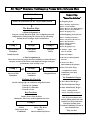
Reminder: Here are the six sequential steps we believe should be part of an effective
handicapping process:
Step 1) From the full field of horses, isolate all horses having a legitimate chance to
finish in the top four finish positions. (Must include the favorite)
Step 2) Isolate the top 3 or 4 candidates to win the race. (Must include the favorite)
Step 3) Classify the favorite as legitimate, vulnerable or false.
Step 4) Identify the two non-favorite horses most likely to beat the favorite.
Step 5) Identify a non-favorite Key Horse.
Step 6) Make final handicapping decisions.
For Non-ALL-Ways Users
Even if you do not currently use ALL-Ways software, you will still gain helpful insights
from this Handicapping Process Series. A number of ALL-Ways handicapping factors
are used in this article to illustrate the handicapping process concepts that are
discussed. These concepts “travel well” and can be used effectively with handicapping
information from other sources, such as the BRIS Ultimate Past Performances. If you do
want to try ALL-Ways software as you follow this Handicapping Process Series of
articles, please see the box near the end of this article for how to do so.
Part 2: The “Keystone” of the Process
Part 1 of this series covered Steps 1 and 2 above. As promised, we are now going to
cover Step 2 in more depth and we will present a simple way to classify the favorite as
called for in Step 3.
We consider Step 2 of the handicapping process in which we isolate the top 3 or 4
candidates to win the race, always including the favorite, to be the Keystone of the