1
6
ESO-MIDAS Courier, Vol. 4, No. 1, October 1994
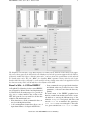
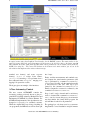
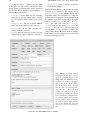
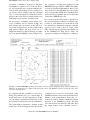
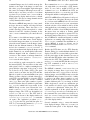
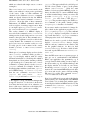
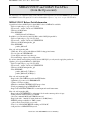
A typical session using the Graphical User Interface for the IRSPEC context. The main window in the
upper left corner allows the general parameters of the context to be filled in: object , sky frame, standard
star, standard sky frame, dark frame and flat frame. These parameters can be loaded (saved) from (to)
ASCII files using the “File” menu. The buttons at the bottom in the main window give access to the
sub-windows that implement the various reduction steps.
standard star frame(s) and create response
frame(s); object to reduce object frames;
extract for extracting a 1-D spectrum from a
flux calibrated frame; merge for merging overlapping 1-D spectra into a table.
The figure gives an example of the interfaces.
A New Astrometry Context
The new context ASTROMET contains the
astrometry package previously known as the program POS1 originally written by Richard West and
implemented in MIDAS by Olivier Hainaut. For
the MIDAS implementation the algorithm was not
changed as it proved to be extremely accurate.
While the original POS1 was doing everything in
one programme, the MIDAS version has been split
into 3 steps.
Firstly, read the measurements and standard stars,
and compute the transformation parameters (this
step is performed by command ASTROMETRY/
TRANSFORM. Secondly, edit the standard star table
to remove/restore some stars. This step is performed by the command ASTROMETRY/EDIT.
Finally, compute the converted coordinates by the
command ASTROMETRY/COMPUTE.
Steps 1 and 2 can be iterated until a satisfactory
result is obtained.The command ASTROMETRY/
POS1 can also execute this process in an iterative
way that mimics the former POS1 program; the
user will then be asked for all parameters.
The package has only been tested on system running SunOS. Correct installation and performance
Newsletter of the ESO-MIDAS Users’ Community