1
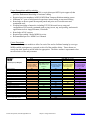
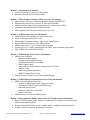
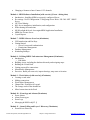
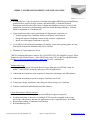
6) Understand the evolution of the physical network and its interface and influence on the structured cabling system, including the OSI Model and LAN topologies, especially Ethernet 7) Understand theory, electrical characteristics, construction, termination of copper systems including Category 6 / Class E and Category 6 Augmented / Class EA 8) Understand theory, optical characteristics, construction, and termination of fiber systems 9) Train proper design, installation, documentation, and testing procedures including bend radii of various media, separation from power or hazardous sources, cable pull limits and other pull guidelines, working with fire stops, and proper labeling per the 606 standard Channels, segments, patch panels, cross-connect patching field, media options, wiremap Course Prerequisites and Pre-activities Knowledge and use of a Level III structured cabling tester and termination tools Required pre-reading: Copper Troubleshooting Handbook, Fiber Testing Best Practices, Fiber Troubleshooting Handbook, MPN Business Partner Overview Recommended preview: Molex INSIGHT Overview, Molex MIIM Overview Course Description The course has separate modules to allow for easier flow. Times shown are actual class time; breaks would be added as appropriate. The below outline is representative but not all inclusive of the subject matter: Module 0 - Introduction (15 minutes) Course Groundrules, Objectives, and Agenda Participant Introductions and Expectations Module 1 - Molex Premise Networks (MPN) Overview (45 minutes) Improving the efficiency of infrastructure deployments with INSIGHT Integrating the physical layer into the IT Network with MIIM Outdoor wireless connectivity with Canobeam Free Space Optics (FSO) Advantages and differentiators of MPN Solutions MPN Integrated Service Desk stands ready to serve you Module 2 – Structured Cabling Theory (3 hours) OSI model Architectural considerations (typical channel, cross-connect and inter-connect topologies) Structured cabling applications and future-proofing o Gigabit and 10Gigabit Ethernet overview, applications, benefits, and challenges o Future applications (40Gigabit, 100Gigabit) Installation considerations (pathways, trays, conduits, grounding, cable size) and options (Open Office Cabling, Multi User Telecommunication Outlet, Consolidation Point) Copper media: cabling construction, category and class, twisted pair terminology, wiremap © Molex Incorporated, 2010 All Rights Reserved Subject to change without notice [email protected]