1
US 20040122847A1
(19) United States
(12) Patent Application Publication (10) Pub. No.: US 2004/0122847 A1
Rodgers
(43) Pub. Date:
Jun. 24, 2004
(54) METHOD AND SOFTWARE FOR
PRECLUDING UNSOLICITED EMAIL
MESSAGES
(76) Inventor: John B. Rodgers, Winnetka, IL (US)
Correspondence Address:
King & Jovanovic, PLC
170 College Avenue
Publication Classi?cation
(51)
Int. Cl? ................................................... .. G06F 17/00
(52)
Us. 01. ............................................................ ..707/102
(57)
ABSTRACT
A method and associated computer software product for
minimizing the receipt of unsolicited email messages. The
method comprises the steps of receiving an email message
from a sender, identifying the email message as comprising
SUITE 230
HOLLAND, MI 49423 (US)
an unsolicited email message, and generating at least one
reply email message, Wherein the reply email message
(21) Appl. No.:
10/324,909
(22) Filed:
Dec. 20, 2002
comprises a “bounce bac ” email message, to, in turn,
facilitate an identi?cation of the email address to Which the
unsolicited email Was sent as being an invalid email address.
106
Network (LAN,
WAN, Internet, Etc.
100
108
10
110
Patent Application Publication
Jun. 24, 2004
US 2004/0122847 A1
106
108
2
2
“H1
26"
F‘
as
%5
53:3
@5
s2LL
o
“
23
O
H
100
Jun. 24, 2004
US 2004/0122847 A1
METHOD AND SOFTWARE FOR PRECLUDING
UNSOLICITED EMAIL MESSAGES
BACKGROUND OF THE INVENTION
[0001]
1. Field of the Invention
[0002]
The present invention relates in general to email
systems, and more particularly to a method and associated
softWare for precluding and minimizing unsolicited email
messages.
unsolicited email messages. In one embodiment, the step of
requiring further comprises the step of requiring user manual
identi?cation only if the sender is not one of the senders of
unsolicited email messages identi?ed in the database of
senders of unsolicited email messages.
[0010]
In one embodiment of the invention, the step of
identifying comprises the steps of: comparing the sender of
the email message With a database of senders of unsolicited
email; and determining if the sender of the email message
corresponds to one of the senders on the database of senders
[0003] 2. Background Art
of unsolicited email.
[0004]
[0011] In one such embodiment, the database used in the
step of comparing is maintained at a second computing
device.
As the use of email increases, and as the costs
associated With internet service providers decreases, the use
of email as a means for advertising is becoming increasingly
Widespread. It is not uncommon for an individual to receive
ten to ?fteen unsolicited advertisements via an email mes
sage for every one useful or desired email message. In
addition, as the transmission of unsolicited email messages
increases, the use of more sophisticated methods (such as the
purchasing of valid emails, etc.) becomes more prevalent.
[0005] Certain softWare systems have been developed to
minimiZe the receipt of unsolicited email messages. For
eXample, certain email programs (i.e., Microsoft Outlook)
include ?lters Which can be set by the user so that What has
been identi?ed by the user as “junk” email is automatically
moved to the deleted items folder upon receipt. Other
programs utiliZe similar ?lters at, for eXample, remote
servers, to ?lter email prior to retransmission to the end user.
While these systems have alleviated some of the irritation
and discomfort relative to unsolicited email, these systems
generally only react to the current and sent email messages
and do not minimiZe the transmission of future unsolicited
email messages.
[0006] Accordingly, it is an object of the present invention
to provide a system and softWare that minimiZes the trans
mission of unsolicited email.
[0007]
This object, as Well as other objects shall become
apparent in light of the speci?cation and claims attached
[0012] In one embodiment, the step of generating com
prises the step of generating a plurality of “bounce back”
email messages. Preferably, the computer program instruc
tion comprises a plug-in to an email receiving softWare
product.
BRIEF DESCRIPTION OF THE DRAWINGS
[0013] The invention Will noW be described With reference
to the draWings Wherein:
[0014]
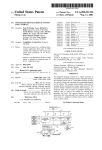
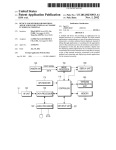
FIG. 1 of the draWings is a schematic representa
tion of a netWork of computers.
DETAILED DESCRIPTION OF THE
INVENTION
[0015] While this invention is susceptible of embodiment
in many different forms, there is shoWn in the draWings and
Will be described in detail, a speci?c embodiment With the
understanding that the present disclosure is to be considered
as an eXempli?cation of the principles of the invention and
is not intended to limit the invention to the embodiment
illustrated.
SUMMARY OF THE INVENTION
[0016] Referring noW to the draWings, and to FIG. 1 in
particular, softWare 10 Which is used to implement the
method is shoWn as being associated With computer 100.
Computer 100 may comprise any number of different sys
[0008] The invention comprises a computer program
product for minimiZing the receipt of unsolicited email
tems (i.e., PC, PPC, Mac, Palm, etc.) incorporating a variety
of different operating systems (i.e., MS WindoWs 98, 2000,
hereto.
messages. The computer program product comprises a com
XP, Mac OS 9, X, Palm OS, PPC, Linux etc.). Each such
puter data storage device and computer program instruc
computer generally includes a computer data storage device
(i.e., internal memory, external memory, hard drive, CD
ROM, etc), a processor, and, input and output devices.
tions. The computer program instructions are recorded on
the computer data storage device and are eXecutable by a
computer processor. The computer program instructions are
SoftWare 10 may be a standalone softWare package, or may
capable of performing the steps of: receiving an email
be a plug-in that is incorporated Within other eXisting
softWare on computer 100 (i.e., a plug-in for MS Outlook,
message from a sender; identifying the email message as
comprising an unsolicited email message; and generating at
least one reply email message, Wherein the reply email
message comprises a “bounce back” email message, to, in
turn, facilitate an identi?cation of the email address to Which
the unsolicited email Was sent as being an invalid email
address.
Eudora, Entourage, etc.).
[0017] Computer 100 is connected to an outside mail
server 104 through various different connections (i.e., dial
up, DSL, T1, T3, WLAN, LAN, etc.) either directly, or
through a number of intermediate servers and computers.
sage. Preferably, the step of requiring further comprises the
Computer 100 is likeWise connected to email compiling
server 106, unsolicited email generating and sending server
108 and valid email address maintaining server 110. Again,
computer 100 may be connected directly to such other
servers, or may be connected through any number of inter
step of adding the sender to a database of senders of
mediate servers and computers.
[0009] In a preferred embodiment, the step of identifying
comprises the step of requiring manual user identi?cation of
the email message as comprising an unsolicited email mes
Jun. 24, 2004
US 2004/0122847 A1
email messages as they are received by computer 100. Upon
[0018] As Will be explained, outside mail server 104
comprises a computer through Which computer 100 receives
receipt of an email from an address Which corresponds to a
email messages directed to a particular mail address. Email
suspected unsolicited email originating address, While the
compiling server 106 compiles various lists of different
addresses from Which unsolicited email is generated and
message Was received, the softWare nevertheless generates
at least one “bounce back” type message back to the sender
sent, as Well as lists associated With different addresses
from Which the unsolicited email Was received so that the
Which correspond to the sending address of unsolicited
email. Unsolicited email generating and sending server 108
sender believes the email address is not valid. The message
generates and sends unsolicited emails to email addresses
Which are compiled and maintained by valid email address
maintaining server 110.
[0019] Without the use of the present invention, the gen
eral operation of the system is such that the valid email
address maintaining server 110 generates, compiles and
maintains a listing of valid email addresses. The operator of
server 110 sells the generated lists of valid email addresses
may additionally deleted from computer 100.
[0023] As the “bounce back” message reaches unsolicited
email generating server 108, the email generating server 108
identi?es the “bounce back” message and identi?es the
email address in the “bounce back” message as being an
“invalid” email message. As a result, email generating server
108 may remove the email address from the list of valid
email addresses, and in turn, such an indication is eventually
transmitted to server 110. As such, as a result of the “bounce
to the operators of unsolicited email server 108. In turn,
unsolicited email server 108 generates email advertisements
and sends the advertisements to each of the valid addresses
Which Were provided by server 110. The messages are
transmitted and received by the end user on his or her
back” message generated by computer 100 upon receipt of
computer via an email retrieval program (i.e., Outlook,
of computer 100.
Outlook Express, Eudora, Netscape, Opera, etc.). The user is
[0024]
then faced With receiving and generally deleting the unso
licited email message.
[0020] From time to time, a message that Was sent to What
Was presumed to be a valid email address is unable to reach
the destination address for a variety of reasons (i.e, the
address is invalid, the server no longer eXists, etc.). In such
an instance, a message is transmitted back to unsolicited
email server 108 identifying that the unsolicited email
message Was unable to be sent to the desired recipient. This
is commonly knoWn as a message that has “bounced back.”
It is not uncommon for a certain percentage of the messages
sent by unsolicited email server 108 to “bounce back.”
Generally, the server keeps track of the email addresses
an unsolicited email (even though the message Was, in fact,
received), the email address is removed from the unsolicited
email generating server and future unsolicited email gener
ated by server 108 is not sent to the email address of the user
In one variation of the system, the softWare on
computer 100 may compile its oWn database of suspected
unsolicited email generating servers and corresponding
addresses. The list may be compiled manually by a user. For
eXample, the softWare may provide a radio button, or other
indicator Which the user “clicks” or activates upon receipt of
an unsolicited email. Upon the activation of the indicator,
the system generates a return “bounce back” message and
further adds the sender from Which the unsolicited email Was
sent to a real-time database. Such a manual addition is only
required one time. After the addition to the database, future
received emails are automatically handled by the softWare.
[0025]
The foregoing variation may be used instead of the
Which “bounced back” so that the system does not send
server 106 identi?ed above, or may be used in conjunction
With the remote server 106. Speci?cally, When used in
future messages to the apparently invalid email address.
From time to time, server 108 and/or server 110 update
conjunction With server 106, as the user identi?es a “new”
“valid” email addresses by adding neWly uncovered
sender as a sender of unsolicited email, computer 100 can
send a message to server 106 providing information to
server 106 as to the sender for addition to the database of the
addresses, and by removing addresses Which appear to be
invalid (due to “bounce back” messages).
[0021] With the present system, the softWare maintained
by computer 100 in cooperation With compiling server 106
provides a method of minimiZing the receipt of unsolicited
email. In particular, compiling server 106, through various
different methods and techniques, develops and maintains a
number of databases corresponding to servers and email
addresses Which are used to send unsolicited emails. One
method of obtaining such information is to create a plurality
of different addresses in an attempt to receive unsolicited
email, and, to track the receipt of such unsolicited email
relative to the sending server and sending address. Over
time, lists can be compiled. Of course, other methods of
building such databases are contemplated, and the invention
is not limited to any particular type of system by Which such
lists are generated and maintained.
[0022]
The softWare on computer 100 can connect to
compiling server 106 so as to receive an identi?cation of the
different server addresses and email addresses from Which
suspected unsolicited email is sent. Armed With the unso
licited email originating addresses, the computer monitors
sender of unsolicited email and manually identi?es the
sender.
[0026]
In another variation of the system, the system may
send a number of “bounce back” messages upon receipt of
an unsolicited email message. Depending on the con?gura
tion of the unsolicited email servers 108, more than one
“bounce back” message is required to be received as a result
of a failed transmission of an unsolicited email prior to
deletion of the email address from the listing of valid email
addresses. To overcome such server variations, softWare 10
may be con?gured to respond to an unsolicited email With a
plurality of “bounce back” messages.
[0027] In yet another variation of the system, softWare 10
may be augmented or replaced With similar softWare located
on the mail server itself. As such, the mail server may
respond to What are perceived to be unsolicited email
messages at the mail server level, instead of ?rst transmitting
the message to computer 100 and providing a response from
computer 100. Such a variation may minimiZe email traf?c
associated With the particular mail server, and operation at
the server level further minimiZes the inconvenience of
Jun. 24, 2004
US 2004/0122847 A1
is, in such an instance, unaWare of the receipt of unsolicited
6. The computer program product of claim 5 Wherein the
database used in the step of comparing is maintained at a
email at the mail server Which is directed to the end user.
second computing device.
unsolicited email to the end user inasmuch as the end user
[0028] The foregoing description merely explains and
illustrates the invention and the invention is not limited
thereto eXcept insofar as the appended claims are so limited,
as those skilled in the art Who have the disclosure before
them Will be able to make modi?cations Without departing
from the scope of the invention.
What is claimed is:
7. The computer program product of claim 1 Wherein the
step of generating comprises the step of generating a plu
rality of “bounce back” email messages.
8. The computer program product of claim 1 Wherein the
computer program instruction comprises a plug-in to an
email receiving softWare product.
9. A method for minimiZing the receipt of unsolicited
email messages comprising the steps of:
1. Acomputer program product for minimiZing the receipt
of unsolicited email messages comprising:
a computer data storage device; and
computer program instructions, recorded on the computer
data storage device, eXecutable by a computer proces
sor, for performing the steps of:
receiving an email message from a sender;
identifying the email message as comprising an unso
licited email message; and
generating at least one reply email message, Wherein
the reply email message comprises a “bounce back”
email message, to, in turn, facilitate an identi?cation
of the email address to Which the unsolicited email
Was sent as being an invalid email address.
2. The computer program product of claim 1 Wherein the
step of identifying comprises the step of requiring user
identi?cation of the email message as comprising an unso
licited email message.
3. The computer program product of claim 2 Wherein the
step of requiring further comprises the step of adding the
sender to a database of senders of unsolicited email mes
sages.
4. The computer program product of claim 3 Wherein the
step of requiring further comprises the step of requiring user
identi?cation only if the sender is not one of the senders of
unsolicited email messages identi?ed in the database of
senders of unsolicited email messages.
5. The computer program product of claim 1 Wherein the
step of identifying comprises the steps of:
comparing the sender of the email message With a data
base of senders of unsolicited email; and
determining if the sender of the email message corre
sponds to one of the senders on the database of senders
of unsolicited email.
receiving an email message from a sender;
identifying the email message as comprising an unsolic
ited email message; and
generating at least one reply email message, Wherein the
reply email message comprises a “bounce back” email
message, to, in turn, facilitate an identi?cation of the
email address to Which the unsolicited email Was sent
as being an invalid email address.
10. The method of claim 1 Wherein the step of identifying
comprises the step of requiring user identi?cation of the
email message as comprising an unsolicited email message.
11. The method of claim 10 Wherein the step of requiring
further comprises the step of adding the sender to a database
of senders of unsolicited email messages.
12. The method of claim 11 Wherein the step of requiring
further comprises the step of requiring user identi?cation
only if the sender is not one of the senders of unsolicited
email messages identi?ed in the database of senders of
unsolicited email messages.
13. The method of claim 9 Wherein the step of identifying
comprises the steps of:
comparing the sender of the email message With a data
base of senders of unsolicited email; and
determining if the sender of the email message corre
sponds to one of the senders on the database of senders
of unsolicited email.
14. The method of claim 13 Wherein the database used in
the step of comparing is maintained at a second computing
device.
15. The method of claim 9 Wherein the step of generating
comprises the step of generating a plurality of “bounce
back” email messages.