1
1-2
ControlNet System Overview
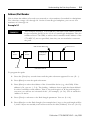
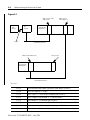
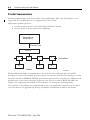
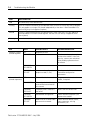
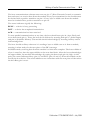
The NUT is divided into three parts:
Scheduled—every node is guaranteed one opportunity to transmit
Unscheduled—remaining time is divided among all nodes on a round-robin basis. This
rotation of access repeats until the time allotted to the unscheduled portion is used up. The
amount of time available for the unscheduled portion is determined by the traffic load of the
scheduled portion.
Maintenance—the moderator node (the one with the lowest address) transmits information
to keep the other nodes synchronized in time
boundary moves depending
on scheduled traffic load
Start
• reserved for
scheduled traffic
• each device transmits
only once
• unscheduled traffic
• reserved for
network maintenance
31446-M
The part of the interval in which any given data will be sent depends on its priority,
of which there are two levels:
Scheduled Data—time-critical information that must be sent at a fixed and repetitive rate is
sent exclusively in the scheduled portion of the NUT.
Unscheduled Data—information that does not have strict time constraints. It is sent only if
no data is waiting to be sent at a higher priority.
The 1770-KFC15 module supports non-time-critical messaging and programming
data, and sends only unscheduled data.
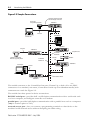
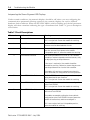
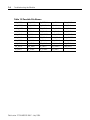
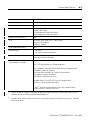
Understanding the ControlNet Architecture
The ControlNet cable system provides the flexibility to design a communication
network for your application. To take advantage of this flexibility, you should
spend enough time planning how to install your cable system before assembling
any of the hardware. Consult the ControlNet Cable System Planning and Installation
Manual, CNET-IN002, for a full description of the cable system and detailed installation
instructions.
Publication 1770-UM520C-EN-P - July 2004