1
ELITE | User Manual
ACNE VULGARIS
Acne (acne vulgaris) is an inflammatory disease of the pilosebaceous unit, which consists of hair and
the sebaceous gland. It appears on the face and upper part of the thorax, regions where the sebaceous gland is more active. Comedones (blackheads), papules and pustules (pimples) and nodules
(internal pimples).
There are many factors responsible for acne. One of them is the individual predisposition, which may
or may not be inherited from the parents. With the production of sexual hormones, especially male
hormones, the sebaceous gland increases its production. This sebum binds with keratin in the skin
hair orifice forming a compact mass, the comedone, which is sometimes invisible to the naked eye.
Some bacteria that inhabit the skin, especially Propionibacterium acnes, multiply due to the abundant supply of sebum, causing an inflammatory response that leads to the formation of pimples and
acne nodules.
As a normal part of the metabolism process, the bacteria Propionibacterium acnes produces porphyrin, especially photoporphyrin and photosensitive coporphyrin Photosensitivity is a property of the
molecules that absorb energy in the form of light in a certain region of the spectrum. This energy is
used to cause chemical reactions in cells and tissues.
Several treatments are proposed to prevent this disease. The most conventional ones (soaps, gels
with exfoliating and drying substances and oral antibiotics) control the disease, but after its suspension there is a great chance of the symptoms returning.
Phototherapy with Low Power Laser is gaining an important space among these treatments because
it does not cause side effects.
SPOTS AND DARK CIRCLES
These compounds with smaller carbon chains have their energy (Light) absorption capacity reduced
and consequently have their capacity to reflect Light increased, creating the esthetic effect of whitening. It is important to emphasize that the method is biological, of known physiology, uses light
within the visible spectrum and does not cause loss of substance or exfoliation of the region There is
no permanent change of the tissue structure and the presence of heat is not enough to cause burns
or any discomfort.
EXPRESSION MARKS
As the region chosen receives the incidence of Blue Light (470 nm), the production of free radicals is
stimulated (reactive oxygen species) from melanin compounds.
These reactive Oxygen species have affinity for the Hydrogen molecule present in water. Therefore,
the free Oxygen reacts with Hydrogen from the water to produce hydrolysis (water break) and consequent formation of free ions that will adhere to the wall of the cytoplasmic membrane of tissues.
These free ions will notably bond with Oxygen molecules and stimulate the presence of water in the
region, creating a change in the surface tension of the skin with esthetic effect of tissue expansion,
reducing eventual skin folds and expression wrinkles.
The expansion of the tissues by stimulation of the presence of water helps prevent agglutination of
pigments with the ability to absorb light, optimizing the whitening esthetic effect since the carbon
compounds will be more spaced, favoring the reflection of light with whitening effect. In another
way, the stimulation of the presence of water also favors the esthetic whitening effect since it is
known that substances solubilized in water absorb less light and reflect more.
PROGRAMMING THE NUMBER OF SESSIONS
6-8 sessions from the chosen protocol and one maintenance session every 60-90 days is recommended.
The skin has carbon molecules in its composition. These molecules are bound together sequentially in
bivalent bonds with Hydrogen molecules to form long spirals grouped according to electrical affinity.
The agglutination of these carbon structures form chromophores (energy absorbing substances) and
cause the esthetic aspect of darkening or spots in the region of higher incidence.
Despite the existence of chromophores sensitive to other wavelengths, the action of Blue Light is
directly related to the oxidation of porphyrins (wavelength of 415 nm); it is therefore considered a
non-melanin action.
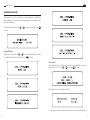
OPERATING INSTRUCTIONS
Installation
This unit has a full range power supply (90-240VAC). To turn the unit on, use the on/off switch located
on the back panel.
These extremely reactive substances remove electrons from the molecules of the Hydrogen bridges,
breaking the carbon conjugation and producing simple compounds (with smaller structures).
6
7