1
Speidels Braumeister
the pump is almost inaudible). During the brewing process, the pump switches off
automatically in manual operation for purposes of protection as soon as the
temperature exceeds 88°C.
10.4 Notes on the container lid
The lid assists in reaching the temperatures more quickly in the heating up phase. The
ventilation slits avoid pressure forming in the vessel and allow for light air circulation.
Higher water temperatures cause condensation to occur on the underside of the lid.
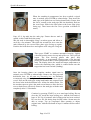
When lifting the lid, ensure that you hold the lid rim over the vessel opening (at an
angle) so that the condensation can run back into the vessel.
10.5 Notes on hygiene
Hygiene is of top priority when brewing beer. Especially in the cold process area
(while cooling off, when decanting and while fermenting), the beer and the wort are
susceptible to infection, which causes the beer to spoil, meaning that all work could be
in vain. For this reason, take particular care in ensuring that all containers
(fermentation vessel, bottles) and work materials (spoon, taps, seals) are meticulously
clean. Sulphuric acid or a similar substance is particularly suitable for disinfecting
these containers and objects, and can be purchased at specialist winery shops and
commercial outlets that specialise in hobby brewing equipment. Mix and dilute the
powder with water and push this solution into the fermentation lock for disinfection of
the fermentation vessel, all other equipment and even your hands. We recommend
preparing a bucket with sulphuric acid, for example, and using this solution for
disinfecting your hands and all equipment during the brewing process and prior to
decanting. Fill the fermentation vessel with a little sulphuric acid and leave to stand
for a few hours. Shake the vessel several times at intervals. Empty it and allow to dripdry prior to use. Rinsing the vessel with water is not necessary. A few drops or a little
residue of the sulphuric acid in the beer is completely harmless. Storage and
maturation vessels are disinfected in the same way as fermentation vessels. Where the
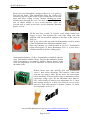
beer is filled into flip-top bottles for maturation after fermenting, disinfect the bottles
by heating in the oven. Remove rubber seals and disinfect by boiling in hot water or
bathing in sulphuric acid. Heat the bottles in the oven until they reach a temperature of
approx. 130°C. Then switch the oven off and allow the bottles to cool to room
temperature again. Cap using the disinfected seals. In this manner you can ensure that
the fermented beer is filled into meticulously clean bottles. The disinfection process
should be performed a few days before the end of maturation, to ensure that the filling
procedure can take place quickly and without rush.
Page 9 of 32