1
by Robert De Caux
Supervised by Robin Hirsch
September 2001
This report is submitted as part requirement for the MSc Degree in
Computer Science at University College London. It is substantially the
result of my own work except where explicitly indicated in the text.
The report will be distributed to the internal and external examiners, but
thereafter may not be copied or distributed except with permission from
the author.
i
Robert De Caux – MSc CS
Abstract
Using Genetic Programming to Evolve
Strategies for the Iterated Prisoner’s Dilemma
by Robert De Caux
Supervised by Robin Hirsch
September 2001
Abstract
The technique of Genetic Programming (GP) uses Darwinian principles of natural
selection to evolve simple programs with the aim of finding better or fitter solutions to
a problem. Based on the technique of Genetic Algorithms (GA), a population of
potential solutions stored in tree form are evaluated against a fitness function. The
fittest ones are then modified by a genetic operation, and used to form the next
generation. This process is repeated until certain criteria have been met. This could
be an ultimate solution, or a certain number of generations having been evolved.
Genetic Programming is a fast developing field with potential uses in medicine,
finance and artificial intelligence. This project attempts to use the technique to evolve
strategies for the game of Prisoner’s Dilemma. Although a simple game, the range of
possible strategies when the game is iterated is vast, but what makes it particularly
interesting is the absence of an ultimate strategy and the possibility of mutual benefit
by cooperation.
A system was created to allow strategies to be evolved by either playing against fixed
opponents or against each other (coevolution). The strategies are stored as trees, with
GP used to form the next generation. The main advantage of GP over GA is that the
trees do not need to be of a fixed size, so strategies can be developed which utilise the
entire game history as opposed to just the last few moves.
This implementation has advantages over previous investigations, as information
about which go is being played can be used, thus allowing cleverer strategies. Work
has also been conducted into a hunting phase, where strategies roam a two
dimensional grid to find a suitable opponent. By studying the history of potential
opponents and using GA, evidence emerged of an increase in cooperative behaviour
as strategies sought out suitable opponents, demonstrating parallels with biological
models of population dynamics.
The system has been developed to allow a user to alter important parameters, select
the evolution method and seed the population with pre-defined strategies by means of
a graphical user interface.
ii
Robert De Caux – MSc CS
Table of contents
Table of Contents
1 Introduction.......................................................................................1
1.1 Aims ..................................................................................................... 1
1.2 Specific objectives ................................................................................ 1
1.3 Two player games and strategies........................................................... 1
1.4 Choice of Game .................................................................................... 2
1.5 Why evolve strategies? ......................................................................... 2
1.6 Report outline ....................................................................................... 3
2 Background .......................................................................................4
2.1 Game Theory ........................................................................................ 4
2.1.1 Background............................................................................................. 4
2.1.2 Two-person zero sum games ................................................................... 5
2.1.3 Two-person non-zero sum non-cooperative games .................................. 6
2.2 Population Dynamics ............................................................................ 7
2.2.1
2.2.2
2.2.3
2.2.4
2.2.5
The Decline of the Rational Player.......................................................... 7
Answers from Nature .............................................................................. 7
Evolutionary Stability ............................................................................. 7
Nash Equilibria ....................................................................................... 8
Evolutionary Stable Strategies................................................................. 8
2.3 Search Techniques ................................................................................ 9
2.3.1 Overview ................................................................................................ 9
2.3.2 Genetic Algorithms ................................................................................. 9
2.3.3 Genetic Programming ............................................................................10
2.4 Details of Genetic Programming ........................................................... 11
2.4.1 Steps to solving a problem with GP..........................................................11
2.4.1.1
2.4.1.2
2.4.1.3
2.4.1.4
Terminals and Functions .............................................................................. 11
Fitness Function ........................................................................................... 11
Control Parameters ....................................................................................... 11
Termination criteria ...................................................................................... 12
2.4.2 Genetic Operations...................................................................................12
2.4.3 Fitness Evaluation..................................................................................13
2.4.3.1 Absolute and Relative Fitness ...................................................................... 13
2.4.3.2 Pareto scoring ............................................................................................... 13
2.4.4 Selection and Breeding...........................................................................14
2.4.4.1
2.4.4.2
2.4.4.3
2.4.4.4
2.4.4.5
The Problem of Premature Convergence...................................................... 14
Probabilistic selection................................................................................... 14
Tournament Selection................................................................................... 14
Steady state and Generational GP ................................................................ 14
Demes........................................................................................................... 14
2.4.5 Strongly Typed Genetic Programs..........................................................15
2.5 Prisoner’s Dilemma ............................................................................ 15
2.5.1 Basic Game Description.........................................................................15
2.5.2 The Payoff Matrix..................................................................................15
2.5.3 An Evolutionary Stable Strategy ............................................................16
iii
Robert De Caux – MSc CS
2.5.4
2.5.5
2.5.6
2.5.7
2.5.8
Table of contents
The Iterated Prisoner’s Dilemma ............................................................16
Simple Strategies for IPD.......................................................................17
Lack of an Evolutionary Stable Strategy.................................................17
Stochastic Strategies...............................................................................18
Spatialised Iterated Prisoner’s Dilemma .................................................19
3 Analysis............................................................................................20
3.1 Requirements ...................................................................................... 20
3.1.1 Functional requiremnts...........................................................................20
3.1.2 Non-functional requirements ..................................................................22
3.2 Use Case Diagrams ............................................................................. 22
3.2.1 GP engine ..............................................................................................23
3.2.2 Whole system.........................................................................................23
4 Design ..............................................................................................24
4.1 Choice of Programming Language...................................................... 24
4.2 Choice of GP engine ........................................................................... 24
4.3 Engine details ..................................................................................... 25
4.3.1 Important classes....................................................................................25
4.3.2 Realisation of use cases..........................................................................25
4.3.3 Classes to be extended or implemented ..................................................25
4.4 Design of the GP................................................................................. 26
4.4.1
4.4.2
4.4.3
4.4.4
4.4.5
Requirements .........................................................................................26
Choice of Terminals and Functions ........................................................26
Examples of Common Strategies as Trees ..............................................27
Choice of Fitness function......................................................................28
Control Parameters.................................................................................28
4.4.5.1
4.4.5.2
4.4.5.3
4.4.5.4
4.4.5.5
4.4.5.6
4.4.5.7
4.4.5.8
Size of Population......................................................................................... 28
Number of generations ................................................................................. 28
Tournament Size........................................................................................... 29
Probability of mutation................................................................................. 29
Probability of reproduction........................................................................... 29
Chromosome size ......................................................................................... 29
Evolution type .............................................................................................. 29
Other parameters .......................................................................................... 30
4.4.6 Termination criteria................................................................................30
4.5 Design of Computerised Iterated Prisoner’s Dilemma......................... 30
4.5.1 Requirements and package gpsys.prisoner..............................................30
4.5.2 Specific classes for playing the game .....................................................30
4.5.3 Hunting for an opponent.........................................................................31
4.6 Design of Hunting Mechanism............................................................ 31
4.6.1
4.6.2.
4.6.3
4.6.4
4.6.5
Requirements and package gpsys.grid ....................................................31
Criteria for finding an opponent .............................................................31
An algorithm for deciding on an opponent .............................................32
Designing classes ...................................................................................32
Creating and inheriting huntCriteria .......................................................33
4.7 Design of the User Interface................................................................ 34
iv
Robert De Caux – MSc CS
4.7.1
4.7.2.
4.7.3
4.7.4
4.8
Table of contents
Editable options for the user...................................................................34
Prevention of inconsistent parameters ....................................................34
Displaying Information ..........................................................................34
Graphing results.....................................................................................34
Incorporating Coevolution ............................................................... 34
4.8.1
4.8.2
4.8.3
4.8.4
Standard Coevolution.............................................................................34
Hunting Coevolution..............................................................................35
Seeding ..................................................................................................35
Fitness evaluation...................................................................................35
4.9 Extending the engine........................................................................... 36
4.9.1 Additions/changes to original package gpsys..........................................36
4.9.1.1 New classes .................................................................................................. 36
4.9.1.2 New/edited constructors ............................................................................... 36
4.9.1.3 Other changes ............................................................................................... 36
4.9.2 Extensions to engine ..............................................................................36
4.10 Final Class Diagrams ........................................................................ 37
5 Implementation .................................................................................38
5.1 Problems encountered ......................................................................... 38
5.1.1
5.1.2
5.1.3
5.1.4
Lack of diversity ....................................................................................38
Hunting bias...........................................................................................38
Error in Crossover type checking ...........................................................39
Random numbers ...................................................................................39
5.2 Other program changes ....................................................................... 39
5.2.1 Speeding up hunting...............................................................................39
5.2.2 Adding Dummy function........................................................................39
5.3 Examining important methods ............................................................ 40
5.3.1
5.3.2
5.3.3
5.3.5
5.3.6
Editing parameters .................................................................................40
Implementing the hunt ...........................................................................40
Performing evolution .............................................................................41
Playing a game between two Individuals ................................................42
Sequence Diagrams................................................................................43
6 Testing .............................................................................................44
6.1 Testing Interface ................................................................................. 44
6.1.1 Testing illegal selections ........................................................................44
6.1.2 Testing accept button .............................................................................44
6.2 Testing Hunting .................................................................................. 44
6.3 Testing Crossover ............................................................................... 44
6.4 Testing Mutation and Reproduction .................................................... 45
6.5 Testing Chromosome Functions.......................................................... 45
6.6 Testing seeding ................................................................................... 45
6.7 Testing game....................................................................................... 45
7 Results..............................................................................................46
v
Robert De Caux – MSc CS
Table of contents
7.1 Playing fixed opponent(s) ................................................................... 46
7.1.1
7.1.2
7.1.3
7.1.4
7.1.5
7.1.6
7.1.7
Vs. AllC Player ......................................................................................46
Vs. AllD Player......................................................................................46
Vs. Tit-For-Tat Player ............................................................................47
Vs. Tit-For-2-Tat Player.........................................................................47
Vs. Cooperative and Tit-For-Tat Players ................................................48
Vs. Cooperative, Backstabbing and Tit-For-Tat Players .........................49
Vs. All players .......................................................................................50
7.2 Standard Coevolution.......................................................................... 51
7.2.1 Without functions Go, EQ and If............................................................51
7.2.2 With all functions except Go ..................................................................52
7.2.3 With all functions...................................................................................52
7.3
Hunting coevolution......................................................................... 54
7.3.1 Setting the threshold for playability........................................................54
7.3.2 Inducement of cooperation .....................................................................55
7.4 Results summary................................................................................. 57
8 Conclusions and Evaluation ...........................................................58
8.1 Conclusions ........................................................................................ 58
8.2 Success of system ............................................................................... 59
8.3 Extending the project .......................................................................... 60
A User Manual ...................................................................................61
A.1 Running the Program ......................................................................... 61
A.2 The User Interface.............................................................................. 61
A.3 Changing the options ......................................................................... 62
A.3.1
A.3.2
A.3.3
A.3.4
A.3.5
A.3.6
GPParameters........................................................................................62
Chromosome Parameters.......................................................................62
Game Parameters ..................................................................................62
Hunt Parameters....................................................................................62
Coevolution/Opponent Setup.................................................................63
Seed Population ....................................................................................63
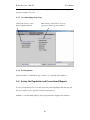
A.4 Saving the Population and Generational Reports ................................ 63
A.5 Displaying results of Evolution .......................................................... 64
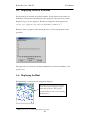
A.6 Displaying the Hunt ........................................................................... 64
B System Manual ...............................................................................65
B.1 System requirements .......................................................................... 65
B.2 Making changes ................................................................................. 65
B.2.1 Extracting the Code and Documentation................................................65
B.2.2 Javadoc .................................................................................................65
B.2.3 Compiling and Running the System.......................................................66
B.3
Extending or Adapting System .......................................................... 67
vi
Robert De Caux – MSc CS
Table of contents
C Closer examination of GP engine ..................................................68
C.1 Storing GP Parameters ....................................................................... 68
C.2 Population structure............................................................................ 68
C.3 Evaluation of an Individual ................................................................ 69
C.4 Creating new Population .................................................................... 70
C.5 Evolving Population ........................................................................... 71
C.6 Performing the Genetic Operations..................................................... 71
C.6.1 Reproduction:........................................................................................71
C.6.2 Mutation:...............................................................................................71
C.6.3 Crossover: .............................................................................................72
C.7 Giving feedback to user...................................................................... 72
C.8 Establishing Fitness............................................................................ 72
C.9 Class diagram..................................................................................... 73
D Class and Sequence Diagrams .......................................................74
D.1 Class diagrams ................................................................................... 74
D.1.1
D.1.2
D.1.3
D.1.4
D.1.5
D.1.6
D.1.7
Package gpsys.prisoner .........................................................................74
Interface between packages in setting up coevolution ............................75
Packages gpsys.primitives and gpsys.primitives.prisoner.......................75
Package gpsys.grid................................................................................76
Package gpsys.prisoner.gui....................................................................77
Package gpsys after extensions..............................................................78
Package structure ..................................................................................78
D.2 Sequence Diagrams............................................................................ 79
D.2.1 Evaluating an Individual........................................................................79
D.2.2 Creating a new Population.....................................................................79
D.2.3 Creating a new Hunt..............................................................................80
E Source Code ....................................................................................81
F Evolution Logs .............................................................................. 106
F.1 Testing genetic operations ................................................................ 106
F.1.1 Crossover.............................................................................................106
F.1.2 Mutation and Reproduction..................................................................106
F.2 Standard Coevolution ....................................................................... 106
F.3 Hunting Coevolution ........................................................................ 107
F.4 Function Set test ............................................................................... 108
F.5 Seeding Population ........................................................................... 109
G Bibliography – Books................................................................... 111
H Bibliography – Web links ............................................................ 112
vii
Robert De Caux – MSc CS
Table of contents
viii
Robert De Caux – MSc CS
Introduction
1 Introduction
1.1 Aims
The main aim of this project is to establish the strongest and most robust strategies for playing
the Iterated Prisoner’s Dilemma, and to determine what makes them effective.
As there is no definitive way to maximise the score against every type of opponent, the
strategies being sought are ones which perform best against a variety of other strategies, and
which maintain their place in an elitist population. These strategies should maintain a high
average score over a period of time. Investigations will also be conducted into the best ways
for playing one or a selection of fixed opponents, bearing in mind that the strategies
discovered may be opportunistic, rigid and exploitable by other strategies, but ideally suited
to this situation. The strategies will have access to which go is currently being played, which
is not the case for previous investigations combining Priosner’s Dilemma and Genetic
Programming, so this will hopefully yield some new results.
An additional aim is to study other means of strategies surviving in a competitive
environment, such as the effects of hunting for an opponent before a game takes place, based
on criteria established in previous games. This is a relatively unexplored area of research.
1.2 Specific objectives
-
To use the technique of genetic programming to discover which strategies are best
against given fixed opponents, and which can maintain a place within a population
(coevolution)
-
To establish how average and extremal scores will vary over time
-
To experiment with different evolutionary parameters
-
To develop a mechanism for strategies to hunt for suitable opponents using a genetic
algorithm
-
To discover whether this hunting can help a strategy to survive within a population
-
To develop a graphical user interface to implement all alterations to parameters which
the user may wish to change
1.3 Two player games and strategies
1
Robert De Caux – MSc CS
Introduction
Most two player games have some strategy available to players which will enable them to
improve their performance. In some cases, a definitive strategy can be found which a player
can use to guarantee victory. Games such as tic-tac-toe and connect4 fall into this category,
as one player can dictate the play so that their opponent has only limited options available on
each go, none of which will allow them to win. Of course there are some games in this
category, Chess being an example, in which the number of permutations are enormous, but
there is still a “best” way of playing. Such games are called two player zero sum games
(§2.1.2).
A more interesting type of game from the point of view of studying strategies is one where a
good move for one player is not necessarily a bad move for the other, thus incorporating both
competition and cooperation. Now there is no ultimate strategy which works best against
every type of player, as the effectiveness of any strategy is determined by the decision of the
opponent. The poker inspired quote that “you cannot bluff a bad player” highlights this, as a
clever bluff against an experienced player is an unnecessary waste of money against an
amateur with a good hand1. This type of game is known as two player non-zero sum.
(§2.1.3).
1.4 Choice of Game
The game of Iterated Prisoner’s Dilemma was chosen as it has simple rules and the choices
available to a player on any go are very limited, so strategies are relatively easy to understand.
It does offer a surprising degree of complexity however, with a plethora of different strategies
available, and most importantly it does not have a solution or “best” way of playing against
all opponents.
1.5 Why evolve strategies?
The benefit of using evolutionary techniques to evolve the strategies is that the trial and error
approach of evolution can produce effective strategies which may learn and adapt to
1
A bluff in Poker is a deliberately high bet placed to scare the opponent into thinking that a player’s
hand is stronger than is actually the case. An inexperienced player will only pay attention to the quality
of his own hand and not to how their opponent behaves, so will continue to play undaunted. An
experienced player may decide that their hand is not sufficiently good enough to play for such high
stakes, and concede the money for that hand.
2
Robert De Caux – MSc CS
Introduction
counteract the possible irrationality of opponents. There is little point in approaching the
problem from a purely rational viewpoint when the game in question means that a rational2
player may not score as well as an irrational player. The Darwinian quote “No instinct has
been produced for the exclusive good of other animals, but each animal takes advantage of the
instincts of others” suggests that the strategies that will evolve are the ones that can compete
best within their environment, even if they may not seem to be the most rational. This is
exactly what is required.
1.6 Report outline
2
•
Background: Details the fundamentals of game theory and population
dynamics, before discussing various search techniques for finding solutions,
with a heavy emphasis on Genetic Programming (GP). The game of
Prisoner’s Dilemma is then discussed in depth, including previous research.
•
Analysis:
Details the requirements for the system being built and for the
GP engine to be used.
•
Design:
Discusses the GP engine chosen, and how it can be extended to
incorporate the game of Prisoner’s Dilemma, with emphasis on setting up the
GP. Also details design decisions for the Graphical User Interface (GUI),
hunting mechanism and coevolution.
•
Implementation:
Discusses problems encountered whilst testing the
system and changes that were made. Also details how the use cases are
realised.
•
Testing:
•
Results:
Discusses the strategies that have evolved for playing fixed
opponents, during coevolution and with the inclusion of hunting, by
examination of graphs over a number of generations and generational reports.
•
Conclusions & Evaluation: Discusses what can be drawn from the results,
and how this relates to previous work and to nature, as well as how successful
the system is and how it can be extended.
Shows tests carried out to verify all of options implemented
A rational player is discussed in §2.1.1
3
Robert De Caux – MSc CS
Background
2 Background
2.1 Game Theory
2.1.1 Background
Game theory can be thought of as a mathematical approach to the study of conflict of interest,
and is generally attributed to von Neumann [7]
It describes a game as a set of situations with well specified outcomes, such that were they
offered to a player, it could be ascertained which choice he would make. The decision
making of players underpins the whole theory, and a player is termed rational if they make a
decision which will maximise the benefit to themselves.
A game is said to be normalised if it satisfies the following:
n players are required to make one choice from a set of choices, without knowledge of what
the other players are doing. These choices lead to a resulting outcome for each player. Both
players try to maximise the outcome for themselves
The two player version of a normalised game can be characterised by a matrix, termed the
payoff matrix, where the choices of both players give as the outcome the corresponding
matrix entry. As an example, suppose that a goalkeeper is facing a penalty from a striker, and
both can choose to go either left or right. If they both choose the same direction, the penalty
is saved and the score stays the same (both score 0). If they go in different directions
however, the ball goes into the net and the striker scores 1, while the keeper scores –1. The
payoff matrix for this situation is given below:
Goalkeeper
Striker
Left
Right
Left
0, 0
1, -1
Right
1, -1
0, 0
The entries indicate what each player scores. The number of the left is for the striker, the
other for the goalkeeper.
4
Robert De Caux – MSc CS
Background
A pure strategy can be thought of as a pre-conceived method for dealing with every
eventuality that may result throughout he game. If both players in a two player game have a
pure strategy, this dictates what they would do in every situation, so the game could be played
to a conclusion by some umpire with no further input from the players. These are also
sometimes referred to as deterministic strategies. An extreme example would be two players
playing connect4, with one always placing their pieces in the leftmost available column, and
the other placing theirs in the rightmost available column.
2.1.2 Two-person zero sum games
Suppose a game is in normalised form, and there is a payoff matrix defined. Each player will
have an order of preference for the set of outcomes available. Now if both players have the
same preferences, then there is no conflict of interest and the game becomes trivial.
At the opposite extreme, if for all outcomes there is either mutual indifference or one player
prefers one and the second player the other, then it is strictly competitive and referred to as a
zero sum game 3.
If both players are to choose one of their options without knowledge of the other player’s
choice, they will have a problem deciding, as in all likelihood the best choice that they can
make is dependent on the choice of their opponent. To escape from this potentially circular
argument, each player should seek to maximise their own security level, which is the worst
they can do by making any particular choice. If both players choose a strategy to do that, they
are effectively making the best choice to counter their opponent, i.e. if one player reveals their
choice first that maximises their own security level, the other player can do no better than to
choose to maximise their own security level4. Readers wishing a more detailed explanation of
the above should refer to [8, chap.4], but it can be formalised quite simply:
Suppose player one chooses strategy a1 from a0…an, and player two chooses b2 from b0…bn.
Then if the best outcome Oi,2 for player 1 is O1,2 and the best outcome O1,j for player two is
O1,2, i, j∈0..n, each player has maximised their own security level, and the pair of choices
3
Zero sum refers to the sum of the utilities for the two players, which is zero as the name suggests.
Utility is discussed in [8, chap.2]
4
One of the most important principles of game theory however is that it does not say what any player
should do. Although this decision may give the player the best guaranteed performance, they may be
able to improve on it with a different choice. Game theory simply states how to achieve certain
outcomes from given situations.
5
Robert De Caux – MSc CS
Background
(a1, b2) is an equilibrium pair, so called because neither player has incentive to change from
their decision and so it is repeatedly chosen. These equilibrium pairs may not be unique or
may not even exist for a particular matrix5
The minimax theorem, the central theorem of two-person zero-sum theory, states that there
exists a number v, so that player one has a strategy (maximin) guaranteeing at least a return of
v, and player two has a strategy (minimax) guaranteeing that player one can get at most v.
These strategies are in equilibrium, and any pair of strategies in equilibrium will give
maximin and minimax strategies for player one and player two respectively.
This result is basically an extension of the discussion above to take in any zero sum game (not
just ones with equilibrium pairs), but stipulates that players must be allowed mixed strategies
(where each strategy available to a player is given a probability of being chosen).
The solution to a zero sum game is the strategy derived from the minimax theorem, with v
being termed the value of the game. This will maximise the expected return for that player
which is the aim of the game.
2.1.3 Two-person non-zero sum non-cooperative games
A two-person non-zero sum game is such that if one player prefers choice x to y, then the
other does not necessarily prefer y to x. This introduces the element of agreement, and allows
benefit to be gained from cooperation. A non-cooperative game simply means that no
communication is allowed before a decision is taken, known as pre-play communication.
Unlike zero sum games, there is no solution. This is because the fundamental rules of zerosum games are violated. In particular, these rules no longer apply:
i)
if (x,y) and (x’, y’) are equilibrium pairs, then (x, y’) and (x’, y) are also
equilibrium pairs.
ii)
if x is a maximin strategy and y a minimax strategy, (x,y) is an equilibrium pair.
Analysis of a simple non-zero sum game showing violation of these rules is given in [8,
chap.5.3], and a very mathematical analysis of two player games is given in [9].
Now there is no minimax solution, as maximin and minimax strategies do not form an
equilibrium. Instead there is always an incentive to “double cross” the opponent if it is felt
5
Consider the matrix
(3 1) – no entry which is min of its row and max of its column,
(2 4) so no equilibrium pair
6
Robert De Caux – MSc CS
Background
they are going to stick to the safe strategy, but if both double cross they suffer, so there is a
temptation to stick to playing safe, etc. A vicious circle emerges.
A definition was given by Nash for a non-zero sum game to be solvable [8, p106] if all pairs
of equilibrium pairs are interchangeable6, but this is little more than a theoretical solution with
no practical use.
Strategies for non-zero sum games can be affected by the number of times the game is played.
In a one off game for example, retaliation is not possible so players may feel more inclined to
risk trying to maximise their return by double crossing.
2.2 Population Dynamics
2.2.1 The Decline of the Rational Player
The idea of a perfectly rational player providing the best solution was questioned by the socalled “trembling hand” line of reasoning, where by the opponent is thought to occasionally
behave irrationally [6, preface xii]. This change in behaviour can force even the most robust
rational strategy into trouble. Therefore some dynamical reasoning needed to be injected into
the strategy, instead of being totally based on “a priori” reasoning. This of course may not
lead to a stable solution.
2.2.2 Answers from Nature
John Maynard Smith, a biologist, drew a comparison between animal conflicts and games, by
placing the game in a population-dynamical setting [11, chap.47 209-221]. Each member of
the population would have a strategy for playing, and could randomly come across an
opponent within the population who they would play against. In this setting the more stable
strategies should take control as the strategies adapt to survive. This is similar to self
regulation within an animal population – the predator/prey cycle.
2.2.3 Evolutionary Stability
6
Pairs are interchangeable if for equilibrium pairs (x, y) and (x’, y’), (x, y’) and (x’, y) are also in
equilibrium
7
Robert De Caux – MSc CS
Background
Behaviour is evolutionary stable if, when adopted by all members of a population, it cannot
be invaded under natural selection. This is formalised by Hofbauer and Sigmund [6, chap.6
59-60]
Suppose that we represent the fitness (as discussed in §2.3.5) of an individual by W(I,Q) 7,
where I represents the strategy they are adopting, and Q represents the composition of the
population. A mixed population would be represented by Q = x J + (1-x) I, 0<x<1, with x
being the frequency of J type individuals, and (1-x) the frequency of I type individuals.
An I type population is evolutionary stable if upon the introduction of a small number of J
type individuals, the I types fare better than the J types, i.e. for J ≠ I,
W(I, εJ+(1-ε)I) > W(J, εJ+(1-ε)I), ε>0 and small
Provided that W(I,Q) is continuous in Q, As ε → 0, W(I, I) ≥ W(J, I)
Therefore no types can fare better against a population of I types than the I type itself. The
only problem is that a strategy I may not actually exist.
2.2.4 Nash Equilibria
A Nash equilibrium is a strategy which is a best reply to itself. Any normal form game will
give at least one Nash equilibrium [6, chap 13.4]
A strategy q is a strict Nash equilibrium if it is the unique best reply to itself, i.e.
q.Mq > p.Mq, p ≠ q, M is the payoff matrix.
2.2.5 Evolutionary Stable Strategies
A strategy p is an evolutionary stable strategy if it satisfies the following two conditions:
i) Equilibrium: p.Mp ≥ q.Mp, ∀q∈SN, i.e. all possible strategies
ii) Stability: if q ≠ p and q.Mp = p.Mp, then q.Mq < p.Mq
7
This means that W is a function of I and Q
8
Robert De Caux – MSc CS
Background
Just having condition i), the Nash equilibrium, would not be sufficient, as there may be
another strategy which is an alternative best reply, and may be able to invade. Clearly the
strict Nash equilibrium is sufficient, as any individual not using that strategy will
automatically do less well.
2.3 Search Techniques
2.3.1 Overview
The solution or strategy being sought can be thought of as a particular point within a search
space of all possible solutions or strategies. There are three main types of search techniques
which can be used to find the one desired. They are enumerative techniques (which in
principle search every point one at a time, although this search can be restricted only to places
that can contain the solution), Calculus based techniques (which treat the search space as a
continuous function and search for maxima and minima), and Stochastic techniques (which
use information from the search so far to choose the next point probabilistically). The latter
techniques include evolutionary algorithms which are the basis for both genetic algorithms
and genetic programming.
Evolutionary algorithms use Darwinian natural selection to breed progressively better
children from a population by keeping the strong and discarding the weak [4]. The different
types of evolutionary algorithm differ in the representation of individuals and the process of
evolving new ones. One such technique is genetic algorithms.
2.3.2 Genetic Algorithms
Genetic algorithms (GA) were pioneered by John Holland [12], and take their inspiration
from nature. A population of individuals are created, and each of these individuals has a
known fitness which has been calculated in some way. This population is then evolved over a
number of generations, with new individuals being bred from the fitter individuals in the
previous generations. This will hopefully direct the evolution in the required direction,
although of course it may take many generations to achieve the required result. Once this
result has been reached we can terminate the GA, or if there is no definitive solution we can
terminate the algorithm after a certain number of generations.
Each individual is made up of DNA, usually represented by a fixed length vector. Each entry
in the vector represents some characteristic of the individual, and the entries are usually
9
Robert De Caux – MSc CS
Background
binary. The fitness of the individual is then calculated using the entries in the vector. The
DNA does not represent the program itself, but affects how the program will behave.
Genetic operations are then applied to the individuals, affecting their DNA entries, and so the
vectors change and hopefully become better at solving the required problem. The use of
building blocks (a small localised subset of vector entries which are successful) leads to the
creation of successful individuals.
2.3.3 Genetic Programming
Genetic programming (GP) is an extension of GA credited to John Koza [13]. Where as
vectors are used as the DNA in GA, GP uses a hierarchical representation, usually some form
of tree, to store the genetic code. The two main benefits of this over GA is that the size and
structure of the tree do not need to be specified in advance making it much more flexible, and
also the trees represent the program code itself, rather than just influencing how the program
performs. The individual is effectively the tree.
Of course there are now difficulties in making sure all trees are valid programs. In fact
experiments which tried to evolve trees with no regard for syntax produced very few
compilable programs and so were ineffective at approaching the solution [4, p11]. Therefore
care must be taken to keep the programs valid when the genetic operations take place, and this
is helped vastly by the tree structure, as all operations can be implemented on the branches.
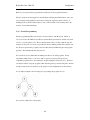
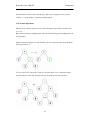
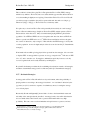
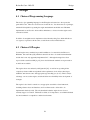
A very simple example is the following tree, representing the program (2+3)*4:
An overview of GP can be found at [19]
10
Robert De Caux – MSc CS
Background
2.4 Details of Genetic Programming
2.4.1 Steps to solving a problem with GP
John Koza identified five steps to solving a problem with GP [13]. They are the choice of:
1) Terminals
2) Functions
3) Fitness Function
4) Control Parameters
5) Termination Criteria
2.4.1.1 Terminals and Functions
The terminals and functions are the components of the programs. Terminals act as the leaves
of the tree (for example the numbers in the examples above), and functions act as junctions,
with their children being their arguments (for example ‘+’ takes two numbers as arguments).
Deciding on the function and terminal sets for the problem is a very important part of the
design, as these essentially determine what the strategy is able to do. Neglecting to include
certain functions or terminals will prevent some strategies from being available.
2.4.1.2 Fitness Function
The fitness function determines how the fitness of an individual is calculated, and therefore
how successful it is. The function is designed to be specific to the problem, so this is another
important design factor. It is sensible to encourage fitness to increase as solutions improve
unless a definite target is known for the solutions to aim for, in which case the fitness should
try and be as close to zero as possible, with zero being the perfect solution. Further details on
the fitness function and fitness evaluation can be found in §2.4.3.
2.4.1.3 Control Parameters
These are the parameters that affect how the GP is run, such as the size of the population,
number of generations, probability of each of the genetic operations, and maximum/minimum
sizes for solutions.
11
Robert De Caux – MSc CS
Background
2.4.1.4 Termination criteria
If the termination criteria are met, the GP stops. The rule for stopping could be a perfect
solution, or a certain number of generations having elapsed.
2.4.2 Genetic Operations
The three most common operations used on the individuals are reproduction, mutation and
crossover:
Reproduction is the most straightforward, with the individual being placed unchanged into the
next generation.
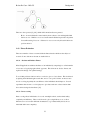
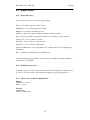
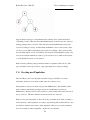
Mutation randomly changes one of the branches of the tree, then places the new program into
the next generation, e.g.
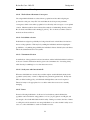
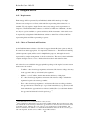
Crossover takes in two parent trees, replaces a random branch of one of the parents with a
random branch from the other, and places the new program into the next generation.
12
Robert De Caux – MSc CS
Background
There are other operators [4, p26], which will be mentioned but not pursued.
-
Hoist – A new individual is created entirely from a subtree of an existing individual
-
Self-crossover – Similar to crossover, but the same individual represents both parents
-
Context Preserving Crossover – Subtrees for crossover are only allowed if their node
positions allow it
2.4.3 Fitness Evaluation
There are a number of issues concerned with the fitness function which are the subject of
research. Some of the most relevant are detailed below.
2.4.3.1 Absolute and Relative Fitness
Most GP applications calculate the fitness of an individual by comparing it to a fixed number
of test cases or by playing against fixed opponents. This is known as absolute fitness, and
requires knowledge of an optimal strategy.
To avoid this problem, solutions can be coevolved to give a relative fitness. This is achieved
by playing the individuals against each other, and so over a period of time, as the test cases
are also evolving, hopefully the overall fitness of the individuals should improve. Several
experiments have shown co-evolved players to give better and more robust solutions than
those derived using absolute fitness [14].
2.4.3.2 Pareto scoring
Pareto scoring allows individuals to be scored on multiple criteria, such as functionality,
complexity and efficiency. These could be used to give a single fitness score, or allow
different scores to be used in different circumstances, e.g. if functionality is tied, choose
individual with lower complexity.
13
Robert De Caux – MSc CS
Background
2.4.4 Selection and Breeding
2.4.4.1 The Problem of Premature Convergence
Choosing which individuals are selected from a population and how their offspring are
produced is a vital part of any GP. It is crucial that the decision prevents premature
convergence, which occurs when a population loses diversity and converges to a non-optimal
solution. Much research has been conducted into methods of maintaining diversity, such as
Brood selection and Diassortative mating [4, p22-23]. Two of the most common selection
methods are discussed below.
2.4.4.2 Probabilistic selection
Individuals are assigned a probability for being selected based on their fitness in relation to
the rest of the population. This may be by ranking the individuals and then assigning the
probabilities, or by making the probability the individual’s fitness divided by the total fitness.
This is the standard method for GA systems.
2.4.4.3 Tournament Selection
A small subset of the population is selected at random, and the individual with the best fitness
is chosen. Careful consideration must be given to the tournament size – increasing it may
stifle diversity, but making it too low introduces more noise.
2.4.4.4 Steady state and Generational GP
When new individuals are created, they can either replace weak individuals already in the
population (steady state) or form a completely new generation (generational). Steady state
GP is an elitist breeding policy, as individuals with high fitness can never be replaced.
Therefore it may not be appropriate for coevolution where the test cases are constantly
changing.
2.4.4.5 Demes
Instead of allowing individuals to be allowed to breed with any other individual, the
population can be divided into subpopulations or demes [4, p23], placed on a 2D grid, and
encouraged to breed with individuals in their locality. During coevolution, the idea of demes
on a 2D grid could be extended to encourage individuals to use others in their locality as test
cases, or to allow individuals to search for suitable test cases.
14
Robert De Caux – MSc CS
Background
2.4.5 Strongly Typed Genetic Programs
In most genetic programming systems, the terminals and functions are chosen so that they
operate with only a single type. This is known as closure of the system. However it is
possible to include different types as shown by Montana [16], so long as care is taken to
ensure that all functions take in and return the valid types for the branch they are on. Multiple
types make the rules of crossover and mutation more complicated, but can allow complicated
solutions to be derived faster. It is possible to make functions generic to reduce the number
that must be explicitly specified.
2.5 Prisoner’s Dilemma
2.5.1 Basic Game Description
The game of Prisoner’s Dilemma was first proposed by Merrill Flood in 1951, and arises from
the following situation, quoted from [21]:
Two criminals are captured by the police. The police suspect that they are responsible for a
murder, but do not have enough evidence to prove it in court, though they are able to convict
them of a lesser charge (carrying a concealed weapon, for example). The prisoners are put in
separate cells with no way to communicate with one another and each is offered to confess.
If neither prisoner confesses, both will be convicted of the lesser offence and sentenced to a
year in prison. If both confess to murder, both will be sentenced to 5 years. If, however, one
prisoner confesses while the other does not, then the prisoner who confessed will be granted
immunity while the prisoner who did not confess will go to jail for 20 years.
What should each prisoner do?
An alternative analogy is playing a game for coins [16]. If both players cooperate they
receive 3 gold coins each, if they both backstab the other they receive 1 gold coin each, but if
one backstabs and the other cooperates, the defector gains 5 coins and the cooperator 0.
This coin analogy will be used, as high scores are wanted for successful defection, where as
the prisoner analogy gives low scores for successful defection (0 years in prison).
2.5.2 The Payoff Matrix
15
Robert De Caux – MSc CS
Background
The outcome for each of the participants can be summarised in the following matrix. R
represents the reward for cooperation, S represents the sucker’s payoff, T represents the
temptation to defect, and P represents the punishment for mutual defection [17]
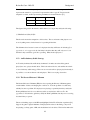
Cooperate
Defect
Cooperate
R=3
S=0
Defect
T=5
P=1
The figures being used in the matrix could be altered, so long as they satisfy the following:
1) T>R>P>S and 2) R>(S+T)/2
The first rule ensures the temptation to defect exists. The second ensures that players score
worse by taking turns to defect instead of cooperating all the time.
The dilemma arises because it seems to both players that they will better off defecting (5 as
opposed to 3, or 1 as opposed to 0), but if they both defect then they will only score 1, less
than the 3 they would have got from cooperating. What should a player do?
2.5.3 An Evolutionary Stable Strategy
As T strictly dominates R, and P strictly dominates S, it makes sense that if the game is
played just once, a player should defect. This is the rational choice, and satisfies the criteria
of an evolutionary stable strategy. However we can see that if two players play irrationally, it
is possible to score more than two rational players. This is a worrying observation.
2.5.4 The Iterated Prisoner’s Dilemma
The Iterated Prisoner’s Dilemma (IPD) involves repeating the Prisoner’s Dilemma game a
certain number of times, and keeping the overall score. Now the problem of evolutionary
stability becomes a problem. If both players are playing cooperatively then they satisfy the
Nash equilibrium, but it is not evolutionary stable, as any defector will score T to his
opponents S. If both defect, again they satisfy the Nash equilibrium, but they are now scoring
less than if they cooperate.
The most disturbing aspect of the IPD was highlighted in the Flood-Dresher experiment [21].
Suppose the game is played 100 times. Both players know that on the final go, they are in
fact playing a solitary game of PD, and should therefore both defect. This in effect makes the
16
Robert De Caux – MSc CS
Background
99th go the final go, but then this again can be viewed as a solitary game of PD, so both should
defect. Iterating this line of thought implies that both players should defect on every go, but
they will then only score 100 points, where as cooperators, the seemingly irrational players,
will score 300. This is something of an unresolved paradox, and “a demonstration of what’s
wrong with theory, and indeed the world” [2]. A very theoretical examination of the IPD is
given in [8, p.101]
2.5.5 Simple Strategies for IPD
The simplest strategies are to cooperate on every move (AllC), or to defect on every move
(AllD). These are the blind strategies, relying on no information from the game so far to
make their decisions. AllD will perform well if it is in a population of mainly cooperative
players as it will be able to exploit them, but will suffer against similar individuals. AllC can
only prosper in an environment of cooperative players.
Another simple strategy, Tit-for-Tat, has proved to be one of the most successful, and in fact
won a tournament staged by Axelrod of many different IPD strategies [1]. It works by
cooperating initially, and then copying its opponent’s last move. In this way it can never win,
but will score well against all types of opponent. It should be emphasised that the aim of IPD
is to score well (maximise expected return), not to win. Many other strategies are available
for playing on an IPD simulator at [23].
2.5.6 Lack of an Evolutionary Stable Strategy
A strategy is in equilibrium if
V(Si|Si) ≥ V(Sj|Si),
where V(Sj|Si) is the score achieved by strategy Sj playing against Si.
This is simply condition §2.2.5 i) restated with different notation to represent a game with
multiple goes and avoid mentioning the payoff matrix.
If we make the assumption that a strategy has no knowledge of which go is being played,
studying the Tit-for-Tat strategy shows it to be in equilibrium according to the above
equation, as no strategy playing against Tit-for-Tat can do better than to score an average of
3.0 per go (cooperation), which is what Tit-for-Tat scores against itself.
Unfortunately, §2.2.5 ii) states that (in the new notation)
if j ≠ i and V(Sj|Si) = V(Si|Si), then V(Sj|Sj) < V(Si|Sj) if i is stable.
17
Robert De Caux – MSc CS
Background
This condition is violated if we play Tit-for-Tat against the Tit-for-2-Tat (TF2T) strategy,
which is very similar to Tit-for-Tat, but won’t defect until the opponent has defected twice in
a row, thus making it slightly more forgiving. Since neither Tit-for-Tat or Tit-for-2-Tat will
ever defect except as retaliation, they will cooperate with each other and score 3.0 per go.
Therefore V(Sj|Sj) = V(Si|Sj), so Tit-for-Tat is not evolutionary stable.
It is quite easy to show how Tit-for-Tat could potentially be invaded by its ”twin” strategy8
Tit-for-2-Tat and a third strategy, Suspicious Tit-for-Tat (STFT), which operates as Tit-forTat but defects on the first move. Only a few individuals playing STFT are placed in the
population. Now TFT and TF2T both score 3.0 against each other, but where as TF2T can
induce cooperation in STFT and score 2.7 9, TFT will exact retribution and force the game
into a series of defections, only scoring 2.5. This will allow the TF2T strategy to slowly take
over the population. A more in depth analysis of the above can be found in [17, Deterministic
strategies]
If information about which go being played is incorporated into the strategies, it is even easier
to displace TFT. A strategy which cooperates on every go except the last 10 will outscore TFT
3.2 to 2.7, and so can take over. It struggles to maintain its superiority however, as it only
scores 2.8 against itself, and is easily defeated by an AllD player.
Boyd and Lorberbaum proved that the above thinking about invasion extends to all strategies,
and that no deterministic strategy can be evolutionary stable [11, Deterministic strategies].
2.5.7 Stochastic Strategies
A strategy such as Tit-for-Tat will suffer in a noisy environment, where the probability of
playing each move according to the strategy is less than 1. An “accidental” defection by the
opponent (see §2.2.1) can lead to sequence of recriminatory moves, lowering the average
score of both players.
Research by Nowak and Sigmund[3] showed this to be due to the deterministic nature and
rationality of the strategies thus far described. A strategy found to due well in this situation
was one which defects after S and T, and cooperates after R and P with a very high
probability. This can correct occasional mistakes and exploit naïve cooperators, and was
8
A twin strategy to strategy x would score the same against x as x would against itself
Game lasts for ten goes in all examples, as longer games will not affect outcome.
10
This will be known as a “sneaky” strategy
9
18
Robert De Caux – MSc CS
Background
dubbed Pavlov. Its weakness lies in the fact that it is easily exploitable by AllD, but if the
probability of making certain decisions based on experience is reduced from one to slightly
less than one, Pavlov can achieve stability against AllD if the game is iterated for long
enough. [17, Stochastic strategies]
2.5.8 Spatialised Iterated Prisoner’s Dilemma
Some experimentation has been carried out into placing a population of strategies on a 2D
grid, and seeing how their distribution evolves by each individual playing its immediate
neighbours. Some interesting results can be obtained.
If a small group of AllC strategies are placed together on a grid consisting on predominantly
AllD strategies, AllC strategies can spread throughout the population if they only play each
other and take over adjacent squares [22]. This would not normally be possible as AllD can
easily defeat AllC in a game.
[15] creates a system to randomly place a population on a 2D grid, and hunt for an opponent
according to bits selected in a Genetic Algorithm. These bits are set randomly however and
no results of note appear to have been obtained, although it provides an excellent mechanism
for carrying out the hunting to be investigated in this project
19
Robert De Caux – MSc CS
Analysis
3 Analysis
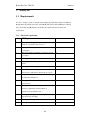
3.1 Requirements
In order to design a system to meet the desired aims, the requirements must be formalised.
Requirements prioritisation is based on the MoSCoW criteria, namely Must have, Should
have, Could have and Would like, and divided into functional and non-functional
requirements.
3.1.1 Functional requiremnts
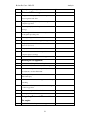
GP Engine
1
The engine shall support the genetic operations of
M
mutation, reproduction and crossover.
2
The engine shall just provide a mechanism for GP
S
to take place
3
The engine shall be extendable to whatever scenario
M
is required
4
The engine shall support tournament selection
C
5
The engine shall allow a flexible formulation of
M
fitness
6
The engine shall store a population of individuals
M
7
The individuals shall be represented by
M
chromosomes, which are in turn made up of genes
8
The genes will form a treelike structure, consisting
M
of terminals and functions
9
The engine will have editable parameters for the
S
chromosomes
10
The engine shall have editable parameters for the
M
genetic program itself, such as number of
generations and population size
11
The engine shall support different types with
C
appropriate type checking
12
The engine shall support co-evolution
M
13
The engine shall be implemented in Java
S
20
Robert De Caux – MSc CS
14
Analysis
The engine shall give regular updates to the user
M
Prisoner’s Dilemma game
15
The game shall be playable by two computer
M
players against each other
16
The game shall be playable by a human against a
C
computer opponent
17
The computer player shall operate a deterministic
M
strategy
18
The strategy shall have access to a complete history
S
of the game up to that point
19
The length of game shall be editable
S
20
The players shall know the length of the game
C
21
The payoff matrix shall be as described earlier, with
S
scores of 5,3,1 or 0.
22
The payoff matrix shall be editable
C
23
There shall be a random element possible in a
C
computer player’s strategy
24
Players shall be able to hunt for their opponents
S
Hunting for an opponent
25
Individuals shall be placed on a 2D grid
M
26
Individuals shall move randomly around the grid
S
27
Individuals shall perform a compatibility test if they
M
are adjacent to another Individual
28
The compatibility test shall decide whether the
M
Individuals play
29
Individuals who have found an opponent shall stop
M
searching
30
Individuals shall only have a certain number of goes
M
to find an opponent
31
The size of the grid shall be editable
S
32
Hunting shall be visible to the user
C
Integrating Prisoner’s Dilemma into
the engine
33
Each Individual shall represent a strategy
21
M
Robert De Caux – MSc CS
34
Analysis
The fitness of an Individual shall be how well it
M
performs at Prisoner’s Dilemma
35
The fitness shall be calculated over a number of
S
games
36
The functions and terminals shall be relevant to
M
Prisoner’s Dilemma
37
An Individual shall evaluate to a valid move in
M
Prisoner’s Dilemma
38
Genetic operations shall alter the strategy that the
M
Individual plays
39
Players shall play against fixed opponents or against
S
each other
40
Custom built strategies may be developed
S
41
Strategies may be seeded into the Population at the
C
outset
3.1.2 Non-functional requirements
1
The user shall be able to edit all parameters by
C
means of a graphical user interface (GUI)
2
Opponents and strategies to be seeded shall be
C
selectable on the GUI
3
Generational reports shall be output to the GUI
C
4
A graph detailing fitness information shall be
C
presented on the GUI
5
The grid containing representations of individuals
C
shall be displayed on screen
6
Individuals shall have different representations
C
according to whether they have found an opponent
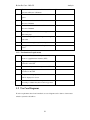
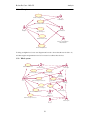
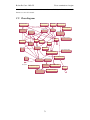
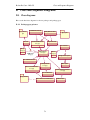
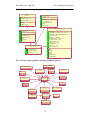
3.2 Use Case Diagrams
Now the requirements have been formalised, use case diagrams can be drawn to demonstrate
what the system should achieve
22
Robert De Caux – MSc CS
Analysis
3.2.1 GP engine
C re a t e P o p u la t io n
In d ivid u a l
C a lc u la t e F it n e s s
E n g in e
P a ra m e t e rs
S h o w R e p o rt
R a n k A n d S e le ct
F it n es s E va lu a t io n
M e c h a n is m
E vo lve P o p u la t io n
Looking at a higher level, a use case diagram can be used to show what the user is able to do,
and what engines and parameters need to be accessed to achieve these choices.
3.2.2 Whole system
E d it G P P a ra m e t e rs
G P P a ra m e t e rs
S e e d P o p u la t io n
G P E n g in e
E vo lve S t ra t e g ie s
S t ra t e g y
P a ra m e t e rs
Us er
E d it S t ra te g y P a ra m e t e rs
P la y G a m e
S tr a te g y
S e le c t S t ra t e g ie s
Hu n t
G a m e E n g in e
E d it G a m e P a ra m e t e rs
G am e
P a ra m e t e rs
E d it H u n t in g P a ra m e t e rs
H u n t E n g in e
B o a rd
23
Robert De Caux – MSc CS
Design
4 Design
4.1 Choice of Programming Language
The choice of programming language for the GP engine and extension to incorporate the
game will be Java. There are several reasons for this choice. Java allows the use of packages,
which will be helpful for separating the engine mechanism from the Prisoner’s Dilemma
implementation, and Java also allows utilises inheritance, so classes from the engine can be
extended as desired.
It will also be straightforward to implement a class hierarchy using Java, which will allow a
set of genes to represent a chromosome, several chromosomes an individual, etc.
4.2 Choice of GP engine
Several engines were examined as potential candidates to be extended for the Prisoner’s
Dilemma. One was Lithos [20], which was turned down due to its stack based mechanism
and the fact it was only apparently implemented in C. Although advantages have been
reported with a stack based GP [4, p19], it was decided that the standard tree representation
would be more suitable.
The engine chosen was written by Adil Quereshi [24]. As well as incorporating all the
compulsory features which are stipulated in the requirements, it also allows mixed types
within the same chromosome, with appropriate type checking (see §2.4.5). This is a major
advantage over most other engines, and should allow more flexibility in the development of
strategies.
The engine is also ideal for extension to an appropriate use with its robust framework,
including abstract classes and interfaces, and is well annotated to allow this to be
implemented relatively easily. The only drawback is that the engine chosen does not
currently support coevolution. This must be added, as it is important to see which individuals
become dominant in a competitive contained environment.
24
Robert De Caux – MSc CS
Design
4.3 Engine details
4.3.1 Important classes
All of the classes below are stored in the gpsys package
GPsys – class which starts the evolution process
GPParameters – stores the parameters for the GP
GPObserver – interface representing the user
Primitive – abstract class specified with the terminal or function required
Gene – abstract class which is specified to be function or a terminal. Stores a primitive.
Chromosome – stores a collection of Genes
Individual – stores a collection of Chromosomes
Population – stores a collection of Individuals
ChromosomeParameters – stores the parameters for creating a Chromosome, including type
information
Type – specification for different types available for use
Stored in the package gpsys.primitives are the collection of primitives currently available for
use as functions or terminals
4.3.2 Realisation of use cases
Appendix C gives more detail on the methods and classes in the engine, and explains how the
use cases of §3.2.1 are realised. The initial class diagram for gpsys is in Appendix C.9
4.3.3 Classes to be extended or implemented
Definite:
GPObserver – interface
Fitness – abstract
Probable:
GPParameters
ChromosomeParameters
25
Robert De Caux – MSc CS
Design
4.4 Design of the GP
4.4.1 Requirements
Each strategy will be represented by an Individual, which will be made up of a single
Chromosome storing a tree of Genes, with each Gene representing either a function or a
terminal. We only require a single Chromosome as any strategy can be represented as a
single tree. The Individual must evaluate to a valid move in Prisoner’s Dilemma. As there
are only two options available, cooperate and defect, the Boolean nature of this decision can
be captured by saying that the Individual must evaluate to either True or False, with True
representing defect and False representing cooperate.
4.4.2 Choice of Terminals and Functions
As the Individual must evaluate to a Boolean, it suggests that the Boolean operators And, Or,
Xor and Not would be appropriate. Xor represents exclusive Or 11. The functions If and EQ
(which represents equals) will be used for simplification purposes, although both can be
represented by complex arrangements of the above functions. The reason is that it will make
complex strategies easier to evolve. All these functions take in and return Booleans.
All of the above are available in the gpsys.primitives package of the engine, but some custom
functions are also needed.
-
YourPrev – takes in an integer argument, and returns a Boolean according to the entry
in the opponent’s history as indexed by the argument.
-
MyPrev – as for YourPrev, but this time checks the history of this player.
-
Go – takes in an integer argument, and returns a Boolean according to whether the
argument is equal to the current go number.
-
Ever – takes in an integer argument, x, and returns a Boolean according to whether
the opponent had ever defected up to x goes back in their history, e.g. (Ever 0) would
check whether the opponent had ever defected, whilst (Ever 1) would check whether
the opponent had defected before his previous go 12.
11
Xor returns true if x or y is true, but false if x and y are true
This complicated looking function was chosen after an initial terminal, Ever was turned down. This
just returned a Boolean according to whether the opponent had ever defected, and it was decided it was
not flexible enough. Allowing only some of the goes to be checked improved the flexibility. The
function could have been defined to see whether the Individual has defected in the most recent n goes
with n the argument, but this seems to similar to the YourPrev function.
12
26
Robert De Caux – MSc CS
Design
The above four have been chosen because they are the only factors that can be considered
when deciding on the next move. Combinations of these will be able to create any
deterministic strategy for the Iterated Prisoner’s Dilemma. The inclusion of Go is potentially
problematic, as the players may not realistically know the length of the game when they take
part. It shall be assumed that they do.
This just leaves the terminals. Zero and One are obvious choices, and are included in the
primitives package. A custom terminal, Last, is also included, which returns an integer
corresponding to the length of the game – 1. This is mainly used by the function Go, as (Go
Last) would check whether it is the final go of the game, but can be applied to any function
that takes an integer argument.
Two more functions need to be added to cover all the integers necessary. They are
AddModLength and MinusModLength, which both take in two integers as arguments, and
return them added or subtracted, modulo the length of the game. This is because the integers
are used for referencing game histories and the current go, so only integers between zero and
the game length are relevant.
All the new primitives will be stored in a package gpsys.primitives.prisoner, as they are
specific to this system.
4.4.3 Examples of Common Strategies as Trees
Here are some of the most common Iterated Prisoners Dilemma strategies as they would be
represented as Individuals using the defined function and terminal sets.
Only cooperate (AllC): YourPrev Last 13
Only defect (AllD):
Not (YourPrev Last)
Tit-for-Tat:
YourPrev 0
Tit-for-2-Tat:
If (EQ (YourPrev 0) (YourPrev 1)) (YourPrev 0) (MyPrev 0)
Pavlov:
EQ (MyPrev 0) (YourPrev 0)
Spiteful:
Ever 0 14
These six strategies shall be the only ones available for playing as fixed opponents.
13
YourPrev Last will always return false, as the entire array for the opponents moves is initially set to
false. The final array entry (the one being referenced) will not be updated until the entire game history
is available, but by this time the game has finished, so it remains false for the duration.
14
A spiteful strategy will cooperate until the opponent defects. It will defect from then on.
27
Robert De Caux – MSc CS
Design
4.4.4 Choice of Fitness function
The fitness of an Individual will be its average score per go of Prisoners Dilemma. It can
therefore lie between 0 and 5. The higher the fitness score the better, as that indicates a better
performance. This is in contrast to how the engine currently operates, searching for a fitness
close to zero (termination criteria is known).
If two fitnesses are equal, the Individual with the lower complexity will be chosen. This is to
prevent the Individuals’ trees becoming too large.
Other information will be scored and kept in an Individual’s Fitness class, but instead of being
used to determine who goes through to the next generation, it will be used for selection in the
hunting phase. Each Individual will have a score for cooperativeness and whether they are
the first to defect during a game (stored as firstToDefect). They will also store an array of
hunt criteria which represent the values they wish an opponent’s cooperativeness,
firstToDefect and fitness to take.
Cooperartiveness, firstToDefect and fitness were chosen as they carry a lot of information
about how other Individuals will fare against them. This is further discussed in §4.6.2.
The Fitness will be displayed in a quintuple, with the five entries representing fitness,
complexity, cooperativeness, firstToDefect and huntSuccess.
4.4.5 Control Parameters
The control parameters will be editable by the user, but the following are default choices.
4.4.5.1 Size of Population
The default Population size will be 100. This should be large enough to maintain diversity,
but should also make computation time reasonable. It also keeps noise to a minimum. If it is
discovered that the results produced show a lack of diversity, the Population size could be
increased
4.4.5.2 Number of generations
28
Robert De Caux – MSc CS
Design
Fifty generations will be the default. Most evolution takes place in the first few generations
and then settles down, so this should be enough.
Some theories advocate a greater number of generations, claiming that significant evolution
can take place after the 50 point, so if the results are unsatisfactory the number of generations
can be increased.
4.4.5.3 Tournament Size
A tournament size of seven will be initially selected. This is the standard size [4], but may
need to be altered if the Population size is drastically lowered or there is not enough diversity
in the Population. A smaller tournament size will introduce more noise, and larger will stifle
diversity.
4.4.5.4 Probability of mutation
The probability of mutation shall be set very low (1%), so that it is rare as in nature. Again
there are sources advocating higher and lower rates, so it can be altered if poor results are
achieved.
4.4.5.5 Probability of reproduction
This will be set initially to 40%. To test whether crossover has little or no effect, it could be
raised to up to 95%.
4.4.5.6 Chromosome size
The maximum depth of a Chromosome is set to 9, as all strategies can be represented within
this depth. The maximum depth at creation will be set to 7 to discourage large strategies
forming early on, and the maximum depth of mutation will be 3 so that it has a more profound
effect. Mutation lower down the tree is unlikely to alter the strategy dramatically.
4.4.5.7 Evolution type
Generational GP will be used to produce the next generation. This is because the elitism that
Steady State GP would supply is not wanted here, because coevolution does not search for a
best solution. Instead it monitors how the population changes over a certain number of
generations.
29
Robert De Caux – MSc CS
Design
4.4.5.8 Other parameters
The length of the game will be 10. This seems sufficient to allow the vast majority of
strategies to prove themselves, but could be extended if AllD is performing too well.
Twenty opponents will be used to assess fitness. This seems large enough to avoid a strategy
being able to survive on a few lucky results.
4.4.6 Termination criteria
If we assume no prior knowledge of a best solution against fixed opponents then we do not
want the GP to terminate early, as we have no best fitness to aim for. We could set the GP to
terminate if a strategy achieves an average fitness of 5.0, but it is more interesting to graph
how the Population develops over time. This is definitely the case with coevolution, where it
is vital to let the GP run for the full number of generations.
4.5 Design of Computerised Iterated Prisoner’s Dilemma
4.5.1 Requirements and package gpsys.prisoner
The game shall be played by two computer players, represented by Individuals taken from the
Population. Each of the players will have a strategy which is represented by their genetic
coding and which will tell them how to play on each move. They must also store sufficient
information about the state of the game and previous moves made by both them and their
opponent in order to implement their strategy.
It must also be possible to have custom made players, both to play against as fixed opposition
and to seed into the Population. Seeding design is discussed in §4.8.3.
All classes dealing with the game will be held in the package gpsys.prisoner.
4.5.2 Specific classes for playing the game
Each Individual must store a reference to the game history information which will be held in a
PDParameters class. PDParameters will hold arrays for the previous decisions of the
Individual and their opponent, as well as the current go number being played. As each new
decision is made, it will be added to the front of the array (array index 0), thus forming a
game history with all previous goes able to be referenced. All the array entries will initially
30
Robert De Caux – MSc CS
Design
be set to false, indicating cooperation. This introduces a slight but unimportant bias into the
strategies. All the game information will be available via get and set methods.
The game itself will be handled by a PrisonersDilemma class. This will have a playGame
method, which will take in two Individuals, and evaluate their strategies to give either
cooperation or defection according to the state of their PDParameters. The scores will be
calculated, and the process iterated as many times as required for the complete game.
Creating custom players will be handled by the PlayerGenerator class. This will have
methods for creating each of the six possible players specified in §4.4.3
4.5.3 Hunting for an opponent
Instead of simply playing random opposition, a package will be created to allow Individuals
to search for desirable opponents before playing them. This hunt package is detailed in §4.6.
4.6 Design of Hunting Mechanism
4.6.1 Requirements and package gpsys.grid
The aim of the hunting mechanism is to allow Individuals to hunt for an opponent according
to some criteria, rather than just play random opposition. The Individuals need to be placed
on a 2D grid, and then allowed to move around to search for an opponent. If they encounter
another Individual on an adjacent grid square, they may perform a test to see whether they
make suitable opposition. If so, they then attach themselves to that Individual, and stop
searching for an opponent. After a period of time, the search will terminate. Any Individuals
with an opponent will engage in a game of Prisoners Dilemma, whilst unattached Individuals
will not play. This will be detrimental to their fitness.
All classes associated with hunting and the grid will be stored in the package gpsys.grid.
4.6.2. Criteria for finding an opponent
Three fundamental criteria will be used for the search. They are:
-
Cooperativeness of Individual
-
How often they are the first to defect (firstToDefect)
-
Fitness of the Individual
31
Robert De Caux – MSc CS
Design
Almost without exception, the higher the cooperativeness of an Individual, the more desirable
they are to play, as they are easily exploitable and consistently friendly. An Individual that
regularly defects first is undesirable, as it limits the scoring opportunities for both players.
Fitness is slightly more difficult, as an Individual with high fitness may be an excellent
opponent who has just scored well by cooperating, and an Individual with a low fitness may
be a poor opponent who was involved in a game of mutual defection. However, a fitness
under 10 is definitely desirable in an opponent, and over 30 is undesirable.
4.6.3 An algorithm for deciding on an opponent
There needs to be a definitive way of one Individual deciding whether to play another after
checking the above criteria. The following algorithm will be used:
i)
Store cooperativeness as a double between 0 and 1, where 0 represents always
defecting, and 1 always cooperating.
ii)
Store firstToDefect as a double between 0 and 1. 0 means they never defect first,
1 means they always do (n.b. if two players both make the first defection
simultaneously, they are both guilty and score 1 for that game).
iii)
Store fitness as a double between 0 and 5, representing the average score
achieved per go of Prisoner’s Dilemma.
iv)
Let each player store an array of three numbers, with the entries representing the
desired values for the three criteria above.
v)
Each player instantiates a double, playability, initially set to 3.
vi)
Each player tests the three relevant scores of their opponent in turn against their
criteria. The difference between the desired and actual value is subtracted from
the playability (difference / 5 for fitness as it is 5 times larger).
vii)
The playabilities of both players are added together
viii)
If the total of step vii) is greater than 5 15, the two Individuals “agree” to play
each other.
The specific figures quoted in the algorithm may be altered after testing.
4.6.4 Designing classes
The framework for the Grid is based on the framework developed by Winder and Roberts for
simulating ants [10]. It is not abstract however, as it requires a lot of information specific to
Prisoner’s Dilemma.
15
This number is the playability threshold
32
Robert De Caux – MSc CS
Design
The hunting will be controlled by a Hunt class, which takes in the grid size and hunt length
information, and creates a display frame, an instance of HuntDisplay.
It will have a method, initialiseHunt, which takes in a Population, creates a new Grid,
populates it, and then performs the hunting, displaying the Grid after each move.
The Grid itself shall store a collection of Square objects, which are only aware of their
neighbours in each direction, called by the joinSquares method. It shall also store an array of
Occupants. These are representations of Individuals on the Grid, but store additional
information such as which square they are on and who they have chosen as an opponent.
When Occupants come to move, they check whether adjacent Squares are free by referencing
their current square. Similarly, when they try to find an opponent, they check adjacent
Squares for an unengaged Occupant. If they find one, they perform a compatibility test to
decide whether to play them or not.
The Grid showing the state of each square is passed to the huntDisplay, which buffers the
information, and then displays the completed Grid on the display.
4.6.5 Creating and inheriting huntCriteria
When a new Individual is created from scratch, values will randomly be assigned to each of
the huntCriteria within the appropriate range. If the huntCriteria are treated as a Genetic
Algorithm however, they can be inherited from their parents via the same genetic operation
by which the new Individual were created. For example, if a new Individual is created as a
mutation of the mother, the huntCriteria will be inherited from her with a mutation of one of
the values. Similarly crossover will lead to a random crossover of the criteria of the parents,
and reproduction will lead to a straight reproduction of the criteria. This allows the
huntCriteria to evolve along with the Individuals, although the diversity will decrease rapidly.
33
Robert De Caux – MSc CS
Design
4.7 Design of the User Interface
4.7.1 Editable options for the user
The interface needs to allow the user to edit all the options as described in §4.4.5. It also must
allow the user to select opponents for non-coevolution, and select players to be
seeded 16. Functions If, EQ and Go can also be excluded from the GP if desired. To aid the
interaction, a selection of choice and tick boxes will be set up.
4.7.2. Prevention of inconsistent parameters
The following slections must be avoided.
-
Tournament size greater than half Population size
-
Grid not large enough to hold Population
-
Probabilities of mutation and reproduction totalling more than one
-
Too many Individuals seeded
-
Max depth at creation or of mutation greater than max depth
-
No opponent selected for non coevolution
4.7.3 Displaying Information
All generational reports and diagnostic updates will be written to a text area within a scroll
pane on the interface. Population information will be centered.
4.7.4 Graphing results
A graph class will store an image which is updated after every generation with the best, worst
and average fitness. A line graph will be created on a special display frame as the generations
progress.
4.8 Incorporating Coevolution
An abstract class CoevolutionMechanism will be extended as follows.
4.8.1 Standard Coevolution
16
These will be limited to the players available in PlayerGenerator
34
Robert De Caux – MSc CS
Design
This will be handled by a class StandardPDTournament, which will play games of Prisoner’s
Dilemma within the population to determine fitnesses. The implementation of this is
discussed in §5.3.3.
4.8.2 Hunting Coevolution
This will be handled by a class HuntingPDTournament. The method coevolveFitness will
now allow the Individuals to hunt for an opponent as described in §4.6, before all the games
of Prisoner’s Dilemma are played. Implementation of this is discussed in §5.3.3.
4.8.3 Seeding
Both coevolution classes will define a method seedPopulation, which is called by the
Population class. It places pre-defined Individuals passed from the GUI into the Population.
4.8.4 Fitness evaluation
In the case of co-evolution, there is no way of measuring an absolute fitness as there is no
point of reference. Instead a relative fitness is calculated. Initially it was thought that a
fitness would not need to be assigned until tournament selection was carried out to decide
which individuals were to be used to form the next generation. This logic was rejected for
several reasons:
i)
The Individual would only have a fitness temporarily, and so it could not be used
for hunting purposes
ii)
The technique limited population diversity, as taking the tournament winner
would favour defecting strategies, where as strategies such as Tit-for-Tat which
continually score highly but never actually win would never progress through.
iii)
Strategies will be selected for different numbers of tournaments, and so their
fitness score may become skewed
Point ii) could be solved using a probabilistic selection method, but instead it was decided to
assign fitness as follows.
i)
Wait until a new generation has been evolved/created (if first one)
ii)
Call the required CoevolutionMechanism extension to calculate fitness for the
new generation before the generational stats are calculated
Using this method, each individual plays the same number of games of IPD, and so no bias
can occur.
35
Robert De Caux – MSc CS
Design
4.9 Extending the engine
4.9.1 Additions/changes to original package gpsys
4.9.1.1 New classes
Abstract classes CoevolutionMechanism, TwoPlayerGame and TwoPlayerGameParameters
must be added, as well as the exception classes OverseedException and
InvalidStrategyException which both extend GPException.
4.9.1.2 New/edited constructors
New constructors must be placed in Individual and Chromosome to allow Individuals to be
created with a pre-defined strategy, i.e. a pre-defined Gene tree. The seedPopulation method
in CoevolutionMechanism must be called from the Population constructor if coevolution is
being employed.
4.9.1.3 Other changes
Public variables for the abstract classes must be added to the GPParameters, as well as
integers representing the gameLength and number of opponents required for Prisoner’s
Dilemma. A public variable for the TwoPlayerGameParameters class must be added to class
Individual, a public Individual worstGeneration must be added to the Population class, and a
method inherit must be added to the Fitness class. The method coevolveFitness from
CoevolutionMechanism must also be called from updateStats in Population if coevolution is
being used. The bestRun information can be edited out as it is not required.
4.9.2 Extensions to engine
The following classes shall also be included in the package gpsys.prisoner.
PrisonerGPParameters:
This class is an extension of GPParameters. The ChromosomeParameters will be initialised
for the sole Chromosome being used. Generic instances of PrisonerFitness and PDParameters
are created for reference by Individuals, and the engine is set to be generational.
PrisonerChromosomeParameters:
36
Robert De Caux – MSc CS
Design
This extends ChromosomeParameters. The return type of the Chromosome is set to Boolean,
and the function and terminal sets are explicitly defined, with specific type information for the
generic primitives.
PrisonerFitness:
This is the most complicated class as it holds so much information about the Individual:
-
Fitness information – average fitness per game of Prisoner’s Dilemma and
complexity of strategy
-
Hunt information – cooperativeness, firstToDefect, hunt criteria.
All this information must be updated after the Individual has played a game of Prisoner’s
Dilemma, and the method updateStats accomplishes this. All the comparative abstract
methods from Fitness are implemented. We never wish the GP to terminate early, so the
termination criteria are set unreachably high (average fitness per go of 5.1).
The constructor checks whether coevolution is being employed. If so, then the fitness cannot
be calculated yet, so all that happens are new hunt criteria are created if required. If there is
no coevolution, the fitness is calculated by playing the Individual against each of the
opponents that have been specified. The only other important method is inherit, which allows
an Individual to inherit huntCriteria from its parent(s). This allows the hunt criteria to evolve
in the same way as the strategies, except that it is effectively a GA instead of a GP.
Prisoner:
Prisoner implements the GPObserver interface. It also has the main method for the system.
When the system is run, a new GUI is created, information is received back from it, and the
evolution process is started.
The generationUpdate method prints out a generational report into the output window on the
GUI, and the diagnosticUpdate method prints out the diagnostic information to the same
place. The individualUpdate method is declared but not used.
4.10 Final Class Diagrams
These can be found in Appendix D
37
Robert De Caux – MSc CS
Implementation
5 Implementation
5.1 Problems encountered
5.1.1 Lack of diversity
A major problem encountered upon testing the engine was a lack of diversity in the
Populations evolved, especially when coevolution was employed. The Population would
settle down quickly to incorporate only a few strategies, all of them very simplistic, such as
(YourPrev 0). The reason for this is that small strategies are often successful at an early stage
of coevolution when complexity is important, and once established in the Population, they are
very hard to remove as they have so few Genes available for change.
To solve this problem, two alternatives were considered.
-
Employ a single type system with additional operations Reverse and Rest, as used in
[5]. This proved efficient at evolving some very clever complex strategies in a
prototype version against fixed opponents, but was too slow to use for coevolution as
it needed a dynamic data structure which was difficult to clone.
-
Introduce a new type, New Boolean. This will be the return type of YourPrev,
MyPrev, Ever and Go. The standard Boolean operators must also be adapted to
accept either New Booleans or Booleans as arguments and to return either type as
well. This means making them generic to a certain extent. Now strategies such as
(YourPrev 0) 17 will not be possible as the final return type must be Boolean, not New
Boolean, so all strategies will be more robust and open to modification.
The latter option was chosen and successfully increased diversity in the population.
Another method was also employed to further improve diversity - instead of choosing the
strategy with the lowest complexity if two strategies have the same fitness, a complexity
between 5 and 13 was set to be the most desirable, with lower than 5 following, and
greater than 13 trailing behind.
5.1.2 Hunting bias
During the hunt method in class Grid, the array of Occupants is looped through, and each tries
to find an opponent by checking its neighbours. This introduces a large bias towards the
17
The simplest representation of Tit-For-Tat is now (Or (YourPrev 0) (YourPrev 0))
38
Robert De Caux – MSc CS
Implementation
Occupants with low indices in the array, as by the time it gets to Occupants with high indices,
a lot of potential opponents will already have been taken.
To correct this, a temporary array is created containing every number from zero to the length
of the Occupant array in a random order. This array is then used to decide the order in which
Occupants get to hunt.
5.1.3 Error in Crossover type checking
A potentially damaging error was discovered in class GeneBranch in the original engine [24].
Branches of the correct type for crossover from the father were not being recognised, and so
many trees were returned with the message “Couldn’t find compatible branch in dad during
crossover” when this was not true. The problem has been rectified, and crossover can now be
demonstrated successfully.
5.1.4 Random numbers
Tests with random numbers have shown that they tend to turn up in batches. This has been
noted, but hopefully should not affect results significantly - the Occupants in the hunting
phase seem to be following a random 2D walk sufficiently well.
5.2 Other program changes
5.2.1 Speeding up hunting
In order to speed up the hunting phase, the display can be disabled, as updating it takes a large
amount of time. This change allows a larger number of generations to be checked.
5.2.2 Adding Dummy function
An extra function, Dummy, was added to the function set. It is of type float, and is simply
used to fill the function array if we wish to disable some other function. As it has a return
type of float, it can never be chosen to appear in a strategy.
39
Robert De Caux – MSc CS
Implementation
5.3 Examining important methods
As there is too much code to analyse in depth, just the parts that implement the use
cases from §3.2.2 will be covered.
5.3.1 Editing parameters
The GUI is used to store all the user information, and is constantly checked by the main class
Prisoner for the accept button to be pressed 18. As soon as this happens, class Prisoner can
continue. Using get methods from GUI, Prisoner extracts references to a GPParameters
object, the graph panel, the output panel and the filenames for saving Population and
generational reports, all of which are stored by the GUI. As Prisoner holds the GUI as a static
variable, these methods can all be called from anywhere, even from within the main method.
Within the GUI itself, clicking Accept first calls a consistency checker on the parameters. If
this passes, a PrisonerGPParameters object is instantiated and set with all the user’s choices.
All variables in PrisonerGPParameters are public and are therefore easy to access and change.
Care needs to be taken with the coevolution choice. If standard or hunting coevolution is
selected, the public variable CoevolutionMechanism in PrisonerGPParameters must be
instantiated with the correct extension (and set with hunting parameters if required). Seeding
is also controlled in this class, so the GUI must pass information on the Individuals to be
seeded as an array to the public CoevolutionMechanism variable.
If no coevolution is selected, an array containing information on which opponents are to be
played to determine fitness is passed to the public PrisonerFitness variable in
PrisonerGPParameters. This is then called whenever a new PrisonerFitness instance is
created for an Individual.
If any of the functions have been deselected, an instance of Dummy is passed to the
PrisonerChromosomeParameters object in the correct position in the function array to
overwrite the unwanted function.
5.3.2 Implementing the hunt
18
Checks for a Boolean value in GUI to be true. If not, it sleeps for a second, then tries again
40
Robert De Caux – MSc CS
Implementation
The two most important parts of the hunting phase are performed by the methods move() and
findOpponent() in Occupant.
move checks that the Individual is not engaged, and if this is the case it then chooses a random
direction and checks whether the square in that direction is empty19. If so, the Occupant
moves into it, otherwise the whole process is repeated.
findOpponent is more complicated. Each adjacent square is checked for an occupied status,
meaning it holds an unengaged Occupant 20. If one is found, a private method
compatibilityTest is called which returns a Boolean. True is returned if
-
either player is yet to play a game (they have no stats to test against huntCriteria and
so are given the benefit of the doubt)
-
the playability score (calculated as in §4.6.3) is above the threshold required
If either is the case, the two Occupants have an engaged variable which they set to be each
other, and the squares are set to engaged status.
Class Grid creates the order for the Occupants (as specified in §5.1.2), then calls move and
findOpponent in that order for each. Grid is also responsible for initially placing the
population on the grid, achieved by choosing random x and y coordinates and testing whether
that square is occupied. If it is free the Occupant is placed there, otherwise the process is
repeated. A GridException is thrown if the Population is too large for the Grid.
5.3.3 Performing evolution
Although the genetic operations and selection are carried out in the GP engine, the fitness
calculation method has to implemented in package gpsys.prisoner.
Calculating the fitness against fixed opponents is relatively easy as this can be done when the
fitness of an Individual is created (i.e. in the constructor). The array of opponents to be
played should have been passed from the GUI to the PrisonerFitness class, and each player is
created as an Individual using PlayerGenerator. The playGame method in class
PrisonersDilemma is then called (§5.4) for the Individual in question and each of its
opponents, and the scores are averaged to calculate the fitness.
Coevolution is slightly more complicated. The following must first be added to the start of
the updateStats() method in class Population.
19
20
It can also choose to keep the Occupant on the same square
A Square can be in one of three states – EMPTY, OCCUPIED or ENGAGED
41
Robert De Caux – MSc CS
Implementation
if (gpParameters.coevMech!=null)
gpParameters.coevMech.coevolveFitness(this, gpParameters);
This method ranks the Individuals and returns a generational report, so we must assign the
Individuals a fitness before this happens (see §4.8.4). In StandardPDTournament, the
coevolveFitness method is implemented as follows.
An opponent is chosen at random from the population, making sure that an Individual cannot
play itself. The playGame method in PrisonersDilemma is then called, and the scores
returned. These scores are passed to the updateStats method in PrisonerFitness which updates
the fitness according to the scores achieved 21. The process is repeated for as many opponents
are specified in the GPParameters.
In HuntingPDTournament, the hunt must be performed first – initialiseHunt is called in class
Hunt (§4.6.4). This returns an array of all the Occupants on the grid, representing the whole
population. Each of these is checked to see if it is engaged (has an opponent), and if so then a
game of Prisoner’s Dilemma is played between the two Individuals stored within the
Occupants. The fitnesses of both are then updated 22. This process (including the hunt) is
then repeated as many times as the number of opponents required.
Seeding is also controlled by the CoevolutionMechanism class. A setSeeds method is called
by the GUI with the array of players for seeding. Each index in the array represents a
different player. This array is stored in the CoevolutionMechanism class until the
seedPopulation method is called by Population. The method then works through the array of
seeds, and instantiates each one as an Individual using the PlayerGenerator. These then
replace existing Individuals in the population.
5.3.5 Playing a game between two Individuals
The actual IPD takes place in the playGame() method of the PrisonersDilemma class.
It creates a temporary PDParameters object for each player as simple reference, and creates an
array of size six to store average score, cooperativeness and firstToDefect information for
each player. Loop through all the goes, and for each one update the current go, evaluate the
Individuals23 and score accordingly, and then update the PDParameters for each player.
21
Only the fitness of the Individual being tested is updated, not the fitness of their opponents
updateStats has two variants – one is called if the Individual has played, and all stats are updated.
The other is called if the Individual has not played, in which case cooperativeness and firstToDefect are
untouched, but huntSuccess and most importantly fitness suffer as a result.
23
Shown in Appendix D.2.1 as a sequence diagram
22
42
Robert De Caux – MSc CS
Implementation
An example of scoring is given below:
if (playerOneGo & !playerTwoGo) //Player one defects and player two cooperates
{
scores[PLAYER_ONE_SCORE] += 5;
scores[PLAYER_TWO_COOPERATIVE] ++;
if (scores[PLAYER_TWO_FIRST_DEFECTION] == 0)
scores[PLAYER_ONE_FIRST_DEFECTION] = 1;
}
Once the required number of games has been played, the array of scores is returned.
5.3.6 Sequence Diagrams
Sequence diagrams showing the sequence of method calls required to perform some other
interesting functions can be found in Appendix D.2. These are:
-
Evaluating an Individual – shows the use of recursion on the tree structure
-
Creating a new Population – shows how the new gpsys.prisoner classes interface with
the original engine
-
Creating a new Hunt – shows how the hunt is set up
43
Robert De Caux – MSc CS
Testing
6 Testing
6.1 Testing Interface
6.1.1 Testing illegal selections
A message such as the one below was successfully brought up when the parameters were set
to reflect the problems identified in §4.7.2.
All buttons/boxes successfully integrated into program.
Selecting/deselecting functions successfully reflected in strategies.
6.1.2 Testing accept button
The button was tested to make sure it is not active during evolution, but then becomes active
again after the run has finished. This proved to be so.
6.2 Testing Hunting
The hunt was tested to ensure that Occupants were moving around the grid successfully,
stopping and changing status when they found an opponent, and that this was being correctly
displayed on screen. All tests were successful. Lowering the playability threshold caused
more Occupants to find opponents as expected.
6.3 Testing Crossover
A Population of 100 was seeded with
-
50 Tit-For-Tat players (Or (YourPrev 0) (YourPrev 0))
-
50 Cooperative players (Or (YourPrev Last) (YourPrev Last))
44
Robert De Caux – MSc CS
Testing
The probability of reproduction was set to zero, probability of mutation to 0.01. Standard
coevolution was selected. As shown in Appendix F.1.1, the Population after one generation
consisted of combinations of the two strategies, i.e. the originals and
(Or (YourPrev 0) (YourPrev Last)), (Or (YourPrev Last) (YourPrev 0))
6.4 Testing Mutation and Reproduction
The Population was seeded as above, probability of mutation set to 0.1, probability of
reproduction set to zero. As shown in Appendix F.1.2, one of the Population has been
mutated after the first generation, and the rest have been reproduced.
6.5 Testing Chromosome Functions
Two runs were implemented using standard coevolution, one using functions If, EQ and Go,
and one not. The strategies from the run, shown in Appendix F.4, successfully reflect this.
6.6 Testing seeding
A run was carried out to test seeding. Five Tit-For-Tat players and five AllD players were
placed in a population of 10 and coevolved for one generation. As shown in Appendix F.5,
after one generation the Tit-For-Tat players had completely taken over, which is to be
expected as AllD players score so badly amongst themselves.
6.7 Testing game
A game of length ten was played between a Tit-For-Tat player and an AllD player to test the
scoring system. The fitnesses evolved were (2.7, 0.1, 0.0) and (3.2, 0.0, 1.0) 24, which is what
the strategies should give. Other games were played between combinations of the six players
available for selection, as well as a sneaky player - all of them gave the correct results. This
also tested successfully that the six players had been implemented correctly in
PlayerGenerator.
24
(Average score, Cooperativeness, FirstToDefect)
45
Robert De Caux – MSc CS
Results
7 Results
All results use the default parameters as specified in §4.4.5 unless otherwise stated.
7.1 Playing fixed opponent(s)
7.1.1 Vs. AllC Player
Figure 1
As expected, an all defecting (AllD) strategy proved to be the best of way of playing an all
cooperative player (AllC). Being a simplistic strategy, several versions of AllD turned up in
generation 0, notably (Not (YourPrev Last)), and spread so quickly throughout the population
that by the second generation, every strategy was playing AllD. This was maintained over
100 generations, apart from a few strategies formed by mutation and crossover which
performed less well.
7.1.2 Vs. AllD Player
Figure 2
As with the AllC player above, AllD again proved to be the best strategy here, and spread
through the Population just as quickly. The fluctuations in the worst strategies are for
46
Robert De Caux – MSc CS
Results
new strategies that developed and tried to encourage cooperation unsuccessfully, thus scoring
very poorly. An example of one of these is (And (YourPrev Last) (Ever Last)).
7.1.3 Vs. Tit-For-Tat Player
Figure 3
Again it was a simplistic strategy that proved to be the best against a Tit-For-Tat player,
namely cooperative on every go until the last, then defect. There are many representations of
this, and several turned up in generation 0, including (Or (MyPrev 0) (Go Last)), and spread
quickly throughout the Population. Although the average fitness was 3.2, there were always a
few strategies that performed worse by trying to defect at an earlier point in the game, thus
invoking defection from Tit-For-Tat. Many previous IPD/GP investigations do not
incorporate Go information, so they would have failed to find this strategy, ending up with an
AllC strategy instead, which scores 3.0.
7.1.4 Vs. Tit-For-2-Tat Player
Figure 4
For the first 43 generations, the best strategy discovered was to start by defecting, and
alternate between cooperation and defection from then on. This scored 4.0 and spread
throughout the Population, before a slightly altered strategy appeared, that was the same apart
47
Robert De Caux – MSc CS
Results
from that it defected on the last go regardless. This new strategy scored 4.2. The example
which first appeared was
(Not (If (Go (MinusModLength (AddModLength Last Last) (AddModLength 0 Last))) (Ever
0) (MyPrev 0)))
but this soon simplified to
(Not (If (Go Last) (Ever 0) (MyPrev 0))).
This strategy did spread to a certain extent, but because it is slightly larger and more
susceptible to change, minor alterations caused major variations in performance. This
accounts for the average fitness remaining at around 4.0, and the worst fitness hovering
between 1.0 and 2.0.
Figure 4 shows an example of punctured equilibrium 25
7.1.5 Vs. Cooperative and Tit-For-Tat Players
Figure 5
Figure 6
25
A phenomenon found in nature where one equilibrium is almost instantaneously shifted to a new
equilibrium of a different value
48
Robert De Caux – MSc CS
Results
This example proved slightly more problematical, as the best solution was not always evolved
using the standard parameters – Figures 5 and 6 are from identical runs. In Figure 5, the
strategy:
(Not (Or (If (Go Last)(MyPrev Last)(Ever 0))(Ever Last)))
appeared in generation 1. In words, this strategy defects until the opponent defects, and from
then on cooperates until the final go when it defects again. This scored 3.95, but couldn’t get
a major foothold in the Population as a very simplistic strategy, (Not (Ever 0)), scored 3.85
and so was also picked regularly. The average fitness is around this level.
It may seem strange that 3.95 is the best possible score against the two players. Playing AllD
against the cooperative player, and cooperating until the last go against the Tit-For-Tat player
would score 4.1. The problem is that the opening move is different against either player, and
this cannot be possible without knowledge of which strategy is being played. A deterministic
strategy can only operate on a set of rules, so will always start with the same move. Therefore
the best deterministic strategy is the one given above.
Figure 6 shows the best strategy scoring 3.85. This was again (Not (Ever 0)) which spread
rapidly and meant that the better but more complicated strategy was never evolved. By
increasing the probability of mutation and the Population size, and decreasing the tournament
size, greater diversity was encouraged and the best strategy always emerged as in Figure 5.
7.1.6 Vs. Cooperative, Backstabbing and Tit-For-Tat Players
Figure 7
Figure 7 shows two stages of evolution. The best score rose from 2.8666 through 2.9 to
2.9333, where it settled before rising again to 2.9666. The average score stayed at around
2.9333. The best strategy evolved was:
(If (Xor (Or (MyPrev Last) (If (YourPrev 0) (MyPrev 0) (MyPrev Last))) (Or (Ever 0) (Ever
0))) (And (Go Last) (YourPrev (MinusModLength Last (MinusModLength 1 Last)))) (EQ
(YourPrev 1) (If (YourPrev 0) (MyPrev 1) (MyPrev Last))))
49
Robert De Caux – MSc CS
Results
The simplest way to represent it is:
(EQ (Or (YourPrev 0) (And (Ever 0) (Go Last))) (Xor (Go 1) (Ever 1)))
The way it plays against the three opponents specified can be summarised as defect on go 0
and cooperate on go 1. If the opponent cooperated then defected, continue to cooperate until
the last go, and then defect. If they cooperated or defected on both goes, continue to defect on
every go. Again, this strategy was not discovered on every run with the default parameters.
The best performing simplistic strategy was (EQ (YourPrev 0) (Ever 1)), which scored
2.8333. Changing the parameters as in the previous example yielded the best solution almost
every time, and increasing the number of generations allowed the complexity to be reduced.
Again it is hard to appreciate that this is the best strategy, but it highlights the major benefit of
using GP – the best solution does not need to be known beforehand, and unlike GA, its
structure does not need to be specified. The result gained in [5] that the best strategy would
score 3.0 against the three players was only gained by not scoring the first ten goes, thus
allowing the first “scored” go to have information about the opponent already. This is not a
realistic situation however, as normally there are no practice games beforehand, and scoring
starts straight away.
7.1.7 Vs. All players
Figure 8
The best strategy for playing all six set players was a very simple one which appeared in
generation 0 - (Or (Ever 0) (Go Last)), meaning defect if the opponent has ever defected,
otherwise cooperate, but defect on the last go regardless. It scored 2.81666.
50
Robert De Caux – MSc CS
Results
7.2 Standard Coevolution
7.2.1 Without functions Go, EQ and If
Figure 9
When all the Individuals play against each other, the fitness level drops off initially as the
AllD players exploit the AllC players in the Population, but after a few generations the AllD
players start struggling as they are scoring badly playing amongst themselves. This allows
the more adaptive players such as Tit-For-Tat to take over as they score much better than
AllD when playing each other. The best, average and worst fitnesses rise to level out at 3.0,
i.e. cooperate every go. This is the equilibrium position, which is only occasionally disrupted
when a few evolved players try to defect. These players are soon forced out however, as there
are only a few players in the Population who cannot adapt to deal with an AllD player.
Occasionally when the GP is run, AllD gets such a foothold in the population that no other
strategy is able to invade it. This is because the game length is so short, so AllD can get away
with some poor scores. If the game length is increased to 100, a game between two
cooperative players leaves both 200 points better off than a game between two AllD players,
and it is therefore made incredibly unlikely for AllD to take over.
51
Robert De Caux – MSc CS
Results
7.2.2 With all functions except Go
Figure 10
Figure 10 shows how the equilibrium position can be disrupted 26 due to the EQ function, as
this can create defective players from cooperative players with only minor alterations to the
strategy. For example, (Or (YourPrev 0) (YourPrev 0) operates Tit-For-Tat, where as (EQ
(YourPrev 0) (YourPrev 0)) operates AllD. This causes the average fitness to drop off from
3.0 to around 1.5. The equilibrium in §7.2.1 is so strong because most alterations to the
strategies caused by evolution do not introduce defection, where as that is not the case here.
7.2.3 With all functions
Figure 11
26
may be disrupted, but often is not
52
Robert De Caux – MSc CS
Results
Figure 12
When the function Go is introduced, the situation changes drastically. The equilibrium
position achieved in the previous section is no longer stable, as any sneaky strategy that
cooperatives until the final go and then defects will be able to beat a strategy that cooperates
unless provoked, including Tit-For-Tat. It does not cause a new slightly higher equilibrium
however, as when a sneaky strategy plays itself, instead of scoring 3.2 as it would against an
AllC player, it now scores 2.8. This is lower than the previous equilibrium position. The
other problem is that a lot of the strategies which defect solely on the final go are
opportunistic and can be easily beaten by invading AllD players. This can cause the average
fitness to drop off.
Figures 11 and 12 were obtained on identical runs. Figure 11 shows a case when no strategy
can get a foothold in the Population to fend off AllD, so the average fitness drops off to
around 1.0. From that point, the equilibrium can almost never be shifted, as Tit-For-Tat
players can only invade in large numbers. This situation is more likely than in §7.2.1, but can
still be nearly eradicated by increasing the game length.
Figure 12 shows a “quasi-equilibrium” where a robust sneaky strategy such as (Or (YourPrev
0) (Go Last)) forms the majority of the Population, causing the best fitness to fluctuate
between 2.8 and 3.2, and the average fitness to stay just below 3.0. It is strong enough to fend
off the threats of invading AllC, AllD and Tit-For-Tat players, has all the benefits of Tit-ForTat, but suffers most by playing itself. Although it is in fact a Nash equilibrium (see §2.2.4),
cooperative players could invade by playing amongst themselves and scoring 3.0, provided
that there are enough of them. That is why the equilibrium is only semi-stable.
A stable equilibrium could form at 2.8 if the entire population was made up of sneaky players,
but this will not happen for two reasons.
-
There is always likely to be at least one strategy in the population which tries to
cooperate at all times and can be exploited on the final go
53
Robert De Caux – MSc CS
-
Results
Unlike §7.2.1, minor changes to a sneaky strategy dramatically affect the
performance, e.g. if the (Go Last) is changed to (Go 0), it could trigger a series of
reprisals with a Tit-For-Tat player, causing the fitnesses of both to drop.
It should be emphasised that Figure 12 is not reached on every run, but it can be encouraged
by increasing the game length and population size, and lowering the tournament size.
The last three generational reports of a run with all functions can be seen in Appendix F.2.
7.3 Hunting coevolution
For every run, the length of the hunt was 40, and the size of the grid 20x20 (to best
accommodate the Population of size 100). These figures were also used in [15]
7.3.1 Setting the threshold for playability
Early runs involving hunting seemed to be encouraging cooperation, with a high cooperativity
generally emerging as the crucial factor in the hunt criteria, but on some runs the hunt criteria
would settle to seemingly random levels, and the strategies would adapt themselves to meet
these criteria specifically. This suggested that being able to find an opponent was becoming
more important than scoring well at the game, and this does not fit well into the GP ideal. By
testing how many Individuals were able to find a game on each hunt, it was discovered that
only 5-20% were playing in the first few generations. Even increasing the hunt length had no
effect 27. This percentage is clearly too low, as the whole population becomes dictated by the
Individuals who do manage to get a game. In order to improve this, the threshold for
playability was lowered from 5.0.
At 4.5, approximately 40-60% of Individuals were getting a game, whilst at 4.0, 70-80% were
playing, which is much more suitable.
Even though the threshold of 5 was too high, it did yield interesting results. As the strategies
adapted to meet the dominant hunt criteria, an unstable equilibrium formed. However if the
hunt criteria were altered slightly, the strategies that had been dominant suddenly became
redundant as they were so opportunistic and inflexible. Completely new strategies then had to
form around the new criteria. The equilibrium only became stable once the cooperativeness
27
Some tests were carried out on the best hunt length. After 40 moves, most Occupants who could find
an opponent had done so. Raising this to 80 slighlty increased the number of Occupants getting a
game, but any higher had no effect.
54
Robert De Caux – MSc CS
Results
level required became sufficiently high for cooperative players to take over. This
demonstrates the ability of GP to create strategies which adjust to their environment, even if
this environment is dynamic.
7.3.2 Inducement of cooperation
Figure 13 Playability of 4.5
Runs of the GP with the playability threshold set to 4.5 showed that if an Individual is
instantiated with hunt criteria that encourage a cooperative opponent, it tends to do very well
as there are so many AllC players in the first generation. Not only does it get a lot of games,
but also scores highly, no matter what its genetic make-up.
This means that many evolved Individuals will inherit the hunt criteria which tell them to
search for a cooperative opponent. If the Individual which performed well in generation 0
was a defective player exploiting the cooperators, it will no longer be able to find many
games and so will not be selected for the next generation. Consequently, cooperative players
take over rapidly, as can be seen from the Figure 13. This seems reasonable, as hunt criteria
which search for a player with low cooperativity are detrimental to both parties.
As the generations pass, the criteria gradually begin to resemble the type of player everyone
wants play – maximum cooperativity, minimum firstToDefect and fitness of 3.0. These
“ultimate” statistics cannot quite be reached as diversity within the hunt criteria becomes
small, so it takes a lucky mutation to make an advance.
The average fitness remains below 3.0 as there are often strategies that fail to get many games
and so score badly. Notably the best fitness is at 3.0 despite all of the functions being
included. This seems to be because the cooperativeness required to get a game is so high
(0.95 – 1.0) and the firstToDefect sufficiently low, that even sneaky players who cooperate on
every go bar one cannot play enough to gain their slight advantage over Tit-For-Tat, so
cooperative strategies dominate.
55
Robert De Caux – MSc CS
Results
Figure 14 Playability of 4.0
With the playability threshold lowered to 4.0, finding an opponent becomes less of a
challenge and so similar results are obtained to §7.2.3. Sneaky players now start to emerge,
and the hunt criteria settle around 0.9 for cooperativeness and 0.8 for firstToDefect.
In both Figure 13 and Figure 14, the equilibrium or quasi-equilibrium is much stronger than in
§7.2.1/§7.2.3, because in order for AllD players to invade, they must first get a game, and as
their fitness statistics bear no relation to the hunt criteria required, this is almost impossible.
The last three generational reports of a run with playability set to 4.5 can be found in
Appendix F.3.
56
Robert De Caux – MSc CS
Results
7.4 Results summary
These were the results gained on the majority of runs. For the coevolution fields, these are
the best possible strategies that could evolve if an equilibrium is reached. In each case,
assume stable equilibrium unless stated otherwise in red, and assume standard parameters as
in §4.4.5 unless otherwise stated. The hunting results were taken from actual runs.
GP run
vs AllC
vs AllD
vs TFT
vs TF2T
vs AllC, TFT
vs AllC, AllD,
TFT (tournament
size 4, p.mut =0.2)
vs All 6 players
Standard coev.
Standard coev. inc.
Go, EQ, If
(semi-stable)
Standard coev. inc.
Go, EQ, If, Game
length 50
(semi-stable)
Hunting coev,
Threshold 5.0
(unstable)
Hunting coev.
Threshold 4.5
Hunting coev.
Threshold 4.0
(semi-stable)
Best/regular strategy
Not (YourPrev 0)
Not (YourPrev 0)
Or (Go Last) (Go Last)
(Not (If (Go Last) (Ever 0)
(MyPrev 0)))
(Not (Or (If (GoLast)
(MyPrev Last)(Ever
0))(Ever Last)))
(EQ (Or (YourPrev 0) (And
(Ever 0) (Go Last))) (Xor
(Go 1) (Ever 1)))
(Or (Ever 0) (Go Last))
(Or (YourPrev 0)
(YourPrev 0))
(Not (YourPrev Last))
Fitness
5.0
5.0
3.2
4.2
Cooperative
0.0
0.0
0.9
0.4
FTDefect
1.0
1.0
1.0
1.0
3.95
0.35
1.0
2.9666
0.2333
1.0
2.8166
3.0
0.7666
1.0
0.8333
0.0
1.0
0.0
1.0
(Or (Go Last) (Go Last)
3.2
0.9
1.0
And (EQ (YourPrev 0)
(Ever 0)) (Not (MyPrev
Last)))
Hunt Crit. (0.62, 0.92, 1.71)
(Or (YourPrev 0)
(YourPrev 0))
Hunt Crit. (0.62, 0.96, 2.21)
(Or (Go Last) (Go Last)
Hunt Crit. (0.92, 0.13, 3.08)
2.75
0.6
0.9
3.0
1.0
0.0
3.2
0.9
1.0
57
Robert De Caux – MSc CS
Conclusions and Evaluation
8 Conclusions and Evaluation
8.1 Conclusions
The use of genetic programming allows optimal strategies to be generated very successfully
against a selection of opponents. The random principles of evolution mean that it is
sometimes difficult to evolve the more complex strategies, but by adjusting the GP parameters
to increase diversity, they are usually discovered. The fact that the whole game history is
available is used by some of the more complex strategies, and this is where GP has the
advantage over GA.
The experiments with coevolution show that without the If, EQ and Go functions, cooperative
behaviour emerges as the equilibrium from a random selection of Individuals. This is because
although defective Individuals can gain short-term benefits by exploitation of cooperative
players, they struggle over the long term as they perform badly against players similar to
themselves. On the other hand, cooperative players perform well amongst themselves, and so
do well over the long term. The difficulty is in establishing the cooperative behaviour in the
first place, as this requires enough non-defecting strategies to establish a foothold. These
strategies must be robust enough to perform well against defective players to have a chance of
selection, but then cooperate with each other. This is what makes Tit-For-Tat so successful.
Once in a cooperative situation, any cooperating player will score well, but unless enough of
the Population are robust enough to prevent invasion, defective strategies can alter this
equilibrium.
When Individuals are allowed to take into account which go of the game they are on,
opportunistic strategies are able to disrupt the cooperative equilibrium if they defect on the
final go when retribution is not possible. This can allow defective players to take over, but
usually more robust versions of the (Go Last) strategy take over and form a quasi-equilbrium
around 3.0. This still means that there is a very large amount of cooperation in the
Population.
Allowing Individuals to hunt for opponents tends to encourage cooperation, as cooperative
players make the best opponents. Once established, this cooperative equilibrium is much
harder to disrupt, as defecting players cannot find opponents to play and so score badly.
There is a very delicate threshold for setting the playability however, above which finding an
opponent becomes the most important factor.
58
Robert De Caux – MSc CS
Conclusions and Evaluation
These results are consistent with previous work. The main difference is the choice of
parameters – previous investigations [5] have used a larger population size and a much longer
game (100-150 goes), but this system has managed to get the same results using lower
numbers, and therefore runs a lot faster. The Iterated Prisoner’s Dilemma is the standard
metaphor for the conflict between mutual support and selfish exploitation in nature [17, The
game], and much research has been conducted into why cooperative behaviour emerges from
the competitive setting - reciprocal altruism 28. This project has managed to answer a lot of
those questions. Actually finding the IPD in nature is rare however as the parameters can
rarely be discovered, although some cases are claimed [17, Where is Prisoner’s Dilemma
found in nature].
The hunting phase is much more appreciable in nature, even within human culture.
Cooperative people will tend to find partners easily, where as backstabbing people, who may
benefit well in the short term, will soon become mistrusted and shunned. Of course, the
individuals who are mainly cooperative but can exploit others without losing their trust will
do very well, and this is mirrored here by the sneaky players. Testing human interaction with
Prisoner’s Dilemma does not always give decisive results however, as shown by [18].
In summary, the stronger equilibrium of cooperation derived through hunting is hopefully a
useful addition to the growing amount of research into the complicated field of modelling
biological societies. The effectiveness of sneaky strategies may also be applied to these
societies to show how seemingly comfortable equilibria can be dramatically disrupted by
Individuals who do not follow the trend in pursuit of personal gain.
8.2 Success of system
The system has given excellent results in all areas tested, so the choice of GP engine was
successful. The only query is whether allowing multiple types stifles diversity. As the
Boolean operators are given a specific type which can’t be altered once initialised, certain
functions can only be included in certain places if they are of the required type. This leads to
localised evolution, where different parts of the tree are evolved according to their type. At
the top of the tree are the Boolean functions, followed by NewBoolean functions, and then
integer functions. As the most dramatic changes in strategy occur with the changes in the
Boolean functions near the treetop, a lot of evolution is effectively wasted by changing
integer functions which have little effect. This doesn’t seem to have caused major problems
28
Reciprocal altruism is the phenomenon of unrelated individuals cooperating, even when it appears
that this is not advantageous in terms of inclusive genetic fitness [5]
59
Robert De Caux – MSc CS
Conclusions and Evaluation
however, especially if the parameters are adjusted to allow for it, e.g. lower the max depth of
mutation.
8.3 Extending the project
Further investigation could be done into hunting for opponents, as this seems to be a
potentially exciting area which hasn’t had a great deal of research. The GUI is fairly robust to
allow for varying parameters, so that will not require much alteration.
The newly developed engine is well suited to the investigation of any other simple two player
game where a fitness can be established. The abstract CoevolutionMechanism,
TwoPlayerGame and TwoPlayerGameParameters will have to be implemented as required for
the game. All Java documentation to assist in this can be found using Appendix B.2.2
Other possible developments would be a status bar for the hunting phase, displaying
information such as how many Individuals have found an opponent, as well as the options of
stopping and stepping through the hunt and clicking on different Occupants on the display to
show an Individual’s strategy and fitness. Seeding has not being explored in depth either, and
if a hunt is seeded with just a few AllC individuals and the rest AllD, it may be possible to get
the AllC individuals to survive by careful selecting their opponents. This would involve pre
setting their huntCriteria as well.
A way of extending the number of strategies available for seeding and as fixed opponents
would also be an idea. A database could be formed to hold successful strategies, and this
could be searched and updated as required.
There is also more potential for experimenting with different parameters, as few combinations
were tested. This may be an especially good idea for the hunting parameters – length and grid
size.
60
Robert De Caux – MSc CS
User Manual
A User Manual
A.1 Running the Program
The computer being used must have a version of Java installed. To run the program on a
Windows based machine, run the prisoner.jar file on the disk by simply double-clicking.
To run on a UNIX based machine, type in
java –jar prisoner.jar
at the prompt.
This will bring up the user interface
A.2 The User Interface
Below is the interface presented to the user on running the program
Options pane (click Tabs to
select appropriate panel)
Filename
bars
Button to start
evolution
61
Output pane
Robert De Caux – MSc CS
User Manual
A.3 Changing the options
Click the appropriate tab to select different options panels. The panels are as follows.
A.3.1 GPParameters
Select Population size, number of Generations, size of tournament for Tournament Selection,
and the probability of selecting mutation and reproduction when choosing a genetic operation.
To select an option, click on the bar shown to bring up a list of possible values.
A.3.2 Chromosome Parameters
Select the maximum depth of strategies, as well as the maximum depth they can be created to,
and the maximum depth they can be mutated at. Also choose whether to use the functions If,
EQ and Go by ticking the appropriate check boxes.
A.3.3 Game Parameters
Select the game length for Prisoner’s Dilemma, and the number of opponents to be played
against for determining fitness in coevolution.
A.3.4 Hunt Parameters
62
Robert De Caux – MSc CS
User Manual
Select the size of the grid for hunting, and how long the Occupants have to find an opponent
(in terms of number of moves).
A.3.5 Coevolution/Opponent Setup
Click a radio button to select
Click selection of check boxes to choose
fitness evaluation method
opponents for fixed opponents method
A.3.6 Seed Population
Select the number of each different type of player to be seeded into the Population.
A.4 Saving the Population and Generational Reports
To save generational reports to a text file, enter a file prefix in the Report file name bar, and
the reports will be saved as <prefix>.txt in the current directory.
Similarly, to save the final Population, enter a file prefix in the Population file name bar.
63
Robert De Caux – MSc CS
User Manual
A.5 Displaying results of Evolution
Generational reports showing the generation number, average fitness and best and worst
Individuals of the generation are displayed in the output pane - this pane can be scrolled.
Diagnostic reports are also displayed. The fitness is displayed in the following form:
(average score, complexity, cooperativeness, firstToDefect, huntSuccess 29)
During evolution, a graph is created showing the best, worst and average fitness for the
generation.
The graph cannot be obscured or the window minimised once the run has finished, or the
picture is lost.
A.6 Displaying the Hunt
During hunting coevolution, the following grid is displayed:
Blue circles represent unengaged Occupants.
Green circles represent engaged Occupants,
and the line joins them to their opponent.
The grid should be moved to avoid obscuring
the graph (above).
29
Hunt success is out of 1, with 1 being always gets a game.
64
Robert De Caux – MSc CS
System Manual
B System Manual
B.1 System requirements
The computer must have Java 1.3 or better installed in order to run the program. Due to the
nature of genetic programming, the program is computationally intensive and so a powerful
system is strongly recommended for optimum performance.
B.2 Making changes
B.2.1 Extracting the Code and Documentation
Stored on the disk is the jar file prisoner.jar. Copy this into the chosen directory for
extraction, and type:
jar xvf prisoner.jar
at the command line. This will create the following in the current directory:
-
directory gpsys, which contains all the .java and .class files for the system as
described.
-
directory prisoner_doc, which contains all the java documentation for the system
-
directory META-INF, which contains the manifest file for running the jar file.
All the java files can be viewed on any text editor.
B.2.2 Javadoc
All Java documentation is in the directory prisoner_doc. Using a viewer run the index file
using frames, and the screen below will be presented. Click on packages and classes as
required.
65
Robert De Caux – MSc CS
System Manual
All classes detail attributes and methods, and the related parameters, return objects and
exceptions.
B.2.3 Compiling and Running the System
Firstly, the classpath must be set to the directory in which the jar file was extracted, as this is
the base of the package system.
Type set CLASSPATH = <enter directory here> in the autoexec.bat file (Windows)
or
setenv CLASSPATH = :./<enter directory here> in the options file (UNIX)
To compile a java file, the command javac <filename> must be typed in the directory
containing it.
The main method is in class Prisoner, so to run the program type:
java gpsys.prisoner.Prisoner
to bring up the user interface.
To exit, click the cross at the top right of the interface.
66
Robert De Caux – MSc CS
B.3
System Manual
Extending or Adapting System
The Javadoc can be used to adapt the methods and classes as required. If the game is to be
changed, packages gpsys.prisoner, gpsys.prisoner.gui and gpsys.primitives.prisoner would
need to be altered accordingly.
The following classes must be implemented/extended for package gpsys:
-
Fitness (abstract)
-
GPObserver (interface)
-
TwoPlayerGame (abstract)
-
TwoPlayerGameParameters (abstract)
-
CoevolutionMechanism (abstract)
Suitable methods for alteration are:
-
findOpponent in gpsys.grid.Occupant – controls how potential opponents are found
and tested for suitability during the hunting phase
-
displayGraph in gpsys.prisoner.gui.Graph – outputs graph to screen.
Currently cannot be recovered if covered or minimised
-
the constructor of gpsys.prisoner.gui.GUI – controls editable options for the user
-
the constructor for gpsys.prisoner.PrisonerChromosomeParameters – controls
functions and terminals to be used in the GP
-
displayPopulation in gpsys.grid.Grid – determines how output of hunt is displayed on
screen
-
all of gpsys.prisoner.PrisonerFitness - controls huntCriteria and fitness information
-
all of gpsys.prisoner.PlayerGenerator – controls the players available for creation
67
Robert De Caux – MSc CS
Closer examination of engine
C Closer examination of GP engine
C.1 Storing GP Parameters
Probably the most important class is GPParameters. This contains all the information related
to the GP that is required by the various classes, and is passed between them as a parameter.
Its public variables include:
-
observer – an object of the GPObserver class representing an observer looking in on
the GP process, which will take input from the user, start and control the GP, and
produce reports for the user
-
engine – whether the GP uses the steady state or generational method
-
pMutation and pReproduction – probabilities of mutation and reproduction when a
genetic operation is being chosen
-
tournamentSize – the size of the group used for tournament selection
-
populationSize – the number of individuals in the population
-
generations – the number of generations for the GP
-
adf – an object of the ChromosomeParameters class, used to determine how new
Chromosomes are created
-
fitness – a general object of type Fitness, not linked to any Individual. This is used to
allow an instance of a concrete fitness class to be constructed, even though the calling
class may not know what the concrete class is.
-
population – an object of type Population, which is discussed below.
These variables are changed as the GP progresses, so it must always be accessible to classes
as they perform their function.
C.2 Population structure
Class Population is where most of the GP work takes place. It stores the following important
public variables.
-
p – an array of the Individuals in the population.
-
generation – the number of current generation
-
bestGeneration and worstGeneration – the best and worst Individuals of the current
generation in terms of Fitness.
-
averageFitness and averageComplexity – statistics for the current generation
68
Robert De Caux – MSc CS
-
Closer examination of engine
bookkeepingInfo – an object of class CrossoverBookkeeping, used for bookkeeping
when creating the next generation. This shall not be detailed any further.
Individuals within the Population are made up of Chromosomes, which in turn are made up of
Genes, forming a treelike structure.
The class Individual stores an array of Chromosome objects, a Fitness object which contains
its fitness information, and its complexity as public variables.
The Chromosome class stores one Gene, treetop, which can be used to access the rest of the
tree by traversing through the children. It also stores its complexity (total number of nodes),
the GPParameters that were used to create it, and an index to itself within the array in
GPParameters, so thath its ChromosomeParameters can be found.
The Gene class itself is abstract, as it needs to be specified as a terminal or function. There
are classes GeneTerminal and GeneFunction which extend it, although GeneFunction is itself
abstract and must be further extended to specify its method of creation, either
GeneFunctionFull or GeneFunctionGrow. Gene stores methods to calculate the depth and
complexity of the Gene tree below it (by recursively calling the method on each of the
children), an array of its children, and a Primitive object.
Primitive is an abstract class, extended by Function and Terminal, and is used to define the
precise nature of the Gene. A separate package, primitives, contains a set of classes extending
Function and Terminal, and which are used to represent the actual functions and terminals
required.
C.3 Evaluation of an Individual
When an Individual needs to be evaluated, one of a number of methods is called according to
the return type required. This recursively calls methods through Chromosome, Gene,
Primitive, Function/Type, until the specific class required is reached. This gives precise
details on how the individual is evaluated at that particular point, either by evaluating the
children if it is a function, or by returning an answer if it is a terminal.
For example, suppose that an Individual consists of a single Chromosome referencing the top
of the following Gene tree.
69
Robert De Caux – MSc CS
Closer examination of engine
Suppose that the return type of the Individual after evaluation is int, and that the method
evaluateInt() is called. This will call evaluateInt(Individual i) in the Chromosome object it is
holding, passing itself as a reference. This then calls evaluateInt(Individual i) in the Gene
object it is holding as a treeTop, and then finally the Primitive object stored by Gene. In the
case above, a class Mul is called which represents the node multiply. This recursively calls
the evaluateInt method on both of its children, and returns the result multiplied together. The
tree is traversed until terminals are reached, e.g. the class Four above, which would evaluate
to 4. Eventually the answer of 14 is returned.
Each class in the primitive package details the number of arguments it takes (if any), their
type, and what its return type should be. Appropriate methods are called accordingly.
C.4 Creating new Population
The class GPsys creates a new Population and table of Types available for use in the
individuals, and has an evolve method which starts the evolution process.
The Population constructor is called, and passed the GPParameters. This will then call the
main constructor in Individual, passing it the ChromosomeParameters specified in
GPParameters. Then the Chromosome constructor is called, which will construct the Gene at
the top of the tree. This Gene will then recursively form the rest of the tree.
Each tree must start with a function. The Gene at the top will then create either a terminal or
another function to fill its arguments, according to type checking and random behaviour. Any
new function will then create Genes to fill its arguments. This process continues until there
are no more functions without arguments – all the leaves are terminals.
70
Robert De Caux – MSc CS
Closer examination of engine
Each Individual is then given a new Fitness object to store fitness information.
C.5 Evolving Population
There are two methods of evolution supported – steady state and generational. The latter will
be used and is described below:
i)
Create a CrossoverBookkeeping object
ii)
Randomly select a genetic operation
iii)
Call the selectBest method, which will perform tournament selection on a subset
of the Population, and return the fittest Individual. (Tournament selection simply
ranks the Individuals in order of fitness which has already been established).
iv)
If Crossover has been selected as the operation, repeat stage iii)
v)
Add the genetic operation and Individuals(s) to the bookkeeping object.
vi)
Repeat stages ii)-v) for each new Individual to be created.
vii)
Create a new Population using the information in the bookkeeping object
viii)
Update the Population statistics (Method updateStats finds the best Individual in
the generation, and calculates the average fitness and complexity).
ix)
Increase the generation number
C.6 Performing the Genetic Operations
C.6.1 Reproduction:
A special constructor is called in Individual, which creates a new Individual by taking a deep
clone of the mother. A deep clone will clone all the objects and associations.
C.6.2 Mutation:
The same constructor is called as for reproduction, but a Boolean indicator calls the mutate
method in the Chromosome class. The Chromosome is originally the same as the mother,
before a branch from the tree is chosen by calling GeneBranch, which checks branches
available for selection, and picks one at random. Finally, a new branch is created recursively
in the same way as when a completely new Individual is created. The return type of this new
71
Robert De Caux – MSc CS
Closer examination of engine
branch is made to be the same as the branch to be replaced. This new branch then replaces
the old branch.
C.6.3 Crossover:
Another constructor is called within Individual, which calls the cross method in Chromosome.
As with mutate above, a branch is chosen randomly from the mother. The father is then
scanned for branches which return the same type, and one of these is randomly chosen. This
is handled by GeneBranch. Again, the new branch replaces the old branch.
C.7 Giving feedback to user
An interface GPObserver must be implemented as required by the user, but include the
following methods.
-
generationUpdate, which has the GPParameters as a parameter. This is called after
each generation has been evolved, so the user can view a generational report. All the
information required can be accessed via the public variables in GPParameters.
-
individualUpdate, which is called after an Individual has been created, to show the
user both its tree structure and its creation method.
-
diagnosticUpdate, which is called whenever something interesting happens, such an
incestuous crossover, or when a tree is discarded for being too large.
This interface, when implemented, will contain the main method for the program.
C.8 Establishing Fitness
The class Fitness is abstract, so must be extended as required for the application. Methods
that must be declared are add, equals, greaterThan, lessThan and divide. These are all used
for comparing different Fitness objects. The other compulsory method is instance, which will
call the constructor of the concrete Fitness object. A generic fitness object is held by
GPParameters, and this is referenced to create concrete objects belonging to Individuals.
There is also a termination condition, which will stop the GP if satisfied, e.g. the fitness is
over some threshold.
The actual method of calculating fitness is not specified as it depends on the specific
application. As coevolution is not currently supported, the calculation of fitness should be
72
Robert De Caux – MSc CS
Closer examination of engine
written into the Fitness constructor, as this means that a new Individual will have a calculated
fitness as soon as it is created.
C.9 Class diagram
GeneFunc tionGrow
GeneFunctionFull
GeneFunction
ADFunction
MutationOperation
Function
GeneBranch
GeneTerminal
CrossoverOperation
GeneticOperation
Type
Gene
Chromosome
Primitive
Individual
Terminal
Population
Fitness
ReproductionOperation
ADTerminal
TypeToTerminalsTable
ChromosomeParamet ers
CrossoverBookkeeping
GPsys
GPParameters
TypeException
GPException
GP Obs erver
MissingEvaluatorException
TypeToFunctions Table
ParentInfo
DivideByZeroException
EvaluationException
73
Robert De Caux – MSc CS
Class and Sequence Diagrams
D Class and Sequence Diagrams
D.1 Class diagrams
Here are the final class diagrams for the new packages and package gpsys
D.1.1 Package gpsys.prisoner
StandardPDTournament
gpsys.prisoner.
gui
Prisoner
HuntingPDTournament
CoevolutionMechanism
gpsys.grid
PlayerGenerator
(from gpsys)
PrisonerFitness
GPsys
(from gpsys)
GPParameters
(from gpsys)
GPObserver
Fitness
(from gpsys)
(from gpsys)
NoOpponentException
PrisonerGPParameters
TwoPlayerGame
PDException
(from gpsys)
ChromosomeParameters
(from gpsys)
TwoPlayerGameParameters
(from gpsys)
PrisonersDilemma
gpsys.primitives
PrisonerChromosomeParameters
74
PDParameters
Robert De Caux – MSc CS
Class and Sequence Diagrams
D.1.2 Interface between packages in setting up coevolution
H unt
S tan dard P D Tourn am ent
s e eds [] : in t
(fro m g ri d )
s iz e : in t
s e arc hL e ng th : i nt
S Q U A R E S IZE : i nt = 8
S tan dard P D Tournam ent()
c o evolve F itne s s ()
s eed P o pu lat io n ()
s u m ()
s e tSe ed s ()
H u nt()
initialis eH u nt()
G P P ara m ete rs
H untingP D To urn am e nt
s e eds [] : int
(fro m g p sys)
en gin e : int
$ E N G IN E _S TE A D Y S TA TE : int = 0
$ E N G IN E _G E N E R A TIO N A L : int = 1
rn gS eed : lo ng
pM uta tion : dou ble
pR e prod uc t ion : dou ble
to urna m en tS iz e : int
po pu latio nS iz e : in t
ge ne ratio ns : int
c reationInde x : in t
op po nen ts : in t
ga m e Len gth : int
H unt ingP D Tourn am e nt()
c o evolve F itne s s ()
s eed Po p ulat ion ()
s u m ()
s e tS eed s ()
C oevolutio nM ec h anis m
(fro m g p sy s)
c oe vo lveF itnes s ()
s ee dP op ula tion ()
s etS e eds ()
s a ve()
s a ve()
lo ad()
lo ad()
w rite R epo rt()
w rite R epo rt()
D.1.3 Packages gpsys.primitives and gpsys.primitives.prisoner
A ddM odLength
M in u s M o d L e n g t h
Or
Go
N ot
Dum my
(f ro m p ri m i t i v e s)
( fr o m p ri m it i ve s )
Y ou rP re v
Xo r
F u n c t io n
(f ro m p ri m i t i v e s)
(f ro m g p sy s)
E ve r
M y P re v
A nd
EQ
(f ro m p ri m i t i v e s)
If
(f ro m p ri m i t i v e s)
(f r o m p ri m it i ve s )
O ne
( fr o m p rim i ti ve s)
T e rm in a l
(f ro m g p sy s)
Z e ro
( fr o m p ri m it i ve s )
75
L a st
Robert De Caux – MSc CS
Class and Sequence Diagrams
D.1.4 Package gpsys.grid
GridException
HuntingException
GridException()
GridException()
HuntingException()
HuntingException()
HuntDisplay
squareSize : int
size : int
NORTH : int = 0
EAST : int = 1
WEST : int = 2
SOUTH : int = 3
HuntDisplay()
update()
clear()
showHuntStatus()
Grid
size : int
Grid()
placePopulation()
joinSquares()
hunt()
getOccupants()
displayPopulation()
Occupant
played : boolean
Hunt
size : int
searchLength : int
SQUARESIZE : int = 8
Hunt()
initialiseHunt()
Occupant()
move()
findOpponent()
compatibilityTest()
calculatePlayability()
setInitialLocation()
getStrategy()
setEngaged()
setUnengaged()
getEngaged()
getPlayed()
toString()
HuntingPDTournament
(from prisoner)
seeds[] : int
HuntingPDTournament()
coevolveFitness()
seedPopulation()
sum()
setSeeds()
Individual
(from gpsys)
complexity : int
Individual()
Individual()
Individual()
Individual()
evaluateObject()
evaluateBoolean()
evaluateNewBoolean()
complexity()
toString()
76
LocationException
LocationException()
LocationException()
Square
status : int
engagedDirection : int
$ NORTH : int = 0
$ EAST : int = 1
$ WEST : int = 2
$ SOUTH : int = 3
$ EMPTY : int = 0
$ OCCUPIED : int = 1
$ ENGAGED : int = 2
Square()
setNeighbour()
getNeighbour()
getStatus()
setStatus()
place()
get()
getDirection()
setDirection()
empty()
Robert De Caux – MSc CS
Class and Sequence Diagrams
D.1.5 Package gpsys.prisoner.gui
Prisoner
(from prisoner)
Prisoner()
generationUpdate()
individualUpdate()
diagnosticUpdate()
exception()
main()
Graph
xCoord : double
yCoord1 : double
yCoord2 : double
yCoord3 : double
first : boolean
Graph()
updat eGraph()
displayGraph()
ChromoFunctionSelectPanel
funct ionSelect [] : boolean
GUI
ready : boolean
POP : int = 0
GEN : int = 1
TOURN : int = 2
REP : int = 3
MUT : int = 4
GAME_LEN : int = 5
OPP : int = 6
SIZE : int = 7
HUNT_LEN : int = 8
DEPTH : int = 9
DEPTH_C : int = 10
DEPTH_M : int = 11
SEED_COOP : int = 12
S EED_BACK : int = 13
SEED_TFT : int = 14
SEED_SPIT : int = 15
SEED_PAV : int = 16
S EED_TF2T : int = 17
GUI()
noInconsistencies()
setOptions()
seedPopulation()
getInfoPane()
getReady()
setReady()
getGraph()
getFilenames()
getGPParamet ers()
ChromoFunctionSelectPanel()
ChoicePanel
ChoicePanel()
OpponentPanel
opponentSelect[] : boolean
OpponentPanel()
RadioButtonPanel
ABSOLUTE : int = 0
NORMAL : int = 1
HUNTING : int = 2
evMech : int = 0
RadioButtonPanel()
PrisonerGPParameters
(from prisoner)
Pris onerGPParameters()
writePopulation()
77
Robert De Caux – MSc CS
Class and Sequence Diagrams
D.1.6 Package gpsys after extensions
GeneFunctionGrow
GeneFunctionFull
ADFunction
CrossoverOperation
MutationOperation
GeneFunction
Function
GeneBranch
GeneTerminal
GeneticOperation
Gene
Chromosome
Type
ReproductionOperation
Primitive
Individual
Terminal
NewBoolean
Population
Fitness
ADTerminal
TypeToTerminalsTable
ChromosomeParameters
TwoPlayerGameParameters
CrossoverBookkeeping
GPParameters
TypeException
GPsys
GPException
TypeToFunctionsTable
CoevolutionMechanism
ParentInfo
GPObserver
DivideByZeroException
TwoPlayerGame
MissingEvaluatorException
EvaluationException
D.1.7 Package structure
g rid
p ris o n e r
gps y s
(fro m L o g ic a l V ie w )
gui
(fro m p ris o n e r)
p ris o n e r
(fro m p rim it ive s)
p rim it ive s
78
Robert De Caux – MSc CS
Class and Sequence Diagrams
D.2 Sequence Diagrams
D.2.1 Evaluating an Individual
The Individual in question is (Or (YourPrev 0) (YourPrev 0)), i.e. Tit-For-Tat
: PrisonersDilemma
: Individual
1: evaluateBoolean( )
: Chromosome
: GeneFunctionFull
: Or
: YourPrev
: Zero
2: evaluateBoolean(Individual)
3: evaluateBoolean(Individual)
4: evaluateBoolean(Individual, Gene[])
5: evaluateNewBoolean(Individual)
6: evaluateBoolean(Individual, Gene[])
7: evaluateInt(Individual)
8: evaluat eInt(Individual)
9: evaluateNewBoolean(Individual)
10: evaluateNewBoolean(Individual, Gene[])
11: evaluateInt(Individual)
12: evaluat eInt(Individual)
D.2.2 Creating a new Population
: P risoner
: GPsy s
: P opulation
: Individual
: Chromosome
:
GeneFunctionFull
:
P DParameters
:
PrisonerFitness
1: GPsys(GP Parameters)
2: evolve( )
3: P opul ation(GPP aram eters)
4: Individual(GPP aram eters)
5: Chromosom e(GP Parameters, int)
6: GeneFunctionFull(int, Type, GP Parameters, int)
7: instanc e(GPParam eters)
8: inst ance( )
9: seedPopulation(Population, GPP aram eters)
10: updateS tats( )
11: coevo lveFit ness(P opulati on, GPParam eters)
79
:
S tandardP DTournament
Robert De Caux – MSc CS
Class and Sequence Diagrams
D.2.3 Creating a new Hunt
: HuntingPDTournament
: Hunt
: HuntDisplay
: Grid
: Occupant
1: initial iseHunt(Population)
2: clear( )
3:
4: Oc cupant(Individual)
5: Square( )
6: joinSquares( )
7: setNeighbour(int, Square)
8: placePopulation( )
9: getStatus( )
10: place(Occupant)
11: setInitialLocation(Square)
12: hunt( )
13: findOpponent( )
14: move( )
15: displayPopulation( )
16: clear( )
17: update(int, int, int, int)
18: showHuntStatus( )
80
: Square
Robert De Caux – MSc CS
Source Code
E Source Code
Source code for the following classes have been included in this section:
From gpsys.prisoner
-
HuntingPDTournament
-
PDParameters
-
Prisoner
-
PrisonerChromosomeParameters
-
PrisonerFitness
-
PrisonerGPParameters
-
PrisonersDilemma
-
StandardPDTournament
From gpsys.grid
-
Grid
-
Occupant
From gpsys.primitives.prisoner
-
Last
-
MyPrev
It was felt that these classes are the most important ones for viewing purposes. Class GUI,
whilst important, is long and has already been explained in §5
The source code of the remaining classes can be viewed on the disc by extracting the jar file
(see Appendix B.2.1).
81
Robert De Caux – MSc CS
Evolution Logs
F Evolution Logs
F.1 Testing genetic operations
F.1.1 Crossover
Population 10 – Generation 1
(Or (YourPrev Last) (YourPrev Last)) Fitness(3.0,5,1.0,0.0,1.0) Hunt criteria(0.0,0.0,0.0)
(Or (YourPrev 0) (YourPrev Last)) Fitness(3.0,5,1.0,0.0,1.0) Hunt criteria(0.0,0.0,0.0)
(Or (YourPrev Last) (YourPrev Last)) Fitness(3.0,5,1.0,0.0,1.0) Hunt criteria(0.0,0.0,0.0)
(Or (YourPrev Last) (YourPrev 0)) Fitness(3.0,5,1.0,0.0,1.0) Hunt criteria(0.0,0.0,0.0)
(Or (YourPrev Last) (YourPrev Last)) Fitness(3.0,5,1.0,0.0,1.0) Hunt criteria(0.0,0.0,0.0)
(Or (YourPrev 0) (YourPrev 0)) Fitness(3.0,5,1.0,0.0,1.0) Hunt criteria(0.0,0.0,0.0)
(Or (YourPrev Last) (YourPrev 0)) Fitness(3.0,5,1.0,0.0,1.0) Hunt criteria(0.0,0.0,0.0)
(Or (YourPrev 0) (YourPrev Last)) Fitness(3.0,5,1.0,0.0,1.0) Hunt criteria(0.0,0.0,0.0)
(Or (YourPrev 0) (YourPrev Last)) Fitness(3.0,5,1.0,0.0,1.0) Hunt criteria(0.0,0.0,0.0)
(Or (YourPrev 0) (YourPrev 0)) Fitness(3.0,5,1.0,0.0,1.0) Hunt criteria(0.0,0.0,0.0)
F.1.2 Mutation and Reproduction
Population 10 – Generation 1
(Or (YourPrev Last) (YourPrev Last)) Fitness(3.0,5,1.0,0.0,1.0) Hunt criteria(0.0,0.0,0.0)
(Or (YourPrev Last) (YourPrev Last)) Fitness(3.0,5,1.0,0.0,1.0) Hunt criteria(0.0,0.0,0.0)
(Or (YourPrev Last) (YourPrev Last)) Fitness(3.0,5,1.0,0.0,1.0) Hunt criteria(0.0,0.0,0.0)
(Or (YourPrev Last) (YourPrev Last)) Fitness(3.0,5,1.0,0.0,1.0) Hunt criteria(0.0,0.0,0.0)
(Or (YourPrev Last) (YourPrev Last)) Fitness(3.0,5,1.0,0.0,1.0) Hunt criteria(0.0,0.0,0.0)
(Or (YourPrev Last) (YourPrev Last)) Fitness(3.0,5,1.0,0.0,1.0) Hunt criteria(0.0,0.0,0.0)
(Or (YourPrev (AddModLength (MinusModLength Last 1) (AddModLength 1 Last)))
(YourPrev Last)) Fitness(3.0,11,1.0,0.0,1.0) Hunt criteria(0.0,0.0,0.0)
(Or (YourPrev Last) (YourPrev Last)) Fitness(3.0,5,1.0,0.0,1.0) Hunt criteria(0.0,0.0,0.0)
(Or (YourPrev Last) (YourPrev Last)) Fitness(3.0,5,1.0,0.0,1.0) Hunt criteria(0.0,0.0,0.0)
(Or (YourPrev Last) (YourPrev Last)) Fitness(3.0,5,1.0,0.0,1.0) Hunt criteria(0.0,0.0,0.0)
F.2 Standard Coevolution
106
Robert De Caux – MSc CS
Evolution Logs
Population 100 – Generations 50 – Game length 50 - Last 3 generational reports
Generation 48 completed...
Date :- 05-Sep-01 00:04:16
Average fitness Fitness(2.7109300000000007,12,0.8382599999999997,0.6160000000000002,1.0)
Average complexity 12.4
best individual of generation =
(Xor (Ever 0) (Go (AddModLength (MinusModLength Last (MinusModLength 0 Last))
(MinusModLength Last 1))))
Fitness(3.1409999999999996,13,0.8639999999999999,0.9,1.0)
worst individual of generation =
(Xor (Go (AddModLength (MinusModLength Last 1) (MinusModLength Last 0))) (Go 1))
Fitness(0.535,11,0.9600000000000005,0.85,1.0)
Generation 49 completed...
Date :- 05-Sep-01 00:04:17
Average fitness Fitness(2.8204999999999996,12,0.8846899999999996,0.6349999999999999,1.0)
Average complexity 12.7
best individual of generation =
(Xor (Ever 0) (Go (AddModLength (MinusModLength Last 0) (MinusModLength Last 1))))
Fitness(3.511999999999999,11,0.6869999999999999,0.6,1.0)
worst individual of generation =
(Xor (Go (AddModLength (MinusModLength 1 1) (MinusModLength Last Last))) (Go Last))
Fitness(0.7389999999999997,11,0.9600000000000005,1.0,1.0)
Generation 50 completed...
Date :- 05-Sep-01 00:04:18
Average fitness Fitness(2.7132599999999987,12,0.8441499999999995,0.6184999999999996,1.0)
Average complexity 12.22
best individual of generation =
(Xor (Ever 0) (Go (AddModLength (MinusModLength Last 0) (MinusModLength Last 1))))
Fitness(3.049,11,0.9109999999999999,0.6,1.0)
worst individual of generation =
(Xor (Go (AddModLength (MinusModLength 1 0) (MinusModLength Last 0))) (Go (AddModLength
(MinusModLength Last 0) (MinusModLength Last 0))))
Fitness(0.7279999999999999,17,0.9600000000000005,1.0,1.0)
F.3 Hunting Coevolution
Population 100 – Generations 10 – Game Length 50 – Playability threshold 4.5
Last 3 generational reports
107
Robert De Caux – MSc CS
Evolution Logs
Generation 8 completed...
Date :- 05-Sep-01 00:11:49
Average fitness Fitness(2.796,17,1.0,0.0,0.9320000000000005)
Hunt criteria(0.7786999999999992,0.10879999999999988,2.450699999999996)
Average complexity 17.46
best individual of generation =
(Xor (Ever 0) (MyPrev (MinusModLength 0 0)))
Fitness(3.0,7,1.0,0.0,1.0) Hunt criteria(0.73,0.12,1.04)
worst individual of generation =
(Xor (Ever 0) (MyPrev 0))
Fitness(1.0500000000000003,5,1.0,0.0,0.35) Hunt criteria(0.25,0.12,2.48)
Generation 9 completed...
Date :- 05-Sep-01 00:12:06
Average fitness Fitness(2.714999999999999,14,1.0,0.0,0.9050000000000007)
Hunt criteria(0.7951999999999996,0.1658999999999998,2.422899999999997)
Average complexity 14.88
best individual of generation =
(Xor (Ever 1) (MyPrev (MinusModLength 0 Last)))
Fitness(3.0,7,1.0,0.0,1.0) Hunt criteria(0.97,0.12,2.48)
worst individual of generation =
(Xor (Ever 0) (MyPrev 1))
Fitness(0.15,5,1.0,0.0,0.05) Hunt criteria(0.73,0.92,2.48)
Generation 10 completed...
Date :- 05-Sep-01 00:12:22
Average fitness Fitness(2.784,9,1.0,0.0,0.9280000000000005)
Hunt criteria(0.8448999999999995,0.13549999999999984,2.5739999999999967)
Average complexity 9.23
best individual of generation =
(Xor (Ever 0) (MyPrev (MinusModLength Last 1)))
Fitness(3.0,7,1.0,0.0,1.0) Hunt criteria(0.97,0.25,3.27)
worst individual of generation =
(Xor (MyPrev (MinusModLength Last Last)) (MyPrev 1))
Fitness(2.2500000000000004,7,1.0,0.0,0.75) Hunt criteria(0.73,0.12,2.48)
F.4 Function Set test
Standard coevolution – Generation 0 -All functions included:
(EQ (YourPrev 0) (Go 1)) Fitness(2.5149999999999997,5,0.425,1.0,1.0)
(Not (YourPrev 0)) Fitness(2.8649999999999993,3,0.38499999999999995,1.0,1.0)
(Xor (MyPrev 1) (YourPrev Last)) Fitness(0.765,5,1.0,0.0,1.0)
108
Robert De Caux – MSc CS
Evolution Logs
(EQ (MyPrev 1) (YourPrev 1)) Fitness(2.9449999999999994,5,0.3,1.0,1.0)
(Not (Go 1)) Fitness(3.814999999999999,3,0.10000000000000005,1.0,1.0)
(Not (If (YourPrev Last) (Ever Last) (Go Last))) Fitness(3.55,8,0.10000000000000005,1.0,1.0)
(If (EQ (Or (MyPrev 1) (MyPrev 1)) (EQ (MyPrev Last) (MyPrev Last))) (Or (And (MyPrev 0) (Go 0))
(And (Go 0) (YourPrev 0))) (EQ (Ever (AddModLength Last 1)) (And (YourPrev Last) (Go 0))))
Fitness(1.9900000000000002,33,0.7300000000000002,1.0,1.0)
(Xor (And (EQ (YourPrev 1) (Go 1)) (Not (Go 0))) (Not (Or (YourPrev 1) (Go 0))))
Fitness(1.2650000000000001,16,0.9,0.15,1.0)
(And (Not (If (Ever (AddModLength Last 0)) (Not (Go 0)) (Or (YourPrev 1) (Go 0)))) (Xor (Not (Or
(Go 0) (MyPrev 1))) (EQ (EQ (Ever 1) (MyPrev 1)) (Or (Ever Last) (YourPrev 0)))))
Fitness(1.78,33,0.7449999999999999,0.3,1.0)
(Xor (Xor (Xor (And (Xor (YourPrev Last) (MyPrev 0)) (EQ (YourPrev 1) (YourPrev Last))) (Or (Or
(YourPrev 1) (Go Last)) (And (Go 1) (Go Last)))) (And (Xor (Go (MinusModLength 1 1)) (If (Go
Last) (MyPrev 1) (Go 1))) (Xor (And (Go 1) (YourPrev Last)) (If (MyPrev 1) (Go Last) (Ever 0)))))
(EQ (And (EQ (MyPrev (MinusModLength 1 Last)) (Not (MyPrev 1))) (EQ (Or (MyPrev Last) (Go
Last)) (And (Go Last) (Go Last)))) (Xor (Or (Or (Ever 0) (Go 0)) (And (MyPrev 0) (Ever Last))) (Or
(YourPrev (AddModLength 1 1)) (Or (YourPrev 1) (YourPrev 0))))))
Fitness(2.0650000000000004,94,0.725,0.35,1.0)
Standard coevolution – Generation 0 – If, EQ, Go not included:
(And (YourPrev 0) (MyPrev Last)) Fitness(2.4,5,1.0,0.0,1.0)
(And (YourPrev 1) (YourPrev 0)) Fitness(2.5499999999999994,5,1.0,0.0,1.0)
(Or (YourPrev Last) (MyPrev 1)) Fitness(2.6249999999999996,5,1.0,0.0,1.0)
(Or (Ever 1) (MyPrev 0)) Fitness(2.845,5,0.7999999999999999,0.0,1.0)
(Xor (Ever 1) (MyPrev Last)) Fitness(2.7950000000000004,5,0.8800000000000001,0.0,1.0)
(Xor (Or (MyPrev 0) (YourPrev Last)) (MyPrev (MinusModLength 0 0))) Fitness(2.7,10,1.0,0.0,1.0)
(Xor (MyPrev Last) (And (MyPrev (AddModLength Last Last)) (MyPrev 0)))
Fitness(2.625,10,1.0,0.0,1.0)
(Or (And (Or (YourPrev 1) (Ever 1)) (Not (MyPrev 1))) (Not (Or (MyPrev 0) (Ever 0))))
Fitness(2.7350000000000003,16,0.5,1.0,1.0)
(Not (Xor (Not (Not (YourPrev 0))) (Xor (Xor (MyPrev Last) (MyPrev Last)) (Or (MyPrev 0)
(YourPrev 1))))) Fitness(3.499999999999999,17,0.41,1.0,1.0)
(Not (Not (And (MyPrev (AddModLength (AddModLength 0 Last) (MinusModLength 0 Last))) (Not
(And (Ever Last) (YourPrev 0)))))) Fitness(2.7,17,1.0,0.0,1.0)
F.5 Seeding Population
Population 10 – Generation 1 – 5 TFT and 5 Backstabbing players seeded
Generation 0
(Not (YourPrev Last)) Fitness(1.2999999999999998,3,0.0,1.0,1.0)
(Not (YourPrev Last)) Fitness(1.2599999999999996,3,0.0,1.0,1.0)
(Not (YourPrev Last)) Fitness(1.22,3,0.0,1.0,1.0)
109
Robert De Caux – MSc CS
Evolution Logs
(Not (YourPrev Last)) Fitness(1.2599999999999998,3,0.0,1.0,1.0)
(Not (YourPrev Last)) Fitness(1.2599999999999993,3,0.0,1.0,1.0)
(Or (YourPrev 0) (YourPrev 0)) Fitness(1.4249999999999994,5,0.32499999999999984,0.0,1.0)
(Or (YourPrev 0) (YourPrev 0)) Fitness(1.7399999999999995,5,0.4599999999999998,0.0,1.0)
(Or (YourPrev 0) (YourPrev 0)) Fitness(2.055,5,0.5949999999999998,0.0,1.0)
(Or (YourPrev 0) (YourPrev 0)) Fitness(1.9499999999999997,5,0.5499999999999998,0.0,1.0)
(Or (YourPrev 0) (YourPrev 0)) Fitness(2.055,5,0.595,0.0,1.0)
Generation 1
(Or (YourPrev 0) (YourPrev 0)) Fitness(3.0,5,1.0,0.0,1.0)
(Or (YourPrev 0) (YourPrev 0)) Fitness(3.0,5,1.0,0.0,1.0)
(Or (YourPrev 0) (YourPrev 0)) Fitness(3.0,5,1.0,0.0,1.0)
(Or (YourPrev 0) (YourPrev 0)) Fitness(3.0,5,1.0,0.0,1.0)
(Or (YourPrev 0) (YourPrev 0)) Fitness(3.0,5,1.0,0.0,1.0)
(Or (YourPrev 0) (YourPrev 0)) Fitness(3.0,5,1.0,0.0,1.0)
(Or (YourPrev 0) (YourPrev 0)) Fitness(3.0,5,1.0,0.0,1.0)
(Or (YourPrev 0) (YourPrev 0)) Fitness(3.0,5,1.0,0.0,1.0)
(Or (YourPrev 0) (YourPrev 0)) Fitness(3.0,5,1.0,0.0,1.0)
(Or (YourPrev 0) (YourPrev 0)) Fitness(3.0,5,1.0,0.0,1.0)
(Or (YourPrev 0) (YourPrev 0)) Fitness(3.0,5,1.0,0.0,1.0)
110
Robert De Caux – MSc CS
Bibliography - Books
G Bibliography – Books
[1] Evolution of Cooperation – Robert Axelrod – Basic Books, NY – 1984
[2] Prisoner’s Dilemma – W.Poundstone – Anchor Books, Doubleday, NY – 1993
[3] The Arithmetics of Mutual Help – M.Nowak, R.M.May, K.Sigmund – Scientific
American, p76-81 – June 1995
[4] Genetic Programming – Computers using “Natural Selection” to generate programs
(paper) – William B.Langdon, Adil Qureshi – Dept. of Computer Science,
University College London
[5] Modelling Exchange Using the Prisoner’s Dilemma and Genetic Programming (paper) –
Laurie Hirsch, Masoud Saeedi – Dept. of Computer Science, Sheffield Hallam University
[6] Evolutionary Games and Population Dynamics – Josef Hofbauer, Karl Sigmund - 1998 Cambridge University Press
[7] Theory of Games and Economic Behaviour – John von Neumann, Oskar Morgenstern –
1944 – Princeton University Press
[8] Games and Decisions – R. Duncan Luce, Howard Raiffa – 1957 –
John Wiley & Sons, Inc.
[9] Some Topics in Two-Person Games – T. Parthasarathy, T.E.S. Raghavan – 1971 –
American Elsevier Publishing Company, Inc.
[10] Developing Java Software, Second Edition – R.Winder, G.Roberts – 2000 – John Wiley
& Sons, Ltd.
[11] The theory of games and the evolution of animal conflicts – J.Maynard Smith – 1974 –
Journal of Theoretical Biology
[12] Adaption in Natural and Artificial Systems: An Introductory Analysis with Applications
to Biology, Control and Artificial Intelligence – J.Holland – 1992 – MIT press
[13] Genetic Programming: On the Programming of Computers by Natural Selection –
J.R.Koza – 1992 – MIT press
[14] Competitive environments evolve better solutions for complex tasks – P.J.Angeline,
J.B.Pollack – 1993 – Taken form proceedings of 5th International Conference on Genetic
Algorithms, ICGA-93, p264-270 - Morgan Kaufmann
111
Robert De Caux – MSc CS
Bibliography – Web links
H Bibliography – Web links
[15] www.csse.monash.edu.au/~tonyj/GM3/gentic.html -Tony Jansen - Hunting implemented
[16] http://serendip.brynmawr.edu/playground/pd.html - On-line PD game
[17] www.brembs.net/ipd - Scholarly discussion of IPD
[18] www.patweb.com/game - Real social experiment with version of IPD
[19] www.genetic-programming.com - Home of GP
[20] www.esatclear.ie/~rwallace/lithos.html - Lithos GP engine
[21] www.stanford.edu/~jjchen/game.html - Very good PD discussion
[22] www.mk.dmu.ac.uk/~jmarshall/sipd/sipd1.htm - Spatialised IPD
[23] http://netrunners.mur.csu.edu.au/~osprey/prisoner.html - Loads of strategies
[24] www.cs.ucl.ac.uk/staff/A.Qureshi/gpsys.html - GP engine used
112
Robert De Caux – MSc CS
Bibliography – Web links
113