1
EIFS Repair – Small Holes or Impact/Hail Damage Repair Using RapidPatch™
DC002
General:
Holes or other damage less than 76 mm x 76 mm (3" x 3") in size can be easily repaired
using Dryvit RapidPatch product. The product needs to be applied at a thickness of
19 mm – 25 mm (3/4" – 1") to allow proper heat generation for rapid cure. Under normal
conditions, finish can be applied the same day.
Procedure:
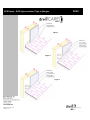
1. With a sharp utility knife, cut through and remove the lamina, exposing a neat uniformsized area of insulation slightly larger than the damaged area. Using a disk grinder or
belt sander with a 20 grit aluminum oxide disk or belt, remove the finish around the cut,
exposing the reinforced base coat approximately 76 mm (3") around the damage area.
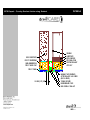
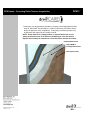
2. Cut out the loose, damaged foam to reveal fresh foam. Cutting off the foam all the
way to substrate is not recommended. When foam in the damaged area is well
bonded to the substrate, care must be taken to expose as little of the substrate as
possible and prevent rupturing the surface of the substrate. The area to be patched
should be round or rectangular in shape and between 19 mm and 25 mm (3/4" and 1")
in depth. Deeper patches should be filled with a piece of EPS so the patch thickness is
within this range. RapidPatch material may be used to adhere the EPS filler to the
substrate.
3. Precisely mask the surrounding finish with masking tape.
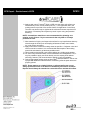
4. Mix the RapidPatch and apply the mixture to the damaged area with a margin trowel to
a depth of approximately 3.2 mm (1/8") below the existing base coat surface. Also add a
thin layer of material on the exposed base coat surrounding the patch. Cut a piece of
®
Detail Mesh to the proper size and place over the wet RapidPatch overlapping the
existing base coat a minimum of 25 mm (1"). Add additional RapidPatch material to
completely fill the damaged area, cover the mesh and feather onto the surrounding base
coat. If the material appears initially loose, wait a short time until it stiffens up and level
off any imperfections with additional RapidPatch mixture as needed.
5. When the patching material in the damaged area is stiff enough, use a clean, damp
margin trowel to smooth out the surface. This may be repeated until a satisfactory
surface is achieved. The trowel must be clean and damp prior to each smoothing.
6. Let RapidPatch set for at least 60 minutes, depending on ambient conditions.
7. If necessary, again, precisely mask the surrounding existing finish with masking tape.
8. Apply the new finish over the patched area and texture to match the surrounding finish.
NOTE: Do not sand the patched area prior to finish application.
9. If the entire wall is to be refinished, it is not necessary to mask off and apply finish at
this stage. Refer to the procedure for repairing texture variations for complete details.
NOTE: Because RapidPatch is specifically designed to compensate for drying
shrinkage, it may b used to repair damaged areas up to 76 mm x 76 mm x 25 mm
(3" x 3" x 1").