1
USER MANUAL
Influence of classic steering on the reflex profile
Pilots used to classic paragliders tend to fly "active" style, with their brakes constantly tensioned.
Flying a reflex wing like that is ineffective and can possibly be dangerous.
Basic rule of reflex paramotoring says: the more turbulent it is, the more trims should be
released and classic steering should be limited, especially with speed system engaged.
In such moments paraglider is much more effectively steered by TST or ALC+ systems, designed
specifically for that reason.
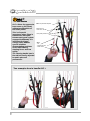
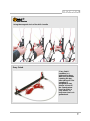
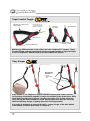
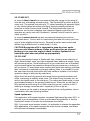
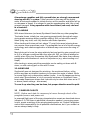
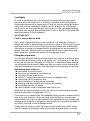
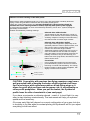
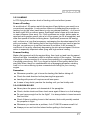
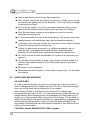
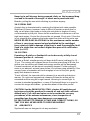
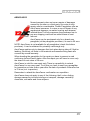
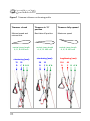
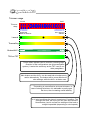
Problem is illustrated by following drawings:
Released trims without brakes
Typical setting for fast and safe flying. Center of
pressure of the aerofoil moves forward, practically
excluding collapses. Pitching moment induced by
the reflex aerofoil increases angle of attack.
Released trims with brakes applied
Even slight brakes application (especially on full
speed bar) shifts the center of pressure back, and
due to lack of reflex on trailing edge, pitching
moment now decreases angle of attack.
Additionally turbulence behind the wing occurs. In
some circumstances this can lead to a collapse.
Using the brakes can be sometimes necessary for
heading corrections, still you should keep your
brakes free when flying ahead, otherwise the reflex
feature doesn't work.
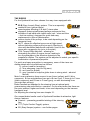
Closed trims
In this configuration brakes are the normal and
prescribed steering system. Slow trim is used for
launching in nil wind and thermalling. The canopy
behaves similar to classic profile paragliders, with
slightly increased tuck resistance.
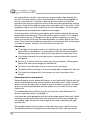
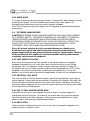
lift
speed
pitching moment
center of pressure
sink
CAUTION: Some pilots with previous free-flying experience may have a
well-grounded habit of keeping the brakes slightly applied at all times.
Such a technique, while quite reasonable on a free-flying wings as it
allows for quick pilot reactions and decreases sink, is not advisable on
reflex-profile paragliders. When you pull the brakes, the Synthesis2
profile loses its reflex characteristics (see next page).
If you have a variometer or altimeter aboard – watch it. In level flight it is very
easy to start climbing unintentionally. The instruments will help you optimise
speed and fuel economy.
Of course each flight will depend on current configuration of your gear, but due
to its ability to fly safe without constant piloting the Synthesis2 will let you adjust
everything to the best effect.
19