1
TESTING
Disconnect the trailer plug from the tow vehicle. Pull the Break-Away pin from the breakaway switch attached to the A
frame. The electric brakes and brake lights of the trailer should immediately activate and the battery level light should
illuminate. The brakes will release when the pin is replaced in the switch.
PARKING YOUR TRAILER
When parking your trailer, it is necessary to replace the plastic plunger into the BA Switch after the vehicle has been
disconnected from the trailer. Removing the plastic plunger from the BA Switch will activate the trailer brakes, and as
such will eventually flatten the Break-Safe battery.
NOTE
Attach the Break-Away cable to the rear of the tow vehicle using a secure anchor point. Do not hook cable to tow ball or
safety chain anchor.
FUSING
The Break-Safe unit is protected by one internal mini-blade fuse. If the unit fails to operate, please check the fuses first.
Care must be taken when opening the unit.
Fuse Rating
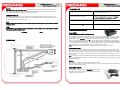
WIRING DIAGRAM
- 30 amp
TROUBLESHOOTING
Charge light NOT ON when the trailer is connected with
the tow vehicle.
Check to vehicle’s auxiliary line. The red and black terminals on the
front of the Break-Safe unit should be live when auxiliary power is
connected and the brakes are applied.
BUZZING NOISE from Break-Safe when the test button is
pressed or the Break-Away pin is pulled.
Battery is dead flat or there is a short circuit in the trailer’s electric
brakes which has blown the Break-Safe’s internal fuse. Charge
battery and check internal fuses and replace as necessary.
Electric brakes &/or brake lights do not activate when test
button is pressed or Break-Away pin is pulled.
Check battery level and check internal fuses.
Battery level test lights remain ON.
Break-Away pin not fully inserted in Break-Away switch.
BREAK-SAFE REMOTE MONITOR
Part no.: RM6000
To suit Break-Safe 6000 & 6000XP Break-Away kits only.
The new RM6000 remote monitor provides the only accurate way to monitor the breakaway battery condition, and will
give an audible and visual signal if the battery condition falls below the acceptable levels (using a volt meter to monitor
the Break-Safe battery is dangerous, as it will not give a true indication of the battery condition). The new RM6000
remote monitor operates each time the brake pedal in the tow vehicle is pressed. The additional circuitry in the BreakSafe 6000 & 6000XP disconnects the Break-Safe battery from the charge wire and then connects it to a small electronic
load. Should the Break-Safe battery be good, a green light will illuminate on the front panel of the RM6000. If the battery
is below the safe level, a red light will flash and a buzzer will sound for about 10 seconds.
NOTE: The RM6000 should be disconnected from the RED charging terminal if a charger is connected.
FITTING INSTRUCTIONS
Mount the remote monitor to the tow vehicle dashboard (using the u bracket or the sticky tabs provided) in a position
where the front panel of the remote monitor is visible to the driver in the normal driving position. Connect the negative
terminal of the remote monitor to a good earth. Fit a wire to the sensor terminal of the remote monitor and run the wire
through the vehicle and trailer plug ( a 12 pin plug may be required ) to the purple remote monitor sense wire of the
Break-Safe unit.
Note: a 12 volt auxiliary wire must be fitted to the tow vehicle for charging the Break-Safe internal battery and for correct
operation of the RM6000 remote monitor. If an auxiliary is fitted, the orange charge light next to the red terminal on the
Break-Safe will illuminate.
TESTING
After installation is complete, connect the trailer plug to the tow vehicle.
Sit in the driver’s seat and turn the ignition of the tow vehicle on. Press the brake pedal. A green light should illuminate
on the front panel of the remote monitor.
BREAK-AWAY SWITCH
Also available for separate purchase is the BASWITCH. If ever your current
Break-Away switch needs replacement, you can purchase a new switch
separate from the Break-Safe unit.