1
R400A
Smart Noise Reduction (SmartNR™)
The wide dynamic range of digital hybrid technology,
combined with flat response to 20 kHz, makes it possible to hear the –120 dBV noise floor in the mic preamp,
or the (usually) greater noise from the microphone itself.
(To put this in perspective, the noise generated by the
recommended 4 k Ohm bias resistor of many electret
lavaliere mics is –119 dBV and the noise level of the
microphone’s electronics is much higher.) In order to
reduce this noise and thus increase the effective dynamic range of the system, the R400A is equipped with
a Smart Noise Reduction algorithm, which removes
hiss without sacrificing high frequency response.
The Smart Noise Reduction algorithm works by attenuating only those portions of the audio signal that fit
a statistical profile for randomness or “electronic hiss.”
SmartNR™ offers significantly increased transparency
over the sophisticated variable low pass filters used
in previous designs. Desired high frequency signals
having some coherence such as speech sibilance and
tones are not affected.
The Smart Noise Reduction algorithm has three modes,
selectable from a user setup screen: Off, Normal and
Full.
OFF - No noise reduction is performed and complete transparency is preserved. All signals presented to the transmitter’s analog front end, including any faint microphone hiss, will be faithfully
reproduced at the receiver.
NORMAL (factory default) - Enough noise reduction is applied to remove most of the hiss from the
mic preamp and some of the hiss from lavaliere microphones. The noise reduction benefit is dramatic
in this position, yet the degree of transparency
maintained is exceptional.
FULL - Enough noise reduction is applied to
remove most of the hiss from nearly any signal
source of reasonable quality, assuming levels are
set properly at the transmitter. This additional noise
reduction comes at the cost of some transparency
for low-level room noise, yet the algorithm remains
undetectable under most circumstances.
Noise-Controlled Digital Filter
In addition to SmartNR™, the R400A contains a supersonic noise-sensitive variable frequency filter, which reduces high frequency response under extremely weak
RF conditions. This filter does nothing until the level of
supersonic noise present in the received audio exceeds
a predetermined threshold at which point it begins to
roll off high frequencies. Usable audio remains unaffected, but noise-ups or “hits” occurring near the fringe
of reception sound much less harsh.
Balanced and Unbalanced
Audio Outputs
The R400A offers two audio outputs for the ultimate in
flexibility: Balanced (XLR) and Unbalanced Line Out/
Monitor (1/4-inch jack.) Both outputs operate independently and are controlled by their own digital attenuator.
LCD Screen
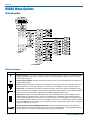
The LCD screen is used in conjunction with the MENU
control to change and control the operational settings,
and also provide a visual feedback of overall system
operation. (See R400A MENU SELECTIONS.)
Power Supply
The R400A is operated from an external DC power
source with a range of +8 VDC to +18 VDC, up to 0.20
amperes (200 milliamps) maximum. The receiver has
a built-in Poly-Fuse to protect the unit. If a problem
occurs that trips this fuse, it will reset after the power
supply is disconnected for about 15 seconds. The
power input section also has built-in protection circuits
that prevent damage to the receiver if a positive ground
power source is applied.
Note: The R400A requires external DC power and
has no provisions for internal batteries.
Note: The SmartNR™ setting is user selectable
only in 400 Series mode. In other modes, noise
reduction is applied in such a way as to emulate
the original analog system as accurately as
possible and is not user adjustable.
6
LECTROSONICS, INC.