1
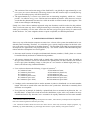
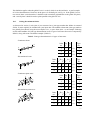
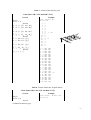
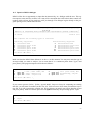
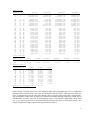
Table 9 continued:
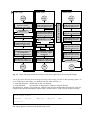
Ti Xi Yi Zi [FXi FYi FZi ]
……
Tn Xn Yn Zn [FXn FXn FZn]
free line
b1 e1 EAx1
b2 e2 EAx2
……
bj ej EAxj
……
bm em EAxm
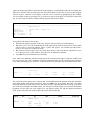
1
1
1
1
1
1
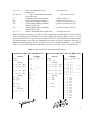
8
8
1
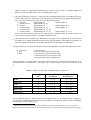
8.0 -2.0
8.0 2.0
8.0 0.0
12.0 -2.0
12.0 2.0
12.0 0.0
16.0 -2.0
16.0 2.0
16.0 0.0
1
4
7
10
2
5
8
11
3
6
9
12
1
4
7
10
13
1
2
4
5
7
8
10
11
13
14
3
2
6
5
7
9
10
12
1
4
8
11
4
7
10
13
5
8
11
14
6
9
12
15
2
5
8
11
14
3
3
6
6
9
9
12
12
15
15
4
6
7
9
12
11
15
14
5
8
10
13
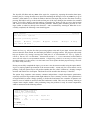
2.0E5
2.0E5
2.0E5
2.0E5
2.0E5
2.0E5
2.0E5
2.0E5
4.0E5
4.0E5
4.0E5
4.0E5
1.0E6
1.0E6
1.0E6
1.0E6
1.0E6
5.0E4
5.0E4
5.0E4
5.0E4
5.0E4
5.0E4
5.0E4
5.0E4
5.0E4
5.0E4
1.0E5
1.0E5
1.0E5
1.0E5
1.0E5
1.0E5
1.0E5
1.0E5
1.0E5
1.0E5
1.0E5
1.0E5
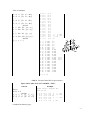
0.0 0
0 -80
0.0
5.0 0 -30
0.0 0
0 -80
0.0
5.0 0 -30
0.0 0
0 -40
0.0 0
0 -120
5.0 50
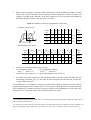
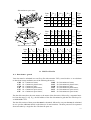
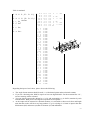
12
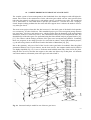
Z
9
3
2
11
8
5
X
14
6
Y
15
13
10
4
7
1
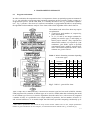
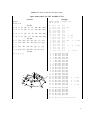
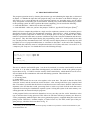
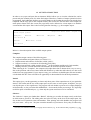
Regarding the input of real values, please observe the following:
•
•
•
•
The Anglo-Saxon notation should be used, i.e. with decimal points and not decimal commas.
If you use a decimal point, DISCO expects at least one digit behind it. For the notations like ‘10.’,
an error message will be returned.
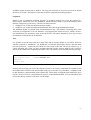
You can choose between the decimal (e.g. 9.81) and exponential (e.g. 0.981E1) notation by each
individual data. Both positive and negative exponents are acceptable.
As the output will be returned in a decimal notation, it is advisable to choose such force and length
units that the results will form very long numbers. E.g. for a bridge, it is better to input in the data
kiloNewtons (kN) and meters (m) than in Newtons (N) and millimeters.
34