1
10
= Local
9
- NFS 3 (UDP)
C- NFS 3 (TCP)
f SFS
8
7
QE 6S5-
43
2
01
1
directories
copy
attributes
search
compile
total
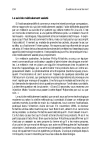
Figure 9-2: Wall clock execution time (in seconds) for the different phases of the
modified Andrew benchmark, run on different file systems. Local is FreeBSD's local
FFS file system on the server.
ware encryption in these benchmarks, several factors mitigate the effects on application workloads. First, multiple outstanding request can overlap the latency of NFS
RPCs. Second, few applications ever read or write data at rates approaching SFS's
maximum throughput. Disk seeks push throughput below 1 Mbyte/sec on anything
but sequential accesses. Thus, the real effect of SFS's encryption on performance is
to increase CPU utilization rather than to cap file system throughput. Finally SFS's
enhanced caching improves performance by reducing the number of RPCs that need
to travel over the network.
9.3
End-to-end performance
We evaluate SFS's application performance with the Modified Andrew Benchmark
(MAB) [203. The first phase of MAB creates a few directories. The second stresses
data movement and metadata updates as a number of small files are copied. The third
phase collects the file attributes for a large set of files. The fourth phase searches the
files for a string which does not appear, and the final phase runs a compile. Although
MAB is a light workload for today's file systems, it is still relevant, as we are more
interested in protocol performance than disk performance.
68